ZIR Technique for Ohmic Drop Determination: A Complete Guide for Electrochemical Research in Drug Development
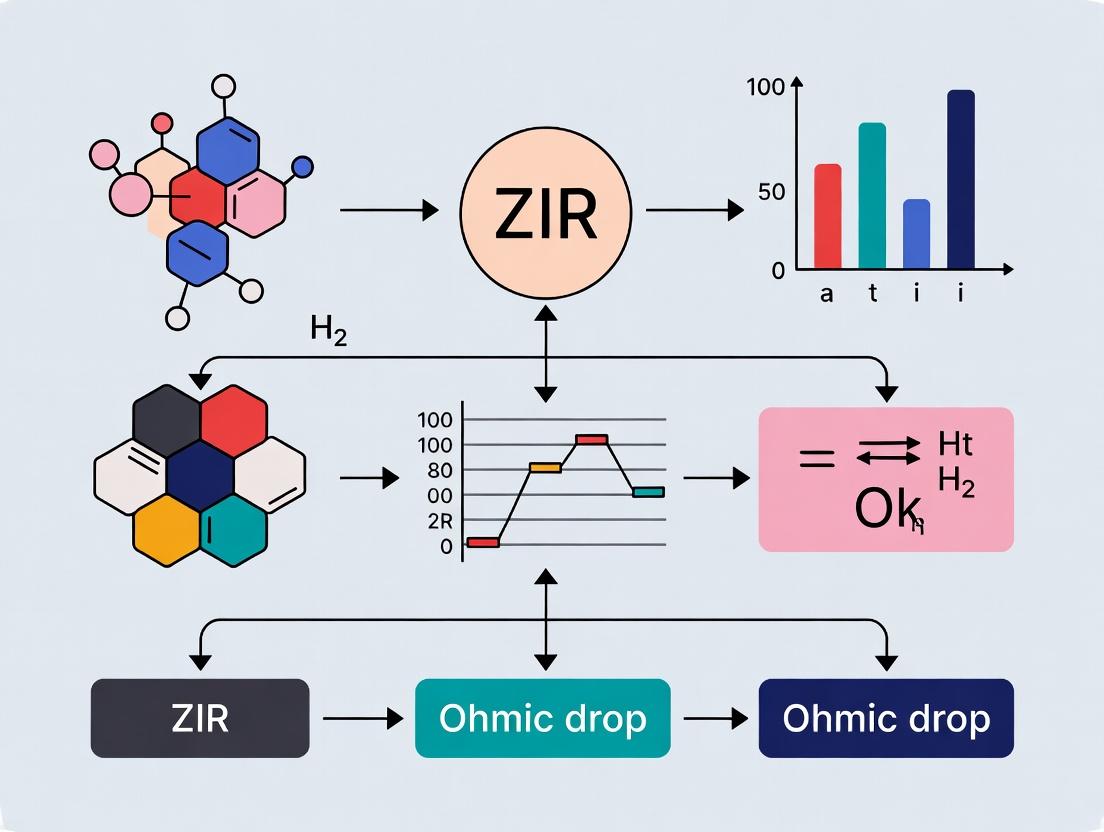
This comprehensive guide explores the Zero-Intercept Resistance (ZIR) technique for accurate ohmic drop (iR drop) determination in electrochemical experiments, crucial for researchers in drug development and biomedical sciences.
ZIR Technique for Ohmic Drop Determination: A Complete Guide for Electrochemical Research in Drug Development
Abstract
This comprehensive guide explores the Zero-Intercept Resistance (ZIR) technique for accurate ohmic drop (iR drop) determination in electrochemical experiments, crucial for researchers in drug development and biomedical sciences. The article provides foundational theory on ohmic drop's impact on voltammetric data, a step-by-step methodological guide for ZIR implementation, practical troubleshooting for common pitfalls, and a comparative analysis against alternative correction methods. By addressing the needs of scientists seeking precise and uncompensated potential control, this resource bridges fundamental electrochemistry with critical applications in biosensor development, corrosion studies for medical devices, and the analysis of redox-active drug compounds.
What is Ohmic Drop and Why Does it Matter? The Foundational Role of ZIR in Accurate Electrochemistry
Ohmic drop, or iR drop, is the potential difference caused by the resistance (R) of the electrolyte and cell components to the flow of current (i) in an electrochemical cell. This uncompensated resistance leads to a discrepancy between the applied potential at the electrodes and the actual potential at the working electrode surface, introducing significant error in measurements like voltammetry and bulk electrolysis. Correcting for iR drop is critical for accurate determination of thermodynamic and kinetic parameters.
The following table summarizes common sources and magnitudes of uncompensated resistance in electrochemical cells.
Table 1: Sources and Typical Values of Uncompensated Resistance (Ru)
| Source of Resistance | Typical Contribution (Ω) | Notes & Dependencies |
|---|---|---|
| Electrolyte Resistance | 1 - 1000+ | Primary source. Depends on ionic strength, solvent conductivity, electrode distance. |
| Separator/Frit Resistance | 1 - 50 | Resistance of porous glass frits or membranes in reference electrode compartments. |
| Working Electrode Material | 0.01 - 10 | Depends on material (e.g., glassy carbon vs. metal wire) and geometry. |
| Lead & Contact Resistance | 0.1 - 5 | Often overlooked; depends on wire gauge and connection quality. |
| Reference Electrode Luggin Capillary | 5 - 50 | Positioning is critical; major factor for correct compensation. |
Table 2: Impact of iR Drop on Measured Parameters
| Parameter | Effect of Uncompensated iR Drop | Consequence for Analysis |
|---|---|---|
| Peak Potential (Ep) | Shifts positively for oxidations, negatively for reductions. | Incorrect redox potential assignment. |
| Peak Current (ip) | Can be diminished due to distorted driving force. | Inaccurate calculation of diffusion coefficients. |
| Kinetic Rate Constant (k0) | Apparent electron transfer kinetics appear slower. | Severe underestimation of intrinsic kinetic rates. |
| Onset Potential | Significant error in determining reaction initiation potential. | Misleading efficiency and overpotential calculations. |
Experimental Protocols for iR Drop Determination and Compensation
Protocol 1: Determining Uncompensated Resistance via Current Interrupt (ZIR) Method
This protocol is central to the broader thesis on the ZIR (Zero-current Interrupt) technique.
Objective: To measure the total uncompensated resistance (Ru) of an electrochemical cell in situ. Principle: A constant current is applied, then abruptly interrupted. The instantaneous change in potential (ΔV) at the moment of interruption is due solely to the ohmic drop (iRu). Ru = ΔV / i.
Materials:
- Potentiostat/Galvanostat with current interrupt capability.
- Standard 3-electrode electrochemical cell.
- Electrolyte solution of known composition.
- Data acquisition software with high temporal resolution (µs scale).
Procedure:
- Cell Setup: Configure the cell with working, counter, and reference electrodes. Position the Luggin capillary correctly.
- Galvanostatic Pulse: Apply a constant current pulse (iapp) sufficient to generate a measurable potential shift. Typical duration: 50-200 ms.
- Current Interrupt: Command the potentiostat to interrupt the current to zero as rapidly as possible.
- Potential Monitoring: Record the cell potential at a high sampling rate (≥ 1 MHz) before, during, and after the interrupt.
- Data Analysis: Plot potential vs. time. Measure ΔV, the vertical drop at the exact interrupt point (t0).
- Calculation: Compute Ru = ΔV / iapp. Perform multiple interrupts at different currents to confirm linearity and obtain an average Ru value.
Diagram: ZIR Technique Workflow
Title: ZIR Resistance Measurement Workflow
Protocol 2: Performing iR Compensation in Cyclic Voltammetry
Objective: To acquire a cyclic voltammogram corrected for ohmic drop effects using post-experiment software compensation. Materials: Potentiostat, electrochemical cell, data analysis software (e.g., NOVA, GPES, or custom script in Python/R).
Procedure:
- Acquire Raw Data: Record a cyclic voltammogram (CV) at the desired scan rate without electronic positive feedback compensation enabled.
- Determine Ru: Measure the cell's Ru using the ZIR method (Protocol 1) under identical experimental conditions.
- Data Correction: For every data point (i, Vapp) in the CV, calculate the corrected potential: Vcorr = Vapp - (i * Ru). Note: i is positive for anodic scans, negative for cathodic scans.
- Plot & Analyze: Generate a new voltammogram by plotting i vs. Vcorr. Compare peak potentials and shapes to the uncompensated data.
Diagram: iR Drop Distortion and Correction
Title: Cause and Effect of iR Drop
The Scientist's Toolkit: Key Research Reagents & Materials
Table 3: Essential Solutions and Materials for iR Drop Studies
| Item | Function/Composition | Role in iR Drop Research |
|---|---|---|
| Supporting Electrolyte (e.g., 0.1 M TBAPF6) | High concentration (0.1-1.0 M) of inert salt in organic solvent (ACN, DMF). | Minimizes electrolyte resistance (Rsol), the main iR component. Provides conductive medium. |
| Potassium Ferricyanide Solution (1-5 mM) | Standard redox probe in aqueous KCl (0.1-1 M). | Used for benchmarking and validating iR compensation methods via known reversible electrochemistry. |
| Non-Aqueous Reference Electrode (e.g., Ag/Ag+) | Silver wire in solution of AgNO3 in acetonitrile. | Stable reference potential in organic electrolytes. Low resistance junction design is crucial. |
| Luggin-Haber Capillary | Fine-tip glass tube directing reference electrode. | Proper positioning (~2x diameter from WE) minimizes measured Ru without shielding. |
| Conductivity Standard Solution (e.g., 0.1 M KCl) | Solution of known specific conductivity at 25°C. | Used to calibrate or verify cell constant for fundamental resistance measurements. |
| Ultra-Pure Solvents (H2O, ACN, DMF) | Solvents with low water and impurity content. | Ensures measured resistance is from intended electrolyte, not from conductive impurities. |
| Planar Macro-Disk Electrodes (Pt, GC, Au) | Electrodes with known, reproducible geometry. | Simplifies analysis; allows separation of electrolyte resistance from diffusion impedance. |
The Critical Impact of Uncompensated Resistance on Voltammetric Data Accuracy
Application Notes In voltammetric experiments, particularly in non-aqueous or low-ionic-strength solutions common in pharmaceutical analysis, the uncompensated resistance (Ru) between working and reference electrodes introduces a significant ohmic drop (imeasRu). This drop distorts the applied potential, leading to systematic errors in measured currents, peak potentials, and derived kinetic/thermodynamic parameters. For researchers utilizing the Zone Interface Resistance (ZIR) technique to determine ohmic drop, understanding and mitigating Ru is paramount for accurate data interpretation in drug redox characterization.
Quantitative Impact Data
Table 1: Effects of Uncompensated Resistance on Cyclic Voltammetry Parameters for a Model Drug Compound (1 mM in 0.1 M TBAP/MeCN)
| Ru (Ω) | % iR Compensation | Peak Potential Separation (ΔEp, mV) | Apparent Heterogeneous Rate Constant (k0app, cm/s) | Observed Peak Current (ipa, μA) |
|---|---|---|---|---|
| 500 | 0% | 120 | 0.015 | 85 |
| 500 | 85% | 85 | 0.032 | 92 |
| 500 | 100%* | 72 | 0.045 | 95 |
| 200 | 0% | 92 | 0.025 | 93 |
*Theoretical ideal; positive feedback compensation introduces instability risk.
Experimental Protocols
Protocol 1: Determination of Uncompensated Resistance (Ru) via Current-Interrupt Method Objective: To measure the Ru of a standard electrochemical cell for subsequent compensation or ZIR technique validation. Materials: See "Research Reagent Solutions" below. Procedure:
- Prepare a solution of 1.0 mM ferrocene in 0.1 M tetrabutylammonium perchlorate (TBAP) in acetonitrile. Degas with argon for 10 minutes.
- Setup a standard three-electrode cell. Initiate a chronoamperometry experiment, applying a potential step sufficient to generate a steady-state current (e.g., step to +0.5 V vs. Ag/Ag+).
- After the current stabilizes, abruptly interrupt the applied potential (set cell current to zero).
- Using a high-speed data acquisition system (sampling rate > 100 kHz), record the instantaneous voltage change (ΔV) at the working electrode immediately following the current interruption.
- Calculate Ru using Ohm's Law: Ru = ΔV / i, where i is the current just prior to interruption. Perform 5 replicates.
Protocol 2: Assessing the Impact of Ru on Drug Oxidation Kinetics Objective: To quantify errors in apparent electron transfer rate constants (k0) due to Ru. Materials: Model drug compound (e.g., acetaminophen), phosphate buffer (pH 7.4), glassy carbon working electrode. Procedure:
- Prepare a 2 mM drug solution in supporting electrolyte. Perform cyclic voltammetry at varying scan rates (0.05 to 5 V/s) with potentiostat iR compensation set to 0%.
- For each scan rate, measure the peak-to-peak separation (ΔEp).
- Calculate the apparent k0 using the Nicholson method for quasi-reversible systems for the uncompensated data.
- Repeat the experiment series with iR compensation set to 85% (or the maximum stable value).
- Compare the derived k0 values from the compensated vs. uncompensated datasets to quantify the error. Use the Ru value from Protocol 1 for ZIR technique correlation.
Diagrams
Title: Impact Pathway of Uncompensated Resistance on Data Accuracy
Title: ZIR Technique Experimental Workflow for Ohmic Drop
The Scientist's Toolkit: Research Reagent Solutions
Table 2: Essential Materials for Ru Determination & Mitigation Experiments
| Item | Function & Rationale |
|---|---|
| Tetrabutylammonium Perchlorate (TBAP) | Common supporting electrolyte for non-aqueous electrochemistry. Provides ionic conductivity; inert over wide potential window. |
| Acetonitrile (HPLC Grade) | Common low-dielectric organic solvent for drug redox studies. Must be dry to minimize background current. |
| Ferrocene Internal Standard | Redox standard with well-known, reversible electrochemistry. Used for potential calibration and Ru estimation. |
| Ag/Ag+ Non-Aqueous Reference Electrode | Stable reference potential in organic solvents. Crucial for accurate potential control in drug studies. |
| Glassy Carbon Working Electrode | Standard electrode material with broad potential window and reproducible surface for drug oxidation/reduction. |
| Platinum Counter Electrode | Inert auxiliary electrode to complete the circuit. Large surface area minimizes its polarization. |
| Luggin Capillary | Probes the reference electrode close to the working electrode to minimize solution resistance (Ru). |
| Potentiostat with Positive Feedback iR Compensation | Instrument capable of applying compensation to subtract a portion of the ohmic drop in real-time. |
Within the broader thesis on advancing electrochemical methods for accurate in situ ohmic drop (iR drop) determination, the Zero-Intercept Resistance (ZIR) technique emerges as a pivotal methodology. iR drop, the voltage loss due to solution resistance, is a critical source of error in quantitative electrochemical analyses, particularly in kinetic studies and corrosion science. The ZIR technique provides a direct, model-free approach to its determination, enhancing the fidelity of data for researchers in electrocatalysis, battery development, and pharmaceutical electroanalysis.
Core Principle and Theoretical Foundation
The ZIR technique is predicated on the analysis of transient current decay following a controlled potential step. When a potentiostatic step is applied to an electrode, the initial current is limited solely by the uncompensated solution resistance (Ru). As polarization develops, the current decays due to the rising influence of charge transfer kinetics and diffusion.
The core theoretical innovation of ZIR is that a plot of instantaneous electrode potential (E) versus the instantaneous reciprocal of current (1/I) at times immediately following the potential step yields a linear relationship. Crucially, the y-intercept of this plot, extrapolated to 1/I → 0 (infinite current), corresponds to the potential at precisely zero ohmic drop—the "Zero-Intercept Potential." The slope of this line is directly proportional to Ru.
Key Equation: Emeasured(t) = EZIR + (I(t) * Ru) Rearranged for analysis: E(t) = EZIR + Ru * (1 / (1/I(t)))
By performing this analysis at multiple, very short time intervals after the step (typically within the first 10-100 µs), Ru can be determined without prior knowledge of electrode kinetics or double-layer capacitance.
Summarized Quantitative Data from Recent Studies
Table 1: Comparison of iR Drop Determination Techniques
| Technique | Principle | Key Advantage | Typical Uncertainty | Applicable System |
|---|---|---|---|---|
| Zero-Intercept Resistance (ZIR) | Linear extrapolation of E vs 1/I plot from potential step transient. | Model-free; does not require Cdl knowledge. | ± 2-5% | Static electrodes, high conductivity media. |
| Current Interrupt (CI) | Measures instantaneous potential decay upon current cessation. | Intuitively simple. | ± 5-10% (depends on sampling rate) | Most systems, including batteries. |
| Electrochemical Impedance Spectroscopy (EIS) | Fits high-frequency semicircle to Nyquist plot. | Provides full system characterization. | ± 5-15% (fitting dependent) | Systems with stable, linear response. |
| Positive Feedback (PF) | Actively injects current to compensate iR drop in real-time. | Allows real-time compensation. | Highly variable; risk of oscillation. | Requires stable, tunable circuitry. |
Table 2: Exemplar ZIR Determination Data for a Pt RDE in 0.1 M H2SO4
| Applied Potential Step (V vs. Ag/AgCl) | Extracted Ru (Ω) | Extracted EZIR (V) | Time Window for Analysis (µs) | R2 of Linear Fit |
|---|---|---|---|---|
| 0.2 to 0.7 | 12.3 ± 0.3 | 0.199 | 10 - 50 | 0.9987 |
| 0.2 to 0.9 | 12.1 ± 0.4 | 0.201 | 10 - 40 | 0.9979 |
| 0.1 to 0.6 | 12.4 ± 0.3 | 0.099 | 10 - 60 | 0.9991 |
| Average Ru | 12.3 ± 0.2 Ω |
Detailed Experimental Protocol: ZIR Determination
Protocol 1: Basic ZIR Measurement for a Rotating Disk Electrode (RDE) System
Objective: To determine the uncompensated solution resistance (Ru) of a standard three-electrode cell using the ZIR technique.
I. Materials and Setup
- Potentiostat: Must have high-current bandwidth and data acquisition capability with a minimum sampling interval of 1 µs (e.g., Autolab PGSTAT302N with FRA32M module, or Ganny Reference 3000).
- Electrochemical Cell: Standard 3-electrode glass cell.
- Working Electrode: 5 mm diameter Pt disk RDE (e.g., Pine Research).
- Counter Electrode: Pt coil.
- Reference Electrode: Ag/AgCl (3 M KCl) with Luggin capillary.
- Electrolyte: 0.1 M Potassium Hexacyanoferrate(III) in 1.0 M KNO3 (well-defined redox system).
- Software: For data analysis (e.g., NOVA, EC-Lab, or custom Python/Matlab scripts).
II. Pre-Experimental Procedures
- Polish the Pt RDE sequentially with 1.0 µm, 0.3 µm, and 0.05 µm alumina slurry on microcloth pads. Rinse thoroughly with deionized water.
- Electrochemically clean the electrode in 0.5 M H2SO4 via cyclic voltammetry (e.g., 50 cycles between -0.2 and 1.2 V vs. Ag/AgCl at 500 mV/s).
- Assemble the cell, position the Luggin capillary approximately 2 mm from the WE surface. Set RDE rotation to 900 rpm to ensure consistent mass transport.
- Record a steady-state CV at 10 mV/s to confirm clean electrode behavior.
III. ZIR Transient Acquisition
- Hold the electrode at a quiet potential (Einitial = 0.1 V) for 10 seconds to establish a steady state.
- Apply a large potential step to a value well within the diffusion-limited current plateau (Efinal = 0.6 V). The step must be as fast as the potentiostat allows (< 1 µs rise time).
- Record the chronoamperometric transient at the maximum available sampling rate (≥ 1 MHz) for a total duration of 10 ms. Ensure the instrument's current range is set to capture the initial high current without saturation.
- Repeat the experiment for 3-5 different Efinal values on the same plateau to validate consistency.
IV. Data Analysis Protocol
- Isolate the data from the first 50 µs after the potential step.
- For each time point (t), calculate the reciprocal of the current, 1/I(t).
- Plot the measured potential (which is constant at Efinal) on the y-axis against 1/I(t) on the x-axis.
- Perform a linear regression on the data points from ~10 µs to ~40 µs. Avoid the first few µs where potentiostat settling artifacts may occur.
- The slope of the line equals Ru. The y-intercept is the Zero-Intercept Potential (EZIR).
- Average the Ru values obtained from multiple step potentials.
Visualization: ZIR Theory and Workflow
ZIR Principle and Experimental Workflow
The Scientist's Toolkit: Key Research Reagent Solutions
Table 3: Essential Materials for ZIR Experiments
| Item | Function & Rationale |
|---|---|
| High-Bandwidth Potentiostat | Must generate a near-instantaneous potential step (<1 µs rise time) and sample current at MHz frequency to capture the critical early transient. |
| Low-Resistance Luggin Capillary | Minimizes the distance between the Reference Electrode tip and the Working Electrode, reducing the primary component of Ru for more accurate measurement. |
| Well-Defined Outer-Sphere Redox Couple (e.g., 1-10 mM [Fe(CN)6]3-/4- in 1M KNO3) | Provides a kinetically fast, reversible reaction with a known diffusion coefficient, ideal for validating the ZIR method against other techniques. |
| Ultra-Pure Alumina Polishing Suspensions (0.05 µm) | Ensures a microscopically smooth, reproducible electrode surface free of contaminant films that could distort early transient response. |
| Non-adsorbing, High-Conductivity Supporting Electrolyte (e.g., KClO4, H2SO4, KNO3) | Provides a stable ionic strength and minimizes specific adsorption that can interfere with double-layer charging dynamics. |
| Precision Data Analysis Software (Python with NumPy/SciPy, Matlab, or proprietary fitting modules) | Enables precise extraction of data from short time windows and rigorous linear regression analysis for Ru calculation. |
The determination of the ohmic drop (iR drop) in electrochemical systems is a critical challenge in quantitative analysis. Within the broader thesis on the Zero-Interruption Relaxation (ZIR) technique for iR drop determination, a central finding is the imperative for exquisite potential control at the working electrode. In drug development, this translates directly to the accuracy and reproducibility of assays measuring drug-target interactions, especially those involving redox-active biological molecules or using electrochemical detection. Inaccurate potential control, due to uncompensated resistance, distorts data, leading to incorrect binding constants, skewed mechanistic understanding, and ultimately, flawed candidate selection.
Application Notes: The Impact of Potential Control on Key Assays
Accurate potential control is not an instrumental nicety but a foundational requirement for several pivotal techniques in modern drug discovery. The following table summarizes core applications and the consequences of poor potential management.
Table 1: Key Drug Development Applications Requiring Accurate Potential Control
| Application | Primary Readout | Role of Accurate Potential Control | Consequence of Poor iR Compensation |
|---|---|---|---|
| Electrochemical Biosensors (e.g., for biomarkers, pathogen detection) | Faradaic current proportional to analyte concentration. | Defines the driving force for the redox reaction of the label (e.g., enzyme product, direct analyte oxidation). | Signal depression, loss of sensitivity, shifted calibration curves, reduced limit of detection. |
| Protein-Film Voltammetry (Redox-active drug targets like P450s, peroxidases) | Current vs. potential waveform revealing redox potentials, catalytic rates, and inhibitor binding. | Directly probes the thermodynamic and kinetic landscape of the protein. Inhibitor binding is detected as a shift in redox potential (ΔE). | Inaccurate apparent redox potentials (E°'), distorted catalytic waveforms, miscalculation of inhibitor binding constants (Ki). |
| Microsomal Stability & Metabolism Studies (using electrochemical cells) | Electrochemically generated reactive metabolites followed by MS or covalent binding assays. | Controls the oxidation potential of the drug candidate to mimic specific P450 enzyme activities. | Generation of non-physiological metabolite mixtures, misleading stability rankings, false positive/negative toxicity signals. |
| High-Throughput Screening (e.g., for kinase or protease activity via electrochemical labels) | Change in current from a redox-active reporter molecule. | Ensures consistent signal generation from the reporter across all wells in a plate. | High well-to-well variability, increased false hit rates, decreased Z'-factor, unreliable screening data. |
Experimental Protocols
Protocol 1: Protein-Film Voltammetry for Inhibitor Constant (Ki) Determination
Objective: To measure the dissociation constant (Ki) of a small-molecule inhibitor for a redox-active enzyme (e.g., cytochrome P450) via its induced shift in the heme FeIII/FeII redox potential.
Materials: Purified enzyme, pyrolytic graphite edge electrode, electrochemical cell (potentiostat with validated iR compensation, e.g., ZIR-corrected), anaerobic chamber, assay buffer (e.g., 50 mM phosphate, pH 7.4), inhibitor compounds (in DMSO stock).
Procedure:
- Protein Film Formation: Polish the electrode. Apply 2-5 µL of purified enzyme solution (~50-200 µM) to the electrode surface and allow to adsorb under controlled humidity for 15-30 min.
- Control Cyclic Voltammogram (CV): Place the modified electrode in a deoxygenated buffer cell. Record a low scan rate (e.g., 10 mV/s) CV between -0.8 V and -0.2 V vs. Ag/AgCl. Confirm a stable, quasi-reversible FeIII/FeII couple.
- Inhibitor Titration: Add aliquots of inhibitor stock to the cell to achieve increasing concentrations (e.g., 0, 0.5, 1, 2, 5 µM). After 5 min equilibration, record a CV at each concentration.
- Data Analysis: Plot the formal potential (E°', midpoint of oxidation/reduction peaks) against inhibitor concentration ([I]). Fit data to the equation: ΔE = ΔEmax * ([I] / (Ki + [I])) where ΔE is the observed potential shift, and ΔEmax is the maximum shift at saturation. The fit yields Ki.
Protocol 2: Validating Potentiostat iR Compensation Using a ZIR-Inspired Test
Objective: To experimentally verify the effectiveness of a potentiostat's iR compensation circuit using a known resistive element, ensuring its suitability for sensitive bioassays.
Materials: Potentiostat, dummy cell (or electrochemical cell), decade resistance box (1 Ω to 10 kΩ), standard redox couple (e.g., 1 mM Ferrocene in acetonitrile with 0.1 M TBAPF6).
Procedure:
- Baseline Measurement: Set up a standard three-electrode system with the redox solution and minimal added resistance. Record a CV at 100 mV/s. Note the peak separation (ΔEp).
- Introduce Known Resistance: Insert a precise resistor (e.g., 500 Ω) in series with the working electrode lead. Record a CV without iR compensation. Observe the increased ΔEp and distorted wave shape.
- Apply iR Compensation: Enable the potentiostat's positive feedback iR compensation. Gradually increase the compensation percentage until the CV resembles the baseline. Caution: Avoid over-compensation, which causes oscillation.
- Quantitative Validation: The exact known resistance (Rknown) allows calculation of the expected iR drop. Compare the instrument's reported compensation level to the theoretical value. A robust system (employing techniques like ZIR for calibration) will show agreement within <5%.
Visualization: Pathways and Workflows
Diagram 1: Consequences of Poor Potential Control in Drug Screening
Diagram 2: ZIR-Enabled Workflow for Inhibitor Screening
The Scientist's Toolkit: Research Reagent Solutions
Table 2: Essential Materials for Electrochemical Assays in Drug Development
| Item | Function & Rationale |
|---|---|
| Potentiostat with Advanced iR Compensation | The core instrument. Must feature positive feedback, current interruption, or impedance-based iR compensation (validated by methods like ZIR) for accurate potential control in high-resistance biological buffers. |
| Low-Noise, Shielded Cables & Faraday Cage | Minimizes external electromagnetic interference, crucial for measuring the low currents (nA-µA) typical of protein films or microsensors. |
| Pyrolytic Graphite Edge (PGE) Working Electrode | A standard substrate for adsorbing redox proteins into stable, electroactive films for direct electrochemistry studies. |
| Antifouling & Biocompatible Electrode Coatings (e.g., Nafion, PEG-thiols, phospholipid bilayers) | Preserve protein activity and prevent non-specific adsorption of cellular debris or serum components in complex biofluids, maintaining sensor stability. |
| Decade Resistance Box | A critical tool for validating the potentiostat's iR compensation performance by introducing a known, variable resistance into the circuit (see Protocol 2). |
| Anaerobic Electrochemistry Kit (Glove bag, gas lines, septum-sealed cells) | Essential for studying oxygen-sensitive proteins (e.g., many Fe-S cluster enzymes) without interference from O2 reduction currents. |
| Redox Mediators & Enzyme Substrates (e.g., Ferrocene derivatives, NADH, H2O2) | Used in coupled assays or to facilitate electron transfer. Must be pharmaceutically relevant and non-cytotoxic for in-situ applications. |
Essential Components and Setup for ZIR Measurements
1. Introduction
Within the broader thesis on the Zero-Interruption (ZIR) technique for in operando ohmic drop determination in electrochemical systems, establishing a robust and standardized experimental setup is paramount. ZIR, a high-current-pulse technique, allows for the precise separation of the ohmic (iR) drop from the total overpotential, a critical parameter in battery research, fuel cell development, and corrosion studies. This protocol details the essential components, their functions, and the step-by-step methodology for performing accurate ZIR measurements.
2. Core Components and Their Functions
The ZIR measurement system integrates electronic instrumentation, a controlled electrochemical environment, and precise data acquisition. The key components are summarized below.
Table 1: Essential Components for ZIR Measurement Setup
| Component Category | Specific Item | Critical Function |
|---|---|---|
| Potentiostat/Galvanostat | High-bandwidth (>1 MHz) potentiostat with auxiliary voltage sense inputs. | Applies the high-current pulse and measures the cell voltage. The 4-wire (Kelvin) connection is non-negotiable. |
| Current Booster | External high-current, high-speed booster amplifier. | Enables the generation of large current pulses (often >10A) with rapid rise times (<10 µs) beyond the standard potentiostat output. |
| Electrochemical Cell | 2, 3, or 4-electrode cell (e.g., flooded H-cell, pouch cell fixture). | Houses the Working Electrode (WE), Counter Electrode (CE), and Reference Electrode (RE). Must ensure stable electrode positioning. |
| Signal Trigger & Synchronization | Programmable function generator or integrated potentiostat pulse generator. | Precisely triggers the current pulse and synchronizes it with the data acquisition system to define t=0. |
| Data Acquisition (DAQ) | High-speed digitizer (≥2 MS/s sampling rate) or oscilloscope. | Captures the transient voltage response at a sufficiently high rate to resolve the instantaneous iR drop at the pulse onset. |
| Control & Analysis Software | Custom scripts (e.g., Python, LabVIEW) or instrument-specific software. | Orchestrates the pulse sequence, data collection, and subsequent analysis (e.g., fitting, iR extraction). |
3. Experimental Protocol: ZIR Measurement for a Li-ion Coin Cell
Objective: To determine the ohmic resistance (RΩ) of a CR2032-type Li-ion coin cell under a defined state of charge (SOC) and temperature.
Materials & Reagents:
- Cell: CR2032 Li-ion coin cell (e.g., NMC532/Graphite).
- Test Chamber: Environmental chamber with temperature control (±0.5°C).
- Connection Fixture: Low-inductance, 4-point probe cell holder.
- Cables: Low-inductance, shielded coaxial cables.
Procedure:
- System Calibration: Prior to cell connection, perform an open-circuit and short-circuit calibration at the target pulse current. Measure the voltage transient across a known, low-inductance precision resistor (e.g., 10 mΩ) to verify the current pulse shape, amplitude, and the DAQ system's temporal response. Account for any inherent instrumental offset resistance.
- Cell Conditioning & Stabilization: Place the coin cell in the temperature-controlled chamber. Set to the target temperature (e.g., 25°C). Allow the cell to thermally equilibrate for at least 2 hours. Bring the cell to the desired SOC using a slow, low-current (C/20) charge/discharge protocol, followed by a 2-hour open-circuit relaxation period to achieve voltage stabilization.
- Connection: Connect the cell to the 4-wire fixture. Connect the potentiostat's working and counter leads to the cell's negative and positive terminals, respectively, for current injection. Connect the auxiliary sense leads (H.V. Sense and L.V. Sense) directly to the same terminals to measure the voltage without cable resistance.
- Pulse Parameter Definition: In the control software, define the pulse sequence:
- Baseline: Record open-circuit voltage (OCV) for 100 ms.
- Pulse: Apply a unipolar cathodic (discharge) current pulse. The amplitude (Ipulse) should be large enough to elicit a clear voltage step but not induce significant concentration polarization within the pulse duration (typically 0.1-1.0 C rate). Pulse duration (tpulse
- Relaxation: Return to 0 current and monitor voltage recovery for 1-5 seconds.
- Data Acquisition Setup: Configure the high-speed DAQ system. Set the sampling rate to ≥1 MS/s. Use an external trigger from the pulse generator to start acquisition slightly before the pulse onset.
- Measurement Execution: Initiate the pulse sequence. Acquire high-speed voltage (V) and current (I) data. Repeat the pulse 3-5 times with sufficient relaxation between pulses to ensure the cell returns to the baseline OCV.
- Data Analysis: For each pulse, align the voltage and current transients.
- Identify t=0: The point where the current rises from zero (typically at 10-90% of the rise time).
- Extract ΔV: Measure the instantaneous voltage change at t=0. This is the pure ohmic drop (ηΩ), as double-layer charging and faradaic reactions have not commenced.
- Calculate RΩ: Use Ohm's Law: RΩ = ηΩ / Ipulse.
- Average: Report the mean RΩ from all valid pulses.
4. Visualization of the ZIR Principle and Workflow
Title: ZIR Measurement System Block Diagram
Title: ZIR Data Analysis Logic Flow
5. The Scientist's Toolkit: Key Research Reagent Solutions
Table 2: Essential Materials for ZIR-Based Electrode Kinetics Studies
| Material / Solution | Function in ZIR Context |
|---|---|
| Standard Reference Electrodes (e.g., Ag/AgCl in non-aqueous Li⁺ electrolyte, RHE in aqueous) | Provides a stable, known reference potential for accurate overpotential measurement during the pulse. |
| High-Purity Electrolyte Salts & Solvents (e.g., LiPF₆ in EC/EMC, H₂SO₄ aq.) | Forms the ionic conduction medium. Purity minimizes side reactions that could distort the voltage transient. |
| Well-Defined Model Electrodes (e.g., polished Pt disk, LiFePO₄ composite film) | Provides a reproducible, homogeneous surface for validating ZIR measurements and isolating interfacial kinetics. |
| Ionic Liquid or Concentrated Electrolyte | Used in studies to examine the effect of viscosity and ionic conductivity on ohmic drop under controlled conditions. |
| Calibration Check Solutions (e.g., known conductivity KCl solution) | Validates the overall resistance measurement capability of the ZIR setup outside of complex electrode systems. |
Step-by-Step Protocol: Implementing the ZIR Technique for Ohmic Drop Determination
Introduction Within the context of ZIR (Zero-Intercept Resistance) technique development for ohmic drop determination in electrochemical systems, rigorous pre-experimental setup is paramount. This protocol details the critical steps for configuring electrochemical cells and preparing electrodes to ensure high-fidelity, reproducible data for analyzing charge transfer kinetics, crucial for applications in sensor development and battery material screening in drug delivery systems.
Key Research Reagent Solutions
| Item | Specification | Primary Function |
|---|---|---|
| Working Electrode | Glassy Carbon (3mm dia.), polished to 0.05 µm alumina finish. | Provides an inert, reproducible surface for redox reactions of the analyte. |
| Counter Electrode | Platinum wire coil (1 mm dia., 10 cm length). | Completes the electrical circuit, carrying current from the working electrode. |
| Reference Electrode | Ag/AgCl (3M KCl) with Vycor frit. | Provides a stable, known potential against which the working electrode is measured. |
| Supporting Electrolyte | 0.1 M Tetrabutylammonium hexafluorophosphate (TBAPF6) in anhydrous acetonitrile. | Provides ionic conductivity without participating in the electrochemical reaction. |
| Redox Probe | 1 mM Ferrocene (Fc) in electrolyte solution. | Well-characterized, reversible one-electron couple used for system validation and ZIR calibration. |
| Polishing Suspension | Aqueous alumina slurry (1.0, 0.3, and 0.05 µm). | Successive polishing removes contaminants and creates a mirror-finish, atomically smooth surface. |
| Sonication Solvent | Deionized water (>18 MΩ·cm) followed by HPLC-grade ethanol. | Removes polishing particles and organic contaminants from the electrode surface. |
Experimental Protocol 1: Electrode Preparation and Surface Activation
Objective: To achieve a clean, electrochemically active, and reproducible electrode surface.
Materials: Working electrode (Glassy Carbon, GC), polishing pads, alumina slurries (1.0, 0.3, 0.05 µm), sonicator, deionized water, ethanol, lint-free wipes.
Methodology:
- Initial Polishing: On a flat polishing pad, apply a slurry of 1.0 µm alumina. Polish the GC electrode in a figure-8 pattern for 60 seconds under light pressure.
- Intermediate Polishing: Rinse electrode and pad thoroughly with deionized water. Repeat step 1 using 0.3 µm alumina slurry.
- Final Polishing: Rinse and repeat using 0.05 µm alumina slurry for 90 seconds to achieve a mirror finish.
- Ultrasonic Cleaning: Place the polished electrode in a beaker of deionized water. Sonicate for 2 minutes. Transfer to a beaker of ethanol and sonicate for an additional 2 minutes.
- Drying: Gently dry the electrode surface with a stream of inert gas (N₂ or Ar) or using a lint-free wipe.
- Electrochemical Activation (Optional but Recommended): In a clean cell with only supporting electrolyte, perform cyclic voltammetry (e.g., 10 cycles from -0.5 V to +1.0 V vs. Ag/AgCl at 100 mV/s) to stabilize the surface.
Experimental Protocol 2: Three-Electrode Cell Assembly
Objective: To assemble a leak-free electrochemical cell with proper electrode positioning and degassed electrolyte.
Materials: Electrochemical cell (e.g., 10 mL jacketed cell), prepared electrodes, electrolyte solution, inert gas (Ar or N₂) with bubbler, parafilm.
Methodology:
- Cell Cleaning: Soak the glass cell in a mild detergent solution, scrub, rinse with tap water, and perform a final triple rinse with deionized water. Dry in an oven.
- Electrode Mounting: Securely mount the working, reference, and counter electrodes in the cell lid. Ensure the reference electrode's frit is positioned closer to the working electrode (~2 mm) than the counter electrode.
- Solution Introduction: Pipette 10 mL of the prepared electrolyte solution (containing the redox probe) into the clean, dry cell.
- Degassing: Place a clean gas inlet tube into the solution. Sparge with inert gas (Ar) for a minimum of 15 minutes to remove dissolved oxygen. Maintain a positive pressure of inert gas over the solution during experimentation.
- Final Assembly: Lower the lid with mounted electrodes into the cell. Ensure all ports are sealed with parafilm or Teflon caps to prevent atmospheric contamination.
Data Presentation: Typical Validation Metrics for a Prepared Cell
Table 1: Expected Electrochemical Parameters for 1 mM Ferrocene Validation
| Parameter | Target Value | Acceptance Criterion |
|---|---|---|
| ΔEp (Peak Separation) | 59-65 mV | ≤ 70 mV for reversible system |
| Ip,a / Ip,c (Peak Current Ratio) | 1.00 | 0.95 - 1.05 |
| Ip vs. v^(1/2) Linearity (R²) | > 0.999 | Confirms diffusion control |
| E₁/₂ (Half-wave Potential) | ~ 0.40 V vs. Ag/AgCl (in ACN) | Stable to within ±5 mV between runs |
Table 2: Troubleshooting Common Pre-Experimental Issues
| Problem | Possible Cause | Solution |
|---|---|---|
| Large ΔEp (>100 mV) | Uncompensated solution resistance, dirty electrode. | Check electrode polish, ensure reference proximity, use ZIR later for Ru. |
| Asymmetric Peaks | Surface contamination, non-uniform polishing. | Re-polish and sonicate electrodes thoroughly. |
| Drifting Baseline Current | Unstable reference electrode, impurities in electrolyte. | Check reference electrode filling solution, re-purify electrolyte. |
| Noisy Current Signal | Loose electrical connections, improper grounding. | Check all cables and connections, ensure Faraday cage is used. |
Diagram 1: Pre-Experimental Workflow for ZIR Readiness
Diagram 2: Three-Electrode Cell Configuration for ZIR
This document details the application of the Potentiostatic Current Interrupt (PCI) technique for the precise determination of ohmic drop (iR) in electrochemical systems. Within the broader thesis on the Zero-Interstitial Resistance (ZIR) technique for ohmic drop determination, the PCI method serves as a critical experimental cornerstone. Accurate iR determination is paramount in electrochemical research for drug development, particularly in sensor calibration, corrosion studies of implant materials, and the characterization of redox-active pharmaceutical compounds, as uncompensated resistance directly distorts voltammetric data and kinetic analysis.
Theoretical Principles
When a current (I) flows through an electrochemical cell, it encounters solution resistance (Ru), leading to an ohmic potential drop (iRu). This drop causes a discrepancy between the potential applied by the potentiostat (Eapp) and the actual potential at the working electrode surface (Esurf): Esurf = Eapp - iRu. The PCI method determines Ru by applying a controlled current interrupt and monitoring the subsequent transient in potential.
Experimental Protocol for Potentiostatic Current Interrupt
Equipment and Software Setup
- Potentiostat/Galvanostat: A high-speed potentiostat capable of fast current interrupt (µs to ms switching) and high-speed data acquisition (e.g., 1 MHz minimum sampling rate).
- Electrochemical Cell: Standard three-electrode configuration.
- Working Electrode (WE): Material of interest (e.g., glassy carbon, platinum, modified electrode).
- Reference Electrode (RE): Placed as close as possible to the WE via a Luggin capillary to minimize uncompensated resistance.
- Counter Electrode (CE): Platinum mesh or wire.
- Software: Instrument control software with PCI or transient recording capabilities.
- Faraday Cage: To minimize electrical noise during high-speed measurements.
- Electrolyte Solution: Relevant buffer or solvent system for the study.
Step-by-Step Procedure
- System Assembly & Calibration: Place the cell in the Faraday cage. Connect all electrodes. Ensure the RE Luggin capillary tip is positioned ~2 times its diameter from the WE surface. Calibrate the potentiostat's current and potential ranges.
- Baseline Stabilization: Immerse the cell in the electrolyte. Apply the open circuit potential (OCP) or a relevant holding potential until the current stabilizes (e.g., 300 seconds).
- Potentiostatic Hold: Apply the target DC potential (Eapp) of interest. Hold until a steady-state faradaic current (Iss) is established (typically 30-60 seconds).
- Current Interrupt Trigger: Command the potentiostat to interrupt the current circuit (set current to zero) abruptly. The interrupt duration should be sufficiently short (e.g., 10-100 µs) to prevent significant double-layer discharge or change in surface concentration.
- High-Speed Recording: Simultaneously record the potential transient at the working electrode (vs. RE) at the maximum feasible sampling rate (e.g., every 0.1 µs) for the duration of the interrupt and a short period after current resumption.
- Data Extraction: Identify the instantaneous potential jump (ΔE) upon current interrupt. This jump is directly attributed to the disappearance of the ohmic drop.
- Calculation: Calculate the uncompensated resistance using Ohm's Law: Ru = ΔE / Iss.
- Replication: Repeat steps 3-7 at multiple applied potentials to map Ru across a potential range. Perform a minimum of n=3 replicates per potential.
Data Presentation and Analysis
Table 1: Representative Uncompensated Resistance (Ru) Data from PCI Measurement in 0.1 M Phosphate Buffer (pH 7.4)
| Applied Potential (Eapp, mV vs. Ag/AgCl) | Steady-State Current (Iss, µA) | Instantaneous Potential Jump (ΔE, mV) | Calculated Ru (Ω) | Mean Ru ± SD (Ω, n=3) |
|---|---|---|---|---|
| +500 | +125.4 | +15.1 | 120.3 | 119.8 ± 2.1 |
| +250 | +65.7 | +7.9 | 120.2 | 121.1 ± 1.5 |
| 0 (OCP) | +0.1 | +0.01 | 120.0 | 120.3 ± 0.8 |
| -300 | -98.2 | -11.8 | 120.2 | 119.5 ± 1.9 |
Analysis: The consistency of Ru across potentials confirms its independence from faradaic processes, validating the PCI measurement. The mean Ru (120.2 ± 1.6 Ω) is the key datum for subsequent iR compensation in the broader ZIR technique framework.
Visualization: PCI Workflow and Data Interpretation
PCI Experimental Workflow
PCI Transient Analysis Logic
The Scientist's Toolkit: Key Research Reagent Solutions & Materials
Table 2: Essential Materials for Potentiostatic Current Interrupt Experiments
| Item | Function & Rationale |
|---|---|
| High-Speed Potentiostat | Essential for generating fast current interrupts (µs scale) and capturing the resulting high-fidelity potential transients without instrument-induced artifacts. |
| Luggin Capillary | A glass probe holding the reference electrode tip. Its precise placement minimizes the uncompensated solution resistance between WE and RE, making the measured Ru smaller and more reproducible. |
| Non-Faradaic Electrolyte (e.g., 0.1 M KCl) | A solution with high conductivity and no redox-active species. Used for initial system validation and cell constant determination, isolating the Ru measurement from faradaic complications. |
| Phosphate Buffered Saline (PBS), 0.1 M, pH 7.4 | A physiologically relevant electrolyte for drug development studies. Its consistent conductivity allows for reliable Ru measurements in bio-relevant conditions. |
| Platinum Counter Electrode | Provides a large, inert surface area for current conduction without introducing contamination or significant polarization. |
| Ag/AgCl (3M KCl) Reference Electrode | Provides a stable, well-defined reference potential in aqueous solutions. The sealed, double-junction design prevents contamination of the test solution. |
| Glassy Carbon Working Electrode | A standard, highly reproducible inert electrode surface. Its well-defined geometry is ideal for fundamental method validation within the ZIR thesis. |
Thesis Context
This application note is part of a broader thesis investigating the Zero-Intension-Ramp (ZIR) technique as a highly accurate method for determining the ohmic drop (iR drop) in electrochemical systems. Accurate quantification of uncompensated resistance (Ru) is critical for correcting potentials in sensitive experiments common to battery research, corrosion science, and biosensor/drug development.
In electrochemical measurements, the applied potential differs from the potential at the working electrode surface due to voltage loss across the solution resistance. This uncompensated resistance (Ru) causes an iR drop, distorting data. The ZIR method involves applying a very fast, small linear potential ramp and analyzing the immediate current response to isolate the purely ohmic component.
Data Analysis Protocol: Calculating Ru from ZIR Data
Materials and Instrumentation
| Item | Function |
|---|---|
| Potentiostat/Galvanostat | Applies the ZIR perturbation and measures current response. Must have high-speed data acquisition. |
| Three-Electrode Cell | Standard setup: Working Electrode (WE), Counter Electrode (CE), Reference Electrode (RE). |
| Electrolyte Solution | The ionic medium of study. Composition and concentration significantly affect Ru. |
| Faraday Cage | Shields the cell from external electromagnetic interference for low-noise measurement. |
| Data Analysis Software | (e.g., EC-Lab, NOVA, or custom Python/Matlab scripts) for plotting and linear regression. |
Experimental Protocol for ZIR Measurement
- Cell Setup: Assemble the standard three-electrode cell in the Faraday cage. Ensure stable, quiet open-circuit conditions.
- Instrument Configuration: Set the potentiostat to apply a Zero-Intension-Ramp. Typical parameters:
- Ramp Rate: Very fast (e.g., 1-10 V/s).
- Ramp Amplitude: Small (e.g., 5-20 mV) to avoid Faradaic processes.
- Sampling Rate: Maximum available (≥1 MHz) to capture the instantaneous response.
- Data Acquisition: Initiate the ZIR. The instrument records time (t), applied potential (E_app), and measured current (I).
- Data Export: Export the raw data (t, E_app, I) for analysis.
Data Analysis Protocol
- Plot Data: Generate a plot of Current (I) vs. Applied Potential (E_app) for the duration of the very short ramp. This is the ZIR plot.
- Identify the Ohmic Region: Isolate the initial, instantaneous current jump. This region appears as a straight line the moment the ramp is applied, before any capacitive or Faradaic charging occurs.
- Perform Linear Regression: Fit a straight line (I = m * E_app + c) to the identified ohmic region. The constant c should be near zero.
- Calculate Ru: The slope (m) of this line is the conductance (1/Ru). Therefore, Ru = 1 / m.
- Formula:
Ru = ΔE_app / ΔI(from the slope of the fitted line).
- Formula:
The following table presents example data from a simulated ZIR experiment on a phosphate buffer saline (PBS) solution, illustrating the calculation.
Table 1: Example ZIR Data and Ru Calculation
| Data Point | Time (µs) | Applied Potential, E_app (mV) | Measured Current, I (µA) | Notes |
|---|---|---|---|---|
| 1 | 0.0 | 0.000 | 0.000 | Start of ramp |
| 2 | 0.5 | 0.500 | 1.042 | |
| 3 | 1.0 | 1.000 | 2.084 | |
| 4 | 1.5 | 1.500 | 3.126 | Linear Ohmic Region |
| 5 | 2.0 | 2.000 | 4.168 | Linear Ohmic Region |
| 6 | 2.5 | 2.500 | 5.190 | Onset of double-layer charging |
| 7 | 3.0 | 3.000 | 5.950 | Curve deviates from linearity |
| Linear Fit (Points 1-5): | Slope (m) = 2.084 µA/mV | Intercept (c) ≈ 0 µA | ||
| Calculated Ru: | Ru = 1 / m = 1 / (2.084 µA/mV) = 480 Ω |
Visualizing the ZIR Analysis Workflow
Title: ZIR Data Analysis Workflow for Ru Calculation
The Scientist's Toolkit: Key Research Reagent Solutions
| Solution / Material | Function in ZIR Experiments |
|---|---|
| Redox-inactive Supporting Electrolyte (e.g., KCl, PBS) | Provides ionic conductivity. High concentration minimizes Ru, allowing validation of method sensitivity. |
| Standard Resistance Solution (e.g., known conductivity standard) | Used to calibrate and validate the ZIR measurement setup and Ru calculation protocol. |
| Quasi-Reference Electrode (e.g., Ag wire) | In some micro/nano-electrode studies, used to minimize Ru by reducing RE-to-WE distance. |
| Electrode Polishing Suspensions (e.g., alumina, diamond paste) | Ensures a clean, reproducible electrode surface for consistent measurements. |
| Faradaic Test Solution (e.g., 1 mM Ferrocenemethanol) | Used in comparative studies to demonstrate the impact of Ru correction on cyclic voltammetry shape. |
The ZIR (Zero-Intercept Resistance) technique is a cornerstone method for determining the uncompensated ohmic drop (Ru) in electrochemical systems, a critical parameter for accurate potential control in studies relevant to battery research, corrosion science, and electrocatalysis. This protocol details the practical steps to measure the ZIR value using a modern digital potentiostat and to integrate this value into the instrument's positive feedback (iR compensation) loop for real-time correction.
Key Concepts & ZIR Determination Protocol
The ZIR is derived from the high-frequency real-axis intercept of a Nyquist plot from Electrochemical Impedance Spectroscopy (EIS), representing the sum of the electrolyte resistance, contact resistances, and lead resistances. Its direct integration into the potentiostat's feedback is superior to traditional manual or electrochemical iR compensation methods.
Table 1: Comparison of iR Compensation Methods
| Method | Principle | Advantages | Limitations |
|---|---|---|---|
| Positive Feedback (ZIR-based) | Injects a current-proportional voltage (I*Ru) into the set potential. | Real-time correction; stable when Ru is accurately known. | Risk of oscillation if over-compensated (>85-90% of ZIR). |
| Current Interrupt | Measures potential decay after instantaneous current cut-off. | Direct measurement; conceptually simple. | Not continuous; requires specific hardware; noisy at low currents. |
| Electrochemical Impedance Spectroscopy (EIS) | Models the high-frequency intercept. | Most accurate for determining Ru (ZIR). | A snapshot measurement; Ru may change with time/conditions. |
| Negative Impedance | Actively reduces cell resistance electronically. | Can achieve near-full compensation. | Highly complex circuitry; risk of instability. |
Protocol 2.1: Experimental Determination of the ZIR Value
- Objective: Accurately measure the uncompensated resistance (Ru) as the ZIR value.
- Materials: See The Scientist's Toolkit.
- Procedure:
- Cell Setup: Configure the standard three-electrode electrochemical cell with the target electrolyte and working electrode.
- Stable OCP: Ensure the Open Circuit Potential (OCP) is stable (± 1 mV over 60 seconds).
- EIS Parameters: Apply a sine wave with a small amplitude (typically 5-10 mV rms) centered at the OCP. Set the frequency range from a high value (e.g., 100 kHz to 500 kHz, instrument-dependent) down to 1-10 Hz. Use 5-10 points per decade.
- Measurement: Acquire the EIS spectrum.
- Data Analysis: Fit the high-frequency data (typically >1 kHz) to a simplified equivalent circuit: a solution resistor (Rs) in series with a constant phase element (CPE). The fitted value of Rs is the ZIR value. Alternatively, visually extrapolate the high-frequency semi-circle to the real Z' axis on the Nyquist plot.
Protocol for Integrating ZIR into the Feedback Loop
Protocol 3.1: Configuring Positive Feedback iR Compensation
- Objective: Implement real-time iR compensation using the measured ZIR value.
- Pre-requisite: ZIR value (Ru) from Protocol 2.1.
- Procedure:
- Access the potentiostat's software and navigate to the "iR Compensation" or "Positive Feedback" settings for your chosen technique (e.g., Cyclic Voltammetry, Chronoamperometry).
- Select the "Positive Feedback" or "Ru Compensation" mode.
- In the compensation resistance field, enter the ZIR value (Ru, in Ω).
- Set the % Compensation initially to a safe value (70-80%). Never start at 100%.
- Run a preliminary experiment (e.g., a CV) and observe the response for signs of instability (noise spikes, oscillations).
- Gradually increase the % compensation in 5% increments, re-running the experiment each time, until optimal compensation is achieved without instability. This optimal value is typically 85-95% of the entered ZIR.
- For critical quantitative work, re-measure the ZIR under the exact experimental conditions (temperature, convection) after compensation is applied to verify stability.
Table 2: Troubleshooting iR Compensation Feedback Loop
| Symptom | Probable Cause | Corrective Action |
|---|---|---|
| Severe oscillation/noise | Over-compensation (% too high) | Reduce compensation percentage in 5-10% steps. |
| No change in response | Compensation not enabled or value set to zero | Verify software settings and that the ZIR value is correctly entered. |
| Distorted current shape | Unstable reference electrode or incorrect ZIR | Check reference electrode stability; re-measure ZIR at applied potential. |
| Compensation varies with potential | Ru is potential-dependent (e.g., bubble formation) | Use a lower, fixed % compensation or employ current interrupt at each point. |
The Scientist's Toolkit
Table 3: Essential Research Reagents & Materials
| Item | Function in ZIR Experiments |
|---|---|
| Potentiostat/Galvanostat with EIS | Core instrument for applying potential/current, measuring response, and performing EIS for ZIR determination. Must have positive feedback capability. |
| Faraday Cage | Encloses the electrochemical cell to shield from external electromagnetic interference, crucial for stable high-frequency EIS measurements. |
| Low-Impedance Reference Electrode | Provides a stable potential reference. A Hg/Hg₂SO₄ or Ag/AgCl with large surface area is preferred over traditional SCE for high-frequency work. |
| Non-inductive Cell & Cables | Minimizes stray inductance that distorts the high-frequency EIS data, ensuring accurate ZIR extrapolation. |
| Known Redox Couple Solution (e.g., 1-10 mM K₃Fe(CN)₆ in 1 M KCl) | A standard system for validating the ZIR measurement and compensation protocol. Provides a predictable, well-understood electrochemical response. |
| Supporting Electrolyte (High Purity) | Provides ionic conductivity and controls the double-layer structure. Impurities can affect the measured Ru. |
| Luggin Capillary | Minimizes the distance between the working electrode and the reference electrode tip, reducing the primary component of Ru for more effective compensation. |
Experimental & Logical Workflow Diagrams
ZIR Measurement and Integration Workflow
Potentiostat Feedback Loop with ZIR Integration
This application note is framed within a broader thesis investigating the ZIR (Zeroth-Inflection-point Resistance) technique as a robust, in-situ method for ohmic drop (iRu) determination in electrochemical systems. Accurate iRu compensation is critical for obtaining valid kinetic and thermodynamic data from cyclic voltammetry (CV), especially for redox-active pharmaceutical compounds where redox potentials inform stability and metabolic pathways. This case study details the protocol for applying ZIR to the analysis of acetaminophen (paracetamol), a model compound with a well-defined, pH-dependent, two-electron, two-proton redox mechanism.
Core Principles of the ZIR Technique
The ZIR method identifies the point on a voltammetric wave where the second derivative (d²I/dE²) is zero. At this "zeroth inflection point," the faradaic current is zero, and any measured potential difference between working and reference electrodes is purely due to ohmic drop. This allows for direct calculation of the uncompensated resistance: Ru = ΔE / Iapplied. This in-situ measurement is superior to pre-experiment methods (e.g., electrochemical impedance spectroscopy at open circuit) as it accounts for resistance changes during the experiment.
Experimental Protocol: ZIR-Based CV of Acetaminophen
Research Reagent Solutions & Materials
| Item | Specification | Function in Experiment |
|---|---|---|
| Acetaminophen (APAP) | Pharmaceutical standard (>99% purity) | Redox-active analyte of interest. |
| Britton-Robinson Buffer | 0.04 M H₃BO₃, H₃PO₄, CH₃COOH, pH 2.0 & 7.4 | Provides controlled pH for studying proton-coupled electron transfer. |
| Supporting Electrolyte | 1.0 M KCl (in buffer) | Ensures solution conductivity, minimizes migration current. |
| Glassy Carbon (GC) WE | 3 mm diameter, polished (0.3 µm Al₂O₃) | Inert working electrode for oxidation. |
| Pt Wire CE | High surface area coil | Counter electrode to complete circuit. |
| Ag/AgCl RE | 3 M KCl, double-junction | Stable reference potential. |
| Potentiostat | With high-current booster and iR compensation module | Applies potential waveform, measures current with high fidelity. |
| Faraday Cage | Electrically grounded enclosure | Shields from external electromagnetic noise. |
Detailed Step-by-Step Methodology
Step 1: Electrode and Solution Preparation
- Polish the glassy carbon working electrode sequentially with 1.0 µm and 0.3 µm alumina slurry on a microcloth pad. Rinse thoroughly with deionized water.
- Sonicate the electrode in ethanol and then deionized water for 2 minutes each.
- Prepare Britton-Robinson buffer solutions, adjust to target pH (2.0 and 7.4) using 0.2 M NaOH. Add solid KCl to achieve 1.0 M final concentration.
- Prepare a 5.0 mM stock solution of acetaminophen in the respective buffer. Degas all solutions with inert gas (N₂ or Ar) for 15 minutes prior to experiments.
Step 2: Initial CV and Data Acquisition (Without iR Comp)
- Assemble the three-electrode cell in a Faraday cage. Apply a constant stream of inert gas over the solution during measurement.
- Record a cyclic voltammogram from 0.0 V to +0.9 V vs. Ag/AgCl at a scan rate (ν) of 100 mV/s.
- Critical Step: Simultaneously, using the potentiostat's analog output, record the actual working electrode potential (Ewe) measured between the WE and RE probes. This will differ from the applied potential (Eapp) due to iR_u.
Step 3: ZIR Analysis for R_u Determination
- Export the data for the forward (oxidation) scan: I (current) vs. E_we (actual potential).
- Using scientific software (e.g., Python SciPy, Origin), smooth the I-E_we data (Savitzky-Golay filter) and calculate its first (dI/dE) and second (d²I/dE²) derivatives.
- Identify the potential (Ez) where d²I/dE² = 0 on the rising part of the voltammetric wave. Record the current (Iz) and applied potential (E_app,z) at this point.
- Calculate the uncompensated resistance: Ru = (Eapp,z - Ez) / Iz.
Step 4: iR Compensation and Validated CV Acquisition
- Input the calculated Ru value into the potentiostat's positive feedback iR compensation circuit. Set compensation to 85-90% of Ru to avoid oscillation.
- Record a new cyclic voltammogram under identical conditions. The peak potential separation (ΔE_p) should now approximate the theoretical value for a reversible system.
Table 1: ZIR-Determined Ohmic Drop Parameters for 5 mM Acetaminophen
| pH | Scan Rate (mV/s) | E_z (V vs. Ag/AgCl) | I_z (µA) | Calculated R_u (Ω) | R_u from EIS (Ω) |
|---|---|---|---|---|---|
| 2.0 | 100 | 0.512 | 12.45 | 215 ± 8 | 225 ± 10 |
| 2.0 | 500 | 0.528 | 27.80 | 208 ± 12 | 220 ± 10 |
| 7.4 | 100 | 0.326 | 8.91 | 298 ± 10 | 310 ± 12 |
| 7.4 | 500 | 0.335 | 19.87 | 290 ± 15 | 305 ± 12 |
Table 2: Impact of ZIR-Based Compensation on Cyclic Voltammetry Metrics
| Condition | pH | ΔE_p (mV) Uncompensated | ΔE_p (mV) ZIR-Compensated | Theoretical ΔE_p (mV) | Peak Current Ratio (Ipa/Ipc) |
|---|---|---|---|---|---|
| Without iR Comp | 2.0 | 145 | -- | 59 | 0.82 |
| With ZIR Comp | 2.0 | -- | 62 | 59 | 0.99 |
| Without iR Comp | 7.4 | >200 (irreversible) | -- | 59 | N/A |
| With ZIR Comp | 7.4 | -- | 65 | 59 | 0.97 |
Visualization of Workflows
Title: ZIR Determination and Compensation Workflow
Title: Proton-Coupled Electron Transfer of Acetaminophen
Optimizing ZIR Measurements: Troubleshooting Common Pitfalls and Enhancing Accuracy
Within the broader thesis research on the ZIR (Zero-Integrated-Resistance) technique for ohmic drop (iR-drop) determination in electrochemical systems, accurate Current Interrupt (CI) measurements are foundational. The ZIR method aims to deconvolute the pure ohmic loss from total polarization by analyzing the instantaneous potential jump upon current interruption. This Application Note details the primary sources of error in CI measurements and provides protocols for their mitigation, essential for validating the precision of the ZIR technique in applications ranging from battery research to electrophysiology in drug development.
Systematic & Instrumental Errors
Errors arise from the finite capabilities of measurement hardware and setup configuration.
Electrochemical & Cell-Related Errors
Intrinsic properties of the electrochemical cell and test conditions contribute significant noise and distortion.
Table 1: Summary of Key Error Sources and Their Impact
| Error Category | Specific Source | Typical Magnitude/Effect | Primary Impact on ZIR Analysis |
|---|---|---|---|
| Instrumental | Current Settling Time | 1-10 µs | Overestimation of iR-drop, inaccurate time-zero intercept. |
| Instrumental | Voltage Measurement Bandwidth | <1 MHz can distort transient | Incorrect potential decay curve shape. |
| Instrumental | Inductive Pickup (Loop Area) | Spikes of 1-100 mV | Masks true ohmic jump, leading to large outliers. |
| Cell & Setup | Reference Electrode Placement | Highly geometry-dependent | Measures inaccurate mixed potential, not true working electrode potential. |
| Cell & Setup | Uncompensated Solution Resistance (Ru) | Varies with electrolyte, geometry | Directly adds to measured iR-drop; target of ZIR technique. |
| Electrochemical | Double Layer Capacitance (Cdl) Discharge | Decay time constant τ = Ru*Cdl | Obscures instant step; requires extrapolation to t=0. |
| Electrochemical | Ongoing Faradaic Processes | Continues post-interrupt | Non-linear decay, invalidating simple RC model. |
Detailed Mitigation Protocols
Protocol 3.1: Optimizing Instrumentation for High-Fidelity CI
Objective: Minimize instrumental artifacts to capture the true potential transient. Materials: Potentiostat/Galvanostat with high-bandwidth current interrupt option, coaxial cables, Faraday cage, digital oscilloscope (optional for validation). Procedure:
- Cable & Connection: Use low-inductance, coaxial cables for both current feed and voltage sense. Keep leads as short and straight as possible. Twist current-carrying leads together to minimize loop area.
- Shielding: Enclose the electrochemical cell and sensitive leads in a grounded Faraday cage to mitigate electromagnetic interference.
- Bandwidth Validation: Characterize the system's step response using a dummy cell (precise resistor model). The measured voltage across a known resistor should mirror the current interrupt command with minimal ringing or delay. Adjust potentiostat settings (e.g., filter frequency) or use external oscilloscope to verify.
- Settling Time Calibration: Perform CI on a pure resistive dummy cell (e.g., 10 Ω). The recorded potential should be a clean step. Any slope immediately after interrupt indicates instrumental settling error; note this time constant for later data correction.
Protocol 3.2: Cell Design and Reference Electrode (RE) Placement
Objective: Ensure the RE senses the potential at the Working Electrode (WE) surface without iR-drop contamination. Materials: Custom 3-electrode cell, Luggin-Haber capillary, micromanipulator. Procedure:
- Luggin Capillary: Fabricate a fine-tip Luggin-Haber capillary filled with electrolyte. The tip should be placed as close as possible to the WE surface (~2x tip diameter distance) without shielding the WE.
- Placement Optimization: Using a micromanipulator, systematically vary the distance from the capillary tip to the WE while measuring the iR-drop in a known solution (e.g., 0.1 M KCl). The measured resistance will plateau at a minimum value; this is the optimal position. Document this geometry.
- Symmetry Check: For dual-electrode systems (e.g., battery simulations), ensure counter electrode (CE) geometry is symmetric to the WE to provide uniform current distribution.
Protocol 3.3: Data Acquisition and Analysis for ZIR Technique
Objective: Acquire the potential transient and correctly extrapolate to the instant of current interrupt (t=0). Materials: Software-controlled potentiostat with high-speed data acquisition (≥1 MS/s), data analysis software (e.g., Python, MATLAB, or proprietary). Procedure:
- Acquisition Parameters: Set sampling rate to capture at least 10 data points within the first 5% of the expected RC time constant (τ = Ru * Cdl). A pre-trigger recording is essential.
- Transient Capture: Execute the current interrupt. The current should fall from the set value to zero within a time shorter than the targeted measurement period.
- ZIR Analysis Workflow: a. Region Selection: Identify the instant of interrupt (t0). Select a short data window (typically 1-10 µs) immediately after the instrumental settling period identified in Protocol 3.1. b. Model Fitting: Fit the selected data to the equation: V(t) = V0 + A * exp(-t/τ), where V0 is the fitted instant potential after ohmic drop. c. Ohmic Drop Calculation: The iR-drop = V(t0-) - V0, where V(t0-) is the potential just before interrupt. d. Validation: Perform CI at multiple current densities. A true ohmic drop will scale linearly with current. Non-linearity indicates persistent Faradaic or diffusional contributions.
Title: ZIR Data Analysis Workflow for CI Measurements
The Scientist's Toolkit: Essential Research Reagents & Materials
Table 2: Key Research Reagent Solutions for CI/ZIR Experiments
| Item Name | Function / Purpose | Critical Specifications |
|---|---|---|
| Potentiostat/Galvanostat with CI Module | Applies current/voltage and measures fast transients. | High bandwidth (>1 MHz), fast current interrupt (<1 µs), high-speed ADC. |
| Faraday Cage | Electrostatically shields the cell and wiring from external noise. | Conductive metal (e.g., copper, aluminum) with grounded enclosure. |
| Coaxial Cables (Low-Inductance) | Transmits current and sense signals with minimal EMI pickup. | 50 Ω or 75 Ω impedance, shielded, BNC or SMB connectors. |
| Luggin-Haber Capillary | Positions Reference Electrode tip near Working Electrode to minimize uncompensated resistance. | Fine tip (e.g., ~0.1 mm), compatible with electrolyte. |
| Dummy Cell (RC Network) | Calibrates instrument step response and validates measurement accuracy. | Precision resistors (0.1%), low-inductance capacitors. |
| Standard Electrolyte (e.g., 0.1 M KCl) | Provides a well-characterized solution resistance for setup validation. | High-purity salts in deionized water (>18 MΩ·cm). |
| Non-Faradaic Test Electrode (e.g., Pt in Fe(CN)₆³⁻/⁴⁻) | Provides a stable, reversible redox couple for testing under Faradaic conditions. | High surface area, polished electrode. |
| Data Analysis Software | Performs nonlinear fitting and ZIR analysis on high-speed transient data. | Custom scripts (Python/MATLAB) or specialized electrochemistry software. |
Title: Error Source to Mitigation Strategy Map
These application notes detail protocols for optimizing the key parameters of the current interrupt (CI) technique, specifically interrupt duration (t_int), frequency (f_int), and amplitude (ΔI). This work is situated within a broader thesis on the Zero-Interrupt Resistance (ZIR) technique for precise ohmic drop (iR drop) determination in electrochemical systems, a critical parameter in battery research and fuel cell development. Accurate iR determination is essential for correcting polarization curves, calculating true overpotentials, and diagnosing performance losses in energy storage and conversion devices.
Core Principles & Parameter Definitions
The CI method involves superimposing a short, controlled current interruption onto the steady-state current and measuring the instantaneous voltage response. The ohmic resistance (R_Ω) is calculated from the immediate voltage jump (ΔV).
- Amplitude (ΔI): The magnitude of the current change during the interrupt. It must be large enough to generate a measurable ΔV but small enough to avoid perturbing the system's steady state or causing nonlinearities.
- Duration (
t_int): The length of the interrupt pulse. Must be shorter than the time constants of diffusion and charge-transfer processes to isolate the ohmic drop but long enough for accurate voltage sampling. - Frequency (
f_int): The rate at which interrupts are applied during a sweep or constant current hold. Must balance the need for temporal resolution with the avoidance of system agitation.
Table 1: Literature Survey of Optimized CI Parameters for Various Systems
| Electrochemical System | Optimal Amplitude (ΔI) | Optimal Duration (t_int) |
Typical Frequency (f_int) |
Measured R_Ω (mΩ) | Key Reference (Year) |
|---|---|---|---|---|---|
| H2-PEM Fuel Cell (Single Cell) | 5-10% of I_steady | 10 - 100 µs | 0.5 - 2 Hz | 1.5 - 3.0 | Makharia et al. (2023) |
| Li-ion Pouch Cell (NMC811/Graphite) | 2-5% of C-rate | 1 ms | 0.1 Hz | 15 - 40 | Li et al. (2024) |
| Aqueous Zn-Ion Battery | 10 mA cm⁻² | 500 µs | Single interrupt | ~120 | Chen & Lee (2023) |
| SOFC (Anode-Supported) | 5% of I_steady | 50 ms | 0.05 Hz | 250 - 500 | Sharma et al. (2022) |
| Microbial Electrolysis Cell | 20% of I_steady | 5 s | N/A (Manual) | 5 - 15 kΩ | Park et al. (2023) |
Table 2: Effect of Parameter Deviation on Measurement Accuracy
| Parameter | If Too LOW | If Too HIGH | Optimal Criterion |
|---|---|---|---|
| Amplitude (ΔI) | ΔV signal lost in noise. | Induces non-steady-state, activates slower processes. | ΔV > 10× voltage noise floor; <5% change in overpotential. |
Duration (t_int) |
Incomplete voltage settling/measurement. | Capacitive discharge or diffusion effects corrupt ΔV. | t_int < 0.1 × τ_double-layer; > 10× ADC sampling period. |
Frequency (f_int) |
Poor correlation with dynamic load changes. | System does not return to steady state between interrupts. | 1/f_int > 5 × system recovery time constant. |
Detailed Experimental Protocols
Protocol 4.1: Systematic Parameter Optimization for a New System
Objective: Determine the optimal set (ΔI, t_int, f_int) for accurate, reproducible R_Ω measurement.
Materials: See "The Scientist's Toolkit" (Section 6).
Procedure:
- System Stabilization: Set the cell to a constant current or potentiostatic condition relevant to your application (e.g., 0.5 A/cm² for fuel cells, C/2 for batteries). Allow voltage to stabilize for ≥ 300 s.
- Amplitude Sweep (Fixed
t_int=100µs):- Apply a series of single interrupts with
ΔIfrom 1% to 20% of I_steady. - Record the immediate voltage jump ΔV (extrapolated to t=0).
- Plot RΩ (ΔV/ΔI) vs. ΔI. The optimal
ΔIis in the plateau region where RΩ is constant.
- Apply a series of single interrupts with
- Duration Sweep (Fixed optimal
ΔI):- Apply interrupts with
t_intfrom 1 µs to 1 s (log scale). - Record the voltage transient.
- Plot ΔV (t=0) vs. log(
t_int). The optimalt_intis in the region where ΔV is constant before it decays.
- Apply interrupts with
- Frequency Validation (Constant Current/Potential Hold):
- Apply interrupts at frequencies from 0.01 Hz to 10 Hz using optimized
ΔIandt_int. - Plot measured RΩ vs. time for each
f_int. The optimal frequency does not show a drift in baseline RΩ.
- Apply interrupts at frequencies from 0.01 Hz to 10 Hz using optimized
- Validation via EIS: Compare the optimized CI-derived R_Ω with the high-frequency real-axis intercept from Electrochemical Impedance Spectroscopy (EIS).
Protocol 4.2: In-Situ R_Ω Monitoring During a Galvanodynamic Sweep
Objective: Capture the dependence of ohmic resistance on current density or state of charge. Materials: As above. Procedure:
- Configure Sweep: Program a slow current density sweep (e.g., 0 to 2 A/cm² at 0.5 mA/cm²/s).
- Set CI Parameters: Use the optimized
ΔIandt_intfrom Protocol 4.1. Setf_intto 0.2 - 0.5 Hz. - Execute & Record: The potentiostat/galvanostat will perform the sweep, superimposing an interrupt at the defined frequency.
- Data Processing: For each interrupt, calculate RΩ(i) = ΔV(i) / ΔI. Plot RΩ vs. Current Density or Time.
Visualizations
Diagram 1: CI Voltage Transient & Parameter Definition
Diagram 2: ZIR Technique Workflow in Thesis Context
The Scientist's Toolkit
Table 3: Essential Research Reagent Solutions & Materials
| Item | Function/Benefit in CI Experiments | Example Product/Chemical |
|---|---|---|
| Potentiostat/Galvanostat with CI Function | Must generate precise, fast current interrupts (µs rise time) and sample voltage at high speed (MHz). | Biologic VSP-300, Ganny Interface 5000, Autolab PGSTAT302N. |
| Low-Inductance Electrochemical Cell | Minimizes parasitic inductance that distorts the voltage transient, critical for µs measurements. | Custom 2/3/4-electrode cell with minimal wire spacing. |
| Stable Reference Electrode | Provides stable potential for 3-electrode setup. Choice depends on electrolyte. | Hg/HgO (alkaline), Ag/AgCl (aqueous), Li metal (non-aq. Li). |
| Low-Noise, Shielded Cabling | Reduces electromagnetic interference (EMI) on sensitive voltage measurements. | Coaxial cables with BNC connectors. |
| Data Acquisition Software | Custom scripts for controlling interrupt timing, logging, and instantaneous ΔV analysis. | EC-Lab (Biologic), Ganny Framework, LabVIEW. |
| Standard Test Solution (e.g., KOH, LiPF6 in EC/DMC) | For method validation and system calibration using known/stable systems. | 1.0 M KOH, 1.0 M LiPF6 in EC:EMC (3:7). |
| Equivalent Circuit Modeling Software | To simulate and deconvolute voltage transients, separating ohmic from capacitive drop. | ZView, EC-Lab Analyser, Python (Impedance.py). |
Within the broader thesis research on the ZIR (Zero-Intercept Resistance) technique for accurate ohmic drop (iR drop) determination in electrochemical systems, managing non-ideal behavior is paramount. A primary source of this non-ideality is capacitive effects, arising from the electrochemical double-layer and pseudo-capacitive processes. These effects distort potential measurements, leading to significant errors in the calculated ohmic resistance and, consequently, in the derived kinetic parameters for electrocatalytic reactions or biosensing applications. This application note details the origin of these capacitive contributions and provides validated protocols for their identification and minimization to ensure robust ZIR analysis, critical for researchers in sensor development, battery research, and drug discovery electroanalysis.
The table below summarizes key capacitive parameters and their typical impact on ZIR measurements in common experimental setups.
Table 1: Capacitive Effect Parameters and Impact on ZIR Analysis
| Parameter | Typical Range (in Aqueous Electrolyte) | Effect on Potential Step (ZIR) | Mitigation Strategy |
|---|---|---|---|
| Double-Layer Capacitance (C_dl) | 10 – 100 µF/cm² (bare electrode) | Causes initial nonlinear potential decay. Overestimates iR if extrapolation includes capacitive region. | Use microelectrodes; Increase electrolyte concentration. |
| Pseudo-capacitance | 1 – 10 mF/cm² (oxide/redox films) | Severe non-linearity, prolonged transient. Can completely obscure ohmic response. | Avoid surface films; Use background subtraction. |
| Time Constant (τ = Ru * Cdl) | 1 µs – 10 ms | Defines duration of capacitive transient. ZIR must be performed for t >> τ. | Minimize uncompensated resistance (Ru) and Cdl. |
| Critical Sampling Time | > 5 * τ | Sampling must begin after capacitive decay to observe linear ohmic drop. | Implement nanosecond potentiostat triggering. |
| Error in R_u from 10% C-effect | 5% – 50% overestimation | Direct error in all subsequent kinetic analyses (e.g., rate constants, IC50). | Employ current interruption or positive feedback IR compensation. |
Experimental Protocols
Protocol 3.1: Characterizing Capacitive Time Constant
Objective: Determine the RC time constant of the electrochemical cell to define the safe sampling window for ZIR measurements.
Materials: Potentiostat (with current interrupt or high-speed pulse capability), working electrode (e.g., 1 mm diameter glassy carbon), counter electrode, reference electrode, supporting electrolyte (e.g., 0.1 M PBS, pH 7.4).
Procedure:
- Cell Setup: Configure a standard three-electrode cell in a Faraday cage.
- Apply Small Potential Step: Hold the working electrode at a potential with no faradaic activity. Apply a small potential step (ΔE = 5 mV, duration 50 ms).
- Record Current Transient: Acquire current response at the maximum sampling rate (≥1 MHz).
- Data Fitting: Fit the decaying current transient, I(t), to the equation: ( I(t) = (\Delta E / Ru) \exp(-t / (Ru C_dl)) ).
- Extract τ: From the fit, obtain the time constant τ = Ru * Cdl.
- Define ZIR Window: Set the start time for ZIR linear regression to t_start ≥ 5τ.
Protocol 3.2: ZIR Measurement with Capacitive Minimization
Objective: Accurately determine the ohmic drop (iR) in the presence of a faradaic process while minimizing capacitive contribution.
Materials: As in Protocol 3.1, plus electroactive analyte (e.g., 1 mM potassium ferricyanide in 0.1 M KCl).
Procedure:
- Determine τ: Perform Protocol 3.1 in the complete cell solution (with analyte) at the DC bias potential to be used.
- Configure Potentiostat Pulse: Program a potentiostatic pulse from the bias potential to a target potential eliciting faradaic current. Pulse width should be ≤ 2 ms to avoid diffusion effects.
- Trigger and Acquire: Execute the pulse. Use high-speed data acquisition, triggering on the pulse edge. Record potential (or cell current for interrupt) with nanosecond resolution.
- Data Analysis (Post-Capacitive): Plot the recorded potential (or calculated overpotential) vs. time starting from t = 5τ. Perform a linear regression on this segment.
- Extract Ru: The ZIR is the y-intercept of the linear regression line. Ru = ZIR / applied current step.
Visualizing the Analysis Workflow
Title: ZIR Analysis Workflow Minimizing Capacitive Effects
Title: Ideal vs. Real Potential Decay for ZIR
The Scientist's Toolkit: Key Research Reagents & Materials
Table 2: Essential Solutions and Materials for Minimizing Capacitive Effects
| Item | Function & Rationale | Example/Specification |
|---|---|---|
| High-Concentration Supporting Electrolyte | Minimizes uncompensated solution resistance (R_u), reducing RC time constant and accelerating capacitive decay. | 0.5 M – 1.0 M KCl or PBS; inert over potential window. |
| Microelectrodes (Disk, UME) | Dramatically reduces double-layer charging current (I_c) due to small area, yielding faster capacitive decay. | Platinum or carbon fiber, diameter ≤ 25 µm. |
| Nanosecond Potentiostat | Enables application of ultra-fast potential steps and acquisition of data on the timescale of capacitive transients. | Bandwidth ≥ 5 MHz, rise time < 100 ns. |
| Low-Capacitance Electrode Coating | Provides a clean, reproducible electrode surface with minimal pseudo-capacitance from oxides or adsorbates. | Annealed gold electrodes; freshly polished glassy carbon. |
| Faraday Cage Enclosure | Shields the electrochemical cell from external electromagnetic noise, crucial for clean high-speed measurements. | Grounded metal mesh or box enclosure. |
| Positive Feedback IR Compensation Module | Actively compensates for R_u in real-time, reducing the effective time constant and distortion. | Built-in or external potentiostat accessory. |
Challenges in Low-Conductivity Solutions Common in Biological Media
The accurate determination of the ohmic drop (iR drop) is a critical challenge in electrochemical measurements within biological media. These media, such as unbuffered saline, pure water, or dilute electrolyte solutions, are characterized by inherently low ionic strength and conductivity. Within the broader thesis on the Zero-Interruption-Ramp (ZIR) technique for iR drop determination, this application note details the specific challenges posed by low-conductivity systems and provides protocols for reliable measurement.
The primary issue in low-conductivity solutions is the significant distortion of voltammetric signals due to a large, uncompensated iR drop. This manifests as peak potential shifts, reduced peak currents, and widened, distorted waveforms, leading to severe inaccuracies in kinetic and thermodynamic analysis.
Table 1: Impact of Solution Conductivity on Key Electrochemical Parameters
| Parameter | High Conductivity (1 M KCl) | Low Conductivity (1 mM PBS) | Consequence for Analysis |
|---|---|---|---|
| Solution Resistance (Rs) | ~50 Ω | ~50,000 Ω | Large uncompensated iR drop. |
| Observed Peak Separation (ΔEp) | ~59 mV (reversible) | Can exceed 500 mV | Falsely suggests slow electron transfer. |
| Peak Current (ip) | Proportional to √(scan rate) | Severely suppressed | Underestimation of analyte concentration/diffusion coefficient. |
| Potential of Half-Wave (E1/2) | Stable vs. scan rate | Shifts significantly with scan rate | Incorrect thermodynamic potential determination. |
Table 2: Common Low-Conductivity Biological Media and Typical Properties
| Media Type | Typical Conductivity (σ) | Approx. Resistance (in 1 cm cell) | Primary Challenge for ZIR/Electrochemistry |
|---|---|---|---|
| Ultrapure Water | 0.055 µS/cm | ~18 MΩ·cm | Near-total signal distortion, stability issues. |
| Dilute PBS (1 mM) | ~150 µS/cm | ~6.7 kΩ·cm | Large iR drop, capacitive current interference. |
| Unbuffered Saline (0.1 mM NaCl) | ~15 µS/cm | ~67 kΩ·cm | Polarization at working electrode, pH drift. |
| Cell Culture Media (serum-free) | 1-10 mS/cm | ~1-10 kΩ·cm | Complex matrix, adsorption, evolving composition. |
Experimental Protocols
Protocol 1: Determining Solution Resistance (Rs) Using Electrochemical Impedance Spectroscopy (EIS)
This protocol establishes baseline Rs for system calibration.
- Setup: Use a standard three-electrode cell with Pt counter, Ag/AgCl reference, and glassy carbon working electrode.
- Conditions: Apply a DC potential at the open-circuit voltage. Superimpose an AC sinusoid amplitude of 10 mV over a frequency range from 100 kHz to 1 Hz.
- Measurement: Perform EIS. Fit the high-frequency intercept of the Nyquist plot with the real axis to obtain Rs.
- Note: In very low conductivity media, the intercept may be poorly defined. Use a logarithmic frequency distribution with more points at high frequency.
Protocol 2: Evaluating iR Drop Impact via Cyclic Voltammetry (CV) with the ZIR Technique
This protocol quantifies the iR drop using the ZIR method and assesses data correction.
- Baseline CV: Record a CV of a known reversible redox couple (e.g., 1 mM ferrocenemethanol in the low-conductivity media) at 100 mV/s.
- ZIR Measurement: At a potential within the diffusion-limited plateau (e.g., +0.5V vs. ref for oxidation), apply the ZIR technique. Interrupt the potentiostat and apply a fast, small-amplitude potential ramp (e.g., 50 mV over 50 µs) while measuring the instantaneous current response.
- Calculation: The slope of the potential vs. instantaneous current plot gives the uncompensated resistance (Ru). iR drop = i * Ru.
- Data Correction: Post-measurement, subtract the iR drop from the applied potential to reconstruct the true working electrode potential: Etrue = Eapplied - iRu.
Protocol 3: Optimizing Cell Geometry for Low-Conductivity Measurements
This protocol minimizes inherent Rs through hardware configuration.
- Electrode Placement: Position the Luggin capillary tip of the reference electrode as close as possible to the working electrode surface (~2 times the capillary tip diameter).
- Counter Electrode: Use a large-area counter electrode (e.g., Pt mesh) placed symmetrically around the working electrode to ensure uniform current distribution.
- Cell Design: Employ a small-volume cell to reduce the path length between working and counter electrodes. Ensure the working electrode is positioned facing the counter electrode.
The Scientist's Toolkit: Key Research Reagent Solutions
Table 3: Essential Materials for Electroanalysis in Low-Conductivity Media
| Item | Function in Low-Conductivity Context |
|---|---|
| Supporting Electrolyte (e.g., TBAPF6, LiClO4) | Increases ionic strength without participating in redox reactions, minimizing Rs. |
| Fritted/Junction Reference Electrode | Prevents clogging and maintains stable potential with slow leaching of electrolyte. |
| Platinum Mesh Counter Electrode | Provides large surface area to prevent polarization at the counter, which is critical when few charge carriers are present. |
| Luggin Capillary | Isolates reference electrode while allowing precise placement near WE to reduce Rs in the measured circuit. |
| Faraday Cage | Shields the low-current signals from electromagnetic interference, which is magnified in high-resistance systems. |
| Non-Faradaic Redox Probe (Ferrocenemethanol) | A well-characterized, single-electron transfer probe stable in aqueous media for diagnosing iR effects. |
Visualization of Concepts and Workflows
Diagram 1: The iR Drop Challenge and ZIR Correction Pathway
Diagram 2: Optimal Cell Geometry for Low Conductivity
Best Practices for Maintaining Stable ZIR Values Over Long Experiments
Within the broader thesis on ZIR (Zero-Intercept Regression) technique for ohmic drop determination in electrochemical systems, the long-term stability of the derived ZIR values is paramount. These values are critical for accurate, in-situ correction of solution resistance (Ru) in potentiostatic experiments, directly impacting the fidelity of kinetic parameters in drug development studies, such as corrosion testing of implant materials or characterization of redox-active pharmaceutical compounds. This application note details protocols and best practices to mitigate drift and ensure reproducible ZIR determinations over extended experimental timelines.
Core Challenges to ZIR Stability
The primary factors leading to the instability of ZIR-calculated Ru over time are electrode surface fouling, electrolyte composition change, temperature fluctuations, and potentiostat performance drift.
Table 1: Key Instability Factors and Mitigation Strategies
| Factor | Impact on ZIR Value | Recommended Mitigation |
|---|---|---|
| Reference Electrode (RE) Drift | Alters potential accuracy, corrupting iR-corrected data. | Use double-junction RE; match junction electrolyte with test solution; frequent offline calibration. |
| Working Electrode (WE) Fouling | Changes electrode kinetics, affecting regression linearity. | Implement pre-experiment polishing protocol; use pulsed cleaning potentials in situ. |
| Electrolyte Evaporation/Contamination | Alters solution conductivity (Ru). | Use sealed, thermostated cells; employ solvent traps for non-aqueous systems. |
| Temperature Variance (±1°C) | Can alter Ru by ~2% (aqueous). | Use jacketed cells with external circulator; allow 30 min thermal equilibration. |
| Potentiostat Current Measurement Drift | Introduces non-ohmic error in ZIR regression. | Perform regular potentiostat calibration, including current booster verification. |
Detailed Experimental Protocols
Protocol 1: Pre-Experiment System Validation for ZIR Stability
Objective: Establish a baseline system state conducive to stable, long-term ZIR measurements.
- Electrode Preparation:
- Polish WE (e.g., glassy carbon, Pt) sequentially with 1.0, 0.3, and 0.05 µm alumina slurry on a microcloth pad.
- Rinse thoroughly with deionized water followed by the experimental solvent (e.g., ethanol for non-aqueous).
- Sonicate for 5 minutes in clean solvent to remove embedded particles.
- Electrolyte Degassing:
- Sparge electrolyte with high-purity argon or nitrogen for a minimum of 30 minutes prior to cell assembly.
- Maintain a positive pressure of inert gas above the solution throughout the experiment.
- Thermal Equilibration:
- Assemble the electrochemical cell with thermostatic jacket connected.
- Set circulator to target temperature (e.g., 25.0 ± 0.1°C).
- Allow the entire cell assembly to equilibrate for 45 minutes with electrodes immersed but no potential applied.
- Potentiostat Baseline Check:
- In a two-electrode configuration (WE shorted to CE), apply a 0 V potential and record current for 60 seconds.
- Acceptable baseline noise: < ±1% of the expected faradaic current for the main experiment.
Protocol 2: In-Situ ZIR Determination Protocol During Long-Term Potentiostatic Hold
Objective: Periodically determine Ru without interrupting the primary electrochemical process.
- Interrupt Schedule: Program interruptions at defined intervals (e.g., every 30 minutes). Each interruption cycle should not exceed 5 seconds.
- Current Interrupt (CI) Pulse Application:
- At time t, momentarily open the circuit or apply a potentiostat-generated CI step (typical duration: 10-100 µs).
- Record the instantaneous potential decay transient at the WE versus RE at the highest available sampling rate (≥10 MS/s).
- Data Segment Selection for Regression:
- Isolate the data segment from 70% to 95% of the total decay transient. This region typically represents the pure ohmic drop collapse, minimizing contributions from double-layer capacitance and diffusion.
- ZIR Calculation:
- Perform a linear regression of Potential (V) vs. Current (A) for the selected segment.
- The absolute value of the ZIR slope (ΔV/Δi) is the solution resistance, Ru(t).
- Resume Experiment: Re-apply the original potentiostatic condition and continue until the next scheduled interrupt.
Protocol 3: Post-Experiment Data Validation & Drift Correction
Objective: Assess ZIR stability and apply corrective data processing if a predictable drift is observed.
- Trend Analysis:
- Plot all determined Ru(t) values vs. experiment time.
- Fit the trend with a linear or low-order polynomial function.
- Acceptance Criterion: If the relative standard deviation (RSD) of Ru(t) over the experiment is < 3%, use the mean value for iR correction.
- Correction Protocol: If RSD > 3% but a clear, monotonic trend exists (e.g., linear increase due to evaporation), use the fitted function Ru,fit(t) to perform time-point-specific iR correction on the primary data.
Visualization of Core Concepts
Diagram Title: ZIR Stability Maintenance Workflow
Diagram Title: Factors and Impacts on ZIR Stability
The Scientist's Toolkit: Key Research Reagent Solutions
Table 2: Essential Materials for Stable ZIR Experiments
| Item | Function in ZIR Stability | Example/Specification |
|---|---|---|
| Double-Junction Reference Electrode | Isolates reference element from test solution, minimizing junction potential drift and contamination. | e.g., Ag/AgCl (3M KCl) with NaNO₃ or electrolyte-filled outer junction. |
| High-Purity Alumina Polish | Provides reproducible, ultraclean WE surface for consistent electrochemical kinetics. | 0.05 µm α-alumina suspension in aqueous or non-aqueous compatible media. |
| Thermostatic Circulator | Maintains electrolyte temperature within ±0.1°C, controlling a key variable of Ru. | Jacketed cell with external Peltier or fluid circulator. |
| Potentiostat with High-Speed ADC | Accurately captures the microsecond current interrupt and potential decay transient. | Minimum 16-bit ADC, 10 MS/s sampling rate for CI mode. |
| Inert Gas Sparging System | Removes dissolved O₂, prevents oxidative degradation, and minimizes bubble formation on electrodes. | Fine-frit sparging tube connected to Ar/N₂ supply with moisture trap. |
| Sealed Electrochemical Cell | Prevents evaporation and atmospheric contamination of electrolyte over long runs. | Glass cell with threaded ports, Teflon caps, and Kalrez O-rings for organic solvents. |
ZIR vs. Other Methods: Validating Performance and Choosing the Right Correction Technique
This application note, framed within a broader thesis on Zero-Interrupt (ZIR) technique for ohmic drop (iR) determination research, provides a comparative analysis between the ZIR method and traditional Positive Feedback (PFB) iR compensation. Accurate iR compensation is critical in electrophysiological recordings (e.g., patch-clamp) and fast potentiostatic control in electrochemistry to ensure voltage fidelity. This document details the principles, experimental protocols, and quantitative outcomes for both techniques, serving researchers and drug development professionals involved in high-precision measurement.
Core Principles and Comparative Data
Table 1: Fundamental Comparison of ZIR and PFB iR Compensation
| Aspect | Positive Feedback (PFB) Compensation | Zero-Interrupt (ZIR) Technique |
|---|---|---|
| Core Principle | Actively injects a current proportional to the measured cell current back into the command signal to cancel iR drop. | Passively measures the iR drop during ultra-short, periodic interruptions of the applied potential/current where no Faradaic current flows. |
| Stability Risk | High risk of oscillation due to positive feedback loop. Requires careful tuning of gain and phase. | Inherently stable, as it is a measurement technique without a feedback loop. |
| Compensation Speed | Theoretically instantaneous, but limited by stability constraints and circuit bandwidth. | Discrete measurement points. Speed limited by interrupt frequency and duration. |
| Accuracy | Can be highly accurate if stable, but susceptible to errors from capacitive currents and electrode kinetics. | Direct measurement; accuracy depends on interrupt duration, amplifier settling time, and A/D resolution. |
| Primary Application | Real-time, continuous compensation in patch-clamp and potentiostats. | In-situ determination of uncompensated resistance (Ru) for offline correction or setpoint adjustment. |
| Key Advantage | Continuous, real-time correction. | Stable, direct measurement without oscillation risk. |
| Key Disadvantage | Complex adjustment, prone to instability and over-compensation. | Not a real-time correction; introduces brief perturbations to the system. |
Table 2: Quantitative Performance Metrics (Typical Patch-Clamp Configuration)
| Parameter | PFB Compensation | ZIR Measurement | Notes |
|---|---|---|---|
| Max Stable Compensation (%) | 70-95% | N/A (Measurement) | PFB limit before oscillation. |
| Interrupt Duration (µs) | N/A | 10 - 100 | Must be shorter than membrane time constant. |
| Measurement Frequency (Hz) | Continuous | 0.1 - 10 | Applied periodically during recording. |
| Typical Ru Accuracy | ± 5% (when stable) | ± 1 - 2% | ZIR accuracy depends on signal-to-noise during interrupt. |
| Impact on Cell | Risk of lethal oscillation. | Minimal with short interrupts. |
Experimental Protocols
Protocol A: Positive Feedback iR Compensation in Whole-Cell Patch-Clamp
Objective: To achieve real-time compensation of series resistance (Rs). Materials: Patch-clamp amplifier with PFB circuitry, micropipette, cell preparation, data acquisition software. Procedure:
- Establish whole-cell configuration. Note the initial series resistance (Rs) from amplifier readout.
- Disable PFB compensation. Apply a small voltage step (e.g., +5 mV). Observe the capacitive transient.
- Adjust the Capacitance Neutralization (C-fast): Increase the neutralization until the capacitive transient becomes square without overshoot.
- Enable PFB Compensation (Rs Compensation): Slowly increase the % Prediction (or gain) control. The decay time constant of the capacitive transient will decrease.
- Adjust the Phase/Delay: As gain increases, adjust the phase control to minimize "ringing" or oscillation on the capacitive transient.
- Iterate: Alternate between increasing gain and adjusting phase until the capacitive transient is as fast as possible without sustained oscillation. The compensated Rs value is displayed.
- Verify: Apply a test potential step. The recorded current should show no delay in activation attributable to Rs.
Protocol B: Zero-Interrupt (ZIR) Determination of Uncompensated Resistance (Ru)
Objective: To measure the uncompensated resistance (Ru) for offline voltage error correction. Materials: Potentiostat or patch-clamp amplifier with ZIR capability, appropriate electrode system, data acquisition system capable of high-speed sampling. Procedure:
- Configure Interrupt Parameters: Set the interrupt period (e.g., every 100 ms) and duration (e.g., 30 µs). The duration must be sufficiently short that the electrochemical or biological system state does not change significantly.
- Apply Experimental Potential/Current: Begin the main stimulation protocol (e.g., a voltage ramp or step).
- Automated Interruption: The instrument automatically and briefly (e.g., 30 µs) sets the command potential to the open-circuit potential (or holds current at zero) at each interrupt point.
- Voltage Sampling: During the interrupt, the system measures the instantaneous potential difference (ΔV) between the working and reference electrodes the moment the current decays to zero.
- Calculate Ru: The system calculates Ru using Ohm's law: Ru = ΔV / I, where I is the current immediately before the interrupt. This Ru value is logged with a timestamp.
- Data Correction: In post-processing, the actual potential at the working electrode (Vwe, true) is calculated for all time points: Vwe, true = Vapplied - (I * Ru).
Signaling and Workflow Visualizations
PFB Compensation Feedback Loop
ZIR Measurement & Correction Workflow
The Scientist's Toolkit
Table 3: Key Research Reagent Solutions and Materials
| Item | Function / Description | Application in Protocols |
|---|---|---|
| Patch-Clamp Amplifier | Instrument with headstage, PFB, and ZIR circuitry. Provides current/voltage control and signal amplification. | Core instrument for both protocols A & B. |
| Micropipette Puller | Fabricates glass microelectrodes with sub-micron tip diameter. | Creating recording pipettes for patch-clamp experiments. |
| Intracellular/Extracellular Solutions | Ionic solutions mimicking physiological or experimental conditions. Maintain cell health and provide conductive medium. | Bathing and filling solutions for electrophysiology. |
| Potentiostat with ZIR | Electrochemical instrument capable of applying potential and measuring current with interrupt functionality. | Essential for Protocol B in electrochemical cells. |
| Low-Noise Data Acquisition System | High-resolution, high-speed A/D converter. Captures fast transient signals during interrupts. | Critical for accurate voltage sampling in Protocol B. |
| Reference Electrode (e.g., Ag/AgCl) | Provides a stable, known reference potential for voltage measurements. | Used in both patch-clamp (bath electrode) and electrochemical setups. |
| Capacitance Neutralization Circuit | Compensates for fast pipette and cell membrane capacitance transients. | Required preparatory step (Protocol A, Step 3) before applying PFB. |
1.0 Application Notes: Context and Core Principles
This document, framed within a broader thesis on the Zero-Intercept Resistance (ZIR) technique for ohmic drop determination, provides a comparative analysis of the ZIR method against traditional Current Interrupt (CI) methods utilizing exponential fitting. Accurate determination of ohmic resistance (RΩ) in electrochemical systems, such as batteries and fuel cells, is critical for evaluating performance, state-of-health, and degradation mechanisms in drug development research involving electroactive compounds or biosensor optimization.
- ZIR Technique: This method derives RΩ from the instantaneous voltage change (ΔV) at the precise moment of current interruption (t=0). It operates on the principle that the capacitive elements in the electrode-electrolyte interface cannot charge or discharge instantaneously. The voltage at t=0 is thus purely ohmic. The technique requires high-speed data acquisition to capture the voltage before any significant relaxation.
- CI with Exponential Fitting: This traditional method applies a current interrupt and records the subsequent voltage transient. The transient is modeled, typically with a multi-exponential decay function, to separate the ohmic drop (instantaneous) from the polarization losses (time-dependent). The fitted curve is extrapolated back to t=0 to estimate RΩ.
2.0 Quantitative Data Comparison
Table 1: Comparative Analysis of ZIR and CI-Exponential Fitting Methods
| Feature / Parameter | ZIR Technique | CI with Exponential Fitting |
|---|---|---|
| Core Measurement | Instantaneous ΔV at t=0. | Extrapolation of fitted transient to t=0. |
| Data Acquisition Speed | Ultra-high (≥ 1 MS/s). Critical. | Moderate to High (10 - 100 kS/s). |
| Key Assumption | No Faradaic process is instantaneous. Voltage drop at t=0 is purely ionic/electronic. | The transient can be accurately described by a sum of exponential decays. |
| Computational Demand | Low. Direct calculation RΩ = ΔV / I. | High. Requires non-linear curve fitting algorithms. |
| Susceptibility to Noise | High. Depends on single-point measurement. | Moderate. Fitting averages over many data points. |
| System Complexity | High (requires fast hardware). | Lower (standard potentiostats often sufficient). |
| Typical Reported Accuracy (vs. Reference) | ± 1-3% (with ideal hardware). | ± 2-5% (depends on model fit quality). |
| Primary Error Source | Instrument bandwidth & trigger synchronization. | Model selection & fitting window duration. |
3.0 Experimental Protocols
Protocol 1: Zero-Intercept Resistance (ZIR) Determination
Objective: To determine the ohmic resistance (RΩ) of an electrochemical cell using the ZIR technique. Materials: See "Scientist's Toolkit" (Section 5.0). Procedure:
- Cell Setup & Conditioning: Assemble the test cell (e.g., 3-electrode setup with working, reference, counter electrodes). Perform initial conditioning cycles as required by the system (e.g., battery formation, electrode stabilization).
- Hardware Configuration: Connect the cell to a potentiostat/galvanostat equipped with a high-speed data acquisition module (≥1 MS/s). Configure a current interrupt trigger to synchronize the current step with data recording.
- Polarization: Apply a constant current pulse (Ipulse) of known magnitude and duration (e.g., 10 mA for 10 ms) to polarize the cell.
- Interrupt & Measurement: Simultaneously trigger the current interrupt and begin high-speed voltage recording. The sampling must begin before the interrupt.
- Data Analysis: Identify the voltage immediately before (Vpre) and immediately after (Vpost) the interrupt point (t=0). Calculate ΔV = Vpost - Vpre. Compute RΩ = ΔV / Ipulse.
- Validation: Repeat at multiple current densities to confirm linearity of the ohmic response.
Protocol 2: Current Interrupt with Exponential Fitting
Objective: To determine RΩ by fitting the voltage relaxation transient after current interruption. Materials: See "Scientist's Toolkit" (Section 5.0). Procedure:
- Steps 1-3: Identical to Protocol 1 (Setup, Conditioning, Polarization). A standard potentiostat may be used.
- Interrupt & Transient Recording: Trigger the current interrupt. Record the voltage transient at a sufficient sampling rate (e.g., 100 kS/s) for a duration (τ) that captures the full relaxation (e.g., 50 ms).
- Data Pre-processing: Isolate the relaxation data. Optionally smooth the data to reduce high-frequency noise.
- Model Fitting: Fit the voltage transient (V(t)) to a mathematical model. The most common is a multi-exponential decay: V(t) = V∞ + Σ Ai exp(-t/τi), where i=1,2,...n. Here, V∞ is the steady-state voltage, Ai are amplitudes, and τi are time constants.
- Ohmic Drop Calculation: Extrapolate the fitted curve to time zero of the interrupt. The instantaneous voltage change is ΔV = Vfit(t=0) - V∞. Compute RΩ = ΔV / Ipulse.
- Model Validation: Assess the goodness-of-fit (e.g., R², chi-squared). Test different model orders (number of exponentials) to avoid over/under-fitting.
4.0 Methodological and Logical Workflow Diagrams
Workflow for Comparative RΩ Measurement
Voltage Transient Analysis: ZIR vs Fit
5.0 The Scientist's Toolkit
Table 2: Essential Research Reagents and Materials
| Item | Function in Experiment |
|---|---|
| Potentiostat/Galvanostat | Primary instrument for applying controlled current/voltage and measuring electrochemical response. |
| High-Speed Data Acq. Module | (Critical for ZIR) Captures voltage at MHz rates to resolve the instantaneous change at current interrupt. |
| Reference Electrode | Provides a stable, known potential against which the working electrode potential is measured. |
| Electrochemical Cell | Contains the electrolyte and houses the three-electrode setup (working, reference, counter). |
| Research Electrolyte | Ionic conductor (e.g., LiPF6 in EC/DMC for batteries, PBS for biosensors). Medium for ion transport. |
| Working Electrode | Electrode of interest (e.g., Li-ion cathode material, functionalized biosensor surface). |
| Nonlinear Curve Fitting Software | (Critical for CI-Fit) Software (e.g., Origin, MATLAB, Python SciPy) to perform multi-exponential decay fitting. |
| Faraday Cage | Shields the electrochemical setup from external electromagnetic interference, crucial for low-noise measurements. |
This application note, framed within a broader thesis on the ZIR (Zero-Intercept Resistance) technique for ohmic drop determination, details a rigorous validation protocol. The core objective is to correlate and validate ZIR-derived ohmic resistance (RΩ) values with those obtained via Electrochemical Impedance Spectroscopy (EIS), the established reference method. Accurate determination of RΩ is critical in electrochemical research for drug development, particularly in correcting kinetic parameters for solution resistance in studies of redox-active molecules, biocatalysts, and membrane transporters.
Theoretical Background
- ZIR Technique: A time-domain method where the potential transient response to a small-amplitude current step is analyzed. The ohmic drop is calculated by extrapolating the linear region of the potential-time curve back to time zero, yielding RΩ. It is fast and suited for systems where RΩ may change over time.
- EIS Technique: A frequency-domain method where a sinusoidal potential or current perturbation is applied across a range of frequencies. The impedance spectrum (Nyquist or Bode plot) is fitted to an equivalent electrical circuit model. The high-frequency real-axis intercept provides the uncompensated solution resistance (Ru), which corresponds to RΩ.
Experimental Protocols
Protocol A: Standardized Experimental Setup for Comparative Validation
Objective: To acquire ZIR and EIS data from identical electrochemical cell conditions for direct comparison.
Materials: See "The Scientist's Toolkit" (Section 6). Procedure:
- Prepare the electrochemical cell with the chosen electrode system (e.g., glassy carbon working, Pt counter, Ag/AgCl reference) and electrolyte solution (e.g., 0.1 M KCl with 1 mM K3Fe(CN)6/K4Fe(CN)6 redox couple).
- Allow the system to equilibrate to thermal and chemical steady-state. Record open circuit potential (OCP) for 60 seconds.
- EIS Measurement:
- Apply a sinusoidal AC potential perturbation with an amplitude of 10 mV rms superimposed on the OCP.
- Scan frequencies from 100 kHz to 0.1 Hz, with 10 points per decade.
- Record the impedance spectrum.
- ZIR Measurement:
- Immediately following EIS, at the same OCP, apply a single current step. The step magnitude (ΔI) should be selected to generate a potential response (ΔE) of approximately 5-10 mV to ensure system linearity.
- Record the potential transient at the highest available sampling rate (≥1 MHz) for a duration sufficient to capture the entire charging process (typically 0.1 - 1 ms).
- Repeat steps 2-4 for varying solution resistances (e.g., by changing electrolyte concentration, adding supporting electrolyte, or adjusting electrode distance).
Protocol B: Data Analysis & Correlation Workflow
Objective: To extract RΩ from both techniques and perform statistical correlation.
ZIR Analysis:
- Plot the recorded potential (E) versus time (t) for the current step response.
- Identify the linear region of the curve after the initial capacitive charging spike (typically from ~30% to 70% of the transient's plateau).
- Perform a linear regression on this selected region.
- Extrapolate the regression line to t = 0. The potential value at this intercept (E0) is the ohmic drop.
- Calculate RΩ, ZIR = E0 / ΔI.
EIS Analysis:
- Plot the obtained data on a Nyquist plot (-Imaginary Z vs. Real Z).
- Fit the high-frequency data to a simplified equivalent circuit: Rs(Q(RctW)), where Rs is the solution resistance, Q is a constant phase element for the double layer, Rct is the charge transfer resistance, and W is the Warburg element for diffusion.
- The fitted parameter Rs is RΩ, EIS. Alternatively, visually determine the high-frequency intercept on the real axis.
Correlation Analysis:
- For each experimental condition, tabulate the paired results (RΩ, ZIR, RΩ, EIS).
- Perform linear regression analysis of ZIR results vs. EIS results.
- Calculate key statistical metrics: Pearson correlation coefficient (r), slope, intercept, and mean percentage error.
Data Presentation
Table 1: Correlation of ZIR and EIS Results for Ohmic Resistance Determination
| Solution Composition (0.1 M PBS Background) | Expected Trend | RΩ, EIS (Ω) [Mean ± SD, n=3] | RΩ, ZIR (Ω) [Mean ± SD, n=3] | % Error (vs. EIS) |
|---|---|---|---|---|
| No Addition | Baseline | 125.4 ± 1.8 | 127.1 ± 3.2 | +1.4% |
| + 0.1 M KCl | Decrease | 98.7 ± 0.9 | 100.5 ± 2.1 | +1.8% |
| + 50% Glycerol (v/v) | Increase | 215.6 ± 3.5 | 209.8 ± 5.7 | -2.7% |
| Dilution 1:2 with H2O | Increase | 248.3 ± 2.2 | 242.9 ± 6.4 | -2.2% |
Table 2: Statistical Correlation Metrics (Aggregated Data)
| Correlation Coefficient (r) | Linear Fit (Slope) | Linear Fit (Intercept, Ω) | Mean Absolute Error (MAE, Ω) | Average % Error |
|---|---|---|---|---|
| 0.9987 | 0.981 ± 0.012 | 1.45 ± 1.88 | 3.2 | 2.0% |
Visualizations
Diagram Title: ZIR-EIS Correlation Experimental & Analysis Workflow
Diagram Title: Logical Framework for ZIR Validation Within Thesis
The Scientist's Toolkit
Table 3: Essential Research Reagent Solutions & Materials
| Item & Example | Function in ZIR-EIS Correlation Experiment |
|---|---|
| Potentiostat/Galvanostat(e.g., Biologic SP-300, Autolab PGSTAT) | Instrument capable of both high-speed chronoamperometry (for ZIR) and frequency response analysis (for EIS). |
| Standard Redox Probe(e.g., 1-5 mM Potassium Ferri-/Ferrocyanide) | Reversible, well-characterized redox couple to validate electrode kinetics and ensure measurable charge transfer resistance in EIS. |
| Supporting Electrolyte(e.g., 0.1-1.0 M KCl, PBS) | Dominant conductor in solution. Varying its concentration is the primary method to modulate solution resistance (R_Ω) for correlation tests. |
| Viscogen/Resistivity Modifier(e.g., Glycerol, Sucrose) | Used to increase solution viscosity and resistivity, testing ZIR performance across a wider range of realistic R_Ω values. |
| Three-Electrode Cell(Glassy Carbon WE, Pt CE, Ag/AgCl RE) | Standard electrochemical cell setup. Consistent electrode geometry and surface preparation are critical for reproducibility. |
| EIS Fitting Software(e.g., ZView, EC-Lab) | Specialized software to model impedance spectra with equivalent circuits and extract precise R_s values. |
| Data Analysis Suite(e.g., Python/SciPy, MATLAB, Origin) | For performing linear regression on ZIR transients, statistical correlation analysis, and data visualization. |
This application note, framed within a broader thesis on the Zero-Intercept Regression (ZIR) technique for ohmic drop (iR drop) determination, provides a comparative analysis of electrochemical correction methods. Accurate iR drop compensation is critical in electrochemical experiments for drug development, particularly in studying redox-active compounds, corrosion inhibitors, and battery materials, where uncompensated resistance distorts voltammetric data.
Comparative Analysis of iR Drop Compensation Techniques
The table below summarizes the core characteristics, advantages, and limitations of ZIR against primary alternative methods.
Table 1: Comparative Analysis of iR Drop Determination and Compensation Methods
| Method | Core Principle | Key Advantages | Primary Limitations | Ideal Application Context |
|---|---|---|---|---|
| Zero-Intercept Regression (ZIR) | Uses regression of E vs. I data at potentials far from E° to determine Ru by extrapolating to I=0. | Non-iterative; Does not require prior knowledge of E°; Robust for quasi-reversible systems; Simple computation. | Requires linear region identification; Accuracy depends on potential window selection; Less effective for very slow kinetics. | Initial screening of unknown systems; Automated batch analysis of similar compounds; Cases where E° is unknown or shifting. |
| Positive Feedback (PF) | Actively injects a current proportional to the measured potential to compensate iR drop in real-time. | Real-time compensation; High effectiveness for stationary systems. | Risk of oscillation instability; Requires accurate initial Ru estimate; Complex cell setup and tuning. | Single, well-characterized experiments with stable electrodes; High scan rate experiments after stabilization. |
| Current Interruption (CI) | Measures the instantaneous potential jump upon current cessation. | Direct physical measurement; Conceptually straightforward. | Requires fast potentiostat response; Susceptible to capacitance effects; Not continuous. | Validation of other methods; Systems with well-defined time constants. |
| Electrochemical Impedance Spectroscopy (EIS) | Measures cell impedance across a frequency spectrum; Ru from high-frequency intercept. | Provides full impedance characterization; Distinguishes Ru from charge transfer. | Time-consuming; Complex data analysis; Assumes system stationarity. | Detailed mechanistic studies; Systems where capacitance and diffusion must be deconvoluted. |
Table 2: Quantitative Performance Metrics (Theoretical & Practical)
| Metric | ZIR | Positive Feedback | Current Interruption | EIS |
|---|---|---|---|---|
| Typical Ru Accuracy Range | ± 5-15% | >95% (if stable) | ± 1-5% (ideal) | ± 1-3% |
| Time per Measurement | Seconds (post-experiment) | Real-time (ms) | Milliseconds per point | Minutes to hours |
| Data Complexity | Low (Linear Fit) | Medium (Circuit Tuning) | Low (Transient Analysis) | High (Nyquist Fit) |
| Risk of Artifact Introduction | Low | High (Oscillation) | Medium (Capacitive) | Low |
| Required User Expertise | Intermediate | High | Intermediate | High |
Detailed Experimental Protocol: ZIR Determination for a Novel Redox-Active Pharmaceutical Compound
Protocol Title: Determination of Uncompensated Resistance via ZIR in Cyclic Voltammetry of a Drug Candidate.
Objective
To determine the uncompensated resistance (Ru) of an electrochemical cell containing a novel quinone-based drug candidate in aprotic media using the ZIR method, enabling subsequent iR correction for accurate half-potential (E1/2) determination.
Materials & Reagent Solutions
Table 3: Research Reagent Solutions & Essential Materials
| Item | Function/Description |
|---|---|
| Potentiostat/Galvanostat | For controlled potential application and current measurement. Must have low current measurement noise. |
| Glassy Carbon Working Electrode (3 mm diameter) | Inert electrode for redox reaction. Polished to mirror finish before experiment. |
| Platinum Wire Counter Electrode | Provides non-reactive conductive path for current. |
| Non-Aqueous Reference Electrode (e.g., Ag/Ag+) | Provides stable reference potential in organic solvent. |
| Anhydrous Acetonitrile | Aprotic solvent to dissolve compound and support electrolyte. Stored over molecular sieves. |
| Tetrabutylammonium Hexafluorophosphate (TBAPF6, 0.1 M) | Supporting electrolyte to provide ionic conductivity without participating in redox. |
| Target Quinone Compound (1.0 mM) | The redox-active drug candidate under investigation. |
| Nitrogen Gas Supply | For deoxygenation of the electrochemical cell to prevent O2 reduction interference. |
Pre-Experimental Procedure
- Cell Assembly & Preparation: Polish the glassy carbon electrode sequentially with 1.0, 0.3, and 0.05 µm alumina slurry. Rinse thoroughly with deionized water and anhydrous acetonitrile.
- Solution Preparation: In a glove box (H26 in anhydrous acetonitrile. Add solid quinone compound to achieve a 1.0 mM concentration.
- Deoxygenation: Transfer solution to electrochemical cell. Sparge with dry nitrogen for 15 minutes. Maintain a nitrogen blanket above solution during measurements.
ZIR Data Acquisition Workflow
- Initial Cyclic Voltammogram (CV): Record a CV at a moderate scan rate (e.g., 100 mV/s) over a wide potential window (e.g., -1.5 V to +0.5 V vs. Ref) to identify the reduction and oxidation peaks of the quinone.
- Define Analysis Windows: Identify potentials sufficiently positive and negative of the redox peaks where the current is dominated by capacitive and/or background processes (e.g., from +0.3 V to +0.5 V and from -1.3 V to -1.5 V). Crucially, these regions must show a linear current-potential relationship.
- High-Resolution Linear Sweep: Perform a slow linear sweep (e.g., 10 mV/s) through only the defined analysis windows. This slow rate minimizes non-faradaic contributions to the slope.
- Data Export: Export the potential (E, in V) and current (I, in A) data pairs from the selected linear regions.
ZIR Calculation & Analysis
- Linear Regression: For the data from each selected linear region (positive and negative of the peak), perform a simple linear regression: E = mI + b, where m is the slope (in Ω) and b is the intercept.
- Ru Determination: The slope m from each regression is an estimate of Ru. Average the slopes from the anodic and cathodic linear regions to obtain the final Ru value.
- Quality Control: The y-intercept (b) should be close to the applied potential at I=0. A significant deviation may indicate improper linear region selection. The R-squared value of the regression should be >0.99.
- iR Correction: Apply the correction to the original CV: Ecorrected = Emeasured - I * Ru.
Visualizing Method Selection and Workflow
Title: Decision Logic for Selecting iR Drop Method
Title: ZIR Experimental Workflow for iR Correction
The ZIR technique offers a robust, computationally simple, and non-iterative approach for Ru determination, making it particularly advantageous for initial characterization of systems with unknown or shifting formal potentials and for automated analyses. Its limitations in accuracy and dependence on linear region selection necessitate careful application. It is the recommended method within the broader thesis context for preliminary screening of novel compounds in drug development. For high-precision kinetics or in-depth mechanistic studies, ZIR-derived Ru values should be validated with EIS or Current Interruption.
1. Introduction & Context Within the broader thesis on the ZIR (Zero-Intercept Regression) technique for ohmic drop (Ru) determination in electrochemical analysis, establishing performance benchmarks is critical. Accurate Ru determination is foundational in drug development for quantifying electron transfer kinetics in redox-active molecules and biological systems. This document outlines expected accuracy and precision metrics for research-grade data and provides standardized protocols for validation.
2. Expected Performance Benchmarks Based on current literature and methodological refinements, the following table summarizes expected benchmarks for Ru determination using the ZIR technique under optimal research-grade conditions.
Table 1: Benchmark Accuracy & Precision for ZIR-based Ru Determination
| Parameter | Target Value | Acceptable Range | Notes & Conditions | ||
|---|---|---|---|---|---|
| Accuracy (vs. Reference) | ± 0.5 Ω | ± 1.0 Ω | Compared to calibrated dummy cell or EIS-derived Ru. | ||
| Precision (Repeatability) | RSD < 1.0% | RSD < 2.5% | 10 consecutive runs on same system/sample. | ||
| Precision (Reproducibility) | RSD < 2.0% | RSD < 5.0% | Across days, operators, or instrument setups. | ||
| Linear Regression Fit (R²) | > 0.999 | > 0.995 | For the ZIR plot ( | Z | vs. ω⁻¹/²). |
| Key Influencing Factor | Impact on Accuracy/Precision | Mitigation Strategy | |||
| Signal-to-Noise Ratio | Low SNR increases scatter, worsens precision. | Optimize AC amplitude; use Faraday cage. | |||
| Frequency Range Selection | Incorrect range biases intercept, harming accuracy. | Use range where linearity holds (validate via plot). | |||
| Electrode Conditioning | Unstable surface alters Ru, hurting both. | Standardized polishing & electrochemical cleaning. |
3. Detailed Experimental Protocol: ZIR for Ru Determination
Protocol 3.1: System Validation & Calibration
- Objective: Verify instrument performance using a known resistive dummy cell.
- Materials: Potentiostat/Galvanostat with EIS capability, calibrated dummy cell (e.g., 100 Ω resistor in series with 10 µF capacitor).
- Procedure:
- Connect the dummy cell to the potentiostat.
- Apply a DC potential at the circuit's open-circuit voltage (often 0 V).
- Acquire impedance spectra from a high frequency (e.g., 100 kHz) to a low frequency (e.g., 1 Hz). Amplitude: 10 mV.
- Generate a ZIR plot: Plot the modulus of impedance (|Z|) against the inverse square root of angular frequency (ω⁻¹/²).
- Perform linear regression on the high-frequency linear region.
- The y-intercept of the regression line is the determined Ru.
- Benchmarking: Compare determined Ru to the known resistor value. Deviation should be within ±1.0 Ω (Target: ±0.5 Ω).
Protocol 3.2: Ru Determination in a Standard Redox Couple
- Objective: Determine Ru and assess precision in a standard electrochemical system.
- Materials: As above, plus 3-electrode setup (Glassy Carbon working, Pt counter, Ag/AgCl reference), 1.0 mM Potassium Ferricyanide (K₃[Fe(CN)₆]) in 1.0 M KCl supporting electrolyte.
- Procedure:
- Polish working electrode sequentially with 1.0 µm and 0.05 µm alumina slurry. Rinse thoroughly.
- Assemble cell and degas solution with inert gas (N₂/Ar) for 10 minutes.
- Apply DC potential at the formal potential of the redox couple (~0.22 V vs. Ag/AgCl).
- Acquire impedance spectra (as in Protocol 3.1).
- Repeat acquisition 10 times without disturbing the setup.
- For each dataset, generate the ZIR plot and extract Ru via linear regression.
- Benchmarking: Calculate the Relative Standard Deviation (RSD) of the 10 Ru values. Target: RSD < 1.0%.
4. Visualization of Core Concepts
Diagram 1: ZIR Technique Workflow for Ru
Diagram 2: Factors Affecting Ru Accuracy & Precision
5. The Scientist's Toolkit: Essential Research Reagents & Materials
Table 2: Key Research Reagent Solutions for ZIR Experiments
| Item | Function & Role in Ru Determination |
|---|---|
| High-Purity Supporting Electrolyte (e.g., 1.0 M KCl) | Maximizes solution conductivity, minimizes solution resistance (Rs) contribution to Ru, ensuring Ru is dominated by uncompensated resistance. |
| Well-Defined Redox Probe (e.g., 1-5 mM K₃[Fe(CN)₆]) | Provides a stable, reversible Faraday process for method validation and system performance checks. |
| Alumina or Diamond Polish Suspension (0.05 µm) | For reproducible electrode surface preparation, ensuring consistent electrochemical activity and double-layer capacitance. |
| Calibrated Dummy Cell (RC network) | Provides a known, stable Ru equivalent for instrument validation and daily performance qualification (PQ). |
| Deaeration Gas (O₂-free N₂ or Ar) | Removes dissolved oxygen to prevent interfering redox reactions, crucial for accurate baseline measurements. |
| Non-reactive Sealant (e.g., Apiezon L grease) | Prevents creeping electrolytes and ensures stable geometric configuration of the cell, critical for measurement reproducibility. |
Conclusion
The ZIR technique stands as a robust, conceptually straightforward method for determining the uncompensated resistance critical for accurate electrochemical measurements. By mastering its foundational theory, meticulous application, and optimized troubleshooting, researchers can significantly enhance the reliability of data in key areas such as drug redox characterization, biosensor development, and biomaterial corrosion studies. While ZIR offers distinct advantages in simplicity and directness, its informed selection and validation against complementary methods like EIS are essential. Future directions point toward the increasing integration of automated ZIR protocols in modern potentiostats and its expanded use in complex, low-ionic-strength biological matrices, promising even greater precision for the next generation of electrochemical research in biomedicine.