Ultimate Faraday Cage Setup for Electrochemical Noise Reduction in Biomedical Research: A Complete Guide
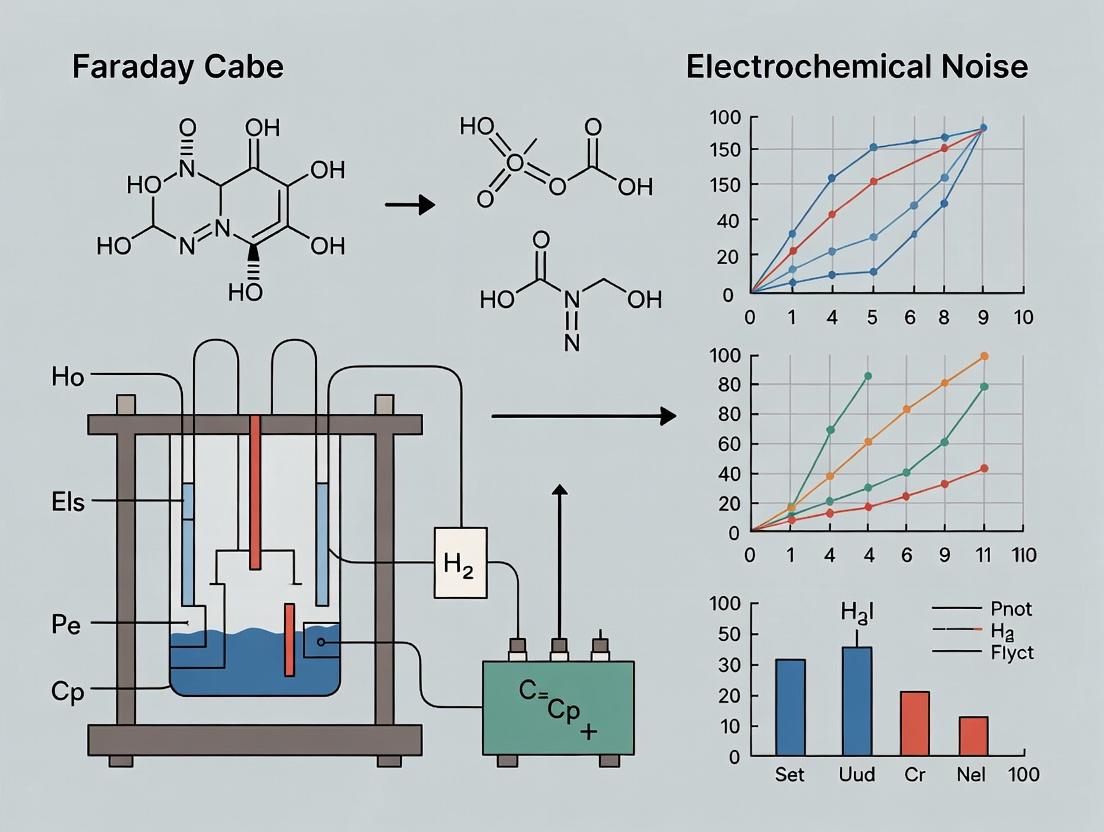
This comprehensive guide details the critical role of Faraday cage implementation in reducing electrochemical noise for sensitive measurements in biomedical research and drug development.
Ultimate Faraday Cage Setup for Electrochemical Noise Reduction in Biomedical Research: A Complete Guide
Abstract
This comprehensive guide details the critical role of Faraday cage implementation in reducing electrochemical noise for sensitive measurements in biomedical research and drug development. It explores the fundamental principles of electromagnetic interference (EMI) in electrochemistry, provides step-by-step methodologies for constructing and implementing effective cages, addresses common troubleshooting scenarios, and validates performance through comparative analysis with other noise mitigation techniques. Tailored for researchers and scientists, this article bridges theoretical knowledge with practical application to enhance data integrity in experiments involving potentiostats, biosensors, and low-current measurements.
Why Faraday Cages are Non-Negotiable for Low-Noise Electrochemistry
Technical Support Center
Troubleshooting Guides & FAQs
Q1: We are observing high-amplitude, low-frequency drift in our potentiometric measurements within our Faraday cage. What are the most likely sources and corrective actions?
A: This is typically caused by thermal gradients or electrode instability. Within a Faraday cage, internal thermal convection can create micro-fluctuations. Ensure your electrolyte and cell are thermally equilibrated for at least 30 minutes post-setup. Use a sealed, three-electrode cell with a stable reference electrode (e.g., Ag/AgCl with high-capacity electrolyte bridge). Check all physical connections for microphonic effects.
Q2: Our low-noise amplifier still shows 50/60 Hz interference despite being inside a double-layer Faraday cage. How is this possible and how do we eliminate it?
A: The interference is likely being conducted into the cage via power lines or sensor leads. Use battery-powered instrumentation for the front-end amplifier. All signal cables entering the cage must be passed through feedthrough filters (low-pass for signal, band-stop for power). Implement twisted-pair or coaxial cables with shields connected only at the amplifier ground point (single-point grounding) inside the cage.
Q3: During long-term biofilm impedance monitoring, we see sporadic, high-frequency noise spikes. What do these represent and are they artifact or signal?
A: These could be either external electromagnetic interference (EMI) or genuine biological noise. First, diagnose by temporarily replacing the working electrode with a dummy resistor-capacitor circuit matching your system's impedance. If spikes persist, it's EMI—check for nearby switched-mode power supplies or digital equipment. If spikes disappear, they may be biologically relevant noise from metabolic bursts or cell lysis, a valuable data source. Always run a sham control.
Q4: What is the minimum required shielding effectiveness (in dB) for a Faraday cage used in single-cell electrophysiology?
A: For most in-vitro biomedical electrochemistry, a shielding effectiveness of >60 dB at 50/60 Hz and >80 dB for frequencies above 1 kHz is sufficient. This attenuates ambient fields to levels below typical biological signal amplitudes (e.g., neurotransmitter detection in the µM to nM range).
Data Summary: Common Noise Sources & Attenuation Methods
| Noise Source | Typical Frequency | Amplitude Range | Effective Attenuation Method |
|---|---|---|---|
| Mains Power (EMI) | 50/60 Hz & harmonics | mV range | Faraday Cage (>60 dB), Battery Power |
| Thermal Drift | <0.1 Hz | µV/min | Temperature Stabilization, Matched Electrodes |
| Intrinsic Electrode Noise | 0.1 Hz - 10 kHz | nV-µV/√Hz | Low-Noise Ag/AgCl Reference, Polished Electrodes |
| Dielectric Absorption | 1 Hz - 1 kHz | Variable | PTFE or Glass Cell, High-Quality Insulators |
| Microbial Activity | DC - 100 Hz | pA-µA | Sterile Technique, Controlled Biofilm Growth |
Experimental Protocols
Protocol 1: Validating Faraday Cage Effectiveness for Electrochemical Noise Reduction
Objective: Quantify the background noise floor of your measurement system with and without Faraday cage shielding.
Materials: Potentiostat/Galvanostat with FRA, Three-electrode cell, Double-layer Faraday cage, Copper mesh, Battery-powered pre-amp.
Methodology:
- Setup Outside Cage: Configure a standard three-electrode cell with all instruments outside the cage. Connect electrodes to a dummy cell (1 kΩ resistor in series with 1 µF capacitor).
- Baseline Measurement: Acquire electrochemical impedance spectroscopy (EIS) data from 100 kHz to 0.1 Hz and potentiometric noise for 300 sec at 10 kHz sampling rate.
- Setup Inside Cage: Move only the electrochemical cell and pre-amplifier inside the grounded Faraday cage. Use filtered feedthroughs for power/communication.
- Shielded Measurement: Repeat the EIS and potentiometric noise acquisition identically.
- Analysis: Calculate the Power Spectral Density (PSD) of the potentiometric data. Compare voltage noise root-mean-square (RMS) and impedance spectra phase noise at low frequency (e.g., 0.1 Hz).
Protocol 2: Differentiating Biological Signal from Instrumentation Noise in Amperometric Sensor Data
Objective: Isolate Faradaic current noise originating from cellular activity from system background.
Materials: Microfabricated electrode array, Cell culture, Low-current potentiostat, Vibration isolation table.
Methodology:
- System Characterization: In cell culture media without cells, perform chronoamperometry at the target potential (e.g., +0.6V vs. on-chip Ag) for 1 hour. Calculate baseline PSD.
- Cell Seeding: Seed cells onto the electrode array and allow adhesion (e.g., 24 hrs).
- Experimental Run: Under identical instrumental conditions, perform chronoamperometry.
- Signal Processing: Subtract the average baseline current. Apply a 5th-order wavelet transform (Daubechies 4) to the residual current trace. Noise contributions from known instrument peaks (e.g., line frequency) are discarded.
- Validation: Treat cells with a metabolic inhibitor (e.g., 1 mM Sodium Azide). The loss of specific noise components in the 0.01-1 Hz range confirms their biological origin.
Visualizations
Title: Electrochemical Noise Mitigation Workflow
Title: EC Noise Bioassay Protocol Flow
The Scientist's Toolkit: Research Reagent & Essential Materials
| Item | Function in EC Noise Research |
|---|---|
| Double-Layer Faraday Cage (Copper/Steel Mesh) | Primary shield against external electromagnetic interference (EMI). The double layer attenuates a wider frequency range. |
| Low-Noise Ag/AgCl Reference Electrode (with Vycor frit) | Provides a stable, non-polarizable potential with minimal intrinsic noise. Vycor frit reduces chloride leakage. |
| Battery-Powered Precision Potentiostat | Eliminates conducted noise from mains power, crucial for pA/nA current measurements. |
| Electrode Polish & Alumina Slurry (0.05 µm) | Creates a mirror-finish on working electrodes, reducing surface heterogeneity-induced noise. |
| Electromagnetic Feedthrough Filters (Low-Pass & Pi-filter) | Allow necessary cables to enter the Faraday cage while blocking high-frequency noise. |
| Vibration Isolation Platform | Decouples the electrochemical cell from building vibrations that modulate ionic diffusion layers. |
| Ultra-Pure Electrolyte Salts & Water (18.2 MΩ·cm) | Minimizes ionic impurities that contribute to dielectric noise and background Faradaic currents. |
| PTFE Electrochemical Cell | Provides excellent electrical insulation and minimizes parasitic capacitance and dielectric absorption. |
| Programmable Data Acquisition (DAQ) System | Enables high-speed, synchronized sampling required for stochastic noise analysis. |
| Wavelet & PSD Analysis Software (e.g., custom Python/Matlab scripts) | Essential for decomposing the noise signal into frequency-time components to identify sources. |
Technical Support Center: Faraday Cage Setup for Electrochemical Noise Reduction
Troubleshooting Guides
Issue 1: High Baseline Noise in Electrochemical Measurements Inside Cage.
- Check 1: Verify the integrity of all electrical connections to the working, reference, and counter electrodes. A loose connection acts as an antenna.
- Check 2: Ensure the potentiostat/measuring instrument is powered from a dedicated, filtered AC line or, preferably, use battery power to eliminate ground loops.
- Check 3: Inspect the cage for gaps or points of poor contact, especially at door seams. Use conductive gasketing tape to improve continuity.
- Check 4: Relocate all non-essential electronic equipment outside the cage. Power supplies and switches for internal equipment can be significant noise sources.
Issue 2: Inconsistent Attenuation Performance Across Frequencies.
- Check 1: Confirm the cage material's skin depth (
δ) is appropriate for your target EMI frequency range. Use thinner materials for higher frequencies. - Check 2: Evaluate the size and geometry of ventilation holes or mesh. Apertures must be significantly smaller than the wavelength (
λ) of the interference you wish to block. - Check 3: Measure the surface resistivity of the cage material. Oxidation or corrosion can dramatically increase resistance and reduce shielding effectiveness (SE).
Issue 4: Internal Equipment Causes Self-Interference.
- Check 1: Isolate and shield internal noise sources (e.g., syringe pumps, stirrers) with individual, smaller shields or ferrite beads on their power/data cables.
- Check 2: Use filtered feedthrough panels for bringing power and signal lines into the cage. Ensure these filters are rated for your frequency range of interest.
Frequently Asked Questions (FAQs)
Q1: What is the most critical factor for achieving high shielding effectiveness (SE) in a lab-built Faraday cage for electrochemical noise studies? A: Continuous electrical conductivity and the absence of apertures. The enclosure must form a complete, unbroken conductive shell. Even small holes or poorly connected panels can drastically reduce SE, particularly at higher frequencies, by allowing electromagnetic fields to couple into the interior.
Q2: How do I properly ground my Faraday cage? Should it be connected to the building's electrical ground? A: For electrostatic shielding, a direct connection to a true earth ground (like the building's ground rod) is essential. This provides a path for induced charges to dissipate. However, for protection against magnetic fields or to prevent ground loops, a single-point ground isolated from the power line ground is sometimes preferable. Always consult your instrument manuals and establish a common ground point for all equipment inside and out.
Q3: Can I use aluminum foil to construct an effective Faraday cage for low-frequency electrochemical measurements? A: Aluminum foil can be effective for high-frequency (RF) shielding due to its high conductivity. However, for very low-frequency magnetic field attenuation (e.g., 50/60 Hz power line interference), its thin geometry offers little magnetic shielding. Multiple layers separated by insulation or the use of high-permeability materials like mu-metal are required for low-frequency magnetic noise reduction.
Q4: My data acquisition cables need to pass into the cage. How can I do this without compromising the shield? A: You must use shielded cables and properly terminate the shield at a bulkhead or feedthrough panel mounted directly on the cage wall. The cable shield must make 360-degree contact with the feedthrough connector. For analog sensor lines, consider using feedthrough capacitors or low-pass filter panels to block RF noise.
Q5: How can I quantitatively test the effectiveness of my Faraday cage setup? A: Perform a controlled attenuation test. Use a signal generator and a small antenna/loop to transmit a known signal at a specific frequency and amplitude outside the cage. Measure the signal amplitude inside the cage using a spectrum analyzer or a sensitive receiver with another antenna. The difference in decibels (dB) between the external and internal measurements is the Shielding Effectiveness (SE) at that frequency.
Table 1: Shielding Effectiveness (SE) of Common Materials for Faraday Cages
| Material | Typical Thickness | Approximate SE (dB) at 100 MHz | Approximate SE (dB) at 1 GHz | Key Consideration for Electrochemistry |
|---|---|---|---|---|
| Copper Sheet (untarnished) | 0.5 mm | > 100 | > 120 | Excellent conductivity, prone to oxidation. |
| Aluminum Sheet | 1.0 mm | > 90 | > 110 | Lightweight, forms insulating oxide layer. |
| Mu-Metal | 1.0 mm | > 40 (Mag. Field) | Low | Excellent for low-frequency magnetic fields. |
| Conductive Fabric (Nickel/Copper) | 0.1 mm | 40 - 60 | 50 - 70 | Flexible, good for tents/enclosures, seams are weak points. |
| Stainless Steel Mesh (100 mesh) | N/A | 40 - 80* | 60 - 90* | Provides ventilation; SE highly dependent on hole size vs. wavelength. |
*SE is highly dependent on precise aperture size and incident wave angle.
Table 2: Common EMI Sources in a Lab and Their Typical Frequencies
| Source | Frequency Range | Potential Impact on Electrochemical Measurements |
|---|---|---|
| AC Power Lines | 50/60 Hz & harmonics | High impact. Causes baseline drift and low-frequency noise in potentiostats. |
| Fluorescent Lights | 1 kHz - 100 kHz (ballast) | Can introduce periodic noise spikes in current measurements. |
| Wi-Fi Routers | 2.4 GHz, 5 GHz | Generally less impact on DC/low-freq measurements, but can affect high-speed data lines. |
| Cellular Phones | 700 MHz - 2.1 GHz | Can cause sharp, transient spikes in unshielded sensitive electronics. |
| Switch-Mode Power Supplies | 10 kHz - 1 MHz | Broadband noise that can raise the noise floor of sensitive amplifiers. |
Experimental Protocols
Protocol 1: Measuring Faraday Cage Shielding Effectiveness (SE) Objective: Quantify the attenuation performance of a Faraday cage across a frequency spectrum. Materials: Signal generator, transmitting antenna, spectrum analyzer, receiving antenna, computer for data logging. Methodology:
- Place the transmitting antenna outside the closed Faraday cage at a fixed distance (e.g., 1 meter).
- Place the receiving antenna inside the cage at the intended measurement location.
- Connect the signal generator to the external antenna and the spectrum analyzer to the internal antenna.
- With the cage door open, transmit a swept frequency signal (e.g., from 100 kHz to 1 GHz). Record the received power (
P_open) at each frequency as your baseline. - Close and seal the Faraday cage door. Repeat the frequency sweep and record the received power (
P_closed) inside. - Calculate SE in decibels (dB) for each frequency:
SE(f) = 10 * log10( P_open(f) / P_closed(f) ).
Protocol 2: Electrochemical Noise (ECN) Measurement with Faraday Cage Objective: Acquire stable, low-noise potential and current fluctuation data for corrosion or deposition studies. Materials: Potentiostat/Galvanostat with ECN capability, three identical working electrodes (WE) or two WEs and a pseudo-reference, Faraday cage, data acquisition system, electrolyte cell. Methodology:
- Setup: Place the entire electrochemical cell, electrodes, and the potentiostat's front-end (if possible) inside the grounded Faraday cage.
- Connection: Use shielded cables for all electrodes. Connect cable shields to the potentiostat's ground at one end only (usually at the instrument side) to prevent ground loops.
- Grounding: Ensure the Faraday cage is connected to a dedicated earth ground. Connect the potentiostat's ground reference to the same point.
- Baseline Recording: With the cell filled with electrolyte but no intentional reaction occurring, record a 10-minute ECN baseline both with and without the cage grounded. Compare the noise power spectral density.
- Experimental Recording: Initiate the electrochemical process (e.g., open circuit, controlled potential). Record the potential and current noise time series simultaneously at a high sampling rate (e.g., 10 Hz to 100 Hz).
- Analysis: Perform statistical (e.g., standard deviation, noise resistance) and frequency-domain (Fast Fourier Transform - FFT) analysis on the data to quantify noise characteristics.
Visualizations
Title: EMI Attenuation Pathways
Title: Electrochemical Noise Setup Workflow
The Scientist's Toolkit: Research Reagent Solutions & Essential Materials
Table 3: Essential Materials for a High-Performance Faraday Cage Setup
| Item | Function in Experiment | Key Specification/Note |
|---|---|---|
| Enclosure Material | Forms the primary barrier against EMI. | High-conductivity metal (copper, aluminum). Thickness > 2x skin depth at target frequency. |
| Conductive Gasket Tape | Seals gaps and seams (e.g., door edges) to ensure electrical continuity. | Copper or aluminum foil tape with conductive adhesive. |
| Bulkhead Feedthrough Panel | Allows power/signal lines to enter cage without compromising SE. | Filtered (for power) or shielded (for data) connectors. |
| Shielded Twisted Pair (STP) Cables | Transmits analog sensor signals (electrode potentials) with minimal interference. | High-density braided shield, 100% coverage. |
| Ferrite Beads/Cores | Suppresses high-frequency noise on cables inside/outside the cage. | Select bead material for target noise frequency band. |
| Battery Power Supply | Powers internal equipment to eliminate AC line noise and ground loops. | Sufficient capacity and voltage stability for experiment duration. |
| Spectrum Analyzer | Diagnostic tool for identifying EMI sources and measuring cage SE. | Frequency range from 10 Hz to at least 1 GHz. |
| Potentiostat with Low-Noise Front End | The core instrument for electrochemical measurements. | Input noise < 10 µV RMS, isolated floating inputs. |
Technical Support Center: Troubleshooting Guides and FAQs
Context: This support center is designed to assist researchers implementing sensitive electrophysiological and amperometric biosensor measurements within a Faraday cage, as part of a thesis focusing on electrochemical noise reduction.
FAQ Section: Common Issues
Q1: My patch-clamp recordings show persistent 50/60 Hz line noise despite being inside a Faraday cage. What are the primary checks? A: This typically indicates an inadequate ground (earth) connection or an "antenna" effect inside the cage.
- Ground Loop Check: Ensure all instruments (amplifier, microscope, perfusion system) share a single, high-quality ground point. Do not daisy-chain grounds.
- Cage Integrity: Verify all panels of the Faraday cage are making solid metal-to-metal contact. Clean contact points with isopropyl alcohol.
- Internal Antennas: Coil and secure all cables (especially perfusion lines) running into the cage. Use shielded cables for all signals, with shields grounded at one end only (typically the amplifier side).
- Vibration Isolation: Ensure the air table or isolation system is not touching the cage walls, as this can couple vibration and noise.
Q2: My amperometric biosensor shows high baseline current and drift after placement in the Faraday cage. A: This often relates to electrostatic charge, thermal drift, or reference electrode stability.
- Static Charge: Ground the researcher via a wrist strap before handling the sensor or working solution vials. Use anti-static mats.
- Thermal Stability: Allow the system (solutions, cage interior) to thermally equilibrate for at least 30-60 minutes after setup. Avoid air currents from HVAC vents.
- Reference Electrode: Confirm the reference electrode (e.g., Ag/AgCl) is stable and properly filled. Check for clogged junctions.
Q3: When I introduce my perfusion system, the electrochemical noise increases dramatically. How can I mitigate this? A: Perfusion systems are major noise sources due to fluid movement and tubing.
- Triboelectric Noise: Use non-conductive (e.g., silicone) tubing for perfusion lines inside the cage. Secure them tightly to prevent movement.
- Grounding the Stream: Insert a chlorided silver wire or a ground electrode into the perfusion line reservoir outside the cage to ground the fluid stream.
- Flow Rate: Ensure a slow, constant flow. Pulsatile flow from peristaltic pumps can induce noise; consider using a gravity-fed system.
Q4: My signal-to-noise ratio is poor for detecting single vesicle release events in amperometry. What optimization steps can I take? A: This requires maximizing the Faraday cage's effectiveness and sensor performance.
- Sensor Placement: Position the biosensor (carbon fiber electrode) and the sample as centrally as possible within the cage, away from the walls.
- Electrical Shielding: Place a local, smaller shield (a grounded metal box or tube) around the recording chamber and sensor headstage.
- Filter Settings: Apply a hardware low-pass Bessel filter (e.g., 1-5 kHz) before digitization to limit broadband noise without distorting fast amperometric spikes.
Troubleshooting Guide Table: Noise Source Identification
| Noise Type / Symptom | Most Likely Source | Immediate Diagnostic Steps | Corrective Action |
|---|---|---|---|
| 50/60 Hz sinusoidal hum | Mains line interference, Ground loops | Disconnect all equipment except amp and probe. Reconnect one by one. | Establish single-point ground; Check cage panel contacts; Use shielded, coiled cables. |
| High-frequency "hash" | Digital noise, RF interference | Turn off fluorescent lights, WiFi routers, and unnecessary digital devices. | Use RF filters on power lines; Increase distance from computers; Add ferrite beads to cables. |
| Low-frequency drift (<1 Hz) | Thermal fluctuations, Unstable reference electrode | Monitor temperature at the experiment; Check reference electrode potential. | Allow thermal equilibration; Use a stable, freshly prepared reference electrode. |
| Irregular, large spikes | Static discharge, Vibration | Note if spikes coincide with movement or touching equipment. | Ground the experimenter; Use vibration isolation; Use anti-static materials. |
| Increased noise with perfusion | Triboelectric effects, Fluid stream as antenna | Temporarily stop flow. Observe noise level. | Ground the fluid stream; Secure and minimize tubing length inside cage. |
Experimental Protocols
Protocol 1: Validating Faraday Cage Efficacy for Amperometric Biosensor Baseline Stability Objective: Quantify the noise reduction provided by the Faraday cage setup. Materials: Potentiostat, Amperometric biosensor (e.g., 5-7 µm carbon fiber electrode), Faraday cage, Vibration isolation table, Grounding equipment. Method:
- Prepare the biosensor and experimental buffer.
- Baseline Recording (Unshielded): Outside the Faraday cage, with all equipment powered, immerse the sensor in buffer. Apply your working potential (e.g., +700 mV for catecholamines). Record the baseline current at 100 kHz sampling rate for 5 minutes.
- Baseline Recording (Shielded): Move the identical setup into the Faraday cage, ensuring all grounding protocols are followed. Close the cage door. Allow 15 minutes for equilibration. Record the baseline current under identical conditions for 5 minutes.
- Data Analysis: Calculate the root-mean-square (RMS) noise for both recordings over a 1-second moving window. Compare the average RMS noise values.
- Optional: Introduce a known noise source (e.g., a running small motor) outside the cage and repeat step 3 to test cage attenuation.
Protocol 2: Patch-Clamp Whole-Cell Recording with Optimized Grounding Objective: Achieve a Gigaseal and low-noise recording inside a Faraday cage. Materials: Patch-clamp amplifier, Micromanipulator, Vibration isolator, Borosilicate glass pipettes, Cell culture, Faraday cage with internal microscope. Method:
- Setup: Mount all equipment. Connect the microscope light source via a DC power supply or battery, not mains AC, if possible.
- Grounding: Connect the amplifier ground to the main cage body. Connect the bath ground electrode (Ag/AgCl pellet) to the amplifier headstage ground.
- Pipette & Solution Preparation: Fill pipette with filtered intracellular solution. Ensure no air bubbles are in the pipette tip or holder.
- Sealing: With the cage door closed, use the manipulator to approach a cell. Apply gentle suction to form a Gigaseal.
- Noise Check: After breaking in to achieve whole-cell mode, record a 30-second segment with no stimulation. The baseline current noise (RMS) should be <1-2 pA when filtered at 5 kHz. If higher, check for vibrations, ground loops, or poor seal resistance.
Visualizations
Workflow for Low-Noise Biosensor Experiment Setup
Key Noise Sources & Shielding Pathways in a Faraday Cage
The Scientist's Toolkit: Essential Research Reagent Solutions & Materials
| Item | Function in Noise-Reduced Experiments | Key Consideration for Faraday Cage Use |
|---|---|---|
| Ag/AgCl Pellets or Wires | Provides a stable, low-noise reference potential for electrophysiology and electrochemistry. | Ensure a robust, clean connection to the central ground point. Chloride layer must be fresh. |
| Electrode Holders (Pipette & Biosensor) | Holds the sensitive electrode and provides electrical connection. | Must be compatible with the micromanipulator. Use shielded versions if available. Keep cables short inside the cage. |
| Shielded BNC/Patch Cables | Transmits tiny signals from the sensor to the amplifier with minimal interference. | Shield must be grounded only at the amplifier end to prevent ground loops. Coil excess length neatly. |
| Vibration Isolation Table | Decouples mechanical vibration from building/machinery from the experiment. | Must be placed inside the Faraday cage. Ensure it does not contact cage walls, creating a noise bridge. |
| Silicone or Non-Conductive Tubing | For perfusion/drug application systems. | Minimizes triboelectric noise generated by fluid movement against tubing walls. |
| Conductive Mat & Wrist Strap | Dissipates static charge from the experimenter. | The mat must be connected to the main cage ground. Essential before handling electrodes. |
| RFI Ferrite Beads/Cores | Suppresses high-frequency radio frequency interference (RFI) on cables. | Snap onto power cords and data cables near their entry point into the Faraday cage. |
| Electrolyte Buffer (e.g., PBS, aCSF, Ringer's) | The conductive medium for the electrochemical or cellular experiment. | Must be filtered (0.22 µm) and degassed to reduce particulates and bubble-induced noise. |
Technical Support Center
Troubleshooting Guide & FAQs
Q1: How do I definitively identify if my experiment requires a Faraday cage? A: Perform a Noise Floor Characterization Experiment. Record your electrochemical signal (e.g., open-circuit potential or low-current amperometry) in your standard lab environment for at least 1 hour. Repeat the measurement inside a verified Faraday cage/enclosure. Compare the power spectral density (PSD) plots. A significant reduction in low-frequency (<60 Hz) and line-frequency (50/60 Hz) noise inside the cage indicates electromagnetic interference (EMI) is polluting your signal, necessitating a cage.
Q2: My low-current measurements (<1 nA) are still noisy even inside a Faraday cage. What's wrong? A: The cage addresses external EMI. Internal noise sources persist. Follow this checklist:
- Grounding: Ensure the Faraday cage, all instrument chassis, and your electrochemical cell share a single-point ground to avoid ground loops.
- Shielding: Use double-shielded (coaxial) cables for all connections, with the outer shield grounded at the cage wall.
- Vibration: Place the setup on a vibration isolation table. Microphonic effects on cables/cells can generate noise.
- Instrumentation: Use a potentiostat with a dedicated low-current module and ensure its internal filters are appropriately configured.
Q3: What are the best practices for setting up and grounding a modular Faraday cage for electrochemistry? A: Incorrect setup can render the cage ineffective.
- Assembly: Ensure all mesh panels have continuous, metal-to-metal contact. Use conductive gaskets if provided.
- Grounding Protocol: Connect the cage's designated grounding point directly to the building's electrical earth ground using a heavy-gauge wire. Do not daisy-chain grounds from other equipment.
- Penetrations: All cables (power, data) must enter through feedthrough filters mounted on the cage wall. Never run unshielded cables through gaps.
Q4: How can I quantify the effectiveness of my Faraday cage setup? A: Execute a Cage Attenuation Test. Using a function generator and a small antenna inside the cage, generate a known RF signal (e.g., 1 MHz, 10 MHz, 100 MHz). Measure the signal amplitude inside and directly outside the cage with a spectrum analyzer. The attenuation in decibels (dB) quantifies performance.
Table 1: Typical Noise Floor Comparison in Electrochemical Experiments
| Condition | RMS Current Noise (≈0.1-10 Hz) | 50/60 Hz Peak Amplitude | Primary Noise Sources |
|---|---|---|---|
| Open Lab Bench | 1-10 pA | 5-50 pA | Mains EMI, RFI, Digital Switching |
| Inside Basic Faraday Cage | 0.2-2 pA | 0.5-5 pA | Ground Loops, Microphonics, Thermal |
| Inside Optimized Cage + Best Practices | <0.1 pA | Undetectable | Fundamental (Johnson, Shot) Noise |
Table 2: Faraday Cage Material Attenuation Performance
| Material & Configuration | Estimated Attenuation (dB) at 100 MHz | Best For / Notes |
|---|---|---|
| Copper Mesh (80目) | 40-60 dB | Flexible enclosures, viewing windows. |
| Aluminum Sheet (1 mm) | >80 dB | High-performance rigid enclosures. |
| Double-Layer Steel (Shielded Room) | >100 dB | Ultra-low-noise neuro/quantum research. |
| Conductive Fabric (Nickel/Copper) | 30-50 dB | Temporary enclosures, cable wraps. |
Experimental Protocols
Protocol 1: Baseline Noise Floor Characterization Objective: Determine the intrinsic electromagnetic noise environment of your laboratory.
- Setup: Connect a low-noise potentiostat to a dummy cell (e.g., 1 MΩ resistor in series with a 100 pF capacitor) simulating a common electrochemical interface.
- Control Measurement: Place the dummy cell and working electrode cable (unshielded if testing) on the open bench. Configure the potentiostat for potentiostatic noise measurement at 0 V, with a 1 kHz sampling rate for 3600 seconds.
- Caged Measurement: Move the entire dummy cell and cable inside the assembled and grounded Faraday cage. Repeat the measurement identically.
- Analysis: Calculate the RMS noise in the 0.1-10 Hz band for both datasets. Generate PSD plots (log-log scale) and compare amplitudes at 50/60 Hz and harmonics.
Protocol 2: Ground Loop Identification and Resolution Objective: Diagnose and eliminate ground loops introduced by cage setup.
- Symptom Check: With the cage operational, monitor current at high gain. Observe if noise increases significantly when an oscilloscope or other AC-powered analyzer is connected.
- Diagnosis: Use a multimeter in AC voltage mode. Measure the potential between the ground points of any two pieces of equipment (e.g., potentiostat chassis and cage wall). Any voltage >1 VAC indicates a problematic ground loop.
- Resolution: Disconnect all equipment from power. Establish a single-star ground point on the Faraday cage. Connect all instrument grounds to this point individually. Use battery-powered equipment for sensitive measurements where possible.
Visualizations
Diagram Title: Decision Workflow: Assessing Faraday Cage Necessity
Diagram Title: Optimal Faraday Cage Grounding and Shielding Schematic
The Scientist's Toolkit: Essential Research Reagents & Materials
Table 3: Key Materials for Low-Noise Electrochemical Experiments
| Item | Function & Rationale |
|---|---|
| Modular Faraday Cage (Mesh or Solid) | Primary barrier against external EMI. Mesh allows visibility; solid panels offer higher attenuation. |
| Low-Noise Potentiostat | Specialized instrument with minimal internal electronic noise, essential for pA/nA current resolution. |
| Double-Shielded (Coaxial) Cables | Inner shield prevents signal leakage; outer shield blocks EMI. Critical for the working electrode connection. |
| Feedthrough Filter (BNC, Power) | Allows power and signal lines to enter/exit the cage while maintaining RF shielding by filtering high frequencies. |
| Vibration Isolation Table | Mitigates microphonic noise induced by building vibrations in cables, cells, and electrodes. |
| Dummy Cell (RC Network) | Simulates an electrochemical interface for validating instrument performance and noise floor tests. |
| Conductive Gasket Tape (Copper) | Ensures electrical continuity between panels of a modular cage, sealing RF gaps. |
| Spectrum Analyzer / FFT-capable DAQ | For advanced diagnosis, generating Power Spectral Density (PSD) plots to identify noise frequencies. |
Step-by-Step: Designing and Building Your Lab's Faraday Cage Setup
Technical Support Center: Troubleshooting & FAQs for Faraday Cage Setup
This support center addresses common issues encountered during the construction and validation of Faraday cages for electrochemical noise (EN) reduction in sensitive electrophysiology or drug development research.
Troubleshooting Guides & FAQs
Q1: Our measured electrochemical noise floor is higher than expected. What are the most likely seam or gap-related failures? A: High noise floors are frequently caused by compromised shielding continuity. Follow this diagnostic protocol:
- Visual Inspection: Examine all seams for consistent, uninterrupted contact. Look for paint overspray, dust, or corrosion on mating surfaces.
- Continuity Testing:
- Tool: Use a multimeter in resistance (Ω) mode.
- Method: Measure point-to-point resistance across seams, door frames, and panel junctions. An ideal continuous joint should read < 0.01 Ω.
- Protocol: Take measurements at 10-cm intervals along all seams. Record values in a table.
- RF Leak Testing (Qualitative):
- Tool: A battery-powered AM/FM radio tuned to a strong signal inside the cage.
- Method: Seal the cage. Move the radio along all seams and the door perimeter. A noticeable increase in signal strength indicates a leak at that location.
Q2: How do we ensure and maintain electrical continuity across hinged doors over time? A: Door integrity is the most common failure point. Implement this maintenance protocol:
- Initial Setup: Use finger-stock or beryllium copper spring gaskets. Clean contact surfaces with isopropyl alcohol before installation.
- Validation Test: Perform a "knife-edge" test. Close the door on a strip of thin paper, then attempt to pull it out. Significant resistance should be felt along the entire perimeter.
- Scheduled Maintenance: Every 3-6 months, or before a critical experiment:
- Clean gaskets and contact points with alcohol.
- Inspect for physical damage (flattening, tears) in gaskets.
- Re-measure contact resistance at 4-6 points around the door frame.
Q4: What quantitative performance metrics should we validate for a research-grade Faraday cage? A: Key shielding effectiveness (SE) metrics are summarized below.
Table 1: Target Shielding Effectiveness (SE) Metrics for Electrochemical Noise Research
| Frequency Range | Target SE (Minimum) | Measurement Method | Acceptance Criteria for Low-Noise EN |
|---|---|---|---|
| DC - 1 kHz | > 60 dB | Two-Probe Voltage Drop: Apply known current across seam, measure µV drop. | Seam resistance < 0.005 Ω. |
| 1 MHz - 1 GHz | > 80 dB | Antenna & Spectrum Analyzer: Signal source outside, receiver inside cage. | Noise floor reduction aligns with theoretical model (e.g., >100x reduction). |
| General | N/A | Point-to-Point Resistance | All structural joints < 0.01 Ω. |
The Scientist's Toolkit: Essential Faraday Cage Materials
Table 2: Research Reagent Solutions & Key Construction Materials
| Item | Function / Purpose in Faraday Cage Context |
|---|---|
| Copper Shielding Tape (Conductive Adhesive) | Sealing small gaps, repairing minor seam discontinuities, and creating electrical bonds. |
| Beryllium Copper Finger-Stock Gasket | Provides high-spring-force, low-resistance contact around door openings; essential for maintainable continuity. |
| Silver Conductive Epoxy | For permanent, high-conductivity bonds at structural seams or ground strap connections where soldering is impractical. |
| Isopropyl Alcohol (≥99% purity) | For degreasing and cleaning all conductive contact surfaces (metal, gaskets) to ensure optimal electrical contact. |
| Low-Noise Reference Electrode & Electrolyte | The subject of the shielding; used inside the cage to validate that external noise is not corrupting the electrochemical signal. |
| Faraday Cage Grounding Strap (Braid) | Creates a single-point, low-inductance bond between the cage exterior and the laboratory's earth ground reference. |
Experimental & Validation Workflows
Troubleshooting Guides & FAQs
Q1: I am measuring excessive 60 Hz (or 50 Hz) line noise in my electrochemical noise data. What is the most likely cause and how do I fix it? A: This is typically a grounding issue. The most common cause is a "ground loop," where multiple paths to ground exist between the potentiostat, the Faraday cage, and other instruments (e.g., computer, external amplifier). To fix it:
- Ensure Single-Point Grounding: Connect all ground wires (chassis ground of potentiostat, Faraday cage mesh, any auxiliary equipment) to a single, common ground point. Do not daisy-chain grounds.
- Use Proper Feedthroughs: Pass all signals (working, reference, counter electrodes) through a single, properly shielded multi-pin feedthrough. Avoid using separate, unshielded holes for each wire.
- Isolate the Computer: Use a fiber optic USB extender or an optically isolated data acquisition card to break the conductive ground connection between the computer (a major noise source) and the potentiostat inside the cage.
Q2: After setting up my experiment inside a Faraday cage, I notice a constant DC offset or drift in my open circuit potential (OCP) measurements. What could be wrong? A: This often points to a problem with the reference electrode feedthrough or static charge buildup.
- Check Reference Electrode Isolation: Ensure the reference electrode is connected using a dedicated, shielded coaxial feedthrough. The shield should be connected to the Faraday cage at the feedthrough point, not to the potentiostat's ground. This prevents leakage currents.
- Verify Electrolyte Junction: Make sure the reference electrode's electrolyte junction is stable and not creating a parasitic potential. Use a Vycor or ceramic frit junction for low-noise experiments.
- Control Static Charge: Use an ionizing blower (outside the cage) to neutralize static charge on all non-conductive materials (e.g., polymer tubing, sample holders) before sealing the cage.
Q3: When I introduce my electrolyte tubing and sampling lines into the cage, my noise floor increases dramatically. How can I maintain a good seal and low noise? A: Conductive solutions entering the cage act as "antennas" if not properly handled.
- Use Shielded, Conductive Tubing: Employ conductive polymer tubing (e.g., carbon-filled) or wrap standard tubing with braided copper shielding, connecting the shield to the cage wall at the entry point.
- Implement a Fluidic Grounding Loop: Insert a small reservoir or a section of metal tubing inline before the feedthrough. Electrically connect this section to the Faraday cage ground. This "grounds out" the electrolyte before it enters the measurement zone.
- Use Bulkhead Fittings: Install conductive (stainless steel or brass) Swagelok-type bulkhead fittings through the cage wall. Connect the fitting body to the cage. Pass tubing through these, ensuring a good mechanical and electrical seal.
Q4: What is the best type of feedthrough for high-impedance electrochemical measurements (e.g., potentiometric sensing)? A: For high-impedance (>1 GΩ) signals, guarding and insulation resistance are critical.
- Use Triaxial Feedthroughs: Implement a triaxial (three-conductor) feedthrough system. The inner conductor carries the signal. The inner shield ("guard") is driven by a low-impedance buffer from the potentiostat's guard output to neutralize cable capacitance. The outer shield is connected to the Faraday cage ground.
- Material Choice: Select feedthroughs with high-quality dielectric insulators like Teflon or ceramic. Avoid nylon or other hygroscopic materials.
- Keep Leads Short: Inside the cage, keep the connection from the feedthrough to the electrode as short as possible. Use a pre-amplifier mounted directly on the feedthrough if available.
Experimental Protocol: Validating Faraday Cage & Grounding System Efficacy
This protocol is designed to quantify the noise reduction achieved by your integrated grounding strategy.
1. Objective: To measure and compare the electrochemical current noise power spectral density (PSD) of a dummy cell under different grounding configurations.
2. Materials:
- Potentiostat/Galvanostat with low-noise capabilities.
- Faraday cage (mesh or solid).
- Multi-pin shielded feedthrough.
- Triaxial feedthrough (for validation).
- Dummy cell: 1 kΩ resistor in series with a 1 µF capacitor (simulating a typical electrode interface).
- Copper grounding plate/bar.
- Fiber optic USB isolator.
- Shorted input cap (for instrumental noise floor measurement).
3. Procedure:
- Step 1 (Baseline - No Cage): Connect the dummy cell directly to the potentiostat on an open bench. Set the potentiostat to potentiostatic mode at 0.0 V vs. internal short. Record current noise for 10 minutes at a 10 Hz sampling rate.
- Step 2 (Cage - Poor Grounding): Place the potentiostat outside the cage. Pass the dummy cell leads through unshielded holes in the cage wall. Ground the potentiostat chassis to a wall outlet. Record noise.
- Step 3 (Cage - Single-Point Ground): Turn off and disconnect the potentiostat. Connect all grounds (potentiostat chassis, feedthrough shield, Faraday cage) to a single copper ground bar. Reconnect the dummy cell via the shielded multi-pin feedthrough. Record noise.
- Step 4 (Cage - Isolated System): With the single-point ground in place, insert the fiber optic USB isolator between the computer and the potentiostat. Power the potentiostat using a battery pack (if possible). Record noise.
- Step 5 (Instrument Floor): Replace the dummy cell with a shorted input cap. Record noise. This defines the lowest possible noise floor of your instrument.
4. Data Analysis:
- Process each current-time trace using a Fast Fourier Transform (FFT) with a Hanning window to calculate the current noise PSD (units: A²/Hz).
- Plot all PSDs on a log-log scale from 0.01 Hz to 5 Hz.
Table 1: Comparison of Integrated RMS Current Noise (0.01 - 5 Hz Bandwidth)
| Grounding Configuration | RMS Noise (pA) | Noque Reduction Factor (vs. Baseline) | Key Observation |
|---|---|---|---|
| Baseline (Open Bench) | ~1500 | 1x | High line frequency harmonics visible. |
| Cage, Poor Grounding | ~1000 | 1.5x | May be worse than baseline due to ground loops. |
| Cage, Single-Point Ground | ~250 | 6x | Significant reduction in 60/50 Hz noise. |
| Cage, Isolated System | ~80 | 18.75x | Very low broadband noise achieved. |
| Instrument Floor | ~50 | 30x | Represents the physical limit of the setup. |
The Scientist's Toolkit: Key Materials for Low-Noise Electrochemical Experiments
Table 2: Essential Research Reagent Solutions & Materials
| Item | Function in Noise Reduction Research |
|---|---|
| Copper Mesh Faraday Cage | Provides electromagnetic shielding, attenuating external RF/EMI fields. A solid cage is superior for magnetic fields. |
| Shielded Multi-Pin Feedthrough | Allows passage of all electrochemical signals while maintaining the cage's conductive integrity. Prevents "antenna" effects. |
| Triaxial Feedthrough & Cables | Essential for high-impedance measurements. The guard shield minimizes capacitive leakage and cable-induced noise. |
| Fiber Optic USB Isolator | Breaks ground loops between the noisy computer and the sensitive potentiostat by using optical instead of electrical coupling. |
| Low-Noise Potentiostat | Instrument with specifically designed low-noise front-end amplifiers and high-resolution ADC/DAC converters. |
| Conductive Tubing/Caging | Prevents the electrolyte stream from acting as an antenna for picking up ambient noise. |
| Single-Point Grounding Bar | A central, low-impedance copper bar where all system grounds converge, eliminating potential differences that cause ground loops. |
| Electrochemical Noise Dummy Cell (1 kΩ + 1 µF) | A calibrated, stable pseudo-cell for validating system performance and comparing configurations quantitatively. |
Visualization: Grounding Strategy Decision Flow
Title: Grounding and Feedthrough Troubleshooting Flowchart
Technical Support Center
Troubleshooting Guide
Issue: Baseline Drift in Electrochemical Noise (EN) Data
- Possible Cause: Temperature fluctuations inside the Faraday cage.
- Diagnosis: Monitor internal cage temperature with a calibrated, non-invasive sensor (e.g., infrared thermometer or a probe fed through a filtered port). Compare logging with your EN data acquisition timeline.
- Solution: Implement an active temperature control system (e.g., a Peltier-based air circulator) with its power supply and control circuitry located outside the cage. Feed only the DC power for the Peltier element through an RF filter. Ensure thermal mass is stable (pre-equilibrate solutions and cell components).
Issue: High-Frequency Noise Artifacts in EN Spectra
- Possible Cause: Vibration coupling from external equipment (pumps, HVAC) or building sources.
- Diagnosis: Temporarily halt all non-essential equipment. Place a sensitive accelerometer inside the cage on the experimental platform.
- Solution: Use a vibration isolation platform inside the cage (e.g., a passive pneumatic or active servo-controlled table). Ensure all fluidic lines are decoupled using flexible, non-conductive tubing sections.
Issue: Unusual Current/Potential Transients
- Possible Cause: Inconsistent or stray photoelectric effects from unmanaged light sources.
- Diagnosis: Conduct the experiment in complete darkness inside the sealed cage. If transients disappear, light is the culprit.
- Solution: Use only cage-integrated, battery-powered LEDs with a static, DC power source, or use external light sources fed through a light guide (e.g., optical fiber). Shield all viewports with grounded metal mesh or conductive film when not in use.
Issue: Inconsistent Results Between Experimental Runs
- Possible Cause: Uncontrolled interaction of environmental variables.
- Diagnosis: Implement simultaneous logging of all three parameters (vibration, temperature, light) correlated to EN data acquisition.
- Solution: Establish a strict pre-experimental stabilization protocol with defined thresholds for each parameter before initiating measurement.
Frequently Asked Questions (FAQs)
Q1: What are the target environmental specifications for reliable EN measurement in a Faraday cage? A: While dependent on system sensitivity, general targets are:
- Temperature Stability: ±0.1°C over the duration of the experiment.
- Vibration: Platform displacement should be < 1 µm, with frequencies > 10 Hz attenuated by at least 60 dB.
- Light: Ability to achieve complete darkness (0 lux) or precisely controlled, flicker-free illumination.
Q2: How can I introduce necessary equipment (sensors, stirrers) without compromising the Faraday cage's integrity? A: All penetrations must be filtered:
- Wires for Sensors: Use feedthrough capacitors or bulkhead panel-mounted low-pass filters (e.g., 1 kHz cutoff) for thermocouple or accelerometer lines.
- Fluidic Lines: Use non-conductive tubing (PTFE) and interrupt with a section of dielectric, labyrinthine path to break ground loops.
- Mechanical Stirrers: Prefer internal, battery-powered stirrers. If external, use a non-conductive (ceramic or polymer) drive shaft through a shielded bushing.
Q3: We observe a 60/50 Hz mains hum in our data despite the cage. What should we check? A: This indicates a ground loop or direct coupling. Check:
- Ensure all equipment inside the cage is powered by internal, isolated batteries.
- Verify that all data acquisition lines are properly shielded and grounded at one point only (typically the ADC).
- Confirm that the Faraday cage itself and the optical table (if used) are grounded to the same single-point earth ground.
Q4: What is the most critical environmental factor for EN studies on corroding or biological electrodes? A: Temperature is often the most critical. It directly influences electrochemical reaction kinetics, double-layer properties, and diffusion coefficients. Fluctuations as small as 0.5°C can induce measurable potential drift, masking the low-frequency noise signals of interest.
Table 1: Impact of Environmental Variables on Electrochemical Noise Metrics
| Environmental Variable | Uncontrolled Fluctuation | Typical Impact on Potential Noise (E~n~) | Typical Impact on Current Noise (I~n~) | Recommended Control Limit |
|---|---|---|---|---|
| Temperature | ± 2.0°C | High (Baseline drift > 100 µV) | Moderate to High | ± 0.1°C |
| Vibration | > 10 µm displacement | Low to Moderate (Spiky artifacts) | High (Induced micro-mixing) | < 1 µm displacement |
| Light (Stray) | Unshielded ambient | Variable (Photocurrents) | High (Spurious transients) | 0 lux or controlled source |
Table 2: Comparison of Vibration Isolation Methods for Internal Use
| Method | Principle | Attenuation Efficacy | Pros | Cons | Suitability for EN Cage |
|---|---|---|---|---|---|
| Passive Pneumatic | Air-spring isolation | Good for > 5 Hz | High load capacity, low maintenance. | Less effective for low-frequency sway. | Excellent for general lab floor vibration. |
| Active Servo | Counter-force actuators | Excellent across spectrum (incl. < 5 Hz) | Superior performance. | Expensive, requires power (must be filtered). | Ideal for high-sensitivity work near infrastructure. |
| Sorbothane Pads | Viscoelastic damping | Moderate for mid/high frequencies | Simple, cheap, no power. | Can creep over time, performance varies with temp. | Good for decoupling small internal components. |
Experimental Protocols
Protocol 1: Characterizing the Internal Vibration Profile Objective: To map the vibrational energy inside the Faraday cage setup prior to electrochemical experiment.
- Calibration: Calibrate a low-noise, tri-axial accelerometer according to manufacturer specs.
- Placement: Secure the accelerometer to the exact location where the electrochemical cell will be placed.
- Data Acquisition: Record acceleration data (in g) for a minimum of 300 seconds at a sampling rate ≥ 1 kHz. Ensure the accelerometer's data logger or wiring is properly filtered through the cage wall.
- Analysis: Perform a Fast Fourier Transform (FFT) on the time-domain data to generate a power spectral density (PSD) plot from 1 Hz to 500 Hz. Identify dominant frequency peaks and compare to known sources (e.g., 60 Hz mains, 30 Hz pump frequency).
Protocol 2: Validating Temperature Uniformity and Stability Objective: To ensure the thermal environment for the electrochemical cell is homogeneous and stable.
- Sensor Setup: Place at least three calibrated thermistors or RTDs: one at the cell position, one near the top/internal wall of the cage, and one near the air inlet/control element.
- Conditioning: Seal the cage and activate the intended temperature control system. Allow the system to reach the target setpoint (e.g., 25.0°C).
- Monitoring: Log temperature from all sensors for a period exceeding your longest planned experiment (e.g., 24 hours).
- Analysis: Calculate the mean temperature and standard deviation for the final 12-hour period. The spatial variation (difference between sensors) should be < 0.2°C, and temporal standard deviation should be < 0.05°C.
The Scientist's Toolkit
Table 3: Key Research Reagent Solutions & Essential Materials
| Item | Function/Description | Critical Consideration for EN in Faraday Cages |
|---|---|---|
| Electrolyte Solution (e.g., 0.1M PBS or 0.01M NaCl) | Provides ionic conductivity for electrochemical cell. Must be high-purity. | Degas with inert gas (e.g., N~2~) before placing inside cage to avoid bubble-induced noise. Pre-equilibrate to target temperature. |
| Tri-axial Accelerometer | Measures vibration in three perpendicular axes (X, Y, Z). | Must be miniature, battery-powered, or use filtered wiring. Sensitivity should be at least 100 mV/g. |
| Bulkhead Panel Filter (Low-Pass, π-filter) | Allows signal/power wires to enter cage while blocking RF noise. | Install directly on cage wall. Cutoff frequency should be below the noise frequency of switching power supplies (e.g., 1 kHz). |
| Peltier-based Air Circulator | Provides active, localized heating/cooling. | Power supply must be external. Only DC power leads, fed through a filter, enter the cage. |
| Optical Fiber Light Guide | Delivers controlled, flicker-free illumination without electrical interference. | The external light source must be battery-powered or have a highly regulated, low-noise DC supply. |
| Viscoelastic Damping Pads (e.g., Sorbothane) | Absorbs and dissipates vibrational energy. | Place under equipment inside the cage (e.g., magnetic stirrer, cell holder). Choose durometer and shape for the load. |
Diagrams
Title: Troubleshooting Environmental Noise in EN Measurement
Title: Workflow for Faraday Cage Environmental Conditioning
Solving Common Faraday Cage Problems and Maximizing Shielding Effectiveness
This technical support center provides structured guidance for researchers isolating noise sources in sensitive electrochemical experiments, a critical challenge in our broader thesis on optimized Faraday cage designs for electrochemical noise reduction.
Troubleshooting Guides & FAQs
Q1: How do I quickly determine if the dominant noise source is external EMI/RFI? A: Perform the "Progressive Shielding Test."
- Power on your potentiostat and connected electrodes in your standard lab location, outside any cage. Measure open-circuit potential or a low-current baseline for 60 seconds. Note the peak-to-peak noise amplitude (e.g., in µV or pA).
- Enclose only the electrochemical cell and working/counter/reference electrodes in a small, portable shielded container (even a grounded metal mesh or cookie tin). Repeat the measurement.
- Finally, place the entire setup (cell, electrodes, and the potentiostat) inside your laboratory's primary Faraday cage. Ground the cage properly. Repeat the measurement.
- Interpretation: A significant noise reduction (>60%) after step 2 indicates strong susceptibility to external EMI. A further major reduction in step 3 confirms EMI as the primary source and validates the Faraday cage's necessity. Minimal change after step 3 suggests the noise is internally generated (ground loops or instrumentation).
Q2: What is the definitive test for a ground loop problem? A: Perform the "Single-Point Ground & Battery Isolation Test."
- With your setup inside the Faraday cage, ensure all instruments (potentiostat, computer, ancillary devices) are plugged into a single, high-quality power distribution unit (PDU) connected to one wall outlet.
- Record a baseline noise measurement.
- Critical Step: Disconnect the computer's power supply and run it on battery power only. Keep all signal connections (USB, data cables) intact. Record the measurement.
- If safe and possible for your instrument, also power the potentiostat from its internal battery (if available) while the computer remains on battery.
- Interpretation: A dramatic noise reduction during battery-powered operation is a clear diagnostic for a ground loop. The loop is formed when multiple pieces of equipment are grounded at different physical points, creating a potential difference that drives current through signal cables.
Q3: My noise persists inside a grounded Faraday cage on battery power. What now? A: This strongly points to instrumentation noise or fundamental experimental limits. Proceed as follows:
- Short the Inputs: Replace the electrochemical cell with a certified dummy cell or simply short the working, counter, and reference electrode cables together at the point they would connect to the cell. Measure the current or potential noise. This reveals the baseline noise floor of your instrument.
- Check Connections & Cables: Visually and mechanically inspect all BNC, triaxial, and banana connections for looseness or corrosion. Swap cables, especially the reference electrode cable, which is most sensitive.
- Environmental Control: Verify that subtle vibrations, air currents, or temperature fluctuations inside the cage are not affecting your cell. Isolate the optical table or cell holder if used.
Quantitative Noise Source Comparison Table
| Noise Source | Typical Frequency Range | Characteristic Signature in EC Noise Data | Expected Reduction After Proper Mitigation |
|---|---|---|---|
| EMI/RFI | 50/60 Hz & harmonics, Broadband (kHz-MHz) | Clear 50/60 Hz sine wave peaks in FFT; erratic spikes from radios, switches. | 70-95% (with full Faraday cage & filtering) |
| Ground Loops | Primarily 50/60 Hz | Large 50/60 Hz hum in time-series; can be erratic if devices switch. | 80-99% (with single-point ground & isolation) |
| Instrumentation | Wideband (mHz - kHz) | White noise floor; 1/f (flicker) noise at low frequency; may have fixed patterns. |
0-30% (requires hardware upgrade/repair) |
| Thermal/Johnson | Wideband | Gaussian white noise, fundamental limit. | Not reducible at constant temperature. |
| Electrochemical | mHz - Hz | Non-stationary drift, stochastic events related to the process under study. | Part of the signal of interest. |
Experimental Protocol: The Systematic Noise Diagnostic Protocol
Objective: To conclusively identify the primary source(s) of noise in a three-electrode electrochemical setup.
Materials: See "Research Reagent Solutions" below.
Methodology:
- Baseline in Unshielded Environment:
- Set up potentiostat and computer in normal lab.
- Connect a dummy cell (e.g., 1 kΩ resistor in series with 1 µF capacitor between WE and CE, RE tied to WE).
- Measure open-circuit potential (OCP) for 300 sec at 1 kHz sampling rate. Perform FFT.
- Progressive Shielding:
- Enclose dummy cell in small shielded box, grounded to potentiostat ground.
- Repeat measurement (Step 1c).
- Transfer entire system to main Faraday cage. Ground cage to PDU ground.
- Repeat measurement.
- Ground Loop Isolation:
- Inside the cage, power computer and all peripherals from the single PDU.
- Record OCP for 60 sec.
- Switch computer to battery power. Record OCP.
- Instrumentation Noise Floor Test:
- With setup on battery inside cage, replace dummy cell with a solid copper short (short WE to CE to RE directly at cable ends).
- Perform a very sensitive current measurement (e.g., ±10 nA range) for 60 sec.
- Control: Real Electrochemical Cell:
- Introduce your actual electrochemical cell (e.g., 5 mM K₃Fe(CN)₆/K₄Fe(CN)₆ in 1 M KCl) with quiet, polished electrodes.
- Repeat OCP and low-current measurements.
- Data Analysis:
- Calculate peak-to-peak and RMS noise for each time-series.
- Overlay FFT plots from Steps 1, 2, and 3 to visualize 50/60 Hz reduction.
- Compare the short-circuit measurement (Step 4) to the manufacturer's specified noise floor.
Diagnostic Decision Pathway Diagram
The Scientist's Toolkit: Research Reagent Solutions
| Item | Function & Rationale |
|---|---|
| Triaxial Cables | Minimizes capacitive coupling of noise. The inner shield (guard) drives at signal potential, the outer shield grounds at the Faraday cage. Essential for low-current ( |
| Faraday Cage (Solid Copper) | Provides attenuation of external electric fields. A solid (non-mesh) enclosure is superior for high-frequency RFI (>100 MHz). Must be properly grounded. |
| Mu-Metal Sheets/Liners | Provides high magnetic permeability to attenuate low-frequency magnetic interference (50/60 Hz), which copper does poorly. Used to line a Faraday cage. |
| Battery-Powered Laptop | A critical diagnostic tool to break ground loops by providing galvanic isolation from the mains power grid. |
| Single-Outlet Power Distributor | Ensures all line-powered equipment shares the same earth ground reference point, preventing ground loops from forming between outlets. |
| Dummy Cell (RC Network) | A stable, non-electrochemical substitute for a real cell. Allows isolation of instrumental noise from system noise. A common model is 1 kΩ // 1 µF. |
| Low-Noise Preamplifier | Placed close to the cell inside the cage, it amplifies the signal before it travels through longer cables, improving the signal-to-noise ratio. |
| Electrolyte with Redox Couple (e.g., 5mM K₃/₄Fe(CN)₆ in 1M KCl) | Provides a well-understood, quiet, and reversible electrochemical reaction for system validation and baseline noise comparisons across labs. |
Technical Support Center: Troubleshooting & FAQs for Grounding in Electrochemical Noise Research
This support center addresses common grounding issues within a Faraday cage setup for electrochemical noise (ECN) measurement in electrochemical research and drug development.
Frequently Asked Questions (FAQs)
Q1: My electrochemical noise data shows 60Hz (or 50Hz) line interference within my Faraday cage. What is the most likely cause and how do I fix it? A: This is typically a ground loop caused by multiple, unequal ground reference points. Your measurement apparatus (potentiostat, zero-resistance ammeter) and your Faraday cage must share a single, common ground point. Disconnect all other incidental ground connections (e.g., via other instrument power cables). Ensure your cage is grounded only at one dedicated point, connected directly to your instrument's ground terminal.
Q2: After implementing single-point grounding, I still observe high-frequency noise. What should I check next? A: High-frequency noise often indicates an issue with the earth connection quality or capacitive coupling. First, verify the impedance of your earth ground rod using a dedicated earth ground tester; it should be <25 Ω for sensitive measurements. Second, inspect all cables for shield integrity and ensure they are properly grounded only at the instrument end to prevent antenna effects.
Q3: When is a multipoint grounding strategy preferable for a Faraday cage setup? A: Multipoint grounding is generally used for high-frequency (>10 MHz) interference suppression, which is less common in typical DC/low-frequency ECN studies. For most ECN research involving DC or low-frequency AC signals, single-point grounding is superior as it eliminates ground loops. If you suspect VHF/RF interference, multipoint can be considered but requires a low-impedance ground plane (like a solid copper sheet) connecting all points.
Q4: How do I properly connect my Faraday cage to an earth ground? A: Use a heavy-gauge (≥6 AWG), low-inductance copper strap—not a thin wire—to connect a dedicated terminal on your cage directly to a verified earth ground rod. The connection should be short, straight, and all contact surfaces must be cleaned (abraded) and secured tightly. Avoid forming coils in the grounding strap.
Troubleshooting Guide: Step-by-Step Protocols
Protocol 1: Diagnosing Ground Loop Interference
- Setup Baseline: Configure your ECN experiment (working, reference, counter electrodes) inside the grounded Faraday cage with your standard setup.
- Data Acquisition: Record 5 minutes of potential noise data at your standard sampling rate (e.g., 10 Hz).
- Disconnect Auxiliary Grounds: Power down the system. Disconnect the ground wire from the Faraday cage. Ensure the only ground connection for the entire system is through the ground terminal of your potentiostat.
- Reconnect & Test: Reconnect the cage ground strap directly to the same ground terminal as the potentiostat (single-point ground). Repeat the data acquisition.
- Analysis: Perform a Fast Fourier Transform (FFT) on both data sets. A significant reduction in 50/60 Hz and its harmonics indicates the problem was a ground loop.
Protocol 2: Verifying Earth Ground Electrode Efficacy
- Equipment: Obtain a 3-pole earth ground tester.
- Measurement: Follow the manufacturer's instructions to measure the resistance of your installed ground rod. Place the reference and current probes at appropriate distances in the soil.
- Evaluation: If resistance is >25 Ω, improve it by: a) Using a longer/deeper ground rod, b) Adding multiple rods bonded together, c) Treating the soil with a conductive enhancement compound.
Table 1: Comparison of Grounding Schemes for ECN Faraday Cages
| Feature | Single-Point Grounding | Multipoint Grounding |
|---|---|---|
| Best For | DC to ~1 MHz signals (Typical ECN) | High-frequency (>10 MHz) RFI suppression |
| Ground Loop Risk | Very Low (if implemented correctly) | High |
| Wiring Complexity | Moderate (Star topology) | High (Grid topology) |
| Typical Earth Rod Impedance Target | < 25 Ω | < 5 Ω (requires ground plane) |
| Common Issue in ECN | Induction at long ground strap lengths | Introduction of low-frequency noise loops |
Table 2: Troubleshooting Matrix for Common Noise Issues
| Observed Noise | Possible Cause | Diagnostic Action | Corrective Action |
|---|---|---|---|
| 50/60 Hz & Harmonics | Ground Loop | Isolate all ground points; implement Protocol 1. | Establish a strict single-point ground. |
| Broadband High-Freq. | Poor Earth Ground | Measure earth rod impedance (Protocol 2). | Improve earth connection; use low-inductance ground strap. |
| Spiked Transients | Electrostatic Discharge | Check for isolated conductors inside cage. | Ground all internal metallic objects (cells, shelves) to cage wall. |
| Intermittent Shifts | Floating/Faulty Connection | Visually and mechanically inspect all ground connections. | Clean and secure all contacts; use star washers. |
The Scientist's Toolkit: Research Reagent & Essential Materials
| Item | Function in Grounding/ECN Experiment |
|---|---|
| Low-Noise Potentiostat/ZRA | Core instrument for ECN measurement; provides the central ground reference point. |
| Copper Faraday Cage | Provides electrostatic shielding; must be properly grounded to be effective. |
| Heavy-Gauge Copper Ground Strap | Provides low-impedance, low-inductance connection from cage to ground point. |
| Copper Ground Rod (≥ 8 ft.) | Establishes a reliable connection to the earth mass. |
| Earth Ground Resistance Tester | Quantitatively verifies the quality of the earth ground connection. |
| Electrochemical Cell with Shielded Cabling | Cell must be non-corrosive; cables must have shields grounded at one end only. |
| Abrasive Pads (for contact cleaning) | Ensures oxide-free, low-resistance metal-to-metal contact at all junctions. |
| Star/Wave Washers | Prevents loosening of ground terminal connections over time. |
Experimental & Conceptual Diagrams
Technical Support Center
Troubleshooting Guides & FAQs
Q1: Our Faraday cage's noise floor spikes when we pass our potentiostat leads through the feedthrough panel. What is the likely cause and how can we diagnose it? A: This is typically caused by insufficient filtering or improper shielding of the feedthrough itself. The feedthrough acts as an antenna, coupling electromagnetic interference (EMI) into your sensitive measurement leads.
- Diagnostic Protocol:
- Disconnect Experiment: Remove all cables from the feedthrough on the interior side. Terminate the feedthrough ports with 50-Ω terminators if coaxial, or leave open if filtered BNC.
- Measure Baseline Noise: Using a low-noise voltage preamplifier and your data acquisition system (DAQ), measure the spectral noise density inside the cage. Record this as your baseline.
- Reconnect Leads: Pass a single set of experiment leads (e.g., working electrode sense) through the feedthrough. Connect them to a dummy cell (e.g., a 1-kΩ resistor) inside the cage, but leave the external potentiostat disconnected. Ground the external cable shield.
- Re-measure Noise: Acquire the noise spectrum again. A significant increase (> 10 dB) indicates the feedthrough is picking up ambient EMI. If the noise is unchanged, proceed to connect the external instrument and repeat. This isolates the problem to the feedthrough or the instrument/cable.
Q2: We need multiple cable penetrations for our multi-electrode array. What is the optimal type of feedthrough to maintain shielding effectiveness (SE)? A: The optimal choice balances the number of channels, required bandwidth, and necessary signal integrity. Unfiltered penetrations drastically reduce SE.
| Feedthrough Type | Typical Shielding Effectiveness (SE) up to 1 GHz | Best For | Key Limitation |
|---|---|---|---|
| Unfiltered Bulkhead Connector (e.g., plain BNC) | < 10 dB (Severe Leakage) | Non-critical power lines only | Defeats the cage's purpose for low-level signals. |
| Filtered Feedthrough (π-filter, LC) | 60 - 100 dB | Low-frequency analog signals (DC - 100 kHz); potentiostat leads. | Can introduce signal attenuation & distortion at high frequencies. |
| Shielded Coaxial Feedthrough | 80 - 120 dB (with proper grounding) | Higher frequency signals, digital communication. | Requires matched impedance cables; grounding of outer shield is critical. |
| Waveguide-Below-Cutoff (Honeycomb Vent) | > 100 dB for GHz range | Ventilation, fiber optics, or non-conductive penetrations. | Only effective for frequencies above the cut-off; large physical size. |
Q3: Our data shows 60 Hz (mains) pickup and broadband noise superimposed on the electrochemical noise signal. We suspect the shield is compromised. What is a systematic check protocol? A: Follow this sequential integrity check protocol.
Experimental Protocol: Faraday Cage Integrity Verification
Visual Inspection:
- Inspect all panel seams, joints, and door gaskets for physical gaps, corrosion, or loose EMI finger stock.
- Ensure no unintended conductive objects (e.g., ungrounded racks, chairs) are penetrating the shield.
Electrical Continuity Test:
- Using a multimeter in resistance mode (Ω), measure between each major panel and the designated single-point ground reference.
- Acceptance Criterion: All readings should be < 0.1 Ω. High resistance indicates poor contact at seams.
Aperture & Cable Audit:
- List every penetration (power, signal, air, data).
- Verify all signal/power lines pass through appropriate filtered feedthroughs.
- Ensure all cable shields are 360° terminated (via proper connector backshells) to the feedthrough panel, not "pigtailed."
Internal Noise Floor Measurement:
- Place a low-noise amplifier connected to a spectrum analyzer inside the powered-off but sealed cage.
- Terminate the amplifier input with a short circuit.
- Measure the voltage spectral density from 1 Hz to 1 MHz. Compare against the amplifier's intrinsic noise. Significant excess, especially at line harmonics (60, 120, 180 Hz), indicates leakage.
Q4: How should we route and prepare cables internally to minimize cross-talk and re-radiation? A: Internal cable management is as crucial as the feedthroughs.
- Separation: Keep high-current/power lines (e.g., for stirrers) physically separated (> 30 cm) from low-level measurement cables. Cross them at 90° if necessary.
- Shield Grounding: Ground cable shields only at one end (typically the feedthrough side) inside the cage to prevent ground loops. Use insulated jacks for inner conductors.
- Twisting: Use twisted-pair wires for signal and its return path to minimize magnetic pickup.
- Ferrites: Clip ferrite beads or cores onto cables near the entry point as a supplementary low-pass filter.
Research Reagent & Essential Materials Toolkit
| Item | Function in Faraday Cage Setup for ENM |
|---|---|
| Filtered BNC Feedthrough Panel | Provides conductive penetration for coaxial cables while filtering RFI (Radio Frequency Interference) via built-in π-filters. |
| Copper Tape with Conductive Adhesive | Used for sealing small seams, grounding cable shields, and creating temporary gaskets. Must be bonded to clean metal. |
| EMI Finger Stock (Beryllium Copper) | High-conductivity spring strips for door seals, ensuring continuous electrical contact along the entire perimeter. |
| Low-Noise Voltage Preamplifier | Amplifies tiny electrochemical noise signals (µV range) internally before transmission, improving signal-to-noise ratio. |
| Spectrum Analyzer (or FFT-capable DAQ) | Critical for diagnosing noise sources by visualizing the frequency spectrum of the measured signal inside the cage. |
| Dummy Cell (Precision Resistor/Capacitor) | A known passive component used to replace the electrochemical cell during diagnostic tests to isolate instrument/cage noise. |
| Feedthrough Termination Caps (50 Ω) | Plugs into unused filtered feedthrough ports to maintain the shield's integrity and prevent EMI leakage through open ports. |
Visualization: Faraday Cage Leakage Diagnosis Workflow
Title: Faraday Cage Leakage Diagnosis Workflow
Technical Support Center
Troubleshooting Guides & FAQs
Q1: During electrochemical noise (EN) measurement, we observe persistent low-frequency drift despite using a single-layer Faraday cage. What is the most likely cause and solution? A: Low-frequency drift (<1 Hz) is often caused by thermoelectric potentials from temperature gradients or vibration-induced microphonics, not just external EMI. A single-layer cage attenuates high-frequency RF but is ineffective against these low-frequency interferences.
- Solution: Implement a nested (dual-layer) Faraday cage. Ensure an air gap of at least 5-10 cm between layers and electrically isolate the inner cage from the outer one using nylon or ceramic standoffs. This dramatically increases low-frequency magnetic field (H-field) attenuation. Concurrently, place the entire setup on a passive pneumatic vibration isolation table.
Q2: After installing a nested cage, our potentiostat's baseline noise increased. What could have gone wrong? A: This is a classic grounding error. A nested cage creates a "ground loop" if both layers are connected to the same earth ground point at multiple locations, turning the cage itself into an antenna.
- Solution: Single-Point Star Grounding. Establish one central ground point (a copper bus bar). Connect ONLY the outer cage to this ground. Connect the inner cage to the outer cage at ONE point only via a braided strap. Finally, connect all instrument chassis and the working electrode ground to the central ground point. Never use the building's electrical ground for the inner cage.
Q3: Our sensitive EN data shows periodic spikes at 60 Hz and harmonics, even inside the cage. We have checked grounding. What else could it be? A: This indicates direct conductive coupling of line noise into your measurement circuit.
- Solution: Power all instrumentation (potentiostat, preamplifiers) via a dedicated double-isolation transformer or a high-quality line-conditioning uninterruptible power supply (UPS) placed outside the cage. Use filtered feedthrough panels for any power cables entering the cage. Replace switch-mode power supplies with linear power supplies where possible.
Q4: We are measuring low-current transients (< pA) and suspect vibrational noise. How can we diagnose and isolate it? A: Vibration can modulate interfacial impedances, creating "faux" electrochemical noise.
- Diagnosis: Place a sensitive accelerometer on the working electrode mount. Record acceleration data simultaneously with EN data. Perform a coherence analysis (Frequency Response Function) between the acceleration and current/voltage noise signals. A high coherence at specific frequencies (e.g., building resonance, pump vibrations) confirms the issue.
- Solution: Implement combined isolation. Use a pneumatic vibration isolator (for low-frequency, <10 Hz floor vibrations) underneath the entire cage. Inside the inner cage, use a high-stiffness, kinematic optical table for the electrochemical cell to damp higher frequency vibrations. Ensure all cables inside are lightweight and securely tied down to prevent "cable whip."
Q5: What is the typical performance improvement we can expect from a properly configured nested cage with vibration isolation? A: Based on current literature and manufacturer specifications, expect the following order-of-magnitude improvements:
Table 1: Expected Attenuation from Advanced Isolation Techniques
| Interference Type | Single-Layer Cage | Nested Cage + Proper Grounding | Combined (Nested + Vibration Iso.) |
|---|---|---|---|
| High-Freq. RF (>100 MHz) | 40-60 dB | 80-100+ dB | 80-100+ dB |
| Low-Freq. Magnetic (50/60 Hz) | < 10 dB | 30-40 dB | 30-40 dB |
| Vibrational Noise (1-100 Hz) | 0 dB | 0 dB | 20-35 dB (Isolation) |
| Thermal Drift | No effect | Minor improvement | Significant reduction |
Experimental Protocols
Protocol 1: Validating Nested Cage Effectiveness for EN Measurement Objective: Quantify the attenuation of external EMI on potentiostat baseline current.
- Setup: Place the potentiostat and electrochemical cell (with a dummy cell or stable reference electrode system) inside the inner Faraday cage.
- Shielding: Keep the outer cage door closed. Ensure single-point grounding is implemented as described in FAQ A2.
- Control Measurement: With all intentional EMI sources (Wi-Fi, phones) disabled, record a 1-hour current-time series at the desired potential and sampling rate (e.g., 1 kHz). Calculate the Root-Mean-Square (RMS) noise and Power Spectral Density (PSD).
- Challenge Test: Introduce a controlled interference source outside the outer cage (e.g., a 1 kHz square wave generator connected to a small loop antenna). Repeat the measurement.
- Comparison: Repeat steps 3 & 4 with only the single-layer (outer) cage. Compare the PSD plots. Successful nesting shows >40 dB greater attenuation at the challenge frequency.
Protocol 2: Isolating and Quantifying Vibration-Noise Coupling Objective: Determine the coherence between building vibration and measured electrochemical noise.
- Instrumentation: Mount a low-noise accelerometer (sensitivity ~1000 mV/g) next to the electrochemical cell on the inner table.
- Synchronization: Connect the accelerometer output and the potentiostat's analog auxiliary inputs to a synchronized data acquisition system (common clock).
- Data Acquisition: Simultaneously record 10-minute segments of: a) cell current/voltage (EN), b) 3-axis acceleration, under "quiet" and "normal lab activity" conditions.
- Analysis: Use signal processing software (e.g., MATLAB, Python SciPy) to compute the Magnitude-Squared Coherence (Cxy) between the vibration axis with highest amplitude and the EN signal.
Cxy(f) = |Pxy(f)|^2 / (Pxx(f) * Pyy(f)), where Pxx and Pyy are auto-spectral densities, and Pxy is the cross-spectral density. A coherence value >0.5 at a specific frequency indicates strong coupling.
Visualizations
The Scientist's Toolkit: Research Reagent Solutions & Essential Materials
Table 2: Key Materials for Advanced EMI-Vibration Isolation in EN Research
| Item | Function & Rationale |
|---|---|
| Double-Layer Perforated Steel Faraday Cage | Outer shield. Perforation balances airflow and RF shielding effectiveness (SE). |
| Solid Copper or Mu-Metal Inner Cage | Inner shield. Solid provides better low-frequency magnetic attenuation. Mu-metal is superior for extreme low-frequency (<1 kHz) shielding. |
| Ceramic/Nylon Standoffs & Hardware | Electrically isolate inner cage from outer cage to prevent accidental multi-point grounding. |
| Copper Ground Bus Bar | Provides a low-impedance, single-point "star" ground reference for all system components. |
| Low-Noise Linear Power Supply | Powers sensitive electronics; eliminates high-frequency switching noise from switch-mode power supplies. |
| Filtered AC Feedthrough Panel | Allows power to enter the cage while filtering out line-borne RF noise (common and differential mode). |
| Pneumatic Vibration Isolation Table | Isolates the entire cage assembly from low-frequency floor vibrations (<10 Hz). Critical for buildings with HVAC or traffic. |
| Kinematic Optical Breadboard (Inside Cage) | Provides a rigid, damped surface inside the inner cage for mounting the cell, minimizing local resonance. |
| Low-Noise Triaxial Accelerometer | Diagnoses vibration coupling by measuring acceleration in three axes simultaneously with EN data. |
| Synchronized Multi-Channel DAQ System | Acquires analog signals (current, voltage, acceleration) with a common timebase for accurate coherence analysis. |
Faraday Cage Performance Validation vs. Alternative Noise Reduction Methods
How to Quantitatively Measure Shielding Effectiveness (SE) in the Lab
Technical Support Center: Troubleshooting & FAQs
Q1: Our SE measurements show high variability between repeated tests on the same Faraday cage. What could be the cause?
A: This is often due to poor contact integrity or inconsistent setup.
- Check & Fix: Ensure all seams and doors have continuous electrical contact. Use conductive gaskets or tape. Clean all contact surfaces with isopropyl alcohol to remove oxidation. Follow a strict, documented procedure for closing the enclosure before each measurement to ensure consistency.
Q2: We measure a low SE (e.g., < 20 dB) at low frequencies (e.g., < 100 kHz), but our cage material should perform better. What's wrong?
A: At low frequencies, SE is dominated by the magnetic field shielding, which depends on material permeability and thickness, not just conductivity. Your setup may have insufficient material for magnetic shielding.
- Check & Fix: Verify your signal source and receiver can accurately measure at these frequencies. Consider using a thicker, high-permeability material (e.g., mu-metal) for low-frequency magnetic shielding if needed for your research. Ensure the cage is properly grounded at a single point.
Q3: During in-situ testing of our electrochemical cell inside the cage, we observe strange resonance peaks in the SE data. Why?
A: Resonance occurs when the internal dimensions of the cage are a multiple of half the wavelength of the incident field. This creates standing waves, causing dips in SE at specific frequencies.
- Check & Fix: This is a characteristic of the enclosure, not a fault. Note the resonant frequencies in your thesis as a limitation. To mitigate, you can place RF-absorbing material inside the cage (away from your experiment) to dampen resonances, ensuring it does not interfere with your electrochemical sensors.
Q4: The measured SE seems to depend on where we place the receiving antenna inside the cage. Is this normal?
A: Yes, especially at higher frequencies where standing waves create "hot" and "cold" spots. For a standardized test, antenna position must be fixed.
- Check & Fix: Follow a standard like ASTM D4935 or MIL-STD-188-125 for antenna placement. For a custom lab setup, meticulously document the fixed positions of transmit and receive antennas relative to the cage walls. Your thesis should acknowledge spatial variance as a factor in measurement uncertainty.
Key Experimental Protocols
Protocol 1: SE Measurement Using the Dual-Chamber (Nested Chamber) Method
This is ideal for evaluating materials or small enclosures for electrochemical noise isolation.
- Setup: Construct two shielded chambers separated by a common wall. An aperture in the common wall holds the material under test.
- Signal Transmission: A signal generator connected to a transmitting antenna is placed in the source chamber.
- Signal Reception: A spectrum analyzer with a receiving antenna is placed in the receiving chamber.
- Reference Measurement: Measure the received power (P_ref) with the aperture empty (no material).
- Shielded Measurement: Measure the received power (P_shield) with the material sample covering the aperture.
- Calculation: SE (dB) = 10 log₁₀ (Pref / Pshield).
Protocol 2: In-Situ SE Measurement for an Operational Faraday Cage
This assesses the complete cage setup with equipment inside, relevant for an active electrochemical noise experiment.
- Baseline: Place both transmitting and receiving antennas outside the closed cage, 1-3 meters apart. Measure received power (P_out).
- Internal Measurement: Place the receiving antenna inside the closed cage at the location of your electrochemical cell. Keep the transmitting antenna in the same external location. Measure received power (P_in).
- Calculation: SE (dB) = 10 log₁₀ (Pout / Pin). This measures the cage's attenuation of ambient or injected noise.
Data Presentation
Table 1: Typical SE Performance of Common Shielding Materials (at 1 MHz & 1 GHz)
| Material | Thickness | Approx. SE at 1 MHz (dB) | Approx. SE at 1 GHz (dB) | Key Mechanism |
|---|---|---|---|---|
| Copper Foil | 0.1 mm | > 100 | > 100 | Reflection (High Conductivity) |
| Aluminum Sheet | 1 mm | > 100 | > 100 | Reflection |
| Mu-Metal | 1 mm | > 60 (for magnetic fields) | ~30 | Absorption (High Permeability) |
| Conductive Fabric | 0.5 mm | 40 - 60 | 50 - 70 | Reflection/ Absorption |
| Galvanized Steel | 1 mm | > 100 | > 100 | Reflection |
Table 2: Troubleshooting Common SE Measurement Issues
| Symptom | Likely Cause | Diagnostic Step | Corrective Action |
|---|---|---|---|
| Erratic, low SE | Poor electrical contact at seams | Check continuity with multimeter | Install/clean conductive gaskets |
| SE decreases with frequency | Aperture leakage (holes, vents) | Visual inspection; taping test | Seal holes with conductive mesh/tape |
| Negative SE measured | Cable coupling or ground loops | Power equipment from batteries | Isolate power supplies; use ferrite chokes |
| Inconsistent results | Variable antenna placement | Mark positions with tape | Follow a fixed, documented geometry |
Visualizations
Title: Shielding Effectiveness Measurement Core Workflow
Title: Noise Reduction Pathway for Electrochemical Research
The Scientist's Toolkit: Key Research Reagent Solutions & Materials
| Item | Function in SE Measurement / Faraday Cage Setup |
|---|---|
| Spectrum Analyzer / Vector Network Analyzer (VNA) | The core instrument for measuring signal power (in dBm) or S-parameters across a frequency range to calculate attenuation. |
| Broadband Antennas (e.g., Log-Periodic, Biconical) | Transmit and receive electromagnetic waves across a wide frequency band for comprehensive SE testing. |
| Signal Generator | Produces a stable, known RF signal for controlled SE measurement in dual-chamber or injected-noise setups. |
| Conductive Gasket & Tape (Copper, Aluminum) | Ensures continuous electrical contact across door seams and joints, critical for maintaining cage integrity. |
| Conductive Adhesive & Paint | Used for repairing seams, shielding cables, or creating custom shielded windows/meshes. |
| Ferrite Chokes & Cores | Placed on cables entering/exiting the cage to suppress common-mode current ("antenna effect") that compromises SE. |
| RF Absorbing Foam | Dampens internal resonances within the cage that can cause frequency-specific dips in SE. |
| Electrochemical Faraday Cage (Custom) | A shielded enclosure with ports for electrodes and purging gases, designed specifically to house electrochemical cells. |
Technical Support Center
Troubleshooting Guides & FAQs
FAQ Category: Faraday Cage Setup & Integrity
Q1: My electrochemical noise measurements inside the Faraday cage still show significant 50/60 Hz line interference. What could be wrong?
- A: This indicates a breach in cage integrity or grounding issues. Follow this protocol:
- Visual Inspection: Check for unintended apertures (e.g., around cable ports, seams, viewing windows). Seal with conductive tape or mesh.
- Grounding Verification: Ensure the cage is connected to a single-point, dedicated earth ground. Avoid daisy-chaining to other equipment grounds. Use a heavy-gauge copper wire.
- Conduit Integrity: All cables (power, potentiostat, sensor) entering the cage must pass through shielded conduit or ferrite filters connected to the cage wall. Power for internal equipment should be supplied via an isolated, battery-based supply if possible.
- Test: Use a portable AM radio tuned between stations inside the cage. Persistent clear signal indicates inadequate shielding.
- A: This indicates a breach in cage integrity or grounding issues. Follow this protocol:
Q2: How do I choose between a Faraday cage and electronic filtering for my specific low-current electrochemical experiment?
- A: Refer to the decision table below. Generally, use a Faraday cage for broadband environmental noise (RF, line interference). Use electronic filtering for known, narrowband noise, and signal averaging for stochastic noise superimposed on a steady-state signal.
FAQ Category: Electronic Filtering & Signal Averaging
Q3: Applying a low-pass filter to my potentiostatic data is distorting my transient peaks. How can I mitigate this?
- A: Filter-induced distortion (e.g., phase shift, amplitude attenuation) is common. Implement this protocol:
- Post-Processing: Always apply filters in post-processing first to evaluate impact. Use a bidirectional digital filter (e.g.,
filtfiltin MATLAB/Python) to eliminate phase lag. - Cut-off Frequency: Set the filter cut-off frequency (Fc) at least 5-10 times the highest frequency component of your signal of interest. Determine this via a control experiment or Fourier analysis.
- Filter Order: Reduce the filter order. A lower order (e.g., Butterworth, 2nd-4th order) provides less sharp roll-off but minimizes distortion.
- Post-Processing: Always apply filters in post-processing first to evaluate impact. Use a bidirectional digital filter (e.g.,
- A: Filter-induced distortion (e.g., phase shift, amplitude attenuation) is common. Implement this protocol:
Q4: Signal averaging is not improving my signal-to-noise ratio (SNR) as expected. What should I check?
- A: Effective averaging requires precise signal alignment and stationarity.
- Trigger Alignment: Ensure your data acquisition is triggered on a consistent, precise event (e.g., applied potential step). Jitter in alignment will blur the averaged signal.
- Stationarity Test: Monitor the baseline and noise power over time. If the underlying process is non-stationary (drifting), divide the experiment into shorter, stable segments for averaging.
- N Rule Verification: Remember that SNR improves with the square root of the number of averages (N). To double SNR, you need 4x the traces. Ensure N is statistically sufficient.
- A: Effective averaging requires precise signal alignment and stationarity.
Data Presentation
Table 1: Comparative Analysis of Noise Mitigation Techniques
| Technique | Primary Noise Target | Key Advantage | Key Limitation | Typical SNR Improvement* | Best For Experiment Type |
|---|---|---|---|---|---|
| Faraday Cage | Broadband Environmental (RF, EMI, Line Noise) | Passive; blocks external fields at source. | Physical constraints; portability; grounding complexity. | 20-50 dB (at 50/60 Hz) | Micro/nano-electrode studies, low-current (<1nA) sensing. |
| Electronic Filtering | Narrowband/Specific Frequency | Targeted, tunable, and integrable into electronics. | Can distort signal; requires knowledge of noise frequency. | 10-40 dB (at target Fc) | Removing known line noise from stable measurements. |
| Signal Averaging | Stochastic, Uncorrelated Noise | Can recover signals buried below noise floor. | Requires repeatable, triggerable experiment. | ∝ √(N) (N=averages) | Cyclic voltammetry, repeated potential pulses, EIS. |
*SNR improvement is highly dependent on specific setup and conditions. Values are indicative.
Experimental Protocols
Protocol 1: Faraday Cage Integrity Verification for Electrochemical Cells
- Objective: Quantitatively assess the shielding effectiveness (SE) of a Faraday cage setup for electrochemical noise (EN) measurement.
- Materials: Potentiostat, three-electrode electrochemical cell (with low-noise electrodes), data acquisition system (DAQ), laptop, battery pack (for internal power), shielded/enclosed cables, copper mesh Faraday enclosure.
- Method:
- Place the electrochemical cell and potentiostat outside the Faraday cage. Connect using standard cables. Measure open-circuit potential or current noise for 300 seconds at 1 kHz sampling. This is the Reference (Noisy) Trace.
- Power down all equipment. Move the cell, potentiostat (powered by internal battery), and DAQ inside the Faraday cage. Use shielded conduits for any necessary external connections, bonded to the cage wall.
- Ground the cage to the building's single-point earth ground.
- Repeat the identical electrochemical measurement. This is the Shielded Trace.
- Perform Power Spectral Density (PSD) analysis on both recorded noise signals. Calculate the Shielding Effectiveness as SE(dB) = 10·log10(PSDoutside / PSDinside) across the frequency spectrum (e.g., 1-500 Hz).
Protocol 2: Optimized Signal Averaging for Transient Analysis
- Objective: Extract a clear transient response from a noisy amperometric trace.
- Materials: Potentiostat, cell, DAQ with precise external triggering.
- Method:
- Configure the potentiostat to apply a repeatable potential step or pulse sequence. Set the DAQ to begin recording upon receiving a trigger signal synchronized with the potential step.
- Perform the experiment N=50 times, recording each current transient. Store each trace individually.
- Alignment: Post-process by aligning all traces to the trigger point with sub-sample accuracy (e.g., using cross-correlation).
- Averaging: Compute the mean current value at each time point across all N aligned traces to generate the Averaged Trace.
- Error Analysis: Calculate the standard deviation at each time point to generate confidence intervals (±σ) for the averaged signal.
The Scientist's Toolkit: Research Reagent & Essential Materials
| Item | Function in Noise Reduction Research |
|---|---|
| Copper Mesh Faraday Enclosure | Provides a continuous conductive barrier to attenuate external electromagnetic fields. |
| Low-Noise Potentiostat | Specialized electronics with minimized internal voltage/current noise for sensitive measurements. |
| Electrochemical Noise (EN) Software | For time-series and PSD analysis of potential/current fluctuations to quantify noise. |
| Battery-Isolated Power Supply | Eliminates ground loops and conducted noise from AC mains power lines. |
| Shielded Triaxial Cables | Minimizes capacitive coupling and interference along signal paths to/from the cell. |
| Conductive Gasket Tape | Seals joints and apertures in Faraday cages to maintain RF continuity. |
| Digital Filtering Software Suite | (e.g., MATLAB, Python SciPy) for implementing post-processing filters (Butterworth, Bessel) without phase distortion. |
Visualizations
Diagram 1: Noise Mitigation Decision Pathway
Diagram 2: Electrochemical Noise Measurement Workflow
Technical Support & Troubleshooting Center
Q1: After implementing a new Faraday cage, my high-throughput screening (HTS) assay's background signal remains high and variable. What are the primary culprits?
A: A persistent high background likely indicates sources of interference are inside the cage. Common issues include:
- Inadequate Internal Shielding: Ensure all equipment inside (e.g., pipetting robots, pumps) is properly grounded to a single point within the cage. Loose cables can act as antennas.
- Electrochemical Noise from Assay Plates: Some microplate plastics can hold static charge or generate electrochemical noise. Switch to low-binding, conductive-bottom plates or plate coatings designed for electrophysiology/sensitive detection.
- Thermal Fluctuations: Air currents from HVAC systems can cause thermal drift. Use the cage in a temperature-stabilized environment and allow sufficient thermal equilibration time (≥30 min) after setup.
- Vibration: Ensure the cage is on a vibration-damping table, as mechanical vibration can perturb sensitive measurements.
Q2: My detection limit improved after Faraday cage installation, but my Z'-factor deteriorated due to increased well-to-well variability. How do I resolve this?
A: This points to an introduced or amplified localized interference. Troubleshoot in this order:
- Check Grounding Loops: Multiple ground paths create loops that pick up noise. Implement a single-point star grounding scheme for all internal equipment.
- Validate Plate Reader Placement: Ensure the plate reader (or detector) is not inducing electromagnetic interference on adjacent wells during reading. Use shielded cables for all detector connections.
- Audit Liquid Handling: Post-cage, subtle pipetting errors become more apparent relative to lower noise. Re-calibrate pipetting robots and ensure tips are securely fitted to avoid droplet vibration.
- Reagent Temperature: Ensure all reagents are at a consistent, stable temperature before dispensing to avoid evaporation differentials.
Q3: What is the step-by-step protocol for quantifying noise reduction and its direct impact on the Limit of Detection (LoD) in my drug discovery assay?
A: Experimental Protocol for Noise & LoD Assessment
Objective: Quantify baseline noise reduction and calculate the improved LoD after Faraday cage implementation. Materials: Assay reagents, low-noise microplates, target analyte, plate reader, calibrated Faraday cage enclosure.
Procedure:
- Baseline Noise Measurement (Without Cage/Shielding):
- Prepare an assay plate with buffer-only (no analyte) in all wells.
- Place plate in reader and run the detection protocol for your assay (e.g., fluorescence, luminescence) for 10 consecutive reads over 30 minutes.
- Calculate the mean signal (µbg) and standard deviation (σbg) for the entire plate.
Noise Measurement (With Faraday Cage):
- Power down all non-essential equipment in the lab.
- Place the plate reader and assay plate inside the grounded Faraday cage.
- Repeat Step 1 exactly using the same protocol and reagents.
Dose-Response & LoD Calculation:
- Prepare a dilution series of your target analyte spanning from blank (zero) to a concentration above the expected LoD. Use n≥8 replicates per concentration.
- Run the full assay protocol inside the Faraday cage.
- For each concentration, calculate the mean signal and standard deviation.
- Calculate LoD: LoD = µbg (cage) + 3*σbg (cage), where σ_bg is the standard deviation of the blank wells from the cage experiment. Confirm the lowest analyte concentration that yields a signal > LoD.
Table 1: Quantitative Impact of Faraday Cage on Assay Noise Metrics
| Assay Condition | Mean Background Signal (RLU) | Background Std Dev (σ_bg) | Signal-to-Noise Ratio (S/N)* | Calculated LoD (pM) |
|---|---|---|---|---|
| Standard Benchtop | 1,250 | 185 | 6.8 | 152 |
| Inside Faraday Cage | 1,210 | 42 | 29.9 | 19 |
*S/N calculated for a low positive control (100 pM analyte).
Q4: For a cell-based assay measuring calcium flux (FLIPR), what specific steps minimize electrical noise from cell media and instruments?
A: FLIPR assays are highly susceptible to electrical transients.
- Media Conductivity: Use assay-specific buffers with optimized ionic composition. High salts can conduct internal noise.
- Instrument Grounding: The FLIPR head and plate stage must share a common ground point with the Faraday cage. Use copper braid straps if necessary.
- Light Leakage: Ensure the Faraday cage door seals completely; even small light leaks can increase photomultiplier tube (PMT) noise. Use blackout curtains inside if needed.
- Protocol Pause Points: If the protocol has pauses, ensure the cage remains closed during these times to maintain a stable environment.
Experimental Protocols
Protocol 1: Validating Faraday Cage Efficacy for Electrochemical Noise Reduction
- Setup: Place a microplate filled with conducting assay buffer (e.g., PBS) into the plate reader.
- Measurement: Using a high-gain, low-frequency setting, record the electrochemical potential (mV) or current (nA) between two electrodes in buffer over 300 seconds at 10 Hz.
- Analysis: Perform a Fast Fourier Transform (FFT) on the time-series data to generate a noise power spectrum (frequency vs. amplitude).
- Comparison: Repeat inside the Faraday cage. Compare the amplitude of 50/60 Hz line noise and broadband noise in the spectrum.
Protocol 2: Determining Minimal Signal Delta Detectable Post-Noise Reduction
- Run the LoD assessment protocol (from Q3).
- Calculate Minimum Detectable Delta (MDD): MDD = t * σpooled * √(2/n), where t is the t-value for desired confidence (e.g., 2 for ~95%), σpooled is the pooled standard deviation of sample and control, and n is replicate number.
- Compare the MDD from benchtop vs. cage experiments to quantify practical sensitivity gain.
Visualizations
Faraday Cage Blocks External Noise Sources
Workflow for Quantifying Noise Reduction Impact
The Scientist's Toolkit: Key Research Reagent Solutions
Table 2: Essential Materials for Low-Noise Electrogenic Assays
| Item | Function & Rationale |
|---|---|
| Electrically-Grounded Faraday Cage | Creates a conductive shield that attenuates external electromagnetic fields, crucial for reducing environmental RF/EMI noise. |
| Low-Binding, Conductive-Bottom Microplates | Minimizes static charge buildup and provides a stable electrochemical environment, reducing non-specific signal drift. |
| Star-Grounding Bus Bar | A central copper bar inside the cage to which all equipment is grounded, preventing ground loops (a major noise source). |
| EMI-Shielded Cables | Cables with braided copper shielding to prevent noise pickup from power lines or other equipment. |
| Vibration-Damping Table | Isolates sensitive measurements from building and equipment vibrations that can cause signal fluctuations. |
| Low-Noise Assay Buffer | Specially formulated buffers with low auto-fluorescence and stable electrochemical properties for the target readout. |
| Single-Point Temperature Controller | Maintains stable temperature for reagents and plate during reads, as thermal gradients are a key noise source. |
Within the context of electrochemical noise (EN) measurement for corrosion studies or biosensor development in drug research, eliminating electromagnetic interference (EMI) is critical. A Faraday cage is an essential tool for this purpose. This technical support center provides guidance for researchers deciding between constructing a DIY cage or purchasing a commercial solution, focusing on setup, validation, and troubleshooting for precise noise reduction.
Comparative Analysis: DIY vs. Commercial
Table 1: Quantitative Cost & Performance Comparison
| Aspect | DIY Faraday Cage (e.g., Modified Shielded Enclosure) | Commercial Laboratory Faraday Cage |
|---|---|---|
| Typical Upfront Cost | $200 - $800 | $2,000 - $15,000+ |
| Shielding Effectiveness (SE) | 40-70 dB (highly variable) | 60-100+ dB (certified) |
| Assembly Time | 10-40 hours | < 2 hours |
| Common Materials | Galvanized steel trash can, aluminum mesh, copper tape, conductive gasket | Welded aluminum/steel, proprietary RF seals, filtered ports |
| Key Advantage | High customization, low cost | Reliable, repeatable performance, integrated ports |
| Primary Risk | Inconsistent shielding, ground loops, resonance | Higher initial investment, fixed geometry |
Table 2: Troubleshooting Common EMI Issues in EN Experiments
| Symptom | Likely Cause | Diagnostic Test | Solution |
|---|---|---|---|
| 60/50 Hz mains hum in signal | Improper grounding or ground loops. | Temporarily run equipment on battery power. | Implement a single-point star grounding scheme. Use shielded, twisted-pair cables. |
| Sporadic high-frequency spikes | Gaps in cage shielding > 1/20 wavelength of interference. | Use an RF source (e.g., cell phone) inside; test for signal. | Seal seams with copper tape & conductive gasket. Overlap mesh generously. |
| Noise increases after setup | Antenna effect from internal cables or equipment. | Reposition cables; power down non-essential gear. | Keep cables short, routed along cage walls. Use ferrite chokes. |
| No noise reduction | Lack of electrical continuity across seams. | Check continuity with multimeter (< 1 Ω across joints). | Clean contact points, apply conductive epoxy or solder joints. |
Frequently Asked Questions (FAQs)
Q1: What is the minimum shielding effectiveness (SE) needed for reliable electrochemical noise measurements? A: For most laboratory environments, a minimum of 60 dB attenuation from 60 Hz to 1 GHz is recommended. This typically suppresses ambient EMI to a level below the intrinsic noise floor of a well-designed potentiostat.
Q2: Can I use a standard microwave oven as a Faraday cage? A: While microwaves are Faraday cages at their operating frequency (2.45 GHz), they are not optimized for broad-spectrum shielding, especially at lower frequencies critical for EN. Their modified use is not recommended for precise research.
Q3: How do I validate the performance of my DIY Faraday cage? A: Protocol: Simple RF Attenuation Test.
- Materials: Two identical cell phones, spectrum analyzer (or RF meter - optional).
- Place one phone inside the sealed cage and call it from the outside phone.
- A "call failed" or immediate voicemail pickup indicates good shielding at cellular bands (~1-2 GHz).
- For quantitative SE: Use a battery-powered RF signal generator inside and a calibrated antenna/spectrum analyzer outside at set distances. SE (dB) = 20 log10 (External Signal / Internal Signal).
Q4: What is the single most critical factor for a successful DIY cage? A: Electrical continuity. Every seam, joint, and door seal must have a low-resistance connection. Use conductive tape, gasket material, or solder to bridge all panels, and verify with a multimeter.
Q5: Are commercial cages worth the cost for early-stage research? A: If your research requires publication-grade, reproducible data with minimal uncertainty, or involves very low-current measurements (e.g., single-molecule sensing), the investment in a certified commercial cage is justified. For proof-of-concept or less noisy systems, a well-validated DIY solution may suffice.
Experimental Protocols
Protocol 1: Baseline EMI Assessment of Laboratory
- Objective: Map ambient EMI to inform Faraday cage requirements.
- Setup: Connect a low-noise potentiostat to working, reference, and counter electrodes in a dummy cell (e.g., 1 kΩ resistor) simulating your experiment.
- Procedure: Record open-circuit potential and current noise for 300 seconds with the cell placed at your intended lab location. Repeat at different times of day.
- Analysis: Calculate power spectral density (PSD). Peaks at 60/50 Hz or specific RF frequencies indicate dominant interference sources.
Protocol 2: DIY Cage Construction & Sealing
- Material: Galvanized steel mesh (≥30 gauge), wood frame, copper tape, conductive fabric/elastomer gasket, shielded bulkhead connectors.
- Assembly: Build a rigid frame. Staple or solder mesh tightly to all interior surfaces, including door. Overlap seams by at least 5 cm.
- Sealing: Affix conductive gasket material around door frame. Ensure metal-to-metal contact. Use copper tape to secure overlaps and bond mesh to door gasket.
- Grounding: Attach a heavy-gauge wire from the mesh to a dedicated laboratory earth ground point—not an electrical outlet ground.
The Scientist's Toolkit: Research Reagent Solutions
Table 3: Essential Materials for Faraday Cage Implementation
| Item | Function in Experiment |
|---|---|
| Low-Noise Potentiostat/Galvanostat | Measures electrochemical signals with minimal introduced instrument noise. |
| Shielded, Twisted-Pair Cables | Minimizes cable acting as an antenna for interference. |
| Battery Power Supply | Eliminates ground loops introduced by mains power during testing/validation. |
| Conductive Copper Tape (Cu-backed) | Creates continuous electrical contact across seams in DIY cages. |
| RF Gasket Material (e.g., conductive silicone) | Forms an EMI seal on door closures, ensuring no RF leakage. |
| Shielded Bulkhead BNC/Feedthrough Filters | Allows signal/power lines to enter cage without compromising integrity. |
| Ferrite Core Beads/Chokes | Suppresses high-frequency common-mode noise on cables inside/outside cage. |
Diagrams
Diagram 1: Faraday Cage Selection Workflow
Diagram 2: Common EMI Coupling Pathways in EN Setup
Conclusion
Implementing a properly designed and constructed Faraday cage is a foundational, highly effective strategy for reducing electrochemical noise, directly enhancing the sensitivity and reliability of biomedical measurements. This guide has outlined the journey from understanding the necessity of EMI shielding, through practical construction and integration, to troubleshooting and final performance validation. While not a panacea for all noise sources, a Faraday cage addresses a critical class of environmental interference that electronic filtering alone cannot eliminate. For researchers in drug development and clinical diagnostics, investing in a robust cage setup translates to cleaner data, lower detection limits, and increased confidence in experimental results, ultimately accelerating the path from discovery to application. Future directions include the integration of smart shielding materials and automated monitoring systems for dynamic noise-canceling environments.