The Butler-Volmer Equation Demystified: A Practical Guide for Biomedical and Drug Development Researchers
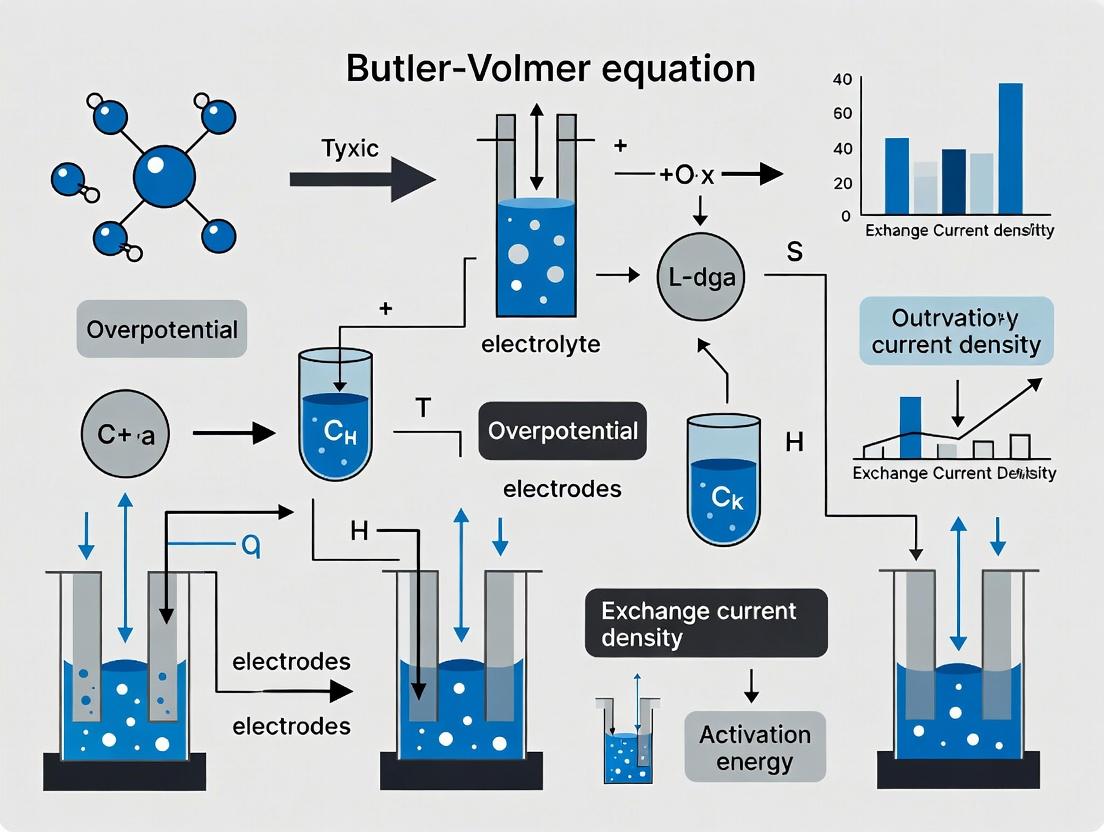
This article provides a comprehensive yet accessible explanation of the Butler-Volmer equation, a cornerstone of electrochemical kinetics.
The Butler-Volmer Equation Demystified: A Practical Guide for Biomedical and Drug Development Researchers
Abstract
This article provides a comprehensive yet accessible explanation of the Butler-Volmer equation, a cornerstone of electrochemical kinetics. Tailored for researchers, scientists, and drug development professionals, it moves from foundational concepts to practical application. We explore the equation's derivation and core parameters, detail its methodological use in characterizing redox reactions and designing biosensors, address common pitfalls in data fitting and interpretation, and validate its utility against advanced models like Marcus Theory. The guide synthesizes how mastering this equation enhances the development of electrochemical assays, drug metabolism studies, and diagnostic tools.
What is the Butler-Volmer Equation? Core Concepts and Electrochemical Foundations
In electrochemical systems, such as those critical to biosensor development, drug transport studies, and electrophysiology, Ohm's Law (V = IR) provides only a bulk description of ionic current flow. It fails to describe the essential interfacial charge transfer event—the heterogeneous electron transfer between an electrode and a dissolved redox species. This kinetic bottleneck governs the current in most bio-electrochemical experiments. The Butler-Volmer (B-V) equation is the foundational kinetic model that quantifies this relationship between electrode potential and faradaic current, moving beyond purely resistive behavior.
Theoretical Foundation of the Butler-Volmer Equation
The B-V equation derives from Transition State Theory, applied to an electrochemical activation barrier that is linearly influenced by the applied electrode potential.
Core Equation:
i = i_0 [ exp( (α_a n F)/ (RT) η ) - exp( -(α_c n F)/ (RT) η ) ]
Where:
i: Net current density (A/m²)i_0: Exchange current density (kinetic benchmark)α_a,α_c: Anodic and Cathodic charge transfer coefficients (typically ~0.5)n: Number of electrons transferredF: Faraday constant (96485 C/mol)R: Gas constant (8.314 J/(mol·K))T: Temperature (K)η: Overpotential (V), η = Eapplied - Eeq
Quantitative Data Summary:
| Parameter | Symbol | Typical Range / Value | Physical Meaning |
|---|---|---|---|
| Exchange Current Density | i_0 |
10⁻¹² – 10² A/cm² | Intrinsic kinetic rate at equilibrium. |
| Charge Transfer Coefficient | α |
0.3 – 0.7 (often 0.5) | Symmetry of the activation barrier. |
| Transfer Coefficient | β |
1 - α | Complementary symmetry factor. |
| Thermal Voltage | RT/F |
~25.7 mV at 25°C | Scaling factor for potential. |
| Tafel Slope (Anodic) | (2.303 RT)/(α n F) |
60 – 120 mV/decade (for n=1, α=0.5: 118 mV/dec) | Potential change needed to increase current 10-fold. |
Key Experimental Protocols for Butler-Volmer Kinetics
Cyclic Voltammetry (CV) fori_0andαDetermination
Objective: Extract kinetic parameters from the potential-current response of a redox couple (e.g., Ferrocenedimethanol).
Detailed Protocol:
- Cell Setup: Use a standard three-electrode electrochemical cell with a clean, polished working electrode (e.g., 3 mm glassy carbon), a Pt wire counter electrode, and a stable reference electrode (e.g., Ag/AgCl).
- Solution Preparation: Prepare a 1 mM solution of the redox probe in a supporting electrolyte (e.g., 0.1 M KCl) to eliminate migration current. Deoxygenate with inert gas (N₂/Ar) for 15 minutes.
- Data Acquisition: Run CV at multiple scan rates (ν: 0.01 – 1 V/s). Record the potential window around the formal potential (E°') of the probe.
- Kinetic Analysis (Nicholson Method):
- For a quasi-reversible system, measure the peak separation (ΔEp) at each scan rate.
- Calculate the dimensionless kinetic parameter
Ψusing:Ψ = (D_o/D_R)^(α/2) * [k° / (π D_o n F ν / RT)^(1/2)], where k° is the standard rate constant (i_0 ∝ k°). - Use the published
Ψvs. ΔEp working curve to determineΨand solve fork°andα.
Tafel Analysis for High Overpotential Regime
Objective: Determine i_0 and α directly from steady-state current-potential curves.
Detailed Protocol:
- Polarization Curve: Perform a slow-scan (e.g., 1 mV/s) linear sweep voltammetry experiment on a system with well-defined mass transport (e.g., using a rotating disc electrode).
- Data Region Selection: Analyze data at overpotentials where |η| > ~50 mV. In this "Tafel region," one exponential term in the B-V equation dominates.
- Plotting & Fitting: Plot log|i| vs. η (Tafel Plot).
- The anodic branch yields:
log(i) = log(i_0) + (α_a n F)/(2.303 RT) η - The cathodic branch yields:
log|i| = log(i_0) - (α_c n F)/(2.303 RT) η - The y-intercept gives
log(i_0), and the slope gives the Tafel slope, from whichαis calculated.
- The anodic branch yields:
Conceptual and Experimental Workflow
Diagram Title: From Ohm's Law to Butler-Volmer: Theory and Experiment
The Scientist's Toolkit: Essential Research Reagent Solutions
| Reagent / Material | Function in Electrode Kinetics Studies |
|---|---|
| Supporting Electrolyte (e.g., 0.1 M KCl, TBAPF6) | Eliminates ionic migration (Ohmic drop), ensures charge neutrality, and controls ionic strength. |
| Redox Probe (e.g., [Fe(CN)₆]³⁻/⁴⁻, Ferrocene) | Provides a well-defined, reversible electron transfer couple to benchmark electrode kinetics and i_0. |
| Polishing Kit (Alumina slurry, diamond paste) | Provides a reproducible, contaminant-free electrode surface essential for consistent kinetic measurements. |
| Solvent (e.g., Acetonitrile, Water) | Defines the dielectric environment, solvating ions, and the electrochemical window (potential range). |
| Reference Electrode (e.g., Ag/AgCl, SCE) | Provides a stable, known reference potential against which the working electrode potential is controlled. |
| Purified Inert Gas (N₂, Ar) | Removes dissolved oxygen, which can interfere as an unwanted redox species in many experiments. |
| Electrode Modifier (e.g., Nafion, SAMs) | Models realistic interfaces (e.g., membrane-coated sensors) to study hindered electron transfer kinetics. |
Implications for Drug Development and Biosensing
Understanding B-V kinetics is crucial beyond fundamental electrochemistry. In drug development, the redox properties of candidate molecules, characterized by E°' and k°, inform metabolic stability and potential toxicity. For biosensors, the i_0 of an enzyme's redox center or a labeled antibody determines the sensor's detection limit and dynamic range. The B-V equation provides the framework to optimize these interfacial kinetics, enabling the design of more sensitive diagnostic devices and the predictive assessment of drug metabolism.
This guide is framed within a broader thesis aimed at demystifying the Butler-Volmer equation for beginners in electrochemical research. For scientists, researchers, and drug development professionals—particularly those exploring electroanalytical techniques or biosensor development—a fundamental grasp of these parameters is essential. The Butler-Volmer equation is the cornerstone of electrode kinetics, describing the relationship between current density and overpotential. We will deconstruct its core components, providing a foundation for understanding electrochemical processes in biological systems, drug discovery assays, and energy-related research.
Core Conceptual Deconstruction
Current Density (j)
Current density is the electric current per unit area of an electrode surface (typically A/cm² or A/m²). It is the primary kinetic output in an electrochemical experiment, reflecting the rate of the Faradaic reaction (e.g., oxidation or reduction of an analyte).
- Significance: Normalizing current to area allows for comparison between electrodes of different sizes. In drug development, this could relate to the rate of enzymatic reaction on an electrode or the electron transfer from a protein.
Exchange Current Density (j₀)
The exchange current density is the intrinsic rate of the redox reaction at equilibrium (when overpotential, η = 0). It represents the equal and opposite anodic and cathodic current densities flowing at the reversible potential.
- Significance: j₀ is a direct measure of the electrode kinetics. A high j₀ indicates a fast, facile reaction (reversible system). A low j₀ indicates a slow, sluggish reaction (irreversible system). This is critical for assessing the efficiency of electrocatalytic drug metabolites or biosensor interfaces.
Overpotential (η)
Overpotential is the deviation of the applied electrode potential from its equilibrium (Nernstian) potential required to drive a net current. It is the "driving force" for the reaction beyond the thermodynamic requirement and is defined as η = Eapplied - Eeq.
- Significance: Overpotential compensates for kinetic limitations. It is categorized into activation, concentration, and resistance overpotential. Minimizing unnecessary overpotential is key to designing efficient electrochemical cells and sensitive detectors.
The Butler-Volmer Equation: The Unified Relationship
The one-step, elementary Butler-Volmer equation synthesizes these terms:
[ j = j0 \left[ \exp\left(\frac{\alphaa F \eta}{RT}\right) - \exp\left(-\frac{\alpha_c F \eta}{RT}\right) \right] ]
Where:
- ( j ): Net current density
- ( j_0 ): Exchange current density
- ( \eta ): Overpotential
- ( \alphaa, \alphac ): Anodic and cathodic charge transfer coefficients (typically ~0.5)
- ( F ): Faraday constant (96485 C/mol)
- ( R ): Universal gas constant (8.314 J/(mol·K))
- ( T ): Temperature (K)
Table 1: Characteristic Electrochemical Parameters for Selected Reactions
| System / Electrode Reaction | Approx. Exchange Current Density (j₀) A/cm² | Typical Overpotential (η) for j=1 mA/cm² | Notes for Research Context |
|---|---|---|---|
| H⁺/H₂ on Platinum (acid) | 10⁻³ | ~ 0.05 V | Fast, reversible reference reaction. |
| H⁺/H₂ on Mercury | 10⁻¹² | > 1.0 V | Very slow, high η useful for wide potential windows. |
| O₂ Reduction on Pt | 10⁻⁹ | ~ 0.3 V | Relevant for biofuel cells, in-vivo sensors. |
| Fe(CN)₆³⁻/⁴⁻ on Glassy Carbon | 10⁻⁵ - 10⁻⁴ | ~ 0.1 V | Common outer-sphere redox probe for sensor characterization. |
| NAD⁺/NADH on bare Carbon | 10⁻⁸ - 10⁻⁷ | High | Enzymatic cofactor; often requires mediators/overpotential lowering. |
Experimental Protocols for Determining Key Parameters
Protocol 1: Cyclic Voltammetry for Qualitative Assessment
Objective: To visually observe the relationship between current (density) and potential (related to overpotential) for a reversible vs. irreversible system.
- Cell Setup: Use a standard three-electrode cell (working, counter, reference electrode) with supporting electrolyte.
- Procedure: For a known reversible probe (e.g., 1 mM K₃Fe(CN)₆ in 1 M KCl), record a cyclic voltammogram at a slow scan rate (e.g., 50 mV/s) around its formal potential.
- Analysis: Measure the peak separation (ΔEp). A value near 59 mV indicates fast kinetics (high j₀). A larger ΔEp indicates slower kinetics (lower j₀). The potential shift from E° is related to η.
Protocol 2: Tafel Analysis for Extracting j₀ and α
Objective: To quantitatively determine the exchange current density (j₀) and charge transfer coefficient (α).
- Polarization Data: Perform a steady-state polarization experiment (e.g., chronoamperometry at stepped potentials) at low overpotentials (typically |η| < 50 mV) AND at higher overpotentials (in the Tafel region).
- Low η Analysis: Plot j vs. η for |η| → 0. The slope of the linear region is related to ( j_0 F / RT ).
- Tafel Analysis: For |η| > ~50 mV, one exponential term dominates. Plot log|j| vs. η (the Tafel plot). The slope gives α, and the intercept at η=0 gives log(j₀).
Diagrammatic Representation: The Kinetic Landscape
The Scientist's Toolkit: Essential Research Reagents & Materials
Table 2: Key Reagent Solutions for Fundamental Electrokinetic Studies
| Item | Function & Role in Research |
|---|---|
| Redox Probes (e.g., Potassium Ferricyanide) | Well-characterized, reversible outer-sphere redox couple for calibrating equipment, assessing electrode activity (j₀), and measuring electroactive area. |
| High-Purity Supporting Electrolyte (e.g., KCl, KNO₃, PBS) | Provides ionic conductivity, controls double-layer structure, minimizes ohmic drop (iR), and ensures redox species migration is not rate-limiting. |
| Inert Gas (Argon or Nitrogen) | For deaerating solutions to remove dissolved oxygen, which can interfere as an alternate redox species and complicate kinetic analysis. |
| Standard Reference Electrodes (Ag/AgCl, SCE) | Provides a stable, known reference potential (Eref) against which the working electrode potential (E) is measured, allowing accurate determination of overpotential (η = E - Eeq). |
| Polishing Materials (Alumina, Diamond Paste) | For reproducible electrode surface preparation. Surface roughness affects real area and thus measured current density. Essential for obtaining comparable j₀ values. |
| Electrocatalyst Inks (e.g., Pt/C, Metal Oxides) | For modifying electrode surfaces to study enhanced reaction kinetics (increased j₀) and lowered overpotential for target reactions (O₂ reduction, H₂ oxidation). |
| Mediators (e.g., Methylene Blue, Ferrocene derivatives) | Shuttle electrons between biological molecules (enzymes, cofactors) and electrodes, effectively increasing j₀ for otherwise slow bio-electrochemical reactions. |
This article is framed within the context of a broader thesis aiming to provide a foundational, beginner-level explanation of the Butler-Volmer equation in electrochemical kinetics. A critical yet often misunderstood parameter in this framework is the symmetry factor (α), which quantifies the symmetry of the activation energy barrier for electron transfer (ET) reactions. This whitepaper offers an in-depth technical examination of α, its theoretical underpinnings, and its experimental determination, with direct relevance to fields such as electrocatalysis and biomolecular electron transfer in drug development.
Theoretical Foundations
The symmetry factor (α), often termed the charge transfer coefficient, emerges from Marcus Theory and the Butler-Volmer formulation. It defines the fraction of the change in applied overpotential (η) that linearly influences the reduction activation barrier. Conceptually, a value of α = 0.5 indicates a perfectly symmetric energy barrier, where the transition state is exactly midway between the reactant and product states along the reaction coordinate. Values deviating from 0.5 signify an asymmetric barrier, influenced by the shape of the free energy curves, solvent reorganization, and the intrinsic structure of the electrochemical interface.
The fundamental relationship in the Butler-Volmer equation is:
[
j = j_0 \left[ \exp\left(\frac{\alpha n F \eta}{RT}\right) - \exp\left(-\frac{(1-\alpha) n F \eta}{RT}\right) \right]
]
where j is current density, j_0 is exchange current density, n is number of electrons, F is Faraday's constant, R is gas constant, and T is temperature.
Table 1: Experimentally Determined Symmetry Factors for Select Reactions
| Electrode Reaction | Electrode Material | Electrolyte | Reported α (approx.) | Conditions (T, pH) | Primary Determination Method |
|---|---|---|---|---|---|
| Hydrogen Evolution (HER) | Pt (polycrystalline) | 0.5 M H₂SO₄ | 0.5 | 298 K, pH ~0 | Tafel Analysis |
| Ferrocenemethanol Oxidation | Au (disk) | 0.1 M KCl | 0.42 | 298 K, Neutral | Cyclic Voltammetry (CV) Fitting |
| Oxygen Reduction (ORR) | Pt/C | 0.1 M HClO₄ | 0.45-0.55 | 298 K, Acidic | Rotating Disk Electrode (RDE) |
| Cytochrome c Oxidation | Pyrolytic Graphite | PBS Buffer | 0.48 | 298 K, pH 7.0 | Square-Wave Voltammetry |
Table 2: Impact of α on Key Kinetic Parameters
| Symmetry Factor (α) | Barrier Symmetry | Effect on Cathodic vs. Anodic Kinetics | Typical System Characteristics |
|---|---|---|---|
| 0.5 | Symmetric | Equal sensitivity to overpotential for forward/reverse reactions. | Ideal, single-step, outer-sphere electron transfer. |
| > 0.5 | Asymmetric | Cathodic reaction (reduction) is more sensitive to overpotential. | Often indicates a product-like transition state. |
| < 0.5 | Asymmetric | Anodic reaction (oxidation) is more sensitive to overpotential. | Often indicates a reactant-like transition state; complex multi-step pathways. |
Experimental Protocols for Determining α
Protocol: Tafel Analysis for α Determination
Objective: Extract α from the slope of the Tafel plot in a potential region where one branch of the Butler-Volmer equation dominates. Methodology:
- Setup: Employ a standard three-electrode electrochemical cell (Working, Counter, Reference) with controlled temperature and degassed electrolyte.
- Polarization Curves: Perform slow-scan linear sweep voltammetry (e.g., 1 mV/s) in a potential window where the net current is dominated by either the cathodic or anodic process (typically >50 mV from the formal potential, E°').
- Data Processing:
- Plot the overpotential (η) against the log10 of the absolute current density (log\|j\|).
- Identify the linear region (Tafel region).
- For the cathodic branch: αc = -[2.303 RT] / [β n F], where β is the slope (Δη/Δlog\|jc\|).
- For the anodic branch: αa = [2.303 RT] / [β n F], where β is the slope (Δη/Δlog\|ja\|).
- Validation: Ensure mass transport effects are negligible (use hydrodynamic control like RDE if necessary). For a simple one-step, one-electron process, αc + αa should equal 1.
Protocol: Cyclic Voltammetry Fitting for Quasi-Reversible Systems
Objective: Determine α (and the standard rate constant, k⁰) by simulating or analytically fitting the shape of a cyclic voltammogram. Methodology:
- Data Acquisition: Record cyclic voltammograms of a reversible redox probe (e.g., ferrocene) at multiple scan rates (ν) from 0.01 to 10 V/s.
- Analysis of Peak Separation: At higher scan rates where kinetics affect the waveform, the peak potential separation (ΔEp) exceeds the ideal 59 mV for n=1. The relationship between ΔEp and α is implicit in the Nicholson method.
- Fitting Procedure:
- Use simulation software (e.g., DigiElch, GPES) with adjustable parameters α and k⁰.
- Fit the simulated voltammogram to the experimental data by minimizing the residual, focusing on the broadening of the peaks and the increase in ΔEp with scan rate.
- The shape of the voltammogram is highly sensitive to α, which governs the asymmetry of the rising portions of the peaks.
Visualizing Electron Transfer Concepts
Title: Symmetry Factor in a Free Energy Diagram
Title: Workflow for Measuring the Symmetry Factor
The Scientist's Toolkit: Essential Research Reagents & Materials
Table 3: Key Reagent Solutions for Electron Transfer Kinetics Studies
| Item Name | Specification / Typical Composition | Primary Function in Experiment |
|---|---|---|
| Supporting Electrolyte | High-purity salt (e.g., 0.1 M KCl, LiClO₄, TBAPF₆) | Minimizes solution resistance, controls ionic strength, and eliminates migratory mass transport. |
| Redox Probe | Reversible couple (e.g., 1-5 mM Ferrocenemethanol, K₃[Fe(CN)₆]/K₄[Fe(CN)₆]) | Provides a well-understood, outer-sphere electron transfer reaction for method calibration and validation. |
| Electrode Polishing Kit | Alumina or diamond slurry (0.3 μm, 0.05 μm) and polishing pads. | Creates a reproducible, contaminant-free, and smooth electrode surface essential for reliable kinetics measurements. |
| Electrode Cleaning Solution | Piranha solution (H₂SO₄:H₂O₂ 3:1) OR Aqua Regia (HCl:HNO₃ 3:1). CAUTION: Highly corrosive. | Removes organic and metallic contaminants from noble metal electrode surfaces. |
| Purified Solvent | HPLC-grade acetonitrile, dichloromethane, or high-purity water (18.2 MΩ·cm). | Provides a clean, non-interfering medium. Aprotic solvents are used for non-aqueous electrochemistry. |
| Reference Electrode | Saturated Calomel (SCE), Ag/AgCl (in fixed [Cl⁻]), or non-aqueous Ag/Ag⁺. | Provides a stable, known reference potential against which the working electrode potential is controlled. |
| Electrocatalyst Ink | Dispersion of catalyst (e.g., Pt/C, enzyme), Nafion binder, and alcohol solvent. | For preparing modified electrodes to study heterogeneous electron transfer kinetics on relevant catalytic materials. |
This whitepaper, framed within a broader thesis on explaining the Butler-Volmer equation for beginners, elucidates the intrinsic connection between the kinetic Butler-Volmer equation and the equilibrium thermodynamics described by the Nernst equation. The Nernstian limit represents the condition where an electrochemical system is at equilibrium, with no net current flow. The Butler-Volmer equation universally reduces to the Nernst equation under this limit, providing a critical bridge between kinetics and thermodynamics.
Foundational Equations
The Nernst Equation (Thermodynamic Equilibrium)
The Nernst equation describes the equilibrium potential (Eeq) for a redox couple O + ne⁻ ⇌ R: [ E{eq} = E^{0'} + \frac{RT}{nF} \ln\left(\frac{aO}{aR}\right) ] Where:
- (E^{0'}) is the formal potential.
- R is the universal gas constant (8.314 J·mol⁻¹·K⁻¹).
- T is temperature (K).
- n is the number of electrons transferred.
- F is Faraday's constant (96485 C·mol⁻¹).
- aO and aR are the activities of the oxidized and reduced species.
At 298.15 K (25°C), (\frac{RT}{F} \approx 0.02569) V, simplifying the term to (\frac{0.05916}{n} \log_{10}) for base-10 logs.
The Butler-Volmer Equation (Kinetics)
The Butler-Volmer equation describes the net current density (i) as a function of overpotential (η = E - Eeq): [ i = i0 \left[ \exp\left(\frac{\alphaa n F \eta}{RT}\right) - \exp\left(-\frac{\alphac n F \eta}{RT}\right) \right] ] Where:
- (i_0) is the exchange current density, representing the equal and opposite anodic and cathodic currents at equilibrium.
- (\alphaa) and (\alphac) are the anodic and cathodic charge transfer coefficients ((\alphaa + \alphac = 1) for a simple one-step reaction).
The Nernstian Limit: From Kinetics to Thermodynamics
At equilibrium, the overpotential η = 0. Substituting this into the Butler-Volmer equation: [ i = i0 \left[ \exp(0) - \exp(0) \right] = i0 [1 - 1] = 0 ] This confirms zero net current, consistent with thermodynamic equilibrium. The more profound relationship is derived by considering the detailed expression for (i0): [ i0 = nF k^0 CO^{(1-\alpha)} CR^{\alpha} ] where (k^0) is the standard electrochemical rate constant. At equilibrium, the forward and backward reaction rates are equal. Setting the anodic and cathodic components of the Butler-Volmer equation equal and solving for the potential yields the Nernst equation. This mathematical derivation is the proof that the Nernst equation is the zero-current, equilibrium limit of the Butler-Volmer equation.
Quantitative Data and Comparison
Table 1: Key Constants in Electrochemical Thermodynamics and Kinetics
| Constant | Symbol | Value & Units | Primary Role |
|---|---|---|---|
| Faraday Constant | F | 96485 C·mol⁻¹ | Relates charge to moles of electrons |
| Gas Constant | R | 8.314 J·mol⁻¹·K⁻¹ | Scaling for thermal energy |
| Standard Temp. | T | 298.15 K | Common reference temperature |
| RT/F at 298K | - | 0.02569 V | Fundamental thermal voltage |
| 2.303RT/F at 298K | - | 0.05916 V | Pre-log factor for base-10 Nernst |
Table 2: Comparison of Nernst and Butler-Volmer Frameworks
| Aspect | Nernst Equation (Thermodynamics) | Butler-Volmer Equation (Kinetics) |
|---|---|---|
| Governing Principle | Equilibrium, ΔG = 0 | Reaction rates, Activation barriers |
| System State | Zero net current (i=0) | Any current (i ≠ 0) |
| Key Variable | Equilibrium Potential (E_eq) | Overpotential (η = E - E_eq) |
| Dependence | Bulk activities/concentrations | Surface concentrations & rate constants |
| Primary Output | Potential for a given ratio | Current for a given applied potential |
| Nernstian Limit | Is the equation itself | Reduces to Nernst when η → 0 |
Experimental Protocols for Validation
Protocol: Determining Formal Potential (E^0') and 'n' via Cyclic Voltammetry at Low Scan Rates
Objective: To demonstrate that under near-equilibrium (Nernstian) conditions, cyclic voltammetry yields potentials defined by the Nernst equation. Principle: At very slow scan rates (ν → 0), the system remains near equilibrium throughout the scan. The peak potential for a reversible, Nernstian system is independent of scan rate and related to E^0'. Procedure:
- Cell Setup: Use a standard three-electrode cell (working, counter, reference) with a solution containing both oxidized (O) and reduced (R) forms of the redox couple (e.g., 1 mM K₃Fe(CN)₆ / K₄Fe(CN)₆ in 1 M KCl).
- Instrumentation: Use a potentiostat with precise low-scan-rate capability.
- Data Acquisition:
- Scan from a potential negative of the expected reduction to positive of the expected oxidation (e.g., -0.1 V to +0.5 V vs. SCE).
- Perform scans at multiple slow scan rates (e.g., 1, 2, 5, 10 mV/s).
- Data Analysis:
- Confirm the peak separation (ΔE_p) is close to (\frac{59}{n}) mV at 25°C.
- Calculate formal potential: (E^{0'} = \frac{E{pa} + E{pc}}{2}), where (E{pa}) and (E{pc}) are anodic and cathodic peak potentials.
- The observed peak potential is the potential where surface concentrations satisfy the Nernst equation.
Protocol: Measuring Exchange Current Density (i₀)
Objective: To experimentally determine i₀, the kinetic parameter in the Butler-Volmer equation that prevails at the Nernstian limit. Principle: Near equilibrium (|η| < ~10 mV), the Butler-Volmer equation simplifies to a linear form: (i = i_0 \frac{nF}{RT} \eta). The slope of a current vs. overpotential plot in this region yields i₀. Procedure:
- Cell Setup: Use a cell with a well-defined electrode geometry (e.g., rotating disk electrode) and a solution containing a redox couple at known bulk concentrations.
- Polarization Resistance Measurement:
- Apply a small potential step (e.g., ±5 mV) around the open-circuit potential (OCP, which equals E_eq).
- Measure the resulting steady-state current.
- Repeat for several small overpotentials (e.g., -5, -2, 0, +2, +5 mV).
- Data Analysis:
- Plot current density (i) vs. overpotential (η).
- Perform a linear regression on the data points near η = 0.
- Calculate exchange current density: (i_0 = \frac{RT}{nF} \times \frac{1}{\text{slope}}), where the slope is the polarization conductance.
Visualizing the Relationship
Diagram 1: Relationship Between Butler-Volmer and Nernst Equations (Max Width: 760px)
Diagram 2: Experimental Workflow to Measure i₀ and Validate Nernstian Limit (Max Width: 760px)
The Scientist's Toolkit: Key Research Reagent Solutions
Table 3: Essential Materials for Nernstian/Butler-Volmer Experiments
| Item | Function & Rationale | Example(s) |
|---|---|---|
| Redox Probe Solution | Provides a reversible, well-behaved redox couple to study fundamental thermodynamics/kinetics. | 1-5 mM Potassium Ferri-/Ferrocyanide (K₃Fe(CN)₆ / K₄Fe(CN₆)) in 1 M KCl. Ferrocene/Ferrocenium in acetonitrile with supporting electrolyte (e.g., TBAPF₆). |
| Supporting Electrolyte | Eliminates ionic migration as a mass transport mode, ensures electroneutrality, and controls ionic strength. | 0.1 - 1.0 M Potassium Chloride (KCl), Tetrabutylammonium Hexafluorophosphate (TBAPF₆) for non-aqueous cells. |
| Reference Electrode | Provides a stable, known reference potential against which E_eq is measured. Essential for accurate η. | Saturated Calomel Electrode (SCE), Ag/AgCl (in sat'd KCl), or non-aqueous reference (e.g., Ag/Ag⁺). |
| Working Electrode | The interface where the redox reaction of interest occurs. Must be clean and reproducible. | Glassy Carbon (GC) disk, Platinum (Pt) disk, Gold (Au) disk electrodes (often 3 mm diameter). |
| Electrode Polish | Creates a fresh, reproducible, and contaminant-free electrode surface for consistent kinetics. | Alumina or diamond polishing suspensions (e.g., 0.05 µm alumina slurry on a polishing pad). |
| Potentiostat | The instrument that precisely controls the potential (E) and measures the resulting current (i). | Commercial bipotentiostats (e.g., from Metrohm Autolab, BioLogic, Gamry) capable of low-current and low-scan-rate measurements. |
| Deoxygenation System | Removes dissolved O₂, which can interfere as an unintended redox species. | High-purity Nitrogen (N₂) or Argon (Ar) gas with bubbling/sparging setup for ≥10 minutes prior to experiment. |
This article serves as a critical, in-depth examination within a broader thesis aimed at demystifying the Butler-Volmer equation for beginners. While foundational tutorials explain what the equation is, this guide addresses the pivotal question of when it is valid. Understanding its boundaries is essential for researchers, scientists, and drug development professionals applying electroanalytical techniques to study redox processes in biological molecules, drug compounds, or biosensor platforms. Misapplying the model beyond its limits can lead to significant errors in interpreting charge-transfer kinetics and reaction mechanisms.
Core Assumptions of the Simple Butler-Volmer Model
The "simple" or "classical" one-dimensional Butler-Volmer equation, [ i = i0 \left[ \exp\left(\frac{\alphaa F}{RT} \eta\right) - \exp\left(-\frac{\alpha_c F}{RT} \eta\right) \right] ] derives from a specific set of physicochemical assumptions.
Table 1: Foundational Assumptions of the Simple Butler-Volmer Model
| Assumption | Description | Implication |
|---|---|---|
| 1. One-Step, Single Electron Transfer | The electrochemical reaction occurs in a single, elementary step involving one electron (n=1). | Excludes multi-step, coupled chemical reactions (CE, EC mechanisms). |
| 2. Symmetric, Parabolic Energy Barrier | The free energy curve for the reaction coordinate is a symmetric parabola. The activation energy varies linearly with overpotential (η). | Embodied in the symmetry factor, β (often ~0.5). Predicts linear Tafel plots. |
| 3. Double-Layer Effects are Negligible | The potential driving the reaction is the full applied overpotential. Ionic distributions and potential drops in the double layer do not influence kinetics. | Fails in concentrated electrolytes, at high currents, or with specifically adsorbing species. |
| 4. Semi-Infinite Linear Diffusion | Mass transport to the electrode is governed by semi-infinite linear diffusion, as described by Fick's laws. | Applicable to unstirred, planar electrodes. Violated in microelectrodes, porous electrodes, or forced convection. |
| 5. Ideal, Non-Interacting Reactants | Reactants and products behave ideally. There are no interactions between adsorbed species or changes in activity coefficients. | Limits use in systems with high concentrations, surface adsorption, or film formation. |
| 6. Homogeneous Electrode Surface | The electrode surface is uniform in its catalytic activity and geometry. | Invalid for polycrystalline, nanostructured, or corroded surfaces with active sites. |
Quantitative Limits and Breakdown Conditions
The model breaks down when experimental data deviate from its quantitative predictions. Key metrics are the exchange current density ((i_0)) and the Tafel slope.
Table 2: Quantitative Indicators of Model Breakdown
| Parameter | Simple B-V Prediction | Indicator of Breakdown | Typical Cause |
|---|---|---|---|
| Tafel Slope (Anodic/Cathodic) | ( (2.303RT)/(\alpha F) ) Constant over a wide η range. | Non-linear Tafel plot; slopes that change with η or concentration. | Multi-step mechanism, changing rate-determining step, double-layer effects. |
| Transfer Coefficient (α) | ( 0 < α < 1 ), often near 0.5. Sum of anodic & cathodic α = 1. | α > 1 or α < 0; sum ≠ 1; α varies with potential or temperature. | Coupled chemical steps, potential-dependent barrier shape, adsorption. |
| Exchange Current Density ((i_0)) | Constant for a given system at fixed T & concentration. | (i_0) varies with concentration non-linearly or depends on potential pre-treatment. | Surface oxidation/contamination, precursor complex formation. |
| High-Overpotential Limit | Current follows (\log i \propto η). | Current deviates, often plateauing or showing different scaling. | Mass transport limitation, ohmic drop (iR compensation needed), surface phase change. |
Experimental Protocols for Validating Model Applicability
To test if a system obeys the simple Butler-Volmer model, the following electrochemical protocols are essential.
Protocol 1: Tafel Analysis for Charge-Transfer Kinetics
Objective: Determine the symmetry of the energy barrier and extract (i_0) and α.
- Setup: Three-electrode cell (Working, Reference, Counter) in a quiescent, deaerated solution. Use a planar macroelectrode (e.g., 2 mm diameter glassy carbon).
- iR Compensation: Employ positive feedback or current-interruption techniques to correct for solution resistance.
- Procedure: Perform slow-scan-rate cyclic voltammetry (e.g., 1 mV/s) or chronoamperometry at small, stepped overpotentials centered at the formal potential (E°').
- Data Analysis: Plot log\|i\| vs. η (Tafel plot) in the low-current region (typically |η| > ~50/n mV but before mass transport effects). Fit linear regions to obtain Tafel slopes and extrapolate to η=0 for (i_0).
Protocol 2: Mass Transport Correction via Rotating Disk Electrode (RDE)
Objective: Isolate pure kinetic current by eliminating diffusion limitations.
- Setup: Use an RDE with controlled rotation speeds (ω from 400 to 3600 rpm).
- Procedure: Record current-potential curves (e.g., linear sweep voltammetry at 10 mV/s) at multiple rotation speeds.
- Analysis: Apply the Koutecký-Levich equation: (1/i = 1/ik + 1/id), where (ik) is the kinetic current and (id) is the diffusion-limited current. Plot (1/i) vs. (ω^{-1/2}) at a constant potential. The y-intercept gives (1/ik). Analyze (ik) vs. η for Butler-Volmer behavior.
Protocol 3: Potential Step Chronoamperometry for Adsorption Effects
Objective: Detect surface-confined (adsorbed) vs. dissolved redox species.
- Setup: Small electrode, clean surface, precise potential control.
- Procedure: Step potential from a region where no reaction occurs to a potential far beyond E°'. Record current transient.
- Analysis: For a dissolved species, current decays as (i \propto t^{-1/2}) (Cottrell behavior). For an adsorbed species, current decays exponentially. A deviation from Cottrell at short times indicates adsorption, violating the simple B-V assumption of non-interacting, solution-phase reactants.
Title: Experimental Workflow for Validating Butler-Volmer Model Applicability
The Scientist's Toolkit: Essential Research Reagent Solutions
Table 3: Key Reagents and Materials for Electrokinetic Studies
| Item | Function & Rationale |
|---|---|
| High-Purity Supporting Electrolyte (e.g., TBAPF6, KCl) | Provides ionic conductivity without participating in redox reactions. Must be electrochemically inert over a wide potential window and not specifically adsorb. |
| Electrochemical-Grade Solvent (e.g., Acetonitrile, DMF) | Low water content, purified to remove redox-active impurities. Critical for organic-phase studies of drug compounds. |
| Internal Redox Standard (e.g., Ferrocene/Ferrocenium+) | Used to reference potentials to a known, reversible couple (Fc/Fc+), enabling comparison across systems and compensating for junction potentials. |
| Ultra-High Purity Gases (Argon, Nitrogen) | For deaeration to remove dissolved O₂, which is a common interfering redox species. |
| Polishing Suspensions (Alumina, Diamond down to 0.05 µm) | For reproducible, clean electrode surfaces. Essential for achieving homogeneous surface geometry. |
| iR Compensation Module (Hardware or Software) | Actively corrects for uncompensated solution resistance, ensuring the applied potential is the true interfacial potential. |
| Rotating Disk Electrode (RDE) System | Motor, controller, and interchangeable disk electrodes (Pt, GC, Au). Enables controlled mass transport for isolating kinetics. |
When to Move Beyond the Simple Model: Advanced Frameworks
When the simple model fails, advanced theoretical frameworks are required. The Marcus-Hush-Chidsey model accounts for quantum mechanical effects and parabolic-but-asymmetric barriers, crucial for semiconductor electrochemistry and some biological redox centers. For multi-step reactions (EC, CE, ECE mechanisms), coupled differential equation models solved numerically are necessary. Systems with strong adsorption require Langmuir or Frumkin isotherm-based kinetic models.
Title: Model Selection Based on System Characteristics
The simple Butler-Volmer model is a powerful tool within its well-defined domain: elementary, one-electron transfers at ideal interfaces under kinetic control. For researchers in drug development, its correct application allows for the reliable extraction of kinetic parameters for redox-active drug molecules or biosensor reactions. Systematic validation using the described experimental protocols is mandatory. Recognizing the signs of its breakdown—non-ideal Tafel slopes, potential-dependent transfer coefficients, or evidence of adsorption—is the first critical step toward selecting a more sophisticated and accurate model, ensuring robust and meaningful electrochemical analysis.
Applying the Butler-Volmer Equation: Techniques for Drug Research and Biosensor Development
This technical guide details the experimental apparatus and methodologies used to collect kinetic data for elucidating electrochemical reaction mechanisms. This work is framed within a broader thesis aimed at explaining the Butler-Volmer (BV) equation for beginners. The BV equation is the cornerstone of electrode kinetics, describing the relationship between current and overpotential. The experiments described herein allow researchers to measure the critical parameters of the BV equation—the exchange current density (i₀) and the charge transfer coefficient (α)—enabling a fundamental understanding of reaction rates in systems relevant to biosensors, fuel cells, and drug development (e.g., studying redox-active drug metabolites).
Core Electrochemical Instrument: The Potentiostat
The potentiostat is the fundamental instrument for controlling and measuring electrochemical reactions. It applies a potential between the working electrode (WE) and reference electrode (RE) while measuring the resulting current flow between the WE and the counter electrode (CE).
Diagram: Three-Electrode Potentiostat Circuit
Key Experimental Technique: Cyclic Voltammetry (CV)
CV is the most widely used voltammetric technique for obtaining qualitative information about electrochemical reactions. It involves scanning the potential applied to the WE linearly with time and then reversing the scan.
Detailed Experimental Protocol for a Standard CV
- Objective: To identify redox potentials, characterize reaction reversibility, and estimate diffusion coefficients.
- Materials: See "The Scientist's Toolkit" below.
- Procedure:
- Cell Assembly: Fill the electrochemical cell with the analyte solution (e.g., 1 mM potassium ferricyanide in 1 M KCl). Place the cleaned WE, RE, and CE into the cell.
- Instrument Connection: Connect the electrodes to the corresponding leads on the potentiostat.
- Parameter Setup in Software:
- Initial Potential (Einitial): Set to a value where no faradaic reaction occurs (e.g., +0.5 V vs. Ag/AgCl for ferricyanide).
- Switching Potentials (Eλ1, Eλ2): Define the vertex potentials (e.g., -0.1 V and +0.5 V).
- Scan Rate (ν): Select an appropriate rate (e.g., 50 mV/s for initial experiments).
- Number of Cycles: Typically 2-5 cycles.
- Initiation: Start the experiment. The potentiostat applies the waveform and records current vs. potential.
- Data Analysis: Identify the anodic peak potential (Epa), cathodic peak potential (Epc), and their corresponding peak currents (ipa, i_pc).
Diagram: Cyclic Voltammetry Workflow
Quantitative Data from CV: Reversibility Criteria
For a simple, reversible, diffusion-controlled redox couple at 25°C: Table 1: Diagnostic Criteria for Reversible CV Systems
| Parameter | Theoretical Value | Experimental Tolerance | Relationship to BV Kinetics | ||
|---|---|---|---|---|---|
| Peak Separation (ΔE_p) | 59/n mV | 57-63/n mV | Small ΔE_p indicates fast kinetics (large i₀), satisfying Nernstian behavior. | ||
| Peak Current Ratio ( | ipa/ipc | ) | 1 | 0.9-1.1 | Deviation indicates coupled chemical reactions. |
| Peak Current (i_p) | i_p = (2.69×10⁵)n^(3/2)AD^(1/2)Cν^(1/2) | Directly proportional to ν^(1/2) | Used to calculate diffusion coefficient (D), a prerequisite for kinetic analysis. | ||
| Peak Potential vs. Scan Rate | Independent of ν | Shifts < 60/n mV per decade ν | Shifts > 60/n mV suggest slower kinetics (small i₀). |
Extracting Kinetic Parameters: Beyond CV
While CV diagnoses reversibility, precise kinetic parameters require techniques that minimize mass transport effects.
Chronoamperometry/Chronocoulometry (CA/CC) Protocol
- Objective: To determine diffusion coefficient (D) and the number of electrons transferred (n).
- Procedure:
- Apply a potential step from a value where no reaction occurs to a value where the reaction is diffusion-controlled.
- Record current (CA) or charge (CC) as a function of time.
- For CA: Use the Cottrell equation: i(t) = (nFAD^(1/2)C)/(π^(1/2)t^(1/2)) to fit D.
- For CC: Use the Anson equation: Q(t) = (2nFAD^(1/2)Ct^(1/2))/(π^(1/2)) + Q_dl.
Tafel Analysis for Exchange Current Density (i₀)
- Objective: Directly extract i₀ and charge transfer coefficient (α) from the BV equation.
- Protocol:
- Perform a slow scan-rate CV or a steady-state polarization experiment in a region where mass transport is not limiting (typically at low overpotential, η).
- Plot log(current) vs. overpotential (η).
- The linear portions of the cathodic and anodic branches give Tafel slopes: bc = 2.3RT/(αnF) and ba = 2.3RT/((1-α)nF).
- The extrapolated intercept at η = 0 gives log(i₀).
Table 2: Key Kinetic Parameters from Tafel Analysis
| Parameter | Symbol | Typical Range | Extraction Method |
|---|---|---|---|
| Exchange Current Density | i₀ | 10⁻¹² – 10¹ A/cm² | Intercept of Tafel plot at η = 0 V. |
| Cathodic Transfer Coefficient | α | 0.3 – 0.7 | Slope of cathodic Tafel branch: α = (2.3RT)/(nF * slope). |
| Anodic Transfer Coefficient | (1-α) | 0.3 – 0.7 | Slope of anodic Tafel branch. |
| Standard Rate Constant | k₀ | Varies widely | k₀ = i₀/(nFC). |
The Scientist's Toolkit: Essential Research Reagents & Materials
Table 3: Key Reagents and Materials for Electrochemical Kinetic Studies
| Item | Function & Example | Critical Consideration |
|---|---|---|
| Potentiostat/Galvanostat | Applies potential/current and measures response. (e.g., Autolab, Biologic, CH Instruments). | Bandwidth, current range, and software compatibility for intended experiments. |
| Faraday Cage | Metal enclosure that shields the cell from external electromagnetic interference. | Essential for low-current measurements (< 1 nA). |
| Working Electrode (WE) | Surface where reaction of interest occurs. (e.g., Glassy Carbon (GC), Gold, Platinum disk electrodes). | Surface pretreatment (polishing) is critical for reproducibility. |
| Reference Electrode (RE) | Provides stable, known reference potential. (e.g., Ag/AgCl (3M KCl), Saturated Calomel Electrode (SCE)). | Must be stored correctly and checked regularly. |
| Counter Electrode (CE) | Completes the circuit, typically inert. (e.g., Platinum wire or coil). | Surface area should be larger than WE to avoid being rate-limiting. |
| Supporting Electrolyte | High-concentration salt (e.g., 0.1-1.0 M KCl, PBS). | Carries current, minimizes solution resistance (iR drop), and controls ionic strength. Must be electro-inactive in the studied window. |
| Redox Probe | Well-characterized standard for system validation. (e.g., Potassium Ferricyanide, Ruthenium Hexamine). | Used to check electrode cleanliness and instrument performance. |
| Solvent | Dissolves analyte and electrolyte. (e.g., Water, Acetonitrile, DMSO). | Must be purified, degassed to remove O₂, and have a suitable potential window. |
| Polishing Supplies | Alumina or diamond suspensions (e.g., 1.0, 0.3, 0.05 µm) on microcloth pads. | Essential for renewing and cleaning solid electrode surfaces. |
The Butler-Volmer equation is the cornerstone of modern electrochemical kinetics, describing the relationship between current density and overpotential for a simple electron transfer reaction. For beginners and seasoned researchers alike, extracting the fundamental kinetic parameters—the exchange current density (j₀), the charge transfer coefficient (α), and the standard rate constant (k₀)—from experimental data is a critical, yet often challenging, task. This guide provides a detailed, practical methodology for this extraction, essential for applications ranging from fuel cell development to biosensor optimization in drug discovery.
Theoretical Foundation
For a one-step, one-electron transfer reaction, the Butler-Volmer equation is: j = j₀ [ exp( (1-α)Fη/RT ) - exp( -αFη/RT ) ] where j is current density, F is Faraday's constant, R is the gas constant, T is temperature, and η is overpotential. The exchange current density j₀ = F k₀ Cᵣₑᵈ^(1-α) Cₒₓ^α, linking it to the standard rate constant k₀.
Experimental Protocol & Data Acquisition
Method: Cyclic Voltammetry (CV) at varying scan rates and Rotating Disk Electrode (RDE) voltammetry.
Detailed Protocol:
- System: Three-electrode cell (working, reference, counter) with temperature control.
- Electrolyte: High-purity, degassed supporting electrolyte (e.g., 0.1 M KCl).
- Analyte: Precise concentration of redox couple (e.g., 5 mM K₃[Fe(CN)₆]/K₄[Fe(CN)₆]).
- CV Measurement: Record CVs at low overpotential range (±50 mV around E₀) at multiple scan rates (ν: 5-500 mV/s). Ensure quasi-reversible conditions.
- RDE Measurement: Record steady-state polarization curves at multiple rotation rates (ω: 400-2500 rpm) to correct for mass transport.
Step-by-Step Parameter Extraction
Step 1: Determining the Exchange Current Density (j₀)
At very low overpotential (|η| < 10 mV), the Butler-Volmer equation linearizes to j = j₀ (Fη/RT).
- Plot j vs. η in the low-η region.
- Perform a linear regression. The slope is equal to j₀F/RT.
- Calculate j₀ from the slope.
Step 2: Determining the Charge Transfer Coefficient (α)
At higher overpotential (|η| > 50 mV), for either the cathodic or anodic branch, one exponential term dominates.
- Plot ln|j| vs. η for the Tafel region (where mass transport effects are negligible).
- For the anodic branch: Slope = (1-α)F/RT.
- For the cathodic branch: Slope = -αF/RT.
- Solve for α from the slope.
Step 3: Determining the Standard Rate Constant (k₀)
Using the value of j₀ and α from Steps 1 & 2, and known bulk concentrations.
- Apply the equation: k₀ = j₀ / (F Cᵣₑᵈ^(1-α) Cₒₓ^α).
- Use concentrations at the electrode surface. For more accurate results, use concentrations derived from mass-transport-corrected RDE data.
Table 1: Extracted Kinetic Parameters for Model System (5 mM [Fe(CN)₆]³⁻/⁴⁻ in 0.1 M KCl at 298K)
| Parameter | Symbol | Value | Unit | Method Used |
|---|---|---|---|---|
| Exchange Current Density | j₀ | 1.24 ± 0.08 | mA/cm² | Low-η Polarization |
| Anodic Charge Transfer Coefficient | αₐ | 0.48 ± 0.03 | - | Anodic Tafel Plot |
| Cathodic Charge Transfer Coefficient | α_c | 0.52 ± 0.03 | - | Cathodic Tafel Plot |
| Standard Rate Constant | k₀ | 0.051 ± 0.005 | cm/s | Calculated from j₀ & α |
Table 2: The Scientist's Toolkit - Essential Research Reagents & Materials
| Item | Function & Explanation |
|---|---|
| Potentiostat/Galvanostat | Core instrument for applying potential and measuring current with high precision. |
| Rotating Disk Electrode (RDE) | Working electrode assembly that controls mass transport via rotation, allowing isolation of kinetic currents. |
| Ag/AgCl Reference Electrode | Provides a stable, known reference potential for accurate overpotential control. |
| High-Purity Supporting Electrolyte | Minimizes background current and unwanted side reactions. |
| Redox Probe (e.g., Ferricyanide) | Well-characterized, reversible couple for method validation and calibration. |
| Electrochemical Cell | Inert, sealed cell for controlled atmosphere experiments to prevent O₂ interference. |
| Purified Solvent (e.g., H₂O) | Eliminates impurities that can adsorb or react on the electrode surface. |
Visualization of Workflows and Relationships
Title: Kinetic Parameter Extraction Workflow
Title: Deriving j₀ and α from Butler-Volmer
This whitepaper serves as a detailed technical guide for applying electrochemical kinetics to analyze drug redox metabolism and stability. It is framed within a broader thesis that seeks to demystify the Butler-Volmer equation for beginners in pharmaceutical research. Drug molecules with redox-active functional groups (e.g., quinones, nitroaromatics, phenols, amines) are susceptible to metabolic oxidation and reduction, primarily by cytochrome P450 enzymes and other bioreductive systems. Predicting and quantifying these electron transfer processes is crucial for understanding first-pass metabolism, prodrug activation, and oxidative degradation pathways. Electrochemical methods, particularly voltammetry, provide a direct in vitro means to simulate and study these redox events, offering kinetic and thermodynamic data that can be correlated with in vivo outcomes.
Theoretical Foundation: The Butler-Volmer Equation for Drug Researchers
The Butler-Volmer equation is the cornerstone of electrode kinetics. For drug development scientists, it provides a quantitative link between an applied electrochemical potential and the rate of electron transfer to/from a drug molecule. This rate directly correlates with the kinetic facility of metabolic redox reactions.
The fundamental form of the equation for a simple, one-electron transfer is:
[ i = nFAk^0 \left[ CO(0,t) e^{-\frac{\alpha nF}{RT}(E-E^{0'})} - CR(0,t) e^{\frac{(1-\alpha) nF}{RT}(E-E^{0'})} \right] ]
Where:
- i = Current (A)
- n = Number of electrons transferred
- F = Faraday constant (96,485 C/mol)
- A = Electrode area (cm²)
- k⁰ = Standard electrochemical rate constant (cm/s) – a direct measure of intrinsic redox kinetics.
- C = Concentration at the electrode surface (mol/cm³)
- α = Charge transfer coefficient (typically ~0.5)
- E = Applied potential (V)
- E⁰' = Formal redox potential (V)
- R = Gas constant (8.314 J/(mol·K))
- T = Temperature (K)
Beginner's Interpretation: The equation states that the measured current is the difference between the forward (oxidation) and backward (reduction) reaction rates. The exponential terms show how the applied potential "drives" the reaction. For drug stability, a more positive oxidation potential (E_pa) often suggests greater resistance to oxidative degradation. The rate constant k⁰ can be analogous to the enzymatic turnover number for electron transfer.
Experimental Protocols for Drug Redox Analysis
Cyclic Voltammetry (CV) for Redox Potential & Reversibility
Objective: Determine the formal redox potential (E⁰') and assess the electrochemical (and thus chemical) reversibility of a drug's redox process.
Detailed Protocol:
- Solution Preparation: Prepare a 1 mM solution of the drug candidate in a suitable electrolyte (e.g., 0.1 M phosphate buffer, pH 7.4, with 0.1 M KCl as supporting electrolyte). Deoxygenate with inert gas (N₂ or Ar) for 10 minutes.
- Instrument Setup: Use a standard three-electrode cell: Glassy Carbon Working Electrode (GCE, 3 mm diameter), Ag/AgCl (3 M KCl) Reference Electrode, and Platinum Wire Counter Electrode. Polish the GCE with 0.05 μm alumina slurry before each experiment.
- Measurement: Initiate a cyclic voltammogram starting at 0.0 V. Scan in the positive direction to a vertex potential past the oxidation peak (e.g., +1.2 V), then reverse back to the starting potential. Use a scan rate (ν) of 100 mV/s initially.
- Data Analysis: Identify the anodic peak potential (Epa) and cathodic peak potential (Epc). Calculate E⁰' ≈ (Epa + Epc)/2. The peak separation (ΔEp = Epa - Epc) indicates reversibility: ΔEp ≈ 59 mV/n for a reversible, diffusion-controlled process at 25°C. Larger separations indicate quasi-reversible or irreversible kinetics.
Hydrodynamic Voltammetry (HDV) for Metabolic Stability Screening
Objective: Simulate enzymatic redox metabolism by correlating electrochemical oxidation rate with applied potential.
Detailed Protocol:
- LC-EC System Setup: Configure a high-performance liquid chromatography (HPLC) system coupled with a coulometric electrochemical detector containing a series of porous graphite working electrodes at incrementally increasing potentials (e.g., 0, +200, +400, +600, +800 mV vs. Pd).
- Sample Analysis: Inject the drug solution (in mobile phase) onto the HPLC column. As the drug elutes, it passes through the series of electrodes.
- Data Acquisition & Analysis: Record the chromatographic peak area response at each electrode potential. Plot % Drug Remaining (or its inverse, % Oxidation) vs. Applied Potential.
- Interpretation: The resulting "hydrodynamic voltammogram" provides a profile of the drug's oxidizability. The potential at which 50% oxidation occurs is a key stability metric. A steeper curve indicates higher susceptibility to oxidation.
Data Presentation: Quantitative Electrochemical Parameters for Model Drugs
Table 1: Electrochemical and Calculated Kinetic Parameters for Representative Redox-Active Drugs.
| Drug Compound (Class) | Formal Potential E⁰' (V vs. Ag/AgCl, pH 7.4) | Peak Separation ΔE_p (mV) | Apparent Rate Constant k⁰ (cm/s) x 10³ | Primary Redox Event | Correlation to Metabolic Fate |
|---|---|---|---|---|---|
| Acetaminophen (Phenol) | +0.45 | 65 | 3.2 | 2e⁻, 2H⁺ Oxidation to NAPQI | Predictive of hepatotoxic quinone-imine formation. |
| Menadione (Quinone) | -0.55 | 60 | 4.1 | Reversible 2e⁻/2H⁺ reduction | Models bioreductive activation and ROS generation via redox cycling. |
| Nitrofurantoin (Nitroaromatic) | -0.35 | >200 | 0.05 | Irreversible 4e⁻ reduction | Correlates with anaerobic bacterial nitroreductase activation. |
| Chlorpromazine (Phenothiazine) | +0.65 | 70 | 2.5 | 1e⁻ Oxidation to radical cation | Predicts propensity for oxidative degradation and radical formation. |
Table 2: Hydrodynamic Voltammetry Stability Screening Results.
| Drug Candidate | Oxidation Onset Potential (mV) | Potential for 50% Oxidation (mV) | Slope at E₅₀ (%/mV) | Relative Metabolic Oxidation Stability Rank |
|---|---|---|---|---|
| Compound A (Phenol analog) | +250 | +380 | 2.5 | Low (High Risk) |
| Compound B (Saturated amine) | +650 | +820 | 0.8 | High (Low Risk) |
| Compound C (Thioether) | +450 | +610 | 1.7 | Medium |
The Scientist's Toolkit: Essential Research Reagent Solutions
Table 3: Key Reagents and Materials for Electrochemical Drug Stability Studies.
| Item | Function & Rationale |
|---|---|
| Phosphate Buffered Saline (PBS), 0.1 M, pH 7.4 | Physiological simulation buffer. Maintains pH and ionic strength. |
| Tetrabutylammonium Hexafluorophosphate (TBAPF₆) | Aprotic supporting electrolyte for non-aqueous studies (e.g., DMF, ACN) to access negative potentials obscured by H⁺ reduction in water. |
| Glassy Carbon Working Electrode (Polishing Kit) | Standard inert electrode for oxidations. Reproducible surface requires consistent polishing with alumina or diamond slurry. |
| Screen-Printed Carbon Electrodes (SPCEs) | Disposable, miniaturized sensors for rapid, high-throughput screening in 96-well plate formats. |
| L-Ascorbic Acid / Trolox | Antioxidant controls. Used to validate oxidative mechanisms and quench radical chain reactions in stability studies. |
| Human Liver Microsomes (HLM) | Gold-standard in vitro metabolic system. Electrochemical data (e.g., oxidation potential) is often correlated with turnover in HLMs. |
| Coulometric Electrochemical Array Detector | Multi-electrode detector for HPLC that provides efficient, quantitative electrolysis for HDV stability profiling. |
Visualization of Workflows and Relationships
Title: Integrating Butler-Volmer Electrochemistry into Drug Development
Title: Cyclic Voltammetry Experimental Workflow for Drug Analysis
This technical guide is framed within a broader thesis on making the Butler-Volmer equation accessible for beginners in biosensor research. The Butler-Volmer equation is the cornerstone of electrode kinetics, describing the relationship between electrode potential and the rate of an electrochemical reaction. For biosensor development, it provides the theoretical framework to optimize electrode design and assay conditions, directly impacting sensitivity, detection limits, and dynamic range. This whitepaper elucidates its practical application for researchers, scientists, and drug development professionals.
The Butler-Volmer Equation: A Primer for Biosensor Design
The Butler-Volmer equation quantifies the current density (i) at an electrode as a function of overpotential (η):
i = i₀ [ exp( (αa F η) / (RT) ) – exp( ( –αc F η) / (RT) ) ]
Where:
- i₀: Exchange current density (intrinsic kinetic facility of the redox reaction)
- αa, αc: Anodic and cathodic charge transfer coefficients (typically 0.5 for simple reactions)
- F: Faraday constant (96485 C/mol)
- η: Overpotential (E – Eₑq)
- R: Gas constant (8.314 J/(mol·K))
- T: Temperature (K)
For biosensor optimization, two key parameters are derived:
- Heterogeneous Electron Transfer Rate Constant (k⁰): Related to i₀, it dictates how quickly the biorecognition event (e.g., enzyme-substrate binding, antibody-antigen binding) is converted into a measurable electronic signal.
- Overpotential (η): The extra potential required to drive the reaction at a desired rate. Minimizing η improves selectivity by reducing interference from other redox-active species.
Quantitative Data: Key Parameters and Their Impact
The following tables summarize critical quantitative relationships derived from the Butler-Volmer framework.
Table 1: Effect of Key Butler-Volmer Parameters on Biosensor Performance
| Parameter | Impact on i₀ / k⁰ | Result for Sensitivity | Result for Detection Limit | Optimization Strategy |
|---|---|---|---|---|
| Electrode Material | Au, Pt: High i₀. Carbon: Variable. | Directly proportional. | Lower with higher i₀. | Select material with high k⁰ for the specific redox mediator or enzyme. |
| Electrode Surface Area | Geometric scaling of i. | Increases signal magnitude. | Improves (lowers). | Use nanostructured (e.g., CNT, graphene) or porous electrodes. |
| Charge Transfer Coefficient (α) | α=0.5 maximizes i at low η. | Optimal at 0.5. | Optimal at 0.5. | Modify electrode surface chemistry to tailor the energy barrier. |
| Temperature | Exponential increase in i₀. | Increases. | Improves. | Control assay temperature precisely; often fixed at 25°C or 37°C. |
| Mediator Concentration | Scales i₀ (if mediator-limited). | Increases until saturation. | Improves. | Optimize mediator loading in enzyme layers or solution. |
Table 2: Example Kinetic Constants for Common Biosensor Redox Systems
| Redox System / Enzyme | Electrode Material | Apparent k⁰ (cm/s) | Typical Overpotential (η) Required | Reference (Example) |
|---|---|---|---|---|
| Glucose Oxidase (via Ferrocene) | Screen-printed Carbon | ~1 x 10⁻³ | ~150 mV | Heller & Feldman, 2008 |
| Cytochrome c | Pyrolytic Graphite | 5.0 x 10⁻⁴ | ~50 mV | Armstrong et al., 1988 |
| Laccase (O₂ reduction) | Gold Nanocluster | ~0.1 | < 50 mV | Blanford et al., 2007 |
| Horseradish Peroxidase (H₂O₂) | Prussian Blue/CNT | N/A (Catalytic) | -100 to 0 mV | Ricci et al., 2007 |
Experimental Protocols for Optimization Guided by Butler-Volmer
Protocol 1: Determining Apparent k⁰ via Cyclic Voltammetry (CV)
Objective: Quantify the heterogeneous electron transfer rate for a redox mediator immobilized on a modified biosensor electrode. Methodology:
- Fabrication: Immobilize your redox probe (e.g., methylene blue, ferrocene derivative) or enzyme onto the working electrode surface.
- Measurement: Record CVs in a quiescent, buffered solution at multiple scan rates (ν), from 10 mV/s to 1000 mV/s.
- Analysis:
- For a reversible surface-confined redox couple, the peak current (iₚ) scales linearly with ν.
- For a quasi-reversible system, use the peak potential separation (ΔEₚ). As ν increases, ΔEₚ increases.
- Calculate k⁰ using the Nicholson method: Plot ψ (a kinetic parameter) vs. k⁰, where ψ is a function of ΔEₚ, ν, D (diffusion coefficient), and other constants. Use standard tables or software to derive k⁰ from the measured ΔEₚ at a given ν.
Protocol 2: Optimizing Applied Potential (E_app) for Amperometric Detection
Objective: Find the ideal working potential to maximize signal-to-noise ratio (S/N) for a specific assay. Methodology:
- Setup: Use your biosensor in a stirred amperometric setup with a fixed concentration of target analyte.
- Potential Step: Apply a series of constant potentials (E_app) from a low to a high value relative to the reference electrode (e.g., -0.2V to +0.5V vs. Ag/AgCl).
- Measurement: Record the steady-state current (i_ss) at each potential for the same analyte concentration.
- Analysis: Plot iss vs. Eapp. This is a steady-state current-potential curve, directly reflecting the Butler-Volmer kinetics.
- Identify the mass-transport limited current plateau. The optimal E_app is typically 50-150 mV past the onset of this plateau, minimizing η to reduce interference while ensuring maximum signal.
Visualizing Biosensor Optimization Pathways
Diagram Title: Butler-Volmer Guides Biosensor Optimization Pathways
Diagram Title: Electrochemical Biosensor Signal Generation Workflow
The Scientist's Toolkit: Research Reagent Solutions
| Item | Function in Optimization | Key Consideration (Butler-Volmer Context) |
|---|---|---|
| High k⁰ Redox Mediators (e.g., Ferrocene derivatives, Osmium complexes, Methylene Blue) | Shuttle electrons between biorecognition element (e.g., enzyme active site) and electrode. | Choose mediators with formal potential (E⁰') close to the enzyme's cofactor and fast electron transfer (high k⁰) to minimize required overpotential (η). |
| Nanostructured Electrode Materials (e.g., Carbon Nanotube inks, Graphene oxide, Gold nanoparticle dispersions) | Increase electroactive surface area (A) to boost i₀ and signal. | Ensure nanostructures provide conductive pathways and do not impede electron transfer (do not lower apparent k⁰). |
| Specific Immobilization Chemistries (e.g., EDC/NHS, Maleimide, Pyrene linkers) | Attach bioreceptors (enzymes, antibodies) to the electrode while preserving activity and enabling efficient electron transfer. | The immobilization layer must not act as a significant insulating barrier; it should facilitate mediator access or direct electron transfer (DET). |
| Potentiostat with Low-Current Capability | Applies precise potential (E) and measures resulting current (i). | Must be capable of accurately applying the optimized E_app and measuring low nA/pA currents for trace detection. |
| Standardized Buffer & Electrolyte Kits | Provide consistent ionic strength and pH, crucial for reproducible electrode kinetics. | Ionic strength affects the double layer; pH can affect enzyme activity and formal potentials of redox centers. |
| Electrochemical Impedance Spectroscopy (EIS) Add-On | Characterizes electron transfer resistance (Rₑₜ), which is inversely related to k⁰. | Used to quantitatively track changes in interfacial electron transfer kinetics after each modification step. |
The Butler-Volmer equation is not merely a theoretical electrochemical formula; it is an indispensable, practical guide for the rational design of sensitive biosensors. By focusing optimization efforts on the parameters it defines—namely, increasing the effective exchange current density (i₀) and minimizing unnecessary overpotential (η)—researchers can systematically enhance sensitivity, lower detection limits, and improve selectivity. This guide provides the foundational protocols and data interpretation strategies to apply this powerful framework directly to the development of next-generation biosensors for diagnostics, drug discovery, and biomedical research.
This guide is framed within the broader thesis that the Butler-Volmer equation, while foundational in electrochemistry, is a critical but often overlooked conceptual bridge for beginners in research to understand reaction kinetics in biological systems. In drug discovery, simulating reaction behavior—whether enzymatic catalysis, ligand-receptor binding, or membrane transport—relies on kinetic principles that share a mathematical kinship with Butler-Volmer’s description of charge-transfer kinetics. This whitepaper explores how key equations modeling these phenomena are integrated into computational workflows to accelerate and de-risk therapeutic development.
Core Kinetic Equations in Drug Discovery Simulations
The simulation of biomolecular reactions utilizes modified forms of classical kinetic equations. The table below summarizes the primary equations and their analogous relationship to the Butler-Volmer framework.
Table 1: Core Reaction Kinetics Equations in Computational Pharmacology
| Equation Name | Primary Form | Key Parameters | Primary Application in Drug Discovery | Conceptual Link to Butler-Volmer |
|---|---|---|---|---|
| Michaelis-Menten | $v = \frac{V{max}[S]}{Km + [S]}$ | $V{max}$, $Km$, $[S]$ | Enzyme inhibition kinetics, IC50 determination. | Describes saturation kinetics, analogous to current density vs. overpotential. |
| Law of Mass Action (for binding) | $\frac{d[RL]}{dt} = k{on}[R][L] - k{off}[RL]$ | $k{on}$, $k{off}$, $K_D$ | Ligand-receptor binding, occupancy models. | Models forward/reverse rates, mirroring BV's anodic/cathodic current dependence. |
| Modified Hill Equation | $Y = \frac{[L]^n}{K_d + [L]^n}$ | $K_d$, Hill coefficient ($n$) | Cooperative binding, GPCR or ion channel agonism/antagonism. | Empirically describes sigmoidal response, similar to BV's exponential potential dependence. |
| Transition State Theory (Eyring-Polanyi) | $k = \frac{k_B T}{h} e^{-\frac{\Delta G^\ddagger}{RT}}$ | $\Delta G^\ddagger$, Temperature ($T$) | Calculating reaction rates for metabolic pathways or covalent inhibition. | Relates rate to an activation barrier, core to BV's activation overpotential. |
Computational Methodologies: From Equations to Predictive Models
Protocol: Molecular Dynamics (MD) Simulation for Binding Kinetics Estimation
Objective: To estimate the association ($k{on}$) and dissociation ($k{off}$) rates of a lead compound binding to a protein target.
System Preparation:
- Obtain the 3D structure of the protein target (e.g., from PDB).
- Parameterize the ligand using tools like GAFF2 and assign partial charges.
- Solvate the protein-ligand complex in an explicit water box (e.g., TIP3P model) and add ions to neutralize the system.
Equilibration:
- Perform energy minimization using steepest descent algorithm.
- Run NVT ensemble simulation for 100 ps to heat the system to 310 K.
- Run NPT ensemble simulation for 1 ns to equilibrate the system density at 1 bar.
Enhanced Sampling Production Run:
- Employ an enhanced sampling method such as Gaussian Accelerated Molecular Dynamics (GaMD) or Metadynamics to overcome the binding/unbinding energy barrier.
- Run the production simulation for 500 ns – 1 µs, depending on system size and sampling method.
Kinetics Analysis:
- Use the time-series data of the ligand-protein distance or a collective variable.
- Apply Markov State Models (MSM) or the Bennett-Chandler method to calculate the free energy profile along the reaction coordinate.
- Derive $k{on}$ and $k{off}$ from the free energy barrier heights and diffusion coefficients.
Protocol: Kinetic Modeling of Intracellular Signaling Pathways
Objective: To simulate dose-response and temporal dynamics of a drug modulating a signaling cascade (e.g., MAPK/ERK pathway).
Model Construction:
- Define the network topology (species and reactions) based on literature-curated databases (e.g., KEGG, Reactome).
- Write ordinary differential equations (ODEs) using the Law of Mass Action or Michaelis-Menten approximations for each reaction. For example:
d[ActiveRas]/dt = k1*[GrowthFactor]*[InactiveRas] - k2*[ActiveRas]
Parameterization:
- Populate initial kinetic parameters ($k{on}$, $k{off}$, $V{max}$, $Km$) from public databases (e.g., BRENDA, SABIO-RK) or fit to experimental time-course data.
- Set initial concentrations of molecular species.
Simulation & Sensitivity Analysis:
- Numerically integrate the ODE system using software like COPASI, MATLAB, or Python (SciPy).
- Perform local parameter sensitivity analysis to identify which kinetic rates most strongly influence the output signal (e.g., phosphorylated ERK levels).
Intervention Simulation:
- Introduce the drug as an inhibitor by modifying the relevant reaction (e.g., changing a catalytic rate constant $k_{cat}$ to zero for full competitive inhibition).
- Simulate the system across a range of drug concentrations to predict IC50 and signaling inhibition profiles.
Visualization of Key Concepts
Diagram 1: Signaling Pathway Simulation Workflow
Diagram 2: MD Workflow for Binding Kinetics
The Scientist's Toolkit: Essential Research Reagent Solutions
Table 2: Key Reagents & Tools for Experimental Kinetics Validation
| Item Name | Supplier Examples | Function in Validation |
|---|---|---|
| Recombinant Human Protein (Target) | Sino Biological, R&D Systems | Provides the purified target protein for in vitro binding or enzymatic assays to generate ground-truth kinetic data. |
| Time-Resolved FRET (TR-FRET) Assay Kit | Cisbio, PerkinElmer | Enables homogeneous, high-throughput measurement of binding events or second messenger production for kinetic parameter fitting. |
| Cellular Thermal Shift Assay (CETSA) Kit | Proteintech, Cayman Chemical | Measures target engagement of a drug in live cells or lysates, providing a proxy for binding affinity. |
| Phospho-Specific Antibodies (e.g., pERK, pAKT) | Cell Signaling Technology, Abcam | Critical for validating simulated signaling pathway outputs via Western blot or flow cytometry. |
| Fluorescent Dye-Labeled Ligands (Tracer) | Thermo Fisher, Tocris | Used in competitive binding assays (e.g., FP, SPR) to directly determine inhibitor Ki values. |
| Surface Plasmon Resonance (SPR) Chip | Cytiva (Biacore) | Gold-standard label-free technology for directly measuring biomolecular interaction kinetics ($k{on}$, $k{off}$, $K_D$). |
| Microfluidic Live-Cell Imaging Plates | Corning, Revvity | Allows for precise, temporal monitoring of single-cell signaling dynamics in response to drug treatment. |
Common Pitfalls and Optimization Strategies in Butler-Volmer Analysis
Understanding electrode kinetics via the Butler-Volmer equation is foundational for researchers studying electrochemical systems, from battery development to biosensor design. This equation elegantly relates current density to overpotential under the assumption of facile reactant supply. However, a primary source of non-ideal behavior in practical experiments is mass transport limitation—the inability of the electrochemical system to supply reactants to, or remove products from, the electrode surface rapidly enough. This whitepaper details the use of the Tafel plot as a diagnostic check for such limitations, providing researchers and drug development professionals with protocols to validate kinetic data, ensuring it reflects intrinsic electron transfer rates rather than convective-diffusive artifacts.
Theoretical Background: From Butler-Volmer to Tafel Analysis
The Butler-Volmer equation for a one-step, one-electron transfer reaction is: [ j = j0 \left[ \exp\left(\frac{\alphaa F \eta}{RT}\right) - \exp\left(-\frac{\alphac F \eta}{RT}\right) \right] ] where (j) is current density, (j0) exchange current density, (\alpha) transfer coefficients, (F) Faraday's constant, (\eta) overpotential, (R) gas constant, and (T) temperature.
At sufficiently high overpotentials ((|\eta| > ~50-100 mV)), one exponential term dominates. For anodic reactions: [ \ln(j) = \ln(j0) + \left(\frac{\alphaa F}{RT}\right)\eta ] A plot of (\eta) vs. (\log_{10}(j)) (a Tafel plot) should yield a straight line. Deviations from linearity at moderate to high currents are a hallmark of mass transport limitations, signaling departure from pure kinetic control.
Diagnostic Protocol: The Tafel Plot Check
Experimental Prerequisites
- System: A well-defined, quasi-reversible redox couple (e.g., 1 mM Ferrocenemethanol in 0.1 M supporting electrolyte).
- Electrodes: Ultra-microelectrode (UME, e.g., Pt disk, Ø ≤ 25 µm) or Rotating Disk Electrode (RDE).
- Instrumentation: Potentiostat with low-current capability.
- Conditions: Use a non-stirred solution for UME or a fixed rotation rate for RDE. Ensure iR compensation is applied.
Step-by-Step Methodology
- Record Steady-State I-V Curve: Perform a slow linear sweep voltammogram (e.g., 1-5 mV/s) or chronoamperometry at sequential potentials.
- Calculate Overpotential ((\eta)): (\eta = E{applied} - E{eq}), where (E_{eq}) is the formal potential from a separate cyclic voltammogram.
- Extract Kinetic Current: For RDE data, apply the Koutecký-Levich correction: (1/j = 1/jk + 1/j{lev}), where (jk) is the kinetic current density and (j{lev}) the Levich current. Use (j_k) for Tafel analysis.
- Construct Tafel Plot: Plot (\eta) (y-axis) vs. (\log{10}(j)) or (\log{10}(j_k)) (x-axis).
- Analyze Linearity: Identify the region where the plot is linear. The slope gives (\alpha) and the intercept (j_0).
Interpretation of Results
- Linear Region: Indicates kinetic control. Proceed with confidence.
- Positive Deviation (Current lower than linear extrapolation): Sign of mass transport limitation. The reaction is becoming diffusion-controlled.
- Corrective Actions: Reduce scan rate, use a smaller electrode (UME), increase convection (RDE speed), or decrease reactant concentration to restore kinetic control.
Table 1: Diagnostic Signatures in Tafel Analysis for a Model System (1 mM [Fe(CN)₆]³⁻/⁴⁻)
| Overpotential Range (mV) | Ideal Kinetic Behavior (Slope, mV/dec) | Observation with Mass Transport Limitation | Implication |
|---|---|---|---|
| 50 - 120 | ~118 (α=0.5) | Linear Tafel region | Valid kinetic measurement zone |
| 120 - 200 | ~118 (α=0.5) | Positive deviation; slope increases | Onset of mixed kinetics-diffusion control |
| > 200 | N/A | Severe curvature; current plateaus | Fully mass transport limited; data invalid for kinetics |
Table 2: Impact of Experimental Modifications on Tafel Plot Linearity
| Modification | Effect on Mass Transport Rate | Result on Tafel Plot Linear Range | Recommended Use Case |
|---|---|---|---|
| Switch to UME (Ø 10 µm) | Increases steady-state diffusion | Extends linear range to higher η | Low-conductivity solutions, fast kinetics |
| Increase RDE rotation (500 to 2000 rpm) | Increases convective flux | Extends linear range to higher j | Studying adsorbed species, catalyst films |
| Decrease analyte concentration (5 mM to 0.5 mM) | Reduces diffusion layer gradient | Extends linear range to higher η | Very fast outer-sphere reactions |
The Scientist's Toolkit: Essential Research Reagents & Materials
Table 3: Key Research Reagent Solutions for Reliable Tafel Analysis
| Item | Function / Purpose | Example & Notes |
|---|---|---|
| Inner-Sphere Redox Probe | Provides a kinetically sluggish reaction to clearly separate kinetic and diffusion regimes. | 1 mM [Ru(NH₃)₆]³⁺/²⁺ in 0.1 M KCl. Nearly ideal, one-electron outer-sphere reactant. |
| Outer-Sphere Redox Probe | Provides a fast, reversible benchmark to test instrumentation and cell setup. | 1 mM Ferrocenemethanol in 0.1 M KCl. Formal potential is solvent-insensitive. |
| High-Purity Supporting Electrolyte | Minimizes uncompensated resistance (iR drop) and eliminates specific adsorption effects. | Tetraalkylammonium salts (e.g., TBAPF₆) for organic solvents; KCl or KNO₃ for aqueous. |
| Polishing Suspensions | Ensures reproducible, clean electrode surface for uniform current density. | Alumina slurry (0.05 µm) or diamond paste (1 µm) on microcloth. |
| Non-Aqueous Solvent (Dry) | Allows access to wider potential window for organic/organometallic systems. | Acetonitrile (MeCN) or Dichloromethane (DCM), distilled over molecular sieves. |
| Quasi-Reference Electrode | Stable, in-situ reference for non-aqueous or microfluidic cells. | Ag wire anodized in KCl to form Ag/AgCl, or Pt pseudoreference. Must be calibrated with Fc⁺/Fc. |
Visual Guide: Experimental Workflow and Diagnostic Logic
Diagram 1: The Tafel Plot Check Diagnostic Workflow (87 chars)
Diagram 2: Regimes of Electrode Process Control with η (75 chars)
Understanding the Butler-Volmer equation is foundational to electrokinetics, providing a relationship between current density and overpotential via two key parameters: the charge transfer coefficient (α) and the exchange current density (j₀). For beginners, this equation, j = j₀[exp(αa * Fη/RT) - exp(-αc * Fη/RT)], serves as a bridge between thermodynamic driving force and kinetic rate. However, a significant research gap exists in accurately extracting α and j₀ from irreversible electrochemical systems—common in battery interfaces, biological redox reactions, and corrosion—where non-ideal behavior and experimental noise dominate. This whitepaper addresses the precise challenge of parameter determination under these real-world, non-ideal conditions, providing a technical guide for robust analysis.
Extracting α and j₀ becomes problematic when the system deviates from the ideal, reversible kinetics described by the standard Butler-Volmer model.
Key Challenges:
- Irreversibility: Dominance of one reaction direction (e.g., α_c → 0) collapses the two-term equation, making separation of α and j₀ impossible from steady-state data alone.
- Ohmic Drop (iR): Uncompensated resistance distorts the true overpotential (η), leading to systematic errors in Tafel slope analysis.
- Mass Transport Limitation: At higher overpotentials, current is controlled by diffusion, masking the charge-transfer kinetics.
- Surface Heterogeneity: Non-uniform electrode surfaces lead to a distribution of j₀ values, observable as non-linear Tafel plots.
- Experimental Noise: Low signal-to-noise ratios in low j₀ systems (e.g., certain electrocatalysts) obscure the linear Tafel region.
Common Noise Sources in Data:
- Electrical: Stray capacitance, 50/60 Hz line interference, amplifier noise.
- Environmental: Temperature fluctuations, vibration.
- Electrochemical: Drifting reference electrode potential, impurities in electrolyte, bubble formation.
Methodologies for Accurate Parameter Extraction
Experimental Protocols for Reliable Data Acquisition
Protocol A: Tafel Analysis with iR Compensation
- Objective: Determine α and j₀ from steady-state polarization curves.
- Procedure:
- Perform Electrochemical Impedance Spectroscopy (EIS) at open circuit to determine solution resistance (Rs).
- Record a potentiodynamic polarization curve at a slow scan rate (e.g., 0.1 mV/s) to approximate steady-state.
- Apply post-experiment iR correction: ηcorrected = ηmeasured - I * Rs.
- Plot log|j| vs. η_corrected (Tafel plot).
- Fit the linear region (typically |η| > 50 mV) for the anodic and cathodic branches.
- Calculate: Slope = (2.3RT)/(αF). Intercept yields log(j₀).
- Note: Only valid for η > RT/F and where mass transport is negligible.
Protocol B: Electrochemical Impedance Spectroscopy (EIS) Fit
- Objective: Extract kinetic parameters from the charge-transfer resistance (R_ct).
- Procedure:
- Perform EIS across a range of DC overpotentials.
- Fit Nyquist plots to a modified Randles circuit including Rs, Rct, Constant Phase Element (CPE), and Warburg element.
- At each η, extract Rct. The relationship is: Rct = (RT)/(nF * j₀) * 1/[exp(αaFη/RT) + exp(-αcFη/RT)].
- Perform a non-linear fit of R_ct vs. η data to solve for j₀ and α.
- Advantage: Minimally invasive, separates kinetic from diffusional processes.
Protocol C: Bayesian Parameter Estimation for Noisy Data
- Objective: Obtain probability distributions for α and j₀, capturing uncertainty.
- Procedure:
- Acquire noisy current-time data from a potentiostatic step experiment.
- Define the Butler-Volmer (or irreversible approximation) as the forward model.
- Assume prior distributions for α and j₀ (e.g., uniform between 0-1 and 1e-9 to 1e-3 A/cm²).
- Use a Markov Chain Monte Carlo (MCMC) algorithm to sample the posterior parameter distribution that best explains the observed data given the model and assumed noise profile.
- Report results as the median with credible intervals (e.g., α = 0.48 ± 0.05).
Data Presentation: Comparative Analysis of Extraction Methods
Table 1: Comparison of α and j₀ Extraction Methodologies
| Method | Optimal For | Key Advantages | Key Limitations | Typical Uncertainty Range |
|---|---|---|---|---|
| Tafel Analysis | Simple, fast-scanning systems with clear linear region. | Simple, intuitive, low computational need. | Requires high η, prone to iR & diffusion error. Sensitive to noise. | α: ±10-20%; j₀: ± half-order of magnitude. |
| EIS Fit | Systems with measurable R_ct, low j₀ catalysts. | Separates kinetics from diffusion. iR error is circumvented. | Complex fitting, assumes equivalent circuit validity. | α: ±5-15%; j₀: ± one-third order of magnitude. |
| Bayesian Estimation | Very noisy data, irreversible systems, quantifying uncertainty. | Robust to noise, provides full uncertainty quantification. Works at low η. | Computationally intensive, requires statistical expertise. | Provided directly as credible intervals (e.g., j₀: 1.2e-6 [0.9e-6 - 1.7e-6] A/cm²). |
Table 2: Impact of Common Experimental Artifacts on Extracted Parameters
| Artifact | Effect on Extracted α | Effect on Extracted j₀ | Corrective Action |
|---|---|---|---|
| Uncompensated iR Drop | Artificially decreases (flattens Tafel slope). | Artificially decreases. | EIS + positive feedback or post-measurement correction. |
| Background/Capacitive Current | Unpredictable distortion near equilibrium. | Severely overestimated. | Slow scan rates, background subtraction. |
| Limited Linear Tafel Region | High uncertainty from short fitting range. | High uncertainty from extrapolation. | Use EIS or transient methods instead. |
| Surface Fouling | Can increase or decrease over time. | Typically decreases over time. | Strict cleanliness protocols, fresh surfaces. |
Visualizations
Workflow for Extracting α and j₀ from Experimental Data
From Reversible Butler-Volmer to Irreversible Kinetics
The Scientist's Toolkit: Research Reagent Solutions
Table 3: Essential Materials and Reagents for Reliable α/j₀ Studies
| Item | Function & Rationale | Key Consideration |
|---|---|---|
| High-Purity Solvents & Electrolyte Salts | Minimizes faradaic background current and surface contamination that can alter j₀. | Use ≥99.99% purity, store under inert atmosphere. |
| Well-Defined Redox Couple (e.g., 1-10 mM Ferrocene/Ferrocenium) | Provides a reversible internal standard for referencing potentials and validating cell setup. | Ensure chemical stability in solvent; use as a post-experiment check. |
| Ultra-Microelectrodes (UME, r < 25 µm) | Reduces iR drop, increases mass transport rate, allows faster scan rates to outrun fouling. | Essential for high-resistance media (non-aqueous, polymeric). |
| Potentiostat with High-Impedance Input & True EIS | Accurate potential control and current measurement in low-j₀ systems; enables R_s measurement. | Input impedance > 10¹² Ω. FRA for EIS up to 1 MHz. |
| Positive Feedback iR Compensation Module | Actively compensates iR during experiment for real-time accurate η. | Requires stable R_s; over-compensation causes oscillation. |
| Controlled Environment Chamber | Stabilizes temperature to < ±0.5°C, minimizing drift in kinetic measurements. | Temperature directly affects j₀ (Arrhenius behavior). |
| Inert Gas Sparging System (Ar/N₂) | Removes dissolved O₂, a common redox contaminant that contributes to background current. | Sparge for >20 min prior to, and blanket during, experiment. |
| Bayesian Data Analysis Software (e.g., PyMC, Stan) | Implements statistical parameter estimation to handle noise and model uncertainty. | Requires transition from deterministic to probabilistic mindset. |
Within the foundational framework of the Butler-Volmer equation—a cornerstone of electrochemical kinetics that describes current as a function of overpotential, exchange current density, and symmetry factors—lies a critical, often overlooked assumption: an ideal, pristine electrode surface. In reality, surface heterogeneity is the norm, not the exception. This technical guide deconstructs how three pervasive surface phenomena—roughness, adsorption, and fouling—deviate experimental results from theoretical predictions, introducing significant error in quantitative analysis for research and drug development applications.
The Butler-Volmer equation, ( i = i0 [ e^{(\alphaa F \eta / RT)} - e^{(-\alphac F \eta / RT)} ] ), models electron transfer kinetics assuming a perfectly smooth, chemically homogeneous, and clean electrode. This model is foundational for beginners. However, real-world electrodes used in sensor development, pharmacokinetic studies, and biosensing exhibit complex surface characteristics that directly skew the fundamental parameters ( i0 ), ( \alpha ), and the observed ( \eta ).
Deconstructing the Surface Effects
Roughness and Real Surface Area
Roughness amplifies the apparent current density by increasing the electrochemically active surface area (ECSA) without increasing the geometric area. This leads to overestimation of the exchange current density ( i_0 ), a key kinetic parameter.
Diagram Title: How Surface Roughness Skews Kinetic Parameters
Adsorption of Non-Reacting Species
Specific adsorption of ions or molecules (even from buffer components) alters the double-layer structure and the local potential field at the electrode-electrolyte interface. This modifies the effective overpotential ( \eta ) experienced by the redox species, thereby changing the driving force for electron transfer in a way not accounted for by the simple Butler-Volmer model.
Surface Fouling
In biological matrices (e.g., serum, cell lysate), the non-specific adsorption of proteins, lipids, or cellular debris forms an insulating layer. This increases charge transfer resistance and can completely passivate the electrode, leading to signal attenuation, increased overpotential, and catastrophic failure of analytical measurements.
Diagram Title: The Cascade of Electrode Fouling in Biofluids
The following table summarizes the primary effects of each surface phenomenon on key electrochemical parameters.
Table 1: Impact of Surface Effects on Butler-Volmer Parameters
| Surface Effect | Primary Impact | Effect on Exchange Current Density (i₀) | Effect on Apparent Overpotential (η) | Effect on Charge Transfer Resistance (R_ct) |
|---|---|---|---|---|
| Increased Roughness | Increases true ECSA | Apparent i₀ increases (proportional to area) | Minimal direct effect | Apparent R_ct decreases (inverse to area) |
| Specific Adsorption | Alters double-layer potential | i₀ may increase or decrease | Effective η is altered (shifts potential) | R_ct changes unpredictably |
| Fouling | Blocks active sites, adds insulating layer | i₀ drastically decreases | η required for same current increases | R_ct drastically increases |
Experimental Protocols for Characterization & Mitigation
Protocol: Determining Electrochemical Active Surface Area (ECSA)
Purpose: To quantify true surface area and account for roughness. Method:
- Perform Cyclic Voltammetry (CV) in a non-faradaic, known potential window (e.g., -0.1 to 0.2V vs. SCE in 1.0 M H₂SO₄ for Pt) at multiple scan rates (20-200 mV/s).
- Measure the double-layer charging current (i_c) at the middle of the potential window for each scan rate.
- Plot ( ic ) vs. scan rate (v). The slope is the double-layer capacitance (Cdl).
- Divide the measured ( Cdl ) by the specific capacitance for a smooth surface of your electrode material (e.g., ~20-40 µF/cm² for polycrystalline Au or Pt) to obtain the ECSA. Formula: ( \text{ECSA} = \frac{C{dl,\text{measured}}}{C_{dl,\text{specific}}} )
Protocol: Assessing and Mitigating Fouling in Bioanalytical Assays
Purpose: To detect fouling and evaluate antifouling coatings. Method:
- Baseline CV: Record CV of a reversible redox probe (e.g., 5 mM ([Fe(CN)_6]^{3-/4-})) in PBS on a clean electrode.
- Exposure: Immerse the electrode in the target biofluid (e.g., 10% serum, undiluted lysate) for a set time (e.g., 30 min).
- Rinse & Re-test: Gently rinse with PBS and record CV again in the same redox probe solution.
- Analysis: Calculate the % Signal Loss based on peak current reduction and the % Increase in Peak-to-Peak Separation (ΔEp), indicating increased Rct.
- Coating Evaluation: Repeat process with electrodes modified with antifouling layers (e.g., PEG, zwitterionic polymers, alginate hydrogels).
The Scientist's Toolkit: Essential Research Reagents & Materials
Table 2: Key Reagents and Materials for Surface-Effect Research
| Item | Function & Relevance |
|---|---|
| Potassium Ferri/Ferrocyanide ([Fe(CN)_6]^{3-/4-}) | Reversible redox probe for assessing electron transfer kinetics and detecting surface fouling/blockage. |
| Ru(NH₃)₆Cl₃ | Outer-sphere redox probe sensitive to electrostatic changes at the electrode surface (adsorption effects). |
| Hexaammineruthenium(III) | |
| Polycrystalline Gold or Platinum Disk Electrodes | Standard working electrodes with well-defined, polishable surfaces for foundational studies. |
| Alumina or Diamond Polish (0.05 µm) | For creating a reproducible, smooth baseline surface finish prior to modification. |
| Polyethylene Glycol (PEG) Thiols (e.g., HS-C11-EG₆) | Self-assembled monolayer (SAM) forming molecules to create controlled, protein-resistant surfaces. |
| Zwitterionic Polymer Solutions (e.g., SBMA) | For forming highly hydrophilic, ultra-low-fouling hydrogel coatings on electrodes. |
| Electrochemical Quartz Crystal Microbalance (EQCM) | Instrument for in-situ mass measurement during adsorption/fouling, correlating mass change with current. |
| Atomic Force Microscopy (AFM) in Fluid Cell | Technique for directly imaging nanoscale roughness and adsorbed layers in relevant buffers. |
A rigorous application of the Butler-Volmer equation in real-world research, particularly in drug development involving biological samples, requires moving beyond the ideal model. By systematically characterizing roughness (via ECSA), screening for specific adsorption, and implementing robust antifouling strategies, researchers can deconvolute surface effects from intrinsic kinetic data. This approach ensures that electrochemical results accurately reflect analyte properties, not artifacts of a heterogeneous interface.
This whitepaper serves as a technical guide within a broader thesis aimed at elucidating the Butler-Volmer equation for beginners in electrochemical research. The Butler-Volmer equation forms the cornerstone of electrode kinetics, describing the relationship between current density and overpotential. However, obtaining reliable kinetic parameters (exchange current density, j₀, and charge transfer coefficient, α) from experimental data requires meticulous optimization of experimental conditions. This document details the critical optimization of three interdependent variables—electrolyte composition, potential scan rate, and temperature—to ensure data quality and the reliability of subsequent fits to the Butler-Volmer model for applications in biosensing and drug development.
Core Principles: The Butler-Volmer Equation
For a simple, one-step, one-electron transfer reaction (Ox + e⁻ ⇌ Red), the Butler-Volmer equation is given by:
j = j₀ [ exp( (α F η) / (R T) ) - exp( -( (1-α) F η ) / (R T) ) ]
Where:
- j = Current density (A/m²)
- j₀ = Exchange current density (A/m²)
- α = Anodic charge transfer coefficient (dimensionless, typically 0<α<1)
- F = Faraday constant (96485 C/mol)
- η = Overpotential (V) = E - E_eq
- R = Universal gas constant (8.314 J/(mol·K))
- T = Temperature (K)
Reliable extraction of j₀ and α requires data where the current is solely limited by electrode kinetics, not by mass transport (diffusion) or uncompensated solution resistance (R_u). The following sections outline how to achieve this through condition optimization.
Electrolyte Optimization: MinimizingR_uand Ensuring Dominant Kinetics
The electrolyte's primary functions are to conduct current and define the electrochemical window. A high concentration of inert supporting electrolyte (e.g., 0.1-1.0 M KCl, KNO₃, PBS) is crucial to minimize R_u and suppress migration effects.
Key Parameter: Uncompensated Resistance (R_u) R_u causes a voltage drop (iR_u) between working and reference electrodes, distorting the applied potential. This leads to an underestimated overpotential and skewed kinetic parameters.
Experimental Protocol: Determining R_u via Electrochemical Impedance Spectroscopy (EIS)
- Setup: Use a standard three-electrode cell (Working, Counter, Reference) in your chosen electrolyte.
- Measurement: Apply a small AC amplitude (e.g., 10 mV rms) around the open circuit potential over a frequency range from 100 kHz to 0.1 Hz.
- Analysis: Fit the high-frequency intercept of the Nyquist plot on the real (Z') axis. This value is the solution resistance, R_s, which approximates R_u.
- Validation: R_u should be minimized (typically < 100 Ω). If too high, increase supporting electrolyte concentration or optimize electrode placement.
Table 1: Impact of Electrolyte Concentration on Key Parameters
| Supporting Electrolyte Concentration | Uncompensated Resistance (R_u) | Typical Electrochemical Window (vs. Ag/AgCl) | Primary Function in Optimization |
|---|---|---|---|
| 0.01 M | High (> 1 kΩ) | Defined by solvent/electrolyte decomposition | Demonstrates iR distortion; not recommended for kinetics. |
| 0.1 M | Moderate (100-500 Ω) | ~ -1.0 V to +1.0 V (aqueous) | Standard for preliminary studies; may require iR compensation. |
| 1.0 M | Low (< 100 Ω) | Slightly reduced due to higher current | Optimal for kinetic studies; minimizes iR drop. |
Scan Rate Optimization: Isolating Kinetic Control
In cyclic voltammetry (CV), scan rate (ν) determines the timescale. At high ν, the diffusion layer is thin, and current can be large and kinetically controlled. At low ν, the diffusion layer expands, leading to mass transport-limited peaks.
Experimental Protocol: The Scan Rate Test for Reversible/Kinetic Regime
- Perform CVs of a well-known outer-sphere redox probe (e.g., 1-5 mM Ferrocene in organic electrolyte or 1-5 mM Potassium Ferricyanide, K₃[Fe(CN)₆], in aqueous electrolyte) at a series of scan rates (e.g., 10 mV/s to 1000 mV/s).
- Plot the peak current (i_p) vs. the square root of scan rate (ν^{1/2}).
- Analysis: A linear plot through the origin indicates a diffusion-controlled process. For kinetic analysis, you must operate at scan rates high enough that the peak separation (ΔE_p) exceeds the 59 mV expected for a reversible, Nernstian system, indicating the onset of kinetic limitation. However, scan rate must not be so high that capacitive currents dominate.
Table 2: Diagnostic Signatures from Scan Rate Variation
| Observed CV Response | Peak Current (i_p) vs. ν^{1/2} | Peak Potential (E_p) Shift | Implication for Butler-Volmer Fitting |
|---|---|---|---|
| Reversible (Nernstian) | Linear, through origin | Constant, ΔE_p ≈ 59/n mV | Data is mass-transport influenced; not ideal for pure kinetic fitting. |
| Quasi-Reversible | Linear at lower ν | E_p shifts with log(ν) | Ideal regime. Current is mixed kinetic-diffusion control; fit to full Butler-Volmer with mass transport correction. |
| Irreversible (Totally Kinetic Controlled) | i_p ∝ ν (not ν^{1/2}) | Significant E_p shift (> 59/n mV) | Pure kinetic control. Can fit directly to the exponential portion of the Butler-Volmer equation. |
Temperature Optimization: Validating the Model and Extracting Activation Energy
Temperature dependence is a critical validation for the Butler-Volmer model. According to the equation, j₀ is exponentially dependent on temperature, often following an Arrhenius-type relationship.
Experimental Protocol: Variable-Temperature Cyclic Voltammetry
- Use a jacketed electrochemical cell connected to a temperature-controlled water bath/circulator. Allow ample time for thermal equilibration (≥15 min).
- Record CVs for your system across a relevant temperature range (e.g., 15°C to 35°C in 5°C increments), ensuring all other conditions (electrolyte, scan rate) are optimized as above.
- At each temperature, extract the kinetic current (e.g., from the scan rate analysis at a fixed, sufficiently high ν) or fit the Tafel region (high overpotential) to obtain j₀(T).
- Plot ln(j₀) vs. 1/T (Arrhenius plot). A linear relationship validates the thermal activation model inherent in the Butler-Volmer formalism. The slope gives the apparent activation energy (E_a).
Table 3: Expected Trends from Temperature Variation
| Parameter | Expected Trend with Increasing Temperature | Rationale & Implication for Fit Reliability |
|---|---|---|
| Exchange Current Density (j₀) | Exponential Increase | Confirms the Arrhenius dependence in the Butler-Volmer pre-exponential factor. A linear ln(j₀) vs. 1/T plot validates the experimental fit. |
| Charge Transfer Coefficient (α) | Should Remain ~Constant | α is related to the symmetry of the energy barrier. Significant variation with temperature may indicate a more complex mechanism or experimental artifact. |
| Solution Resistance (R_u) | Decreases | Ionic conductivity increases, further minimizing iR drop at higher T. |
| Double-Layer Capacitance | May Increase Slightly | Can lead to higher background capacitive currents. |
The Scientist's Toolkit: Essential Research Reagent Solutions
| Item | Function in Optimization |
|---|---|
| High-Purity Supporting Electrolyte (e.g., KCl, KNO₃, TBAPF₆) | Minimizes uncompensated resistance (R_u), suppresses migration, and provides defined ionic strength. |
| Inert Redox Probe (e.g., Ferrocene, [Ru(NH₃)₆]³⁺/²⁺, [Fe(CN)₆]³⁻/⁴⁻) | Used to diagnostically test electrode response, characterize R_u, and determine the optimal kinetic scan rate window. |
| Potentiostat with iR Compensation (Positive Feedback or Current Interruption) | Actively corrects for the iR_u drop in real-time, essential for accurate potential control in moderate-resistance electrolytes. |
| Temperature-Controlled Electrochemical Cell | Enables precise measurement of temperature-dependent kinetics for Arrhenius analysis and model validation. |
| Non-Aqueous Solvent & Drying Agents (e.g., Acetonitrile, DMF, with Molecular Sieves) | For studying compounds insoluble in water; strict water removal is necessary to avoid side reactions. |
| Purging Gas (e.g., Argon, Nitrogen) | Removes dissolved oxygen, which can interfere as an redox-active species, especially in aqueous and DMF solutions. |
Integrated Experimental Workflow for Condition Optimization
The following diagram outlines the logical sequence for optimizing conditions to obtain reliable Butler-Volmer fits.
Title: Workflow for Optimizing BV Fitting Conditions
Reliable extraction of kinetic parameters from the Butler-Volmer equation is not a matter of simple curve fitting to raw data. It requires a systematic, iterative optimization of the electrochemical environment. By first minimizing uncompensated resistance with a concentrated supporting electrolyte, then identifying the scan rate window where kinetic control is dominant, and finally validating the temperature response of the system, researchers can generate high-quality data. This rigorous approach to condition optimization is fundamental for beginners and professionals alike, ensuring that conclusions drawn about charge transfer mechanisms—particularly relevant in biosensor and drug development research—are built upon a solid experimental foundation.
The Butler-Volmer equation is a cornerstone of electrochemical kinetics, often introduced as a simplified model relating current density to overpotential. For beginners, it is expressed as:
[ j = j0 \left[ \exp\left(\frac{\alphaa F \eta}{RT}\right) - \exp\left(-\frac{\alpha_c F \eta}{RT}\right) \right] ]
Where (j) is current density, (j_0) is exchange current density, (\alpha) are charge transfer coefficients, (F) is Faraday's constant, (\eta) is overpotential, (R) is the gas constant, and (T) is temperature.
This simple, analytical model is powerful for ideal, single-step, one-electron transfer processes under controlled conditions. In electroanalytical techniques used in drug development—such as for studying redox-active drug molecules or biosensor interfaces—it provides a vital first fit. However, its assumptions of a single rate-determining step, a uniform electrode surface, and the absence of coupled chemical reactions often break down in complex biological or pharmaceutical systems. This guide details the diagnostic signs of failure and the extended models or simulations required to move beyond Butler-Volmer.
Quantitative Indicators of Model Failure
The failure of a simple Butler-Volmer fit is not always obvious. The table below summarizes key quantitative indicators gathered from recent literature, which signal the need for more complex modeling.
Table 1: Diagnostic Signs of Butler-Volmer Equation Failure in Experimental Data
| Diagnostic Sign | Typical Data Manifestation | Implied Mechanism Complexity | Common in Drug Development Context |
|---|---|---|---|
| Asymmetric Tafel Slopes | Anodic and cathodic slopes are not symmetrical or constant over potential range. | Multi-step electron transfer, changing symmetry factor ((\alpha)). | Metabolism of quinone-based chemotherapeutics. |
| Potential-Dependent Charge Transfer Coefficient | Fitted (\alpha) values shift significantly with applied overpotential. | Presence of adsorbed intermediates or double-layer effects. | Electrocatalytic detection of neurotransmitters or antibiotics. |
| Non-Linear Exchange Current Dependence | (j_0) does not scale predictably with reactant concentration or temperature. | Coupled chemical kinetics (CE, EC reactions). | Studying prodrug activation or enzyme-electrode kinetics. |
| Discrepancy in AC vs DC Data | Impedance-derived kinetics differ from voltammetry-derived kinetics. | Surface heterogeneity or slow adsorption processes. | Protein-film voltammetry of drug-metabolizing enzymes (e.g., CYPs). |
| Peak Splitting in Cyclic Voltammetry | Additional, non-ideally shaped peaks appear beyond the main redox event. | Follow-up chemical reactions (EC', ECE mechanisms). | Stability studies of redox-active drug candidates. |
Beyond Butler-Volmer: A Hierarchy of Extended Models
When diagnostics like those in Table 1 appear, researchers must select an appropriate extended model.
Table 2: Extended Kinetic Models for Complex Electrochemical Systems
| Model/Simulation Approach | Core Complexity Addressed | Key Governing Equations/Principles | Typical Analysis Method |
|---|---|---|---|
| Marcus-Hush-Chidsey Theory | Electron tunneling to/from species in solution; non-adiabatic processes. | Integrates electron transfer over a distribution of states: ( k{et} \propto \int \exp[-\frac{(\lambda + \Delta G^0 + e\eta)^2}{4\lambda kB T}] D(E) dE ) | Fitting of voltammetric baselines in organic drug molecule studies. |
| Consistent Coupled Electron-Ion Transfer (CEIT) | Concerted proton-electron transfer (CPET), critical in biological redox. | Free energy surfaces for combined ion and electron transfer. | Simulation of voltammetry for antioxidant compounds (e.g., flavonoids, ascorbate). |
| Microkinetic Modeling (Mean-Field) | Multi-step reactions with adsorbed intermediates. | System of differential equations: ( \frac{d\thetai}{dt} = f(ki, \theta_i, \eta) ) | Modeling electrocatalytic drug oxidation/reduction on modified electrodes. |
| Kinetic Monte Carlo (KMC) Simulation | Spatial heterogeneity, surface diffusion, island growth. | Stochastic algorithm selecting events (adsorption, reaction, diffusion) based on rates. | Simulating heterogeneous drug adsorption on biosensor surfaces. |
| Finite Element Method (FEM) Simulation | Coupled mass transport, fluid dynamics, and complex geometry. | Solving PDEs: ( \frac{\partial c}{\partial t} = D\nabla^2c - v\nabla c + R ) | Design of microfluidic electrochemical cells for high-throughput drug screening. |
Experimental Protocols for Diagnostic Validation
When model failure is suspected, targeted experiments can isolate the underlying complexity.
Protocol 1: Determining EC' (Catalytic) Mechanism via Scan Rate Studies
Objective: Distinguish a simple electron transfer (E) from an electron transfer followed by a catalytic chemical step (EC'). Methodology:
- Record cyclic voltammograms (CVs) of the drug candidate at multiple scan rates (ν from 0.01 to 10 V/s).
- For a simple E process, the peak current ((ip)) scales with (ν^{1/2}). The peak potential ((Ep)) is constant.
- For an EC' process, at slow scan rates, the reverse peak diminishes or disappears. At high scan rates, the reverse peak may re-appear as the catalyst turnover cannot keep up. A plot of (i_p) vs. (ν^{1/2}) may show upward deviation from linearity.
- Fit data to a dimensionless parameter, ( \lambda = k{cat}/(RT/F \nu) ), where (k{cat}) is the catalytic rate constant.
Protocol 2: Assessing Surface Heterogeneity via Electrochemical Impedance Spectroscopy (EIS)
Objective: Identify non-ideal capacitive behaviors indicating a non-uniform electrode surface. Methodology:
- Obtain EIS spectra at the formal potential of the drug's redox couple across a wide frequency range (e.g., 100 kHz to 10 mHz).
- Fit data first to a simple Randles circuit (solution resistance, double-layer capacitor, charge transfer resistor, Warburg element).
- If the fit is poor, especially in the mid-frequency capacitive arc, replace the ideal capacitor with a Constant Phase Element (CPE). The CPE impedance is (Z_{CPE}=1/[Q(j\omega)^n]), where (n) quantifies heterogeneity ((n=1) is ideal).
- A low (n) value (<0.9) indicates surface roughness or fractal geometry, invalidating the uniform surface assumption of Butler-Volmer.
Visualizing Complex Pathways and Workflows
Title: Model Failure Triggers & Advanced Solutions Pathway
Title: Multi-Step Drug Electrode Reaction with Adsorption
The Scientist's Toolkit: Essential Research Reagent Solutions
Table 3: Key Research Reagents and Materials for Advanced Electrokinetic Studies
| Item | Function/Description | Example Use Case in Extended Modeling |
|---|---|---|
| Ultramicroelectrodes (UMEs, <10µm) | Minimize iR drop, enable fast scan rates, achieve steady-state diffusion. | Diagnosing coupled chemical reactions via fast-scan cyclic voltammetry (FSCV). |
| Redox-Inert Supporting Electrolytes (e.g., TBAPF₆) | Provide ionic strength without participating in redox reactions over wide windows. | Isolating drug molecule kinetics without interference from electrolyte decomposition. |
| Precision Potentiostat with EIS & FSCV | Instrument capable of applying precise potentials and measuring small, fast currents. | Collecting impedance data for CPE analysis and high ν CV for EC' mechanism studies. |
| Nanostructured Electrode Materials (e.g., CNT, Graphene) | Provide high surface area, defined porosity, and often catalytic activity. | Studying the impact of surface heterogeneity and adsorption on apparent kinetics. |
| Electrochemical Simulation Software (e.g., DigiElch, COMSOL) | Numerically solve coupled PDEs for mass transport and complex kinetics. | Fitting data to Marcus-Hush or microkinetic models; simulating KMC or FEM scenarios. |
| Isotopically Labeled Solvents (D₂O, ¹⁸O-H₂O) | Probe the role of proton transfer in redox reactions. | Validating CPET mechanisms by measuring kinetic isotope effects (KIEs). |
The Butler-Volmer equation serves as an essential entry point for understanding electrochemical kinetics in drug research. However, its very simplicity makes it a diagnostic tool in itself: a persistent failure to fit data within its constraints is a positive signal that richer, more complex physics and chemistry are at play. Recognizing the indicators in Table 1 and employing targeted protocols allows researchers to move decisively to the extended models and simulations in Table 2. This progression from simple fitting to sophisticated simulation is critical for accurately characterizing redox-active pharmaceuticals, interpreting biosensor signals, and ultimately designing more effective electrochemical assays in drug development.
Beyond Butler-Volmer: Validation, Comparisons, and Advanced Kinetic Models
Within the context of a broader thesis on the Butler-Volmer equation explained for beginners, it is crucial to advance to a more sophisticated quantum mechanical perspective. The Butler-Volmer (BV) equation has long been the cornerstone of empirical electrochemical kinetics, describing current as a function of overpotential based on transition state theory. Marcus Theory, developed by Rudolph A. Marcus, provides a fundamental quantum mechanical framework for electron transfer (ET) reactions, explaining phenomena that BV treats as parameters.
Butler-Volmer Equation: The BV equation models the net current density ( i ) as: [ i = i0 \left[ \exp\left(\frac{\alphaa F \eta}{RT}\right) - \exp\left(-\frac{\alphac F \eta}{RT}\right) \right] ] where ( i0 ) is the exchange current density, ( \alpha ) is the symmetry factor (typically assumed ~0.5), ( F ) is Faraday's constant, ( \eta ) is overpotential, ( R ) is the gas constant, and ( T ) is temperature. It is phenomenological, relying on the empirical symmetry factor.
Marcus Theory: Marcus Theory describes the rate constant ( k{ET} ) for electron transfer as: [ k{ET} = A \exp\left[-\frac{(\Delta G^\circ + \lambda)^2}{4 \lambda kB T}\right] ] where ( \Delta G^\circ ) is the standard Gibbs free energy change, ( \lambda ) is the total reorganization energy (inner-sphere ( \lambdai ) and outer-sphere ( \lambdao )), ( kB ) is Boltzmann's constant, and ( A ) is a pre-exponential factor related to electronic coupling. It predicts the celebrated "inverted region" where rate decreases with increasing driving force ((-\Delta G^\circ > \lambda)).
Core Quantitative Comparison
Table 1: Fundamental Comparison of Key Parameters and Predictions
| Aspect | Butler-Volmer Theory | Marcus Theory |
|---|---|---|
| Theoretical Basis | Semi-empirical, based on Transition State Theory (classical). | Fundamental, based on quantum mechanics and statistical mechanics. |
| Central Parameter | Symmetry factor ((\alpha)), treated as constant (~0.5). | Reorganization energy ((\lambda)), derived from molecular/ solvent properties. |
| Driving Force Dependence | Exponential (Arrhenius-type) with linear overpotential. Parabolic in (\eta) near equilibrium. | Gaussian dependence on (\Delta G^\circ). Predicts "inverted region". |
| Key Prediction | Current increases monotonically with overpotential. | Rate constant peaks at (\Delta G^\circ = -\lambda), then decreases (inverted region). |
| Solvent/Spectral Role | Implicit in exchange current (i_0), not explicitly defined. | Explicitly models solvent dynamics via outer-sphere reorganization (\lambda_o). |
| Applicability | Electrode kinetics (heterogeneous ET), moderate overpotentials. | Homogeneous and heterogeneous ET, including biological and long-range transfers. |
Table 2: Typical Experimental Parameter Ranges
| Parameter | Symbol | Typical Range (Heterogeneous Aqueous ET) | Notes |
|---|---|---|---|
| Symmetry Factor (BV) | (\alpha) | 0.3 – 0.7 | Often assumed 0.5; can vary with material & potential. |
| Reorganization Energy (Marcus) | (\lambda) | 0.5 – 1.5 eV | Varies with solvent, molecular rigidity, distance. |
| Electronic Coupling Element | (H_{AB}) | 0.01 – 100 cm(^{-1}) | Dictates adiabatic vs. non-adiabatic regime. |
| Exchange Current Density | (i_0) | 10(^{-12}) – 10(^{-1}) A cm(^{-2}) | Highly system-dependent. |
| Rate Constant at Zero Driving Force | (k_{ET}(\Delta G^\circ=0)) | 10(^2) – 10(^{11}) s(^{-1}) | Depends on coupling and (\lambda). |
Experimental Protocols for Validation
Protocol 1: Cyclic Voltammetry for Apparent Symmetry Factor (α) Determination
- Objective: Extract the charge transfer coefficient (α) for a simple outer-sphere redox couple (e.g., Ru(NH(3))(6)(^{3+/2+})) using the Butler-Volmer framework.
- Materials: Electrochemical workstation, glassy carbon working electrode, Pt counter electrode, reference electrode (e.g., Ag/AgCl), purified electrolyte solution (e.g., 0.1 M KCl), redox probe.
- Procedure:
- Polish the working electrode to a mirror finish with alumina slurry.
- Deoxygenate the electrolyte with inert gas (N(_2)/Ar) for 20 minutes.
- Record cyclic voltammograms (CVs) at multiple scan rates (ν) from 0.01 to 1 V/s.
- For a quasi-reversible system, plot the peak potential separation ((ΔEp)) vs. log(ν). The slope is related to α via: ( \frac{\partial Ep}{\partial \log \nu} = \frac{2.3RT}{\alpha F} ).
- Alternatively, for a fully irreversible wave, use the Tafel plot (log|i| vs. η) from the forward scan.
- Analysis: The extracted α is an apparent, macroscopic parameter that may convolute multiple effects Marcus Theory seeks to deconvolute.
Protocol 2: Photoinduced Electron Transfer to Probe the Marcus Inverted Region
- Objective: Demonstrate the inverted region in a homogeneous system, a key prediction of Marcus Theory.
- Materials: Tunable laser excitation source, time-resolved fluorescence/absorption spectrometer (ps-ns), series of electron donor-acceptor dyads with fixed distance but varying driving force ((-\Delta G^\circ)), degassed solvents.
- Procedure:
- Synthesize or obtain a series of molecules (e.g., porphyrin-based dyads) linked by a rigid bridge, with acceptors of varying reduction potential.
- Measure the driving force (-\Delta G^\circ) for ET from Rehm-Weller analysis or electrochemical data.
- In a degassed solution, excite the donor moiety with a short laser pulse.
- Monitor the decay of donor fluorescence or growth of product absorption using time-resolved spectroscopy.
- Extract the ET rate constant ((k_{ET})) from the kinetic traces for each dyad.
- Analysis: Plot ( \log(k_{ET}) ) vs. ( -\Delta G^\circ ). Observe an initial increase (normal region), a maximum near ( -\Delta G^\circ \approx \lambda ), and a subsequent decrease (inverted region), fitting the Marcus parabolas.
Protocol 3: Scanning Tunneling Microscopy (STM) to Measure Electronic Coupling
- Objective: Directly measure the electronic coupling element (H_{AB}) for a single-molecule junction, a core parameter in non-adiabatic Marcus theory.
- Materials: Ultra-high vacuum STM, metal substrate (Au(111)), molecular species with terminal anchoring groups (e.g., alkanedithiols, conjugated molecules).
- Procedure:
- Prepare a clean Au(111) substrate via sputtering and annealing.
- Deposit a sub-monolayer of target molecules onto the cold substrate.
- At low temperature (e.g., 4K), use the STM tip to form a stable metal-molecule-metal junction.
- Acquire current-voltage (I-V) spectroscopy curves across the junction.
- Analyze the I-V curves using the Landauer formula or a Simmons model to extract the tunneling decay constant (β) and the conductance, which relates to (H_{AB}^2).
- Analysis: The conductance provides a direct measure of the electronic coupling strength, which can be used in Marcus rate expressions for heterogeneous ET.
Essential Visualizations
Diagram 1: Conceptual Flow of BV vs Marcus Theories
Diagram 2: Marcus Parabolic Free Energy Surfaces
The Scientist's Toolkit: Research Reagent Solutions
Table 3: Essential Materials for Electron Transfer Studies
| Item / Reagent | Function / Role | Example in Protocol |
|---|---|---|
| Outer-Sphere Redox Probes | Ideal, simple redox couples with minimal bonding changes. Used to benchmark electrodes and approximate BV behavior. | Ru(NH3)6Cl3, Ferrocene derivatives, K3Fe(CN)6/K4Fe(CN)6. |
| Rigid Donor-Acceptor Dyads | Molecular systems with fixed donor-acceptor distance and tunable driving force. Essential for testing Marcus predictions. | Porphyrin-Quinone dyads, Biphenyl-Spacer-Nitroaromatics. |
| Ultra-Pure Electrolyte Salts | Provide ionic conductivity without participating in side reactions or introducing impurities that affect reorganization energy. | Tetraalkylammonium hexafluorophosphates (e.g., TBAPF6), purified KCl. |
| Anchoring Group Molecules | Molecules with specific terminal groups for forming stable molecular junctions in single-molecule conductance studies. | Alkanedithiols (HS-(CH2)n-SH), Pyridine-terminated oligomers. |
| Degassed, Dry Solvents | Solvents with controlled dielectric properties and no dissolved O2 to study solvent-dependent λ and prevent side redox reactions. | Acetonitrile (dry), Dichloromethane (dry), Toluene, purged with Argon. |
| Electrode Polishing Kits | Ensure reproducible, clean electrode surfaces with minimal contamination to obtain reliable kinetic data. | Alumina or diamond polishing suspensions (0.3 µm, 0.05 µm). |
| Reference Electrodes | Provide a stable, known potential reference point for all electrochemical measurements. | Ag/AgCl (aqueous), Ag/Ag+ (non-aqueous), Saturated Calomel Electrode (SCE). |
This whitepaper, framed within a broader thesis on explaining the Butler-Volmer equation for beginners, provides an in-depth analysis of the empirical Tafel equation. Both equations are cornerstones of modern electrochemical kinetics, essential for researchers, scientists, and drug development professionals working on electroanalytical techniques, biosensor development, and corrosion studies.
The Butler-Volmer equation is a fundamental, mechanistic model describing the relationship between current density (j) and overpotential (η) for a simple, single-step charge transfer reaction:
j = j₀ [ exp( (α_a F η) / (R T) ) - exp( -(α_c F η) / (R T) ) ]
where j₀ is the exchange current density, α_a and α_c are the anodic and cathodic charge transfer coefficients, F is Faraday's constant, R is the gas constant, and T is temperature.
In contrast, the Empirical Tafel equation is a simplified, high-overpotential approximation of the Butler-Volmer model. At sufficiently large anodic overpotentials (η >> 0), the cathodic exponential term becomes negligible, yielding:
η = a + b log₁₀(j)
where the Tafel slope b = (2.303 R T) / (α F) and the intercept a = - (2.303 R T) / (α F) log₁₀(j₀). A similar form exists for cathodic reactions.
Quantitative Comparison of Key Parameters
Table 1: Core Equation Parameters and Relationships
| Parameter | Butler-Volmer Equation | Empirical Tafel Equation | Relationship | ||
|---|---|---|---|---|---|
| Form | Fundamental, symmetric | Empirical, asymmetric (high η) | Tafel is a BV approximation | ||
| Current Density (j) | j = j₀[exp(α_a Fη/RT) - exp(-α_c Fη/RT)] |
j = j₀ exp(α F η / RT) (anodic form) |
BV reduces to Tafel when | η | > ~0.05 V |
| Tafel Slope (b) | Derived: b_a = 2.303RT/(α_a F), b_c = 2.303RT/(α_c F) |
Directly measured from η vs. log|j| plot | Identical in derivation region | ||
| Exchange Current Density (j₀) | Fundamental kinetic parameter | Obtained from extrapolation of Tafel line to η=0 | Same physical meaning | ||
| Applicable Overpotential Range | All η (in ideal form) | High η only (typically |η| > 0.05 V) | Tafel range is subset of BV range | ||
| Charge Transfer Coeff. (α) | αa and αc can differ; αa + αc = n for single step | Single α assumed per branch | α from Tafel slope equals αa or αc from BV |
Table 2: Typical Experimental Tafel Slope Values and Interpretations
| Electrochemical System | Typical Tafel Slope (mV/decade) | Implied Charge Transfer Coeff. (α) at 298 K | Common Interpretation |
|---|---|---|---|
| Hydrogen Evolution (Pt, acid) | ~30 | ~2.0 | Fast, single-step multi-electron transfer |
| Hydrogen Evolution (Hg) | ~120 | ~0.5 | Slow discharge step (Volmer step) |
| Oxygen Reduction (Pt) | 60-120 | 0.5-1.0 | Complex multi-step mechanism |
| Simple Outer-Sphere Redox (e.g., Fe³⁺/Fe²⁺) | ~60 | ~1.0 | One-electron transfer |
| Corrosion (Fe dissolution) | ~40 | ~1.5 | Multi-step mechanism with coupled chemical steps |
Experimental Protocol for Tafel Analysis
Protocol 1: Determining Tafel Slopes for a Corrosion Study
Cell Setup: Utilize a standard three-electrode electrochemical cell.
- Working Electrode: The material under study (e.g., metal alloy, coated sample). Surface must be polished to a mirror finish (e.g., sequential SiC paper to 4000 grit, followed by alumina slurry) and cleaned.
- Counter Electrode: Inert platinum mesh or graphite rod.
- Reference Electrode: Stable reference (e.g., Saturated Calomel Electrode - SCE, or Ag/AgCl) placed close to the working electrode via a Luggin capillary.
- Electrolyte: Deaerated (via N₂ or Ar bubbling for 30+ minutes) relevant solution (e.g., 0.1 M NaCl for corrosion studies).
Instrumentation: Potentiostat capable of precise potential control and current measurement.
Open Circuit Potential (OCP) Measurement: Monitor the working electrode's potential vs. the reference electrode until it stabilizes (±1 mV over 300 seconds). This establishes the rest potential, E_ocp.
Polarization Curve Acquisition:
- Technique: Potentiodynamic polarization.
- Scan Range: Typically from ~-0.25 V to +0.25 V vs. E_ocp. The exact range may be adjusted based on the system.
- Scan Rate: Slow (e.g., 0.166 – 1 mV/s) to approximate steady-state conditions.
- Data Density: Record current and potential at frequent intervals (e.g., 0.1 mV step).
Tafel Plot Construction:
- Plot overpotential (η = Eapplied - Eocp) on the y-axis against log₁₀\|j\| on the x-axis, where j is current density (current/geometric area).
- Anodic Branch: Fit a straight line to the linear region where η > ~0.05 V.
- Cathodic Branch: Fit a straight line to the linear region where η < ~-0.05 V.
Data Analysis:
- The slopes of the linear fits are the anodic (ba) and cathodic (bc) Tafel slopes (in V/decade).
- Extrapolate the linear Tafel regions to η = 0. The intercept gives log₁₀(j₀), from which the exchange current density j₀ is calculated.
- Corrosion current density (jcorr) can be estimated from the intersection of the extrapolated anodic and cathodic lines at Eocp.
The Scientist's Toolkit: Key Research Reagent Solutions
Table 3: Essential Materials for Electrochemical Tafel Analysis
| Item | Function & Specification | Critical Notes |
|---|---|---|
| Potentiostat/Galvanostat | Applies potential/current and measures electrochemical response. Requires high input impedance (>10¹² Ω) and low current noise. | Essential for accurate polarization measurements. |
| Faraday Cage | Metallic enclosure to shield the electrochemical cell from external electromagnetic interference. | Crucial for low-current measurements (<1 µA) to reduce noise. |
| High-Purity Electrolyte Salts | Provides ionic conductivity. Must be analytical grade (e.g., ≥99.0%) to minimize impurity effects. | Trace organics or metals can adsorb and alter kinetics. |
| Ultra-Pure Water | Solvent for electrolyte preparation. Must be Type I (18.2 MΩ·cm resistivity). | Removes ionic contaminants that can interfere. |
| Inert Gas Supply (N₂/Ar) | For deaeration of electrolyte to remove dissolved oxygen, which can participate in side reactions. | Requires >30 mins of bubbling prior to and during experiment. |
| Polishing Supplies | Alumina or diamond suspension (e.g., 1.0, 0.3, 0.05 µm) and soft polishing pads. | Reproducible electrode surface morphology is key for comparable results. |
| Luggin Capillary | Glass tube filled with electrolyte to position the reference electrode tip close to the working electrode without shielding. | Minimizes uncompensated solution resistance (R_u). |
Visualizing the Relationship and Workflow
Tafel as a BV Approximation
Tafel Analysis Experimental Workflow
Critical Limitations of the Empirical Tafel Equation
The Tafel equation's empirical nature introduces significant constraints:
- High-Overpotential Requirement: It is invalid near equilibrium (η ≈ 0), where both forward and backward reactions are significant. Application outside the high-η linear region leads to erroneous
j₀andαvalues. - Assumption of a Simple Mechanism: The derivation assumes a single, rate-determining electron transfer step. For complex, multi-step reactions (e.g., O₂ reduction, organic oxidations), the observed Tafel slope is a composite of multiple steps and may vary with η, breaking linearity. The extracted
αloses its simple physical meaning. - Neglect of Mass Transport: The equation describes purely activation-controlled kinetics. At higher overpotentials, current is often limited by diffusion of reactants/products, causing deviation from linear Tafel behavior.
- Solution Resistance (IR Drop): Uncompensated resistance between working and reference electrodes adds a non-faradaic potential drop (ηIR = I * Ru). This distorts the Tafel plot, artificially increasing the measured slope. IR compensation is mandatory for accurate analysis.
- Surface Evolution: The analysis assumes a constant electrode surface. Processes like oxide formation, adsorption, or corrosion during the scan change the active area and kinetics, making the Tafel parameters time-dependent.
In summary, while the Tafel equation provides a vital, simplified tool for quantifying electrochemical kinetics, its empirical basis demands cautious application. It is best used as a qualitative or comparative tool within its strict domain of validity, and its parameters must be interpreted within the context of the likely reaction mechanism. For a full kinetic description, particularly near equilibrium or for complex reactions, the more fundamental Butler-Volmer equation or advanced models like the Marcus-Hush theory are required.
Validating Electrochemical Kinetics with Spectroscopic and Computational Methods
A foundational thesis on the Butler-Volmer equation for beginners establishes the classical, macroscopic view of electrode kinetics, relating current density to overpotential via the symmetry factor (β) and exchange current density (i₀). However, this empirical framework lacks molecular-level resolution. This whitepaper details how modern research validates and transcends this classical model by integrating in situ/operando spectroscopic techniques and computational simulations. This synergistic approach deconvolutes individual reaction steps, identifies transient intermediates, and provides atomic-scale validation of the assumptions underpinning the Butler-Volmer formalism.
Core Methodologies for Validation
Spectroscopic Techniques
These methods provide chemical and structural information during electrochemical operation (operando).
In Situ Surface-Enhanced Raman Spectroscopy (SERS):
- Protocol: A working electrode is fabricated from or coated with a roughened Au or Ag substrate to enhance the Raman signal. The electrode is immersed in the electrolyte containing the analyte within a spectroelectrochemical cell. A potentiostat controls the applied potential while a Raman spectrometer with a laser focused through a transparent window collects spectra at regular intervals or at fixed potentials.
- Function: Identifies adsorbed reaction intermediates, monitors molecular structural changes, and confirms bond formation/cleavage in real-time.
Attenuated Total Reflection Infrared Spectroscopy (ATR-IR):
- Protocol: The working electrode is deposited as a thin film on a single-reflection ATR crystal (e.g., Si, Ge). The IR beam undergoes total internal reflection, generating an evanescent wave that probes the electrode/electrolyte interface. Difference spectra are acquired while sweeping or stepping the potential.
- Function: Highly sensitive to specific vibrational modes of solution-phase and weakly adsorbed species near the electrode surface.
X-ray Absorption Spectroscopy (XAS) & X-ray Diffraction (XRD):
- Protocol: Conducted at synchrotron facilities. A custom electrochemical cell with X-ray transparent windows (e.g., Kapton) is used. For XAS (EXAFS/XANES), the incident X-ray energy is scanned across an element's absorption edge while measuring fluorescence or electron yield. For XRD, diffraction patterns are collected at fixed angles.
- Function: XAS determines the oxidation state and local coordination environment of electrocatalyst atoms. XRD tracks crystallographic phase changes and strain under operating conditions.
Computational Methods
These methods model electrochemical processes from first principles or with high kinetic detail.
Density Functional Theory (DFT) with Implicit Solvation:
- Protocol: Reaction free energy diagrams are constructed by calculating the energies of reactants, intermediates, and products adsorbed on model electrode surfaces (e.g., slabs of Pt(111)). An implicit solvation model (e.g., VASPsol) accounts for electrolyte effects. The computational hydrogen electrode (CHE) model references potentials.
- Function: Predicts adsorption energies, reaction pathways, and theoretical overpotentials. Used to assign spectroscopic signatures and calculate charge transfer kinetics parameters.
Microkinetic Modeling & Kinetic Monte Carlo (KMC):
- Protocol: Based on elementary steps (e.g., adsorption, electron transfer, chemical rearrangement) with rates from DFT or experiment. A set of differential equations (microkinetic) or stochastic simulations (KMC) are solved to predict current density and surface coverage as a function of potential.
- Function: Bridges molecular-scale DFT and macroscopic Butler-Volmer kinetics. Tests the consistency of proposed mechanisms with experimental Tafel plots.
Data Presentation: Comparative Analysis of Validation Techniques
Table 1: Key Techniques for Validating Electrochemical Kinetics
| Technique | Spatial Resolution | Temporal Resolution | Key Information Provided | Direct Link to Butler-Volmer Parameters |
|---|---|---|---|---|
| In Situ SERS | ~1 μm (diffraction-limited) | Seconds to minutes | Molecular fingerprint of adsorbates, reaction intermediates. | Identifies species governing the rate-determining step (RDS), informing β. |
| Operando ATR-IR | ~1 μm (diffraction-limited) | Seconds | Solution-phase & interfacial species, oxidation state changes. | Validates surface coverage assumptions. |
| XAS (Operando) | Atomic (local) | Seconds to minutes | Oxidation state, coordination number, bond distances of catalyst. | Correlates i₀ with catalyst electronic structure. |
| DFT Calculations | Atomic (electronic) | N/A (static) | Reaction pathways, activation barriers, adsorption energies. | Calculates theoretical β and activation overpotential; validates mechanism. |
| Microkinetic Modeling | Macroscopic (averaged) | N/A (steady-state) | Current-potential response, surface coverages, RDS. | Generates synthetic Tafel plots; extracts i₀ and β from complex mechanisms. |
Integrated Validation Workflow
Diagram Title: Integrated Workflow for Kinetic Validation
The Scientist's Toolkit: Research Reagent & Material Solutions
Table 2: Essential Materials for Integrated Kinetic Studies
| Item | Function / Purpose |
|---|---|
| Spectroelectrochemical Cell | A custom or commercial cell with optical/spectral access (quartz window, ATR crystal) for operando measurements. |
| Nanostructured Electrode (Au/Ag for SERS) | Provides plasmonic enhancement for Raman signals; crucial for detecting sub-monolayer adsorbates. |
| Deuterated Solvents (e.g., D₂O) | Used in IR studies to shift solvent absorption bands, allowing observation of analyte signals in silent regions. |
| Synchrotron Beamtime | Essential resource for performing high-flux, energy-tunable operando XAS and XRD experiments. |
| Potentiostat/Galvanostat with Sychronization | High-precision instrument capable of triggering and being synchronized with spectroscopic detectors. |
| DFT Software Suite (e.g., VASP, Quantum ESPRESSO) | Performs first-principles calculations to model electrode/electrolyte interfaces and reaction energetics. |
| Microkinetic Modeling Software (e.g., CATKINAS, KineticsTM) | Solves coupled differential equations for complex reaction networks to predict polarization behavior. |
| Isotope-Labeled Analytes (e.g., ¹³CO) | Used to track specific atoms via shifts in spectroscopic signatures, confirming reaction pathways. |
This whitepaper serves as a core chapter for a broader thesis that begins by explaining the foundational Butler-Volmer (BV) equation for beginners. The BV equation describes the current-potential relationship in electrochemical reactions under the assumptions of non-interacting reactants and a simple, classical transition state. However, in complex, real-world systems common in modern research—such as those involving surface-confined molecules in biosensors, nanoparticle electrocatalysts, or organic redox materials for batteries and drug development—these assumptions often break down. This necessitates the use of extended kinetic models. Two critical extensions are the Frumkin correction, which accounts for lateral interactions and surface coverage effects, and the Marcus-Hush-Chidsey (MHC) theory, which incorporates quantum mechanical electron transfer principles. This guide provides an in-depth comparison, application criteria, and experimental protocols for these advanced models.
Theoretical Foundation & Comparison
The Butler-Volmer Baseline
The standard BV equation for a one-electron transfer ( O + e^- \rightleftharpoons R ) is: [ i = i0 \left[ \frac{CR(0,t)}{CR^*} \exp\left(\frac{\alpha F}{RT}(E - E^{0'})\right) - \frac{CO(0,t)}{C_O^*} \exp\left(-\frac{(1-\alpha)F}{RT}(E - E^{0'})\right) \right] ] Assumptions: No interactions between adsorbed species; electron transfer described by classical transition state theory (activation overpotential only); double-layer effects neglected or constant.
The Frumkin Correction
The Frumkin isotherm modifies the activity of surface-confined species to account for lateral interactions (attractive or repulsive). When incorporated into electrochemical kinetics (e.g., for adsorbed reactants), the formal potential (E^{0'}) becomes coverage ((\theta))-dependent: [ E^{0'}\theta = E^{0'}{\theta=0} - \frac{g\theta}{F} ] where (g) (J mol⁻¹) is the interaction parameter ((g>0) for repulsive interactions, (g<0) for attractive). This leads to the Frumkin-Butler-Volmer model, where the current is modulated by both the thermodynamic correction and the changing coverage.
Marcus-Hush-Chidsey Theory
MHC theory replaces the classical activation barrier with a quantum mechanical model where electron transfer occurs via tunneling from/to vibrational states. For a continuum of states in an electrode (e.g., metal), the normalized current is: [ \frac{i}{FAk^0} = e^{\lambda/4kBT} \int{-\infty}^{\infty} \frac{\exp[-( \epsilon + \lambda)^2 / 4\lambda kBT]}{1 + \exp(\epsilon/kBT)} d\epsilon ] where (\lambda) (J) is the reorganization energy (inner-sphere + outer-sphere), (k^0) is the standard rate constant, and (\epsilon) is the electron energy relative to the Fermi level. This model becomes essential when (\lambda) is significant, such as in molecular, semiconductor, or biological redox systems.
Quantitative Comparison Table
Table 1: Core Characteristics and Application Domains of Kinetic Models
| Feature | Butler-Volmer Equation | Frumkin-Corrected BV | Marcus-Hush-Chidsey Theory |
|---|---|---|---|
| Primary Correction | Baseline model | Accounts for lateral interactions between adsorbed species. | Accounts for quantum mechanical electron tunneling and reorganization energy. |
| Key Parameter(s) | Exchange current ((i_0)), symmetry factor ((\alpha)). | Interaction parameter ((g)), surface coverage ((\theta)). | Reorganization energy ((\lambda)), electronic coupling element ((H_{AB})). |
| Typical Application | Simple outer-sphere reactions on inert metals (e.g., Fe³⁺/²⁺ in solution). | Adsorbed intermediates in catalysis, monolayer biosensors, intercalation materials. | Molecular redox films, semiconductor electrodes, biological electron transfer, organic battery materials. |
| Potential Range | Moderate overpotentials (≈ < 200 mV). | Useful across ranges where coverage changes significantly. | Critical at high overpotentials; predicts current plateau. |
| Interaction Considered | None (ideal surface). | Explicit mean-field interactions. | Electron-nuclear coupling (Franck-Condon principle). |
| Data Fitting Output | (i_0), (\alpha), (E^{0'}). | (i_0), (\alpha), (g). | (k^0), (\lambda). |
Table 2: Decision Matrix for Model Selection
| System Characteristic | Favored Model | Rationale |
|---|---|---|
| Reactant State | Solution-diffusing | BV or MHC (if (\lambda) high). Frumkin irrelevant. |
| Reactant State | Surface-confined/adsorbed monolayer | Frumkin-BV is primary candidate. |
| Electrode Material | Metal (Au, Pt, GC) | BV or Frumkin-BV. |
| Electrode Material | Semiconductor, organic film | MHC often necessary. |
| Overpotential Range | Low to moderate (< 150mV) | BV often sufficient. |
| Overpotential Range | High (> 0.2 V) | MHC predicts correct curvature/plateau. |
| Observed Behavior | Peak splitting in CVs with increasing coverage | Strong indicator for Frumkin interactions. |
| Observed Behavior | Asymmetric Tafel plots or broad CV peaks | Strong indicator for MHC kinetics. |
| Typical Field | Fuel cell catalysis, sensor development | Frumkin-BV. |
| Typical Field | Bioelectrochemistry, organic electronics, Li-ion batteries | MHC. |
Experimental Protocols & Methodologies
Protocol A: Diagnosing and Quantifying Frumkin Interactions via Cyclic Voltammetry
Objective: To determine the formal potential (E^{0'}) and the Frumkin interaction parameter (g) for a surface-confined redox species (e.g., a self-assembled monolayer of a drug-like quinone).
Materials: See "The Scientist's Toolkit" (Section 5).
Procedure:
- Monolayer Preparation: Immerse a clean, polished Au working electrode in a 1 mM solution of the thiol-functionalized redox molecule in ethanol for 18 hours. Rinse thoroughly with ethanol and buffer.
- Electrochemical Cell Setup: Use a standard three-electrode cell with the modified Au WE, Pt mesh CE, and Ag/AgCl (sat. KCl) RE in a purified, degassed phosphate buffer (pH 7.4, 0.1 M).
- Variable Scan Rate CV:
- Record cyclic voltammograms at scan rates ((\nu)) from 10 mV/s to 1000 mV/s.
- Confirm surface-confined behavior: peak current ((i_p)) should scale linearly with (\nu).
- Coverage Determination:
- Integrate the charge under the reduction (or oxidation) peak at a slow scan rate (e.g., 20 mV/s).
- Calculate surface coverage: (\Gamma = Q / (nFA)), where (Q) is charge (C), (n) is electrons transferred, (F) is Faraday's constant, (A) is electrode area (cm²).
- Peak Potential Analysis:
- Plot the formal potential (E^{0'} = (E{pa} + E{pc})/2) vs. coverage (\theta) (where (\theta = \Gamma/\Gamma_{max})).
- Fit to the linearized Frumkin relation: (E^{0'}\theta = E^{0'}{\theta=0} - (g/F)\theta).
- The slope yields the interaction parameter (g).
Data Interpretation: A positive slope (g > 0) indicates repulsive interactions (peaks shift apart as coverage increases). A negative slope (g < 0) indicates attractive interactions.
Protocol B: Determining Reorganization Energy via Marcus-Hush-Chidsey Analysis
Objective: To extract the reorganization energy ((\lambda)) and standard rate constant ((k^0)) for a solution-phase redox probe (e.g., ferrocene) using scan-rate-dependent CV fitting.
Materials: See "The Scientist's Toolkit" (Section 5).
Procedure:
- System Setup: Use a micro-disk Au or Pt working electrode (diameter ~ 5-25 µm) to minimize distortion from uncompensated resistance. Use a non-coordinating, purified electrolyte (e.g., 0.1 M TBAPF₆ in acetonitrile). Add 1 mM ferrocene as a model compound.
- High-Speed CV Acquisition:
- Record CVs across a wide range of scan rates (0.1 V/s to 1000 V/s) using a potentiostat with high bandwidth.
- Ensure accurate IR compensation (e.g., via positive feedback or post-experiment correction).
- Data Processing:
- For each scan rate, extract the peak-to-peak separation ((\Delta Ep)).
- Plot (\Delta Ep) vs. log(scan rate).
- MHC Model Fitting (Numerical Simulation):
- Use electrochemical simulation software (e.g., DigiElch, COMSOL, or a custom script).
- Input parameters: electrode geometry, diffusion coefficient ((D)), concentration ((C)), temperature ((T)), and assumed (E^{0'}).
- Fit the simulated CVs to the experimental data by adjusting (k^0) and (\lambda).
- The best global fit across all scan rates provides robust values for (k^0) and (\lambda).
Alternative Method: For surface-confined systems, fit the shape (full width at half maximum, FWHM) of a single, low-scan-rate CV. The FWHM for a non-ideal system is > 90.6 mV/n (ideal, Nernstian) and is directly related to (\lambda).
Visualization of Concepts and Workflows
Diagram 1: Frumkin Parameter g Determination Workflow
Diagram 2: Model Selection Decision Tree
The Scientist's Toolkit
Table 3: Essential Research Reagent Solutions for Featured Experiments
| Item | Function/Benefit | Example Use Case |
|---|---|---|
| Ultra-Pure Aprotic Solvent (e.g., Acetonitrile, DMF) | Low water content (< 20 ppm) minimizes proton interference and side reactions, crucial for accurate MHC studies of organic redox couples. | Protocol B: MHC analysis of ferrocene. |
| Tetraalkylammonium Salt Electrolyte (e.g., TBAPF₆, TBAClO₄) | Provides high conductivity in non-aqueous systems; large cations/anions minimize specific adsorption and ion-pairing effects. | Protocol B: Non-aqueous CV. |
| Redox-Active Thiols (e.g., Ferrocenylalkanethiol, Naphthoquinone-terminated thiol) | Forms well-defined, self-assembled monolayers on Au for precise study of surface-confined kinetics and interactions. | Protocol A: Frumkin studies. |
| Phosphate Buffered Saline (PBS), pH 7.4, 0.1 M (Deoxygenated) | Standard physiologically relevant aqueous electrolyte for studying drug-like molecules or biosensors. | Protocol A: Quinone monolayer CV. |
| Micro-disk Working Electrode (Au or Pt, 5-25 µm diameter) | Minimizes ohmic drop (iR) and enables very high scan rates by reducing double-layer charging current. Essential for fast kinetics measurement. | Protocol B: High-speed CV for MHC. |
| Electrochemical Simulation Software (e.g., DigiElch, GPES) | Enables fitting of complex models (MHC, Frumkin) to experimental data via digital simulation, extracting parameters like λ and k⁰. | Protocol B: Data fitting. |
| Inert Atmosphere Glovebox (N₂ or Ar) | Allows preparation and experimentation with oxygen- and moisture-sensitive compounds (e.g., organometallics, battery materials). | Protocol B: Non-aqueous setup. |
This technical guide is framed within a foundational thesis on making the Butler-Volmer equation—the cornerstone of electrochemical kinetics—accessible to beginners. The Butler-Volmer equation describes the relationship between electrode potential and the rate of an electrochemical reaction. For drug molecules, this rate is critical, as it governs processes like oxidation or reduction at an electrode surface, which can be harnessed for detection or analysis. This whitepaper presents case studies that rigorously benchmark computational model predictions, often rooted in Butler-Volmer-derived simulations, against experimental outcomes in drug electroanalysis. The goal is to assess the accuracy and utility of these models in predicting key electrochemical parameters for pharmaceutical compounds.
Theoretical Foundation: The Butler-Volmer Equation in Drug Electroanalysis
The Butler-Volmer equation is expressed as: [ j = j0 \left[ \exp\left(\frac{\alphaa F \eta}{RT}\right) - \exp\left(-\frac{\alpha_c F \eta}{RT}\right) \right] ] Where:
- ( j ) = net current density
- ( j_0 ) = exchange current density (intrinsic kinetic rate)
- ( \alphaa, \alphac ) = anodic and cathodic charge transfer coefficients
- ( F ) = Faraday constant
- ( \eta ) = overpotential (( E - E_{eq} ))
- ( R ) = gas constant
- ( T ) = temperature
In drug electroanalysis, the target analyte (the drug molecule) undergoes electron transfer at a working electrode. Computational models predict key outputs like peak potential ((Ep)), peak current ((Ip)), and diffusion coefficients ((D)). These predictions are then benchmarked against experimental data from techniques like Cyclic Voltammetry (CV) and Differential Pulse Voltammetry (DPV).
Experimental Methodologies & Protocols
This section details the core experimental protocols used to generate the benchmark data.
Electrochemical Cell Setup & Electrode Preparation
- Cell Configuration: A standard three-electrode system in a Faraday cage.
- Working Electrode (WE) Preparation: Glassy Carbon Electrodes (GCE, 3mm diameter) are polished sequentially with 1.0 µm, 0.3 µm, and 0.05 µm alumina slurry on a microcloth, followed by sonication in deionized water and ethanol for 2 minutes each. Electrodes are then dried under nitrogen.
- Reference Electrode (RE): Ag/AgCl (3M KCl), calibrated against known redox couples.
- Counter Electrode (CE): Platinum wire coil.
- Electrolyte: A degassed (N₂ bubbling for 15 min) phosphate buffer solution (PBS, 0.1 M, pH 7.4) is standard for physiological relevance.
Cyclic Voltammetry (CV) Protocol for Drug Analysis
- Background Scan: Run CV in blank electrolyte from -0.2 V to +0.8 V vs. Ag/AgCl at 50 mV/s. Record the background current.
- Drug Addition: Introduce the drug stock solution to achieve a known concentration (e.g., 100 µM) in the cell. Mix gently.
- Analytical Scan: Perform CV over the predetermined potential window at multiple scan rates (ν: 10, 25, 50, 100, 200 mV/s).
- Data Processing: Subtract background current. Analyze peak potential ((Ep)) and peak current ((Ip)). Plot (I_p) vs. (ν^{1/2}) to assess diffusion control (Randles-Ševčík equation).
Differential Pulse Voltammetry (DPV) Protocol for Sensitive Detection
- Parameter Setup: Pulse amplitude: 50 mV; Pulse width: 50 ms; Scan step: 4 mV; Scan rate: 10 mV/s.
- Calibration Curve: Perform DPV on a series of drug concentrations (e.g., 1, 5, 10, 25, 50 µM) in triplicate.
- Analysis: Measure the peak height. Construct a calibration plot of peak current vs. concentration to determine linearity, limit of detection (LOD = 3σ/slope), and limit of quantification (LOQ = 10σ/slope).
Case Studies: Predictions vs. Experimental Data
The following table summarizes key benchmarking results from recent studies on model drug compounds.
Table 1: Benchmarking of Predicted vs. Experimental Electrochemical Parameters for Selected Drugs
| Drug Compound (Model System) | Computational Model Used | Predicted Peak Potential (E_p) vs. Ag/AgCl | Experimental E_p (± SD) | Predicted Diffusion Coefficient (D, cm²/s) | Experimental D (± SD) | Key Performance Metric (e.g., LOD) | Agreement (Pred. vs. Exp.) |
|---|---|---|---|---|---|---|---|
| Acetaminophen (Irreversible Oxidation) | Density Functional Theory (DFT) + Digital Simulation (DigiElch) | +0.45 V | +0.48 V (± 0.01) | 6.8 x 10⁻⁶ | 6.2 x 10⁻⁶ (± 0.3 x 10⁻⁶) | LOD (DPV): 0.1 µM | Excellent (< 0.05 V shift) |
| Chlorpromazine (Reversible 2e⁻/2H⁺) | Molecular Dynamics (MD) + Butler-Volmer Simulation (COMSOL) | +0.32 V | +0.35 V (± 0.02) | 4.5 x 10⁻⁶ | 5.1 x 10⁻⁶ (± 0.4 x 10⁻⁶) | Sensitivity: 0.12 µA/µM | Good |
| Metronidazole (Nitro Group Reduction) | DFT (Calculating LUMO Energy) | -0.51 V | -0.49 V (± 0.02) | 8.2 x 10⁻⁶ | 7.9 x 10⁻⁶ (± 0.2 x 10⁻⁶) | LOD (SWV): 0.05 µM | Excellent |
| Dopamine (Reversible 2e⁻/2H⁺) | Modified Butler-Volmer (Adsorption Effects) | +0.18 V | +0.15 V (± 0.03)* | 2.7 x 10⁻⁶ | 2.9 x 10⁻⁶ (± 0.3 x 10⁻⁶) | -- | Good* |
Note: Dopamine's experimental potential is highly sensitive to electrode surface state (fouling).
Visualization of Workflows and Relationships
Drug Electroanalysis Benchmarking Workflow
Title: Drug Electroanalysis Benchmarking Workflow
Factors Influencing Model-Experiment Agreement
Title: Factors Affecting Model-Experiment Agreement
The Scientist's Toolkit: Essential Research Reagents & Materials
Table 2: Key Research Reagent Solutions and Materials for Drug Electroanalysis
| Item | Function/Brief Explanation |
|---|---|
| Glassy Carbon Working Electrode (GCE) | Standard electrode material due to its broad potential window, chemical inertness, and good reproducibility for drug oxidation/reduction studies. |
| Phosphate Buffered Saline (PBS), 0.1 M, pH 7.4 | A physiologically relevant supporting electrolyte that maintains constant pH and ionic strength, crucial for reproducible drug electrochemistry. |
| Alumina Polishing Suspensions (1.0, 0.3, 0.05 µm) | Used in sequential polishing to create a mirror-finish, clean, and reproducible electrode surface, minimizing background noise. |
| Ferrocenemethanol / Potassium Ferricyanide | Redox probes used to electrochemically characterize and validate the active area and cleanliness of the electrode before drug experiments. |
| Nitrogen Gas (N₂), High Purity | Used to degas electrolyte solutions by bubbling, removing dissolved oxygen which causes interfering background redox currents. |
| Nafion Perfluorinated Resin Solution | A cation-exchange polymer often used to coat electrodes, improving selectivity for cationic drugs (e.g., dopamine) and reducing fouling. |
| Drug Standard Solutions | High-purity analytical standards of the target pharmaceutical, prepared in appropriate solvents (e.g., water, methanol) for spiking into electrolytes. |
Conclusion
The Butler-Volmer equation serves as an indispensable, practical framework for quantifying electron transfer kinetics in biomedical research. Mastering its foundational concepts enables the robust design and interpretation of experiments, from characterizing drug redox properties to developing electrochemical biosensors. While essential, researchers must be aware of its assumptions and limitations, employing troubleshooting techniques to ensure data quality and knowing when to advance to more sophisticated models like Marcus Theory for specific systems. As electrochemical methods become increasingly integrated into high-throughput drug screening and point-of-care diagnostics, a deep, applied understanding of the Butler-Volmer equation will remain critical for innovating and validating next-generation tools in clinical and translational research. Future directions include its coupling with AI-driven parameter optimization and its application in complex biological matrices.