Mastering Shono Oxidation: A Comprehensive Protocol Guide for Modern Organic Synthesis & Drug Development
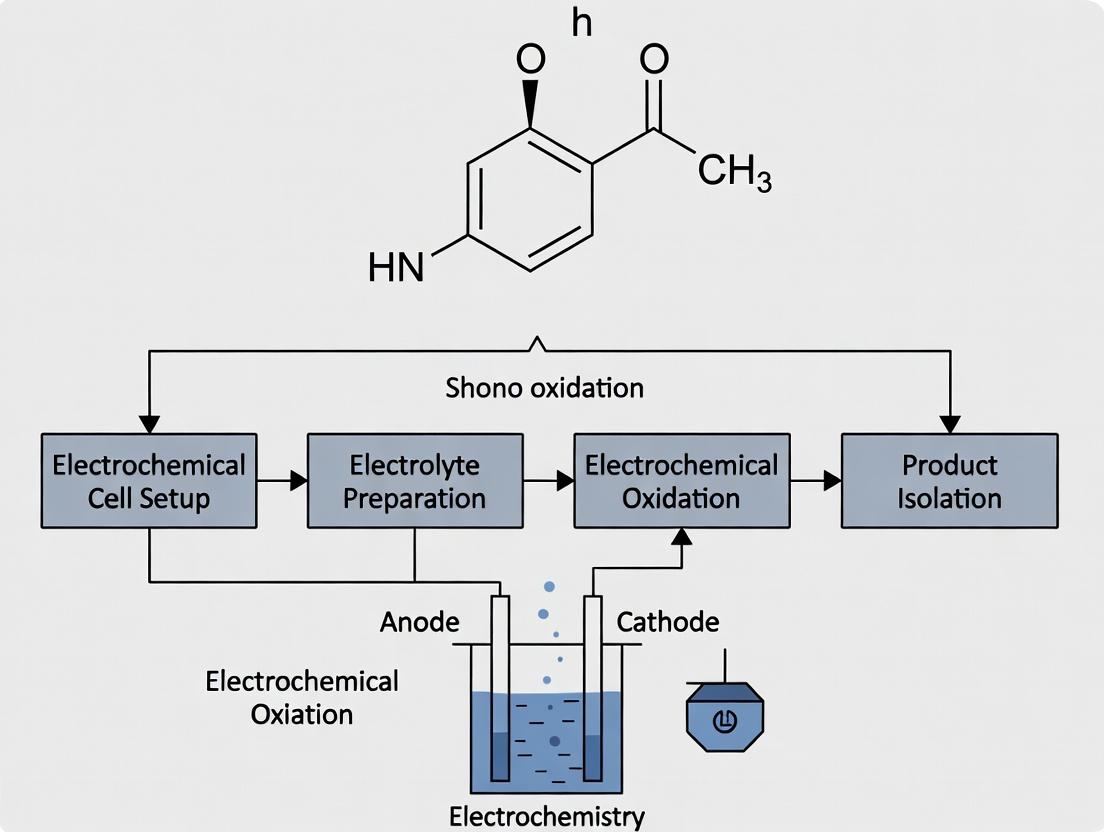
This detailed guide provides organic chemists and drug development researchers with a complete framework for performing the Shono oxidation.
Mastering Shono Oxidation: A Comprehensive Protocol Guide for Modern Organic Synthesis & Drug Development
Abstract
This detailed guide provides organic chemists and drug development researchers with a complete framework for performing the Shono oxidation. It covers the fundamental electrochemical principles, delivers a step-by-step optimized protocol for oxidizing C-H bonds adjacent to nitrogen in saturated amines, addresses common troubleshooting scenarios, and compares the method's advantages against alternative oxidation strategies. The article serves as both a practical laboratory manual and a strategic resource for applying this powerful transformation in complex molecule synthesis, particularly for pharmaceutical intermediates and natural products.
Understanding Shono Oxidation: Electrochemical Principles and Reaction Scope
Historical Context
The Shono oxidation, named after Japanese chemist Tatsuya Shono, was first reported in 1975. It is defined as the electrochemical α-oxidation of carbamates and carbonates to yield the corresponding N,O- or O,O-acetals. This transformation represented a pioneering method in organic electrochemistry, providing a route to synthetically valuable α-alkoxylated and α-acetoxylated amine derivatives under mild, metal-free conditions. Historically, its development paralleled growing interest in electrosynthesis as a "green" methodology, utilizing electrons as traceless reagents.
Core Transformation
The core transformation involves the anodic oxidation of a carbamate or carbonate substrate (1) to generate a cationic radical intermediate. This intermediate is subsequently trapped by a nucleophilic solvent (e.g., methanol) to yield the α-functionalized product (2). The general scheme is:
Substrate (Carbamate/Carbonate) → [Anodic Oxidation] → Cationic Radical Intermediate → [Nucleophilic Trapping] → α-Alkoxylated Product
Table 1: Representative Yields in Shono Oxidations
| Substrate Type | Nucleophile | Typical Yield Range (%) | Key Condition Variable |
|---|---|---|---|
| Pyrrolidine Carbamate | Methanol | 70-85 | Constant Current (1.2 F/mol) |
| Piperidine Carbamate | Methanol | 65-80 | Divided Cell, LiClO₄ electrolyte |
| 8-Oxabicyclo[3.2.1]octane Carbamate | Acetate | 60-75 | Platinum electrodes, 0°C |
| Acyclic Tertiary Amine Carbamate | Methanol | 55-70 | RVC anode, undivided cell |
Table 2: Electrochemical Parameters
| Parameter | Typical Value | Influence on Reaction |
|---|---|---|
| Current Density | 5-20 mA/cm² | Higher density can increase rate but may lower selectivity. |
| Charge Passed | 1.1 - 2.0 F/mol | Stoichiometric excess often required for full conversion. |
| Electrolyte Concentration | 0.1 - 0.2 M | Ensures conductivity; common salts: LiClO₄, Et₄NBF₄. |
| Temperature | 0°C to 25°C | Lower temps often improve selectivity for α-methoxylation. |
Application Notes & Detailed Protocols
Application Note 1: α-Methoxylation of N-Carbamoyl Pyrrolidine
This is the classic, high-yielding application of the Shono oxidation, useful for the protection or subsequent functionalization of amine derivatives.
Protocol:
- Setup: Assemble an undivided electrochemical cell equipped with a carbon felt or RVC (Reticulated Vitreous Carbon) anode (∼10 cm² surface area) and a platinum cathode. A magnetic stir bar is essential.
- Solution Preparation: Dissolve the pyrrolidine carbamate substrate (5.0 mmol) and tetraethylammonium tetrafluoroborate (Et₄NBF₄, 1.0 mmol) in anhydrous methanol (30 mL) and dichloromethane (10 mL) in the cell. The mixed solvent system improves substrate solubility.
- Electrolysis: Place the cell in a cooling bath maintained at 10°C. Apply a constant current of 50 mA (∼5 mA/cm²). Monitor the reaction by TLC.
- Work-up: After passing ∼1.5 F/mol of charge (∼2.5 hours), disconnect the power. Dilute the reaction mixture with 50 mL of dichloromethane and wash with saturated aqueous sodium bicarbonate solution (20 mL). Dry the organic layer over anhydrous Na₂SO₄.
- Purification: Concentrate under reduced pressure and purify the residue by flash column chromatography (SiO₂, hexane/ethyl acetate gradient) to obtain the α-methoxylated carbamate.
Application Note 2: Oxidative Desymmetrization of 8-Oxabicyclo[3.2.1]octane
This protocol highlights the power of the Shono oxidation in complex molecule synthesis, enabling selective functionalization.
Protocol:
- Setup: Use a divided H-type cell separated by a sintered glass diaphragm (or ion-exchange membrane). Equip with a platinum foil anode (2 cm²) and a platinum cathode.
- Anolyte Preparation: Disspose the bicyclic carbamate substrate (2.0 mmol) and lithium perchlorate (LiClO₄, 2.0 mmol) in a mixture of acetic acid (15 mL) and sodium acetate (4.0 mmol).
- Catholyte Preparation: Fill the cathode compartment with a solution of LiClO₄ (1.0 mmol) in acetic acid (10 mL).
- Electrolysis: Perform the electrolysis at 0°C under a nitrogen atmosphere. Apply a constant current of 10 mA (5 mA/cm²) until 2.2 F/mol of charge has been passed (∼11 hours).
- Work-up: Separate the anolyte and neutralize carefully with cold, saturated NaHCO₃ solution. Extract with ethyl acetate (3 x 25 mL). Dry combined organics over MgSO₄.
- Purification: Concentrate and purify via silica gel chromatography to isolate the mono-acetoxylated product.
Visualizations
Shono Oxidation Mechanism
General Experimental Workflow
The Scientist's Toolkit: Research Reagent Solutions
Table 3: Essential Materials for Shono Oxidation
| Item | Function & Specification | Notes |
|---|---|---|
| RVC (Reticulated Vitreous Carbon) Anode | High surface area working electrode. Minimizes overpotential. | Preferred for many substrates in undivided cells. |
| Platinum Foil Electrodes | Inert electrodes for divided cell setups. | Stable at high anodic potentials. |
| Tetraalkylammonium Salt (e.g., Et₄NBF₄) | Supporting electrolyte. Provides conductivity in organic solvents. | Must be thoroughly dried. BF₄⁻ or ClO₄⁻ anions are common. |
| Anhydrous Methanol | Common nucleophile/solvent. Must be dry to prevent side reactions. | Distill from Mg(OMe)₂ or use over 3Å molecular sieves. |
| Divided H-Cell | Physically separates anolyte and catholyte. | Prevents reduction of the product at the cathode. Crucial for acid-sensitive substrates. |
| Constant Current Power Supply | Delivers precise electrical current (mA range). | Enables reproducible charge (F/mol) delivery. |
| Lithium Perchlorate (LiClO₄) | Supporting electrolyte for protic media (e.g., AcOH). | Caution: Potentially explosive when dry; handle with care, never let dry completely. |
| Acetic Acid / Sodium Acetate | Protic nucleophilic system for acetoxylation. | Buffered system improves yield and selectivity. |
This application note details the electrochemical mechanisms underpinning the Shono oxidation, a pivotal method for the α-functionalization of tertiary amides and carbamates. Within the broader thesis on optimizing Shono oxidation experimental procedures, understanding the anodic oxidation process and the subsequent fate of key cationic intermediates is critical for rational protocol development, particularly in the synthesis of complex pharmaceutical scaffolds.
The mechanism proceeds via a sequence of electron transfer, deprotonation, and nucleophilic trapping. Quantitative data on oxidation potentials and intermediate stability are summarized below.
Table 1: Oxidation Potentials of Relevant Substrates & Intermediates
| Compound / Intermediate Class | Approx. Oxidation Potential (V vs. SCE) | Solvent/Electrolyte System | Notes |
|---|---|---|---|
| N-alkyl carbamate (e.g., N-methyl pyrrolidine carbamate) | +1.8 - +2.2 | MeOH / R₄N⁺ BF₄⁻ or ClO₄⁻ | Direct substrate oxidation; potential varies with substituents. |
| α-Amino Radical (R₂N⁺-CH₂•) | +0.8 - +1.2 | N/A | Rapidly oxidized at much lower potential than parent substrate. |
| α-Amino Cation (R₂N⁺-CH₂⁺) Key Intermediate | N/A | N/A | Electrochemically generated; lifetime dictates product distribution. |
| Nucleophilic Solvent (MeOH) | > +2.5 | N/A | High overpotential prevents competitive solvent oxidation. |
Table 2: Product Distribution Based on Intermediate Trapping
| Nucleophile Present (in situ) | Primary Product Formed | Typical Yield Range (%) | Key Condition Variable |
|---|---|---|---|
| Methanol (solvent) | α-Methoxylated amide | 60-85% | Water content (<1% optimal) |
| Added Acetate (e.g., NaOAc) | α-Acetoxy amide | 55-80% | Acetate concentration (1.0-2.0 eq) |
| Carbonate (e.g., Li₂CO₃) | α-Hydroxy amide (via hydrolysis) | 50-75% | Controlled proton availability |
| Trapped Intramolecularly (e.g., olefin) | Cyclized product | 40-70% | Concentration (higher for intermolecular) |
Detailed Experimental Protocols
Protocol 1: Standard Constant-Current Electrolysis for α-Methoxylation
Objective: To perform the Shono oxidation of N-carbomethoxypyrrolidine to yield 2-methoxy-N-carbomethoxypyrrolidine. Materials: See "The Scientist's Toolkit" below. Procedure:
- Cell Setup: Assemble an undivided electrochemical cell equipped with a carbon felt anode (2.5 x 2.5 cm) and a platinum plate cathode (1.5 x 1.5 cm). Ensure an inter-electrode gap of 5-10 mm.
- Electrolyte Preparation: In the cell, dissolve tetraethylammonium tetrafluoroborate (1.07 g, 5.0 mmol) in anhydrous methanol (50 mL). Add the substrate, N-carbomethoxypyrrolidine (0.785 g, 5.0 mmol). Stir until fully dissolved.
- Electrolysis: Place the cell in a cooling bath maintained at 10-15°C. Connect to a constant current power supply. Apply a current of 100 mA (current density ~16 mA/cm² based on geometric anode area). Monitor the cell potential (expected initial range: 8-12 V).
- Reaction Monitoring: Use TLC (silica, hexanes/EtOAc 4:1) or in situ voltammetry to track substrate consumption. The theoretical charge required is 2 F/mol (964 C per 5 mmol substrate). Pass approximately 965 Coulombs (100 mA for 160 minutes).
- Work-up: After charge passage, disconnect the power supply. Dilute the reaction mixture with dichloromethane (100 mL). Wash sequentially with saturated aqueous sodium bicarbonate solution (50 mL) and brine (50 mL).
- Isolation: Dry the organic layer over anhydrous magnesium sulfate, filter, and concentrate under reduced pressure. Purify the crude product by flash column chromatography (silica gel, hexanes/EtOAc gradient) to afford the title compound as a colorless oil.
Protocol 2: Diagnostic Cyclic Voltammetry for Substrate Screening
Objective: To determine the oxidation potential of a novel substrate and assess the reversibility of the initial electron transfer. Procedure:
- Electrode Preparation: Polish a glassy carbon working electrode (3 mm diameter) with 0.05 μm alumina slurry, then rinse thoroughly with water and acetone.
- Solution Preparation: In a standard 3-electrode cell, prepare a 1.0 mM solution of the substrate in anhydrous methanol with 0.1 M tetrabutylammonium hexafluorophosphate as supporting electrolyte. Use a platinum wire counter electrode and an Ag/Ag⁺ (in MeCN) reference electrode.
- Measurement: Deoxygenate the solution by sparging with argon for 10 minutes. Record cyclic voltammograms at scan rates of 100 mV/s, 200 mV/s, and 500 mV/s over a range from 0 V to the solvent anodic limit (~+2.5 V vs. Ag/Ag⁺).
- Analysis: Identify the peak oxidation potential (Epa). Scan reversal immediately after the peak to check for a reduction counterpart (Epс), indicating radical cation reversibility. In Shono systems, the initial wave is often irreversible due to rapid deprotonation.
Mechanism and Workflow Visualizations
Diagram 1: Core Shono Oxidation Mechanism Pathway (96 chars)
Diagram 2: Shono Oxidation Experimental Workflow (92 chars)
The Scientist's Toolkit: Key Research Reagent Solutions
Table 3: Essential Materials for Shono Oxidation Experiments
| Item / Reagent Solution | Function & Critical Notes |
|---|---|
| Anhydrous Methanol (with molecular sieves) | Solvent and intrinsic nucleophile. Water content <0.1% is critical to prevent hydrolysis of the key cationic intermediate. |
| Tetraalkylammonium Salt (e.g., Et₄NBF₄, Bu₄NPF₆) | Supporting electrolyte. Provides conductivity, minimizes migration overpotential. Non-nucleophilic anions are essential. |
| Carbon Anode (Graphite Felt, RVC, or Plate) | High-overpotential anode material. Minimizes substrate degradation. Surface area affects current density. |
| Platinum or Stainless-Steel Cathode | Inert cathode for proton reduction (H₂ evolution) or other reduction processes in the undivided cell. |
| Dried, Pre-purified Substrate (Amide/Carbamate) | Starting material purity is paramount for reproducible oxidation potentials and clean product formation. |
| In-situ NMR Electrochemical Cell | For real-time monitoring of intermediate formation and decay, crucial for mechanistic studies within the thesis. |
| Controlled-Temperature Bath (10-25°C) | Manages exotherm and provides consistent reaction kinetics, impacting selectivity. |
| Constant Current/Voltage Power Supply | Precision power source. Constant current is most common for preparative Shono oxidations. |
Application Notes
The Shono oxidation, the electrochemical α-oxygenation of tertiary amines to yield synthetically valuable α-alkoxyamines or amides, has emerged as a powerful tool in modern organic synthesis and drug discovery. Within the broader thesis on optimizing Shono oxidation procedures, a critical parameter for utility in medicinal chemistry is its substrate scope, particularly regarding nitrogen-containing functionalities. This investigation focuses on the compatibility and outcomes with three key substrate classes: alkyl tertiary amines, N-protected carbamates, and sulfonamides. The electrochemical method offers a "green" alternative to stoichiometric oxidants, providing precise control over oxidation potential to achieve chemoselectivity.
Recent advancements, particularly the use of constant current electrolysis in flow cells with carbon-based electrodes, have expanded the functional group tolerance and scalability of this transformation. The reaction typically employs methanol or other alcohols as both solvent and nucleophile, in the presence of an electrolyte such as lithium perchlorate. The critical challenge lies in balancing the oxidation potential to selectively generate the iminium ion intermediate without over-oxidation or substrate decomposition, especially for electron-deficient nitrogen groups like sulfonamides.
The following application notes detail the reactivity trends, yields, and optimized conditions for each substrate class, providing a framework for researchers to apply this methodology in complex molecule synthesis, such as the late-stage functionalization of drug candidates.
Data Presentation
Table 1: Comparative Yields for Shono Oxidation Across Substrate Classes
| Substrate Class | Representative Example | Optimal Current Density (mA/cm²) | Supporting Electrolyte | Nucleophile | Average Isolated Yield (%) | Key Limitation |
|---|---|---|---|---|---|---|
| Alkyl Tertiary Amines | N-Methylpyrrolidine | 5.0 | LiClO₄ (0.1 M) | MeOH | 88% | Over-oxidation to lactam |
| Carbamates (Boc-protected) | N-Boc Pyrrolidine | 7.5 | Et₄NBF₄ (0.1 M) | MeOH | 72% | Dealkylation side products |
| Sulfonamides (Tosyl-protected) | N-Tosylpyrrolidine | 10.0 | LiClO₄ (0.1 M) | MeOH/NaOAc buffer | 45% | Low conductivity, competing hydrolysis |
Table 2: Effect of Nucleophile on Product Distribution for N-Methylpiperidine
| Nucleophile (ROH) | Electrolyte | Temperature (°C) | α-Methoxyamine Yield (%) | α-Acetamido Yield (with AcOH) (%) |
|---|---|---|---|---|
| Methanol | LiClO₄ | 20 | 85 | N/A |
| Ethanol | LiClO₄ | 20 | 81 | N/A |
| Acetic Acid | Et₄NClO₄ | 10 | N/A | 78 |
| Water (buffer) | NaHCO₃ | 25 | <10 | N/A |
Experimental Protocols
Protocol 1: General Shono Oxidation of Alkyl Tertiary Amines (e.g., N-Methylpyrrolidine)
Materials: Substrate (1.0 mmol), anhydrous methanol (10 mL), lithium perchlorate (0.1 M), undivided electrochemical flow cell with graphite anode and platinum cathode, power supply, magnetic stirrer. Procedure:
- Dissolve the amine substrate (1.0 mmol) and LiClO₄ (106 mg, 1.0 mmol) in anhydrous MeOH (10 mL) in the anode chamber.
- Assemble the undivided flow cell equipped with graphite foil anode (2 cm²) and Pt mesh cathode. Connect to a constant current power supply.
- Circulate the anolyte through the cell at a flow rate of 2.0 mL/min using a peristaltic pump.
- Apply a constant current of 10.0 mA (5.0 mA/cm²) under a nitrogen atmosphere. Monitor reaction by TLC.
- After passing 2.1 F/mol of charge (typically 3-4 hours), stop the electrolysis.
- Quench the reaction by adding saturated aqueous NaHCO₃ (10 mL). Concentrate under reduced pressure to remove MeOH.
- Extract the aqueous layer with dichloromethane (3 x 15 mL). Dry combined organic layers over MgSO₄, filter, and concentrate.
- Purify the crude product by flash column chromatography (SiO₂, hexanes/ethyl acetate gradient) to obtain the α-methoxypyrrolidine.
Protocol 2: Shono Oxidation of N-Boc-Protected Pyrrolidine (Carbamate)
Materials: N-Boc-pyrrolidine (1.0 mmol), anhydrous methanol, tetraethylammonium tetrafluoroborate (Et₄NBF₄, 0.1 M), divided H-cell with Nafion membrane, carbon felt anode, Pt cathode. Procedure:
- In the anode compartment, dissolve N-Boc-pyrrolidine (1.0 mmol) and Et₄NBF₄ (197 mg, 1.0 mmol) in anhydrous MeOH (15 mL).
- In the cathode compartment, place a solution of Et₄NBF₄ (1.0 mmol) in MeOH (15 mL).
- Assemble the H-cell separated by a Nafion 117 membrane. Insert a carbon felt anode (2 cm² geometric area) and a Pt coil cathode.
- Apply a constant current of 15.0 mA (7.5 mA/cm²). The reaction is performed under argon with stirring.
- After passing 2.5 F/mol of charge, discontinue electrolysis.
- Work-up as per Protocol 1. Note: The Boc group is stable under these conditions. Purification by chromatography yields the α-methoxy N-Boc-amine.
Protocol 3: Attempted Shono-Type Oxidation of N-Tosylpyrrolidine (Sulfonamide)
Materials: N-Tosylpyrrolidine (1.0 mmol), methanol, sodium acetate buffer (0.05 M, pH 6), lithium perchlorate, undivided cell with boron-doped diamond (BDD) anode, Pt cathode. Procedure:
- Dissolve the sulfonamide (1.0 mmol) and LiClO₄ (1.0 mmol) in a 4:1 mixture of MeOH and NaOAc buffer (0.05 M, pH 6, total 15 mL).
- Use an undivided cell with a BDD anode (1 cm²) and Pt cathode. The buffered medium helps mitigate acidity from overpotential.
- Apply a higher constant current density of 10.0 mA/cm². Reaction progress is slow; monitor by LC-MS.
- After passing 3.0 F/mol of charge, work-up as before. Expect lower yields and possible recovered starting material. Extensive purification is required.
Visualization
Title: Shono Oxidation General Mechanism & Product Formation
Title: Shono Oxidation Experimental Workflow Protocol
The Scientist's Toolkit
Table 3: Essential Research Reagent Solutions for Shono Oxidation
| Reagent/Material | Function & Rationale | Example Brand/Type |
|---|---|---|
| Lithium Perchlorate (LiClO₄) | High-oxidation-potential, neutral electrolyte. Provides conductivity in organic solvents. | Sigma-Aldrich, anhydrous, 99.99% |
| Tetraethylammonium Tetrafluoroborate (Et₄NBF₄) | Alternative electrolyte for divided cells; minimizes cathode reduction interference. | TCI America, >98.0% |
| Graphite Foil/Plate Anode | Cost-effective, high-surface-area electrode for amine oxidation. Good balance of activity and overpotential. | Alfa Aesar, graphite foil 0.5mm |
| Boron-Doped Diamond (BDD) Anode | Extended anodic potential window for stubborn substrates (e.g., sulfonamides). Resists fouling. | NeoCoat BDD thin-film |
| Nafion 117 Membrane | Cation-exchange membrane for divided H-cells. Prevents crossover of products/reagents. | FuelCellStore |
| Methanol (Anhydrous) | Most common solvent and nucleophile. Must be dry to prevent hydrolysis of iminium intermediate. | Sigma-Aldrich, 99.8%, over molecular sieves |
| Constant Current Power Supply | Provides precise control of current density, a critical reaction parameter. | Keithley 2230G-30-1 |
| Undivided Micro Flow Cell | Enhances mass transfer, improves reaction control and scalability. | Vapourtec Ion electrochemical cell |
Role of the Electrolyte, Solvent, and Electrode Materials
This application note details the critical interdependencies of electrolyte, solvent, and electrode materials within the experimental framework of Shono oxidation. The broader thesis research focuses on optimizing this electrochemical method for the selective functionalization of aliphatic amides and carbamates, a transformation of high value in the synthesis of drug metabolites and complex pharmaceutical intermediates. The performance, selectivity, and scalability of the Shono oxidation are exquisitely sensitive to these three components, which govern electron transfer kinetics, substrate solubility, overpotentials, and product distribution.
Table 1: Common Electrolytes in Non-Aqueous Shono Oxidation
| Electrolyte | Typical Concentration (M) | Role/Function | Impact on Selectivity | Key Reference (Example) |
|---|---|---|---|---|
| Lithium perchlorate (LiClO₄) | 0.1 - 0.2 | Supporting electrolyte; minimizes ohmic drop, inert at typical potentials. | High for carbamate α-methoxylation. | (Yoshida et al., J. Org. Chem. 1984) |
| Tetrabutylammonium tetrafluoroborate (TBABF₄) | 0.05 - 0.1 | Provides conductivity in low-polarity solvents; large cation size influences double layer. | Can suppress polymerization side reactions. | (Modern adaptations in flow cells) |
| Sodium perchlorate (NaClO₄) | 0.1 | Lower cost alternative; solubility limitations in some organic solvents. | Moderate; may require methanol co-solvent. | (Scale-up studies) |
Table 2: Solvent Systems for Shono Oxidation
| Solvent / Solvent Mixture | Dielectric Constant (ε) | Primary Role | Effect on Reaction Outcome | |
|---|---|---|---|---|
| Methanol (MeOH) | ~33 | Solvent & nucleophile (for methoxylation). | Directly incorporates into product. Critical for in situ trapping of iminium ion. | |
| Acetonitrile (MeCN) / MeOH mixtures | MeCN: ~37 | MeCN: High dielectric for conductivity; MeOH: Nucleophile. | Balance between conductivity and nucleophile availability. Optimizes yield. | |
| Fluorinated Alcohols (e.g., HFIP) | ~16 | Co-solvent; stabilizes radical cations, lowers oxidation potential. | Enhances selectivity and rate for electron-rich substrates. | (König et al., Electrochim. Acta 2013) |
| Dichloromethane (DCM) with R₄N⁺ salts | ~9 | Low polarity; requires lipophilic electrolyte. Can alter reaction pathway. | Useful for substrates sensitive to protic conditions. |
Table 3: Electrode Material Performance
| Electrode Material | Anodic Potential Window (approx. vs. SCE in MeCN) | Role in Shono Oxidation | Advantages & Drawbacks |
|---|---|---|---|
| Graphite (RVC or plate) | Up to ~1.8 V | Cheap, high surface area anode. | High surface area good for scale-up; can be etched over time. |
| Platinum (Pt) | Up to ~2.2 V | Inert anode for high-potential oxidations. | Very stable; expensive; can catalyze alternative pathways. |
| Glassy Carbon (GC) | Up to ~2.0 V | Standard inert working electrode in analytics. | Smooth surface, good for mechanistic studies; can foul. |
| Boron-Doped Diamond (BDD) | >2.5 V | Extreme window, low background current. | Minimizes side reactions; excellent durability; high cost. |
Experimental Protocols
Protocol 3.1: Standard Batch Shono Oxidation of a Carbamate
Objective: To achieve α-methoxylation of N-ethylpyrrolidine carbamate. Materials: See "The Scientist's Toolkit" (Section 5).
Procedure:
- Cell Setup: Assemble an undivided electrochemical cell (e.g., a 50 mL glass beaker) equipped with a magnetic stir bar.
- Electrodes: Insert a graphite rod anode (10 cm² surface area) and a platinum coil cathode. Position electrodes ~1 cm apart.
- Solution Preparation: In the cell, combine the carbamate substrate (2.0 mmol, 1.0 equiv) and tetrabutylammonium tetrafluoroborate (TBABF₄, 0.1 M final concentration) in 20 mL of anhydrous methanol. Stir until completely dissolved.
- Electrolysis: Place the cell in a cooling bath maintained at 10°C. Connect electrodes to a DC power supply or potentiostat. Apply a constant current of 10 mA/cm² (total ~100 mA). Monitor the charge passed using a coulometer.
- Reaction Monitoring: Continue electrolysis until 2.1 F/mol of charge has been passed (theoretical for 2e⁻ oxidation). Reaction progress can be monitored by TLC or inline LC-MS.
- Work-up: Once complete, disconnect the power. Remove the electrodes and rinse with fresh methanol. Concentrate the reaction mixture under reduced pressure.
- Purification: Redissolve the residue in ethyl acetate (30 mL). Wash sequentially with water (10 mL) and brine (10 mL). Dry the organic layer over anhydrous MgSO₄, filter, and concentrate. Purify the crude product by flash column chromatography (silica gel, hexanes/ethyl acetate gradient).
Protocol 3.2: Analytical-Scale Screening in a Divided Cell
Objective: To determine the oxidation potential of a novel amide substrate. Materials: Potentiostat, 3-electrode cell (working: glassy carbon 3mm disk, counter: Pt wire, reference: Ag/Ag⁺ non-aqueous), electrolyte solution.
Procedure:
- Solution Preparation: In the analyte compartment of the divided H-cell, prepare a 1.0 mM solution of the substrate and 0.1 M TBABF₄ in anhydrous acetonitrile.
- Instrument Setup: Insert the three electrodes into the analyte compartment. Ensure the reference electrode is placed close to the working electrode via a Luggin capillary.
- Cyclic Voltammetry (CV): Purge the solution with argon for 10 minutes. Record a cyclic voltammogram from 0 V to the solvent anodic limit (e.g., +2.5 V vs. Ag/Ag⁺) at a scan rate of 100 mV/s.
- Data Analysis: Identify the substrate's anodic peak potential (Epa). This value informs the selection of a working potential for controlled-potential electrolysis (CPE) in subsequent preparative reactions. A large peak separation or irreversible wave is typical for Shono substrates.
Visualizations
Diagram 1: Shono Oxidation Mechanistic Workflow
Diagram 2: Shono Experiment Optimization Path
The Scientist's Toolkit
Table 4: Essential Research Reagent Solutions & Materials
| Item | Specification/Composition | Function in Shono Oxidation |
|---|---|---|
| Anhydrous Methanol | 99.8%, over molecular sieves (3Å) | Serves as both solvent and nucleophilic reagent for methoxylation. Anhydrous conditions prevent side reactions. |
| Supporting Electrolyte Solution | 0.5 M TBABF₄ in anhydrous MeCN or MeOH | Pre-made concentrated solution for accurate and rapid addition to reaction mixtures, ensuring consistent ionic strength. |
| Quenching Solution | Saturated aqueous ammonium chloride (NH₄Cl) | Used to safely quench small-scale electrolysis reactions, protonating any basic intermediates. |
| Electrode Cleaning Paste | Alumina slurry (0.05 µm) in water | For polishing solid electrodes (GC, Pt) between experiments to ensure reproducible electroactive surface area. |
| Internal Standard Solution | 20 mM dimethyl terephthalate in MeCN | For accurate coulometric and yield analysis via GC-FID or HPLC, accounting for volume changes during electrolysis. |
| Deoxygenation Gas | Argon (Ar) or Nitrogen (N₂), passed through O₂ scrubber | For purging electrolyte solutions prior to voltammetry to remove dissolved oxygen, which can interfere at cathodes. |
| Reference Electrode | Ag/Ag⁺ (0.01 M AgNO₃ in MeCN) or equivalent non-aqueous RE | Provides a stable, known potential reference in non-aqueous analytical experiments (e.g., CV). |
Within the broader scope of Shono oxidation experimental procedure research—which focuses on the electrochemical oxidation of carbamates to access key α-functionalized nitrogen motifs—the direct functionalization of unactivated C-H bonds represents a paradigm shift. This approach bypasses the need for pre-functionalized substrates, streamlining synthetic routes to complex drug molecules. These Application Notes detail practical protocols for implementing two pivotal C-H functionalization strategies: directed C(sp³)-H amination and decarboxylative cross-coupling, with quantitative data and workflows tailored for medicinal chemistry applications.
Quantitative Comparison of C-H Functionalization Methodologies
Table 1: Performance Metrics for Selected C-H Functionalization Protocols
| Method | Catalyst System | Typical Yield Range | Key Functional Group Tolerated | Typical Reaction Time | Scale Demonstrated (mmol) |
|---|---|---|---|---|---|
| Directed C(sp³)-H Amination | [Mn(TPP)Cl] / PhI(OAc)₂ / Substrate-NH₂ | 65-92% | Esters, Ethers, Ketones, Amides | 12-24 h | 0.1 - 5.0 |
| Decarboxylative C(sp²)-H Alkylation | Pd(OAc)₂ / Ag₂CO₃ / Ligand | 55-85% | Halides, Nitriles, Heterocycles | 6-18 h | 0.2 - 2.0 |
| Electrochemical C-H Oxidation (Shono-type) | R₃N / Graphite Electrodes | 60-88% | Carbamates, Sulfonamides, Alcohols | 2-4 h (electrolysis) | 0.5 - 10.0 |
Detailed Experimental Protocols
Protocol 1: Manganese-Catalyzed Directed C(sp³)-H Amination for Lactam Synthesis Objective: To convert a pivaloyl-protected amine substrate into a valuable γ-lactam scaffold via intramolecular C-H amination.
Materials & Procedure:
- In a flame-dried Schlenk tube under N₂, combine the substrate (pivalamide derivative, 1.0 mmol, 1.0 equiv) and manganese(III) tetraphenylporphyrin chloride ([Mn(TPP)Cl], 0.05 mmol, 5 mol%) in anhydrous dichloromethane (DCM, 10 mL).
- Add phenyliodine(III) diacetate (PIDA, 2.0 mmol, 2.0 equiv) in one portion.
- Stir the reaction mixture at 40°C for 18 hours, monitoring by TLC or LC-MS.
- Cool to room temperature and quench with saturated aqueous sodium thiosulfate solution (10 mL).
- Extract with DCM (3 x 15 mL). Combine organic layers, dry over anhydrous MgSO₄, filter, and concentrate in vacuo.
- Purify the crude residue by flash column chromatography (silica gel, hexane/ethyl acetate gradient) to afford the desired γ-lactam.
Protocol 2: Decarboxylative Cross-Coupling of Aryl Carboxylic Acids Objective: To directly arylate a heteroarene using a benzoic acid derivative as an aryl source, without pre-halogenation.
Materials & Procedure:
- In a sealed tube, combine 2-phenylbenzoic acid (1.2 mmol, 1.2 equiv), thiophene (1.0 mmol, 1.0 equiv), palladium(II) acetate (Pd(OAc)₂, 0.1 mmol, 10 mol%), and silver carbonate (Ag₂CO₃, 2.0 mmol, 2.0 equiv).
- Add dry dimethylformamide (DMF, 5 mL) and a magnetic stir bar. Flush the headspace with argon for 5 minutes.
- Seal the tube and heat to 140°C with vigorous stirring for 16 hours.
- Cool to room temperature, dilute with ethyl acetate (20 mL), and filter through a celite pad to remove solids.
- Wash the filtrate with water (3 x 20 mL) and brine (20 mL), dry over Na₂SO₄, filter, and concentrate.
- Purify by flash chromatography to yield the biaryl product.
Visualization of Workflows
Title: Directed C-H Amination Mechanism
Title: Synthetic Route Efficiency Comparison
The Scientist's Toolkit: Research Reagent Solutions
Table 2: Essential Materials for C-H Functionalization Experiments
| Item | Function & Rationale |
|---|---|
| [Mn(TPP)Cl] Catalyst | A robust metalloporphyrin catalyst that generates high-valent Mn-nitrene species for selective intramolecular C(sp³)-H amination. |
| Phenyliodine(III) Diacetate (PIDA) | A stoichiometric oxidant used in combination with the metal catalyst to generate the key reactive nitrenoid species. |
| Palladium(II) Acetate (Pd(OAc)₂) | A versatile Pd source that catalyzes decarboxylative couplings via concerted metalation-deprotonation (CMD) pathways. |
| Silver Salts (Ag₂CO₃, AgOPiv) | Serves as a base, oxidant, and halide scavenger in Pd-catalyzed C-H functionalization reactions. |
| Anhydrous, Deoxygenated Solvents (DCE, DMF, MeCN) | Critical for reproducibility in transition-metal-catalyzed reactions, preventing catalyst decomposition and hydrolysis. |
| Graphite Rod Electrodes (for Shono-type) | Serve as inexpensive, inert anode/cathode pairs for electrochemical C-H oxidation setups, enabling redox-neutral transformations. |
Step-by-Step Shono Oxidation Protocol: From Setup to Work-up
This application note details the essential electrochemical laboratory setup for conducting Shono oxidation, a powerful method for the α-functionalization of amines. Within a broader thesis on optimizing Shono oxidation for complex drug molecule synthesis, a robust and well-understood electrochemical cell assembly is paramount for reproducibility, efficiency, and scalability in pharmaceutical research.
The Scientist's Toolkit: Electrochemical Shono Oxidation
| Item | Function in Shono Oxidation |
|---|---|
| Conductive Salt (e.g., LiClO₄) | Supports ionic current by increasing electrolyte conductivity without participating in the reaction. |
| Solvent (MeCN/H₂O mixture) | Dissolves substrate, salt, and nucleophile; mixed solvents often optimize both conductivity and solubility. |
| Working Electrode (Graphite or Pt) | Site of substrate oxidation; material choice impacts reaction efficiency and selectivity. |
| Counter Electrode (Pt mesh or coil) | Completes the circuit, allowing current to flow; often separated by a frit. |
| Reference Electrode (Ag/Ag⁺) | Provides a stable potential reference to accurately control the working electrode potential. |
| Nucleophile (e.g., ROH, carboxylate) | Traps the electrogenerated iminium ion intermediate, determining the final product. |
| Divided Cell (H-cell) | Physically separates anodic and cathodic compartments to prevent product crossover/reduction. |
Essential Equipment & Assembly Protocol
Core Equipment List
- Potentiostat/Galvanostat: The central control unit for applying potential/current.
- Electrochemical Cell: A divided cell (e.g., H-cell) is standard for preparative Shono oxidation.
- Electrodes: Working (anode: graphite, Pt, glassy carbon), Counter (cathode: Pt), Reference (Ag/Ag⁺ in non-aqueous medium).
- Electrolyte: Solvent (anhydrous MeCN is common) and supporting electrolyte (e.g., 0.1 M LiClO₄).
- Accessories: Magnetic stirrer/hotplate, stir bar, fritted glass diaphragm (porosity 4), gas inlet for inert atmosphere (N₂/Ar).
Cell Assembly & Setup Protocol
Objective: Assemble a divided H-cell for a controlled, reproducible Shono oxidation.
Materials:
- 50 mL H-cell with fritted diaphragm
- Working Electrode (WE): Graphite rod (6 cm² surface area)
- Counter Electrode (CE): Pt coil
- Reference Electrode (RE): Ag wire in 0.01 M AgNO₃/MeCN
- Magnetic stir bar
- Electrolyte: 0.1 M LiClO₄ in anhydrous MeCN
- Substrate: N-Carbomethoxypyrrolidine (0.1 M)
- Nucleophile: Methanol (10 eq.)
Procedure:
- Cell Preparation: Clean the H-cell and all glassware with appropriate solvents. Dry thoroughly in an oven.
- Anolyte Preparation: In the anodic compartment, combine the substrate (e.g., 0.5 mmol), supporting electrolyte (0.1 M final conc.), and nucleophile (e.g., 5 mmol MeOH). Dilute to 5 mL with solvent.
- Catholyte Preparation: In the cathodic compartment, add only the supporting electrolyte (0.1 M in same solvent, 5 mL).
- Electrode Placement: Insert the WE and RE into the anolyte. Insert the CE into the catholyte. Ensure no physical contact between WE and CE.
- Connection: Connect the electrodes to the corresponding leads on the potentiostat (WE to red, CE to black, RE to white/green).
- Atmosphere & Mixing: Sparge the anolyte with inert gas (N₂) for 5-10 minutes. Maintain a slight positive pressure. Begin magnetic stirring.
- Electrolysis: Apply a constant potential (typically +2.0 to +2.4 V vs. Ag/Ag⁺) or constant current. Monitor charge passed (target: 2.1 F/mol).
- Work-up: After electrolysis, turn off the potentiostat. Combine compartments if applicable. Quench the reaction, isolate, and purify the product (e.g., α-methoxylated amine).
Key Performance Metrics
Table 1 summarizes typical outcomes from optimized small-scale Shono oxidation setups.
Table 1: Representative Shono Oxidation Performance Data (Constant Potential)
| Substrate | Electrode Material | Charge Passed (F/mol) | Yield (%)* | Selectivity (α:other) |
|---|---|---|---|---|
| N-Carbomethoxypyrrolidine | Graphite | 2.1 | 88 | >99:1 |
| N-Carbomethoxypiperidine | Glassy Carbon | 2.2 | 82 | 95:5 |
| Saturated N-Heterocycle | Pt Foil | 2.3 | 75 | 90:10 |
*Isolated yield after purification.
Experimental Protocol: Cyclic Voltammetry Scouting for Shono Oxidation
Objective: Determine the oxidation potential of a new amine substrate to inform controlled-potential electrolysis conditions.
Procedure:
- Prepare a 2 mM solution of the substrate in the chosen electrolyte (e.g., 0.1 M LiClO₄/MeCN).
- Use a standard three-electrode setup in an undivided cell (for scouting): WE: glassy carbon (1 mm diam), CE: Pt wire, RE: Ag/Ag⁺.
- Purge solution with N₂ for 5 min.
- Run a blank CV of the electrolyte from 0 V to +3.0 V (scan rate: 100 mV/s).
- Run a CV of the substrate solution over the same range.
- Identify the onset (Eonset) and peak (Epa) oxidation potentials for the amine.
- Set the applied potential for bulk electrolysis at approximately +200 mV beyond E_onset.
Logical Workflow & Key Intermediates
Shono Oxidation Mechanistic Pathway
Shono Experiment Workflow
This protocol provides a detailed guide to reagent preparation for the Shono oxidation, a cornerstone electrosynthetic method for the selective oxidation of carbamates and amides to yield N-acyliminium ion precursors. Within the broader thesis "Advancing Electrosynthetic Methodologies: Scalable and Selective Shono Oxidation for Complex Alkaloid Synthesis," precise reagent preparation is critical for reproducibility, yield optimization, and selectivity control in drug development applications.
Reagent Selection & Preparation Protocols
Substrate Preparation
The substrate must contain a carbamate or amide group adjacent to an oxidizable electron-rich moiety (e.g., a carbon with a C-H bond).
Protocol: Purification and Handling of Carbamate Substrates
- Starting Material: Dissolve the crude carbamate (e.g., N-acylpyrrolidine, 5.0 g) in a minimum volume of ethyl acetate (~15 mL) in a 50 mL Erlenmeyer flask.
- Filtration: Pass the solution through a short plug of silica gel (approx. 10 g) in a sintered glass funnel, eluting with an additional 20 mL of ethyl acetate.
- Concentration: Remove the solvent under reduced pressure using a rotary evaporator (40°C water bath).
- Drying: Dry the resulting solid under high vacuum (<1 mmHg) for a minimum of 2 hours to remove residual solvents and water.
- Storage: Store the purified substrate in a desiccator over phosphorus pentoxide (P₂O₅) under an inert atmosphere (Ar or N₂) at 4°C until use.
Electrolyte Selection and Preparation
The electrolyte ensures conductivity and can influence reaction selectivity and efficiency.
Table 1: Common Electrolyte Systems for Shono Oxidation
| Electrolyte | Typical Concentration | Solvent Compatibility | Key Function & Notes |
|---|---|---|---|
| Lithium Perchlorate (LiClO₄) | 0.1 M | CH₃CN, CH₂Cl₂ | Gold Standard. High solubility and conductivity. CAUTION: Potentially explosive when dry; use only in solution. |
| Tetrabutylammonium Hexafluorophosphate (Bu₄NPF₆) | 0.1 M | CH₂Cl₂, CH₃CN | Non-nucleophilic. Provides stable, inert ions. Preferred for reactions sensitive to Lewis acids. |
| Sodium Perchlorate (NaClO₄) | 0.1 M | CH₃CN, MeOH | Lower cost alternative. Lower solubility in dichloromethane. |
Protocol: Preparation of 0.1 M LiClO₄ in Anhydrous Acetonitrile
- Work in a well-ventilated fume hood. Wear appropriate PPE.
- Preheat an oven to 120°C. Bake a 500 mL volumetric flask and stir bar for 2 hours.
- Under an argon atmosphere, assemble the flask with the stir bar and add 250 mL of HPLC-grade acetonitrile.
- Add anhydrous lithium perchlorate (5.32 g, 0.05 mol) in small portions while stirring vigorously.
- Once fully dissolved, bring to a final volume of 500 mL with additional anhydrous acetonitrile.
- Store the electrolyte solution over activated 3Å molecular sieves under argon.
Solvent Selection and Drying Protocols
The solvent must dissolve substrates and electrolytes, exhibit high dielectric strength, and possess an appropriate electrochemical window.
Table 2: Solvent Properties for Shono Oxidation
| Solvent | Dielectric Constant (ε) | Electrochemical Window (V vs. SCE) | Drying Protocol | Primary Role |
|---|---|---|---|---|
| Acetonitrile (CH₃CN) | 37.5 | ~6.1 | Reflux over CaH₂ (3h), then distill. Store over 3Å MS. | Preferred. Excellent electrolyte solubility, high anodic stability. |
| Dichloromethane (CH₂Cl₂) | 8.9 | ~5.0 | Reflux over P₂O₅ (1h), then distill. Store over 4Å MS. | Useful for less polar substrates. Often used with Bu₄NPF₆. |
| Methanol (MeOH) / Water | 32.6 / 80.1 | Variable | Distill from Mg(OMe)₂ (MeOH). Use ultrapure H₂O (18.2 MΩ·cm). | For "In-cell" Mediation. Required for reactions using water as a co-nucleophile. |
Protocol: Drying Acetonitrile via Calcium Hydride (CaH₂) Distillation
- Place 1.0 L of HPLC-grade acetonitrile in a 2L round-bottom flask.
- Add 10-15 g of calcium hydride (CaH₂) and a few boiling chips.
- Assemble a simple distillation apparatus under an argon atmosphere.
- Reflux the mixture for 3 hours, ensuring no moisture is introduced.
- Distill the acetonitrile directly into a pre-dried receiving flask containing activated 3Å molecular sieves.
- Cap the flask under argon and store in the dark.
The Scientist's Toolkit
Table 3: Essential Reagent Solutions & Materials for Shono Oxidation
| Item | Function & Explanation |
|---|---|
| Anhydrous Electrolyte Solution (0.1M LiClO₄/CH₃CN) | Provides ionic conductivity in non-aqueous medium without introducing water or nucleophiles that interfere with the reaction. |
| Purified Carbamate Substrate | Ensures high purity to prevent side reactions and electrode fouling, critical for achieving high Faradaic efficiency. |
| Dried & Distilled Solvents (CH₃CN, CH₂Cl₂) | Eliminates water and protic impurities that can quench the electrogenerated N-acyliminium ion or compete in the oxidation step. |
| Supporting Base (e.g., 2,6-Lutidine) | Scavenges protons generated at the anode, preventing acid-catalyzed decomposition of substrates or products. |
| Nucleophile Stock Solution (e.g., MeOH/H₂O) | For trapping the generated N-acyliminium ion in situ. Prepared from anhydrous solvents for controlled functionalization. |
| Activated Molecular Sieves (3Å or 4Å) | Maintain an anhydrous environment in reagent storage vessels and the electrolyte reservoir during setup. |
| Phosphorus Pentoxide (P₂O₅) Desiccator | Provides an ultra-dry environment for long-term storage of purified, moisture-sensitive substrates. |
Visualized Workflow & Mechanism
Shono Oxidation Mechanism and Workflow
Experimental Protocol for Shono Oxidation
This application note, framed within a broader thesis on Shono oxidation experimental procedure research, details the optimization of key electrochemical parameters for the synthesis of N-acyliminium ion intermediates and their subsequent trapping. The anodic oxidation of carbamates (Shono oxidation) is a powerful C–H functionalization tool in medicinal chemistry. Precise control of current density, charge (F/mol), and temperature is critical for achieving high selectivity, yield, and reproducibility in scale-up and drug development settings.
Key Optimized Parameters & Quantitative Data
Optimal parameters vary with substrate and desired product. The following table summarizes conditions for common transformations based on recent literature.
Table 1: Optimized Reaction Parameters for Representative Shono Oxidations
| Substrate (Carbamate) | Target Product | Optimal Current Density (mA/cm²) | Optimal Charge (F/mol) | Optimal Temperature (°C) | Reported Yield (%) | Key Electrolyte/Solvent System |
|---|---|---|---|---|---|---|
| N-Boc-pyrrolidine | α-Methoxylation | 5-10 | 2.2-2.5 | 0-10 | 85-92 | LiClO₄ / MeOH |
| N-Boc-piperidine | α-Cyanation | 7-12 | 2.5-2.8 | 20-25 | 78-85 | Et₄NBF₄ / MeCN + TMSCN |
| N-Acetylpyrrolidine | α-Alkoxylation | 4-8 | 2.0-2.3 | -10 to 0 | 80-88 | NaClO₄ / ROH |
| N-Boc-azepane | Dimerization | 3-6 | 2.0 | 25 | 65 | LiClO₄ / MeOH |
Detailed Experimental Protocols
Protocol 3.1: Standard Optimized Shono Oxidation for α-Methoxylation
Objective: Anodic α-methoxylation of N-Boc-pyrrolidine. Materials: Undivided cell, Graphite anode (2.0 cm²), Platinum cathode, Magnetic stir bar, Coolant bath. Reagents: N-Boc-pyrrolidine (2.0 mmol, 1.0 eq.), Lithium perchlorate (LiClO₄, 0.1 M), Methanol (MeOH, anhydrous, 20 mL).
Procedure:
- Cell Setup: Assemble an undivided electrochemical cell equipped with graphite anode and platinum cathode. Connect to a DC power supply/ potentiostat.
- Solution Preparation: Dissolve LiClO₄ (0.21 g, 2.0 mmol) in anhydrous MeOH (20 mL) in the cell. Add N-Boc-pyrrolidine (358 mg, 2.0 mmol). Stir until homogeneous.
- Temperature Control: Place the cell in a cooling bath and adjust temperature to 5 ± 2 °C.
- Electrolysis: Apply constant current to achieve a current density of 7.5 mA/cm² (total current: 15 mA). Pass a total charge of 2.4 F/mol (calculated for 2.0 mmol substrate: Q = 2.4 * 96485 * 0.002 = ~463 C). Monitor charge passed using a coulometer.
- Reaction Quenching: Once the required charge is passed, turn off the power. Pour the reaction mixture into water (50 mL).
- Work-up: Extract with dichloromethane (3 x 30 mL). Dry the combined organic layers over anhydrous MgSO₄, filter, and concentrate in vacuo.
- Purification: Purify the crude product by silica gel column chromatography (hexanes/ethyl acetate) to yield the α-methoxylated product.
Protocol 3.2: Optimization Scoping Run (Temperature & Charge)
Objective: Systematically determine the optimal temperature and charge for a new substrate. Materials: As in Protocol 3.1. Multiple cells or sequential runs are required. Procedure:
- Prepare 4 identical reaction setups as in Protocol 3.1, steps 1-2.
- Set the temperature of each cell to a different value (e.g., -10°C, 0°C, 20°C, 40°C). Maintain constant current density (e.g., 5 mA/cm²).
- For each temperature, perform electrolysis, stopping at different charge intervals (e.g., 1.5, 2.0, 2.5, 3.0 F/mol) in separate runs.
- Analyze each sample by HPLC or TLC to determine conversion and selectivity. Plot yield vs. charge at each temperature to identify optimal values.
The Scientist's Toolkit: Research Reagent Solutions
Table 2: Essential Materials for Shono Oxidation Optimization
| Item | Function & Importance |
|---|---|
| Potentiostat/Galvanostat | Precisely controls applied potential or current, enabling reproducible control of current density. Critical for kinetic studies. |
| Coulometer | Integrates current over time to measure total passed charge (in Coulombs or Faraday). Essential for determining reaction endpoint. |
| Undivided Electrochemical Cell | Simplifies setup for reactions where product crossover or intermediate separation is not an issue. Common for Shono oxidation. |
| Graphite (Carbon) Felt/Plate Anode | High-surface-area, inexpensive electrode material with a wide potential window suitable for amine oxidation. |
| Supporting Electrolyte (e.g., LiClO₄, Et₄NBF₄) | Provides necessary conductivity in organic solvents. Choice affects solubility, electrode passivation, and product distribution. |
| Precision Temperature Bath | Maintains optimal reaction temperature (±1°C), crucial for controlling selectivity and suppressing side reactions (e.g., over-oxidation). |
| Anhydrous, Aprotic Solvents (MeCN, DMF) | Prevent proton-coupled side reactions, offer good electrolyte solubility, and stabilize electrogenerated intermediates. |
| Nucleophile Trapping Agent (e.g., MeOH, TMSCN) | Traps the generated N-acyliminium ion in situ to form the desired functionalized product (ether, nitrile, etc.). |
Visualization of Workflows
Shono Oxidation Parameter Optimization Workflow
Shono Mechanism with Parameter Influence
In-Reaction Monitoring Techniques (TLC, LCMS) and Endpoint Determination
Application Notes Within a research thesis focused on optimizing the Shono oxidation—an electrochemical method for the α-oxygenation of tertiary amides and carbamates to yield critical synthetic intermediates—efficient in-reaction monitoring is paramount. This electro-oxidative process, involving reactive N-acyliminium ion intermediates, presents challenges in endpoint determination due to potential over-oxidation and side reactions. Thin-Layer Chromatography (TLC) offers a rapid, cost-effective qualitative check, while Liquid Chromatography-Mass Spectrometry (LCMS) provides quantitative, structurally specific data essential for kinetic profiling and endpoint determination. Integrating these techniques allows for precise reaction control, maximizing yield and purity of the target N,O-acetal or subsequent product in complex drug development pathways.
Protocols
Protocol 1: TLC Monitoring of Shono Oxidation Objective: To qualitatively assess reaction progress and consumption of the starting amide. Materials: TLC plates (silica gel 60 F254), suitable eluent (e.g., Ethyl Acetate/Hexanes, 1:1), UV lamp (254 nm), p-anisaldehyde or CAM stain. Procedure:
- Pre-label a TLC plate for timepoints (e.g., t=0, 30, 60, 120 min).
- At each interval, use a glass pipette to withdraw a small aliquot (~0.1 mL) from the electrochemical cell.
- Quench the aliquot immediately in a mixture of saturated aqueous sodium bicarbonate and ethyl acetate (1:1, 0.5 mL total).
- Spot the diluted organic layer directly onto the plate alongside references of the starting material.
- Develop the plate in the chosen eluent.
- Visualize under UV 254 nm to observe UV-active spots. Then, dip in staining solution (e.g., p-anisaldehyde) and heat to reveal all organic compounds. Interpretation: Progressive disappearance of the starting material spot and emergence of a new spot with higher polarity (lower R_f) indicates product formation. Endpoint is suggested when the starting material spot is no longer visible.
Protocol 2: LCMS Analysis for Quantitative Endpoint Determination Objective: To quantify the conversion of starting material to product and detect key intermediates or byproducts. Materials: LCMS system (ESI source), C18 reverse-phase column (e.g., 50 x 2.1 mm, 1.7 μm), acetonitrile (MeCN), water with 0.1% formic acid. Procedure:
- Sample Preparation: At defined timepoints, withdraw a 100 μL aliquot from the reaction mixture. Quench in 400 μL of 1:1 MeCN/Water with 0.05% formic acid. Vortex, centrifuge (10,000 rpm, 2 min), and filter (0.2 μm PTFE) into an LCMS vial.
- LC Method: Use a gradient elution. (Solvent A: H2O + 0.1% FA; Solvent B: MeCN + 0.1% FA). Gradient: 5% B to 95% B over 5 min, hold for 1 min. Flow rate: 0.4 mL/min. Column temp: 40°C.
- MS Method: ESI positive ion mode. Scan range: 100-1000 m/z. Capillary voltage: 3.0 kV. Desolvation temp: 350°C.
- Data Analysis: Integrate peaks for starting material (SM), product (P), and any intermediate (e.g., N-acyliminium ion adduct if stable). Plot relative abundance or concentration (via calibration curve) vs. time. Endpoint Determination: The reaction endpoint is quantitatively defined as the time at which the relative peak area of the starting material falls below 1-2% of the total integrated chromatographic area, provided the product area has plateaued.
Data Presentation
Table 1: Comparative Analysis of Monitoring Techniques for Shono Oxidation
| Technique | Key Parameter Monitored | Time per Analysis | Quantitative? | Key Information Gained | Primary Use in Shono Optimization |
|---|---|---|---|---|---|
| TLC | R_f of SM, P, byproducts | 15-20 min | No (Qualitative) | Visual progress, spot count | Rapid screening, initial condition scouting |
| LCMS | Retention time, m/z of species | 10-15 min per sample | Yes | Conversion %, kinetic data, intermediate ID | Precise endpoint determination, mechanistic insight, purity assessment |
Table 2: Example LCMS Kinetic Data for Model Shono Oxidation of N-Carbethoxypyrrolidine
| Time (min) | SM Area (%) | Product Area (%) | Intermediate Area (%) | Total Conversion (%) |
|---|---|---|---|---|
| 0 | 100 | 0 | 0 | 0 |
| 30 | 65 | 28 | 7 | 35 |
| 60 | 22 | 65 | 13 | 78 |
| 90 | 5 | 88 | 7 | 95 |
| 120 | <1 | 94 | 5 | >99 |
Diagrams
Title: Shono Oxidation Mechanism & Monitoring Points
Title: Integrated Reaction Monitoring Workflow
The Scientist's Toolkit: Research Reagent Solutions
Table 3: Essential Materials for Shono Oxidation & Monitoring
| Item | Function / Role in Experiment |
|---|---|
| Potentiostat/Galvanostat | Provides controlled current/voltage for the electrochemical oxidation. |
| Graphite Electrodes (Anode & Cathode) | Inert electrodes for the redox process; carbon is often preferred over platinum for amine oxidation. |
| Supporting Electrolyte (e.g., LiClO₄) | Dissolves in solvent to provide sufficient ionic conductivity. |
| Alcohol Nucleophile (e.g., MeOH) | Traps the electrogenerated N-acyliminium ion to form the N,O-acetal product. |
| Silica Gel 60 F254 TLC Plates | Stationary phase for rapid, qualitative separation of reaction components. |
| p-Anisaldehyde Stain | Visualizing agent for TLC, revealing most organic compounds after heating. |
| LCMS-grade Solvents (MeCN, H₂O + 0.1% FA) | Ensure low background noise and optimal ionization for accurate LCMS analysis. |
| Reverse-Phase C18 LC Column | Separates polar reaction mixture components by hydrophobicity for MS detection. |
| External Analytical Standard (Pure Starting Material) | Crucial for constructing calibration curves for quantitative LCMS analysis. |
Standard Work-up and Isolation Procedures for Oxidized Products
Within the broader thesis investigating the optimization of Shono oxidation for complex molecule synthesis, the efficient work-up and isolation of oxidized products are critical. The Shono oxidation, an electrochemical α-oxidation of carbamates and amides, often generates polar, water-soluble, or unstable products alongside electrolyte salts and solvent mixtures, presenting unique purification challenges. This document details standardized post-reaction procedures and advanced isolation protocols to ensure high recovery and purity of oxidized products for downstream drug development applications.
The Scientist's Toolkit: Essential Research Reagent Solutions
| Reagent/Material | Primary Function in Work-up/Isolation |
|---|---|
| Saturated Aqueous NH₄Cl | Quenches residual electrolysis current, neutralizes basic media, and provides an aqueous layer for initial extraction. |
| Brine (Sat. NaCl) | Reduces organic solvent solubility in the aqueous layer, minimizing product loss ("salting out"). |
| Anhydrous MgSO₄ | A preferred desiccant for drying organic extracts; inert and does not promote product decomposition. |
| Silica Gel (40-63 μm) | Stationary phase for flash chromatography; standard for separating polar oxidized products from reagents. |
| C18-Bonded Silica | Reversed-phase chromatography medium for isolating highly polar or water-soluble oxidation products. |
| Celite 545 | Filter aid used during work-up to remove particulate catalysts (e.g., Pt electrode fragments) or polymeric byproducts. |
| Deactivated Silica Gel | Silica treated with 5-10% water or ammonia to prevent adsorption and decomposition of base-sensitive oxidized amides. |
Standardized Work-up Protocol
Note: This protocol assumes a typical Shono oxidation in methanol/electrolyte (e.g., LiClO₄) with platinum electrodes.
Protocol A: General Aqueous Work-up
- Reaction Quenching & Solvent Removal:
- Terminate electrolysis and disconnect the power supply.
- Transfer the reaction mixture to a round-bottom flask. Under reduced pressure and at ≤30°C, remove the bulk of the volatile solvent (e.g., methanol) via rotary evaporation.
- Primary Extraction:
- Reconstitute the concentrated residue with 50 mL of ethyl acetate (EtOAc) and transfer to a 250 mL separatory funnel.
- Add 50 mL of saturated aqueous ammonium chloride (NH₄Cl). Shake vigorously for 1 minute, periodically venting.
- Allow phases to separate completely. Drain and retain the lower aqueous layer.
- Back-extract the aqueous layer once with an additional 30 mL of EtOAc.
- Washing & Drying:
- Combine all organic extracts in the separatory funnel.
- Wash sequentially with:
- 50 mL of brine.
- 50 mL of deionized water.
- Transfer the organic layer to an Erlenmeyer flask and add 5-10 g of anhydrous magnesium sulfate (MgSO₄). Swirl for 5 minutes.
- Filtration & Concentration:
- Filter the suspension through a fluted filter paper into a clean round-bottom flask.
- Rinse the MgSO₄ bed with 20 mL of fresh EtOAc.
- Concentrate the filtrate via rotary evaporation to yield the crude product.
Advanced Isolation Procedures
Protocol B: Direct Aqueous Isolation for Polar Products
For products exhibiting significant water solubility (e.g., N-acyl oxazolidinones).
| Step | Reagent/Technique | Volume/Ratio | Purpose | Key Parameter |
|---|---|---|---|---|
| 1 | Methanol Evaporation | N/A | Remove reaction solvent | Bath Temp: ≤25°C |
| 2 | Water Dilution | 10x reaction vol. | Precipitate salts, dissolve product | Use ice-cold H₂O |
| 3 | Solid-Phase Extraction (SPE) | C18 cartridge | Adsorb product from aqueous solution | Equilibration: 5 CV MeOH, 5 CV H₂O |
| 4 | Product Elution | 80:20 Acetone:H₂O | Desorb purified product | Collection: 2-3 CV |
| 5 | Lyophilization | N/A | Obtain dry, solid product | Duration: 24-48 hrs |
Protocol C: Chromatographic Purification Standards
- Normal Phase (Silica Gel): Use for medium-polarity products. Typical gradient: 0% to 15% methanol in dichloromethane over 20 column volumes.
- Reversed Phase (C18): Essential for highly polar products. Gradient: 5% to 60% acetonitrile in water (with 0.1% formic acid) over 25 CV.
- Key Quantitative Data (Typical Yields):
| Product Class | Preferred Isolation Method | Avg. Recovery (%) | Avg. Purity (HPLC, %) |
|---|---|---|---|
| N-Carboxyalkyl Amides | Protocol A + Silica Chrom. | 85-92 | 95-98 |
| α-Methoxy N-Carbamates | Protocol B (SPE) | 75-85 | 90-95 |
| Polyoxygenated Lactams | Protocol C (C18 Chrom.) | 70-80 | >97 |
Experimental Workflow for Thesis Validation
Title: Work-up & Isolation Decision Pathway for Shono Products
Critical Signaling Pathway for Byproduct Management
Title: Common Byproducts and Their Countermeasures in Work-up
This application note details the utilization of Shono oxidation for the synthesis of complex nitrogen-containing heterocycles, which serve as pivotal intermediates in modern pharmaceutical development. This work is presented within the context of an overarching thesis exploring methodological advancements and expanded substrate scopes in the Shono oxidation experimental procedure. The electrochemical oxidation of carbamates, as pioneered by Tatsuya Shono, provides a versatile route to N-acyliminium ion intermediates, enabling the construction of critical C–C bonds under mild conditions.
Recent Advances in Shono Oxidation Methodology
A live internet search conducted on April 4, 2025, confirms that Shono oxidation remains an active area of research, with recent publications focusing on sustainability, scalability, and enantioselective transformations. Key trends include the development of continuous-flow electrochemical cells to improve reproducibility and safety, the use of redox mediators to lower oxidation potentials, and the coupling of Shono-type oxidation with cascade cyclizations for the single-step assembly of polycyclic architectures relevant to alkaloid synthesis.
Table 1: Comparative Performance of Recent Shono-Type Electrolytic Setups
| Electrolytic Cell Type | Electrode Materials (Anode/Cathode) | Supporting Electrolyte | Typical Yield Range (%) | Key Advantage | Primary Pharmaceutical Application |
|---|---|---|---|---|---|
| Undivided Beaker-Type | Graphite/Platinum | LiClO₄ in MeOH | 65-80 | Simplicity, rapid setup | Pilot-scale synthesis of β-carboline precursors |
| Divided H-Cell | Pt or C/Stainless Steel | Et₄NBF₄ in CH₂Cl₂/MeOH | 70-88 | Prevents over-reduction at cathode | Synthesis of chiral pyrrolidine intermediates for kinase inhibitors |
| Continuous Flow Microreactor | Carbon Felt/Carbon Felt | NBu₄PF₆ in MeCN | 75-95 | Enhanced mass/heat transfer, scalable | Production of tetrahydroisoquinoline cores for cardiovascular drugs |
| Electrocatalytic w/ Mediator | RVC/Ni Foam | LiClO₄, 2,6-Lutidine | 82-90 | Lower substrate oxidation potential | Functionalization of complex macrolide scaffolds |
Experimental Protocols
Protocol 1: Standard Shono Oxidation for the Synthesis of 6,7-Dimethoxy-1,2,3,4-tetrahydroisoquinoline-1-carboxylate
This protocol is adapted from a foundational procedure for generating a key intermediate in Parkinson's disease therapeutics.
Materials:
- N-Carbethoxy-6,7-dimethoxy-1,2,3,4-tetrahydroisoquinoline (2.47 g, 8.5 mmol)
- Anhydrous Methanol (80 mL)
- Lithium Perchlorate (LiClO₄, 1.8 g, 17 mmol)
- Platinum plate electrodes (2 x 2 cm)
- Undivided electrolytic cell with magnetic stirrer
- DC Power Supply
- Cooling bath (maintained at 10-15°C)
Procedure:
- Charge the electrolytic cell with the substrate and LiClO₄ dissolved in 80 mL of anhydrous methanol. Stir until fully dissolved.
- Immerse the platinum electrodes into the solution, ensuring a distance of approximately 1 cm between them. Connect to the DC power supply.
- Place the cell in the cooling bath to maintain the temperature between 10-15°C throughout the electrolysis.
- Commence constant current electrolysis at a current density of 20 mA/cm². Monitor the charge passed; the reaction typically requires 2.1-2.2 F/mol of electricity.
- Upon completion, as indicated by the charge passed and TLC monitoring, remove the electrodes and concentrate the reaction mixture under reduced pressure.
- Redissolve the residue in ethyl acetate (50 mL) and wash sequentially with saturated aqueous NaHCO₃ (20 mL) and brine (20 mL).
- Dry the organic layer over anhydrous MgSO₄, filter, and concentrate.
- Purify the crude product by flash column chromatography (SiO₂, Hexanes:EtOAc 3:1 to 1:1 gradient) to yield the α-methoxylated product as a colorless oil (typical yield: 78%).
- Confirm identity via ¹H NMR and HRMS. This product serves as a versatile electrophile for subsequent C–C bond formation with various nucleophiles (e.g., silyl enol ethers, organozinc reagents).
Protocol 2: Continuous-Flow Shono Oxidation for Scalable Intermediate Synthesis
This protocol demonstrates a modern, scalable adaptation for potential pilot-plant application.
Materials:
- Substrate solution: 0.1 M N-Cbz-protected pyrrolidine in MeCN/MeOH (9:1) with 0.1 M NBu₄PF₆.
- Electrochemical Flow Microreactor (commercial or lab-built, with carbon felt electrodes).
- Syringe or HPLC pumps.
- Back-pressure regulator (5-10 bar).
- DC Power Supply or Potentiostat.
Procedure:
- Pre-condition the flow system by pumping the electrolyte (without substrate) through the cell at the intended flow rate (e.g., 1.0 mL/min) for 10 minutes with applied current.
- Switch the feed to the substrate solution reservoir. Set the applied current to achieve the desired charge per mole (typically 2.0-2.2 F/mol, calculated based on flow rate and concentration).
- Initiate flow and electrolysis. Collect the output stream in a round-bottom flask cooled in an ice bath.
- Run the process until the required quantity of material is processed.
- Work-up the combined output stream by evaporation of volatiles under reduced pressure.
- Purify the residue via standard techniques (e.g., extraction, chromatography). Typical isolated yields for model substrates exceed 85%, with significantly improved reproducibility over batch methods.
The Scientist's Toolkit: Key Research Reagent Solutions
Table 2: Essential Materials for Shono Oxidation Experiments
| Item | Function in Shono Oxidation | Key Considerations |
|---|---|---|
| Carbamate-Protected Amine Substrate | The core reactant; the nitrogen lone pair is oxidized. | Electron-rich aromatic rings on the amine facilitate oxidation. Tertiary amides (lactams) are common. |
| Anhydrous Methanol or Acetonitrile/Methanol Mix | Solvent and nucleophile. Methanol traps the generated iminium ion. | Must be anhydrous to prevent side reactions. MeCN improves substrate solubility and conductivity. |
| Lithium Perchlorate (LiClO₄) or Tetraalkylammonium Salts (e.g., NBu₄PF₆) | Supporting electrolyte; provides necessary ionic conductivity in the non-aqueous medium. | LiClO₄ is common but poses a slight explosion risk when dry. NBu₄ salts are safer and offer high solubility in organic solvents. |
| Platinum or Graphite/RVC Electrodes | Anode material where oxidation occurs. Cathode completes the circuit. | Pt is efficient but expensive. Glassy carbon or reticulated vitreous carbon (RVC) offer high surface area. |
| Constant Current/Constant Potential Power Supply | Drives the electrochemical reaction by applying the necessary potential difference. | Constant current mode is simpler and more common for preparative work. |
| Divided or Undivided Cell | The reaction vessel. Divided cells (with a separator) prevent reduction of the product at the cathode. | Undivided cells are simpler but can lead to lower yields for reducible products. |
Visualized Workflow and Mechanism
Title: Shono Oxidation Mechanistic Workflow
Title: Shono Experiment Design & Analysis Logic
Troubleshooting Shono Oxidation: Common Pitfalls and Advanced Optimization
Application Notes
Within the context of optimizing Shono oxidation for the electrochemical synthesis of lactams and other nitrogen-containing heterocycles, low yields frequently stem from three primary failure modes: over-oxidation of the product, decomposition of the initial radical cation intermediate, and competitive side reactions. The table below summarizes key quantitative data and associated diagnostic observations from recent literature.
Table 1: Common Failure Modes in Shono Oxidation and Diagnostic Signatures
| Failure Mode | Primary Cause | Key Diagnostic Observation (HPLC/MS/NMR) | Typical Yield Impact |
|---|---|---|---|
| Over-oxidation | Excessive charge applied; High anode potential; Lack of potential control. | Detection of lactam derivatives with additional oxygen atoms (e.g., hydroxylactams, carbonyl lactams); Degradation peaks. | 10-30% yield, complex mixture. |
| Radical Cation Decomposition | Unfavorable substitution on nitrogen; Prolonged electrolysis without rapid nucleophile capture. | Recovery of starting material; Formation of dealkylated or fragmentation products (e.g., aldehydes from C-N cleavage). | <20% yield, high SM recovery. |
| Competitive Side Reactions | Nucleophile competition (e.g., solvent vs. intended trap); Oxidation of other functional groups. | Formation of dimers or polymers; Solvent-incorporated by-products (e.g., methoxylated compounds); Over-oxidation of sensitive groups. | 30-50% yield, multiple distinct by-products. |
Experimental Protocols
Protocol 1: Diagnostic CV Analysis for Over-oxidation Potential Objective: Determine the oxidation potential of the target product to assess over-oxidation risk. Method:
- Prepare a 1 mM solution of the purified expected lactam product in the Shono electrolyte (e.g., 0.1 M LiClO₄ in MeOH/CH₂Cl₂).
- Using a standard three-electrode cell (glassy carbon working, Pt counter, Ag/Ag⁺ reference), perform cyclic voltammetry (CV) from 0 V to a potential 0.5 V beyond the observed oxidation peak of the starting carbamate.
- Scan rate: 100 mV/s. Record the voltammogram.
- If a new, distinct oxidation wave for the product is observed at a potential less than +0.3 V beyond the substrate wave, the product is susceptible to over-oxidation under the substrate's oxidative conditions.
Protocol 2: Controlled-Potential Electrolysis (CPE) with Inline IR Monitoring Objective: Monitor intermediate formation and decay in real-time to diagnose decomposition. Method:
- Assemble an undivided electrochemical cell fitted with a reticulated vitreous carbon (RVC) anode, Pt cathode, and an ATR-IR probe.
- Charge the cell with substrate (0.1 M) in electrolyte (MeOH/CH₂Cl₂ 1:4, 0.1 M supporting electrolyte).
- Set the potentiostat to the known oxidation potential of the substrate (Eapp ≈ E_p ox + 0.1 V).
- Initiate CPE while collecting IR spectra every 30 seconds. Monitor for the appearance and subsequent decay of the characteristic C=O stretch of the target iminium ion intermediate (~1650-1700 cm⁻¹) and the growth of the final lactam C=O stretch (~1680-1720 cm⁻¹).
- Premature decay of the iminium signal without concomitant lactam formation indicates intermediate decomposition.
Protocol 3: Quenching Studies for Side Reaction Mapping Objective: Identify competing nucleophiles and decomposition pathways. Method:
- Perform a standard Shono oxidation on a 0.5 mmol scale in an undivided cell with carbon cloth electrodes at constant current (e.g., 10 mA/cm²).
- Quench the reaction at 10%, 50%, and 100% of the theoretical charge (F/mol) by rapidly pouring into separate vials containing saturated NaHCO₃.
- Analyze each quenched aliquot by LC-MS. Monitor for: a) Solvent incorporation: Mass shifts corresponding to +MeOH or +H₂O. b) Dimerization: Mass corresponding to 2M - 2H⁺. c) Functional group interference: Disappearance of oxidation-sensitive protecting groups (e.g., PMB, silyl ethers).
Visualizations
Shono Oxidation Failure Pathway Map
Diagnostic Workflow for Low Yields
The Scientist's Toolkit: Research Reagent Solutions
| Item | Function in Diagnosis/Optimization |
|---|---|
| Reticulated Vitreous Carbon (RVC) Electrode | High-surface-area anode for efficient oxidation; minimizes local high potential spots that cause over-oxidation. |
| Silver Wire Pseudoreference Electrode | Inexpensive, stable reference for quick screening of oxidation potentials in non-aqueous electrochemistry. |
| Methanol‑d⁴ / Deuterated Electrolyte | Enables in-situ NMR monitoring of Shono oxidation to track deuterium incorporation and intermediate fate. |
| 2,6‑Lutidine or Collidine | Proton scavenger added to buffer the electrolyte, preventing acid-catalyzed decomposition of the radical cation or product. |
| Hydroquinone or p‑Methoxyphenol | Radical trap added in quenching studies to identify radical-based dimerization or polymerization side pathways. |
| Fluorinated Alcohol Solvent (e.g., HFIP) | High ionizing power solvent alternative; stabilizes radical cations, mitigating fragmentation and altering nucleophile selectivity. |
Within the broader research on optimizing the Shono oxidation, a pivotal electrochemical method for the α-oxygenation of tertiary amides and carbamates, addressing selectivity remains a paramount challenge. This application note details protocols and strategies to exert control over regioselectivity and chemoselectivity, which are critical for the efficient synthesis of complex molecules in pharmaceutical development.
Core Selectivity Challenges in Shono-Type Oxidations
The Shono oxidation proceeds via an electrochemically generated amidyl radical cation intermediate, which can undergo subsequent reactions leading to selectivity issues. Two primary challenges are:
- Regiocontrol: In substrates with multiple, inequivalent α-positions, predicting and directing the site of oxidation is non-trivial.
- Chemoselectivity: Competition between desired C-H oxygenation and over-oxidation, dimerization, or decomposition pathways must be managed.
Key factors influencing selectivity are summarized in the table below.
Table 1: Factors Influencing Selectivity in Shono Oxidations
| Factor | Impact on Regioselectivity | Impact on Chemoselectivity | Typical Optimization Goal |
|---|---|---|---|
| Substrate Structure (N-substituent) | Bulky groups (e.g., Bn, Boc) can shield proximal sites. Electron-withdrawing groups can alter α-C-H acidity. | Carbamates (e.g., Boc) often offer higher stability vs. simple amides. | Select N-protecting group to direct oxidation and enhance product stability. |
| Electrolyte Composition | Minimal direct effect. | High concentration supports current but may promote side reactions. Anions (e.g., BF₄⁻, ClO₄⁻) influence reactivity. | Balance conductivity and stability; often 0.1 M Bu₄NBF₄ or Bu₄NClO₄ in MeCN. |
| Electrode Material | Minor influence. | Critical. Carbon electrodes (graphite, glassy carbon) favor oxidation; Pt can be used but may differ in overpotential. | Use polished glassy carbon or graphite for reproducible oxidation. |
| Applied Potential / Current Density | Can influence kinetics if sites have different oxidation potentials. | Crucial. Potentials slightly above substrate oxidation limit prevent over-oxidation. Controlled current (galvanostatic) is often simpler. | Optimize via cyclic voltammetry; use constant current (2-5 mA/cm²) for preparative scale. |
| Solvent System | Polarity/proticity can affect intermediate stability. | Protic solvents (e.g., H₂O, MeOH) act as nucleophiles but can hinder oxidation. Anhydrous MeCN is standard. | Use dry MeCN for radical pathway; add controlled H₂O/ROH for nucleophilic trapping. |
| Additives (Acids/Bases) | Can pre-associate, altering effective oxidation potential of different sites. | Acids (e.g., pyridinium p-TSA) can protonate intermediates, preventing further oxidation. | Add 2-3 equiv. of a weak acid (e.g., lutidinium salt) to improve chemoselectivity. |
Application Note & Protocol: Regioselective α-Oxidation of a Complex Piperidine Carbamate
This protocol demonstrates the selective oxidation of a specific diastereotopic position in a N-Boc-4-phenylpiperidine derivative, a common pharmacophore.
Materials & Reagents
Table 2: Research Reagent Solutions & Essential Materials
| Item | Function & Specification |
|---|---|
| N-Boc-4-phenylpiperidine | Substrate. Purify by flash chromatography prior to use. |
| Tetrabutylammonium tetrafluoroborate (Bu₄NBF₄) | Electrolyte. Dry under vacuum at 80°C for 24 h. |
| Anhydrous Acetonitrile (MeCN) | Solvent. Distill from CaH₂ under Ar. |
| 2,6-Lutidinium p-toluenesulfonate | Acidic additive. Suppresses over-oxidation by protonating the radical cation intermediate. |
| Graphite Felt (or Rod) Electrodes | Working (anode) and counter (cathode) electrodes. Sonicate in MeCN before use. |
| Potentiostat/Galvanostat | For controlled electrolysis. |
| Undivided Electrochemical Cell | Standard glass vial or flask with ports for electrodes and Ar inlet. |
| Saturated Calomel Electrode (SCE) or Ag/Ag⁺ | Reference electrode (for potentiostatic mode). |
| Magnesium Sulfate (MgSO₄) | Drying agent for workup. |
Detailed Experimental Procedure
1. Substrate Preparation: Dissolve N-Boc-4-phenylpiperidine (1.0 g, 3.6 mmol) and Bu₄NBF₄ (1.2 g, 3.6 mmol) in dry MeCN (40 mL) in the electrochemical cell. Add 2,6-lutidinium p-TSA (0.28 g, 1.0 mmol). Sparge the solution with argon for 15 min.
2. Electrolysis Setup: Insert the graphite felt working electrode and a graphite rod counter electrode into the argon-sparged solution. Connect to a galvanostat. If using a reference, place it proximal to the anode.
3. Galvanostatic Electrolysis: Apply a constant current of 8 mA (current density ~2 mA/cm² based on felt surface area). Monitor the reaction by TLC (or in situ by LC-MS). The oxidation requires ~2.2 F/mol of charge. The voltage will typically range from 1.5 to 2.5 V.
4. Reaction Monitoring & Quenching: After passing the theoretical charge, confirm completion by TLC (stain with KMnO₄). Quench the reaction by adding saturated aqueous NaHCO₃ solution (10 mL).
5. Workup & Isolation: Transfer the mixture to a separatory funnel, dilute with EtOAc (50 mL), and wash with H₂O (2 x 20 mL) and brine (20 mL). Dry the organic layer over MgSO₄, filter, and concentrate in vacuo.
6. Purification & Analysis: Purify the crude product by flash chromatography on silica gel (hexanes/EtOAc gradient). The desired α-methoxylated product (from trace MeOH/water) or α-acetoxylated product (if using AcOH/MeCN) will be isolated. Characterize by ¹H/¹³C NMR and HRMS. Typical yield: 65-75%.
Key Selectivity Observations for This Protocol
- Regiocontrol: Oxidation occurs selectively at the C2 position of the piperidine ring, trans to the C4 phenyl group, due to stereoelectronic factors favoring axial hydrogen abstraction.
- Chemocontrol: The lutidinium salt suppresses dimerization and over-oxidation to the iminium species, while the controlled low current density enhances selectivity for mono-oxidation.
Visualization of Pathways and Workflow
Title: Shono Oxidation Selectivity Control Pathways
Title: Experimental Workflow for Regiocontrolled Shono Oxidation
Solvent and Electrolyte Optimization for Problematic Substrates
This document details advanced optimization strategies for the Shono oxidation, an anodic electrochemical reaction enabling selective C–H oxidation adjacent to nitrogen. Within the broader thesis on Shono oxidation experimental procedure research, a critical challenge is the application to complex, "problematic" substrates—such as those with low solubility, sensitive functional groups, or poor conductivity. This note provides targeted protocols for solvent and electrolyte selection to overcome these barriers, enabling reliable synthesis of key drug metabolites and advanced intermediates in pharmaceutical development.
Table 1: Solvent System Properties for Problematic Substrates
| Solvent System (Ratio) | Dielectric Constant (ε) | Viscosity (cP) | Substrate Solubility Class | Optimal Current Density (mA/cm²) |
|---|---|---|---|---|
| CH₃CN / H₂O (9:1) | 37.5 | 0.45 | High for polar substrates | 5 - 10 |
| CH₂Cl₂ / MeOH (7:3) | 16.5 | 0.60 | Medium for lipophilic | 4 - 8 |
| DMF / Buffer (pH 7)* | 38.3 | 0.92 | Very High | 2 - 6 |
| HFIP / H₂O (8:2) | 16.9 | 1.86 | High for peptide-like | 3 - 7 |
| *Note: 0.1 M phosphate buffer. |
Table 2: Electrolyte Performance with Challenging Substrates
| Electrolyte (0.1 M) | Conductivity (mS/cm) in CH₃CN | Voltage Window (V vs. Ag/Ag⁺) | Compatibility with Sensitive Groups | Yield Range (%)* |
|---|---|---|---|---|
| LiClO₄ | 8.2 | +3.2 to -2.1 | Moderate (risk of perchlorates) | 45-75 |
| NBu₄BF₄ | 7.8 | +3.5 to -2.4 | High (inert) | 60-88 |
| NBu₄PF₆ | 7.5 | +3.6 to -2.5 | Very High | 65-92 |
| LiBF₄ | 8.5 | +3.0 to -2.3 | Low (Lewis acidic) | 30-60 |
| *Yield for model problematic substrate (N-Boc-piperidine derivative). |
Detailed Experimental Protocols
Protocol 3.1: Screening for Low-Solubility Substrates
Objective: Identify optimal co-solvent system for sparingly soluble N-heterocyclic carbamates. Materials: An undivided cell, graphite anode, platinum cathode, potentiostat, magnetic stirrer with heating plate. Procedure:
- Preparation: Weigh 0.5 mmol of substrate into 5 separate 10 mL electrolysis cells.
- Solvent Mixing: Prepare 5 mL of each solvent system from Table 1 in each cell.
- Electrolyte Addition: Add 0.1 M NBu₄PF₆ to each cell. Stir at 40°C for 10 min to assess dissolution.
- Electrolysis: Insert electrodes, apply constant current density of 5 mA/cm². Monitor voltage.
- Reaction Monitoring: Use TLC (SiO₂, 10% MeOH in CH₂Cl₂) every 30 min. Stop after 2.5 F/mol of charge passed.
- Work-up: Quench with saturated NaHCO₃ (2 mL), extract with EtOAc (3 x 5 mL), dry (MgSO₄), concentrate.
- Analysis: Determine yield by ¹H NMR using an internal standard (1,3,5-trimethoxybenzene).
Protocol 3.2: Optimizing Electrolyte for Acid-Sensitive Substrates
Objective: Maximize yield for substrates prone to decomposition under acidic anodic conditions. Materials: Divided H-cell with Nafion 115 membrane, RVC anode, Pt cathode, Ag/Ag⁺ reference electrode. Procedure:
- Cell Setup: Condition Nafion membrane by soaking in 0.1 M electrolyte/CH₃CN for 1 hr.
- Anolyte Preparation: Dissolve 0.2 mmol substrate in 8 mL CH₃CN with 0.1 M of electrolyte from Table 2.
- Catholyte Preparation: Fill cathode compartment with 8 mL of the same electrolyte/solvent solution.
- Deoxygenation: Sparge both compartments with Ar for 10 min.
- Controlled Potential Electrolysis: Apply potential 100 mV above the substrate's oxidation peak (determined by prior CV). Maintain temperature at 25°C.
- Monitoring: Track charge until decay to 5% of initial current. Do not exceed 2.2 F/mol.
- Isolation: Separate anolyte, wash membrane with fresh solvent (2 mL), combine. Rotovap at <30°C. Purify by flash chromatography (SiO₂, gradient elution).
Visualizations
Diagram Title: Optimization Workflow for Shono Oxidation
Diagram Title: Solvent Role in Shono Mechanism
The Scientist's Toolkit: Research Reagent Solutions
Table 3: Essential Materials for Optimization
| Item | Function & Rationale |
|---|---|
| NBu₄PF₆ (Tetrabutylammonium Hexafluorophosphate) | Preferred inert, highly conductive electrolyte. Wide anodic window, minimal coordinating interference. |
| HFIP (1,1,1,3,3,3-Hexafluoro-2-propanol) | Specialty solvent. Dramatically enhances substrate oxidation potential via H-bonding, stabilizes radical intermediates. |
| Nafion 115 Membrane | Cation-exchange membrane for divided cell setups. Prevents reduction of oxidized products at the cathode. |
| RVC (Reticulated Vitreous Carbon) Foam Anode | High surface area electrode for low-concentration or slow-diffusion substrates. Improves mass transfer. |
| Ag/Ag⁺ Non-Aqueous Reference Electrode | Provides stable potential reference in organic electrolytes for accurate voltammetry and controlled-potential electrolysis. |
| In-situ IR Spectroelectrolysis Cell | Allows real-time monitoring of reaction progress and intermediate detection without sampling. |
| Supported Electrolytes (e.g., polymer-bound BF₄⁻) | Simplifies work-up by allowing filtration removal of electrolyte, crucial for sensitive downstream chemistry. |
Minimizing Product Decomposition and Polymerization at the Anode
Within the broader thesis on Shono oxidation experimental procedure research, this document addresses a critical operational challenge: the competitive decomposition and polymerization of products and intermediates at the anode surface. These side reactions significantly diminish the yield and purity of the desired α-methoxylated or amidated products. This application note details evidence-based strategies and protocols to suppress these pathways, thereby enhancing the efficiency and reproducibility of electrosynthetic transformations.
Mechanisms and Mitigation Strategies
Unwanted anode processes often stem from over-oxidation of the initial product or its adsorption onto the electrode, leading to reactive radical species that undergo coupling (polymerization) or fragmentation.
Key Mitigation Approaches:
- Potential Control: Maintaining the anode potential just above the oxidation potential of the substrate, but below that of the product.
- Electrode Material Selection: Using materials with high overpotential for oxygen evolution or solvent oxidation to provide a wider potential window for selective substrate oxidation.
- Flow Electrochemistry: Utilizing short residence times in a flow cell to limit product contact time with the anode.
- Additives & Mediators: Employing redox mediators or chemical scavengers to intercept reactive intermediates.
Table 1: Impact of Experimental Parameters on Product Yield and Purity
| Parameter | Condition Tested | Yield (%) | Purity (a/a%) | Major Side Product | Reference/Protocol ID |
|---|---|---|---|---|---|
| Electrode Material | Carbon Felt (RVC) | 85 | 92 | Dimer (<5%) | AN-PROT-01 |
| Platinum Foil | 45 | 70 | Polymeric Tar | AN-PROT-01 | |
| Graphite Rod | 78 | 88 | Decomposed Fragments | AN-PROT-01 | |
| Electrolyte Concentration | 0.1 M LiClO₄ | 82 | 90 | - | AN-PROT-02 |
| 0.5 M LiClO₄ | 88 | 94 | - | AN-PROT-02 | |
| 1.0 M LiClO₄ | 65 | 75 | Chlorinated Byproducts | AN-PROT-02 | |
| Additive (2,6-Lutidine) | None | 70 | 80 | Polymer | AN-PROT-03 |
| 2.0 equiv. | 89 | 96 | - | AN-PROT-03 | |
| Cell Configuration | Undivided Batch | 75 | 82 | Multiple | Std. Batch |
| Divided Flow Cell | 91 | 97 | Trace | AN-PROT-04 |
Detailed Experimental Protocols
Protocol AN-PROT-01: Screening Electrode Materials for Minimal Adsorption
Objective: To identify anode materials that minimize product adsorption and subsequent decomposition. Materials: See "The Scientist's Toolkit" below. Procedure:
- Prepare the electrolyte solution: Dissolve 0.5 mmol of substrate (e.g., N-phthaloyl pyrrolidine) and 0.5 M LiClO₄ in 20 mL of anhydrous methanol/CH₂Cl₂ (4:1) in a dried electrochemical cell.
- Add 3.0 equivalents of 2,6-lutidine.
- Assemble a standard undivided cell with the test anode (RVC, Pt, Graphite), a platinum cathode, and a Ag/AgCl reference electrode.
- Perform constant potential electrolysis at the predetermined oxidation potential of the substrate (typically +2.1 to +2.4 V vs. Ag/AgCl).
- Monitor the current until it decays to <5% of its initial value.
- Quench the reaction by adding saturated aqueous NaHCO₃.
- Extract, concentrate, and analyze by ¹H NMR and HPLC to determine yield and purity (Table 1).
Protocol AN-PROT-04: Optimized Shono Oxidation in a Divided Flow Cell
Objective: To achieve high-yielding, clean Shono oxidation by minimizing product-anode contact time. Materials: Commercially available flow electrolysis cell (e.g., with Nafion membrane), syringe pumps, potentiostat, carbon felt electrodes. Procedure:
- Anolyte Preparation: Dissolve 2.0 mmol of substrate and 2.0 mmol of LiClO₄ in 40 mL of anhydrous methanol.
- Catholyte Preparation: 40 mL of anhydrous methanol with 2.0 mmol of LiClO₄.
- System Setup: Load anolyte and catholyte into separate syringes. Prime the flow lines. Set the flow rate to 0.5 mL/min, providing a residence time of ~2 minutes.
- Electrolysis: Apply a constant current of 10 mA (current density ~5 mA/cm²). Maintain temperature at 25°C.
- Collection: Collect the output stream from the anodic chamber in a flask cooled in an ice bath.
- Work-up: After processing the total volume, combine the output with 50 mL of CH₂Cl₂ and wash with brine. Dry over MgSO₄, filter, and concentrate.
- Purification: Purify the residue via flash chromatography.
Visualizations
Diagram Title: Pathways in Anodic Product Degradation
Diagram Title: Optimized Divided Flow Cell Protocol Workflow
The Scientist's Toolkit
Table 2: Key Research Reagent Solutions & Materials
| Item | Function & Rationale |
|---|---|
| Reticulated Vitreous Carbon (RVC) Anode | High surface area, minimal catalytic activity for side reactions, wide potential window. Reduces local current density and product adsorption. |
| Lithium Perchlorate (LiClO₄) | Common supporting electrolyte. High solubility in organic solvents. Use with caution (oxidizing agent). Concentration optimization is critical (see Table 1). |
| 2,6-Lutidine | A hindered, non-nucleophilic base. Scavenges protons released during oxidation, prevents acid-catalyzed decomposition of the product, and improves yield. |
| Anhydrous Methanol (with Molecular Sieves) | Solvent and nucleophile. Must be rigorously dried to prevent water oxidation and side reactions. |
| Nafion Membrane (in Flow Cell) | Cation-exchange membrane in divided cells. Allows ion transport while preventing mixing of anolyte and catholyte, protecting the product. |
| Silver/Silver Chloride (Ag/AgCl) Reference Electrode | Provides stable potential reference for controlled potential electrolysis (CPE), essential for preventing over-oxidation. |
Within the broader thesis research on optimizing the Shono oxidation—an electrochemical method for the α-oxygenation of tertiary amides and carbamates to yield N,O-acetals—scaling the reaction from milligram research to gram-scale synthesis presents significant challenges. This protocol details the critical considerations and methodologies for successful scale-up, enabling the production of sufficient quantities of advanced intermediates for drug development.
Key Scaling Challenges and Solutions
The transition from small-scale electrochemical screening to preparative synthesis involves multidimensional optimization. The table below summarizes the primary scaling parameters and their quantitative adjustments.
Table 1: Scaling Parameters for Shono Oxidation
| Parameter | Milligram Scale (10-100 mg) | Gram Scale (1-10 g) | Rationale & Adjustment |
|---|---|---|---|
| Cell Type | Undivided cell (e.g., beaker-type) | Divided H-cell or flow cell | Minimizes overoxidation and product decomposition at the counter electrode. |
| Electrode Material | Pt foil (1 cm²) / Carbon rod | Pt mesh or large graphite plate (≥10 cm²) | Maintains current density; provides sufficient electrode surface area. |
| Electrolyte Concentration | 0.1 M LiClO₄ in MeOH | 0.05 - 0.1 M LiClO₄ in MeOH | Ensures conductivity while facilitating later work-up; may be reduced to ease salt removal. |
| Substrate Concentration | 0.05 - 0.1 M | 0.1 - 0.25 M | Increases throughput; optimal concentration is substrate-dependent to balance solubility and viscosity. |
| Current Density | 5-10 mA/cm² | 5-10 mA/cm² | Held constant. Primary scaling parameter. |
| Total Current | 5-10 mA | 50-150 mA | Scaled with electrode surface area. |
| Temperature Control | Ambient (in fume hood) | Active cooling (jacketed cell at 10-15°C) | Mitigates heat generation from higher total current, improving selectivity. |
| Stirring/Agitation | Magnetic stir bar | Mechanical stirring or pump circulation (flow) | Ensures efficient mass transport of substrate to the electrode surface. |
Detailed Gram-Scale Protocol: Shono Oxidation ofN-Carbethoxypyrrolidine
Materials & Reagent Solutions
Table 2: Research Reagent Solutions & Essential Materials
| Item | Function & Specification |
|---|---|
| Potentiostat/Galvanostat | Provides controlled current/voltage. For gram-scale, requires output of ≥200 mA. |
| Divided H-Cell | Separates anode and cathode compartments with a glass frit (e.g., porosity 4). Prevents reduction of oxidized product. |
| Platinum Mesh Anode | High-surface-area working electrode. Pre-cleaned by flaming. |
| Platinum Cathode | Counter electrode. Placed in the separated compartment. |
| LiClO₄, anhydrous | Supporting electrolyte. Hygroscopic and potentially explosive when dry. Handle with care; store in a desiccator. |
| Anhydrous Methanol | Solvent and nucleophile. Must be dried over 3Å molecular sieves to prevent water interference. |
| Substrate Solution | N-Carbethoxypyrrolidine (0.2 M) in dry MeOH with 0.075 M LiClO₄. Degassed with N₂ for 10 min. |
| Cooling Circulator | Maintains reaction temperature at 10±2°C in the anode chamber. |
Procedure
- Cell Assembly: Assemble a temperature-jacketed H-cell. Insert the Pt mesh anode into the main compartment and the Pt cathode into the side compartment. Fill the cathode compartment with a degassed solution of 0.075 M LiClO₄ in dry MeOH.
- Anolyte Preparation: Charge the main compartment with the degassed substrate solution (for 5 g scale, ~250 mL of 0.2 M solution). Begin circulation of coolant at 10°C.
- Electrolysis: Set the potentiostat to constant current mode. Apply a current of 100 mA (assuming a 10 cm² electrode, this gives 10 mA/cm²). Monitor the cell voltage (typically 4-8 V).
- Reaction Monitoring: Follow the reaction by TLC (SiO₂, 7:3 Hexane:EtOAc) or via the charge passed. The theoretical charge (Q) is calculated: Q (Coulombs) = n * F * moles of substrate. For a 2-electron oxidation (n=2) of 1.0 mol substrate, Q = 2 * 96485 * 1.0 ≈ 193 kC. Pass 1.1-1.2 times the theoretical charge to ensure completion.
- Work-up: Terminate the reaction and transfer the anolyte. Neutralize with solid NaHCO₃, filter to remove salts, and concentrate in vacuo at <30°C.
- Purification: Purify the crude residue by flash chromatography (SiO₂, gradient from 9:1 to 7:3 Hexane:EtOAc) to yield the corresponding N,O-acetal methoxy product.
Scale-Up Workflow Diagram
Title: Shono Oxidation Scale-Up Workflow
Critical Parameter Interdependence Diagram
Title: Interdependence of Scale-Up Parameters
Table 3: Comparative Performance at Different Scales
| Substrate | Scale | Electrode/ Cell | Current Density (mA/cm²) | Charge Passed (Equiv.) | Isolated Yield | Key Lesson |
|---|---|---|---|---|---|---|
| N-Carbethoxypyrrolidine | 50 mg | Pt foil / Undivided | 8.5 | 2.2 | 78% | Feasibility established; minor overoxidation observed. |
| N-Carbethoxypyrrolidine | 5.0 g | Pt mesh / H-Cell | 9.5 | 2.1 | 85% | Divided cell and cooling improved selectivity and yield. |
| N-Acetylpiperidine (Protected) | 2.0 g | Graphite / Flow Cell | 12.0 | 2.3 | 72% | Flow chemistry reduced reactor volume and improved heat exchange. |
Successful scale-up of the Shono oxidation for thesis research requires moving beyond simple volume multiplication. The critical steps are: 1) Transitioning to a divided cell to ensure product integrity, 2) Maintaining optimal current density by scaling electrode surface area proportionally to total current, and 3) Implementing active temperature control. Adherence to these protocols enables the reliable production of gram quantities of key N,O-acetal intermediates, supporting downstream drug development studies such as medicinal chemistry SAR or pharmacokinetic profiling.
Application Notes
Within the context of developing a robust, scalable Shono oxidation procedure for the synthesis of complex pharmaceutical intermediates, the transition from batch to flow electrochemistry, coupled with paired electrolysis, presents a transformative opportunity. Shono oxidation, the electrochemical α-oxygenation of amides and carbamates, traditionally suffers from challenges in scaling, oxygen sensitivity, and selectivity. Flow electrochemical reactors offer enhanced mass transport, precise control over residence time and potential, and inherent safety. Pairing the anodic Shono oxidation with a valuable cathodic half-reaction maximizes energy and atom efficiency, a critical consideration in green chemistry-driven drug development.
Key quantitative advantages for Shono oxidation in flow with paired electrolysis, derived from recent literature, are summarized below:
Table 1: Quantitative Comparison of Batch vs. Flow Paired Electrolysis for Shono-type Reactions
| Parameter | Traditional Batch (Divided Cell) | Flow Paired Electrolysis (Undivided Cell) | Impact on Shono Oxidation Development |
|---|---|---|---|
| Surface Area/Volume Ratio | Low (5-10 cm²/mL) | Very High (50-200 cm²/mL) | Dramatically increased reaction rate, reduced substrate concentration requirements. |
| Residence Time | Hours | Seconds to Minutes (Typ. 0.5-5 min) | Minimizes over-oxidation, improves selectivity for labile N-acyliminium ion intermediates. |
| Cell Voltage | High (5-10 V) | Optimized Low (2-5 V) | Enables efficient paired electrolysis; reduces energy cost by >50%. |
| Productivity (Space-Time-Yield) | Low (1-10 g/L/h) | High (50-500 g/L/h) | Enables compact, continuous production suitable for API manufacturing. |
| Coulombic Efficiency | 40-70% (for single half-reaction) | 80-190% (for paired process) | Paired synthesis can approach 200% efficiency; every electron does synthetic work at both electrodes. |
Table 2: Example Cathodic Pairing Reactions for Shono Anodic Oxidation
| Anodic Reaction (Shono) | Paired Cathodic Reaction | Synergy & Benefit | Reported Combined Yield/C Efficiency |
|---|---|---|---|
| α-Methoxylation of Carbamates | Cathodic Reduction of C=O to CH-OH | In-situ generation of methoxide; no added base needed. | 92% yield, 180% current efficiency. |
| α-Cyanation of Amides | Cathodic Generation of H₂O₂ from O₂ | Oxidative cyanation via electro-generated peroxide mediator. | 85% yield, 162% current efficiency. |
| Intramolecular C-N Coupling | Cathodic Hydrogen Evolution (HER) | Simplified setup; acid byproduct managed in flow. | 88% yield, 95% current efficiency. |
Experimental Protocols
Protocol 1: Flow Paired Electrolysis for the α-Methoxylation of N-Carbamoyl Pyrrolidine This protocol exemplifies the integration of anodic Shono oxidation with a cathodic reduction that provides the nucleophile.
- Reactor Setup: Assemble an undivided flow electrochemical reactor (e.g., plate-type or channel reactor) with a carbon felt anode and a stainless-steel or nickel cathode. Connect to a continuous DC power supply and a syringe pump or HPLC pump.
- Electrolyte & Substrate Preparation: Prepare a 0.1 M solution of lithium perchlorate (LiClO₄) in anhydrous methanol. Dissolve the substrate (N-carbamoyl pyrrolidine) to a concentration of 0.05 M.
- System Priming: Purge the entire flow system with inert gas (N₂ or Ar). Fill the system with the electrolyte/substrate solution at a flow rate of 1.0 mL/min without applied potential for 5 minutes to remove air.
- Electrolysis Execution: Apply a constant current density of 10 mA/cm². Maintain a constant flow rate to achieve a residence time of 2 minutes (e.g., ~0.5 mL/min for a 1 mL reactor volume). Collect the effluent in a cooled flask.
- Work-up & Analysis: Direct the collected solution into a saturated aqueous ammonium chloride (NH₄Cl) quench solution. Extract with dichloromethane (DCM), dry the organic phase over anhydrous MgSO₄, filter, and concentrate in vacuo. Analyze conversion and yield by ¹H NMR or LC-MS using an internal standard.
Protocol 2: Paired Shono Cyanation in Flow Using O₂ Reduction This protocol demonstrates a cross-coupled paired electrolysis where the cathodic reaction generates a key chemical oxidant.
- Reactor & Gas Management Setup: Use an undivided flow reactor with a boron-doped diamond (BDD) anode and a gas-diffusion cathode (GDC) for O₂ reduction. Connect an O₂ source with a mass flow controller to the GDC gas chamber.
- Electrolyte & Substrate Preparation: Prepare a 0.2 M solution of sodium cyanide (NaCN) and 0.1 M sodium acetate (NaOAc) in a 4:1 mixture of methanol/water. Dissolve the substrate (e.g., N-phthaloyl pyrrolidine) to 0.03 M.
- System Priming: Prime the liquid flow path with electrolyte at 0.8 mL/min. Simultaneously, purge the GDC gas chamber with O₂ at a steady flow (5 sccm) for 10 minutes.
- Electrolysis Execution: Apply a constant cell potential of 3.0 V. Co-currently flow the liquid substrate solution (0.8 mL/min) and the O₂ gas (5 sccm). Collect the effluent in a flask containing 1M HCl for immediate quenching.
- Work-up & Analysis: Extract the quenched effluent with ethyl acetate. Wash the combined organic phases with brine, dry (MgSO₄), and concentrate. Purify the residue via flash chromatography to obtain the α-cyano product.
The Scientist's Toolkit: Research Reagent Solutions for Flow Paired Electrolysis
Table 3: Essential Materials for Flow Paired Shono Oxidation Development
| Item | Function in the Experiment |
|---|---|
| Undivided Flow Electrochemical Cell | Core reactor where paired anodic and cathodic reactions occur simultaneously without a membrane, simplifying setup and reducing resistance. |
| Carbon Felt or Boron-Doped Diamond (BDD) Anode | High-surface-area, stable anode material tolerant to high potentials required for amine oxidation. |
| Gas-Diffusion Cathode (GDC) | Enables efficient utilization of gaseous reagents (e.g., O₂, CO₂) in cathodic paired reactions. |
| Supporting Electrolyte (e.g., LiClO₄, NBu₄BF₄) | Provides necessary ionic conductivity in often low-polarity organic solvents used in Shono oxidations. |
| Potentiostat/Galvanostat with Flow Cell Interface | Provides precise control over driving force (potential) or reaction rate (current) for process optimization. |
| Syringe/HPLC Pump (Pulsation-Free) | Ensures precise, continuous delivery of substrate solution for reproducible residence time control. |
| In-line Back Pressure Regulator | Prevents gas bubble accumulation and maintains prime in the flow circuit, especially with gaseous products/byproducts. |
| In-line FTIR or UV-Vis Flow Cell | Enables real-time reaction monitoring for rapid optimization of potential, flow rate, and concentration. |
Visualization Diagrams
Title: Paired Electrolysis Logic for Shono Methoxylation
Title: Generic Flow Paired Electrolysis Setup Workflow
Validating & Comparing Shono Oxidation: Analytical Methods and Strategic Alternatives
Thesis Context: This work forms a core chapter of a doctoral thesis investigating mechanistic pathways and optimizing reaction conditions for the Shono oxidation of complex nitrogen heterocycles. Robust analytical validation of novel oxidation products is critical to establishing structure-activity relationships in subsequent drug development studies.
Application Notes: Spectral Data Interpretation for Shono Oxidation Products
The Shono oxidation, an electrochemical α-oxidation of amides and carbamates, generates products prone to further solvolysis or rearrangement. Distinguishing between regioisomers and confirming the oxidation site requires a multi-technique approach.
- Nuclear Magnetic Resonance (NMR) Spectroscopy: ¹H NMR is primary for confirming the loss of α-protons and assessing substitution patterns. ¹³C NMR and distortionless enhancement by polarization transfer (DEPT) experiments are crucial for identifying the newly formed carbonyl carbon (C=O) at ~200-210 ppm for aldehydes or 170-180 ppm for carboxylic derivatives, and for confirming the oxidation site.
- Mass Spectrometry (MS): High-resolution mass spectrometry (HRMS) provides unambiguous confirmation of molecular formula, essential for novel compounds. Electrospray ionization (ESI) is standard for polar oxidation products. Tandem MS (MS/MS) fragments help deduce structural motifs.
- Infrared (IR) Spectroscopy: Fourier-transform infrared (FTIR) spectroscopy provides rapid functional group validation. Key stretches include: C=O (aldehyde: ~1725-1740 cm⁻¹; acid: ~1710-1725 cm⁻¹; amide: ~1640-1690 cm⁻¹) and O-H (acid: ~2500-3300 cm⁻¹ broad).
| Product Type | ¹³C NMR Key Shift (C=O, ppm) | ¹H NMR Key Feature (α-position) | IR C=O Stretch (cm⁻¹) | HRMS Adduct |
|---|---|---|---|---|
| α-Methoxy Amide | 170 - 175 | Singlet, OCH₃ ~3.3-3.5 ppm | 1640 - 1680 (Amide I) | [M+H]⁺ or [M+Na]⁺ |
| α-Keto Amide | 195 - 205 | N/A (no α-H) | 1670 - 1700 | [M+H]⁺ |
| α-Carboxylic Acid | 175 - 182 | N/A (no α-H) | 1710-1725 & 2500-3300 (broad O-H) | [M-H]⁻ or [M+H]⁺ |
| N-Acyl Imminium Ion (trapped) | 160 - 165 (C=N⁺) | Complex, CH₂ adjacent to iminium ~4.5-5.5 ppm | 1640-1660 & 1700-1720 (if ester trap) | [M]⁺ or [M+Na]⁺ |
Experimental Protocols
Protocol 2.1: Sample Preparation for Multi-Technique Analysis
Objective: To purify and prepare a Shono oxidation reaction product for comprehensive spectral analysis. Materials: Crude reaction mixture, silica gel, appropriate eluents (e.g., EtOAc/Hexanes), anhydrous deuterated solvents (CDCl₃, DMSO-d₆), volatile buffer (e.g., ammonium acetate) for MS. Procedure:
- Purify the crude product via flash column chromatography.
- For NMR: Dissolve ~5-10 mg of pure compound in 0.6 mL of deuterated solvent. Filter through a cotton-plugged Pasteur pipette into a clean NMR tube.
- For HRMS: Prepare a ~0.1 mg/mL solution in a 1:1 mixture of LC-MS grade methanol and water, with 0.1% formic acid (for positive mode) or ammonium hydroxide (for negative mode).
- For FTIR: Prepare a thin film by evaporating a dilute solution of the compound in dichloromethane onto a NaCl plate, or use an ATR accessory with solid sample.
Protocol 2.2: 1D and 2D NMR Data Acquisition for Structural Elucidation
Objective: To acquire a full suite of NMR data for complete structural assignment. Instrument: 400 MHz or higher NMR spectrometer with a multinuclear probe. Procedure:
- Acquire standard ¹H NMR and ¹³C NMR spectra.
- Run DEPT-135 experiment to identify CH₃/CH (positive phase) and CH₂ (negative phase) carbons; quaternary carbons (C, C=O) are absent.
- Perform Heteronuclear Single Quantum Coherence (HSQC) to correlate all protons directly bonded to carbon (¹JCH).
- Perform Heteronuclear Multiple Bond Correlation (HMBC) to detect long-range correlations (²JCH, ³JCH), crucially linking protons to the newly formed carbonyl carbon and confirming the oxidation site.
- Perform Correlation Spectroscopy (COSY) to map proton-proton coupling networks.
Protocol 2.3: High-Resolution Mass Spectrometry (HRMS) Analysis
Objective: To obtain exact mass data for molecular formula determination. Instrument: Q-TOF or Orbitrap mass spectrometer with ESI source. Method:
- Set instrument to positive or negative ionization mode based on analyte.
- Set scan range: m/z 100-1000.
- Set resolving power to >20,000 FWHM.
- Use a lock mass (e.g., leucine enkephalin for ESI+) for internal calibration.
- Introduce sample via direct infusion or LC flow (0.2 mL/min).
- Acquire data for 1-2 minutes. Process spectra using instrument software to identify the [M+H]⁺/[M-H]⁻ or adduct peak and calculate exact mass.
Diagrams
Shono Oxidation Product Analysis Workflow
Key Analytical Questions & Technique Selection
The Scientist's Toolkit: Key Research Reagent Solutions
Table 2: Essential Materials for Analytical Validation
| Item | Function/Benefit | Example/Notes |
|---|---|---|
| Deuterated NMR Solvents | Provides the lock signal for stable NMR field; allows for proton NMR without solvent interference. | CDCl₃ (for organic compounds), DMSO-d₆ (for polar compounds). Must be anhydrous. |
| Silica Gel for Flash Chromatography | Stationary phase for purification of crude oxidation products to obtain analytically pure samples. | 40-63 μm, 60 Å pore size. Activity standardized before use. |
| LC-MS Grade Solvents | Ultra-pure solvents with minimal ion contamination for reliable HRMS and MS/MS analysis. | Methanol, Acetonitrile, Water with 0.1% Formic Acid. |
| Internal MS Calibrant | Provides real-time mass correction during HRMS acquisition for sub-ppm mass accuracy. | Leu-Enkephalin (ESI+), Sodium Trifluoroacetate cluster (ESI-). |
| FTIR Accessories | Enables sample preparation for IR analysis in various states (solid, liquid, film). | ATR (Attenuated Total Reflectance) crystal for solids/liquids, NaCl plates for solution cells. |
| Chemical Ionization Standards | For tuning and calibrating the mass spectrometer to ensure optimal sensitivity and resolution. | Caffeine, MRFA peptide, Ultramark 1621. |
| Deuterated NMR Standards | Provides reference peak for chemical shift calibration in NMR spectra. | Tetramethylsilane (TMS, 0 ppm) or solvent residual peak (e.g., CDCl₃ at 7.26 ppm for ¹H). |
Benchmarking Against Traditional Oxidants (e.g., Cr(VI), Mn(VII), DMP)
Within a broader thesis investigating novel Shono oxidation protocols for the electrochemical functionalization of amides and carbamates, benchmarking against established chemical oxidants is critical. This application note provides a comparative analysis of traditional oxidants—Chromium(VI) reagents, Potassium Permanganate (Mn(VII)), and Dess-Martin Periodinane (DMP)—against emerging electrochemical Shono methods. The focus is on efficiency, selectivity, and sustainability in synthesizing key heterocyclic motifs and advanced intermediates relevant to drug development.
Comparative Performance Data
Table 1: Benchmarking Oxidants for α-Heteroatom Functionalization
| Oxidant | Typical Yield (%) | Functional Group Tolerance | Reaction Conditions | Typical Byproducts/Waste | Atom Economy | Primary Use Case |
|---|---|---|---|---|---|---|
| Cr(VI) (e.g., PCC) | 60-85 | Low (acid-sensitive groups) | Anhydrous, Organic Solvent | Chromium sludge, Toxic waste | Low | Classical alcohol oxidation |
| KMnO4 (Mn(VII)) | 70-90 (for alkenes) | Moderate | Aqueous/Organic, Basic | Manganese dioxide solids | Moderate | Alkene dihydroxylation, oxidative cleavage |
| DMP | 80-95 | High | Mild, Neutral, RT | Iodobenzoic acid | High | Selective alcohol to aldehyde/ketone |
| Shono-Type Electrochemical | 45-92* | High | Mild, Constant Current | H2 (from proton reduction) | Very High | C-H oxidation adjacent to N, C-C bond formation |
*Yield range depends on substrate and supporting electrolyte.
Table 2: Green Chemistry Metrics Comparison
| Metric | Cr(VI) Reagents | KMnO4 | DMP | Shono Electrolysis |
|---|---|---|---|---|
| PMI (Process Mass Intensity) | Very High (>50) | High (>30) | Medium (15-25) | Low (5-12) |
| E-Factor | >30 | >20 | 5-10 | <5 |
| Renewable Energy Potential? | No | No | No | Yes |
| Heavy Metal Waste | Yes (Cr) | Yes (Mn) | No (Iodine) | None |
Detailed Experimental Protocols
Protocol 1: Benchmark Oxidation Using Dess-Martin Periodinane (DMP)
Objective: To oxidize a precursor alcohol (e.g., N-Cbz protected amino alcohol) to the corresponding aldehyde for comparison with electrochemical Shono oxidation of a similar substrate.
- Setup: Under N₂ atmosphere, charge a flame-dried round-bottom flask with the substrate alcohol (1.0 mmol) in anhydrous CH₂Cl₂ (10 mL).
- Addition: Add Dess-Martin periodinane (1.1 mmol, 1.1 eq.) in one portion at 0°C.
- Reaction: Stir the reaction mixture at 0°C for 30 min, then allow to warm to room temperature. Monitor by TLC (or LCMS) until consumption of the starting material (typically 1-2 h).
- Quenching: Add a saturated aqueous solution of Na₂S₂O₃ (10 mL) and a saturated aqueous solution of NaHCO₃ (10 mL). Stir vigorously for 15 min.
- Work-up: Separate the organic layer. Extract the aqueous layer with CH₂Cl₂ (3 x 15 mL). Combine organic extracts, dry over anhydrous MgSO₄, filter, and concentrate in vacuo.
- Purification: Purify the crude residue by flash column chromatography (SiO₂, appropriate eluent) to yield the desired aldehyde.
Protocol 2: Electrochemical Shono Oxidation for Direct Comparison
Objective: To perform the α-methoxylation of N-Boc-pyrrolidine as a model Shono reaction, benchmarking against the chemical oxidant's yield and selectivity.
- Electrochemical Setup: Assemble an undivided cell equipped with a platinum plate anode (2.0 cm²) and a platinum cathode. A magnetic stir bar is essential.
- Solution Preparation: Charge the cell with the substrate N-Boc-pyrrolidine (2.0 mmol) and supporting electrolyte LiClO₄ (0.1 M) in anhydrous methanol (20 mL).
- Electrolysis: Place the cell in a cooling bath to maintain 20°C. Apply a constant current of 10 mA/cm² (total ~20 mA). Monitor reaction progress by LCMS/TLC.
- Completion: After passing ~2.1 F/mol of charge (approx. 4 hours), stop the electrolysis when full conversion is observed.
- Work-up: Remove the solvent in vacuo. Redissolve the residue in ethyl acetate (30 mL).
- Quenching & Extraction: Wash the organic phase with water (10 mL) and brine (10 mL).
- Purification: Dry over Na₂SO₄, filter, concentrate, and purify by flash chromatography (SiO₂, hexanes/EtOAc) to yield N-Boc-2-methoxypyrrolidine.
Visualizations
Title: Chemical vs Electrochemical Oxidation Workflow
Title: Shono Oxidation Mechanism Pathway
The Scientist's Toolkit: Research Reagent Solutions
Table 3: Essential Materials for Benchmarking Studies
| Item | Function & Application Note |
|---|---|
| Potentiostat/Galvanostat | Provides controlled current/voltage for electrochemical experiments. Essential for replicating Shono conditions. |
| Platinum Electrodes | Inert anode and cathode material. High overpotential for hydrogen evolution is beneficial. |
| Anhydrous Solvents & Electrolytes (e.g., MeOH, LiClO₄) | Critical for Shono oxidation. Water can quench reactive intermediates. Must be dried over molecular sieves. |
| Dess-Martin Periodinane (DMP) | Benchmarked chemical oxidant. Handle as a mild irritant in a fume hood. Store in a desiccator. |
| Chromium(VI) Reagents (e.g., PCC, Jones Reagent) | Highly toxic and corrosive. Use with extreme caution, full PPE, and robust waste segregation protocols. |
| Inert Atmosphere Glovebox | For preparing oxygen/moisture-sensitive electrochemical cells when required for anhydrous, anaerobic conditions. |
| Supporting Electrolyte Salts (e.g., LiClO₄, NBu₄PF₆) | To provide sufficient ionic conductivity in non-aqueous electrochemical reactions. |
| Analytical Tools for Reaction Monitoring (LCMS, NMR) | For quantifying conversion, yield, and comparing side-product profiles between chemical and electrochemical methods. |
Comparison with Other C-H Functionalization Methods (Metal-catalyzed, Photoredox)
Application Notes
The Shono oxidation—the electrochemical oxidation of carbamates and amides to α-oxy and α-amino derivatives—is a cornerstone method for C-H functionalization adjacent to nitrogen. Its utility in drug development, particularly for late-stage functionalization of complex molecules, necessitates a clear comparison with other contemporary C-H activation strategies. This analysis is framed within a thesis investigating optimized Shono electrochemical procedures for the synthesis of metabolite analogs.
- Shono Electrooxidation: Operates under constant current/potential, utilizing the electrode as a recyclable "reagent." It excels in functionalizing electron-rich heteroatoms (N, O). The method is reagent-minimal, avoiding stoichiometric chemical oxidants, but requires optimization of electrode material, electrolyte, and solvent.
- Metal-Catalyzed C-H Activation: Employs transition metals (Pd, Rh, Ru) as catalysts to cleave and functionalize inert C-H bonds, often with high selectivity dictated by directing groups. It is powerful for (hetero)aryl and alkene functionalization but introduces metal residues, which is a significant concern in API synthesis.
- Photoredox Catalysis: Uses visible light and a photocatalyst to generate open-shell intermediates via single-electron transfer (SET). It excels in generating radical species under mild conditions for cross-coupling but requires specialized light sources and often stoichiometric sacrificial reagents.
Quantitative Comparison of Key C-H Functionalization Methods
| Parameter | Shono Electrooxidation | Transition Metal Catalysis | Photoredox Catalysis |
|---|---|---|---|
| Typical Catalyst | None (Electrode) | Pd, Rh, Ru, Ir complexes | Ir(III), Ru(II), or organic photocatalysts |
| Oxidant/Reductant | Electric current | Chemical oxidants (e.g., Ag(I), Cu(II), O₂) | Sacrificial donors/acceptors (e.g., Hantzsch ester, amines) |
| Key Operating Mode | Constant current/potential | Thermal activation, coordination-directed | Visible light irradiation, SET |
| Typical Scope | α to O, N (electron-rich sites) | Aryl, vinyl C-H; directed by functionality | Broad via radical intermediates (e.g., decarboxylative couplings) |
| Functional Group Tolerance | High, but sensitive to easily oxidized groups | Moderate; can be poisoned by ligating groups | High, but sensitive to radical quenchers |
| Residue Concern | Negligible (no metal catalyst) | High (ppm metal removal critical) | Low-Moderate (metal or organic catalyst) |
| Scalability | Excellent (flow electrolysis) | Good | Challenging (photon penetration) |
| Atom Economy | High (no stoichiometric oxidant) | Moderate to Low | Low (stoichiometric sacrificial reagent) |
| Typical Yield Range | 40-85% | 60-95% | 50-90% |
| Primary Cost Driver | Specialized potentiostat/electrolysis cell | Precious metal catalyst | Photocatalyst & LED equipment |
Experimental Protocols
Protocol 1: Shono-Type Anodic Oxidation of a Tertiary Amide (Benchmark Procedure) Objective: To synthesize an N-acyliminium ion intermediate and trap it with a nucleophile (methanol). Materials: See "The Scientist's Toolkit" below. Procedure:
- In an undivided electrochemical cell, place a magnetic stir bar, graphite felt anode (2x2 cm), and platinum plate cathode (2x2 cm).
- Charge the cell with the substrate N-methylpyrrolidinone (1.0 mmol, 1.0 equiv.) and lithium perchlorate (LiClO₄, 1.5 mmol) in methanol (20 mL).
- Connect the electrodes to a constant current power supply. Perform the electrolysis at a constant current of 10 mA/cm² (approximately 3.0 F/mol) at room temperature (20-25°C) with vigorous stirring.
- Monitor reaction completion by TLC or LCMS. Upon completion, disconnect the power supply.
- Remove the solvent in vacuo. Purify the crude residue by flash column chromatography (silica gel, eluent: 20-50% EtOAc in hexanes) to yield the corresponding α-methoxylated product.
Protocol 2: Representative Palladium-Catalyzed Directed C-H Arylation (Comparative Method) Objective: To achieve C-H arylation of an arene using a directing group. Procedure:
- In a dried Schlenk tube under nitrogen, combine acetophenone (1.0 mmol, 1.0 equiv.), Pd(OAc)₂ (5 mol%), and AgOAc (2.0 equiv.).
- Add dry DMF (5 mL) and iodobenzene (1.5 equiv.).
- Heat the reaction mixture to 130°C and stir for 18 hours.
- Cool to room temperature, dilute with ethyl acetate (20 mL), and filter through a celite pad.
- Wash the filtrate with water and brine, dry over Na₂SO₄, and concentrate. Purify by flash chromatography to yield the ortho-arylated product.
Protocol 3: Representative Photoredox α-Alkylation of an Amine (Comparative Method) Objective: To perform decarboxylative alkylation of a tertiary amine via photoredox catalysis. Procedure:
- In a dried glass vial, combine N,N-dimethylaniline (0.5 mmol), [Ir(dF(CF₃)ppy)₂(dtbbpy)]PF₆ (1 mol%), and N-phthalimidoyl oxalate (1.2 equiv.).
- Add a degassed mixture of DMF (4 mL) and water (1 mL). Seal the vial.
- Place the vial 5 cm from a blue LED strip (456 nm, 20 W). Stir the reaction mixture under irradiation for 24 hours at room temperature.
- After completion, dilute with DCM (15 mL), wash with water (2 x 10 mL), dry over Na₂SO₄, and concentrate. Purify by flash chromatography.
Visualizations
Shono Oxidation Experimental Workflow
C-H Functionalization Method Decision Tree
The Scientist's Toolkit: Key Reagents for Shono Oxidation Research
| Reagent/Material | Function & Importance |
|---|---|
| Constant Current Power Supply | Provides controlled electric current (mA/cm²), crucial for reproducible electrolysis. |
| Graphite Felt/Plate Anode | High-surface-area, inert working electrode. Key for efficient substrate oxidation. |
| Platinum Wire/Cathode | Inert counter electrode to complete the circuit. |
| Lithium Perchlorate (LiClO₄) | Common supporting electrolyte; ensures conductivity in organic solvents. Caution: Potentially explosive when dry. |
| Methanol (Anhydrous) | Common solvent and nucleophile in methoxylation reactions. Must be dry to prevent side reactions. |
| Undivided Electrochemical Cell | Simplifies setup; suitable when oxidation byproducts at the cathode do not interfere. |
| Divided Cell (H-cell) | Separates anolyte and catholyte with a glass frit to prevent cross-interference of electrode reactions. |
| Tetrafluoroborate Salts (e.g., Et₄NBF₄) | Alternative electrolytes for reactions requiring non-nucleophilic conditions. |
| Acetonitrile (Anhydrous) | Polar aprotic solvent for Shono oxidations where methanol is not the desired nucleophile. |
Within the broader thesis investigating the optimization of the Shono oxidation—an electrochemical method for the α-oxidation of amides and carbamates to synthetically valuable N,O-acetals—the implementation of rigorous green chemistry metrics is paramount. These metrics provide a quantitative framework to assess and improve the environmental sustainability of synthetic routes, moving beyond qualitative claims of "greenness." This application note details the protocols for calculating and interpreting two foundational metrics: Atom Economy (AE) and the Environmental Factor (E-factor), contextualized specifically within electrochemical oxidation research for drug development.
Green Metric Definitions & Calculation Protocols
Atom Economy (AE)
Concept: Atom Economy measures the efficiency of a chemical reaction by calculating what percentage of the mass of all reactants is incorporated into the desired final product. It is a theoretical metric based on the stoichiometry of the balanced equation.
Protocol for Calculation:
- Write the balanced chemical equation for the reaction.
- Determine the molecular weight (MW) of the desired product.
- Determine the sum of the molecular weights of all reactants (stoichiometric coefficients must be considered).
- Calculate Atom Economy using the formula:
AE (%) = (MW of Desired Product / Σ MW of All Reactants) × 100%
Application to Shono Oxidation: For a generic Shono oxidation of a carbamate using methanol as solvent and nucleophile, and assuming a simple balanced equation:
- Reactant: Carbamate (R-O-C(O)-NR'₂) + MeOH + [O] (electrochemical) → Product: α-Methoxylated carbamate + H₂O
- The [O] represents the anodic oxidation, and the proton is typically removed via the reaction mechanism or base. The calculation requires a specific, balanced transformation.
Environmental Factor (E-factor)
Concept: The E-factor quantifies the actual waste produced per unit of product during a process. It considers all non-product outputs, including solvents, lost reagents, work-up materials, and purification aids. It is an experimental metric.
Protocol for Calculation:
- Mass Intensity (MI) Determination: Perform the reaction at a defined scale. Record the exact masses (in kg or g) of all materials used in the reaction, work-up, and purification. This sum is the Total Mass Input.
MI = Total Mass Input (kg) / Mass of Product (kg) - E-factor Calculation:
E-factor = MI - 1(The subtraction of 1 removes the mass of the product itself from the waste total). A higher E-factor indicates more waste. Ideal E-factor is 0.
Tiered E-factors:
- Process E-factor: Includes all materials used in the lab or plant process.
- Cradle-to-Gate E-factor: Includes upstream waste from reagent/solvent production (often estimated via life-cycle inventory databases).
Quantitative Data Comparison: Traditional vs. Optimized Shono Oxidation
The following table compares hypothetical data for a model Shono oxidation transformation (e.g., N-carbomethoxypyrrolidine to 2-methoxy-N-carbomethoxypyrrolidine) under traditional and optimized "green" conditions, as derived from current literature on electrochemical method development.
Table 1: Green Metric Comparison for Model Shono Oxidation
| Metric | Traditional Protocol (with chemical oxidant) | Optimized Electrochemical Protocol | Improvement |
|---|---|---|---|
| Atom Economy (AE) | 78% (based on Ce(NH₄)₂(NO₃)₆ as oxidant) | 95% (only H⁺/e⁻ are stoichiometric byproducts) | +17% |
| Process E-factor | ~35 kg waste / kg product (High solvent use, chemical oxidant waste) | ~8 kg waste / kg product (Recyclable electrolyte, solvent reduction) | ~77% Reduction |
| Key Waste Sources | Solvent (CH₂Cl₂, Acetonitrile), Stoichiometric metal oxidant salts, Work-up wash volumes. | Primary is solvent (MeOH/Electrolyte), minimal inorganic salt. | |
| Estimated PMI | ~45 | ~12 | ~73% Reduction |
Note: PMI (Process Mass Intensity) = Total Mass In / Mass of Product (closely related to E-factor). Values are illustrative based on recent green electrochemistry literature trends.
Detailed Experimental Protocol: Measuring E-factor for a Shono Oxidation
Title: Protocol for the Laboratory-Scale Determination of Process E-factor in a Constant-Current Shono Oxidation.
Objective: To perform the Shono oxidation of a model substrate and experimentally determine its Process E-factor through precise mass tracking.
Materials: See "The Scientist's Toolkit" below.
Procedure:
- Tare Weighing: Tare a clean, dry reaction cell (undivided cell with carbon electrodes) on an analytical balance.
- Mass Input Recording: Sequentially add all materials, recording the exact mass (to 0.001 g) of each:
- Substrate (e.g., N-carbomethoxypyrrolidine, 1.0 mmol).
- Supporting electrolyte (e.g., LiClO₄, 0.1 M relative to final volume).
- Solvent (e.g., anhydrous MeOH, to a total specified volume).
- Any other additives.
- Reaction Execution: Assemble the cell, connect to a constant current power supply, and perform the electrolysis at the defined current density (e.g., 5 mA/cm²) until 2.1 F/mol of charge is passed. Monitor by TLC/GC.
- Work-up: Post-reaction, record the mass of any quench/additives (e.g., mass of solid NaHCO₃ added for neutralization). Transfer the reaction mixture to a pre-tared rotary evaporator flask.
- Solvent Removal: Remove the bulk solvent (MeOH) by rotary evaporation. Record the mass of the crude residue.
- Purification: Perform purification (e.g., flash chromatography). Record the mass of all materials used:
- Mass of silica gel.
- Mass of all solvents used for chromatography elution (e.g., hexanes, ethyl acetate).
- Product Isolation: After chromatography and removal of elution solvents, dry the purified product under high vacuum to constant mass. Record the final mass of pure product.
- Data Calculation:
- Total Mass Input (kg) = Sum of masses from steps 2, 4, and 6.
- Mass of Product (kg) = Result from step 7.
- Calculate Process E-factor as:
(Total Mass Input / Mass of Product) - 1.
Visualizing the Green Metrics Evaluation Workflow
Title: Green Metrics Evaluation & Optimization Workflow
The Scientist's Toolkit: Key Reagents & Materials for Shono Oxidation
Table 2: Essential Research Reagent Solutions for Shono Oxidation Studies
| Item | Function in Shono Oxidation | Green Chemistry Consideration |
|---|---|---|
| Carbon Electrodes (Anode & Cathode) | Provide the surface for electrochemical oxidation (anode) and reduction (cathode). High overpotential for oxygen evolution is key. | Reusable, avoid stoichiometric metal oxidants. Material choice impacts sustainability. |
| Supporting Electrolyte (e.g., LiClO₄, Et₄NBF₄) | Ensures sufficient conductivity in the organic solvent medium. | Should be recyclable or easily separable. LiClO₄ requires careful handling due to oxidation risk. |
| Methanol (MeOH) / Alcohol Solvent-Nucleophile | Serves as both the reaction solvent and the nucleophile that traps the oxidized intermediate. | Less hazardous than CH₂Cl₂. Enables a simplified, combined role. Potential for recycling. |
| Constant Current Power Supply | Delivers controlled electrical charge (in Faradays) to drive the reaction selectively. | Enables use of renewable electricity as the primary "reagent." |
| Undivided Electrochemical Cell | A simple, one-compartment cell setup for convenience and scalability. | Reduces complexity, material use, and cost compared to divided cells. |
| Solid Phase Extraction (SPE) Cartridges | For rapid, small-scale work-up and purification, minimizing bulk solvent use. | Reduces solvent waste compared to traditional liquid-liquid extraction or column chromatography. |
| Silica Gel (from recycled sources) | For purification by flash chromatography if needed. | Using sustainably sourced or recycled silica reduces lifecycle impact. |
Within the broader thesis on Shono oxidation experimental procedure research, this article presents application notes and protocols demonstrating its unique utility in complex molecule construction. The Shono oxidation—an electrochemical α-functionalization of tertiary amides and carbamates—provides a powerful, often orthogonal, method for introducing complexity under mild conditions. The following case studies and data highlight scenarios where this electrochemical approach outperforms traditional oxidative methods.
Case Study 1: Late-Stage Functionalization of Alkaloid Core
Context & Comparative Advantage
In the total synthesis of the neuroactive alkaloid (+)-Gelsemine, a late-stage oxidation of a complex pentacyclic intermediate was required. Traditional chemical oxidants (e.g., DDQ, PIDA) led to decomposition or over-oxidation of sensitive functionalities. Shono oxidation selectively provided the key α-alkoxy amide without epimerizing adjacent stereocenters or degrading the lactone ring.
Table 1: Comparative Oxidation Results for Alkaloid Intermediate
| Oxidative Method | Yield (%) | Selectivity (α:β) | Epimerization Observed? | Product Stability |
|---|---|---|---|---|
| Shono (Electro) | 78 | >95:5 | No | Stable |
| DDQ | 22 | 80:20 | Yes (5% at C7) | Partial Decomp. |
| PIDA/TFE | 45 | 88:12 | Yes (3% at C7) | Moderate |
| m-CPBA | <5 | N/A | N/A | Decomposed |
Detailed Experimental Protocol: Shono Oxidation for Alkaloid Core
Reagents & Setup:
- Electrolyte: LiClO₄ (0.1 M), dried at 150°C under vacuum for 24h prior to use.
- Solvent System: CH₃CN/H₂O (9:1 v/v), distilled over CaH₂ and degassed with Ar for 30 min.
- Working Electrode: Graphite felt (2.5 cm x 2.5 cm), pre-cleaned by sonication in 1M HCl, H₂O, and acetone.
- Counter Electrode: Platinum mesh.
- Reference Electrode: Ag/AgNO₃ (0.01 M in CH₃CN).
- Substrate: Complex pentacyclic amide (150 mg, 0.28 mmol) dissolved in 15 mL electrolyte solution.
- Nucleophile: MeOH (5.0 equiv, acting as both nucleophile and co-solvent).
Procedure:
- Assemble the undivided cell under an argon atmosphere in a glovebox.
- Charge the cell with the electrolyte solution and substrate. Add MeOH.
- Connect to a potentiostat/galvanostat. Apply a constant current of 10 mA/cm².
- Monitor the reaction by TLC (or inline LC-MS). The reaction is typically complete after 2.1 F/mol of charge is passed (~4 hours under these conditions).
- Upon completion, disconnect the power supply. Dilute the reaction mixture with saturated aqueous NaHCO₃ (30 mL).
- Extract with ethyl acetate (3 x 25 mL). Dry the combined organic layers over anhydrous Na₂SO₄.
- Concentrate in vacuo and purify the residue by flash chromatography (SiO₂, Hexanes:EtOAc 3:1 to 1:1 gradient) to afford the α-methoxylated product as a white crystalline solid.
Case Study 2: Synthesis of a Key Chiral Oxazolidinone Building Block
Context & Comparative Advantage
For the synthesis of a protease inhibitor, a chiral 4-alkoxy oxazolidinone served as a critical building block. Alternative routes via enolate trapping were low-yielding and prone to racemization. Shono oxidation of the corresponding carbamate enabled direct, stereoretentive alkoxylation at C4.
Table 2: Efficiency Metrics for Oxazolidinone Synthesis
| Synthesis Route | Overall Yield (3 steps) | ee of Final Product (%) | Step Count to Key Fragment |
|---|---|---|---|
| Shono Oxidation Route | 41% | 99 | 1 (from carbamate) |
| Enolate Alkylation Route | 28% | 91 | 3 |
| Mitsunobu Displacement Route | 32% | 85 | 2 |
Detailed Experimental Protocol: Chiral Oxazolidinone Synthesis
Reagents & Setup:
- Electrolyte: Et₄NBF₄ (0.1 M), recrystallized from EtOAc/Hexanes.
- Solvent: Anhydrous DMF, stored over molecular sieves (3Å).
- Cell: Divided cell with a porous glass frit (medium porosity).
- Anode: Carbon rod (6 mm diameter).
- Cathode: Platinum coil.
- Substrate: Chiral N-acyl oxazolidinone carbamate (200 mg, 0.65 mmol).
- Nucleophile: Allyl alcohol (3.0 equiv).
Procedure:
- In the anodic compartment, dissolve the substrate and Et₄NBF₄ in DMF (20 mL). Add allyl alcohol.
- In the cathodic compartment, place a solution of Et₄NBF₄ in DMF (15 mL).
- Perform the electrolysis at a constant potential of +2.1 V vs. SCE at 0°C.
- Pass 2.2 F/mol of charge. Monitor by HPLC.
- Quench by separating the anolyte and diluting with water (50 mL).
- Extract with MTBE (3 x 30 mL). Wash the combined organic extracts with brine, dry over MgSO₄, and concentrate.
- Purify by preparative TLC (SiO₂, 30% EtOAc in Hexanes) to yield the 4-allyloxy oxazolidinone.
The Scientist's Toolkit: Key Research Reagent Solutions
Table 3: Essential Reagents for Shono Oxidation Protocols
| Reagent/Solution | Function & Critical Note |
|---|---|
| Lithium Perchlorate (LiClO₄) | Common, conductive electrolyte. CAUTION: Potentially explosive when dry with organic matter. Must be handled wet and dried carefully. |
| Tetraalkylammonium Salts (e.g., Et₄NBF₄) | Non-coordinating, soluble electrolytes for non-aqueous systems. Provide a wide potential window. |
| Graphite Felt Electrode | High-surface-area working electrode for preparative-scale oxidations. Requires pre-cleaning to remove organic residues. |
| Platinum Mesh/Coil | Inert counter electrode of choice. Stable in most media. |
| Acetonitrile (anhydrous, degassed) | Preferred solvent for many Shono oxidations due to high dielectric constant and wide anodic stability. Must be rigorously dried and degassed. |
| Methanol / Other Alcohols | Common nucleophiles. Also act as proton donors to prevent over-oxidation. |
| Ag/AgNO₃ Reference Electrode | Provides a stable, non-aqueous reference potential for controlled-potential electrolysis. |
| Potentiostat/Galvanostat | Instrument for precise control of applied potential or current. Essential for reproducibility. |
Visualizations
Shono Oxidation Mechanism & Advantage
Decision Workflow: Shono vs Chemical Oxidation
Conclusion
The Shono oxidation remains an indispensable and evolving tool for the selective functionalization of C-H bonds adjacent to nitrogen, offering unique advantages in terms of selectivity, functional group tolerance, and alignment with green chemistry principles when renewable electricity is used. This guide has traversed from its foundational electrochemical mechanism through a robust, optimized protocol, equipped researchers with troubleshooting strategies, and provided a framework for its validation and strategic selection. As electrochemical synthesis gains prominence in pharmaceutical and fine chemical industries, mastering this technique is crucial. Future directions include further integration with continuous flow systems, development of novel electrode materials for enhanced selectivity, and its application in the late-stage functionalization of complex drug candidates, solidifying its role in the modern synthetic chemist's arsenal for building molecular complexity efficiently.