From Flow to Formulation: Reynolds Analogy in Drug Delivery and Biomedical Transport Phenomena
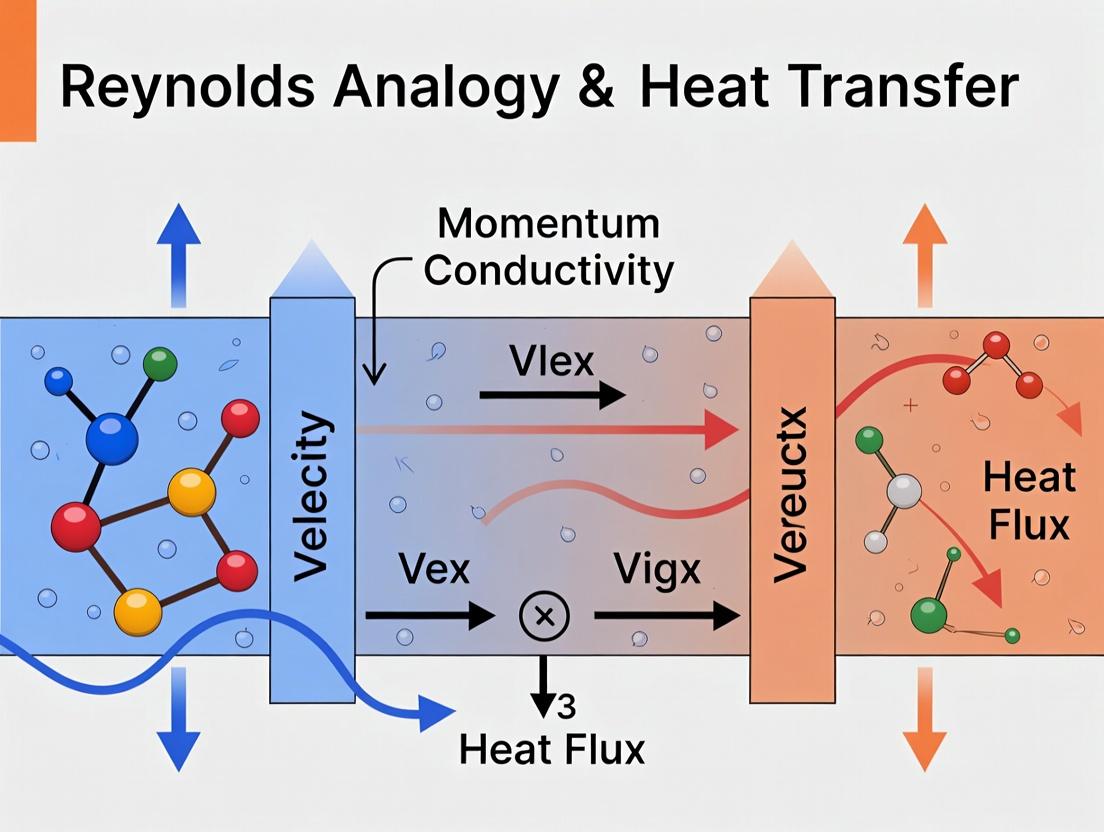
This article explores the Reynolds Analogy, a cornerstone concept linking momentum and heat transfer, through a biomedical research lens.
From Flow to Formulation: Reynolds Analogy in Drug Delivery and Biomedical Transport Phenomena
Abstract
This article explores the Reynolds Analogy, a cornerstone concept linking momentum and heat transfer, through a biomedical research lens. We trace its foundational theory from fluid dynamics origins to modern adaptations for mass transfer. The piece provides methodological insights for applying the analogy in drug delivery system design and pharmacokinetic modeling, addresses common pitfalls in parameter selection and model assumptions, and validates its utility against advanced computational methods. Tailored for researchers and drug development professionals, this synthesis highlights the analogy's enduring value in optimizing therapeutic agent transport, from nanoparticle design to tissue-level distribution.
The Reynolds Analogy Explained: Bridging Fluid Dynamics and Biomedical Transport
Application Notes
The Reynolds analogy, proposed by Osborne Reynolds in 1874, established a foundational link between momentum transfer (fluid friction) and convective heat transfer. This analogy posits that for turbulent flow, the dimensionless Stanton number (St) for heat transfer is approximately equal to half the Fanning friction factor (Cf). The modern formulation is: St = (Cf / 2) / (Pr2/3) where Pr is the Prandtl number. This principle has been extended to mass transfer (Chilton-Colburn analogy), making it critical for modeling transport phenomena in pharmaceutical unit operations like dissolution, mixing, and drying.
Table 1: Core Dimensionless Numbers in the Reynolds Analogy Framework
| Number | Formula | Physical Meaning | Typical Range (Turbulent Flow) |
|---|---|---|---|
| Reynolds Number (Re) | ρvL/μ | Ratio of inertial to viscous forces | > 4000 (pipe flow) |
| Fanning Friction Factor (Cf) | τw / (½ρv2) | Dimensionless wall shear stress | 0.004 - 0.01 |
| Nusselt Number (Nu) | hL/k | Ratio of convective to conductive heat transfer | 10 - 1000+ |
| Stanton Number (St) | Nu / (Re·Pr) | Dimensionless heat transfer coefficient | ~ Cf/2 |
| Prandtl Number (Pr) | ν/α | Ratio of momentum to thermal diffusivity | ~0.7 (air), ~7 (water) |
| Schmidt Number (Sc) | ν/D | Ratio of momentum to mass diffusivity | 102 - 105 for liquids |
Table 2: Modern Extensions and Applications in Pharmaceutical Research
| Analogy | Core Relationship | Key Application in Drug Development |
|---|---|---|
| Reynolds (1874) | St ∝ Cf | Scaling of reactor heating/cooling jackets |
| Chilton-Colburn (1934) | jH = jD = Cf/2 | Design of spray dryers and fluidized bed granulators |
| j-factor (Heat) | jH = St·Pr2/3 | Prediction of heat transfer for non-Newtonian biologics |
| j-factor (Mass) | jD = kc/v·Sc2/3 | Modeling API dissolution rates in biorelevant media |
Experimental Protocols
Protocol 1: Validating the Reynolds Analogy for a Model Fluid in a Pipe
Objective: To measure the friction factor and convective heat transfer coefficient under turbulent flow conditions and calculate the Stanton number. Materials: See "The Scientist's Toolkit" below. Method:
- System Setup: Assemble a straight, circular, smooth-walled pipe test section of known diameter (D) and length (L >> D). Insulate the section thermally. Install a calibrated pump, flow meter, differential pressure transducer, and inlet/outlet thermocouples.
- Isothermal Pressure Drop (Friction Factor):
- Circulate working fluid (e.g., water) at constant temperature to achieve isothermal conditions.
- For a target Reynolds number (Re), record the volumetric flow rate (Q) and the pressure drop (ΔP) across length L.
- Calculate average velocity v = 4Q/(πD²). Calculate wall shear stress τw = (DΔP)/(4L).
- Compute Fanning friction factor: Cf = τw / (½ρv²).
- Repeat for a range of Re (4000 to 50,000).
- Convective Heat Transfer (Stanton Number):
- Apply a constant heat flux (q") to the test section using an electrical heating jacket.
- For the same Re values, record the bulk fluid inlet (Tb,in) and outlet (Tb,out) temperatures and the wall temperature (Tw).
- Calculate the convective heat transfer coefficient: h = q" / (Tw - Tb), where Tb is the average bulk temperature.
- Calculate the Nusselt number: Nu = hD/k.
- Calculate the Stanton number: St = Nu / (Re·Pr). Determine Pr at the film temperature.
- Analysis: Plot Cf and St·Pr2/3 vs. Re on a log-log scale. The curves should be approximately parallel, validating the form of the analogy.
Protocol 2: Extending to Mass Transfer (Dissolution Rate Prediction)
Objective: To use the Chilton-Colburn analogy to predict the mass transfer coefficient (kc) for an active pharmaceutical ingredient (API) pellet in a flowing dissolution medium. Materials: API compact/pellet, USP dissolution apparatus (flow-through cell), HPLC system, calibrated pH/conductivity sensors. Method:
- Hydraulic Characterization:
- Set up the flow-through cell. Determine the characteristic length (L) and cross-sectional area.
- For a given flow rate of dissolution medium (e.g., SGF), calculate the average velocity (v) and Reynolds number (Re).
- Determination of Friction Factor:
- Measure the pressure drop (ΔP) across the cell containing the API pellet (or a geometric surrogate).
- Calculate the Fanning friction factor (Cf) as in Protocol 1, Step 2.
- Prediction of Mass Transfer Coefficient:
- Obtain the Schmidt number (Sc) = ν/Dm, where Dm is the diffusivity of the API in the medium.
- Apply the Chilton-Colburn analogy: jD = Cf/2.
- Solve for kc: kc = v · jD · Sc-2/3.
- Experimental Validation:
- Conduct the dissolution experiment at the same flow conditions.
- Measure API concentration in the effluent via HPLC over time.
- Calculate the experimental mass transfer coefficient from the dissolution rate data.
- Compare the predicted (Step 3) and experimental kc values.
Visualizations
The Scientist's Toolkit
Table 3: Key Research Reagent Solutions & Materials
| Item | Specification / Example | Function in Analogy-Based Research |
|---|---|---|
| Calibrated Differential Pressure Transducer | 0-5 psi range, 0.1% FS accuracy | Measures minute pressure drops for accurate friction factor calculation. |
| Constant Temperature Bath & Circulator | ±0.1°C stability | Maintains isothermal conditions for friction studies or controls Pr/Sc. |
| Electrical Heating Jacket with PID Controller | Adjustable heat flux up to 10 kW/m² | Provides constant wall heat flux boundary condition for h measurement. |
| Coriolis Mass Flow Meter | 0.5% of reading accuracy | Precisely measures fluid flow rate for Re and velocity calculation. |
| Dissolution Medium (Biorelevant) | FaSSIF, FeSSIF, SGF | Simulates in vivo conditions for pharmaceutically relevant Sc and mass transfer. |
| Non-Newtonian Model Fluid | Aqueous CMC or PAA solutions | Extends analogy validation to complex, shear-thinning biological fluids. |
| High-Sensitivity Thermocouples / RTDs | T-type, 0.1°C accuracy | Measures bulk and wall temperatures for driving force determination. |
| Computational Fluid Dynamics (CFD) Software | ANSYS Fluent, COMSOL | Solves coupled momentum/energy/species equations to test analogy limits. |
This document serves as a critical application note within a broader thesis investigating the Reynolds Analogy for momentum and heat transfer. The core analogy posits a direct proportionality between the turbulent transport of momentum and heat in boundary layer flows, a foundational concept for modeling transport phenomena in engineering and applied scientific systems, including pharmaceutical process development (e.g., reactor design, drying processes, bioreactor scaling).
The fundamental mathematical link is expressed through the turbulent Prandtl number, (Prt), which relates the eddy diffusivity for momentum ((\varepsilonM)) to that for heat ((\varepsilon_H)):
[ Prt = \frac{\varepsilonM}{\varepsilon_H} ]
When (Prt \approx 1), the Reynolds Analogy holds precisely, implying: [ \frac{qw}{\tauw} = \frac{k}{\mu} \frac{\partial T/\partial y}{\partial u/\partial y} \approx \frac{Cp}{u\tau} \Delta T ] where (qw) is wall heat flux, (\tauw) is wall shear stress, (k) is thermal conductivity, (\mu) is dynamic viscosity, (Cp) is specific heat, and (u_\tau) is friction velocity.
The following table summarizes key dimensionless parameters and their formulations central to linking momentum and heat flux.
Table 1: Core Dimensionless Groups for Momentum-Heat Flux Analogy
| Parameter | Symbol | Mathematical Formulation | Physical Interpretation | Typical Range (Canonical Flow) |
|---|---|---|---|---|
| Friction Coefficient | (C_f) | (\tauw / (\frac{1}{2} \rho U\infty^2)) | Dimensionless wall shear stress | 0.002 - 0.008 (Turb. Flat Plate) |
| Stanton Number | (St) | (qw / (\rho Cp U\infty (Tw - T_\infty))) | Dimensionless heat transfer rate | ( \sim Cf/2 ) (if Pr=Prt=1) |
| Reynolds Analogy Factor | (s) | (2St / C_f) | Ratio of heat to momentum transfer efficiency | 0.8 - 1.2 (Air, Pr≈0.7) |
| Turbulent Prandtl Number | (Pr_t) | (\varepsilonM / \varepsilonH) | Ratio of turbulent diffusivities | 0.85 - 0.9 (Boundary Layers) |
| Prandtl Number | (Pr) | (\nu / \alpha = C_p \mu / k) | Ratio of momentum to thermal diffusivity | 0.7 (Air), 7 (Water), >>1 (Oils) |
Table 2: Quantitative Comparison of Momentum & Heat Flux Formulations
| Flux Type | Molecular (Laminar) Form | Turbulent (Eddy-Viscosity) Form | Direct Link (Reynolds Analogy) |
|---|---|---|---|
| Momentum Flux (Shear Stress) | (\tau = \mu \frac{du}{dy}) | (\tau{turb} = -\rho \overline{u'v'} = \rho \varepsilonM \frac{du}{dy}) | (\tauw = Cf \cdot \frac{1}{2} \rho U_\infty^2) |
| Heat Flux | (q = -k \frac{dT}{dy}) | (q{turb} = \rho Cp \overline{v'T'} = -\rho Cp \varepsilonH \frac{dT}{dy}) | (qw = St \cdot \rho Cp U\infty (Tw - T_\infty)) |
| Coupling | — | (\varepsilonM = \nut), (\varepsilonH = \alphat) | (St = \frac{Cf/2}{1 + \sqrt{(Cf/2)}(5(Pr-1) + \ln(\frac{5Pr+1}{6}))}) (Chilton-Colburn j-factor) |
Experimental Protocols
Protocol 3.1: Direct Measurement of Wall Shear Stress and Heat Flux in a Turbulent Boundary Layer Wind Tunnel
Objective: To empirically test the Reynolds Analogy by simultaneously measuring (\tauw) and (qw).
Materials & Setup:
- Low-speed, closed-circuit wind tunnel with heated test plate.
- Temperature-controlled surface element (heated thin foil).
- Primary Instruments: Preston tube (or oil-film interferometry) for (\tau_w); IR thermography & embedded thermocouples for surface and boundary layer temperatures; differential pressure transducer; data acquisition system.
Procedure:
- Calibration & Isothermal Flow: Establish a steady, zero-pressure-gradient turbulent boundary layer over the smooth test plate. Record free-stream velocity (U\infty), temperature (T\infty), and pressure.
- Shear Stress Measurement:
- Position a Preston tube flush with the wall at the streamwise location of interest.
- Measure the dynamic pressure difference between the Preston tube and a static pressure tap.
- Calculate (\tauw) using Patel's calibration: (\tauw = \frac{1}{2} \rho Up^2), where (Up) is derived from the measured pressure.
- Heat Flux Measurement:
- Activate the heated surface element to maintain a constant wall temperature (Tw) (5-10°C above (T\infty)).
- Use the known electrical power input ((Q{elec})) to the foil, correcting for conductive losses (via calibration in vacuum), to determine the convective heat flux: (qw = Q{elec} / A{foil}).
- Alternatively, use measured temperature gradients from embedded micro-thermocouples and known substrate thermal conductivity.
- Data Reduction:
- Compute (Cf = \tauw / (\frac{1}{2} \rho U\infty^2)).
- Compute (St = qw / (\rho Cp U\infty (Tw - T\infty))).
- Calculate the Reynolds Analogy factor (s = 2St / C_f).
- Compare to theoretical predictions (e.g., Chilton-Colburn analogy: (jH = St \cdot Pr^{2/3} = Cf/2)).
Protocol 3.2: Micro-Particle Image Velocimetry (μPIV) & Laser-Induced Fluorescence (LIF) for Concurrent εM and εH Mapping
Objective: To visualize and quantify the turbulent diffusivities (\varepsilonM) and (\varepsilonH) in a liquid flow for direct (Pr_t) calculation.
Materials & Setup:
- Flow channel with transparent walls (e.g., rectangular duct).
- Seeding: Fluorescent tracer particles (e.g., 1 μm Rhodamine-coated particles) for simultaneous μPIV (scattered light) and LIF (fluorescence).
- Primary Instruments: Dual-cavity Nd:YAG laser (532 nm), two synchronized CCD cameras (one with 532 nm notch filter for PIV, one with 550 nm long-pass filter for LIF), temperature-sensitive dye (e.g., Rhodamine B).
Procedure:
- System Alignment: Align the laser sheet to illuminate a streamwise-wall-normal (x-y) plane. Calibrate the two cameras for the same field of view.
- Simultaneous Acquisition: For a given flow condition (e.g., turbulent duct flow), trigger the laser and cameras to capture simultaneous image pairs for PIV and LIF.
- PIV Signal: Particle scattering captured by Camera 1 yields instantaneous velocity fields ((u, v)).
- LIF Signal: Temperature-dependent fluorescence intensity captured by Camera 2. Perform in-situ temperature calibration to convert intensity to (T(x,y,t)).
- Post-Processing:
- εM Calculation: Compute the Reynolds stress (-\overline{u'v'}) from the time-series of PIV velocity fields. Calculate the mean velocity gradient (d\bar{u}/dy). Estimate (\varepsilonM = -\overline{u'v'} / (d\bar{u}/dy)).
- εH Calculation: Compute the turbulent heat flux (\overline{v'T'}) from correlated (v') (from PIV) and (T') (from LIF). Calculate the mean temperature gradient (d\bar{T}/dy). Estimate (\varepsilonH = -\overline{v'T'} / (d\bar{T}/dy)).
- Turbulent Prandtl Number: Compute the local (Prt(x,y) = \varepsilonM / \varepsilon_H). Generate spatial maps and area-averaged profiles for comparison with model predictions.
Visualizations
Title: Logical Pathway from Governing Equations to Reynolds Analogy
Title: Protocol for Direct Reynolds Analogy Validation
The Scientist's Toolkit
Table 3: Key Research Reagent Solutions & Essential Materials
| Item | Function in Momentum-Heat Flux Research | Example/ Specification |
|---|---|---|
| Temperature-Sensitive Fluorescent Dye (e.g., Rhodamine B) | Allows non-intrusive, planar temperature field measurement via Laser-Induced Fluorescence (LIF). Concentration calibrates intensity to temperature. | Aqueous solution, 1-10 µM. Requires in-situ calibration for quantitative T. |
| Seeding Particles for PIV | Scatter light to track fluid motion for velocity field and turbulence statistics measurement. Must be neutral buoyancy, small Stokes number. | Polystyrene or silica spheres, 0.5-1 µm diameter, matched refractive index. |
| Heated Thin-Foil Element | Provides a constant wall temperature (isothermal) or constant heat flux boundary condition for precise q_w determination. | Stainless steel or constantan foil, ~10-25 µm thick, with protective insulating layer. |
| Preston Tube | Simple, reliable device for point measurement of wall shear stress in turbulent flow via stagnation pressure. | Hypodermic tubing, outer diameter ~1-2 mm, calibrated against known standards. |
| Thermal Interface Compound | Ensures good thermal contact and minimizes conductive loss errors when embedding heaters or sensors in test surfaces. | High-thermal-conductivity paste (e.g., silver-based). |
| Data Acquisition (DAQ) System with Synchronization | Critical for simultaneous capture of pressure, temperature, and velocity signals to compute correlated fluxes. | Multichannel DAQ, >1 kHz sampling, with hardware trigger for camera/laser sync. |
| Low-Speed Wind Tunnel / Water Channel | Provides a controlled, well-characterized turbulent boundary layer or duct flow for fundamental studies. | Must have low free-stream turbulence (<0.5%), smooth test section, temperature control option. |
| Computational Fluid Dynamics (CFD) Software | For simulating coupled momentum and heat transfer to compare with experimental results and test closure models (RANS, LES). | ANSYS Fluent, OpenFOAM, COMSOL with turbulent heat transfer modules. |
The Crucial Role of the Prandtl Number and the Limits of the Simple Analogy
The Reynolds analogy postulates a direct similarity between momentum, heat, and mass transfer in turbulent flows, suggesting that dimensionless parameters like the Stanton number (St) can be approximated from the friction factor (Cf/2). While a foundational concept, its simplicity often breaks down. The primary factor governing the deviation between momentum and thermal boundary layer behavior is the Prandtl number (Pr), the dimensionless ratio of momentum diffusivity (kinematic viscosity, ν) to thermal diffusivity (α).
This application note details the quantitative impact of Pr and provides protocols for its determination, emphasizing its role in refining or correcting the simple Reynolds analogy for applications ranging from chemical reactor design to pharmaceutical process engineering.
Quantitative Data: The Impact of Pr on Transfer Coefficients
The Chilton-Colburn analogy provides a widely accepted extension that incorporates the Prandtl number's influence on heat transfer.
Table 1: Analogies for Momentum, Heat, and Mass Transfer
| Analogy Name | Core Equation | Applicability & Key Parameter |
|---|---|---|
| Simple Reynolds | St = Cf/2 |
Limited to gases where Pr ≈ 1 (e.g., air). |
| Chilton-Colburn | j_H = St * Pr^(2/3) = Cf/2 |
0.6 < Pr < 60. j_H is the Colburn j-factor for heat. |
| Analogous Mass | j_D = (Sh/(Re*Sc)) * Sc^(2/3) = Cf/2 |
For mass transfer, using Schmidt number (Sc). |
The functional dependence on Pr is critical. For laminar flow over a flat plate, the exact solution shows:
Nu_x = 0.332 * Re_x^(1/2) * Pr^(1/3) (for Pr > 0.6)
This Pr^(1/3) dependence carries over into the form of the turbulent Chilton-Colburn analogy.
Table 2: Prandtl Number Ranges for Common Fluids
| Fluid | Typical Temperature (°C) | Prandtl Number (Pr) | Implication for Analogy |
|---|---|---|---|
| Gases (Air) | 20 | ~0.71 | Simple analogy is a fair first approximation. |
| Water | 20 | ~7.0 | Significant deviation; Pr correction is essential. |
| Engine Oil | 20 | ~10,000 | Extreme deviation. Thermal B.L. much thinner than momentum B.L. |
| Liquid Metals (Mercury) | 20 | ~0.025 | Inverse deviation. Thermal B.L. much thicker than momentum B.L. |
Experimental Protocols
Protocol 1: Experimental Determination of Pr for a Novel Process Fluid
Objective: To determine the Prandtl number (Pr = ν/α) of a new heat transfer fluid candidate.
Materials: See Scientist's Toolkit. Method:
- Kinematic Viscosity (ν) Measurement:
- Use a calibrated Ubbelohde-type capillary viscometer submerged in a precision temperature bath.
- Record the fluid's time of flow (t) between two etched marks at the target temperature (T).
- Calculate kinematic viscosity: ν = K * (t - θ), where K and θ are viscometer constants.
- Perform in triplicate across a temperature range of interest (e.g., 10°C to 80°C).
Thermal Diffusivity (α) Measurement via Transient Hot-Wire Method:
- Suspend a thin platinum wire (acting as both heater and thermometer) in a sample cell containing the fluid.
- Apply a constant current step to the wire, generating a line heat source.
- Precisely record the temperature rise of the wire (ΔT) as a function of time (t) over a short interval (typically 0.1-1s).
- For an ideal line source, α is derived from the slope (m) of ΔT vs. ln(t): α = q/(4πk * m), where q is heat rate per unit length, and k is thermal conductivity (determined in a separate calibration).
- Ensure measurements are within the "infinite medium" assumption period.
Calculation:
- At each temperature T, compute Pr(T) = ν(T) / α(T).
- Plot Pr vs. T to characterize the fluid's thermophysical behavior.
Protocol 2: Validating Heat Transfer Analogy in a Tubular Flow System
Objective: To measure friction factor (Cf) and Nusselt number (Nu) experimentally and assess the validity of the simple vs. Chilton-Colburn analogy.
Materials: See Scientist's Toolkit. Method:
- System Setup: Instrument a smooth, electrically insulated test section of circular pipe with:
- Two pressure taps connected to a differential pressure transducer for head loss (ΔP).
- Inlet and outlet calibrated thermocouples (Tin, Tout).
- A constant heat flux (q") condition applied via a wrapped heating tape or joule heating of the pipe itself.
- A flow meter to measure volumetric flow rate (Q).
Momentum Transfer Measurement:
- For a range of flow rates (covering laminar, transition, and turbulent regimes), record ΔP and Q.
- Calculate Fanning friction factor:
Cf = (ΔP * D) / (2 * L * ρ * u_m^2), where D is diameter, L is length between taps, ρ is density, and u_m is mean velocity.
Heat Transfer Measurement:
- At steady-state for each flow rate, record Tin, Tout, and wall temperature (T_w) from surface thermocouples.
- Calculate convective heat transfer coefficient (h):
h = q" / (T_w - T_b), where T_b is the bulk mean fluid temperature. - Calculate Nusselt number:
Nu = h * D / k.
Data Analysis & Analogy Comparison:
- Calculate Reynolds number:
Re = ρ * u_m * D / μ. - Calculate experimental Stanton number:
St = Nu / (Re * Pr). - Plot 1: Cf/2 vs. Re (on log-log scale). Compare to theoretical Moody chart.
- Plot 2: St vs. Re. Overlay the simple analogy prediction (St = Cf/2) and the Chilton-Colburn prediction (St = (Cf/2) * Pr^(-2/3)).
- Quantitative agreement with the Chilton-Colburn line confirms the Pr correction's necessity.
- Calculate Reynolds number:
Diagrams
Diagram 1: Prandtl Number Effect on Boundary Layers
Diagram 2: Workflow for Analogy Validation
The Scientist's Toolkit: Research Reagent Solutions & Essential Materials
Table 3: Key Materials for Pr Determination and Analogy Experiments
| Item | Function / Rationale |
|---|---|
| Ubbelohde Capillary Viscometer | Provides precise measurement of kinematic viscosity (ν) via gravity-driven flow time. Requires minimal sample volume. |
| Precision Temperature Bath | Maintains fluid sample at a constant, known temperature (±0.01°C) for accurate thermophysical property measurement. |
| Transient Hot-Wire Cell & Analyzer | Enables direct measurement of thermal diffusivity (α) and conductivity (k) via the transient line-source technique. |
| Calibrated Differential Pressure Transducer | Measures the small pressure drop (ΔP) across the test section for friction factor calculation. |
| K-Type or T-Type Thermocouples (Calibrated) | Provide accurate temperature measurement at multiple points (bulk fluid, wall). Require individual calibration for high precision. |
| Constant Heat Flux Source | A regulated DC power supply for joule heating or a controlled heating tape to impose the thermal boundary condition. |
| Coriolis or Precision Turbine Flow Meter | Measures mass or volumetric flow rate (Q) with high accuracy for Reynolds number calculation. |
| Data Acquisition System (DAQ) | Synchronously logs analog signals (voltage, current, temperature, pressure) at high frequency for transient or steady-state analysis. |
| Reference Fluids (e.g., distilled water, certified oils) | Used for calibration of viscometers, hot-wire systems, and overall experimental apparatus validation. |
The Reynolds Analogy, postulating the equivalence of momentum, heat, and mass transfer mechanisms in turbulent flow, provides a foundational concept for transport phenomena. The Chilton-Colburn analogy extends this by providing a more accurate semi-empirical relationship for fluids where the Prandtl (Pr) and Schmidt (Sc) numbers are not equal to one. This is directly applicable to drug transport, where molecules diffuse through biological fluids (e.g., blood, interstitial fluid) and across membranes.
The core dimensionless groups are:
- j-factor for mass transfer: ( jD = StD \cdot Sc^{2/3} = \frac{k_c}{v} Sc^{2/3} )
- j-factor for heat transfer: ( j_H = St \cdot Pr^{2/3} )
- Friction factor: ( f/2 )
The Chilton-Colburn analogy states: ( jD = jH = f/2 )
This allows the prediction of mass transfer coefficients ((k_c)), critical for modeling drug absorption, distribution, and release from dosage forms, from known hydrodynamic conditions or heat transfer data.
Core Data & Analogy Parameters
Table 1: Key Dimensionless Numbers in Drug Transport Analogy
| Dimensionless Number | Formula | Significance in Drug Transport |
|---|---|---|
| Schmidt (Sc) | ( \nu / D_{AB} ) | Ratio of viscous diffusion to molecular diffusion. High Sc (>>1) for drugs in polymers/biologics. |
| Sherwood (Sh) | ( kc L / D{AB} ) | Ratio of convective to diffusive mass transfer. Key for release rate prediction. |
| Stanton (St_D) | ( k_c / v ) | Dimensionless mass transfer coefficient. |
| j-factor (j_D) | ( St_D \cdot Sc^{2/3} ) | Analogous parameter for correlation across systems. |
Table 2: Experimentally Derived j-D Factors for Model Drug Transport Systems
| System (Flow Geometry) | Correlation (Range of Re, Sc) | Typical Application |
|---|---|---|
| Laminar Flow in Pipe | ( Sh = 1.85 (Re \cdot Sc \cdot d/L)^{1/3} ) | Subcutaneous drug delivery, implantable device release. |
| Turbulent Flow in Pipe | ( j_D = 0.023 Re^{-0.2} ) | Drug transport in blood vessels (large arteries), bioreactor design. |
| Flow Flat Plate | ( jD = 0.664 Re^{-1/2} ) (Laminar) ( jD = 0.037 Re^{-0.2} ) (Turbulent) | Transdermal patch modeling, cell culture monolayer transport. |
| Packed Bed (Particle) | ( jD = 0.91 Re^{-0.51} \cdot Sc^{-2/3} ) (Re<50) ( jD = 0.61 Re^{-0.41} \cdot Sc^{-2/3} ) (Re>50) | Chromatography purification, catalyst-driven drug synthesis. |
Experimental Protocols
Protocol 3.1: Determining the Mass Transfer Coefficient (k_c) for a Drug from a Polymer Matrix
Objective: To experimentally determine k_c for a model drug (e.g., theophylline) releasing from a polymeric slab into a flowing fluid, and validate the Chilton-Colburn analogy.
Materials: See "The Scientist's Toolkit" below. Method:
- Fabricate Drug-Loaded Slab: Cast a uniform hydrogel slab (e.g., 2% agarose/1.5% sodium alginate) containing a known, homogeneous concentration (C₀) of a soluble model drug.
- Set Up Flow Cell: Mount the slab securely in a parallel plate flow chamber or a cylindrical pipe flow cell. Ensure known hydraulic diameter (D_h) and slab surface area (A).
- Establish Hydrodynamic Conditions: Pump dissolution medium (e.g., PBS pH 7.4) through the system at a calibrated volumetric flow rate (Q). Measure or calculate the bulk velocity (v) and Reynolds number (Re = ρ v D_h / μ).
- Sample and Analyze: At timed intervals, collect effluent samples from the cell outlet. Use UV-Vis spectrophotometry or HPLC to determine drug concentration (C_b).
- Data Analysis:
- Calculate the mass transfer rate: ( NA = Q \cdot Cb / A ).
- The driving force is the concentration difference between the saturated surface concentration (Cs, assumed from solubility) and the bulk: ( NA = kc (Cs - Cb) ).
- Plot NA vs. (Cs - Cb); the slope is the experimental k_c.
- Calculate experimental ( jD = (kc/v) \cdot Sc^{2/3} ).
- Analogy Validation: Compare experimental j_D with the theoretical j_H or f/2 obtained from standard heat transfer/friction factor correlations for the same Re and geometry.
Protocol 3.2: Using the Analogy to Predict In Vitro Drug Permeation
Objective: To predict the skin permeation coefficient (K_p) of a new compound using known friction data for flow over a flat plate.
Method:
- Characterize the Compound: Determine or obtain from literature the diffusivity (D_skin) and partition coefficient (K) of the drug in stratum corneum.
- Define Flow Conditions: Model blood flow in superficial capillaries as laminar flow over a flat plate (skin surface). Obtain the skin friction coefficient (C_f) correlation: ( Cf / 2 = 0.664 / \sqrt{Rex} ) for laminar flow.
- Apply Chilton-Colburn Analogy: ( jD = Cf / 2 ).
- Calculate k_c: From ( jD = StD Sc^{2/3} = (kc/v) Sc^{2/3} ), solve for *kc*: ( kc = jD \cdot v \cdot Sc^{-2/3} ).
- Predict Permeation Coefficient: The mass transfer resistance may be in series with the membrane resistance. For a simplified case where convection is limiting, the predicted flux ( J = k_c \cdot \Delta C ). Compare with Franz cell experimental data.
Visualizations
Diagram 1: The Chilton-Colburn Analogy & Drug Transport Applications
Diagram 2: Workflow for Predicting Drug Flux Using the Analogy
The Scientist's Toolkit
Table 3: Key Research Reagent Solutions & Materials
| Item | Function/Description |
|---|---|
| Parallel Plate Flow Chamber | Provides controlled laminar shear flow over a biological or synthetic surface for real-time release/permeation studies. |
| Franz Diffusion Cell | Standard vertical static cell for measuring transdermal or mucosal drug permeation. Can be adapted for flow in donor chamber. |
| Polymeric Hydrogel (e.g., Alginate, Agarose) | Tunable, biocompatible matrix for creating model drug-loaded slabs with defined diffusivity. |
| PBS (Phosphate Buffered Saline), pH 7.4 | Standard physiological dissolution medium for in vitro release testing (IVRT). |
| Model Drugs (Theophylline, Caffeine, Metoprolol) | Well-characterized, stable compounds with known solubility & diffusivity for method validation. |
| HPLC System with UV/Vis Detector | For accurate, specific quantification of drug concentration in complex solutions. |
| Rotational Rheometer | To characterize the viscosity (μ) of biological fluids or polymer solutions for accurate Re and Sc calculation. |
| Computational Fluid Dynamics (CFD) Software (e.g., COMSOL, ANSYS) | To simulate complex flow fields and concentration gradients for systems where analytical j_D correlations are unavailable. |
This application note explores the applicability of the Reynolds analogy—historically linking momentum and heat transfer in fluid mechanics—to physiological systems, particularly in vascular hemodynamics and transdermal drug delivery.
Table 1: Key Transport Parameters in Physiological Systems
| System | Momentum Diffusivity (ν) [m²/s] | Thermal Diffusivity (α) [m²/s] | Prandtl Number (Pr = ν/α) | Reynolds Number (Re) Range | Analogy Validity (Y/N) |
|---|---|---|---|---|---|
| Large Arteries (Aorta) | ~3.3 × 10⁻⁶ | ~1.4 × 10⁻⁷ | ~23.6 | 1000–4000 | N (Pr >> 1) |
| Microcirculation (Capillaries) | ~3.3 × 10⁻⁶ | ~1.4 × 10⁻⁷ | ~23.6 | 0.001–0.1 | N (Low Re, Pr >> 1) |
| Skin (Stratum Corneum) | N/A (Porous Media) | ~1.2 × 10⁻⁷ | N/A | N/A | Limited |
| In Vitro Microfluidic Model | ~1.0 × 10⁻⁶ | ~1.4 × 10⁻⁷ | ~7.1 | 0.1–10 | Y (Modified) |
Table 2: Key Assumptions and Physiological Violations
| Reynolds Analogy Assumption | Physiological Reality | Impact on Analogy |
|---|---|---|
| 1. Constant fluid properties | Blood is non-Newtonian (shear-thinning), temperature-dependent viscosity. | High error in low-shear regions (e.g., boundary layers). |
| 2. Turbulent flow with high Re | Laminar/transitional flow dominates (Re < 2000 in most vessels). | Momentum-heat coupling weaker; analogy less predictive. |
| 3. Pr ≈ 1 (ν ≈ α) | Biological fluids have Pr >> 1 (e.g., blood Pr ~23). | Thermal boundary layer << momentum layer; heat transfer coefficient scaled by Pr⁻¹/³. |
| 4. No mass transfer | Concurrent drug permeation, osmosis, and active transport. | Requires triple (momentum-heat-mass) analogy extension. |
| 5. Smooth, impermeable walls | Vessels are compliant, porous, and endothelialized. | Wall deformation alters shear stress; heat flux analogy compromised. |
Experimental Protocols
Protocol: Validating the Analogy in a Biomimetic Microfluidic Chip
Objective: Quantify momentum and heat transfer simultaneity to test analogy validity. Materials: PDMS microfluidic chip (100 µm channel), syringe pump, thermoelectric heaters, temperature sensors (IR camera), pressure sensors, PBS or whole blood analog. Procedure:
- Fabrication: Create a straight channel (L = 2 cm, W = 100 µm, H = 50 µm) in PDMS via soft lithography. Bond to glass slide.
- Flow Setup: Perfuse fluid at controlled flow rates (Q = 1–100 µL/min) to achieve Re = 0.1–10.
- Heating: Apply a constant heat flux (q″ = 100–500 W/m²) via thin-film heater on channel underside.
- Measurement:
- Record pressure drop (ΔP) every 10 s for 5 min to compute wall shear stress (τ_w).
- Map wall temperature (Tw) and bulk fluid temperature (Tb) using IR thermography.
- Compute convective heat transfer coefficient: h = q″/(Tw – Tb).
- Analysis: Calculate Stanton number (St = h/(ρ·cp·U)) and friction factor (Cf = τw/(½ρU²)). Plot St vs. Cf/2. Linearity indicates analogy holds.
Protocol: Assessing Analogy in Ex Vivo Porcine Aorta
Objective: Evaluate momentum-heat transfer coupling in a compliant, biological vessel. Materials: Fresh porcine aorta segment, perfusion bioreactor, pressure transducer, flow meter, thermocouples, heated perfusion fluid (37°C–42°C). Procedure:
- Preparation: Mount a 10 cm aorta segment in a temperature-controlled chamber (37°C).
- Perfusion: Perfuse with Krebs–Henseleit buffer at physiological pressures (80–120 mmHg) and flows (Re 500–2000).
- Thermal Perturbation: Introduce a step change in inlet temperature (+2°C).
- Data Acquisition: Simultaneously measure:
- Pressure gradient (ΔP/L) and flow rate (Q) to compute wall shear stress.
- Wall temperature (Tw) at 5 axial positions.
- Bulk fluid temperature (Tb) at inlet/outlet.
- Validation: Compare dimensionless heat flux (Nu) vs. dimensionless shear stress (Cf). Non-linearity indicates analogy breakdown due to compliance/Prandtl mismatch.
Diagram: Physiological Analogy Breakdown Logic
Diagram Title: Logic of Analogy Breakdown in Physiology
Diagram: Experimental Workflow for Analogy Validation
Diagram Title: Workflow for Testing Transport Analogy
The Scientist’s Toolkit
Table 3: Key Research Reagent Solutions & Materials
| Item | Function / Relevance | Example Product / Specification |
|---|---|---|
| Polydimethylsiloxane (PDMS) | Microfluidic chip fabrication; enables precise channel geometry for Re control. | Sylgard 184 Silicone Elastomer Kit |
| Polyethylene Glycol (PEG)-coated Surfaces | Minimize protein adhesion in blood analog experiments; maintain Newtonian behavior. | 2 kDa PEG-Thiol for gold coating |
| Blood-mimicking Fluid | Provides Newtonian/shear-thinning properties matching blood viscosity. | Glycerol-water-NaCl mixture or commercial blood phantom (e.g., Shelley Medical) |
| Thermochromic Liquid Crystals (TLCs) | Visualize temperature gradients in microchannels; calibrate IR measurements. | Hallcrest TLC sheets (R35C5W) |
| Fluorescent Nanoparticles (e.g., PS beads) | Particle Image Velocimetry (PIV) to map velocity fields and shear stress. | 1 µm red fluorescent polystyrene beads |
| Pressure Transducer (Micro-scale) | Measure ΔP in small channels for direct τ_w calculation. | Honeywell 26PC Series |
| Thin-film Heater with PID Controller | Deliver precise, constant heat flux for thermal boundary layer development. | Minco Flexible Heaters with HK6800 Controller |
| Infrared Thermography Camera | Non-contact, high-resolution temperature mapping of vessel/channel walls. | FLIR A655sc |
Applying the Analogy: Methods for Modeling Drug Transport and Delivery
This document provides application notes and protocols for the experimental quantification of key transport coefficients—friction factor (f), Nusselt number (Nu), and Sherwood number (Sh). The work is framed within the broader thesis research exploring the validity and extensions of the Reynolds Analogy, which postulates analogous relationships between momentum, heat, and mass transfer in turbulent flows. For researchers in chemical engineering, pharmaceutical development, and applied sciences, accurate determination of these coefficients is critical for the design of reactors, separators, and drug delivery systems.
Theoretical Foundation: The Reynolds Analogy and Its Extensions
The classical Reynolds Analogy states that the dimensionless transport coefficients for momentum, heat, and mass are equivalent under specific conditions:
f/2 = St_H = St_M
where St_H is the Stanton number for heat transfer (Nu/(Re·Pr)) and St_M is the Stanton number for mass transfer (Sh/(Re·Sc)). Modern research extends this to the Chilton-Colburn analogy, which accounts for differing Prandtl (Pr) and Schmidt (Sc) numbers:
j_H = j_D = f/2
where j_H is the Colburn j-factor for heat (St_H * Pr^(2/3)) and j_D for mass (St_M * Sc^(2/3)).
Key Transport Coefficients: Definitions and Quantitative Data
Table 1: Definition and Significance of Core Dimensionless Numbers
| Coefficient | Formula | Physical Significance | Primary Application |
|---|---|---|---|
| Friction Factor (f) | f = (2ΔP D_h)/(ρL u_m^2) |
Momentum transfer resistance; wall shear stress. | Pressure drop calculation in pipes, channels. |
| Nusselt Number (Nu) | Nu = (h L)/k |
Enhancement of convective heat transfer over conduction. | Heat exchanger design, cooling systems. |
| Sherwood Number (Sh) | Sh = (K L)/D |
Enhancement of convective mass transfer over diffusion. | Dissolution, crystallization, adsorption, drug release. |
| Prandtl Number (Pr) | Pr = ν/α |
Ratio of momentum diffusivity to thermal diffusivity. | Relating velocity and thermal boundary layers. |
| Schmidt Number (Sc) | Sc = ν/D |
Ratio of momentum diffusivity to mass diffusivity. | Relating velocity and concentration boundary layers. |
Table 2: Typical Values for Common Fluids and Conditions
| Fluid / System | Reynolds No. (Re) Range | Typical f | Typical Nu | Typical Sh | Notes |
|---|---|---|---|---|---|
| Water in smooth pipe (turbulent) | 10^4 - 10^5 | 0.005 - 0.03 | 50 - 500 | - | Blasius eq.: f≈0.316/Re^(0.25) |
| Air in smooth pipe (turbulent) | 10^4 - 10^5 | 0.005 - 0.03 | 30 - 300 | - | Dittus-Boelter: Nu=0.023 Re^(0.8) Pr^(0.4) |
| Dissolution of benzoic acid in water (Laminar flow) | < 2100 | - | - | 3.66 (fully developed) | Constant wall concentration. |
| Drug release from tablet in stirred vessel | 10^3 - 10^4 | - | - | 100 - 1000 | Highly dependent on agitation. |
Experimental Protocols
Protocol 4.1: Determination of Friction Factor in a Straight Conduit
Objective: To measure the Darcy friction factor (f) for flow in a pipe or microchannel.
Materials: See Scientist's Toolkit (Section 6).
Procedure:
- Setup: Mount a straight test section of known diameter (
D) and length (L) between pressure taps. Ensure fully developed flow. - Flow Control: Use a calibrated pump to set a specific volumetric flow rate (
Q). Allow system to reach steady state. - Pressure Measurement: Record the pressure drop (
ΔP) across lengthLusing a differential pressure transducer. For microfluidics, use integrated sensors. - Velocity Calculation: Calculate average fluid velocity
u_m = 4Q/(πD^2). - Data Processing: Compute
f = (2ΔP D)/(ρ L u_m^2). CalculateRe = (ρ u_m D)/μ. - Validation: Compare results with Moody chart or Blasius correlation for smooth pipes.
Protocol 4.2: Simultaneous Heat and Momentum Transfer (Testing Reynolds Analogy)
Objective: To measure f and Nu under identical flow conditions and test the classical analogy.
Procedure:
- Use the same flow loop as Protocol 4.1, with an added constant heat flux section.
- Friction Measurement: Perform steps 1-5 of Protocol 4.1.
- Heat Transfer Setup: Apply a known, constant heat flux (
q'') via an electrical heater wrapped around the pipe downstream of the pressure taps. - Temperature Measurement: Record bulk fluid inlet (
T_b,in) and outlet (T_b,out) temperatures. Measure wall temperature (T_w) at multiple axial positions using thermocouples. - Data Processing:
- Calculate heat transfer coefficient:
h = q''/(T_w,avg - T_b,avg). - Compute
Nu = h D / k. - Compute
St_H = Nu/(Re·Pr). - Test analogy: Compare
St_Hwithf/2.
- Calculate heat transfer coefficient:
Protocol 4.3: Mass Transfer Coefficient and Sherwood Number Determination (Dissolution Method)
Objective: To determine the mass transfer coefficient (K) and Sh for a dissolving solid in a flow system, relevant to drug dissolution.
Procedure:
- Test Surface Preparation: Fabricate a smooth plate or insert a pipe section made from a sparingly soluble solute (e.g., benzoic acid, a model drug compound). Measure exact surface area (
A). - Flow System: Place the test section in a flow channel or a rotating drum apparatus (USP Dissolution Apparatus). Maintain constant temperature.
- Concentration Measurement: At steady state, sample the fluid downstream and analyze solute concentration (
C_b) via UV-Vis spectroscopy or HPLC. The inlet concentration (C_in) is zero. - Mass Balance: The mass transfer rate
N = K A (C_sat - C_b), whereC_satis the saturation concentration. Also,N = Q C_b. - Data Processing: Solve for
K = (Q C_b)/(A (C_sat - C_b)). CalculateSh = (K L)/D, whereLis characteristic length (e.g., pipe diameter or plate length) andDis the diffusion coefficient of the solute.
Visualizations: Pathways and Workflows
Title: Transport Coefficient Quantification Workflow
Title: Reynolds Analogy & Extensions Map
The Scientist's Toolkit
Table 3: Essential Research Reagent Solutions and Materials
| Item | Function & Relevance | Example/Specification |
|---|---|---|
| Differential Pressure Transducer | Measures precise pressure drop (ΔP) for friction factor calculation. | Validyne P55D, range appropriate for expected ΔP. |
| Calibrated Peristaltic/Syringe Pump | Provides precise, pulsation-free volumetric flow rate (Q). | Cole-Parmer Masterflex L/S with easy-load pump heads. |
| Thermocouples (T-type) | Measure bulk and wall temperatures for heat transfer experiments. | Omega TMQSS-125G-6, 36 AWG, with data logger. |
| Constant Heat Flux Heater | Supplies known, uniform heat input (q'') for Nu determination. | Minco HK910 film heater with variable DC power supply. |
| UV-Vis Spectrophotometer | Analyzes solute concentration in mass transfer/dissolution studies. | Agilent Cary 60 with flow-through cuvette. |
| Model Drug/Solute | A compound with known solubility and diffusion coefficient for mass transfer studies. | Benzoic acid, Theophylline, or API in development. |
| HPLC System | Provides high-accuracy concentration measurement for complex solutions. | System with C18 column and PDA detector. |
| Laminar Flow Cell/Channel | Well-characterized geometry for fundamental coefficient measurement. | Microfluidic chip (e.g., Dolomite) or acrylic rectangular channel. |
| Data Acquisition (DAQ) System | Synchronizes recording of pressure, temperature, and flow rate. | National Instruments compactDAQ with LabVIEW. |
| Computational Fluid Dynamics (CFD) Software | For simulating transport processes and validating experimental data. | ANSYS Fluent, COMSOL Multiphysics (optional). |
Modeling Vascular Flow and Wall Shear Stress in Drug Distribution
Application Notes
The accurate prediction of drug distribution within the vascular system requires the integration of hemodynamic forces, particularly wall shear stress (WSS), with pharmacokinetic models. The Reynolds Analogy provides a foundational framework, drawing parallels between momentum transfer (governing fluid shear) and mass transfer (governing drug distribution). High WSS, prevalent in arterial regions, enhances drug convection to the vessel wall but can limit binding time, while low WSS in venous or aneurysmal regions promotes binding but may restrict delivery. This interplay is critical for optimizing drug-eluting stents, nanoparticle targeting, and intra-arterial infusions. Computational Fluid Dynamics (CFD) coupled with pharmacokinetic (PK) models is the standard methodology, enabling patient-specific simulations.
Table 1: Typical Hemodynamic Parameters and Their Impact on Drug Distribution
| Parameter | Typical Arterial Value | Typical Venous Value | Primary Impact on Drug Distribution |
|---|---|---|---|
| Wall Shear Stress (WSS) | 1.5 - 2.5 Pa | 0.1 - 0.6 Pa | Modulates endothelial permeability & ligand-binding kinetics. |
| Flow Velocity (Mean) | 0.2 - 0.4 m/s | 0.1 - 0.2 m/s | Determines convective transport & residence time. |
| Reynolds Number (Re) | 300 - 600 (laminar) | < 300 | Predicts flow regime (laminar/transitional). |
| Particle Residence Time | Lower | Higher | Influences drug adsorption/absorption at the wall. |
| Mass Transfer Coefficient | Higher | Lower | Governs rate of drug flux from lumen to vessel wall. |
Table 2: Key Parameters for CFD-PK Coupling in Drug Distribution Models
| Model Component | Parameter | Description & Relevance |
|---|---|---|
| Fluid Dynamics | Blood Viscosity (Newtonian/Non-Newtonian) | Often modeled via Carreau model for accuracy in shear-thinning. |
| Vessel Wall Compliance | Rigid wall assumption common; FSI adds realism for WSS. | |
| Mass Transfer | Drug Diffusion Coefficient (D) | Molecular size-dependent; typical range 10⁻¹⁰ to 10⁻¹² m²/s. |
| Wall Permeability (P) | Function of WSS & endothelial health; key boundary condition. | |
| Pharmacokinetics | Binding Rate (kon) / Dissociation (koff) | Determines drug retention on/within the vascular wall. |
| Luminal & Tissue Clearance | Represents systemic loss & local metabolism. |
Experimental Protocols
Protocol 1: In Vitro Flow Loop for WSS and Drug Uptake Quantification
Objective: To empirically determine the relationship between controlled WSS and endothelial cell (EC) uptake of a model therapeutic agent under dynamic flow conditions.
Materials: See "The Scientist's Toolkit" below.
Procedure:
- Chip Preparation: Seed human umbilical vein endothelial cells (HUVECs) at confluence (e.g., 150,000 cells/cm²) in a μ-Slide VI 0.4 Luer ibidi channel. Culture under static conditions for 48-72 hours to form a mature monolayer.
- Flow Loop Setup: Connect the channel to a programmable peristaltic pump via sterile tubing and a media reservoir. Place the entire system within a 37°C, 5% CO₂ incubator.
- WSS Calibration: Calculate the required flow rate (Q) to generate target WSS (τw) using the relation for rectangular channels: τw = (6μQ)/(w*h²), where μ is dynamic viscosity, w is width, and h is height of the channel. Validate with particle image velocimetry (PIV) if available.
- *Drug Perfusion Experiment: a. Conditioning: Subject EC monolayers to a precisely defined WSS (e.g., 0.5, 1.5, 2.5 Pa) for 24 hours using cell culture media. b. Dosing: Switch the reservoir to media containing a fluorescently tagged model drug (e.g., FITC-albumin or drug-loaded nanoparticles at a clinically relevant concentration). c. Perfusion: Maintain the same WSS for a defined dosing period (e.g., 1 hour).
- *Termination & Analysis: a. Immediately stop flow and wash the channel 3x with pre-warmed PBS under gentle, non-destructive flow. b. Fix cells with 4% PFA for 15 minutes. c. Image using confocal microscopy (z-stacks). Quantify fluorescence intensity (cell-associated signal) per unit area using ImageJ/FIJI software. d. Normalize data to static control conditions.
Protocol 2: CFD Simulation of Drug Distribution from an Intravascular Stent
Objective: To create a patient-specific simulation of WSS patterns and subsequent drug elution and tissue uptake from a drug-eluting stent (DES).
Materials: ANSYS Fluent/CFD, STAR-CCM+, or COMSOL Multiphysics; 3D vascular geometry from CT/MRI; DES strut geometry.
Procedure:
- Geometric Reconstruction & Meshing: a. Import segmented 3D vascular geometry (e.g., .stl file) into CFD pre-processor. b. Integrate a detailed model of the deployed DES struts at the target location. c. Generate a high-quality, boundary-layer-refined volumetric mesh. Ensure mesh independence via refinement studies.
- Computational Fluid Dynamics Setup: a. Solver Settings: Use a steady-state or pulsatile flow solver. b. Boundary Conditions: - Inlet: Prescribe a physiological velocity waveform or mean flow velocity (derived from patient data). - Outlet: Apply pressure-outflow conditions. - Wall: Assume rigid, no-slip conditions (or specify compliance if data exists). c. Blood Model: Implement a non-Newtonian viscosity model (e.g., Carreau-Yasuda). d. Solve for the flow field until convergence. Extract the WSS spatial map.
- Drug Transport & Pharmacokinetic Modeling: a. Species Transport Model: Activate a convective-diffusive mass transfer model. b. Boundary Conditions at Stent/Vessel Wall: - DES Strut Surface: Define a constant drug flux or a time-dependent elution profile as a mass source. - Vessel Wall: Apply a permeability-boundary condition, where drug flux into tissue = P * (Clumen - Ctissue), where P may be a function of local WSS. c. Tissue Domain (Optional): Model the arterial wall as a porous media to simulate drug diffusion, binding, and clearance using reaction-advection-diffusion equations.
- Post-Processing: Visualize and quantify: a. Spatial distribution of WSS (Pa). b. Drug concentration in the lumen and vessel wall (μg/mL). c. Key metrics: "Drug deposition index" (integration of drug mass on wall) and areas of low WSS/high drug retention.
Mandatory Visualizations
Diagram Title: Reynolds Analogy Links Flow, WSS, and Drug Distribution
Diagram Title: Integrated CFD-PK Simulation Workflow
The Scientist's Toolkit
Table 3: Key Research Reagent Solutions for Vascular Flow & Drug Distribution Studies
| Item/Reagent | Function & Application |
|---|---|
| Ibidi μ-Slide VI 0.4 Luer | Parallel-plate flow chamber for endothelial cell culture under precise, controlled shear stress. |
| Human Umbilical Vein Endothelial Cells (HUVECs) | Primary cell model for studying endothelial barrier function, signaling, and drug uptake. |
| Peristaltic Pump (e.g., Ibidi Pump System) | Generates steady or pulsatile laminar flow through in vitro flow loops. |
| Fluorescently Tagged Albumin (e.g., FITC-BSA) | Model macromolecular drug surrogate for quantifying convective and adsorptive uptake. |
| Polybead Microspheres (for PIV) | Tracer particles for validating experimental flow fields and WSS calculations. |
| Computational Fluid Dynamics (CFD) Software | Solves Navier-Stokes equations to simulate blood flow and calculate WSS (e.g., ANSYS Fluent). |
| Multi-Physics Simulation Platform (e.g., COMSOL) | Couples fluid dynamics with mass transport and chemical reactions for PK/PD modeling. |
| Carreau-Yasuda Viscosity Model Parameters | Non-Newtonian constitutive equation for accurate blood viscosity modeling in simulations. |
The optimization of nanoparticle (NP) and liposomal drug delivery systems hinges on accurately predicting their uptake at target sites, a process governed by the interplay of convection and diffusion. This work frames the convective-diffusive uptake problem within the context of the Reynolds Analogy, a cornerstone principle in transport phenomena. The Reynolds Analogy posits that the dimensionless transport rates of momentum, heat, and mass are equivalent under specific conditions, implying that the Sherwood number (Sh, for mass transfer) can be inferred from the Nusselt number (Nu, for heat transfer) or the friction factor (for momentum transfer) when the Lewis number is close to unity. For nanoparticle delivery in vascular networks, this allows researchers to leverage well-established solutions from convective heat transfer to model convective-diffusive particle deposition.
The general form of the convective-diffusive equation for nanoparticle concentration C is: ∂C/∂t + u·∇C = D∇²C + Φ where u is the velocity field (convection), D is the nanoparticle diffusion coefficient, and Φ represents source/sink terms (e.g., binding). The dimensionless analysis leads to the key relationship: Sh = f(Re, Sc), where Re is the Reynolds number (inertial/viscous forces) and Sc is the Schmidt number (momentum/mass diffusivity). Under the Reynolds Analogy, for a given geometry (e.g., a cylindrical vessel), Sh ≈ Nu when Sc ≈ Pr (Prandtl number).
Table 1: Key Dimensionless Numbers Governing NP/Liposome Uptake
| Dimensionless Number | Formula | Physical Interpretation | Typical Range for NPs in Vasculature |
|---|---|---|---|
| Reynolds Number (Re) | (ρ * u * L) / μ | Ratio of inertial to viscous forces | 0.001 (capillaries) - 1000 (arteries) |
| Schmidt Number (Sc) | ν / D = μ / (ρ * D) | Ratio of momentum to mass diffusivity | 10³ - 10⁶ (for NPs, D ~ 10⁻¹² m²/s) |
| Sherwood Number (Sh) | (k * L) / D | Ratio of convective to diffusive mass transfer | 0.01 - 100 |
| Péclet Number (Pe) | (u * L) / D = Re * Sc | Ratio of convective to diffusive transport rates | 10⁻² - 10⁶ |
Table 2: Experimental Parameters for Common NP/Liposome Systems
| Parameter | Polymeric NP (PLGA) | Liposome (PEGylated) | Inorganic NP (Silica) | Measurement Technique |
|---|---|---|---|---|
| Hydrodynamic Diameter (nm) | 80 - 200 | 90 - 150 | 20 - 100 | Dynamic Light Scattering (DLS) |
| Diffusion Coefficient, D (m²/s) | 2.2e-12 - 5.5e-12 | 2.9e-12 - 4.8e-12 | 4.4e-12 - 2.2e-11 | DLS or Fluorescence Correlation Spectroscopy |
| Zeta Potential (mV) | -25 to -40 | -10 to -40 | -20 to -35 | Electrophoretic Light Scattering |
| Polydispersity Index (PDI) | < 0.1 | < 0.1 | < 0.2 | DLS |
| Membrane Permeability, P (m/s) | Model-dependent | 1e-7 - 1e-5 | N/A | Parallel Artificial Membrane Permeability Assay (PAMPA) |
Experimental Protocols
Protocol 1: In Vitro Measurement of Apparent Permeability (P_app) in a Parallel Flow Chamber (Under Convective-Diffusive Conditions)
Objective: To quantify nanoparticle uptake by a monolayer of endothelial cells under controlled shear stress, simulating vascular convection.
Materials: See Scientist's Toolkit.
Procedure:
- Cell Culture & Seeding: Seed human umbilical vein endothelial cells (HUVECs) on a collagen-coated permeable membrane (e.g., Transwell insert) at confluence (e.g., 100,000 cells/cm²). Culture for 3-5 days to form a tight monolayer. Confirm integrity via Trans-Endothelial Electrical Resistance (TEER > 20 Ω·cm²).
- Nanoparticle Preparation: Prepare a suspension of fluorescently labeled nanoparticles (e.g., DiI-labeled liposomes) in cell culture medium (phenol-red free) at a working concentration (e.g., 50 µg/mL). Characterize size and PDI via DLS prior to use.
- Parallel Flow Chamber Assembly: Assemble the flow chamber with the cell-seeded membrane. Connect to a recirculating perfusion system with a precision pump.
- Shear Stress Calibration: Set the flow rate (Q) to achieve the desired wall shear stress (τw) using the formula for a rectangular channel: τw = (6 * μ * Q) / (w * h²), where w is width and h is height of the channel. Typical arterial τ_w = 1-10 dyne/cm².
- Uptake Experiment: Perfuse the nanoparticle suspension through the apical chamber. Maintain flow for a set duration (t = 15, 30, 60, 120 min). The basolateral chamber contains fresh medium.
- Sample Collection & Analysis: At each time point, collect samples from the basolateral chamber. Measure fluorescence intensity (FI) using a plate reader. Quantify the amount of nanoparticles that traversed the monolayer.
- Data Calculation: Calculate the apparent permeability: P_app = (dQ/dt) / (A * C₀), where dQ/dt is the flux (mass/time), A is the membrane area, and C₀ is the initial apical concentration.
- Post-Experiment Validation: Fix cells for confocal microscopy to visualize intracellular NP localization. Measure TEER post-experiment to confirm monolayer integrity.
Protocol 2: Determining the Sherwood Number (Sh) via Microfluidic Device (Mimicking Capillary Networks)
Objective: To empirically determine the Sherwood number for nanoparticle binding/uptake in a microchannel with a functionalized surface, validating theoretical predictions from the Reynolds Analogy.
Materials: See Scientist's Toolkit.
Procedure:
- Microfluidic Chip Fabrication/Preparation: Use a PDMS chip with a straight channel (width: 100 µm, height: 50 µm). Functionalize the channel surface with a target molecule (e.g., streptavidin for biotinylated NPs).
- System Characterization: Precisely measure channel dimensions (L, w, h). Calibrate syringe pump flow rates to achieve desired Re (e.g., 0.1, 1, 10).
- Experimental Run: Inject a known concentration (C₀) of nanoparticles at a constant flow rate. Use inline fluorescence microscopy to record the depletion of NP concentration along the channel length (x) over time.
- Image Analysis: Use image analysis software to quantify fluorescence intensity I(x,t). Convert to concentration C(x,t) using a calibration curve.
- Data Fitting & Sh Calculation: For a first-order surface reaction (binding), the concentration decay is exponential: C(x)/C₀ = exp(-(k * x)/u). The mass transfer coefficient k is obtained by fitting. Calculate Sh = (k * dh) / D, where dh is the hydraulic diameter (2wh/(w+h)).
- Correlation with Re and Sc: Plot experimental Sh vs. Re for your NP system (fixed Sc). Compare to the theoretical correlation for your geometry (e.g., Sh = 1.85 * (Re * Sc * d_h/L)^{1/3} for developing laminar flow).
The Scientist's Toolkit: Key Reagents & Materials
| Item | Function/Application | Example Product/Catalog # |
|---|---|---|
| PLGA Nanoparticles | Biodegradable polymeric NP core for drug encapsulation. | Sigma-Aldrich 719900 |
| DPPC & Cholesterol | Primary lipids for forming stable, fluid liposome bilayers. | Avanti Polar Lipids 850355 & 700100 |
| DSPE-PEG(2000) | PEGylated lipid for creating "stealth" liposomes (reduced opsonization). | Avanti Polar Lipids 880120 |
| HUVECs & EGM-2 BulletKit | Primary endothelial cells and optimized growth medium for vascular models. | Lonza CC-3162 & CC-4176 |
| Transwell Permeable Supports | Polyester membranes for growing cell monolayers for permeability assays. | Corning 3460 |
| Ibidi µ-Slide I Luer | Parallel plate flow chambers for applying defined shear stress to cells. | Ibidi 80176 |
| PDMS (Sylgard 184) | Silicone elastomer for fabricating microfluidic devices. | Dow 4019862 |
| Fluorescent Dye (DiI, DiD) | Lipophilic tracers for labeling nanoparticles for quantification. | Thermo Fisher D282 & D7757 |
| Precision Syringe Pump | Provides precise, pulseless flow for microfluidic and flow chamber experiments. | Harvard Apparatus 70-4503 |
| Dynamic Light Scattering (DLS) System | Measures hydrodynamic size, PDI, and estimates diffusion coefficient of NPs. | Malvern Panalytical Zetasizer Ultra |
Visualizations
Title: Reynolds Analogy Links Transport Processes for NP Uptake
Title: In Vitro Flow Chamber Protocol for Measuring NP Permeability
Title: Convective-Diffusive Pathway Leading to Cellular NP Uptake
This application note is framed within a broader thesis investigating the Reynolds Analogy—a foundational principle in fluid mechanics stating that the dimensionless transport mechanisms for momentum, heat, and mass are analogous under turbulent flow conditions. The core hypothesis is that this analogy can be extended and adapted to the rational design of transdermal drug delivery systems. Specifically, we propose that insights from momentum transfer (shear stress, boundary layer theory) and heat transfer (thermal conduction, resistance models) can inform the engineering of mass transfer (drug permeation) across the skin's complex strata. This document details the experimental protocols and analytical frameworks for validating this analogical approach.
The following tables compile key quantitative parameters that underpin the analogical relationships.
Table 1: Core Transport Analogies for Stratum Corneum (SC)
| Transport Type | Driving Force | Resistance (R) | Flux (J) | Dimensionless Number (Analogous) |
|---|---|---|---|---|
| Momentum | Velocity Gradient (du/dy) | Viscosity (μ) | Shear Stress (τ = μ(du/dy)) | Friction Factor (Cf) |
| Heat | Temperature Gradient (dT/dy) | Thermal Resistance (R_th = L/k) | Heat Flux (q = -k(dT/dy)) | Nusselt Number (Nu) |
| Mass (Drug) | Concentration Gradient (dC/dy) | Permeability Resistance (R_m = L/P) | Drug Flux (J = -P(dC/dy)) | Sherwood Number (Sh) |
| Key Relationship | Analogy: Rm ∝ Rth ∝ 1/(Momentum Diffusivity) | Analogy: Sh ~ Nu ~ (Cf/2)^(1/2) |
Table 2: Measured In Vitro Permeation Parameters for Model Compounds
| Drug/Model Compound | Log P (Octanol-Water) | Molecular Weight (Da) | Steady-State Flux (J_ss, μg/cm²/h) | Lag Time (t_lag, h) | Calculated Permeability Coefficient (P, cm/h) |
|---|---|---|---|---|---|
| Nicotine | 1.17 | 162.2 | 32.5 ± 4.1 | 1.2 ± 0.3 | 0.065 ± 0.008 |
| Fentanyl | 4.05 | 336.5 | 2.8 ± 0.5 | 6.5 ± 1.2 | 0.0056 ± 0.001 |
| Caffeine | -0.07 | 194.2 | 0.8 ± 0.2 | 4.1 ± 0.8 | 0.0016 ± 0.0004 |
| Lidocaine (w/ Enhancer) | 2.44 | 234.3 | 15.7 ± 2.3 | 2.0 ± 0.5 | 0.031 ± 0.005 |
Experimental Protocols
Protocol: In Vitro Skin Permeation Testing (IVPT)
Objective: To quantify the steady-state flux and lag time of a drug candidate across excised human or synthetic skin, validating mass transfer predictions from heat transfer analog models.
Materials: See The Scientist's Toolkit (Section 5.0). Method:
- Membrane Preparation: Use dermatomed human cadaver skin (200-400 μm thick) or a validated synthetic membrane (e.g., Strat-M). Hydrate in phosphate-buffered saline (PBS, pH 7.4) for 30 min.
- Diffusion Cell Assembly: Mount the membrane between the donor and receptor compartments of a Franz diffusion cell (effective diffusional area: 0.64 cm²). Ensure no air bubbles.
- Receptor Phase: Fill the receptor chamber with degassed PBS (containing 0.01% sodium azide as preservative) maintained at 32°C ± 1°C via a circulating water jacket to mimic skin surface temperature.
- Donor Application: Apply the transdermal patch formulation (or a control solution) to the donor chamber. For finite-dose studies, apply a measured volume (e.g., 5 μL/cm²).
- Sampling: At predetermined intervals (e.g., 1, 2, 4, 6, 8, 12, 24 h), withdraw 300 μL aliquots from the receptor chamber, replacing with fresh, pre-warmed PBS.
- Analysis: Quantify drug concentration in samples using validated HPLC-UV or LC-MS/MS methods.
- Data Analysis:
- Plot cumulative amount permeated per unit area (Qt) vs. time.
- Steady-State Flux (Jss): Calculate from the slope of the linear portion of Qt vs. time (μg/cm²/h).
- Lag Time (tlag): Determine from the x-intercept of the linear regression line.
- Permeability Coefficient (P): Calculate as P = Jss / Cd, where C_d is the donor concentration (μg/cm³).
Protocol: Thermal Conductance Mapping of Patch-Skin Interface
Objective: To measure the effective thermal resistance of a patch-skin construct as an analog for drug permeability resistance.
Materials: Infrared thermal camera, heat flux sensor (e.g., thin-film thermopile), temperature-controlled stage, test patches. Method:
- Calibration: Calibrate the heat flux sensor and IR camera against a known thermal standard.
- Sample Mounting: Affix the transdermal patch onto the surface of full-thickness skin equivalent mounted on the temperature-controlled stage (set to 37°C core temperature).
- Heat Application: Apply a controlled, low-level heat source (e.g., 32°C constant surface temperature) to the outer patch surface.
- Data Acquisition: Record the temperature gradient across the patch-skin section using the IR camera and the concomitant heat flux (q) through the sensor over 30 minutes.
- Analysis:
- Calculate Effective Thermal Resistance (Rtheff) = ΔT / q, where ΔT is the measured temperature drop.
- Correlate Rtheff with the inverse of the drug permeability coefficient (1/P) obtained from IVPT for the same formulation. A strong positive correlation supports the heat-mass transfer analogy.
Visualization via Graphviz
Diagram Title: Analogical Framework for Transdermal Patch Design
Diagram Title: In Vitro Skin Permeation Test Workflow
The Scientist's Toolkit: Key Research Reagent Solutions
| Item | Function in Transdermal Analogy Research |
|---|---|
| Franz Diffusion Cell | Standard vertical diffusion cell to measure drug flux across a membrane under sink conditions, the primary apparatus for mass transfer measurement. |
| Strat-M Synthetic Membrane | A consistent, non-animal alternative to human skin for high-throughput screening of formulation permeability (mass transfer). |
| Heat Flux Sensor (Thermopile) | Measures the rate of heat energy transfer (q) directly, enabling calculation of thermal resistance for heat transfer analogy studies. |
| Infrared Thermal Camera | Non-contact tool for mapping temperature gradients (ΔT) across the patch-skin interface, visualizing "boundary layers." |
| Phosphate Buffered Saline (PBS) with Azide | Standard isotonic receptor phase medium, with preservative, to maintain sink conditions and physiological pH during IVPT. |
| Chemical Permeation Enhancers (e.g., Oleic Acid, Ethanol) | Agents that disrupt skin lipid ordering, reducing mass transfer resistance (R_m). Their effect can be correlated with changes in thermal conductance. |
| HPLC System with UV/Vis Detector | Essential for accurate, sensitive quantification of drug concentrations in permeation samples to calculate flux. |
| Rheometer | Characterizes the viscoelastic properties (momentum transfer characteristics) of patch adhesives and their interaction with skin. |
Integrating with Pharmacokinetic/Pharmacodynamic (PK/PD) Models
The development of therapeutic agents requires a rigorous quantitative understanding of how drug concentration at the site of action (pharmacokinetics, PK) relates to the observed pharmacological effect (pharmacodynamics, PD). Integrating PK and PD into unified mathematical models is fundamental to modern drug development, enabling dose selection, predicting clinical efficacy, and understanding variability in patient response. This application note frames PK/PD integration within the broader conceptual research thesis on the Reynolds Analogy, which postulates a similarity in the transfer processes of momentum, heat, and mass. In this context, drug distribution and elimination (mass transfer) are analogous to momentum and heat transfer, governed by similar principles of driving forces, resistances, and conservation laws. This perspective allows researchers to apply well-established transport theory from engineering to biological systems, enhancing model predictability and mechanistic insight.
Foundational PK/PD Model Structures and Quantitative Parameters
PK/PD models range from empirical to highly mechanistic. The core structures and their typical quantitative parameters are summarized below.
Table 1: Core PK/PD Model Structures and Key Parameters
| Model Type | Core Structure | Key PK Parameters | Key PD Parameters | Primary Application |
|---|---|---|---|---|
| Direct Effect | Effect compartment linked to plasma PK via first-order rate constant (ke0). | CL (Clearance), Vd (Volume), ka (Absorption rate). | Emax (Max effect), EC50 (Plasma conc. for 50% effect), ke0 (Effect site equilibration). | Drugs with rapid, reversible action (e.g., many anesthetics, muscle relaxants). |
| Indirect Response | Drug inhibits or stimulates the production (kin) or loss (kout) of a response mediator. | CL, Vd, ka. | kin (Zero-order production), kout (First-order loss), IC50/SC50 (Conc. for 50% inhibition/stimulation). | Drugs affecting endogenous substances (e.g., anticoagulants, corticosteroids). |
| Transduction | Includes signal distribution/dissipation steps between plasma concentration and final effect (e.g., transit compartments). | CL, Vd, ka. | τ (Mean transit time), n (Number of compartments), EC50. | Delayed effects, tolerance development (e.g., nitroglycerin, some biologics). |
| Target-Mediated Drug Disposition (TMDD) | Drug binding to a high-affinity target influences both PK and PD. | CL, Vd, ka. | KD (Equilibrium dissociation constant), kon/koff (Binding rates), Rtot (Total target concentration). | Monoclonal antibodies, drugs with saturable binding (e.g., omalizumab). |
Experimental Protocol: Establishing an Integrated Indirect Response PK/PD ModelIn Vivo
This protocol details the steps for developing a PK/PD model for a drug that inhibits the production of a biomarker.
Protocol Title: In Vivo Characterization of an Indirect Response Model via Biomarker Inhibition
Objective: To collect serial pharmacokinetic (plasma drug concentration) and pharmacodynamic (plasma biomarker level) data following a single subcutaneous dose, and to fit an integrated indirect response (Model I: Inhibition of Production) PK/PD model.
Materials & Reagents: See "The Scientist's Toolkit" below.
Experimental Procedure:
Animal Preparation: Randomize and acclimatize animals (e.g., rats, n=8-12 per dose group) for at least one week. Prior to dosing, implant a jugular vein catheter for serial blood sampling under appropriate anesthesia and aseptic technique. Allow animals to recover for 24-48 hours.
Dosing and Sampling:
- Administer the test article via subcutaneous injection at a pre-defined dose (e.g., 1 mg/kg).
- Collect blood samples (e.g., 100 µL) at pre-dose (baseline), and post-dose at: 0.25, 0.5, 1, 2, 4, 8, 12, 24, 48, and 72 hours. Adjust sampling times based on prior PK knowledge.
- Immediately process each sample: centrifuge at 4°C, 2000 x g for 10 minutes. Split the plasma into two aliquots.
- Aliquot A (for PK): Add stabilizing agent if required. Store at -80°C until LC-MS/MS analysis for drug concentration.
- Aliquot B (for PD): Store at -80°C until ELISA (or equivalent) analysis for biomarker concentration.
Bioanalytical Assays:
- PK Analysis: Quantify drug concentrations using a validated LC-MS/MS method. Prepare calibration standards and quality controls (QCs) in blank plasma. Process samples using protein precipitation, solid-phase extraction, or another suitable method.
- PD Analysis: Quantify biomarker concentrations using a validated, quantitative ELISA kit according to the manufacturer's instructions. Include all standards and QCs.
Non-Compartmental Analysis (NCA):
- Using a software tool (e.g., Phoenix WinNonlin), perform NCA on the mean concentration-time data for both drug and biomarker.
- Calculate key PK parameters: AUC0-inf, Cmax, Tmax, t1/2.
- Calculate key PD metrics: Baseline biomarker level (R0), maximum inhibition (Imax), time of Imax, and area under the effect-time curve (AUEC).
Integrated PK/PD Model Development (using NONMEM, Monolix, or similar):
- Structural PK Model: Fit a standard 1- or 2-compartment model with first-order absorption to the individual drug concentration-time data. Estimate parameters: ka, CL/F, Vd/F.
- Structural PD Model: Link the PK model to an indirect response model (Model I: Inhibition of Production). The differential equation is:
dR/dt = k_in * (1 - (I_max * C_p)/(IC_50 + C_p)) - k_out * Rwhere R is the biomarker response, Cp is the predicted plasma drug concentration from the PK model, kin is the zero-order production rate, kout is the first-order loss rate constant, Imax is the maximum fractional inhibition, and IC_50 is the drug concentration producing 50% inhibition. - Initial Estimates: Set kin = R0 * kout (from baseline data). Use NCA Imax and IC_50 estimates as starting points.
- Statistical Model: Define inter-individual variability (e.g., exponential) on key parameters and residual error models (e.g., proportional, additive) for both PK and PD observations.
- Model Fitting & Evaluation: Fit the model to all individual PK and PD data simultaneously. Evaluate using goodness-of-fit plots, precision of parameter estimates, and visual predictive checks (VPCs).
Model Application: Use the final parameter estimates to simulate biomarker response profiles for new dosing regimens (different doses, routes, or intervals) to inform future study design.
Diagram: Indirect Response PK/PD Model Workflow
The Scientist's Toolkit: Key Research Reagent Solutions
Table 2: Essential Materials for Integrated PK/PD Studies
| Item / Reagent | Function & Explanation |
|---|---|
| Stable Isotope-Labeled Internal Standards (IS) | Co-eluting, chemically identical molecules labeled with 13C or 15N. Used in LC-MS/MS bioanalysis to correct for matrix effects and variability in sample extraction and ionization, ensuring accurate PK quantification. |
| Quantitative ELISA Kits | Pre-validated immunoassay kits for specific biomarkers. Provide the essential capture/detection antibody pair, standards, and buffers for reliable and reproducible PD endpoint measurement. Critical for generating high-quality concentration-response data. |
| Pharmacokinetic Software (Phoenix WinNonlin, NONMEM, Monolix) | Industry-standard platforms for performing NCA, building complex compartmental models, and executing population PK/PD analysis. Essential for parameter estimation, model fitting, and simulation. |
| Cocktail of Protease & Phosphatase Inhibitors | Added to blood/plasma/tissue collection tubes. Preserves the integrity of protein drug molecules and labile biomarkers by inhibiting enzymatic degradation and dephosphorylation, ensuring accurate PK and PD measurements. |
| Artificial Cerebrospinal Fluid (aCSF) / Microdialysis Kits | For sampling unbound drug and neurotransmitters/cytokines in specific tissue compartments (e.g., brain). Enables the development of sophisticated PK/PD models linking tissue exposure to local effect. |
| Recombinant Target Protein & Anti-Idiotypic Antibodies | For developing ligand-binding assays (e.g., Gyrolab, ELISA) to quantify therapeutic monoclonal antibodies and soluble target complexes. Crucial for PK/PD of biologics and TMDD model development. |
Advanced Integration: Mechanistic Pathways and the Transport Analogy
For biologics and targeted therapies, PK/PD models must incorporate mechanistic signaling pathways. The diagram below illustrates a simplified TMDD/PK/PD pathway for a monoclonal antibody (mAb) targeting a soluble ligand.
Diagram: TMDD-PD Pathway for a Soluble Target
Overcoming Challenges: Pitfalls and Refinements in Biomedical Applications
Application Notes
The Reynolds analogy, which postulates a direct relationship between momentum and heat (or mass) transfer coefficients, is a cornerstone of convective transport theory. Its application assumes turbulent flow with a unity Prandtl or Schmidt number and simple geometries. A prevalent error in research, particularly in microfluidics, biomedical device design, and targeted drug delivery systems, is its misapplication to regimes where its foundational assumptions break down.
Key Failure Domains:
- Low-Reynolds Number Flows (Re << 2000): In microchannels or around small particles (e.g., drug carriers), flow is often laminar. The transfer mechanism is dominated by molecular diffusion rather than turbulent eddies, invalidating the analogy's core turbulent mixing premise.
- Complex Biological Flows: Blood flow in capillaries, perfusion in tissue scaffolds, and mucosal flow involve complex rheology (non-Newtonian behavior), porous media effects, and pulsatility. The simple velocity profiles assumed by the analogy do not exist.
- High Prandtl/Schmidt Number Fluids: Many pharmaceutical gels and biological fluids have high Pr or Sc (>>1). Here, the thermal or concentration boundary layer is much thinner than the momentum boundary layer, requiring correction factors (e.g., Chilton-Colburn j-factors) that the basic analogy ignores.
Consequences in Research: Misapplying the analogy leads to significant under- or over-prediction of heat transfer rates in bioreactor cooling, inaccurate modeling of drug release kinetics from implants, and flawed design of organ-on-a-chip nutrient/waste exchange systems.
Table 1: Validity Ranges and Error Magnitude of Reynolds Analogy Approximations
| Flow Regime / Condition | Typical Reynolds (Re) / Prandtl (Pr) Range | Assumed Stanton (St) / Skin Friction (Cf/2) Ratio | Actual Ratio (Typical) | Error from Simple Analogy |
|---|---|---|---|---|
| Classic Turbulent (Air) | Re > 5000, Pr ≈ 0.7 | 1.0 | ~0.9 - 1.1 | ~±10% |
| Turbulent (Water) | Re > 5000, Pr ≈ 7 | 1.0 | ~0.2 - 0.3 | ~70-80% Underprediction |
| Laminar Pipe Flow | Re < 2000, Pr = 0.7 | 1.0 | ~0.5 (Fully Developed) | ~50% Overprediction |
| Microchannel Flow | Re < 100, Pr = 7 | 1.0 | Highly geometry-dependent, << 1 | Can exceed 90% |
| Flow past a Sphere (Drug Carrier) | Re < 1 (Stokes Flow), Pr >>1 | 1.0 | Proportional to Pr^(-2/3) | Extreme (>100%) |
Table 2: Common j-factor Analogies for Corrected Predictions
| Analogy Name | Formulation (for Heat Transfer) | Applicable Conditions | Key Limitation |
|---|---|---|---|
| Chilton-Colburn | ( jH = St \cdot Pr^{2/3} = Cf/2 ) | 0.6 < Pr < 60, Turbulent, No Form Drag | Not for laminar flow. |
| von Kármán | ( St = \frac{Cf/2}{1 + 5\sqrt{Cf/2}[ (Pr-1) + ln(\frac{5Pr+1}{6})]} ) | Broad Pr range, Turbulent | More complex, assumes smooth pipe. |
| Lévêque Solution | ( Nux \propto (Rex Pr / x)^{1/3} ) | Thermally Developing Laminar Flow | Entrance region only. |
Experimental Protocols
Protocol 1: Validating Mass Transfer in a Low-Re Microfluidic Drug Release Simulator
Objective: To experimentally measure the mass transfer coefficient for a model drug compound in a microchannel and compare it to predictions from the simple Reynolds analogy and the corrected Lévêque solution.
Materials: See "Research Reagent Solutions" below.
Methodology:
- Device Fabrication: Fabricate a straight rectangular PDMS microchannel (Width: 200 µm, Height: 50 µm, Length: 3 cm) using soft lithography. Bond to a glass slide via oxygen plasma treatment.
- Flow System Setup: Connect the channel to a precision syringe pump via fluoropolymer tubing. Place the device on an inverted fluorescence microscope stage.
- Dye-Loaded Particle Perfusion: Prepare a suspension of fluorescently tagged, dextran-loaded nanoparticles (simulating drug carriers) in a buffer solution at a known, low concentration (C_bulk). Introduce a second syringe containing pure buffer.
- Experimental Run: a. Initiate flow at a very low flow rate (Q1) to achieve Re ~ 0.1. Use the microscope to record a video of fluorescence intensity (I) along the channel length. b. For calibration, stop flow and record the intensity at saturation (Isat), corresponding to the particle surface concentration (Cs). c. Repeat at increasing flow rates (Re ~ 1, 10, 100).
- Data Analysis: a. Convert fluorescence intensity to concentration: ( C(y) = (I(y) / I{sat}) * Cs ). b. For each flow rate, calculate the average mass transfer coefficient, ( k ), from the flux equation: ( k = (Q * (C{out} - C{in})) / (As * \Delta C{lm}) ), where ( As ) is the wetted surface area and ( \Delta C{lm} ) is the log-mean concentration difference. c. Calculate the experimental Sherwood number (Shexp = ( k Dh / D ), where ( Dh ) is hydraulic diameter, ( D ) is diffusivity). d. Compare Shexp to: i) Shpredanalogy (from Cf estimation for laminar flow), ii) Shpredlevèque (for developing flow).
Protocol 2: Assessing Analogy Failure in Non-Newtonian Mucin Flow
Objective: To quantify the disparity between momentum and mass transfer in a viscoelastic, mucus-analog fluid.
Materials: Mucin solution (or synthetic polyacrylamide solution), fluorescent tracer, rheometer, same microfluidic setup as Protocol 1.
Methodology:
- Fluid Characterization: Using a cone-and-plate rheometer, perform a shear rate sweep to determine the viscosity profile of the mucin solution. Fit data to the Carreau-Yasuda model to confirm shear-thinning behavior.
- Simultaneous Momentum & Mass Transfer: a. Use a differential pressure sensor to measure the pressure drop (ΔP) across the microchannel for each flow rate (Q). b. Calculate the apparent Fanning friction factor: ( f{app} = (ΔP * Dh) / (2 * ρ * u^2 * L) ). c. In parallel, conduct the mass transfer measurement from Protocol 1 using a fluorescent solute dissolved in the mucin solution.
- Comparison: Plot the Stanton number (St, from mass transfer) against ( f_{app}/2 ). For a valid analogy, the data should cluster around a constant ratio (e.g., 1). Deviation, especially with changing Re or Weissenberg number (Wi), demonstrates the analogy's failure due to fluid complexity.
Visualizations
Diagram Title: Decision Tree for Reynolds Analogy Validity Assessment
Diagram Title: Microfluidic Protocol for Mass Transfer Validation
The Scientist's Toolkit
Table 3: Key Research Reagent Solutions & Materials
| Item | Function in Experiment | Critical Specification |
|---|---|---|
| PDMS (Sylgard 184) | Material for soft lithography of microfluidic devices. Allows for rapid prototyping and optical clarity. | Base to curing agent ratio (typically 10:1). Cured for >2h at 65°C. |
| Fluorescent Dextran (e.g., FITC-70kDa) | Model drug compound for mass transfer studies. Inert, stable, and easily quantified via fluorescence. | Molecular weight dictates diffusivity (D). Must match solvent (aqueous buffer). |
| Polyacrylamide or Porcine Gastric Mucin | Model for non-Newtonian, viscoelastic biological fluids (e.g., mucus, synovial fluid). | Concentration determines zero-shear viscosity and relaxation time (λ). |
| Precision Syringe Pump | Provides constant, pulse-free volumetric flow rate (Q) essential for defined low-Re flows. | Flow rate range (nL/min to mL/min) and stability (<1% fluctuation). |
| Micro-PIV/μ-Particle Image Velocimetry | System to measure velocity profiles in microchannels. Validates flow field assumptions. | Requires seeding with sub-micron tracer particles and a high-speed camera. |
| Differential Pressure Sensor | Measures minute pressure drops (ΔP) across microchannels to compute friction factors. | Pressure range (0-1 psi) and sensitivity (<0.1% full scale). |
Understanding blood's non-Newtonian rheology is critical for extending the Reynolds analogy—which traditionally relates momentum transfer to heat transfer in simple fluids—to complex biological media. This analogy, if properly adapted, could enable predictive models for hemodynamic shear and its effects on vascular heat transfer, drug distribution, and cellular response. These Application Notes provide protocols for characterizing blood's viscoelastic properties and relating them to transport phenomena within this research paradigm.
Quantitative Rheological Data of Human Blood
The following table summarizes key rheological parameters for normal human blood at 37°C, highlighting its shear-thinning and viscoelastic nature.
Table 1: Rheological Properties of Human Blood (Hematocrit ~45%)
| Property | Low Shear Rate (<10 s⁻¹) | High Shear Rate (>100 s⁻¹) | Measurement Technique | Implication for Reynolds Analogy |
|---|---|---|---|---|
| Apparent Viscosity (mPa·s) | 12 - 20 | 3 - 4 | Capillary viscometry, Rotational rheometry | Momentum diffusivity (kinematic viscosity) is shear-dependent, breaking the classical analogy constant. |
| Yield Stress (mPa) | ~5 - 15 | Negligible | Stress sweep in oscillatory rheometry | Suggests a need for a modified momentum transfer onset criterion. |
| Relaxation Time (s) | 0.1 - 1.0 | < 0.01 | Small-amplitude oscillatory shear (SAOS) | Fluid has "memory," complicating time-scale analogies for unsteady transport. |
| Storage Modulus G' (Pa) | ~0.1 - 0.3 | N/A | SAOS at 1 Hz | Elastic solid-like behavior at low shear affects near-wall momentum transfer. |
| Loss Modulus G'' (Pa) | ~0.2 - 0.5 | N/A | SAOS at 1 Hz | Viscous liquid-like behavior dominates at higher frequencies/shear. |
Experimental Protocols
Protocol 3.1: Oscillatory Rheometry for Viscoelastic Characterization
Objective: To measure the elastic (G') and viscous (G'') moduli of whole blood, defining its viscoelastic spectrum. Materials: See "Scientist's Toolkit" (Section 5). Procedure:
- Sample Preparation: Draw venous blood into heparin or EDTA vacutainers. Perform rheometry within 2 hours. Maintain temperature at 37±0.5°C using a Peltier plate.
- Instrument Setup: Load parallel plate geometry (gap 1 mm). Apply a thin layer of silicone oil at the sample edge to prevent evaporation.
- Amplitude Sweep: At a fixed frequency (1 Hz), shear strain is increased from 0.1% to 10%. Determine the linear viscoelastic region (LVR) where G' and G'' are strain-independent.
- Frequency Sweep: Within the LVR (e.g., 0.5% strain), sweep angular frequency from 0.1 to 100 rad/s. Record G' and G''.
- Data Analysis: Plot G' and G'' vs. frequency. The crossover point (G' = G'') indicates the fluid's dominant behavior transition. Calculate relaxation time (λ ≈ 1/ω_crossover).
Protocol 3.2: Steady-Shear Viscosity Measurement for Shear-Thinning Profile
Objective: To obtain the apparent viscosity (η) as a function of shear rate (˙γ). Procedure:
- Conditioning: Pre-shear sample at 100 s⁻¹ for 60s, then allow 180s equilibrium.
- Shear Ramp: Perform a logarithmic descending shear rate ramp from 100 s⁻¹ to 0.1 s⁻¹ (or lower if yield stress is of interest). Use at least 10 points per decade.
- Model Fitting: Fit data to the Casson model: √τ = √τy + √(η∞ * ˙γ), where τy is yield stress and η∞ is infinite-shear viscosity. The Carreau-Yasuda model is also used for intermediate rates.
- Analogy Calculation: Compute shear-dependent kinematic viscosity ν(˙γ) = η(˙γ)/ρ. This variable replaces the constant ν in Reynolds number (Re) calculations for momentum transfer, demanding a analogous variable for thermal diffusivity in heat transfer analysis.
Protocol 3.3: Microfluidic Visualization of Cell Migration (Fahraeus-Lindqvist Effect)
Objective: To correlate rheological data with observable cell-centered flow phenomena affecting bulk transport. Procedure:
- Chip Priming: Use a PDMS microfluidic channel (height ≤ 100 µm). Prime with 1% BSA in PBS for 30 min to prevent adhesion.
- Perfusion: Perfuse whole blood at a controlled flow rate (syringe pump) corresponding to wall shear rates of 50-1000 s⁻¹.
- Imaging: Use high-speed brightfield or phase-contrast microscopy to record cell motion near the channel walls and center.
- Analysis: Measure cell-free layer thickness. Correlate layer thickness with local shear rate and apparent viscosity. This data informs the development of a two-layer (cell-rich core, cell-poor periphery) model for adapting the Reynolds analogy.
Visualization of Concepts & Workflows
Diagram 1: Blood Rheology Impact on Reynolds Analogy
Title: From Classical to Modified Transport Analogy for Blood
Diagram 2: Experimental Workflow for Analogy Parameterization
Title: Workflow for Blood Transport Parameter Extraction
The Scientist's Toolkit
Table 2: Essential Research Reagent Solutions & Materials
| Item | Function & Rationale | Key Considerations |
|---|---|---|
| Anticoagulated Whole Blood (Heparin/EDTA) | Primary test fluid. Heparin preserves natural rheology better for short-term studies. | Use within 2-4 hours. Hematocrit must be measured and reported. |
| Phosphate-Buffered Saline (PBS) with 1% BSA | Microchannel priming and dilution medium. BSA prevents protein adsorption and cell adhesion to channel walls. | Must be sterile-filtered (0.22 µm). |
| Rheometer with Peltier Plate | Precise measurement of viscoelastic moduli and steady-shear viscosity under temperature control (37°C). | Requires cone-plate or parallel-plate geometry. Edge evaporation must be mitigated. |
| PDMS Microfluidic Channels (Height: 50-100 µm) | Emulates microvascular dimensions for visualizing cell migration and measuring cell-free layer. | Surface treatment is critical for bio-inertness. |
| Syringe Pump with High Precision | Provides constant volumetric flow rate for microfluidic studies, enabling accurate wall shear rate calculation. | Pulsation-free flow is essential. |
| Casson or Carreau-Yasuda Model Parameters | Mathematical fitting of shear-thinning data. Yield stress (Casson) is crucial for low-shear analogies. | Choice of model affects extrapolated values at very low/high shear. |
| High-Speed Camera Microscope Setup | Captures fast cellular dynamics (RBC tumbling, rolling) relevant to momentum transfer at the micro-scale. | Requires frame rates >500 fps for detailed analysis. |
Correcting for Surface Roughness and Glycocalyx Effects in Vascular Models
The Reynolds analogy posits a fundamental similarity between the transfer of momentum, heat, and mass. In vascular hemodynamics, this principle implies that wall shear stress (momentum transfer) is intricately linked to the transport of therapeutic agents (mass transfer) and local endothelial cell signaling. However, the classic analogy breaks down in the presence of complex surface topography and composition. The endothelial glycocalyx (GCX) and underlying endothelial cell surface roughness present nano-to-microscale physical and biochemical barriers that critically modulate near-wall fluid dynamics and solute accessibility. Accurate quantification and correction for these effects are therefore not merely refinements but essential prerequisites for developing predictive in silico and in vitro vascular models relevant to atherosclerosis, drug delivery, and stent design.
Core Physical Parameters & Quantitative Data
The following tables summarize key quantitative parameters characterizing surface roughness and the glycocalyx, essential for model correction.
Table 1: Characteristic Dimensions and Mechanical Properties of the Glycocalyx
| Parameter | Typical Value Range | Measurement Technique | Biological Relevance for Transport |
|---|---|---|---|
| Thickness (Healthy) | 0.5 - 5 µm | Micro-Particle Image Veliporometry (µ-PIV), AFM | Defines the porous matrix for near-wall flow |
| Hydraulic Permeability (κ) | 1.0e-18 to 1.0e-17 m² | Perfused capillary models, Computational fitting | Governs fluid slip and effective wall velocity |
| Effective Pore Size (Radius) | 5 - 20 nm | Tracer diffusion studies, Electron microscopy | Limits convective transport of large molecules |
| Fixed Charge Density | 10 - 40 mEq/L | Electrochemical sensing, Binding assays | Influences ion and charged molecule distribution |
| Elastic Modulus | 0.1 - 1.0 kPa | AFM indentation, Optical tweezers | Determines deformation under shear stress |
Table 2: Endothelial Surface Roughness Parameters
| Parameter | Typical Value (Ra, Arithmetic Mean) | Measurement Technique | Impact on Momentum Transfer Analogy |
|---|---|---|---|
| Cellular Membrane (apical) | 10 - 50 nm | Atomic Force Microscopy (AFM) | Alters viscous sub-layer, increases effective surface area |
| Nuclear Bulge | 1 - 3 µm | Confocal microscopy, White Light Interferometry | Creates local flow separation and recirculation at low Re |
| Inter-Cellular Clefts | Depth: 0.5-1 µm, Width: 10-20 nm | Electron Microscopy, Super-resolution STED | Provides paracellular transport pathways, affects near-wall vorticity |
| Overall Waviness (per cell) | 0.2 - 0.5 µm (RMS) | Scanning Electron Microscopy (SEM) | Modulates local wall shear stress magnitude and direction |
Experimental Protocols
Protocol 3.1: Atomic Force Microscopy (AFM) for Combined Topography and Glycocalyx Nanomechanics
Objective: To simultaneously map endothelial surface topography (roughness) and quantify the nanomechanical properties of the surface-attached glycocalyx layer in vitro.
Materials:
- Confluent endothelial cell monolayer (e.g., HUVECs) cultured on a 35mm glass-bottom dish.
- AFM with liquid cell and temperature control (37°C).
- Colloidal probe tips (SiO₂ sphere, 5µm diameter, functionalized with lectin (e.g., WGA) for GCX specificity).
- CO₂-independent Leibovitz's L-15 medium.
- Force mapping software.
Procedure:
- Sample Preparation: Rinse cell monolayer gently with pre-warmed PBS and maintain in L-15 medium. Mount dish on AFM stage.
- Probe Functionalization: (If measuring GCX-specific interactions) Immerse lectin-coated colloidal probe in medium for 15 min to hydrate.
- Topography Mapping: In contact mode, scan a 20µm x 20µm area at 512x512 resolution with minimal applied force (<100pN). Record height (Z) sensor data to generate a 3D topographic map. Calculate roughness parameters (Ra, Rq) from line profiles.
- Force-Volume Mapping: Over the same area, perform a grid of force-distance curves (e.g., 32x32 points). For each point:
- Approach probe at 1 µm/s.
- Trigger a force setpoint of 0.5-1 nN upon contact with the GCX.
- Retract probe at same speed, recording deflection.
- Data Analysis:
- Roughness: Analyze height map using AFM software (e.g., Gwyddion) to extract Ra (average roughness) and Rq (RMS roughness).
- Glycocalyx Thickness/Stiffness: Fit the retraction curve. The sudden drop from maximal adhesion force to baseline corresponds to the rupture of GCX-probe bonds. The distance of this drop from contact provides an estimate of GCX effective thickness. The slope of the indentation curve is fitted with a Hertz/Sneddon model to derive apparent elastic modulus.
Protocol 3.2: Micro-Particle Image Velocimetry (µ-PIV) to Measure Near-Wall Hydrodynamics
Objective: To experimentally measure the velocity profile within 1 µm of the endothelial surface in a microfluidic channel and derive effective slip velocity attributable to the GCX.
Materials:
- Polydimethylsiloxane (PDMS) microfluidic channel with confluent endothelial monolayer.
- Inverted epifluorescence microscope with high NA oil-immersion objective (60x/1.4 NA).
- Double-pulsed Nd:YAG laser (532 nm) and synchronized high-speed CCD camera.
- Fluorescent tracer particles (500 nm diameter, carboxylate-modified polystyrene).
- Syringe pump for precise flow control.
- µ-PIV analysis software (e.g., DaVis, PIVlab).
Procedure:
- Channel Preparation: Seed endothelial cells in a collagen-coated straight PDMS channel (height ~100µm). Culture until confluent. On experiment day, perfuse with particle suspension (0.05% w/v in culture medium).
- Optical Setup: Use a thin (≤50 µm) optical spacer to bring the channel into the working distance of the high-NA objective. Focus on the channel bottom (endothelial plane).
- Image Acquisition: Set flow to desired shear stress (e.g., 2 dyne/cm²). Record 100-200 image pairs at the focal plane and at incremental depths (0.5 µm steps) into the lumen using a piezoelectric stage.
- Data Processing:
- Perform cross-correlation PIV analysis on image pairs to obtain 2D velocity fields (u,v) at each depth (z).
- For each field of view, average velocity profiles normal to the wall.
- Fit the near-wall velocity data (first 5-10 µm) to the Brinkman equation for flow in a porous layer: µ(∂²u/∂z²) - (µ/κ)u = ∂p/∂x, where κ is hydraulic permeability.
- Output: Extract the fitted hydraulic permeability (κ) and the slip velocity (Us) at the glycocalyx-lumen interface. Compare to the theoretical no-slip condition (Us=0) to quantify the GCX effect.
Visualization Diagrams
Diagram Title: Surface Effects on Reynolds Analogy in Vascular Transport
Diagram Title: Protocol for Surface Characterization & Model Correction
The Scientist's Toolkit: Research Reagent Solutions
Table 3: Essential Materials for Surface Roughness & Glycocalyx Studies
| Item | Function & Specification | Example Product/Catalog # (Representative) |
|---|---|---|
| Lectin-Coated AFM Probes | Functionalizes AFM tip to specifically bind glycocalyx components (e.g., heparan sulfate, sialic acids) for selective nanomechanical measurement. | Bruker MLCT-BIO-DC (with biotinylated lectin kit) |
| Fluorescent Nanobeads (500 nm) | Tracer particles for µPIV. Carboxylate modification prevents aggregation and non-specific cell binding. | ThermoFisher FluoSpheres F8813 |
| Hyaluronidase/ Heparinase III | Enzymatic tools for selective glycocalyx digestion. Used in control experiments to confirm GCX-specific effects. | Merck H3506 (Hyaluronidase), IBEX 50-103 (Heparinase III) |
| Cell Surface Staining Dyes (Membrane) | Labels plasma membrane for high-resolution topography visualization via STED or confocal. | DiI (ThermoFisher V22885), CellMask Deep Red (C10046) |
| Porous Media CFD Software Module | Enables implementation of Brinkman equation or Darcy-Forchheimer models to simulate GCX as a porous layer. | COMSOL Multiphysics 'Porous Media Flow' Module, ANSYS Fluent Porous Zone Model |
| Matrigel / Collagen I, Rat Tail | Provides physiological basement membrane for endothelial cell culture, supporting native GCX expression and cell morphology. | Corning 354234 (Matrigel), 354236 (Collagen I) |
| Shear Stress Calibration Kit | Pre-characterized microfluidic channels and syringe pump settings for precise, reproducible wall shear stress application. | Ibidi Pump & µ-Slide I 0.4 Luer Set |
| Super-Resolution Dyes (for GCX) | Label specific GCX components (e.g., syndecan-1, heparan sulfate) for STORM/PALM imaging alongside topography. | Alexa Fluor 647 NHS Ester, custom lectin conjugates (Vector Labs) |
Optimizing Analogy Parameters for Specific Tissues (e.g., Tumor vs. Brain).
This application note is framed within a broader thesis investigating the application of the Reynolds analogy for momentum and heat transfer to biological mass transport phenomena. The core principle posits that dimensionless parameters governing fluid shear (momentum transfer) can be analogously related to parameters governing molecular transport (mass/heat transfer) in complex biological tissues. Optimizing these analogy parameters for specific tissue types—such as the heterogeneous tumor microenvironment versus the organized parenchyma of the brain—is critical for predicting drug delivery efficacy, nanoparticle extravasation, and therapeutic heat distributions in modalities like hyperthermia.
The analogy bridges the Sherwood (Sh, mass transfer) or Nusselt (Nu, heat transfer) numbers to the Reynolds (Re) and Schmidt (Sc) or Prandtl (Pr) numbers. For tissues, vascular geometry and interstitial structure redefine these parameters.
Table 1: Key Dimensionless Parameters and Tissue-Specific Ranges
| Parameter | Definition | Analogous Role | Typical Range (Systemic Vasculature) | Typical Range (Tumor) | Typical Range (Brain Parenchyma) |
|---|---|---|---|---|---|
| Re (Reynolds) | ρUL/μ | Momentum Transfer (Inertia/Viscosity) | 0.001 - 0.1 (Arteriole) | 1e-4 - 0.01 (Tumor Vessel) | ~0.001 (Capillary) |
| Sc (Schmidt) | μ/(ρD_m) | Mass Diffusivity vs Momentum Diffusivity | ~10^3 (Large Molecule in Plasma) | 10^3 - 10^4 (Interstitium) | >10^4 (Brain ECS) |
| Pr (Prandtl) | μc_p/k | Thermal Diffusivity vs Momentum Diffusivity | ~10 (Blood) | ~10 (Tissue) | ~10 (Tissue) |
| Sh (Sherwood) | kL/D_m | Convective/Diffusive Mass Transfer | - | 2 - 100 (Tumor) | 1 - 10 (BBB Transport) |
| Nu (Nusselt) | hL/k | Convective/Diffusive Heat Transfer | - | 0.1 - 4 (Tumor) | ~1 (Brain) |
| Permeability (κ) | m² | Darcy's Law for Interstitial Flow | 1e-18 - 1e-16 | 1e-17 - 1e-14 (High) | <1e-18 (Low, Healthy) |
Table 2: Experimentally-Derived Mass Transfer Coefficients (k)
| Tissue Type | Experimental Model | Analyte (MW) | Mass Transfer Coefficient, k (m/s) | Derived Sh Number | Key Condition |
|---|---|---|---|---|---|
| Subcutaneous Tumor (Murine) | MDA-MB-231 Xenograft | IgG (~150 kDa) | 1.5 - 4.0 x 10^-8 | ~15 - 40 | Normoxic Region |
| Glioblastoma (Rat) | RG2 Model | Doxorubicin (543 Da) | 2.0 - 5.0 x 10^-7 | ~5 - 12 | With BBB disruption |
| Healthy Brain | In Vivo Microdialysis | Sucrose (342 Da) | 0.5 - 2.0 x 10^-7 | ~1 - 4 | Intact BBB |
| Liver Sinusoid | Isolated Perfusion | Albumin (66 kDa) | 5.0 - 10.0 x 10^-7 | ~50 - 100 | High Fenestration |
Detailed Experimental Protocols
Protocol 3.1: In Vivo Multiphoton Microscopy for Tumor vs. Brain Parameter Calibration
Objective: Quantify real-time solute extravasation and interstitial velocity to compute local Re and Sh numbers. Materials: See Scientist's Toolkit (Section 6). Procedure:
- Animal Preparation: Anesthetize and surgically implant a dorsal window chamber (for tumor) or perform a cranial window surgery (for brain studies). For tumors, implant chosen tumor cells (e.g., U87-GFP) into the chamber.
- Tracer Administration: Intravenously inject a bolus of fluorescent tracers of varying molecular weights (e.g., 3 kDa & 70 kDa dextran conjugates).
- Image Acquisition: Use a multiphoton microscope with a heated stage (37°C). Acquire time-lapse z-stacks (every 30s for 60 min) at 800nm/920nm excitation to capture vasculature and tracer kinetics.
- Data Analysis:
- Vessel Re Calculation: Measure centerline red blood cell velocity (VRBC) using line scans. Calculate mean velocity U = VRBC / 1.6. Measure vessel diameter (D). Compute Re = (ρ * U * D) / μ (use μ_plasma = 1.2 cP).
- Interstitial Velocity: Track 70 kDa tracer front movement in interstitium using particle image velocimetry (PIV) software.
- Mass Transfer Coefficient (k): From 3 kDa tracer intensity (I) in tissue (It) and plasma (Ip), compute flux. Fit to Patlak plot:
I_t(t) / I_p(t) = k * ∫I_p dτ / I_p + v. Slope = k. - Sh Calculation: Compute Sh = (k * D) / Dm, where Dm is the free diffusion coefficient of the tracer in water at 37°C.
Protocol 3.2: Ex Vivo Pressure-Controlled Perfusion for Tissue Permeability (κ)
Objective: Determine Darcy permeability of tumor and brain slices to refine momentum transport analogies. Procedure:
- Tissue Slice Preparation: Rapidly harvest fresh tumor or brain tissue. Using a vibratome, generate 300 μm thick slices in oxygenated, cold artificial cerebrospinal fluid (aCSF).
- Perfusion Chamber Setup: Mount slice in a perfusion chamber between two fluid compartments. Maintain at 37°C.
- Pressure Application: Apply a controlled pressure differential (ΔP = 2 - 10 cm H₂O) across the slice using buffer reservoirs. Use a non-absorbable tracer (e.g., C14-sucrose) in the upstream reservoir.
- Sampling & Quantification: Collect downstream effluent at timed intervals over 2 hours. Quantify tracer concentration via liquid scintillation counting.
- Permeability Calculation: Apply Darcy's Law:
Q = (κ * A * ΔP) / (μ * L), where Q is volumetric flow rate, A is cross-sectional area, L is slice thickness, μ is buffer viscosity. Compute κ (m²).
The Scientist's Toolkit: Key Research Reagent Solutions
| Item / Reagent | Function in Analogy Parameter Optimization |
|---|---|
| Fluorescent Dextran Conjugates (3kDa, 70kDa, 150kDa) | Tracers of defined hydrodynamic radius to probe size-dependent convective/diffusive transport, enabling Sh calculation. |
| Tetramethylrhodamine (TMR) or FITC-Lectin (e.g., Lycopersicon Esculentum) | Vascular labeling for precise lumen boundary identification and diameter measurement for Re calculation. |
| Hyaluronidase/Collagenase (Specific Activity Defined) | Enzymes for modulating interstitial matrix density (changing Sc analog) to test parameter sensitivity. |
| Transwell Permeability Assay Kit (with BBB cell types) | In vitro system to calibrate Sh numbers across engineered barriers with controlled shear (Re). |
| Pressure-Controlled Perfusion Chamber (e.g., "SlicePump") | Device for applying precise ΔP to tissue slices for direct measurement of Darcy permeability (κ). |
| Thermally-Responsive Nanoparticles (e.g., PLGA-PEG) | Probes for coupled heat/mass transfer studies; size and surface charge define Sc analog. |
| In Vivo Microdialysis System | For sampling interstitial fluid from brain or tumor to measure absolute solute concentrations for k. |
Visualizations
Diagram 1: Framework for Analogy Parameter Optimization
Diagram 2: In Vivo Parameter Calibration Workflow
Application Notes and Protocols Within the broader thesis context of extending the Reynolds analogy to coupled momentum and heat transfer in complex particulate systems, these application notes detail the methodology for integrating continuum-scale analytical solutions with particle-scale Discrete Element Method (DEM) models. This hybrid approach is pivotal for simulating heat transfer in granular flows relevant to pharmaceutical processes such as fluidized bed drying, granulation, and powder blending.
Table 1: Key Non-Dimensional Numbers and Their Roles in Hybrid Analogy-DEM Coupling
| Non-Dimensional Number | Formula | Role in Hybrid Coupling | Typical Range (Pharma Powders) | ||
|---|---|---|---|---|---|
| Prandtl (Pr) | ( \nu / \alpha ) | Links momentum and thermal boundary layers in the analytical sub-model. | 0.7 - 1.0 (for process air) | ||
| Nusselt (Nu) | ( hL / k ) | Target output; validated via DEM particle-fluid heat exchange. | 1 - 500 (packed to fluidized beds) | ||
| Stanton (St) | ( Nu / (Re \cdot Pr) ) | Direct bridge from momentum (friction factor) to heat transfer via Reynolds Analogy. | 10⁻⁴ - 10⁻² | ||
| Particle Reynolds (Re_p) | ( \rhof dp | uf - up | / \mu ) | Governs DEM-local convective heat transfer coefficient. | 0.1 - 100 |
| Solid-to-Fluid Heat Capacity Ratio | ( (\rhop cp) / (\rhof c{pf}) ) | Determines timescale disparity; dictates coupling frequency. | 1000 - 5000 |
Table 2: Protocol-Dependent Computational Parameters for Coupled Simulations
| Parameter | DEM-Explicit Protocol | Analytical Substitution Protocol | Function |
|---|---|---|---|
| Coupling Timestep | 10⁻⁵ - 10⁻⁴ s (DEM-bound) | 10⁻³ - 10⁻² s (Process-bound) | Synchronizes particle motion & heat solution. |
| Heat Transfer Radius | 3 × Particle Diameter | N/A (Continuum field) | DEM search radius for conduction contacts. |
| Analogy Fidelity Factor (AFF) | N/A | 0.8 - 1.2 (Calibrated) | Scales Stanton number from friction factor for system-specific correction. |
| Fluid Cell Size (for CFD-DEM) | 3 - 5 × ( d_p ) | N/A | Resolves local porosity & slip velocity. |
Experimental Protocols
Protocol 1: Calibration of the Analogy Fidelity Factor (AFF) for a Cohesive Powder Objective: To calibrate the scaling factor (AFF) that modifies the classical Reynolds analogy ((St = f/2)) for a specific powder system, enabling accurate analytical heat transfer input for DEM.
- Setup: Utilize a calibrated shear cell (e.g., FT4 Powder Rheometer) to measure the wall friction factor ((f)) of the powder under consolidated stresses matching the process.
- Benchmark Experiment: Conduct a small-scale fluidized bed heat transfer experiment with the same powder. Measure inlet/outlet air temperatures and particle bed temperature via embedded micro-thermocouples.
- Data Acquisition: Calculate the experimental Stanton number ((St_{exp})) from the bulk heat transfer data.
- Calibration: Compute the Analogy Fidelity Factor: (AFF = St_{exp} / (f/2)). This factor is stored for the specific material and used in the hybrid model's analytical layer.
- Validation: Implement the AFF-corrected analogy in the hybrid model for a geometrically similar system and compare predicted vs. experimental particle temperature evolution.
Protocol 2: DEM-Local Convective Heat Transfer Coupling Objective: To impose a continuum-derived, analytically calculated convective boundary condition on individual DEM particles.
- DEM Simulation: Run a coupled CFD-DEM or unresolved DEM for granular flow to obtain instantaneous, local particle Reynolds numbers ((Re_p)).
- Analytical Input: Using the calibrated AFF from Protocol 1, compute the local (St) number from the locally computed friction factor (derived from shear stress).
- Coefficient Mapping: Convert (St) to a local Nusselt number ((Nu)). Apply a suitable correlation (e.g., Gunn correlation for fluidized beds) to compute the particle-fluid convective heat transfer coefficient ((h)).
- Force Application: At each coupling timestep, for each DEM particle (i), calculate the convective heat flux: (Q{conv, i} = hi \cdot Ai \cdot (Tf - T{p,i})), where (Ai) is particle surface area, (Tf) is fluid temperature, and (T{p,i}) is particle temperature.
- Integration: The computed (Q{conv, i}) is integrated into the DEM particle's energy balance equation, updating (T{p,i}) accordingly.
Protocol 3: Hybrid Workflow for Tablet Coating Process Simulation
- Global System Modeling: Use a 1D/2D analytical model of the coating pan, solving for bulk air flow and heat transfer using the Reynolds analogy extended with the process-specific AFF. This provides the zone-dependent thermal boundary conditions.
- DEM Domain Definition: Define a representative sector of the pan as the detailed DEM domain.
- Boundary Condition Transfer: Map the analytically computed zone temperatures and convective coefficients from Step 1 onto the boundaries of the DEM sector.
- Particle-Scale Resolution: Run the high-fidelity DEM simulation for the sector, resolving particle-particle and particle-wall conductive and radiative heat transfer, while applying the mapped convective boundaries.
- Upscaling: Use the results from the detailed DEM sector (e.g., average coating uniformity, intra-tablet temperature variance) to inform and refine the parameters of the full-scale analytical model.
Visualizations
Title: Calibration & Execution Workflow for Hybrid Analogy-DEM Model
Title: DEM Particle Energy Balance Pathways
The Scientist's Toolkit: Research Reagent Solutions & Essential Materials
Table 3: Key Research Reagents, Materials, and Software for Hybrid Analogy-DEM Studies
| Item | Category | Function in Hybrid Approach |
|---|---|---|
| Microcrystalline Cellulose (MCC) | Model Powder | Standard excipient with well-characterized mechanical & thermal properties for DEM calibration. |
| Magnesium Stearate | Lubricant Powder | Used to systematically vary inter-particle and wall friction, a key input for the analogy (friction factor). |
| FT4 Powder Rheometer | Instrument | Quantifies bulk shear properties and wall friction, providing the critical 'f' for the Reynolds analogy. |
| Tantalum Micro-thermocouples | Sensor | Embedded in particle beds for benchmark heat transfer measurements (Protocol 1). |
| LIGGGHTS/PFiFER | Open-Source DEM Software | Core DEM solver; allows custom implementation of user-defined heat transfer coupling modules. |
| EDEM with Coupling API | Commercial DEM Software | Enables direct integration of external analytical thermal models via its Application Programming Interface. |
| MATLAB/Python (NumPy/SciPy) | Analytical Computing | Platform for developing and solving the continuum-scale analytical model and managing coupling logic. |
| ParaView | Visualization Software | Essential for post-processing coupled thermal and mechanical data from hybrid simulations. |
Validation and Modern Alternatives: CFD, Experiments, and Beyond
Benchmarking Analogy Predictions Against In Vitro Microfluidic Experiments
Within the broader thesis on the Reynolds analogy for momentum and heat transfer, this document establishes a framework for applying analogous principles to mass transfer in biological systems, specifically for predicting drug transport in human tissues. The core hypothesis is that dimensionless groups governing fluid flow (e.g., Reynolds number, Re) and mass transfer (e.g., Sherwood number, Sh) can be correlated in a manner analogous to the classical Reynolds analogy between momentum and heat transfer. The objective is to benchmark theoretical analogy-based predictions of drug concentration profiles against empirical data generated from in vitro microfluidic organ-on-a-chip (OoC) models.
Core Quantitative Data & Established Correlations
Table 1: Key Dimensionless Numbers & Their Analogous Relationships
| Dimensionless Number | Formula | Physical Analogy | Typical Range in Capillary-Scale OoC Models |
|---|---|---|---|
| Reynolds Number (Re) | Re = ρUL/μ | Ratio of inertial to viscous forces (Momentum) | 0.01 - 10 |
| Péclet Number (Pe) | Pe = UL/D | Ratio of advective to diffusive transport rate (Mass) | 10 - 1000 |
| Sherwood Number (Sh) | Sh = kL/D | Ratio of convective to diffusive mass transfer | 1 - 100 |
| Schmidt Number (Sc) | Sc = ν/D = μ/(ρD) | Ratio of momentum to mass diffusivity | ~1000 (for large molecules in water) |
Proposed Mass Transfer Analogy (Chilton-Colburn analog): j_D ≈ j_H ≈ f/2 for turbulent flow. For laminar flow in microchannels, a modified form is used: Sh = A * Re^α * Sc^β, where A, α, β are empirically determined constants for specific channel/ tissue geometries.
Table 2: Example Benchmarking Data from Literature (Simplified)
| Analogy-Based Prediction (Sh) | Experimental Measurement (OoC) | Compound | Microfluidic Model Type | % Discrepancy | Key Variable Adjusted |
|---|---|---|---|---|---|
| 12.5 | 8.7 | Doxorubicin | Liver sinusoid chip | 30.4% | Uncorrected for endothelial permeability |
| 45.2 | 41.8 | 10 kDa Dextran | Tumor spheroid channel | 7.5% | Includes porous media correction (Brinkman eq.) |
| 3.1 | 6.8 | siRNA | Blood-brain barrier chip | 54.4% | Failed to account for active transport |
Experimental Protocols
Protocol: Establishing the Baseline Momentum-Mass Transfer Analogy in a Straight Microchannel
Objective: To empirically determine the constants (A, α, β) in the correlation Sh = A * Re^α * Sc^β for a simple PDMS microchannel, validating the foundational analogy.
Materials: See "The Scientist's Toolkit" below.
Method:
- Fabrication & Setup: Fabricate a straight rectangular PDMS microchannel (e.g., width=200 µm, height=50 µm, length=2 cm) via soft lithography. Bond to a glass slide. Connect to a precision syringe pump and waste reservoir via tubing.
- Flow Characterization: Using PBS as the perfusate, set the syringe pump to generate a target Re (e.g., 0.1, 1.0, 5.0). Measure the actual pressure drop (ΔP) using an in-line pressure sensor. Calculate the experimental friction factor (f_exp).
- Mass Transfer Experiment: a. Prepare a solution of a fluorescent tracer (e.g., FITC-dextran, 70 kDa) at a known, low concentration (C₀) in PBS. b. Flush the channel with the tracer solution at the target Re until steady state. c. At the channel outlet, collect effluent in a microplate reader-compatible plate at timed intervals. d. Measure fluorescence intensity (I) and convert to concentration (C) using a calibration curve. e. Calculate the bulk mass transfer coefficient: k = (Q / A_s) * ln((C₀ - C_wall)/(C_out - C_wall)), where As is surface area. Assume Cwall ≈ 0 for a perfectly absorbing wall simulation.
- Data Analysis: Calculate Sh and Sc for each Re. Perform a multi-variable regression on the equation Sh = A * Re^α * Sc^β to determine the empirical constants. Compare to theoretical laminar flow solutions (e.g., Graetz number).
Protocol: Benchmarking Against a Perfused 3D Tissue Model in an OoC Device
Objective: To test the predictive power of the baseline analogy (from Protocol 3.1) when extended to a complex, cell-laden microfluidic model mimicking tissue barriers.
Method:
- Model Preparation: Seed human endothelial cells (e.g., HUVECs) on one side of a porous membrane in a two-channel OoC device (e.g., from Emulate, Mimetas). Culture to form a confluent, tight monolayer. In the adjacent tissue chamber, seed relevant parenchymal cells (e.g., hepatocytes) in a 3D extracellular matrix (e.g., collagen I).
- Parameter Definition: Characterize the new geometry—effective hydraulic diameter, porosity, and permeability of the cell-layered membrane and 3D matrix using established methods.
- Analogy Prediction: Input the modified geometry and measured Re into an extended analogy model that incorporates a permeability term (derived from the Brinkman equation or Darcy's law) to predict the effective Sh and thus the expected drug concentration profile in the tissue chamber over time, C_pred(t).
- Experimental Measurement: a. Perfuse the vascular channel with drug solution at a physiologically relevant Re (~0.5-2). b. Use live-cell imaging (confocal microscopy) or periodic sampling of the tissue chamber effluent to measure the actual drug concentration in the tissue chamber, C_exp(t). c. Quantify key metrics: time to 50% steady-state concentration (t₅₀), maximum uptake rate, and steady-state concentration gradient.
- Benchmarking: Directly compare Cpred(t) vs. Cexp(t). Calculate the root-mean-square error (RMSE) as the primary benchmarking metric. Iteratively refine the analogy model (e.g., adjust effective diffusivity, add a term for cellular uptake kinetics).
Visualizations
Diagram 1 Title: Benchmarking Workflow Logic
Diagram 2 Title: Drug Transport Pathways in OoC Model
The Scientist's Toolkit
Table 3: Essential Research Reagent Solutions & Materials
| Item / Reagent | Function in Protocol | Critical Specification / Notes |
|---|---|---|
| PDMS (Sylgard 184) | Fabrication of microfluidic chips. Provides gas permeability, optical clarity, and biocompatibility. | Base:curing agent = 10:1 ratio. Cure at 65°C for ≥2 hrs. |
| SU-8 Photoresist | Master mold fabrication via photolithography. Defines the channel architecture. | Choose viscosity (series) for target channel height (e.g., SU-8 2050 for ~50 µm). |
| Pluronic F-127 (1% w/v) | Post-fabrication channel passivation. Reduces non-specific adsorption of drugs/proteins. | Flush channels for 30 min, then rinse with PBS before cell seeding. |
| Type I Collagen Matrix (3-4 mg/mL) | Hydrogel for 3D cell culture in tissue chambers. Mimics in vivo extracellular matrix. | Neutralize with NaOH/HEPES on ice before seeding cells to prevent gelation. |
| Fluorescent Tracer (e.g., FITC-Dextran) | A non-reactive, size-defined molecule for quantifying mass transfer coefficients (Protocol 3.1). | Use a range of molecular weights (e.g., 4, 40, 70 kDa) to vary Sc. |
| Test Drug Compound | The molecule whose transport is being predicted and benchmarked (Protocol 3.2). | Ideal candidate has a validated fluorescence/LC-MS assay for quantification. |
| Live-Cell Imaging Dyes (e.g., Calcein-AM) | Visualize cell viability and monolayer integrity before/during experiments. | Use at low concentrations (1-2 µM) to avoid cytotoxicity. |
| Precision Syringe Pump | Generates physiologically relevant, steady laminar flow rates. | Pulsation-free flow is critical. Use glass syringes for organic solvents. |
This application note is framed within a broader thesis on the Reynolds analogy, which postulates analogies between momentum, heat, and mass transfer. For engineers and researchers in fields including pharmaceutical process development (e.g., bioreactor design, spray drying, sterilization), selecting the appropriate predictive tool is critical. The Reynolds and Chilton-Colburn analogies offer simplified, semi-empirical correlations, while full-scale Computational Fluid Dynamics (CFD) provides high-fidelity, physics-based simulations. This document provides a comparative analysis, detailed protocols for application, and a toolkit for implementation.
Table 1: Core Comparison of Methods
| Aspect | Reynolds/Chilton-Colburn Analogies | Full-Scale CFD Simulations |
|---|---|---|
| Theoretical Basis | Semi-empirical; derives from boundary layer theory & analogy between transfer phenomena. | First-principles; solves Navier-Stokes, energy, and species conservation equations. |
| Governing Equations | ( jH = jD = f/2 ) (for Reynolds); ( jH = StH Pr^{2/3} ), ( jD = StD Sc^{2/3} ) (Chilton-Colburn). | (\frac{\partial (\rho \vec{v})}{\partial t} + \nabla \cdot (\rho \vec{v} \vec{v}) = -\nabla p + \nabla \cdot \vec{\tau} + \vec{g}) + Energy/Species eqns. |
| Computational Cost | Very low (algebraic equations). | Very high (requires HPC for complex geometries). |
| Solution Time | Seconds to minutes. | Hours to weeks. |
| Primary Outputs | Average heat/mass transfer coefficients (h, k_c), friction factor (f). | Detailed 3D fields of velocity, pressure, temperature, concentration, shear stress. |
| Key Strengths | Rapid scoping, equipment sizing, trend analysis, excellent for standard geometries & high Re flows. | Captures complex geometry effects, turbulence interactions, localized phenomena (hot spots, dead zones). |
| Key Limitations | Limited to analogous conditions; no geometric detail; requires empirical friction data; accuracy declines for complex flows. | Requires significant expertise; mesh sensitivity; high computational resource demand; validation is essential. |
| Typical Error Range | ±20-30% for standard cases; can be >50% for complex flows. | ±5-15% with proper validation and modeling, but highly case-dependent. |
Table 2: Quantitative Benchmark (Pipe Flow with Heat Transfer)
| Parameter | Chilton-Colburn Prediction | High-Fidelity CFD Result | % Deviation | Notes |
|---|---|---|---|---|
| Avg. Nusselt No. (Nu) @ Re=10,000, Pr=0.7 | 36.5 | 38.2 | -4.4% | Fully developed turbulent flow. |
| Friction Factor (f) | 0.0307 | 0.0318 | -3.5% | Using Blasius correlation for analogy. |
| Local Nu (at a bend) | Not Predictable | 72.1 | N/A | Analogy fails at geometric discontinuities. |
| Wall Shear Stress (Pa) | Derived: 1.02 | Simulated: 1.15 | -11.3% | Based on average velocity. |
Experimental & Numerical Protocols
Protocol 3.1: Applying the Chilton-Colburn Analogy for Heat Exchanger Sizing
Objective: Estimate the required heat transfer area for a shell-and-tube heat exchanger. Materials: Fluid property data (ρ, μ, Cp, k), flow conditions (V, D), empirical friction factor chart/correlation. Procedure:
- Calculate Reynolds number: ( Re = \frac{\rho V D}{\mu} ).
- Determine Prandtl number: ( Pr = \frac{C_p \mu}{k} ).
- Obtain friction factor (f) from Moody chart or correlation (e.g., Colebrook) for the given Re and pipe roughness.
- Calculate Stanton number for heat transfer: ( StH = \frac{f/2}{Pr^{2/3}} ) (using the Chilton-Colburn j-factor analogy, ( jH = f/2 )).
- Derive heat transfer coefficient: ( h = StH \cdot \rho V Cp ).
- Using the log-mean temperature difference (LMTD) method, calculate the required area: ( A = \frac{Q}{h \cdot \Delta T_{LMTD}} ), where Q is the total heat load.
Protocol 3.2: Setting Up a Full-Scale CFD Simulation for a Bioreactor
Objective: Obtain detailed flow, shear stress, and nutrient concentration fields in a stirred-tank bioreactor. Pre-processing (Setup):
- Geometry & Mesh Generation: Create a 3D CAD model of the tank, impeller, and baffles. Generate a high-quality hybrid mesh (polyhedral/hexahedral near impeller). Perform a mesh sensitivity study.
- Physics Definition:
- Solver: Pressure-based, transient.
- Model: Enable gravity. Select a turbulence model (e.g., SST k-ω for better shear stress prediction).
- For multiphase or species transport, enable the Eulerian multiphase or species transport model.
- Boundary Conditions:
- Set impeller region as a rotating reference frame or use the sliding mesh method.
- Set tank walls as no-slip.
- Define inlet/outlet for continuous systems. Solving:
- Set convergence criteria (e.g., residuals < 1e-4). Run simulation for sufficient flow-through times to achieve periodic convergence. Post-processing:
- Analyze velocity vector plots, contour plots of shear stress, and pathlines of nutrient species. Quantify volume-averaged shear rate and identify low-mixing zones.
Visualization: Method Selection & Workflow
Diagram 1: Method Selection Decision Tree (82 chars)
Diagram 2: Reynolds Analogy Core Relationships (71 chars)
The Scientist's Toolkit: Key Research Reagent Solutions & Materials
Table 3: Essential Tools for Comparative Transfer Analysis
| Item / Solution | Function & Relevance |
|---|---|
| High-Fidelity CFD Software (e.g., ANSYS Fluent, STAR-CCM+, OpenFOAM) | Solves governing PDEs for fluid flow, heat, and mass transfer. Essential for full-scale simulations. |
| Engineering Correlation Databases (e.g., Perry's Handbook, NIST REFPROP) | Provides fluid properties and empirical friction/heat transfer correlations needed for analogy calculations. |
| Validated Experimental Data (e.g., from literature or pilot studies) | Serves as the "ground truth" for validating both analogies and CFD models. Critical for building confidence. |
| Meshing Tools (e.g., ANSYS Mesher, snappyHexMesh) | Creates the computational grid for CFD. Mesh quality is the single most important factor in simulation accuracy. |
| Turbulence Model "Library" | Different models (k-ε, k-ω, SAS, LES) are needed for different flow regimes (e.g., high shear, separation, transient). |
| High-Performance Computing (HPC) Cluster | Provides the necessary computational power for solving large, transient, or multiphase CFD problems in a reasonable time. |
| Post-Processing & Data Viz Tools (e.g., ParaView, Tecplot) | Enables extraction of meaningful insights (averages, integrals, flow features) from complex 3D CFD data fields. |
| Process Simulators with Unit Ops (e.g., Aspen Plus, gPROMS) | Often integrate simplified transfer models (analogies) for rapid system-level design and scaling studies. |
Validating Mass Transfer Predictions in Animal Models of Drug Delivery
Application Notes
The accurate prediction of drug transport from a delivery system to target tissues is critical for efficacy and safety. This process is governed by mass transfer principles, which can be analogized to momentum and heat transfer via the Reynolds analogy—a core thesis of this research. In drug delivery, the Sherwood number (Sh) for mass transfer is analogous to the Nusselt number (Nu) for heat transfer. Validating these predictions in animal models bridges in silico and in vitro models to clinical outcomes. Key parameters for validation include the diffusion coefficient (D), mass transfer coefficient (k_c), and the clear delineation of boundary conditions (e.g., capillary wall permeability, interstitial pressure). Discrepancies often arise from interspecies anatomical/physiological scaling and dynamic tissue remodeling.
Key Quantitative Data from Recent Studies
Table 1: Experimentally Derived Mass Transfer Parameters in Rodent Models
| Drug/Model | Diffusion Coeff. (D) in Tissue (cm²/s) | Mass Transfer Coeff. (k_c) (cm/s) | Key Measurement Technique | Predicted vs. Measured AUC Discrepancy |
|---|---|---|---|---|
| Doxorubicin (Tumor, Mouse) | 3.2 x 10⁻⁷ | 1.5 x 10⁻⁵ | MRI with Gd-based contrast tracking | ~18% |
| siRNA-LNPs (Liver, Rat) | 2.1 x 10⁻⁸ | 8.7 x 10⁻⁶ | Quantitative biodistribution (radiolabel) | ~25% |
| mAb (Joint, Rabbit) | 6.5 x 10⁻⁷ | 4.3 x 10⁻⁶ | Microdialysis sampling | ~12% |
Table 2: Scaling Factors for Translating Rodent to Human Predictions
| Parameter | Mouse-to-Human Scaling Factor | Rationale/Basis |
|---|---|---|
| Blood Flow Rate | (Body Weight)^0.75 | Allometric scaling |
| Capillary Surface Area | (Body Weight)^0.67 | Geometric scaling |
| Interstitial Diffusion Time | (Tissue Length Scale)^2 / D | Fickian diffusion law |
Experimental Protocols
Protocol 1: In Vivo Validation of Tumor Drug Penetration Using Fluorescent Analogs
- Animal Model: Implant orthotopic or subcutaneous tumors in immunodeficient mice (e.g., 5-7 weeks old).
- Drug Administration: Administer a fluorescently tagged drug (e.g., Cy5.5-labeled antibody) via intravenous injection at therapeutically relevant doses.
- In Vivo Imaging: At set timepoints (1h, 4h, 24h, 48h), anesthetize the animal and perform 3D fluorescence tomography (e.g., using a FMT system). Acquire data at appropriate excitation/emission wavelengths.
- Ex Vivo Analysis: Euthanize the animal post-final imaging. Excise the tumor, rinse in PBS, and snap-freeze in OCT compound. Section tissues (10-20 µm thickness) using a cryostat.
- Image Analysis: Quantify the fluorescence intensity gradient from blood vessel to necrotic core using image analysis software (e.g., ImageJ). Fit the concentration profile to Fick's second law with a reaction term to estimate the effective diffusion coefficient (D_eff) and binding rate.
- Validation: Compare the measured D_eff and penetration depth to the values predicted by your mass transfer model (using CFD or analytical solutions).
Protocol 2: Microdialysis for Interstitial Fluid Pharmacokinetic Sampling
- Probe Calibration: Prior to in vivo use, determine the relative recovery (RR) of your microdialysis probe (e.g., 10 kDa MWCO) for the analyte of interest in vitro at multiple flow rates (0.5 - 2 µL/min).
- Surgical Implantation: Anesthetize and prepare the animal (e.g., rat). Insert the sterile microdialysis probe into the target tissue (liver, muscle, tumor). Secure the probe and close the surgical site.
- Perfusion: Perfuse the probe with sterile physiological perfusion fluid (e.g., Ringer's solution) at the optimized flow rate (typically 1 µL/min) using a high-precision syringe pump. Allow a 60-90 minute equilibration period.
- Sample Collection: Collect dialysate samples into microvials over defined intervals (e.g., 20-30 minutes) for up to 8 hours post-administration of the drug. Record exact collection times and volumes.
- Sample Analysis: Analyze dialysate samples using a sensitive method (LC-MS/MS). Correct all measured concentrations using the predetermined RR to calculate true interstitial fluid concentrations (CISF = Cdialysate / RR).
- Data Fitting: Fit the C_ISF vs. time data with a pharmacokinetic model. The mass transfer coefficient across the capillary wall (P*S) can be estimated by coupling the interstitial PK with a plasma PK model.
The Scientist's Toolkit: Essential Research Reagents & Materials
Table 3: Key Reagents for Mass Transfer Validation Experiments
| Item | Function & Rationale |
|---|---|
| Fluorescent/Cyclic Tagged Drug Analogs | Enable real-time, spatially resolved tracking of drug distribution without altering mass transfer properties significantly. |
| Microdialysis Probes (with varying MWCO) | Allow continuous sampling of unbound drug from the interstitial space, providing direct measurement of the driving force for diffusion. |
| MRI Contrast Agents (e.g., Gd-based) | Act as non-invasive probes for convective transport and vascular permeability (K^trans) when used in Dynamic Contrast-Enhanced MRI (DCE-MRI). |
| Radioisotope Labels (e.g., ¹²⁵I, ⁶⁴Cu) | Provide highly sensitive, quantitative biodistribution data for constructing mass balances and calculating clearance rates. |
| Tissue Clearing Reagents (e.g., CUBIC, CLARITY) | Render tissues optically transparent for high-resolution 3D microscopy, enabling precise measurement of concentration gradients. |
| Physiologically-Based Pharmacokinetic (PBPK) Software | Computational platform to integrate mass transfer parameters into a whole-body model for prediction scaling. |
Visualizations
Title: Mass Transfer Validation Workflow in Animal Models
Title: Reynolds Analogy Linking Transfer Processes
The Role of the Analogy in Era of AI/ML-Driven Transport Modeling
1. Introduction and Thesis Context The Reynolds analogy, postulating a similarity between momentum and heat transport in turbulent flows, provides a foundational framework for transport modeling. This analogy transcends its fluid dynamics origin, offering a conceptual scaffold for understanding complex transport phenomena in biological systems, including drug distribution and cellular uptake. In the AI/ML era, analogical reasoning transforms from a qualitative conceptual tool into a quantitative, data-driven framework for cross-domain knowledge transfer. This document details application notes and protocols for leveraging the analogical framework within AI/ML-driven transport modeling, explicitly contextualized within ongoing research to expand the Reynolds analogy for coupled momentum, heat, and mass transfer in physiological systems.
2. Application Notes: Analogical Mapping in ML Model Development
Table 1: Quantitative Mapping Between Fluid Dynamic and Pharmacokinetic Transport Parameters
| Fluid Dynamic System (Momentum/Heat) | Biological Transport System (Drug Mass Transfer) | Dimensionless Group Analogy | Typical Quantitative Range (Biological System) | AI/ML Feature Relevance |
|---|---|---|---|---|
| Velocity (u) | Convective Blood Flow Rate | Reynolds Number (Re) | Vasculature: 1 - 1000 [Dimensionless] | Input feature for flow-limited transport models. |
| Thermal Diffusivity (α) | Drug Diffusivity (D) | Schmidt Number (Sc) vs. Prandtl Number (Pr) | Tissue: 1e-11 - 1e-9 m²/s | Determines diffusion-limited regime; feature scaling. |
| Friction Factor (f) | Vascular Permeability (P) | Stanton Number (St) Analogy | Capillary Walls: 1e-7 - 1e-5 m/s | Target variable for permeability prediction models. |
| Temperature Gradient (ΔT) | Concentration Gradient (ΔC) | Driving Force Analogy | Tumor vs. Plasma: 0.1 - 10 μM | Primary output prediction for PK/PD models. |
| Turbulent Eddy Viscosity (νₜ) | Interstitial Diffusion Hindrance (H) | Effective Diffusivity Ratio | Tumor Interstitium: 0.1 - 0.8 [Ratio] | Hidden parameter learned by neural networks. |
3. Experimental Protocols
Protocol 1: In Vitro Microfluidic Validation of Transport Analogies
- Objective: To generate biomimetic flow and transport data for training ML models that generalize the Reynolds analogy.
- Materials: See "Scientist's Toolkit" (Section 5).
- Methodology:
- Chip Fabrication & Functionalization: Use a polydimethylsiloxane (PDMS) microfluidic device with a central channel (vascular mimic) adjacent to a porous matrix (tissue mimic). Coat the channel wall with a monolayer of endothelial cells.
- Perfusion Setup: Connect the chip to a syringe pump. Peruse the vascular channel with a cell culture medium at physiologically relevant shear stresses (0.5 - 5 Pa).
- Analogue "Heat" Transfer Experiment: Introduce a fluorescent tracer (analogous to heat) at a constant concentration at the inlet. Use confocal microscopy to measure the spatial-temporal concentration field in the tissue matrix.
- Analogue "Mass" Transfer Experiment: Repeat step 3 with a fluorescently tagged drug molecule of varying molecular weight.
- Data Acquisition: Quantify the effective permeability (P) and diffusivity (D) for both tracer and drug from concentration profiles. Calculate analogous Stanton (St) and Sherwood (Sh) numbers.
- ML Training Dataset Curation: Compile data into tuples: [Re, Sc/Pr, geometry, wall shear, → St, Sh]. This dataset trains an ML model to map the heat-mass-momentum analogy.
Protocol 2: In Silico ML Pipeline for Cross-Parameter Prediction
- Objective: To implement a neural network that predicts drug permeability (mass transfer) using flow and tracer data (momentum/heat transfer).
- Workflow:
- Input Layer: Features: Reynolds Number (Re), Schmidt Number (Sc), wall shear stress, porosity, molecule hydrodynamic radius.
- Hidden Layers: 3-5 fully connected layers with ReLU activation. Dropout (rate=0.2) for regularization.
- Output Layer: Predicts the dimensionless mass transfer coefficient (Sherwood Number, Sh) and the effective vascular permeability (P).
- Training: Use 70% of data from Protocol 1 and computational fluid dynamics (CFD) simulations. Loss function: Mean Squared Error (MSE) on log-transformed Sh and P.
- Validation: Validate against the remaining 30% experimental data and compare prediction accuracy against the classical Chilton-Colburn analogy (j-factor analogy).
4. Visualizations
ML-Driven Analogy for Transport Prediction
Workflow for AI-Enhanced Analogical Modeling
5. The Scientist's Toolkit: Key Research Reagent Solutions
Table 2: Essential Materials for Analogical Transport Experiments
| Item | Function | Example/Supplier |
|---|---|---|
| PDMS Microfluidic Chips | Provides a biomimetic, tunable geometry for simulating vasculature and tissue interstitium. | Sylgard 184 Kit (Dow); µ-Slide from ibidi. |
| Human Umbilical Vein Endothelial Cells (HUVECs) | Forms a confluent, biologically active barrier layer to model vascular endothelium. | Lonza; PromoCell. |
| Fluorescent Tracers (various sizes) | Serve as analogues for "heat" in the classical analogy to benchmark base transport. | Dextran-FITC/TRITC (Sigma-Aldrich); quantum dots. |
| Fluorescently-Labeled Drug Candidates | The target mass transfer species for prediction. | Custom synthesis via companies like BioVision. |
| Live-Cell Imaging Confocal Microscope | Enables quantitative, high-resolution spatiotemporal measurement of concentration fields. | Nikon A1R; Zeiss LSM 980. |
| Computational Fluid Dynamics (CFD) Software | Generates high-fidelity in silico training data for momentum/heat transfer. | ANSYS Fluent; COMSOL Multiphysics. |
| ML Framework | Platform for developing, training, and validating the analogical prediction model. | PyTorch; TensorFlow. |
Application Notes
The Reynolds analogy, equating dimensionless momentum transfer (friction factor, Cf) to heat/mass transfer (Stanton number, St), remains a cornerstone concept in transport phenomena. Its utility lies in providing rapid, order-of-magnitude estimates. However, its simplifying assumptions—neglecting pressure gradients, variable fluid properties, and dissimilar boundary conditions—limit its accuracy. This document provides structured guidance for researchers on its application versus pursuing high-fidelity methods.
Table 1: Decision Matrix for Analogy Use vs. Higher-Fidelity Methods
| Factor/Condition | Prefer Analogy (Low-Fidelity) | Prefer Higher-Fidelity Methods | Rationale & Typical Quantitative Thresholds |
|---|---|---|---|
| Project Phase | Early-stage scoping, concept design, high-level screening. | Late-stage optimization, final design, submission-quality data. | Analogy provides rapid, ~±25% estimates. High-fidelity needed for <5% uncertainty. |
| Flow Geometry | Simple, established internal flows (smooth pipes, flat plates). | Complex geometries (impellers, packed beds, vasculature, lung models). | Analogy constants (e.g., jH factor) are well-characterized for simple flows. |
| Flow Regime | Fully turbulent, smooth surfaces (Re > 10⁴). | Laminar flow (Re < 2300), transition regime, or highly rough surfaces. | Analogy breaks down without turbulent eddy mixing. St ∝ Re⁻¹ in laminar vs. Re⁻⁰.₂ in turbulent. |
| Fluid Properties | Constant, similar Prandtl/ Schmidt numbers (Pr/Sc ~ 1). | Variable properties, extreme Pr/Sc (e.g., oils Pr >>1, gases Pr <<1). | Analogy assumes Pr/Sc = 1. Chilton-Colburn j-factor (St Pr²ᐟ³) is needed for 0.6 < Pr/Sc < 60. |
| Boundary Condition | Similar thermal/mass and momentum BCs (e.g., constant wall temp/flux). | Dissimilar BCs (e.g., transpiration blowing, catalytic surface reactions). | High-fidelity methods (CFD) resolve local gradients and complex surface interactions. |
| Analogous Parameter | Heat transfer coefficient (HTC) from skin friction. | Direct measurement of mass transfer of a specific solute (e.g., API). | HTC from analogy may suffice for thermal control; mass transfer of complex molecules requires direct study. |
Experimental Protocols
Protocol 1: Rapid Screening of Convective Heat Transfer Using Reynolds Analogy
Objective: Estimate the average convective heat transfer coefficient (h) for a new duct geometry in turbulent flow using friction factor data.
Materials (Research Reagent Solutions):
- Test Section Duct: Prototype geometry of interest (e.g., microfluidic channel, heat exchanger passage).
- Differential Pressure Transducer: Measures pressure drop (ΔP) across the test section to compute skin friction.
- Thermocouples/RTDs: For bulk fluid temperature (T_b) and well-characterized wall temperature (T_w) measurement.
- Flow Meter: Coriolis or ultrasonic type for accurate mass flow rate (ṁ) measurement.
- Data Acquisition System: Synchronized logging of pressure, temperature, and flow rate.
- Reference Fluid: Water or air with well-documented properties (density ρ, viscosity μ, specific heat C_p).
Methodology:
- Friction Factor Determination: Establish isothermal, fully turbulent flow. Record ΔP, ṁ, duct length (L), hydraulic diameter (D_h), and cross-sectional area (A_c).
- Calculate average velocity: V = ṁ / (ρ A_c)
- Calculate Fanning friction factor: C_f = (ΔP * D_h) / (2 * ρ * V² * L)
- Apply Modified Analogy: Use Chilton-Colburn analogy for Pr ≠ 1.
- Compute Reynolds number: Re = (ρ V Dh) / μ
- Compute Prandtl number: Pr = (Cp μ) / k (where k is thermal conductivity)
- Compute Stanton number: St = (C_f/2) * Pr⁻²ᐟ³
- Calculate Heat Transfer Coefficient: h = St * ρ * C_p * V
- Validate: Perform a single-point thermal validation experiment under identical flow conditions and compare estimated h to measured h.
Protocol 2: High-Fidelity Mass Transfer Measurement for Drug Dissolution
Objective: Accurately measure the local mass transfer coefficient (k_c) for an Active Pharmaceutical Ingredient (API) in a complex dissolution apparatus.
Materials (Research Reagent Solutions):
- Dissolution Apparatus: USP-compliant (e.g., paddle, flow-through cell) or biorelevant model.
- API-Specific Analytical Detection: In-situ fiber-optic UV probe or automated micro-sampling with HPLC-UV/MS.
- Computational Fluid Dynamics (CFD) Software: ANSYS Fluent, COMSOL, or openFOAM for simulating fluid shear and concentration fields.
- Tracer Particles & Planar Laser-Induced Fluorescence (PLIF) Setup: For experimental flow field and concentration visualization.
- pH & Temperature Control System: Maintains physiologically relevant dissolution media conditions.
Methodology:
- CFD Model Setup:
- Create a 3D geometry of the dissolution vessel and impeller.
- Mesh with refinement near walls and rotating regions.
- Solve Navier-Stokes equations for fluid flow (RANS k-ε or LES).
- Solve species transport equation for API concentration, applying appropriate boundary conditions (e.g., saturation concentration C_s at solid surface).
- In-Situ Experimental Calibration:
- Conduct dissolution runs with real-time concentration monitoring.
- Use PLIF with a fluorescent analog of the API to map concentration gradients near the solid-fluid interface.
- Coefficient Extraction:
- From CFD: Compute local kc as flux at wall / (Cs - Cbulk).
- From Experiment: Calculate global kc from dissolution rate (dM/dt) via: dM/dt = kc * A * (Cs - C_bulk).
- Iterative Refinement: Calibrate CFD model turbulence parameters against experimental PLIF and global dissolution data until agreement within <10%.
- Scale-Up Prediction: Use validated high-fidelity model to predict k_c and dissolution profiles for scaled-up equipment or modified formulations.
Visualizations
Title: Decision Workflow: Analogy vs. High-Fidelity Methods
Title: Comparison of Experimental Protocol Workflows
The Scientist's Toolkit: Key Research Reagent Solutions
| Item | Primary Function in Context |
|---|---|
| Differential Pressure Transducer | Precisely measures pressure drop across a test section for direct calculation of the skin friction factor, the foundational input for the Reynolds analogy. |
| Chilton-Colburn j-factor Correlation | The critical analytical "reagent" extending the basic Reynolds analogy to fluids with Prandtl or Schmidt numbers not equal to 1, via j_H = St Pr^(2/3). |
| Planar Laser-Induced Fluorescence (PLIF) System | Enables non-invasive, high-resolution 2D visualization of concentration fields in complex flows, providing ground-truth data for validating CFD models of mass transfer. |
| In-Situ Fiber-Optic UV Probe | Allows real-time, localized concentration measurement of APIs in dissolution media without manual sampling, crucial for accurate experimental mass transfer kinetics. |
| Validated CFD Solver with Species Transport | A computational "reagent" that solves the governing Navier-Stokes and convective-diffusion equations to predict local shear stress and mass/heat flux in complex geometries. |
| Biorelevant Dissolution Media (e.g., FaSSIF/FeSSIF) | Simulates intestinal fluid composition, affecting solubility (C_s) and thus the driving force for mass transfer, moving predictions from idealized to physiologically relevant. |
Conclusion
The Reynolds Analogy and its mass transfer progeny remain powerful, simplifying tools in the biomedical engineer's toolkit, providing rapid, first-principles insight into coupled transport phenomena critical for drug delivery. While its assumptions require careful scrutiny in complex physiological environments, its core logic underpins more sophisticated models. Future directions point not to its obsolescence, but to its integration—serving as a foundational check for machine learning models, a guide for designing advanced in vitro systems, and a conceptual bridge connecting fluid mechanics to cellular pharmacokinetics. Embracing both its utility and its limitations allows researchers to strategically accelerate the design and optimization of novel therapeutic modalities, from targeted nanomedicines to implantable devices.