Electrochemical Impedance Spectroscopy (EIS): A Comprehensive Guide from Fundamentals to Advanced Biomedical Applications
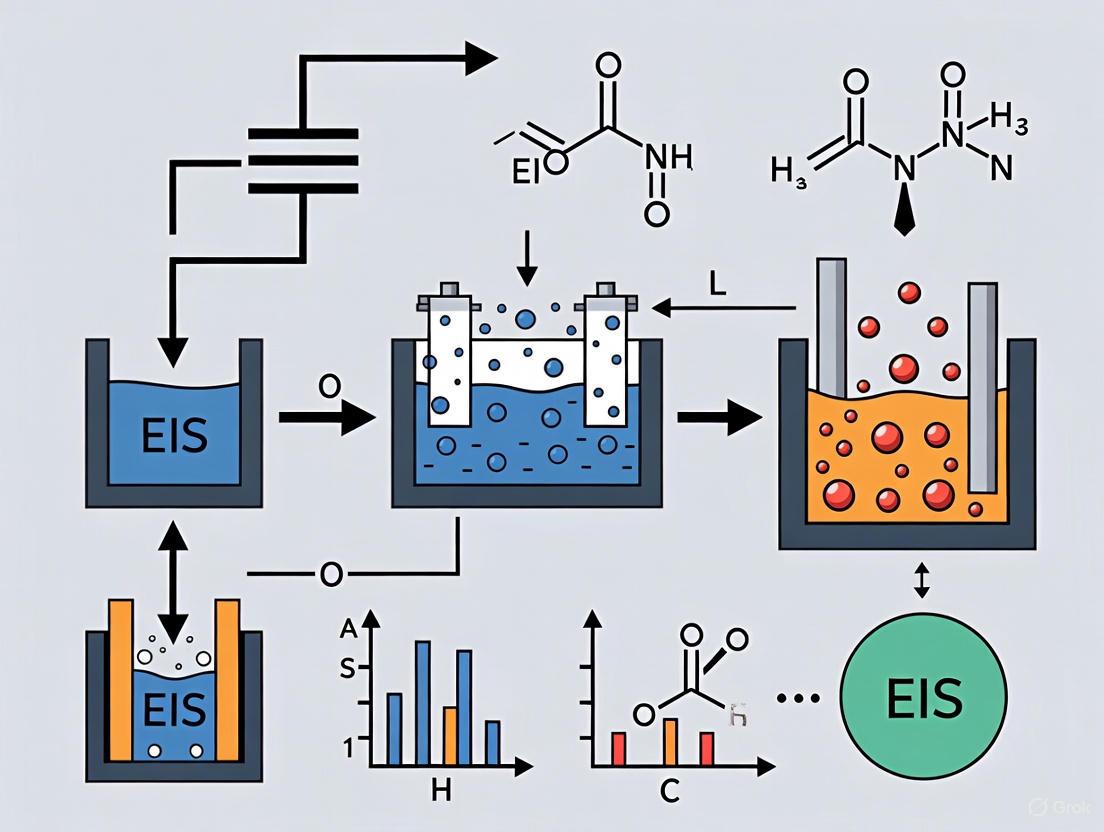
This article provides a comprehensive overview of Electrochemical Impedance Spectroscopy (EIS), a powerful, non-destructive analytical technique essential for researchers and drug development professionals.
Electrochemical Impedance Spectroscopy (EIS): A Comprehensive Guide from Fundamentals to Advanced Biomedical Applications
Abstract
This article provides a comprehensive overview of Electrochemical Impedance Spectroscopy (EIS), a powerful, non-destructive analytical technique essential for researchers and drug development professionals. It covers foundational principles, including the theoretical background of measuring a system's impedance to a small AC signal, data representation via Nyquist and Bode plots, and equivalent circuit modeling. The scope extends to advanced methodological applications in biosensing, such as the label-free detection of pathogens and the analysis of bio-recognition events at electrode interfaces, highlighting the impact of nanomaterials on enhancing sensor performance. Practical guidance on troubleshooting data quality, optimizing measurements, and validating results is included, alongside a comparative analysis with other electrochemical techniques. The article synthesizes how EIS serves as a critical tool for advancing biomedical research, from diagnostics to drug development, by enabling sensitive, real-time, and label-free analysis of complex biological systems.
Understanding EIS: Core Principles and System Fundamentals
What is EIS? Defining Impedance in Electrochemical Systems
Electrochemical Impedance Spectroscopy (EIS) is a powerful analytical technique used to characterize materials and interfaces by measuring their response to an applied alternating current (AC) signal. Fundamentally, impedance is a generalized form of resistance that extends to AC circuits, capturing not only the dissipation of energy but also its storage and release over time [1]. In electrochemical systems, EIS probes the interaction of a sample with a time-varying electric field, yielding information about how the sample stores and dissipates energy, thereby enabling the parameterization of underlying physical and chemical processes [2]. This technique has become a cornerstone for the in-situ characterization of electrochemical, electrical, and interfacial phenomena in fields ranging from energy storage to sensor development [2].
Core Principles of EIS
From Resistance to Complex Impedance
The concept of impedance (Z) is analogous to Ohm's Law but for alternating current systems. Where Ohm's Law defines resistance (R) as the ratio of voltage (E) to current (I) for direct current (DC), impedance is defined as the ratio of the time-varying voltage to the time-varying current [1] [3]:
Z(ω) = E(ω) / I(ω)
In a typical potentiostatic EIS experiment, a small sinusoidal potential (excitation signal) is applied to an electrochemical cell:
E(t) = E₀ sin(ωt)
where E₀ is the amplitude and ω is the radial frequency [1]. In a linear system, the current response is a sinusoid at the same frequency but shifted in phase (Φ):
I(t) = I₀ sin(ωt + Φ)
This phase shift and amplitude change are captured by the complex impedance, which can be expressed using Euler's relationship as [1]:
Z(ω) = Z₀e^(jΦ) = Z₀(cos Φ + j sin Φ)
This formulation separates the impedance into a real part (Z_real = Z₀ cos Φ), representing energy dissipation, and an imaginary part (Z_imag = Z₀ sin Φ), representing energy storage [3].
Table 1: Key Differences Between Resistance and Impedance
| Property | Resistance (R) | Impedance (Z) |
|---|---|---|
| Signal Type | Direct Current (DC) | Alternating Current (AC) |
| Frequency Dependence | Independent of frequency | Dependent on frequency |
| Phase Relationship | Current & voltage are in phase | Current & voltage can be out of phase |
| Mathematical Representation | Real number | Complex number (Real + Imaginary parts) |
Essential Conditions for EIS Measurements
Reliable EIS measurements require two critical conditions [1]:
- Linearity: The electrochemical system must behave in a pseudo-linear manner. This is achieved by applying a very small amplitude excitation signal (typically 1-10 mV), ensuring the response is confined to a nearly linear segment of the current-voltage curve.
- Stability: The system must be at a steady state throughout the measurement, which can take from minutes to hours. Drift in the system due to factors like adsorption, temperature changes, or degradation can lead to inaccurate results.
Data Presentation and Equivalent Circuit Elements
Nyquist and Bode Plots
EIS data is most commonly presented in two types of plots:
- Nyquist Plot: This graph plots the negative imaginary impedance (
-Z'') on the Y-axis against the real impedance (Z') on the X-axis. Each point on the plot represents the impedance at one frequency, though the frequency is not explicitly shown. High-frequency data typically appear on the left side of the plot, with frequency decreasing towards the right. A Nyquist plot for a simple circuit with one "time constant" often results in a semicircle [1] [3]. - Bode Plot: This display uses two separate graphs with logarithmic frequency on the X-axis: the magnitude of the impedance (
|Z|) on a logarithmic Y-axis, and the phase shift (Φ) on a linear Y-axis. Unlike the Nyquist plot, the Bode plot explicitly shows frequency information [1].
Common Equivalent Circuit Elements
EIS data are commonly analyzed by fitting to an equivalent electrical circuit model, where each element represents a specific physical process in the electrochemical system [1]. The impedance of common circuit elements is summarized below.
Table 2: Impedance of Common Electrical Circuit Elements
| Component | Current vs. Voltage Relationship | Impedance (Z) |
|---|---|---|
| Resistor (R) | E = I R |
Z = R |
| Capacitor (C) | I = C dE/dt |
Z = 1 / (jωC) |
| Inductor (L) | E = L di/dt |
Z = jωL |
These fundamental elements can be combined in series and parallel to model more complex electrochemical interfaces, such as a double-layer capacitor in parallel with a charge-transfer resistor.
Experimental Protocol: Basic EIS Measurement
Materials and Equipment
- Potentiostat/Galvanostat: An instrument capable of applying a small sinusoidal potential or current signal and measuring the resulting response. Modern systems often include a Frequency Response Analyzer (FRA) [3].
- Electrochemical Cell: A three-electrode configuration is standard.
- Working Electrode (WE): The electrode of interest, where the reaction occurs.
- Counter Electrode (CE): Completes the electrical circuit.
- Reference Electrode (RE): Provides a stable, known potential against which the WE is measured [3].
- Electrolyte: A solution containing ions to facilitate current flow.
- Software: For instrument control, data acquisition, and analysis (e.g., ZView for circuit modelling) [2].
Step-by-Step Procedure
- Cell Setup: Assemble the electrochemical cell with the working, reference, and counter electrodes immersed in the electrolyte. Ensure all connections are secure.
- Stabilization: Allow the system to reach a stable open-circuit potential (OCP) to ensure a steady state before measurement [1].
- Parameter Configuration:
- Set the DC potential or current bias around which the AC signal will oscillate.
- Define the frequency range. A typical spectrum is collected from a high frequency (~1 MHz or 100 kHz) down to a low frequency (~10 mHz or 1 Hz), with multiple points per decade measured on a logarithmic scale [3] [4].
- Set the amplitude of the AC perturbation. For potentiostatic EIS, this is typically a 1-10 mV sinusoidal potential signal to ensure pseudo-linearity [1] [3].
- Data Acquisition: Initiate the measurement. The potentiostat applies each sinusoidal potential frequency, measures the current response, and uses a Fast Fourier Transform (FFT) to convert the time-domain signals into frequency-domain data, extracting the potential amplitude (
E₀), current amplitude (I₀), and phase shift (Φ) at each frequency [1] [3]. - Data Validation: Apply checks such as the Kramers-Kronig relations to evaluate the quality, linearity, and stability of the measured impedance data [2].
- Data Analysis: Model the data using an equivalent circuit to extract physical parameters. For example, in a conductivity measurement, the bulk resistance (
R_b) can be obtained from the high-frequency intercept of a Nyquist plot with the real axis, allowing conductivity (σ) to be calculated asσ = t / (R_b * A), wheretis the sample thickness andAis the electrode area [4].
The following diagram illustrates the core workflow of an EIS experiment:
The Scientist's Toolkit: Key Reagents and Materials
Table 3: Essential Research Reagent Solutions and Materials for EIS
| Item | Function / Description |
|---|---|
| Potentiostat with FRA | Core instrument for applying precise potential/current signals and measuring the high-precision frequency response [3]. |
| Standard Electrolytes (e.g., KCl, K3Fe(CN)6) | Provide conductive medium; redox-active species allow study of charge-transfer kinetics. |
| Reference Electrodes (e.g., Ag/AgCl, SCE) | Provide a stable, known reference potential for the working electrode [3]. |
| Electrode Polishing Kits (Alumina, Diamond Paste) | Ensure reproducible, clean, and smooth working electrode surfaces. |
| Software for Circuit Fitting (e.g., ZView, EC-Lab) | Enables modeling of impedance data with equivalent circuits to extract physical parameters [2]. |
| Faraday Cage | Shields the electrochemical cell from external electromagnetic interference for low-noise measurements. |
Advanced Applications and Emerging Techniques
EIS finds widespread application in the characterization of energy storage and conversion devices like batteries, fuel cells, and solar cells [2] [5] [6]. In battery research, EIS is used to quantify charge-transfer resistance, double-layer capacitance, and diffusion coefficients, which are critical for determining State of Charge (SOC) and State of Health (SOH) [6].
Emerging techniques are pushing the boundaries of traditional EIS. Mechano-electrochemical Impedance Spectroscopy (MEIS) is a novel technique that complements EIS by probing coupled mechanical-electrochemical dynamics. MEIS applies a sinusoidal current and measures the resulting pressure fluctuations, linking mechanical properties like stiffness to electrochemical states [5]. The field is also moving towards digitalization, with open-source platforms being developed to automate EIS data analysis and apply machine learning for improved diagnostics, such as precise battery temperature estimation using Support Vector Regression (SVR) [7]. Future developments are expected to further integrate machine learning and analyze higher harmonics for more sensitive analysis of in-situ phenomena [2].
Electrochemical Impedance Spectroscopy (EIS) is a powerful analytical technique used to investigate the properties of electrochemical systems. By applying a small amplitude sinusoidal potential (or current) across a range of frequencies and measuring the system's response, EIS provides a non-destructive method to probe complex electrochemical processes [1] [3]. The analysis of this response rests on a robust mathematical framework of key equations and transfer functions, which allow researchers to model the system as an equivalent electrical circuit. This application note details the core mathematical principles, data presentation formats, and experimental protocols essential for employing EIS in research, particularly for scientists and drug development professionals.
Fundamental Principles and Key Equations
The fundamental principle of EIS is the extension of Ohm's Law to systems subjected to an alternating current (AC) signal. While Ohm's Law ((E = I \times R)) describes the relationship between a direct current (DC) voltage ((E)) and current ((I)) via a resistance ((R)), impedance ((Z)) is the analogous property for AC circuits, encompassing both resistance and reactance [3].
In a potentiostatic EIS experiment, a sinusoidal potential of the form shown in Equation 1 is applied to the electrochemical cell. Equation 1: Applied Potential [ Et = E0 \times \sin(\omega t) ] Where (Et) is the potential at time (t), (E0) is the amplitude of the signal, and (\omega) is the radial frequency (in radians/second), related to frequency (f) (in Hertz) by (\omega = 2\pi f) [1].
The current response from a linear, time-invariant system will be a sinusoid at the same frequency but shifted in phase, as described in Equation 2. Equation 2: Current Response [ It = I0 \times \sin(\omega t + \phi) ] Where (I_0) is the current amplitude and (\phi) is the phase shift [1].
The impedance is then defined as the ratio of the voltage to the current in the frequency domain. Using Euler's relationship, this can be elegantly expressed as a complex function (Equation 3), which is the fundamental transfer function for EIS [1]. Equation 3: Complex Impedance [ Z(\omega) = \frac{E(\omega)}{I(\omega)} = Z0 \times e^{j\phi} = Z0 (\cos\phi + j\sin\phi) ] This complex impedance can be separated into a real part, (Z{re}), and an imaginary part, (Z{im}) (Equation 4). Equation 4: Real and Imaginary Impedance [ Z(\omega) = Z{re} + jZ{im} ] Where:
- (Z{re} = Z0 \cos\phi)
- (Z{im} = Z0 \sin\phi) [3]
The magnitude of the impedance is given by (|Z| = \sqrt{Z{re}^2 + Z{im}^2}) and the phase angle by (\phi = \arctan(Z{im} / Z{re})) [1].
Circuit Elements and Their Impedance
The building blocks for equivalent circuit models are standard electrical components. Their impedance behaviors are summarized in Table 1.
Table 1: Impedance of Common Electrical Circuit Elements
| Component | Current vs. Voltage Relationship | Impedance ((Z)) |
|---|---|---|
| Resistor | (E = I R) | (R) |
| Capacitor | (I = C \frac{dE}{dt}) | (\frac{1}{j\omega C}) |
| Inductor | (E = L \frac{di}{dt}) | (j\omega L) |
As shown, the impedance of a resistor is real and independent of frequency. A capacitor's impedance is purely imaginary and decreases with frequency, while an inductor's impedance is also purely imaginary but increases with frequency [1]. The current through a resistor is in phase with the voltage, whereas for a capacitor, the current leads the voltage by 90 degrees.
Data Presentation and Visualization
Nyquist and Bode Plots
Impedance data is most commonly presented in two types of plots, each offering different insights.
Nyquist Plot: This plot displays the negative of the imaginary impedance ((-Z{im})) on the vertical axis against the real impedance ((Z{re})) on the horizontal axis. Each point on the plot represents the impedance at one frequency, though the frequency is not explicitly shown. The plot typically results in one or more semicircles or arcs. The high-frequency data appears on the left side of the plot, and the low-frequency data on the right [1] [3]. The impedance vector at a given frequency can be represented as an arrow from the origin to a data point, with a length (|Z|) and an angle (\phi) to the real axis.
Bode Plot: This presentation uses two separate graphs. The first plots the logarithm of the impedance magnitude ((\log |Z|)) against the logarithm of frequency ((\log f)). The second plots the phase shift ((\phi)) in degrees against (\log f). Unlike the Nyquist plot, the Bode plot explicitly shows the frequency dependence of both the impedance magnitude and the phase angle [1].
The following diagram illustrates the logical workflow from the initial EIS experiment to data transformation and final presentation.
Equivalent Circuit Modeling
To extract physical meaning from EIS data, the total impedance of the system is modeled using an equivalent circuit composed of the basic elements in Table 1. A common model for a simple electrode-electrolyte interface is the Randles circuit, which includes the solution resistance ((Rs)), the charge transfer resistance ((R{ct})), and the double-layer capacitance ((C_{dl})), often with a constant phase element (CPE) to account for non-ideal capacitive behavior.
The total impedance of a circuit is the sum of the impedances of elements in series. For elements in parallel, the total admittance (the inverse of impedance, (Y = 1/Z)) is the sum of the individual admittances. The impedance for the Randles circuit is given by: Equation 5: Randles Circuit Impedance [ Z(\omega) = Rs + \frac{1}{j\omega C{dl} + \frac{1}{R_{ct}}} ]
Experimental Protocols
Protocol for Basic Potentiostatic EIS Measurement
1. Objective: To acquire the electrochemical impedance spectrum of a sample in a three-electrode configuration. 2. Materials: See Section 5, "The Scientist's Toolkit". 3. Procedure: - Cell Setup: Place the working, counter, and reference electrodes into the electrochemical cell containing the electrolyte and analyte. Ensure stable positioning and connection to the potentiostat. - DC Potential Selection: Determine a stable DC potential (setpoint, (E{dc})) around which the small AC signal will be applied. This is often the open circuit potential (OCP) or a potential of interest for a Faradaic process. - AC Parameters: Set the AC potential amplitude ((E0)) to a value that ensures the system response is pseudo-linear, typically 1-10 mV [1]. Define the frequency range, usually from a high frequency (e.g., 100 kHz or 1 MHz) down to a low frequency (e.g., 10 mHz or 0.1 Hz). Use 5-10 measurement points per decade of frequency on a logarithmic scale. - Data Acquisition: Initiate the EIS sequence. The instrument will apply the DC potential with the superimposed AC sine wave at each frequency, measure the current response, and use a Fast Fourier Transform (FFT) to calculate the impedance components ((Z{re}), (Z{im}), (|Z|), (\phi)) [3]. - Data Validation: Ensure the system is at a steady state throughout the measurement, which can take from minutes to hours. Drift can lead to inaccurate results. Check data consistency using the Kramers-Kronig relations if supported by the instrument software [1] [8].
Protocol for Rapid EIS for Sorting/Screening
For high-throughput applications, such as screening battery materials or biological samples, a rapid EIS method can be employed [8]. 1. Objective: To acquire sufficient EIS data for sample differentiation in a significantly reduced time. 2. Key Modifications: - Excitation Signal: Use a multisine excitation signal containing multiple frequencies simultaneously instead of a single-frequency sine wave. - Partial Frequency Band: Focus on a specific, diagnostically relevant frequency band (e.g., 1 Hz to 10,000 Hz) to reduce acquisition time. Data acquisition can be reduced to as little as 5 seconds [8]. - Feature Selection: For sorting applications where absolute parameter values are less critical than consistency, use the imaginary part of the impedance ((Z_{im})) from selected frequency bands for analysis, as it is less susceptible to drift caused by fixture connections [8].
The Scientist's Toolkit
Table 2: Key Research Reagent Solutions and Materials for EIS
| Item | Function / Application |
|---|---|
| Potentiostat/Galvanostat with FRA | The core instrument that applies the potential/current and measures the response. The Frequency Response Analyzer (FRA) is essential for impedance measurements [3]. |
| Electrochemical Cell | A container that holds the electrolyte solution and provides a controlled environment for the experiment. |
| Three-Electrode Setup | Working Electrode (WE): The electrode where the reaction of interest occurs (e.g., glassy carbon, gold disk). Counter Electrode (CE): A conductor (e.g., platinum wire) that completes the circuit. Reference Electrode (RE): Provides a stable, known potential (e.g., Ag/AgCl, SCE) against which the WE potential is measured [3]. |
| Electrolyte | A solution containing ions to support electrical conductivity. The choice of electrolyte (e.g., PBS for biological systems, lithium salts for battery research) is critical. |
| Redox Probe (for Faradaic EIS) | A reversible redox couple (e.g., ([Fe(CN)_6]^{3-/4-})) added to the electrolyte to study electron transfer kinetics at the electrode surface. |
| Data Fitting Software | Software used to fit the obtained EIS data to an equivalent circuit model to extract quantitative parameters (e.g., resistances, capacitances). |
The relationships and workflow of a standard EIS experimental setup are visualized below.
Table 3: Summary of Key EIS Equations and Parameters
| Parameter | Symbol | Equation / Description | Notes | ||||
|---|---|---|---|---|---|---|---|
| Complex Impedance | (Z(\omega)) | (Z = \frac{E(\omega)}{I(\omega)} = Z{re} + jZ{im}) | Fundamental transfer function [1]. | ||||
| Impedance Magnitude | ( | Z | ) | ( | Z | = \sqrt{Z{re}^2 + Z{im}^2}) | - |
| Phase Angle | (\phi) | (\phi = \arctan(\frac{Z{im}}{Z{re}})) | - | ||||
| Radial Frequency | (\omega) | (\omega = 2\pi f) | (f) is frequency in Hz [1]. | ||||
| Resistor Impedance | (Z_R) | (Z_R = R) | Purely real, frequency-independent [1]. | ||||
| Capacitor Impedance | (Z_C) | (Z_C = \frac{1}{j\omega C}) | Purely imaginary, decreases with frequency [1]. | ||||
| Inductor Impedance | (Z_L) | (Z_L = j\omega L) | Purely imaginary, increases with frequency [1]. | ||||
| Solution Resistance | (R_s) | Found from high-frequency x-intercept on Nyquist plot. | Represents uncompensated electrolyte resistance. | ||||
| Charge Transfer Resistance | (R_{ct}) | Diameter of semicircle on Nyquist plot. | Related to the kinetics of the electron transfer reaction; higher (R_{ct}) indicates slower kinetics. |
Electrochemical Impedance Spectroscopy (EIS) is a powerful steady-state technique that utilizes small-signal analysis to probe relaxations over a wide frequency range, from less than 1 mHz to greater than 1 MHz [9]. In a typical EIS experiment, a small sinusoidal potential (or current) is applied to an electrochemical cell, and the resulting current (or voltage) response is measured [1]. For a linear system, the response signal is a sinusoid at the same frequency but shifted in phase [9]. The impedance, a more general circuit parameter than simple resistance, is then calculated from the ratio of the voltage to the current [1]. Unlike resistance, impedance accounts for phase shifts and frequency-dependent behavior, making it indispensable for characterizing complex electrochemical systems such as batteries, sensors, and corrosion processes [9] [10].
The raw EIS data, comprising magnitude and phase information across a frequency spectrum, are most commonly visualized through two types of plots: Nyquist plots and Bode plots. These representations are not merely different ways of looking at the same data; they offer complementary insights. The Nyquist plot provides an intuitive, consolidated view of the system's impedance, while the Bode plot preserves explicit frequency information, which is crucial for understanding the kinetics of electrochemical processes [9] [1]. Mastering the interpretation of these plots is a fundamental skill for researchers, scientists, and drug development professionals using EIS to study interfacial properties, bio-recognition events, and material characteristics in applications ranging from biomedical diagnostics to battery development [9] [10].
Fundamental Principles of Nyquist and Bode Plots
The Nyquist Plot
A Nyquist plot is a parametric plot used to visualize the frequency response of a system. In the context of EIS, it represents the imaginary component of the impedance (-Zimag) plotted against the real component (Zreal) across a sweep of frequencies [9] [1]. Each point on the curve corresponds to the impedance at one specific frequency. In these plots, the radial frequency decreases from left to right, meaning high-frequency data appears on the left and low-frequency data on the right [9]. The impedance can also be represented as a vector whose length is the magnitude |Z| and whose angle with the real axis is the phase angle (Φ) [1]. A significant shortcoming of the standard Nyquist plot is that the frequency information for each data point is not directly visible, making it necessary to annotate characteristic frequencies (e.g., the top of a semicircle) for proper interpretation [11].
The Bode Plot
A Bode plot, in contrast, displays the impedance information across frequency in two separate graphs, preserving frequency as the primary axis [1]. It consists of:
- A magnitude plot: The decimal logarithm of the impedance magnitude (log |Z|) is plotted against the decimal logarithm of frequency (log f).
- A phase plot: The phase angle (Φ, in degrees) is plotted against the decimal logarithm of frequency (log f) [11] [9].
This dual-plot structure makes Bode plots particularly useful for identifying capacitive behavior and evaluating the frequency dependence of different electrochemical processes [9]. The magnitude plot directly shows how the system resists the flow of current at different excitation frequencies, while the phase plot reveals the delay between the applied voltage and the measured current.
Theoretical Foundation and Complementary Nature
Both plots originate from the same fundamental complex impedance expression. The impedance (Z) is represented as a complex number Z = Z' + jZ'', where Z' is the real part, Z'' is the imaginary part, and j is the imaginary unit [1]. The magnitude and phase are derived as:
The Nyquist and Bode plots are mathematically equivalent representations of this data [11]. The choice between them often depends on the research field's conventions and the specific information the researcher wishes to emphasize. Nyquist plots excel at visualizing the number and approximate time constants of different processes, while Bode plots are superior for understanding the frequency ranges over which these processes operate.
Data Presentation and Interpretation
Visualizing and Interpreting Nyquist Plots
In a Nyquist plot, the shape of the curve reveals key information about the electrochemical system. A common feature is one or more semicircular arcs. Each semicircle is characteristic of a single "time constant" in the system, often representing a parallel combination of a resistor and a capacitor in the equivalent circuit model [1]. The diameter of a semicircle along the real Z-axis corresponds to a resistance, such as the charge transfer resistance (Rct), which is a critical parameter in analyzing the kinetics of an electrochemical reaction [9]. At low frequencies, a rising linear section with a 45° slope often indicates a mass-transfer controlled process, known as Warburg impedance [9].
Table 1: Interpretation of Common Features in a Nyquist Plot
| Plot Feature | Physical Interpretation | Common Electrochemical Process |
|---|---|---|
| High-Frequency Intercept on Real Axis | The ohmic solution resistance (Rs) of the electrolyte [9]. | Uncompensated resistance between working and reference electrodes. |
| Semicircular Arc | A single time constant, representing a parallel combination of a resistance and a capacitance [1]. | Charge transfer resistance (Rct) at the electrode-electrolyte interface combined with the double-layer capacitance (Cdl). |
| Multiple Semicircles | Multiple time constants with distinct relaxation frequencies [1]. | Separate processes at different interfaces (e.g., grain boundary and bulk effects in solid-state batteries [10]). |
| Low-Frequency 45° Line | Warburg impedance (W), signifying a diffusion-controlled or mass-transfer limited process [9]. | Diffusion of redox species from the bulk solution to the electrode surface. |
Visualizing and Interpreting Bode Plots
Bode plots provide a more direct link to frequency, which is essential for understanding the kinetics of electrochemical processes. The magnitude plot shows how the system's impedance changes with frequency. A horizontal line indicates a purely resistive behavior, while a line with a constant negative slope (e.g., -1 in log-log scale) suggests a capacitive-dominated response [9]. The phase plot reveals the number of time constants present; a peak in the phase plot indicates a process with a specific relaxation frequency, and overlapping processes can be identified by broad or multiple peaks.
Table 2: Interpretation of Common Features in a Bode Plots
| Plot Feature | Physical Interpretation | Information Revealed |
|---|---|---|
| Magnitude Plot: High-Frequency Plateau | Dominated by ohmic resistance (Rs). | The value of the solution resistance. |
| Magnitude Plot: Linear Region with -1 Slope | Dominated by capacitive behavior. | Double-layer capacitance or other capacitive elements in the system. |
| Magnitude Plot: Low-Frequency Plateau | Dominated by the sum of Rs and Rct. | The total DC resistance of the system. |
| Phase Plot: Peak(s) | Time constant(s) of the system. | The number of distinct electrochemical processes and their characteristic frequencies. |
| Phase Plot at 45° | Can indicate the presence of Warburg impedance [9]. | Mass-transfer limitations are significant at that frequency. |
Experimental Protocols for EIS Measurement
Pre-Experimental Setup and Calibration
A successful EIS experiment requires meticulous preparation to ensure data quality and reliability.
- Instrumentation: Use a potentiostat/galvanostat equipped with an FRA (Frequency Response Analyzer) or a dedicated EIS spectrometer. Ensure the device is properly calibrated according to the manufacturer's specifications [1].
- Electrode System: Set up a standard three-electrode configuration (Working Electrode, Counter Electrode, Reference Electrode) for accurate potential control. Ensure the working electrode surface is clean, well-defined, and reproducible. For biosensing applications, the working electrode may be functionalized with a biorecognition element (e.g., antibody, enzyme, DNA probe) [9].
- Electrolyte: Use a stable, degassed electrolyte solution with sufficient conductivity. Eliminate dissolved oxygen if it interferes with the redox reaction of interest by purging with an inert gas like nitrogen or argon.
- Steady-State Establishment: A critical and often overlooked step is to ensure the electrochemical system is at a steady state before commencing measurements. Drift in the system due to adsorption, reaction product buildup, or temperature changes during the measurement can lead to inaccurate and distorted results [1].
Step-by-Step EIS Measurement Procedure
The following protocol outlines a standard procedure for acquiring EIS data.
- DC Potential/Bias Application: Apply the desired DC potential (for potentiostatic EIS) to the working electrode versus the reference electrode. This potential should be chosen based on the system under study, often at the open-circuit potential (OCP) or at a potential relevant to a specific redox reaction [9] [1].
- Stability Check: Monitor the current until it stabilizes, confirming the system has reached a steady state. This may take from minutes to hours.
- Frequency Parameter Setting:
- Select the frequency range. A broad range (e.g., 100 kHz to 10 mHz) is common, but it should cover the time constants of the processes of interest [9].
- Set the number of frequency points per decade (e.g., 10 points/decade) for adequate resolution.
- Define the AC excitation amplitude. A small sinusoidal potential of 1 to 10 mV is standard to ensure the system response is pseudo-linear [1].
- Data Acquisition: Initiate the frequency sweep, typically from high to low frequency. The instrument applies the AC potential at each frequency and measures the amplitude and phase shift of the resulting current response [1].
- Data Validation: Modern software often provides real-time plotting. Check the acquired data for signs of instability, such as significant scatter or open-ended semicircles in the Nyquist plot. It is good practice to measure a known equivalent circuit (e.g., from a test box) to validate the system's performance [11].
- Data Export: Export the raw data, which should include at minimum the frequency (
f), the real part of impedance (Z'), and the imaginary part of impedance (Z'').
Post-Measurement Data Processing
- Data Review: Visualize the data in both Nyquist and Bode formats to check for quality and consistency.
- Kramers-Kronig Validation (Optional but Recommended): Apply the Kramers-Kronig transforms to test the data for linearity, causality, and stability. Data that violates these criteria may be unreliable.
- Equivalent Circuit Modeling: Use specialized software (e.g., ZView, EC-Lab, equivalent circuit model fitters in Python/R) to fit the data to a physically meaningful equivalent circuit. The choice of circuit should be based on the physical and chemical properties of the system [9] [10].
The Scientist's Toolkit: Essential Materials and Reagents
The following table details key reagents and materials essential for conducting EIS experiments, particularly in the context of biosensing and battery research.
Table 3: Key Research Reagent Solutions and Materials for EIS
| Item Name | Function/Description | Application Example |
|---|---|---|
| Potentiostat/Galvanostat with FRA | Core instrument for applying potential/current and measuring the high-precision, low-amplitude AC response. | Essential for all EIS measurements [11] [1]. |
| Three-Electrode Cell | Electrochemical cell comprising Working, Counter, and Reference electrodes for precise potential control. | Standard setup for accurate EIS in corrosion, battery, and biosensor studies [9] [1]. |
| Redox Probe | A well-characterized, reversible redox couple (e.g., [Fe(CN)₆]³⁻/⁴⁻) added to the electrolyte. | Probes interfacial properties and charge transfer resistance; used to monitor surface modification and biorecognition events [9]. |
| Nanomaterials (NPs, CNTs, Nanowires) | Enhance signal by providing catalytic activity, increased surface area for immobilization, and faster electron transfer. | Critical for enhancing the sensitivity of impedimetric biosensors for pathogens, DNA, or biomarkers [9] [10]. |
| Biorecognition Elements | Molecules (antibodies, antigens, enzymes, aptamers, whole cells) that specifically bind to the target analyte. | The core of an impedimetric biosensor; binding events alter the interface, changing the impedance signal [9]. |
| Solid-State Electrolyte | A solid ion-conducting material (e.g., polymer, ceramic) that replaces liquid electrolytes. | Key material for EIS characterization in the development of solid-state batteries for energy density and safety [10]. |
| Equivalent Circuit Modeling Software | Software used to fit EIS data to an electrical circuit model to extract quantitative parameters (R, C, W). | Used for quantitative analysis of all EIS data to deconvolute contributions from different processes [1] [10]. |
Equivalent Circuit Modeling from Plots
The ultimate goal of EIS analysis is often to extract quantitative physical parameters from the Nyquist and Bode plots. This is achieved by fitting the data to an equivalent circuit model, which is an electrical circuit composed of passive elements (resistors R, capacitors C, inductors L, and specialized elements like the Warburg impedance W) that simulates the electrochemical processes [9] [1].
For a simple system exhibiting one time constant (e.g., a bare electrode in a redox probe solution), the Randles circuit is a common model. It consists of:
- Solution Resistance (
Rs) in series with... - A parallel combination of Charge Transfer Resistance (
Rct) and Double-Layer Capacitance (Cdl). - A Warburg element (
W) may be added in series withRctto model diffusion.
For more complex systems like solid-state batteries, the equivalent circuit can include multiple (RQ) elements in series, where Q is a constant phase element (CPE) used to account for surface inhomogeneity, each representing a different physical region or interface (e.g., bulk electrolyte, grain boundaries, electrode-electrolyte interfaces) [10].
The process involves:
- Hypothesis: Propose a circuit based on the physical structure of the system.
- Fitting: The software adjusts the circuit element values to achieve the best fit to the experimental data.
- Validation: The quality of the fit is assessed, and the physical reasonableness of the extracted parameters is evaluated. A good fit does not guarantee the model is correct, so physical insight is paramount.
Electrochemical Impedance Spectroscopy (EIS) is a powerful analytical technique used to characterize the physical and electrochemical properties of systems ranging from biosensors to energy storage devices [12]. The technique operates by applying a small amplitude sinusoidal potential or current excitation across a wide frequency range and analyzing the system's response [1] [13]. The interpretation of EIS data relies heavily on modeling the electrochemical system using equivalent electrical circuits composed of discrete components [14]. This application note details the essential electrical elements—resistors, capacitors, and the Constant Phase Element (CPE)—that form the building blocks of these equivalent circuit models, providing researchers in drug development and related fields with the foundational knowledge required for accurate EIS data interpretation.
Essential Circuit Elements in EIS Modeling
In equivalent circuit modeling, individual physical and electrochemical processes are represented by specific electrical components whose behavior can be mathematically described [14]. The table below summarizes the core components, their impedance, and their primary electrochemical significance.
Table 1: Essential Electrical Components for EIS Equivalent Circuit Modeling
| Component | Impedance Formula | Phase Angle | Electrochemical Significance | Key Characteristics |
|---|---|---|---|---|
| Resistor (R) | ( Z = R ) [1] | 0° [1] | Solution resistance (RΩ), Polarization resistance (Rp) [14] | Independent of frequency; current in phase with voltage [1] |
| Capacitor (C) | ( Z = \frac{1}{j\omega C} ) [1] [14] | -90° [1] | Double-layer capacitance (Cdl), Coating capacitance (Cc) [14] | Impedance decreases with frequency; current leads voltage [1] |
| Inductor (L) | ( Z = j\omega L ) [1] [14] | +90° [1] | Adsorption processes, measurement artifacts [14] | Impedance increases with frequency; current lags voltage [1] |
| Constant Phase Element (Q) | ( Z = \frac{1}{(j\omega)^n Y_0} ) [15] [14] | ( -\frac{n\pi}{2} ) (typically -90° to 0°) [14] | Surface heterogeneity, roughness, porous layers [15] [14] | Empirically models non-ideal capacitive behavior; ( n ) is a dispersion factor (0-1) [14] |
The Resistor
The resistor represents a system's pure opposition to current flow, with no phase shift between the applied voltage and the resulting current [1]. In electrochemical systems, two resistors are particularly significant. The ohmic resistance (RΩ) represents the uncompensated resistance between the working and reference electrodes, which is dependent on the electrolyte's conductivity and the cell's geometry [14]. The polarization resistance (Rp) models the resistance to charge transfer across the electrode-electrolyte interface at the corrosion potential and is directly related to reaction kinetics, such as the corrosion current via the Butler-Volmer equation [14].
The Capacitor
An ideal capacitor's impedance decreases as frequency increases [1]. In electrochemistry, the most common capacitor is the double-layer capacitance (Cdl), which models the charge separation at the electrode-electrolyte interface, where ions from the solution approach the electrode surface [14] [3]. Its value is influenced by electrode potential, temperature, ionic concentrations, and electrode roughness [14]. Another example is the coating capacitance (Cc), which can be used to monitor water uptake in protective coatings, as the ingress of water (high dielectric constant) significantly increases the measured capacitance [14].
The Constant Phase Element (CPE)
The Constant Phase Element is a non-ideal capacitive component used extensively to model the complexity of real electrochemical interfaces [15]. Its impedance is given by ( Z = 1/(Y0 (j\omega)^n) ), where ( Y0 ) is the CPE coefficient or admittance constant, and ( n ) is an empirical exponent [14]. The CPE describes a frequency-independent phase angle of ( -n \times 90^\circ ) [15].
The CPe behavior is attributed to surface heterogeneity, roughness, and variations in current or potential distribution [15]. The parameter ( n ) indicates the degree of deviation from ideal capacitive behavior:
- ( n = 1 ): The CPE behaves as an ideal capacitor.
- ( n = 0 ): The CPE acts as a pure resistor.
- ( n = 0.5 ): The CPE is equivalent to a Warburg element, modeling semi-infinite linear diffusion [14] [15].
The physical meaning of the CPE is often interpreted as a statistical distribution of time constants due to a structural or energetic inhomogeneity at the electrode interface [15]. It can also be modeled using circuits with time-varying component values, such as a resistor in series with an inductor whose value increases linearly with time, correlating with known time-varying properties in applications [15].
Experimental Protocols for EIS Measurement
Prerequisites and Measurement Setup
- Instrumentation: A potentiostat/galvanostat with Frequency Response Analyzer (FRA) capabilities [3] [13].
- Electrochemical Cell: A standard three-electrode configuration is recommended, comprising a Working Electrode (WE), a Counter Electrode (CE), and a Reference Electrode (RE) [3].
- Connections: Use shielded, low-noise cables. For high-impedance systems (e.g., coatings, biosensors), minimize stray capacitance by using short cables and a Faraday cage [16]. For low-impedance systems (e.g., batteries), minimize stray inductance by twisting current-carrying cables together and avoiding large wire loops [16].
- Software: Instrument control and data acquisition software (e.g., EC-Lab, NOVA) [14] [16].
Step-by-Step Measurement Procedure
- System Stabilization: Bring the electrochemical system to a steady state at the desired DC potential or current. Monitor the open circuit potential (OCP) or current until it stabilizes to ensure stationarity [13].
- Parameter Definition:
- Set the DC bias potential (for potentiostatic EIS) or DC current (for galvanostatic EIS) corresponding to the system's operating point [3] [13].
- Select a frequency range, typically from high frequency (100 kHz - 1 MHz) to low frequency (10 mHz - 1 Hz), spaced logarithmically (e.g., 10 points per decade) [3] [13].
- Choose a perturbation signal amplitude small enough to ensure pseudo-linearity. A common range is 1-10 mV RMS for potential perturbations [1] [13].
- Linearity Verification: Utilize quality indicators such as Total Harmonic Distortion (THD) to confirm that the system's response is linear. A THD below 5% is generally acceptable [13].
- Data Acquisition: Initiate the frequency sweep. The instrument applies the AC perturbation at each frequency, measures the amplitude and phase shift of the current (or voltage) response, and calculates the impedance [1] [3].
- Stationarity Check: Use the Non-Stationary Distortion (NSD) indicator to verify that the system did not drift during the measurement, particularly during the lengthy low-frequency segment [13].
- Data Validation: Apply the Kramers-Kronig relations to assess the data's causality, linearity, and stability [13].
Equivalent Circuit and Data Interpretation Workflow
The diagram below illustrates the logical workflow for constructing an equivalent circuit and interpreting EIS data, using a common Randles circuit model as an example.
Diagram Title: EIS Data Analysis and Circuit Fitting Workflow
The Scientist's Toolkit: Research Reagent Solutions
Table 2: Essential Materials and Reagents for EIS Experiments
| Item | Function/Description | Application Example |
|---|---|---|
| Potentiostat/Galvanostat with FRA | Instrument for applying controlled potentials/currents and measuring the resulting response with high precision [3] [13]. | Foundational for all EIS measurements. |
| Faraday Cage | A grounded metallic enclosure that shields the electrochemical cell from external electromagnetic noise, crucial for high-impedance measurements [16]. | Biosensor development, coating analysis. |
| Reference Electrode | Provides a stable, known reference potential for the working electrode (e.g., Ag/AgCl, Saturated Calomel) [3]. | Essential for all 3-electrode setups to ensure accurate potential control. |
| Supporting Electrolyte | An electrochemically inert salt (e.g., KCl, KNO3) at high concentration to provide ionic conductivity and minimize solution resistance (Rs) [14]. | Fundamental for any aqueous or non-aqueous electrochemical experiment. |
| Redox Probe | A reversible redox couple (e.g., [Fe(CN)6]3-/4-, [Ru(NH3)6]3+) used to probe charge-transfer kinetics at the electrode interface [12]. | Characterizing electrode modification, studying reaction kinetics. |
| Equivalent Circuit Modeling Software | Software (e.g., ZView, EC-Lab's ZFit) used to fit experimental EIS data to an equivalent circuit model and extract parameters [2] [16]. | Data analysis for all EIS studies. |
Building Equivalent Circuit Models to Simulate Real-World Behavior
Electrochemical Impedance Spectroscopy (EIS) is a powerful, non-destructive analytical technique that investigates complex electrochemical systems by applying a small sinusoidal excitation signal and measuring the system's response across a frequency spectrum [1] [13]. A fundamental aspect of EIS analysis involves using Equivalent Circuit Models (ECMs) to interpret impedance data. These models represent physical electrochemical processes—such as charge transfer, double-layer charging, and diffusion—using an arrangement of passive electrical circuit elements like resistors, capacitors, and inductors [1] [17]. The primary strength of this approach is its ability to quantify key parameters (e.g., charge transfer resistance, double-layer capacitance) that define the properties and performance of materials and electrochemical interfaces, providing a bridge between measured data and physical interpretation [17].
The practice is grounded in the concept of a "pseudo-linear" system. While electrochemical cells are inherently non-linear, applying a very small amplitude alternating current (AC) perturbation—typically 1 to 10 mV—ensures the system's response is approximately linear around its operating point, thus validating the use of linear circuit theory for analysis [1] [18] [13]. Selecting an appropriate ECM requires a balance between model complexity and physical justification. The model must be complex enough to capture the essential electrochemical phenomena but avoid overfitting the data with elements that lack a physical basis in the system under study [19].
Common Equivalent Circuit Elements and Models
An ECM is constructed from fundamental elements whose individual impedance behaviors are well-defined. The core components and their impedance expressions are summarized in Table 1.
Table 1: Fundamental Circuit Elements Used in EIS Equivalent Circuit Modeling
| Component | Current vs. Voltage Relationship | Impedance (Z) | Physical Electrochemical Analogy |
|---|---|---|---|
| Resistor (R) | E = I R | Z = R | Solution resistance, charge transfer resistance |
| Capacitor (C) | I = C dE/dt | Z = 1/(jωC) | Ideal double-layer capacitance |
| Inductor (L) | E = L di/dt | Z = jωL | Cable inductance, adsorbed intermediates |
| Constant Phase Element (CPE) | - | Z = 1/((jω)^α Q) | Non-ideal capacitance (surface roughness, porosity) |
| Warburg Element (W) | - | Z = σ(1-j)/√ω | Semi-infinite linear diffusion |
These elements are combined in series and parallel to create models that represent the behavior of real-world systems. Table 2 describes some of the most frequently encountered ECMs in electrochemical research.
Table 2: Common Equivalent Circuit Models and Their Applications
| Model Name / Diagram | Circuit Description | Typical Applications | Nyquist Plot Signature |
|---|---|---|---|
| Randles Circuit [17] | RΩ + (Cdl // Rct) | Simple electrode interface with charge-transfer control. | One depressed semicircle. |
| Randles with Warburg [17] | RΩ + (Cdl // (Rct + W)) | Systems with charge-transfer and diffusion control (batteries, sensors). | A semicircle followed by a 45° diagonal line. |
| Coated Metal / Two-Time-Constant [17] [19] | RΩ + (Cc // Rpo) + (Cdl // Rct) | Metal with an organic coating, or a battery with two electrodes. | Two overlapping or distinct semicircles. |
| Simple Coating Model [17] | RΩ + C | An undamaged, high-impedance coating on a metal. | A straight, vertical line (capacitive). |
The Constant Phase Element (CPE) is often used instead of an ideal capacitor to account for non-ideal behaviors such as surface roughness, porosity, or current distribution inhomogeneities [20] [17] [19]. The CPE's impedance is defined by two parameters: Q (magnitude) and α (exponent). An α value of 1 represents an ideal capacitor, while lower values indicate a deviation from ideal capacitive behavior, leading to a "depressed" semicircle in the Nyquist plot [20].
The Model Building and Fitting Workflow
Constructing and validating an ECM is a systematic process that requires careful attention to experimental conditions and data quality. The following workflow outlines the key stages.
Prerequisites: Ensuring Data Quality
Before fitting, verifying that the data meets the fundamental requirements for EIS analysis is imperative.
- Linearity: The system must respond linearly to the applied AC perturbation. This is achieved by using a sufficiently small excitation amplitude (e.g., 10 mV). Total Harmonic Distortion (THD) analysis is a quantitative method to check for non-linearity, with a THD threshold of 5% often considered acceptable [18] [13].
- Stationarity: The system must be at a steady state and not drift during the measurement, which can take hours. Non-Stationary Distortion (NSD) indicators can monitor this. Measurements on a commercial battery during discharge, for instance, show that data below 0.1 Hz can become invalid due to non-stationarity [13].
- Causality, Linearity, and Stability (Kramers-Kronig Relations): These relations are used to validate the quality of impedance data, checking if it is physically meaningful [13].
Protocol: Circuit Fitting and Parameter Extraction
Once quality data is acquired, the fitting procedure can begin.
- Step 1: Initial Circuit Hypothesis. Propose an initial ECM based on prior knowledge of the system's physical electrochemistry. For a simple electrode interface, start with a Randles circuit [17].
- Step 2: Numerical Fitting. Use software to perform non-linear least squares regression to find the ECM parameters that minimize the difference between the model and the data. Advanced statistical methods like Bayesian Inference (BI) are increasingly used as they provide parameter estimates with quantifiable uncertainty, helping to mitigate overfitting [19].
- Step 3: Fit and Physical Validation. Assess the fit quality visually (on Nyquist and Bode plots) and through error analysis (e.g., chi-squared values). Crucially, evaluate whether the extracted parameter values are physically plausible. For example, a solution resistance should typically be in the range of 1-100 Ω for many aqueous systems [19].
Advanced Considerations and Non-Ideal Behavior
While ECMs are highly useful, researchers must be aware of their limitations and the complexities of real-world systems.
Addressing the Linearity Paradox
Most real electrochemical systems are non-linear, yet EIS analysis requires a pseudo-linear response. Test circuits with diodes and transistors demonstrate that in non-linear systems, the measured impedance can depend on both the DC bias potential (EWE) and the AC modulation amplitude (Va) [18]. Therefore, a single impedance measurement is insufficient to characterize a non-linear system fully. The standard practice is to use a low modulation amplitude and perform measurements at multiple DC potentials to map the system's behavior across different operating conditions [18].
Moving Beyond Lumped ECMs with Physics-Based Modeling
Equivalent circuits are lumped models that sometimes cannot fully capture distributed or coupled physical processes. In such cases, physics-based modeling offers a more robust alternative. Platforms like COMSOL Multiphysics allow researchers to model the fundamental governing equations for:
- Adsorption-Desorption Dynamics: Changing surface coverage of adsorbed species during a reaction can introduce additional time constants, even causing low-frequency inductive loops in the impedance spectrum [20] [21].
- Mass Transport Limitations: In fuel cells, the contribution of gas diffusion to the impedance spectrum can be modeled and distinguished from charge-transfer kinetics, showing how these processes merge and dominate at different operating potentials [20].
- Electrode Surface Roughness: Explicitly modeling a rough electrode geometry (e.g., a Koch snowflake) can reproduce the "depressed" semicircles often observed in experiments, which are otherwise modeled empirically with a CPE [20].
Bayesian Assessment of ECM Suitability
A critical challenge is selecting the right model complexity. A 2024 study used Bayesian Inference to systematically assess three common corrosion ECMs [19]. The key findings were:
- ECMs can contain elements that the data cannot reliably support; Occam's razor should be applied to use simpler models where possible.
- Low-frequency data collection, which is time-consuming, can often be reduced without substantially compromising the accuracy of parameter extraction, thus expediting EIS acquisition [19].
The Scientist's Toolkit
Table 3: Essential Research Reagent Solutions and Materials for EIS Modeling
| Item | Function / Description | Example Use-Case |
|---|---|---|
| Potentiostat/Galvanostat with EIS Capability | Instrument that applies precise potentials/currents and measures the cell's response. | Fundamental for all EIS data acquisition. |
| Three-Electrode Cell Setup | A standard configuration using Working, Counter, and Reference electrodes. | Ensures accurate control and measurement of the interfacial potential. |
| Standard Test Solutions (e.g., KCl) | Electrolyte with well-known and stable properties. | Used for validating instrument performance and ECMs on predictable systems. |
| ECM Fitting Software (e.g., DECiM, ZFit, Custom Code) | Software tools for constructing ECMs and performing complex non-linear regression fits to the data. | DECiM is an open-source option; ZFit is bundled in EC-Lab; custom scripts offer maximum flexibility [18] [22]. |
| Physics-Based Simulation Software (e.g., COMSOL) | Models impedance by solving underlying physical equations (mass transport, kinetics) rather than fitting circuit elements. | Used when ECMs are insufficient for capturing coupled phenomena like adsorption and diffusion [20]. |
Building equivalent circuit models is a critical skill for interpreting EIS data and extracting meaningful parameters from electrochemical systems. The process begins with acquiring high-quality, linear, and stationary data, followed by hypothesizing a physically justified circuit, and culminates in rigorous fitting and validation. While ECMs rooted in electrical analogs are immensely powerful, researchers must be cognizant of their limitations, particularly for highly non-ideal or non-linear systems. The field is advancing with the adoption of Bayesian statistical methods for model selection and uncertainty quantification, and with the integration of physics-based modeling to capture complex real-world effects that lie beyond the reach of simple resistor-capacitor networks. By understanding and applying these principles and protocols, researchers can reliably use EIS to deepen their understanding of material degradation, battery performance, sensor design, and other critical electrochemical technologies.
Electrochemical Impedance Spectroscopy (EIS) is a powerful analytical technique that provides critical insights into interfacial properties and processes by measuring a system's response to an applied alternating current (AC) or voltage across a wide frequency range [23] [24]. Its applications span corrosion studies, battery development, biosensors, and material characterization [23]. A fundamental aspect of interpreting EIS data lies in understanding the nature of the charge transfer process occurring at the electrode-electrolyte interface, broadly classified as Faradaic or Non-Faradaic [25] [26].
This application note delineates the distinctions between Faradaic and Non-Faradaic processes within the context of EIS measurements. It provides a structured comparison, detailed experimental protocols for both approaches, and guidance on selecting the appropriate measurement mode for specific research applications in drug development and diagnostic biosensing.
Theoretical Foundations and Key Differences
The core difference between Faradaic and Non-Faradaic processes lies in the presence or absence of sustained net charge transfer across the electrode-electrolyte interface.
Faradaic Processes
Faradaic processes involve charge transfer across the interface, leading to oxidation or reduction of electroactive species [26] [27]. These are governed by Faraday's law, where the amount of chemical reaction caused by current flow is proportional to the amount of electricity passed. In EIS, Faradaic processes are studied using a system that includes a redox probe like Ferrycianide/KFerrycianide in the electrolyte solution [25]. The impedance response provides information about the charge transfer resistance (Rct), which is sensitive to surface modifications and the presence of specific biomarkers [25] [24].
Non-Faradaic Processes
Non-Faradaic (or capacitive) processes involve charge storage at the interface without a net, sustained Faradaic current [26]. Here, the applied potential leads to the charging of the electrical double layer (like a capacitor) or ion adsorption/desorption, without causing permanent electrochemical reactions [25] [27]. The impedance response in Non-Faradaic EIS is dominated by changes in interfacial capacitance, making it suitable for label-free biosensing where the binding of a target biomolecule (e.g., an antibody-antigen interaction) alters the capacitive properties of the electrode surface [25] [28].
Table 1: Comparative Analysis of Faradaic and Non-Faradaic EIS Modes
| Feature | Faradaic EIS | Non-Faradaic EIS |
|---|---|---|
| Charge Transfer | Direct electron transfer across the interface (redox reactions) [26]. | No sustained Faradaic current; electrostatic charge accumulation [26]. |
| Primary Mechanism | Electron transfer to/from redox species in solution [25]. | Change in interfacial capacitance or charge storage [25]. |
| Key Measured Parameters | Charge transfer resistance (Rct), Warburg impedance (diffusion) [29] [24]. | Double-layer capacitance (Cdl), often modeled with a Constant Phase Element (CPE) [29]. |
| Typical Circuit Element | Resistance (R) and Warburg element (W) in the equivalent circuit [29]. | Capacitance (C) or Constant Phase Element (CPE) in the equivalent circuit [29]. |
| Detection Principle | Measures hindrance to a redox reaction caused by surface binding events [25]. | Measures changes in the dielectric properties or insulating layer at the electrode interface [25] [28]. |
| Common Applications | Detection of electroactive biomarkers (e.g., dopamine); battery electrode kinetics [25] [30]. | Label-free detection of biomolecules (e.g., proteins, antibodies); material capacitance studies [25] [28]. |
Experimental Protocols
Protocol for Faradaic EIS Measurements
This protocol is designed for detecting a specific biomarker, such as alpha-synuclein oligomers for Parkinson's disease research [25].
1. Electrode Preparation and Functionalization
- Materials: Gold disk working electrode, Pt wire counter electrode, Ag/AgCl reference electrode, alkanethiol solution (e.g., 11-mercaptoundecanoic acid), EDC/NHS crosslinking mixture, specific capture probe (e.g., aptamer or antibody) [25].
- Procedure:
- Clean the gold working electrode: Polish with alumina slurry (0.05 µm), rinse with deionized water, and sonicate in ethanol and water for 5 minutes each. Perform electrochemical cleaning in 0.5 M H₂SO₄ via cyclic voltammetry (CV) until a stable CV is obtained.
- Incubate the clean electrode in a 1 mM solution of 11-mercaptoundecanoic acid in ethanol for 12 hours to form a self-assembled monolayer (SAM).
- Rinse thoroughly with ethanol and deionized water to remove physically adsorbed thiols.
- Activate the carboxyl termini by immersing the electrode in a mixture of 0.4 M EDC and 0.1 M NHS in water for 1 hour.
- Rinse with water and incubate with the specific capture probe (e.g., 1 µM alpha-synuclein aptamer in PBS) for 2 hours. The aptamer/antibody covalently binds to the activated SAM.
- Rinse with PBS and block non-specific sites by incubating with 1 mM 6-mercapto-1-hexanol for 1 hour.
2. EIS Measurement in the Presence of Redox Probe
- Materials: Phosphate Buffered Saline (PBS, pH 7.4) containing 5 mM K₃[Fe(CN)₆]/K₄[Fe(CN)₆] (1:1 mixture) as a redox probe [25].
- Procedure:
- Place the functionalized working electrode, counter electrode, and reference electrode in the cell containing the redox probe solution.
- Use a potentiostat to apply a DC potential set to the formal potential of the redox couple (e.g., +0.22 V vs. Ag/AgCl for Ferrycianide) with a superimposed AC voltage amplitude of 10 mV.
- Measure the impedance spectrum over a frequency range of 0.1 Hz to 100 kHz, recording at 10 points per decade.
- Introduce the sample containing the target analyte (e.g., alpha-synuclein) and incubate for 15-30 minutes.
- Rinse gently to remove unbound analyte and repeat the EIS measurement under identical conditions.
- The binding of the target biomarker impedes electron transfer to the redox probe, resulting in an increase in the measured charge transfer resistance (Rct).
Protocol for Non-Faradaic EIS Measurements
This protocol is ideal for label-free detection of biomolecules in samples like tear fluid, where capacitive changes are monitored [28].
1. Electrode Preparation and Bio-functionalization
- Materials: Interdigitated microelectrodes (IDEs), specific antibody (e.g., for TNF-α or lipocalin-1), ethanolamine blocking solution, PBS [28].
- Procedure:
- Clean the IDEs with oxygen plasma for 2 minutes to activate the surface and ensure hydrophilicity.
- Silanize the surface by vapor deposition of (3-aminopropyl)triethoxysilane (APTES) for 1 hour at 70°C to create amine-reactive groups.
- Functionalize the electrode by incubating with a solution of the specific capture antibody (e.g., 10 µg/mL in PBS) for 2 hours, allowing covalent bonding to the silane layer.
- Block non-specific binding sites by incubating with 1 M ethanolamine solution (pH 8.5) for 30 minutes.
- Rinse the functionalized IDE with PBS to prepare for measurement.
2. EIS Measurement without Redox Probe
- Materials: A low-ionic-strength buffer (e.g., 1 mM PBS) to enhance capacitive sensitivity [28].
- Procedure:
- Place a small droplet (e.g., 10 µL) of the low-ionic-strength buffer onto the functionalized IDE.
- Using a potentiostat, measure the impedance spectrum from 1 Hz to 1 MHz with an AC voltage amplitude of 10-25 mV at 0 V DC bias (open circuit potential can be used).
- Record the baseline spectrum.
- Carefully introduce the sample (e.g., tear fluid) to the IDE surface and incubate for 15 minutes to allow target antigen-antibody binding.
- Gently rinse with the measurement buffer to remove unbound material.
- Measure the impedance spectrum again under identical conditions.
- The binding of the target analyte (a large biomolecule) to the electrode surface alters the dielectric properties and thickness of the interfacial layer, leading to a measurable change in capacitance, typically observed as a shift in the imaginary part of the impedance at low frequencies.
Table 2: Key Research Reagent Solutions and Their Functions
| Reagent/Material | Function in EIS Experiment |
|---|---|
| Redox Probe (e.g., [Fe(CN)₆]³⁻/⁴⁻) | Enables Faradaic EIS by providing a reversible electron transfer reaction at the working electrode. Changes in Rct are monitored [25]. |
| Self-Assembled Monolayer (SAM) Reagents | Forms an organized, thin film on the electrode (e.g., gold). Provides functional groups (-COOH, -NH₂) for subsequent immobilization of biorecognition elements [25]. |
| Crosslinkers (EDC/NHS) | Activates carboxyl groups on the SAM, facilitating covalent immobilization of proteins (antibodies) or aminated DNA/RNA aptamers onto the electrode surface [25]. |
| Biorecognition Elements (Aptamers/Antibodies) | The core of biosensor specificity. Binds selectively to the target biomarker, altering the interfacial properties of the electrode [25] [28]. |
| Blocking Agents (e.g., BSA, Ethanolamine, MCH) | Passivates unreacted sites on the functionalized electrode surface to minimize non-specific adsorption of non-target molecules, ensuring signal fidelity [25]. |
| Interdigitated Electrodes (IDEs) | Microfabricated electrodes that maximize surface area and enhance sensitivity for capacitive/Non-Faradaic measurements in small sample volumes [25] [28]. |
Data Analysis and Interpretation
Equivalent Circuit Modeling
EIS data is typically interpreted by fitting to an electrical equivalent circuit that models the physical processes at the electrode-electrolyte interface [29] [24].
- For Faradaic EIS: The Randles circuit is most common. It includes the solution resistance (Rs), the charge transfer resistance (Rct), the double-layer capacitance (Cdl), and the Warburg impedance (ZW), which models diffusion. The key parameter is Rct, which increases upon successful binding of the target analyte [24].
- For Non-Faradaic EIS: A simpler circuit omitting the Faradaic elements is used, often consisting of Rs in series with a parallel combination of a pore resistance (Rpore) and a Constant Phase Element (CPE). The CPE is used instead of an ideal capacitor to account for the non-ideal, frequency-dependent capacitive behavior of real-world, heterogeneous surfaces [29]. The change in CPE parameters indicates successful binding.
Data Representation
Data is commonly visualized using:
- Nyquist Plot: Plots the negative imaginary impedance (-Z'') against the real impedance (Z'). A Faradaic system typically shows a semicircle (characterizing Rct/Cdl) at high frequencies followed by a 45° Warburg tail (diffusion) at low frequencies. A Non-Faradaic system may show a more vertical line, indicative of capacitive behavior [29] [24].
- Bode Plot: Shows impedance modulus |Z| and phase angle (δ) as a function of frequency, providing a complementary view [29].
The choice between Faradaic and Non-Faradaic EIS is application-dependent. Faradaic EIS is preferred when high specificity for an electroactive analyte is needed or when using a well-defined redox probe to quantify surface modifications, such as in the detection of dopamine or alpha-synuclein in neurological disease research [25]. Non-Faradaic EIS offers a label-free, often simpler approach ideal for detecting non-electroactive proteins, hormones, and for point-of-care diagnostics where minimal sample preparation is crucial, as demonstrated in tear fluid analysis for diseases like cancer, Alzheimer's, and Parkinson's [28].
In conclusion, understanding the fundamental distinctions between these two modes is essential for designing effective EIS-based biosensors. Faradaic processes provide information on charge-transfer resistance linked to redox reactions, while Non-Faradaic processes reveal capacitive changes at the interface. The selection hinges on the nature of the target analyte, the required sensitivity, and the desired simplicity of the assay protocol. As EIS technology advances, including its use in operando battery studies [31] and advanced impedance techniques [30], its role in diagnostic and therapeutic development is poised to expand significantly.
EIS in Practice: Techniques and Breakthroughs in Biomedical Research
Electrochemical Impedance Spectroscopy (EIS) is a powerful analytical technique that provides critical insights into the properties of electrochemical systems by measuring their impedance across a range of frequencies [3]. Within pharmaceutical development, EIS serves as an indispensable tool for characterizing drug-delivery mechanisms, biosensor interfaces, and biophysical properties of cellular membranes. The reliability of EIS data, however, is profoundly dependent on appropriate instrument selection and meticulous experimental configuration. This application note provides detailed protocols for selecting potentiostat systems and implementing optimal electrode configurations to ensure the generation of high-fidelity, reproducible EIS data suitable for rigorous scientific research.
Technical Specifications of Potentiostats for EIS
Selecting a potentiostat with specifications matched to your experimental needs is foundational to a successful EIS study. Key performance metrics include frequency range, current resolution, and electrochemical impedance spectroscopy (EIS) accuracy. The table below summarizes the specifications of several research-grade potentiostats capable of EIS measurements.
Table 1: Comparison of Potentiostat Specifications for EIS Applications
| Model | Max Frequency for EIS | Min Current Resolution | Potential Range | Current Range | EIS Accuracy Verification |
|---|---|---|---|---|---|
| Gamry Interface 1010E [32] | 2 MHz | 3.3 fA | ±12 V | ±1 A | Accuracy Contour Plots provided |
| PalmSens EmStat4S HR [33] | 200 kHz | 9.2 pA (on 100 nA range) | ±6 V | ±200 mA | Accuracy Contour Plots provided |
| Solartron Analytical 1287A [34] | 1 MHz (with 1260A FRA) | 1 pA | ±14.5 V (Polarization) | ±2 A | High-accuracy DVMs and patented conversion technique |
Beyond the specifications in Table 1, considerations should include:
- Floating Measurements: Essential for grounded setups like autoclaves or pipelines, a feature available in the Gamry Interface 1010E and Solartron 1287A [32] [34].
- Software and Control: All mentioned systems come with sophisticated software for experiment control and data analysis, with some offering scripting capabilities (e.g., Gamry's eChemAC Toolkit, PalmSens' MethodSCRIPT) for advanced customization and automation [32] [33].
Fundamentals of EIS and Electrode Configurations
Core EIS Theory
EIS operates on the application of a sinusoidal potential (or current) to an electrochemical cell and analysis of the resulting current (or potential) response [3]. The applied potential is described by:
( v(t) = V_o \sin(ωt) )
where ( V_o ) is the amplitude and ( ω ) is the angular frequency. The system's response is a current signal shifted by a phase angle (φ):
( i(t) = I_o \sin(ωt - φ) )
The impedance (Z) is a complex number with a real (Z') and imaginary (Z'') component, calculated as ( Z(ω) = v(t)/i(t) ) and represented as ( Z(ω) = Z' + jZ'' ) [3] [30]. Data is typically visualized using a Nyquist plot ( -Z'' vs. Z' ) or a Bode plot ( |Z| and φ vs. frequency ) [3].
Electrode Configuration Selection
The choice of electrode configuration is critical and depends on the system under study and the information required.
- Two-Electrode Configuration: Used for studying complete cells, such as batteries [35] or characterization of bulk electrolyte properties. The working and counter electrode leads are connected to the two poles of the cell. This configuration is simple but convolutes the responses of both electrodes.
- Three-Electrode Configuration (Recommended for most interfacial studies): This is the standard configuration for isolating the processes at the working electrode (WE) surface, which is critical in sensor development and corrosion studies [32] [3]. It introduces a reference electrode (RE) to provide a stable potential reference for the WE, while the counter electrode (CE) completes the current path.
- Four-Electrode Configuration: Employed when measuring solutions with high resistivity or to eliminate the impact of lead resistance, as it uses separate pairs of electrodes for current application and potential sensing [34].
Diagram: Workflow for Potentiostat and Electrode Configuration Selection
Detailed Experimental Protocol: Three-Electrode EIS
Research Reagent and Material Solutions
Table 2: Essential Materials for a Three-Electrode EIS Experiment
| Item | Function / Rationale | Example Specifications |
|---|---|---|
| Potentiostat with FRA | Applies potential perturbation and measures current response. | See Table 1 for system options. |
| Faraday Cage | Electrically shielded enclosure to block external electromagnetic noise. | Gamry Instruments offers accessory cages [32]. |
| Electrochemical Cell | Container for the electrolyte and electrodes. | Glass cell, or Flat Cell Kit (e.g., Solartron K0235) [34]. |
| Working Electrode (WE) | Electrode at which the reaction of interest occurs. | Glassy Carbon, Gold, or Platinum disk electrode (e.g., 3 mm diameter). |
| Reference Electrode (RE) | Provides a stable, known potential for the WE. | Saturated Calomel Electrode (SCE) or Ag/AgCl (3 M KCl). |
| Counter Electrode (CE) | Completes the circuit, allowing current to flow. | Platinum wire or mesh. |
| Electrolyte Solution | Conducting medium containing the analyte. | Phosphate Buffered Saline (PBS) or other relevant buffer. |
Step-by-Step Procedure
System Setup and Connection
- Place the electrochemical cell inside the Faraday cage.
- Fill the cell with the electrolyte solution. If studying an analyte, ensure it is dissolved at the desired concentration.
- Polish the working electrode (if solid) sequentially with finer grades of alumina slurry (e.g., 1.0, 0.3, and 0.05 µm) on a microcloth, then rinse thoroughly with deionized water.
- Insert the clean working, reference, and counter electrodes into the cell, ensuring they are immersed and not touching each other.
- Connect the electrode leads from the potentiostat to the corresponding electrodes using high-quality, shielded cables. The working electrode connection is the most sensitive and must be secure.
Initial Potentiostat Configuration
- Open the controlling software on the computer.
- Initialize the potentiostat and allow it to thermally stabilize for the time recommended by the manufacturer (typically 15-30 minutes).
- Check the open circuit potential (OCP) of the system. Allow the potential to stabilize to a steady value (e.g., drift < 2 mV/min). This stable OCP will often be used as the DC bias potential for the EIS measurement.
Parameter Setting and EIS Experiment Execution
- Navigate to the EIS experiment setup in the software.
- Set DC Bias Potential: Input the stabilized OCP value.
- Set AC Amplitude: Choose a sufficiently small amplitude to ensure a linear system response, typically 10 mV for non-biological systems. For sensitive systems like biological layers, 5 mV may be more appropriate.
- Set Frequency Range: A broad range from 100 kHz (or the maximum of your instrument) down to 100 mHz (or 10 mHz for slower processes) is a common starting point.
- Set Points per Decade: 10 points per decade provides a good balance of resolution and measurement time.
- Run the experiment. The software will automatically step through the frequencies and record the impedance data.
Data Quality Validation and Post-Measurement
- Visual Inspection: Immediately plot the acquired data in a Nyquist format. Look for signs of obvious noise or instability, such as severe scatter in the low-frequency data.
- Kramers-Kronig Test: Use the built-in software tool (available in advanced packages like Gamry's) to validate the stability, linearity, and causality of the data [32].
- Data Saving: Save the data in a secure location, noting all experimental conditions (electrode types, electrolyte, temperature, etc.) in the file metadata.
- Post-experiment: Clean the working electrode and reference electrode according to standard procedures to prevent contamination.
Diagram: Signal Flow in a Three-Electrode EIS Potentiostatic Measurement
Troubleshooting and Best Practices
Avoiding Common Artifacts
- High-Frequency Artifacts in 3-Electrode Setup: As highlighted in recent battery research, three-electrode configurations can be prone to high-frequency artifacts that are not present in two-electrode data [35]. These can manifest as an unexpected additional arc in the Nyquist plot. To mitigate this, ensure the reference electrode is placed correctly (close to the working electrode but not obstructing current lines) and has a sufficiently low impedance itself.
- Inductive Loops from Cables: Long, unshielded, or coiled cables can introduce inductive artifacts, which appear as arcs in the negative -Z'' region of the Nyquist plot. Use short, high-quality shielded cables and keep them straight.
- Drifting Potentials: If the system is not at steady state, the impedance data will violate the stability assumption and fail the Kramers-Kronig test. Always monitor the OCP until it is stable before beginning the EIS measurement.
Ensuring Data Reliability
- Regular Potentiostat Calibration: Follow the manufacturer's schedule for instrument calibration to maintain specification-level accuracy.
- Validation with a Known Circuit: Periodically test your entire setup (potentiostat, cables, cell) using a dummy cell, which is a known equivalent circuit (e.g., a resistor and capacitor in parallel). The measured EIS spectrum should match the theoretical response of the dummy cell.
- Consistent Experimental Logs: Meticulously document all parameters, including cable types, electrode lot numbers, and electrolyte preparation details, to ensure experimental reproducibility.
Electrochemical Impedance Spectroscopy (EIS) has emerged as a powerful analytical technique for label-free biosensing, offering significant advantages for detecting pathogens, DNA sequences, and cancer biomarkers. Unlike conventional detection methods that require fluorescent or enzymatic labels, label-free EIS directly measures the changes in electrical properties at the electrode-electrolyte interface when a biorecognition event occurs [36]. This approach simplifies assay protocols, reduces costs, minimizes sample handling, and enables real-time monitoring of binding kinetics [36] [37]. The technique's exceptional sensitivity to subtle interfacial changes makes it particularly valuable for diagnostic applications across healthcare, food safety, and environmental monitoring [36].
The growing threat of infectious diseases and the need for precise cancer diagnostics have driven the development of rapid, sensitive, and deployable detection technologies [36] [37]. EIS-based biosensors meet these demands through their unique combination of sensitivity, non-invasiveness, and adaptability, positioning them as transformative tools for researchers and drug development professionals working with complex biological samples [36].
Technical Foundation of EIS Biosensing
Fundamental Principles
Electrochemical Impedance Spectroscopy operates by applying a small-amplitude sinusoidal alternating current (AC) voltage across a range of frequencies and measuring the corresponding current response in an electrochemical cell [9]. The impedance (Z), representing the opposition to current flow, is a complex function that consists of both real (Zreal) and imaginary (Zimag) components [9]. This relationship is mathematically expressed as:
Z = E/I = Z₀ exp(iΦ) = Z₀ (cosΦ + isinΦ)
where E is potential, I is current, Z₀ is impedance magnitude, and Φ is phase shift between potential and current [9].
EIS biosensing functions by immobilizing a biological recognition element (such as an antibody, aptamer, or DNA probe) on the electrode surface. When the target analyte binds to this receptor, it alters the electrical properties of the electrode-electrolyte interface, changing charge transfer resistance (Rct), interfacial capacitance, or dielectric characteristics [36] [9]. These changes correlate directly with the presence and concentration of the target pathogen, DNA sequence, or biomarker [36].
Operational Modes: Faradaic vs. Non-Faradaic
EIS biosensors operate primarily in two distinct modes, each with specific applications and advantages:
Faradaic EIS involves redox reactions occurring at the electrode surface using a redox probe such as [Fe(CN)₆]³⁻/⁴⁻ added to the solution [38]. The binding of target analytes hinders electron transfer between the solution and electrode, increasing charge transfer resistance (Rct) [38]. This mode typically offers higher sensitivity but requires additional solution components and application of a DC voltage offset to promote electrochemical reactions [38].
Non-Faradaic EIS measures changes in the electrode-electrolyte double layer capacitance without redox reactions [36] [38]. Target binding alters the dielectric properties or thickness of this layer, changing the system's capacitance [36]. This approach simplifies measurements by eliminating the need for redox probes and is particularly suitable for point-of-care applications [36].
The following diagram illustrates the fundamental mechanisms and differences between these two operational modes:
Applications and Experimental Protocols
Pathogen Detection
EIS-based biosensors have demonstrated remarkable capabilities in detecting bacterial, viral, fungal, and parasitic pathogens in complex matrices including blood, saliva, food, and environmental water [36]. The following protocol outlines a standardized approach for pathogen detection:
Protocol: Faradaic EIS-based Detection of Bacterial Pathogens
Objective: To detect and quantify specific bacterial pathogens using antibody-functionalized electrodes in a Faradaic EIS setup.
Materials and Reagents:
- Screen-printed gold electrodes or glassy carbon electrodes
- Specific anti-target pathogen antibodies
- 11-mercaptoundecanoic acid (11-MUA) or similar thiol compound
- N-(3-Dimethylaminopropyl)-N′-ethylcarbodiimide (EDC) and N-Hydroxysuccinimide (NHS)
- Potassium ferricyanide/ferrocyanide ([Fe(CN)₆]³⁻/⁴⁻) redox probe
- Phosphate buffer saline (PBS), pH 7.4
- Ethanol absolute
- Bacterial samples (culture or spiked real samples)
- 2% Bovine Serum Albumin (BSA) in PBS
Equipment:
- Potentiostat with EIS capability
- Three-electrode electrochemical cell
- Microcentrifuge
- Vortex mixer
- pH meter
Procedure:
- Electrode Pretreatment: Clean gold electrodes with piranha solution (3:1 H₂SO₄:H₂O₂) for 10 minutes, then rinse thoroughly with deionized water and ethanol. (CAUTION: Piranha solution is highly corrosive and must be handled with extreme care.)
- Self-Assembled Monolayer Formation: Immerse electrodes in 10 mM 11-MUA ethanol solution for 12 hours at room temperature to form a SAM. Rinse with ethanol to remove physically adsorbed thiols.
- Antibody Immobilization: Activate carboxyl groups by incubating electrodes in 400 mM EDC and 100 mM NHS in PBS for 1 hour. Rinse with PBS and incubate with specific antibodies (50 µg/mL in PBS) for 2 hours at room temperature.
- Surface Blocking: Incubate functionalized electrodes in 2% BSA for 1 hour to block non-specific binding sites. Rinse with PBS.
- EIS Measurement: Perform EIS measurements in 5 mM [Fe(CN)₆]³⁻/⁴⁻ in PBS with frequency range from 0.1 Hz to 100 kHz at a formal potential of the redox couple. Record the Nyquist plot as baseline.
- Sample Incubation: Incubate functionalized electrodes with bacterial samples (standard concentrations or unknown samples) for 30 minutes at 37°C.
- Post-Incubation Measurement: Rinse electrodes gently with PBS and repeat EIS measurement under identical conditions.
- Data Analysis: Extract charge transfer resistance (Rct) values by fitting Nyquist plots to the modified Randles equivalent circuit. Calculate the concentration-dependent increase in Rct.
Troubleshooting Tips:
- High non-specific binding: Optimize blocking conditions; try different blocking agents (e.g., casein, fish skin gelatin).
- Low signal-to-noise ratio: Ensure proper electrode cleaning and fresh preparation of EDC/NHS solutions.
- Poor reproducibility: Standardize incubation times and washing procedures across all experiments.
DNA Detection
The sensitive detection of specific DNA sequences is crucial for genetic disorder diagnosis, pathogen identification, and forensic analysis. EIS-based DNA biosensors typically utilize single-stranded DNA probes immobilized on electrode surfaces to hybridize with complementary targets [38].
Protocol: Label-Free DNA Hybridization Detection
Objective: To detect specific DNA sequences through hybridization-induced changes in electrode interfacial properties.
Materials and Reagents:
- Thiol-modified DNA probes
- Target DNA sequences (complementary and non-complementary for specificity testing)
- 6-mercapto-1-hexanol (MCH)
- Tris-EDTA buffer
- Hybridization buffer
- Sodium chloride-sodium citrate (SSC) buffer
Procedure:
- Electrode Functionalization: Incubate clean gold electrodes with 1 µM thiol-modified DNA probe in Tris-EDTA buffer for 16 hours at 4°C.
- Backfilling: Treat electrodes with 1 mM MCH for 1 hour to displace non-specifically adsorbed DNA and create a well-aligned DNA monolayer.
- Baseline Measurement: Perform EIS measurement in non-Faradaic mode (without redox probe) in a low-ionic-strength buffer.
- Hybridization: Incubate DNA-functionalized electrodes with target DNA solutions of varying concentrations in hybridization buffer for 60 minutes at controlled temperature.
- Post-Hybridization Measurement: Rinse with SSC buffer to remove non-specifically bound DNA and perform EIS measurement under identical conditions.
- Data Analysis: Monitor changes in capacitance or charge transfer resistance as indicators of hybridization efficiency.
Cancer Biomarker Detection
The detection of cancer biomarkers at low concentrations is critical for early diagnosis and treatment monitoring. EIS immunosensors have shown excellent performance in detecting protein biomarkers such as prostate-specific antigen (PSA), carcinoembryonic antigen (CEA), and cancer-associated antigens [38] [37].
Table 1: Performance Characteristics of EIS Biosensors for Various Analytes
| Target Category | Specific Analyte | Biorecognition Element | Detection Limit | Linear Range | Reference |
|---|---|---|---|---|---|
| Pathogen | E. coli | Antibody | 10 CFU/mL | 10¹-10⁵ CFU/mL | [36] |
| Virus | SARS-CoV-2 | ACE2 receptor | 0.8 fg/mL | 1 fg/mL - 1 µg/mL | [37] |
| DNA | BRCA1 gene | DNA probe | 0.1 fM | 0.1 fM - 10 nM | [38] |
| Cancer Biomarker | PSA | Anti-PSA antibody | 0.1 pg/mL | 0.1 pg/mL - 100 ng/mL | [38] |
| Small Molecule | Aflatoxin M1 | DNA aptamer | 0.01 ng/mL | 0.01 - 10 ng/mL | [38] |
Advanced Data Analysis and Machine Learning Integration
The interpretation of EIS data has evolved significantly with the integration of machine learning (ML) methods, which enhance the analytical capabilities of impedimetric biosensors [38]. Traditional analysis relies on fitting equivalent circuit models to Nyquist or Bode plots to extract parameters like charge transfer resistance (Rct) and double-layer capacitance (Cdl) [9] [38]. However, for complex bio-nano interfaces, this approach becomes challenging, creating opportunities for ML algorithms to improve classification, regression, and data analysis [38].
Table 2: Machine Learning Applications in EIS Biosensing
| ML Algorithm | Application in EIS Biosensing | Key Advantage | Representative Use Case |
|---|---|---|---|
| Support Vector Machine (SVM) | Classification of different pathogen types | Effective in high-dimensional spaces | Multiplexed pathogen detection in clinical samples [38] |
| Artificial Neural Networks (ANN) | Multivariate calibration of impedance data | Non-linear pattern recognition | Quantification of cancer biomarkers in complex matrices [38] |
| Random Forest | Feature selection and classification | Handles large datasets with multiple variables | Identification of specific DNA mutations [38] |
| Support Vector Regression (SVR) | Temperature estimation in battery systems (demonstrating potential for biosensing) | Regression analysis for continuous parameters | Impedance-based parameter estimation [7] |
The following diagram illustrates a typical workflow for machine learning-assisted EIS data analysis:
Protocol: Machine Learning-Assisted Analysis of EIS Data
Objective: To implement a basic machine learning pipeline for classification of EIS data from different pathogen types.
Materials and Software:
- EIS dataset with multiple samples and known classifications
- Python programming environment with scikit-learn, pandas, numpy
- Jupyter Notebook or similar interactive computing platform
Procedure:
- Feature Extraction: Extract key parameters from EIS measurements (Rct, Cdl, solution resistance Rs, Warburg impedance W) using equivalent circuit fitting.
- Data Preparation: Organize features into a structured data frame with appropriate labels for each sample (e.g., pathogen type, concentration).
- Data Splitting: Split dataset into training (70%) and testing (30%) subsets while maintaining class distribution.
- Model Selection: Implement multiple classifiers (SVM, Random Forest, Neural Network) using scikit-learn.
- Model Training: Train each classifier on the training subset using k-fold cross-validation.
- Model Evaluation: Assess model performance on test data using accuracy, precision, recall, and F1-score metrics.
- Hyperparameter Tuning: Optimize model parameters using grid search or random search techniques.
- Validation: Validate final model with independent dataset not used in training or testing.
Expected Outcomes: A trained ML model capable of automatically classifying EIS data from unknown samples with high accuracy, reducing subjectivity in data interpretation.
The Scientist's Toolkit: Essential Research Reagents and Materials
Table 3: Key Research Reagent Solutions for EIS Biosensing
| Category | Specific Material/Reagent | Function in EIS Biosensing | Application Notes |
|---|---|---|---|
| Electrode Materials | Gold electrodes; Screen-printed carbon electrodes | Signal transduction platform | Gold ideal for thiol-based modifications; carbon electrodes cost-effective for disposable sensors [36] |
| Surface Modifiers | 11-mercaptoundecanoic acid (11-MUA); (3-aminopropyl)triethoxysilane (APTES) | Create functional groups for bioreceptor immobilization | Thiols for gold surfaces; silanes for metal oxide surfaces [39] |
| Crosslinkers | EDC/NHS; Glutaraldehyde | Covalent attachment of bioreceptors to functionalized surfaces | EDC/NHS for carboxyl-amine coupling; glutaraldehyde for amine-amine crosslinking [39] |
| Biorecognition Elements | Antibodies; DNA probes; Aptamers | Selective target recognition | Antibodies offer high specificity; aptamers better stability and reproducibility [36] [38] |
| Redox Probes | Potassium ferricyanide/ferrocyanide; Hexaammineruthenium | Electron transfer mediators in Faradaic EIS | [Fe(CN)₆]³⁻/⁴⁻ most common; Ru-based complexes offer alternative redox potential [38] |
| Blocking Agents | Bovine Serum Albumin (BSA); Casein; Fish skin gelatin | Minimize non-specific binding | Critical for assay specificity; optimal concentration determined empirically [36] |
| Nanomaterials | Gold nanoparticles; Graphene oxide; Carbon nanotubes | Signal amplification and enhanced surface area | Improve sensitivity and lower detection limits by increasing effective electrode surface [9] [38] |
EIS-based label-free biosensing represents a rapidly advancing field with significant potential to transform diagnostic technologies. The techniques and protocols outlined in this article provide researchers and drug development professionals with practical frameworks for detecting pathogens, DNA, and cancer biomarkers. The integration of advanced nanomaterials and machine learning algorithms continues to address key challenges in the field, including non-specific binding, matrix effects, and the inherently low ΔRct/decade sensitivity of impedance transduction [36] [38].
As EIS technology evolves toward greater miniaturization, multiplexing, and point-of-care applicability, these foundational protocols and analytical approaches will serve as essential tools for scientists developing next-generation biosensing platforms. The unique combination of sensitivity, label-free operation, and real-time monitoring capability positions EIS as a cornerstone technique in the future landscape of biomedical diagnostics and analytical science.
The application of electrochemical impedance spectroscopy (EIS) has expanded significantly across biomedical diagnostics, environmental monitoring, and food safety due to its label-free, non-destructive, and highly sensitive nature. This growth is largely propelled by the integration of advanced nanomaterials that address fundamental limitations of conventional electrode systems. Nanomaterials, including nanoparticles, nanotubes, and nanocomposites, provide enhanced surface area, superior electrical conductivity, and tunable surface chemistry, which collectively improve the signal-to-noise ratio and lower detection limits for EIS-based biosensors [40] [36].
The core challenge in EIS biosensing lies in the electrochemical double layer that forms at the electrode-electrolyte interface. Biorecognition events, such as antibody-antigen binding, alter the electrical properties of this interface. Nanomaterials enhance the transducer's ability to detect these subtle changes by increasing the effective electrode surface area and facilitating charge transfer, thereby significantly boosting biosensor sensitivity and performance [40] [36].
Theoretical Foundation: EIS and the Electrochemical Interface
The Randles Equivalent Circuit
A fundamental model for understanding EIS data is the Randles equivalent circuit, which simulates the electrical behavior at the electrode-electrolyte interface. This circuit comprises two main domains: the series resistance (Rs) representing the bulk solution resistance, and a parallel network modeling the interface itself. This network includes the double-layer capacitance (Cdl), the charge transfer resistance (Rct), and the Warburg element (W) representing diffusion phenomena [40].
The interaction of a target analyte with a bioreceptor on the electrode surface primarily increases the charge transfer resistance (Rct), which serves as the key measurable parameter in Faradaic EIS sensing. This change provides a quantitative basis for detection [36].
The Impact of Nanomaterials on Interface Properties
The performance of an EIS biosensor is inversely dependent on the surface area of its electrodes. Nanomaterials provide a powerful solution for space-constrained applications by dramatically increasing the electrode surface roughness and effective surface area without increasing their geometric footprint. This enlarged area enhances the efficiency of the electrochemical double layer, leading to more pronounced and measurable changes in Rct upon analyte binding [40].
Key Nanomaterial Classes and Their Applications
Table 1: Performance Comparison of Nanomaterial-Enhanced EIS Biosensors
| Nanomaterial | Target Analyte | Detection Mechanism | Limit of Detection | Linear Range | Application Reference |
|---|---|---|---|---|---|
| Platinum Nanoparticles (Pt NPs) | Organophosphorus Pesticides (Malathion) | Enzyme (AChE) inhibition | 4.9 × 10⁻¹⁵ M | 4.9×10⁻¹⁵ to 1×10⁻⁹ M | Food Safety [41] |
| Magnetic Nanoparticles (Fe₃O₄) | Huanglongbing (CLas) Bacterium | Immunosensing (Antibody) | Not Specified | Successful distinction from negative samples | Plant Disease Diagnostics [42] |
| CNT-SnS Nanocomposite | N/A (Electrode Material) | Capacitance | Specific Capacitance: 1792 F g⁻¹ | >80% capacitance retention after 5000 cycles | Supercapacitors [43] |
| Pt NPs/Graphene Oxide | L-Glutamate | Enzyme (Glutamate Oxidase) | 0.1 μM | 0.004–0.9 mM | Neurotransmitter Monitoring [41] |
Carbon-Based Nanomaterials
Carbon Nanotubes (CNTs) are renowned for their exceptional electrical conductivity, high aspect ratio, and large surface area. These properties make them ideal for creating a conductive network on electrode surfaces, which accelerates electron transfer kinetics and improves EIS sensitivity. Their surfaces can be easily functionalized with carboxyl or amine groups, enabling the stable immobilization of biorecognition elements like antibodies or aptamers [44]. In one application, a nanocomposite of CNTs and tin sulfide (SnS) demonstrated a remarkably high specific capacitance, underscoring the potential of carbon-based composites in enhancing electrochemical interfaces [43].
Metal and Metal Oxide Nanoparticles
Platinum Nanoparticles (Pt NPs) are widely utilized for their excellent electrocatalytic properties and high surface-to-volume ratio. They facilitate electron transfer in reactions involving species like hydrogen peroxide, a common byproduct of oxidase-based enzymatic reactions. This makes Pt NPs invaluable in enzyme-based EIS biosensors for targets such as pesticides and neurotransmitters [41].
Magnetic Iron Oxide Nanoparticles (Fe₃O₄) offer a unique advantage in sample preparation. Their superparamagnetism allows for easy concentration and separation of target analytes from complex samples using an external magnetic field. This pre-concentration step at the electrode surface significantly enhances the sensor's sensitivity and reduces non-specific binding, as demonstrated in an immunosensor for detecting the Huanglongbing bacterium in citrus plants [42].
Synergistic Nanocomposites
The integration of multiple nanomaterials into a single composite can create synergistic effects. For instance, combining SnS nanoparticles with CNTs produces a material that benefits from the high charge storage capacity of SnS and the superior conductivity and mechanical stability of CNTs. Such heterostructures prevent the aggregation of nanoparticles, provide more active sites, and improve charge separation, leading to enhanced overall performance in both sensing and energy storage applications [43] [45].
Detailed Experimental Protocols
Protocol: Development of a Magnetic Nanoparticle-Based EIS Immunosensor
This protocol outlines the construction of an EIS immunosensor for pathogen detection, using the detection of the Huanglongbing bacterium as a model [42].
Step 1: Functionalization of Magnetic Nanoparticles (mNPs)
- Materials: Iron oxide magnetic nanoparticles (mNPs), (3-Aminopropyl)triethoxysilane (APTES), phosphate buffered saline (PBS), specific antibody.
- Procedure:
- Disperse mNPs in an aqueous solution of APTES and incubate to form an aminosilane-functionalized surface.
- Wash the resulting mNP-APTES particles thoroughly with buffer to remove excess APTES.
- Incubate the mNP-APTES with a specific antibody (e.g., against CLas outer membrane protein). The antibodies immobilize onto the nanoparticles via a Schiff base reaction between their carbonyl groups and the amine groups of APTES, ensuring oriented immobilization.
Step 2: Sample Preparation and Pre-concentration
- Materials: Leaf extract samples, magnetic separation rack.
- Procedure:
- Homogenize citrus leaf samples in a suitable buffer.
- Incubate the sample with the antibody-functionalized mNPs (mNP|A) to allow target pathogen binding.
- Apply a magnetic field to concentrate the mNP|A-bacteria complexes and wash away unbound substances.
Step 3: EIS Measurement and Analysis
- Materials: Potentiostat, screen-printed or glassy carbon electrode, redox probe (e.g., [Fe(CN)₆]³⁻/⁴⁻).
- Procedure:
- Deposit the concentrated mNP|A complex onto the working electrode surface.
- Perform EIS measurements in a solution containing the redox probe. Typical parameters include an AC voltage amplitude of 10 mV and a frequency sweep from 0.1 Hz to 100 kHz.
- Fit the obtained impedance spectra to a modified Randles equivalent circuit. The key parameter, charge transfer resistance (Rct), will increase significantly for positive samples due to the successful binding of the target pathogen, which impedes electron transfer of the redox probe.
Table 2: Research Reagent Solutions for EIS Biosensor Development
| Reagent/Material | Function in the Experiment | Example Usage |
|---|---|---|
| Iron Oxide Magnetic Nanoparticles (Fe₃O₄) | Solid support for antibody immobilization; enables magnetic pre-concentration of analyte. | Core substrate in immunosensor for Huanglongbing bacterium [42]. |
| Aminosilane (e.g., APTES) | Coupling agent; provides surface amine groups for covalent antibody attachment. | Functionalization of mNPs for oriented antibody immobilization [42]. |
| Specific Antibody | Biorecognition element; provides high selectivity and specificity for the target analyte. | Used in immunosensors for pathogens (e.g., CLas) [42] and cancer biomarkers [44]. |
| Redox Probe (e.g., [Fe(CN)₆]³⁻/⁴⁻) | Mediates electron transfer in Faradaic EIS; changes in its accessibility are measured as ΔRct. | Standard probe for measuring charge-transfer resistance in EIS [42] [36]. |
| Platinum Nanoparticles (Pt NPs) | Electrocatalyst; enhances electron transfer in reactions, improving signal strength. | Used in enzymatic biosensors for pesticides and neurotransmitters [41]. |
| Nafion | Polymer binder; helps form stable films on electrode surfaces and retains nanomaterials. | Used in electrode modification to entrap enzymes and nanoparticles [41]. |
Protocol: Fabrication of a Pt NP-based Enzymatic EIS Biosensor
This protocol describes the creation of a sensor for detecting acetylcholine or organophosphorus pesticides based on enzyme inhibition [41].
Step 1: Electrode Modification with Nanocomposite
- Materials: Glassy carbon electrode, Pt NP composite (e.g., Pt@UiO66-NH2), acetylcholinesterase (AChE) enzyme, Nafion solution, glutaraldehyde.
- Procedure:
- Polish the glassy carbon electrode to a mirror finish and clean it.
- Drop-cast a suspension of the Pt NP composite onto the electrode surface and allow it to dry, forming a conductive, high-surface-area layer.
- Immobilize AChE onto the modified electrode. This can be achieved via cross-linking with glutaraldehyde or entrapment within a Nafion membrane.
Step 2: EIS Measurement for Baseline and Inhibited Response
- Materials: Acetylthiocholine chloride (AtCl) as substrate, organophosphorus pesticide sample.
- Procedure:
- Record EIS spectra in a solution containing the redox probe and AtCl. The enzymatic hydrolysis of AtCl by AChE produces thiocholine, which alters the Rct, establishing a baseline.
- Incubate the sensor with a sample containing the target pesticide for a defined period (e.g., 300 s).
- Record EIS spectra again under the same conditions. The pesticide inhibits AChE, reducing the enzymatic reaction and causing a measurable change in Rct proportional to the pesticide concentration.
Workflow and Logical Relationships
The following diagram illustrates the overarching experimental workflow and the functional role of nanomaterials in enhancing EIS biosensors.
Diagram 1: Workflow for EIS Biosensor Development. This chart outlines the key steps in constructing a nanomaterial-enhanced EIS biosensor, highlighting the critical role of nanomaterial selection and electrode modification.
The integration of nanomaterials such as functionalized CNTs, Pt NPs, and magnetic nanoparticles is a cornerstone of modern EIS technology. Their unique properties directly address the core challenges of electrochemical biosensing by enhancing sensitivity, enabling targeted pre-concentration, and improving overall sensor stability. The provided protocols and data offer a practical framework for researchers to leverage the "nanomaterial advantage," paving the way for the next generation of high-performance diagnostic tools in healthcare, agriculture, and environmental monitoring. Future developments will likely focus on the design of more sophisticated multifunctional nanocomposites and the seamless integration of these sensors into miniaturized, automated point-of-care devices [46] [36].
Real-time kinetic analysis has become a cornerstone of modern bioelectrochemical research and drug discovery, enabling the direct observation of biomolecular interactions as they occur. These techniques provide dynamic information on binding events, cellular processes, and receptor-ligand interactions that traditional endpoint assays cannot capture. Within this technological landscape, Electrochemical Impedance Spectroscopy (EIS) serves as a powerful foundation—a non-destructive, label-free method that probes the electrical properties of an interface by applying a small amplitude AC potential across a range of frequencies and measuring the resulting current response [1]. The impedance data, often presented in Nyquist or Bode plots, reveals rich information about interfacial properties, binding events, and cellular status [1].
This application note focuses on the integration of EIS with complementary real-time monitoring platforms to study binding events and cellular processes. We provide detailed protocols for employing these technologies, along with a framework for data analysis that delivers quantitative kinetic parameters essential for understanding interaction mechanisms. The methodologies outlined herein are particularly valuable for researchers characterizing membrane protein interactions, antibody-antigen binding, and cellular response dynamics—all within the context of native biological environments that preserve physiological relevance.
Key Technologies and Instrumentation
Technology Comparison Table
The following table summarizes the primary techniques available for real-time kinetic analysis of binding events and cellular processes.
Table 1: Comparison of Real-Time Kinetic Analysis Technologies
| Technology | Detection Principle | Key Measurable Parameters | Sensitivity (Limit of Detection) | Sample Requirements | Key Applications |
|---|---|---|---|---|---|
| Electrochemical Impedance Spectroscopy (EIS) [1] | Measures system resistance to AC current across frequencies. | Charge transfer resistance (Rct), Solution resistance (Rs), Double-layer capacitance (Cdl) | < 10 pM [47] | Electrode-immobilized targets or adherent cells. | Label-free binding studies, cell adhesion, corrosion monitoring, biosensing. |
| Real-Time Interaction Cytometry (RT-IC) [48] | Fluorescence detection of labeled analytes binding to single live cells in microfluidic traps. | kon (ka), koff (kd), KD, Avidity, Half-life (t1/2) | Target-dependent; can be enhanced via labeling strategies [48]. | Live cells (6-25 µm), antibodies, proteins, small molecules. | Antibody lead selection, characterization on live cells, immune cell profiling. |
| Frequency-Locked Optical Whispering Evanescent Resonator (FLOWER) [47] | Tracks resonance frequency shift in optical microtoroids due to binding-induced refractive index change. | KD, kon, koff | 180 zeptomolar (for κ-opioid receptor) [47]. | Supported lipid bilayers, membrane proteins, small molecules. | Ultra-sensitive GPCR ligand binding, toxin screening, single-molecule detection. |
| LigandTracer [49] | Detects radiolabeled or fluorescent ligands binding to adherent cells in a tilted culture dish. | KD, kon, koff | Not specified in results. | Adherent cells, radiolabeled or fluorescent ligands. | Interaction studies on live cells, drug candidate screening. |
Research Reagent Solutions and Essential Materials
Table 2: Key Research Reagents and Materials for Real-Time Kinetic Studies
| Item | Function/Description | Application Examples |
|---|---|---|
| Live Cells [48] | Primary cells or cell lines expressing the target of interest. The native environment for the interaction. | Tumor cell lines, recombinant cells, T cells, NK cells for RT-IC [48]. |
| Supported Lipid Bilayers [47] | Artificial biomimetic membrane assembled on a biosensor surface to host membrane proteins. | Studying GPCR-ligand interactions (e.g., κ-opioid receptor) [47]. |
| Fluorescently-Labeled Analytes [48] | Antibodies, proteins, or small molecules tagged with a fluorophore for detection. | Binding kinetics measurements in RT-IC; labeling via NHS-conjugation [48]. |
| Biofunctionalized Electrodes [1] | Gold, carbon, or other conductive surfaces modified with specific receptors (e.g., antibodies, aptamers). | Immobilization of binding partners for label-free EIS detection. |
| GM1-DOPC Lipid Vesicles [47] | A glycolipid (GM1) doped into a phospholipid (DOPC) matrix to form receptor-containing membranes. | Creating a biomimetic membrane for studying Cholera Toxin B binding [47]. |
Experimental Protocols
Protocol 1: Cell-Based Binding Kinetics Using RT-IC
This protocol details the procedure for measuring the real-time binding kinetics of a fluorescently labeled antibody to its native receptor on live cells using Real-Time Interaction Cytometry (RT-IC) [48].
Materials and Reagents
- Cells: A cell line (suspension or adherent, 6-25 µm in diameter) endogenously or recombinantly expressing the target receptor of interest [48].
- Analyte: The purified antibody or protein ligand to be studied.
- Fluorophore: NHS-reactive dye (e.g., Cy3, Cy5, or compatible fluorophores) for amine coupling [48].
- Assay Buffer: Appropriate physiological buffer (e.g., PBS or HBS-EP), sterile-filtered and degassed.
- helixcyto RT-IC Instrument (2bind) or equivalent system, with appropriately sized cell trapping chips [48].
Step-by-Step Procedure
Cell Preparation:
- For adherent cells, gently detach using a non-enzymatic or mild enzymatic method to preserve surface receptor integrity.
- Wash cells twice with assay buffer by centrifugation (e.g., 300 x g for 5 minutes).
- Resuspend the cell pellet in assay buffer at a density of approximately 0.5-1 x 10^6 cells/mL. Keep cells on ice or at room temperature and use within a few hours to maintain viability [48].
Analyte Labeling:
- Conjugate the analyte (antibody/protein) with the fluorophore using standard NHS-amine coupling chemistry, targeting lysine residues predominantly in the constant domains to minimize interference with the binding site [48].
- Remove excess, unreacted dye using a desalting column or dialysis against the assay buffer.
- Confirm that the labeling procedure has not impaired the binding activity of the analyte, for example, by using GCI or FACS [48].
- Prepare a dilution series of the labeled analyte in assay buffer (typically 3-5 concentrations, spanning a range above and below the expected KD).
Instrument Priming and Cell Loading:
- Prime the heliXcyto instrument and microfluidic channels with assay buffer according to the manufacturer's instructions.
- Load the prepared cell suspension into the sample reservoir. The hydrodynamic trapping mechanism will gently capture individual cells within the biocompatible microfluidic cages [48].
Binding Assay and Data Acquisition:
- Establish a stable baseline by flowing assay buffer over the trapped cells.
- Switch flow to the first concentration of labeled analyte and monitor the association phase in real-time until the signal stabilizes (or for a predetermined duration).
- Switch back to analyte-free buffer to monitor the dissociation phase.
- Repeat steps 4b and 4c for each concentration of the analyte dilution series.
- The instrument's optical sensors will continuously record the fluorescence signal on the cell surface, generating real-time sensorgrams [48].
Data Analysis
- Export the raw data (time vs. response) for analysis.
- Using software like Anabel [50] or TraceDrawer [49], fit the association and dissociation phases globally to a 1:1 binding model or other appropriate interaction model.
- The software will calculate the association rate constant (kon or ka), the dissociation rate constant (koff or kd), and the equilibrium dissociation constant (KD = koff/kon) [48] [50].
- For heterogeneous populations, the data may reveal biphasic kinetics, which can be analyzed to yield relative amplitudes and multiple KD values [48].
Protocol 2: Ultrasensitive GPCR Binding Kinetics Using FLOWER
This protocol describes the measurement of ligand binding to a G-Protein Coupled Receptor (GPCR) reconstituted in a supported lipid bilayer using the FLOWER platform, which offers exceptional sensitivity down to zeptomolar concentrations [47].
Materials and Reagents
- WGM Microtoroid Resonators: Silica-based microtoroids on a chip substrate.
- Lipids: 1,2-dioleoyl-sn-glycero-3-phosphocholine (DOPC) and other lipids as required for the biomimetic membrane.
- Receptor: Purified κ-opioid receptor (κOR) or other GPCR of interest, stabilized in micelles [47].
- Ligand: Unlabeled native agonist or drug candidate (e.g., Dynorphin A 1-13).
- FLOWER Biosensing System: Including tunable laser (765-781 nm), tapered optical fiber for coupling, fluidic chamber, and frequency-locking electronics [47].
Step-by-Step Procedure
Microtoroid Functionalization with Lipid Bilayer:
- Prepare unilamellar lipid vesicles by suspending DOPC lipids (doped with the receptor of interest, e.g., via micelle dilution for κOR [47]) in buffer and extruding them through a 100 nm pore filter.
- Inject the lipid vesicle suspension over the clean microtoroid surface within the fluidic chamber.
- Allow the vesicles to rupture and form a continuous supported lipid bilayer on the silica surface. This process can be monitored in real-time as a steady negative shift in resonance wavelength [47].
- (Optional) Confirm membrane fluidity using Fluorescence Recovery After Photobleaching (FRAP) if fluorescent lipids are used [47].
System Calibration:
- Flow fresh buffer through the system to establish a stable baseline.
- Tune the laser and use the tapered optical fiber to evanescently couple light into the microtoroid.
- Frequency-lock the laser to a microtoroid resonance dip in the transmission spectrum. Ensure the resonator maintains a high Q-factor (~106) after bilayer formation for optimal sensitivity [47].
Label-Free Binding Measurement:
- Inject a low volume (e.g., 30 µL) of the unlabeled analyte (e.g., Dynorphin A 1-13) at a specific concentration into the fluidic chamber.
- The FLOWER system will continuously track the resonance frequency shift as analyte molecules bind to the receptors within the bilayer, increasing the local refractive index.
- After a sufficient association period, switch the flow back to analyte-free buffer to monitor the dissociation of the ligand from the receptor.
- Repeat this process with different analyte concentrations to obtain a full kinetic dataset [47].
Data Analysis
- The resonance frequency shift (Δν) is directly proportional to the mass of bound analyte.
- Plot Δν versus time to generate a sensorgram for each analyte concentration.
- Fit the collective association and dissociation data to a suitable binding model (e.g., 1:1 Langmuir binding) using specialized software to extract the kinetic rate constants (kon, koff) and the equilibrium dissociation constant (KD) [47].
Data Analysis and Interpretation
Quantitative Kinetic Parameters Table
Table 3: Key Quantitative Parameters from Real-Time Kinetic Studies
| Parameter | Description | Interpretation & Biological Significance |
|---|---|---|
| Association Rate Constant (kon or ka) [48] | Speed at which the analyte-receptor complex forms. | A high kon often indicates rapid target encounter, influenced by diffusion and conformational changes. |
| Dissociation Rate Constant (koff or kd) [48] | Speed at which the analyte-receptor complex breaks apart. | A low koff indicates high complex stability and long residence time, often correlated with functional efficacy in drugs. |
| Equilibrium Dissociation Constant (KD) [48] | Ratio koff/kon; concentration of analyte at which half the receptors are occupied. | Measures binding affinity. A lower KD indicates a higher affinity interaction. |
| Half-Life (t1/2) [48] | Time for half of the bound complexes to dissociate. Calculated as ln(2)/koff. | Practical measure of the duration of binding on the cell surface; crucial for comparing antibody candidates [48]. |
| Avidity [48] | Functional affinity in multivalent interactions. | Overall binding strength enhanced by multiple simultaneous interactions; critical for antibody and bispecific characterization [48]. |
| Charge Transfer Resistance (Rct) [1] | Resistance to electron transfer across an interface, often derived from EIS Nyquist plots. | Increases upon binding of insulating molecules (e.g., proteins) to an electrode surface; a key signal in EIS biosensing. |
Kinetic Analysis Using Open-Source Software
The analysis of binding kinetics can be performed using freely available, cross-platform software such as Anabel (Analysis of binding events) [50]. This web-based tool supports data from various platforms (SPR, BLI, SCORE) via a universal template.
- Fitting Routines: Anabel utilizes a nonlinear least-squares (nls) routine to fit data to a 1:1 kinetic binding model (Equations 1 & 2 in the software documentation) [50].
- Evaluation Methods:
- kobs Linearization: Uses association curves at multiple analyte concentrations ([A]). A linear regression of kobs vs. [A] yields kon (slope) and koff (y-intercept) [50].
- Single-Curve Analysis: Calculates constants from a single curve containing both association and dissociation phases. The dissociation phase directly gives koff, which is used with the association phase to calculate kon and KD [50].
- Data Preprocessing: Anabel includes tools for drift correction to account for baseline shifts caused by environmental factors, which is crucial for obtaining accurate kinetic parameters [50].
Troubleshooting and Best Practices
Common Challenges and Solutions
- Presence of Nonspecific Binding: This can distort kinetic data. Mitigation strategies include using high-quality, specific reagents; incorporating appropriate blocking agents in the assay buffer (e.g., BSA); and employing zwitterionic lipid membranes like DOPC, which have antifouling properties [47].
- Low Signal-to-Noise Ratio: For RT-IC, this can be addressed by increasing the degree of labeling on the analyte (while verifying it doesn't impact binding) or by using a secondary detection antibody to amplify the signal [48]. For FLOWER, ensure the microtoroid has a high Q-factor and the laser is properly locked to the resonance.
- Cellular Internalization of Targets: Receptor internalization during an assay can significantly alter the measured binding kinetics. To minimize this, perform experiments at lower temperatures (e.g., 4°C) if compatible with cell viability, use fixed cells, or employ pharmacological inhibitors of internalization pathways [48].
- Ensuring Data Quality in EIS: The electrochemical system must be pseudo-linear and at a steady state during measurement. Always use a small excitation signal (1-10 mV) to ensure linearity, and verify the system's stability over the measurement duration to avoid drift artifacts [1].
Validation of Results
- Cross-Platform Validation: Where possible, confirm key interactions using an orthogonal technique. For example, the KD value for Dynorphin A 1-13 binding to κOR measured by FLOWER (3.1 nM) was validated using a traditional radioligand binding assay (1.1 nM), demonstrating excellent agreement [47].
- Independent Measurement Validation: When modeling EIS data with equivalent circuits, it is good practice to validate the physical relevance of circuit elements (e.g., Rct) with independent measurements whenever possible [2].
Electrochemical Impedance Spectroscopy (EIS) is a powerful, non-destructive analytical technique that measures the impedance of an electrochemical system across a spectrum of frequencies. In contrast to direct current (DC) techniques, EIS applies a small amplitude sinusoidal perturbation—either potential or current—and measures the system's response, providing a wealth of information about interfacial properties, reaction mechanisms, and mass transport processes [13]. The fundamental principle relies on the system being Linear (responding linearly to the small-amplitude input signal) and Time-Invariant (remaining in a steady state throughout the measurement) [1] [13]. The impedance data is commonly presented in two forms: the Nyquist plot (-Im(Z) vs. Re(Z)), which vividly reveals the number and time constants of underlying processes, and the Bode plot (|Z| and Phase vs. Frequency), which explicitly shows frequency information [24] [1] [13].
The technique's versatility, sensitivity, and label-free nature have positioned it as a cornerstone in the development of advanced biomedical applications, including Point-of-Care (POC) diagnostics, Organ-on-a-Chip (OoC) systems, and wearable sensors. This application note details specific protocols and experimental frameworks for implementing EIS within these cutting-edge fields, providing researchers with practical methodologies to advance their work.
Application Note 1: EIS in Point-of-Care (POC) Infectious Disease Diagnostics
Background and Principle
The rapid, sensitive, and specific detection of infectious pathogens is a critical challenge in global healthcare. EIS-based biosensors are ideal for POC diagnostics due to their inherent portability, low cost, high sensitivity, and potential for miniaturization and integration into microfluidic devices [51]. The general principle involves immobilizing a biorecognition element (e.g., an antibody or aptamer) onto the surface of a working electrode. Upon binding of the target pathogen or biomarker, the interfacial properties of the electrode change, altering the charge transfer resistance (Rct) and double-layer capacitance, which can be sensitively detected by EIS [24].
Protocol: EIS-based Detection of Viral Antigens
Objective: To functionalize a gold screen-printed electrode and use EIS for the quantitative detection of a model viral antigen (e.g., SARS-CoV-2 spike protein).
Materials: Table 1: Key Reagents and Equipment for POC EIS Protocol
| Item | Specification/Function |
|---|---|
| Gold Electrodes | Screen-printed gold working, counter, and reference electrodes. |
| Biorecognition Element | Monoclonal antibody specific to the target antigen. |
| Cross-linker | Mixture of EDC (1-Ethyl-3-(3-dimethylaminopropyl)carbodiimide) and NHS (N-Hydroxysuccinimide) for covalent antibody immobilization. |
| Blocking Agent | Bovine Serum Albumin (BSA, 1% w/v) to block non-specific binding sites. |
| Redox Probe | 5 mM Potassium Ferri/Ferrocyanide, [Fe(CN)₆]³⁻/⁴⁻, in PBS. |
| EIS Potentiostat | Instrument capable of performing EIS measurements. |
Experimental Workflow:
Procedure:
- Electrode Pretreatment: Clean the gold working electrode by cycling in 0.5 M H₂SO₄ via Cyclic Voltammetry (CV) (e.g., 10 cycles between -0.2 V and +1.5 V vs. Ag/AgCl) to obtain a reproducible electroactive surface.
- Baseline EIS Measurement: Perform an EIS scan in the redox probe solution. Parameters: DC potential set to the formal potential of the redox probe (~0.2 V vs. Ag/AgCl), AC amplitude of 10 mV, frequency range from 100 kHz to 0.1 Hz. Record the Nyquist plot. This serves as the baseline measurement (Rct₁).
- Antibody Immobilization: Incubate the electrode with a solution containing EDC/NHS (e.g., 400 mM/100 mM) for 30 minutes to activate carboxyl groups. Rinse and then incubate with the specific antibody solution (e.g., 10 µg/mL in PBS) for 1 hour.
- Blocking: Incubate the electrode with 1% BSA for 30 minutes to block any remaining non-specific sites. Rinse thoroughly with PBS.
- Target Incubation: Incubate the functionalized electrode with the sample containing the target antigen for 30 minutes.
- Post-Binding EIS Measurement: Rinse the electrode and perform another EIS measurement in the redox probe solution under identical conditions (Step 2). Record the new Nyquist plot (Rct₂).
Data Analysis: The increase in charge transfer resistance (ΔRct = Rct₂ - Rct₁) is proportional to the concentration of the bound antigen. A calibration curve can be constructed by plotting ΔRct against the logarithm of known antigen concentrations, enabling quantitative analysis of unknown samples.
Application Note 2: EIS for Integrity Monitoring in Organ-on-a-Chip Models
Background and Principle
In OoC models that incorporate endothelial or epithelial barriers (e.g., gut, blood-brain barrier, lung), the integrity of these cellular layers is paramount for assessing model functionality and response to stimuli. EIS is the underlying technique for measuring Transepithelial/Transendothelial Electrical Resistance (TEER), a gold-standard, label-free, and non-invasive method for quantifying barrier integrity in real-time [52]. The TEER value, derived from impedance data, reflects the tightness of the cell junctions.
Protocol: Real-Time TEER Monitoring in a Gut-on-a-Chip Model
Objective: To integrate EIS for continuous monitoring of the formation and perturbation of an intestinal epithelial barrier within a microfluidic device.
Materials: Table 2: Key Reagents and Equipment for OoC EIS Protocol
| Item | Specification/Function |
|---|---|
| OoC Device | Microfluidic device with integrated electrodes (e.g., Au or Ag/AgCl). |
| Cell Line | Human intestinal epithelial cells (e.g., Caco-2). |
| Cell Culture Medium | Appropriate medium (e.g., DMEM with 10% FBS). |
| Impedance Analyzer | System compatible with long-term, real-time EIS measurements (e.g., a potentiostat with a multiplexer). |
Experimental Workflow:
Procedure:
- Electrode Integration and Sterilization: Use an OoC device with electrodes patterned on opposite sides of the central culture microchannel. Sterilize the device and electrodes (e.g., UV irradiation for 30 minutes per side).
- Cell Seeding: Seed a high-density suspension of intestinal epithelial cells (e.g., Caco-2 at 1x10⁷ cells/mL) into the central microchannel. Allow cells to attach under static conditions for a few hours before initiating medium flow.
- Baseline and Continuous Monitoring: Initiate EIS measurements immediately after seeding. Parameters: AC amplitude of 10 mV, single frequency measurement at 10-1000 Hz (with periodic full-spectrum scans from 10⁵ Hz to 1 Hz for validation). Measure continuously or at set intervals (e.g., every hour).
- TEER Calculation: The TEER (Ω·cm²) is calculated from the impedance magnitude |Z| at the selected frequency, accounting for the background impedance of the empty device and the surface area of the cell layer:
TEER = (|Z_cell_layer| - |Z_background|) * A, where A is the effective area of the membrane. - Experimental Intervention: Once the TEER value plateaus at a high value (indicating a mature, confluent barrier), introduce the experimental variable (e.g., a pro-inflammatory cytokine, a drug candidate, or a toxic compound) into the medium flow.
- Data Analysis: Monitor the change in TEER over time. A stable, high TEER indicates intact barrier integrity. A rapid drop in TEER is indicative of barrier disruption and compromised tight junctions.
Application Note 3: EIS in Multiplexed Wearable Sweat Sensors
Background and Principle
Wearable sweat sensors offer a non-invasive route for continuous health monitoring. EIS is particularly suited for this application due to its low power consumption, compatibility with flexible electronics, and ability to be multiplexed for simultaneous detection of multiple electrolytes and metabolites [53]. The principle involves functionalizing specific working electrodes with ion-selective membranes or enzymatic layers, whose impedance changes in response to the target analyte concentration in sweat.
Protocol: EIS-based Multiplexed Detection of Sweat Na⁺ and Lactate
Objective: To fabricate a flexible sensor patch with separate electrodes for the simultaneous quantification of sodium and lactate in human sweat.
Materials: Table 3: Key Reagents and Equipment for Wearable EIS Protocol
| Item | Specification/Function |
|---|---|
| Flexible Substrate | Polyimide or PET film. |
| Microfabricated Electrodes | Au or Carbon electrodes patterned on the flexible substrate. |
| Ion-Selective Membrane | Membrane cocktail for Na⁺ (e.g., containing Sodium Ionophore X). |
| Enzyme Layer | Lactate Oxidase (LOx) enzyme immobilized in a polymer matrix (e.g., Nafion). |
| Microfluidic Layer | Hydrophobic microfluidic tape for guiding sweat from skin to sensors. |
Experimental Workflow:
Procedure:
- Sensor Fabrication: Pattern a three-electrode system (working, counter, reference) for each analyte on a flexible substrate using standard microfabrication techniques (e.g., photolithography and lift-off).
- Sodium Sensor Functionalization: Drop-cast an ion-selective membrane cocktail onto the designated Na⁺ working electrode and allow it to dry to form a stable membrane.
- Lactate Sensor Functionalization: On the designated lactate working electrode, immobilize Lactate Oxidase by drop-casting a mixture of LOx, BSA, and glutaraldehyde, followed by coating with a Nafion layer to reject interferents.
- Integrated Patch Assembly: Laminate a hydrophobic microfluidic layer on top of the sensor array to direct freshly secreted sweat from the skin to the electrodes and prevent sweat accumulation.
- Calibration: Prior to on-body use, calibrate the patch in artificial sweat solutions with known concentrations of Na⁺ and lactate. Perform EIS measurements (e.g., at a single frequency of 100 Hz) to establish a calibration curve for each sensor.
- On-Body Measurement: Adhere the sensor patch to the skin of a volunteer (e.g., on the forearm or back). Induce sweat through exercise or pilocarpine iontophoresis. Initiate multiplexed EIS measurements using a compact, wearable potentiostat. The impedance data is wirelessly transmitted to a smartphone or computer for real-time analysis.
Data Analysis: The impedance modulus or the calculated resistance at a specific frequency is correlated with analyte concentration using the pre-established calibration curves, allowing for real-time tracking of dynamic changes in sweat composition.
The Scientist's Toolkit: Essential Research Reagents and Materials
Table 4: Essential Research Reagent Solutions for EIS-based Applications
| Item/Category | Function in EIS Experiments | Example Specifications |
|---|---|---|
| Electrochemical Cell Setup | Provides the platform for the 3-electrode measurement. | Screen-printed electrodes (Au, Carbon); Ag/AgCl reference electrode; Platinum counter electrode. |
| Biorecognition Elements | Provides specificity for the target analyte. | Antibodies, Aptamers, Enzymes (e.g., Lactate Oxidase, Glucose Oxidase). |
| Cross-linking Chemistry | Covalently immobilizes biorecognition elements onto electrode surfaces. | EDC (400 mM) / NHS (100 mM) in MES buffer; Glutaraldehyde. |
| Blocking Agents | Reduces non-specific binding, improving signal-to-noise ratio. | Bovine Serum Albumin (BSA, 1% w/v); Casein. |
| Redox Probes | Amplifies impedance signals by providing a reversible redox couple. | Potassium Ferri/Ferrocyanide ([Fe(CN)₆]³⁻/⁴⁻, 5 mM in PBS). |
| Ion-Selective Membranes | Enables potentiometric/impedimetric ion detection. | Cocktails containing specific ionophores (e.g., Sodium Ionophore X), PVC, and plasticizer. |
The intestinal barrier is a crucial mechanical property of the small intestine, serving as the primary interface between the body and the external environment [54]. A functional intestinal barrier allows selective absorption of nutrients and fluids while preventing harmful substances like toxins, pathogens, and undigested macromolecules from crossing the intestinal epithelium [55]. Electrochemical Impedance Spectroscopy (EIS) has emerged as a powerful, non-invasive technique for real-time assessment of intestinal barrier integrity by measuring transepithelial electrical resistance (TEER) and capturing complex interfacial phenomena [54] [56]. This case study explores the application of EIS within advanced in vitro models, detailing specific protocols and quantitative findings relevant to drug permeability studies and toxicological screening.
Application Notes: EIS in Advanced Intestinal Barrier Models
EIS in a 3D-Printed Paper-Based Intestinal Model
Recent advancements have enabled the creation of more physiologically relevant in vitro models that surpass the limitations of traditional two-dimensional (2D) membrane inserts. One innovative approach integrates a customizable 3D-printed transwell device with a Matrigel-modified paper membrane to support the growth of Caco-2 cells (a human colon adenocarcinoma cell line) [54].
- Key Advantages: This system presents a straightforward, cost-effective, and sustainable platform. The paper-based scaffold mimics the 3D microenvironment better than flat membranes, promoting more natural cell morphology and barrier formation [54].
- EIS/TEER Performance: The integrity of the intestinal barrier model was successfully monitored using standard EIS/TEER measurements with a chopstick electrode. The study reported a time-dependent increase in resistance values, correlating with the formation of tight junctions observed via immunofluorescence staining for Zonulin Occludens-1 (ZO-1) protein [54].
- Quantitative Results: The table below summarizes the TEER outcomes based on two different initial cell seeding densities [54]:
Table 1: TEER Values of the Paper-Based Intestinal Barrier Model
| Initial Cell Density (cells/cm²) | TEER Value Range (Ω·cm²) Over Culture Time | Key Observation |
|---|---|---|
| (1.0 \times 10^5) | 0 to 21 Ω·cm² | Demonstrated a dynamic increase in resistance, confirming barrier formation. |
| (5.0 \times 10^5) | 12 to 34 Ω·cm² | Achieved higher overall resistance, indicating a more robust barrier. |
This model was subsequently used to demonstrate barrier dysfunction upon intervention with Staurosporine (a chemical inducer of cell apoptosis) and isolated Neutrophil Extracellular Traps (NETs), highlighting its utility in pathophysiological and pharmacological studies [54].
EIS in Organ-on-a-Chip and Advanced Sensing Platforms
The integration of EIS with organ-on-a-chip platforms represents a paradigm shift in gut health assessment. These systems recapitulate physiological conditions like fluid flow and mechanical strain, allowing for integrated sensing within complex gut models [56].
- Multiparametric Output: EIS provides rich, multiparametric data that can distinguish between different types of barrier disruptions, such as tight junction opening versus general morphological changes in the epithelium [56].
- In Vivo Translation: Advances in ingestible and wearable electrochemical devices are extending the application of EIS technologies to in vivo contexts, offering potential for non-invasive, continuous monitoring of gut permeability with direct clinical relevance [56].
Experimental Protocols
Protocol 1: Assessing Barrier Integrity via EIS/TEER in a 3D Model
This protocol outlines the procedure for cultivating an intestinal barrier on a paper-based scaffold and monitoring its function using EIS/TEER [54].
Workflow Overview:
Materials & Reagents:
- 3D-Printed Transwell Device: Fabricated from biocompatible polylactic acid (PLA) filament [54].
- Paper Membrane: Whatman filter paper, patterned with wax to define a hydrophilic cell culture area [54].
- Extracellular Matrix (ECM): Matrigel for membrane coating.
- Cell Line: Caco-2 cells.
- EIS/TEER Measurement System: Voltmeter or potentiostat with chopstick-style electrodes.
Procedure:
- Device Fabrication: Fabricate the transwell holder using a 3D printer and biocompatible PLA. Integrate the wax-patterned paper membrane as the insert [54].
- Membrane Functionalization: Coat the hydrophilic area of the paper membrane with Matrigel to provide a basement membrane-like substrate for cell attachment and growth [54].
- Cell Seeding: Trypsinize and resuspend Caco-2 cells in culture medium. Seed the cells onto the Matrigel-modified paper membrane at a density of (1.0 - 5.0 \times 10^5) cells/cm² [54].
- Culture and Monitoring: Culture the cells under standard conditions (37°C, 5% CO₂). Change the medium every 2-3 days.
- EIS/TEER Measurement:
- Sterilize the chopstick electrodes with 70% ethanol before use.
- Place the electrodes in the apical and basolateral compartments of the transwell device.
- Measure the TEER/resistance at regular intervals (e.g., every 48 hours). Record the value in ohms (Ω).
- Subtract the resistance of a cell-free Matrigel-coated membrane (blank control) and multiply the result by the surface area of the membrane (in cm²) to obtain the area-normalized TEER value in Ω·cm² [54].
- Data Analysis: Plot TEER values against time. A increasing trend indicates the formation of a confluent monolayer with functional tight junctions.
Protocol 2: Permeability Assay Correlated with EIS
This protocol details how to functionally validate the barrier integrity assessed by EIS using a macromolecular tracer flux assay, which can be run in parallel [54] [57].
Workflow Overview:
Materials & Reagents:
- Fluorescent Tracer: FITC-dextran (commonly 4 kDa, simulating larger molecules).
- Buffer: Hanks' Balanced Salt Solution (HBSS) or similar transport buffer.
- Microplate Reader: For fluorescence detection.
Procedure:
- Establish Barrier: Culture Caco-2 cells on the transwell device until a stable TEER value is achieved, confirming barrier confluence [54].
- Apply Intervention (Optional): To model barrier dysfunction, introduce a challenge such as pro-inflammatory cytokines, NET-isolated components, or Staurosporine to the culture system [54].
- Add Tracer: Wash the cell monolayer with pre-warmed buffer. Add the FITC-dextran solution dissolved in buffer to the apical chamber of the transwell [57].
- Incubate and Sample: Place the device in an incubator. At predetermined time points (e.g., 30, 60, 90, 120 minutes), sample a small aliquot (e.g., 100 µL) from the basolateral chamber. Replenish with an equal volume of fresh buffer to maintain a constant volume [57].
- Quantify Flux: Transfer the sampled aliquots to a black 96-well plate. Measure the fluorescence intensity using a microplate reader (excitation ~485 nm, emission ~535 nm). Calculate the apparent permeability coefficient (P_app) based on the flux rate over time [57].
- Correlate with EIS Data: Compare the Papp values with the TEER measurements recorded from the same model. An effective barrier will show high TEER and low Papp, while a compromised barrier will show reduced TEER and increased P_app [54].
The Scientist's Toolkit: Key Research Reagent Solutions
Table 2: Essential Materials for EIS-based Intestinal Barrier Studies
| Item | Function/Description | Example Use Case |
|---|---|---|
| Caco-2 Cell Line | A human colon adenocarcinoma cell line that spontaneously differentiates into enterocyte-like cells, forming a polarized monolayer with tight junctions. | The standard in vitro model for predicting human intestinal drug permeability [54]. |
| 3D-Printed Transwell | A customizable, cost-effective holder fabricated from biocompatible materials (e.g., PLA) to support a scaffold membrane. | Creates a two-compartment system for apical-basolateral culture and TEER measurement [54]. |
| Paper-Based Scaffold | A cellulose microfiber membrane (e.g., Whatman filter paper) that provides a 3D structure for more physiologically relevant cell growth. | Serves as a sustainable and effective alternative to commercial plastic inserts [54]. |
| Matrigel | A basement membrane extract enriched with extracellular matrix proteins (laminin, collagen IV). | Coats the scaffold to improve cell adhesion, polarization, and differentiation [54]. |
| FITC-Dextran | A fluorescent-labeled polysaccharide tracer of defined molecular weight. | Used in permeability assays to quantify paracellular transport and barrier integrity [54] [57]. |
| NET Components / Staurosporine | Biological (NETs) and chemical (Staurosporine) agents that induce barrier disruption. | Used as experimental interventions to model disease states and study barrier breakdown mechanisms [54]. |
Data Analysis and Technical Considerations in EIS
Equivalent Circuit Modeling (ECM)
EIS data analysis typically involves fitting the spectrum to an Equivalent Circuit Model (ECM), which uses combinations of electrical components (Resistors (R), Capacitors (C), Constant Phase Elements (CPE), Warburg elements (W)) to represent physicochemical processes [58].
- The Randles Circuit: A fundamental ECM for simple electrochemical interfaces, comprising a solution resistance (Rs), a charge transfer resistance (Rct) in parallel with a double-layer capacitance (C_dl), and sometimes a Warburg element for diffusion [58].
- Model Selection Challenge: Selecting the correct ECM is critical but challenging, as different models can produce deceptively similar spectra. Incorrect model selection leads to a misrepresentation of the underlying biology [59].
- Advanced Analysis Techniques:
- Loewner Framework (LF): A data-driven approach that helps extract the Distribution of Relaxation Times (DRT), facilitating the identification of the most suitable ECM by resolving individual polarization processes without prior assumptions [59].
- Machine Learning (ML): Automated frameworks using algorithms like XGBoost can intelligently select robust ECMs and optimize parameter estimation, significantly improving accuracy and reproducibility over manual fitting [58].
Key Quantitative Metrics from EIS
Table 3: Key Quantitative Outputs from EIS Analysis of Intestinal Barriers
| Metric | Description | Interpretation in Barrier Context |
|---|---|---|
| Transepithelial Electrical Resistance (TEER) | Direct current (DC) or low-frequency AC measurement of resistance to ionic flow. | A primary, real-time indicator of barrier integrity and tight junction formation. |
| Charge Transfer Resistance (R_ct) | The diameter of the semicircle in a Nyquist plot, representing the resistance to charge transfer across the epithelial layer. | A high R_ct indicates a robust, impermeable cell monolayer. A decrease suggests barrier compromise. |
| Alpha (α) of CPE | An exponent (0<α<1) quantifying the deviation from ideal capacitive behavior. | Represents the heterogeneity and roughness of the cell-covered electrode surface. |
| Warburg Impedance | A low-frequency element appearing as a 45° slope in Nyquist plots, indicative of diffusion-limited processes. | May become prominent if the barrier restricts molecular diffusion to a significant degree. |
Electrochemical Impedance Spectroscopy has proven to be an indispensable tool for the non-destructive, quantitative, and real-time assessment of intestinal barrier function. Its integration with advanced in vitro models—such as 3D scaffold-based systems and organ-on-a-chip platforms—bridges the gap between traditional cell culture and human physiology. The detailed protocols for EIS/TEER monitoring and complementary permeability assays provide a robust framework for evaluating drug permeability and studying disease mechanisms. Furthermore, the adoption of advanced data analysis techniques, including the Loewner framework and machine learning, is enhancing the objectivity and physical relevance of EIS interpretation. As these technologies continue to evolve and converge, they promise to significantly accelerate drug discovery and improve our understanding of gastrointestinal and systemic diseases linked to "leaky gut."
Mastering EIS: Overcoming Common Pitfalls and Enhancing Data Quality
Electrochemical Impedance Spectroscopy (EIS) is a powerful analytical technique employed extensively in fundamental research and applied drug development for characterizing electrochemical systems and biomolecular interactions. The reliability of any EIS analysis, however, rests upon a critical foundation: the measured system must adhere to the conditions of linearity, stability, and causality [60]. The Kramers-Kronig (K-K) relations provide a powerful mathematical tool to verify that impedance data meets these essential physical requirements [61] [62].
These relations are bidirectional integral equations that connect the real and imaginary components of a complex transfer function for any system that is causal, linear, and stable [62] [63]. In the context of EIS, if the real part of the impedance can be accurately calculated from the measured imaginary part, and vice versa, the data is considered consistent with these fundamental conditions and is deemed "Kramers-Kronig compliant" [61] [64]. This application note details the theory, practical application, and experimental protocols for using Kramers-Kronig relations to validate EIS data within the broader framework of rigorous electrochemical research.
Theoretical Foundation
Fundamental Conditions for Valid Impedance Data
For EIS data to be physically meaningful and amenable to analysis with equivalent circuits, the system under investigation must satisfy three core conditions, which are intrinsically linked to the Kramers-Kronig relations [60]:
- Causality: The response of the system (voltage) must be solely due to the applied perturbation (current), with no response occurring before the perturbation is applied [63]. The impulse response function must be zero for all times before the impulse is applied.
- Linearity: The system's response must be directly proportional to the applied perturbation. In practice, for electrochemical systems, this is approximated by using a sufficiently small excitation signal amplitude (typically a few millivolts) to ensure a first-order, linear response [65] [60].
- Stability: The system must be time-invariant and not drift during the measurement. It should return to its original state after the perturbation is removed and not exhibit oscillatory or divergent behavior [60].
A system that meets these conditions, and whose impedance is finite across the entire frequency range, will yield data that satisfies the Kramers-Kronig relations [66].
The Kramers-Kronig Formalism
The Kramers-Kronig relations stem from the application of Cauchy's residue theorem in complex analysis, applied to a function that is analytic in the upper half-plane—a property guaranteed for the impedance of a causal and stable system [62] [63]. The conventional forms of the relations for impedance are as follows.
The real part of impedance ( Z' ) can be calculated from the imaginary part ( Z'' ): [ Z'(\omega) = Z'(\infty) + \frac{2}{\pi} \int0^\infty \frac{x Z''(x) - \omega Z''(\omega)}{x^2 - \omega^2}dx ] The imaginary part of impedance ( Z'' ) can be calculated from the real part ( Z' ): [ Z''(\omega) = - \frac{2\omega}{\pi} \int0^\infty \frac{Z'(x) - Z'(\omega)}{x^2 - \omega^2}dx ] Here, ( \omega ) is the angular frequency, ( x ) is an integration variable, and ( Z'(\infty) ) is the real part of the impedance at infinite frequency [67] [64]. The integrals are evaluated using their Cauchy principal values due to the singularity at ( x = \omega ) [62] [67].
The underlying causal nature of the impulse response function means that its even and odd components are related by the sign function. This relationship, when translated into the frequency domain via a Fourier transform, directly yields the Kramers-Kronig relations, demonstrating that the real and imaginary parts of the susceptibility (or impedance) are Hilbert transforms of each other [63] [67].
Practical Implementation and Validation Methods
Direct numerical integration of the K-K relations is challenging because the integrals require knowledge of the impedance from zero to infinite frequency, which is experimentally impossible to obtain [61] [64]. Furthermore, the singularity at ( x = \omega ) and the slow decay of the integration kernels make the results highly sensitive to experimental noise and missing data bands [67] [66]. Consequently, several indirect methods have been developed and are commonly used to test for K-K compliance.
Table 1: Common Methods for Kramers-Kronig Validation
| Method | Description | Advantages | Limitations |
|---|---|---|---|
| Representative Circuit Fitting (Boukamp) | Fits data to a circuit of series Voigt elements (R-C in parallel) that inherently passes the K-K test [61]. | Automated; integrated into software (e.g., AfterMath); provides a visual fit [61]. | Requires careful selection of the number of elements to avoid over/under-fitting [61]. |
| Measurement Model (ZFit) | Uses a generic, K-K compliant Voigt circuit as a "measurement model" to fit the data [65]. | Does not require direct integration; works with truncated frequency data [65]. | Model must be K-K compliant; does not provide the K-K transform of the data itself. |
| Lin-KK Method | Fits data to a model with a fixed set of logarithmically spaced time constants, optimizing the number of RQ elements [64]. | Quick, robust; includes a heuristic (μ) to prevent over-fitting [64]. | Default heuristic value may not be optimal for all datasets. |
Workflow for Data Validation
The following diagram illustrates a generalized workflow for validating EIS data using the principles of K-K compliance, incorporating the methods from Table 1.
Addressing Common Experimental Challenges
- Truncated Impedance Data: When data is available only over a limited frequency range, direct K-K transformation will show significant discrepancies [65]. In this case, using a measurement model (ZFit) with a K-K compliant circuit is the recommended validation strategy, as it can interpolate and extrapolate behavior within the model's constraints [65].
- Unstable Systems and Galvanostatic Control: For systems that are unstable under potentiostatic control (e.g., those exhibiting a negative slope in a steady-state current-potential curve), impedance data may fail the K-K test. However, the admittance ((Y = 1/Z)) might still be stable and K-K compliant [65]. The solution is to transform the impedance data into admittance, perform the K-K check on the admittance, and then transform the validated admittance back into an impedance representation [65].
- Simple Stability Check: A straightforward, non-mathematical check for stability is to measure the impedance spectrum twice—once from the highest frequency to the lowest, and again in reverse order. A reproducible spectrum is a strong, practical indicator of stability and data reliability [60].
Experimental Protocols
Protocol 1: Validation Using a Measurement Model (ZFit)
This protocol is adapted from the methodology demonstrated in the impedance.py documentation and Application Note 15 [65] [64].
- Data Acquisition: Collect EIS data for your system across the widest feasible frequency range.
- Data Preprocessing: Import the data and perform any necessary preprocessing (e.g., ignoring data points with negative imaginary impedances).
- Model Definition: Define a measurement model circuit consisting of an initial resistor ((R_0)) and a series of (N) Voigt (parallel R-C) elements. For example:
Circuit = R_0 - p(R_1, C_1) - p(R_2, C_2) - ... - p(R_N, C_N). - Parameter Initialization: Provide initial guesses for the parameters. The resistances can be set to a small fraction of the total impedance, and the capacitances can be logarithmically spaced across the measurement frequency window.
- Model Fitting: Fit the defined model to the experimental EIS data.
- Residual Analysis: Calculate and plot the residuals—the normalized difference between the experimental data and the model prediction. The residuals should be small (e.g., within ±1-2%) and randomly distributed without systematic trends.
- Interpretation: Small, random residuals indicate that the data can be described by a K-K compliant model and is therefore valid. Structured, large residuals indicate a violation of the linearity, stability, or causality conditions.
Protocol 2: Validation via Admittance for Unstable Systems
This protocol is based on the work of Gabrielli et al., as summarized in Application Note 15 [65].
- Identify Instability: Collect EIS data under potentiostatic control in a suspected unstable region (e.g., where the steady-state I-E curve has a negative slope). A direct K-K transform of the impedance ((Z)) will likely fail.
- Calculate Admittance: Transform the experimental impedance data into admittance: (Y(f) = 1 / Z(f)).
- Perform K-K on Admittance: Apply the Kramers-Kronig relations to the real and imaginary parts of the admittance ((Y') and (Y'')). Many software packages can perform this transform.
- Compare Y and YKK: Plot the experimental admittance ((Y)) and the K-K transformed admittance ((Y{KK})) on a Nyquist plot. Good agreement between the two indicates that the admittance is K-K compliant.
- Back-Transform to Impedance: If the admittance is valid, calculate the K-K compliant impedance by transforming the validated (Y{KK}) back to the impedance domain: (Z{KK} = 1 / Y_{KK}).
- Final Validation: The resulting (Z_{KK}) is the K-K compliant representation of your original measurement.
The Scientist's Toolkit
Table 2: Essential Reagents and Materials for EIS Validation
| Item | Function/Description | Example/Notes |
|---|---|---|
| Potentiostat/Galvanostat with FRA | Core instrument for applying perturbations and measuring responses. | Must be capable of frequency response analysis; e.g., Zurich Instruments MFIA, BioLogic potentiostats. |
| Software with K-K Capability | For data analysis, fitting, and performing K-K transforms. | EC-Lab (BioLogic), AfterMath (Pine Research), custom scripts in Python (impedance.py [64]) or MATLAB [67]. |
| Validation Circuit | A known, stable circuit for validating the measurement setup. | BioLogic Test Box-3 [65]; simple RC circuits (e.g., (Rs) + (Rp)//(C)) [67]. |
| K-K Compliant Circuit Models | Mathematical models for fitting. | Series of Voigt elements [61] [64]; model with fixed time constants (Lin-KK) [64]. |
| Three-Electrode Cell | Standard electrochemical cell setup. | Working, counter, and reference electrodes to control potential accurately. |
The Kramers-Kronig relations are an indispensable tool for ensuring the quality and physical validity of EIS data. While direct application is mathematically complex, modern implementations via equivalent circuit fitting, measurement models, and the Lin-KK method provide accessible and robust validation protocols. For researchers in drug development and materials science, incorporating these checks into standard EIS practice is critical for generating reliable, interpretable data. When impedance data fails these tests, strategies such as switching to admittance representation or using measurement models for truncated data can often diagnose the issue and, in some cases, salvage the analysis. A thorough EIS study must therefore include a demonstration of Kramers-Kronig compliance to confirm that the fundamental conditions of linearity, stability, and causality have been met.
Electrochemical Impedance Spectroscopy (EIS) is a powerful technique for the in-situ characterization of electrochemical, electrical, and interfacial phenomena in fields ranging from energy storage to drug development [2]. It probes the interaction of a sample with a time-varying electric field, yielding information about how the sample stores and dissipates energy, thereby enabling the parameterization of underlying physical and chemical processes [2]. However, the learning curve for EIS is notably steep. While equipment is affordable and measurements are comparatively easy to perform, it remains challenging to define relevant physical questions, design robust experiments, and interpret EIS data in a physically meaningful way [2]. The danger of producing endless semicircles modeled with complex, non-physically relevant equivalent circuits is high [2]. This application note details common sources of error and non-ideal data in EIS experiments, providing structured protocols for their identification and mitigation to ensure data quality and reliability.
Fundamental Principles and Data Quality Assurance
Core Assumptions of EIS
Valid EIS analysis rests on three critical assumptions: linearity, stability, and causality. Violating these assumptions is a primary source of non-ideal data.
- Linearity: A linear system obeys the principles of superposition and homogeneity [1]. Electrochemical cells are inherently non-linear, but this is circumvented in EIS by applying a small-amplitude (typically 1-10 mV) sinusoidal perturbation [1]. This ensures the system operates in a pseudo-linear region of its current-voltage curve. A non-linear system will generate harmonics in the output response [1].
- Stability: The system under study must be at a steady state throughout the measurement, which can take from minutes to hours [1]. Drift in the system due to factors like temperature changes, adsorption of impurities, or degradation of coatings will invalidate the impedance spectrum [1].
- Causality: The output response (current) must be solely a consequence of the input perturbation (potential).
Data Quality Assessment
The Kramers-Kronig (K-K) relations provide a powerful tool for validating EIS data quality. These relations are a set of integral equations that connect the real and imaginary components of the impedance. They are strictly valid for linear, stable, and causal systems. If measured impedance data violates the K-K relations, it indicates a failure to meet one or more of these fundamental assumptions [2]. Modern EIS software often includes algorithms to check for K-K compliance, which should be a standard step in data analysis.
The table below categorizes frequent sources of error, their impact on data, and recommended mitigation protocols.
Table 1: Common EIS Error Sources and Mitigation Strategies
| Error Category | Specific Source of Error | Impact on EIS Data | Mitigation Strategies and Protocols |
|---|---|---|---|
| Instrumentation & Setup | Incorrect cable connection; High-impedance cables in low-Ω systems [3] | Inductive loops; Capacitive artifacts; Noisy data | Use Faraday cage; Employ low-impedance coaxial cables; Implement correct 2, 3, or 4-wire setups [3] |
| Instrumentation & Setup | Potentiostat non-idealities; Stray capacitance [3] | Phase shifts; Incorrect impedance modulus | Perform regular potentiostat calibration; Use instrument's validation cell to verify performance |
| Experimental Design | Excessive perturbation amplitude (>10 mV) [1] | Non-linearity, harmonic generation | Use minimum amplitude (1-10 mV) that provides acceptable signal-to-noise; Check for harmonics [1] |
| Experimental Design | Incorrect DC bias potential or current | Alters system properties; Measures irrelevant state | Use open circuit potential (OCP) or a carefully selected DC bias based on other electrochemical studies (e.g., CV) |
| System Instability | Electrode fouling; Surface degradation; Temperature drift [1] | K-K relations violation; Hysteresis; Non-reproducible spectra | Monitor OCP for stability pre-measurement; Use temperature control; Minimize experiment duration [1] |
| System Instability | Diffusion layer growth; Reaction product accumulation [2] | Distorted low-frequency diffusion data | Ensure sufficient equilibration time; Use hydrodynamic control (e.g., RDE) [2] |
| Data Analysis | Over-fitting with complex Equivalent Circuit Models (ECMs) [2] | Physically meaningless parameters; Poor predictive power | Use simplest physically justifiable model; Validate ECM with K-K relations and DRT analysis [59] |
| Data Analysis | Misinterpretation of ECM elements [2] | Incorrect physical insights | Correlate ECM elements with physical processes via complementary techniques |
Advanced Analysis for Model Discrimination
A significant challenge in EIS is that different Equivalent Circuit Models (ECMs) can yield deceptively similar spectra [59]. The Distribution of Relaxation Times (DRT) method is a powerful, model-free tool for deconvoluting the various relaxation processes within an electrochemical system without a priori assumption of an ECM. Recent advances using the Loewner Framework (LF) facilitate the identification of the most suitable ECM by providing a unique DRT, helping to distinguish between different model variants, such as those of the common Randles circuit [59]. This data-driven approach is particularly robust for analyzing noisy datasets [59].
Experimental Protocol for Reliable EIS Measurement
The following workflow provides a detailed methodology for executing a robust EIS experiment, from initial setup to data validation.
Diagram 1: EIS Experimental Workflow
Protocol Steps
System Setup & Stabilization
- Electrode Preparation: Clean working electrode according to established protocols (e.g., polishing for solid electrodes). Ensure reference and counter electrodes are functional.
- Electrolyte & Environment: Degas electrolyte if necessary to remove dissolved oxygen. Use a Faraday cage to minimize external noise [3]. Implement temperature control (e.g., water jacket) to maintain system stability [1].
- Connection: Use the appropriate cable configuration (2, 3, or 4-wire) based on the expected impedance range to minimize lead impedance and noise [3].
Visual Inspection & OCP Monitoring
- Monitor the Open Circuit Potential (OCP) of the working electrode versus the reference electrode. The system is considered stable when the OCP drift is less than 1-2 mV per minute for at least 5-10 minutes [1].
- If the OCP does not stabilize, investigate causes such as insufficient electrode cleaning, unstable reference electrode, or ongoing electrochemical reactions.
Instrument Configuration
- Perturbation Signal: Set the AC amplitude. For most systems, a 10 mV amplitude is sufficient. For highly non-linear systems, reduce this to 5 mV or less [1].
- Frequency Range: A typical broad-range scan is from 100 kHz (or 1 MHz) down to 10 mHz. Adjust the high-frequency limit based on the potentiostat's capabilities and the low-frequency limit based on the slowest process of interest.
- Points per Decade: Acquire 5-10 points per frequency decade. More points provide higher resolution but increase measurement time.
- DC Bias: Apply the desired DC potential. This can be the OCP or a potential defined by the experiment (e.g., a specific overpotential for a reaction study).
Perform EIS Scan
- Initiate the frequency sweep. For low-frequency measurements (≤ 1 Hz) that take a long time, ensure environmental conditions remain stable.
- Save the raw data (Z', Z'', frequency, and phase for each point).
Kramers-Kronig Validation & Data Quality Check
- Process the raw data using a K-K validation tool available in most modern EIS software packages.
- If the data fails the K-K check, the experiment should be repeated after re-evaluating system stability and measurement parameters [2].
Data Analysis & ECM Fitting
- Visualization: Plot the data in both Nyquist and Bode formats to identify general characteristics (number of time constants, capacitive/inductive behavior, diffusion signatures) [1] [3].
- DRT Analysis (Optional but Recommended): Calculate the DRT to identify the number and characteristic frequencies of relaxation processes without model bias [59].
- ECM Selection: Choose an ECM whose elements correspond to physical processes in the system and whose topology is supported by the DRT and spectral shape.
- Fitting: Perform a complex non-linear least squares (CNLS) fit of the ECM to the data. Use the K-K valid data for fitting. Always assess the goodness-of-fit (e.g., via chi-squared value) and the physical reasonableness of the extracted parameters [2].
The Scientist's Toolkit: Key Research Reagents & Materials
Table 2: Essential Materials for EIS Experiments in Electrochemical Research
| Item/Category | Function/Description | Examples & Selection Criteria |
|---|---|---|
| Potentiostat/Galvanostat with FRA | Applies the AC perturbation and measures the current/voltage response. The Frequency Response Analyzer (FRA) is the core hardware for EIS. | Select based on required frequency range, current resolution, impedance range, and number of channels. |
| Electrochemical Cell | Holds the electrolyte and electrodes in a defined, reproducible configuration. | Standard 3-electrode cell (working, reference, counter). Use materials compatible with the electrolyte (e.g., glass). |
| Working Electrode | The electrode of interest, where the reaction/interfacial process under study occurs. | Glassy Carbon, Gold, Platinum; modified with catalysts or films. Selection depends on application (inert or active). |
| Reference Electrode | Provides a stable, known potential against which the working electrode potential is controlled/measured. | Ag/AgCl (in Cl⁻ solutions), Saturated Calomel Electrode (SCE), Hg/HgO (in alkaline solutions). |
| Counter (Auxiliary) Electrode | Completes the electrical circuit by supplying the current required by the working electrode. | Typically an inert wire (Pt) or mesh with high surface area to avoid being rate-limiting. |
| Electrolyte | Conducting medium containing ions. Its composition defines the electrochemical window and can participate in reactions. | Aqueous (buffers, acids, bases) or non-aqueous (organic, ionic liquids). Purity is critical to avoid side reactions. |
| Redox Couple / Analyte | For faradaic impedance studies, a reversible redox species is added to probe charge transfer kinetics. | Common probes: 1-5 mM Potassium Ferricyanide/Ferrocyanide ([Fe(CN)₆]³⁻/⁴⁻) or Hexaamineruthenium(III) chloride. |
| Validation Check Cell | An electronic circuit with known, stable impedance used to verify potentiostat and EIS measurement accuracy. | Comprises a known resistor and capacitor (e.g., a Randles circuit analog). |
Accurate and meaningful EIS analysis requires diligent attention to experimental detail and a critical approach to data interpretation. The most common pitfalls arise from neglecting the core assumptions of linearity, stability, and causality. By adhering to the structured protocols outlined herein—including proper system setup, stability monitoring, Kramers-Kronig validation, and the use of advanced tools like DRT for model discrimination—researchers can significantly mitigate errors. This ensures that the extracted parameters from equivalent circuit models are not just mathematical constructs, but are physically relevant and reliable for informing research and development in fields from biosensors to energy storage.
Strategies to Minimize Non-Specific Binding and Matrix Effects in Complex Bio-fluids
Electrochemical impedance spectroscopy (EIS) has emerged as a powerful, label-free technique for detecting biomarkers and pathogens in complex bio-fluids, offering exceptional sensitivity for clinical diagnostics and drug development [24] [36]. However, its application to real-world samples like serum, blood, and saliva is significantly challenged by non-specific binding (NSB) of interfering molecules and matrix effects that can compromise analytical accuracy [68] [69]. NSB occurs when non-target molecules adsorb onto the sensor surface, while matrix effects arise from the complex sample composition itself, both leading to false signals, reduced sensitivity, and impaired reliability [70] [69]. For EIS-based biosensors, these interferences directly alter the electrode-electrolyte interface properties, manifesting as erroneous changes in charge transfer resistance (Rct) and interfacial capacitance [36]. This application note, framed within broader EIS techniques research, synthesizes current strategies to suppress these phenomena, enabling robust biosensing in complex matrices. We provide a structured overview of mitigation strategies, detailed experimental protocols, and a practical toolkit for researchers and scientists engaged in developing EIS-based diagnostic and drug development platforms.
Mitigation strategies can be categorized into surface modification approaches, sample preparation techniques, and assay optimization. The table below summarizes the primary functions and applications of these strategies.
Table 1: Strategies to Minimize NSB and Matrix Effects
| Strategy Category | Specific Method | Primary Function | Key Considerations |
|---|---|---|---|
| Surface Modification | Polyethylene glycol (PEG) & derivatives [68] | Forms a hydrophilic, steric barrier to protein adsorption. | Covalent grafting enhances stability; effective in blocking unreacted sites on electrodes. |
| Self-Assembled Monolayers (SAMs) [68] | Creates a dense, ordered, non-fouling layer on electrode surfaces. | Terminal functional group (e.g., oligo-ethylene glycol) dictates anti-fouling properties. | |
| Blocking Agents (e.g., BSA, Ethanolamine) [70] [71] | Adsorbs to remaining reactive sites, preventing non-specific protein attachment. | BSA is a common protein blocker; ethanolamine quenches unreacted NHS-ester groups. | |
| Surfactants (e.g., Tween 20) [70] | Disrupts hydrophobic interactions between analyte and sensor surface. | Use at low concentrations (e.g., 0.01-0.1%) to avoid biomolecule denaturation. | |
| Sample Preparation | Sample Dilution [69] | Reduces the concentration of interfering components in the bio-fluid. | Must be optimized to balance reduction of matrix effects with preservation of target signal. |
| Buffer Exchange [69] | Replaces the native sample matrix with a compatible, low-interference buffer. | Utilizes spin columns or dialysis; effective for removing salts, lipids, and small molecules. | |
| pH Neutralization [69] | Adjusts sample pH to minimize charge-based non-specific interactions. | The optimal pH is often near the isoelectric point of the interfering proteins. | |
| Assay & Buffer Optimization | Ionic Strength Adjustment (e.g., NaCl) [70] | Shields charge-based interactions via increased salt concentration. | Effective for reducing NSB caused by electrostatic attractions. |
| Matrix-Matched Calibration [69] | Uses standard curves prepared in a matrix similar to the sample. | Accounts for matrix effects during quantification, improving accuracy. |
The following diagram illustrates a strategic workflow for systematically addressing NSB and matrix effects in EIS biosensor development.
Detailed Experimental Protocols
Protocol: Functionalization of an EIS Biosensor with Anti-Fouling Properties
This protocol details the creation of a graphene-based EIS biosensor functionalized with antibodies and blocked against NSB, as adapted from a proven design for prostate-specific antigen (PSA) detection [71].
Objective: To immobilize a specific antibody on a graphene electrode surface while passivating unused areas to minimize NSB.
Materials:
- Chip: GFET (Graphene Field-Effect Transistor) on a PET substrate with patterned electrodes.
- Linker Molecule: 1-pyrenebutanoic acid succinimidyl ester (PBASE) in dimethylformamide (DMF).
- Biorecognition Element: Target-specific antibody.
- Blocking Agents: Amino-PEG5-alcohol and ethanolamine hydrochloride (ETA).
- Buffer: 0.001× PBS (low ionic strength to minimize charge screening).
Procedure:
- Linker Deposition: Incubate the GFET device with 5 mM PBASE solution in DMF for 2 hours at room temperature. Rinse thoroughly with DMF and blow-dry with N₂. The pyrene group of PBASE attaches to the graphene via π-π stacking.
- Antibody Immobilization: Apply a 30 µL droplet of antibody solution (e.g., 1 mg/mL in a suitable buffer) to the PBASE-functionalized chip surface. Incubate overnight in a humid environment at 4°C. The NHS-ester group of PBASE covalently binds to primary amines in the antibody.
- Blocking: To cap any remaining unreacted NHS-ester groups, perform a two-step blocking process:
- Incubate with 3 mM amino-PEG5-alcohol for 1 hour at room temperature. Rinse with DI water and dry with N₂.
- Incubate with 3 M ethanolamine hydrochloride (ETA) for 1 hour at room temperature. Rinse with DI water and dry with N₂.
- EIS Measurement: Perform impedance measurements in a low-ionic strength buffer (0.001× PBS). Use a standard three-electrode system (working, counter, reference) and record the impedance spectrum, typically from 0.1 Hz to 100 kHz. The formation of the antibody-antigen complex on the surface will cause a measurable increase in charge transfer resistance (Rct).
Protocol: Mitigating Matrix Effects via Sample Pre-Treatment
This protocol outlines methods to prepare complex bio-fluids (e.g., serum, saliva) for EIS analysis to reduce matrix interference [69].
Objective: To reduce the concentration of interfering substances in a sample before EIS measurement.
Materials:
- Complex bio-fluid sample (e.g., 10% serum in buffer).
- Compatible assay buffer (e.g., PBS, HEPES).
- Buffer exchange columns (e.g., spin columns with a 7kDa MWCO).
- Dilution buffer.
Procedure:
- Sample Dilution:
- Prepare a series of sample dilutions in an assay-compatible buffer (e.g., 1:2, 1:5, 1:10).
- Analyze the diluted samples via EIS and compare the signal to a standard curve prepared in buffer. The optimal dilution is the one that yields a signal within the linear range of the standard curve while minimizing interference.
- Buffer Exchange:
- Load the sample onto a pre-calibrated buffer exchange column.
- Centrifuge the column according to the manufacturer's instructions. This process removes interfering salts, lipids, and small molecules from the sample and replaces the matrix with the desired buffer.
- Collect the eluent, which is now in a compatible buffer for EIS analysis.
- pH Neutralization:
- Check the pH of the sample.
- If needed, add a small volume of a concentrated buffering solution (e.g., 1M HEPES, pH 7.4) to bring the sample to the optimal pH for the assay (typically pH 7-8). This minimizes charge-based non-specific interactions.
Protocol: Optimizing Running Buffer to Suppress NSB in EIS
This protocol describes the use of additives in the running buffer to minimize NSB during the EIS measurement [70].
Objective: To identify the optimal running buffer composition that minimizes NSB without affecting the specific antigen-antibody binding.
Materials:
- Base running buffer (e.g., PBS).
- Bovine Serum Albumin (BSA).
- Non-ionic surfactant (e.g., Tween 20).
- Sodium chloride (NaCl).
Procedure:
- Baseline NSB Test: Run a negative control (sample without the target analyte) over the biosensor using the base running buffer. Observe the impedance response. A significant signal indicates a high level of NSB.
- Additive Screening: Prepare running buffers with the following additives:
- BSA: Add 1% (w/v) BSA to the buffer. BSA acts as a protein blocker.
- Surfactant: Add 0.05% (v/v) Tween 20 to the buffer. This disrupts hydrophobic interactions.
- Salt: Add 150-200 mM NaCl to the buffer. This shields electrostatic interactions.
- Evaluation: Measure the impedance response for the negative control sample with each optimized buffer condition. The most effective condition is the one that yields the lowest non-specific signal while maintaining a high specific signal for a positive control.
The Scientist's Toolkit: Essential Reagents for Mitigation
The following table lists key reagents used to combat NSB and matrix effects in biosensing experiments.
Table 2: Research Reagent Solutions for NSB and Matrix Mitigation
| Reagent | Function & Mechanism | Typical Usage Example |
|---|---|---|
| BSA (Bovine Serum Albumin) | Protein blocking agent; adsorbs to uncovered plastic, glass, or electrode surfaces, preventing non-specific protein adsorption [70]. | Added at 1% concentration to running buffers or sample diluents. |
| Tween 20 | Non-ionic surfactant; disrupts hydrophobic interactions between analytes and the sensor surface [70]. | Used at low concentrations (0.01-0.1%) in wash and running buffers. |
| PEG Derivatives | Polymer chains that form a hydrophilic, steric barrier; resist protein adsorption via excluded volume effect [68] [58]. | Covalently grafted to surfaces or used as a blocking agent (e.g., amino-PEG5-alcohol) [71]. |
| Ethanolamine | Small molecule blocker; quenches unreacted NHS-ester groups on functionalized surfaces after antibody immobilization [71]. | Used as a 1-3 M solution, incubated for 1 hour after ligand coupling. |
| Sodium Chloride (NaCl) | Salt; shields electrostatic interactions by increasing the ionic strength of the buffer, reducing charge-based NSB [70]. | Added to buffers at 150-200 mM concentration. |
| Buffer Exchange Columns | Sample preparation tool; physically separates the analyte from interfering components in the native sample matrix [69]. | Used according to manufacturer's protocol to transfer sample into a compatible buffer. |
Electrochemical Impedance Spectroscopy (EIS) is a powerful, non-invasive analytical technique that probes the dynamics of electrochemical systems by applying a small amplitude sinusoidal excitation signal and measuring the resultant current response [1]. The quality of the data obtained, and consequently the reliability of the extracted parameters, is fundamentally governed by the signal-to-noise ratio (SNR). For researchers in drug development and related fields, optimizing SNR is not merely a technical exercise but a critical prerequisite for obtaining kinetically meaningful data from sensitive biological interfaces, such as those involving biofilm formation or protein adsorption [58]. This application note details a comprehensive strategy for enhancing EIS measurements, spanning from initial electrode surface engineering to final data acquisition and processing settings.
Electrode Surface Preparation and Modification
The foundation of a high-quality EIS measurement is a well-prepared and appropriately modified electrode surface. The condition of the electrode-electrolyte interface directly influences key impedance elements, including charge transfer resistance (Rₚ) and double-layer capacitance (Cₚ) [72].
Surface Treatment Techniques
Various surface treatment methods can significantly alter the electrochemical properties of an electrode. A comparative study on gold electrodes highlighted the impact of different treatments on biosensor performance for neurotransmitter detection.
Table 1: Comparison of Gold Electrode Surface Treatments
| Treatment Method | Key Findings | Performance Implications |
|---|---|---|
| Sulfuric Acid Treatment | Achieved superior performance with lower detection limits and improved reproducibility. | Optimal for applications requiring high sensitivity and robust data. |
| Plasma Treatment | Modified surface energy and cleanliness. | Can improve wettability and biomolecule adhesion. |
| Self-Assembled Monolayers (SAMs) | Provided a highly ordered and functionalizable surface. | Useful for specific binding chemistry and reducing non-specific adsorption. |
The study concluded that sulfuric acid-treated electrodes exhibited the best overall performance, achieving a low detection limit of 13.4 nM and a sensitivity of 3.7 μA·mM⁻¹cm⁻² [73].
Material Selection and Engineering
The choice of electrode material and its structural properties are critical.
- Electrode Material: In Electrical Impedance Tomography (EIT) systems, titanium is often preferred over stainless steel as an electrode material due to its lower electrical resistivity, high yield strength, and superior electrochemical stability, which collectively enhance signal integrity [74].
- Interface Engineering: In all-solid-state batteries, studies using finite element method (FEM) simulations have quantified that improved solid-solid contact at the electrode-electrolyte interface, characterized by a higher contact coefficient (κ), directly reduces interfacial impedance (Rc) and charge transfer resistance (Rct) [75]. This principle translates to biological sensing, where ensuring intimate contact between the electrode and a biorecognition layer (e.g., a biofilm or enzyme matrix) is essential for minimizing unwanted interfacial resistance.
Instrumentation and Data Acquisition Optimization
Once the electrode is prepared, the focus shifts to the instrumentation setup and data acquisition parameters to maximize SNR and data accuracy.
Hardware Considerations
The analog front-end of the EIS system is a primary battleground for noise.
- Measurement Circuitry: Employing a low-pass filter with a cutoff frequency tailored to your excitation signal is crucial. For instance, one study using an 80 kHz excitation signal successfully implemented a second-order Salley–Key low-pass filter with a 3 MHz cutoff to attenuate high-frequency harmonics and noise, significantly cleaning the measured signal [74].
- Cabling and Shielding: The use of single-core shielded wire for all signal connections is mandatory. The shielding layer prevents external electromagnetic interference from corrupting the low-amplitude excitation and response signals and also contains the signal's own radiation [74].
Acquisition Settings and Advanced Processing
The configuration of the acquisition system itself directly impacts SNR and measurement speed.
- Excitation Signal: EIS relies on the system being pseudo-linear. This is achieved by using a small amplitude excitation signal (typically 1-10 mV) to avoid generating non-linear harmonics [1]. Furthermore, for low-frequency measurements (< 1 Hz), the amplitude and direction (charge/discharge) of the excitation current can significantly affect the measured Warburg impedance due to open circuit voltage (OCV) hysteresis. Using short, high-current pulses in time-domain methods can help mitigate these errors [76].
- Data Processing and Filtering: Advanced algorithms can be embedded directly in the estimation procedure to denoise data. Recursive filtering techniques have been shown to enhance estimation accuracy for equivalent circuit parameters like series resistance (Rₛ), charge transfer resistance (Rₚ), and double-layer capacitance (Cₚ) in the presence of random noise. These methods can self-tune their parameters and operate effectively on both PC-based and microcontroller-based systems [72].
- Automated Model Fitting: For complex systems, automated frameworks that combine a global heuristic search for model selection with a hybrid Differential Evolution–Levenberg–Marquardt (DE-LM) algorithm for parameter estimation can achieve high-fidelity results. One such approach reported a 72.3% reduction in parameter estimation error and a model classification accuracy of 96.32% on a diverse dataset, mitigating the subjectivity of manual fitting [58].
Table 2: Key EIS Parameters and Their Physical Interpretations
| Parameter | Symbol | Physical Interpretation | Influencing Factors |
|---|---|---|---|
| Series Resistance | Rₛ | Internal/electrolyte resistance of the cell. | Electrolyte conductivity, contact resistances. |
| Charge Transfer Resistance | Rₚ | Resistance to electron transfer at the electrode interface. | Electrode kinetics, surface modification, analyte concentration. |
| Double-Layer Capacitance | Cₚ | Capacitance of the electrical double layer at the interface. | Electrode surface area, roughness, porosity. |
| Warburg Impedance | W | Resistance related to diffusion of species in the electrolyte. | Diffusion coefficient, concentration gradient. |
Experimental Protocols
Protocol: Optimizing an Enzyme Electrode using a Box-Behnken Design
This protocol outlines a systematic approach to optimizing the performance of a modified electrode, as demonstrated for a lactate-oxidase electrode [77].
1. Objective: To determine the optimal loadings of enzyme (Lactate Oxidase, LOx) and cross-linker (PEGDGE), and the ideal number of immobilization layers on a carbon paper electrode to maximize oxidation current.
2. Experimental Design:
- Factors: Identify three key factors: (X1) LOx loading (U), (X2) Number of LOx-PEGDGE layers, (X3) PEGDGE loading (μg).
- Range Selection: Based on preliminary experiments, define the range for each factor (e.g., LOx: 0.08-4 U; Layers: 1-7; PEGDGE: 20-300 μg).
- Design Setup: Employ a Box-Behnken Design (BBD) with 17 experimental runs, including five center points to estimate pure error.
3. Electrode Fabrication:
- Prepare the carbon paper substrate and attach it to a support matrix.
- Prepare a LOx-PEGDGE mixture in a defined volume ratio (e.g., 4:1).
- Apply a precise aliquot (e.g., 20 μL) of the mixture to the electrode surface and allow it to dry at room temperature for 2 hours.
- For multi-layer electrodes, employ a layer-by-layer adsorption technique, repeating the application and drying steps.
4. Data Acquisition and Analysis:
- Measure the electrochemical response (e.g., oxidation current in μA) for each experimental run.
- Perform regression analysis on the data to fit a second-order polynomial model.
- Use the fitted model to generate response surface plots and identify the optimal factor levels that maximize the current response. The model is of the form: Y = β₀ + ΣβᵢXᵢ + ΣβᵢᵢXᵢ² + ΣβᵢⱼXᵢXⱼ
- Validate the model by fabricating and testing electrodes at the predicted optimal conditions.
Protocol: Signal-to-Noise Ratio Enhancement for EIS Hardware
This protocol provides steps to improve the SNR of a custom EIS or EIT data acquisition system [74].
1. Spectral Noise Analysis:
- Apply a sinusoidal excitation signal to your measurement circuit with the electrode connected.
- Observe the output signal using an oscilloscope.
- Perform a Discrete Fourier Transform (DFT) on the observed signal to identify the frequency distribution of noise and higher-order harmonics.
2. Circuit Optimization:
- Based on the DFT results, select and implement an appropriate filter. For high-frequency noise, a second-order Salley-Key low-pass filter is effective.
- Set the filter's cutoff frequency (e.g., 3 MHz for an 80 kHz excitation) to suppress noise without distorting the signal of interest.
3. System Integration:
- Replace standard electrode materials with low-resistivity, electrochemically stable alternatives like titanium.
- Install single-core shielded wires for all signal paths, ensuring the shielding is properly grounded.
The Scientist's Toolkit
Table 3: Essential Research Reagent Solutions and Materials
| Item | Function / Application | Example / Note |
|---|---|---|
| Lactate Oxidase (LOx) | Enzyme for catalytic recognition in biosensing. | From Aerococcus viridans; cross-linked on electrode surface. |
| Poly(ethylene glycol) diglycidyl ether (PEGDGE) | Cross-linking agent for stable enzyme immobilization. | Creates a biocompatible matrix; optimal loading is critical. |
| Titanium Electrodes | Low-resistivity, stable electrode material. | Preferred over stainless steel for improved SNR. |
| Phosphate Buffered Saline (PBS) | Standard electrolyte buffer for bio-electrochemical studies. | Provides stable pH and ionic strength. |
| [Fe(CN)₆]³⁻/⁴⁻ Redox Couple | Standard redox probe for characterizing electrode performance. | Used to measure charge transfer resistance (Rct). |
| Self-Assembled Monolayer (SAM) Kits | For creating highly ordered, functionalized surfaces on gold. | Enables specific binding and reduces non-specific adsorption. |
Workflow and Signaling Diagrams
EIS Optimization Workflow
EIS Physical to Electrical Correlation
Electrochemical Impedance Spectroscopy (EIS) is a powerful, non-invasive analytical technique widely employed across chemistry, physics, and engineering for the in-situ characterization of electrochemical, electrical, and interfacial phenomena [2]. By probing a system's response to a small alternating current or voltage signal across a range of frequencies, EIS yields information about how the sample stores and dissipates energy, enabling the parameterization of underlying physical and chemical processes [2] [1].
However, a central challenge persists in EIS analysis: the interpretation of data is often fraught with the problems of model non-uniqueness and data overfitting [78]. Standard practice involves fitting the collected impedance data to an equivalent circuit model, an approach that is inherently model-dependent [79]. A domain expert typically selects a few candidate circuit models based on expected physical processes, but this can lead to unphysical models if done without careful input [78]. Furthermore, different circuit models can produce nearly identical impedance spectra, making it difficult to identify the correct physical model with confidence. Conversely, when fitting a model with a large number of parameters, there is a significant risk of overfitting, where the model describes the noise in the data rather than the underlying electrochemical system [78]. This paper reviews the sources of these challenges and details advanced methodologies and protocols to overcome them, facilitating more robust and interpretable EIS analysis.
The Core Challenge: Non-Uniqueness and Overfitting
The standard approach to EIS analysis suffers from two major interrelated challenges [78].
- The Assumed Model Might Not Be the Right One: The common practice of assuming a narrow set of candidate circuit models suggested by a domain expert can lead to important physical processes being overlooked. Without constraints from theory and expert knowledge, the fitting process can converge on an unphysical circuit. Restricting analysis to a pre-defined set of models risks missing the true underlying processes, while using a large set of models increases the risk that noise in the data will lead the fitting pipeline toward an incorrect circuit [78].
- Ineffective Data Collection: EIS measurements are typically collected at logarithmically spaced frequencies (e.g., 0.01 Hz to 100 kHz), but different physical processes are dominant in different frequency regimes. Standardized sampling may miss key dynamics, and frequency-dependent instrument noise further reduces data reliability. This improper sampling directly contributes to uncertainty in model selection [78].
These challenges are compounded by the fact that EIS data analysis often requires significant mathematical and programming proficiency, which can extend beyond the usual expertise of experimentalists [79].
Advanced Methodologies for Robust EIS Analysis
To move beyond the limitations of simple circuit fitting, several advanced methodologies have been developed. These approaches either reduce reliance on a priori model selection or provide a more mathematically rigorous framework for it.
The Distribution of Relaxation Times (DRT) Method
The Distribution of Relaxation Times (DRT), also known as the Distribution Function of Relaxation Times (DFRT), is a non-parametric approach that simplifies EIS interpretation by providing a timescale distribution of the data [79].
- Principle: Instead of fitting a pre-defined circuit, DRT deconvolves the impedance spectrum into a continuous distribution of relaxation times. Each peak in the DRT spectrum corresponds to a distinct physicochemical process with a specific characteristic timescale [79]. This can be used to generate equivalent circuit models, initialize regression parameters, and identify electrochemical processes without initial model bias [79].
- Addressing Non-Uniqueness: By being model-free, DRT directly tackles model non-uniqueness. It allows researchers to identify the number and time constants of processes present in the system before committing to a circuit model.
- Current Challenges and Innovations: A survey of practitioners highlights the need for standardized DRT analysis and benchmarks [79]. Mastering the DRT method currently requires mathematical and programming proficiency, but future development is aimed at creating "one-click, fully automated DRT analysis" tools and a collaborative, free-software ecosystem to broaden its adoption [79].
A Mathematical Framework Using Numerical Complex Analysis
A novel mathematical framework leverages the fundamental principles of complex analysis to extract characteristic features directly from EIS data [78].
- Principle: Because impedance is a complex-valued function of frequency, it is characterized by its poles and zeros [78]. These poles and zeros act as unique signatures for the impedance dataset. The method involves obtaining a rational function approximation of the impedance data from which these features can be extracted [78].
- Addressing Non-Uniqueness: This framework can ascertain the presence of specific circuit elements like inductors and Constant Phase Elements (CPEs). In simpler systems (e.g., those with only resistors and capacitors), it can enumerate all possible families of circuit models that share the same pole-zero signature, providing a mathematically rigorous understanding of model identifiability and uniqueness [78].
- Workflow: The process involves using numerical analytic continuation to obtain a rational approximation of the impedance data, from which poles and zeros are calculated. These features then guide the selection of physically plausible equivalent circuit models [78].
Validation and Optimal Experimental Design
Ensuring that collected data is reliable and informative is a critical step in preventing overfitting and erroneous interpretation.
- Kramers-Kronig (K-K) Relations Validation: The Kramers-Kronig relations are a set of transformations that predict one component of the impedance from the other, assuming the system satisfies causality, linearity, and stability [64]. Validating that experimental data adheres to these relations is a fundamental check for data quality and consistency [64].
- The Lin-KK Method: This is a practical implementation for K-K validation. It tests whether the impedance spectrum can be reproduced by a K-K compliant equivalent circuit consisting of an ohmic resistor and a series of RC elements with fixed, logarithmically distributed time constants [64]. The fit residuals and the ratio of positive to negative resistor mass are used to assess validity [64].
- Optimal Experimental Design (OED): This statistical approach optimizes the design of the EIS experiment itself to maximize the confidence in the estimated parameters. It can be used to:
- Minimize the estimated errors on parameters for a given experimental time.
- Decrease the experimental time while maintaining a bound on parameter uncertainties, which is crucial for systems that change or degrade during measurement [80].
- Optimize the selection of frequencies to be measured, as not all frequencies contribute equally to the identifiability of all parameters [80].
Table 1: Summary of Advanced EIS Analysis Methods
| Method | Core Principle | How it Addresses Non-Uniqueness/Overfitting | Key Tools/Outputs |
|---|---|---|---|
| Distribution of Relaxation Times (DRT) | Model-free, inverse Laplace transform of EIS data. | Provides a timescale interpretation without an initial circuit model; identifies number of processes. | DRT spectrum with peaks; initialization for circuit fitting. |
| Numerical Complex Analysis | Extracts poles and zeros from impedance data via rational approximation. | Mathematically identifies permissible circuit elements and enumerates all possible circuit families. | Pole-zero plots; identifiable circuit families. |
| Kramers-Kronig Validation | Checks data for causality, linearity, and stability. | Ensures data quality and reliability before model fitting, preventing overfitting to artifacts. | Residual plots; Lin-KK validity metric (μ). |
| Optimal Experimental Design (OED) | Uses parameter sensitivity to optimize experiment. | Reduces parameter uncertainty and minimizes measurement time, reducing drift-related errors. | Optimized frequency lists; parameter covariance matrices. |
Experimental Protocols
Protocol 1: DRT-Based Circuit Model Generation
This protocol outlines the steps for using DRT analysis to inform and generate a physically relevant equivalent circuit model.
- Data Acquisition and Pre-processing: Collect a high-quality EIS spectrum ensuring the system is at a steady state. Pre-process the data by removing obvious outliers.
- DRT Inversion: Use dedicated DRT software (e.g., in Python or MATLAB) to calculate the DRT spectrum from the impedance data. This step may require selecting a regularization parameter to balance detail and smoothness.
- Peak Identification: Analyze the DRT plot to identify the number and center positions of discernible peaks. Each peak corresponds to a process with a characteristic relaxation time.
- Circuit Model Formulation: For each peak, assign a parallel resistor-capacitor (RC) element. Connect these RC elements in series with the solution resistance (R_s). This forms a baseline circuit model:
R_s - p(R1, C1) - p(R2, C2) - ... - Model Refinement: Fit this initial circuit model to the original EIS data. Evaluate the fit. Based on physical knowledge (e.g., if a diffusion process is expected), replace ideal capacitors with Constant Phase Elements (CPEs) or add Warburg elements as needed.
- Validation: Validate the final model using Kramers-Kronig relations or other residual analysis techniques.
Protocol 2: Robust EIS Data Validation with the Lin-KK Method
This protocol provides a step-by-step method for validating an impedance spectrum using the Lin-KK approach [64].
- Import Data: Load the experimental impedance data (frequency
f, real impedanceZ', imaginary impedanceZ"). - Pre-process Data: Filter the data to include only the first quadrant (non-negative imaginary impedance) and a defined frequency range.
- Set Lin-KK Parameters: Define the maximum number of RC elements (
max_M) and the cutoff valuec(typically 0.5-0.85) for the automatic determination of the optimal number of RC elements. - Execute Lin-KK Fit: Run the Lin-KK algorithm, which fits the data to a model comprising a resistor and
MRC elements with fixed time constants. - Analyze Results:
- Check the optimal number of RC elements (
M) found by the algorithm. - Examine the residuals (
res_real,res_imag) between the measured data and the Lin-KK fit. The residuals should be small and randomly distributed. - A spectrum is considered K-K valid if the residuals are within the noise level of the measurement and the metric
μis below the cutoffc.
- Check the optimal number of RC elements (
- Decision: If the data fails the Lin-KK test, investigate potential causes such as instrumental errors, system instability, or non-linearity. Do not proceed with detailed circuit modeling until data quality is assured.
Protocol 3: Model Identification via Complex Analysis
This protocol uses the mathematical framework of poles and zeros for model identification [78].
- Rational Approximation: Use numerical analytic continuation techniques on the impedance data to obtain a rational function approximation,
Z(ω) ≈ P(ω)/Q(ω). - Feature Extraction: Calculate the poles and zeros of the obtained rational function.
- Element Identification:
- Inductor Identification: A pole at zero frequency (ω=0) suggests the presence of an inductive element.
- CPE Identification: Analyze the pattern of poles and zeros to detect signatures consistent with a Constant Phase Element, which often indicates distributed properties or surface heterogeneity.
- Circuit Enumeration (for RC circuits): For systems identified as having only resistive and capacitive elements, use the pole-zero map to generate all possible circuit topologies that are mathematically equivalent.
- Physical Plausibility Filtering: Apply domain knowledge to select the most physically plausible circuit model from the enumerated possibilities.
Table 2: Key Research Reagents and Computational Tools
| Item / Software Library | Type | Primary Function in EIS Analysis |
|---|---|---|
| Potentiostat/Galvanostat with EIS | Instrumentation | Applies the AC perturbation and measures the current/voltage response of the electrochemical cell. |
| CustomCircuit (impedance.py) | Software Library | Allows for the definition and fitting of user-specified equivalent circuits to EIS data. |
| DRTtools | Software Library | Provides algorithms for performing Distribution of Relaxation Times inversion on EIS data. |
| Lin-KK Algorithm | Software Algorithm | A quick test for the validity of EIS data based on its reproducibility by a K-K compliant circuit. |
| PyEIS | Software Library | An integrated environment for simulating, analyzing, and visualizing electrochemical impedance data. |
Visualizing the Workflows
The following diagrams illustrate the core logical relationships and workflows described in this application note.
Diagram 1: DRT Analysis Workflow. This chart outlines the protocol for generating equivalent circuit models informed by Distribution of Relaxation Times analysis, moving from raw data to a validated model.
Diagram 2: Complex Analysis Model ID. This workflow shows the process of using pole-zero analysis for model identification and enumeration, providing a mathematical basis for circuit selection.
Electrochemical Impedance Spectroscopy (EIS) has long been a cornerstone technique for probing complex interfacial processes in electrochemical systems, from batteries to biosensors. Traditional EIS analysis, reliant on equivalent circuit modeling (ECM), often encounters limitations due to its iterative nature, dependency on expert knowledge, and susceptibility to subjective interpretation. The integration of Machine Learning (ML) is fundamentally transforming this landscape, enabling automated, high-throughput, and highly accurate analysis of impedance data. Furthermore, advanced signal processing techniques are enriching data interpretation, providing a more nuanced understanding of underlying electrochemical phenomena. This Application Note details protocols for implementing ML-driven EIS analysis and explores the integration of these advanced diagnostic tools, providing researchers and drug development professionals with a roadmap to leverage these powerful techniques.
The Machine Learning Toolkit for EIS Analysis
Machine learning models automate the classification of EIS data and the identification of equivalent circuits, significantly reducing analysis time and human bias. These models are particularly powerful for high-throughput screening and real-time monitoring applications [81].
Table 1: Machine Learning Models for EIS Data Classification and Their Performance
| Model | Application Context | Reported Performance | Key Advantages |
|---|---|---|---|
| 1D-CNN | Classification of Equivalent Circuits for Chemical Conversion Coatings [81] | Accuracy: ~86%, Mean AUC: ~0.98 [81] | Superior at identifying complex patterns in spectral data; high accuracy. |
| Gaussian Process Regression (GPR) | Battery State of Health (SoH) Prediction [82] | Accuracy: ~90% (for lead-acid batteries) [82] | Strong nonlinear fitting; adaptable to different battery types; suitable for small datasets. |
| k-Nearest Neighbors (k-NN) | Classification of Metal Passivity States [83] | High confidence predictions on small datasets [83] | Interpretable; effective with small, well-separated datasets; simple to implement. |
| Principal Component Analysis (PCA) + Neural Network | Diagnosing degradation of passive metallic surfaces [83] | Comparable to k-NN, slightly less confident [83] | Reduces dimensionality; improves generalizability in data-scarce settings. |
| Gradient Boost | Classification of impedance spectra [81] | Accuracy: ~54% (on a large dataset of 9,300 spectra) [81] | Good performance on large-scale classification tasks. |
Essential Research Reagent Solutions
The following table outlines key computational tools and data processing steps that function as essential "reagents" in any ML-EIS workflow.
Table 2: Key Research Reagent Solutions for ML-EIS Workflows
| Item Name | Function / Description | Application in Protocol |
|---|---|---|
| Normalized EIS Spectra | Input data preprocessed via max, Z-score, or robust normalization to ensure comparable feature scaling. | Critical first step to ensure ML model stability and convergence; preserves inter-sample variability [83]. |
| Principal Component Analysis (PCA) | A dimensionality reduction technique that projects high-dimensional EIS data onto a lower-dimensional feature space. | Reveals clustering of data classes; identifies most impactful frequencies for classification; reduces overfitting [83]. |
| SHAP (SHapley Additive exPlanations) | A game-theoretic method for interpreting the output of any machine learning model. | Provides model interpretability by identifying which low-frequency phase data were critical for a model's decision [81]. |
| Distribution of Relaxation Times (DRT) via Loewner Framework | A data-driven method for extracting a unique DRT from EIS data without arbitrary meta-parameters. | Facilitates model discrimination by highlighting qualitative differences between ECMs; robust to noise [84]. |
| Synthetic EIS Data | Computer-generated impedance spectra from known equivalent circuit models. | Used for robust training and validation of ML models before application to experimental data [84]. |
Experimental Protocols
Protocol 1: ML-Assisted Classification of Surface States from EIS Data
This protocol is adapted from studies on classifying the passivity of metallic surfaces using minimal data [83].
1. Sample Preparation and EIS Measurement:
- Prepare samples representing distinct, well-separated classes (e.g., abraded, polished, passivated).
- Acquire EIS spectra using a standardized setup (e.g., frequency range: 0.1 Hz to 100 kHz, 10 mV amplitude).
- For a robust training set, a minimum of 4 spectra per class is recommended, though more are beneficial.
2. Data Preprocessing and Normalization:
- For each spectrum, extract the log-transformed impedance magnitude (log |Z|) and phase angle (φ) at each frequency.
- Normalize the dataset. Z-score normalization is often effective: ( x_{norm} = (x - μ) / σ ), where μ and σ are the global mean and standard deviation of each feature (log |Z| and φ) across the entire dataset [83].
3. Dimensionality Reduction with PCA:
- Apply Principal Component Analysis (PCA) to the normalized dataset.
- The number of principal components (PCs) to retain can be determined by identifying the number needed to explain >95% of the cumulative variance. This typically reduces the feature space to 2-8 PCs [83].
4. Model Training and Classification:
- Split the PCA-reduced data into training and validation sets (e.g., 80/20 split).
- Train a k-Nearest Neighbors (k-NN) classifier on the training set. The small data requirement and interpretability of k-NN make it ideal for initial studies.
- Validate the model's accuracy, precision, and recall using the validation set.
5. Model Interpretation:
- Analyze the PCA loadings to understand which frequencies (e.g., low-frequency phase data) are most responsible for class separation.
- Use techniques like SHAP for further model interpretation if more complex models like 1D-CNN are employed [81].
Diagram 1: ML-assisted EIS classification workflow.
Protocol 2: Advanced EIS Analysis via Distribution of Relaxation Times (DRT)
The DRT method deconvolves EIS data to reveal a distribution of characteristic time constants, providing deeper insight into overlapping electrochemical processes than traditional ECM [84] [30].
1. Data Acquisition and Validation:
- Acquire high-quality EIS data over a broad frequency range.
- Perform a Kramers-Kronig test to validate the stability, causality, and linearity of the measured data [30].
2. DRT Computation using the Loewner Framework (LF):
- Implement the data-driven Loewner Framework algorithm to extract the DRT.
- The LF directly computes a unique, discrete DRT without requiring the manual selection of regularization parameters, overcoming the ill-posed nature of traditional inversion methods [84].
3. Model Discrimination and Analysis:
- Analyze the resulting DRT spectrum for distinct peaks. The number and position of peaks correspond to different electrochemical processes (e.g., charge transfer, diffusion).
- Use the qualitative shape of the DRT to discriminate between different possible Equivalent Circuit Models (ECMs). For instance, the DRT can visually distinguish between a classic Randles circuit (ECM-1) and a variant with a CPE (ECM-3) [84].
- The DRT provides a model-agnostic basis for selecting the most physically meaningful ECM before fitting.
Diagram 2: DRT-based model discrimination workflow.
Applications in Pharmaceutical and Diagnostic Sciences
The synergy of EIS and ML demonstrates significant potential in healthcare and pharmaceutical research. EIS biosensors function by detecting changes in charge transfer resistance (Rct) upon binding of a target analyte to an immobilized bioreceptor (e.g., antibody, aptamer) [85]. ML enhances this by interpreting complex, multidimensional EIS data for precise diagnostics.
- Cancer Biomarker Detection: ML models can classify EIS data from biosensors designed to detect specific cancer biomarkers in blood samples, enabling early and sensitive diagnosis [85].
- Therapeutic Drug Monitoring: The combination of voltammetry and ML can quantify drug and metabolite levels in biological fluids, facilitating personalized dosing strategies [86].
- Continuous Health Monitoring: AI-powered wearable electrochemical sensors can provide real-time analysis of physiological data, such as glucose levels in diabetic patients, by processing complex impedance or amperometric signals [85].
The integration of machine learning and advanced analysis frameworks like the Loewner-derived DRT marks a paradigm shift in electrochemical impedance spectroscopy. These methodologies move EIS beyond subjective fitting routines towards an automated, data-rich, and highly informative diagnostic tool. The protocols outlined provide a foundation for researchers in drug development and diagnostic sciences to implement these techniques, accelerating innovation in biosensor design, quality control, and personalized medicine. The future of EIS lies in its seamless integration with intelligent algorithms, unlocking richer insights from every measurement.
Validating EIS: Ensuring Reliability and Comparing Analytical Techniques
Correlating EIS Circuits with Independent Measurements for Robust Validation
Electrochemical Impedance Spectroscopy (EIS) is a powerful analytical technique that probes the frequency-dependent impedance of electrochemical systems, providing rich data on interface properties and reaction kinetics [3]. While equivalent circuit models (ECMs) have served as the traditional cornerstone for interpreting EIS data, this approach faces significant challenges, including subjective model selection, inherent fitting biases, and the potential oversimplification of complex underlying physics [87] [59]. These limitations necessitate a paradigm shift towards more robust validation frameworks. Correlating EIS-derived parameters with independent measurements is not merely a supplementary exercise but a fundamental requirement for transforming qualitative EIS analysis into a quantitatively reliable methodology. This protocol details a structured approach for such validation, integrating modern data-driven analysis and machine learning (ML) techniques to enhance the credibility of EIS interpretations, particularly within research contexts such as battery diagnostics, sensor development, and material characterization [88] [89].
Background
The Fundamental Challenge of ECM Validation
The conventional EIS analysis workflow involves fitting acquired spectra to a pre-defined ECM, where each circuit element (e.g., resistors, capacitors, constant-phase elements) is assumed to correspond to a specific physical process within the electrochemical system [3] [59]. A critical vulnerability of this method is that multiple, physically distinct ECMs can often produce deceptively similar impedance spectra [59]. This non-uniqueness makes it impossible to validate an ECM based on EIS data alone. Consequently, an ECM's physical plausibility must be tested by correlating its fitted parameters with independent, non-EIS measurements that are directly sensitive to the property the parameter is supposed to represent. This process moves the analysis from a purely mathematical fitting exercise to a physically grounded interpretation.
The Emergence of Data-Driven and ML-Assisted Workflows
Recent advancements offer powerful alternatives and supplements to traditional ECM fitting. The Loewner Framework (LF) provides a data-driven method for extracting a unique Distribution of Relaxation Times (DRT), which can serve as a model-free fingerprint to help distinguish between different candidate ECMs [59]. Furthermore, machine learning models have demonstrated a remarkable capacity to learn complex, non-linear relationships directly from EIS spectral data, bypassing the need for an explicit ECM to build calibration curves or estimate states like the State of Charge (SoC) in batteries [87] [88]. These ML models, however, also require rigorous validation against independent benchmarks to ensure their predictions are physically meaningful and not artifacts of the training data.
Experimental Protocols
Protocol 1: ECM Validation via Correlation with Reference Techniques
This protocol outlines the steps for validating an Equivalent Circuit Model by correlating its parameters with independent analytical measurements.
1. EIS Data Acquisition & ECM Fitting:
- Perform EIS measurements on the system under study (e.g., a Li-ion battery, an impedimetric sensor) across a relevant range of experimental conditions (e.g., state of charge, temperature, analyte concentration) [89].
- Fit the resulting spectra to a proposed ECM using non-linear least squares fitting algorithms. Record all fitted parameters (e.g., charge-transfer resistance ( R{ct} ), double-layer capacitance ( C{dl} ), solution resistance ( R_s )).
2. Parallel Independent Measurement:
- For each sample or condition measured via EIS, perform a complementary, independent measurement designed to probe a specific physical property.
- For Battery SoC/SoH: Use coulomb counting or reference performance tests (RPT) under controlled discharge/charge cycles to establish a ground-truth State of Charge or State of Health [88] [89].
- For Sensor Calibration: Use a reference analytical technique (e.g., chromatography, mass spectrometry) to determine the exact concentration of the target analyte in the sample [87].
- For Surface Area/Adsorption: Use Brunauer-Emmett-Teller (BET) surface area analysis or quartz crystal microbalance (QCM) measurements to quantify surface-related phenomena.
3. Data Correlation and Model Assessment:
- Plot the ECM-derived parameter (e.g., ( R_{ct} )) against the independently measured property (e.g., SoC, analyte concentration).
- Statistically evaluate the correlation (e.g., using R², Pearson coefficient). A strong, physically plausible correlation lends credibility to the ECM. A weak or illogical correlation indicates the ECM is likely incorrect or that the circuit parameter does not solely represent the intended physical process.
Protocol 2: Data-Driven DRT Analysis for ECM Selection
This protocol uses the Loewner framework to guide the selection of an appropriate ECM before fitting [59].
1. Acquire High-Quality EIS Data:
- Collect EIS spectra over a wide frequency range with sufficient density, particularly in regions where relaxations are expected. Ensure data quality checks, for instance, via Kramers-Kronig validation [88].
2. Compute the Distribution of Relaxation Times (DRT):
- Apply the Loewner framework (LF) to the EIS data to calculate the DRT. The LF provides a robust, data-driven method to obtain this distribution without the need for Tikhonov regularization, yielding a unique result for a given dataset [59].
- The DRT plot (( \gamma(\tau) ) vs. ( \tau ) or ( f )) will show peaks corresponding to different relaxation processes in the system.
3. Interpret DRT Peaks and Select ECM:
- Identify the number and location of distinct peaks in the DRT. Each peak typically corresponds to a parallel resistor-capacitor (RC) element in a potential ECM.
- Use the number of dominant peaks to determine the minimum number of RCs required in the ECM. The shape and symmetry of the peaks can inform whether simple capacitors or constant-phase elements (CPEs) are more appropriate.
- This DRT-informed ECM is a more justified starting point for subsequent fitting and correlation as per Protocol 1.
Protocol 3: Machine Learning Model Training and Ground-Truth Validation
This protocol describes the creation and validation of a direct EIS-to-property ML model, circumventing ECMs [87] [88].
1. Dataset Curation:
- Compile a comprehensive dataset where each EIS spectrum (e.g., Real(Z), Imaginary(Z), |Z|, or Phase) is paired with a ground-truth value from an independent measurement (e.g., SoC, concentration).
- Preprocess the data: Perform feature engineering (e.g., calculate magnitude and phase from real/imaginary parts) and normalize the features [87] [88].
2. Model Training and Evaluation:
- Train a suite of ML regression models (e.g., Support Vector Regression (SVR), Random Forest, Extra Trees, Gradient Boosting) on the curated dataset.
- Use k-fold cross-validation to assess model performance and avoid overfitting.
- Evaluate models using metrics such as R², Mean Absolute Error (MAE), Root Mean Squared Error (RMSE), and Mean Absolute Percentage Error (MAPE) [87] [88].
3. Independent Model Validation:
- Reserve a hold-out test set not used during training or cross-validation.
- The final performance assessment on this test set, comparing ML predictions to the independent ground-truth values, serves as the ultimate validation of the model's predictive power and robustness.
Data Presentation
The following tables summarize quantitative performance data from recent studies utilizing ML for EIS analysis, providing benchmarks for model evaluation.
Table 1: Performance of ML Models for Impedimetric Sensor Calibration (ECM-Free) [87]
| Machine Learning Model | Kernel / Type | R² Score | Mean Absolute Percentage Error (MAPE) |
|---|---|---|---|
| Support Vector Regression | Radial Basis | 0.95 | 11.2% |
| Support Vector Regression | Sigmoid | 0.965 | 10.0% |
| Linear Regression | - | N/R | N/R |
| Gaussian Process Regression | - | N/R | N/R |
| Decision Tree | - | N/R | N/R |
Table 2: Performance of Ensemble ML Models for Battery State of Charge (SoC) Estimation [88]
| Machine Learning Model | R² Score | Mean Squared Error (MSE) | Root Mean Squared Error (RMSE) |
|---|---|---|---|
| Extra Trees | 0.9977 | 1.76 | 1.33 |
| Random Forest | N/R | N/R | <1.60 |
| Gradient Boosting | N/R | N/R | <1.60 |
| XGBoost | N/R | N/R | <1.60 |
| AdaBoost | N/R | N/R | 3.06 |
Mandatory Visualization
Workflow for Robust EIS Validation
ML vs ECM Pathways for EIS Analysis
The Scientist's Toolkit
Table 3: Essential Research Reagent Solutions and Materials
| Item | Function / Application |
|---|---|
| Potentiostat/Galvanostat with FRA | Core instrument for applying sinusoidal perturbations and measuring the current/voltage response across frequencies. Essential for acquiring EIS data [3]. |
| Reference Electrode | Provides a stable, known potential against which the working electrode is measured, crucial for obtaining meaningful electrochemical data [3]. |
| Lithium-Ion Battery Test Cells | For battery research, these provide a controlled environment for EIS measurements at different States of Charge and Health [88] [89]. |
| Electrolyte with Redox-Active Analyte | In sensor development, the electrolyte contains the target species, enabling the study of charge-transfer processes at the electrode interface [3]. |
| Loewner Framework Algorithm | A computational tool for model-free DRT analysis, aiding in the objective identification of relaxation processes and guiding ECM selection [59]. |
| Machine Learning Library | Software libraries (e.g., scikit-learn, XGBoost) containing implementations of algorithms like SVR and ensemble methods for building calibration and prediction models from EIS data [87] [88]. |
Electrochemical techniques are indispensable in modern analytical science, providing powerful tools for detecting analytes, characterizing materials, and understanding interfacial processes. Among these, Electrochemical Impedance Spectroscopy (EIS) and voltammetry represent two fundamental approaches with distinct strengths and applications. This application note provides a structured comparison of these techniques, focusing on their sensitivity and informational output, to guide researchers in selecting the appropriate method for their specific needs, particularly in pharmaceutical and biosensing contexts. EIS probes the impedance of an electrochemical system across a spectrum of frequencies, revealing details about charge transfer, diffusion, and capacitance. Voltammetry applies a controlled potential and measures the resulting current, providing direct information on redox behavior and concentration of electroactive species. Understanding their complementary nature is key to deploying them effectively in research and development.
Technical Comparison: Operational Principles and Output
Table 1: Fundamental Characteristics of EIS and Voltammetry
| Feature | Electrochemical Impedance Spectroscopy (EIS) | Voltammetry (e.g., CV, DPV) | ||
|---|---|---|---|---|
| Primary Stimulus | Application of a small sinusoidal AC potential over a range of frequencies [90] | Application of a controlled DC potential waveform (linear, pulse, etc.) [90] | ||
| Primary Measurement | Complex impedance (Z), comprising magnitude and phase [2] | Faradaic current resulting from redox reactions [90] | ||
| Key Extracted Parameters | Charge transfer resistance (Rct), Solution resistance (Rs), Double-layer capacitance (Cdl), Warburg impedance (W) [90] | Peak current (ip), Peak potential (Ep), Peak separation (ΔEp) [90] | ||
| Primary Information Obtained | Kinetics of charge transfer, interfacial properties, diffusion mechanisms, coating integrity [2] [90] | Redox potentials, reaction reversibility, concentration of electroactive species, reaction kinetics [90] | ||
| Typical Data Representation | Nyquist plot (Z'' vs. Z') or Bode plot ( | Z | and Phase vs. Frequency) [2] | Voltammogram (Current vs. Potential) [90] |
Comparative Analysis in Practical Applications
Sensitivity and Limit of Detection
Sensitivity is a critical metric, and the choice of technique can significantly impact the achievable Limit of Detection (LOD).
Voltammetry's Strength in Direct Quantification: Voltammetric techniques, particularly Differential Pulse Voltammetry (DPV) and Square Wave Voltammetry (SWV), are renowned for their exceptional sensitivity towards electroactive species. Their pulsed potential waveforms effectively minimize capacitive background current, allowing for the measurement of very low faradaic currents. This enables ultra-low LODs, as demonstrated in the detection of Tobramycin (TOB) where a DPV-based sensor achieved an LOD of 1.9 pg mL⁻¹ [91]. Similarly, a sensor for dopamine utilizing Square Wave Adsorptive Stripping Voltammetry (SWAdSV) reported an LOD of 2.28 nM [92].
EIS's Sensitivity to Interfacial Changes: EIS excels at detecting subtle changes at the electrode-solution interface, such as the formation of an insulating layer or a binding event that hinders charge transfer. This makes it extremely sensitive for label-free biosensing. However, this sensitivity does not always translate to a lower LOD compared to voltammetry for direct analyte detection. A comparative study on hepatitis B virus (HBV) biosensors found that while EIS was highly sensitive, the DPV-based readout provided lower limits of detection and quantification [93]. EIS sensitivity is also harnessed for tracking gradual performance changes, such as sensor drift, by monitoring parameters like polarisation resistance (RP) and effective capacitance (Ceff) [94].
Information Content and Application Fit
The nature of the information required often dictates the optimal technique.
EIS for Mechanistic and Interface Analysis: EIS is a powerful tool for unraveling complex mechanisms and characterizing multi-step processes within electrochemical systems. It can deconvolute the contributions of charge transfer kinetics, mass transport (diffusion), and interfacial capacitance [2] [90]. This is invaluable in areas like corrosion monitoring, battery and fuel cell diagnostics, and the study of hybrid supercapacitors, where understanding the underlying physical and chemical processes is crucial [95] [96] [90]. Its non-destructive nature also allows for long-term, in-situ monitoring of system health [94].
Voltammetry for Redox Behavior and Rapid Quantification: Voltammetry is the preferred technique for directly studying redox properties and for fast, quantitative analysis. Cyclic Voltammetry (CV) quickly reveals redox potentials and reaction reversibility [90]. Pulse techniques like DPV and SWV are optimized for high-speed, sensitive quantitative determination of analytes in complex matrices like food, biological fluids, and environmental samples [91] [92] [93]. A key practical advantage noted in biosensing is that DPV is faster than EIS, as it does not require scanning a wide frequency range, and its data is often simpler to interpret without the need for complex equivalent circuit modelling [93].
Table 2: Performance Comparison in Representative Applications
| Application | Technique | Reported Performance | Key Advantage Demonstrated |
|---|---|---|---|
| Tobramycin in Food [91] | DPV | LOD: 1.9 pg mL⁻¹ | Ultra-high sensitivity for direct quantification. |
| Dopamine in Serum [92] | SWAdSV | LOD: 2.28 nM | High sensitivity in complex biological media. |
| HBV Surface Antigen [93] | DPV vs. EIS | DPV showed better repeatability & lower LOD | Speed, simplicity, and superior analytical performance in biosensing. |
| Sensor Drift Diagnostics [94] | EIS + CV | Tracked RP and Ceff over time | Non-destructive, mechanistic insight into long-term performance. |
| Hybrid Supercapacitor Analysis [96] | CV | Modeled EDLC and pseudocapacitance mechanisms | Elucidating contribution of different charge storage mechanisms. |
Experimental Protocols
Protocol: Sensor Characterization using EIS and DPV
This protocol is adapted from the fabrication of label-free biosensors for hepatitis B virus detection [93].
1. Electrode Preparation: - Polishing: Polish the gold working electrode mechanically using 0.3 μm and 0.05 μm alumina slurry on a polishing pad. Automated polishing with a robotic arm has been shown to be effective and reproducible, with the polishing pattern (e.g., linear, circular, figure-eight) having no significant impact on final quality [97]. - Cleaning: Rinse the electrode thoroughly with ultrapure water and ethanol, then dry under a stream of nitrogen gas. - Electrochemical Cleaning: Electrochemically clean the electrode in 0.5 M H₂SO₄ solution via cyclic voltammetry (e.g., from -0.4 V to 1.5 V) until a stable voltammogram is obtained.
2. Surface Functionalization: - Linker Formation: Immerse the clean gold electrode in a 1 mM solution of cysteamine (CT) in ethanol for 1 hour to form a self-assembled monolayer (SAM). This creates a surface with terminal amine groups. - Washing: Rinse the electrode gently with ethanol and PBS (pH 7.4) to remove physically adsorbed molecules. - Antibody Immobilization: Incubate the CT-modified electrode with a solution of the target antibody (e.g., anti-HBsAg) for 1 hour. Immobilization can occur efficiently via hydrogen bonding (HB) interactions with the amine-terminated SAM, eliminating the need for additional coupling reagents [93]. - Blocking: To minimize non-specific binding, treat the electrode with a solution of Bovine Serum Albumin (BSA) (e.g., 1% in PBS) for 30 minutes.
3. Electrochemical Measurements: - Measurement Solution: Use a solution of 25 mM [Fe(CN)₆]³⁻/⁴⁻ in 0.01 M PBS (pH 7.4) as the redox probe for all measurements. - EIS Measurement: Perform EIS at the open circuit potential with a sinusoidal amplitude of 10 mV, scanning frequencies from 100 kHz to 0.1 Hz. Record the Nyquist plot. - DPV Measurement: Perform DPV in the same solution. Typical parameters include a potential window from -0.4 V to 0.8 V, a pulse amplitude of 50 mV, and a pulse time of 50 ms [93].
4. Data Analysis: - For EIS, fit the data to an equivalent circuit model (e.g., a modified Randles circuit) to extract parameters like the charge transfer resistance (Rct), which increases upon target analyte binding. - For DPV, monitor the change in peak current of the [Fe(CN)₆]³⁻/⁴⁻ redox couple. A decrease in peak current signifies the binding of the target analyte, which acts as an insulating layer.
Diagram 1: EIS/DPV Biosensor Characterization Workflow.
Protocol: Tracking Sensor Drift using In-Situ EIS and CV
This protocol is adapted from a framework for diagnosing the performance drift of electrochemical sensors [94].
1. System Setup: - Utilize a screen-printed electrode (SPE) system, either unmodified or modified with nanomaterials (e.g., Pt/C). - Use a model analyte system, such as benzenediols (catechol, resorcinol, hydroquinone) in acidic media.
2. Repeated Cycling and In-Situ Measurement: - Subject the sensor to repeated Cyclic Voltammetry (CV) cycles (e.g., 50 cycles) in the presence of the analyte. - At defined intervals (e.g., every 10 cycles), pause the CV cycling and perform an in-situ Electrochemical Impedance Spectroscopy (EIS) measurement. - The EIS should be performed at a relevant DC potential (e.g., the formal potential of the analyte) with a small AC amplitude (e.g., 10 mV) over a wide frequency range (e.g., 100 kHz to 0.1 Hz).
3. Data Extraction: - From the EIS data, model the spectra using an appropriate equivalent circuit to extract key parameters such as polarisation resistance (RP) and effective capacitance (Ceff) [94]. - From the concurrent CV data, calculate the net charge transfer (Qn).
4. Multivariate Analysis: - Synthesize the trends from the multiple extracted parameters (RP, Ceff, Qn) by applying Principal Component Analysis (PCA). - The PCA score plot will reveal the directional evolution and pattern of sensor drift, distinguishing between progressive activation and degradation phases [94].
Diagram 2: In-Situ Sensor Drift Diagnostics Workflow.
The Scientist's Toolkit: Essential Research Reagents and Materials
Table 3: Key Reagents and Materials for EIS and Voltammetry Experiments
| Item | Typical Example | Function/Purpose |
|---|---|---|
| Potentiostat/Galvanostat | AMEL 2700-Pulse [90] | Core instrument for applying potentials/currents and measuring electrochemical responses. |
| Screen-Printed Electrodes (SPEs) | Gold, Carbon, or Pt-modified SPEs [94] [91] | Disposable, cost-effective sensor platforms ideal for biosensing and decentralized testing. |
| Redox Probe | Potassium Ferricyanide/Ferrocyanide ([Fe(CN)₆]³⁻/⁴⁻) [93] | A standard reversible redox couple used to characterize electrode performance and transduce binding events in label-free biosensors. |
| Linker for SAMs | Cysteamine (CT) or Cysteine (CS) [93] | Bifunctional molecules (thiol end for gold binding, amino/carboxyl end for bioreceptor attachment) for functionalizing electrode surfaces. |
| Polishing Supplies | Alumina slurry (0.05 μm), polishing pads [97] | For renewing and maintaining a clean, reproducible surface on solid working electrodes. |
| Bioreceptors | Antibodies [93], Aptamers [98] | Provide high specificity for the target analyte in sensitive biosensing applications. |
EIS and voltammetry are not competing but rather complementary techniques that form the cornerstone of electrochemical analysis. The choice between them hinges on the specific analytical question. Voltammetry, particularly DPV and SWV, is the undisputed choice for achieving the lowest limits of detection and for rapid, quantitative analysis of electroactive species. In contrast, EIS provides unparalleled, rich information about interfacial properties and kinetic processes, making it ideal for mechanistic studies, stability diagnostics, and label-free biosensing that detects binding-induced changes in charge transfer resistance. A powerful strategy emerging in advanced electrochemical research is the combined use of both techniques on the same sensor platform. This synergistic approach leverages the quantitative strength of voltammetry and the diagnostic power of EIS, providing a more holistic view of sensor performance and analyte interaction, as demonstrated in sophisticated applications from sensor drift diagnostics to advanced biosensor development [94] [93].
The accurate characterization of biomolecular interactions is fundamental to advancements in drug discovery, diagnostics, and basic research. While traditional endpoint assays like the Enzyme-Linked Immunosorbent Assay (ELISA) have been workhorses in laboratories for decades, a paradigm shift is underway toward label-free, real-time biosensing technologies. Techniques such as Electrochemical Impedance Spectroscopy (EIS) and Surface Plasmon Resonance (SPR) are gaining prominence for their ability to provide dynamic insights into binding events without the need for fluorescent or radioactive labels.
Framed within a broader thesis on EIS techniques, this application note provides a comparative analysis of EIS, SPR, and ELISA. It details their operational principles, highlights their distinct advantages through quantitative data, and presents detailed protocols to guide researchers and drug development professionals in selecting the optimal tool for their specific applications, particularly when real-time kinetics and label-free detection are critical.
Technology Comparison: Principles and Advantages
Understanding the core principles of each technique is essential for appreciating their comparative strengths and applications.
Electrochemical Impedance Spectroscopy (EIS) is an electrochemical technique that probes the interface of an electrode by applying a small amplitude AC potential across a range of frequencies and measuring the current response. The resulting impedance data can be modeled with an equivalent circuit to extract information about interfacial properties. In biosensing, the binding of a target analyte to a capture probe immobilized on the electrode surface alters the impedance, allowing for label-free detection. Modern advancements focus on power converter-based online EIS, which integrates EIS functionality into battery management systems and other devices using existing power electronics, eliminating the need for external instrumentation and enabling real-time monitoring of parameters like State-of-Charge (SOC) and State-of-Health (SOH) [99].
Surface Plasmon Resonance (SPR) is an optical technique that measures changes in the refractive index on a thin gold sensor surface. In the widely used Kretschmann configuration, a light source is directed through a prism at the sensor chip. At a specific angle and wavelength, the energy from the light couples with the free electrons in the metal film, generating electron density waves called surface plasmons. This results in a drop in the intensity of the reflected light. When biomolecules bind to the surface, the mass change alters the refractive index, causing a shift in the resonance angle or wavelength that can be monitored in real-time [100] [101]. This provides a direct readout of binding events without labels.
The Enzyme-Linked Immunosorbent Assay (ELISA) is a well-established endpoint biochemical assay. It relies on the specific binding of an antibody to its antigen, with one component immobilized on a solid phase (typically a 96-well plate). Detection is achieved through an enzyme-linked conjugate that, upon reaction with a substrate, produces a measurable color change. The intensity of this color, read spectrophotometrically, is proportional to the amount of analyte present [102]. Unlike EIS and SPR, ELISA provides a single, static measurement after all binding, washing, and incubation steps are complete.
Table 1: Comparative Analysis of Key Biosensing Technologies
| Feature | EIS (Electrochemical Impedance Spectroscopy) | SPR (Surface Plasmon Resonance) | ELISA (Enzyme-Linked Immunosorbent Assay) |
|---|---|---|---|
| Detection Principle | Changes in electrical impedance at electrode interface [99] | Changes in refractive index on a metal film [100] | Colorimetric output from enzyme-substrate reaction [102] |
| Detection Mode | Label-free, real-time capable | Label-free, real-time | Endpoint, requires labels (enzyme, fluorescent) |
| Kinetic Data (ka, kd) | Possible with specialized setups | Yes, a gold-standard technique [103] [104] | No |
| Affinity Data (KD) | Yes | Yes, calculated from kinetics [103] | Yes, equilibrium only |
| Throughput | Moderate | High (SPR imaging) to Moderate | Very High (96/384-well plates) |
| Sample Consumption | Low | Low [104] | Moderate to High |
| Sample Purity | Can analyze complex samples (e.g., serum) [104] | Can analyze complex samples [105] [104] | Often requires purified samples to avoid interference |
Table 2: Quantitative Performance Metrics for Biosensing Techniques
| Parameter | EIS | SPR | ELISA |
|---|---|---|---|
| Typical Assay Duration | Minutes to hours (real-time) | Minutes to hours (real-time) [104] | 2 - 5 hours (endpoint) [102] |
| Sensitivity (Limit of Detection) | Varies; can reach fM for some targets | High; demonstrated for small molecules (e.g., 4.0×10⁻¹⁵ g/mm²) [106] | High (pM range) [102] |
| Ability to Detect Small Molecules (<1000 Da) | Good, size-independent principle | Challenging due to low mass; requires signal enhancement [106] | Good, but label may affect activity [106] |
| Key Advantage for Drug Discovery | Real-time, label-free monitoring in electrochemical systems (e.g., battery SOH) [99] | Reveals full kinetic profile (on/off rates) [103] [104] | High-throughput, well-established, familiar |
| Major Limitation | Data interpretation can be complex | Instrument cost and complexity | Misses transient interactions; label-dependent [103] |
Advantages of Real-Time, Label-Free Biosensing
The transition from endpoint to real-time biosensing, as enabled by EIS and SPR, reveals critical interaction data that would otherwise be inaccessible.
· Overcoming the Limitations of Endpoint Assays
Endpoint assays like ELISA are susceptible to false-negative results, particularly for interactions with fast kinetics. A transient interaction may form and dissociate rapidly during the extensive washing and incubation steps, leaving no detectable signal by the final measurement [103]. In contrast, real-time techniques monitor the binding event as it happens, capturing these short-lived complexes and providing a more accurate picture of interaction dynamics. This is especially vital in off-target screening for drug discovery, where even weak, transient binding to unintended targets can lead to dose-limiting toxicity and drug failure [103].
· Gaining Deeper Mechanistic Insight
SPR provides direct access to the association rate (kₐ), dissociation rate (kd), and equilibrium dissociation constant (K_D) [103] [104]. The dissociation rate is particularly informative, as it defines the half-life of the bound complex, a critical parameter for predicting the efficacy and dosing of therapeutic candidates. EIS, while more often used for affinity and concentration analysis, can also be configured to extract kinetic information, offering a window into the dynamics of interfacial binding events.
· The Label-Free Advantage
Eliminating the need for fluorescent or radioactive labels offers multiple benefits. It saves time and cost associated with label production and purification [104]. More importantly, it avoids the risk of the label altering the native behavior of the analyte, which is a significant concern for small molecules where a large fluorescent tag can sterically hinder binding or affect conformation [106]. Label-free detection ensures the observed interactions reflect the true biology of the native molecules.
Experimental Protocols
· Protocol: Power Converter-Based Online EIS for Battery State Monitoring
This protocol outlines the use of a power converter to perform online EIS for monitoring the State-of-Charge (SOC) and State-of-High (SOH) of lithium-ion batteries, a key application in electrochemical device management [99].
I. Research Reagent Solutions & Essential Materials Table 4: Key Materials for Online EIS Experiment
| Item | Function/Description |
|---|---|
| Lithium-Ion Battery Cell | Electrochemical device under test (DUT). |
| Wide-Bandgap (WBG) Power Converter | A half-bridge or full-bridge converter using SiC or GaN semiconductors to generate the required AC excitation signal at high switching frequencies (>100 kHz) [99]. |
| Microcontroller/FPGA | Generates control signals for the converter and runs the EIS algorithm. |
| Current & Voltage Sensors | High-precision sensors to measure the excitation and response signals from the battery. |
| Signal Processing Unit | For filtering and digitizing sensor data; often integrated with the microcontroller. |
| Thermal Chamber (Optional) | To maintain a constant temperature during testing, as temperature affects impedance. |
II. Procedure
- System Integration: Connect the battery cell to the power converter. Ensure the voltage and current sensors are properly placed to measure the input/output of the battery. Connect the sensors to the signal processing unit.
- Control Signal Generation: Program the microcontroller to apply a small-amplitude, multi-sine or chirp AC excitation signal superimposed on the DC bias of the battery through the power converter. The AC signal should cover the frequency range of interest (e.g., 0.1 Hz to 10 kHz).
- Data Acquisition: Measure the resulting AC current and voltage response of the battery using the sensors. The sampling rate must be sufficiently high to capture the highest frequency component.
- Impedance Calculation: In the processing unit, compute the frequency-domain impedance ( Z(\omega) = V(\omega)/I(\omega) ) using a Fast Fourier Transform (FFT) algorithm on the acquired time-domain signals.
- Parameter Extraction: Fit the obtained Nyquist plot to an established equivalent circuit model for the battery (e.g., a Randles circuit). Extract parameters such as the charge transfer resistance and solution resistance.
- State Estimation: Correlate the extracted parameters with the battery's SOC and SOH using pre-calibrated models or machine learning algorithms (e.g., Support Vector Machines) [99].
· Protocol: SPR Binding Kinetics Assay
This protocol describes a standard procedure for immobilizing a ligand and analyzing its binding kinetics with an analyte using an SPR biosensor, as applied in characterization of antibody-antigen interactions [103] [107].
I. Research Reagent Solutions & Essential Materials Table 5: Key Materials for SPR Binding Kinetics Assay
| Item | Function/Description |
|---|---|
| SPR Instrument | e.g., Autolab Twingle, Biacore series, or Carterra LSA. |
| Carboxylated Sensor Chip (e.g., CM5) | Gold sensor chip with a carboxymethylated dextran matrix for covalent immobilization. |
| Running Buffer | e.g., HBS-EP (10 mM HEPES, 150 mM NaCl, 3 mM EDTA, 0.05% v/v Surfactant P20, pH 7.4). |
| Ligand | The molecule to be immobilized (e.g., protein, antibody). |
| Analyte | The molecule in solution that binds to the ligand. |
| Coupling Reagents | 1-Ethyl-3-[3-dimethylaminopropyl]carbodiimide (EDC) and N-hydroxysuccinimide (NHS) for activating the carboxyl groups on the sensor chip [107]. |
| Regeneration Solution | A solution that dissociates the bound analyte without denaturing the ligand (e.g., 10 mM Glycine-HCl, pH 2.0-3.0). |
II. Procedure
- System Preparation: Prime the SPR instrument and fluidic system with running buffer until a stable baseline is achieved.
- Ligand Immobilization:
- Activation: Inject a 1:1 mixture of EDC and NHS over the sensor surface for 7-10 minutes to activate the carboxyl groups, forming reactive NHS esters.
- Ligand Injection: Dilute the ligand in a low-salt buffer (e.g., sodium acetate, pH 4.5-5.5) and inject it over the activated surface for a sufficient time to reach the desired immobilization level (Response Units, RU).
- Blocking: Inject ethanolamine hydrochloride to deactivate any remaining NHS esters.
- Kinetics Assay:
- Baseline: Establish a stable baseline with running buffer.
- Association: Inject a series of analyte concentrations (e.g., 5-6 concentrations in a 2- or 3-fold dilution series) over the ligand surface for 2-5 minutes. Monitor the increase in RU as analyte binds.
- Dissociation: Switch back to running buffer flow and monitor the decrease in RU as the analyte dissociates for 5-10 minutes.
- Regeneration: Inject the regeneration solution for 30-60 seconds to remove all bound analyte, restoring the ligand surface for the next cycle.
- Data Analysis: Use the instrument's software to fit the combined association and dissociation sensorgrams to a suitable binding model (e.g., 1:1 Langmuir) to calculate the kinetic rate constants (kₐ and kd) and the equilibrium dissociation constant (KD).
· Protocol: Sandwich ELISA for Protein Detection
This is a standard protocol for detecting a specific protein antigen using a sandwich ELISA, a common format for diagnostic assays [102].
I. Research Reagent Solutions & Essential Materials Table 6: Key Materials for Sandwich ELISA
| Item | Function/Description |
|---|---|
| 96-Well Microplate | Polystyrene plate for immobilizing capture antibodies. |
| Capture Antibody | Primary antibody specific to the target antigen. |
| Detection Antibody | Enzyme-conjugated primary antibody specific to a different epitope on the target antigen. |
| Target Antigen | The protein to be detected. |
| Coating Buffer | Carbonate/bicarbonate buffer (pH 9.6). |
| Wash Buffer | PBS with 0.05% Tween-20 (PBST). |
| Blocking Buffer | PBS with 1-5% BSA or non-fat dry milk. |
| Enzyme Substrate | TMB (Tetramethylbenzidine) for HRP enzyme. |
| Stop Solution | 1M H₂SO₄ or 1M HCl. |
| ELISA Plate Reader | Spectrophotometer to measure absorbance at 450 nm. |
II. Procedure
- Coating: Dilute the capture antibody in coating buffer. Add 100 µL per well to the microplate and incubate overnight at 4°C.
- Washing: Empty the plate and wash 3-5 times with ~300 µL of wash buffer per well to remove unbound antibody.
- Blocking: Add 200-300 µL of blocking buffer to each well and incubate for 1-2 hours at room temperature to cover any remaining protein-binding sites. Wash as before.
- Sample Incubation: Add 100 µL of standards (known antigen concentrations) or samples to the wells. Incubate for 1-2 hours at room temperature to allow antigen binding. Wash thoroughly.
- Detection Antibody Incubation: Add 100 µL of the enzyme-conjugated detection antibody to each well. Incubate for 1-2 hours at room temperature. Wash thoroughly to remove all unbound antibody.
- Signal Development: Add 100 µL of enzyme substrate (TMB) to each well. Incubate in the dark for 15-30 minutes until color develops.
- Stop and Read: Add 50 µL of stop solution to each well to terminate the reaction. The color will change from blue to yellow. Measure the absorbance at 450 nm immediately using an ELISA plate reader.
- Data Analysis: Generate a standard curve by plotting the absorbance of the standards against their concentration. Use this curve to interpolate the concentration of antigen in the unknown samples.
Visualizing Experimental Workflows
The following diagrams illustrate the core logical and experimental workflows for the three techniques discussed.
SPR/EIS vs. ELISA Workflow Comparison illustrates the fundamental difference between the continuous, real-time monitoring of SPR and EIS versus the sequential, multi-step endpoint nature of ELISA.
SPR and EIS Assay Setup details the parallel steps involved in constructing and running label-free biosensors for SPR and EIS, highlighting their shared logical flow from surface preparation to data modeling.
The choice between EIS, SPR, and ELISA is not a matter of one technology being universally superior, but rather of selecting the right tool for the specific research question. ELISA remains a powerful, high-throughput workhorse for concentration measurement in validated, endpoint assays. However, for researchers focused on understanding the dynamic nature of molecular interactions—especially within the context of electrochemical systems or drug discovery—EIS and SPR offer unparalleled advantages.
The ability of EIS to provide label-free, real-time monitoring integrated directly into power systems makes it indispensable for electrochemical device diagnostics. Meanwhile, SPR stands as the gold standard for extracting detailed binding kinetics, crucial for characterizing therapeutic candidates and identifying problematic off-target interactions. As the demand for deeper biochemical insight grows, the adoption of these real-time, label-free technologies will continue to accelerate, driving innovation in both basic research and applied drug development.
Establishing Standard Protocols for Reproducible and Comparable Results Across Labs
Electrochemical Impedance Spectroscopy (EIS) is a powerful analytical technique used to study complex electrochemical systems by measuring their response to an applied alternating current (AC) potential. This technique provides detailed information about interface properties, reaction mechanisms, and mass transport processes occurring at electrode surfaces. The fundamental principle of EIS involves applying a small-amplitude sinusoidal potential excitation signal across a range of frequencies and analyzing the resulting current response to determine the system's impedance [1]. Unlike simple resistance measurements governed by Ohm's Law, impedance accounts for phase shifts and frequency-dependent behavior, making it particularly valuable for characterizing capacitive and inductive elements in electrochemical cells [3].
The growing adoption of EIS across research laboratories and industrial settings necessitates standardized protocols to ensure data comparability and reproducibility. Variations in experimental setup, measurement parameters, and data analysis approaches can significantly impact results, leading to challenges in cross-study comparisons and technology transfer. This application note establishes comprehensive standardized protocols for EIS measurements, focusing on practical implementation guidelines, quality control measures, and data interpretation frameworks designed to enhance reproducibility across different laboratories and instrumentation platforms.
Theoretical Foundation of EIS
Fundamental Principles and Definitions
Impedance (Z) represents the extension of the concept of resistance to AC circuits and is defined as the frequency-dependent ratio of potential to current [1]. Mathematically, this relationship is expressed as:
Z(ω) = E(ω) / I(ω) [1]
Where E(ω) is the applied AC potential, I(ω) is the resulting AC current, and ω is the angular frequency (ω = 2πf, with f representing frequency in Hertz). In electrochemical systems, the impedance response contains both magnitude and phase information, requiring representation as a complex number:
Z(ω) = Z' + jZ" [1]
Where Z' is the real component (related to resistive properties), Z" is the imaginary component (related to capacitive and inductive properties), and j is the imaginary unit (√-1) [3].
A critical requirement for valid EIS measurements is system linearity, which ensures that the current response is linearly proportional to the applied potential. Since electrochemical systems are inherently nonlinear, EIS measurements utilize small excitation signals (typically 1-10 mV) to establish pseudo-linearity within a small perturbation range [1]. Additionally, the system must demonstrate stability (steady-state condition) throughout the measurement duration, causality (response solely dependent on the applied perturbation), and finite impedance values across the measured frequency range [1].
Data Presentation Formats
EIS data can be visualized through several plotting conventions, each offering unique insights into system behavior:
Nyquist Plot: This representation graphs the negative imaginary impedance (-Z") against the real impedance (Z') across all measured frequencies [3] [1]. Each point on the Nyquist plot corresponds to the impedance at a specific frequency, with high-frequency data typically appearing on the left and low-frequency data on the right. This format effectively reveals the number of time constants in the system but does not explicitly display frequency information [1].
Bode Plot: This format presents impedance magnitude (|Z|) and phase angle (θ) as separate functions of frequency, typically using logarithmic scales for both frequency and impedance magnitude [3] [1]. Bode plots facilitate direct observation of frequency-dependent behavior and are particularly useful for identifying capacitive, resistive, and inductive regions of the spectrum.
The transformation between time-domain measurements and frequency-domain impedance data is typically accomplished through Fast Fourier Transform (FFT) algorithms, which extract the magnitude and phase information from the applied potential and measured current signals [3].
Essential EIS Circuit Elements and Their Physical Significance
Equivalent circuit modeling represents a cornerstone of EIS data analysis, where physical processes in electrochemical systems are represented by combinations of fundamental electrical circuit elements.
Table 1: Fundamental Circuit Elements Used in EIS Equivalent Circuit Modeling
| Circuit Element | Mathematical Representation | Physical Electrochemical Significance |
|---|---|---|
| Resistor (R) | Z = R [1] | Represents charge transfer resistance (electron transfer processes) and solution/sample resistance [3] |
| Capacitor (C) | Z = 1/(jωC) [1] | Models ideal double-layer capacitance at electrode-electrolyte interfaces [3] |
| Inductor (L) | Z = jωL [1] | May represent adsorption processes or magnetic field effects from wiring [1] |
| Constant Phase Element (CPE) | Z = 1/[Q(jω)^n] | Accounts for non-ideal capacitive behavior due to surface heterogeneity, roughness, or porosity |
| Warburg Element (W) | Z = A/√ω × (1-j) | Models semi-infinite linear diffusion processes, appearing as a 45° line in Nyquist plots |
These circuit elements are combined in series and parallel configurations to create equivalent circuits that model the physical processes occurring in electrochemical systems. For example, the ubiquitous Randles circuit (commonly used for simple electrode-electrolyte interfaces) consists of a solution resistance in series with a parallel combination of charge transfer resistance and double-layer capacitance, sometimes with an additional Warburg element for diffusion-controlled processes [24].
Standardized Experimental Protocols
Pre-Measurement Considerations and System Validation
Prior to initiating EIS measurements, several critical preparatory steps must be performed to ensure data quality and reproducibility:
Instrument Calibration and Validation: Perform regular calibration of potentiostat/galvanostat instruments using certified reference resistors and capacitors. Validate system performance across the entire frequency range (e.g., 1 mHz to 1 MHz) using known dummy cells with impedance values spanning the expected measurement range [16].
Electrochemical Cell Configuration: Standardize electrode positioning, orientation, and geometry across experiments. For three-electrode configurations, maintain consistent working-to-reference electrode distance and orientation to minimize variations in uncompensated resistance. For two-electrode configurations (common in battery and material characterization), ensure symmetric electrode placement and identical current distribution [3].
Stabilization Period: Allow sufficient time for the electrochemical system to reach steady-state conditions before initiating measurements. Monitor open circuit potential (OCP) or current until stable (drift < 1 mV/min for OCP) to ensure system stability throughout the measurement duration [1].
Measurement Parameter Selection Guidelines
Appropriate selection of measurement parameters is crucial for obtaining high-quality, reproducible EIS data:
Table 2: Standardized EIS Measurement Parameters for Different Application Domains
| Application Domain | Frequency Range | Excitation Amplitude | Points/Decade | DC Bias Conditions |
|---|---|---|---|---|
| Corrosion Studies | 10 mHz - 100 kHz | 10 mV (for linear response) | 10 | At open circuit potential |
| Battery Characterization | 100 mHz - 100 kHz | 5-10 mV (depending on state of charge) | 10 | At specified state of charge |
| Biosensor Development | 100 mHz - 10 kHz | 5-10 mV (to prevent biomolecule damage) | 7 | At formal potential of redox probe |
| Coating Evaluation | 100 mHz - 1 MHz | 20-50 mV (for intact coatings) | 10 | At open circuit potential |
| Fundamental Electrode Kinetics | 10 mHz - 100 kHz | 5-10 mV (for linearity) | 10 | At overpotential of interest |
The excitation amplitude should be optimized for each system to ensure pseudo-linearity while maintaining adequate signal-to-noise ratio. This can be verified by measuring impedance at a single frequency with varying excitation amplitudes and confirming that the measured impedance remains constant [1].
Comprehensive Experimental Workflow
The following diagram illustrates the standardized EIS measurement workflow:
Standardized EIS Measurement Workflow
Special Considerations for Extreme Impedance Systems
Different experimental strategies are required for high and low impedance systems to minimize measurement artifacts:
High Impedance Systems (>1 MΩ): These systems (e.g., coatings, low-conductivity electrolytes) are particularly susceptible to stray capacitance effects from cabling and connections [16]. To minimize these artifacts:
- Use shielded, low-noise cables with minimum practical length
- Implement guarding techniques to reduce stray capacitance
- Employ Faraday cages to eliminate external electromagnetic interference
- Utilize low-current capabilities (electrometer inputs, <1 nA) when available
- Minimize cable movement during measurements
Low Impedance Systems (<100 Ω): These systems (e.g., batteries, fuel cells, supercapacitors) are prone to inductive artifacts from cabling and cell geometry [16]. Optimization strategies include:
- Use twisted-pair or coaxial cables to minimize loop area
- Keep current-carrying and potential-sensing leads separated
- Employ four-terminal (Kelvin) connections for accurate potential measurement
- Minimize cable length, particularly for high-frequency measurements
- Use symmetric cell connections to cancel inductive contributions
Research Reagent Solutions and Essential Materials
Standardization of materials and reagents is critical for ensuring cross-laboratory reproducibility of EIS measurements.
Table 3: Essential Research Reagents and Materials for EIS Experiments
| Material/Reagent | Specification Guidelines | Primary Function | Quality Control Measures |
|---|---|---|---|
| Electrolyte Solutions | High-purity salts (≥99.99%), HPLC-grade water, specified ionic strength | Provides conductive medium, controls double-layer structure | Residual current <100 nA/cm² at specified potential range |
| Redox Probes | Pharmaceutical-grade purity, specified concentration (e.g., 1-5 mM [Fe(CN)₆]³⁻/⁴⁻) | Enables charge transfer, serves as electrochemical marker | CV peak separation <70 mV at 100 mV/s |
| Reference Electrodes | Certified potential vs. standard, specified filling solution, leak rate | Provides stable potential reference | Potential stability <±1 mV over measurement duration |
| Working Electrodes | specified material, surface finish (e.g., mirror polish), geometric area | Platform for electrochemical reactions, interface characterization | Surface roughness factor <1.05, precise geometric area |
| Counter Electrodes | Specified material, surface area (typically 5-10x working electrode) | Completes electrical circuit, prevents limitation by counter electrode | Non-reactive in electrolyte, sufficient surface area |
| Cell Materials | Chemical compatibility, specified geometry, temperature stability | Contains electrochemical system, defines measurement geometry | No extractable contaminants, standardized dimensions |
Data Analysis and Quality Assessment Protocols
Equivalent Circuit Modeling and Validation
Equivalent circuit modeling provides a quantitative framework for interpreting EIS data and extracting physically meaningful parameters:
Model Selection Criteria: Choose equivalent circuit models based on physical understanding of the electrochemical system rather than solely statistical goodness-of-fit metrics. Prioritize models with the simplest topology that adequately describes the data while maintaining physical relevance for the system under investigation [24].
Parameter Validation: Evaluate the physical reasonableness of fitted parameters (e.g., positive values for resistances and capacitances, CPE exponents between 0.5-1.0). Assess parameter uncertainty through confidence interval analysis and correlation matrices to identify over-parameterization [24].
Model Validation Techniques: Employ statistical measures (χ², residuals analysis) and physical validation (comparison with complementary techniques, theoretical consistency) to verify model adequacy. Utilize Kramers-Kronig transformations to validate data quality and model consistency by testing compliance with linearity, causality, and stability requirements [1].
Data Quality Assessment and Reporting Standards
Comprehensive reporting of experimental details is essential for reproducibility and cross-laboratory comparisons. The following diagram illustrates the standardized data analysis workflow:
Standardized EIS Data Analysis Workflow
Minimum reporting standards for publication and inter-laboratory comparisons should include:
- Complete instrument specifications (manufacturer, model, software version)
- Electrode details (materials, geometry, pretreatment procedures)
- Electrochemical cell configuration and geometry
- Complete measurement parameters (frequency range, points, amplitude, DC bias)
- Environmental conditions (temperature, atmospheric control)
- Data analysis procedures (software, weighting schemes, fitting algorithms)
- Complete equivalent circuit diagram with fitted parameters and uncertainties
Troubleshooting Common EIS Measurement Artifacts
Even with standardized protocols, EIS measurements may exhibit artifacts that require identification and correction:
High-Frequency Inductive Loops: Often caused by magnetic induction between cell cables or instrument limitations [16]. Remediation includes shortening cables, using twisted-pair configurations, and separating current-carrying from potential-sensing leads.
Low-Frequency Drift: Typically indicates system instability during measurement [1]. Solutions include extended stabilization periods, temperature control, and verification of system steady-state before measurements.
Scatter in Low-Frequency Data: Usually results from insufficient measurement time per frequency or external noise [16]. Improvement strategies include increasing integration time, using longer measurement sequences, and employing Faraday cage enclosure.
Incomplete Semicircles in Nyquist Plots: May indicate inappropriate frequency range selection or distributed time constants. Address by extending frequency range appropriately and verifying instrument performance across entire range.
Non-Integer CPE Exponents: Often reflect surface heterogeneity or roughness [3]. While sometimes physically meaningful, excessively low exponents (<0.8) may indicate poor electrode preparation or system contamination.
The standardized protocols outlined in this application note provide a comprehensive framework for performing reproducible EIS measurements across different laboratories and instrumentation platforms. Successful implementation requires attention to pre-measurement validation, appropriate parameter selection, systematic data quality assessment, and comprehensive reporting.
Laboratories implementing these protocols should establish internal verification procedures using standardized reference cells with known impedance characteristics. Regular inter-laboratory comparisons using shared reference materials further enhance reproducibility and provide validation of measurement consistency.
As EIS technology continues to evolve, with increasing applications in biomedical sensing [24], battery development, and material characterization, adherence to standardized methodologies becomes increasingly critical for generating comparable, reliable data. The protocols presented here establish a foundation for quality assurance in EIS measurements while allowing sufficient flexibility for application-specific adaptations where physically justified.
For researchers, scientists, and drug development professionals utilizing Electrochemical Impedance Spectroscopy (EIS), the analytical performance of a biosensor is paramount. It determines the reliability, accuracy, and practical utility of the developed assay in detecting target analytes, from disease biomarkers to neurotransmitters. Three metrics form the cornerstone of this evaluation: the Limit of Detection (LOD), the lowest analyte concentration that can be reliably distinguished from a blank; Sensitivity, often reflected in the assay's response gradient or its ability to correctly identify true positives; and Specificity, the ability to correctly identify true negatives by distinguishing the target from interferents [108]. This application note details protocols for determining these critical metrics, supported by contemporary EIS case studies and data.
Performance Metrics in Contemporary EIS Research
Recent advancements in EIS biosensors demonstrate a continuous push toward ultra-sensitive and highly specific detection. The following table summarizes the performance of several state-of-the-art EIS and dual-mode sensors, highlighting the achievable benchmarks.
Table 1: Performance Metrics of Recent EIS and Dual-Mode Biosensors
| Target Analyte | Sensor Type | Linear Range | Limit of Detection (LOD) | Specificity | Citation |
|---|---|---|---|---|---|
| miRNA-106a | SERS/EC Dual-mode | Not specified | 1.33 fM (in serum) | High specificity with satisfactory recovery rates in human serum. | [109] |
| Dopamine (DA) | Fluorescence/EIS | 1 fM to 500 μM | 2.5 fM (EIS mode) | Minimal cross-reactivity (<6%) with common interferents (e.g., ascorbic acid, uric acid). | [110] |
| Oral Cancer/OPMD* | EIS with CNN | N/A (Classification) | N/A (Classification) | Specificity: 0.97 (for binary classification). | [111] |
| miR-92a-3p | PEC Biosensor | 0.1–10 pM | 0.016 fM | Effectively distinguished CRC patients from healthy individuals. | [108] |
*OPMD: Oral Potentially Malignant Disorders. This study used EIS for tissue classification rather than concentration detection, hence reporting sensitivity (0.74) and specificity as classification metrics [111].
Protocols for Determining Key Metrics
Protocol 1: Establishing the Limit of Detection (LOD)
The LOD is typically determined from the analysis of calibration curves generated from low-concentration analyte samples.
Materials:
- EIS Potentiostat/Galvanostat System (e.g., ZedScan, Gamry Instruments) [111] [112]
- Buffer solution appropriate for the analyte
- Stock solution of the target analyte
- Functionalized sensing electrode
Method:
- Calibration Curve Preparation: Prepare a dilution series of the analyte in a relevant matrix (e.g., buffer, diluted serum) across a concentration range expected to be near the detection limit. A minimum of five different concentrations is recommended.
- EIS Measurement: For each concentration, perform EIS measurements in triplicate. Standard EIS parameters may include an AC voltage amplitude of 10-20 mVrms and a frequency range from 0.1 Hz to 100 kHz (or higher, as applicable) [112] [3]. Ensure the system is at a steady state before each measurement.
- Data Analysis: Extract a suitable signal parameter (e.g., charge-transfer resistance (Rct) from Nyquist plot fitting, or imaginary impedance at a characteristic frequency) for each concentration.
- LOD Calculation: Plot the mean signal value versus the logarithm of analyte concentration. The LOD can be calculated using the formula: LOD = 3.3 × (Standard Deviation of the Blank Response) / (Slope of the Calibration Curve). The standard deviation of the blank is derived from multiple measurements of a zero-analyte sample.
Protocol 2: Evaluating Sensitivity and Specificity
For biosensors detecting specific biomarkers, sensitivity and specificity are evaluated through a binary classification experiment against confirmed positive and negative samples.
Materials:
- Validated positive samples (containing target analyte)
- Validated negative samples (without target analyte)
- Cross-reactivity interferents (e.g., structurally similar molecules, common biological interferents)
Method:
- Sample Testing: Test a statistically significant number of known positive and negative samples (e.g., n ≥ 20 for each group) using the developed EIS protocol.
- Threshold Determination: Establish a cutoff value for the EIS signal that differentiates a "positive" result from a "negative" result, typically from the ROC (Receiver Operating Characteristic) curve of the calibration data.
- Calculation:
- Sensitivity is calculated as: (Number of True Positive Results) / (Number of All Actual Positive Samples).
- Specificity is calculated as: (Number of True Negative Results) / (Number of All Actual Negative Samples).
- Cross-Reactivity Assessment: Test the sensor with the selected interferents at physiologically relevant high concentrations. A signal change below the established cutoff threshold indicates high specificity.
Table 2: The Scientist's Toolkit: Key Research Reagent Solutions
| Item | Function in EIS Biosensing | Example Application |
|---|---|---|
| Electrode Functionalization Reagents | Modify electrode surface with biorecognition elements (aptamers, antibodies) for target capture. | Immobilizing DNA probes for miRNA detection [109]. |
| Redox Probes | Provide a measurable electrochemical signal; changes in electron transfer kinetics upon target binding are monitored. | Commonly used probes include [Fe(CN)₆]³⁻/⁴⁻ [109]. |
| Blocking Agents | Cover non-specific binding sites on the electrode surface to minimize background noise. | Bovine Serum Albumin (BSA) or 6-Mercapto-1-hexanol (MCH) [109]. |
| Signal Amplification Tags | Enhance the detected EIS signal, crucial for achieving low LOD. | Nanocomposites like MoS₂-based tags or DNA walkers [109]. |
Workflow and Signaling Visualizations
The following diagrams illustrate a generalized EIS experimental workflow and the specific signaling mechanism of an advanced DNA walker-based sensor.
Diagram 1: Generic EIS Experiment Workflow. This flowchart outlines the core steps in a standard EIS measurement protocol, from sensor preparation to data analysis for performance metrics [1] [3].
Diagram 2: DNA Walker-Powered EIS Signaling. This diagram visualizes the mechanism of a DNA walker-induced signal amplification biosensor for ultrasensitive miRNA detection, as described in [109]. Target miRNA binding activates a DNAzyme, which triggers repetitive cleavage cycles, leading to the hybridization of signal-amplifying Dual-Mode (DM) tags and a measurable signal change.
The Complementary Role of EIS in a Multi-Technique Analytical Workflow
Electrochemical Impedance Spectroscopy (EIS) is a powerful, non-destructive diagnostic technique that resolves the kinetic and interfacial processes of electrochemical systems in the frequency domain [58] [113]. While numerous standalone applications of EIS exist, its true potential is unlocked when integrated into a multi-technique analytical workflow. In such workflows, EIS provides unique insights into electrochemical properties, charge transfer mechanisms, and interfacial phenomena that are often inaccessible to purely optical or spectroscopic methods. This application note details how EIS complements other analytical techniques, with a specific case study on dissolved organic matter (DOM) characterization in environmental samples [114]. We provide validated protocols, data interpretation guidelines, and resource tables to enable researchers to effectively incorporate EIS into their analytical pipelines.
Theoretical Foundation: The Unique Value Proposition of EIS
EIS operates on the principle of applying a small-amplitude sinusoidal perturbation (voltage or current) across a wide frequency range and analyzing the system's response [1] [3]. The resulting impedance data, typically presented in Nyquist or Bode plots, reveals information about system properties such as charge transfer resistance, double-layer capacitance, and mass transport limitations [1] [113].
The complementary nature of EIS arises from its sensitivity to electrochemical properties that are electroactive or possess dielectric characteristics, even if they are non-chromophoric (lacking optical activity) [114]. For instance, optical techniques like UV-Vis and fluorescence spectroscopy excel at identifying chromophoric DOM components but provide limited information about their electrochemical reactivity or interfacial charge transfer behavior. EIS directly probes these missing dimensions, offering a more holistic view of complex sample matrices.
Key Advantages in a Multi-Technique Context
- Frequency-Dependent Resolution: EIS can deconvolute complex systems into individual processes with different time constants, which is challenging for many other techniques [113].
- Label-Free and Non-Destructive Sensing: EIS is ideal for monitoring dynamic processes over time without introducing labels or damaging samples [115].
- Sensitivity to Interfacial Properties: It is exceptionally sensitive to changes at the electrode-electrolyte interface, making it valuable for studying adsorption, binding events, and film formation [58] [3].
Case Study: Integrated Characterization of Dissolved Organic Matter (DOM)
The analysis of DOM in environmental samples exemplifies the power of a multi-technique approach. A 2025 study [114] successfully coupled EIS with UV-Vis absorption and fluorescence spectroscopies to characterize DOM in river water, demonstrating how EIS provides complementary information not captured by conventional methods.
Complementary Data Revealed by Each Technique
Table 1: Analytical Techniques and Their Unique Contributions to DOM Characterization
| Analytical Technique | Measured Parameters | Primary Information Obtained | Limitations Addressed by Other Techniques |
|---|---|---|---|
| UV-Vis Absorption Spectroscopy | Absorbance at specific wavelengths (e.g., 254 nm) | Aromaticity, molecular size of chromophoric DOM [114] | Limited to chromophoric components; no electrochemical data |
| Fluorescence Spectroscopy | Fluorescence indices (FI, HIX, BIX), EEMs | DOM components (humic-like, protein-like), source identification, transformation processes [114] | Insensitive to non-fluorescent, electroactive fractions |
| Electrochemical Impedance Spectroscopy (EIS) | Impedance (Z, Z'), Phase angle (Φ) | Charge transfer resistance, dielectric behavior, electrochemical reactivity of all DOM fractions [114] | Lower specificity; requires correlation with other data for component identification |
Integrated Workflow and Data Interpretation
The study [114] merged data from physicochemical sensors, UV-Vis, fluorescence, and EIS into a single dataset for global Principal Component Analysis (PCA). This chemometric approach identified shared patterns and correlations across methods. Key findings included:
- Low-frequency EIS regions correlated with higher DOM content, reflecting changes in charge transfer and dielectric behavior.
- Mid- to high-frequency EIS regions were associated with lower DOM levels.
- The EIS data captured electrochemical features of DOM that were orthogonal to the optical data, confirming that EIS probes a different dimension of the sample's properties.
The following workflow diagram illustrates the sequence of techniques and how their data streams are integrated for a comprehensive analysis.
Experimental Protocol: Coupling EIS with Spectroscopy for Water Analysis
This protocol is adapted from the river water DOM study [114] and is designed for the characterization of complex aqueous environmental samples.
Materials and Reagents
Table 2: Research Reagent Solutions and Essential Materials
| Item | Specifications / Function |
|---|---|
| Electrochemical Cell | Standard three-electrode system: Working Electrode (e.g., glassy carbon, gold), Reference Electrode (e.g., Ag/AgCl), Counter Electrode (e.g., platinum wire) [3] |
| Potentiostat / Impedance Analyzer | Instrument capable of performing EIS (e.g., VMP3, Bio-Logic Science Instruments) [116] |
| UV-Vis Spectrophotometer | For measuring absorbance, particularly at 254 nm as a proxy for aromatic DOM [114] |
| Fluorometer | For generating Excitation-Emission Matrices (EEMs) to identify fluorescent DOM components [114] |
| Supporting Electrolyte | High-purity inert salt (e.g., KCl, Na₂SO₄) at 0.1-0.5 M concentration to ensure sufficient ionic conductivity for EIS measurements [3] |
| Standard Solutions | For instrument calibration and quality control (e.g., quinine sulfate for fluorometer, potassium ferricyanide for potentiostat) |
| Filtration Setup | Syringe filters (e.g., 0.45 μm pore size) for sample pre-processing to remove particulate matter |
Step-by-Step Procedure
Sample Preparation:
- Collect water samples and filter immediately through a 0.45 μm membrane filter to remove suspended particles.
- Add a supporting electrolyte to an aliquot of the filtered sample to achieve a consistent and adequate ionic strength for EIS measurements. Mix thoroughly.
UV-Vis Absorption Measurement:
- Using a quartz cuvette, acquire the UV-Vis absorption spectrum of the untreated, filtered sample.
- Record the absorbance at 254 nm (A₂₅₄) as a standard metric for aromatic DOM content [114].
Fluorescence Measurement:
- Place another aliquot of the filtered sample in a quartz cuvette.
- Acquire the Excitation-Emission Matrix (EEM) fluorescence landscape. Standard excitation and emission wavelength ranges are 240-450 nm and 300-550 nm, respectively.
- Calculate fluorescence indices (FI, HIX, BIX) from the EEM data to infer DOM origin and character [114].
EIS Measurement:
- Transfer the electrolyte-adjusted sample to the electrochemical cell.
- Assemble the three-electrode system and ensure the electrodes are properly immersed.
- Conditioning: Apply the open circuit potential (OCP) for 5-10 minutes to allow the system to stabilize.
- Experimental Parameters: Set the instrument to potentiostatic EIS mode. Apply a sinusoidal potential wave with a small amplitude (typically 10 mV RMS [1]) superimposed on the OCP.
- Frequency Sweep: Sweep across a frequency range from a high frequency (e.g., 100 kHz) to a low frequency (e.g., 0.1 Hz), measuring the impedance at logarithmically spaced intervals (e.g., 10 points per decade) [113].
- Validation: Perform a Kramers-Kronig test or equivalent to validate the linearity and stability of the acquired impedance data [58] [113].
Data Integration and Analysis:
- Extract key parameters from each technique:
- From UV-Vis: A₂₅₄.
- From Fluorescence: FI, HIX, BIX, and PARAFAC/MCR-ALS components if applicable.
- From EIS: Low-frequency impedance magnitude, charge transfer resistance (Rₜ), or other equivalent circuit model parameters.
- Merge all extracted parameters and spectral scores into a single data matrix.
- Perform multivariate analysis (e.g., PCA) on the combined dataset to identify correlations and patterns across the different analytical dimensions.
- Extract key parameters from each technique:
Data Interpretation and Quality Control
- EIS Data Fitting: Use equivalent circuit modeling (ECM) software to extract quantitative parameters from the EIS spectra. A common model for a simple interface is the Randles circuit [1] [113].
- Quality Metrics: For EIS, ensure that the chi-squared (χ²) value from the circuit fit is low (e.g., <10⁻³) and that the residuals are randomly distributed [58].
- Cross-Technique Correlation: In the PCA, strong loading of EIS parameters (e.g., low-frequency impedance) on the same principal component as optical metrics (e.g., HIX) indicates a shared sample characteristic captured by both electrical and optical methods.
Advanced Applications and Future Outlook
The utility of EIS in multi-technique workflows extends far beyond environmental monitoring. Emerging applications demonstrate its versatility:
- Biosensing and Drug Development: EIS is integrated into biosensors to monitor biomolecular interactions (e.g., antigen-antibody binding) in real-time, providing kinetic information that complements endpoint data from techniques like ELISA [58] [117].
- Energy Materials Research: In studies of fuel cells and batteries, EIS is routinely coupled with techniques like electron microscopy and X-ray spectroscopy to correlate electrochemical performance (e.g., interfacial resistance from EIS) with nanoscale structural changes [116] [118].
- Correlative Analysis for Degradation Studies: A 2025 study on proton exchange membrane water electrolyzers (PEMWE) used EIS alongside HAADF-STEM and XPS to pinpoint dissolution and oxidation as key degradation mechanisms, a task impossible with any single technique [118].
The future of EIS in integrated workflows is being shaped by automation and artificial intelligence. Recent research highlights frameworks where machine learning algorithms, such as XGBoost, assist in the automated selection of equivalent circuit models and parameter optimization, making EIS data interpretation more accessible and objective [58]. The trend is toward cloud-based analytics and IoT-enabled sensors, allowing EIS to function as a key node in networked, multi-technique monitoring systems [117].
Conclusion
Electrochemical Impedance Spectroscopy stands as a uniquely powerful and versatile technique that bridges fundamental electrochemistry with cutting-edge biomedical applications. Its capacity for non-destructive, label-free, and highly sensitive analysis of interfacial properties makes it indispensable for modern researchers and drug development professionals. From deciphering fundamental charge-transfer kinetics to enabling the next generation of point-of-care pathogen diagnostics and sophisticated organ-on-a-chip models, EIS provides deep, quantitative insights. The future of EIS is poised for transformative growth, driven by integration with machine learning for automated data analysis, the development of novel nanomaterials for enhanced signal transduction, and its convergence with microfluidics and wearable technology for continuous health monitoring. By mastering both its foundational principles and advanced application strategies, scientists can fully leverage EIS to accelerate innovation in biomedical research, therapeutic development, and clinical diagnostics.
References
- 1. Basics of Electrochemical Impedance Spectroscopy [https://www.gamry.com/application-notes/EIS/basics-of-electrochemical-impedance-spectroscopy/]
- 2. Electrochemical impedance spectroscopy and related ... [https://link.springer.com/article/10.1007/s10008-025-06432-9]
- 3. Electrochemical Impedance Spectroscopy (EIS) Basics [https://pineresearch.com/support-article/eis-basics/]
- 4. 2.3. Electrical Impedance Spectroscopy (EIS) [https://bio-protocol.org/exchange/minidetail?id=7585036&type=30]
- 5. Mechano-electrochemical impedance spectroscopy [https://www.sciencedirect.com/science/article/abs/pii/S2542435125003587]
- 6. Advanced Electrochemical Impedance Spectroscopy (EIS) ... [https://www.keysight.com/us/en/assets/3121-1209/white-papers/Advanced-Electrochemical-Impedance-Spectroscopy-EIS-for-Battery-Testing.pdf]
- 7. Open source online electrochemical impedance ... [https://www.sciencedirect.com/science/article/pii/S0378775324010012]
- 8. Fast sorting method for lithium-ion batteries based on ... [https://www.sciencedirect.com/science/article/abs/pii/S0959652625013770]
- 9. Electrochemical Impedance Spectroscopy (EIS): Principles, ... [https://pmc.ncbi.nlm.nih.gov/articles/PMC8512860/]
- 10. Recent advances in electrochemical impedance ... [https://www.sciencedirect.com/science/article/pii/S2405829724002058]
- 11. Impedance, admittance, Nyquist, Bode, Black, (EIS plot) ... [https://www.biologic.net/documents/eis-plot-electrochemistry-battery-application-note-8/]
- 12. Electrochemical Impedance Spectroscopy (EIS): Principles, ... [https://www.mdpi.com/1424-8220/21/19/6578]
- 13. What is Electrochemical Impedance Spectroscopy (EIS)? ... [https://www.biologic.net/topics/what-is-eis/]
- 14. Electrochemical Impedance Spectroscopy (EIS) Part 3 [https://www.metrohm.com/en/applications/application-notes/autolab-applikationen-anautolab/an-eis-003.html]
- 15. Simple circuit equivalents for the constant phase element [https://pmc.ncbi.nlm.nih.gov/articles/PMC7997031/]
- 16. Precautions for good impedance measurements (EIS ... [https://www.biologic.net/documents/eis-precautions-electrochemistry-battery-application-note-5/]
- 17. Electrochemical Impedance Spectroscopy (EIS) Part 4 [https://www.metrohm.com/en/applications/application-notes/autolab-applikationen-anautolab/an-eis-004.html]
- 18. Linear vs. non-linear systems in impedance measurements ... [https://www.biologic.net/documents/eis-linearity-electrochemistry-battery-application-note-9/]
- 19. Bayesian assessment of commonly used equivalent circuit ... [https://www.nature.com/articles/s41529-024-00537-8]
- 20. Modeling Nonidealities in Electrochemical Impedance ... [https://www.comsol.com/blogs/modeling-nonidealities-in-electrochemical-impedance-spectroscopy]
- 21. Beyond Equivalent Circuits: Capturing Real-World Effects ... [https://www.eletimes.ai/beyond-equivalent-circuits-capturing-real-world-effects-in-electrochemical-impedance-spectroscopy]
- 22. DECiM: Determination of equivalent circuit models [https://www.sciencedirect.com/science/article/pii/S235271102400178X]
- 23. Snapshot of Electrochemical Impedance Spectroscopy [https://www.gamry.com/application-notes/EIS/a-snapshot-of-electrochemical-impedance-spectroscopy/]
- 24. Applications of electrochemical impedance spectroscopy in ... [https://www.sciencedirect.com/science/article/pii/S2666053924000213]
- 25. Exploring faradaic and non-faradaic electrochemical ... [https://pmc.ncbi.nlm.nih.gov/articles/PMC10943381/]
- 26. The difference between Faradaic and non ... [http://ui.adsabs.harvard.edu/abs/2018arXiv180902930B/abstract]
- 27. Faradaic and non-Faradaic Charge Transfer Mechanism for ... [https://digitalcommons.kennesaw.edu/undergradsymposiumksu/fall2023/presentations/139/]
- 28. Emerging Applications of Electrochemical Impedance ... [https://pmc.ncbi.nlm.nih.gov/articles/PMC9599721/]
- 29. sciencedirect.com/topics/nursing-and-health-professions/ impedance ... [https://www.sciencedirect.com/topics/nursing-and-health-professions/impedance-spectroscopy]
- 30. Electrochemical impedance spectroscopy and battery ... [https://link.springer.com/article/10.1007/s10800-025-02273-6]
- 31. Operando impedance spectroscopy with combined ... [https://www.nature.com/articles/s41467-025-57256-0]
- 32. Interface 1010E Potentiostat EIS Cyclic Voltammetry ... [https://www.gamry.com/potentiostats/interface/interface-1010e-potentiostat/]
- 33. EmStat4S [https://www.palmsens.com/product/emstat4s/]
- 34. 1287A | Potentiostat Galvanostat | Solartron Analytical [https://www.ameteksi.com/products/potentiostats/single-channel/12xx-series/1287a-potentiostat-galvanostat]
- 35. Rectification of high-frequency artifacts in EIS data of three- ... [https://www.sciencedirect.com/science/article/pii/S0013468624015020]
- 36. Electrochemical Impedance Spectroscopy-Based Biosensors ... [https://pmc.ncbi.nlm.nih.gov/articles/PMC12293632/]
- 37. Electrochemical Impedance Spectroscopy-Based ... [https://www.mdpi.com/2079-6374/15/7/443]
- 38. Information visualization and machine learning driven ... [https://www.sciencedirect.com/science/article/abs/pii/S0165993623002029]
- 39. Electrochemical Impedance Spectroscopy (EIS) Based ... [https://chemrxiv.org/engage/chemrxiv/article-details/62822e8b44bdd51f26650d67]
- 40. Emerging nanomaterials to enhance electrochemical ... [https://www.frontiersin.org/journals/materials/articles/10.3389/fmats.2023.1146045/full]
- 41. Recent advances in platinum nanoparticle-based ... [https://link.springer.com/article/10.1007/s44373-025-00047-5]
- 42. Electrochemical Impedance Spectroscopy as a Tool to ... [https://www.sciencedirect.com/science/article/abs/pii/S0013468625022509]
- 43. Synergistic CNT-SnS nanocomposites for enhanced ... [https://www.nature.com/articles/s41598-025-26453-8]
- 44. Functionalized Carbon Nanotubes: Emerging ... [https://www.mdpi.com/1420-3049/30/11/2364]
- 45. Interfacially engineered metal oxide nanocomposites for ... [https://pubs.rsc.org/en/content/articlehtml/2025/ra/d4ra08780a]
- 46. Sensitivity Analysis of Localized Electrochemical ... [https://www.mdpi.com/1424-8220/25/20/6393]
- 47. Label-free, real-time monitoring of membrane binding ... [https://www.nature.com/articles/s41467-024-51320-x]
- 48. heliXcyto® & RT-IC Services [https://2bind.com/technologies/rt-ic/]
- 49. LigandTracer – Real-time interaction measurements on live cells [https://www.ligandtracer.com/]
- 50. Anabel: An Online Tool for the Real-Time Kinetic Analysis ... [https://pmc.ncbi.nlm.nih.gov/articles/PMC6328958/]
- 51. Point-of-care diagnostics for infectious diseases [https://pmc.ncbi.nlm.nih.gov/articles/PMC7864790/]
- 52. State of the art in integrated biosensors for organ-on-a-chip ... [https://pmc.ncbi.nlm.nih.gov/articles/PMC10193909/]
- 53. Wearable and flexible electrochemical sensors for sweat ... [https://www.nature.com/articles/s41378-022-00443-6]
- 54. An In Vitro Cell Model of Intestinal Barrier Function Using a ... [https://pmc.ncbi.nlm.nih.gov/articles/PMC11941856/]
- 55. The Intestinal Barrier and Current Techniques for ... [https://www.mdpi.com/2073-4409/9/8/1909]
- 56. Applications of EIS, Organ-on-a-Chip, and Ingestible ... [https://www.sciencedirect.com/science/article/pii/S1452398125002536]
- 57. Measuring Intestinal Barrier Permeability by Detecting Flux ... [https://pubmed.ncbi.nlm.nih.gov/41182999/]
- 58. Construction of an Electrochemical Impedance ... [https://pmc.ncbi.nlm.nih.gov/articles/PMC12467955/]
- 59. Article Data-driven analysis of electrochemical impedance ... [https://www.sciencedirect.com/science/article/pii/S2589004225002470]
- 60. The Kramers-Kronig transform [https://lithiuminventory.com/experimental-electrochemistry/eis/kramers-kronig/]
- 61. Kramers-Kronig Transforms [https://pineresearch.com/support-article/kramers-kronig-transforms/]
- 62. Kramers–Kronig relations [https://en.wikipedia.org/wiki/Kramers%E2%80%93Kronig_relations]
- 63. Causality and the Kramers-Kronig relations [http://lampz.tugraz.at/~hadley/ss2/linearresponse/causality.php]
- 64. Validation of EIS data — impedance.py 1.7.1 documentation [https://impedancepy.readthedocs.io/en/latest/examples/validation_example.html]
- 65. Two questions about Kramers-Kronig transformations (EIS ... [https://www.biologic.net/documents/eis-kramers-kronig-electrochemistry-battery-application-note-15/]
- 66. Applications of Kramers—Kronig transforms in the analysis ... [https://www.sciencedirect.com/science/article/pii/001346869080010L]
- 67. Kramers–Kronig Test Applied to Impedance Measurements ... [https://www.zhinst.com/en/blogs/kramers-kronig-test-applied-impedance-measurements-electrical-circuits]
- 68. Suppressing Non-Specific Binding of Proteins onto ... [https://pmc.ncbi.nlm.nih.gov/articles/PMC6468902/]
- 69. What is Matrix Interference and How Does It Affect Testing? [https://www.arborassays.com/what-is-matrix-interference/?srsltid=AfmBOoqiV49AcOxnmknHSdLRgdI45RwdATbRoLZQx6gIYZqf003Q2sz3]
- 70. 4 Ways to Reduce Non-Specific Binding in SPR Experiments [https://nicoyalife.com/blog/4-ways-reduce-non-specific-binding-spr/]
- 71. A complimentary impedance spectroscopy biosensing ... [https://arxiv.org/html/2504.02510]
- 72. Noise Reduction with Recursive Filtering for More Accurate ... [https://www.mdpi.com/1424-8220/25/12/3669]
- 73. Optimizing gold electrode surface treatments for enhanced ... [https://www.sciencedirect.com/science/article/pii/S0927775725007769]
- 74. Optimization of Data Acquisition System Based on ... [https://www.mdpi.com/2076-3417/13/17/9931]
- 75. EIS Quantification of κ Threshold Effects in Composite ... [https://www.sciencedirect.com/science/article/abs/pii/S0013468625021115]
- 76. Low-Frequency Measurements in Electrochemical ... [https://www.mdpi.com/2079-9292/14/20/4048]
- 77. Optimization and characterization of a lactate-oxidase electrode [https://pubs.rsc.org/en/content/articlehtml/2025/ra/d5ra07173a]
- 78. Robust interpretation of electrochemical impedance ... [https://arxiv.org/html/2510.17835v1]
- 79. Advancing electrochemical impedance analysis through ... [https://www.sciencedirect.com/science/article/abs/pii/S2542435124002368]
- 80. Reducing error and measurement time in impedance ... [https://www.sciencedirect.com/science/article/abs/pii/S0013468611003252]
- 81. Machine learning assisted classification and interpretation ... [https://www.sciencedirect.com/science/article/abs/pii/S0013468625005924]
- 82. Advancements in Battery Testing [https://www.large-battery.com/blog/advancements-in-battery-testing-2025-ai-eis-predictive-analytics/]
- 83. Classifying metal passivity from EIS using interpretable ... [https://www.nature.com/articles/s41598-025-18575-w]
- 84. Data-driven analysis of electrochemical impedance ... [https://pmc.ncbi.nlm.nih.gov/articles/PMC11907484/]
- 85. Application of artificial intelligence in electrochemical ... [https://link.springer.com/article/10.1007/s44373-025-00042-w]
- 86. Electroanalysis Advances in Pharmaceutical Sciences [https://www.mdpi.com/2673-4532/6/2/12]
- 87. Utilizing machine learning for developing equivalent circuit ... [https://www.sciencedirect.com/science/article/pii/S0013468625000957]
- 88. State of Charge (SoC) Estimation with Electrochemical ... [https://www.mdpi.com/2079-9292/14/22/4423]
- 89. On the use of electrochemical impedance spectroscopy to ... [https://www.sciencedirect.com/science/article/pii/S0378775321003992]
- 90. Key Electrochemical Techniques Every Researcher Should ... [https://www.msesupplies.com/blogs/news/key-electrochemical-techniques-every-researcher-should-know?srsltid=AfmBOoruRRWNQuUpGpHBFX-jhAivtGjGl7OEUlvTJlBOzQ1itb8K3RRn]
- 91. Electrochemical sensor based on molecularly imprinted ... [https://pubs.rsc.org/en/content/articlehtml/2025/ra/d5ra03963k]
- 92. Highly Sensitive Square Wave Adsorptive Stripping ... [https://pmc.ncbi.nlm.nih.gov/articles/PMC12163804/]
- 93. Bioreceptors' immobilization by hydrogen bonding ... [https://link.springer.com/article/10.1007/s00604-024-06738-x]
- 94. Multivariate diagnostics of electrochemical sensor drift by ... [https://www.sciencedirect.com/science/article/pii/S2214180425001370]
- 95. Electrochemical impedance spectroscopy measurements of ... [https://pubs.rsc.org/en/content/articlehtml/2025/ta/d5ta04017e?page=search]
- 96. Developing an innovative theoretical model for analyzing ... [https://www.sciencedirect.com/science/article/abs/pii/S0013468625007261]
- 97. Does one need to polish electrodes in an eight pattern ... [https://pubs.rsc.org/en/content/articlehtml/2025/dd/d4dd00323c]
- 98. Aptamer-Functionalized Electrochemical Sensors for Trace ... [https://pubmed.ncbi.nlm.nih.gov/41055258/]
- 99. A review of power converter-based online electrochemical ... [https://www.sciencedirect.com/science/article/abs/pii/S2590116825000608]
- 100. Advancements in surface plasmon resonance sensors for real ... [https://pubs.rsc.org/en/content/articlehtml/2025/tc/d4tc04890c]
- 101. Surface plasmon resonance biosensors and their medical ... [https://www.sciencedirect.com/science/article/pii/S0956566325001824]
- 102. An overview of ELISA: a review and update on best laboratory ... [https://pmc.ncbi.nlm.nih.gov/articles/PMC11808753/]
- 103. Real-Time SPR Biosensing to Detect and Characterize ... [https://pmc.ncbi.nlm.nih.gov/articles/PMC12190930/]
- 104. 6 Advantages of Surface Plasmon Resonance Technology [https://nicoyalife.com/blog/6-advantages-of-spr-technology/]
- 105. Biosensing solutions for protein measurement in blood ... [https://www.sciencedirect.com/science/article/pii/S0263224125011157]
- 106. Recent Advances in Real-Time Label-Free Detection of ... [https://www.mdpi.com/2079-6374/14/2/80]
- 107. Electrochemical surface plasmon resonance based ... [https://www.nature.com/articles/s41598-025-99351-8]
- 108. Applications and development trend of biosensors in the ... [https://pmc.ncbi.nlm.nih.gov/articles/PMC12131493/]
- 109. SERS and electrochemical dual-mode biosensor powered ... [https://www.sciencedirect.com/science/article/abs/pii/S0925400525010202]
- 110. Ultrasensitive dopamine detection using CsPbBr 3 -PQD ... [https://pubs.rsc.org/en/content/articlelanding/2025/ra/d5ra02376a]
- 111. Deep learning-based electrical impedance spectroscopy ... [https://www.nature.com/articles/s41598-025-05116-8]
- 112. Quick Check of EIS System Performance [https://www.gamry.com/application-notes/EIS/quick-check-of-eis-system-performance/]
- 113. Electrochemical Impedance Spectroscopy—A Tutorial - PMC [https://pmc.ncbi.nlm.nih.gov/articles/PMC10288619/]
- 114. Coupling electrochemical and spectroscopic methods for ... [https://link.springer.com/article/10.1007/s10661-025-14489-2]
- 115. Electrochemical approaches for detecting micro and nano ... [https://www.sciencedirect.com/science/article/pii/S1452398125002573]
- 116. Simultaneous impedance measurements elements of a ... [https://www.biologic.net/documents/eis-pack-electrochemistry-battery-application-note-16/]
- 117. Electrochemical Impedance Spectroscopy Industry ... [https://www.htfmarketintelligence.com/press-release/global-electrochemical-impedance-spectroscopy-market]
- 118. Degradation phenomena in PEMWE revealed by correlative ... [https://pubs.rsc.org/en/content/articlehtml/2025/ee/d5ee03712c]