Electrochemical Detection Techniques: A Comparative Guide for Biomedical Research and Drug Development
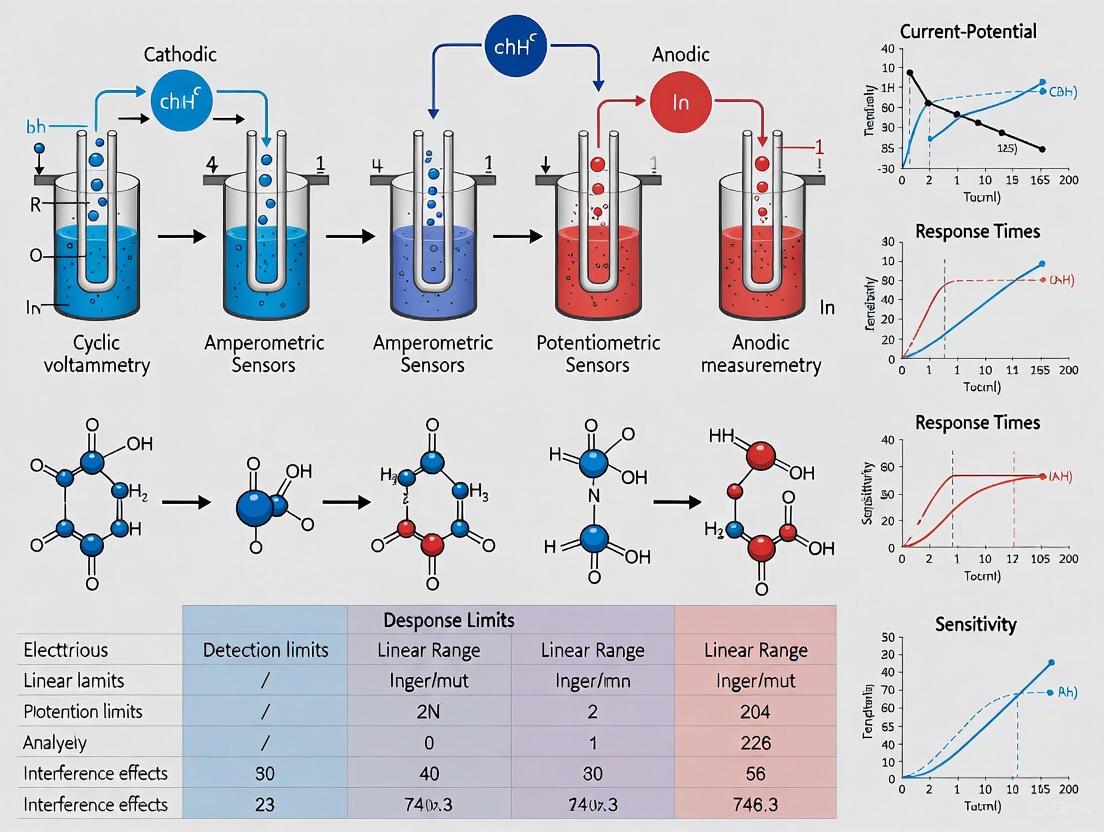
This article provides a comprehensive comparison of modern electrochemical detection techniques, tailored for researchers and professionals in drug development and biomedical science.
Electrochemical Detection Techniques: A Comparative Guide for Biomedical Research and Drug Development
Abstract
This article provides a comprehensive comparison of modern electrochemical detection techniques, tailored for researchers and professionals in drug development and biomedical science. It explores the foundational principles of voltammetry, amperometry, potentiometry, and impedance spectroscopy, detailing their specific applications in critical areas such as biomarker detection for cancer, pathogen identification for infectious diseases, and therapeutic drug monitoring. The content further addresses common troubleshooting and optimization strategies to enhance sensor performance and longevity, and concludes with a rigorous validation framework comparing electrochemical methods against traditional analytical techniques, highlighting their advantages in sensitivity, cost, and suitability for point-of-care diagnostics.
Core Principles and Techniques of Electrochemical Sensing
Electrochemical detection techniques are grounded in the core principles of oxidation and reduction reactions, which form the basis for generating quantifiable analytical signals. These processes involve the transfer of electrons between an electrode surface and chemical species in solution, providing the foundation for a wide range of sensing applications across biomedical, pharmaceutical, and environmental fields. The measurable signals derived from these electron transfer events enable researchers to detect and quantify diverse analytes with remarkable sensitivity and specificity.
The growing significance of electrochemical sensors in research and drug development stems from their exceptional performance characteristics, including low detection limits, rapid response times, portability, and cost-effectiveness. As the global biosensors market expands—projected to grow from $33.16 billion in 2025 to $61.29 billion by 2034—understanding these fundamental processes becomes increasingly critical for researchers and drug development professionals seeking to leverage these technologies for advanced analytical applications [1].
This guide provides a comprehensive comparison of electrochemical detection techniques, focusing on their underlying mechanisms, operational parameters, and performance characteristics. By examining the fundamental relationship between oxidation-reduction processes and measurable signals across different sensing platforms, we aim to equip researchers with the knowledge needed to select appropriate methodologies for specific applications.
Core Principles: Electron Transfer and Signal Generation
Oxidation and Reduction Mechanisms
At the heart of all electrochemical detection systems are oxidation and reduction reactions, collectively termed redox reactions. Oxidation involves the loss of electrons from a species, while reduction involves the gain of electrons. These complementary processes occur simultaneously at electrode-solution interfaces when an appropriate potential is applied, establishing a continuous flow of electrons through the external circuit that serves as the primary measurable signal.
The working electrode serves as the platform where these redox reactions occur, with its surface properties fundamentally influencing the electron transfer kinetics. The reference electrode maintains a stable potential reference point, while the counter electrode completes the electrical circuit, allowing current to flow. This three-electrode configuration enables precise control and measurement of the electrochemical processes [2]. The nature of the electron transfer varies significantly between inner-sphere and outer-sphere redox markers, with inner-sphere mechanisms (e.g., with dopamine or ferricyanide) demonstrating high sensitivity to electrode surface chemistry and modification, while outer-sphere mechanisms (e.g., with hexaammineruthenium) are relatively insensitive to surface properties [3].
Signal Transduction Pathways
Electrochemical sensors convert recognition events into measurable electrical signals through various transduction mechanisms. Current-based signals arise directly from the flow of electrons during redox reactions, with the magnitude proportional to analyte concentration. Potential-based measurements reflect the thermodynamic favorability of redox reactions under equilibrium conditions. Impedance-based signals monitor changes in the electrical properties of the electrode-electrolyte interface, often without Faraday processes.
The signaling mechanism in conducting polymer-based sensors exemplifies this transduction principle, where the polymer serves as both sensing element and signal transducer simultaneously. Changes in the polymer's electrical properties (conductivity, redox activity, or capacitance) upon interaction with target analytes provide the detectable signal, simplifying sensor design while maintaining high sensitivity [4]. Nanomaterial-modified electrodes significantly enhance these signal transduction processes by providing increased surface area, improved electron transfer kinetics, and additional catalytic activity [5].
Figure 1: Fundamental electrochemical processes showing the relationship between oxidation-reduction reactions at electrode interfaces and the generation of measurable signals in a three-electrode system.
Comparison of Electrochemical Detection Techniques
Electrochemical detection methodologies vary significantly in their operational principles, sensitivity, and applicability to different analytical challenges. The table below provides a systematic comparison of the primary techniques employed in modern electrochemical sensors.
Table 1: Performance comparison of major electrochemical detection techniques
| Technique | Detection Principle | Measured Signal | Detection Limits | Key Advantages | Common Applications |
|---|---|---|---|---|---|
| Voltammetry (Cyclic, Differential Pulse) | Current measurement during controlled potential variation | Faradaic current | Nanomolar range (e.g., 2.5 nM for dopamine) [3] | High sensitivity, rich chemical information, qualitative & quantitative analysis | Neurotransmitter detection, heavy metal analysis, drug monitoring |
| Amperometry | Current measurement at fixed potential | Faradaic current | Piconanomolar range with nanomaterial enhancement | Continuous monitoring, real-time measurement, excellent temporal resolution | Biosensing, enzyme kinetics, gas detection |
| Impedance Spectroscopy | Response to AC potential perturbation | Impedance (Z) and phase shift | Low concentration detection via interfacial changes | Label-free detection, minimal sample perturbation, surface characterization | Affinity biosensing, corrosion studies, membrane characterization |
| Potentiometry | Potential measurement at zero current | Equilibrium potential | Micromolar to millimolar range | Simple instrumentation, wide concentration range, pH sensitivity | Ion-selective electrodes, pH sensing, clinical analyzers |
The selection of an appropriate detection technique depends on multiple factors, including the target analyte's electrochemical activity, required sensitivity, matrix complexity, and desired measurement speed. Voltammetric techniques, particularly differential pulse voltammetry, offer superior sensitivity for trace analysis, with detection limits reaching nanomolar concentrations for neurotransmitters like dopamine when using nanoparticle-modified electrodes [3]. In contrast, impedance-based methods provide exceptional capability for monitoring binding events and interfacial properties without redox labels, making them ideal for affinity-based biosensors.
The growing trend toward miniaturization and point-of-care testing has driven the development of screen-printed electrodes and portable systems that maintain analytical performance while offering operational convenience. These advancements are particularly valuable for therapeutic drug monitoring, environmental field testing, and rapid diagnostic applications where laboratory-based instrumentation is impractical [3].
Experimental Protocols for Key Methodologies
Voltammetric Detection of Heavy Metals
Principle: This protocol utilizes differential pulse voltammetry (DPV) for the sensitive detection of heavy metal ions (e.g., Pb²⁺, Cd²⁺, Hg²⁺) in environmental samples, leveraging the preconcentration and stripping analysis principle [5].
Materials and Reagents:
- Working Electrode: Glassy carbon electrode modified with bismuth film or mercury film
- Reference Electrode: Ag/AgCl (3M KCl)
- Counter Electrode: Platinum wire
- Supporting Electrolyte: Acetate buffer (0.1 M, pH 4.5)
- Standard Solutions: 1000 ppm stock solutions of target heavy metals
- Deoxygenating Gas: High-purity nitrogen or argon
Procedure:
- Electrode Modification: Polish the glassy carbon electrode with 0.05 μm alumina slurry, rinse with distilled water, and electrodeposit bismuth film at -1.0 V for 120 seconds in a solution containing 400 ppm Bi³⁺.
- Sample Preparation: Mix 10 mL of water sample with 10 mL of acetate buffer (0.1 M, pH 4.5). Add 100 μL of Bi³⁺ stock solution (1000 ppm) if using in-situ bismuth film formation.
- Deoxygenation: Purge the solution with nitrogen for 300 seconds to remove dissolved oxygen.
- Preconcentration Step: Apply a deposition potential of -1.2 V while stirring for 120 seconds to reduce and accumulate metal ions on the electrode surface.
- Equilibration: Stop stirring and allow the solution to become quiescent for 15 seconds.
- Stripping Scan: Record the DP voltammogram from -1.2 V to 0 V using a pulse amplitude of 50 mV, pulse width of 50 ms, and scan rate of 20 mV/s.
- Cleaning Step: Apply a cleaning potential of +0.3 V for 30 seconds to remove residual metals from the electrode.
- Calibration: Perform standard addition with known concentrations of target metals for quantification.
Data Analysis: Identify heavy metals based on their characteristic peak potentials (Pb²⁺: ~ -0.5 V, Cd²⁺: ~ -0.7 V, Hg²⁺: ~ +0.2 V). Quantify concentrations using peak current versus concentration calibration curves.
Enzyme-Free Organophosphorus Pesticide Detection
Principle: This protocol describes the voltammetric detection of organophosphorus (OP) compounds using molecularly imprinted polymers or metal oxide nanomaterials, eliminating enzyme stability issues associated with conventional biosensors [6].
Materials and Reagents:
- Working Electrode: Screen-printed carbon electrode modified with ZrO₂ nanoparticles or molecularly imprinted polymer
- Reference Electrode: Ag/AgCl (screen-printed)
- Counter Electrode: Carbon (screen-printed)
- Supporting Electrolyte: Phosphate buffer (0.1 M, pH 7.0)
- Standard Solutions: Chlorpyrifos, malathion, or other OP compounds in acetonitrile
- Modification Materials: ZrO₂ nanoparticles, graphene oxide, conductive polymers
Procedure:
- Electrode Modification: Drop-cast 5 μL of ZrO₂ nanoparticle dispersion (2 mg/mL in DMF) onto the working electrode surface and dry at 60°C for 30 minutes.
- Sample Preparation: Extract OP compounds from environmental samples using solid-phase extraction. Reconstitute in acetonitrile and dilute with phosphate buffer.
- Incubation: Immerse the modified electrode in the sample solution for 300 seconds to allow OP compound adsorption.
- Electrochemical Measurement: Transfer the electrode to a clean electrochemical cell containing phosphate buffer (0.1 M, pH 7.0).
- Voltammetric Scan: Record square wave voltammograms from +0.8 V to -0.5 V using a frequency of 25 Hz, amplitude of 25 mV, and step potential of 5 mV.
- Control Measurement: Perform identical measurements in blank solution to establish baseline.
Data Analysis: Monitor the decrease in oxidation current of specific redox probes (e.g., ferricyanide) or appearance of new peaks corresponding to OP compound oxidation. Quantify concentration using standard addition methods.
Nanoparticle-Enhanced Dopamine Sensing
Principle: This protocol demonstrates the enhanced detection of dopamine using gold nanoparticle-modified boron-doped diamond electrodes, leveraging the catalytic properties of nanomaterials for improved sensitivity and selectivity [3].
Materials and Reagents:
- Working Electrode: Boron-doped diamond electrode (BDDE) modified with gold nanoparticles
- Reference Electrode: Ag/AgCl (3M KCl)
- Counter Electrode: Platinum wire
- Supporting Electrolyte: Phosphate buffer (0.1 M, pH 7.4)
- Standard Solutions: Dopamine hydrochloride (10 mM stock in 0.1 M HClO₄)
- Modification Solutions: HAuCl₄ (1 mM in 0.1 M KCl)
Procedure:
- Electrode Modification: Electrochemically deposit gold nanoparticles on BDDE by cycling potential from -0.2 V to +1.0 V (5 cycles) at 50 mV/s in HAuCl₄ solution.
- Electrode Characterization: Characterize modified electrode in 1 mM K₃[Fe(CN)₆] using cyclic voltammetry (0.1 V to 0.5 V, 50 mV/s).
- Sample Preparation: Dilute dopamine stock solution in phosphate buffer (0.1 M, pH 7.4) to desired concentrations.
- Standard Addition: Transfer 10 mL of sample to electrochemical cell, deoxygenate with nitrogen for 180 seconds.
- Differential Pulse Voltammetry: Record DP voltammograms from 0 V to +0.5 V using pulse amplitude of 50 mV, pulse width of 50 ms, scan rate of 20 mV/s.
- Selectivity Testing: Perform control experiments with potential interferents (ascorbic acid, uric acid) at physiological concentrations.
Data Analysis: Measure dopamine oxidation peak at approximately +0.25 V. Construct calibration curve of peak current versus dopamine concentration. Calculate detection limit using 3σ/slope method.
Figure 2: Generalized experimental workflow for electrochemical detection methodologies, showing the sequential steps from sample collection to result interpretation, with decision points for method selection based on target analyte characteristics.
Advanced Materials and Electrode Modifications
The performance of electrochemical sensors is profoundly influenced by electrode surface modifications, which enhance sensitivity, selectivity, and stability. Nanomaterials and conducting polymers have emerged as particularly effective modification agents due to their unique electrical and structural properties.
Table 2: Key research reagents and materials for electrochemical sensor development
| Material Category | Specific Examples | Key Functions | Performance Enhancements |
|---|---|---|---|
| Carbon Nanomaterials | SWCNTs, MWCNTs, Graphene, Boron-doped diamond | High surface area, excellent conductivity, wide potential window | Enhanced electron transfer, antifouling properties, catalytic activity [5] [3] |
| Metal Nanoparticles | Gold nanoparticles (AuNPs), Silver nanoparticles, Bismuth nanoparticles | Electrocatalysis, signal amplification, large surface-to-volume ratio | Decreased detection limits, improved reversibility, higher sensitivity [3] |
| Conducting Polymers | Polypyrrole (PPy), Polyaniline (PANI), PEDOT | Intrinsic conductivity, redox activity, biocompatibility, 3D structure | Increased active sites, rapid ion transmission, efficient electron transfer [7] [2] |
| Metal-Organic Frameworks | ZIF-8, UiO-66, MIL-101 | Ultrahigh porosity, tunable functionality, molecular sieving | Selective preconcentration, size exclusion, enhanced stability [5] |
| Molecularly Imprinted Polymers | Polymer matrices with template-shaped cavities | Synthetic recognition elements, biomimetic specificity | Enzyme-free operation, high stability, selective binding sites [6] |
The strategic selection and combination of these advanced materials enable researchers to tailor electrode properties for specific analytical challenges. Gold nanoparticles, for instance, have demonstrated remarkable catalytic effects when modifying boron-doped diamond electrodes, achieving dopamine detection limits of 2.5 nM compared to unmodified electrodes [3]. Similarly, conducting polymers like polypyrrole and polyaniline provide not only excellent conductivity but also unique three-dimensional structures that increase active sites and facilitate rapid ion transmission during electrochemical reactions [2].
The integration of multiple nanomaterials in composite structures often yields synergistic effects that surpass the performance of individual components. For example, combining carbon nanotubes with metal nanoparticles or conducting polymers creates hierarchical structures that leverage the advantages of each material class, resulting in sensors with exceptional sensitivity, stability, and selectivity [5].
Electrochemical detection techniques continue to evolve, driven by advances in fundamental understanding of electron transfer processes and the development of novel sensing materials. The core principles of oxidation and reduction provide a robust foundation for generating measurable signals across diverse applications, from environmental monitoring to clinical diagnostics and pharmaceutical analysis.
Future developments in electrochemical sensing are likely to focus on several key areas. The integration of artificial intelligence and machine learning for data analysis will enhance pattern recognition capabilities and improve the accuracy of multi-analyte detection systems [1]. The growing emphasis on point-of-care testing and wearable sensors will drive innovations in miniaturization, flexibility, and wireless connectivity, enabling real-time health monitoring and environmental surveillance [8]. Additionally, the development of increasingly sophisticated nanomaterials and biomimetic recognition elements will address current challenges in selectivity, stability, and multiplexing capability.
As these technologies advance, the fundamental electrochemical processes of oxidation, reduction, and signal generation will remain central to sensor operation, providing the critical link between molecular recognition and analytical measurement. Researchers and drug development professionals who master these fundamental principles will be well-positioned to leverage the full potential of electrochemical detection in their scientific endeavors and product development initiatives.
Voltammetry encompasses a suite of electrochemical techniques widely employed to study electroactive species by measuring current as a function of applied potential. These methods are indispensable in pharmaceutical research, environmental monitoring, and materials science for quantifying analytes, investigating electron transfer kinetics, and understanding redox mechanisms [9] [10]. The selection of a specific voltammetric technique is crucial, as it directly influences the sensitivity, selectivity, and temporal resolution of an analysis, particularly in complex matrices like biological fluids and pharmaceutical formulations [11] [9].
This guide provides a comparative analysis of three foundational voltammetric methods: Cyclic Voltammetry (CV), Differential Pulse Voltammetry (DPV), and Square-Wave Voltammetry (SWV). Each technique possesses unique waveform characteristics, data acquisition protocols, and areas of application. The objective is to equip researchers, scientists, and drug development professionals with the knowledge to select the most appropriate method for their specific analytical challenges, supported by experimental data and detailed protocols.
Principles and Waveform Characteristics
Cyclic Voltammetry (CV)
Principle: CV applies a linear potential sweep between two set limits (initial and final potentials) and reverses the sweep direction upon reaching each limit, creating a cyclic triangular waveform [12]. The resulting current response is plotted against the applied potential to form a cyclic voltammogram, which provides information on the thermodynamics of redox processes, reaction kinetics, and coupled chemical reactions [12].
Waveform: The potential is scanned at a constant rate (scan rate, V/s) from a starting potential to an upper potential, then back to a lower potential, and often finally back to the starting potential [12] [13]. The key parameters are the scan rate and the vertex potentials.
Differential Pulse Voltammetry (DPV)
Principle: DPV is a pulse technique designed to minimize the contribution of non-Faradaic (charging) current, thereby enhancing the signal-to-noise ratio for the Faradaic (redox) current [13] [14]. Small potential pulses are superimposed on a linear baseline potential ramp. The current is sampled twice for each pulse: just before the pulse application and at the end of the pulse. The difference between these two current measurements is plotted against the baseline potential, producing a peak-shaped voltammogram where the peak current is proportional to analyte concentration [13].
Waveform: The waveform consists of a series of pulses of fixed height (typically ~100 mV) and duration. The baseline potential increases linearly with each pulse. Critical parameters include pulse height, pulse width, and the time interval during which current is sampled [13].
Square-Wave Voltammetry (SWV)
Principle: SWV combines the advantages of pulse techniques with speed [15]. A symmetrical square wave is superimposed onto a staircase potential ramp. The current is measured at the end of both the forward (positive-going) and reverse (negative-going) pulses of each square-wave cycle. The difference between the forward and reverse currents is plotted against the applied potential, yielding a peak-shaped output. This differential current measurement effectively suppresses capacitive currents and can provide insights into the reversibility of the electrode reaction [14] [15].
Waveform: The waveform is defined by parameters such as the square-wave amplitude, step potential (of the staircase), and frequency. The high frequency of the square wave allows for very fast scans, making SWV one of the fastest voltammetric techniques [14].
The logical relationship between the core principles of these three techniques is summarized in the following diagram:
Comparative Performance Analysis
The choice between CV, DPV, and SWV involves trade-offs between sensitivity, speed, resolution, and the type of information required. The following table summarizes their key performance characteristics and optimal application ranges based on experimental data.
Table 1: Comparative analysis of cyclic, differential pulse, and square-wave voltammetry.
| Feature | Cyclic Voltammetry (CV) | Differential Pulse Voltammetry (DPV) | Square-Wave Voltammetry (SWV) |
|---|---|---|---|
| Primary Application | Mechanistic studies, reversibility assessment, kinetic analysis [12] | High-sensitivity quantitative analysis, trace-level detection [13] [14] | Fast, high-resolution quantitative analysis, trace-level detection [14] [15] |
| Sensitivity | Moderate (measures total current) [14] | High (minimizes capacitive current) [13] [14] | Very High (effectively rejects background) [14] [15] |
| Scan Speed | Slow to moderate (scan rate dependent) | Moderate | Very Fast (due to high-frequency pulses) [14] |
| Background Suppression | Poor | Excellent [13] [14] | Excellent [14] |
| Resolution | Good for separated reactions | Excellent for closely spaced redox peaks [14] | Superior for closely spaced redox peaks [14] |
| Kinetic Information | Provides rich kinetic and thermodynamic data [11] [12] | Limited | Provides information on reversibility [14] [15] |
| Optimal Electron Transfer Rate (kHET, s⁻¹) | ~0.5 - 70 [11] | Broad range, excellent for slow to moderate rates | ~5 - 120 (broad range, suitable for faster rates) [11] |
| Typical Detection Limit | Micromolar (µM) range | Nanomolar (nM) to picomolar (pM) range [9] [14] | Nanomolar (nM) to picomolar (pM) range [14] |
| Data Output Shape | Sigmoidal (for a surface-confined species) or peak (for diffusion-controlled) | Peak [13] | Peak [14] |
Quantitative data on the optimal working ranges for electron transfer rates further highlights the complementary nature of these techniques. For instance, in a study interrogating electron transfer rates of immobilized cytochrome c, CV was most applicable for rates of approximately 0.5 - 70 s⁻¹, while SWV was suitable for a broader range of 5 – 120 s⁻¹ [11].
Experimental Protocols and Methodologies
Electrode Modification and Setup
A critical step in enhancing sensor performance is electrode modification. The following workflow is a generalized protocol for modifying a Carbon Paste Electrode (CPE) with nanomaterials, adapted from studies on fabricating highly sensitive sensors [16] [17].
Table 2: Key research reagents and materials for electrode modification.
| Reagent/Material | Function | Example from Literature |
|---|---|---|
| Graphite Powder | Conductive base material for the carbon paste electrode [16] [17] | Used in CPE and MoS2-CILPE preparation [16] [17] |
| Paraffin Oil | Binder for graphite powder to form a cohesive paste [16] [17] | Binder in CPE and nRGO-modified electrodes [16] [17] |
| Ionic Liquid (e.g., 1-butyl-3-methylimidazolium hexafluorophosphate) | Enhances conductivity and electron transfer rate [16] | Component in MoS2-CILPE for folic acid sensing [16] |
| Nanomaterial (e.g., MoS2, nRGO) | Increases active surface area, improves electrocatalysis, and enhances sensitivity/selectivity [16] [17] | MoS2 nanosheets for folic acid sensor [16]; nRGO for bumadizone sensor [17] |
| Britton-Robinson (BR) Buffer / Phosphate Buffer Saline (PBS) | Supporting electrolyte; maintains pH and ionic strength [16] [17] [15] | PBS (pH 7.0) for folic acid detection [16]; BR buffer for bumadizone [17] |
Representative Experimental Procedures
A. Protocol for Drug Detection using DPV (e.g., Folic Acid) [16]
- Sensor Fabrication: Prepare a MoS₂-modified carbon ionic liquid paste electrode (MoS₂-CILPE) by thoroughly mixing 0.04 g of MoS₂ nanosheets, 0.96 g graphite powder, and an appropriate amount of ionic liquid (1-butyl-3-methylimidazolium hexafluorophosphate) and paraffin oil (30/70 w/w) in a mortar and pestle. Pack the resulting paste into a glass tube and insert a copper wire for electrical contact.
- Measurement: Place the MoS₂-CILPE (working electrode), a Pt wire (auxiliary electrode), and an Ag/AgCl reference electrode into a cell containing 0.1 M PBS (pH 7.0) as the supporting electrolyte.
- DPV Parameters: Use typical DPV parameters such as a pulse height of 100 mV, pulse width of 50 ms, and a step potential of 10 mV.
- Analysis: Record DPV curves after standard additions of the folic acid solution. Plot the peak current (typically around +0.7 V vs. Ag/AgCl) against concentration to build a calibration curve for quantifying unknown samples.
B. Protocol for Analysis in Complex Media using SWV (e.g., Blood Serum) [15]
- Electrode Selection: Use an edge-plane pyrolytic graphite electrode (EPGE) for its superior electrocatalytic properties.
- Sample Preparation: Dilute human blood serum in a phosphate buffer solution (pH 7.34, 0.1 mol/L). No further chemical treatment is required.
- SWV Parameters: Optimize SWV conditions (frequency, amplitude, step potential) to resolve the signals of uric acid, bilirubin, and albumin.
- Measurement: Immerse the EPGE in the diluted serum. After a brief equilibration, run the SWV scan. The voltammogram will show well-defined, separated peaks for each analyte, allowing for their characterization in a single experiment.
Applications in Pharmaceutical and Biological Analysis
The comparative advantages of CV, DPV, and SWV make them suited for different applications within drug development and bioanalysis.
Cyclic Voltammetry for Mechanistic Studies: CV is extensively used to understand the redox behavior and stability of drug molecules. For example, it can be employed to study the irreversible oxidation of serotonin, which helps explain its fouling propensity on electrodes [18]. It is also ideal for initial characterization to determine the formal reduction potential and reversibility of a new electroactive compound [12] [10].
Differential Pulse Voltammetry for Sensitive Quantification: DPV's low detection limits make it ideal for drug monitoring. It has been successfully used to determine folic acid in tablets and urine samples [16] and to detect anti-inflammatory drugs like bumadizone in pharmaceutical forms and biological fluids at nano-concentrations without preliminary separation [17]. Its ability to minimize background current is crucial for analyzing complex matrices.
Square-Wave Voltammetry for High-Throughput and Multi-Analyte Detection: The speed and sensitivity of SWV are advantageous for direct analysis in highly complex media. A key application is the simultaneous detection of uric acid, bilirubin, and albumin in human blood serum without electrode modification or sample pre-treatment [15]. SWV is also pivotal in advanced research, such as the development of rapid-pulse voltammetry (RPV) waveforms for simultaneous monitoring of neurotransmitters like serotonin and dopamine [18].
Cyclic, Differential Pulse, and Square-Wave Voltammetry are complementary techniques that form a powerful analytical toolkit. CV remains the primary method for exploratory mechanistic and kinetic studies. In contrast, DPV and SWV are the techniques of choice for high-sensitivity quantitative analysis, with SWV offering additional speed and resolution benefits.
The ongoing development of novel electrode materials, such as 2D transition metal dichalcogenides (e.g., MoS₂) and nano-reduced graphene oxide (nRGO), continues to push the detection limits and selectivity of all these methods [16] [17]. Furthermore, the emergence of machine-learning-guided optimization of voltammetric waveforms promises to unlock new levels of performance and selectivity, particularly for challenging analytes in complex biological environments [18]. This evolution ensures that voltammetry will maintain its critical role in advancing pharmaceutical research and bioanalytical science.
Amperometry is an electrochemical technique characterized by applying a constant potential to an electrochemical cell and measuring the resulting current as a function of time. This method is fundamental in analytical chemistry for detecting and quantifying various analytes, offering significant advantages for continuous monitoring applications in fields ranging from drug development to environmental analysis [19] [20].
Core Principle and Comparative Advantage
Amperometry falls under the broader category of electroanalytical methods, specifically distinguished by its operation at a fixed potential. This sets it apart from related techniques like voltammetry, where the potential is systematically varied, and potentiometry, where the potential is measured under conditions of zero current [19]. The core principle involves measuring the faradaic current generated by the oxidation or reduction of an electroactive species at the working electrode surface. This current is directly proportional to the concentration of the analyte in the bulk solution [21].
The technique's simplicity, high sensitivity, and fast response time make it particularly suitable for continuous, real-time monitoring [20]. Unlike batch methods that provide a single data point, amperometry can track concentration changes dynamically, offering a window into evolving chemical processes. This is invaluable for applications such as tracking drug pharmacokinetics, monitoring metabolic biomarkers, or detecting environmental pollutants [20] [22]. Furthermore, the method's compatibility with miniaturization and portable instrumentation underpins its use in point-of-care diagnostic devices, such as glucose biosensors for diabetes management [23].
Performance Comparison of Electrochemical Techniques
To objectively evaluate amperometry's performance, it is essential to compare it with other standard electrochemical and analytical methods. The following table summarizes key performance metrics based on experimental data from recent research for the detection of various analytes.
Table 1: Quantitative Performance Comparison of Detection Techniques
| Detection Method | Target Analyte | Linear Range | Detection Limit | Sensitivity | Key Application Context |
|---|---|---|---|---|---|
| Amperometry | Hydroxylamine [24] | 10–4000 µM | 0.47 µM | 408 μA mM⁻¹ cm⁻² | Environmental/Industrial Safety |
| Amperometry | Glucose [23] | 0.04–2.18 mM | 0.021 mM | 19.38 μA mM⁻¹ cm⁻² | Clinical Diagnostics (Biosensor) |
| Amperometry | Quercetin [25] | N/R | 1.22 × 10⁻⁷ mol L⁻¹ | N/R | Cosmetic/Pharmaceutical Analysis |
| Voltammetry (DPV) | Quercetin [25] | N/R | 5.64 × 10⁻⁸ mol L⁻¹ | N/R | Cosmetic/Pharmaceutical Analysis |
| Colorimetry | Hydrogen Sulfide (H₂S) [26] | Millimolar (mM) range | Micromolar (µM) range | N/R | Research - Physiological Solutions |
| Chromatography (HPLC) | Hydrogen Sulfide (H₂S) [26] | Micromolar (µM) range | Nanomolar (nM) range | N/R | Research - Physiological Solutions |
N/R: Not Reported in the cited source.
A direct comparison of techniques for quantifying hydrogen sulfide (H₂S) in simulated physiological solutions further highlights the relative performance of amperometry. Researchers found that while colorimetric and chromatographic methods quantified H₂S in the millimolar and micromolar ranges, respectively, electrochemical methods, including amperometry, were capable of quantification in the nanomolar and picomole ranges and were less time-consuming [26].
Experimental Protocols for Amperometric Sensing
The development of a functional amperometric sensor involves a multi-step process, from electrode modification to analytical validation. Below are detailed protocols for two distinct types of amperometric sensors: a material-based sensor for a small molecule and an immunosensor for a protein.
Protocol: Hydroxylamine Sensor using NiCo₂O₄ Nanoparticles
This protocol outlines the creation of a high-performance, enzyme-free sensor for toxic hydroxylamine (HYA) [24].
- 1. Synthesis of NiCo₂O₄ (NCO) Nanoparticles: Use a hydrothermal method. Dissolve 10 mmol of nickel(II) nitrate hexahydrate and 20 mmol of cobalt(II) nitrate hexahydrate in 60 mL of distilled water. Slowly add 0.25 g of urea to the solution with stirring. Transfer the mixture to a Teflon-lined autoclave and heat at 120°C for 6 hours. After cooling, collect the precipitate by centrifugation, wash with water and ethanol, and dry. Finally, calcine the product at 300°C for 2 hours [24].
- 2. Electrode Modification: Prepare a homogeneous ink by dispersing the synthesized NCO nanoparticles in a solvent (e.g., water or ethanol). Deposit a precise volume (e.g., 5-10 µL) of this ink onto a cleaned Fluorine-doped Tin Oxide (FTO) electrode surface and allow it to dry, resulting in the NCO@FTO working electrode [24].
- 3. Amperometric Measurement (Chronoamperometry): Use a standard three-electrode system with the NCO@FTO as the working electrode, a Ag/AgCl reference electrode, and a platinum wire auxiliary electrode. Apply a constant potential of 0.66 V vs. Ag/AgCl in a stirred solution. Upon successive additions of hydroxylamine standard solution, measure the steady-state current. The increase in current is proportional to the HYA concentration [24].
Protocol: SARS-CoV-2 S1 Protein Immunosensor
This protocol details a sensitive sandwich-type amperometric immunosensor for detecting a viral protein, demonstrating the technique's applicability in diagnostics [27].
- 1. Electrode Activation: Activate a Screen-Printed Carbon Electrode (SPCE) electrochemically by applying +0.9 V for 60 s in acetate buffer (pH 4.80). Then, chemically activate the surface by depositing a mixture of 50 mM EDC and 50 mM NHS (1:1 ratio) and incubating for 1 hour to activate carboxyl groups for antibody binding [27].
- 2. Antibody Immobilization and Assay Procedure:
- Immobilize the capture antibody by depositing 10 µL of anti-SARS-CoV-2 S1 antibody (6 µg/mL in PBS) onto the activated SPCE and incubate for 1 hour.
- Block non-specific sites by adding 10 µL of 1% Bovine Serum Albumin (BSA) solution and incubate for 30 minutes.
- Incubate the electrode with 10 µL of the sample containing the S1 protein antigen for 1 hour at 37°C.
- Form a sandwich complex by incubating with 10 µL of a secondary antibody solution for 1 hour, followed by incubation with 10 µL of Horseradish Peroxidase-labeled IgG (HRP-IgG) for 30 minutes.
- Wash the electrode thoroughly with PBS after each incubation step [27].
- 3. Amperometric Detection: Deposit 40 µL of 3,3',5,5'-Tetramethylbenzidine (TMB) substrate onto the electrode and incubate for 3 minutes to allow the enzymatic reaction. Apply a constant potential of -0.1 V vs. the onboard Ag reference and record the current for 150 seconds. The reduction current of the oxidized TMB product is measured and is proportional to the S1 protein concentration [27].
Amperometric Measurement Workflow
The Scientist's Toolkit: Essential Research Reagents and Materials
The performance of an amperometric sensor is highly dependent on the materials used in its construction. The following table catalogs key components and their functions in typical sensor development.
Table 2: Essential Materials for Amperometric Sensor Development
| Material/Reagent | Function in Experiment | Example from Literature |
|---|---|---|
| Screen-Printed Carbon Electrode (SPCE) | Disposable, miniaturized platform serving as the working electrode; provides a conductive carbon surface for immobilization. | Used as the base transducer for the SARS-CoV-2 S1 protein immunosensor [27]. |
| Fluorine-doped Tin Oxide (FTO) Electrode | A transparent, conductive substrate used as a base electrode, particularly useful when optical monitoring is also required. | Served as the substrate for NiCo₂O₄ nanoparticles in the hydroxylamine sensor [24]. |
| NiCo₂O₄ (NCO) Nanoparticles | Binary metal oxide nanozyme; acts as an electrocatalyst to lower the oxidation overpotential for the target analyte, enhancing sensitivity. | The key catalytic material for hydroxylamine oxidation [24]. |
| Glucose Oxidase (GOx) | Biological recognition element; an enzyme that specifically catalyzes the oxidation of glucose, providing high selectivity. | The biorecognition element in the amperometric glucose biosensor [23]. |
| Nafion Perfluorinated Resin | A cation-exchange polymer membrane; used to coat the electrode surface to prevent fouling and reject interfering anionic species. | Employed as a protective outer membrane in the glucose biosensor to enhance selectivity [23]. |
| EDC/NHS Crosslinkers | A carbodiimide-based coupling system; activates carboxyl groups on the electrode surface to facilitate covalent immobilization of biomolecules like antibodies. | Used to chemically activate the SPCE surface for antibody binding in the immunosensor [27]. |
| 3,3',5,5'-Tetramethylbenzidine (TMB) | An enzymatic substrate; used in conjunction with Horseradish Peroxidase (HRP) label. The oxidized product is electrochemically detected at low potentials. | Served as the mediator for the HRP label in the sandwich immunosensor assay [27]. |
Amperometry stands as a powerful and versatile technique within the electrochemical toolkit. Its capacity for continuous, real-time monitoring at a constant potential, combined with high sensitivity and compatibility with miniaturized systems, makes it indispensable for modern analytical challenges. As demonstrated by its successful application in detecting diverse targets—from small molecules like hydroxylamine and glucose to complex proteins like SARS-CoV-2 S1—amperometry offers a reliable pathway for researchers and drug development professionals to obtain dynamic quantitative data. The ongoing development of novel materials, such as nanozymes and advanced electrode modifications, continues to push the boundaries of its sensitivity, selectivity, and application scope, ensuring its continued relevance in scientific research and industrial analysis.
Voltage Measurement and Ion-Selective Electrodes
Potentiometry is an electroanalytical technique that measures the electrical potential (voltage) between two electrodes under conditions of zero or negligible current flow. This method is fundamentally based on the Nernst equation, which describes the relationship between the measured potential and the activity (or concentration) of a specific ion in solution [28] [29]. The core principle involves using a potentiometer or high-impedance voltmeter to measure the potential difference between a reference electrode (which maintains a stable, known potential) and an indicator electrode (which responds to the activity of the target analyte) [28] [30].
Ion-selective electrodes (ISEs) represent the most significant application of potentiometry, serving as the indicator electrode that selectively responds to a particular ion species. These membrane-based devices convert the chemical activity of a specific ion dissolved in a solution into an electrical potential [28] [31]. The voltage produced is theoretically dependent on the logarithm of the ionic activity, as predicted by the Nernst equation [32] [31]. ISEs have revolutionized analytical chemistry by enabling rapid, selective measurements of ionic concentrations across diverse fields including clinical diagnostics, environmental monitoring, pharmaceutical analysis, and food safety [33] [34].
The development of ISEs has expanded the scope of potentiometric analysis beyond simple redox reactions. Since the discovery of the glass pH electrode in 1909 and subsequent development of membranes selective to other ions, potentiometry has evolved into a versatile technique capable of detecting numerous cations and anions with remarkable selectivity and sensitivity [29] [33]. Modern research continues to advance ISE technology through improved membrane materials, miniaturization, and integration with portable and wearable sensing platforms [33] [35].
Principles of Potentiometric Measurement
Fundamental Theory and the Nernst Equation
The theoretical foundation of potentiometry rests on the Nernst equation, which quantitatively relates the measured electrode potential to the activity of ions in solution. For a general redox reaction: ( aA + bB \rightleftharpoons cC + dD + ne^- ), the Nernst equation is expressed as:
[ E = E^0 - \frac{RT}{nF} \ln \frac{aC^c aD^d}{aA^a aB^b} ]
where:
- ( E ) is the measured electrode potential
- ( E^0 ) is the standard electrode potential
- ( R ) is the universal gas constant (8.314 J/mol·K)
- ( T ) is the temperature in Kelvin
- ( n ) is the number of electrons transferred in the redox reaction
- ( F ) is Faraday's constant (96,485 C/mol)
- ( a ) represents the activities of the species involved [28] [29]
For ion-selective electrodes, the simplified form of the Nernst equation for an ion ( I^{z+} ) with charge ( z ) is:
[ E = E^0 + \frac{2.303RT}{zF} \log a_I ]
At 25°C, this simplifies to ( E = E^0 + \frac{0.05916}{z} \log a_I ) volts, where the term ( \frac{0.05916}{z} ) represents the theoretical Nernstian slope per tenfold change in ion activity [28]. This logarithmic relationship means that ISEs can measure ion concentrations across several orders of magnitude with consistent relative precision.
Electrochemical Cell Configuration
A complete potentiometric measurement requires an electrochemical cell consisting of two half-cells:
- Indicator/Working Electrode: The ion-selective electrode whose potential varies with the activity of the target ion
- Reference Electrode: Maintains a stable, fixed potential independent of the solution composition [29]
The overall cell potential is measured as ( E{cell} = E{ise} - E{ref} ), where ( E{ise} ) includes the potential of the internal reference electrode and the boundary potential across the ion-selective membrane [31]. The reference electrode is typically a standard system such as silver/silver chloride (Ag/AgCl) or saturated calomel electrode (SCE), immersed in the same sample solution as the ISE [29] [31].
A critical requirement for accurate potentiometric measurements is the use of a high-impedance voltmeter that draws negligible current (typically < 1 pA) from the electrochemical cell. This prevents significant electrochemical reactions from occurring at the electrode surfaces and maintains the system at or near equilibrium conditions, ensuring that the measured potential relates directly to ion activities according to the Nernst equation [28] [29].
Ion-Selective Electrode Technology
ISE Components and Construction
Ion-selective electrodes share a common fundamental architecture regardless of the specific ion they detect. The key components include:
- Ion-Selective Membrane: The heart of the ISE, this component determines the electrode's selectivity and response characteristics. The membrane contains active sites that selectively interact with the target ion [28] [31].
- Internal Reference Electrode: Typically a Ag/AgCl wire immersed in a solution containing a fixed concentration of the target ion, providing a stable reference potential inside the electrode body [28] [32].
- Internal Filling Solution: Contains a known, constant concentration of the ion being measured, which contacts both the internal reference electrode and the inner surface of the ion-selective membrane [28].
- Electrode Body: Houses the internal components and provides structural integrity, often made of chemically resistant materials like glass or polymers [31].
In traditional ISE designs with liquid membranes, the internal solution serves as a bridge between the internal reference electrode and the ion-selective membrane. However, all-solid-state ISEs have gained prominence recently, where the internal solution is replaced by a solid contact material that acts as an ion-to-electron transducer [33] [34]. This design offers advantages including simplified construction, miniaturization potential, and resistance to pressure changes.
Types of Ion-Selective Membranes
The selectivity and performance of ISEs are primarily determined by the composition of the ion-selective membrane. Four main membrane types have been developed, each with distinct characteristics and applications:
Glass Membranes
- Composition: Silicate or chalcogenide glass with ion-exchange properties
- Selectivity: Primarily for single-charged cations (H+, Na+, Ag+)
- Applications: pH electrodes are the most common example
- Advantages: Excellent chemical durability, works in aggressive media
- Limitations: Limited to certain cations, exhibits alkaline and acid errors in extreme pH conditions [32] [31]
Crystalline Membranes
- Composition: Mono- or polycrystalline materials (e.g., LaF3 for fluoride ISE)
- Selectivity: For ions that can incorporate into the crystal lattice
- Applications: Fluoride detection, heavy metal monitoring
- Advantages: Excellent selectivity, no internal solution required
- Limitations: Limited to specific crystal-compatible ions [32] [31]
Liquid/Polymer Membranes
- Composition: Organic polymer matrix (typically PVC) plasticized with specific ionophores
- Selectivity: Determined by the incorporated ionophore; can be designed for numerous ions
- Applications: Most widespread ISE type, used for K+, Ca2+, NO3-, and many other ions
- Advantages: Versatile, can be tailored for many ions, well-characterized
- Limitations: Limited physical and chemical durability, potential for leaching [32] [31] [34]
Enzyme Electrodes
- Composition: Enzyme layer immobilized over a conventional ISE (often pH electrode)
- Mechanism: Enzyme reacts with specific substrate, producing a detectable product
- Applications: Glucose detection, biochemical sensing
- Advantages: Extends ISE capability to non-ionic analytes
- Limitations: Complex construction, limited enzyme stability [32] [31]
Table 1: Comparison of Ion-Selective Membrane Types
| Membrane Type | Selectivity | Key Applications | Advantages | Limitations |
|---|---|---|---|---|
| Glass | H+, Na+, Ag+ | pH measurement, sodium detection | High chemical durability, long lifetime | Limited to few cations, pH errors |
| Crystalline | F-, Cu2+, Cd2+, Pb2+ | Fluoride monitoring, heavy metals | Excellent selectivity, no internal solution | Limited to compatible crystal structures |
| Liquid/Polymer | K+, Ca2+, NO3-, Cl- | Clinical analysis, environmental monitoring | Highly versatile, tunable selectivity | Shorter lifespan, leaching potential |
| Enzyme-Based | Glucose, urea, neurotransmitters | Biomedical sensing, biochemical analysis | Extends to non-ionic analytes | Complex fabrication, enzyme stability |
Comparison with Other Electrochemical Techniques
Electrochemical analysis encompasses multiple techniques, each with distinct operating principles, capabilities, and limitations. Understanding how potentiometry compares with other major electrochemical methods is essential for selecting the appropriate analytical approach for specific applications.
Table 2: Comparison of Major Electrochemical Analysis Techniques
| Technique | Measured Quantity | Control Parameter | Key Applications | Advantages | Limitations |
|---|---|---|---|---|---|
| Potentiometry | Potential (voltage) | Zero current | pH, ion concentration (Na+, K+, Ca2+, F-, Cl-) | Simple, portable, wide concentration range | Moderate sensitivity, ionic interference |
| Voltammetry | Current | Applied potential | Trace metal analysis, organic compounds, reaction mechanisms | High sensitivity, qualitative & quantitative data | Requires supporting electrolyte, more complex |
| Amperometry | Current | Constant potential | Glucose biosensors, gas detection | High sensitivity, rapid response | Requires electroactive species, fouling issues |
| Coulometry | Total charge | Current or potential | Karl Fischer titration, quantitative analysis | Absolute method (no calibration), high accuracy | Long analysis times, requires complete reaction |
Potentiometry vs. Voltammetry The fundamental distinction lies in what is measured and under what conditions. Potentiometry measures potential at zero current, providing direct information about ion activities via the Nernst equation. In contrast, voltammetry applies a controlled potential and measures the resulting current, which provides information about redox properties and concentrations of electroactive species [30]. Potentiometry excels at direct ion activity measurements with simple instrumentation, while voltammetry offers higher sensitivity for trace analysis and capability for multi-analyte detection.
Potentiometry vs. Amperometry Amperometry measures current at a fixed applied potential, typically used for continuous monitoring of electroactive species. While amperometry provides superior sensitivity for certain applications (e.g., glucose monitoring), it requires the analyte to be electroactive at the applied potential. Potentiometry has wider applicability to non-electroactive ions and generally offers better selectivity through the ion-selective membrane [30].
Key Advantages of Potentiometry
- Simplicity: Instrumentation is straightforward and portable
- Wide concentration range: Typically 4-6 orders of magnitude
- Selectivity: Ion-selective membranes provide excellent discrimination
- Non-destructive: Minimal current flow preserves sample integrity
- Cost-effective: Inexpensive instrumentation and operation [32] [30] [34]
Limitations of Potentiometry
- Moderate sensitivity: Detection limits typically in micromolar range for conventional ISEs
- Ionic interference: Selectivity is not absolute, interfering ions can affect measurements
- Activity vs. concentration: Measures ion activity rather than direct concentration
- Drift and calibration: Requires frequent calibration for precise measurements [28] [31]
Recent advancements have addressed many limitations, with modern ISEs achieving nanomolar detection limits and improved selectivity through novel membrane materials and engineered ionophores [36] [33] [35].
Experimental Protocols and Methodologies
Standard Potentiometric Measurement Procedure
The following protocol outlines the general procedure for conducting potentiometric measurements with ion-selective electrodes, based on established methodologies from analytical chemistry literature [28] [29] [32]:
Equipment and Reagents
- Ion-selective electrode for target ion
- Appropriate reference electrode (e.g., Ag/AgCl double junction)
- High-impedance pH/mV meter or potentiometer
- Magnetic stirrer and stir bars
- Standard solutions for calibration (minimum of 3 concentrations spanning expected range)
- Ionic strength adjustment buffer (if required)
- Deionized water for rinsing
Calibration Procedure
- Prepare standard solutions covering the concentration range of interest (typically 10-6 to 10-1 M or according to manufacturer's specifications).
- Immerse the ISE and reference electrode in the lowest concentration standard.
- Stir solutions gently and consistently throughout measurements.
- Record the potential (mV reading) once stable (typically 1-3 minutes, depending on electrode response time).
- Rinse electrodes with deionized water between measurements, blotting gently with laboratory tissue.
- Repeat steps 2-5 for all standard solutions in increasing concentration order.
- Plot potential (mV) versus logarithm of ion activity (or concentration) to obtain the calibration curve.
- Verify the slope is close to Nernstian (approximately 59/z mV per decade at 25°C).
Sample Measurement
- Calibrate the ISE as described above.
- Immerse electrodes in the sample solution (with ionic strength adjustment if necessary).
- Record the stable potential reading.
- Determine sample concentration from the calibration curve.
- For precise work, use the method of standard additions to account for matrix effects.
Quality Control
- Check electrode slope regularly (should be 95-102% of Nernstian)
- Perform duplicate measurements
- Monitor temperature and maintain consistency (±1°C for precise work)
- Store electrodes according to manufacturer recommendations
Advanced Experimental Approach: Temperature Pulse Potentiometry
Recent research has demonstrated innovative approaches to enhance ISE performance. The following protocol for Temperature Pulse Potentiometry (TPP) illustrates how thermal modulation can improve detection limits and measurement precision [35]:
Specialized Equipment
- All-solid-state ISE with integrated heating element
- Temperature controller capable of precise pulse generation
- Data acquisition system with high temporal resolution
- Custom electrode design with poly(3-octylthiophene) as intermediate layer
Experimental Workflow
- Fabricate solid-contact ISE with conducting polymer (POT) as ion-to-electron transducer.
- Deposit ion-selective membrane (e.g., copper-selective membrane with ionophore) over POT layer.
- Condition electrode in primary ion solution (e.g., 10-3 M Cu(NO3)2 for 24 hours).
- Implement temperature pulse protocol:
- Apply heating pulses (20-second duration) at specific intervals
- Follow with 50-second cooling periods
- Allow 2 minutes for potential stabilization between pulses
- Measure potential during heating and cooling cycles.
- Correlate potential changes with analyte concentration.
Key Findings and Advantages
- Heating pulses increase electrode slope (e.g., from 31 mV to 43 mV per decade for copper)
- Improved reproducibility (1% at 10 µM copper levels)
- Reduced detection limit by half an order of magnitude
- Lower potential drift (0.2 mV/h)
- Additional dimension for differential measurements [35]
This advanced methodology demonstrates how modified operation protocols can enhance conventional ISE performance, particularly for trace analysis applications.
Research Reagent Solutions and Materials
Successful potentiometric analysis requires specific materials and reagents optimized for each application. The following table outlines essential research reagents and their functions in ISE development and application.
Table 3: Essential Research Reagents for Potentiometric Analysis with ISEs
| Reagent/Material | Function | Examples/Specific Types | Application Notes |
|---|---|---|---|
| Ionophores | Selective ion recognition | Valinomycin (K+), BME-44 (Ca2+), tetracyclines (Cd2+) | Determine selectivity; often require co-immobilization with additives |
| Polymer Matrices | Membrane support matrix | PVC, polyurethanes, silicone rubbers | Affect diffusion coefficients and membrane stability |
| Plasticizers | Provide membrane mobility | o-NPOE, DOS, DBP | Influence dielectric constant and ionophore mobility |
| Lipophilic Additives | Counterion immobilization | NaTFPB, KTpClPB | Minimize anion interference in cation-selective electrodes |
| Ionic Strength Adjusters | Fix ionic background | NH4NO3, KNO3, NaCl | Eliminate variation in activity coefficients |
| Reference Electrode Fillers | Stable reference potential | 3M KCl, 1M LiOAc | Match sample ion mobility to minimize junction potentials |
Membrane Composition Guidelines Typical ion-selective membrane formulations include:
Recent Material Advances
- Conducting Polymers: Poly(3-octylthiophene), polyaniline as solid contacts [36] [33]
- Nanocomposites: Graphene, carbon nanotubes for enhanced conductivity [33]
- Novel Ionophores: Molecularly engineered carriers for specific ions [33] [34]
- Non-biofouling Materials: Poly(2-methyl-2-oxazoline)s for biological samples [36]
Signaling Pathways and Experimental Workflows
The operational principle of ion-selective electrodes can be visualized as a sequential process involving several key stages from sample introduction to signal generation. The following diagram illustrates the signaling pathway and measurement workflow:
The experimental workflow for a complete potentiometric analysis involves multiple systematic stages, as illustrated in the following methodology flowchart:
Potentiometry with ion-selective electrodes represents a powerful analytical technique that combines theoretical elegance with practical utility. The method's foundation in the Nernst equation provides a robust theoretical framework, while ongoing advancements in membrane technology, electrode design, and measurement protocols continue to expand its capabilities.
When compared to other electrochemical techniques, potentiometry offers distinct advantages in simplicity, cost-effectiveness, and direct measurement of ionic activities. While methods like voltammetry may provide superior sensitivity for trace analysis of electroactive species, ISEs excel in selective determination of specific ions across wide concentration ranges with minimal sample preparation.
The development of all-solid-state ISEs, novel membrane materials, and advanced operation protocols like temperature pulse potentiometry are addressing traditional limitations and opening new application areas. These innovations, coupled with the inherent advantages of potentiometry, ensure that ISEs will remain indispensable tools in analytical chemistry, clinical diagnostics, environmental monitoring, and pharmaceutical analysis.
As research continues to push the boundaries of detection limits, selectivity, and miniaturization, potentiometric methods are poised to play an increasingly important role in addressing analytical challenges across diverse scientific and industrial domains.
Electrochemical Impedance Spectroscopy (EIS) is a powerful, non-destructive diagnostic technique that resolves the kinetic and interfacial processes of electrochemical systems in the frequency domain [37]. Analysis typically relies on fitting data to equivalent circuit models (ECMs), but selecting the correct model is a significant challenge, as different models can yield deceptively similar spectra, complicating accurate representation of the underlying physics [38]. This guide objectively compares EIS against other common electrochemical detection techniques, highlighting its unique role in probing interface properties.
Comparative Analysis of Electrochemical Detection Techniques
The table below summarizes the core characteristics of EIS alongside other prevalent electrochemical methods, based on current research and application trends.
Table 1: Comparison of Key Electrochemical Detection Techniques
| Technique | Core Principle | Key Applications | Advantages | Limitations |
|---|---|---|---|---|
| Electrochemical Impedance Spectroscopy (EIS) | Measures system impedance across a frequency spectrum [37]. | Probing charge transfer, diffusion, and interfacial processes; biosensing; corrosion monitoring; energy storage materials [38] [37] [39]. | Label-free; non-destructive; provides rich information on interfacial properties and kinetics [37]. | Model selection is subjective and prone to error; analysis can be complex [38] [37]. |
| Voltammetry | Measures current as a function of applied potential. | Detection of heavy metal ions [5], cancer biomarkers [40] [41]. | High sensitivity; capable of simultaneous multi-analyte detection [5]. | Can be susceptible to electrode fouling; invasive as it alters the electrode surface. |
| Amperometry | Measures current at a constant potential. | Real-time monitoring; biosensing [40]. | Provides continuous data; high temporal resolution. | Provides less information on interfacial structure than EIS. |
Experimental Protocols: EIS in Practice
Standard EIS Measurement Protocol
A typical EIS experiment involves the following steps, which yield the data necessary for the comparisons in this guide:
- System Setup: A standard three-electrode system (working, reference, and counter electrode) is used. The experiment is conducted at the system's open circuit potential or under an applied DC bias [37] [39].
- Signal Application: A small-amplitude AC sinusoidal potential (typically 1-10 mV) is applied across a wide frequency range (e.g., 0.001 Hz to 105 Hz) [37] [42]. The small signal ensures the system response is pseudo-linear [42].
- Response Measurement: The resulting AC current signal is measured. In a linear system, this will be a sinusoid at the same frequency but shifted in phase [42].
- Impedance Calculation: The impedance, Z(ω), is calculated as the ratio of the voltage to current at each frequency and is expressed as a complex number: Z(ω) = Z' + jZ'', where Z' is the real part and Z'' is the imaginary part [42].
- Data Validation: The system must be at a steady state throughout the measurement to avoid drift. Data consistency can be checked using the Kramers-Kronig transformations [37].
Protocol for Automated ECM Selection
Traditional ECM selection relies on expert experience, making it subjective. The following automated, data-driven protocol addresses this limitation:
- Data Acquisition & Construction: Experimental EIS data is acquired. To ensure robust model training, this dataset is significantly augmented with simulated data designed to mimic electrochemical evolution by systematically varying parameters of relevant equivalent circuits [37].
- Initial Model Screening: A global heuristic search algorithm performs an initial screening of multiple potential ECMs [37].
- Error-Adaptive Optimization: An integrated classifier (e.g., based on XGBoost) uses multiple error metrics to dynamically adjust model weights, guiding an adaptive optimization for circuit classification [37].
- Parameter Estimation: After the optimal circuit is classified, a hybrid Differential Evolution–Levenberg–Marquardt (DE-LM) algorithm is used for precise parameter estimation. This combines a global search with local refinement [37].
- Validation: The fitted model is validated using dual-mode visualization (e.g., Nyquist and Bode plots) and a suite of error metrics (e.g., chi-square test, R²) [37].
This automated framework has demonstrated a model classification accuracy of 96.32% and a 72.3% reduction in parameter estimation error on a diverse dataset of 480,000 spectra [37].
Workflow Visualization
The following diagram illustrates the logical workflow of the automated EIS data interpretation process.
Diagram 1: Automated EIS Interpretation Workflow
The core of EIS analysis is modeling the electrochemical interface with an Equivalent Circuit Model (ECM). The foundational Randles circuit and a common modification are shown below.
Diagram 2: Key Equivalent Circuit Models for EIS
The Scientist's Toolkit
Table 2: Essential Research Reagents and Materials for EIS
| Item | Function in EIS Experiments |
|---|---|
| Electrochemical Cell (3-electrode) | Standard setup consisting of a Working Electrode, Reference Electrode, and Counter Electrode for controlled potential application and current measurement [37]. |
| Redox Probe (e.g., [Fe(CN)₆]³⁻/⁴⁻) | A well-characterized redox couple added to the solution to facilitate the charge transfer process, making it easier to monitor interfacial changes [37]. |
| Phosphate Buffered Saline (PBS) | A common supporting electrolyte that maintains a constant ionic strength and pH, ensuring the electrochemical signal is dominated by the analyte of interest. |
| Nanomaterial-modified Electrodes | Electrodes functionalized with nanomaterials (e.g., CNTs, graphene, nanoparticles) to enhance sensitivity, selectivity, and signal amplification by increasing surface area and improving electron transfer [5] [40]. |
| Constant Phase Element (CPE) | A circuit model component used in place of a pure capacitor to more accurately represent the non-ideal, frequency-dependent capacitive behavior of real-world, heterogeneous electrode surfaces [37]. |
Advanced Applications in Biomarker and Pathogen Detection
The early detection of cancer is a pivotal factor in improving patient survival rates. Statistics indicate that cancers diagnosed at stage I have a five-year survival rate exceeding 90%, which declines sharply in advanced stages [40] [43]. Conventional diagnostic methods, including imaging techniques and tissue biopsies, are often limited by low sensitivity for early-stage tumors, high costs, and limited accessibility [44] [40]. Consequently, there is a pressing clinical need for diagnostic technologies that can detect trace levels of cancer biomarkers with high precision.
Electrochemical biosensors have emerged as powerful tools for this purpose, offering portability, cost-effectiveness, and rapid analysis [45] [46]. Their performance, particularly sensitivity and limit of detection (LOD), is profoundly enhanced by the integration of functional nanomaterials. These materials provide high surface areas, excellent electrical conductivity, and facile functionalization, which are critical for interfacing biological recognition events with efficient signal transduction [47] [46]. This guide objectively compares the performance of various nanomaterial-enhanced electrochemical techniques, providing a detailed analysis for researchers and drug development professionals.
Comparison of Electrochemical Detection Techniques
Electrochemical biosensors transduce biological recognition events into measurable electrical signals. The choice of detection technique significantly influences the sensor's sensitivity, specificity, and applicability. The table below compares the core electrochemical techniques used in conjunction with nanomaterials for cancer biomarker detection.
Table 1: Comparison of Electrochemical Detection Techniques for Cancer Biomarkers
| Technique | Measured Signal | Key Advantages | Reported Limits of Detection (LOD) | Common Biomarkers Detected |
|---|---|---|---|---|
| Differential Pulse Voltammetry (DPV) | Current difference in pulsed potential | High sensitivity, low background current, rejects non-Faradaic currents | CA 125: 6 μU mL⁻¹ [47] [46] | PSA, CYFRA 21-1, CA 125, CEA [47] |
| Electrochemical Impedance Spectroscopy (EIS) | Impedance (Resistance & Capacitance) | Label-free, real-time monitoring, studies binding kinetics and surface changes | NSE: 3 pg mL⁻¹ [46] | PSA, CEA, MUC1 [47] [40] |
| Amperometry | Current from redox reaction at constant potential | Simple, high signal-to-noise ratio, suitable for miniaturization | Not specified in results | Glucose, cholesterol, other metabolites [40] |
| Linear Sweep Voltammetry (LSV) | Current during linear potential sweep | Rapid screening, simple setup | Not specified in results | Carcinoembryonic Antigen (CEA) [47] |
The Role of Nanomaterials in Enhancing Sensor Performance
Nanomaterials are not merely passive supports; they actively enhance the analytical performance of biosensors. Their high surface-to-volume ratio increases the loading capacity of biorecognition elements (e.g., antibodies, aptamers), while their excellent electrical properties facilitate faster electron transfer, leading to signal amplification.
Table 2: Comparison of Nanomaterials Used in Electrochemical Biosensors
| Nanomaterial Class | Specific Examples | Key Properties | Impact on Biosensor Performance | Reported Experimental LOD |
|---|---|---|---|---|
| Carbon-Based | Graphene, CNTs, rGO | High conductivity, large surface area, good biocompatibility | Signal amplification, enhanced stability, high biomolecule loading | NSE: 3 pg mL⁻¹ (Graphene/g-C₃N₄) [46] |
| Metal Nanoparticles | Gold Nanoparticles (AuNPs) | Excellent conductivity, biocompatibility, surface plasmon resonance | Facilitates electron transfer, acts as a platform for antibody immobilization | Various, in fM range [43] [48] |
| Composite Nanomaterials | AuNP/PEI/rGO, 3D rGO-MWCNT | Synergistic effects, combined properties of individual components | Superior sensitivity and stability compared to single-material sensors | CA 125: 6 μU mL⁻¹ [47] [46] |
The following diagram illustrates the logical relationship between nanomaterial properties and the resulting enhancements in biosensor performance.
Nanomaterial Enhancement Mechanism
Experimental Protocols for Key Setups
To ensure reproducibility and provide a clear framework for comparison, this section outlines detailed experimental protocols for two common and high-performance sensor configurations cited in the research.
Protocol 1: Fabrication of a Nanocomposite-based Immunosensor for CA-125 Detection
This protocol is adapted from studies describing ultra-sensitive detection of the ovarian cancer biomarker CA-125 [47] [46].
- Electrode Modification: A glassy carbon electrode (GCE) or screen-printed electrode (SPE) is used as the base platform. The electrode is polished with alumina slurry and thoroughly rinsed with deionized water.
- Nanocomposite Coating: A homogeneous suspension of a 3D reduced graphene oxide-multiwalled carbon nanotube (rGO-MWCNT) composite is prepared in a suitable solvent (e.g., DMF). A precise volume (e.g., 5-10 µL) of this suspension is drop-casted onto the clean electrode surface and allowed to dry, forming a highly conductive network.
- Immobilization of Capture Element: Polyamidoamine dendrimers stabilized with gold nanoparticles (PAMAM/AuNPs) are immobilized onto the nanocomposite-modified electrode. The AuNPs provide a biocompatible surface for the attachment of anti-CA-125 antibodies via covalent bonding or physical adsorption.
- Blocking: The electrode is treated with a blocking agent, such as bovine serum albumin (BSA), to cover any non-specific binding sites and minimize background signal.
- Detection and Signal Transduction: The sample containing CA-125 is introduced. For signal generation, a tracer label consisting of ortho-tolidine blue bonded to succinyl chitosan-coated magnetic nanoparticles is used. The electrochemical signal is measured using Differential Pulse Voltammetry (DPV), where the current response is proportional to the CA-125 concentration.
Protocol 2: Developing an Aptasensor for Biomarker Detection using EIS
This protocol outlines the creation of a label-free aptasensor, a common approach for detecting various cancer biomarkers [44] [46].
- Surface Functionalization: A gold disk electrode is cleaned and modified with a self-assembled monolayer (SAM) of thiolated molecules to create a well-ordered surface for biomolecule attachment.
- Aptamer Immobilization: Thiol-terminated DNA or RNA aptamers, selected for a specific cancer biomarker (e.g., PSA, MUC1), are incubated with the SAM-modified electrode. The thiol groups form strong Au-S bonds, covalently anchoring the aptamers to the surface.
- Blocking: The electrode is treated with a solution of 6-mercapto-1-hexanol (MCH) to passivate unoccupied gold sites and ensure the aptamer probes are upright, minimizing non-specific adsorption.
- Target Incubation: The functionalized electrode is incubated with the sample containing the target biomarker.
- Impedance Measurement: Electrochemical Impedance Spectroscopy (EIS) is performed in a solution containing a redox probe (e.g., [Fe(CN)₆]³⁻/⁴⁻). The binding of the target biomarker to the aptamer hinders electron transfer to the electrode surface, increasing the measured charge-transfer resistance (Rₑₜ). The change in Rₑₜ is correlated with the target concentration.
The Scientist's Toolkit: Essential Research Reagents and Materials
Successful development of nanomaterial-enhanced biosensors relies on a specific set of reagents and materials. The following table details these key components and their functions.
Table 3: Essential Research Reagents and Materials for Sensor Development
| Item Name | Function/Application | Specific Example from Research |
|---|---|---|
| Screen-Printed Electrodes (SPEs) | Disposable, portable, and mass-producible platform for electrochemical measurements; often made with carbon or gold working electrodes. | Used as a base for constructing a CA-125 immunosensor [46]. |
| Gold Nanoparticles (AuNPs) | Act as excellent electron conductors and provide a stable surface for immobilizing biomolecules via thiol chemistry or electrostatic interactions. | Used in PAMAM/AuNP complexes for antibody immobilization [47] [48]. |
| Graphene Oxide (GO) & Reduced GO (rGO) | Provide a high-surface-area scaffold. GO's oxygen functional groups aid in dispersion and biomolecule attachment, while rGO offers superior conductivity. | Formed a 3D nanocomposite with MWCNTs to enhance sensor surface area and electron transfer [46]. |
| Carbon Nanotubes (MWCNTs/SWCNTs) | Their high aspect ratio and conductivity facilitate electron transfer between the biorecognition element and the electrode. | Integrated with rGO to create a highly porous and conductive sensing layer [46]. |
| Specific Biorecognition Elements | Provide the high specificity required to identify and bind the target biomarker from a complex sample matrix. | Antibodies (for immunosensors) and aptamers (for aptasensors) against targets like PSA, CEA, and CA 125 [47] [44] [46]. |
| Electrochemical Redox Probes | Used in solution (e.g., for EIS) or as labels to generate or amplify the electrochemical signal. | [Fe(CN)₆]³⁻/⁴⁻ is commonly used in EIS. Ortho-tolidine blue was used as a tracer in a CA-125 sensor [47] [46]. |
The convergence of electrochemical detection techniques with nanomaterial science has unequivocally advanced the field of cancer biomarker detection. As demonstrated by the comparative data, nanomaterials such as graphene, carbon nanotubes, and gold nanoparticles can push detection limits to the picomolar range and beyond, offering sensitivities that surpass many conventional assays. Techniques like DPV and EIS, each with distinct advantages, provide researchers with versatile tools for developing both labeled and label-free sensing strategies.
While the performance metrics are promising, the successful translation of these technologies from research laboratories to clinical settings hinges on overcoming challenges related to manufacturing scalability, long-term stability, and rigorous validation using diverse clinical samples [40] [49]. Future research will likely focus on the intelligent design of multifunctional nanocomposites, the integration of AI for data analysis, and the development of standardized protocols to ensure reproducibility and reliability across the field.
The rapid and accurate identification of infectious pathogens is a critical pillar of public health, directly influencing patient outcomes and the effective containment of emerging threats. Conventional diagnostic methods, including cell culture, polymerase chain reaction (PCR), and enzyme-linked immunosorbent assay (ELISA), provide high sensitivity but are often constrained by the need for centralized laboratories, lengthy processing times, and skilled personnel [50] [51]. These limitations are particularly detrimental during the initial phases of an outbreak, where every hour counts. In response, the field has pivoted towards developing novel biosensors designed for point-of-care (POC) use, characterized by their affordability, speed, and ease of operation [51] [52]. Among these, electrochemical biosensors have emerged as a leading technology, offering a powerful combination of high sensitivity, miniaturization potential, and compatibility with complex biological samples [50] [53]. This guide provides a systematic comparison of electrochemical detection techniques against other established and emerging diagnostic modalities, offering researchers and drug development professionals a detailed overview of their operational principles, performance metrics, and practical implementation.
Comparative Analysis of Pathogen Detection Platforms
The landscape of modern pathogen diagnostics is diverse, encompassing several distinct technological approaches. The following table offers a high-level comparison of the primary modalities, highlighting their core principles and key characteristics.
Table 1: Comparison of Major Diagnostic Modalities for Pathogen Detection
| Detection Modality | Core Principle | Key Advantages | Inherent Limitations |
|---|---|---|---|
| Electrochemical | Measures electrical changes (current, impedance, potential) from biorecognition events on an electrode surface [50] [54]. | High sensitivity and selectivity, rapid response, portable, cost-effective, suitable for miniaturization and complex samples [50] [53] [52]. | Signal can be affected by environmental conditions; electrode fouling in complex matrices [5]. |
| Optical | Detects light-based signals (color, fluorescence, luminescence, refractive index) generated by analyte interaction [51] [52]. | Versatile, can be highly sensitive, well-established for many assays (e.g., LFIA) [51]. | Often requires complex instrumentation; can be susceptible to sample autofluorescence and light scattering [52]. |
| Magnetic | Uses magnetic nanoparticles as labels, detected by magnetic sensors [51]. | Low background noise in biological samples; effective in complex matrices like blood [51]. | Can require extensive sample preparation; sensor technology can be complex. |
| Colorimetric | A subset of optical methods that produce a visible color change readable by eye or a simple spectrometer [51] [52]. | Extremely user-friendly, rapid, low-cost, equipment-free (e.g., LFIA) [52]. | Generally lower sensitivity and semi-quantitative results compared to other methods [51]. |
To aid in the selection of an appropriate technique, the following diagram illustrates the decision-making workflow based on key application requirements.
Deep Dive into Electrochemical Detection Techniques
Electrochemical biosensors stand out for their versatility and performance. They can be finely tuned based on the specific electrical parameter measured and the biorecognition element used.
Core Electrochemical Transduction Methods
Electrochemical sensors are categorized by their measurement principle, each with distinct strengths.
Table 2: Core Electrochemical Transduction Techniques for Pathogen Detection
| Technique | Measured Parameter | Working Principle | Reported Performance |
|---|---|---|---|
| Amperometry | Current | Measures current generated by oxidation/reduction of electroactive species at a constant applied potential [52]. | Detection of Listeria monocytogenes in raw milk: 10²–10⁸ CFU/mL [53]. |
| Voltammetry | Current vs. Potential | Applies a potential sweep and monitors current response. Includes DPV and SWV for enhanced sensitivity [50] [53]. | Detection of E. coli using SWV: LOD of 33 CFU/mL [53]. |
| Impedimetry | Impedance | Monitors changes in electrical impedance (resistance to current flow) due to pathogen binding on the electrode surface [50] [54]. | Used for label-free detection; sensitive to surface binding events [54]. |
| Potentiometry | Potential | Measures potential difference between electrodes under zero-current conditions [52]. | Often used for ion detection; applicable to certain enzymatic reactions [52]. |
Biorecognition Elements in Electrochemical Sensors
The selectivity of electrochemical biosensors is conferred by the biorecognition element immobilized on the transducer surface.
Table 3: Common Biorecognition Elements in Electrochemical Biosensors
| Biorecognition Element | Type | Mechanism of Action | Example Application |
|---|---|---|---|
| Antibodies | Protein | High-affinity, specific binding to pathogen antigens [53] [54]. | Sandwich immunosensors for viruses like influenza and HIV [50] [54]. |
| Aptamers | Single-stranded DNA/RNA | Folds into 3D structure for specific target binding; synthetic, stable [53] [54]. | Detection of influenza virus DNA with a LOD of 3.45 nM [51]. |
| Bacteriophages | Virus | Binds specifically to bacterial surface receptors; highly robust [53]. | Detection of pathogenic bacteria like E. coli and Bacillus species [53]. |
| Enzymes | Protein | Catalyzes a reaction whose product is electrochemically detectable [53]. | β-galactosidase activity for coliform detection (LOD: 0.1 log10 CFU/mL) [53]. |
| Molecularly Imprinted Polymers (MIPs) | Polymer | Synthetic "plastic antibodies" with tailor-made recognition cavities [53] [54]. | Mimic natural receptors for detecting various pathogens and biomarkers [54]. |
The following diagram illustrates the typical workflow for developing and utilizing an electrochemical biosensor, from fabrication to detection.
Experimental Protocols for Key Electrochemical Assays
Protocol: Aptamer-Based Detection of Viral DNA using DPV
This protocol is adapted from studies for detecting influenza virus DNA [51].
- Electrode Modification: A glassy carbon or screen-printed carbon electrode is modified with a nanocomposite of graphene and gold nanoparticles to increase surface area and conductivity.
- Aptamer Immobilization: A thiolated aptamer specific to the target viral DNA is immobilized onto the gold nanoparticles via self-assembled monolayer chemistry.
- Blocking: The electrode surface is treated with 6-mercapto-1-hexanol to block non-specific binding sites.
- Sample Incubation: The modified electrode is incubated with the sample containing the target viral DNA for 15-20 minutes at room temperature.
- Electrochemical Measurement: After washing, DPV measurement is performed in a solution containing a redox probe (e.g., [Fe(CN)₆]³⁻/⁴⁻). The binding of the target DNA causes a measurable decrease in the peak current of the redox probe due to steric hindrance.
- Data Analysis: The change in current is calibrated against the concentration of the target analyte. This method has achieved detection limits in the nanomolar range [51].
Protocol: Enzymatic Immunosensor for Bacterial Detection using SWV
This protocol is adapted from a magneto-immunosensor for E. coli [53].
- Capture Probe Preparation: Magnetic beads (MBs) are functionalized with polyclonal antibodies specific to the target bacterium (e.g., E. coli).
- Sandwich Complex Formation: The functionalized MBs are mixed with the sample. After a binding period, a secondary antibody conjugated to the enzyme β-galactosidase (β-gal) is added to form a magnetic bead-bacteria-enzyme sandwich complex.
- Magnetic Separation: The sandwich complex is separated and washed using an external magnet to remove unbound components.
- Enzymatic Reaction: The complex is incubated with the substrate p-aminophenyl-β-D-galactopyranoside (p-APG). The enzyme β-gal catalyzes the hydrolysis of p-APG, producing an electroactive product, p-aminophenol (p-AP).
- Electrochemical Detection: The MBs are magnetically captured on a screen-printed electrode, and the concentration of the generated p-AP is quantified using SWV.
- Quantification: The peak current is directly proportional to the enzyme activity, which is itself proportional to the number of captured bacteria. This method has demonstrated a LOD of 33 CFU/mL in less than 2 hours [53].
The Scientist's Toolkit: Essential Research Reagent Solutions
The performance of electrochemical biosensors is heavily dependent on the materials and reagents used in their construction.
Table 4: Essential Reagents and Materials for Electrochemical Biosensor Development
| Research Reagent/Material | Function | Specific Examples |
|---|---|---|
| Nanomaterials | Enhance electrode conductivity, increase surface area for bioreceptor immobilization, and amplify signals [5] [54]. | Single/Multi-walled carbon nanotubes (SWCNTs/MWCNTs), graphene oxide, gold nanoparticles (AuNPs), metal-organic frameworks (MOFs) [5]. |
| Biorecognition Elements | Provide high specificity and selectivity for the target pathogen [53] [54]. | Antibodies, DNA/RNA aptamers, engineered bacteriophages, lectins, molecularly imprinted polymers (MIPs) [53]. |
| Electrode Substrates | Serve as the physical platform for the sensing interface and electrical transduction [52]. | Screen-printed electrodes (SPEs), glassy carbon electrodes (GCE), interdigitated electrodes (IDEs), flexible carbon cloth [5] [52]. |
| Redox Probes | Provide a measurable electrochemical signal that changes upon target binding [50]. | Potassium ferricyanide/ferrocyanide ([Fe(CN)₆]³⁻/⁴⁻), methylene blue, ruthenium hexamine [50]. |
| Signal Labels | Used in sandwich-type assays for significant signal amplification [54]. | Enzyme labels (e.g., Horseradish Peroxidase - HRP), metal nanoparticle tags, redox-active metabolites [53] [54]. |
The relentless battle against emerging infectious diseases demands diagnostic tools that are not only accurate but also rapid, portable, and accessible. As this comparison guide illustrates, electrochemical biosensors represent a formidable technology that meets these stringent requirements. Their superior sensitivity, capacity for miniaturization, and quantitative capabilities position them favorably against colorimetric LFIAs and other optical methods, particularly for applications requiring high sensitivity and precise quantification at the point of care. While challenges such as matrix effects and the need for robust bioreceptor stability remain active areas of research, the integration of novel nanomaterials, diverse biorecognition elements, and portable instrumentation continues to push the boundaries of what is possible. For researchers and drug developers, electrochemical platforms offer a versatile and powerful foundation for building the next generation of diagnostic solutions to combat future pandemics and improve global health security.
The accurate detection of heavy metals in bio-relevant matrices is a critical challenge at the intersection of environmental monitoring, food safety, and pharmaceutical development. The presence of toxic elements like lead, cadmium, arsenic, and mercury—even at trace concentrations—poses significant risks to human health, necessitating highly sensitive and reliable analytical methods [55] [56]. While traditional spectroscopic techniques offer precision, their operational complexity, cost, and lack of portability limit their application for rapid, on-site analysis [57] [56].
Electrochemical detection methods, particularly stripping voltammetry, have emerged as powerful alternatives, capable of achieving detection limits comparable to sophisticated laboratory instruments while offering portability, cost-effectiveness, and rapid analysis [58] [59]. The core principle of stripping voltammetry involves a two-step process: a preconcentration step where target metal ions are electrodeposited onto a working electrode, followed by a stripping step where the deposited metals are re-oxidized back into solution, generating a measurable current signal that enables quantitative analysis [60] [56].
However, the application of this technique to complex bio-relevant matrices—such as cell culture media, biofluids, and food products—introduces significant challenges. The electrode-solution interface is highly susceptible to interference from organic molecules, proteins, and other ionic species present in these samples, leading to issues like electrode fouling and sensitivity loss [60] [61]. This comparison guide examines recent advancements in stripping voltammetry approaches designed to overcome these limitations, objectively evaluating the performance of various electrode materials, sensor configurations, and data processing methodologies to inform researchers and drug development professionals in selecting optimal detection strategies for their specific applications.
Analytical Performance Comparison of Stripping Voltammetry Approaches
The effectiveness of stripping voltammetry for heavy metal detection hinges on the careful selection of working electrode materials and their modification strategies. Different approaches offer distinct advantages in sensitivity, selectivity, and applicability to complex matrices. The table below provides a systematic comparison of the analytical performance of various electrode systems as reported in recent research.
Table 1: Performance comparison of electrode materials for heavy metal detection in various matrices
| Electrode Material/Modification | Target Analytes | Detection Technique | Linear Range | Detection Limit | Matrix Tested | Key Advantages |
|---|---|---|---|---|---|---|
| Bismuth Composite with BSA/g-C₃N₄ [61] | Pb²⁺, Cd²⁺ (Multiplexed detection capable) | ASV | Not specified | Maintained 90% signal after 1 month | Human plasma, serum, wastewater | Excellent antifouling, long-term stability |
| Gold Thin Film [60] | Cu²⁺ | SWASV | 1-20 µM | Not specified | Cell culture media (MEM, DMEM, F12) | Compatible with complex cell culture media |
| Co₃O₄ and Au Nanoparticles [56] | As³⁺, Hg²⁺ | ASV | As³⁺: 10-900 ppbHg²⁺: 10-650 ppb | Not specified | River water, drinking water | High selectivity for challenging ions |
| Nanofibrillated Cellulose (NFC) [57] | Cd(II), Cu(II), Pb(II), Hg(II) | DPASV | Not specified | 0.5 nM (for Cd²⁺) | Aqueous solution | High sensitivity, renewable material |
| Hanging Mercury Drop Electrode (HMDE) [62] | Cd, Pb, Cu, Zn, Ni | ASV & CSV | Not specified | Achievable at mg kg⁻¹ to g kg⁻¹ levels | Honey bee venom | High reproducibility (RSD 5.4%) |
| PLA/Carbon Conductive Filament [62] | Cd, Pb, Cu, Zn, Ni | ASV & CSV | Not specified | Achievable at mg kg⁻¹ to g kg⁻¹ levels | Honey bee venom | Low-cost, customizable 3D printing |
The data reveals a clear trend toward modifying electrodes with nanomaterials and composite films to enhance performance. The exceptional antifouling properties of the BSA/g-C₃N₄/Bi₂WO₆ composite are particularly noteworthy for applications in protein-rich biofluids [61]. Similarly, the use of nanofibrillated cellulose demonstrates how renewable materials can achieve remarkable sensitivity, with a detection limit of 0.5 nM for cadmium [57]. For arsenic and mercury—metals known for their high toxicity even at minute concentrations—the Co₃O₄/AuNP-modified electrode provides a wide dynamic range suitable for environmental monitoring of water sources [56].
Advanced Sensing Strategies and Material Innovations
Antifouling Composites for Complex Matrices
A primary challenge in analyzing biological samples is electrode fouling, where biomolecules non-specifically adsorb to the electrode surface, causing signal degradation and analytical inconsistency. Recent research has addressed this through the development of sophisticated composite materials.
A breakthrough antifouling strategy employs a three-dimensional porous matrix of cross-linked bovine serum albumin (BSA) integrated with two-dimensional graphitic carbon nitride (g-C₃N₄) and conductive bismuth tungstate (Bi₂WO₆) [61]. This composite structure creates ion channels that selectively transport target heavy metal ions while blocking larger biomolecules. The BSA component provides biocompatibility and fouling resistance, while g-C₃N₄ enhances electron transfer, and bismuth tungstate acts as a co-deposition anchor for the target metals. This synergistic design maintained 90% of the original electrochemical signal after one month of storage in untreated human plasma, serum, and wastewater, demonstrating remarkable stability for practical applications [61].
Nanomaterial-Enhanced Electrodes
Nanomaterials continue to revolutionize electrochemical sensing by providing high surface areas, enhanced electron transfer kinetics, and opportunities for functionalization.
Gold nanoparticles (AuNPs) have proven particularly valuable for detecting specific metals like arsenic. When combined with cobalt oxide (Co₃O₄) nanoparticles on a glassy carbon electrode, the resulting composite provides numerous catalytic sites for arsenic oxidation [56]. The AuNPs facilitate strong interactions with arsenic, either through covalent bonding or physical adsorption, thereby improving both sensitivity and selectivity. This Co₃O₄/AuNP-modified sensor demonstrated excellent recovery rates (96-116%) in real water samples, confirming its reliability for environmental analysis [56].
Similarly, carbon-based nanomaterials like graphene derivatives and carbon nanotubes (CNTs) are widely incorporated into sensors. Their high conductivity and functionalization potential make them ideal for enhancing the performance of bismuth-based electrodes, which have emerged as the leading environmentally-friendly alternative to toxic mercury electrodes [55] [61].
Experimental Protocols for Method Validation
Protocol: SWASV Detection of Copper in Cell Culture Media
The accurate quantification of copper ions in cell culture media is essential for Organ-on-Chip (OoC) applications and cellular studies, where copper serves as a crucial micronutrient that becomes toxic at elevated concentrations [60].
- Electrode System: Three-electrode system comprising a gold thin-film working electrode (3 mm diameter, 200 nm thick on Si/SiO₂ substrate), a stainless-steel counter electrode, and an Ag/AgCl/saturated KCl reference electrode.
- Electrode Cleaning: Prior to measurement, the gold electrode is cleaned by performing 10 cycles of cyclic voltammetry in 50 mM H₂SO₄ within a potential range of -0.3 V to +1.5 V vs. Ag/AgCl.
- Measurement Technique: Square Wave Anodic Stripping Voltammetry (SWASV).
- Deposition Step: Application of a negative potential to reduce Cu²⁺ to metallic Cu(0) on the electrode surface, concentrating the analyte.
- Stripping Step: Application of a positive potential scan to oxidize the deposited copper (Cu(0) to Cu²⁺), generating a characteristic current peak.
- Media and Conditions: Testing in different commercial cell culture media (MEM, DMEM, F12) under both physiological (pH 7.4) and acidic (pH 4) conditions. The acidic condition improves peak shape and definition.
- Data Processing: Application of machine learning algorithms to multiple features extracted from the voltammogram peak, rather than relying solely on peak current intensity, to achieve accurate concentration prediction despite media complexity [60].
Protocol: DPASV Using Nanofibrillated Cellulose Modified Electrode
This protocol details the use of a sustainable nanomaterial for the sensitive detection of multiple heavy metal ions [57].
- Electrode Modification: A Glassy Carbon Electrode (GCE) is modified with a film of nanofibrillated cellulose (NFC). The NFC is characterized by fibrils 5-10 nm in width and micrometer lengths, creating a high-surface-area network.
- Measurement Technique: Differential Pulse Anodic Stripping Voltammetry (DPASV), which applies potential pulses to enhance sensitivity and minimize background contributions.
- Supporting Electrolyte: 0.1 M acetate buffer solution at pH 4.5.
- Analytes: Simultaneous detection of Cd(II), Cu(II), Pb(II), and Hg(II).
- Preconcentration: The target metal ions are accumulated onto the NFC-modified surface at a negative deposition potential.
- Stripping Analysis: The deposited metals are stripped back into solution using a differential pulse waveform, generating distinct current peaks for each metal. The NFC matrix demonstrates particularly high affinity for Cd(II), yielding a detection limit of 0.5 nM [57].
Workflow and Signaling Pathway Visualization
The following diagram illustrates the core principles and sequential steps of anodic stripping voltammetry, highlighting the key processes at the electrode-electrolyte interface during the detection of heavy metals.
Figure 1: The fundamental workflow of anodic stripping voltammetry for heavy metal detection, showing the two key electrochemical reactions at the modified electrode surface.
The Scientist's Toolkit: Essential Research Reagents and Materials
Successful implementation of stripping voltammetry for heavy metal detection in complex matrices requires specific materials and reagents. The following table catalogs key components and their functions in developing robust electrochemical sensors.
Table 2: Essential research reagents and materials for sensor development
| Category/Item | Specific Examples | Function in Sensor Development |
|---|---|---|
| Working Electrodes | Glassy Carbon Electrode (GCE), Gold Electrode, Screen-Printed Electrodes (SPE) | Provides the conductive substrate for electron transfer and analyte deposition. |
| Electrode Modifiers | Bismuth compounds (Bi₂WO₆, Bi₂O₃), Nanofibrillated Cellulose (NFC), Gold Nanoparticles (AuNPs), Co₃O₄, Graphene/CNTs | Enhances sensitivity, selectivity, and antifouling properties; often replaces toxic mercury. |
| Antifouling Agents | Cross-linked Bovine Serum Albumin (BSA), g-C₃N₄ | Forms a protective matrix to prevent nonspecific adsorption of biomolecules in complex samples. |
| Supporting Electrolytes | Acetate Buffer (pH 4.5), Phosphate Buffer | Provides ionic conductivity and controls pH, which critically influences sensitivity and peak shape. |
| Target Analyte Standards | CuSO₄, Pb(NO₃)₂, CdSO₄, HgCl₂, As₂O₃ | Used for calibration curves and method validation. |
| Data Analysis Tools | Support Vector Machines (SVM), Naïve Bayes (NB), Neural Networks | Machine learning algorithms for processing complex voltammetric data and improving prediction accuracy. |
The landscape of heavy metal detection in bio-relevant matrices using stripping voltammetry is characterized by continuous innovation aimed at overcoming the challenges of sensitivity, selectivity, and matrix complexity. The movement is decisively toward environmentally friendly electrode materials, with bismuth-based composites and nanomaterials establishing themselves as superior replacements for traditional mercury electrodes.
Critical to success in analyzing complex samples like biofluids and cell culture media is the integration of antifouling strategies, such as the 3D porous BSA matrix, which enables reliable operation in protein-rich environments. Furthermore, the incorporation of machine learning for data analysis represents a paradigm shift, moving beyond univariate peak analysis to multivariate models that extract more meaningful information from complex voltammetric data, thereby significantly improving classification accuracy and concentration prediction.
For researchers and drug development professionals, the selection of an appropriate stripping voltammetry approach must be guided by the specific application requirements, including the target metals, the complexity of the sample matrix, and the required operational stability. The advancements compared in this guide—from novel antifouling composites to intelligent data processing—provide a robust toolkit for developing next-generation sensors that meet the rigorous demands of modern bio-analytical science.
Monitoring Reactive Oxygen Species (ROS) in Cellular Models
Reactive Oxygen Species (ROS) are crucial signaling molecules generated through cellular metabolism, playing pivotal roles in physiological and pathological processes. The accurate monitoring of ROS—including superoxide (O₂•⁻), hydrogen peroxide (H₂O₂), and hydroxyl radicals (•OH)—in cellular models is fundamental for understanding disease mechanisms, such as cancer, diabetes, and neurodegenerative disorders, and for evaluating the efficacy of therapeutic interventions [63] [64]. The selection of an appropriate detection technique is paramount, as it directly impacts the sensitivity, specificity, and biological relevance of the data obtained. This guide provides a comparative analysis of prominent ROS detection methods, focusing on their underlying principles, performance metrics, and practical applications in a research setting.
Comparative Analysis of ROS Detection Techniques
The table below summarizes the key characteristics of major ROS detection methodologies, enabling researchers to objectively compare their capabilities.
Table 1: Comparison of Major ROS Detection Techniques
| Technique | Detection Principle | Key ROS Detected | Sensitivity (Limit of Detection) | Temporal Resolution | Spatial Resolution | Primary Applications |
|---|---|---|---|---|---|---|
| Electrochemical Biosensors [63] [65] | Measures electrical current from redox reactions at a sensor interface. | H₂O₂, O₂•⁻, •OH, ONOO⁻ | Nanomolar (nM) to micromolar (µM) range; e.g., H₂O₂ at µM levels in serum [64]. | Real-time to sub-millisecond [66] | Micrometer (with nanoelectrodes) [67] | Real-time monitoring in living cells, organelle-specific sensing, drug screening. |
| Fluorescence Spectroscopy [68] [69] | Measures light emission from fluorescent probes upon oxidation by specific ROS. | H₂O₂, O₂•⁻, •OH | High (nM range with probes like Amplex Red) [68] | Millisecond to second | Diffraction-limited (∼200 nm) | High-throughput screening, intracellular ROS imaging, confocal microscopy. |
| Electron Spin Resonance (ESR/EPR) [69] [70] | Detects unpaired electrons in radical species using spin traps (e.g., DMPO). | •OH, O₂•⁻, RO• | High for radical species | Seconds to minutes | No inherent spatial resolution | Definitive identification and quantification of short-lived free radicals. |
| Surface-Enhanced Raman Spectroscopy (SERS) [71] | Enhances Raman scattering signals of molecules adsorbed on nanostructured metals. | •OH, O₂•⁻, ONOO⁻, OCl⁻ | High (enabled by plasmonic enhancement) | Real-time, in situ | Sub-micrometer | In situ monitoring of ROS in electrochemical systems and live cells. |
| Chemiluminescence (CL) Assays [69] | Measures light emission from a chemical reaction involving ROS. | H₂O₂, O₂•⁻, •OH | Moderate to High | Seconds to minutes | Low | Bulk measurement of ROS in cell lysates and environmental samples. |
Performance Evaluation and Experimental Data
Quantitative Sensor Performance
Electrochemical sensors functionalized with nanomaterials demonstrate superior sensitivity. For instance, a novel nanoprobe for intracellular Fe²⁺ (a key driver of ROS via the Fenton reaction) exhibited a linear detection range from 0.1 nM to 1 µM, showcasing the potential for highly sensitive correlated measurements [66]. Similarly, non-enzymatic H₂O₂ sensors based on materials like MnO₂ nanosheets or Pt nanoparticles enable real-time quantification at the micromolar level in serum [64]. In direct comparison, a bifunctional Pt/Ni nanoprobe showed a linear amperometric response to H₂O₂ in the range of 0.08 to 1.28 mM [67].
Key Methodological Considerations
- Specificity and Interference: Fluorescent and colorimetric probes, while sensitive, often suffer from limited specificity, cytotoxicity, and photobleaching [64]. Electrochemical methods can achieve high specificity through surface functionalization with selective recognition molecules (e.g., specific enzymes or synthetic ligands) [63] [66].
- Temporal and Spatial Resolution: Electrochemical techniques excel in real-time, dynamic monitoring with high temporal resolution (sub-millisecond), which is crucial for capturing rapid ROS fluxes [66]. The development of nanoelectrodes and nanoprobes allows for measurements with subcellular spatial resolution, enabling the study of ROS generation within specific organelles like mitochondria [65] [67].
- Complexity and Throughput: Fluorescence-based methods are generally more amenable to high-throughput screening in multi-well plates. In contrast, advanced techniques like SERS and SECM require specialized equipment and expertise but provide unique, high-information-content data [68] [71].
Experimental Protocols for Key Techniques
Protocol 1: Electrochemical Detection of H₂O₂ in Cell Culture using a Nanoelectrode
This protocol is adapted from the development of a bifunctional Pt/Ni nanoprobe [67].
Sensor Fabrication and Calibration:
- Pull a glass capillary to fabricate a nanopipette with a tip diameter of ~100 nm.
- Sputter a 5 nm Ti adhesion layer, followed by 100 nm Pt and 100 nm Ni layers on opposite sides of the nanopipette.
- Deposit a 100 nm Al₂O₃ layer via atomic layer deposition for insulation.
- Use a Focused Ion Beam (FIB) to remove the insulation layer at the tip, exposing the Pt/Ni junction.
- Calibrate the Pt electrode for H₂O₂ detection in PBS using chronoamperometry at 0.85 V (vs. Ag/AgCl) with standard H₂O₂ solutions (e.g., 0.08–1.28 mM).
Cell Preparation:
- Culture adherent cells (e.g., HeLa cells) on a sterilized glass-bottom dish in standard media.
- On the day of the experiment, replace the media with a buffered solution (e.g., Hanks' Balanced Salt Solution) to avoid interference.
Intracellular Measurement:
- Mount the calibrated nanoprobe on a micromanipulator.
- Under optical microscopy, carefully penetrate the cell membrane and position the tip in the cytoplasm.
- Record the amperometric current in real-time using a potentiostat.
- Apply a stimulant (e.g., erastin to induce ferroptosis [66] or Ti₃C₂@DOX for chemo-photothermal therapy [67]) and monitor the subsequent change in current, which correlates with intracellular H₂O₂ concentration.
Protocol 2: Fluorescence-Based Detection of ROS in Cells using a Microplate Reader
This protocol utilizes common fluorescent probes like 2,7-dichlorodihydrofluorescein diacetate (DCFH-DA) [68] [69].
Cell Seeding and Loading:
- Seed cells into a black-walled, clear-bottom 96-well microplate and culture until ~80% confluent.
- Wash cells with pre-warmed PBS.
- Load cells with 10 µM DCFH-DA (or a cell-permeable, ROS-specific probe like MitoSOX for mitochondrial superoxide) in serum-free media and incubate for 30 minutes at 37°C.
- Thoroughly wash the cells with PBS to remove excess extracellular probe.
Fluorescence Measurement:
- Add fresh serum-free media or a buffered solution to the wells.
- Place the microplate in a fluorescence microplate reader.
- Set excitation/emission wavelengths appropriate for the probe (e.g., 485/535 nm for DCFDA).
- Take a baseline fluorescence reading for 10-15 minutes.
- Without removing the plate, add the experimental treatment (e.g., a pro-oxidant drug) automatically via the instrument's injector.
- Continuously monitor fluorescence every 1-5 minutes for 1-2 hours.
Data Analysis:
- Normalize fluorescence data to the baseline reading for each well.
- Express results as Fold Change over the control (untreated) group.
Signaling Pathways and Experimental Workflows
The following diagram illustrates the central role of ROS in cellular metabolism and the corresponding detection points for the techniques discussed.
Diagram 1: ROS Generation Pathways and Detection Techniques. This map shows primary cellular sources of key ROS and how different analytical methods interface with them for detection. SOD: Superoxide Dismutase.
The experimental workflow for integrating these techniques into a cellular study is outlined below.
Diagram 2: Generalized Workflow for ROS Monitoring in Cellular Models. The process highlights key stages from design to interpretation, with technique selection and real-time measurement being critical for data quality.
The Scientist's Toolkit: Essential Research Reagents and Materials
Successful ROS detection relies on a suite of specialized reagents and materials. The following table details key components used in the featured experiments.
Table 2: Key Research Reagent Solutions for ROS Detection
| Reagent/Material | Function | Example Application |
|---|---|---|
| Gold Nanoparticles (AuNPs) [69] [66] | Enhance electrical conductivity and provide a versatile surface for biomolecule functionalization in electrochemical sensors. | Coated on silicon carbide nanowires (SiC NWs) to create a conductive nanoelectrode platform [66]. |
| Functionalized Nanowires (e.g., SiC) [66] | Serve as a mechanically stable scaffold for sensor construction, enabling penetration of cell membranes. | Core component of electrochemical nanoprobes for intracellular Fe²⁺ and ROS detection [66]. |
| Selective Recognition Molecules (e.g., FDCA) [66] | Synthetic molecular probes designed for highly specific recognition of a target analyte (e.g., Fe²⁺). | Ferrocenyl endoperoxide carboxylic acid (FDCA) functionalized on nanoelectrodes for selective Fe²⁺ detection in ferroptosis studies [66]. |
| Fluorescent Molecular Probes (e.g., DCFH-DA, MitoSOX, Amplex Red) [68] [69] [64] | Cell-permeable dyes that become fluorescent upon oxidation by specific ROS. | Used in fluorescence spectroscopy and microscopy for bulk measurement or spatial imaging of ROS in live cells [68]. |
| Spin Traps (e.g., DMPO, TEMP) [68] [69] | Chemicals that react with short-lived radical species to form stable, detectable adducts. | Essential for capturing and stabilizing radical ROS like •OH and O₂•⁻ for detection via Electron Spin Resonance (ESR/EPR) [69]. |
| Enzyme Mimics (Nanozymes) [69] | Nanomaterials that mimic the catalytic activity of natural antioxidant enzymes (e.g., SOD, catalase). | Used to modulate cellular ROS levels or as catalytic labels in biosensing platforms for signal amplification [69]. |
| Chromogenic Substrates (e.g., TMB, ABTS) [69] | Colorless substrates that produce a colored product upon enzyme-catalyzed oxidation. | Used in conjunction with peroxidase-mimic nanozymes for colorimetric detection of H₂O₂ in spectrophotometric assays [69]. |
The objective comparison of ROS monitoring techniques reveals a trade-off between specificity, spatiotemporal resolution, and experimental throughput. Electrochemical biosensors stand out for real-time, quantitative tracking of ROS dynamics directly within living cells with high sensitivity and temporal resolution [63] [65] [67]. Fluorescence-based methods remain a versatile and high-throughput option, despite potential issues with probe specificity [68] [69]. For definitive identification of specific free radicals, ESR/EPR is the gold standard, while emerging techniques like SERS offer unique capabilities for in-situ molecular fingerprinting [69] [71].
The choice of method should be guided by the specific research question. For investigating rapid, subcellular ROS signaling events, advanced electrochemical nanoprobes are unparalleled. For large-scale screening of compounds that alter ROS levels, fluorescence-based microplate assays are more practical. By understanding the strengths and limitations of each technology, researchers can select the optimal strategy to advance our understanding of oxidative processes in health and disease.
The detection of biomarkers and drugs in complex biological fluids like blood and plasma is paramount for clinical diagnostics and therapeutic drug monitoring. However, a significant obstacle impedes the reliable operation of sensors in these matrices: biofouling. Biofouling refers to the nonspecific, uncontrolled adsorption of proteins, lipids, cells, and other biomolecules onto a sensor's surface [72] [73]. This phenomenon creates an impermeable layer that degrades sensor performance by increasing background noise, reducing sensitivity, causing signal drift, and potentially leading to false positives or negatives [74] [75]. The "fouling layer" acts as a physical barrier, hindering the transport of the target analyte to the sensing interface and inactivating immobilized biological receptors [72]. For sensors intended for direct use in whole blood, this challenge is even more acute, often necessitating sample preprocessing steps like centrifugation to separate plasma—a procedure that is time-consuming, requires laboratory equipment, and is unsuitable for point-of-care (POC) applications [76] [75]. Consequently, the development of effective antifouling strategies is not merely an enhancement but a fundamental requirement for creating robust, sensitive, and reliable sensors for complex biological fluids. This guide objectively compares the leading antifouling strategies, evaluating their mechanisms, experimental performance, and practicality for integration into POC devices.
A Comparative Analysis of Antifouling Strategies
Extensive research has yielded a variety of antifouling strategies, which can be broadly categorized by their material composition and mechanism of action. The table below provides a systematic comparison of the most prominent approaches.
Table 1: Comparison of Key Antifouling Strategies for Biosensors
| Strategy | Key Materials | Antifouling Mechanism | Target Fluid Demonstrated | Reported Advantages | Reported Limitations |
|---|---|---|---|---|---|
| Zwitterionic Polymers [75] [73] | DMAPS, PCBMA, Poly(carboxybetaine) | Formation of a hydration layer via strong electrostatic interactions with water molecules; highly hydrophilic and charge-balanced. | Whole Blood, Serum [75] | High biocompatibility; strong hydration capacity; resistance to oxidative damage. | Can be complex to synthesize and immobilize; requires optimized surface chemistry. |
| Poly(Ethylene Glycol) (PEG) Derivatives [72] [74] [73] | PEG, OEG | Formation of a hydration layer and creation of a steric barrier that repels biomolecules. | Blood, Serum, Cell Culture Medium [74] | Well-established, readily available; nontoxic and biocompatible. | Susceptible to oxidative degradation; performance can depend on chain length and density. |
| Biomimetic Membranes [75] | Polydopamine (pDA), Phospholipids | Mimics the outer surface of cell membranes, which are naturally resistant to nonspecific adsorption. | Whole Blood [75] | pDA acts as a universal, strong adhesive primer; can be further functionalized. | Stability of the membrane over long periods can be a concern. |
| Physical Barrier: Porous Films & Membranes [77] [74] | Vertically-Ordered Mesoporous Silica Films (VMSF), Polyurethane (PU), Sol-Gel Silicate | Physical size-exclusion; blocks large fouling agents (proteins, cells) while allowing small analyte molecules to diffuse through. | Undiluted Human Serum, Cell Culture Medium [77] [74] | Excellent long-term stability (e.g., weeks in cell culture); can combine size and charge selectivity. | May slow sensor response time; requires precise control over pore size and uniformity. |
| Hydrogels [74] [73] | Poly-L-Lactic Acid (PLLA), Polyacrylamide | Strong repulsive hydration forces from bound water; creates a water-rich physical barrier. | Cell Culture Medium [74] | Good antifouling performance; tunable properties. | Swelling can affect sensor integrity; diffusion limitations for analytes. |
The following diagram illustrates the primary mechanisms by which these different classes of materials prevent biofouling at the sensor interface.
Experimental Protocols and Performance Data
To move beyond theoretical comparison, it is essential to examine experimental data from sensors that have successfully implemented these strategies in complex fluids.
Case Study: Nanostructured Electrochemical Sensor for Paclitaxel Monitoring
A state-of-the-art sensor was developed for the direct detection of the chemotherapeutic drug Paclitaxel (PTX) in undiluted human serum [77]. This sensor combines multiple antifouling and enhancement strategies.
Experimental Protocol:
- Electrode Modification: A screen-printed carbon electrode (SPCE) was sequentially modified.
- A composite of multiwalled carbon nanotubes (MWCNTs) and an ionic liquid (BMIMPF₆) was drop-casted to enhance conductivity and electron transfer kinetics.
- A vertically-ordered mesoporous silica film (VMSF) was electrochemically grown on the modified surface. This film acts as the primary antifouling layer.
- Measurement: The sensing platform was integrated with a smartphone and a portable electrochemical workstation for point-of-care testing. Quantification of PTX was achieved without any sample pretreatment.
Table 2: Performance Data of the VMSF-based Antifouling Sensor for Paclitaxel [77]
| Parameter | Result |
|---|---|
| Target Analytic | Paclitaxel (PTX) |
| Sample Matrix | Undiluted Human Serum |
| Antifouling Strategy | Vertically-Ordered Mesoporous Silica Film (VMSF) |
| Linear Detection Range | 0.01 – 1 μM |
| Sensitivity | High (fully covers clinical therapeutic window) |
| Response Time | < 30 seconds |
| Clinical Validation | 50 patient samples; strong correlation with reference method (FIA) |
| Key Advantage | Eliminates need for sample preprocessing; direct measurement in complex media |
Case Study: Biomimetic Aptasensor for Gastric Cancer Biomarker in Whole Blood
Another powerful approach integrates a biomimetic antifouling layer with a selective sensing element for direct detection in whole blood [75].
Experimental Protocol:
- Surface Preparation: An indium tin oxide (ITO) electrode was coated with a polydopamine (pDA) layer via oxidative self-polymerization, serving as a universal adhesive primer.
- Antifouling Layer Formation: The zwitterionic polymer DMAPS (3-dimethyl(methacryloyloxyethyl) ammonium propane sulfonate) was anchored to the pDA layer via Michael addition, creating a biomimetic interface highly resistant to protein and cell adhesion.
- Receptor Immobilization: Aptamers (specific to the CA72-4 biomarker) were co-immobilized on the same pDA layer to provide target selectivity.
- Signal Amplification: A "click chemistry" signal amplification strategy was employed to boost sensitivity, enabling direct detection in clinical whole blood samples.
This sensor demonstrated that the zwitterionic DMAPS/pDA interface provided excellent fouling resistance, while the click chemistry amplification ensured high sensitivity for the target biomarker, achieving a low limit of detection and reliable results in real patient samples without centrifugation [75].
The Scientist's Toolkit: Essential Reagents and Materials
The successful implementation of antifouling sensors relies on a specific set of reagents and materials. The following table details key components for building such systems.
Table 3: Research Reagent Solutions for Antifouling Sensor Design
| Reagent / Material | Function in Sensor Design | Specific Examples |
|---|---|---|
| Zwitterionic Polymers [75] [73] | Forms a highly hydrophilic, charge-balanced surface that strongly binds water molecules to create a protective hydration layer, effectively repelling proteins and cells. | DMAPS, Poly(carboxybetaine) (PCB), Poly(sulfobetaine) (PSB) |
| Poly(Ethylene Glycol) (PEG) & Derivatives [72] [74] | Creates a steric hindrance and hydration barrier through its flexible polymer chains, reducing nonspecific adsorption. A classic and widely used antifouling material. | OEG (oligo(ethylene glycol)), PEG-based thiols for SAMs |
| Polydopamine (pDA) [75] | Serves as a versatile adhesive primer that can stick to virtually any surface, providing a platform for the subsequent immobilization of antifouling layers or biorecognition elements. | Synthesized via oxidative self-polymerization of dopamine in Tris-HCl buffer (pH 8.5) |
| Porous Materials [77] [74] | Acts as a physical antifouling barrier via size exclusion. Allows passage of small analyte molecules while blocking larger fouling agents like proteins. | VMSF, Sol-Gel Silicate, Polyurethane (PU) membranes |
| Carbon Nanomaterials [77] [78] | Used to enhance the electrochemical performance of the sensor by increasing the electroactive surface area and improving electron transfer kinetics, thereby boosting sensitivity. | MWCNTs, Graphene, Graphene Nanoplatelets |
| Aptamers [75] | Single-stranded DNA or RNA molecules that serve as synthetic recognition elements. Offer high affinity and specificity for targets like proteins, replacing antibodies in some biosensing formats. | Selected via SELEX process for specific biomarkers (e.g., CA72-4) |
Integrated System Design: The Path to Point-of-Care Applications
For a sensor to be truly effective in a point-of-care setting, the antifouling strategy must be integrated into a complete, user-friendly system. This often involves microfluidic components for sample handling. A prime example is a passive blood separation sensing platform for C-reactive protein (CRP) detection [76]. This system features a 3D-printed cartridge that integrates a plasma separation membrane. A small volume of blood from a finger-prick is applied to the inlet, and gravity passively pushes the blood through the membrane. The separated plasma is then wicked via capillary forces through a microchannel onto a photonic sensor for detection. This "sample-in-answer-out" design achieves a 97% reduction in red blood cells without any external pumps or active components, demonstrating a fully passive and effective integration of sample preparation and sensing [76]. The workflow of such an integrated system is visualized below.
The choice of an optimal antifouling strategy is not one-size-fits-all; it depends heavily on the specific application, target analyte, and desired sensor format. Porous membranes and physical barriers like VMSF offer remarkable stability and are ideal for direct measurement in serum over extended periods. For the most challenging application—direct detection in whole blood—zwitterionic polymers and biomimetic membranes currently lead the way, providing the necessary robust resistance to a highly complex matrix. While PEG remains a valuable tool, its susceptibility to oxidation has motivated the exploration of more stable alternatives. The future of sensor design for complex fluids lies in the intelligent integration of these advanced antifouling interfaces with sample preparation microfluidics, sensitive transducers, and portable readout systems, ultimately enabling reliable, decentralized diagnostic and monitoring solutions that can function seamlessly in real-world biological environments.
Overcoming Sensor Limitations: Fouling, Selectivity, and Reproducibility
Electrode fouling is a pervasive and challenging phenomenon that significantly compromises the performance and reliability of electrochemical sensors used in biological analysis. This process involves the passivation of the electrode surface by the accumulation of unwanted substances, forming an increasingly impermeable layer that inhibits direct contact between target analytes and the electrode surface, thereby obstructing electron transfer [79]. In clinical diagnostics and biomedical research, where electrochemical biosensors detect targets in complex fluids like blood, serum, or saliva, fouling is a primary obstacle to achieving accurate, reproducible, and sensitive measurements [80] [81].
The complex composition of biological samples introduces numerous potential fouling agents. Blood, for instance, contains plasma, red and white blood cells, platelets, and a diverse array of dissolved proteins, lipids, ions, and metabolites [81]. Proteins such as human serum albumin (35–50 mg mL⁻¹), immunoglobulin G (6–16 mg mL⁻¹), and fibrinogen (2 mg mL⁻¹) are particularly problematic due to their high concentration and strong tendency to adsorb onto electrode surfaces [81]. This non-specific adsorption can lead to false positives, false negatives, and a lowered signal-to-noise ratio, ultimately diminishing the clinical utility of electrochemical sensing platforms [80]. Understanding the fundamental causes of fouling and the systematic comparison of available mitigation strategies is therefore essential for advancing electrochemical detection techniques toward robust point-of-care diagnostic applications.
Fundamental Causes and Mechanisms of Electrode Fouling
Electrode fouling manifests through several distinct mechanisms, which are primarily governed by the physicochemical interactions between the electrode surface and constituents of the biological matrix. These mechanisms can be broadly categorized into chemical, physical, and biological fouling [82].
Chemical and Physicochemical Adsorption
Chemical fouling occurs when various chemical species adsorb onto or react with the electrode surface, altering its electrochemical properties. Key agents include:
- Proteins and Biomolecules: The adsorption of proteins is a predominant fouling mechanism in bioanalysis. Proteins exhibit a dual nature; their outer surface is typically hydrophilic to interact with the aqueous environment, while their core is hydrophobic to maintain structural folding [79] [81]. When encountering a hydrophobic electrode surface, proteins can partially unfold to expose their hydrophobic residues, leading to strong, often irreversible adsorption [79] [81]. This process is entropically favorable in aqueous solutions as water molecules are released from the solvation shells around both the hydrophobic surface and the protein residues [79].
- Other Organic Compounds and Ions: Surfactants, organic compounds, and inorganic ions (e.g., chloride, sulfate) can also adsorb onto the electrode surface via electrostatic attraction, hydrophobic interactions, or covalent bonding [82]. Furthermore, in specific applications like fast-scan cyclic voltammetry for neurotransmitter detection, sulfide ions (S²⁻) have been identified as a significant fouling agent for Ag/AgCl reference electrodes, causing a decrease in open circuit potential and peak voltage shifts in voltammograms [83].
Physical Deposition and Degradation
Physical fouling involves the deposition of material onto the electrode surface or its physical degradation. This category encompasses:
- Particle Deposition: The sedimentation of cells, cell fragments, or other particulate matter from the biological sample onto the electrode surface [82] [79].
- Surface Roughening and Corrosion: Mechanical stress, abrasion, or corrosion can damage the electrode surface, creating micro-scale rough features and defects that are more susceptible to fouling accumulation [82].
- Polymer Formation from Analyte: In some cases, the analyte itself or its electrochemical reaction product can polymerize and form an insulating film on the electrode. A classic example is the detection of the neurotransmitter dopamine, where its oxidation product, dopamine-o-quinone, cyclizes and polymerizes to form melanin-like polymeric molecules that foul the electrode surface [79].
Biological Fouling
Biological fouling is caused by the adhesion and growth of microorganisms, such as bacteria, on the electrode surface, leading to the formation of structured biofilms. These biofilms are communities of microorganisms encased in a self-produced polymeric matrix and can severely impede electron transfer [82]. The surface properties of the electrode, along with environmental conditions like temperature and pH, play a critical role in facilitating microbial adhesion [82].
The following diagram illustrates the primary fouling mechanisms and their consequences on the electrochemical signal.
Comparative Analysis of Anti-fouling Strategies
A range of strategies has been developed to mitigate electrode fouling, each with distinct mechanisms, materials, and performance outcomes. The following table provides a systematic comparison of the primary anti-fouling approaches.
Table 1: Comprehensive Comparison of Anti-fouling Strategies for Electrochemical Sensors
| Strategy | Key Materials/Examples | Mechanism of Action | Reported Performance Data | Advantages | Limitations |
|---|---|---|---|---|---|
| Polyethylene Glycol (PEG) & Derivatives | HS-PEG-NH₂; PEDOT/PEG & PANI/PEG composites [80] | Forms a hydrated layer via hydrogen bonding; steric repulsion [80] [81] | Negligible current response to interfering proteins (HE-4, IgG, CA12-5, NSE) [80] | Widely studied; effective hydration [80] | Can increase impedance; prone to oxidative degradation [80] [75] |
| Zwitterionic Polymers | Poly(sulfobetaine methacrylate) - PSBMA; DMAPS [80] [75] [84] | Super-hydrophilicity; forms a tight, neutral hydration layer [80] [75] | "Little to no nonspecific binding" in serum (optical reflectance) [84]; Stable direct detection in whole blood [75] | High biocompatibility; overall electric neutrality resists protein adsorption [80] [75] | More complex surface chemistry for grafting may be required [84] |
| Biomimetic Peptides & Hydrogels | Peptide sequences; Hyaluronic acid; Hydrogels [80] [81] | Mimics natural anti-fouling surfaces; provides a hydrated, physical barrier [80] | Extended stability in complex media [81] | Biocompatible; can be tailored for specific functions [80] | Potential instability against enzymatic hydrolysis [75] |
| Nanostructured & Porous Coatings | Nanoporous gold; Carbon nanotubes (CNTs); Graphene [79] [81] | Acts as a physical diffusion filter; size exclusion of large biomolecules [81] | Porous gold retained 92% sensitivity after 1h in serum; planar gold dropped to 25% [81] | Intrinsic electrocatalytic properties; large surface area [79] | Fouling can still occur in small pores; may require supporting layers [81] |
| Magnetic Bead-based Separation | Antibody-functionalized magnetic beads [80] [81] | Physically separates immunoreaction (on beads) from electrode readout [80] | LOD of 6.31 ag mL⁻¹ (0.04 zeptomoles mL⁻¹) for h-IgG in serum [80] | Prevents sample matrix from contacting electrode [80] | Two-step process; requires bead functionalization and washing [81] |
Performance Evaluation of Key Strategies
The data summarized in Table 1 reveals a trade-off between the simplicity of a passive coating and the superior fouling resistance of an active separation method. Zwitterionic polymers and magnetic bead-based separation represent two of the most effective approaches for the most challenging applications, such as detection in whole blood.
Zwitterionic materials like PSBMA achieve remarkable anti-fouling performance by creating an ultra-hydrophilic surface with equivalent positive and negative charged groups, resulting in overall electric neutrality that effectively resists protein adsorption via both electrostatic and hydration repulsion mechanisms [80] [75]. The stability of this interface is evidenced by its successful use in aptasensors for the direct quantitative detection of gastric cancer biomarker CA72-4 in clinical whole blood samples without pre-treatment [75].
The magnetic bead strategy fundamentally circumvents the fouling problem by decoupling the recognition and signal readout platforms [80]. Since the immunological recognition process occurs on the surface of the functionalized magnetic beads, and the complex sample matrix is washed away before the beads are brought to the electrode for measurement, the electrode itself never encounters fouling agents. This approach has enabled ultra-sensitive detection at the zeptomolar level in serum [80], although it adds procedural complexity compared to direct sensing.
Experimental Protocols for Key Anti-fouling Strategies
To facilitate the practical implementation and validation of these strategies, detailed experimental protocols for two of the most effective approaches are provided below.
Protocol 1: Fabrication of a Zwitterionic Polymer-Modified Electrode
This protocol describes the creation of a stable, anti-fouling surface on an indium tin oxide (ITO) electrode using mussel-inspired polydopamine (pDA) and the zwitterionic monomer DMAPS, adapted from a study on aptasensors for whole blood detection [75].
- Electrode Pre-treatment: Clean the ITO electrode by sequential sonication in acetone, ethanol, and ultrapure water for 30 minutes each. Dry under a stream of nitrogen gas.
- Polydopamine Adhesive Primer: Immerse the clean ITO electrode in 10 mL of Tris-HCl buffer (10 mM, pH 8.5) containing 2 mg mL⁻¹ of dopamine hydrochloride. Allow the oxidative self-polymerization of dopamine to proceed at room temperature for a specified duration to form a pDA layer. Rinse the resulting pDA/ITO electrode thoroughly with ultrapure water to remove any unbound dopamine or polydopamine.
- Zwitterionic Layer Grafting: Anchor the zwitterionic agent, DMAPS, onto the pDA/ITO surface via a Michael addition reaction. This is typically achieved by incubating the electrode in an aqueous solution of DMAPS.
- Biorecognition Element Immobilization: Concurrently or subsequently, immobilize the specific biorecognition element (e.g., an aptamer or antibody) onto the same pDA platform to confer sensor specificity alongside the anti-fouling properties.
- Characterization: Validate the successful modification using X-ray photoelectron spectroscopy (XPS) to confirm the presence of sulfur from DMAPS and the elemental profile of pDA [75].
Protocol 2: Magnetic Bead-based Sensing with Signal Amplification
This protocol outlines a procedure that separates immunorecognition from the electrode surface to completely prevent its fouling, combined with a click chemistry signal amplification for high sensitivity [80].
- Magnetic Bead Functionalization: Incubate magnetic beads with capture antibodies (or other capture probes) specific to the target analyte. Subsequently, modify the bead surface with anti-fouling materials, such as PEG, to prevent non-specific adsorption of proteins onto the beads themselves during incubation [80].
- Target Capture and Separation: Incubate the functionalized magnetic beads directly with the complex biological sample (e.g., serum or whole blood). The target analytes are specifically captured onto the beads. After incubation, use a magnetic rack to separate the beads from the complex sample matrix and wash them thoroughly to remove all non-specifically adsorbed components.
- Signal Probe Binding: Introduce a detection antibody conjugated to a signal tag (e.g., an enzyme or nanoparticle) to form a sandwich complex on the bead surface. Wash again to remove unbound detection antibodies.
- Signal Amplification via Click Chemistry: This step can be integrated for ultra-sensitive detection. For instance, after target capture, introduce phenylboronic acid (PBA)-PEG-N₃, which specifically reacts with glycans on the captured protein (e.g., CA72-4). Then, sequentially modify with 4Arm-PEG-dibenzocyclooctyne (DBCO) and 4Arm-PEG-N₃ to introduce a high density of azide (-N₃) groups. Finally, label with ethynylferrocene via an electrochemical click (e-click) reaction to accumulate numerous electroactive probes [75].
- Electrochemical Measurement: After a final wash, transfer the magnetic beads to the surface of the working electrode for measurement, or directly measure the electroactive product in the solution if an enzymatic label was used. The signal is generated only from the captured and amplified target, with the electrode itself protected from fouling.
The workflow for this multi-step, high-performance strategy is visualized below.
The Scientist's Toolkit: Essential Research Reagents and Materials
Successful implementation of anti-fouling strategies requires a specific set of reagents and materials. The following table details key items essential for the protocols and approaches discussed in this guide.
Table 2: Essential Research Reagents and Materials for Anti-fouling Electrochemical Sensing
| Item Name | Function/Brief Explanation | Example Application |
|---|---|---|
| Zwitterionic Monomers (e.g., DMAPS, SBMA) | Forms ultra-hydrophilic, charge-balanced polymer coatings that resist non-specific protein adsorption via a strong hydration layer. | Creating anti-fouling biointerfaces on electrodes (ITO, gold) or magnetic beads for direct sensing in blood [80] [75] [84]. |
| Poly(ethylene glycol) (PEG) Derivatives (e.g., HS-PEG-NH₂) | Forms a sterically repulsive, hydrated barrier on surfaces via hydrogen bonding. Used as a surface modifier or copolymer. | A classic anti-fouling coating for electrodes; also used to functionalize magnetic beads to prevent fouling on the bead surface [80]. |
| Dopamine Hydrochloride | Self-polymerizes under alkaline conditions to form polydopamine (pDA), a versatile adhesive primer that sticks to virtually any surface and enables subsequent grafting. | Used as a universal intermediate layer to anchor zwitterionic polymers or biorecognition elements onto electrode surfaces [75]. |
| Functionalized Magnetic Beads | Solid support for immobilizing capture probes (antibodies, aptamers). Enables physical separation of the immunorecognition process from the electrode. | The core component of platform-separation strategies to prevent the electrode from contacting the fouling sample matrix [80]. |
| Click Chemistry Reagents (e.g., DBCO, Azide-PEG) | Enables highly efficient, bioorthogonal conjugation reactions to attach a large number of signal probes to captured targets, dramatically amplifying the detection signal. | Used in signal amplification protocols to achieve ultra-low limits of detection (e.g., zeptomolar level) [80] [75]. |
| Nanostructured Electrodes (e.g., Nanoporous Gold) | The porous structure acts as a physical diffusion filter, excluding large biomolecules like proteins while allowing small analytes to reach the electrode surface. | Used as a substrate for sensors to impart intrinsic fouling resistance while maintaining good electrical conductivity and surface area [79] [81]. |
The pursuit of robust electrochemical sensors for direct analysis in complex biological fluids like whole blood has driven significant innovation in anti-fouling strategies. While traditional surface coatings with PEG and zwitterionic polymers provide a solid foundation for resisting non-specific adsorption, the emerging paradigm of decoupling the recognition and transduction events—exemplified by magnetic bead-based assays—offers a more definitive solution to electrode fouling [80] [81]. The choice of strategy involves a careful balance between the required sensitivity, the complexity of the sample matrix, and the desired simplicity of the operational protocol.
Future developments in this field are likely to focus on the integration of these strategies to create synergistic effects, such as combining zwitterionic coatings on nanostructured electrodes to enhance both fouling resistance and electrocatalytic activity. Furthermore, the translation of these advanced anti-fouling sensors from laboratory proof-of-concept to commercially viable point-of-care (POC) testing systems requires continued emphasis on manufacturing reproducibility, long-term stability, and ease of use [81]. As these challenges are addressed, electrochemical biosensors with superior anti-fouling capabilities are poised to make a profound impact on clinical diagnostics, enabling reliable, continuous monitoring of patient health indicators directly in untreated biological samples.
Electrochemical detection techniques are fundamental tools for researchers and drug development professionals, enabling the sensitive quantification of analytes from environmental contaminants to disease biomarkers. The performance of these sensors is fundamentally governed by their signal strength and active surface area, two parameters directly controlled by their material composition. This guide objectively compares how the integration of different nanomaterial classes enhances these critical aspects, providing a data-driven comparison to inform material selection for specific research applications.
Nanomaterial Performance Comparison in Electrochemical Detection
The strategic selection of nanomaterials for electrode modification can dramatically enhance sensor performance. The table below compares key nanomaterial classes, their primary roles in signal and surface area enhancement, and their demonstrated performance in detecting various analytes.
Table 1: Performance Comparison of Nanomaterials in Electrochemical Sensors
| Nanomaterial Class | Key Function(s) | Target Analyte(s) | Detection Limit | Linear Range | Key Advantage |
|---|---|---|---|---|---|
| Graphene & Derivatives [85] [86] | High conductivity, large surface area, catalyst support | Cardiac Troponin I (cTnI) [86] | 33.3 fg mL⁻¹ [86] | Not Specified | Excellent electron transfer & biocompatibility |
| Carbon Nanotubes (CNTs) [85] [5] | Enhancing electron transfer, increasing effective surface area | Heavy Metal Ions [5] | Varies by metal | Varies by metal | High-strength, good modifiability |
| Metal Nanoparticles (e.g., Au, Pt) [85] [86] | Immobilizing biomolecules, catalyzing reactions, signal amplification | H₂O₂ secreted by cells [87] | Picomolar levels [87] | Not Specified | Strong catalytic activity, facile functionalization |
| Metal-Organic Frameworks (MOFs) [85] [86] | High porosity for analyte preconcentration, catalytic activity | Cardiac Troponin I (cTnI) [86] | Not Specified | Not Specified | Ultra-high surface area & designable porosity |
| MXenes [85] | High conductivity, surface functionalization | Uric Acid, Dopamine [85] | Not Specified | Not Specified | Tunable surface chemistry & high capacitance |
Experimental Protocols for Nanomaterial-Enhanced Sensing
To achieve the reported performance, standardized protocols for sensor fabrication and measurement are critical. The following sections detail common methodologies.
Sensor Fabrication and Electrode Modification
A typical workflow for creating a nanomaterial-based electrochemical sensor involves modifying a base electrode (e.g., Glassy Carbon Electrode (GCE)) to create a highly active sensing interface [88].
Protocol Steps:
- Electrode Pretreatment: Polish the GCE with alumina slurry (e.g., 0.05 µm) and rinse thoroughly with deionized water and ethanol [5].
- Nanomaterial Dispersion: Prepare a homogeneous dispersion of the nanomaterial (e.g., Graphene Oxide (GO), functionalized CNTs) in a suitable solvent (e.g., DMF, water) via ultrasonication [88].
- Drop-casting: Precisely deposit a fixed volume (e.g., 5-10 µL) of the nanomaterial dispersion onto the clean GCE surface [88].
- Drying: Allow the modified electrode to dry under ambient conditions or under an infrared lamp to form a uniform film [88].
- Electrochemical Reduction (if using GO): For GO-modified electrodes, perform electrochemical reduction by cycling the potential (e.g., between 0 and -1.5 V) in a suitable electrolyte to form reduced GO (rGO), which enhances conductivity [88].
- Biorecognition Immobilization: For biosensors, immobilize the specific biorecognition element (e.g., antibody, aptamer) onto the nanomaterial-modified surface. This can be achieved via drop-casting and covalent coupling using linkers like (3-Aminopropyl)triethoxysilane (APTES) [85] [86].
Electrochemical Measurement Techniques
After sensor fabrication, electrochemical techniques are used to quantify the analyte. The following workflow is common for voltammetric techniques like Differential Pulse Voltammetry (DPV), which offers high sensitivity [88] [5].
Protocol Steps:
- Incubation: For biosensors, incubate the modified working electrode with the sample solution containing the target analyte (e.g., cTnI, FB1) for a fixed duration to allow for specific binding [86] [89].
- Electrochemical Cell Setup: Place the modified working electrode, along with a reference electrode (e.g., Ag/AgCl) and a counter electrode (e.g., Pt wire), into an electrochemical cell containing a supporting electrolyte (e.g., PBS, KCl) [5].
- Applying Technique:
- For Heavy Metals using DPV: After a pre-concentration step at a fixed potential, a pulse sequence is applied. The current is measured immediately before each potential pulse and at the end of the pulse. The difference between these two currents is plotted against the applied potential, producing a peak where the analyte is oxidized or reduced [5].
- For Biosensors using DPV: The DPV scan is performed in the presence of a redox probe (e.g., [Fe(CN)₆]³⁻/⁴⁻). The binding of the target analyte (e.g., a protein) hinders electron transfer, causing a measurable decrease in the redox probe's peak current, which is correlated to analyte concentration [86].
- Data Analysis: The peak current (or its change) is measured and plotted against the analyte concentration to create a calibration curve for unknown samples [5] [86].
The Scientist's Toolkit: Essential Research Reagents
This table details key materials used in the fabrication and operation of nanomaterial-enhanced electrochemical sensors.
Table 2: Essential Reagents for Nanomaterial-Enhanced Electrochemical Sensing
| Reagent/Material | Function in Research |
|---|---|
| Graphene Oxide (GO) [88] [86] | A starting material for creating conductive graphene-based films; provides a platform for further functionalization with biomolecules. |
| Carbon Nanotubes (CNTs) [85] [5] | Used to modify electrodes to create a nanotextured surface, significantly boosting the electroactive surface area and enhancing electron transfer kinetics. |
| Gold Nanoparticles (AuNPs) [85] [86] | Act as excellent conduits for electron transfer and as a stable substrate for immobilizing biomolecules like antibodies and DNA aptamers via Au-S bonds. |
| Metal-Organic Frameworks (MOFs) [85] [86] | Utilized for their ultra-high porosity and surface area to pre-concentrate target analytes at the electrode surface, dramatically enhancing signal output. |
| Redox Probes (e.g., [Fe(CN)₆]³⁻/⁴⁻) [86] | A standard benchmark system used in solution to monitor changes in electron transfer efficiency at the electrode surface upon analyte binding. |
| Specific Aptamers/Antibodies [86] [89] | The biorecognition elements that provide the sensor's selectivity by binding specifically to the target analyte (e.g., cTnI, FB1). |
| (3-Aminopropyl)triethoxysilane (APTES) [85] [86] | A common silane-based coupling agent used to create covalent bonds between nanomaterial surfaces and biomolecules, ensuring stable immobilization. |
Improving Selectivity with Molecularly Imprinted Polymers (MIPs) and Biorecognition Elements
The pursuit of high selectivity in sensing applications, particularly in clinical diagnostics and environmental monitoring, has driven the advancement of various recognition elements. Among these, Molecularly Imprinted Polymers (MIPs) have emerged as robust synthetic alternatives to traditional biological recognition elements. MIPs are biomimetic receptors that offer specific binding sites complementary to target molecules in shape, size, and functional groups [90]. Their synthetic nature provides significant advantages over biological receptors, including enhanced stability, lower production costs, and resilience to harsh conditions such as extreme pH and temperature [91] [90]. This review objectively compares the performance of MIP-based sensing platforms against conventional biorecognition elements, with a specific focus on their integration in electrochemical detection systems for clinical biomarkers and environmental contaminants.
Performance Comparison of Recognition Elements
The selection of an appropriate recognition element is pivotal to sensor performance. The table below provides a systematic comparison of key characteristics across different recognition elements.
Table 1: Performance comparison of different biorecognition elements
| Recognition Element | Selectivity Mechanism | Stability | Production Cost | Development Time | Typical Detection Limit | Key Limitations |
|---|---|---|---|---|---|---|
| Molecularly Imprinted Polymers (MIPs) | Shape-complementary cavities, chemical interactions | Excellent (tolerant to pH, temperature, organic solvents) [91] | Low [92] [90] | Weeks | 1.4 ng/mL (CEA) [92] | Incomplete template removal, potential heterogeneity in binding sites [93] |
| Antibodies | Immunological binding to specific epitopes | Moderate (sensitive to denaturation) [94] | High [94] | Months | Variable (technology-dependent) | Animal immunization required, batch-to-batch variation, limited shelf life [94] |
| Aptamers | Folding into 3D structures for target binding | Good [94] | Moderate (SELEX process) [94] | Weeks | 0.67 pM (melamine) [95] | Susceptible to nuclease degradation, poor conductivity [95] |
| Enzymes | Catalytic activity with substrate specificity | Moderate to poor (dependent on maintaining conformation) [94] | Moderate to high | Months (purification) | Technology-dependent | Sensitive to environmental conditions, limited target scope [94] |
Experimental Performance Data in Sensing Applications
Recent research has demonstrated the practical implementation of these recognition elements in various sensing formats. The following table summarizes quantitative performance data from recent studies.
Table 2: Experimental performance data of MIP-based and other recognition elements in sensing applications
| Target Analyte | Recognition Element | Sensor Platform | Linear Range | Detection Limit | Reference |
|---|---|---|---|---|---|
| Chlorpyrifos (pesticide) | MIPs-Aptamer (dual) | Electrochemical (Kagome COFs/PtAuNPs) | Not specified | Ultralow (specific value not provided) | [95] |
| Carcinoembryonic Antigen (CEA) | nanoMIPs-Aptamer (sandwich) | Electrochemical (SWV) | 1–1,000 ng/mL | 1.4 ng/mL | [92] |
| Melamine | Aptamer | Electrochemical (AuNPs) | 1.0 pM–0.1 mM | 0.67 pM | [95] |
| Gatifloxacin (GTX) | MIPs | Electrochemical | 1.00×10⁻¹⁴ to 1.00×10⁻⁷ M | 2.61×10⁻¹⁵ M | [95] |
| Bromopyrifos | MIPs | Electrochemical | 2.82–56.5 nM | 1.53 nM | [95] |
| Progesterone | MIPs-Aptamer (dual) | Electrochemical | 10.0 pM to 10.0 μM | 1.73 fM | [95] |
Advanced MIP Sensing Strategies and Experimental Protocols
MIP-Aptamer Dual-Recognition Systems
Dual-recognition systems combining MIPs with aptamers represent a cutting-edge approach to enhance sensor selectivity and reliability. This hybrid strategy integrates the chemical recognition of MIPs with the biological affinity of aptamers, creating a synergistic effect that outperforms either element alone [95]. The MIP component provides stability and resistance to harsh conditions, while the aptamer contributes high biological specificity. For instance, Huang et al. developed a dual-recognition electrochemical platform that achieved femtomolar-level detection (LOD = 1.73 fM) for progesterone across a broad six-decade dynamic range [95]. This exceptional performance demonstrates how hybrid systems can overcome the limitations of individual recognition elements.
Experimental Protocol: Electrosynthesis of MIP-Based Sensors
Electropolymerization has emerged as a preferred method for fabricating MIP sensors due to its precise control over film thickness and excellent reproducibility [91]. The following protocol outlines a standard procedure for creating MIP-based electrochemical sensors:
Electrode Pretreatment: Clean the working electrode (typically gold or glassy carbon) through mechanical polishing (alumina slurry) and electrochemical cycling in sulfuric acid solution to ensure a clean, active surface.
Preparation of Polymerization Solution: Dissolve the functional monomer (e.g., dopamine, aniline, or pyrrole) and template molecules (target analyte) in an appropriate solvent system. The monomer-to-template ratio is critical and should be optimized through computational modeling or preliminary experiments [91].
Electropolymerization: Perform electropolymerization using cyclic voltammetry (typically 10-20 cycles between predetermined potential limits) or chronoamperometry at a fixed potential. This process forms a polymeric matrix with embedded template molecules.
Template Removal: Extract template molecules from the polymer matrix using appropriate washing solvents (e.g., methanol-acetic acid mixtures) or electrochemical methods (applying potentials that disrupt template-polymer interactions). Complete removal is verified by the absence of electrochemical signal from the template.
Sensor Characterization: Validate the imprinted cavities through electrochemical techniques (cyclic voltammetry, electrochemical impedance spectroscopy) and analyze binding characteristics using techniques like quartz crystal microbalance for non-electroactive targets.
Performance Evaluation: Test sensor response to the target analyte across a concentration series to establish calibration curves, selectivity against structural analogs, and reproducibility through repeated measurements.
MIP Sensor Fabrication Workflow
The following diagram illustrates the key stages in developing MIP-based sensors, from design to deployment:
MIP Sensor Development Workflow
Research Reagent Solutions for MIP-Based Sensors
The development and implementation of MIP-based sensors require specific reagents and materials. The following table details essential components and their functions in MIP sensor fabrication.
Table 3: Key research reagent solutions for MIP-based sensor development
| Reagent Category | Specific Examples | Function in Sensor Development | Application Notes |
|---|---|---|---|
| Functional Monomers | Dopamine [95] [91], Aniline [90], Pyrrole [91], Methacrylic acid (MAA) [90], Acrylamide [90] | Forms interactions with template molecules, creates recognition sites | Dopamine enables electrochemical polymerization; choice affects binding affinity and selectivity |
| Crosslinkers | Ethylene glycol dimethacrylate (EGDMA) [90], N,N'-methylenebisacrylamide (BIS) [92] | Stabilizes polymer matrix, maintains cavity structure after template removal | Higher crosslinking density creates more rigid cavities but may slow mass transfer |
| Template Molecules | Target analytes (proteins, pesticides, drugs) or epitope peptides [90] | Creates specific recognition cavities during imprinting | For proteins, epitope imprinting using short peptides avoids protein stability issues |
| Electrode Materials | Screen-printed carbon electrodes (SPCE) [92], Gold electrodes [91], Glassy carbon | Signal transduction platform | SPCE offers disposability and mass production capabilities |
| Signal Amplification Materials | Metal nanoparticles (PtAuNPs [95], AuNPs [95]), Carbon nanotubes (MWCNTs) [92], Covalent Organic Frameworks (COFs) [95] | Enhances electrochemical signal, increases surface area | COFWOTA provides large surface area and high conductivity for ultrasensitive detection |
| Polymerization Initiators | Azobis(isobutyronitrile) (AIBN) [90], Ammonium persulfate (APS) [92] | Initiates radical polymerization | AIBN is thermally activated, suitable for bulk polymerization |
The integration of MIPs with complementary recognition elements, particularly aptamers, represents a significant advancement in electrochemical sensor technology. While traditional biorecognition elements like antibodies and enzymes continue to play important roles in specific applications, MIP-based platforms offer compelling advantages in stability, cost-effectiveness, and customization. The experimental data demonstrates that dual-recognition systems can achieve exceptional sensitivity and selectivity, often surpassing individual recognition elements. As research progresses, the combination of rational design through computational modeling, innovative material integration, and sophisticated fabrication techniques like electropolymerization will further enhance the performance and applicability of MIP-based sensors in clinical diagnostics, environmental monitoring, and food safety applications.
Addressing Matrix Effects and Environmental Variability (pH, Ionic Strength)
Electrochemical sensors have emerged as powerful tools for detecting a wide range of analytes, from pharmaceutical compounds to environmental pollutants [96]. However, their performance in real-world samples is critically dependent on the sample matrix—the complex environment surrounding the target analyte. Matrix effects refer to the influence of sample characteristics, other than the target analyte, on the determination and quantification of analytical results [97]. Environmental variables such as pH and ionic strength constitute significant components of these matrix effects, potentially altering sensor sensitivity, selectivity, and overall reliability.
Understanding and addressing these challenges is paramount for researchers and drug development professionals who require accurate, reproducible data from complex biological and environmental samples. This guide systematically compares how different electrochemical detection techniques manage matrix complexity, providing experimental approaches to mitigate interference and enhance data quality in pharmaceutical research and development.
Understanding Matrix Effects in Electrochemical Detection
Matrix effects in electrochemical analysis arise from multiple sources. In seawater analysis, for instance, Zhu et al. reclassified these effects into eight distinct categories based on their causes and sources, including sample color and suspended particulate matter effects, carryover effect, dynamic and static refractive index effects, pH and temperature effects, interference from other ions, ionic strength effect, and other potential chemistry-related effects on reaction rates [97]. The same principles apply to biological matrices like blood, urine, or cell cultures, which present similar challenges of complexity and variability.
The ionic strength of a solution influences the electrochemical double layer at the electrode-solution interface, directly affecting the kinetics of electron transfer processes. Similarly, the pH of a sample can alter the charge state of both the target analyte and the electrode's modifying materials, impacting binding affinities and redox potentials [98]. These factors collectively contribute to what is sometimes termed the "salt error" or "salinity effect," which has been documented to significantly impact the accuracy of nutrient analysis in seawater—a challenge directly translatable to pharmaceutical analysis in high-ionic-strength biological fluids [97].
Comparative Analysis of Electrochemical Techniques
Different electrochemical techniques exhibit varying degrees of resilience to matrix effects. The table below summarizes the key characteristics of prominent techniques regarding their handling of environmental variability.
Table 1: Comparison of Electrochemical Techniques for Managing Matrix Effects
| Technique | Principle | Sensitivity to Matrix Effects | Advantages for Complex Matrices | Limitations |
|---|---|---|---|---|
| Cyclic Voltammetry (CV) | Potential linearly scanned in forward/reverse directions while measuring current [96]. | High - Affected by pH-dependent redox shifts and competitive adsorption [96]. | Provides rich information on redox mechanisms and interfacial properties [96]. | Not ideal for trace analysis; highly susceptible to fouling [96] [99]. |
| Differential Pulse Voltammetry (DPV) | Small pulses superimposed on linear potential sweep; current measured before/after pulse [96] [99]. | Moderate - Minimizes capacitive current but affected by ionic strength [96] [99]. | High sensitivity for trace analysis; low background current [96] [99]. | Slower scan rates; potential overlap in complex mixtures. |
| Square Wave Voltammetry (SWV) | Potential excitation with square waveform; current sampled at end of forward/backward pulses [99]. | Low to Moderate - Effective rejection of capacitive current [99]. | Fast scanning; excellent sensitivity; effective discrimination against matrix interference [96] [99]. | Complex waveform optimization; may require specialized instrumentation. |
| Electrochemical Impedance Spectroscopy (EIS) | Applies AC potential over frequency range; measures impedance [96]. | Low - Minimal perturbation reduces fouling; label-free [96]. | Excellent for characterizing interfacial changes; highly sensitive for binding events [96]. | Complex data interpretation; requires modeling for quantification. |
| Amperometry | Fixed working potential applied; current measured over time [96]. | High - Continuous operation increases fouling susceptibility [96]. | Simple instrumentation; ideal for real-time monitoring [96]. | Requires efficient mass transport; vulnerable to surface poisoning. |
Performance Data in Complex Matrices
Experimental studies demonstrate how these techniques perform quantitatively when challenged with matrix complexity.
Table 2: Experimental Performance of Electrochemical Techniques in Complex Matrices
| Analyte | Matrix | Technique | Electrode Modification | LOD in Buffer | LOD in Matrix | Signal Suppression/Enhancement | Citation |
|---|---|---|---|---|---|---|---|
| Heavy Metals (e.g., Cd²⁺, Pb²⁺) | Water/Soil | SWASV | Bi/Nafion/MWCNT/GCE | 0.08 μg/L (Cd) | 0.12 μg/L (Cd) | <15% signal suppression | [5] [99] |
| Diclofenac | River Water | DPV | Graphene/MWCNT/Cu-NP | 0.12 nM (Buffer) | 0.18 nM (River) | ~22% signal suppression | [100] |
| Naproxen | Human Plasma | SWV | SrTi₀.₇Fe₀.₃O₃/Chitosan | 0.07 μM (Buffer) | 0.11 μM (Plasma) | ~28% signal suppression | [100] |
| NSAIDs | Wastewater | DPV | CNT-Cu-MOF | 0.27 nM (Buffer) | 0.42 nM (Waste) | ~32% signal suppression | [100] [96] |
| Silicate | Seawater | SFA* | AA3 HR Autoanalyzer | - | - | Significant matrix effect vs UPW | [97] |
*Segmented Flow Analysis with spectrophotometric detection, included for comparison of matrix effects in non-electrochemical method [97].
Experimental Protocols for Mitigating Matrix Effects
Standard Addition Method
The standard addition method represents one of the most robust approaches for compensating for matrix effects in electrochemical analysis.
Protocol Details [101]:
- Sample Preparation: Divide the unknown sample into at least four equal aliquots.
- Spiking: Add increasing known concentrations of the target analyte to all but one aliquot, keeping constant volume.
- Measurement: Analyze all samples using the optimized electrochemical method (preferably DPV or SWV for sensitivity).
- Calibration Plot: Construct a plot of signal response (peak current) versus added analyte concentration.
- Extrapolation: Extend the line to the x-axis (negative direction). The absolute value of the x-intercept represents the original analyte concentration in the sample.
This method effectively corrects for multiplicative matrix effects because all measurements experience identical matrix interference.
Matrix-Matched Calibration
Protocol Details [97]:
- Matrix Characterization: Analyze the blank matrix for pH, ionic strength, and major components.
- Standard Preparation: Prepare calibration standards in a matrix that closely matches the sample:
- For biological fluids: Use artificial urine/serum or pooled blank matrices
- For environmental samples: Use site-matched negative samples
- Validation: Compare slopes of matrix-matched versus solvent-based calibration curves; significant differences indicate substantial matrix effects.
pH and Ionic Strength Adjustment
Protocol Details [98]:
- pH Optimization: Prepare buffer solutions covering the expected pH range (typically 3-9).
- Signal Response: Measure analyte response at each pH to determine the optimal value.
- Sample Adjustment: Adjust all samples and standards to this optimal pH before analysis.
- Ionic Strength Control: Add inert electrolyte (e.g., KNO₃, KCl) to samples and standards to maintain constant ionic strength (typically 0.1-0.2 M).
The Scientist's Toolkit: Essential Research Reagent Solutions
Selecting appropriate reagents and materials is crucial for managing environmental variability in electrochemical experiments.
Table 3: Essential Research Reagents for Managing Matrix Effects
| Reagent/Material | Function | Application Examples | Considerations |
|---|---|---|---|
| Buffer Solutions (e.g., phosphate, acetate, Britton-Robinson) | Control pH and maintain stable electrochemical environment [98]. | Determining pH-dependent redox behavior; standardizing measurement conditions. | Select buffer with pKa near desired pH; ensure no complexation with target analyte. |
| Supporting Electrolytes (e.g., KNO₃, KCl, LiClO₄) | Control ionic strength; minimize migration current; facilitate charge transport [99]. | Stripping voltammetry of metals; maintaining constant diffusion layer. | Use high-purity salts; check for electrochemical inactivity in potential window. |
| Artificial Matrices (e.g., artificial seawater, synthetic urine, artificial blood serum) | Matrix-matching for calibration; method development and validation [97]. | Preparing calibration standards; evaluating recovery in complex matrices. | Formulate to match chemical composition (ions, proteins) of real samples. |
| Internal Standards (e.g., isotopically labeled analogs, structural analogs) | Correction for volumetric errors, matrix effects, and instrument drift [101]. | Liquid chromatography with electrochemical detection; quantifying recovery. | Select compound with similar electrochemical behavior and retention to analyte. |
| Antifouling Membranes (e.g., Nafion, chitosan, PEG-modified surfaces) | Prevent adsorption of macromolecules; improve electrode stability in complex matrices [5] [99]. | Detection in protein-rich media (serum, plasma); prolonged monitoring applications. | Balance protection with potential reduced sensitivity or increased response time. |
| Nanomaterial Modifiers (e.g., graphene, CNTs, metal nanoparticles) | Enhance sensitivity and selectivity; provide specific binding sites; mitigate interference [5] [96] [99]. | Sensor fabrication for trace analysis; improving selectivity in complex mixtures. | Thoroughly characterize modified surfaces; optimize loading for maximum performance. |
Advanced Strategies: Nanomaterials and Internal Standard Normalization
Nanomaterial-Enhanced Electrodes
Nanomaterials play a pivotal role in combating matrix effects through various mechanisms. Carbon nanotubes (CNTs), graphene derivatives, and metal-organic frameworks (MOFs) increase electrode surface area and enhance electron transfer kinetics, thereby improving sensitivity and lowering detection limits despite matrix interference [5] [99]. Metal nanoparticles (e.g., gold, bismuth) provide specific catalytic properties and binding sites that can preferentially attract target analytes while excluding interferents [99]. For instance, Bi/Nafion/MWCNT modified electrodes have demonstrated exceptional performance in detecting heavy metals in soil and water samples by forming alloys with target metals and providing a high surface area for preconcentration [99].
Individual Sample-Matched Internal Standard (IS-MIS) Strategy
Recent advances in correction methodologies include the IS-MIS strategy, which has shown superior performance for heterogeneous samples. This approach involves analyzing each sample at multiple dilutions and using the data to select the most appropriate internal standard for each specific analyte based on its behavior in that particular matrix [101].
Experimental validation demonstrates that IS-MIS consistently outperforms traditional internal standard approaches, achieving <20% RSD for 80% of features compared to only 70% with conventional methods [101]. While requiring approximately 59% more analysis runs for the most cost-effective implementation, this strategy provides significantly improved accuracy and reliability for heterogeneous samples like urban runoff or biological fluids [101].
Matrix effects and environmental variability present significant but manageable challenges in electrochemical detection. The comparative analysis presented here reveals that SWV and DPV offer the best combination of sensitivity and resilience to matrix interference for quantitative applications, while EIS provides powerful capabilities for label-free binding studies. Successful mitigation requires a multifaceted approach incorporating appropriate technique selection, matrix-matching strategies, standard addition methodology, and advanced nanomaterial-based sensors.
For researchers in drug development and pharmaceutical analysis, implementing the detailed experimental protocols and reagent strategies outlined in this guide will significantly enhance data reliability. The ongoing development of AI-enhanced signal processing and intelligent correction algorithms promises further advances in managing matrix complexity, potentially enabling real-time adaptation to environmental variability in future electrochemical sensing platforms [98].
Strategies for Enhancing Sensor Stability and Long-term Performance
For researchers and professionals in drug development and environmental monitoring, the long-term stability of electrochemical sensors is a critical determinant of their real-world applicability. Sensor stability—defined as the capacity to produce a repeatable response over time—is often the bottleneck that separates promising lab-scale research from viable, field-deployable technologies [102]. While traditional analytical methods like Inductively Coupled Plasma Mass Spectrometry (ICP-MS) or Atomic Absorption Spectroscopy (AAS) offer high sensitivity, they are ill-suited for continuous, in-situ monitoring due to their laboratory-bound nature, cost, and operational complexity [5].
Electrochemical sensing has emerged as a powerful alternative, characterized by its portability, cost-effectiveness, and suitability for real-time analysis [5]. However, these sensors frequently face stability challenges that can compromise data reliability in long-term studies or clinical applications. These challenges include electrode fouling from complex sample matrices, drift in sensor output (both zero and sensitivity drift), and the degradation of sensing materials over time [5] [102]. This guide objectively compares the leading strategies employed to overcome these hurdles, providing a detailed analysis of their underlying mechanisms, experimental validation, and comparative performance to inform selection for specific research applications.
Comparative Analysis of Stabilization Strategies
A systematic evaluation of recent advancements reveals several promising approaches for enhancing sensor longevity. The following table summarizes the core strategies, their mechanisms, and key performance characteristics.
Table 1: Comparison of Strategies for Enhancing Electrochemical Sensor Stability
| Stabilization Strategy | Core Mechanism | Key Advantages | Reported Limitations | Typical Longevity/Stability Data |
|---|---|---|---|---|
| Nanomaterial-Enhanced Electrodes [5] | Increases electrode surface area, improves conductivity, and enhances binding affinity for target analytes. | Significant boost in sensitivity and selectivity; Can be tailored for specific analytes. | Nanomaterials can aggregate or flake off over time; Limited standardization. | Varies widely with material; Long-term stability remains a key research challenge. |
| Porous Glass Material (PGM) Electrolyte Retention [103] | Uses capillary forces in a porous glass matrix to immobilize liquid electrolyte, drastically reducing evaporation. | Addresses fundamental issue of electrolyte depletion; 43.7% reduction in evaporation rate at 60°C. | Specific to electrochemical gas sensors; Adds complexity to sensor fabrication. | Demonstrates stable CO gas response at room temperature for extended periods. |
| Functional Encapsulation & Packaging [104] | Protects sensing elements from environmental stressors (humidity, dust, mechanical stress) using Flexible Printed Circuits (FPC) and epoxy. | Directly mitigates real-world failure modes; Improves mechanical robustness. | May slightly increase sensor response time; Adds to unit cost. | Stable operation demonstrated over 744 hours (31 days) in HVAC environments. |
| Advanced Electrolyte Systems (Gels, Polymers) [103] | Replaces aqueous electrolytes with gel, solid polymer, or ionic liquid alternatives to prevent leakage and evaporation. | Enhanced safety (no leakable liquids); Potential for miniaturization. | Often exhibits lower ionic conductivity and reduced high-temperature stability. | Generally lower long-term stability compared to optimized aqueous systems. |
The choice of strategy is highly application-dependent. Nanomaterial integration is universally beneficial for improving initial sensitivity and is widely applied in biosensors and heavy metal detection [5] [105]. For electrochemical gas sensors, where electrolyte evaporation is a primary failure mode, the PGM-based approach represents a significant leap forward [103]. In contrast, for sensors deployed in physically harsh or variable environments, functional encapsulation is often a non-negotiable requirement for achieving operational reliability, as demonstrated by long-term HVAC sensor tests [104].
Experimental Protocols and Performance Data
A critical evaluation of stabilization strategies requires understanding the experimental methodologies used to validate their performance. Below, we detail the protocols and data from key studies on electrolyte stabilization and long-term endurance testing.
Experimental Protocol: Evaluating Electrolyte Evaporation Suppression
A pivotal 2025 study directly addressed the chronic issue of electrolyte evaporation in electrochemical gas sensors by introducing a Porous Glass Material (PGM) as an electrolyte reservoir [103].
- Objective: To quantify the effectiveness of PGM in suppressing sulfuric acid (H₂SO₄) electrolyte evaporation and its impact on sensor stability.
- Sensor Fabrication: Researchers fabricated two types of carbon monoxide (CO) sensors: a conventional liquid-electrolyte sensor and a test sensor where the PGM was impregnated with the same electrolyte.
- Accelerated Aging Test: Both sensor types were placed in environmental chambers at elevated temperatures (40°C, 50°C, and 60°C) to accelerate evaporation. The weight loss of each sensor was measured periodically to calculate the evaporation rate.
- Gas Response Measurement: The CO sensing performance (current output vs. CO concentration) of the PGM-based sensor was evaluated at room temperature and compared against pre-aging data to assess functional stability.
Table 2: Experimental Evaporation Suppression Data for PGM-based Electrolyte System [103]
| Temperature | Evaporation Rate (Liquid Electrolyte) | Evaporation Rate (PGM Electrolyte) | Suppression Rate |
|---|---|---|---|
| 40°C | Baseline | 37.5% lower | 37.5% |
| 50°C | Baseline | 41.7% lower | 41.7% |
| 60°C | Baseline | 43.7% lower | 43.7% |
The experimental data confirmed that the PGM significantly retards electrolyte evaporation, with effectiveness increasing at higher temperatures. This physical stabilization method directly translates to an extended sensor operational lifespan by maintaining a stable internal electrochemical environment [103]. The following diagram illustrates the core mechanism and experimental workflow.
Diagram 1: Mechanism and experimental workflow for the Porous Glass Material (PGM) stabilization strategy, which uses capillary forces to immobilize electrolyte and reduce evaporation, thereby extending sensor lifespan.
Experimental Protocol: Long-Term Endurance and Drift Assessment
A 2025 study on an integrated microsensor for HVAC systems provides a robust template for assessing long-term stability in an operational environment [104].
- Objective: To validate the durability and measurement stability of a self-made, MEMS-based three-in-one (velocity, temperature, humidity) microsensor over an extended period.
- Sensor Deployment: The microsensor, encapsulated with a Flexible Printed Circuit (FPC) and epoxy for oil and dust resistance, was installed in an industrial HVAC duct.
- Test Protocol: The sensor operated continuously for 744 hours (31 days). Its readings for temperature, humidity, and airflow velocity were continuously logged and compared against baseline performance and two commercial sensors (FS7.0.1L.195 and F660).
- Data Analysis: Researchers monitored for signal drift, changes in sensitivity, and overall data consistency. The accuracy was maintained within approximately ±3% throughout the testing period, demonstrating minimal drift and high reliability [104].
This protocol highlights the importance of real-world condition testing and long-duration experiments over simple accelerated aging. The use of a flexible, protective encapsulation was key to withstanding the environmental stressors, underscoring that stability often depends on a combination of material selection and physical design.
The Researcher's Toolkit: Essential Reagents and Materials
The implementation of the strategies discussed above relies on a specific set of research reagents and materials. The following table details key components for developing stable electrochemical sensors.
Table 3: Key Research Reagent Solutions for Sensor Stabilization
| Reagent/Material | Function in Enhancing Stability | Exemplar Application |
|---|---|---|
| Porous Glass Material (PGM) | Serves as a scaffold for electrolyte immobilization, using capillary forces to suppress evaporation and prevent leakage [103]. | Electrochemical gas sensors (e.g., CO, CO₂). |
| Carbon Nanotubes (SWCNTs/MWCNTs) | Enhance electrical conductivity and provide a high-surface-area platform for sensing, improving signal-to-noise ratio and robustness [5]. | Heavy metal ion detection; Biosensors. |
| Graphene & Derivatives | Similar to CNTs, they offer high conductivity and surface area. Functionalized graphene oxide can improve selectivity and reduce fouling [5]. | Cancer biomarker detection; Environmental monitoring. |
| Metal-Organic Frameworks (MOFs) | Porous structures that can encapsulate enzymes or sensing elements, shielding them from degradation and improving thermostability [5]. | Enzyme-based biosensors; Gas sensing. |
| Flexible Printed Circuit (FPC) with Epoxy | Provides mechanical compliance, resistance to vibration, and environmental sealing against moisture and contaminants [104]. | Sensors in industrial or field-deployment settings. |
| Ionic Liquids & Gel Electrolytes | Alternative electrolytes with low vapor pressure to mitigate evaporation, though challenges with conductivity and temperature stability remain [103]. | Solid-state or semi-solid electrochemical sensors. |
Achieving long-term sensor stability is a multi-faceted challenge that requires a strategic approach tailored to the specific sensor technology and its operating environment. No single solution is universally superior. The experimental data indicates that:
- For electrochemical gas sensors, physical retention of electrolyte using materials like PGM is a highly effective strategy to combat the primary failure mode of evaporation [103].
- For general electrochemical and biosensors, the integration of nanomaterials like CNTs and graphene remains foundational for boosting initial performance and durability, though long-term material stability on the electrode requires further refinement [5].
- Across all sensor types, appropriate encapsulation and packaging—such as FPC and epoxy resin—are critical, often-overlooked elements for ensuring reliable performance during extended real-world operation [104].
Future research directions will likely focus on hybrid approaches that combine these strategies, such as developing nanomaterial composites within stable porous matrices or creating novel solid-state electrolytes with ionic conductivities rivaling their liquid counterparts. For researchers, the priority should be on selecting a stabilization method that directly addresses the most probable failure mechanisms of their specific sensor application.
Validation Frameworks and Comparative Analysis vs. Traditional Methods
In the realm of analytical science, the selection of an appropriate detection technique is pivotal to the success of any research or diagnostic endeavor. Inductively Coupled Plasma Mass Spectrometry (ICP-MS), Atomic Absorption Spectroscopy (AAS), and Enzyme-Linked Immunosorbent Assay (ELISA) represent three gold standard methodologies, each with distinct operating principles and application domains. ICP-MS and AAS are stalwarts of elemental analysis, providing exquisite sensitivity for metal and non-metal detection [106]. In contrast, ELISA is a cornerstone of molecular detection, leveraging antibody-antigen interactions for specific protein and biomarker quantification [107] [108]. The evolving landscape of electrochemical detection research often requires benchmarking against these established techniques to validate new methodologies. This guide provides a systematic comparison of ICP-MS, AAS, and ELISA, equipping researchers and drug development professionals with the data necessary to make informed analytical decisions.
Fundamental Principles and Instrumentation
Inductively Coupled Plasma Mass Spectrometry (ICP-MS)
ICP-MS operates by converting a liquid sample into an aerosol that is injected into an argon plasma reaching temperatures of approximately 10,000°C [109]. This extreme environment efficiently desolvates, vaporizes, atomizes, and ionizes the sample. The resulting ions are then separated based on their mass-to-charge ratio by a mass spectrometer and quantified by an ion counting detector [110]. The process involves sample introduction, ionization, mass separation, and detection stages, providing exceptional sensitivity for a wide range of elements.
Atomic Absorption Spectroscopy (AAS)
AAS relies on the phenomenon where ground state atoms absorb light at characteristic wavelengths [106]. The sample is atomized in a flame (F-AAS) or graphite furnace (GF-AAS), and a hollow cathode lamp emits element-specific light through this atom cloud. The amount of light absorbed is proportional to the concentration of the element in the sample [110]. GF-AAS offers superior sensitivity compared to F-AAS because the entire sample is atomized within the graphite tube, and the atoms are retained in the light path for an extended period [110].
Enzyme-Linked Immunosorbent Assay (ELISA)
ELISA is an immunoassay that detects antigens or antibodies using enzyme-labeled reagents [108]. In a typical indirect competitive ELISA (ic-ELISA) format, as used for copper ion detection, the metal ions are chelated and compete with coated antigens for binding to specific antibodies [108]. The bound antibodies are then detected using an enzyme-conjugated secondary antibody. Upon adding a chromogenic substrate, the enzyme catalyzes a reaction producing a colored product, with the intensity inversely proportional to the analyte concentration in the sample [108].
The fundamental operational workflows for these three techniques are visualized in the following diagram:
Technical Performance Comparison
Detection Limits and Analytical Range
The sensitivity of analytical techniques is primarily defined by their detection limits and dynamic range, which vary significantly across ICP-MS, AAS, and ELISA.
Table 1: Comparison of Detection Limits and Working Ranges
| Technique | Typical Detection Limits | Working Range | Key Applications |
|---|---|---|---|
| ICP-MS | Parts per trillion (ppt) to parts per quadrillion (ppq) for some elements [110] [109] | Few ppq to few hundred ppm [110] | Trace element analysis in environmental, biological, and pharmaceutical samples [109] [106] |
| GF-AAS | Mid parts per trillion (ppt) range [110] | Mid ppt to few hundred ppb [110] | Single-element analysis with high precision [106] |
| Flame AAS | Few hundred parts per billion (ppb) [110] | Few hundred ppb to few hundred ppm [110] | Clinical analysis of biological samples [109] [106] |
| ELISA | Varies by analyte (e.g., 0.43 μg/kg for Cu in pork [108]) | Dependent on antibody affinity and assay format | Protein, biomarker, and metal-chelate complex detection [107] [108] |
Throughput, Multielement Capability, and Precision
Analysis speed, the ability to detect multiple analytes simultaneously, and measurement precision are critical factors in technique selection.
Table 2: Comparison of Operational Characteristics
| Characteristic | ICP-MS | AAS | ELISA |
|---|---|---|---|
| Analysis Speed | High-throughput, simultaneous multi-element analysis [110] [109] | Sequential element analysis, slower for multiple elements [110] | Moderate to high throughput, suitable for batch analysis [108] |
| Multielement Capability | Simultaneous detection of broad elemental range [109] | Single-element analysis [106] | Multiplexing possible with different tags [107] |
| Precision/Accuracy | High precision and accuracy [109] | High precision for individual elements [109] | High specificity and accuracy with validated antibodies [108] |
| Sample Throughput | High [109] | Moderate [110] | High [107] |
Experimental Protocols and Methodologies
ICP-MS Protocol for Metal Detection in Biomedical Samples
The determination of mercury in marine sediment samples exemplifies a rigorous ICP-MS methodology [111]. Samples undergo microwave-assisted acid digestion with HNO₃ and H₂O₂. The digested sample is diluted 100-fold with 2% HNO₃ v/v⁻¹ [111]. Instrument calibration employs mercury standard solutions in the range of 0.050 to 5.0 μg L⁻¹ prepared in HNO₃ 2% v/v⁻¹ [111]. To mitigate memory effects in the sample introduction system, a cleaning solution containing 1 mg L⁻¹ Au in 2% HNO₃ v/v⁻¹ is used for 60 seconds between samples [111]. This protocol achieved a method limit of quantification (LoQ) of 1.9 μg kg⁻¹ for mercury in complex sediment matrices [111].
GF-AAS Protocol with Matrix Modification
For challenging biological matrices such as human brain tissue, GF-AAS analysis of aluminum requires sophisticated matrix modification to address interferences [106]. The high phosphorus content in brain tissue causes significant interference with aluminum determination. To counteract this, potassium dichromate is applied as a chemical modifier [106]. The graphite furnace temperature program is meticulously optimized with specific pyrolysis and atomization steps—using temperatures of 1300°C for pyrolysis and 2400°C for atomization for nickel determination in human organ samples, albeit without modifiers in that specific case [106]. This approach decreases elemental disturbances and significantly improves determination accuracy [106].
ELISA Protocol for Copper Detection in Pork Tissues
The development of an immunoassay for copper residues in pork tissues involves complex sample preparation and assay optimization [108]. Copper ions in tissue samples are first extracted through digestion with HNO₃ and H₂O₂, followed by neutralization with NaOH to pH 7 [108]. The free copper ions are chelated with ethylenediaminetetraacetic acid (EDTA) to form the Cu(II)-EDTA complex, which serves as the antigenic determinant [108]. An indirect competitive ELISA (ic-ELISA) format is then employed using a monoclonal antibody specific to the Cu(II)-EDTA complex. This method demonstrated a half maximal inhibitory concentration (IC₅₀) of 5.36 ng/mL for the antibody, with a linear detection range of 1.30 to 27.0 ng/mL and a limit of detection (LOD) of 0.43 μg/kg in pork tissue [108]. The assay validation showed excellent correlation (R² = 0.976-0.983) with ICP-MS results for pork samples [108].
Research Reagent Solutions
Successful implementation of these gold standard techniques requires specific reagents and materials. The following table details essential research reagents and their functions.
Table 3: Essential Research Reagents and Their Functions
| Technique | Key Reagents/Materials | Function | Specific Example |
|---|---|---|---|
| ICP-MS | Argon gas [110] | Plasma generation and ion transport | High-purity (>99.99%) argon required for stable plasma [110] |
| Internal standards (e.g., Ir) [111] | Correction for signal drift and matrix effects | 1 ppb Ir in 10% HCl used in mercury analysis [111] | |
| Sampling and skimmer cones [110] | Interface between plasma and mass spectrometer | Nickel or platinum cones for ion extraction [110] | |
| AAS | Hollow Cathode Lamps (HCL) [110] | Element-specific light source | Lamps specific to each analyzed element [110] |
| Chemical modifiers [106] | Reduce volatility of analyzed elements and minimize interferences | Potassium dichromate for Al determination in brain tissue [106] | |
| Graphite tubes (GF-AAS) [110] | Sample atomization platform | Pyrolytically coated tubes for enhanced durability [110] | |
| ELISA | Monoclonal antibodies [108] | Specific recognition of target analyte | Anti-Cu(II)-EDTA mAb for copper detection [108] |
| Chelating agents (e.g., EDTA) [108] | Complex metal ions to create antigenic epitopes | EDTA for copper chelation in pork tissue samples [108] | |
| Enzyme conjugates [108] | Signal generation through substrate conversion | Horseradish peroxidase conjugated secondary antibody [108] |
Comparative Analysis and Technique Selection
Advantages and Limitations
Each technique presents a unique profile of advantages and limitations that must be considered during experimental design.
ICP-MS offers exceptional sensitivity with detection limits in the ppt to ppq range, wide elemental coverage, high throughput, and minimal matrix interference due to complete sample ionization in the plasma [109]. However, it requires significant capital investment, high operational costs, skilled personnel, and is susceptible to polyatomic interferences that may require collision/reaction cell technology [111] [109].
AAS provides excellent quantitative accuracy for specific elements, relatively simple operation, lower acquisition and maintenance costs compared to ICP-MS, and well-established methodologies [109] [106]. Limitations include single-element analysis capability, relatively lower sensitivity compared to ICP-MS, requirement for extensive sample preparation for complex matrices, and limited dynamic range [110] [109].
ELISA delivers high specificity for target analytes, cost-effectiveness for high-volume analysis, suitability for complex molecular recognition, and relatively simple implementation without requiring sophisticated instrumentation [108]. Drawbacks include development complexity for new analytes, potential for cross-reactivity, limited multiplexing capability in standard formats, and the necessity for specific antibody development for each target [108].
Technique Selection Guidelines
Choosing the appropriate technique depends on specific analytical requirements:
For ultratrace multi-element analysis: ICP-MS is unequivocally superior when budget allows, offering the broadest elemental coverage and lowest detection limits [110] [109].
For routine analysis of specific elements: AAS provides a cost-effective solution with sufficient sensitivity for many applications, particularly in quality control and clinical settings [109] [106].
For molecular and protein detection: ELISA remains the gold standard for specific biomarker quantification, especially in clinical diagnostics and biological research [107] [108].
For metal speciation and unusual matrices: The choice depends on the specific application—ICP-MS excels in comprehensive profiling, while GF-AAS with matrix modification can address challenging interferences [106].
The following decision diagram provides a systematic approach to technique selection based on analytical needs:
ICP-MS, AAS, and ELISA represent three distinct pillars of analytical chemistry, each with demonstrated excellence in their respective domains. ICP-MS stands as the most sensitive and versatile technique for elemental analysis, capable of detecting ultratrace elements in complex matrices. AAS remains a robust, cost-effective solution for targeted elemental analysis with excellent precision. ELISA provides unparalleled specificity for molecular detection, making it indispensable in biological and clinical research. The choice between these techniques ultimately depends on the specific analytical requirements—including target analytes, required sensitivity, sample throughput, and budget constraints. As electrochemical detection techniques continue to evolve, benchmarking against these established gold standards will remain essential for validating new methodologies and advancing analytical science.
In the rigorous field of analytical chemistry, particularly within pharmaceutical development and environmental monitoring, the performance of a method is objectively judged by three cornerstone metrics: the Limit of Detection (LOD), Sensitivity, and Precision [112]. These parameters form the foundation for validating any analytical procedure, from traditional chromatography to advanced electrochemical sensors, ensuring that the data generated is reliable, accurate, and fit for its intended purpose.
The LOD defines the lowest amount of an analyte that can be detected—but not necessarily quantified—under stated experimental conditions [113]. It represents the threshold between a detectable signal and the background noise of the analytical system. Sensitivity, often misinterpreted, is formally defined as the ability of a method to discriminate small differences in an analyte's concentration, typically represented by the slope of the calibration curve [114] [115]. Precision, a measure of method robustness, quantifies the degree of scatter in a data set obtained from multiple measurements of the same sample, expressed as standard deviation (SD) or coefficient of variation (%CV) [114].
This guide provides a comparative examination of these metrics across different electrochemical techniques and platforms, supported by experimental data and standardized protocols to aid researchers in their method development and validation.
Defining the Core Metrics
Limit of Detection (LOD) and Limit of Quantification (LOQ)
The LOD and LOQ are fundamental figures of merit that establish the working range of an analytical method.
Limit of Blank (LoB): The LoB is a crucial precursor to determining the LOD. It is the highest apparent analyte concentration expected to be found when replicates of a blank sample (containing no analyte) are tested. It is calculated as:
LoB = mean_blank + 1.645(SD_blank)[113]. This formula assumes a Gaussian distribution, where the LoB represents the 95th percentile of blank measurements, acknowledging that 5% of blank values may falsely appear to contain analyte (Type I error) [113].Limit of Detection (LOD): The LOD is the lowest analyte concentration that can be reliably distinguished from the LoB. It is determined using both the blank and a low-concentration sample. The CLSI EP17 guideline defines it as:
LOD = LoB + 1.645(SD_low concentration sample)[113]. This ensures that 95% of measurements from a sample at the LOD will exceed the LoB, minimizing the chance of a false negative (Type II error).Limit of Quantitation (LOQ): The LOQ is the lowest concentration at which an analyte can not only be detected but also quantified with acceptable accuracy and precision [113] [114]. It is a practical threshold for reliable measurement. A common approach defines the LOQ using a signal-to-noise ratio of 10:1 or by achieving a predefined precision level, often a %CV of 20% or better [112] [114].
The following diagram illustrates the statistical relationship between LoB, LOD, and LOQ.
Sensitivity
In analytical chemistry, sensitivity refers to the slope of the calibration curve, indicating how much the instrument's signal changes per unit change in analyte concentration [114] [115]. A steeper slope signifies a higher sensitivity, allowing the method to discriminate between small concentration differences. This is distinct from the LOD, as a method can be highly sensitive (large slope) but have a poor LOD if the background noise is also high [115]. Sensitivity is calculated as:
Sensitivity = Change in Signal / Change in Concentration [115].
Precision
Precision describes the closeness of agreement between independent test results obtained under stipulated conditions [114]. It is a measure of random error and is typically reported in three tiers:
- Repeatability: Precision under the same operating conditions over a short interval (intra-day).
- Intermediate Precision: Precision within-laboratory variations (e.g., different days, different analysts).
- Reproducibility: Precision between different laboratories.
Precision is expressed statistically as the standard deviation (SD) or the coefficient of variation (%CV), where %CV = (Standard Deviation / Mean) x 100% [114]. For bioanalytical methods, an acceptable precision at the LOQ is often defined as a %CV of 20% or better [114].
Experimental Protocols for Determination
Standard Method for LOD/LOQ Determination
A robust approach for determining LOD and LOQ involves statistical analysis of calibration data and low-level samples [116] [112].
- Preparation of Samples: Prepare a blank sample (without analyte) and a series of standard solutions at concentrations expected to be near the LOD and LOQ.
- Data Acquisition: Analyze the blank sample and the low-concentration standards repeatedly (a minimum of 6-10 replicates is recommended) [112].
- LOD Calculation via Calibration Curve:
- LOQ Calculation: Similarly, the LOQ can be calculated as:
LOQ = 10 * s<sub>y/x</sub> / S[114]. - Experimental Verification: The calculated LOD and LOQ must be verified experimentally by analyzing samples at those concentrations. The signal at the LOQ should be at least 5 to 10 times the signal of the blank, and precision (as %CV) should be ≤20% [112] [114].
Signal-to-Noise Ratio Method
For chromatographic or spectroscopic techniques with a discernible baseline, the signal-to-noise (S/N) ratio is a practical and widely used method [112] [114].
- LOD: The analyte concentration that yields a S/N ratio of 3:1.
- LOQ: The analyte concentration that yields a S/N ratio of 10:1 [112] [114]. This method involves preparing a sample at a low concentration, measuring the height of the analyte peak (signal) and the amplitude of the baseline noise (noise) in a blank sample, and calculating the ratio.
Protocol for Precision Assessment
- Sample Preparation: Prepare a minimum of five replicates of quality control (QC) samples at three concentration levels (low, medium, and high) across the calibration range.
- Analysis: Analyze all QC samples in a single run (for repeatability) or over multiple runs/days (for intermediate precision).
- Calculation: For each concentration level, calculate the mean, standard deviation (SD), and coefficient of variation (%CV).
- Acceptance Criteria: The precision at each concentration level should be within pre-defined limits (e.g., %CV ≤15% for medium and high QCs, and ≤20% for the LOQ) [114].
Comparative Performance Data
The following tables consolidate experimental data from recent research on electrochemical sensors, highlighting how different material modifications influence key performance metrics.
Table 1: Performance comparison of electrochemical sensors for pharmaceutical compound detection
| Target Analyte | Sensor Modification | Linear Range (μM) | Sensitivity (μA μM⁻¹ cm⁻²) | LOD (μM) | Precision (%CV) | Application |
|---|---|---|---|---|---|---|
| Clonazepam [117] | FeCu-LDH@MXene | Not specified | Not specified | Low (specified) | Good repeatability & stability | Plasma & tablets |
| Flutamide [118] | Diamond Nanoparticles (DNPs) | 0.025 - 606.65 | 0.403 | 0.023 | Not specified | Pond & river water |
Table 2: Summary of standard determination methods and acceptance criteria for key metrics
| Performance Metric | Common Determination Methods | Typical Acceptance Criteria | Applicable Techniques |
|---|---|---|---|
| Limit of Detection (LOD) | Signal-to-Noise (S/N ≥ 3) [112]; Standard deviation of blank/slope (3.3s/S) [114] | Distinct from blank, detectable signal | Chromatography, Spectroscopy, Electrochemical |
| Limit of Quantitation (LOQ) | Signal-to-Noise (S/N ≥ 10) [112]; Standard deviation of blank/slope (10s/S) [114]; Accuracy Profile [114] | Precision (%CV) ≤ 20%; Accuracy within ±20% [114] | Chromatography, Spectroscopy, Electrochemical |
| Sensitivity | Slope of the calibration curve [114] [115] | Sufficient to discriminate concentration differences | All quantitative techniques |
| Precision | %CV of replicate measurements [114] | %CV ≤ 15% (Mid/High QC); %CV ≤ 20% (LOQ) [114] | All quantitative techniques |
The Scientist's Toolkit: Essential Research Reagents and Materials
The performance of electrochemical sensors is heavily dependent on the materials used for electrode modification. The following table lists key materials and their functions in enhancing sensor metrics.
Table 3: Key materials and their functions in electrochemical sensor development
| Material / Nanomaterial | Primary Function in Sensor Design | Key Performance Benefits |
|---|---|---|
| MXenes (e.g., Ti₃C₂) [117] | 2D conductive layers for electrode modification. | Enhances electrical conductivity, surface area, and electrocatalytic activity, improving sensitivity and lowering LOD. |
| Layered Double Hydroxides (LDHs) [117] | Inorganic compounds with a brucite-like layered structure. | Provides high electrocatalytic activity, anion exchange capacity, and large surface area, boosting signal response. |
| Diamond Nanoparticles (DNPs) [118] | Carbon-based nanomaterial for electrode surface fabrication. | Offers excellent biocompatibility, environmental friendliness, and can yield high sensitivity and a low LOD despite a high band gap. |
| Carbon Nanotubes (MWCNTs/SWCNTs) [5] | Nanomaterials used for electrode modification. | Increase electroactive surface area, facilitate electron transfer, and enhance the signal-to-noise ratio. |
| Aptamers / Antibodies [98] | Biorecognition elements immobilized on the sensor surface. | Provide high specificity and selectivity for the target analyte, reducing interference and improving accuracy. |
Method Selection Workflow
Selecting the appropriate method for determining LOD and LOQ depends on the analytical technique, the nature of the data, and regulatory requirements. The following workflow outlines a logical decision-making process.
A rigorous assessment of the Limit of Detection (LOD), Sensitivity, and Precision is non-negotiable for developing and validating any reliable analytical method. As demonstrated by advancements in electrochemical sensing, the strategic selection of materials and adherence to standardized experimental protocols are critical for achieving high performance. Understanding the distinct definitions and appropriate determination methods for each metric allows scientists to objectively compare techniques, ensure data integrity, and develop methods that are truly fit for purpose in demanding fields like pharmaceutical development and environmental monitoring.
The accurate monitoring of manganese (Mn) in drinking water is a critical public health concern. While essential for human health in trace amounts, excessive Mn exposure is linked to neurological impairments, including neurodevelopmental deficits in children and neurodegenerative diseases in adults [119]. Conventional methods for Mn detection, such as Inductively Coupled Plasma Mass Spectrometry (ICP-MS), offer high sensitivity and precision but are constrained by their operational complexity, cost, and location within centralized laboratories, leading to long turnaround times [5] [119].
Electrochemical sensors have emerged as a promising alternative, characterized by their portability, cost-effectiveness, and suitability for rapid, on-site measurements [5]. This case study objectively evaluates the validation of a miniaturized electrochemical sensor against the reference method of ICP-MS for determining manganese levels in drinking water, providing a comparative analysis of their performance, methodologies, and practical applicability.
Methodologies
The validation of the electrochemical sensor for manganese detection involves a direct comparison with the standard ICP-MS method, following a structured workflow. The experimental process, from sample collection to data analysis, is outlined below.
Electrochemical Sensor Workflow
The electrochemical analysis employs a cathodic stripping voltammetry (CSV) technique on a miniaturized, three-electrode system [119].
- Sensor Configuration: The sensor features a 1 mm diameter platinum (Pt) working electrode, a Pt counter electrode, and a silver/silver chloride (Ag/AgCl) reference electrode, all fabricated on a glass substrate [119].
- Sample Preparation: Water samples are acidified with trace metal grade nitric acid and mixed with a sodium acetate buffer solution (0.1 M or 0.2 M, pH 5.2) to create an optimal electrochemical environment [119].
- Measurement Process:
- Deposition: Manganese ions in the solution are pre-concentrated onto the surface of the Pt working electrode by applying a controlled negative potential while the solution is agitated [119].
- Stripping: The potential is scanned in a negative direction, reducing the deposited Mn back into solution. The current generated during this reduction is measured [119].
- Quantification: The magnitude of the resulting current peak is proportional to the concentration of Mn in the sample, allowing for quantification [119].
ICP-MS Reference Method
ICP-MS serves as the reference method against which the sensor is validated.
- Principle: The technique uses a high-temperature argon plasma to atomize and ionize the elements in a liquid sample. The resulting ions are then separated and quantified based on their mass-to-charge ratio [120] [121].
- Sample Preparation: Water samples are typically acidified with high-purity nitric acid to keep metals in solution and may be diluted as necessary [119].
- Analysis: The instrument is calibrated with standard solutions of known Mn concentration, and the samples are analyzed to provide a highly sensitive and precise quantitative result, with a typical limit of quantification around 0.1 ppb [119].
Performance Comparison & Experimental Data
The validation study involved analyzing 78 drinking water samples from a community water system, with concentrations ranging from 0.03 ppb to 5.3 ppm [119].
Table 1: Analytical Performance Metrics of ICP-MS vs. Electrochemical Sensor for Manganese Detection
| Performance Parameter | ICP-MS (Reference) | Electrochemical Sensor |
|---|---|---|
| Calculated Limit of Detection (LOD) | ~0.1 ppb [119] | 0.56 ppb (10.1 nM) [119] |
| Linear Range | Wide dynamic range [121] | 0.56 ppb to >5.3 ppm [119] |
| Sample Throughput | High, but requires batching [119] | Rapid, suitable for single tests [119] |
| Operational Requirements | Centralized lab, skilled personnel [5] [119] | Portable, point-of-use analysis [119] |
| Agreement with ICP-MS | - | 100% [119] |
| Accuracy vs. ICP-MS | - | ~70% [119] |
| Precision vs. ICP-MS | - | ~91% [119] |
The relationship between the two methods across a wide range of concentrations can be visualized through a correlation analysis.
The Scientist's Toolkit: Key Research Reagents & Materials
Table 2: Essential Materials and Reagents for Manganese Sensor Validation
| Item | Function / Description |
|---|---|
| Miniaturized Pt Electrode | The core sensing element; a 1 mm diameter Pt working electrode is used for the cathodic stripping voltammetry of Mn [119]. |
| Sodium Acetate Buffer | Creates a stable pH environment (pH ~5.2) crucial for the efficiency and reproducibility of the Mn deposition and stripping steps [119]. |
| Manganese Standard Solution | A certified reference material (e.g., 1000 mg/L Mn²⁺ in HNO₃) used for calibrating both the electrochemical sensor and the ICP-MS [119]. |
| Ag/AgCl Reference Electrode | Provides a stable and reproducible reference potential against which the working electrode's potential is controlled [119]. |
| Nitric Acid (Trace Metal Grade) | Used for acidifying water samples to prevent adsorption of Mn to container walls and for preparing standards [119]. |
| Portable Potentiostat | The electronic instrument that applies the potential sequence to the sensor and measures the resulting current signal; enables field-deployable analysis [119]. |
This case study demonstrates that while ICP-MS remains the undisputed reference method for its high sensitivity and precision, the validated electrochemical sensor provides a highly viable alternative for rapid, point-of-use screening of manganese in drinking water.
The sensor's performance, with 100% agreement and 91% precision compared to ICP-MS, coupled with its low detection limit of 0.56 ppb, meets the necessary requirements for identifying hazardous Mn levels (e.g., against the US EPA SMCL guideline of 50 ppb). Its portability and potential for low-cost operation make it an invaluable tool for community-led monitoring, rapid field surveys, and frequent testing where traditional laboratory analysis is impractical, thereby broadening the capabilities for protecting public health from manganese exposure.
Electrochemical detection techniques have emerged as powerful analytical tools, poised to revolutionize diagnostic testing and environmental monitoring. These techniques, which transduce biological or chemical recognition events into quantifiable electrical signals, are at the heart of a paradigm shift toward decentralized testing outside traditional laboratory settings [122]. The driving force behind this shift is the growing demand for point-of-care (POC) devices that deliver rapid, reliable results where they are needed most—whether in a clinic, remote field location, or a patient's home [123].
This review provides a systematic comparison of electrochemical detection techniques, with a specific focus on their portability, cost-effectiveness, analysis speed, and overall suitability for POC applications. We evaluate established and emerging methodologies against the World Health Organization's ASSURED criteria (Affordable, Sensitive, Specific, User-friendly, Robust and rapid, Equipment-free, and Deliverable) [51] [123]. The analysis synthesizes recent advancements in the field, including innovative manufacturing approaches and nanomaterial integration, to provide researchers and drug development professionals with a clear framework for selecting optimal detection strategies for their specific POC applications.
Comparative Analysis of Electrochemical Detection Techniques
Electrochemical biosensors fundamentally operate by integrating a biorecognition element (such as an enzyme, antibody, or aptamer) with a transducer that converts a biological interaction into a measurable electrical signal [122]. The performance of these biosensors varies significantly depending on the specific electrochemical technique employed for readout.
Table 1: Comparison of Major Electrochemical Detection Techniques for POC Applications
| Technique | Detection Principle | Typical Analysis Speed | Sensitivity | Cost & Portability | Best Suited for POC Use |
|---|---|---|---|---|---|
| Voltammetry (CV, DPV, SWV) | Measures current while varying applied potential [124] | Rapid (seconds to minutes) [124] | Very High (e.g., LOD of 10 nM for 6-mercaptopurine [124]) | High (compact potentiostats) [122] | Quantification of small molecules, drugs, ions; multi-analyte detection [124] [5] |
| Amperometry | Measures current at a constant potential [122] | Very Rapid (real-time monitoring) [122] | High | High (simple instrumentation) [122] | Continuous monitoring (e.g., glucose); enzyme-based sensors [122] |
| Electrochemical Impedance Spectroscopy (EIS) | Measures impedance across a frequency range [124] | Moderate (minutes) | High (e.g., LOD of 1 CFU/mL for E. coli [125]) | High (portable analyzers) [122] | Label-free detection of binding events (e.g., pathogen detection [125]); surface characterization |
| Electrochemiluminescence (ECL) | Measures light emission from electrochemical reactions [124] | Rapid | Extremely High | Moderate (requires optical detection) | Ultra-sensitive bioassays; clinical diagnostics |
Voltammetric techniques, particularly differential-pulse voltammetry (DPV) and square-wave voltammetry (SWV), offer superior sensitivity for detecting analytes at low concentrations. Their key advantage for POC use is the ability to simultaneously monitor multiple targets, as demonstrated by the simultaneous detection of neurotransmitters norepinephrine and dopamine, whose current peaks were separated by 100 mV and did not interfere with each other [124]. Amperometry is unparalleled for speed in continuous monitoring applications, forming the basis of commercial continuous glucose monitors. EIS excels in label-free, direct detection of biomolecular interactions, such as antibody-pathogen binding, making it ideal for infectious disease diagnostics [125]. While ECL provides exceptional sensitivity, its requirement for integrated optical detection can slightly compromise portability and cost compared to purely electrical methods [124].
Experimental Protocols for Key POC Applications
The translation of electrochemical sensing from laboratory research to robust POC devices relies on standardized, reproducible experimental protocols. Below are detailed methodologies for two significant POC applications: pathogen detection and cancer biomarker monitoring.
Protocol for Pathogen Detection using an EIS-based Immunosensor
This protocol details the development of a highly sensitive immunosensor for E. coli detection, utilizing a Mn-doped Zeolitic Imidazolate Framework (ZIF-67) to enhance signal transduction [125].
- Objective: To fabricate a sensitive and selective electrochemical biosensor for detecting E. coli in water samples with a low limit of detection.
- Materials & Reagents:
- Probe Material: Mn-doped Co ZIF-67 (Co/Mn ZIF). Function: Metal-organic framework providing high surface area and enhanced electron transfer.
- Biorecognition Element: Anti-E. coli O-specific antibody. Function: Binds selectively to the O-polysaccharide of E. coli.
- Electrode Substrate: Glassy carbon electrode (GCE).
- Chemical Reagents: Ferri/ferrocyanide redox couple for EIS measurements.
- Methodology:
- Electrode Modification: Disperse the synthesized Co/Mn ZIF material in a solvent (e.g., ethanol) and drop-cast it onto the polished surface of the GCE. Allow to dry.
- Antibody Immobilization: Incubate the modified electrode with a solution of the anti-O antibody. The antibody attaches to the Co/Mn ZIF surface, likely through physical adsorption and covalent interactions.
- Blocking: Treat the electrode with a blocking agent (e.g., bovine serum albumin) to cover any non-specific binding sites on the electrode surface.
- EIS Measurement: Expose the functionalized electrode to samples containing varying concentrations of E. coli. Perform EIS measurements in a solution containing the redox probe. The binding of bacterial cells to the antibody insulates the electrode surface, increasing the measured electron-transfer resistance.
- Data Analysis: Plot the change in charge-transfer resistance (Rct) against the logarithm of E. coli concentration. The sensor demonstrated a linear range from 10 to 10^10 CFU mL–1 with a detection limit of 1 CFU mL–1, outperforming many optical sensors [125].
Protocol for Cancer Biomarker Detection using Voltammetry
This protocol outlines a generic voltammetric approach for detecting protein cancer biomarkers, such as Carcinoembryonic Antigen (CEA), which is relevant for colorectal cancer detection [40] [41].
- Objective: To quantify a specific cancer biomarker in a serum sample using a voltammetric immunosensor.
- Materials & Reagents:
- Transducer: Screen-printed carbon electrode (SPCE). Function: Low-cost, disposable electrochemical cell ideal for POC use.
- Biorecognition Element: Monoclonal antibody specific to the target biomarker.
- Signal Probe: Horseradish peroxidase (HRP)-labeled secondary antibody.
- Enzyme Substrate: Hydrogen peroxide and a mediator like 3,3',5,5'-Tetramethylbenzidine (TMB).
- Methodology:
- Surface Activation: Activate the SPCE surface chemically or electrochemically to facilitate antibody binding.
- Antibody Immobilization: Adsorb or covalently attach the capture antibody to the electrode surface. Block with BSA.
- Sample Incubation: Incubate the modified electrode with the sample (e.g., serum) containing the biomarker.
- Signal Generation: Introduce the HRP-conjugated secondary antibody, forming a "sandwich" complex. Upon addition of H₂O₂ and TMB, the HRP enzyme catalyzes a redox reaction, producing an electroactive product.
- Voltammetric Measurement: Use DPV to measure the reduction current of the electroactive product. The current intensity is proportional to the biomarker concentration.
- Data Analysis: A calibration curve is constructed by plotting the DPV peak current against known concentrations of the biomarker. This method is known for its high sensitivity, capable of detecting biomarkers at clinically relevant levels [40] [41].
Essential Research Reagent Solutions
The performance of electrochemical POC devices is heavily dependent on the materials and reagents used in their construction. The table below details key components and their functions in optimizing sensor performance.
Table 2: Key Research Reagents and Materials for Electrochemical POC Biosensors
| Reagent/Material | Function in Biosensor | POC Application Example |
|---|---|---|
| Screen-Printed Electrodes (SPEs) | Disposable, mass-producible transducers; enable miniaturization and portability [123] [122] | Single-use test strips for glucose, pathogens, or hormones |
| Gold Leaf Electrodes | Low-cost alternative to fabricated gold electrodes; high conductivity and biocompatibility [126] | Cost-effective pathogen detection platforms [126] |
| Magnetic Beads (MBs) | Preconcentrate analytes, separate target from matrix, and amplify signal [126] | Isolation and detection of food-borne pathogens from complex samples [126] |
| Zeolitic Imidazolate Frameworks (ZIFs) | Nanostructured porous materials providing high surface area for bioreceptor immobilization and enhanced electron transfer [125] | Ultra-sensitive EIS-based detection of E. coli [125] |
| Enzymes (e.g., Glucose Oxidase, HRP) | Biocatalysts providing high specificity and generating electroactive products for signal amplification [122] | Enzymatic glucose sensors; signal generation in sandwich immunoassays |
| Specific Antibodies & Aptamers | Biorecognition elements that provide high specificity and selectivity for the target analyte [123] [122] | Detection of pathogens, cancer biomarkers, and hormones |
Discussion: Integrated Advantages for Point-of-Care Use
When the individual attributes of electrochemical techniques are combined, they deliver a powerful synergy that aligns perfectly with the requirements of point-of-care testing.
Portability and Form Factor
The inherent miniaturization potential of electrochemical systems is a decisive advantage. The use of screen-printed electrodes and the development of innovative, low-cost fabrication methods—such as laser-ablated gold leaf electrodes—enable the production of compact, handheld, and even wearable form factors [126] [122]. This stands in stark contrast to the large, benchtop equipment required for traditional methods like ICP-MS or AAS [5]. The compatibility of electrochemical transducers with microfluidic chips and lab-on-a-chip systems further enhances portability by integrating sample preparation and analysis into a single, miniaturized device [123].
Cost-Effectiveness and Accessibility
Electrochemical sensors present a compelling economic case for POC deployment. The materials, such as carbon-based inks and the aforementioned gold leaf, are inexpensive, and the manufacturing processes like screen-printing are highly scalable [126]. This results in a low per-test cost, which is critical for widespread screening and use in resource-limited settings [51] [123]. The ASSURED criterion of "Affordable" is directly met, breaking down economic barriers to effective diagnostic testing.
Speed and Throughput
Electrochemical detection provides results in minutes, enabling real-time or near-real-time decision-making. Techniques like amperometry and SWV are exceptionally fast, bypassing the lengthy incubation and processing times associated with culture-based methods or standard ELISA [124] [125]. This "Robust and rapid" performance is vital not only for patient treatment but also for high-throughput applications such as environmental monitoring and food safety screening [5] [126].
Suitability for Point-of-Care Testing
Electrochemical techniques collectively satisfy the core tenets of the ASSURED criteria. They are user-friendly, with the potential for simple operation requiring minimal training [123]. Their sensitivity and specificity are sufficient for clinical and environmental diagnostics, as evidenced by detection limits comparable to or surpassing those of more complex methods [125]. The ongoing integration of these sensors with smartphone-based readouts and digital connectivity solidifies their role as the foundation for next-generation, deliverable POC devices [123].
The comparative analysis of portability, cost, speed, and POC suitability firmly establishes electrochemical detection techniques as a cornerstone of decentralized analytical science. Voltammetry and amperometry offer superior speed and sensitivity for a wide range of quantitative analyses, while EIS provides a powerful label-free approach for direct binding detection. The convergence of these techniques with advancements in nanomaterials, innovative low-cost manufacturing, and microfluidics has created a pathway for developing diagnostic tools that truly meet the ASSURED criteria.
For researchers and drug development professionals, the selection of a specific electrochemical technique must be guided by the application's specific requirements for sensitivity, multiplexing, and sample matrix. The ongoing integration of these sensors with digital health technologies promises a future where sophisticated diagnostic capabilities are seamlessly embedded into our healthcare and environmental monitoring infrastructures, making high-quality testing accessible to all.
Navigating Validation Guidelines for Clinical and Forensic Adoption
The integration of electrochemical sensors into clinical and forensic laboratories represents a paradigm shift in analytical science, offering rapid, cost-effective, and sensitive detection of diverse analytes. However, this transition necessitates rigorous validation protocols to meet the exacting standards required by healthcare and criminal justice systems. The historical lack of electrochemical methods in forensic laboratories has created a significant knowledge gap in validation guidelines, particularly for voltammetric techniques not yet incorporated into established categories by organizations like SWGDRUG [127]. This comparison guide examines the performance of various electrochemical detection platforms through the critical lens of validation parameters, focusing on the limits of detection (LOD), quantification (LOQ), reproducibility, and real-world applicability required for clinical and forensic adoption.
A primary challenge in method validation lies in the inconsistent definitions and calculation methods for fundamental parameters like the LOD. Multiple definitions exist, ranging from "the lowest quantity or concentration that can be measured with a reasonable statistical certainty" to "the lowest concentration that can be reliably differentiated from blank matrix" [127]. This definitional variance leads to different estimation methods, complicating cross-platform comparisons. Furthermore, measurements at low concentrations are subject to higher random errors, and a reliable LOD estimation should be obtained under "intermediate precision conditions" across multiple runs, days, and sample types [127]. This guide evaluates electrochemical sensing platforms against these rigorous validation criteria to assess their fitness for purpose in regulated environments.
Performance Comparison of Electrochemical Detection Platforms
The analytical performance of electrochemical sensors varies significantly based on their transduction principle, electrode modification, and data processing capabilities. The table below provides a systematic comparison of key platforms, highlighting their detection capabilities for specific analytes relevant to clinical and forensic applications.
Table 1: Performance Comparison of Electrochemical Sensing Platforms
| Sensor Platform / Technique | Target Analyte(s) | Detection Limit (LOD) | Linear Range | Reproducibility (RSD%) | Matrix |
|---|---|---|---|---|---|
| AI-Assisted SPE (SWV) [128] | Hydroquinone | 0.8 µM | Not specified | 8% | Deionized Water |
| AI-Assisted SPE (SWV) [128] | Hydroquinone | 1.3 µM | Not specified | 9% | Tap Water |
| AI-Assisted SPE (CV) [128] | Hydroquinone | 14.4 µM | Not specified | 10% | Deionized Water |
| AI-Assisted SPE (CV) [128] | Hydroquinone | 14.6 µM | Not specified | 11% | Tap Water |
| Polysorbate/CPE [129] | Catechol, Hydroquinone | Not specified | Not specified | Not specified | Tap Water |
| Non-Faradaic EIS Immunosensor [130] | Zearalenone (Mycotoxin) | 0.05 ng/mL | 0.1 - 25.6 ng/mL | <20% CV | Corn Flour |
| Nucleic Acid-Based Sensor (np-Au) [131] | DNA/RNA | Performance comparable to standard methods at 2 µM and 100 nM | Not specified | Not specified | Complex Biological Samples |
The data reveals that techniques with enhanced signal processing, such as AI-assisted Square Wave Voltammetry (SWV), achieve significantly lower detection limits compared to conventional Cyclic Voltammetry (CV) on the same platform [128]. The matrix effect is also evident, with all analytes showing slightly higher LODs and RSD% in tap water versus deionized water, underscoring the importance of testing in realistic matrices during validation [128]. The non-faradaic EIS immunosensor demonstrates exceptional sensitivity for a large molecule (mycotoxin), achieving sub-ng/mL detection, which is critical for monitoring toxic substances at regulated concentrations [130].
Experimental Protocols for Key Electrochemical Platforms
Surfactant-Modified Carbon Paste Electrode for Isomer Detection
Objective: To fabricate a polysorbate 80-modified carbon paste electrode (polysorbate/CPE) for the simultaneous resolution and detection of dihydroxy benzene isomers (catechol and hydroquinone) in environmental samples [129].
Methodology:
- Electrode Fabrication: A bare carbon paste electrode (bare/CPE) is first prepared by homogeneously mixing graphite powder with a silicone oil binder in a 70:30 ratio. The resulting uniform paste is packed into a Teflon hole and polished smooth, with a copper wire inserted for electrical contact [129].
- Surface Modification: A specific amount of 25.0 mM polysorbate-80 solution is drop-casted onto the surface of the bare/CPE and allowed to stand for five minutes at room temperature. The electrode is then rinsed with distilled water to remove any excess surfactant, forming a stable modified layer [129].
- Electrochemical Analysis and Computational Validation: Sensing is performed using voltammetric techniques (e.g., Cyclic Voltammetry) in a standard three-electrode cell with the polysorbate/CPE as the working electrode, a platinum wire counter electrode, and a saturated calomel reference electrode (SCE). To understand the molecular-level interaction, quantum chemical calculations based on Density Functional Theory (DFT) at the B3LYP/6-31G(d,p) level are performed to model the polysorbate 80 structure and identify its electron transfer sites and energy levels [129].
Validation Data: The m/n value (ratio related to electron and proton transfer) obtained at the polysorbate/CPE was approximately 1, indicating the transfer of an equal number of protons and electrons. The modified electrode successfully resolved the overlapped oxidation signals of catechol and hydroquinone and demonstrated acceptable recovery results for their determination in tap water samples [129].
AI-Assisted Multiplexed Analysis with Screen-Printed Electrodes
Objective: To utilize Artificial Intelligence (AI) for enhancing peak resolution and lowering detection limits in the voltammetric analysis of complex mixtures, such as the quinone family, in real-world matrices [128].
Methodology:
- Sensor and Analytes: Custom-made screen-printed electrodes (SPEs) with graphite ink working and counter electrodes and a Ag/AgCl reference electrode are used. Analytes include hydroquinone, benzoquinone, catechol, and ferrocyanide as a reference probe, prepared in both deionized (dW) and tap water (tW) [128].
- Data Acquisition: Cyclic Voltammetry (CV) and Square Wave Voltammetry (SWV) measurements are performed for each analyte and their mixtures across a concentration range (e.g., 0.01 µM to 2 mM), with each concentration measured in triplicate [128].
- Machine Learning Workflow: A convolutional neural network (CNN) model is trained for qualitative (classification) and quantitative analysis. The model employs a specific architecture with multiple Conv2D, MaxPooling2D, and Dense layers (total params: 51,947). To handle the voltammetric data, a Gramian Angular Field (GAF) transformation is applied to convert 1D current-time data into 2D images that serve as input for the CNN, enabling the model to resolve overlapping peaks that are indistinguishable by conventional analysis [128].
Validation Data: The AI-assisted SWV method demonstrated significantly lower LODs (e.g., 0.8 µM for hydroquinone in dW) compared to the CV method (14.4 µM for the same analyte). The reproducibility (RSD%) was maintained below 12% for all measurements, even in the more complex tap water matrix, validating the robustness of the approach [128].
Workflow and Signaling Pathways
The following diagram illustrates the logical workflow for developing and validating an electrochemical sensor for clinical or forensic adoption, integrating experimental and computational steps.
Diagram 1: Sensor Development and Validation Workflow
The integration of Artificial Intelligence represents a transformative advancement for handling complex data, as illustrated below.
Diagram 2: AI-Assisted Signal Processing for Peak Resolution
The Scientist's Toolkit: Essential Research Reagent Solutions
Successful development and validation of electrochemical sensors require specific materials and reagents. The following table details key components and their functions in sensor fabrication and analysis.
Table 2: Essential Research Reagents and Materials for Electrochemical Sensor Development
| Reagent/Material | Function in Sensor Development | Example Application |
|---|---|---|
| Polysorbate 80 | Non-ionic surfactant modifier; forms a monolayer on electrode surface to enhance electrocatalytic properties, stability, and prevent fouling. | Modification of carbon paste electrodes for resolving dihydroxy benzene isomers [129]. |
| Graphite Powder & Silicone Oil | Base materials for constructing carbon paste electrodes (CPE); provides a renewable and modifiable electrode surface. | Fabrication of the underlying working electrode [129]. |
| Screen-Printed Electrodes (SPEs) | Disposable, portable electrodes with pre-fabricated working, counter, and reference electrodes; ideal for field deployment. | Rapid, on-site multiplexed analysis using voltammetric techniques [128]. |
| DTSSP Crosslinker | 3,3'-dithiobis(sulfosuccinimidyl propionate); a homobifunctional crosslinker for immobilizing biomolecules (e.g., antibodies) onto electrode surfaces. | Functionalization of electrodes for immunosensors targeting specific antigens [130]. |
| Nanoporous Gold (np-Au) | Electrode material with high surface area and biofouling-resilient properties. | DNA detection in complex biological samples [131]. |
| Phosphate Buffered Saline (PBS) | Common electrolyte solution for maintaining stable pH and ionic strength during electrochemical measurements. | Standard medium for electrochemical immunoassays and biosensing [130]. |
The adoption of electrochemical sensors in clinical and forensic settings is contingent upon rigorous and standardized validation protocols. As demonstrated, platforms incorporating advanced materials like surfactant-modified electrodes or nanoporous gold, coupled with sophisticated data processing techniques like AI and ML, show significant promise in meeting the stringent sensitivity, reproducibility, and matrix resilience requirements. The performance data and experimental protocols outlined in this guide provide a framework for researchers to benchmark their systems. Future efforts must focus on establishing consensus on validation parameters, particularly for LOD determination, and conducting multi-center studies under intermediate precision conditions to bridge the gap between innovative research and routine application in justice and healthcare systems.
Conclusion
Electrochemical detection techniques offer a powerful, versatile, and increasingly robust toolkit for biomedical research and drug development, characterized by high sensitivity, portability, and real-time analysis capabilities. The successful application of these methods hinges on a deep understanding of their foundational principles, strategic selection of techniques and nanomaterials for specific analytical challenges, and proactive troubleshooting to mitigate issues like fouling and matrix effects. When rigorously validated, electrochemical sensors demonstrate performance comparable to traditional laboratory methods while providing distinct advantages for point-of-use and frequent monitoring. Future progress depends on standardizing calibration protocols, developing more robust and selective sensor interfaces, and advancing the integration of these systems into portable, user-friendly devices for decentralized clinical testing and personalized medicine, ultimately accelerating diagnostic and therapeutic innovation.
References
- 1. Biosensors Market Size to Worth USD 61.29 Bn by 2034 [https://www.precedenceresearch.com/biosensors-market]
- 2. Recent Advances in Conductive Polymers-Based ... [https://www.mdpi.com/2073-4360/16/11/1597]
- 3. Effect of different modification by gold nanoparticles on the ... [https://www.nature.com/articles/s41598-023-48834-7]
- 4. Conducting polymer based electrochemical biosensors [https://pubs.rsc.org/en/content/articlelanding/2016/cp/c5cp06830d]
- 5. Recent Trends in Electrochemical Methods for Real-Time ... [https://www.sciencedirect.com/science/article/abs/pii/S2451910325001085]
- 6. Recent Advances of Enzyme-Free Electrochemical Sensors ... [https://pmc.ncbi.nlm.nih.gov/articles/PMC9918968/]
- 7. Current Trends in Sensors Based on Conducting Polymer ... [https://pmc.ncbi.nlm.nih.gov/articles/PMC5304658/]
- 8. Future of Biosensors Market 2025 to 2030: Innovation ... [https://www.marketsandmarketsblog.com/future-of-biosensors-market-2025-to-2030-innovation-integration-and-intelligence.html]
- 9. Modern designs of electrochemical sensor for accurate ... [https://www.sciencedirect.com/science/article/abs/pii/S0254058425002342]
- 10. Electrochemical analysis of anticancer and antibiotic drugs in ... [https://pubs.rsc.org/en/content/articlehtml/2024/ra/d4ra05685j]
- 11. Cyclic voltammetry, square wave voltammetry or ... [https://www.sciencedirect.com/science/article/pii/S2667160323000248]
- 12. What is Voltammetry? Types and Applications [https://www.ossila.com/pages/voltammetry]
- 13. Differential Pulse Voltammetry (DPV) [https://pineresearch.com/support-article/differential-pulse-voltammetry-dpv/]
- 14. 6.3 Pulse Voltammetry Techniques - Electrochemistry [https://fiveable.me/electrochemistry/unit-6/pulse-voltammetry-techniques/study-guide/22ObHvVjCatvnGSK]
- 15. Square-wave voltammetry of human blood serum [https://www.nature.com/articles/s41598-023-34350-1]
- 16. Development of a highly sensitive voltammetric sensor ... [https://pmc.ncbi.nlm.nih.gov/articles/PMC10567065/]
- 17. emphasizing green, white, and blue analytical approaches [https://www.nature.com/articles/s41598-024-69518-w]
- 18. Machine-learning-guided design of electroanalytical pulse ... [https://pubs.rsc.org/en/content/articlehtml/2025/dd/d5dd00005j]
- 19. Electroanalytical methods [https://en.wikipedia.org/wiki/Electroanalytical_methods]
- 20. Towards wearable and implantable continuous drug ... [https://pmc.ncbi.nlm.nih.gov/articles/PMC7428759/]
- 21. 11.4: Voltammetric and Amperometric Methods [https://chem.libretexts.org/Bookshelves/Analytical_Chemistry/Analytical_Chemistry_2.1_(Harvey)/11%3A_Electrochemical_Methods/11.04%3A_Voltammetric_and_Amperometric_Methods]
- 22. Real-Time, Continuous Monitoring of Tissue Chips as an ... [https://www.mdpi.com/1424-8220/25/16/5153]
- 23. An Amperometric Enzyme–Nanozyme Biosensor for ... [https://www.mdpi.com/2079-6374/15/8/545]
- 24. High-performance amperometric detection of ... [https://www.sciencedirect.com/science/article/abs/pii/S0013468623008708]
- 25. Advanced Amperometric Microsensors for the ... [https://www.mdpi.com/2218-1989/15/1/6]
- 26. Comparison of colorimetric, spectroscopic and ... [https://pmc.ncbi.nlm.nih.gov/articles/PMC10910492/]
- 27. Amperometric immunosensor developed for sensitive ... [https://pmc.ncbi.nlm.nih.gov/articles/PMC8963973/]
- 28. 7.2 Potentiometry and ion-selective electrodes [https://fiveable.me/analytical-chemistry/unit-7/potentiometry-ion-selective-electrodes/study-guide/5ZsnBTZumMREzC6f]
- 29. 11.2: Potentiometric Methods [https://chem.libretexts.org/Bookshelves/Analytical_Chemistry/Analytical_Chemistry_2.1_(Harvey)/11%3A_Electrochemical_Methods/11.02%3A_Potentiometric_Methods]
- 30. Electrochemical Analysis Methods: Potentiometry, ... [https://www.labmanager.com/electrochemical-analysis-methods-potentiometry-voltammetry-and-more-34242]
- 31. Ion-selective electrode [https://en.wikipedia.org/wiki/Ion-selective_electrode]
- 32. Understanding Ion Selective Electrodes (ISEs) and Their ... [https://sensorex.com/ion-selective-electrodes/?srsltid=AfmBOoqMxUbUBF0yI3U42rQFBqhRmPvlU_PfJnhOkrJnAe74xiCC_wbD]
- 33. Emerging trends of ion-selective electrodes in ... [https://www.sciencedirect.com/science/article/abs/pii/S0013468624004468]
- 34. Ion-Selective Electrodes in the Food Industry: Development ... [https://www.mdpi.com/2673-3293/5/2/12]
- 35. Modulated Response of Ion-Selective Electrodes During ... [https://pmc.ncbi.nlm.nih.gov/articles/PMC2827483/]
- 36. Potentiometric Performance of Ion-Selective Electrodes ... [https://pmc.ncbi.nlm.nih.gov/articles/PMC9313018/]
- 37. Construction of an Electrochemical Impedance ... [https://pmc.ncbi.nlm.nih.gov/articles/PMC12467955/]
- 38. Article Data-driven analysis of electrochemical impedance ... [https://www.sciencedirect.com/science/article/pii/S2589004225002470]
- 39. Electrochemical impedance spectroscopy measurements of ... [https://pubs.rsc.org/en/content/articlehtml/2025/ta/d5ta04017e?page=search]
- 40. Electrochemical detection techniques and usage of ... [https://link.springer.com/article/10.1007/s44373-025-00066-2]
- 41. Fundamentals and research progression on ... [https://pubmed.ncbi.nlm.nih.gov/40369291/]
- 42. Basics of Electrochemical Impedance Spectroscopy [https://www.gamry.com/application-notes/EIS/basics-of-electrochemical-impedance-spectroscopy/]
- 43. Emerging nanotechnologies and their role in early ovarian ... [https://pmc.ncbi.nlm.nih.gov/articles/PMC12057071/]
- 44. Advances in cancer detection: A review on electrochemical ... [https://www.sciencedirect.com/science/article/pii/S2214180425000923]
- 45. a next-gen technology in cancer biomarker detection [https://pubs.rsc.org/en/content/articlehtml/2025/nr/d5nr01675d?page=search]
- 46. The Application of Functional Nanomaterials-Based ... [https://www.mdpi.com/1420-3049/30/13/2708]
- 47. Revolutionary advances in nanomaterials-based ... [https://www.sciencedirect.com/science/article/pii/S2666831925001110]
- 48. bridging detection, diagnosis, and targeted therapy in cancer [https://molecular-cancer.biomedcentral.com/articles/10.1186/s12943-025-02431-6]
- 49. Next-Generation Chemical Sensors: The Convergence of ... [https://www.preprints.org/manuscript/202508.0582/v1]
- 50. Electrochemical diagnostics of infectious viral diseases [https://pmc.ncbi.nlm.nih.gov/articles/PMC7921732/]
- 51. A comparison of optical, electrochemical, magnetic, and ... [https://pmc.ncbi.nlm.nih.gov/articles/PMC6736529/]
- 52. Electrochemical vs. Optical Biosensors for Point-of-Care ... [https://www.mdpi.com/2227-9040/11/10/546]
- 53. Recent advances in electrochemical strategies for bacteria ... [https://pmc.ncbi.nlm.nih.gov/articles/PMC9809139/]
- 54. Electrochemical protein biosensors for disease marker ... [https://www.nature.com/articles/s41378-024-00700-w]
- 55. Electrochemical Detection of Heavy Metals Using ... [https://pubmed.ncbi.nlm.nih.gov/40862966/]
- 56. Electrochemical sensor based on Co 3 O 4 and Au ... [https://www.nature.com/articles/s41598-025-25076-3]
- 57. Determination of trace heavy metal ions by anodic stripping ... [https://www.sciencedirect.com/science/article/abs/pii/S1572665717304009]
- 58. Advancements in Electrochemical Sensing Technology for ... [https://www.sciencedirect.com/science/article/pii/S2590157525000501]
- 59. The innovative and accurate detection of heavy metals in ... [https://www.sciencedirect.com/science/article/pii/S0956713523001433]
- 60. A Comparison between Different Machine Learning ... [https://www.mdpi.com/2227-9040/11/1/61]
- 61. Antifouling bismuth composite for robust electrochemical ... [https://www.nature.com/articles/s43246-025-00990-1]
- 62. Voltammetric determination of heavy metals in honey bee ... [https://link.springer.com/article/10.1007/s00706-020-02725-z]
- 63. Recent advances in electrochemical detection of reactive ... [https://pubs.rsc.org/en/content/articlelanding/2025/an/d4an01533a]
- 64. Oxidative and Glycation Stress Biomarkers - PubMed Central [https://pmc.ncbi.nlm.nih.gov/articles/PMC12610123/]
- 65. Recent Advances in Electrochemical Detection of Cell ... [https://www.mdpi.com/2079-6374/14/1/46]
- 66. Development of electrochemical nanoprobe for real-time ... [https://pmc.ncbi.nlm.nih.gov/articles/PMC12234944/]
- 67. Bifunctional nanoprobe for simultaneous detection of ... [https://www.nature.com/articles/s41378-024-00814-1]
- 68. Recent advances of analytical methods for intermediates ... [https://www.sciencedirect.com/science/article/abs/pii/S1001841725010939]
- 69. Reactive oxygen species: Advanced detection methods ... [https://www.sciencedirect.com/science/article/abs/pii/S1385894725021175]
- 70. Reactive oxygen species detection methods in advanced ... [https://link.springer.com/article/10.1007/s10098-024-02771-9]
- 71. Surface-Enhanced Raman Spectroscopy for the Detection ... [https://pubmed.ncbi.nlm.nih.gov/39772468/]
- 72. Low-Fouling Substrates for Plasmonic Sensing of ... [https://pmc.ncbi.nlm.nih.gov/articles/PMC7345924/]
- 73. Antifouling strategies for electrochemical sensing in ... [https://pubmed.ncbi.nlm.nih.gov/38361136/]
- 74. Methods of Protection of Electrochemical Sensors against ... [https://pmc.ncbi.nlm.nih.gov/articles/PMC10831843/]
- 75. An anti-fouling aptasensor of biomimetic biointerface for ... [https://www.sciencedirect.com/science/article/abs/pii/S0925400525012031]
- 76. A passive blood separation sensing platform for point-of- ... [https://www.nature.com/articles/s44328-025-00038-x]
- 77. Nanostructured Anti-Fouling Electrochemical Sensor ... [https://www.sciencedirect.com/science/article/abs/pii/S092540052501559X]
- 78. An Amperometric Sensor with Anti-Fouling Properties for ... [https://www.mdpi.com/2072-666X/15/11/1340]
- 79. Recent strategies to minimise fouling in electrochemical detection... [https://www.degruyterbrill.com/document/doi/10.1515/revac-2015-0008/html]
- 80. Anti- Fouling Strategies of Electrochemical Sensors for Tumor Markers... [https://pmc.ncbi.nlm.nih.gov/articles/PMC10256055/]
- 81. Do not let electrode fouling be the enemy of bioanalysis [https://www.sciencedirect.com/science/article/abs/pii/S1567539423001160]
- 82. : Electrode and Consequences Fouling Causes [https://www.numberanalytics.com/blog/electrode-fouling-causes-consequences]
- 83. Understanding the different effects of fouling mechanisms ... [https://pubs.rsc.org/en/content/articlelanding/2024/an/d3an02205f]
- 84. Baseline Stability of Thermally Hydrosilated Porous Silicon ... [https://pubmed.ncbi.nlm.nih.gov/40757286/]
- 85. Flexible electrochemical sensors based on nanomaterials [https://www.sciencedirect.com/science/article/abs/pii/S1385894724095925]
- 86. Research progress on nanomaterial-empowered ... [https://pubs.rsc.org/en/content/articlehtml/2025/ra/d5ra04555j?page=search]
- 87. Recent progress in nanomaterial-based electrochemical ... [https://pubmed.ncbi.nlm.nih.gov/39753076/]
- 88. Electrochemical detection of nanomaterial runoff from ... [https://www.sciencedirect.com/science/article/pii/S0026265X25027055]
- 89. A comprehensive review on optical and electrochemical ... [https://www.frontiersin.org/journals/nutrition/articles/10.3389/fnut.2025.1596673/full]
- 90. Molecularly Imprinted Polymer-Based Sensors for Protein ... [https://pmc.ncbi.nlm.nih.gov/articles/PMC9919373/]
- 91. Electrochemically Synthesized MIP Sensors: Applications in ... [https://pmc.ncbi.nlm.nih.gov/articles/PMC10886925/]
- 92. The sensitive and selective electrochemical detection of ... [https://www.nature.com/articles/s41598-025-22971-7]
- 93. The Selectivity of Molecularly Imprinted Polymers - PMC [https://pmc.ncbi.nlm.nih.gov/articles/PMC8198654/]
- 94. Guide to Selecting a Biorecognition Element for Biosensors [https://pmc.ncbi.nlm.nih.gov/articles/PMC6416154/]
- 95. MIPs and aptamer-based dual-recognition electrochemical ... [https://www.sciencedirect.com/science/article/pii/S092583882505337X]
- 96. Recent Advances in Electrochemical Sensors for the ... [https://pmc.ncbi.nlm.nih.gov/articles/PMC12563010/]
- 97. Evaluation of matrix effects on automated nutrient ... [https://www.sciencedirect.com/science/article/abs/pii/S0026265X25008148]
- 98. AI-Enhanced Electrochemical Sensing Systems [https://www.mdpi.com/2079-6374/15/9/565]
- 99. Advancements in electrochemical sensingTechnology for ... [https://pmc.ncbi.nlm.nih.gov/articles/PMC11795542/]
- 100. Recent developments in electrochemical sensors for the ... [https://www.sciencedirect.com/science/article/pii/S0013468625017499]
- 101. Overcoming Matrix Effects in Non-Target Screening [https://pmc.ncbi.nlm.nih.gov/articles/PMC12224152/]
- 102. Sensor Stability - an overview [https://www.sciencedirect.com/topics/engineering/sensor-stability]
- 103. Long-term stability of electrochemical gas sensors based on capillary forces of electrolyte in porous glass material - ScienceDirect [https://www.sciencedirect.com/science/article/abs/pii/S0925400525003855]
- 104. Comparing the Long-Term Stability and Measurement ... [https://www.mdpi.com/2227-9717/13/10/3306]
- 105. Advancements in electrochemical sensingTechnology for ... [https://pubmed.ncbi.nlm.nih.gov/39911752/]
- 106. The assessment of the usability of selected instrumental ... [https://www.nature.com/articles/s41598-021-82179-3]
- 107. Element-tagged immunoassay with ICP-MS detection [https://pmc.ncbi.nlm.nih.gov/articles/PMC2583136/]
- 108. Development of an Immunoassay for the Detection ... [https://pmc.ncbi.nlm.nih.gov/articles/PMC8301988/]
- 109. ICP-MS vs. AAS - Which Technique to Choose [https://www.drawellanalytical.com/icp-ms-vs-aas-which-technique-to-choose/]
- 110. Comparison of Atomic Spectroscopy Techniques and the ... [https://csanalytical.com/comparison-atomic-spectroscopy-techniques-advantages-icp-ms-vs-aa-icp-oes/]
- 111. Comparison of the Performance of ICP-MS, CV-ICP-OES, and ... [https://pmc.ncbi.nlm.nih.gov/articles/PMC11656208/]
- 112. Assessing Sensitivity in Pharmaceutical Methods: A Step- ... [https://altabrisagroup.com/sensitivity-in-pharmaceutical-methods/]
- 113. Limit of Blank, Limit of Detection and Limit of Quantitation [https://pmc.ncbi.nlm.nih.gov/articles/PMC2556583/]
- 114. Limit of Quantitation - an overview [https://www.sciencedirect.com/topics/nursing-and-health-professions/limit-of-quantitation]
- 115. Understanding sensitivity in biosensors - metrics, surface ... [https://blog.igii.uk/understanding-sensitivity-in-biosensors-metrics-surface-area-and-detection-principles]
- 116. Detection limits of chemical sensors: Applications and ... [https://www.sciencedirect.com/science/article/abs/pii/S0925400512006466]
- 117. Development of a novel and highly sensitive ... [https://www.sciencedirect.com/science/article/abs/pii/S0026265X25004497]
- 118. The High Stability and Selectivity of Electrochemical ... [https://www.mdpi.com/1424-8220/24/3/985]
- 119. Validation of electrochemical sensor for determination ... [https://pmc.ncbi.nlm.nih.gov/articles/PMC10704915/]
- 120. Comparison between inductively coupled plasma-mass ... [https://www.sciencedirect.com/science/article/pii/S2773050625000205]
- 121. Comparative Evaluation of Inductively Coupled Plasma ... [https://www.mdpi.com/2305-6304/13/4/314]
- 122. Electrochemical biosensors for point-of-care testing [https://link.springer.com/article/10.1007/s42242-024-00301-6]
- 123. New challenges in point of care electrochemical detection ... [https://www.sciencedirect.com/science/article/abs/pii/S0925400521009175]
- 124. Point-of-care biochemical assays using electrochemical ... [https://pmc.ncbi.nlm.nih.gov/articles/PMC9345663/]
- 125. High-performance electrochemical biosensor comprising ... [https://www.nature.com/articles/s42004-025-01703-y]
- 126. A Cost-Effective and Rapid Manufacturing Approach for ... [https://pmc.ncbi.nlm.nih.gov/articles/PMC11944730/]
- 127. Strategies for Assessing the Limit of Detection in ... [https://pmc.ncbi.nlm.nih.gov/articles/PMC11300140/]
- 128. Artificial intelligence-assisted electrochemical sensors for ... [https://pubs.rsc.org/en/content/articlehtml/2025/dd/d4dd00318g]
- 129. An experimental and theoretical approach to ... [https://www.nature.com/articles/s41598-022-06207-6]
- 130. Electrochemical Sensor Platform for Rapid Detection of ... [https://pmc.ncbi.nlm.nih.gov/articles/PMC12191336/]
- 131. A Nucleic Acid-Based Electrochemical Detection Method ... [https://chemrxiv.org/engage/chemrxiv/article-details/689126d5728bf9025eff8a24]