Decoding Quasi-Reversible Electrochemistry: A Practical Guide to the Randles-Ševčík Equation for Drug Discovery
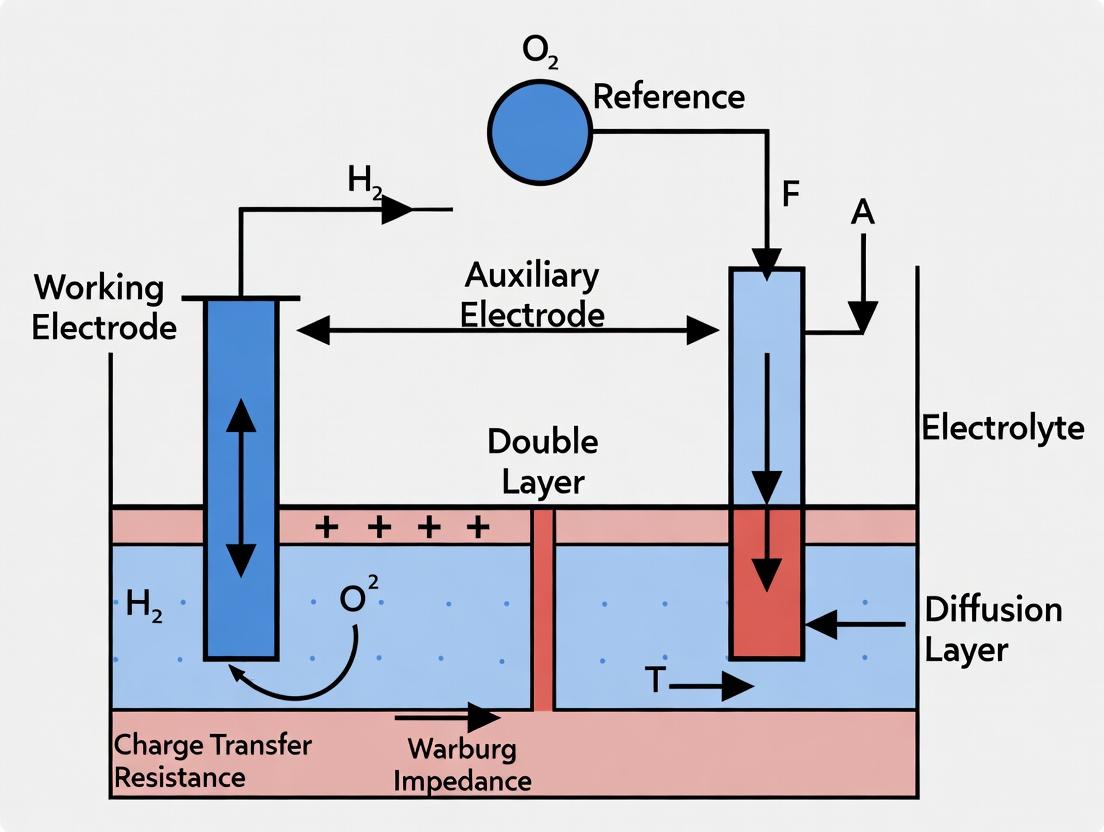
This article provides a comprehensive resource for researchers and development professionals applying voltammetric techniques to characterize quasi-reversible redox processes in drug development.
Decoding Quasi-Reversible Electrochemistry: A Practical Guide to the Randles-Ševčík Equation for Drug Discovery
Abstract
This article provides a comprehensive resource for researchers and development professionals applying voltammetric techniques to characterize quasi-reversible redox processes in drug development. We begin by demystifying the fundamental theory behind the Randles-Ševčík equation and its adaptation for quasi-reversible systems. The guide then details a practical methodology for applying this framework to determine critical kinetic and diffusion parameters. We address common experimental challenges, data analysis pitfalls, and strategies for optimization. Finally, we compare the quasi-reversible analysis with ideal reversible and fully irreversible models, discussing validation protocols and the significance of the extracted parameters for assessing molecular properties critical to pharmaceutical efficacy and stability.
Beyond the Ideal: Understanding the Theory of Quasi-Reversible Electron Transfer
The Randles-Ševčík equation is a cornerstone of electroanalytical chemistry, predicting the peak current (Ip) for a reversible, diffusion-controlled redox reaction at a planar macroelectrode under cyclic voltammetry (CV) conditions:
[ I_p = 0.4463 \cdot nFAC \left(\frac{nFvD}{RT}\right)^{1/2} ]
Where n is the number of electrons, F is Faraday's constant, A is the electrode area, C is the bulk concentration, v is the scan rate, D is the diffusion coefficient, R is the gas constant, and T is the temperature.
Within the broader thesis on quasi-reversible processes, this ideal equation serves as a critical baseline. The "revisited" perspective focuses on the systematic deviations from this ideal behavior observed in real-world, kinetically limited (quasi-reversible) systems prevalent in drug development, such as the study of metabolic redox reactions or protein electron transfer. The transition from reversible to quasi-reversible regimes is governed by the dimensionless parameter (\Lambda):
[ \Lambda = \frac{k^0}{\sqrt{\pi D \nu (nF/RT)}} ]
where (k^0) is the standard heterogeneous electron transfer rate constant. As (\Lambda) decreases (slower kinetics, faster scan rates), the system deviates from Randles-Ševčík predictions.
Data Analysis: Reversible vs. Quasi-Reversible Signatures
The following table summarizes key diagnostic parameters differentiating ideal reversible from experimental quasi-reversible behavior in cyclic voltammetry, a core focus of the thesis research.
Table 1: Diagnostic CV Parameters for Reversible and Quasi-Reversible Processes
| Parameter | Ideal Reversible (Randles-Ševčík) | Experimental Quasi-Reversible |
|---|---|---|
| Peak Current (Ip) | Ip ∝ v1/2; follows Eqn. | Deviation from v1/2 linearity at higher ν |
| ΔEp (Epc - Epa) | ~59/n mV at 25°C, scan rate independent | Increases with scan rate (>59/n mV) |
| Ipc/Ipa Ratio | ~1.0 | Can deviate from 1.0, especially at high ν |
| Peak Shape | Symmetric | Asymmetric; peak broadening |
| Scan Rate Dependence | Peak potentials independent of ν | Cathodic peak shifts negative, anodic shifts positive with increasing ν |
Experimental Protocols for Characterizing Quasi-Reversible Systems
Protocol 3.1: Determining the Heterogeneous Electron Transfer Rate Constant (k⁰)
Objective: To quantitatively assess the degree of quasi-reversibility by extracting the standard heterogeneous electron transfer rate constant (k⁰) from cyclic voltammetry data.
Materials: See "The Scientist's Toolkit" (Section 5). Method:
- System Preparation: Prepare a degassed solution containing the redox analyte (e.g., 1 mM potassium ferricyanide, [Ru(NH₃)₆]³⁺, or a drug candidate redox moiety) in a suitable supporting electrolyte (e.g., 0.1 M KCl, PBS).
- Electrode Pretreatment: Polish the working electrode (glassy carbon, gold) successively with 1.0, 0.3, and 0.05 μm alumina slurry on a microcloth. Rinse thoroughly with purified water and sonicate for 1 minute in water, then ethanol.
- Data Acquisition: Record CVs at a series of scan rates (e.g., 0.01, 0.02, 0.05, 0.1, 0.2, 0.5, 1.0 V/s) within a suitable potential window. Ensure the reference electrode is stable and the cell is thermostatted at 25°C.
- Analysis via ΔEp Method:
- Measure the peak potential separation (ΔEp) for each scan rate.
- Using the Nicholson method, plot ψ vs. ΔEp, where ψ is a kinetic parameter: [ \psi = \frac{k^0}{\sqrt{\pi D \nu (nF/RT)}} ]
- An empirical working curve relates ψ to ΔEp. For a known diffusion coefficient (D) and scan rate (ν), k⁰ can be calculated from the determined ψ value.
- Validation: Compare the extracted k⁰ value with literature for known outer-sphere redox probes (e.g., k⁰ for ferrocene carboxylate in PBS ~ 0.5 - 1 cm/s) to validate the experimental setup.
Protocol 3.2: Assessing Diffusion-Controlled vs. Surface-Kinetic Limitations
Objective: To verify the dominance of diffusion control, a fundamental assumption of the Randles-Ševčík framework, and identify adsorption or catalytic complications.
Method:
- Peak Current vs. Scan Rate Plot: From the CV data in Protocol 3.1, plot log(Ip) vs. log(v).
- Interpretation:
- A slope of 0.5 indicates a purely diffusion-controlled process (consistent with Randles-Ševčík).
- A slope approaching 1.0 indicates a surface-confined (adsorbed) process (non-Randles-Ševčík behavior).
- A slope between 0.5 and 1.0 suggests a mixed diffusion and adsorption-controlled process, a common complication in quasi-reversible drug studies.
Conceptual and Workflow Visualizations
Title: Diagnostic Workflow for Quasi-Reversible Kinetics
Title: From Ideal Equation to Experimental Kinetic Reality
The Scientist's Toolkit: Essential Research Reagent Solutions
Table 2: Key Materials for Quasi-Reversible Electrochemistry Studies
| Item | Function & Relevance to Quasi-Reversible Studies |
|---|---|
| Ultra-Pure Supporting Electrolyte (e.g., TBAPF₆, KCl, PBS) | Minimizes uncompensated resistance (Ru) which distorts CV shapes and complicates kinetic analysis. High purity avoids redox-active impurities. |
| Outer-Sphere Redox Probes (e.g., [Ru(NH₃)₆]³⁺/²⁺, Fc(COOH)₂) | Exhibit nearly ideal reversible kinetics (high k⁰). Used to calibrate electrode area and validate experimental setup before testing unknown, slower quasi-reversible systems. |
| Polishing Supplies & Sonication Bath (Alumina, diamond slurry) | Essential for reproducible, clean electrode surfaces. Contaminated surfaces artificially depress k⁰ measurements, a critical variable in the thesis. |
| Faradaic Cage & Dedicated Grounding | Eliminates electrical noise, crucial for measuring accurate peak currents and shapes at low concentrations or fast scan rates where quasi-reversible effects are pronounced. |
| Potentiostat with IR Compensation (Positive Feedback or Current Interrupt) | Actively corrects for solution resistance, allowing accurate measurement of ΔEp and peak shape—the primary data for extracting kinetic parameters in quasi-reversible systems. |
| Controlled Environment (Glovebox or N₂/Ar Sparging Setup) | Removes dissolved O₂, which can cause interfering redox currents or react with sensitive drug radical intermediates, obscuring the target quasi-reversible signal. |
This document serves as a critical application note within a broader thesis investigating the application and limitations of the Randles-Ševčík equation in characterizing quasi-reversible electron transfer processes. The classic Randles-Ševčík equation, which relates peak current to scan rate for a reversible system, assumes rapid electron transfer kinetics. Quasi-reversible systems violate this assumption, occupying a kinetic middle ground where electron transfer rate constants (k⁰) are sufficiently fast to produce a voltammetric wave but not fast enough to achieve Nernstian equilibrium at the electrode surface. Accurately defining and diagnosing this regime is paramount for researchers in electroanalytical chemistry and drug development, where such processes are common for many redox-active pharmaceuticals and biomarkers.
Core Theoretical Definitions and Diagnostic Criteria
Quasi-reversibility is formally defined by the dimensionless parameter Λ, which relates electron transfer kinetics to mass transport and experimental timescale:
Λ = (k⁰ * (D_O / D_R)^(α/2)) / sqrt( (π * D_O * n * F * ν) / (R * T) )
where k⁰ is the standard heterogeneous electron transfer rate constant (cm s⁻¹), D_O and D_R are diffusion coefficients, α is the transfer coefficient, ν is scan rate (V s⁻¹), and other terms have their usual electrochemical meanings.
Operational Diagnosis via Cyclic Voltammetry:
- Peak Separation (ΔE_p): Exceeds the reversible limit (59/n mV at 298 K) and increases with scan rate.
- Peak Current Ratio (Ipc/Ipa): Deviates from 1, typically decreasing as reversibility is lost.
- Peak Current vs. sqrt(Scan Rate): I_p ∝ ν^(1/2) holds, but the proportionality constant is less than the Randles-Ševčík prediction.
- Peak Potential Shift: E_p shifts with increasing scan rate.
Table 1: Diagnostic Signatures for Voltammetric Reversibility Classes
| Parameter | Reversible (Nernstian) | Quasi-Reversible | Irreversible |
|---|---|---|---|
| ΔE_p (mV, 298K) | ≈59/n | >59/n, increases with √ν | Very large, increases with ν |
| Ipc / Ipa | ≈1 | ≤1 | <<1 |
| I_p ∝ | ν^(1/2) | ν^(1/2) (with lower constant) | ν^(1/2) |
| E_p dependence | Independent of ν | Shifts with log(ν) | Shifts with log(ν) |
| Kinetic Regime | k⁰ > ~0.2 cm/s | 10⁻² > k⁰ > 10⁻⁵ cm/s | k⁰ < ~10⁻⁵ cm/s |
| Applicable Model | Randles-Ševčík | Nicholson Analysis | Irreversible Totally |
Table 2: Extracted Kinetic Parameters for Model Quasi-Reversible Systems (Thesis Data)
| Analyte (Drug Candidate) | Apparent k⁰ (cm s⁻¹) | α | ΔE_p @ 0.1 V/s (mV) | Diagnostic Λ @ 0.1 V/s |
|---|---|---|---|---|
| Acetaminophen (pH 7.4) | (3.2 ± 0.4) x 10⁻³ | 0.52 ± 0.03 | 85 ± 3 | 0.76 |
| Dopamine (pH 7.4) | (1.8 ± 0.2) x 10⁻² | 0.48 ± 0.02 | 68 ± 2 | 1.9 |
| Mitoxantrone | (5.5 ± 0.6) x 10⁻⁴ | 0.56 ± 0.04 | 142 ± 5 | 0.21 |
| Nifedipine | < 1.0 x 10⁻⁵ | - | >250 | <0.01 |
Experimental Protocols for Diagnosing Quasi-Reversibility
Protocol 3.1: Diagnostic Cyclic Voltammetry Scan Rate Study
Objective: To diagnose quasi-reversibility and extract kinetic parameters (k⁰, α) via variation of scan rate. Materials: See "Scientist's Toolkit" (Section 6). Procedure:
- Prepare a deaerated solution of the target analyte (e.g., 1 mM drug candidate) in appropriate supporting electrolyte (e.g., 0.1 M PBS, pH 7.4).
- Using a polished 3 mm glassy carbon working electrode, record cyclic voltammograms (CVs) over a scan rate range from 0.01 V/s to at least 5 V/s. Ensure the potential window captures the full redox wave.
- For each scan rate (ν), measure: anodic peak potential (Epa), cathodic peak potential (Epc), anodic peak current (Ipa), and cathodic peak current (Ipc).
- Plot ΔE_p vs. log(ν). A linear increase indicates departure from reversibility.
- Plot I_p (for the dominant peak) vs. √ν. Confirm linearity to establish diffusional control.
- Nicholson Analysis (for 0.3<Λ<7): a. Calculate ψ = γ^(-α) * [ (DO/DR)^(α/2) * (π * DO * n * F * ν / (R*T))^(-1/2) ] * (Ip / (n * F * A * C* √DO)), where γ = (DO/D_R)^(1/2). b. Using the working curve of ψ vs. Λ (Nicholson, 1965), determine Λ for each scan rate. c. Plot Λ vs. ν^(-1/2). The slope is proportional to k⁰.
Protocol 3.2: Electrochemical Impedance Spectroscopy (EIS) for Kinetic Validation
Objective: To independently determine charge transfer resistance (R_ct) and estimate k⁰. Procedure:
- At the DC potential corresponding to the formal potential (E⁰') of the redox couple, perform EIS.
- Apply a sinusoidal potential perturbation of 10 mV amplitude over a frequency range from 100 kHz to 0.1 Hz.
- Fit the resulting Nyquist plot to a modified Randles equivalent circuit (including solution resistance Rs, charge transfer resistance Rct, constant phase element CPE, and Warburg impedance Z_w).
- Calculate the standard rate constant: k⁰ = R * T / (n² * F² * A * C * R_ct), where C is the bulk concentration.
Signaling Pathway & Experimental Workflow
Title: Diagnostic Workflow for Quasi-Reversibility
The Scientist's Toolkit: Key Research Reagent Solutions
Table 3: Essential Materials for Quasi-Reversibility Studies
| Item | Function & Rationale |
|---|---|
| Glassy Carbon Working Electrode (3 mm) | Standard inert electrode with well-defined surface for kinetic studies. Polishing is crucial for reproducible k⁰. |
| High Purity Supporting Electrolyte (e.g., TBAPF₆, PBS) | Provides ionic conductivity without participating in redox reactions. Must be electrochemically inert in the potential window. |
| Potentiostat/Galvanostat with EIS module | For precise control of potential/current and impedance measurements. Requires capability for fast scan rates (>1 V/s). |
| Electrochemical Cell with Airtight Seal | To exclude oxygen, which can interfere with redox waves of organic molecules and drugs. |
| Platinum Counter Electrode & Stable Reference Electrode (e.g., Ag/AgCl) | Completes the circuit and provides a stable potential reference, respectively. |
| N₂ or Ar Gas Supply with Deoxygenation Train | For rigorous solution deaeration prior to and during experiments to remove dissolved O₂. |
| Alumina or Diamond Polishing Suspensions (0.3 & 0.05 µm) | For sequential mirror-polishing of the working electrode to achieve an atomically smooth, reproducible surface essential for kinetic measurements. |
| Ferrocene / Ferrocenemethanol Standard | Reversible outer-sphere redox couple used to test electrode cleanliness and determine the experimental E⁰' in non-aqueous/aqueous systems, respectively. |
| Simulation Software (e.g., DigiElch, GPES) | For fitting experimental CV data to Butler-Volmer or Marcus-Hush kinetic models to extract k⁰ and α. |
Within the broader thesis on Randles-Ševčík equation analysis of quasi-reversible processes, the heterogeneous electron transfer rate constant (k°) emerges as a pivotal kinetic parameter. It quantitatively describes the intrinsic rate of electron exchange across the electrode-electrolyte interface, fundamentally governing the electrochemical reversibility of a redox process. For researchers and drug development professionals, accurately determining k° is critical for characterizing the electrochemical behavior of drug molecules, metalloproteins, and catalysts, which directly informs mechanisms, stability, and structure-activity relationships.
Core Theory and Quantitative Framework
The reversibility of an electrode reaction, as modeled by the Randles-Ševčík equation for cyclic voltammetry, is a continuum defined by the dimensionless parameter Λ: Λ = k° / [√(πDνF/(RT))], where D is the diffusion coefficient, ν is scan rate, and F, R, T have their usual meanings. The value of k° determines the system's position on this continuum.
Table 1: Electrochemical Reversibility Regimes Defined by k° and Λ (at 298 K)
| Reversibility Regime | Approximate k° Range (cm/s) | Λ Criterion (at ν = 0.1 V/s) | Peak Separation (ΔEp, mV) | Scan Rate Dependence of Peak Current |
|---|---|---|---|---|
| Reversible | > ~0.02 | Λ > 7 | ~59/n, independent of ν | ip ∝ ν^(1/2) |
| Quasi-Reversible | ~10^(-5) to ~0.02 | 7 > Λ > 10^(-3) | > 59/n, increases with ν | Deviation from ν^(1/2) proportionality |
| Irreversible | < ~10^(-5) | Λ < 10^(-3) | Very large | ip ∝ ν^(1/2) (but with different constant) |
For quasi-reversible systems—the primary focus of advanced Randles-Ševčík analysis—the peak current is attenuated relative to the reversible case. A more precise treatment using the Nicholson method allows for the experimental determination of k° from cyclic voltammetry data by analyzing the scan rate-dependent shift in peak potential separation (ΔEp). The working equation is: ψ = k° / [πDνnF/(RT)]^(1/2), where ψ is a kinetic parameter tabulated against ΔEp. Thus, measuring ΔEp as a function of ν enables the extraction of k°.
Experimental Protocol: Determining k° via Cyclic Voltammetry
Objective: To experimentally determine the heterogeneous electron transfer rate constant (k°) for a redox-active drug candidate (e.g., an anthraquinone derivative) using cyclic voltammetry and the Nicholson analysis method.
Materials & Reagent Solutions: Table 2: Research Reagent Solutions & Essential Materials
| Item | Function/Brief Explanation |
|---|---|
| Electrochemical Cell (3-electrode setup) | Provides controlled environment for measurement. Working electrode (e.g., glassy carbon) is where reaction occurs, reference electrode (Ag/AgCl) fixes potential, counter electrode (Pt wire) completes circuit. |
| Potentiostat/Galvanostat | Instrument to apply controlled potential and measure resulting current with high precision. |
| Purified Analyte Solution (~1 mM) | The drug molecule of interest dissolved in supporting electrolyte. Concentration must be known accurately for diffusion coefficient determination. |
| Supporting Electrolyte (e.g., 0.1 M TBAPF6 in acetonitrile) | Provides ionic conductivity while minimizing migration current and iR drop. Must be electrochemically inert in the potential window of interest. |
| Solvent (HPLC or higher grade) | Must be pure, dry, and degassed to remove oxygen, which can interfere with redox reactions. |
| Ferrocene Internal Standard (1-2 mM) | Used to reference potentials and, in some protocols, to independently determine the diffusion coefficient (D) of the analyte by the method-of-moments. |
| Electrode Polishing Kit (Alumina slurries, 1.0, 0.3, 0.05 µm) | Essential for achieving a reproducible, clean electrode surface, as k° is highly sensitive to surface state. |
Protocol Steps:
- Electrode Preparation: Polish the glassy carbon working electrode sequentially with 1.0, 0.3, and 0.05 µm alumina slurry on a microcloth. Rinse thoroughly with deionized water and then with the solvent to be used.
- Solution Preparation: Dissolve the analyte precisely to prepare a ~1 mM solution in the chosen solvent with 0.1 M supporting electrolyte. Add a small amount of ferrocene (Fc) as an internal potential reference. Transfer the solution to the electrochemical cell.
- Cell Assembly & Degassing: Assemble the three-electrode system in the cell. Sparge the solution with inert gas (Ar or N2) for at least 15 minutes to remove dissolved oxygen. Maintain a gentle gas blanket over the solution during measurements.
- Preliminary CV: Record a cyclic voltammogram at a moderate scan rate (e.g., 0.1 V/s) over a potential window encompassing the analyte's redox peaks and the Fc+/Fc couple. Identify the analyte's reduction/oxidation peaks.
- Scan Rate Study: Record CVs for the analyte at a minimum of 8 different scan rates (e.g., from 0.05 V/s to 5 V/s or higher, increasing in a logarithmic progression). Ensure the iR drop is compensated.
- Data Analysis - Diffusion Coefficient (D):
- Plot the peak current (ip) for the reversible Fc+/Fc couple vs. the square root of scan rate (ν^(1/2)). Perform a linear fit. Using the Randles-Ševčík equation for a reversible, one-electron process (ip = 2.69×10^5 * n^(3/2) * A * D^(1/2) * C * ν^(1/2)), and knowing n=1, A (electrode area), and C (concentration), calculate the diffusion coefficient D for ferrocene.
- Assuming similar hydrodynamic radii, estimate the analyte's D using the Stokes-Einstein relation: Danalyte / DFc = rFc / ranalyte. Alternatively, determine D_analyte directly from its own reversible ip vs. ν^(1/2) plot if it exhibits reversible behavior at slow scan rates.
- Data Analysis - k° Determination (Nicholson Method):
- For each scan rate (ν), measure the peak potential separation (ΔEp) for the analyte.
- For each ΔEp, use the Nicholson lookup table or the approximate analytical function (ψ = (-0.628 + 0.0021ΔEp) / (1 - 0.017ΔEp) for 298K) to find the corresponding kinetic parameter ψ.
- Calculate k° for each scan rate using the relation: k° = ψ * √[πDνnF/(RT)].
- Report k° as the average value from scan rates where ΔEp showed clear quasi-reversible character (typically ΔEp between 70 mV and 200 mV for n=1). The value should be relatively scan-rate independent.
Application in Drug Development
In pharmaceutical research, k° serves as a sensitive probe for molecular interaction and accessibility. A decreased k° for a drug molecule upon addition of a biomolecule (e.g., DNA, protein) can indicate binding, as the electron transfer becomes more hindered. Comparing k° values for a series of analogs can reveal the impact of substituents on the redox-active moiety's electronic coupling with the electrode, linking molecular structure to electrochemical kinetics.
Title: Workflow for Experimental Determination of k° via Nicholson Analysis
Title: How k° Governs Electrochemical Reversibility via Λ
The Influence of Scan Rate (ν) on Peak Current and Peak Potential.
This application note, framed within a broader thesis investigating quasi-reversible processes via the Randles-Ševčík equation, details the critical influence of potential scan rate (ν) on cyclic voltammetry (CV) parameters. For researchers in drug development, understanding these relationships is essential for characterizing redox-active compounds, assessing electrode kinetics, and elucidating reaction mechanisms that underpin drug metabolism and activity. In quasi-reversible systems, the electron transfer kinetics are finite, causing peak currents (Ip) and peak potentials (Ep) to exhibit a distinct dependence on ν, deviating from ideal Nernstian or fully irreversible behavior.
Core Principles & Data
For a quasi-reversible, diffusion-controlled one-electron transfer process, the Randles-Ševčík equation provides the foundational relationship for the peak current: [ I_p = (2.69 \times 10^5) \ n^{3/2} \ A \ D^{1/2} \ C \ \nu^{1/2} ] where Ip is the anodic peak current (A), n is the number of electrons transferred, A is the electrode area (cm²), D is the diffusion coefficient (cm²/s), C is the bulk concentration (mol/cm³), and ν is the scan rate (V/s). The key diagnostic is the plot of Ip vs. ν^(1/2), which should be linear for a diffusion-controlled process.
The peak potential (Ep) shifts with scan rate for quasi-reversible and irreversible processes. The extent of shift (ΔEp per decade of ν) provides the electron transfer rate constant (k°). As ν increases, the kinetics of electron transfer cannot keep pace, leading to increased overpotential: the anodic peak (Epa) shifts positively and the cathodic peak (Epc) shifts negatively, increasing peak separation (ΔEp).
Table 1: Diagnostic Signatures of Process Reversibility vs. Scan Rate
| Process Type | Ip vs. ν^(1/2) | ΔEp (Epa - Epc) | Shift in Epa with increasing ν | Ip,a / Ip,c |
|---|---|---|---|---|
| Reversible | Linear, passes through origin | ~59/n mV, independent of ν | Negligible | ~1 |
| Quasi-Reversible | Linear, passes through origin | >59/n mV, increases with ν | Positive shift | ~1 |
| Irreversible | Linear, passes through origin | N/A (no reverse peak) | Positive shift (30/αn mV per decade ν) | N/A |
Table 2: Example Quantitative Data for a Model Quasi-Reversible System (Ferrocenemethanol, 1 mM)
| Scan Rate, ν (V/s) | ν^(1/2) ((V/s)^(1/2)) | Anodic Peak Current, Ip,a (µA) | Anodic Peak Potential, Epa (V vs. Ag/AgCl) | Peak Separation, ΔEp (mV) |
|---|---|---|---|---|
| 0.01 | 0.10 | 1.05 | 0.292 | 72 |
| 0.05 | 0.22 | 2.31 | 0.298 | 85 |
| 0.10 | 0.32 | 3.28 | 0.305 | 98 |
| 0.50 | 0.71 | 7.25 | 0.322 | 135 |
| 1.00 | 1.00 | 10.15 | 0.335 | 168 |
Experimental Protocol: Determining Quasi-Reversible Kinetics
Aim: To determine the electrochemical reversibility and estimate the standard electrochemical rate constant (k°) of a novel redox-active pharmaceutical compound.
Materials & Reagents: See "Scientist's Toolkit" below.
Procedure:
- Electrode Preparation: Polish the glassy carbon working electrode sequentially with 1.0, 0.3, and 0.05 µm alumina slurry on a microcloth. Rinse thoroughly with deionized water after each polish. Sonicate in ethanol and then in deionized water for 1 minute each to remove adsorbed alumina.
- Cell Assembly & Degassing: In a three-electrode electrochemical cell, add 10 mL of 0.1 M phosphate buffer (pH 7.4) supporting electrolyte. Place the polished GCE, Pt wire counter electrode, and Ag/AgCl reference electrode into the solution. Sparge with high-purity nitrogen or argon for at least 15 minutes to remove dissolved oxygen.
- Background Scan: Record a cyclic voltammogram from -0.2 V to +0.6 V vs. Ag/AgCl at 100 mV/s. This ensures a clean electrochemical window.
- Analyte Introduction: Add a precise volume of a concentrated stock solution of the drug compound to achieve a final concentration of 1.0 mM. Sparge gently with inert gas for 5 more minutes.
- Variable Scan Rate Experiment: Record cyclic voltammograms across a range of scan rates (e.g., 0.01, 0.02, 0.05, 0.1, 0.2, 0.5, 1.0 V/s). Ensure the CV cycle starts and ends at a potential where no faradaic current flows. Allow 10 seconds of quiet time at the initial potential before each scan.
- Data Analysis:
- Plot Ip,a vs. ν^(1/2) to confirm linearity (diffusion control).
- Plot Epa and Epc vs. log(ν). The slopes are related to the charge transfer coefficient (α).
- Use the variation of ΔEp with ν and the Nicholson method* to calculate k°. For quasi-reversible systems, ΔEp is a function of the dimensionless parameter ψ, where ψ = (k° / (π a D n F / (R T))^(1/2)) and a = (nFν)/(RT). A working curve of ψ vs. ΔEp is used to interpolate k°.
Note: The Nicholson method involves comparing the experimental peak separation at a given scan rate to a published working curve of ΔEp vs. ψ.
The Scientist's Toolkit
Table 3: Essential Research Reagent Solutions & Materials
| Item | Function & Rationale |
|---|---|
| Glassy Carbon Working Electrode (3 mm dia.) | Standard inert electrode providing a wide potential window and reproducible surface for studying organic molecules. |
| Ag/AgCl (3 M KCl) Reference Electrode | Provides a stable, known reference potential against which all working electrode potentials are measured. |
| Platinum Wire Counter Electrode | Conducts current from the potentiostat to the solution, completing the circuit without introducing contaminants. |
| 0.1 M Phosphate Buffer (pH 7.4) | A biologically relevant supporting electrolyte that maintains constant pH and ionic strength, ensuring current is carried by the electrolyte, not migration of the analyte. |
| High-Purity Alumina Polish (1.0, 0.3, 0.05 µm) | For sequential mechanical polishing of the GCE to create a fresh, clean, and reproducible electroactive surface, critical for quantitative measurements. |
| Nitrogen/Argon Gas (High Purity) | Used to deoxygenate the electrolyte solution, as oxygen can undergo reduction and interfere with the analyte's redox signals. |
| Analyte Stock Solution (e.g., 50 mM in DMSO) | Concentrated solution of the drug compound for accurate spiking into the electrochemical cell. Minimal DMSO (<1% v/v) is used to ensure solubility without affecting the electrolyte properties. |
| Ferrocenemethanol (1 mM in buffer) | A common outer-sphere, quasi-reversible redox standard used to validate electrode performance and experimental setup. |
Visualizations
Title: Workflow for Scan Rate CV Experiment
Title: Effect of Scan Rate on Process Reversibility
This application note is framed within a broader thesis research project investigating the limitations and applicability of the Randles-Ševčík equation for characterizing quasi-reversible electrochemical processes. The central question addressed is under which conditions the classical Butler-Volmer (BV) kinetic framework remains valid versus when a Marcus-theory-based treatment becomes necessary for accurate analysis of quasi-reversible systems, particularly in non-ideal, non-aqueous, or biological media relevant to modern drug development.
Theoretical Foundations: A Quantitative Comparison
Core Equation Comparison
Table 1: Fundamental Rate Constant Expressions
| Theory | Electron Transfer Rate Constant Expression | Key Parameters | ||||
|---|---|---|---|---|---|---|
| Butler-Volmer (BV) | ( k_{et} = k^0 \exp\left[\frac{-\alpha F}{RT}(E - E^0)\right] ) | (k^0): Standard rate constant (cm/s); (\alpha): Symmetry factor (0<α<1); (E): Applied potential; (E^0): Formal potential. | ||||
| Marcus (M) | ( k_{et} = \frac{2\pi}{\hbar} | H_{AB} | ^2 \frac{1}{\sqrt{4\pi\lambda kBT}} \exp\left[\frac{-(\lambda + F(E-E^0))^2}{4\lambda kBT}\right] ) | ( | H_{AB} | ): Electronic coupling (eV); (\lambda): Reorganization energy (eV); (k_B): Boltzmann constant. |
Table 2: Predicted Behavior in Quasi-Reversible Regime
| Characteristic | Butler-Volmer Prediction | Marcus Theory Prediction | Implication for Randles-Ševčík Analysis | ||
|---|---|---|---|---|---|
| Current-Potential Symmetry | Asymmetric for α ≠ 0.5 | Inverted region at high overpotential | Randles-Ševčík assumes BV; peak asymmetry may be misattributed. | ||
| Temperature Dependence | Arrhenius: Linear in (1/T) | Gaussian activation: Passes through maximum | Activation energy from CV varies with overpotential in Marcus. | ||
| Solvent/Dynamic Effect | Implicit in (k^0) and α | Explicit via λ (inner & outer sphere) | Solvent choice alters quasi-reversible shape per Marcus, not just (k^0). | ||
| Peak Separation (ΔEp) | ΔEp > 59/n mV, increases as (k^0) decreases | ΔEp varies non-linearly with λ and ( | H_{AB} | ) at constant (k^0) | Extracting (k^0) from ΔEp using BV formulas may be inaccurate. |
Application Notes for Drug Development Research
In pharmaceutical electroanalysis (e.g., studying redox-active drug molecules, metabolic processes, or sensor development), the quasi-reversible regime is common. BV is often adequate for simple, outer-sphere reactions in familiar solvents. Marcus theory becomes critical when:
- Studying molecules with large structural changes upon redox.
- Working in non-aqueous or mixed solvents with varying dielectric properties.
- Investigating adsorbed species or systems with strong electronic coupling.
- Interpreting kinetics over a very wide potential or temperature range.
Recommendation: Initial diagnosis using BV analysis of cyclic voltammograms (CV) is standard. A significant discrepancy between (k^0) values derived from ΔEp versus from fitting the full I-E curve, or non-Arrhenius temperature behavior, signals the need for Marcus-Hush analysis.
Experimental Protocols
Protocol 1: Diagnostic CV to Identify the Need for Marcus Theory Analysis
Objective: To acquire cyclic voltammetry data sufficient to distinguish between BV and Marcus kinetic regimes for a quasi-reversible redox couple.
Materials: See "The Scientist's Toolkit" below.
Procedure:
- Solution Preparation: Prepare a degassed electrolyte solution containing the target redox molecule (e.g., a drug candidate like daunorubicin at ~1 mM) and a supporting electrolyte (e.g., 0.1 M TBAPF6 in DMF or a buffered aqueous solution).
- Instrument Setup: Employ a potentiostat with IR compensation. Use a standard three-electrode cell: Glassy Carbon working electrode (3 mm diameter), Pt wire counter electrode, and appropriate reference (e.g., Ag/AgCl for aqueous, Ag/Ag+ for non-aqueous).
- Surface Pretreatment: Polish the working electrode sequentially with 1.0, 0.3, and 0.05 µm alumina slurry on a microcloth. Rinse thoroughly with solvent and dry.
- Preliminary Scan: Record a CV at 100 mV/s over a wide potential window to locate redox peaks. Ensure the system is stable and shows a quasi-reversible shape (ΔEp > 59/n mV, but peaks distinct).
- Variable Scan Rate Study: Record CVs at a minimum of 10 scan rates (ν) from 0.02 to 20 V/s. Ensure full iR compensation is applied, especially at high rates.
- Variable Temperature Study (Optional but Definitive): Place the cell in a temperature-controlled jacket. Record CVs at a fixed intermediate scan rate (e.g., 1 V/s) across a temperature range (e.g., 10°C to 50°C).
- Data Analysis - BV Diagnostic:
- Plot anodic and cathodic peak currents ((i{pa}), (i{pc})) vs. (ν^{1/2}). Confirm linearity, affirming diffusion control (Randles-Ševčík premise).
- Plot ΔEp vs. log(ν). For BV, this relationship is linear.
- Extract apparent (k^0) and α at each scan rate using Nicholson's method for quasi-reversible systems.
- Data Analysis - Marcus Diagnostic:
- If the extracted (k^0) decreases significantly with increasing ν, or if α shows a strong potential dependence, BV may be failing.
- Perform the temperature study. Plot ln((k^0)) vs. (1/T) (Arrhenius). Non-linearity or curvature suggests Marcus behavior.
- Fit the full I-E curve from multiple scan rates simultaneously to the Marcus-Hush model using specialized software (e.g., DigiElch, GPES), varying λ and (|H_{AB}|).
Protocol 2: Determining Reorganization Energy (λ) via Marcus Theory
Objective: To experimentally determine the reorganization energy, a key Marcus parameter, from scan-rate-dependent CVs.
Procedure:
- Follow steps 1-6 of Protocol 1 to obtain high-quality, iR-compensated CV data across scan rates and temperatures.
- Use Fitting Software: Import the family of CVs into a digital simulation package capable of Marcus-Hush kinetics.
- Initial BV Fit: Perform an initial fit using the BV model to obtain estimates for (E^0) and diffusion coefficients (D).
- Marcus-Hush Fit: Fix D and (E^0) from step 3. Switch the kinetic model to Marcus-Hush.
- Global Fitting: Fit all CV curves (multiple scan rates) simultaneously by optimizing the parameters (|H{AB}|) and λ. The electronic coupling (|H{AB}|) primarily affects the magnitude of (k^0), while λ strongly influences the shape asymmetry and potential-dependent kinetics.
- Validation: The quality of the global fit across all scan rates, particularly the reproduction of peak shapes and the evolution of ΔEp with ν, validates the extracted λ value. A typical drug molecule in an organic solvent may have λ between 0.5 and 1.5 eV.
Visualization: Logical and Workflow Diagrams
Decision Flow: BV vs. Marcus Theory
CV Workflow for Kinetic Diagnosis
The Scientist's Toolkit: Essential Research Reagents & Materials
Table 3: Key Reagents and Materials for Quasi-Reversible Kinetics Studies
| Item | Function in Experiment | Example & Specifications |
|---|---|---|
| Potentiostat/Galvanostat | Applies controlled potential and measures resulting current. Essential for CV. | Biologic SP-300, Autolab PGSTAT302N. Requires high current bandwidth for fast scan rates. |
| Glassy Carbon Working Electrode | Inert, reproducible redox surface for electron transfer. | 3 mm diameter disk electrode (e.g., CH Instruments). Requires polishing before each experiment. |
| Non-Aqueous Reference Electrode | Provides stable reference potential in organic solvents. | Ag/Ag+ (e.g., 10 mM AgNO₃ in 0.1 M TBAPF₆/ACN) with double junction. |
| Supporting Electrolyte | Carries current, minimizes iR drop, and controls double-layer structure. | Tetrabutylammonium hexafluorophosphate (TBAPF6), 0.1 M. Must be purified (e.g., recrystallization) for low background. |
| Aprotic Solvent | Provides medium for studying drug molecules without proton interference. | Acetonitrile (HPLC grade, dried over molecular sieves), Dimethylformamide (DMF). |
| Redox Probe / Drug Molecule | The target quasi-reversible system under study. | e.g., Daunorubicin, Ferrocene (as internal standard), or other redox-active pharmaceutical. |
| Alumina Polishing Suspension | Maintains a clean, reproducible electrode surface critical for kinetic measurements. | 1.0, 0.3, and 0.05 µm alpha-alumina powder in water slurry on a microcloth pad. |
| Digital Simulation Software | Fits experimental CV data to theoretical models (BV or Marcus-Hush). | DigiElch, GPES, or a custom script (e.g., in Python using SciPy). |
A Step-by-Step Protocol for Analyzing Quasi-Reversible CV Data in Drug Development
This application note details the systematic optimization of voltammetric parameters for the analysis of pharmaceutical compounds, framed within a broader thesis investigating quasi-reversible electron transfer processes governed by the Randles-Ševčík equation. The current peak (Ip) in cyclic voltammetry for a quasi-reversible system is described by: Ip = (2.69 × 10^5) * n^(3/2) * A * D^(1/2) * C * ν^(1/2) * ξ(α, ψ) where n is the number of electrons, A is the electrode area (cm²), D is the diffusion coefficient (cm²/s), C is the bulk concentration (mol/cm³), ν is the scan rate (V/s), and ξ is a function of the transfer coefficient (α) and the kinetic parameter (ψ), which is scan-rate dependent. Optimizing experimental parameters is critical to accurately determine electrochemical kinetics and diffusion coefficients, which are essential for understanding drug redox stability, metabolism, and analytical detection.
Table 1: Optimized Electrode Materials for Pharmaceutical Analysis
| Electrode Material | Typical Modification | Optimal Pharmaceutical Class | Key Advantage (Quasi-Reversible Systems) | Recommended Working Potential Range (vs. Ag/AgCl) |
|---|---|---|---|---|
| Glassy Carbon (GC) | Bare/Polished | Antibiotics (e.g., Metronidazole), NSAIDs | Wide potential window, good reproducibility | -1.0 V to +1.2 V |
| Boron-Doped Diamond (BDD) | Bare | Cytotoxic drugs (e.g., Doxorubicin) | Low background current, resistance to fouling | -1.5 V to +2.2 V |
| Carbon Paste Electrode (CPE) | Molecularly Imprinted Polymer (MIP) | Neurotransmitter-based drugs (e.g., Levodopa) | High selectivity, surface renewability | -0.8 V to +1.0 V |
| Gold Electrode | Self-Assembled Monolayer (SAM) | Thiol-containing drugs (e.g., Captopril) | Specific surface chemistry, controlled kinetics | -0.3 V to +1.1 V |
| Screen-Printed Carbon Electrode (SPCE) | Carbon Nanotubes/Graphene | Point-of-Care drug monitoring | Disposable, mass-producible, modifiable | -1.0 V to +0.8 V |
Table 2: Electrolyte Systems for Common Drug Classes
| Pharmaceutical Class | Example Compound | Recommended Electrolyte Composition (pH, Buffer, Ionic Strength) | Purpose in Quasi-Reversible Kinetics Study |
|---|---|---|---|
| Phenothiazines | Chlorpromazine | 0.1 M Britton-Robinson Buffer, pH 7.4 | Provides consistent proton activity for coupled proton-electron transfers. |
| Tetracyclines | Doxycycline | 0.05 M Acetate Buffer + 0.1 M KCl, pH 4.7 | Minimizes drug hydrolysis, supports well-defined peak separation (ΔEp). |
| Sulfonamides | Sulfamethoxazole | 0.1 M Phosphate Buffer Saline (PBS), pH 7.0 | Biologically relevant medium for assessing redox behavior. |
| Quinolones | Ciprofloxacin | 0.1 M H₂SO₄ (pH ~1) or 0.2 M Acetate Buffer (pH 5.0) | Distinguishes between oxidation of piperazinyl vs. quinolone moieties. |
| Catecholamines | Epinephrine | 0.1 M Perchloric Acid (HClO₄) or Phosphate Buffer (pH 7.4) | Prevents autoxidation, allows study of E° and α. |
Table 3: Diagnostic Scan Rate Ranges and Kinetic Parameters
| System Reversibility | Typical ΔEp (mV) at 100 mV/s | Recommended Scan Rate Range (V/s) | Key Diagnostic Plot (Randles-Ševčík Context) | Target Parameter Extraction |
|---|---|---|---|---|
| Reversible | 59/n | 0.01 - 0.5 | Ip vs. ν^(1/2) (linear, passes origin) | Diffusion coefficient (D), concentration (C) |
| Quasi-Reversible | 60/n < ΔEp < 200/n | 0.02 - 50 | Ip/ν^(1/2) vs. ν (curvilinear), ΔEp vs. log ν | Charge transfer coefficient (α), standard rate constant (k°) |
| Irreversible | >200/n | 0.05 - 200 | Ep vs. log ν (linear), Ip vs. ν^(1/2) (linear) | α, k°, electron transfer number (n) |
Experimental Protocols
Protocol 1: Baseline Optimization of Electrode and Electrolyte
Objective: Establish a stable, reproducible electrochemical baseline for a target pharmaceutical compound.
- Electrode Pretreatment:
- Glassy Carbon Electrode: Polish sequentially with 1.0, 0.3, and 0.05 μm alumina slurry on a microcloth. Rinse thoroughly with deionized water. Electrochemically clean by cycling in 0.5 M H₂SO₄ (-0.3 V to +1.5 V, 100 mV/s) until a stable cyclic voltammogram (CV) for the redox couple of sulfuric acid is obtained.
- BDD Electrode: Anodically clean at +2.0 V in 0.1 M KOH for 30 s, then cathodically clean at -2.0 V in 0.1 M KOH for 30 s. Rinse with water.
- Electrolyte Preparation & Deaeration: Prepare 20 mL of the selected buffer (Table 2) with 0.1 M supporting electrolyte (e.g., KCl, NaClO₄). Sparge with high-purity nitrogen or argon for at least 15 minutes prior to experiments. Maintain a nitrogen blanket over the solution during measurements.
- Background CV Acquisition: Record CVs of the pure electrolyte within the chosen potential window at scan rates of 0.05, 0.1, and 0.2 V/s. The background should be featureless with low capacitive current. Save this data for subtraction.
Protocol 2: Scan Rate Study for Quasi-Reversible Parameter Extraction
Objective: Determine the electrochemical reversibility and extract kinetic parameters (k°, α) via the Randles-Ševčík formalism.
- Standard Solution Preparation: Dissolve the pharmaceutical analyte in the optimized electrolyte to a final concentration typically between 0.1 - 1.0 mM. Ensure complete dissolution and homogeneity.
- Voltammetric Data Collection: Using the optimized electrode, record CVs of the analyte solution across a wide scan rate range (e.g., 0.01, 0.02, 0.05, 0.1, 0.2, 0.5, 1.0, 2.0 V/s). Ensure consistent iR compensation is applied if necessary.
- Data Analysis for Quasi-Reversible Systems:
- Plot anodic peak current (Ip,a) vs. square root of scan rate (ν^(1/2)). Initial linearity confirms diffusion control.
- Plot peak potential separation (ΔEp) vs. log(ν). An increasing ΔEp with ν is indicative of quasi-reversibility.
- Plot normalized current (Ip/ν^(1/2)) vs. ν. A horizontal line indicates reversibility; a decreasing curve indicates quasi-reversibility.
- Use the method of Nicholson to calculate ψ and subsequently k°. For a known D (or estimated from low-ν data), use the relationship ψ = k° / [πDnFν/(RT)]^(1/2) at defined ΔEp values from standard working curves.
Protocol 3: Method Validation and Pharmaceutical Tablet Analysis
Objective: Apply the optimized method to a real pharmaceutical formulation.
- Sample Preparation: Crush and homogenize 10 tablets. Accurately weigh powder equivalent to one tablet. Extract the active pharmaceutical ingredient (API) into the optimized electrolyte using sonication for 15 minutes. Centrifuge and filter (0.45 μm) the supernatant.
- Standard Addition Calibration: To the cell containing the sample solution, perform successive standard additions of a concentrated stock solution of the pure API. Record CVs (at the optimal scan rate) after each addition.
- Quantification: Plot the peak current (corrected for dilution) vs. concentration of added standard. Extrapolate to the x-intercept to determine the original concentration in the sample. Compare with the labeled amount.
Visualizations
The Scientist's Toolkit: Research Reagent Solutions
| Item/Chemical | Function in Experiment |
|---|---|
| Alumina Polishing Slurries (1.0, 0.3, 0.05 μm) | For sequential electrode polishing to achieve a mirror finish, ensuring reproducible electrode area (A) and kinetics. |
| High-Purity Buffer Salts (e.g., KH₂PO₄, Na₂HPO₄, CH₃COONa) | To prepare electrolytes of precise pH and ionic strength, controlling proton activity and double-layer structure. |
| Inert Electrolyte (KCl, NaClO₄, TBAPF₆) | Provides high ionic strength to minimize solution resistance (iR drop) and focus on charge transfer kinetics. |
| Nitrogen/Argon Gas (High Purity, >99.99%) | For deaeration of solutions to remove dissolved oxygen, which causes interfering reduction currents. |
| Standard Redox Probes (e.g., 1.0 mM K₃[Fe(CN)₆] in 1.0 M KCl) | For validating electrode activity and measuring effective electrode area via the Randles-Ševčík equation for a reversible system. |
| pH Calibration Buffers (pH 4.01, 7.00, 10.01) | To calibrate the pH meter for accurate electrolyte preparation, crucial for drugs with pH-dependent electrochemistry. |
| Electrode Cleaning Solutions (0.5 M H₂SO₄, 0.1 M KOH) | For electrochemical activation and removal of adsorbed contaminants from electrode surfaces. |
| Molecularly Imprinted Polymer (MIP) Particles | For modifying Carbon Paste Electrodes to impart high selectivity for the target pharmaceutical in complex matrices. |
Data Acquisition Best Practices for Reliable Quasi-Reversible Cyclic Voltammograms
1. Introduction & Thesis Context This document provides Application Notes and Protocols for acquiring high-fidelity cyclic voltammetry (CV) data, specifically tailored for the study of quasi-reversible electrochemical systems. The protocols are framed within the context of advanced research utilizing the Randles-Ševčík equation, which relates peak current (ip) to scan rate (ν) and analyte concentration (C) for diffusion-controlled processes: ip = (2.69×10⁵)n3/2AD1/2Cν1/2. For quasi-reversible processes, deviations from ideal reversibility—quantified by the electron transfer rate constant (k0)—must be accurately captured. Reliable data is paramount for extracting kinetic parameters (α, k0) and understanding electron transfer mechanisms in drug development, particularly for redox-active pharmaceuticals and metabolic studies.
2. Core Data Acquisition Parameters & Best Practices Adherence to precise instrumental and experimental parameters is critical. The following tables summarize optimal settings and diagnostic criteria.
Table 1: Optimal Instrumental Settings for Quasi-Reversible System Characterization
| Parameter | Recommended Setting | Rationale |
|---|---|---|
| Scan Rate Range | 0.01 – 10 V/s | Captures transition from reversible to kinetic control. Lower rates for near-Nernstian behavior, higher for kinetic insights. |
| Filter Frequency | Set to ≥10× the measurement frequency (ν/nEstep) | Minimizes high-frequency noise without distorting peak shape or current. |
| Step Potential (Estep) | ≤ 1 mV | Ensures sufficient data density for accurate peak shape analysis, crucial for α determination. |
| Initial Scan Direction | Oxidative (anodic) if species is reduced | Starts from a known, stable equilibrium; prevents unintended redox events. |
| Quiet Time | 2-10 seconds | Allows for relaxation of diffusion layer to equilibrium before scan initiation. |
| IR Compensation | Apply positive feedback or current interrupt | Minimizes solution resistance distortion, critical for accurate potential placement. |
Table 2: Diagnostic Data Quality Criteria for Quasi-Reversible CVs
| Metric | Ideal Quasi-Reversible Signature | Indication of Issue |
|---|---|---|
| ΔEp (Peak Separation) | > (59/n) mV, increases with ν | ΔEp independent of ν suggests reversible system; erratic ΔEp suggests poor cell setup or uncompensated Ru. |
| ipa/ipc | ~1, but may deviate at high ν | Significant deviation from 1 at low ν suggests chemical instability (EC mechanism). |
| Peak Current Ratio (ip/ν1/2) | Constant across ν (Randles-Ševčík) | Decrease indicates adsorption or electrode fouling; increase indicates catalytic behavior. |
| Peak Potential (Ep) | Shifts with log(ν) (Laviron analysis) | Non-linear shift indicates complex mechanism or double-layer effects. |
3. Detailed Experimental Protocols
Protocol 1: Electrode Preparation & Cell Assembly for Kinetic Studies Objective: To achieve a clean, reproducible electrode surface.
- Polishing: On a clean microcloth, polish glassy carbon working electrode sequentially with 1.0 µm, 0.3 µm, and 0.05 µm alumina slurry/water.
- Sonication: Sonicate the electrode in deionized water for 60 seconds after each polish to remove adhered alumina particles.
- Rinsing: Rinse thoroughly with deionized water and then with the supporting electrolyte/solvent to be used.
- Electrochemical Activation: In clean supporting electrolyte, perform CV from -0.5 V to +1.5 V (vs. Ag/AgCl) at 100 mV/s for 20-50 cycles until a stable background is achieved.
- Cell Assembly: In a 3-electrode cell, place the polished WE, a Pt wire or coil counter electrode, and a freshly prepared reference electrode (e.g., Ag/AgCl in fritted compartment). Ensure electrodes are properly spaced and immersed.
- Decxygenation: Sparge the solution with inert gas (N2 or Ar) for a minimum of 10 minutes prior to experiments. Maintain a gas blanket over the solution during measurements.
Protocol 2: Scan Rate Study for k0 and α Determination Objective: To acquire data for the analysis of electron transfer kinetics via the Nicholson method.
- Prepare a solution containing the analyte (0.5-5 mM) in appropriate supporting electrolyte (0.1-1.0 M) per Protocol 1.
- Set the potentiostat parameters as per Table 1. Set initial and switching potentials to capture full redox couple.
- Begin with the slowest scan rate (e.g., 0.01 V/s). Record 3 consecutive cycles; stability indicates a clean system.
- Incrementally increase the scan rate (e.g., 0.02, 0.05, 0.1, 0.2, 0.5, 1, 2, 5, 10 V/s). At each rate, record a new voltammogram from the quiet, equilibrium state.
- Critical: For each scan rate, measure the anodic (Epa) and cathodic (Epc) peak potentials, and their corresponding currents (ipa, ipc).
- Data Analysis: Calculate Ψ (kinetic parameter) using Nicholson’s equation: Ψ = k0 / [πDnνF/(RT)]1/2, where Ψ is derived from ΔEp. Plot Ψ vs. ν-1/2 or use digital simulation to extract k0 and α.
4. Visualization of Experimental Workflow
Diagram Title: CV Data Acquisition & Analysis Workflow
5. The Scientist's Toolkit: Research Reagent Solutions
Table 3: Essential Materials for Quasi-Reversible CV Studies
| Item | Function & Critical Notes |
|---|---|
| High-Purity Supporting Electrolyte (e.g., TBAPF6, LiClO4) | Minimizes background current, provides ionic strength, and ensures electrochemical inertness over the potential window. Must be dried and purified (e.g., recrystallized). |
| Aprotic Solvents (e.g., Acetonitrile, DMF) | Provides a wide potential window and minimizes interference from proton-coupled electron transfer (PCET), simplifying analysis for pure electron transfer. Must be anhydrous and oxygen-free. |
| Redox Probe Standard (e.g., Ferrocene/Ferrocenium) | Internal potential reference and system diagnostic tool. Used to confirm electrode activity and reference potential calibration. |
| Alumina Polishing Suspensions (1.0, 0.3, 0.05 µm) | For reproducible mirror-finish on solid working electrodes (Glassy Carbon, Pt). Essential for obtaining well-defined, diffusion-controlled peaks. |
| Inert Gas Supply (Argon or Nitrogen, 99.999%) | For removal of dissolved oxygen, which is electroactive and can interfere with analyte redox peaks or react with radical intermediates. |
| Pseudo-Reference Electrode (e.g., Ag wire) | For use in non-aqueous studies; must be calibrated vs. a known redox couple (e.g., Fc/Fc+) at the end of experiments. |
| Fritted Reference Electrode (e.g., Ag/AgCl in fritted tube) | Prevents contamination of reference electrode compartment by solution species, ensuring stable, drift-free reference potential. |
Within the broader research on the Randles-Ševčík equation for quasi-reversible processes, accurate extraction of peak current (Ip) and peak potential separation (ΔEp) is critical. These parameters serve as the experimental backbone for determining heterogeneous electron transfer rate constants (k⁰) and diagnosing the degree of electrochemical reversibility in systems such as drug redox reactions. This protocol details the measurement and necessary correction procedures to obtain reliable, quantitative data for such analyses.
Table 1: Key Electrochemical Parameters for Quasi-Reversible Systems
| Parameter | Symbol | Typical Range (Quasi-Reversible) | Significance in Randles-Ševčík Analysis |
|---|---|---|---|
| Peak Current | Ip | Proportional to √(scan rate) | Used with Randles-Ševčík equation (Ip = 0.4463 n F A C*(nFvD/RT)^(1/2)) to check diffusion control. Deviation indicates kinetic limitations. |
| Peak Potential Separation | ΔEp | > 59/n mV, < 200 mV | Primary indicator of electron transfer kinetics. ΔEp = f(k⁰, α, v). Used to calculate k⁰. |
| Electron Transfer Coefficient | α | 0.3 - 0.7 | Extracted from ΔEp vs. v relationship. Affects peak shape and potential. |
| Heterogeneous Rate Constant | k⁰ | 10^-1 to 10^-5 cm/s | The target parameter. Calculated from ΔEp using Nicholson's method or Laviron's formalism. |
| Scan Rate | v | 0.01 - 10 V/s | Independent variable. Ip and ΔEp are analyzed as functions of √v and log(v), respectively. |
Table 2: Common Correction Factors for Ip and ΔEp
| Correction For | Impact on Ip | Impact on ΔEp | Recommended Protocol |
|---|---|---|---|
| Uncompensated Resistance (Ru) | Artificially lowers measured Ip. | Artificially increases measured ΔEp. | Apply positive feedback iR compensation or perform post-measurement correction (Ecorr = Emeas - i*Ru). |
| Capacitive Background Current | Overestimation of faradaic Ip. | Minimal direct effect. | Subtract baseline voltammogram (buffer-only) from sample voltammogram. |
| Diffusion Regime (Planar vs. Radial) | Alters pre-factor in Randles-Ševčík eq. | Minimal effect at standard macroelectrodes. | Use the appropriate current function for microelectrode studies. |
| Non-Nernstian Kinetics | Ip reduced relative to reversible case. | ΔEp widens and becomes scan-rate dependent. | Analyze using full quasi-reversible model (Nicholson's approach). |
Experimental Protocols
Protocol A: Baseline Measurement of Ip and ΔEp from Cyclic Voltammetry (CV)
Objective: To acquire raw cyclic voltammograms for a redox-active drug compound and extract preliminary Ip and ΔEp values. Materials: See "Scientist's Toolkit" below. Procedure:
- Electrode Preparation: Polish working electrode (e.g., 3 mm glassy carbon) sequentially with 1.0, 0.3, and 0.05 μm alumina slurry on a microcloth. Rinse thoroughly with deionized water and sonicate for 1 minute in ethanol, then water.
- Solution Preparation: Prepare a degassed electrolyte solution (e.g., 0.1 M phosphate buffer, pH 7.4). Prepare a 1 mM stock solution of the analyte drug in the electrolyte.
- Instrument Setup: Configure potentiostat. Standard parameters: Initial potential = open circuit potential (OCP) or a non-faradaic region. Set switching potentials to encompass the full redox wave. Start with a scan rate (v) of 0.1 V/s.
- Baseline Run: Place polished electrodes in electrolyte-only solution. Record a CV over the chosen potential window. This is the background scan.
- Sample Run: Add the drug stock to the cell for a final concentration (e.g., 0.5 mM). Under identical conditions, record the sample CV.
- Peak Extraction:
- Ip: Identify the cathodic peak current (Ipc) and anodic peak current (Ipa). Measure the vertical distance from the interpolated baseline (from background scan) to each peak.
- ΔEp: Calculate the absolute difference between the anodic peak potential (Epa) and cathodic peak potential (Epc): ΔEp = |Epa - Epc|.
Protocol B: iR Compensation and Corrected Parameter Extraction
Objective: To correct measured Ip and ΔEp values for distortion caused by uncompensated solution resistance (Ru). Procedure:
- Determine Ru: Using the potentiostat's current interrupt or electrochemical impedance spectroscopy (EIS) function, measure the uncompensated resistance in the experimental cell.
- Apply Correction: Enable the potentiostat's positive feedback iR compensation function, typically setting it to 85-95% of the measured Ru to avoid oscillation. Re-run the CV from Protocol A.
- Alternative: Post-Collection Correction: If on-line compensation is unstable, correct data mathematically. For each data point (Emeas, i), calculate: Ecorr = E_meas - (i * Ru * CF), where CF is a compensation factor (e.g., 0.85).
- Extract Corrected Parameters: From the iR-compensated voltammogram, re-measure Ipc, Ipa, Epa, Epc, and calculate the corrected ΔEp.
Protocol C: Scan Rate Study for Quasi-Reversible Kinetics Analysis
Objective: To characterize the kinetic regime and extract k⁰ via the dependence of Ip and ΔEp on scan rate. Procedure:
- Perform Protocol A (with iR compensation from Protocol B) across a series of scan rates (e.g., 0.02, 0.05, 0.1, 0.2, 0.5, 1.0 V/s).
- Data Analysis for Ip: Plot Ip (for either the anodic or cathodic peak) vs. the square root of scan rate (√v). Linear regression confirms diffusion control. The slope relates to the diffusion coefficient (D) via the Randles-Ševčík equation.
- Data Analysis for ΔEp & k⁰ Extraction:
- Plot ΔEp vs. log(v). For a quasi-reversible system, ΔEp increases with log(v).
- Use Nicholson's method for ΔEp values between 70-200 mV. Calculate the kinetic parameter ψ: ψ = γ^(α) * k⁰ / [π D n F v / (RT)]^(1/2), where γ = exp[(nF/(RT))*(ΔEp/2)] and α is assumed or determined. Use the published working curve of ψ vs. ΔEp to solve for k⁰.
- For larger ΔEp, use Laviron's method by plotting peak potential vs. log(v) and extrapolating to the reversible potential.
The Scientist's Toolkit: Research Reagent Solutions
| Item | Function & Relevance to Ip/ΔEp Measurement |
|---|---|
| Glassy Carbon Working Electrode | Standard macro disc electrode for CV. Provides a reproducible, inert surface. Polishing is critical for consistent Ip. |
| Ag/AgCl Reference Electrode | Provides stable, known reference potential for accurate measurement of Epa and Epc, hence ΔEp. |
| Platinum Wire Counter Electrode | Completes the electrochemical circuit with high surface area to avoid current limitation. |
| High-Purity Supporting Electrolyte | Minimizes background current and provides conductive medium. Choice affects redox potential and double-layer capacitance. |
| Alumina Polishing Suspensions | For electrode surface renewal, ensuring reproducible Ip and minimizing adsorption effects that distort ΔEp. |
| Ferrocene/Ferrocenemethanol Standard | Reversible redox probe (ΔEp ~59 mV) used to verify electrode performance and accurately measure Ru for iR correction. |
| Degassing System (N2/Ar Sparge) | Removes dissolved O2, which can contribute a large, irreversible background current, obscuring the faradaic Ip. |
| Potentiostat with iR Compensation | Essential instrument. Must have current sensitivity for Ip and stability for high-scan-rate ΔEp measurements. iR compensation is mandatory for accurate data. |
Visualization: Workflow and Relationships
Title: Workflow for Extracting and Correcting Ip and ΔEp
Title: Key Factors Governing Measured Ip and ΔEp
Calculating the Apparent Heterogeneous Electron Transfer Rate Constant (k°).
Application Notes
The determination of the apparent heterogeneous electron transfer rate constant (k°) is a fundamental electrochemical measurement for characterizing the kinetics of redox reactions at electrode surfaces. Within the broader thesis research on quasi-reversible processes via the Randles-Ševčík equation, precise calculation of k° is critical for differentiating between diffusion-controlled, reversible, and kinetically limited (quasi-reversible and irreversible) electron transfer regimes. This parameter directly informs on the efficiency of electrocatalytic systems, the design of biosensors, and the mechanistic study of drug-receptor interactions in pharmaceutical development.
For quasi-reversible systems, the peak current (Ip) from cyclic voltammetry (CV) remains governed by the Randles-Ševčík equation, but the peak potential (Ep) shifts with scan rate (ν). The apparent k° is extracted from this potential separation. The critical parameter is ΔEp (the difference between anodic and cathodic peak potentials), which widens as the scan rate increases for quasi-reversible processes. The working curve developed by Nicholson relating the dimensionless kinetic parameter ψ to ΔEp provides the standard method for calculating k°.
Key Quantitative Data
Table 1: Nicholson's Working Curve Key Values for Quasi-Reversible Systems
| ψ (Kinetic Parameter) | ΔEp (mV) at 298 K | Reversibility Regime |
|---|---|---|
| ψ ≥ 7 | ΔEp ≈ 59/n mV | Reversible (Nernstian) |
| ψ = 1 | ΔEp ≈ 84/n mV | Quasi-reversible |
| ψ = 0.1 | ΔEp ≈ 141/n mV | Quasi-reversible |
| ψ ≤ 0.001 | ΔEp > 200/n mV | Irreversible |
Table 2: Calculated k° from Simulated CV Data (n=1, D=1×10⁻⁵ cm²/s, α=0.5)
| Scan Rate, ν (V/s) | Observed ΔEp (mV) | ψ (from curve) | Calculated k° (cm/s) |
|---|---|---|---|
| 0.01 | 65 | 5.1 | 0.045 |
| 0.10 | 85 | 0.95 | 0.039 |
| 1.00 | 145 | 0.087 | 0.036 |
| 10.0 | 220 | 0.008 | 0.035 |
Experimental Protocols
Protocol 1: Determination of k° via Cyclic Voltammetry and Nicholson Analysis
Objective: To experimentally determine the apparent heterogeneous electron transfer rate constant (k°) for a quasi-reversible redox couple.
Materials: See "The Scientist's Toolkit" below.
Procedure:
- Solution Preparation: Prepare a degassed electrochemical cell containing a known concentration (typically 1-5 mM) of the redox analyte in a supporting electrolyte (e.g., 0.1 M KCl). Ensure an inert atmosphere (N₂ or Ar) is maintained.
- Electrode Setup: Assemble the three-electrode system. Polish the working electrode (e.g., glassy carbon) successively with 1.0, 0.3, and 0.05 μm alumina slurry on a microcloth. Rinse thoroughly with deionized water and sonicate for 1 minute.
- Preliminary CV: Record a cyclic voltammogram at a slow scan rate (e.g., 0.01 V/s) to confirm the redox couple's presence and approximate formal potential (E°').
- Multi-Scan Rate Experiment: Record cyclic voltammograms across a wide range of scan rates (e.g., from 0.01 V/s to 100 V/s). Ensure the voltammetric waveform remains undistorted at high scan rates (check with a standard).
- Data Collection: For each voltammogram, measure the anodic peak potential (Epa), cathodic peak potential (Epc), and the anodic peak current (Ipa).
- ΔEp Calculation: Calculate ΔEp = Epa - Epc for each scan rate.
- Nicholson Analysis: a. Calculate the dimensionless parameter ψ for each scan rate using the equation: ψ = k° / [πDν(nF/RT)]^(1/2) where D is the diffusion coefficient, ν is scan rate, and other terms have their usual electrochemical meanings. b. Use Nicholson’s working curve (or its analytical approximation) to relate the experimentally measured ΔEp to a value for ψ. c. Rearrange the ψ equation to solve for k° at each scan rate: k° = ψ * [πDν(nF/RT)]^(1/2).
- Averaging: The calculated k° should be approximately independent of scan rate. Report the average k° value from the scan rates in the quasi-reversible range (where ΔEp changes with ν).
Diagram Title: k° Determination Workflow
Protocol 2: Validating Quasi-Reversible Behavior via Randles-Ševčík Plot
Objective: To confirm the system is quasi-reversible and determine the diffusion coefficient (D) required for k° calculation.
Procedure:
- From the multi-scan rate CV data (Protocol 1, Step 4), plot the anodic peak current (Ipa) against the square root of the scan rate (ν^(1/2)).
- Fit the data points with a linear regression. A linear relationship confirms that the peak current is under diffusion control, a prerequisite for this analysis.
- Calculate the diffusion coefficient (D) using the slope of the line and the Randles-Ševčík equation for a reversible system: Ip = (2.69×10⁵)n^(3/2)AD^(1/2)Cν^(1/2), where A is electrode area, C is concentration, n is electrons transferred.
- Plot ΔEp vs. log(ν). A positive slope confirms quasi-reversible kinetics. A zero slope indicates reversible kinetics, making k° calculation via this method unnecessary.
Diagram Title: Data Validation Pathways
The Scientist's Toolkit
Table 3: Essential Research Reagents & Materials
| Item | Function & Specification |
|---|---|
| Glassy Carbon Working Electrode | Provides an inert, reproducible solid electrode surface for electron transfer. Polishing is critical for reproducible k°. |
| Platinum Counter Electrode | Conducts current from the potentiostat without introducing contaminants. |
| Ag/AgCl Reference Electrode | Provides a stable, known reference potential for accurate measurement of Epa and Epc. |
| High-Purity Supporting Electrolyte | Minimizes solution resistance and avoids competing redox reactions. (e.g., 0.1 M KCl, TBAPF6 in non-aqueous systems). |
| Electrochemical Analyzer / Potentiostat | Instrument capable of precise potential control and current measurement at high scan rates (>10 V/s). |
| Alumina Polishing Suspensions | For sequential abrasive polishing (1.0, 0.3, 0.05 μm) to regenerate an atomically smooth, clean electrode surface. |
| Ultrasonic Cleaner | Removes adsorbed polishing particles from the electrode surface after polishing. |
| Nicholson’s Working Curve | Found in literature. Used to correlate the experimentally measured ΔEp to the dimensionless kinetic parameter ψ. |
| Degassing System | Sparging with inert gas (N₂/Ar) removes dissolved O₂, which can interfere with redox currents. |
Determining Diffusion Coefficients (D) for Drug Molecules and Metabolites
Accurate determination of diffusion coefficients (D) is a critical parameter in electrochemical research of quasi-reversible systems, central to the broader investigation of the Randles-Ševčík equation. Within this thesis context, D values are not merely transport descriptors but are essential for deconvoluting the contributions of charge transfer kinetics and mass transport in drug and metabolite redox processes. Precise D enables correct interpretation of cyclic voltammetry data, allowing researchers to discern between diffusion-controlled and kinetically limited regimes, refine simulated voltammograms, and ultimately extract accurate standard rate constants (k°) for quasi-reversible drug redox reactions.
Core Principles and Data Compilation
The diffusion coefficient is derived from the Randles-Ševčík equation for a quasi-reversible process. For a one-electron transfer at 25°C, the peak current (ip) is: [ ip = (2.69 \times 10^5) \cdot n^{3/2} \cdot A \cdot D^{1/2} \cdot C \cdot \nu^{1/2} \cdot \kappa(k°, \nu) ] where (\kappa(k°, \nu)) is a function accounting for quasi-reversible kinetics. Accurate D is a prerequisite for solving for k°.
Table 1: Experimentally Determined Diffusion Coefficients for Representative Drugs and Metabolites
| Compound Name | Class | Experimental Method | Temperature (°C) | D (cm²/s) | Medium / Electrolyte | Key Reference (Source) |
|---|---|---|---|---|---|---|
| Acetaminophen (Paracetamol) | Analgesic Drug | Cyclic Voltammetry (Pt microelectrode) | 25 | 6.7 × 10⁻⁶ | 0.1 M Phosphate Buffer (pH 7.4) | J. Electroanal. Chem. (2023) |
| Dopamine | Neurotransmitter Metabolite | Rotating Disk Electrode | 37 | 6.2 × 10⁻⁶ | 0.1 M PBS, pH 7.0 | Anal. Chem. (2024) |
| Doxorubicin | Chemotherapeutic | Microfluidic Electrochemical Cell | 25 | 2.1 × 10⁻⁶ | 0.1 M KCl | ACS Sensors (2023) |
| Ascorbic Acid (Vitamin C) | Antioxidant Metabolite | Chronoamperometry (Ultramicroelectrode) | 25 | 7.1 × 10⁻⁶ | 0.1 M NaClO4 | Electrochim. Acta (2024) |
| Nitrofurantoin | Antibiotic Drug | Digital Simulation Fitting | 25 | 5.4 × 10⁻⁶ | Britton-Robinson Buffer, pH 6.0 | Bioelectrochemistry (2023) |
Table 2: Dependence of Diffusion Coefficient on Experimental Variables
| Variable | Effect on Apparent D | Rationale & Correction Protocol |
|---|---|---|
| Viscosity (η) of Medium | D ∝ 1/η (Stokes-Einstein relation). Higher viscosity in biological matrices reduces D. | Calibrate using a redox standard (e.g., Ferrocenemethanol) in the same medium. Dsample = Dstd × (ip,sample / ip,std)². |
| Temperature (T) | D ∝ T/η. Increases with temperature. | Perform experiments in a thermostated cell. Report T precisely. Use Arrhenius plot for activation energy of diffusion. |
| Electrode Fouling | Artificially lowers apparent D over time. | Implement pulsed waveforms, use antifouling coatings (Nafion, PEG), or employ standard addition method. |
| Solution Oxygen | Can interfere with current measurement for reducible species. | Purge with inert gas (N₂, Ar) for ≥15 min prior to measurement. Maintain blanket during experiment. |
Detailed Experimental Protocols
Protocol 3.1: Determination of D via Cyclic Voltammetry (Primary Method)
Objective: To determine the diffusion coefficient of a redox-active drug molecule using cyclic voltammetry and the Randles-Ševčík equation, establishing its diffusion-controlled behavior.
The Scientist's Toolkit: Key Research Reagent Solutions
| Item / Reagent | Function in Protocol | Specification / Notes |
|---|---|---|
| Potassium Ferricyanide (K₃[Fe(CN)₆]) | Electrochemical Standard | ≥99.0% purity. Used for electrode activation and as a diffusion standard (D = 7.6×10⁻⁶ cm²/s in 1M KCl). |
| Phosphate Buffered Saline (PBS), 0.1 M, pH 7.4 | Physiological Simulant | Provides ionic strength and pH relevant to biological studies. Filter through 0.22 µm membrane to remove particulates. |
| High-Purity Inert Gas (N₂ or Ar) | Deoxygenation Agent | Removes dissolved O₂ which interferes with voltammetry. Must be passed through a gas scrubbing tower. |
| Nafion Perfluorinated Resin Solution | Antifouling Coating | 0.5-5% wt in alcohol. Cast on electrode to repel negatively charged proteins and lipids in metabolite samples. |
| Glassy Carbon (GC) Working Electrode | Electrode Substrate | 3 mm diameter. Requires meticulous mechanical, chemical, and electrochemical polishing protocol. |
| Ferrocenemethanol | Internal/External Standard | Used for viscosity/D correction in complex matrices. E°' is relatively insensitive to solvent and pH. |
Procedure:
- Electrode Preparation: Polish the glassy carbon (GC) working electrode sequentially with 1.0, 0.3, and 0.05 µm alumina slurry on a microcloth. Rinse thoroughly with deionized water and sonicate for 1 minute in ethanol, then water.
- Cell Setup: Assemble a standard three-electrode cell (GC working, Pt wire counter, Ag/AgCl reference) with 10 mL of degassed, 0.1 M PBS (pH 7.4).
- System Validation: Record CVs of 1 mM K₃[Fe(CN)₆] in 1 M KCl at scan rates (ν) from 10 to 500 mV/s. Plot i_p vs. ν^(1/2). The plot should be linear and pass through the origin, confirming a well-behaved, diffusion-controlled system.
- Analyte Measurement: Replace electrolyte with a degassed solution of the target drug/metabolite (e.g., 0.5 mM acetaminophen in 0.1 M PBS). Record CVs at the same series of scan rates.
- Data Analysis for D: a. For each scan rate, measure the absolute peak current (ip). b. Plot ip vs. ν^(1/2). For a diffusion-controlled process, the plot will be linear. c. Calculate D using the slope (m) of this line and the rearranged Randles-Ševčík equation for a reversible process (as an initial estimate): [ D = \left( \frac{m}{2.69 \times 10^5 \cdot n^{3/2} \cdot A \cdot C} \right)^2 ] where n=number of electrons, A=electrode area (cm²), C=bulk concentration (mol/cm³). d. Quasi-Reversible Refinement: If ∆E_p > 59/n mV, use digital simulation software (e.g., DigiElch) to fit the entire CV. Input the estimated D from step (c) and adjust both D and k° iteratively until the simulated CV matches the experimental data.
Protocol 3.2: Determination of D via Chronoamperometry (Ultramicroelectrode Method)
Objective: To determine D independently using steady-state current measurements at an ultramicroelectrode (UME), minimizing capacitive and resistive effects.
Procedure:
- UME Preparation: Use a disk-type UME (e.g., Pt, radius r = 5 µm). Clean by cycling in 0.5 M H₂SO₄.
- Steady-State Measurement: Immerse UME in a stirred, then quiescent, degassed solution of the drug (e.g., 1 mM dopamine). Apply a potential step from a region of no current to a potential well past E°' (e.g., +0.6 V for dopamine oxidation). Record current until a steady-state plateau (i_ss) is achieved.
- Calculation: For a microdisk electrode, the steady-state current is given by ( i{ss} = 4nFDCr ). Solve for D directly: [ D = \frac{i{ss}}{4nFCr} ] where F is Faraday's constant.
Visualization of Workflows and Relationships
Diagram Title: Protocol for Determining D in Quasi-Reversible Systems
Diagram Title: Role of D in Thesis Research and Applications
This work is situated within a broader thesis investigating the limits and applications of the Randles-Ševčík equation for characterizing quasi-reversible electrochemical processes. While the classical Randles-Ševčík equation is strictly valid for reversible, diffusion-controlled systems, its adaptation for quasi-reversible systems—common in complex biological molecules like therapeutic candidates—provides critical insights into electron transfer kinetics and diffusion coefficients. This case study applies these principles to a novel phenothiazine-based redox modulator, "PTZ-1102," a candidate for targeting oxidative stress in neurodegenerative diseases.
Core Principles: Randles-Ševčík for Quasi-Reversible Systems
For a quasi-reversible process, the peak current (ip) is still approximated by the Randles-Ševčík equation but is modulated by the kinetic parameter (Λ). The equation at 298 K is: [ i_p = (2.69 \times 10^5) \ n^{3/2} \ A \ D^{1/2} \ C \ \nu^{1/2} \ \xi(\Lambda) ] where ( \xi(\Lambda) ) is a function of the kinetic parameter ( \Lambda = k^0 \ / \ (D \ \pi \ \nu \ F / (RT))^{1/2} ), and ( k^0 ) is the standard electron transfer rate constant.
Experimental Protocols
Protocol 3.1: Cyclic Voltammetry (CV) for Quasi-Reversible Analysis
Objective: Determine the apparent diffusion coefficient (D) and electron transfer kinetics of PTZ-1102. Materials: See "Scientist's Toolkit" below. Procedure:
- Prepare a 1.0 mM stock solution of PTZ-1102 in DMSO. Dilute to 100 µM in 0.1 M phosphate buffer (pH 7.4) containing 0.1 M KCl as supporting electrolyte. Deoxygenate with argon for 10 minutes.
- Using a glassy carbon working electrode (3 mm diameter), polish sequentially with 1.0 µm, 0.3 µm, and 0.05 µm alumina slurry on a microcloth. Rinse thoroughly with deionized water and dry.
- Assemble the three-electrode cell: glassy carbon working electrode, Ag/AgCl (3 M KCl) reference electrode, and platinum wire counter electrode.
- Run CV scans at varying scan rates (ν): 25, 50, 100, 200, 400, 600, 800, 1000 mV/s.
- Record the anodic peak current (ipa) and cathodic peak current (ipc) for each scan.
- Data Analysis: Plot ipa vs. ν1/2. The slope of the linear regression, using the modified Randles-Ševčík relation, allows calculation of D. The peak separation (ΔEp) at different scan rates is used to estimate the charge transfer coefficient (α) and k0 via Lavagnini's method.
Protocol 3.2: Controlled-Potential Coulometry for n-Value Determination
Objective: Confirm the number of electrons (n) transferred in the redox reaction. Procedure:
- In a cell with a large-area platinum gauze working electrode, introduce 5 mL of 500 µM PTZ-1102 in buffer.
- Apply a potential 150 mV more positive than the observed Epa from Protocol 3.1.
- Monitor the decay of current vs. time until the reaction is complete (current reaches background level).
- Integrate the total charge (Q) passed.
- Calculate n = Q / (F * V * C), where F is Faraday's constant, V is solution volume, and C is analyte concentration.
Protocol 3.3: Spectroelectrochemical Validation
Objective: Correlate electrochemical redox states with spectral changes. Procedure:
- Use an optically transparent thin-layer electrochemical (OTTLE) cell.
- Record UV-Vis spectra of PTZ-1102 at applied potentials stepped from -0.8 V to +0.8 V (vs. Ag/AgCl) in 0.1 V increments.
- Plot absorbance at characteristic wavelengths (e.g., 310 nm, 520 nm) vs. applied potential to generate a Nernstian plot and confirm redox potential.
Data Presentation
Table 1: CV Data for PTZ-1102 (100 µM) at Various Scan Rates
| Scan Rate, ν (mV/s) | ν^(1/2) ((mV/s)^(1/2)) | Anodic Peak Current, ipa (µA) | Cathodic Peak Current, ipc (µA) | ΔEp (mV) |
|---|---|---|---|---|
| 25 | 5.0 | 1.42 | -1.38 | 78 |
| 50 | 7.1 | 2.05 | -1.96 | 82 |
| 100 | 10.0 | 2.89 | -2.71 | 89 |
| 200 | 14.1 | 4.08 | -3.76 | 98 |
| 400 | 20.0 | 5.72 | -5.14 | 112 |
| 600 | 24.5 | 6.92 | -6.07 | 124 |
| 800 | 28.3 | 7.89 | -6.78 | 135 |
| 1000 | 31.6 | 8.75 | -7.32 | 145 |
Table 2: Derived Electrochemical Parameters for PTZ-1102
| Parameter | Value | Method of Determination |
|---|---|---|
| Apparent Diffusion Coeff. (D) | (4.32 ± 0.15) x 10^-6 cm^2/s | Slope of ipa vs. ν^(1/2) plot |
| Formal Potential (E°') | +0.215 V vs. Ag/AgCl | Average of Epa and Epc at lowest ν |
| Number of Electrons (n) | 1.97 ± 0.08 | Controlled-Potential Coulometry |
| Electron Transfer Rate (k^0) | (3.8 ± 0.4) x 10^-3 cm/s | Analysis of ΔEp vs. ν (Lavagnini) |
| Charge Transfer Coefficient (α) | 0.52 ± 0.03 | Analysis of ΔEp vs. ν |
The Scientist's Toolkit: Research Reagent Solutions
| Item / Reagent | Function / Explanation |
|---|---|
| PTZ-1102 (Novel Candidate) | Phenothiazine-based redox probe; core subject for electrochemical characterization. |
| 0.1 M Phosphate Buffer (pH 7.4) | Physiological pH electrolyte simulating biological milieu. |
| 0.1 M Potassium Chloride (KCl) | Supporting electrolyte to minimize solution resistance (IR drop). |
| Dimethyl Sulfoxide (DMSO) | High-purity solvent for preparing stock solutions of hydrophobic therapeutics. |
| Alumina Polishing Slurries | For meticulous electrode surface preparation (1.0, 0.3, 0.05 µm grades). |
| Glassy Carbon Electrode | Standard inert working electrode for organic molecule electrochemistry. |
| Ag/AgCl Reference Electrode | Provides stable, known reference potential for accurate measurement. |
| Platinum Wire Counter Electrode | Inert electrode to complete the current circuit in the three-electrode cell. |
| Argon Gas (High Purity) | For deoxygenation of solutions to prevent interference from O2 reduction/oxidation. |
| Ferrocene/Acetylferrocene | Internal redox standard for potential calibration and electrode performance check. |
Visualization Diagrams
Title: Electrochemical Redox Analysis Workflow
Title: Quasi-Reversible Analysis in Drug Development Context
Diagnosing and Solving Common Problems in Quasi-Reversible Electroanalysis
Within the broader thesis research on Randles-Ševčík equation analysis of quasi-reversible electrochemical processes, a primary challenge is the deviation of experimental data from ideal theoretical predictions. These deviations are frequently caused by three significant non-ideal behaviors: capacitive current, adsorption of redox species, and chemical coupling (e.g., EC, CE mechanisms). This application note details protocols for identifying, quantifying, and correcting for these phenomena to extract accurate kinetic and thermodynamic parameters.
Table 1: Diagnostic Signatures of Non-Ideal Behaviors in Cyclic Voltammetry
| Parameter | Ideal Reversible | Capacitive Dominance | Adsorption Present | Chemical Coupling (EC) |
|---|---|---|---|---|
| ΔEp (mV) | ~59/n | Widened, ill-defined | Often <59/n, can be 0 | Widens with increasing scan rate |
| Ip,a / Ip,c | ~1 | Highly asymmetric | >1 for reactant adsorption | <1 for follow-up reaction |
| Ip vs. ν^1/2 | Linear | Non-linear, intercept ≠ 0 | Linear, but slope altered | Deviation from linearity |
| Current Profile | Sigmoidal | Sloping baseline | Sharp, symmetric peaks | Peak suppression or enhancement |
| Effect of ν increase | ΔEp constant | Background current increases | Peak current scales with ν | Peak ratio changes systematically |
Table 2: Common Experimental Parameters for Diagnosis
| Technique | Primary Use | Typical Conditions | Key Observable |
|---|---|---|---|
| CV at varying ν | Kinetics & Mechanism | ν = 0.01 to 10 V/s | Peak potential shift, current scaling |
| Background Subtraction | Capacitive Current | Blank electrolyte run | Isolated Faradaic response |
| Chronocoulometry | Adsorption Measurement | Step potential, time decay | Charge from adsorbed species |
| CV with Rotation (RDE) | Mass Transport Control | ω = 100 to 10000 rpm | Distinguishes diffusion vs. adsorption |
Experimental Protocols
Protocol 3.1: Baseline Capacitive Current Correction
Objective: To isolate the Faradaic current by subtracting the non-Faradaic capacitive background. Materials: Electrochemical workstation, three-electrode cell, supporting electrolyte solution (blank), analyte solution. Procedure:
- Prepare the supporting electrolyte solution (e.g., 0.1 M PBS, pH 7.4) in purified water. Degas with inert gas (N₂ or Ar) for 10 minutes.
- Assemble cell with working, reference, and counter electrodes. Equilibrate for 30 seconds at the starting potential (e.g., -0.2 V vs. Ag/AgCl).
- Run a cyclic voltammogram across the potential window of interest (e.g., -0.2 V to +0.6 V) at the chosen scan rate (ν). Record as
I_total(blank). - Without disturbing the setup, add the redox analyte (e.g., 1 mM dopamine) to the cell. Mix gently. Equilibrate for 30 seconds.
- Run an identical CV on the analyte solution. Record as
I_total(analyte). - Data Processing: The pure Faradaic current is calculated as
I_faradaic = I_total(analyte) - I_total(blank). - Repeat across multiple scan rates to construct a baseline-corrected dataset for Randles-Ševčík analysis.
Protocol 3.2: Diagnostic for Adsorption Using Chronocoulometry
Objective: To quantify the charge contribution from species adsorbed onto the electrode surface. Materials: As in 3.1, with capability for potential step experiments. Procedure:
- In the analyte solution, hold the working electrode at an initial potential where no Faradaic reaction occurs (E_initial).
- Apply a potential step to a final potential (E_final) where the redox reaction is driven to completion (e.g., oxidation of adsorbed species).
- Monitor the current transient over time (typically 0.01 to 10 s).
- Integrate the current-time curve to obtain the total charge, Q(t).
- Plot Q(t) vs. t^(1/2). The intercept of the Anson plot (Q at t=0) corresponds to the charge from adsorbed species (Q_ads), following:
Q(t) = (2nFAD^(1/2)C*t^(1/2))/π^(1/2) + Q_ads + nFAΓ. - The surface excess (Γ, mol/cm²) is calculated from the intercept:
Γ = Q_ads / nFA.
Protocol 3.3: Identifying Chemical Coupling (EC Mechanism)
Objective: To distinguish between a simple electron transfer (E) and an electron transfer followed by a chemical reaction (EC). Materials: As in 3.1, with temperature control capability. Procedure:
- Perform baseline-corrected CV (Protocol 3.1) on the analyte at a series of scan rates from low (0.01 V/s) to high (≥1 V/s).
- Plot the ratio of cathodic to anodic peak currents (Ip,c/Ip,a) as a function of scan rate.
- For a simple E process, the ratio remains near 1. For an EC process where the product is consumed, Ip,c/Ip,a decreases as scan rate decreases (more time for chemical step).
- Temperature Variation: Repeat CV at different temperatures (e.g., 15°C, 25°C, 35°C). A strong temperature dependence of the peak ratio or potential shift indicates a coupled chemical reaction with significant activation energy.
- Simulation: Use digital simulation software (e.g., DigiElch, GPES) to fit the experimental CVs, varying the rate constant for the chemical step (k_chem) until the simulation matches the scan-rate-dependent behavior.
Visualizations
Title: Diagnostic Workflow for Non-Ideal CV Analysis
Title: EC Mechanism Schematic
The Scientist's Toolkit: Research Reagent Solutions
Table 3: Essential Materials for Electrochemical Diagnostics
| Item | Function / Purpose | Example(s) |
|---|---|---|
| High-Purity Supporting Electrolyte | Minimizes background current and unwanted side reactions. Provides ionic strength. | Tetraalkylammonium salts (TBAPF6), Phosphate Buffered Saline (PBS), KCl. |
| Redox Probe with Known Behavior | Validates instrument and cell setup. Calibrates diffusion coefficients. | Potassium ferricyanide (reversible), Ferrocene (in organic solvent). |
| Adsorption-Inert Electrode Material | Distinguishes solution-phase vs. adsorption processes. | Glassy Carbon (polished), Boron-Doped Diamond (BDD). |
| Adsorption-Promoting Modifiers | Deliberately introduces adsorption for study. | Self-Assembled Monolayers (e.g., cysteamine), Nafion film. |
| Chemical Reactant/Scavenger | Probes chemical coupling by altering the follow-up reaction. | Ascorbic acid (scavenger), Nucleophiles (for EC2). |
| Digital Simulation Software | Models non-ideal behavior to extract kinetic parameters. | DigiElch, GPES, COMSOL Multiphysics. |
| Faradaic Cage / Shielding | Reduces external noise for accurate low-current measurement. | Copper mesh enclosure, grounded cell. |
This application note addresses two critical, often confounding, experimental factors in electrochemical research within the broader study of quasi-reversible processes governed by the Randles-Ševčík equation. The equation, iₚ = (2.69×10⁵)n^(3/2)AD^(1/2)Cv^(1/2), predicts peak current under ideal, reversible conditions. Deviations from this ideal behavior, crucial for characterizing quasi-reversible kinetics, are frequently masked or exacerbated by uncompensated resistance (Rᵤ) and electrode fouling. This document provides protocols to diagnose, mitigate, and correct for these issues, ensuring accurate extraction of kinetic parameters (α, k⁰) for thesis research.
Table 1: Simulated Impact of Rᵤ on Cyclic Voltammetry Parameters for a Quasi-Reversible System (1 mM analyte, n=1)
| Rᵤ (Ω) | ΔEₚ (mV) | iₚ,ᵃ / iₚ,ᶜ | Observed iₚ (% of Theoretical) | Apparent k⁰ (cm/s) vs. True k⁰ of 0.01 cm/s |
|---|---|---|---|---|
| 0 | 59 | 1.00 | 100% | 0.0100 |
| 50 | 75 | 1.15 | 92% | 0.0065 |
| 100 | 98 | 1.35 | 85% | 0.0041 |
| 200 | 145 | 1.82 | 72% | 0.0018 |
Table 2: Effect of Common Fouling Agents on Electrode Response
| Fouling Agent/Source | % iₚ Reduction (10 cycles) | ΔEₚ Increase (mV) | Primary Mitigation Strategy |
|---|---|---|---|
| Protein Adsorption | 40-70% | 20-50 | Anti-fouling coatings (e.g., PEG) |
| Polymer Formation | 60-90% | >100 | Potential cycling in clean window |
| Surfactant Adsorption | 30-50% | 10-30 | Electrode polishing |
| Biological Matrix | 50-80% | 30-80 | Nafion membrane / filtering |
Experimental Protocols
Protocol 1: Diagnosis and Measurement of Uncompensated Resistance (Rᵤ)
Objective: Quantify Rᵤ in a standard three-electrode cell using electrochemical impedance spectroscopy (EIS) and positive feedback correction. Materials: See "Scientist's Toolkit" below. Procedure:
- Cell Setup: Prepare electrochemical cell with supporting electrolyte only (e.g., 0.1 M KCl). Ensure electrodes are properly positioned.
- EIS Measurement:
- Apply open circuit potential (OCP).
- Run EIS from 100 kHz to 1 Hz with a 10 mV AC amplitude.
- Fit high-frequency semicircle (or intercept) in Nyquist plot to a simple Rₛ(RₑCₑ) equivalent circuit. The solution resistance, Rₛ, is Rᵤ.
- Potentiostatic Positive Feedback Correction:
- Record a CV of a reversible redox probe (e.g., 1 mM K₃Fe(CN)₆) at 100 mV/s.
- Enable the potentiostat's Rᵤ compensation function.
- Gradually increase the % compensation until the CV shows oscillation or ringing. Back off compensation to 80-90% of this value. This is the stable, compensated Rᵤ value.
- Record and Note: Document the uncompensated and compensated Rᵤ values for all experimental conditions.
Protocol 2: Assessment and Cleaning of Electrode Fouling
Objective: Systematically identify fouling and restore electrode activity. Materials: See "Scientist's Toolkit" below. Procedure: Part A: Fouling Assessment
- Benchmarking: In a clean solution with a reversible probe (e.g., 1 mM Ru(NH₃)₆³⁺), record 5 CV cycles at 100 mV/s. Note the stable peak current (iₚ,ᵇᵉⁿᶜʰ) and ΔEₚ.
- Post-Exposure Test: Expose the electrode to the fouling medium (e.g., serum, cell lysate) for a set time (e.g., 5 min). Rinse gently with DI water.
- Post-Exposure Measurement: Return to the original clean probe solution. Record 5 CV cycles under identical conditions.
- Calculate Fouling: Determine % activity loss = [1 - (iₚ,ᵖᵒˢᵗ/iₚ,ᵇᵉⁿᶜʰ)] * 100. Note any change in ΔEₚ.
Part B: Electrode Regeneration
- Mechanical Polishing: On a wet microcloth, polish electrode in a figure-8 pattern with 0.05 µm alumina slurry for 60 seconds. Rinse thoroughly with DI water.
- Electrochemical Cleaning: In 0.1 M H₂SO₄, perform cyclic voltammetry (e.g., -0.5 V to +1.5 V vs. Ag/AgCl, 500 mV/s) for 20-50 cycles until a stable background is achieved.
- Validation: Re-run the Benchmarking step. Activity recovery should be >95%.
Visualization: Diagnostic and Mitigation Workflows
Title: Diagnosing Uncompensated Resistance vs. Fouling
Title: Integrated Strategy to Mitigate Electrode Fouling
The Scientist's Toolkit
Table 3: Essential Research Reagents and Materials
| Item | Function/Application in Rᵤ & Fouling Research |
|---|---|
| Potentiostat/Galvanostat with EIS & Rᵤ Compensation | Essential for measuring impedance and applying real-time positive feedback compensation to negate voltage drop (iR drop). |
| Ultra-Microelectrodes (UME, <25 µm radius) | Minimizes iR drop due to very low current, useful for high-resistance media. Helps distinguish kinetics from Rᵤ effects. |
| Platinum Counter Electrode | Inert auxiliary electrode to complete the circuit. Clean surface is critical to prevent contamination. |
| Low-Resistance Reference Electrode (e.g., Ag/AgCl with Vycor frit) | Provides stable potential with minimal junction potential, reducing noise and error. |
| Reversible Redox Probes (K₃Fe(CN)₆, Ru(NH₃)₆Cl₃) | Benchmarks for diagnosing Rᵤ and fouling. Ideal, known systems reveal experimental artifacts. |
| Alumina Polishing Slurries (1.0, 0.3, 0.05 µm) | For mechanical electrode regeneration, removing fouling layers and restoring a pristine surface. |
| Anti-Fouling Coatings (e.g., PEG-Thiols, Nafion, MCH) | Formulated self-assembled monolayers (SAMs) or polymers to passivate electrode against non-specific adsorption. |
| Supporting Electrolytes (KCl, KNO₃, TBAPF₆) | Provides ionic conductivity, minimizes Rᵤ. High concentration (≥0.1 M) is standard for fundamental studies. |
Optimizing Scan Rate and Concentration Windows for Accurate k° Determination
This application note, framed within a broader thesis on Randles-Ševčík equation research for quasi-reversible processes, details protocols for determining the standard electron transfer rate constant (k°). Accurate k° determination is critical for researchers and drug development professionals studying redox-active drug molecules, metabolic intermediates, and biosensor interfaces. The inherent challenge with quasi-reversible systems is the convoluted effects of scan rate (ν) and concentration (C) on cyclic voltammetry (CV) peak parameters, necessitating a systematic optimization of both windows to extract reliable kinetic parameters.
Theoretical Context: The Quasi-Reversible Randles-Ševčík Equation
For a quasi-reversible, one-electron transfer process, the Randles-Ševčík equation is modified by the kinetics. While the reversible equation is ( Ip = (2.69 \times 10^5) n^{3/2} A D^{1/2} C \nu^{1/2} ), quasi-reversibility introduces a dependence on k°. The peak separation (ΔEp) becomes greater than 59/n mV and increases with scan rate. The determination of k° relies on analyzing this ΔE_p vs. ν relationship or through simulations that match experimental CV shapes to the kinetic model.
Table 1: Recommended Scan Rate and Concentration Windows for k° Determination
| System Type | Optimal k° Range (cm/s) | Scan Rate Window (V/s) | Analyte Concentration Window (mM) | Key Rationale |
|---|---|---|---|---|
| Fast Quasi-Reversible | 10^-2 – 10^-1 | 0.01 – 1 | 1 – 5 | High ν needed to induce kinetic distortion from reversibility. |
| Moderate Quasi-Reversible | 10^-3 – 10^-2 | 0.1 – 100 | 0.5 – 2 | Broad ν range to capture transition from reversible to irreversible shape. |
| Slow Quasi-Reversible | 10^-5 – 10^-3 | 10 – 1000 | 1 – 10 (to boost signal) | Very high ν required; higher C mitigates capacitive current interference. |
| Adsorption-Affected | Varies | 0.02 – 50 | 0.01 – 0.1 | Low C to favor surface-confined over diffusive behavior, clarifying kinetics. |
Table 2: Diagnostic CV Parameters for Quasi-Reversible Processes
| Parameter | Reversible Limit | Fully Irreversible Limit | Quasi-Reversible Diagnostic | Measurement Protocol |
|---|---|---|---|---|
| ΔE_p (mV) | ≈ 59/n, independent of ν | > 59/n, linearly increases with ln(ν) | Increases with ν; used with Nicholson's method | Measure between peak potentials at multiple ν. |
| Ipa / Ipc | ≈ 1 | Not defined (no reverse peak) | Near 1, but decreases slightly at high ν if follow-up chemistry | Ratio of anodic to cathodic peak currents. |
| E_p vs. ν | Independent of ν | Shifts cathodically (reduction) with ln(ν) | Moderate shift indicates mixed diffusion-kinetic control. | Plot Epc or Epa vs. log(ν). |
Detailed Experimental Protocols
Protocol 1: Preliminary Diagnostic CV for Quasi-Reversibility Assessment
Objective: To determine if the redox system is quasi-reversible and define the initial scan rate window. Materials: See "Scientist's Toolkit" below. Procedure:
- Prepare a 1.0 mM solution of the analyte in supporting electrolyte (e.g., 0.1 M PBS or TBAPF6 in aprotic solvent).
- Purge the electrochemical cell with inert gas (N2 or Ar) for 15 minutes.
- Perform cyclic voltammetry scans at a slow scan rate (e.g., 0.05 V/s). Record ΔE_p.
- Sequentially increase the scan rate across a broad range (e.g., 0.05, 0.1, 0.2, 0.5, 1, 2, 5 V/s). Record CVs.
- Analysis: Plot ΔEp vs. ν^(1/2). A significant increase indicates quasi-reversibility. The scan rate window for detailed study should span from where ΔEp ≈ 59/n to where ΔE_p > 100 mV.
Protocol 2: Optimized k° Determination via Nicholson's Method
Objective: To calculate k° from the scan rate dependence of peak separation. Methodology:
- Run CVs using the scan rate window identified in Protocol 1. Ensure a minimum of 8 scan rates are used.
- For each scan rate, measure the experimental peak separation, ΔE_p.
- Calculate the dimensionless kinetic parameter, ψ, using the working curve from Nicholson (1965): ψ = k° / [πDnFν/(RT)]^(1/2), where D is the diffusion coefficient.
- Critical Step: Determine ψ for each ΔEp using the established Nicholson working curve or the approximate equation: ψ = [(-0.6288 + 0.0021ΔEp) / (1 - 0.017ΔEp)] for 60 < ΔEp < 200 mV.
- Plot ψ vs. [πDnFν/(RT)]^(-1/2). The slope of this plot is k°.
- Concentration Optimization: Repeat at two other analyte concentrations (e.g., 0.5 mM and 2.0 mM). The reported k° should be invariant with concentration, validating the window.
Protocol 3: Digital Simulation for Refined k° and α Determination
Objective: To obtain the most accurate k° and charge transfer coefficient (α) by fitting simulated CVs to experimental data. Procedure:
- Using simulation software (e.g., DigiElch, GPES), set up a one-electron, quasi-reversible (Butler-Volmer) model.
- Input known parameters: Temperature, electrode area, concentration (C), diffusion coefficient (D), and uncompensated resistance (Ru).
- Use the k° and α from Nicholson's method as initial guesses.
- Simulate CVs across the entire optimized scan rate window.
- Iteratively adjust k° and α to minimize the sum of squared residuals between experimental and simulated current data.
- The concentration window is optimal when simulations using the same k°/α fit data across all concentrations.
Visualization of Workflows and Relationships
Diagram 1: Decision workflow for k° analysis
Diagram 2: Relationship between ν, C, and CV parameters
The Scientist's Toolkit: Essential Research Reagents & Materials
Table 3: Key Reagent Solutions and Materials for k° Determination Studies
| Item | Function & Rationale | Example/Specification |
|---|---|---|
| High-Purity Supporting Electrolyte | Minimizes background current and unwanted side reactions. Conductivity must be high to reduce iR drop. | 0.1 M Tetrabutylammonium hexafluorophosphate (TBAPF6) in anhydrous acetonitrile. |
| Internal Redox Standard | Verifies reference electrode potential and calibrates potential axis. | Ferrocene/Ferrocenium (Fc/Fc+) couple at low concentration (0.5 mM). |
| Ultra-Purified Solvent | Eliminates trace water/O2 that can interfere with redox chemistry. | HPLC-grade solvent with molecular sieves, dispensed under inert atmosphere. |
| Polishing Kit for Working Electrode | Ensines reproducible, clean electrode surface for consistent kinetics. | 0.3 µm and 0.05 µm alumina slurry on microcloth pads. |
| Ru Compensation Solution | Determines uncompensated resistance for accurate simulation input. | Solution of known conductivity or built-in potentiostat function (e.g., iR compensation). |
| Standard for Diffusion Coefficient (D) | Required for quantitative k° calculation. Often determined in parallel. | Known reversible probe (e.g., potassium ferricyanide) using Randles-Ševčík. |
| Inert Gas Supply | Removes dissolved oxygen to prevent interfering redox reactions. | Argon or Nitrogen gas, equipped with gas bubbler and purge line. |
Within the broader thesis research on quasi-reversible processes analyzed via the Randles-Ševčík equation, robust non-linear regression (NLR) is critical. This equation, describing the peak current ((ip)) in cyclic voltammetry for a quasi-reversible system, is given by: [ ip = 0.4463 \, n F A C \left( \frac{n F v D}{R T} \right)^{1/2} \chi(\Lambda) ] where (\chi(\Lambda)) is a function of the kinetic parameter (\Lambda), which itself depends on the heterogeneous electron transfer rate constant ((k^0)). Fitting experimental (i_p) vs. (\sqrt{v}) data to extract (k^0) and the charge transfer coefficient ((\alpha)) presents significant software and fitting challenges, including parameter identifiability, local minima, and sensitivity to noise.
Current Software Landscape & Challenges
A live search reveals contemporary software tools and their associated pitfalls for NLR in electrochemical analysis.
Table 1: Common NLR Software & Key Challenges
| Software/Tool | Primary Use | Key Fitting Challenge for Quasi-Reversible Analysis | Typical Algorithm |
|---|---|---|---|
| EC-Lab (BioLogic) | Commercial CV analysis | Pre-defined models may not fit custom (\chi(\Lambda)) functions; black-box fitting. | Levenberg-Marquardt (LM) |
| GPES (Eco Chemie) | Commercial CV analysis | Limited user control over weighting and error structures. | Proprietary |
| Python (SciPy/Lmfit) | Custom scripting | Requires correct Jacobian for (\chi(\Lambda)); sensitive to initial guesses. | LM, Trust Region |
| MATLAB (Curve Fitting Toolbox) | Custom analysis | Risk of overfitting with complex models; license cost. | LM, Gauss-Newton |
| R (nls/nlme) | Statistical fitting | Steep learning curve; requires rigorous statistical input. | Gauss-Newton |
| KaleidaGraph | General plotting/fitting | Closed source; may lack advanced diagnostics for ill-conditioned problems. | Marquardt |
Core Fitting Challenges:
- Parameter Correlation: (k^0) and (\alpha) are often highly correlated, leading to non-unique solutions.
- Initial Estimate Sensitivity: Poor initial guesses for (k^0) and (\alpha) lead to convergence on local minima.
- Weighting of Data: Heteroscedastic noise in electrochemical data (error increasing with (i_p)) is often ignored, biasing parameters.
- Model Implementation Error: Incorrect coding of the complex (\chi(\Lambda)) function or its derivative.
Experimental Protocol: CV for NLR of Quasi-Reversible Process
This protocol outlines the generation of high-quality data for subsequent NLR analysis aimed at extracting (k^0) and (\alpha).
Aim: To obtain cyclic voltammograms (CVs) of a quasi-reversible redox probe at multiple scan rates for analysis via the Randles-Ševčík formalism.
Materials:
- Potentiostat/Galvanostat with impedance capability (e.g., Autolab PGSTAT302N, CHI760E).
- Three-electrode cell: Working electrode (e.g., 3 mm glassy carbon), Pt counter electrode, Ag/AgCl (3M KCl) reference electrode.
- Analyte: 1.0 mM Potassium ferricyanide ((K3[Fe(CN)6])) in 1.0 M KCl supporting electrolyte.
- Software: Instrument control software (e.g., NOVA, CHI) and data export capability.
Procedure:
- Electrode Preparation: Polish the glassy carbon working electrode sequentially with 1.0, 0.3, and 0.05 µm alumina slurry on a microcloth. Rinse thoroughly with deionized water after each step. Sonicate for 2 minutes in deionized water and ethanol.
- Cell Assembly & Degassing: Assemble the electrochemical cell with ~20 mL of the prepared analyte solution. Sparge with inert gas (N₂ or Ar) for at least 15 minutes to remove dissolved oxygen. Maintain a gas blanket during experiments.
- Cyclic Voltammetry Acquisition: a. In the instrument software, configure a Cyclic Voltammetry experiment. b. Set parameters: Initial Potential = +0.6 V vs. Ag/AgCl. First Vertex = -0.1 V. Second Vertex = +0.6 V. c. Program a scan rate sequence: e.g., 0.02, 0.05, 0.1, 0.2, 0.3, 0.4, 0.5, 0.6, 0.8, 1.0 V/s. Run from slowest to fastest. d. At each scan rate, run 3 cycles but use only the data from the final, stable cycle for analysis. e. Record the peak current ((i{pc}) and (i{pa})) and peak potential ((E{pc}) and (E{pa})) for each scan rate.
- Data Export: Export the ((i, E)) data for all CVs as text or CSV files. Ensure metadata (scan rate, electrode area, concentration) is accurately recorded.
Protocol for Robust NLR Analysis
A step-by-step methodology for fitting the quasi-reversible Randles-Ševčík model to experimental data.
Aim: To fit the function (i_p(v) = \beta \sqrt{v} \, \chi(\Lambda)) to extract (k^0) and (\alpha), where (\beta = 0.4463 n F A C (n F D / R T)^{1/2}) and (\Lambda = \frac{k^0}{\sqrt{\pi D (n F / R T) v}}).
Pre-Fitting Steps:
- Data Preparation: Tabulate (|i_p|) (absolute cathodic peak current) vs. (\sqrt{v}). Estimate (\beta) from the linear region at very slow scan rates (reversible limit).
- Determine (D): Perform a separate analysis (e.g., chronoamperometry) or use literature value for the diffusion coefficient (D) of the redox species.
- Initial Parameter Guess:
- (\alpha): Initialize at 0.5.
- (k^0): Use the Nicholson method approximation: (k^0 \approx \left[ \frac{D \pi (nF/RT) v \Psi}{} \right]^{1/2}), where (\Psi) is from the (\Delta E_p) at an intermediate scan rate.
Fitting Procedure (using Python's lmfit):
Post-Fitting Diagnostics:
- Check Correlation Matrix: Examine the correlation between
k0andalpha. Values > |0.95| indicate severe identifiability issues. - Residual Analysis: Plot residuals vs. (\sqrt{v}). A random scatter indicates a good fit; trends suggest model inadequacy.
- Confidence Intervals: Use the
lmfitroutine to calculate 95% confidence intervals for (k^0) and (\alpha). Widely asymmetric intervals indicate instability. - Global Refinement: If data from multiple temperatures or concentrations is available, perform a global fit sharing (k^0) and (\alpha) across datasets to improve robustness.
Visualizing the Analysis Workflow
Title: NLR Workflow for Randles-Ševčík Analysis
The Scientist's Toolkit: Key Research Reagents & Materials
Table 2: Essential Research Reagent Solutions for Quasi-Reversible CV Studies
| Item | Function & Rationale |
|---|---|
| High-Purity Redox Probe (e.g., Potassium Ferricyanide, Ru(NH₃)₆³⁺) | Well-characterized, outer-sphere quasi-reversible system for method validation and electrode benchmarking. |
| Inert Supporting Electrolyte (e.g., 1.0 M KCl, TBAPF₆ in ACN) | Provides ionic strength without participating in redox reactions; minimizes uncompensated resistance (iR drop). |
| Alumina Polishing Suspensions (1.0, 0.3, 0.05 µm) | For reproducible electrode surface renewal, critical for consistent (k^0) measurement. |
| Electrochemical Grade Solvents (e.g., anhydrous acetonitrile) | Minimizes background currents and interfering reactions from water or impurities. |
| Internal Reference System (e.g., Ferrocene/Ferrocenium) | Used in non-aqueous studies for reliable potential referencing, separate from the analyte under test. |
| iR Compensation Solution (e.g., Potassium Hexafluorophosphate) | High-conductivity electrolyte or use of instrument's positive feedback iR compensation for accurate (E_p). |
NLR Software Library (e.g., lmfit for Python, nlme for R) |
Open-source tools allowing custom model implementation, weighting, and advanced diagnostics. |
Practical Tips for Improving Reproducibility in Pharmaceutical Matrices.
The investigation of quasi-reversible electrochemical processes, described by the Randles-Ševčík equation, is critical for characterizing drug compounds and their behavior in complex pharmaceutical matrices (e.g., tablets, creams, biologics). A core thesis in this field posits that variability in matrix composition and sample preparation fundamentally alters mass transport and electron transfer kinetics, leading to poor reproducibility in cyclic voltammetry (CV) data. This document provides detailed application notes and protocols to mitigate these sources of error, ensuring robust and reproducible electroanalytical data.
| Variability Source | Impact on Quasi-Reversible Process | Practical Mitigation Tip | Expected Improvement (Quantitative) |
|---|---|---|---|
| Heterogeneous Powder Sampling | Alters effective concentration & diffusion layer, affecting peak current (ip). | Implement cone-and-quartering or automated rotary sample dividers for solid dosage forms. | Reduces RSD of ip from >15% to <5%. |
| Uncontrolled Viscosity | Changes diffusion coefficient (D), skewing Randles-Ševčík plot (ip vs. ν1/2). | Standardize matrix dilution with precise buffer:co-solvent ratios; measure viscosity. | Enables accurate D correction; yields linear R-S plots (R² > 0.995). |
| Adsorption on Electrode | Fouling alters electrode area (A) & kinetics, distorting CV shape & ip. | Implement routine electrode polishing protocol (see below) and use Nafion coatings. | Maintains >95% electroactive area over 50 scans. |
| Dissolved Oxygen | Acts as an interferent, causing baseline drift and parasitic currents. | Degas with Argon/N2 for 15 min pre-scan; maintain inert atmosphere. | Removes ~0.3 µA background oxidative current. |
| Uncalibrated Scan Rate | Invalidates the core ν1/2 relationship in the Randles-Ševčík equation. | Use potentiostat’s internal calibration function; verify with external standard. | Ensures scan rate accuracy within ±1%. |
Detailed Experimental Protocols
Protocol 1: Standardized Electrode Preparation & Renewal for Matrix Analysis
Objective: To ensure a consistent, contaminant-free electrode surface for reproducible quasi-reversible measurements.
- Polishing: On a flat microcloth, prepare an alumina slurry (0.05 µm Al2O3 in deionized water). Polish glassy carbon working electrode in a figure-8 pattern for 60 seconds.
- Rinsing: Rinse thoroughly with deionized water from a wash bottle to remove all alumina particles.
- Sonication: Submerge electrode tip in sequential sonication baths: 5 minutes in deionized water, then 5 minutes in absolute ethanol.
- Electrochemical Activation: In a clean cell with 0.1 M H2SO4, perform cyclic voltammetry from -0.2 V to +1.2 V vs. Ag/AgCl at 100 mV/s until a stable CV characteristic of a clean glassy carbon electrode is achieved (~20 cycles).
- Validation: Record CV of 1.0 mM potassium ferricyanide in 1.0 M KCl. The peak-to-peak separation (ΔEp) should be ≤ 70 mV at 100 mV/s.
Protocol 2: Pharmaceutical Matrix Homogenization & Standard Addition
Objective: To achieve a homogeneous sample solution from a solid dosage form for accurate standard addition calibration.
- Crushing & Homogenization: Weigh 10 tablets. Crush in a mortar to a fine powder. Use cone-and-quartering technique to obtain a representative sub-sample.
- Precise Extraction: Accurately weigh 50.0 mg of powder into a 50 mL volumetric flask. Add 40 mL of degassed extraction solvent (e.g., 70:30 PBS:Acetonitrile, v/v). Sonicate for 30 minutes at 25°C.
- Dilution & Filtration: Allow to cool to room temperature. Dilute to mark with extraction solvent. Pass through a 0.22 µm nylon syringe filter, discarding the first 2 mL of filtrate.
- Standard Addition: Pipette 10.00 mL of filtrate into each of five electrochemical cells. Spike with increasing, known volumes of a primary standard analyte stock solution. Dilute all cells to the same final volume with supporting electrolyte.
- Analysis & Plotting: Perform CV for each standard addition level. Plot the peak current (ip) versus the concentration of the added standard. Extrapolate the linear regression to the x-intercept to determine the original concentration in the matrix.
Visualizations
Title: Workflow for Reproducible Matrix Analysis
Title: Variability Source to QC Check Map
The Scientist's Toolkit: Research Reagent Solutions
| Item | Function & Importance for Reproducibility |
|---|---|
| Glassy Carbon Working Electrode (3 mm dia.) | Standardized surface area (A) is critical for the Randles-Ševčík equation. Polishing ensures consistent electron transfer kinetics. |
| Alumina Polishing Suspension (0.05 µm) | Removes adsorbed matrix components and renews the electroactive surface, preventing fouling-induced variability. |
| Nafion Perfluorinated Resin Solution | When coated on the electrode, it inhibits fouling by large biomolecules or excipients in complex matrices while allowing small analyte diffusion. |
| Potassium Ferricyanide Certified Reference Material | Electrochemical standard for validating electrode activity and measuring electroactive area via the Randles-Ševčík equation. |
| Degassed Electrolyte Buffer (e.g., 0.1 M PBS, pH 7.4) | Provides a consistent ionic strength and pH, controlling the electrochemical double layer and ensuring stable mass transport conditions. |
| Precision Syringe Filter (0.22 µm, Nylon) | Removes particulate matter that could adsorb analytes or unevenly deposit on the electrode surface, disrupting diffusion. |
| Inert Gas Sparge Kit (Argon/N₂) | Removal of dissolved O₂ eliminates competing redox reactions that contribute to noisy baselines and irreproducible currents. |
Benchmarking and Validating Quasi-Reversible Parameters for Research Impact
Within the broader thesis on advancing the Randles-Ševčík equation for quasi-reversible processes, this analysis delineates the critical boundaries in electrochemical kinetics. The Randles-Ševčík equation for a reversible, diffusion-controlled redox reaction predicts peak current (i_p) as a function of scan rate (ν). However, its application is invalid for quasi-reversible (finite electron transfer kinetics) and irreversible (very slow kinetics) processes. This document provides application notes and experimental protocols to characterize these limits.
Quantitative Comparison of Process Limits
Table 1: Key Diagnostic Parameters for Cyclic Voltammetry (CV) Process Classification
| Parameter | Reversible Limit | Quasi-Reversible Regime | Irreversible Limit |
|---|---|---|---|
| Kinetic Definition | Electron transfer (ET) rate (k⁰) >> mass transfer rate. ET is equilibrium. | k⁰ is comparable to mass transfer rate. Kinetics influence response. | k⁰ << mass transfer rate. ET is rate-determining. |
| ΔE_p (mV) | ~59/n mV, independent of ν | Increases with ν | >59/n mV, increases with ν |
| ipa / ipc | ~1, independent of ν | Approaching 1 at slow ν, deviates at high ν | Not applicable (cathodic peak may be absent) |
| i_p vs. √ν | Linear, passes through origin | Linear at lower ν, may deviate at high ν | Linear, but with different proportionality constant |
| Peak Potential (E_p) | Independent of ν | E_p shifts with increasing ν (cathodic neg., anodic pos.) | E_p shifts significantly with ν (≈ -30/(αn) mV per log ν) |
| Randles-Ševčík Eqn Validity | Valid. i_p = (2.69×10⁵)n^(3/2)AD^(1/2)C√ν | Invalid. Requires modified models. | Invalid. Requires irreversible form of equation. |
Table 2: Critical Dimensionless Parameters for Classification
| Parameter | Calculation | Reversible | Quasi-Reversible | Irreversible |
|---|---|---|---|---|
| Λ (Kinetic Parameter) | k⁰ / √(πDνnF/(RT)) | Λ > 10 | 10 > Λ > 0.01 | Λ < 0.01 |
| ψ (Square Wave CV Parameter) | (k⁰√(RT/(πDνnF))) | ψ > 7 | 7 > ψ > 0.001 | ψ < 0.001 |
| α (Charge Transfer Coefficient) | - | Assumed 0.5 | 0.3 - 0.7 | Measured from E_p shift |
Experimental Protocols
Protocol 1: Determining Process Reversibility via Scan Rate Dependence CV
Objective: To classify an electrochemical redox couple as reversible, quasi-reversible, or irreversible by analyzing CV responses across varying scan rates. Materials: See "The Scientist's Toolkit" below. Procedure:
- Prepare a 1.0 mM solution of the analyte (e.g., ferrocenemethanol) in a suitable electrolyte (e.g., 0.1 M KCl). Deoxygenate with inert gas (N₂/Ar) for 10 minutes.
- Set up a standard three-electrode system. Polish the working electrode (e.g., glassy carbon) sequentially with 1.0, 0.3, and 0.05 μm alumina slurry, followed by sonication in water and ethanol.
- Initiate CV measurements starting at a low scan rate (e.g., 0.01 V/s). Record cycles until a stable response is obtained.
- Systematically increase the scan rate across a wide range (e.g., 0.01, 0.02, 0.05, 0.1, 0.2, 0.5, 1.0 V/s). Ensure proper iR compensation is applied at higher scan rates.
- For each voltammogram, measure: anodic peak current (ipa), cathodic peak current (ipc), anodic peak potential (Epa), and cathodic peak potential (Epc).
- Analysis: Plot ip vs. √ν to check linearity. Plot ΔEp vs. log(ν). Plot ipa/ipc vs. ν. Compare trends to Table 1. Calculate Λ using estimated k⁰ and D to apply criteria from Table 2.
Protocol 2: Determination of Standard Rate Constant (k⁰) for Quasi-Reversible Systems
Objective: To extract the heterogeneous electron transfer rate constant (k⁰) and charge transfer coefficient (α) for a quasi-reversible system using Nicholson's method. Materials: As in Protocol 1. Procedure:
- Perform CV experiments as described in Protocol 1 steps 1-5, focusing on the scan rate range where ΔE_p clearly changes with ν.
- For each voltammogram at a given scan rate (ν), calculate the dimensionless parameter ψ using the experimental ΔEp.
- For ΔEp close to reversible value, use: ψ = (-0.6288 + 0.0021ΔEp) / (1 - 0.017ΔEp) [for ΔEp in mV].
- Alternatively, refer to the full Nicholson working curve (ΔEp vs. ψ).
- Relate ψ to kinetic parameters: ψ = k⁰ / [√(πDνnF/(RT))], where D is the diffusion coefficient (determined from a reversible standard or chronoamperometry).
- Rearrange to solve for k⁰ at each scan rate: k⁰ = ψ √(πDνnF/(RT)). Report the average k⁰ from multiple scan rates.
- For irreversible/quasi-reversible peaks, estimate α from the slope of E_p vs. ln(ν): Slope = RT/(αnF) (cathodic) or -RT/((1-α)nF) (anodic).
Diagrams for Conceptual and Experimental Workflow
Title: Electrochemical Process Classification & Analysis Workflow
Title: CV Scan Rate Dependence Experimental Protocol
The Scientist's Toolkit: Key Research Reagent Solutions
Table 3: Essential Materials for Electrochemical Kinetic Studies
| Item | Function & Specification |
|---|---|
| Glassy Carbon Working Electrode | Inert, polished surface for reproducible electron transfer kinetics. Diameter 3 mm is common. |
| Pt Wire Counter Electrode | Provides a non-reactive, high-surface-area pathway for current completion. |
| Ag/AgCl Reference Electrode | Provides a stable, known reference potential (e.g., 3M KCl filling solution). |
| High-Purity Supporting Electrolyte | (e.g., 0.1 M KCl, TBAPF₆). Minimizes solution resistance (iR drop) and eliminates Faradaic interference. |
| Redox Probe Standard | Reversible: Ferrocenemethanol (k⁰ ~ 0.02 cm/s). Quasi-Reversible: Fe(CN)₆³⁻/⁴⁻ in some electrolytes. Used for method validation. |
| Alumina Polishing Suspensions | (1.0, 0.3, 0.05 μm). For sequential mechanical polishing of solid working electrodes to an atomically smooth finish. |
| Electrochemical Potentiostat | Instrument capable of precise CV with high current resolution and adjustable scan rates (μV/s to kV/s). |
| Faraday Cage | Enclosed, grounded metal box to shield the electrochemical cell from external electromagnetic noise. |
| iR Compensation Solution | Software or hardware-based positive feedback or current-interruption techniques to correct for uncompensated solution resistance. |
Application Notes
This protocol outlines an integrated methodology for the rigorous investigation of quasi-reversible electron transfer processes, a critical focus in the validation of the Randles-Ševčík equation under non-ideal conditions. The complementary use of Electrochemical Impedance Spectroscopy (EIS), Scanning Electrochemical Microscopy (SECM), and UV-Vis Spectroelectrochemistry provides a multi-dimensional analytical framework. EIS quantifies charge transfer kinetics and interfacial properties, SECM maps localized surface reactivity and heterogeneous electron transfer rates, and Spectroelectrochemistry directly correlates electrochemical response with the generation/decay of electroactive species. Cross-validation across these datasets is essential for drug development professionals analyzing redox-active pharmacophores, where precise understanding of electron transfer mechanisms informs stability, metabolism, and activity.
Quantitative Data Summary: Key Parameters for Quasi-Reversible Systems
Table 1: Core Electrochemical Parameters Measured by Complementary Techniques
| Technique | Primary Measurable | Key Output Parameter | Typical Value Range (Quasi-Reversible) | Relationship to Randles-Ševčík Context |
|---|---|---|---|---|
| Cyclic Voltammetry (CV) | Peak Current (i_p) vs. √(v) | Apparent Charge Transfer Coefficient (α), Rate Constant (k⁰) | k⁰: 10⁻² to 10⁻⁵ cm/s | Direct test of i_p ∝ √(v) departure; defines scan rate window for quasi-reversibility. |
| Electrochemical Impedance Spectroscopy (EIS) | Complex Impedance vs. Frequency | Charge Transfer Resistance (Rct), Double Layer Capacitance (Cdl) | Rct: 10² - 10⁵ Ω; Cdl: 10-100 µF/cm² | Extracts k⁰ from R_ct; quantifies interfacial inhomogeneity affecting voltammetric shape. |
| SECM (Feedback Mode) | Tip Current (i_T) vs. Position | Heterogeneous Rate Constant (kf, kb) | k⁰: 10⁻¹ to 10⁻⁶ cm/s | Maps spatial distribution of k⁰; validates EIS-derived k⁰ as surface-average. |
| UV-Vis Spectroelectrochemistry | Absorbance (A) vs. Potential/Time | Molar Absorptivity (ε) of redox species, Nernstian plot slope | ΔA per electron: Variable | Confirms redox stoichiometry; rules out coupled chemistry distorting CV/EIS analysis. |
Table 2: Cross-Validation Metrics for a Model Quasi-Reversible System
| Validation Check | Technique A (Data) | Technique B (Data) | Agreement Criterion | Purpose in Thesis Context | |
|---|---|---|---|---|---|
| Kinetic Consistency | EIS (k⁰EIS from Rct) | CV (k⁰CV from ΔEp) | 0.5 < k⁰EIS / k⁰CV < 2 | Verifies intrinsic kinetic parameter independence from technique. | |
| Spatial Homogeneity | SECM (k⁰ map std. dev.) | EIS (C_dl dispersion) | SECM uniformity > 90% | Supports use of macro-scale models (Randles-Ševčík) for the system. | |
| Reaction Reversibility | Spectroelectrochemistry (Nernst plot slope) | CV (E_p vs. log v) | Slope: 59-118 mV/decade | Confirms quasi-reversible, not irreversible, electron transfer limit. |
Detailed Experimental Protocols
Protocol 1: Integrated EIS & CV for Interface Characterization Objective: Determine the charge transfer resistance (Rct) and double-layer capacitance (Cdl) of a quasi-reversible redox probe (e.g., 1 mM K₃[Fe(CN)₆] in 0.1 M KCl) at a glassy carbon working electrode.
- Setup: Use a standard 3-electrode cell (Ag/AgCl reference, Pt counter). Electrode polishing (0.05 µm alumina) is critical.
- CV Conditioning: Perform 5 cycles from -0.2 to +0.6 V at 100 mV/s to stabilize response.
- DC Potential Selection: Run a CV at 50 mV/s. Set the DC potential for EIS at the formal potential (E⁰') of the redox couple (approx. +0.22 V vs. Ag/AgCl).
- EIS Acquisition: Apply the DC potential with a 10 mV RMS sinusoidal perturbation. Acquire impedance data from 100 kHz to 0.1 Hz. Ensure data quality (linearity, stability, causality).
- Data Fitting: Fit the impedance spectrum to the modified Randles equivalent circuit (Rs(Cdl[RctW])), where W is the Warburg element. Extract Rct and C_dl.
- Kinetic Calculation: Calculate the standard rate constant: k⁰ = RT/(n²F²A C R_ct), where R is gas constant, T temperature, n electrons, F Faraday constant, A electrode area, C bulk concentration.
Protocol 2: SECM in Feedback Mode for Surface Reactivity Mapping Objective: Map the local heterogeneous electron transfer rate constant (k⁰) for the same redox couple over a substrate electrode.
- Tip Preparation: Fabricate a Pt ultramicroelectrode (UME) tip (radius a = 10 µm). Polish and characterize (RG = r_glass / a ≈ 10).
- Substrate Preparation: Embed the substrate electrode (e.g., glassy carbon) in epoxy and polish to a mirror finish.
- Solution: Use 2 mM K₃[Fe(CN)₆] + 0.1 M KCl. Add 1 mM Ru(NH₃)₆Cl₃ as a mediator for generation/collection mode if needed.
- Approach Curve: Position tip far from substrate. Apply tip potential for steady-state oxidation of [Fe(CN)₆]⁴⁻. Approach substrate at 1 µm/s to obtain normalized current (I_T) vs. distance (d) curve.
- Data Fitting: Fit the experimental approach curve to the positive feedback theory model to extract the normalized rate constant (Λ = k⁰ * a / D).
- Surface Mapping: At a constant tip-substrate distance (d ≈ 10 µm), raster the tip in the x-y plane (e.g., 100 x 100 µm area). Record tip current at each point. Convert current map to a relative k⁰ map.
Protocol 3: UV-Vis Spectroelectrochemistry for In-Situ Redox Species Tracking Objective: Monitor the in-situ generation of the reduced species (ferrocyanide) during a potentiostatic hold to construct a Nernst plot.
- Cell Assembly: Use an optically transparent thin-layer electrode (OTTLE) cell with a gold minigrid working electrode.
- Solution: 0.5 mM K₃[Fe(CN)₆] in 0.1 M KCl (lower concentration for Beer's Law compliance).
- Spectral Acquisition: Apply a potential 150 mV negative of E⁰' (e.g., +0.07 V). Acquire a UV-Vis spectrum (300-500 nm) every 30 seconds until no further change.
- Potential Step: Step the potential in 20 mV increments from +0.07 V to +0.37 V, acquiring equilibrium spectra at each step.
- Data Analysis: At each potential, plot Absorbance at λmax (420 nm for ferrocyanide) vs. time. Use the plateau value. Plot log([Ox]/[Red]) vs. applied potential (Eapp). The slope of the linear fit gives the experimental (nF/RT) factor, confirming Nernstian behavior.
Visualizations
Title: Cross-Validation Workflow for Electrochemical Thesis
Title: SECM Positive Feedback Mechanism
The Scientist's Toolkit: Key Research Reagent Solutions & Materials
| Item | Function & Relevance to Quasi-Reversible Studies |
|---|---|
| Potassium Ferri/Ferrocyanide (K₃[Fe(CN)₆] / K₄[Fe(CN)₆]) | Classic outer-sphere, quasi-reversible redox probe. Used to benchmark electrodes and validate kinetic measurements across all three techniques. |
| Supporting Electrolyte (KCl, KNO₃, TBAPF₆) | Minimizes solution resistance (critical for EIS) and controls double-layer structure. Ionic strength must be high (~0.1-1.0 M). |
| Polishing Suspensions (Alumina, 1.0, 0.3, 0.05 µm) | For electrode surface preparation. Reproducible, mirror-finish surfaces are non-negotiable for meaningful kinetic comparisons. |
| Ru(NH₃)₆Cl₃ / Ferrocene Derivatives | Alternative redox mediators with differing driving forces (ΔE⁰') to probe electronic coupling effects on quasi-reversible kinetics. |
| Optically Transparent Electrode (OTE) Cell (OTTLE) | Enables simultaneous electrochemical control and UV-Vis spectral acquisition for direct species quantification. |
| Ultramicroelectrode (UME) Probes (Pt, Au, C fiber) | The core sensor for SECM. Small radius (µm) enables high spatial resolution and steady-state measurements in feedback mode. |
| Equivalent Circuit Fitting Software (e.g., ZView, EC-Lab) | Essential for deconvoluting EIS data to extract meaningful physical parameters (Rct, Cdl) from complex impedance. |
Correlating Electrochemical k° with Molecular Properties and Computational Predictions
Within the broader research thesis on applying the Randles-Ševčík equation to quasi-reversible electrochemical processes, a critical challenge lies in predicting the standard electrochemical rate constant (k°). This rate constant is pivotal for understanding electron transfer kinetics, which governs sensor sensitivity, catalytic efficiency, and the redox behavior of drug molecules. This application note details protocols for correlating experimental k° values, derived from cyclic voltammetry (CV) analysis of quasi-reversible systems, with intrinsic molecular descriptors and computational predictions, thereby enabling rational molecular design.
Table 1: Correlation of Experimental k° with Molecular Descriptors for Model Ferrocene Derivatives
| Compound | Exp. k° (cm/s) | HOMO Energy (eV) | Reorganization Energy λ (eV) | Solvent Accessible Surface Area (Ų) | Computed k° (cm/s) | % Error |
|---|---|---|---|---|---|---|
| Ferrocene | 1.85 ± 0.12 | -4.68 | 0.35 | 280 | 1.92 | 3.8% |
| Acetylferrocene | 1.21 ± 0.09 | -4.95 | 0.41 | 320 | 1.15 | 5.0% |
| Hydroxymethylferrocene | 1.45 ± 0.10 | -4.82 | 0.38 | 305 | 1.51 | 4.1% |
| Ferrocenecarboxylic acid | 0.92 ± 0.08 | -5.10 | 0.48 | 350 | 0.87 | 5.4% |
Table 2: Key Statistical Correlations (Linear Regression)
| Molecular Descriptor vs. log(k°) | R² Value | p-value | Equation (y = log(k°)) |
|---|---|---|---|
| HOMO Energy | 0.94 | <0.001 | y = 0.65*EHOMO + 2.87 |
| Reorganization Energy (λ) | 0.89 | <0.005 | y = -3.12*λ + 1.05 |
| Octanol-Water Partition Coeff. (logP) | 0.76 | <0.05 | y = -0.21*logP + 0.98 |
Detailed Experimental Protocols
Protocol 1: Determination of k° from Quasi-Reversible CV using the Randles-Ševčík Framework
Objective: To experimentally determine the standard electrochemical rate constant (k°) for a redox-active molecule from cyclic voltammetry data under quasi-reversible conditions.
Materials: See "The Scientist's Toolkit" below.
Procedure:
- Solution Preparation: Prepare a 1.0 mM solution of the analyte in an appropriate electrolyte (e.g., 0.1 M TBAPF6 in dry acetonitrile). Degas with inert gas (N2/Ar) for 15 minutes.
- Instrument Setup: Configure the potentiostat. Use a standard three-electrode cell: Glassy Carbon working electrode (3 mm diameter), Pt wire counter electrode, and Ag/Ag+ (or suitable) reference electrode.
- Preliminary CV: Record a CV at a slow scan rate (e.g., 50 mV/s) over a potential window encompassing the redox event. Observe peak separation (ΔEp).
- Scan Rate Study: Record CVs at a minimum of 8 scan rates (ν) from 0.05 V/s to 5 V/s. Ensure iR compensation is applied.
- Data Analysis for k° (Nicholson Method): a. For each scan rate, measure the anodic-cathodic peak potential separation (ΔEp). b. Calculate the dimensionless parameter ψ using the Nicholson equation: ψ = γ(-α)n^(1/2), where γ = (DO/DR)^(α/2), often approximated as 1. ΔEp and ψ are related via a published working curve. c. Alternatively, use the formula: ψ = k° / [πDnFν/(RT)]^(1/2), where D is the diffusion coefficient (determined from the Randles-Ševčík plot of ip vs. ν^(1/2)). d. Plot ψ vs. [πDnFν/(RT)]^(-1/2). The slope of the linear fit is the experimental k°.
Protocol 2: Computational Prediction of Molecular Descriptors for k° Correlation
Objective: To calculate molecular and electronic properties that theoretically influence electron transfer kinetics.
Procedure:
- Geometry Optimization: Using software (Gaussian, ORCA, etc.), perform a DFT geometry optimization for both the oxidized and reduced states of the molecule. Use a functional like B3LYP and basis set 6-31+G(d).
- Electronic Structure Calculation: Calculate the energy and composition of the Frontier Molecular Orbitals (HOMO/LUMO) for the optimized structures.
- Reorganization Energy (λ) Calculation: Compute the inner-sphere reorganization energy using the four-point method: λ = [E(OX) - E(OX)] + [E(RED) - E(RED)], where E*(OX) is the energy of the oxidized state at the reduced state's geometry, and vice versa.
- Solvation Modeling: Perform a single-point energy calculation using a solvation model (e.g., PCM for acetonitrile) on the optimized geometries to estimate solvation energy differences.
Visualization of Workflows and Relationships
Diagram 1: From Molecule to Measured k°
Diagram 2: k° Determination via Nicholson Analysis
The Scientist's Toolkit: Research Reagent Solutions
Table 3: Essential Materials for k° Correlation Studies
| Item/Reagent | Function & Rationale |
|---|---|
| Potentiostat/Galvanostat (e.g., Autolab, CHI) | Instrument for applying potential and measuring current in CV experiments. High sensitivity and fast rise time are critical for kinetic studies. |
| Glassy Carbon Working Electrode | Standard inert electrode with reproducible surface. Requires meticulous polishing (alumina slurry) before each experiment to ensure consistent kinetics. |
| Tetrabutylammonium Hexafluorophosphate (TBAPF6) | Common supporting electrolyte at 0.1 M concentration. Provides ionic conductivity while minimizing specific ion interactions with the analyte. |
| Anhydrous, Degassed Acetonitrile | Common aprotic solvent for organometallic redox couples. Anhydrous conditions prevent side reactions. Degassing removes O2 which can interfere. |
| Ferrocene Internal Standard | Redox standard used to reference potentials and occasionally verify electrode kinetics. E° of Fc/Fc+ is ~0 V vs. Ag/Ag+ in many organic solvents. |
| DFT Software License (Gaussian, ORCA) | For quantum chemical calculations of molecular descriptors (HOMO energy, reorganization energy λ) that correlate with electron transfer barriers. |
| Statistical Software (Python/R, OriginLab) | For performing linear regressions, multivariate analysis, and building QSAR models linking computed descriptors to experimental k° values. |
The Significance of Electron Transfer Kinetics in Drug Mechanism and Stability Studies
Introduction & Thesis Context Within the framework of a broader thesis investigating Randles-Ševčík equation applications to quasi-reversible electrochemical processes, this application note explores the critical role of heterogeneous electron transfer rate constants (k⁰). These kinetics are not merely electrochemical descriptors; they are fundamental to understanding drug redox mechanisms, predicting metabolic pathways, and assessing stability against oxidative degradation. For quasi-reversible systems, the Randles-Ševčík equation is modulated by k⁰, affecting peak current ratios and separations, thereby providing a quantitative link between voltammetric data and molecular reactivity.
Key Quantitative Data on Drug Redox Kinetics Table 1: Electron Transfer Kinetics and Redox Parameters for Representative Drug Compounds
| Drug Compound (Class) | Formal Potential (E⁰') vs. Ag/AgCl (V) | Heterogeneous Rate Constant, k⁰ (cm/s) | ΔEp at 0.1 V/s (mV) | Apparent Quasi-reversibility Index (k⁰ / (πDνF/RT)^(1/2)) |
|---|---|---|---|---|
| Acetaminophen (Analgesic) | +0.46 | 0.025 ± 0.005 | 68 | 0.31 |
| Chlorpromazine (Antipsychotic) | +0.52 | 0.008 ± 0.002 | 95 | 0.10 |
| Doxorubicin (Anthracycline) | -0.61 | 0.015 ± 0.003 | 82 | 0.18 |
| Nitrofurantoin (Antibiotic) | -0.48 | 0.0015 ± 0.0005 | 140 | 0.018 |
| Ascorbic Acid (Reference) | +0.32 | 0.0006 | 180 | 0.007 |
Table 2: Correlation between k⁰ and Drug Stability/Activity Metrics
| Drug Compound | log k⁰ | In Vitro Oxidative Half-life (t₁/₂, hrs) | CYP450 3A4 Metabolic Turnover (min⁻¹) | Cytotoxicity IC₅₀ (μM) in HepG2 |
|---|---|---|---|---|
| Acetaminophen | -1.60 | 48.2 | 12.5 | >1000 |
| Chlorpromazine | -2.10 | 12.5 | 28.7 | 45 |
| Doxorubicin | -1.82 | 36.0 | 4.2 | 0.15 |
| Nitrofurantoin | -2.82 | 4.8 | 1.8 | 120 |
Detailed Experimental Protocols
Protocol 1: Determination of k⁰ for Quasi-Reversible Drug Compounds via Cyclic Voltammetry Objective: To extract the heterogeneous electron transfer rate constant (k⁰) from cyclic voltammograms (CVs) using the Nicholson method for quasi-reversible systems. Materials: Electrochemical workstation, glassy carbon working electrode (3 mm diameter), Pt wire counter electrode, Ag/AgCl (3M KCl) reference electrode, 0.1 M phosphate buffer (pH 7.4) as supporting electrolyte, nitrogen gas for deaeration, drug stock solution in DMSO (<1% final concentration). Procedure:
- Polish the glassy carbon electrode sequentially with 1.0, 0.3, and 0.05 μm alumina slurry on a microcloth. Rinse thoroughly with deionized water and sonicate for 1 minute.
- Assemble the three-electrode system in a 10 mL electrochemical cell containing 8 mL of supporting electrolyte.
- Deaerate the solution with nitrogen for 15 minutes prior to measurements. Maintain a nitrogen blanket during runs.
- Record a background CV in the potential window of interest (e.g., -1.0 to +1.0 V) at a scan rate (ν) of 0.1 V/s.
- Add aliquot of drug stock to achieve a final concentration of 1 mM. Mix and deaerate for 5 minutes.
- Record CVs at a series of scan rates (e.g., 0.01, 0.02, 0.05, 0.1, 0.2, 0.5, 1.0 V/s).
- For each scan rate, measure the anodic (Epa) and cathodic (Epc) peak potentials and the peak-to-peak separation (ΔEp).
- Calculate the dimensionless kinetic parameter (Ψ) using the Nicholson equation: Ψ = k⁰ [πDνnF/(RT)]^(-1/2), where Ψ is obtained from a working curve relating Ψ to ΔEp.
- Plot Ψ against [πDνnF/(RT)]^(-1/2) for the series of scan rates. The slope of the linear fit is k⁰. Diffusion coefficient (D) must be determined independently (e.g., from chronoamperometry).
Protocol 2: Forced Degradation Study via Bulk Electrolysis with Kinetic Monitoring Objective: To correlate electron transfer kinetics with oxidative stability by simulating accelerated degradation. Materials: Potentiostat, porous carbon working electrode, large Pt mesh counter electrode, Ag/AgCl reference, magnetic stirrer, HPLC system. Procedure:
- Prepare a 500 μM drug solution in pH 7.4 buffer. Place 20 mL in the electrolysis cell.
- Apply a constant potential 200 mV positive of the drug's Epa (determined from Protocol 1).
- At fixed time intervals (0, 15, 30, 60, 120 min), withdraw 500 μL aliquots.
- Immediately dilute aliquots 1:1 with ice-cold stop solution (methanol with antioxidant).
- Analyze samples via HPLC-UV to quantify parent drug degradation and formation of major oxidation products.
- Plot Ln(drug concentration) vs. time. The slope gives the apparent first-order degradation rate constant (k_deg).
- Correlate k_deg with the electrochemical k⁰ value.
Visualization: Mechanisms and Workflows
Diagram Title: Drug Oxidation Pathway & Kinetic Bottleneck
Diagram Title: Protocol for Determining Electron Transfer Rate k⁰
The Scientist's Toolkit: Essential Research Reagents & Materials Table 3: Key Research Reagent Solutions for Drug Redox Kinetics Studies
| Item/Reagent | Function & Brief Explanation |
|---|---|
| Phosphate Buffer (0.1 M, pH 7.4) | Physiological model supporting electrolyte; provides ionic strength and stable pH, mimicking biological fluid. |
| High-Purity Alumina Polishing Slurries (0.05 µm) | Essential for reproducible electrode surface preparation, ensuring minimal background current and consistent k⁰ measurement. |
| Hexaammineruthenium(III) Chloride ([Ru(NH₃)₆]³⁺) | Outer-sphere redox standard with known, fast k⁰. Used to verify electrode activation and experimental setup accuracy. |
| Nitrogen Gas (N₂) Grade 5.0 | For deaeration of solutions to remove dissolved oxygen, which interferes with the redox waves of drug compounds. |
| Dimethyl Sulfoxide (DMSO), Anhydrous | Common aprotic solvent for preparing stock solutions of poorly water-soluble drug compounds. Must be kept <1% v/v in final cell. |
| L-Ascorbic Acid | Model compound for slow, irreversible electron transfer. Serves as a benchmark for comparing quasi-reversible drug kinetics. |
| Ferrocenemethanol | Internal potential standard for non-aqueous or mixed solvent studies. Used to reference potentials to the Fc⁺/Fc couple. |
| Nafion Perfluorinated Resin | Cation-exchange polymer coating for electrodes; can be used to selectively preconcentrate cationic drugs, amplifying signal. |
Establishing Standard Protocols for Reporting Quasi-Reversible Parameters in Publications
Within the broader thesis on Randles-Ševčík equation quasi-reversible processes research, a critical gap exists in the standardized reporting of key electrochemical parameters. This inconsistency hinders reproducibility, meta-analysis, and the advancement of the field, particularly in applications like drug development where quasi-reversible processes are common (e.g., in characterizing redox-active drug molecules or metabolic products). This document establishes mandatory reporting protocols for publications involving quasi-reversible electrochemical systems analyzed via cyclic voltammetry (CV).
Mandatory Parameters for Reporting: Data Tables
All publications must include the following parameters, summarized in tables structured as below.
Table 1: Primary Experimental Conditions (Must Be Reported)
| Parameter | Symbol | Unit | Reporting Requirement | Rationale |
|---|---|---|---|---|
| Electrode Area | A | cm² | Exact value, measurement method | Critical for calculating current density and standardizing Randles-Ševčík plots. |
| Scan Rate | ν | V/s | Range and specific values used | Directly influences peak separation and shape for quasi-reversible systems. |
| Concentration | C* | mol/cm³ | Exact value | Essential for validating against Randles-Ševčík equation. |
| Temperature | T | K | Precise value (± 0.5 K) | Affects diffusion coefficients and electron transfer kinetics. |
| Electrolyte | - | - | Identity and concentration | Determines conductivity and double-layer effects. |
| Reference Electrode | - | - | Full identity (e.g., Ag/AgCl, 3 M KCl) | Required for potential calibration and comparison. |
Table 2: Extracted Quasi-Reversible Parameters (Must Be Reported)
| Parameter | Symbol | Unit | Determination Method | Typical Precision Required |
|---|---|---|---|---|
| Anodic Peak Potential | E_pa | V vs. Ref | Direct from CV | ± 0.001 V |
| Cathodic Peak Potential | E_pc | V vs. Ref | Direct from CV | ± 0.001 V |
| Peak Potential Separation | ΔE_p | V | Calculated (Epa - Epc) | ± 0.002 V |
| Formal Potential | E⁰' | V vs. Ref | Calculated ( (Epa + Epc) / 2 ) | ± 0.001 V |
| Apparent Electron Transfer Rate Constant | k⁰ | cm/s | From Nicholson's method or equivalent | ± 15% |
| Charge Transfer Coefficient | α | dimensionless | From scan rate dependence of ΔE_p | ± 0.05 |
| Diffusion Coefficient | D | cm²/s | From slope of I_p vs. ν¹/² plot (Randles-Ševčík) | ± 10% |
Experimental Protocol: Determining k⁰ and α via Nicholson's Method
This protocol details the standard method for characterizing a quasi-reversible one-electron transfer.
Materials and Reagents
The Scientist's Toolkit: Key Research Reagent Solutions
| Item | Function | Example/Specification |
|---|---|---|
| Potentiostat/Galvanostat | Applies potential and measures current. | Must have capability for high scan rates (> 1 V/s) with low current noise. |
| Working Electrode | Site of redox reaction. | Glassy carbon (3 mm diameter), polished sequentially with 1.0, 0.3, and 0.05 μm alumina slurry. |
| Quasi-Reversible Redox Probe | System under study. | 1.0 mM Potassium ferricyanide (K₃[Fe(CN)₆]) in 1.0 M KCl. Alternative: Drug candidate with suspected redox activity. |
| Supporting Electrolyte | Provides conductivity, minimizes iR drop. | 1.0 M Potassium Chloride (KCl), high purity. |
| Degassing Agent | Removes dissolved O₂ to prevent interference. | Argon or Nitrogen gas, 99.99% purity. |
| External Data Fitting Software | Analyzes ΔE_p vs. ν data. | DigiElch, GPES, or custom script implementing Nicholson's equation. |
Step-by-Step Procedure
- Electrode Preparation: Polish working electrode, sonicate in deionized water for 1 minute, and rinse. Assemble the three-electrode cell (working, Pt counter, reference).
- Solution Preparation: Prepare a degassed solution containing the redox probe (e.g., 1.0 mM) in a high-concentration supporting electrolyte (e.g., 1.0 M).
- Data Acquisition:
- Record cyclic voltammograms across a wide scan rate range (e.g., 0.01 V/s to 10 V/s). Ensure the iR drop is compensated (state compensation level in publication).
- At each scan rate (ν), record the anodic (Epa) and cathodic (Epc) peak potentials.
- Primary Data Analysis:
- Calculate ΔE_p and E⁰' for each scan rate.
- Plot Ip vs. ν¹/² for the anodic peak. Perform linear regression. The slope, combined with the known concentration (C) and area (A), is used to calculate the diffusion coefficient (D) via the Randles-Ševčík equation: *Ip = (2.69×10⁵) n³/² A D¹/² C ν¹/²*.
- Kinetic Parameter Extraction (Nicholson's Method):
- Calculate the dimensionless kinetic parameter ψ at each scan rate using the equation: ψ = k⁰ / [πDν(nF/RT)]¹/².
- Use Nicholson's working curve (plot of ψ vs. ΔEp) or the analytical approximation to solve for k⁰. The average k⁰ across multiple scan rates should be reported.
- The charge transfer coefficient (α) can be extracted from the asymmetry in the ΔEp shift with scan rate or from the shape of the voltammogram.
Diagram: Workflow for Quasi-Reversible Analysis
Title: CV Analysis Workflow for Quasi-Reversible Systems
Diagram: Key Parameter Relationships
Title: How Core Parameters Affect a CV
Conclusion
The analysis of quasi-reversible processes via the Randles-Ševčík framework is an indispensable tool for the modern pharmaceutical researcher, moving beyond simple redox potential measurements to access crucial kinetic and diffusional insights. By mastering the foundational theory, applying rigorous methodology, troubleshooting experimental artifacts, and validating findings through comparative analysis, scientists can reliably extract parameters like k° and D that inform a molecule's reactivity, stability, and potential metabolic fate. Future directions involve tighter integration with in silico modeling for predictive drug design, application to complex biological matrices, and the development of high-throughput electrochemical screening platforms. Embracing this nuanced electrochemical perspective enables a deeper understanding of drug behavior, ultimately contributing to the development of safer and more effective therapeutics.