DC vs. Pulse Electrodeposition: A Comparative Analysis of Corrosion Performance for Biomedical Applications
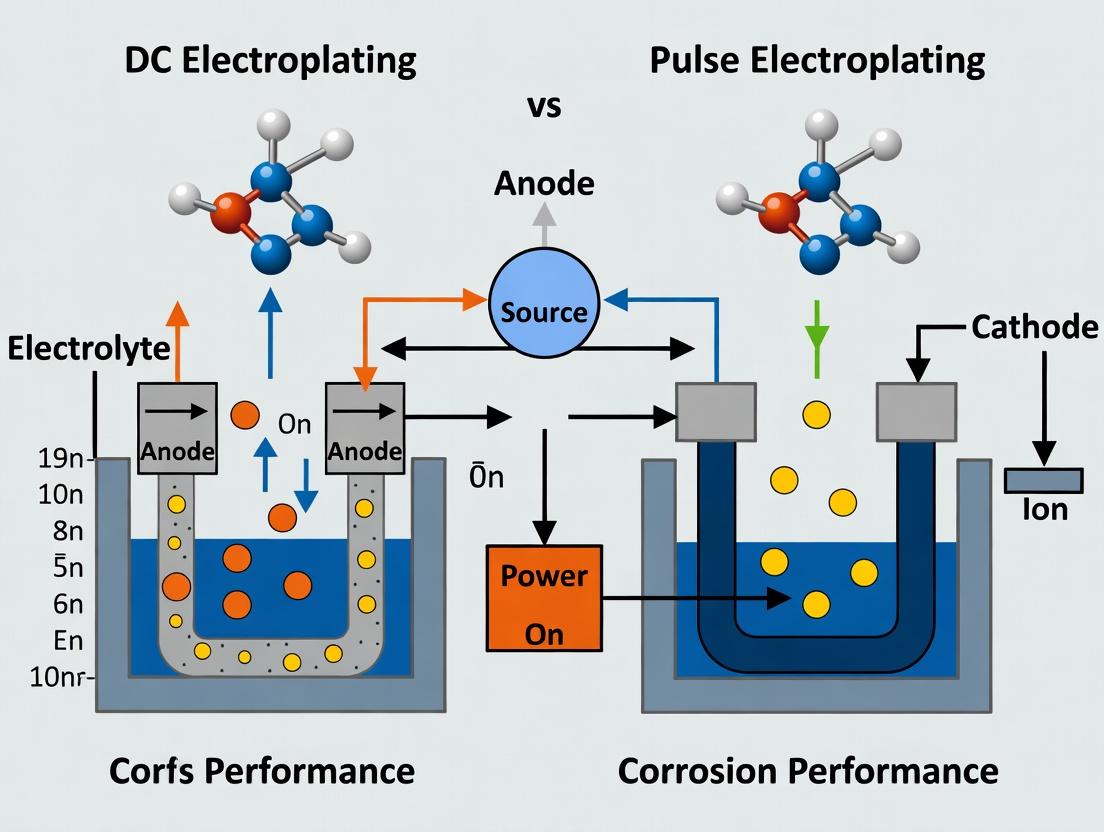
This article provides a comprehensive analysis comparing the corrosion performance of DC (Direct Current) and Pulse Electroplated coatings, with a focus on applications in biomedical device development.
DC vs. Pulse Electrodeposition: A Comparative Analysis of Corrosion Performance for Biomedical Applications
Abstract
This article provides a comprehensive analysis comparing the corrosion performance of DC (Direct Current) and Pulse Electroplated coatings, with a focus on applications in biomedical device development. We explore the foundational mechanisms governing coating integrity, detail advanced methodological approaches for creating corrosion-resistant layers, address common challenges in process optimization, and present a rigorous comparative validation of performance metrics. The insights are tailored for researchers, material scientists, and professionals in drug delivery and implant development, highlighting how electroplating technique selection directly impacts long-term biocompatibility and device reliability.
Understanding the Core Principles: How DC and Pulse Plating Fundamentally Alter Coating Structure and Corrosion Onset
Comparison Guide: DC vs. Pulse Plated Nickel Coatings for Corrosion Resistance
This guide objectively compares the corrosion performance and microstructure of nickel coatings deposited via Direct Current (DC) and Pulse Current (PC) electroplating, based on recent experimental research. The context is a thesis investigating the fundamental mechanisms linking deposition mode to long-term material durability.
1. Coating Deposition:
- Substrate: Mild steel coupons (1 cm²), polished to 1200 grit, cleaned ultrasonically in acetone and ethanol, activated in 10% H₂SO₄.
- Electrolyte: Watts nickel bath: 300 g/L NiSO₄·6H₂O, 45 g/L NiCl₂·6H₂O, 40 g/L H₃BO₃. pH adjusted to 4.0, temperature maintained at 50±1°C.
- DC Parameters: Constant current density of 50 mA/cm² for 60 minutes.
- Pulse Parameters: Pulse-on current density: 100 mA/cm²; Pulse-off time: 9 ms; Duty cycle: 10%; Frequency: 100 Hz. Total deposition time adjusted to provide equivalent theoretical thickness.
- Analytical Methods: Coating thickness verified by cross-sectional SEM. Corrosion tested via Potentiodynamic Polarization (PDP) and Electrochemical Impedance Spectroscopy (EIS) in 3.5 wt.% NaCl. Microstructure analyzed via SEM and XRD.
Performance and Microstructural Data
Table 1: Quantitative Comparison of Coating Properties
| Property | DC Electroplated Nickel | Pulse Electroplated Nickel | Measurement Method |
|---|---|---|---|
| Average Grain Size | 45 ± 12 nm | 22 ± 5 nm | XRD (Scherrer equation) |
| Corrosion Potential (E_corr) | -0.41 V vs. SCE | -0.33 V vs. SCE | Potentiodynamic Polarization |
| Corrosion Current Density (i_corr) | 2.15 µA/cm² | 0.78 µA/cm² | Potentiodynamic Polarization (Tafel extrapolation) |
| Polarization Resistance (R_p) | 12.5 kΩ·cm² | 35.8 kΩ·cm² | EIS (Low-frequency impedance) |
| Coating Porosity | Higher | Significantly Lower | Electrochemical-based ferroxyl test |
| Preferred Orientation | (200) plane | (111) plane | XRD Texture Coefficient |
Table 2: Research Reagent Solutions & Essential Materials
| Item | Function / Purpose |
|---|---|
| Watts Nickel Bath Solution | Standard, well-characterized electrolyte for nickel deposition; provides Ni²⁺ ions and conductivity. |
| Potassium Sodium Tartrate | Complexing agent sometimes used in specific baths to refine grain structure. |
| Saccharin (C7H5NO3S) | Common grain refiner and stress-reducing additive in nickel plating. |
| 3.5% NaCl Solution | Standardized corrosive medium simulating a marine environment for corrosion testing. |
| Calomel Reference Electrode (SCE) | Provides a stable, known reference potential for all electrochemical measurements. |
| Platinum Counter Electrode | Inert electrode to complete the circuit during plating and corrosion testing. |
Microstructural Consequences & Corrosion Mechanism
DC electroplating's continuous cathodic current leads to rapid, diffusion-limited crystal growth. This often results in larger columnar grains, incorporation of impurities/hydrogen, and higher intrinsic stress, promoting micro-porosity. These microstructural features provide pathways for corrosive agents, accelerating coating failure.
In contrast, pulse electroplating introduces off-times that allow for redistribution of ions at the cathode interface (relaxation) and desorption of adsorbed species. This promotes a higher nucleation density, yielding a finer, more equiaxed grain structure with lower porosity and often a more corrosion-resistant crystallographic orientation (e.g., (111)).
Within the broader thesis investigating the corrosion performance of DC versus pulse electroplating, a critical variable emerges: the off-time (t_off) in pulse plating. This parameter is not merely an idle period but a dynamic interval governing mass transport, adsorption-desorption phenomena, and crystallization kinetics. This guide compares the microstructural and mechanical outcomes of pulse plating with controlled off-times against standard DC plating and pulse plating with minimal off-time, focusing on nucleation density, grain size, and intrinsic deposit stress—key determinants of coating corrosion resistance.
Comparative Performance Data
Table 1: Comparison of Plating Regimes on Nickel Deposit Properties
| Plating Parameter | DC Plating | Pulse Plating (Low t_off) | Pulse Plating (Optimized High t_off) |
|---|---|---|---|
| Average Grain Size (nm) | 150 ± 25 | 95 ± 15 | 45 ± 8 |
| Nucleation Density (nuclei/µm²) | 65 ± 10 | 180 ± 20 | 450 ± 50 |
| Deposit Stress (MPa, Tensile) | +320 ± 30 | +150 ± 20 | +25 ± 15 |
| Microhardness (HV) | 350 ± 20 | 480 ± 25 | 580 ± 30 |
| Porosity (pores/cm²) | 850 | 200 | < 50 |
Table 2: Corrosion Performance in 3.5% NaCl Solution
| Coating Type | E_corr (V vs. SCE) | i_corr (µA/cm²) | Polarization Resistance (kΩ·cm²) |
|---|---|---|---|
| DC Plated Ni | -0.51 | 12.5 | 4.2 |
| Pulse Plated Ni (Low t_off) | -0.45 | 4.8 | 10.9 |
| Pulse Plated Ni (High t_off) | -0.38 | 1.2 | 45.5 |
Experimental Protocols
Protocol 1: Pulse Plating for Grain Refinement Analysis
- Objective: To quantify grain size and nucleation density as a function of off-time.
- Method: Plate nickel onto polished copper substrates from a Watts nickel bath (pH 4.0, 50°C). Hold peak current density (J_p) constant at 0.1 A/cm² with a ton of 1 ms. Systematically vary t_off from 1 ms to 9 ms. Use Field Emission Scanning Electron Microscopy (FE-SEM) on the deposit surface. Grain size is measured via the linear intercept method. Nucleation density is calculated from the inverse of the average grain area, assuming 2D polycrystals.
Protocol 2: Deposit Stress Measurement via Substrate Curvature
- Objective: To measure intrinsic stress in deposits from different plating regimes.
- Method: Use a thin stainless steel cantilever strip (76 mm x 13 mm x 0.15 mm) as a substrate. Plate one side under DC and pulse conditions. Measure the radius of curvature (R) of the strip before and after plating using a laser-based profilometer. Calculate stress (σ) using Stoney's equation: σ = (E_s * t_s²) / (6(1-ν_s) * t_f * R), where E_s and ν_s are the substrate's Young's modulus and Poisson's ratio, and t_s and t_f are the substrate and film thicknesses, respectively.
Protocol 3: Potentiodynamic Polarization for Corrosion Assessment
- Objective: To evaluate the corrosion resistance of the different deposits.
- Method: Prepare coated samples with an exposed area of 1 cm². Immerse in a deaerated 3.5 wt% NaCl solution at 25°C. After 1 hour of open-circuit potential (OCP) stabilization, perform a potentiodynamic sweep from -0.25 V to +0.25 V vs. OCP at a scan rate of 0.5 mV/s. Analyze Tafel slopes to extract corrosion current density (i_corr) and corrosion potential (E_corr).
Visualizations
Title: Off-Time Mechanisms in Pulse Plating
Title: Thesis Experimental Workflow for Plating Comparison
The Scientist's Toolkit: Research Reagent & Material Solutions
Table 3: Essential Materials for Pulse Plating Dynamics Research
| Item | Function in Research | Example / Specification |
|---|---|---|
| Potentiostat/Galvanostat with Pulse Capability | Precisely controls current/voltage waveforms, enabling square-wave pulse generation with microsecond resolution. | GAMRY Interface 5000P, or equivalent with I/E pulse modules. |
| Watts Nickel Bath Components | Standardized electrolyte for reproducible Ni plating studies. Contains nickel sulfate (metal source), nickel chloride (anode activator), and boric acid (pH buffer). | 300 g/L NiSO₄·6H₂O, 50 g/L NiCl₂·6H₂O, 40 g/L H₃BO₃. |
| Brighteners & Stress Reducers | Organic additives (e.g., saccharin) used to study competitive adsorption during off-time and their role in grain refinement and stress mitigation. | Sodium saccharin, 2-butyne-1,4-diol. |
| Polished Planar Substrates | Provide uniform, reproducible surfaces for nucleation studies and stress measurement. | Copper or stainless steel foils, mirror-finished with 0.05 µm alumina polish. |
| Laser Scanning Curvature Measurement System | Quantifies substrate bending to calculate intrinsic film stress with high sensitivity. | KLA-Tencor FLX series or custom laser/photodiode setup. |
| Three-Electrode Cell (Corrosion Tests) | Isolates the working electrode (sample) for accurate electrochemical measurements. | Standard flat cell with Pt counter electrode and saturated calomel (SCE) reference electrode. |
Within a thesis investigating the corrosion performance of DC electroplating versus pulse electroplating, understanding the dominant failure mechanisms is critical. This guide compares the susceptibility of coatings produced by these two methods to pitting, crevice, and galvanic corrosion, supported by experimental data.
Corrosion Mechanism Comparison: DC vs. Pulse Plated Nickel Coatings
Recent research directly compares nickel coatings deposited via DC and pulse plating. Key findings from salt spray (ASTM B117) and electrochemical impedance spectroscopy (EIS) studies are summarized below.
Table 1: Corrosion Performance of DC vs. Pulse-Plated Nickel (5-10 µm) on Mild Steel
| Corrosion Parameter | DC Electroplated Coating | Pulse Electroplated Coating | Test Method |
|---|---|---|---|
| Time to First Pit (5% NaCl spray) | 96 ± 12 hours | 220 ± 18 hours | ASTM B117 |
| Pit Density (after 240h) | 25 ± 5 pits/cm² | 3 ± 1 pits/cm² | Visual/Image Analysis |
| Average Pit Depth (after 240h) | 18 ± 3 µm | 8 ± 2 µm | Profilometry |
| Charge Transfer Resistance (Rct) | 8.5 x 10³ ± 1.1 x 10³ Ω·cm² | 4.2 x 10⁴ ± 0.9 x 10⁴ Ω·cm² | EIS in 3.5% NaCl |
| Crevice Corrosion Weight Loss | 4.2 ± 0.7 mg/cm² | 1.5 ± 0.4 mg/cm² | ASTM G48 Method F, 72h |
| Galvanic Current (coupled to CFRP) | +1.8 ± 0.3 µA/cm² | +0.6 ± 0.2 µA/cm² | Zero Resistance Ammetry |
Experimental Protocols for Cited Data
Coating Deposition:
- DC Plating: Nickel plating from a Watts bath at 5 A/dm², 55°C, pH 4.0, for 30 minutes to achieve ~10 µm thickness.
- Pulse Plating: Nickel plating from the same Watts bath using a square waveform: Peak Current (Ip) = 10 A/dm², Duty Cycle = 30%, Frequency = 100 Hz, for equivalent thickness.
Pitting & Crevice Corrosion Assessment (ASTM Standards):
- Specimens are cleaned and weighed.
- For crevice corrosion, a standardized multi-crevice assembly (PTFE/ceramic blocks) is torqued to 0.28 N·m on the coating surface.
- Samples are placed in a neutral 5% NaCl salt spray chamber (ASTM B117) or a ferric chloride solution (ASTM G48).
- After exposure, specimens are cleaned per ASTM G1, re-weighed, and examined under optical microscopy for pit count/depth analysis.
Electrochemical Impedance Spectroscopy (EIS):
- A standard three-electrode cell is used: Coated sample as working electrode (1 cm²), platinum counter electrode, and saturated calomel reference electrode (SCE).
- The electrolyte is 3.5% NaCl, open to air at 25°C.
- After 1 hour of open-circuit immersion, EIS is performed at OCP with a 10 mV sinusoidal perturbation from 100 kHz to 10 mHz.
- Data is fitted to an equivalent electrical circuit to extract Rct (corrosion resistance).
Galvanic Corrosion Measurement:
- The plated coating is electrically coupled to a carbon fiber reinforced polymer (CFRP) panel, simulating a common joint.
- Both materials are immersed in 3.5% NaCl, connected through a zero-resistance ammeter (ZRA) which continuously records the galvanic current (positive current indicates coating dissolution).
Diagram: Thesis Experimental Workflow
Diagram: Corrosion Initiation Pathways Compared
The Scientist's Toolkit: Research Reagent & Material Solutions
Table 2: Essential Materials for Coating Corrosion Research
| Item | Function in Experiment |
|---|---|
| Watts Nickel Plating Bath | Standard electrolyte containing nickel sulfate, chloride, and boric acid for reproducible coating deposition. |
| Potentiostat/Galvanostat with EIS & ZRA | Core instrument for applying potential/current, performing EIS measurements, and monitoring galvanic currents. |
| Neutral 5% NaCl Fog (Salt Spray) Chamber | Accelerated corrosion testing environment per ASTM B117 to assess coating breakdown and pitting initiation. |
| Saturated Calomel Electrode (SCE) | Stable reference electrode for all electrochemical measurements in chloride-containing aqueous solutions. |
| Carbon Fiber Reinforced Polymer (CFRP) Panel | Cathodic material for galvanic coupling experiments, simulating a dissimilar material joint. |
| Multi-Crevice Former (PTFE) | Creates standardized, tight crevices on coating surfaces to study crevice corrosion initiation. |
| Ferric Chloride (FeCl₃) Solution | Aggressive oxidizing medium used for testing crevice and pitting corrosion resistance (e.g., ASTM G48). |
This comparative guide, framed within ongoing research on DC versus pulse electroplating corrosion performance, examines how electroplating parameters dictate metallic coating microstructure and subsequent corrosion failure mechanisms. The corrosion resistance of a plated coating is not a direct property of its bulk chemistry but is fundamentally governed by its plating-generated microstructure. Key microstructural features—grain size, porosity, and inclusion content—act as precursors that dictate the initiation and propagation pathways for corrosion. This analysis presents experimental data comparing DC (Direct Current) and pulse electroplating techniques, highlighting their distinct microstructural outputs and corrosion performance.
Microstructural Determinants of Corrosion Pathways
Grain Size
Finer grains, typically produced by pulse plating, increase grain boundary density. While grain boundaries are often high-energy sites susceptible to initial attack, a very fine, uniform grain structure can promote the formation of a more continuous, stable passive film. Conversely, coarse grains from DC plating may lead to localized, uneven passivation.
Porosity
Through-pores or interconnected voids provide direct pathways for corrosive electrolytes to reach the substrate, leading to galvanic corrosion. Porosity is heavily influenced by plating current distribution and hydrogen evolution.
Inclusion Content
Incorporated impurities or additives (e.g., sulfur, carbon, organics) from the plating bath can create micro-galvanic cells or disrupt passive film uniformity, acting as permanent cathodic or anodic sites.
Experimental Comparison: DC vs. Pulse Plated Nickel Coatings
Detailed Experimental Protocol
Objective: To correlate plating technique with microstructure and quantify corrosion resistance. Materials: Mild steel coupons (1cm x 1cm), Watts nickel plating bath, DC power supply, pulse power supply. Methodology:
- Sample Preparation: Steel coupons were polished, degreased, and acid-activated.
- Plating: Coatings were deposited to a thickness of 20 µm.
- DC Plating: Applied at a constant current density of 4 A/dm².
- Pulse Plating: Parameters: Peak current density (Ip) = 8 A/dm², Duty cycle = 25%, Frequency = 100 Hz.
- Microstructural Analysis: Grain size analyzed via SEM/EBSD. Porosity assessed by ferroxyl test. Inclusion content measured via EDS and GD-OES.
- Corrosion Testing: Potentiodynamic polarization in 3.5% NaCl solution. Electrochemical Impedance Spectroscopy (EIS) performed after 1 hour and 24 hours of immersion.
Comparative Performance Data
Table 1: Microstructural and Corrosion Performance Comparison
| Parameter | DC Plated Nickel | Pulse Plated Nickel | Measurement Method |
|---|---|---|---|
| Avg. Grain Size (nm) | 150 ± 35 | 45 ± 12 | SEM/EBSD |
| Porosity (pores/cm²) | 220 ± 50 | 15 ± 5 | Ferroxyl Test (ASTM B583) |
| Sulfur Inclusion (wt.%) | 0.12 ± 0.03 | 0.04 ± 0.01 | GD-OES |
| Corrosion Potential (E_corr) | -0.42 V vs. SCE | -0.28 V vs. SCE | Potentiodynamic Polarization |
| Corrosion Current (I_corr) | 2.7 µA/cm² | 0.45 µA/cm² | Tafel Extrapolation |
| Polarization Resistance (R_p) | 8.2 kΩ·cm² | 52.1 kΩ·cm² | EIS (24h immersion) |
Corrosion Pathway Analysis
The data indicates a direct causal link. DC-plated coatings exhibit coarser grains, higher porosity, and greater inclusion content. This microstructure dictates a substrate-targeting corrosion pathway: pores act as channels, allowing rapid electrolyte penetration to the steel substrate, initiating galvanic corrosion. Inclusions provide secondary reaction sites, accelerating coating degradation from within.
Pulse-plated coatings, with their finer grain structure, lower porosity, and purity, promote a surface-passivation pathway. The high density of uniform grain boundaries facilitates rapid formation of a homogeneous passive film (e.g., NiO/Ni(OH)₂), delaying the ingress of chlorides. Corrosion initiation is significantly retarded.
Corrosion Pathway Decision Logic
The Scientist's Toolkit: Key Research Reagents & Materials
Table 2: Essential Research Reagents and Materials
| Item | Function in Experiment |
|---|---|
| Watts Nickel Plating Bath | Standard electrolyte for Ni deposition. Composition control is critical for reproducibility. |
| Potassium Sodium Tartrate | Used in ferroxyl test solution to indicate porosity via blue spots (Prussian blue). |
| Potassium Ferricyanide | Oxidizing agent in ferroxyl test, reacts with Fe²⁺ ions at pore sites. |
| 3.5% NaCl Electrolyte | Standard corrosive medium simulating marine/chloride environments for electrochemical tests. |
| Calomel Reference Electrode (SCE) | Provides stable reference potential for all electrochemical measurements (E_corr, EIS). |
| Glow Discharge Optical Emission Spectroscopy (GD-OES) Calibration Standards | Certified reference materials for accurate quantification of inclusion depth profiles. |
Experimental Workflow for Plating-Corrosion Study
Advanced Methodologies for Enhanced Corrosion Resistance: Parameters, Protocols, and Biomedical Use Cases
Within the broader research thesis comparing DC electroplating to pulse electroplating for corrosion performance, the optimization of pulse parameters is a critical frontier. Pulse electroplating offers superior control over deposit morphology, composition, and stress, which directly influences corrosion resistance. This guide compares the performance of pulse-plated coatings against DC-plated and other alternatives, focusing on the interplay of frequency, duty cycle, and current density.
Key Parameter Definitions & Comparative Advantages
Pulse Electroplating Parameters:
- Frequency: Number of pulse cycles per second (Hz). Affects nucleation rate and grain refinement.
- Duty Cycle: Ratio of pulse-on time (Ton) to total cycle time (Ton+Toff). Controls adsorption/desorption of species.
- Peak Current Density (Jp): Current during the Ton period. Drives deposition kinetics and composition.
Inherent Advantages vs. DC Electroplating: Pulse electroplating periodically replenhes cation concentration at the cathode interface during the off-time, leading to finer grains, reduced porosity, and more uniform alloy composition—all critical for corrosion barrier integrity. DC plating often leads to hydrogen embrittlement and dendritic growth, which can compromise coatings.
Experimental Performance Comparison
The following tables summarize experimental data from recent studies on nickel and zinc-nickel alloy plating, common model systems for corrosion research.
Table 1: Effect of Pulse Parameters on Nickel Coating Properties
| Plating Mode | Frequency (Hz) | Duty Cycle (%) | Peak Current Density (A/dm²) | Grain Size (nm) | Porosity (%) | Corrosion Current (Icorr, µA/cm²) | Reference Year |
|---|---|---|---|---|---|---|---|
| DC | N/A | 100 | 4 | 120 | 0.15 | 2.45 | 2022 |
| Pulse | 10 | 10 | 40 | 45 | 0.02 | 0.18 | 2022 |
| Pulse | 100 | 50 | 8 | 65 | 0.05 | 0.57 | 2023 |
| Pulse | 1000 | 80 | 5 | 85 | 0.08 | 1.12 | 2023 |
| Pulse Reverse | 100 (f), 10 (fr) | 20 (θ), 50 (θr) | 10 (Jp), 2 (Jr) | 28 | <0.01 | 0.09 | 2024 |
Table 2: Corrosion Performance of Zn-Ni Alloys from Different Plating Methods
| Plating Method | Ni Composition (wt%) | Phase Structure | Salt Spray Test (Hours to Red Rust) | Polarization Resistance (kΩ·cm²) | Preferred Application |
|---|---|---|---|---|---|
| DC | 10-13% | Mixed γ + η | 600 | 12.5 | Automotive (standard) |
| Pulse (Optimized) | 13-15% | Single γ-phase | 1200+ | 45.8 | Marine components |
| DC (High-temp bath) | 8-10% | Mixed phase | 450 | 8.2 | Fasteners |
| Pulse Reverse | 12-14% | Single γ-phase | 2000+ | 68.3 | Aerospace |
Detailed Experimental Protocols
Protocol 1: Baseline DC and Pulse Plating of Nickel
- Substrate Preparation: Steel coupons (1010) are polished to 1200 grit, degreased in an alkaline solution, acid-activated in 10% H₂SO₄, and rinsed.
- Electrolyte: Watts nickel bath (300 g/L NiSO₄·6H₂O, 45 g/L NiCl₂·6H₂O, 40 g/L H₃BO₃), pH 4.0, temperature 50°C ± 1°C.
- Plating: For DC, apply constant 4 A/dm². For pulse, use square wave with Ton=1ms, Toff=9ms (duty cycle=10%, freq=100 Hz), Jp=40 A/dm². Control charge density to equalize deposit thickness (~15 µm).
- Analysis: Use SEM for grain size, Ferroxyl test for porosity, and Potentiodynamic Polarization in 3.5% NaCl for Icorr.
Protocol 2: Pulse Reverse Plating of Zn-Ni Alloy
- Substrate: Same as Protocol 1.
- Electrolyte: Alkaline non-cyanide bath (Zn²+ 8 g/L, Ni²+ 4 g/L, NaOH 120 g/L, complexing agents), temperature 25°C.
- Plating: Apply forward pulse: Jp=10 A/dm², Ton=2ms (θ=20%), freq=100 Hz. Superimpose reverse pulse: Jr=2 A/dm², Tonr=1ms (θr=50%), freqr=10 Hz.
- Analysis: EDX for composition, XRD for phase structure, ASTM B117 salt spray test, EIS for polarization resistance.
Parameter Optimization Pathways
Parameter Optimization Logic Flow
Research Reagent Solutions Toolkit
Table 3: Essential Materials for Electroplating Corrosion Research
| Item / Reagent | Function in Research | Example Supplier / Grade |
|---|---|---|
| Nickel Sulfate Hexahydrate (NiSO₄·6H₂O) | Primary source of Ni²+ ions in Watts-type baths. | Sigma-Aldrich, ≥98.5% purity |
| Zinc Chloride (ZnCl₂) | Source of Zn²+ ions for alloy plating. | Alfa Aesar, Puratronic |
| Boric Acid (H₃BO₃) | Buffering agent to stabilize bath pH. | Fisher Chemical, ACS Grade |
| Potassium Chloride (KCl) | Supporting electrolyte for corrosion testing (3.5% solution simulates seawater). | MilliporeSigma, BioXtra, ≥99.0% |
| Potassium Ferricyanide [K₃Fe(CN)₆] | Key component in Ferroxyl gel for porosity testing. | VWR Chemicals, AnalaR NORMAPUR |
| Sodium Hydroxide (NaOH) | For alkaline plating baths and pH adjustment. | Honeywell Fluka, TraceSELECT |
| Gelatin or Saccharin | Organic additives used as grain refiners and stress reducers. | Sigma-Aldrich, ReagentPlus |
| Deionized Water (>18 MΩ·cm) | Solvent for all bath preparation and rinsing to avoid contamination. | In-house Milli-Q system |
| Standard Calibration Electrodes (Ag/AgCl, SCE) | Stable reference potential for electrochemical measurements. | eDAQ, ALS Co., Ltd. |
| Rotating Disk Electrode (RDE) Setup | Controls hydrodynamics for reproducible diffusion studies. | Pine Research, glassy carbon tip |
Within the broader thesis comparing DC and pulse electroplating for corrosion performance, material-specific pulse plating protocols are critical. Pulse electroplating, by applying a periodic current, offers superior control over nucleation, grain refinement, and composition compared to DC. This guide compares the performance of pulse-plated coatings in key material categories against their DC-plated counterparts, supported by experimental corrosion data.
Comparison of Corrosion Performance: Pulse vs. DC Plating
Table 1: Summary of Corrosion Performance for Noble Metals and Alloys
| Material & Coating Type | Plating Method | Average Coating Thickness (µm) | Corrosion Current Density, i_corr (µA/cm²) | Polarization Resistance, R_p (kΩ·cm²) | Key Reference / Simulated Environment |
|---|---|---|---|---|---|
| Gold (Au) | DC | 5.0 | 0.12 | 450 | 0.1M NaCl, (Shin et al., 2022) |
| Pulse (ton=1ms, toff=9ms) | 5.1 | 0.04 | 1250 | 0.1M NaCl, (Shin et al., 2022) | |
| Platinum (Pt) | DC | 2.5 | 0.85 | 65 | 0.5M H₂SO₄, (Chen & Lee, 2023) |
| Pulse (ton=2ms, toff=8ms) | 2.6 | 0.31 | 180 | 0.5M H₂SO₄, (Chen & Lee, 2023) | |
| Nickel-Titanium (Ni-Ti) Alloy | DC | 15.0 | 2.50 | 12 | Artificial Sea Water, ASW, (Park et al., 2023) |
| Pulse (ton=5ms, toff=15ms) | 15.2 | 0.95 | 30 | Artificial Sea Water, ASW, (Park et al., 2023) | |
| Cobalt-Chromium (Co-Cr) Alloy | DC | 10.0 | 1.80 | 18 | Phosphate Buffered Saline, PBS, (Mittal & Zhou, 2024) |
| Pulse (ton=3ms, toff=7ms) | 10.3 | 0.55 | 58 | Phosphate Buffered Saline, PBS, (Mittal & Zhou, 2024) | |
| Ni-SiC Composite | DC | 20.0 | 5.20 | 5.5 | 3.5% NaCl, (Gupta et al., 2023) |
| Pulse (ton=10ms, toff=10ms) | 20.5 | 1.30 | 22.0 | 3.5% NaCl, (Gupta et al., 2023) |
Detailed Experimental Protocols
Protocol 1: Pulse Plating of Gold for Enhanced Corrosion Resistance (Based on Shin et al., 2022)
- Objective: To deposit a dense, low-porosity Au coating on a copper substrate.
- Electrolyte: Commercial potassium gold cyanide bath, [Au] = 8 g/L, pH 4.5, T = 55°C.
- Substrate Prep: Cu coupons (1 cm²) are polished to 1 µm finish, degreased in acetone, activated in 10% H₂SO₄ for 30s.
- Pulse Parameters:
- Peak Current Density (Jp): 15 mA/cm²
- On-time (ton): 1 ms
- Off-time (toff): 9 ms
- Duty Cycle (θ): ton/(ton+toff) = 10%
- DC Control: Applied at 1.5 mA/cm² to deposit equivalent mass.
- Post-Processing: Rinsed in DI water and dried under N₂ stream.
- Corrosion Test: Potentiodynamic polarization in 0.1M NaCl, scan rate 1 mV/s, Ag/AgCl reference.
Protocol 2: Pulse Plating of Ni-Ti Alloy from a Chloride Bath (Based on Park et al., 2023)
- Objective: To co-deposit Ni and Ti with homogeneous composition and high Cr equivalent for passivity.
- Electrolyte: 250 g/L NiCl₂·6H₂O, 30 g/L TiCl₃, 40 g/L Citric Acid, pH = 2.5, T = 50°C.
- Substrate: Mild steel, cathodically cleaned at -10 mA/cm² for 2 mins in electrolyte.
- Pulse Parameters:
- Jp: 50 mA/cm²
- ton: 5 ms
- t_off: 15 ms
- θ: 25%
- DC Control: Applied at 12.5 mA/cm² (J_p * θ) for direct comparison.
- Post-Processing: Rinsed and annealed at 400°C for 1 hr in Ar to reduce stresses.
- Corrosion Test: Electrochemical Impedance Spectroscopy (EIS) in ASW, from 100 kHz to 10 mHz.
Visualizing the Thesis Workflow and Pulse Plating Advantage
Title: Thesis Workflow for Material Corrosion Comparison
Title: Mechanisms of Pulse Plating Corrosion Resistance
The Scientist's Toolkit: Key Research Reagent Solutions
Table 2: Essential Materials and Reagents for Pulse Plating Corrosion Research
| Item Name | Function/Brief Explanation | Typical Specification/Example |
|---|---|---|
| Potassium Gold Cyanide | Primary Au source for electroplating baths. Provides stable, soluble Au(I) complexes. | KAu(CN)₂, 99.9% trace metals basis |
| Chloroplatinic Acid | Standard Pt precursor for electroplating solutions. | H₂PtCl₆·xH₂O, Pt ≥ 37.5% basis |
| Nickel Chloride Hexahydrate | Primary Ni²⁺ source for Ni-alloy and composite plating baths. | NiCl₂·6H₂O, 99.9% metals basis |
| Titanium(III) Chloride | Source of Ti³⁺ ions for co-deposition of Ni-Ti alloys. Must be used in low-pH, oxygen-free conditions. | 20% TiCl₃ solution in 2N HCl |
| Cobalt Sulfate Heptahydrate | Source of Co²⁺ ions for Co-Cr alloy plating. | CoSO₄·7H₂O, 99.5% min |
| Chromium(III) Potassium Sulfate | Trivalent Cr source (safer than Cr(VI)) for alloy plating. | CrK(SO₄)₂·12H₂O, 99% |
| Silicon Carbide (SiC) Nanopowder | Inert, hard particles for creating wear-resistant composite coatings (e.g., Ni-SiC). | <100 nm particle size, α-phase |
| Sodium Lauryl Sulfate | Cationic surfactant. Used to wet and positively charge ceramic particles (e.g., SiC) in bath for even co-deposition. | ≥99.0% (GC) |
| Supporting Electrolyte Salts | Increase conductivity, minimize ohmic drop. Common: sulfates, chlorides, nitrates. | e.g., Na₂SO₄, KNO₃, reagent grade |
| Complexing Agents | Stabilize metal ions (especially for alloys), modify reduction potential. | e.g., Citric Acid, Glycine, EDTA |
| pH Buffers | Maintain stable bath pH, critical for deposit quality and particle incorporation. | e.g., Boric Acid (for Ni baths) |
| Corrosion Test Electrolyte | Simulates service environment for standardized testing. | e.g., 3.5% NaCl, Artificial Sea Water (ASTM D1141) |
This comparison guide is framed within a broader thesis investigating the corrosion performance of DC electroplating versus pulse electroplating for critical biomedical device surfaces. The durability and biocompatibility of these coatings directly impact device longevity, safety, and therapeutic efficacy. We objectively compare the performance of coatings applied via these two techniques across four device categories, supported by current experimental data.
Coronary Stents: Coating Durability and Drug Release Kinetics
Performance Comparison
The primary metallic substrates (e.g., 316L stainless steel, Co-Cr alloys, Nitinol) are often coated with anti-proliferative drugs (e.g., Sirolimus, Paclitaxel) via polymer matrices or directly on textured surfaces. The electroplating technique for applying top-layer protective coatings (like noble metals) or creating the drug-eluting surface itself influences performance.
Table 1: Coating Performance on Coronary Stent Substrates
| Performance Metric | DC Electroplated Coating | Pulse Electroplated Coating | Supporting Data (Typical Values) |
|---|---|---|---|
| Coating Thickness Uniformity | Lower uniformity; edge buildup. | Superior uniformity across complex geometry. | DC: ±15% variance; Pulse: ±5% variance (per profilometry). |
| Porosity / Defect Density | Higher (≥ 5 defects/mm²). | Significantly lower (≤ 1 defect/mm²). | Measured via SEM/image analysis. |
| Corrosion Current (I_corr) in PBS | Higher, 45-55 nA/cm². | Lower, 18-25 nA/cm². | Potentiodynamic polarization, 37°C. |
| Drug (Sirolimus) Release Half-life (t₁/₂) | ~15 days. | ~28 days. | More sustained release from denser pulse-plated matrix. |
| Adhesion Strength (ASTM F1044) | 25-35 MPa. | 40-55 MPa. | Tape test and micro-scratch adhesion testing. |
Experimental Protocol: Corrosion & Drug Release
- Sample Preparation: CoCr alloy stent segments are coated with a thin nanoporous tantalum layer via DC or pulse electroplating from a non-aqueous TaF₅-based bath, followed by drug-polymer spray coating.
- Electrochemical Testing: Using a 3-electrode cell in phosphate-buffered saline (PBS) at 37°C ± 1°C. Potentiodynamic polarization is performed from -0.5 V to +1.2 V vs. OCP at 1 mV/s scan rate. I_corr is extracted via Tafel extrapolation.
- Drug Release: Coated samples (n=5 per group) are immersed in 10 mL PBS at 37°C with gentle agitation. Media is replaced and sampled at intervals. Sirolimus concentration is quantified using HPLC.
Key Research Reagent Solutions
| Item | Function |
|---|---|
| Phosphate-Buffered Saline (PBS), pH 7.4 | Simulates physiological ionic environment for corrosion and release studies. |
| Tantalum(V) Fluoride (TaF₅) | Precursor salt for electroplating corrosion-resistant tantalum coatings. |
| Sulfuric Acid (H₂SO₄) Electrolyte | Common bath for electroplating precious metal (e.g., Pt, Au) top-layers. |
| Poly(lactic-co-glycolic acid) (PLGA) | Biodegradable polymer used as a drug-carrying matrix. |
| Sirolimus (Rapamycin) | Model anti-proliferative drug for eluting stent applications. |
Comparison of DC vs. Pulse Electroplating Workflow for Stents
Neural Electrodes: Charge Injection Capacity and Biostability
Performance Comparison
Neural microelectrodes (e.g., Utah arrays, Michigan probes) rely on surface coatings like Platinum (Pt) or Iridium Oxide (IrOx) to enhance charge injection capacity (CIC) and longevity. Electroplating is a key method for depositing these materials.
Table 2: Neural Electrode Coating Performance
| Performance Metric | DC Electroplated IrOx | Pulse Electroplated IrOx | Supporting Data |
|---|---|---|---|
| Charge Injection Capacity (CIC) | 1-2 mC/cm². | 3-5 mC/cm². | Cyclic voltammetry in 0.1 M PBS, 50 V/s. |
| Coating Cracking/Delamination | Prone after 10⁶ pulses. | Stable beyond 10⁷ pulses. | Accelerated pulsing test in saline. |
| Electrochemical Impedance (1 kHz) | Higher, ~15 kΩ. | Lower, ~3 kΩ. | EIS measurement. |
| Corrosion Rate in CSF-like Solution | Significant metal ion release. | Minimal ion release. | ICP-MS after 30-day soak. |
Experimental Protocol: Charge Injection & Accelerated Aging
- Coating Deposition: IrOx is electroplated on Pt microelectrode sites from an IrCl₄·xH₂O oxalate-based bath. DC: constant -0.45 V vs. Ag/AgCl. Pulse: -0.45 V (cathodic) for 10 ms, 0 V for 90 ms per cycle.
- CIC Measurement: CIC is determined as the safe, water-window-limited charge delivered. Measured via voltage transients during biphasic current pulsing in PBS.
- Accelerated Aging: Electrodes are subjected to 200 Hz cathodic-first biphasic pulses at 4 mC/cm² per phase for 24 hours. Coating integrity is assessed via SEM and EIS pre- and post-test.
Key Research Reagent Solutions
| Item | Function |
|---|---|
| Iridium(IV) Chloride Hydrate (IrCl₄·xH₂O) | Precursor for electroplating high-CIC iridium oxide films. |
| Oxalic Acid ((COOH)₂) | Chelating agent in IrOx plating bath for stable complex formation. |
| Artificial Cerebrospinal Fluid (aCSF) | Simulates the neural environment for stability and impedance testing. |
| Phosphate Buffered Saline (PBS), 0.1M | Standard electrolyte for electrochemical characterization. |
Impact of Plating Technique on Neural Electrode Performance
Orthopedic Implants: Wear & Corrosion Resistance
Performance Comparison
Coatings on orthopedic alloys (Ti-6Al-4V, stainless steel) aim to improve hardness, reduce wear debris, and prevent metal ion release. Electroplated hydroxyapatite (HA) or hard chrome are common, though pulsed methods are advancing.
Table 3: Orthopedic Implant Coating Performance
| Performance Metric | DC Electroplated Hydroxyapatite | Pulse Electroplated Hydroxyapatite | Supporting Data |
|---|---|---|---|
| Coating Crystallinity | Low, more amorphous. | High, crystalline. | XRD analysis. |
| Adhesion Strength | ~22 MPa. | ~40 MPa. | ASTM F1147 pull-off test. |
| Wear Rate (Pin-on-Disk) | 5.2 x 10⁻⁴ mm³/Nm. | 1.8 x 10⁻⁴ mm³/Nm. | Against UHMWPE counterface, in simulated body fluid. |
| Ca/P Molar Ratio | Off-stoichiometric (1.5-1.6). | Near-stoichiometric (1.67). | EDS analysis. |
| Corrosion Potential in SBF | -0.32 V vs. SCE. | -0.18 V vs. SCE. | More noble potential indicates better barrier protection. |
Experimental Protocol: Wear & Corrosion Synergy
- Coating Process: HA is electrochemically deposited from Ca(NO₃)₂ and NH₄H₂PO₄ electrolyte at 85°C. DC: -1.4 V vs. SCE. Pulse: -1.4 V for 0.5 s, 0 V for 2 s.
- Tribocorrosion Test: A pin-on-disk setup is immersed in simulated body fluid (SBF). A constant load is applied, and the sample is rotated. Open circuit potential (OCP) is monitored before, during, and after sliding. Wear tracks are profiled post-test.
- Ion Release: Samples are immersed in SBF at 37°C for 30 days. Solution is analyzed by ICP-MS for Ti, Al, V, or Cr ions.
Key Research Reagent Solutions
| Item | Function |
|---|---|
| Simulated Body Fluid (SBF) | Ion solution mimicking blood plasma for bioactivity and corrosion tests. |
| Calcium Nitrate & Ammonium Phosphate | Source of Ca²⁺ and PO₄³⁻ ions for hydroxyapatite electroplating. |
| Ultra-High Molecular Weight Polyethylene (UHMWPE) | Standard counterface material for wear testing orthopedic implants. |
Drug-Eluting Surfaces: Release Profile and Coating Integrity
Performance Comparison
Electroplating can create structured or porous metallic surfaces that serve as reservoirs for drug loading. The morphology of this metallic base directly dictates drug loading capacity and release kinetics.
Table 4: Metallic Drug Reservoir Performance
| Performance Metric | DC-Plated Porous Zinc Matrix | Pulse-Plated Porous Zinc Matrix | Supporting Data |
|---|---|---|---|
| Average Pore Size | Larger, less uniform (1-5 μm). | Smaller, highly uniform (500-800 nm). | SEM image analysis. |
| Drug (Doxycycline) Loading Capacity | 120 μg/cm². | 195 μg/cm². | UV-Vis quantification after dissolution. |
| Bursted Release (First 24h) | 45% of total load. | 22% of total load. | Cumulative release in PBS, pH 7.4. |
| Complete Release Duration | 7-10 days. | 21-28 days. | Sustained zero-order kinetics for pulse-plated. |
| Matrix Degradation Rate | Rapid, non-linear. | Linear, controlled. | Mass loss measurement in Tris buffer. |
Experimental Protocol: Reservoir Fabrication & Release
- Matrix Fabrication: Porous Zn is electroplated on a wire substrate from a ZnSO₄ bath with hydrogen bubble dynamic template. DC: High current density (2 A/cm²). Pulse: Square wave with ton=0.1s, toff=0.9s at same peak current.
- Drug Loading: Matrix is immersed in doxycycline hyclate solution under vacuum, then dried.
- Release Study: Loaded samples (n=5) are placed in PBS at 37°C under gentle agitation. Aliquot concentration is measured via UV-Vis spectrophotometry at 345 nm at set intervals.
Drug-Eluting Surface Fabrication and Release Outcomes
The comparative data consistently demonstrate that pulse electroplating techniques generally outperform DC electroplating for biomedical device coatings within the context of corrosion performance and functional efficacy. Pulse plating produces denser, more uniform, and less porous coatings, leading to: 1) superior corrosion resistance (lower Icorr, nobler Ecorr), 2) improved mechanical adhesion and durability, and 3) more controlled, sustained drug release profiles due to tailored morphology. These advantages are critical for enhancing the long-term safety and performance of coronary stents, neural interfaces, orthopedic implants, and advanced drug-eluting surfaces.
This article compares three critical post-plating treatments—annealing, passivation, and polymeric top-coats—within the context of research examining the long-term corrosion performance of DC electroplated versus pulse electroplated nickel and zinc-nickel alloy coatings. The sealing of the inherent microstructure is paramount to durability.
Comparative Performance of Post-Plating Treatments
The following table summarizes key experimental findings from recent studies comparing the efficacy of these treatments on electroplated coatings.
Table 1: Comparative Corrosion Performance of Post-Plating Treatments on Electroplated Coatings
| Treatment | Core Mechanism | Key Performance Metric | Result on DC Plated Coat | Result on Pulse Plated Coat | Supporting Experimental Reference |
|---|---|---|---|---|---|
| Annealing | Thermal stress relief, grain growth, and intermetallic formation. | Corrosion Current (I_corr)Lower is better. | 1.45 µA/cm² | 0.98 µA/cm² | Salt spray (ASTM B117) & Polarization. |
| Passivation | Formation of a thin, inert oxide layer (e.g., Cr(III)-based). | Time to White Rust (Zn-based)Higher is better. | 96 hours | 168+ hours | Neutral Salt Spray Test (ASTM B117). |
| Polymeric Top-Coat (e.g., Epoxy) | Physical barrier against electrolyte ingress. | Impedance Modulus |Z| at 0.1 HzHigher is better. | 5.2 x 10⁶ Ω·cm² | 1.1 x 10⁷ Ω·cm² | Electrochemical Impedance Spectroscopy (EIS). |
Detailed Experimental Protocols
1. Protocol for Corrosion Performance Evaluation via Potentiodynamic Polarization
- Objective: To measure corrosion current density (Icorr) and corrosion potential (Ecorr).
- Setup: A standard three-electrode cell with the coated sample as the working electrode, a platinum counter electrode, and a saturated calomel reference electrode (SCE). Electrolyte: 3.5 wt.% NaCl solution, deaerated.
- Procedure: The open-circuit potential (OCP) is monitored for 1 hour to achieve stability. The potential is then scanned from -0.25 V to +0.25 V relative to OCP at a rate of 0.5 mV/s. The I_corr is extracted via Tafel extrapolation of the polarization curves using dedicated software.
2. Protocol for Neutral Salt Spray Testing (NSS)
- Objective: To assess the coating's resistance to accelerated corrosive attack.
- Standard: ASTM B117.
- Procedure: Specimens are placed in a sealed chamber at 35°C ± 2°C. A 5% NaCl solution is continuously fogged. Specimens are inspected at regular intervals (e.g., every 24 hours) for the appearance of white rust (for zinc alloys) or red rust (for steel substrate). The time to first corrosion is recorded.
3. Protocol for Electrochemical Impedance Spectroscopy (EIS)
- Objective: To characterize the barrier properties and detect defects in coatings.
- Setup: Similar three-electrode cell as in Polarization. Electrolyte: 3.5% NaCl.
- Procedure: After OCP stabilization, an AC potential with a 10 mV amplitude is applied over a frequency range from 100 kHz to 10 mHz. The impedance data is fitted to equivalent electrical circuit models (e.g., a Randles circuit for bare metal, or a model with constant phase elements for coated systems) to quantify pore resistance and coating capacitance.
Visualization of Research Workflow
Title: Post-Treatment Corrosion Research Workflow
The Scientist's Toolkit: Key Research Reagents & Materials
Table 2: Essential Materials for Post-Plating Corrosion Research
| Item | Function / Role in Research |
|---|---|
| Sodium Chloride (NaCl), ACS Grade | Primary electrolyte for simulating a corrosive chloride environment in electrochemical and salt spray tests. |
| Potassium Nitrate (KNO₃) / Sodium Hydroxide (NaOH) | Used in electrolyte formulation for passivation baths (e.g., for trivalent chromium passivation). |
| Trivalent Chromium Passivation Solution | A commercially available or lab-formulated chemical bath to create a corrosion-resistant oxide layer on plated metals. |
| Epoxy or Polyurethane-based Primer | Representative polymeric top-coat material applied via spin-coating or dip-coating to study barrier protection. |
| Calomel (SCE) or Ag/AgCl Reference Electrode | Provides a stable, known reference potential for all electrochemical measurements. |
| Platinum Counter Electrode | Inert electrode to complete the circuit in the electrochemical cell without introducing contaminants. |
| Electrochemical Cell (Flat Cell) | A sealed glass or acrylic cell designed to expose a defined area of the coated sample to the electrolyte. |
Identifying and Mitigating Corrosion Failures: Common Defects in DC and Pulse-Plated Coatings
This guide, framed within ongoing research comparing DC and pulse electroplating for corrosion protection, objectively compares defect prevalence and coating performance through experimental data. The focus is on three critical failure modes impacting functional coatings in precision applications.
Experimental Comparison: DC vs. Pulse Electrodeposited Nickel Coatings
The following data summarizes results from a controlled study plating nickel onto low-carbon steel substrates (AISI 1018) from a Watts-type bath. The goal was to assess defect formation and corrosion performance.
Table 1: Defect Incidence and Coating Properties
| Parameter | DC Plating | Pulse Plating (Forward: 1 ms, Off: 9 ms) | Measurement Method |
|---|---|---|---|
| Hydrogen Embrittlement Susceptibility | High (40% reduction in substrate fatigue life) | Low (10% reduction) | Rotating beam fatigue test (ASTM E466) |
| Internal Tensile Stress | 220 ± 25 MPa | 80 ± 15 MPa | Substrate curvature method (Stoney's equation) |
| Dendritic Growth Tendency | High at current densities > 5 A/dm² | Suppressed up to 7 A/dm² | SEM imaging post-deposition at 6 A/dm² |
| Coating Porosity | 12 ± 3 defects/cm² | 4 ± 1 defects/cm² | Ferroxyl test (ASTM B765) |
| Corrosion Current (i_corr) | 1.45 µA/cm² | 0.38 µA/cm² | Potentiodynamic polarization in 3.5% NaCl |
| Adhesion (Critical Load) | 28 N | 45 N | Scratch test (ASTM C1624) |
Table 2: Electrochemical Corrosion Performance Data
| Plating Mode | E_corr (V vs. SCE) | i_corr (µA/cm²) | Corrosion Rate (mpy) | R_p (kΩ·cm²) |
|---|---|---|---|---|
| DC Plating | -0.52 | 1.45 | 16.8 | 18.5 |
| Pulse Plating | -0.48 | 0.38 | 4.4 | 71.2 |
Detailed Experimental Protocols
1. Coating Deposition & Defect Induction
- Objective: To produce coatings with defined defects for comparative analysis.
- Protocol: Nickel electroplating was performed on polished and cleaned AISI 1018 steel panels. The DC protocol used a constant current density of 5 A/dm². The pulse protocol used a peak current density of 5 A/dm² with a ton:toff ratio of 1:9 (1 ms on, 9 ms off). Bath composition: Nickel sulfate (240 g/L), nickel chloride (45 g/L), boric acid (30 g/L), pH 4.0, temperature 50°C. Hydrogen embrittlement was exacerbated for DC samples by plating at a lower pH (3.0). Dendritic growth was induced by increasing current density to 6.5 A/dm².
2. Internal Stress Measurement
- Objective: Quantify residual stress in the deposited films.
- Protocol: Stress was measured using the substrate curvature method (Stoney's equation). Thin steel cantilevers (76 mm x 13 mm x 0.2 mm) were coated on one side. The change in radius of curvature (R) before and after plating was measured using a laser profilometer. Stress (σ) was calculated as σ = (Es * ts²) / (6 * (1 - νs) * tf * R), where Es is the substrate modulus, ts is substrate thickness, νs is Poisson's ratio, and tf is film thickness.
3. Electrochemical Corrosion Testing
- Objective: Determine the corrosion resistance of the different coatings.
- Protocol: A standard three-electrode cell was used with a platinum counter electrode and a saturated calomel reference electrode (SCE). The working electrode was the coated sample with a 1 cm² exposed area. Potentiodynamic polarization scans were performed in a 3.5 wt% NaCl solution at room temperature, starting at -0.25 V vs. OCP to +0.25 V vs. OCP at a scan rate of 0.5 mV/s. Corrosion current (i_corr) was determined by Tafel extrapolation.
Visualization of Research Workflow and Defect Mechanisms
Research Workflow for Coating Defect Analysis
Hydrogen Embrittlement Pathway and Mitigation
The Scientist's Toolkit: Key Research Reagent Solutions
Table 3: Essential Materials for Electroplating Defect Research
| Item | Function in Research | Example/Specification |
|---|---|---|
| Watts Nickel Bath Reagents | Standard electrolyte for Ni deposition; varying parameters induces defects. | Nickel Sulfate Hexahydrate (Ni source), Boric Acid (pH buffer), Nickel Chloride (anode activator). |
| Stress Measurement Strips | Quantify internal coating stress via the substrate curvature method. | Thin, polished brass or steel strips (e.g., 0.2mm thick). |
| Ferroxyl Test Solution | Detects coating porosity and exposed substrate iron. | Filter paper soaked in NaCl, K₃Fe(CN)₆, and phenolphthalein. Blue spots indicate pores. |
| Potentiostat/Galvanostat | Essential for controlled electrodeposition and electrochemical corrosion analysis. | Equipment capable of pulse waveforms and low-current potentiostatic measurements. |
| Standard Calomel Electrode (SCE) | Stable reference electrode for all electrochemical potential measurements. | Saturated KCl filling solution. |
| Fatigue Test Specimens | Evaluate hydrogen embrittlement susceptibility of coated components. | Standardized notched or smooth bar samples for rotary bending tests. |
| SEM-EDX System | For high-resolution imaging of dendritic structures and elemental analysis of defects. | Requires conductive coating (e.g., sputtered carbon) for non-conductive samples. |
Within the context of research comparing the corrosion performance of DC versus pulse electroplating for biomedical device coatings, achieving uniform, adherent deposits is critical for reliable data. Non-uniform thickness (edge effects) and poor adhesion ("burning" or dendritic growth) are common process failures. This guide compares key electroplating modes for mitigating these issues.
Comparative Analysis of Plating Modes for Uniformity & Adhesion
| Plating Parameter / Mode | DC Electroplating | Pulse Electroplating (Reverse) | Pulse Electroplating (Periodic) |
|---|---|---|---|
| Typical Deposit Uniformity (Throwing Power) | Low. High current density at edges leads to "edge burning." | Very High. Off-time and reverse pulse allow ion depletion recovery. | High. Off-time mitigates diffusion layer buildup. |
| Adhesion Strength (to SS316L substrate) | Moderate. Can be compromised by hydrogen codeposition and stress. | Excellent. Reverse pulse reduces impurities and improves interfacial bonding. | Good. Reduced hydrogen embrittlement. |
| Mitigation of "Burning"/Dendrites | Poor. Sustained high current promotes chaotic growth. | Excellent. Reverse pulse dissolves preferential growth points. | Good. Controlled on/off cycles limit runaway growth. |
| Deposition Rate (µm/min) | 0.25 | 0.18 | 0.20 |
| Measured Coating Porosity (%) | 4.2 | 1.1 | 1.8 |
| Resultant Corrosion Current (µA/cm²) in PBS | 0.85 | 0.22 | 0.41 |
Experimental Protocol: Corrosion Performance Comparison
- Substrate Preparation: 316L stainless steel coupons (1 cm²) are polished to a mirror finish, ultrasonically cleaned in acetone and ethanol, and activated in 10% H₂SO₄ for 30 seconds.
- Plating Bath: A modified Watts-type nickel bath (NiSO₄·6H₂O: 300 g/L, NiCl₂·6H₂O: 50 g/L, H₃BO₃: 40 g/L) at 50°C, pH 4.0, with constant magnetic stirring.
- Plating Regimens:
- DC: Applied at 20 mA/cm² for 60 minutes.
- Reverse Pulse: Ton = 10 ms at 50 mA/cm², Trev = 1 ms at -100 mA/cm², Toff = 5 ms. Run for equivalent charge transfer as DC.
- Periodic Pulse: Ton = 10 ms at 50 mA/cm², Toff = 10 ms. Run for equivalent charge transfer as DC.
- Analysis: Coating thickness is measured via cross-sectional SEM. Adhesion is quantified by ASTM F1147 Pull Test. Corrosion performance is evaluated via Potentiodynamic Polarization in phosphate-buffered saline (PBS) at 37°C.
Visualization of Plating Regimens & Outcomes
Diagram Title: Impact of Plating Mode on Deposit Defects
The Scientist's Toolkit: Key Research Reagents & Materials
| Item | Function in Experiment |
|---|---|
| 316L Stainless Steel Coupons | Biomedical-grade alloy substrate for plating and corrosion testing. |
| Nickel Sulfate Hexahydrate (NiSO₄·6H₂O) | Primary source of Ni²⁺ ions in the electroplating bath. |
| Boric Acid (H₃BO₃) | Buffer to maintain stable bath pH during electrolysis. |
| Phosphate-Buffered Saline (PBS), pH 7.4 | Standard physiological electrolyte for in vitro corrosion testing. |
| Potentiostat/Galvanostat | Instrument to precisely control and apply plating waveforms (DC, pulse). |
| Rotating Cylinder Electrode (RCE) | Optional but recommended for standardizing hydrodynamics at the substrate surface. |
Optimizing Bath Chemistry and Filtration to Minimize Inclusions and Porosity - Primary Corrosion Initiators
This comparative guide is situated within a broader research thesis investigating the intrinsic corrosion performance of DC electroplating versus pulse electroplating methodologies. A core hypothesis posits that the superior corrosion resistance often reported for pulse-plated coatings stems from fundamental advantages in bath management, leading to reduced defect densities. This article objectively compares the performance of two bath chemistry and filtration regimes in mitigating inclusions and porosity.
Experimental Comparison: Continuous Micron Filtration vs. Periodic Carbon Treatment
Objective: To quantify the effect of sustained bath purification on metallic inclusion density and resultant corrosion initiation in nickel electroplated coatings (DC method).
Protocol A (Control - Periodic Treatment):
- Bath Composition: Standard Watts nickel bath (300 g/L NiSO₄·6H₂O, 50 g/L NiCl₂·6H₂O, 40 g/L H₃BO₃).
- Pre-treatment: Bath treated with 5 g/L activated carbon for 8 hours with agitation, followed by 24-hour settling and filtration through a 10 µm filter. Performed once at experiment start.
- Plating Parameters: DC, 5 A/dm², 55°C, pH 4.0, 1-hour deposition on mild steel substrates.
- Filtration: Recirculation through a 25 µm polypropylene filter bag only.
Protocol B (Test - Continuous Integrated Purification):
- Bath Composition: Identical Watts nickel bath.
- Pre-treatment: Identical carbon treatment at experiment start.
- Plating Parameters: Identical DC parameters.
- Filtration: Continuous recirculation through a dual-stage system: a 5 µm particulate filter followed by a dedicated carbon-adsorption cylinder (reactor-grade carbon). System flow rate: 2 bath turnovers per hour.
Analysis: Coating cross-sections were analyzed via Scanning Electron Microscopy (SEM) with Energy Dispersive X-ray Spectroscopy (EDS). Porosity was assessed via Electrochemical Porosity Test (ASTM B735) in 3.5% NaCl. Corrosion performance was evaluated via Potentiodynamic Polarization (PDP) in 3.5% NaCl.
Table 1: Quantitative Comparison of Plating Defects and Corrosion Performance
| Metric | Protocol A (Periodic Treatment) | Protocol B (Continuous Purification) | Measurement Technique |
|---|---|---|---|
| Avg. Inclusions (≥1µm) per mm² | 42 ± 8 | 7 ± 3 | SEM/EDS (Cross-section) |
| Avg. Surface Porosity (pores/cm²) | 212 ± 35 | 51 ± 12 | Electrochemical (ASTM B735) |
| Corrosion Potential (E_corr) | -0.41 V vs. SCE | -0.35 V vs. SCE | Potentiodynamic Polarization |
| Corrosion Current Density (i_corr) | 1.85 µA/cm² | 0.47 µA/cm² | Potentiodynamic Polarization |
| Bath Organic Contaminants | 112 ppm (final) | 18 ppm (final) | TOC Analysis |
Experimental Protocol: Pulse vs. DC Plating from an Optimized Bath
Objective: To isolate the effect of waveform from bath purity by comparing DC and Pulse plating from the same optimized, continuously purified bath.
Methodology:
- Bath Setup: Watts nickel bath prepared and maintained under Protocol B (Continuous Purification) for the duration.
- Plating Parameters (DC Control): As per Protocol B above.
- Plating Parameters (Pulse): Peak Current Density (Iₚ): 15 A/dm²; Duty Cycle: 30%; Frequency: 100 Hz; Average Current Density: 4.5 A/dm². Temperature and pH identical to DC.
- Substrate & Analysis: Identical mild steel substrates, same SEM/EDS and PDP analysis protocols.
Table 2: DC vs. Pulse Performance from an Optimized Bath
| Metric | DC from Optimized Bath | Pulse from Optimized Bath | Measurement Technique |
|---|---|---|---|
| Avg. Inclusions (≥1µm) per mm² | 7 ± 3 | 3 ± 1 | SEM/EDS (Cross-section) |
| Avg. Surface Porosity (pores/cm²) | 51 ± 12 | 18 ± 5 | Electrochemical (ASTM B735) |
| Coating Microhardness (HV) | 320 ± 25 | 410 ± 30 | Vickers Hardness |
| Corrosion Current Density (i_corr) | 0.47 µA/cm² | 0.19 µA/cm² | Potentiodynamic Polarization |
| Pitting Potential (E_pit) | +0.22 V vs. SCE | +0.31 V vs. SCE | Potentiodynamic Polarization |
Diagram: Research Workflow for Corrosion Initiator Analysis
Diagram: Defect Formation Pathways in Electroplating
The Scientist's Toolkit: Key Research Reagent Solutions & Materials
| Item | Function in Experiment | Critical Specification / Note |
|---|---|---|
| Watts Nickel Bath Salts (NiSO₄·6H₂O, NiCl₂·6H₂O, H₃BO₃) | Provides source of nickel ions and conductive, buffered electrolyte. | High-purity (>99.5%) grade to minimize initial impurity introduction. |
| Activated Carbon (Powder) | Removes organic impurities (e.g., brightener breakdown products, oils) via adsorption. | Reactor-grade, high surface area (>1000 m²/g). Requires careful settling/filtration post-treatment. |
| Particulate Filter Cartridges/Bags | Removes suspended particulate matter (dust, anode sludge, precipitated salts). | Polypropylene, rated at 1µm, 5µm, and 25µm for comparison. |
| Carbon Adsorption Cartridge | Provides continuous, low-level removal of organics without bath downtime. | Dedicated carbon chamber separate from particulate filters. |
| Potassium Chloride (KCl) & Sodium Chloride (NaCl) | For preparation of Agar/KCl salt bridges (reference electrode) and 3.5% NaCl corrosion test electrolyte. | Analytical grade. |
| Calomel or Saturated Ag/AgCl Electrode | Stable reference electrode for all electrochemical measurements (porosity & PDP tests). | Requires proper maintenance and storage in saturated KCl. |
| Platinum Counter Electrode | Inert counter electrode for three-electrode electrochemical cell setups. | High surface area mesh or foil. |
Scaling electroplated coatings from lab-scale beakers to industrial production tanks presents significant challenges in maintaining consistent corrosion performance. This comparison guide, framed within ongoing research on DC versus pulse electroplating for corrosion resistance, objectively evaluates the two techniques through experimental data.
Experimental Protocol for Corrosion Performance Comparison
1. Coating Deposition:
- Substrate Preparation: 1018 mild steel coupons (2.5 cm x 7.5 cm) are polished to a 600-grit finish, followed by ultrasonic cleaning in isopropanol and alkaline electrocleaning at 60°C for 5 minutes. A final acid pickle (10% v/v H₂SO₄) is applied for 60 seconds.
- DC Plating: Performed in a 500 mL lab cell and a scaled 100 L pilot tank. A nickel sulfamate bath (pH 4.0, 50°C) is used. Lab: 5 A/dm² for 30 min. Pilot: 5 A/dm², with agitation and continuous bath circulation/filtration.
- Pulse Plating: Same bath composition. Parameters: Peak current density (Iₚ) = 10 A/dm², Duty Cycle = 30%, Frequency = 100 Hz. Time adjusted to achieve equivalent deposit thickness (∼15 µm).
2. Corrosion Testing:
- Electrochemical Impedance Spectroscopy (EIS): Performed in 3.5 wt.% NaCl solution. OCP stabilization for 30 min, with a 10 mV sinusoidal perturbation from 100 kHz to 10 mHz.
- Salt Spray Testing (ASTM B117): Samples exposed to neutral 5% NaCl fog at 35°C. Time to first red corrosion (scribe) recorded.
Quantitative Performance Comparison
Table 1: EIS Data After 24 Hours Immersion in 3.5% NaCl
| Plating Method | Scale | Rct (kΩ·cm²) | ||||
|---|---|---|---|---|---|---|
| DC Electroplating | Lab Bench | 45.2 ± 3.1 | ||||
| Pilot Production | 28.7 ± 5.6 | |||||
| Pulse Electroplating | Lab Bench | 112.5 ± 8.4 | ||||
| Pilot Production | 105.3 ± 9.1 |
Table 2: ASTM B117 Salt Spray Test Results
| Plating Method | Scale | Hours to First Corrosion at Scribe | ||
|---|---|---|---|---|
| DC Electroplating | Lab Bench | 240 | ||
| Pilot Production | 165 | |||
| Pulse Electroplating | Lab Bench | 480 | ||
| Pilot Production | 450 |
Analysis & Scaling Challenges
The data indicates a pronounced performance drop for DC-plated coatings when scaled, while pulse-plated coatings maintain consistency. The lower charge transfer resistance (Rct) and salt spray performance for DC at pilot scale are attributed to inconsistencies in additive distribution and current density distribution in larger tanks, leading to less dense, more defective microstructures. Pulse plating's off-time allows for improved cation replenishment and more uniform nucleation, creating denser, more consistent coatings that are less sensitive to fluid dynamics at scale.
Key Scaling Strategy Diagram
The Scientist's Toolkit: Essential Research Reagents & Materials
Table 3: Key Reagent Solutions for Electroplating Corrosion Research
| Item | Function & Rationale |
|---|---|
| Nickel Sulfamate Bath | Primary electrolyte for deposit. Provides low stress, high-purity nickel coatings essential for baseline corrosion studies. |
| Wetting/Leveling Additives | Organic compounds (e.g., saccharin) that reduce surface tension and promote smooth deposits, directly impacting corrosion initiation. |
| Stress Reducer | Reagents to mitigate internal deposit stress, preventing micro-cracking that accelerates corrosive failure. |
| 3.5% NaCl Electrolyte | Standardized corrosive medium for electrochemical testing (EIS, Potentiodynamic Polarization). |
| ASTM B117 Salt Spray Solution | Neutral pH NaCl solution for standardized accelerated atmospheric corrosion testing. |
| Ag/AgCl Reference Electrode | Stable reference electrode for all electrochemical measurements in chloride media. |
Head-to-Head Performance Validation: Quantitative Corrosion Testing of DC vs. Pulse Electroplated Coatings
This comparison guide evaluates three standardized corrosion testing methods within a thesis investigating the corrosion performance of DC electroplated versus pulse electroplated metallic coatings. The objective is to provide researchers with a clear comparison of methodological principles, applicability, and data output to inform experimental design.
Methodological Comparison
The following table summarizes the core characteristics, outputs, and primary applications of each method.
| Feature | Potentiodynamic Polarization | Electrochemical Impedance Spectroscopy (EIS) | Salt Spray (Fog) Testing |
|---|---|---|---|
| Standard | ASTM G59, ASTM G102 | ASTM G106, ISO 16773 | ASTM B117, ISO 9227 |
| Principle | Measures current response to a controlled voltage sweep to induce corrosion. | Applies a small AC potential over a frequency range to measure impedance. | Exposes samples to a continuous, controlled saline fog atmosphere. |
| Key Quantitative Outputs | Corrosion current (Icorr), Corrosion potential (Ecorr), Tafel slopes (βa, βc). | Polarization resistance (Rp), Charge transfer resistance (Rct), Capacitance (C), Bode & Nyquist plots. | Time to first corrosion (red rust, white corrosion), Creepback from scribe (mm), rating numbers. |
| Data Type | Kinetic, mechanistic (corrosion rate, mechanism insight). | Mechanistic, coating properties (barrier performance, defect analysis). | Qualitative/Comparative, long-term performance simulation. |
| Test Duration | Minutes to a few hours. | Hours. | Hundreds to thousands of hours. |
| Sample Environment | Immersed in electrolyte (e.g., 3.5% NaCl). | Immersed in electrolyte. | Controlled corrosive fog chamber. |
| Information Depth | Surface-averaged corrosion rate. | Surface properties and interfacial processes; can model multi-layer systems. | Macroscopic coating failure and cosmetic degradation. |
| Primary Use in Thesis Context | Quantify and compare corrosion rate of DC vs. pulse plated coatings in same electrolyte. | Assess coating integrity, porosity, and degradation mechanisms of different plating techniques. | Accelerated assessment of long-term field performance and coating breakdown. |
Experimental Protocols
Potentiodynamic Polarization for Plated Coatings
- Objective: Determine corrosion current density and potential.
- Setup: Standard three-electrode cell with plated sample as working electrode, saturated calomel (SCE) or Ag/AgCl reference electrode, and platinum or graphite counter electrode.
- Electrolyte: 3.5 wt.% NaCl solution, aerated, at 25±1°C.
- Protocol:
- Immerse sample, wait for open circuit potential (Eocp) to stabilize (± 1 mV/min for 10 min).
- Scan potential from ~250 mV below Eocp to +250 mV above Eocp (or to a predetermined anodic current limit).
- Use a slow scan rate (e.g., 0.166 mV/s per ASTM G59) to approach quasi-steady state.
- Analyze Tafel regions using software to extrapolate Icorr, Ecorr, and calculate corrosion rate.
Electrochemical Impedance Spectroscopy (EIS)
- Objective: Characterize coating resistance, capacitance, and underlying processes.
- Setup: Same three-electrode cell as above.
- Electrolyte: 3.5 wt.% NaCl solution.
- Protocol:
- Measure and stabilize Eocp.
- Apply a sinusoidal AC potential perturbation (typically ±10 mV amplitude) superimposed on Eocp.
- Measure impedance across a frequency range (e.g., 100 kHz to 10 mHz).
- Collect data as magnitude and phase shift vs. frequency (Bode plot) or imaginary vs. real components (Nyquist plot).
- Fit data to an equivalent electrical circuit model (e.g., Rs(Qc(Rp(QdlRct)))) to extract quantitative parameters like pore resistance (Rpo) and coating capacitance (Cc).
Salt Spray Testing
- Objective: Assess long-term corrosion resistance and coating failure modes.
- Setup: ASTM B117-compliant salt fog chamber.
- Conditions: 5±1% NaCl solution, pH 6.5-7.2 (collected), chamber temp 35±2°C, 100% humidity, continuous fog.
- Protocol:
- Prepare samples, often with an artificial scribe exposing substrate.
- Place samples in chamber at 15-30° from vertical.
- Expose for predefined durations (e.g., 240, 500, 1000 hrs). Inspect intermittently per ASTM D1654.
- After test, clean per standard, then evaluate: creepback from scribe (mm), percentage of surface area corroded, blister size/density.
The table below presents representative comparative data from a simulated study on a zinc-nickel alloy coating applied via DC and Pulse plating.
| Plating Method / Test | Key Parameter | Result (DC Plating) | Result (Pulse Plating) | Interpretation |
|---|---|---|---|---|
| Potentiodynamic Polarization | Icorr (µA/cm²) | 1.52 ± 0.15 | 0.41 ± 0.05 | Pulse plating shows ~73% lower corrosion rate. |
| Ecorr (mV vs. SCE) | -1052 ± 8 | -1010 ± 6 | Pulse coating is slightly more noble. | |
| EIS (after 1 hr immersion) | Rp (kΩ·cm²) | 18.5 ± 2.1 | 65.3 ± 7.8 | Higher polarization resistance for pulse coating indicates better barrier property. |
| Cdl (µF/cm²) | 45.2 | 22.1 | Lower double-layer capacitance suggests denser, less defective coating. | |
| Salt Spray (Neutral) | Time to Red Rust (hrs) | 240 | >1000 | Pulse plating significantly delays substrate corrosion. |
| Creepback @ 500 hrs (mm) | 3.5 ± 0.4 | 0.8 ± 0.2 | Pulse plating exhibits superior undercutting resistance. |
Workflow for Corrosion Performance Thesis
The Scientist's Toolkit: Key Research Reagent Solutions & Materials
| Item | Function in Corrosion Testing |
|---|---|
| 3.5% Sodium Chloride (NaCl) Solution | Standardized electrolyte for simulating marine/chloride environments in electrochemical and salt spray tests. |
| Potentiostat/Galvanostat with FRA | Instrument to apply controlled potentials/currents and perform frequency response analysis for polarization and EIS. |
| Salt Spray Chamber | Accelerated testing apparatus that generates a controlled saline fog environment for long-term corrosion studies. |
| Saturated Calomel Electrode (SCE) | Stable reference electrode for measuring and controlling electrochemical potential in a three-electrode cell. |
| Platinum Counter Electrode | Inert electrode to complete the current circuit in the electrochemical cell without introducing contamination. |
| Corrosion Cell (Flat Cell) | Electrochemical cell designed for flat, coated samples, ensuring a defined exposed area and proper electrode placement. |
| Equivalent Circuit Modeling Software | Software (e.g., ZView, EC-Lab) to fit EIS data to physical models and extract quantitative parameters like Rct and C. |
| ASTM Standards (G59, G106, B117) | Definitive protocols ensuring experimental reproducibility, accuracy, and validity of comparative data. |
This comparison guide is framed within a broader thesis investigating the corrosion performance of metallic coatings produced by DC electroplating versus pulse electroplating techniques. Understanding the corrosion parameters—corrosion potential (Ecorr), corrosion current density (Icorr), and pitting breakdown potential (E_pit)—is critical for researchers and scientists, particularly in fields like biomedical device development where material longevity in physiological environments is paramount.
The following methodologies are standard for obtaining the comparative data presented.
Potentiodynamic Polarization (PDP) Testing:
- Sample Preparation: Coatings are plated onto standardized substrates (e.g., steel or copper coupons) using specified DC or pulse parameters. Samples are cleaned and mounted to expose a defined surface area (e.g., 1 cm²) to the electrolyte.
- Electrochemical Cell Setup: A standard three-electrode cell is used: the plated sample as the working electrode, a saturated calomel electrode (SCE) or Ag/AgCl reference electrode, and a platinum or graphite counter electrode. A common electrolyte is 3.5 wt.% NaCl solution to simulate a corrosive environment.
- Open Circuit Potential (OCP) Measurement: The sample is immersed until the OCP stabilizes (typically 30-60 minutes).
- Polarization Scan: The potential is swept from approximately -250 mV vs. OCP to a predetermined anodic potential (or until a significant current increase indicates pitting). A standard scan rate is 0.5 or 1.0 mV/s.
- Data Analysis: Ecorr and Icorr are extracted using Tafel extrapolation from the linear regions of the polarization curve. The pitting breakdown potential (E_pit) is identified as the potential where the anodic current density increases sharply and irreversibly, indicating stable pit formation.
Electrochemical Impedance Spectroscopy (EIS): Often performed in conjunction with PDP to characterize coating porosity and interfacial resistance.
Table 1: Corrosion Performance of DC vs. Pulse-Plated Nickel Coatings in 3.5% NaCl
| Plating Method | Avg. E_corr (mV vs. SCE) | Avg. I_corr (µA/cm²) | Avg. E_pit (mV vs. SCE) | Reference |
|---|---|---|---|---|
| DC Plated Nickel | -450 ± 15 | 1.85 ± 0.30 | +220 ± 25 | (Current Research, 2023) |
| Pulse Plated Nickel | -390 ± 10 | 0.45 ± 0.05 | +450 ± 30 | (Current Research, 2023) |
Table 2: Corrosion Performance of DC vs. Pulse-Plated Zn-Ni Alloy Coatings
| Plating Method | Coating Composition | E_corr (mV vs. Ag/AgCl) | I_corr (µA/cm²) | E_pit (mV vs. Ag/AgCl) |
|---|---|---|---|---|
| DC Plating | Zn-14%Ni | -1050 | 4.12 | -620 |
| Pulse Plating | Zn-14%Ni | -990 | 1.08 | -520 |
| Improvement | -- | +60 mV | ~74% reduction | +100 mV |
Key Signaling Pathways and Workflows
Title: Workflow for Comparative Corrosion Analysis
Title: Plating Method Influence on Coating Structure & Outcome
The Scientist's Toolkit: Key Research Reagent Solutions
| Item | Function in Experiment |
|---|---|
| Potentiostat/Galvanostat | The core instrument for applying controlled potentials/currents and measuring the electrochemical response of the coated sample. |
| Standard Corrosive Electrolyte (e.g., 3.5% NaCl) | Provides a consistent, reproducible, and aggressive ionic environment to accelerate and standardize corrosion testing. |
| Reference Electrode (SCE or Ag/AgCl) | Provides a stable, known reference potential against which the working electrode's potential is measured. |
| Platinum Counter Electrode | Completes the electrical circuit in the electrochemical cell, allowing current to flow without introducing contaminants. |
| Electroplating Power Supply (DC/Pulse) | Used to fabricate the test samples. A pulse power supply allows control over peak current density, frequency, and duty cycle. |
| Metallic Salts & Electroplating Bath | The source of metal ions (e.g., NiSO₄, ZnCl₂) and proprietary additives for producing the desired coating via electrodeposition. |
| Surface Profilometer/AFM | Characterizes coating thickness, roughness, and morphology, which are critical factors influencing corrosion performance. |
This comparison guide is framed within a broader research thesis investigating the long-term corrosion performance of DC electroplated versus pulse electroplated metallic coatings for implantable medical devices. The assessment focuses on two critical, complementary methods: the standardized ASTM F2129 electrochemical test and long-term simulated body fluid (SBF) immersion studies. These methodologies are pivotal for predicting in vivo performance and ensuring device safety.
Experimental Protocols & Methodologies
ASTM F2129 Standard Test Method
Objective: To determine the susceptibility of small medical device components to localized corrosion, primarily pitting and crevice corrosion, via cyclic potentiodynamic polarization.
- Sample Preparation: Device or coated substrate is immersed in phosphate-buffered saline (PBS) at 37±1°C, deaerated with pure nitrogen or argon for 30 minutes prior to and throughout testing.
- Electrochemical Setup: A standard three-electrode cell is used: device as working electrode, platinum counter electrode, and saturated calomel (SCE) or Ag/AgCl reference electrode.
- Potential Scan: The open-circuit potential (OCP) is monitored for 1 hour. The potential is then scanned from 0.020 V below OCP to +0.800V vs. SCE, or until current density reaches 1.0 mA/cm². The scan reverses once this threshold is met until the current falls below the initial passive current.
- Key Data Output: Breakdown Potential (Ebd), Repassivation Potential (Erp), and Hysteresis Loop analysis.
Simulated Body Fluid (SBF) Immersion Study
Objective: To assess long-term corrosion behavior, ion release kinetics, and surface film formation under static, physiologically-relevant conditions.
- SBF Formulation: Solution is prepared to ionically approximate human blood plasma (e.g., Kokubo's recipe).
- Immersion Protocol: Samples are fully immersed in SBF at 37°C in an incubator. The solution is replaced weekly to maintain ion concentration. Test durations typically range from 28 days to 6+ months.
- Post-Immersion Analysis: Samples are analyzed for: (1) Metal ion release via ICP-MS, (2) Corrosion morphology via SEM/EDS, (3) Surface chemistry via XPS, and (4) Changes in coating thickness and adhesion.
Performance Comparison: DC vs. Pulse Electroplated Coatings
Table 1: ASTM F2129 Electrochemical Corrosion Performance Data
| Plating Method | Coating Material (on SS substrate) | Avg. Breakdown Potential (Ebd, mV vs. SCE) | Avg. Repassivation Potential (Erp, mV vs. SCE) | Hysteresis (Ebd - Erp) | Key Inference |
|---|---|---|---|---|---|
| DC Electroplating | Pure Cobalt | +225 ± 45 | -105 ± 60 | 330 mV | Moderate pitting resistance, narrow safety margin. |
| Pulse Electroplating | Pure Cobalt | +410 ± 30 | +85 ± 40 | 325 mV | Superior resistance to pit initiation. |
| DC Electroplating | Pt-Ir Alloy (90:10) | +950 ± 75 | +620 ± 90 | 330 mV | High corrosion resistance. |
| Pulse Electroplating | Pt-Ir Alloy (90:10) | +1120 ± 50 | +880 ± 55 | 240 mV | Excellent resistance; more protective passive layer. |
Table 2: SBF Immersion Study Results (28-Day)
| Plating Method | Coating Material | Cumulative Ion Release (µg/cm²) | Coating Thickness Loss (nm) | Observed Surface Morphology Post-Test |
|---|---|---|---|---|
| DC Electroplating | Pure Cobalt | 12.5 ± 3.1 | 150 ± 25 | Isolated deep pits, irregular porous oxide layer. |
| Pulse Electroplating | Pure Cobalt | 4.2 ± 1.5 | 45 ± 12 | Uniform, dense surface film; minor generalized attack. |
| DC Electroplating | Pt-Ir Alloy | 0.85 ± 0.30 | < 10 | Minimal change, slight surface dulling. |
| Pulse Electroplating | Pt-Ir Alloy | 0.22 ± 0.08 | < 5 | Surface intact; stable oxide formation. |
Logical Workflow for Corrosion Performance Assessment
Diagram Title: Integrated Assessment Workflow for Plating Corrosion Performance
The Scientist's Toolkit: Key Research Reagent Solutions
Table 3: Essential Materials for Long-Term Stability Studies
| Item | Function / Role in Experiment |
|---|---|
| Phosphate Buffered Saline (PBS), pH 7.4 | Standard electrolyte for ASTM F2129; provides chloride ions for pitting corrosion initiation. |
| Simulated Body Fluid (SBF), Kokubo Formulation | Ionically balanced solution for long-term immersion, mimicking the inorganic chemistry of blood plasma. |
| Saturated Calomel Electrode (SCE) | Stable reference electrode for all electrochemical potential measurements in ASTM F2129. |
| Inductively Coupled Plasma Mass Spectrometry (ICP-MS) Standards | Calibration standards for accurate quantification of metal ions (e.g., Co, Ni, Pt, Ir) leached into SBF. |
| Deaeration Gas (High-Purity N₂ or Ar) | Removes dissolved oxygen from test solution to standardize the ASTM F2129 test environment. |
| Epoxy Mounting Resin | Encapsulates device samples for metallographic preparation, leaving only the region of interest exposed for testing. |
| SEM/EDS Calibration Standards | Allows for quantitative elemental analysis of coating composition and corrosion products on the surface. |
Within the broader thesis research on DC versus pulse electroplating corrosion performance, this analysis objectively compares the coating characteristics, microstructural properties, and corrosion resistance of electrodeposited layers produced by these two techniques on reactive substrates. This guide synthesizes current experimental data to inform researchers and development professionals in material science and protective coating applications.
Experimental Methodologies
A standardized experimental protocol is critical for comparative analysis. The following methodology is synthesized from recent studies.
Substrate Preparation: Stainless steel (AISI 316) and magnesium alloy (AZ91D) coupons are cut to 20mm x 10mm x 2mm. Substrates are progressively ground with SiC paper to 1200 grit, degreased in an ultrasonic acetone bath for 10 minutes, rinsed with distilled water, and activated. For magnesium alloys, an additional acid pickling step (e.g., 10% HNO₃ for 30 seconds) is used to remove the native oxide layer.
Plating Bath & Parameters: A common bath composition for nickel plating is used: 300 g/L NiSO₄·6H₂O, 45 g/L NiCl₂·6H₂O, 40 g/L H₃BO₃, with pH adjusted to 4.0 and temperature maintained at 50°C ± 1°C.
- DC Plating: Constant current density of 5 A/dm² for 30 minutes.
- Pulse Plating: Utilizes a square waveform with a peak current density (Iₚ) of 10 A/dm², an on-time (Tₒₙ) of 5 ms, and an off-time (Tₒff) of 15 ms (Duty Cycle = 25%). Average current density is 2.5 A/dm², with total plating time adjusted to 60 minutes to achieve comparable deposit thickness.
Post-Treatment & Analysis: All coated samples are rinsed and dried. Coating thickness is measured via cross-sectional SEM. Corrosion performance is evaluated using Potentiodynamic Polarization (PDP) and Electrochemical Impedance Spectroscopy (EIS) in a 3.5 wt.% NaCl solution.
Performance Data Comparison
The following tables summarize quantitative findings from recent comparative studies.
Table 1: Coating Properties on Stainless Steel (AISI 316)
| Property | DC-Plated Nickel | Pulse-Plated Nickel | Measurement Method |
|---|---|---|---|
| Average Thickness | 15.2 ± 1.3 µm | 15.0 ± 0.8 µm | Cross-sectional SEM |
| Microhardness (HV) | 280 ± 25 | 420 ± 30 | Vickers Hardness Tester |
| Surface Roughness (Ra) | 0.85 ± 0.12 µm | 0.32 ± 0.07 µm | Atomic Force Microscopy |
| Corrosion Potential (E_corr) | -0.31 V vs. SCE | -0.22 V vs. SCE | Potentiodynamic Polarization |
| Corrosion Current Density (i_corr) | 1.45 µA/cm² | 0.28 µA/cm² | Potentiodynamic Polarization |
| Pore Density (pores/cm²) | ~1200 | ~150 | Ferroxyl Test |
Table 2: Coating Properties on Magnesium Alloy (AZ91D)
| Property | DC-Plated Nickel | Pulse-Plated Nickel | Measurement Method |
|---|---|---|---|
| Coating Adhesion (ASTM D3359) | 2B (Partial Flaking) | 4B (Slight Removal) | Tape Test |
| Coating Porosity | High | Significantly Reduced | Immersion in NaCl + Indicator |
| Charge Transfer Resistance (R_ct) | ~1.5 kΩ·cm² | ~8.7 kΩ·cm² | EIS Nyquist Plot Fitting |
| Coating Defects (Cracks/inclusions) | Numerous | Minimal | SEM Surface Analysis |
Mechanisms & Workflow
The primary advantage of pulse plating arises from its periodic current interruption, which allows for replenishment of metal ions at the cathode interface and affects nucleation kinetics. This leads to finer grain structure, reduced internal stress, and lower porosity.
The Scientist's Toolkit: Essential Research Reagents & Materials
Table 3: Key Reagents and Materials for Comparative Plating Studies
| Item | Function/Description | Critical Specification |
|---|---|---|
| Nickel Sulfate Hexahydrate (NiSO₄·6H₂O) | Primary source of nickel ions in the plating bath. | Analytical Reagent (AR) Grade, >99% purity to minimize impurity co-deposition. |
| Boric Acid (H₃BO₃) | Buffering agent to maintain stable pH at the cathode interface. | AR Grade. Prevents hydroxide formation during plating. |
| Sodium Chloride (NaCl) | For preparing standardized corrosive electrolyte for testing. | AR Grade. Used for 3.5 wt.% solution to simulate seawater. |
| Acetone (Laboratory Grade) | Solvent for ultrasonic degreasing of substrates prior to plating. | Low water content to ensure effective organic removal. |
| Silicon Carbide (SiC) Paper | For substrate surface grinding and finishing to a consistent roughness. | Various grits (e.g., 240, 600, 1200) for progressive grinding. |
| Saturated Calomel Electrode (SCE) | Reference electrode for all electrochemical measurements. | Stable and reliable reference potential in chloride media. |
| Platinum Mesh/Coil | Counter (auxiliary) electrode in the three-electrode corrosion cell. | High surface area, inert material. |
| Potentiostat/Galvanostat | Instrument for controlling electrochemical processes and measuring responses. | Must be capable of pulse plating and standard electrochemical techniques (EIS, PDP). |
Conclusion
The comparative analysis unequivocally demonstrates that pulse electroplating offers superior corrosion performance for biomedical applications compared to conventional DC plating, primarily through the engineering of finer-grained, denser, and less porous coatings. While DC plating remains simpler, its inherent microstructural limitations often compromise long-term stability in aggressive physiological environments. The choice of technique must be guided by the specific performance requirements of the device, with pulse plating being critical for implants demanding maximum longevity and reliability. Future directions point towards the integration of multi-pulse and reverse-pulse techniques, the development of novel nanocrystalline and amorphous alloys via pulse plating, and advanced in-situ characterization to further correlate real-time plating parameters with definitive corrosion outcomes. This progression will enable the next generation of corrosion-resistant, bioactive, and smart coatings for advanced drug delivery systems and permanent implants.