Breaking the Barrier: Advanced Strategies to Overcome Mass Transport Limitations in Operando Reactors for Pharmaceutical Research
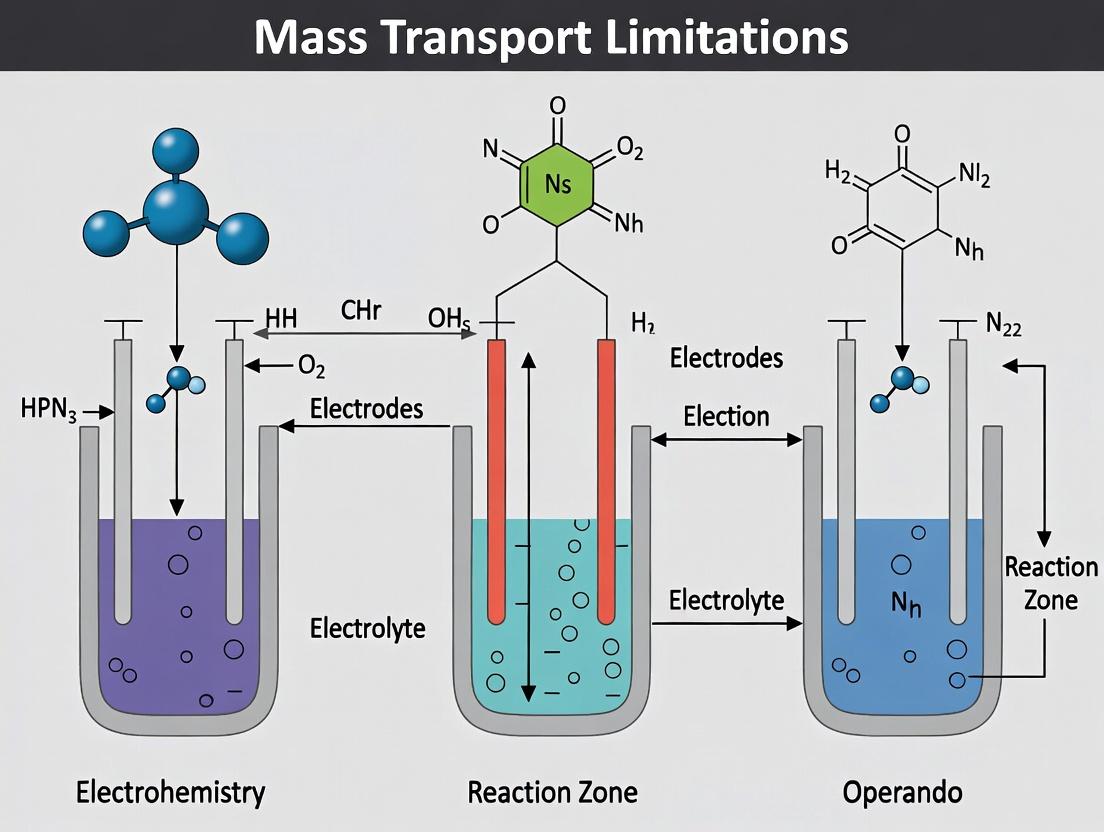
This article provides a comprehensive guide for researchers and drug development professionals on addressing the critical challenge of mass transport limitations in operando reactors.
Breaking the Barrier: Advanced Strategies to Overcome Mass Transport Limitations in Operando Reactors for Pharmaceutical Research
Abstract
This article provides a comprehensive guide for researchers and drug development professionals on addressing the critical challenge of mass transport limitations in operando reactors. We explore the fundamental principles of fluid dynamics, concentration gradients, and reaction kinetics that underpin these limitations. The content details innovative reactor designs, advanced materials, and novel methodologies for enhanced mass transfer, alongside practical troubleshooting and optimization protocols. Finally, we establish frameworks for validating reactor performance and comparing technologies, culminating in actionable insights to accelerate catalyst and process development in biomedicine.
Understanding the Core Challenge: What Are Mass Transport Limitations in Operando Reactors?
Technical Support Center
Q1: During an operando electrochemical reactor experiment, our observed current density plateaus despite increasing the applied potential. What is the likely cause and how can we diagnose it? A: This is a classic symptom of mass transport limitation. The reaction rate is limited by the supply of reactant to the electrode surface, not by kinetics. To diagnose:
- Measure Limiting Current: Perform linear sweep voltammetry at increasing rotation speeds (if using an RDE) or flow rates. If the plateau current increases with rotation speed/flow, it confirms mass transport control.
- Calculate the Theoretical Limit: Use the Levich equation (RDE) or channel flow cell correlations to calculate the theoretical mass transport-limited current. Compare to your measured value.
- Check Flow Parameters: Ensure your pump calibration is correct and there are no obstructions in the flow path.
Q2: In our operando spectroscopic cell, the measured concentration of a key intermediate near the catalyst is always near zero, even when the bulk concentration is high. What could be wrong with the setup? A: This indicates a severe diffusional limitation within the reactor or the catalyst layer itself.
- Catalyst Layer Issues: Thick, dense catalyst layers can cause intraparticle diffusion limitations. Protocol: Prepare a series of catalyst layers with varying thicknesses (e.g., 1, 5, 10 µm) using a calibrated coating bar. Perform identical operando experiments. If the signal for the intermediate decreases with increasing layer thickness, intraparticle diffusion is limiting.
- Probe Positioning: Your spectroscopic probe (e.g., Raman, FTIR) might be positioned directly against a dense membrane or catalyst layer, measuring a depleted zone. Protocol: If possible, use a microprobe to map concentrations at different distances (e.g., 10, 50, 100 µm) from the catalyst surface into the flow channel.
Q3: How do we differentiate between internal (within a porous particle) and external (from bulk to particle surface) mass transport limitations in a packed-bed operando reactor? A: Use the Weisz-Prater criterion for internal diffusion and the Mears criterion for external diffusion in tandem.
- Protocol for Diagnosis:
- Vary Particle Size: Run experiments with catalyst samples of different diameters (e.g., 50 µm, 100 µm, 200 µm) but identical bed length and flow conditions.
- Vary Flow Rate: For a single particle size, vary the volumetric flow rate while keeping the catalyst mass constant.
Table 1: Interpretation of Diagnostic Experiments for Transport Limitations
| Experimental Change | Observation if External Diffusion is Limiting | Observation if Internal Diffusion is Limiting | Observation if Kinetics are Limiting |
|---|---|---|---|
| Increase Flow Rate/Velocity | Conversion/Activity Increases | No Change | No Change |
| Decrease Catalyst Particle Size | No Change | Conversion/Activity Increases | No Change |
| Increase Temperature | Minor Increase (due to diffusivity change) | Moderate Increase | Strong Increase (follows Arrhenius law) |
Q4: Our computational fluid dynamics (CFD) model of the operando reactor doesn't match experimental concentration profiles. What are common calibration errors? A: Discrepancies often arise from inaccurate boundary conditions or material properties.
- Checklist:
- Inlet Flow Profile: Ensure the simulated inlet condition (e.g., fully developed laminar flow vs. uniform velocity) matches your physical setup (e.g., entrance length).
- Diffusion Coefficients: Verify the temperature-dependent diffusivity values used in the model. Measure or obtain literature values for your specific operando medium (e.g., high-pressure gas, ionic liquid).
- Porosity & Tortuosity: For porous electrodes/beds, the effective diffusivity (D_eff = (ε/τ) * D) is critical. Measure the porosity (ε) and use an appropriate tortuosity (τ) model (e.g., Bruggeman: τ = ε^−0.5).
Q5: What are the best practices for designing an operando reactor cell to minimize mass transport artifacts? A: The goal is to create a well-defined, uniform transport field.
- Use a Thin-Layer Configuration: For spectroscopic studies, use a thin, uniform catalyst layer (<5 µm) and a flow channel height tailored to maintain a small diffusion boundary layer.
- Incorporate a Reference Zone: Design the cell with a region of known, uniform concentration (e.g., upstream of the catalyst) to calibrate spectroscopic or sensor readings.
- Validate with a Redox Couple: Before complex catalysis experiments, validate cell hydrodynamics using a well-understood, reversible redox couple (e.g., Fe(CN)₆³⁻/⁴⁻ in RDE configuration).
The Scientist's Toolkit: Research Reagent & Material Solutions
Table 2: Essential Materials for Investigating Mass Transport in Operando Studies
| Item | Function in Context of Mass Transport |
|---|---|
| Rotating Disk Electrode (RDE) Setup | Provides a hydrodynamically defined system. The Levich equation directly relates rotation speed to diffusion layer thickness, allowing precise separation of kinetic and transport effects. |
| Potassium Ferricyanide (K₃[Fe(CN)₆]) | A standard reversible redox probe with well-known diffusivity. Used to calibrate and validate the mass transport characteristics of any new electrochemical operando cell. |
| Micro-reference Electrode (e.g., Pd-H) | Can be positioned close to the working electrode to minimize uncompensated resistance and potential errors arising from current distributions in low-conductivity media. |
| Silanized Glass Microspheres (Various diameters) | Used as inert, size-defined fillers to create well-controlled model porous beds for packed-bed reactor studies, isolating the effect of bed geometry. |
| Fluorescent Tracer Dyes (e.g., Rhodamine B) | Used in conjunction with confocal microscopy or planar laser-induced fluorescence (PLIF) to visualize and quantify flow and concentration fields in optically accessible operando cells. |
| Nafion or Ionomer Binder | A common proton conductor in fuel cell catalyst layers. Its distribution and content critically affect both proton conductivity (kinetics) and oxygen diffusivity (transport). |
Experimental Protocols
Protocol: Determining the Dominant Transport Limitation in a Porous Electrode Objective: To differentiate between external, internal, and kinetic limitations in a gas diffusion electrode (GDE) for CO₂ reduction. Materials: Custom operando electrochemical cell, GDEs with varying catalyst loadings (0.5, 1.0, 2.0 mg/cm²), CO₂-saturated electrolyte, microporous layer (MPL). Steps:
- Baseline Test: At a fixed potential, measure the current for CO production for the 1.0 mg/cm² GDE at three different bulk CO₂ flow rates (50, 100, 200 sccm).
- Internal Diffusion Test: At the highest flow rate (200 sccm, minimizing external limits), measure the CO production current density for all three catalyst loadings at the same fixed potential.
- Analysis: Plot current vs. flow rate and current vs. catalyst loading. Refer to Table 1 to interpret which parameter change affects performance, identifying the limiting regime.
Protocol: Calibrating Concentration in an Operando Raman Cell Objective: To convert Raman intensity maps into quantitative concentration maps of an intermediate species. Materials: Operando Raman flow cell, calibrated syringe pump, solutions of the target intermediate at known concentrations (e.g., 0.1, 0.5, 1.0 mM), inert electrolyte. Steps:
- Create Calibration Curve: With no catalyst present, flow each standard solution through the cell. Acquire Raman spectra at the characteristic band for the intermediate. Plot band intensity (after background subtraction) vs. concentration.
- Operando Measurement: Replace with the catalyst and operating solution. Begin the operando experiment (apply potential/heat).
- Quantitative Mapping: Acquire Raman maps. Use the calibration curve from Step 1 to convert the measured intensity at each pixel into a local concentration value, creating a 2D concentration map.
Visualizations
Diagnosing Transport Limitations
How Transport Creates Discrepancies
Technical Support Center: Troubleshooting & FAQs
FAQs on Common Experimental Issues in Operando Reactor Studies
Q1: During my catalyst testing in an operando packed-bed reactor, I observe a discrepancy between the apparent reaction rate measured and the intrinsic kinetic rate predicted from theory. What is the likely cause and how can I diagnose it?
A1: This is a classic symptom of mass transport limitations. You must determine if the limitation is due to external diffusion (film resistance), internal diffusion (pore resistance), or a combination. Follow this diagnostic protocol:
- Vary the Volumetric Flow Rate (Space Velocity): Keeping catalyst mass constant, systematically increase the total flow rate. If the apparent reaction rate increases, external diffusion limitations are present. The point where the rate becomes independent of flow indicates you have eliminated external diffusion.
- Vary the Catalyst Particle Size: If external diffusion is eliminated, repeat experiments with progressively smaller crushed catalyst particles (keeping mass constant). If the rate increases with smaller particles, internal diffusion limitations are significant. A constant rate across particle sizes indicates kinetic control.
Diagnostic Table: Interpreting Rate Dependence
| Parameter Varied | Apparent Rate Increases | Apparent Rate Constant | Conclusion |
|---|---|---|---|
| Flow Rate | Yes | No | External diffusion limitation present |
| Catalyst Particle Size | Yes | No | Internal diffusion limitation present |
| Both Flow & Particle Size | No | Yes | Reaction is under kinetic control |
Q2: My operando spectroscopy data (e.g., DRIFTS, XAS) does not correlate with the simultaneous product gas analysis. The surface species I see do not seem to be the active intermediates. How do I resolve this?
A2: This "mismatch" often arises because the spectroscopic measurement probes all species (including spectators) while gas analysis measures only net activity. More critically, spatial resolution is key. In a packed bed, concentration gradients mean the species at the reactor wall (common spectroscopic probe point) differ from those in the catalyst bed center.
Experimental Protocol for Spatial Resolution:
- Utilize a Capillary or Micro-Reactor: Employ a reactor with a diameter < 2 mm to minimize radial concentration and temperature gradients, ensuring the probed catalyst is representative.
- Implement Axial Profiling: If possible, use a movable catalyst bed or multiple spectroscopic windows along the reactor axis to measure species evolution as a function of residence time.
- Cross-Validate with Modulation Excitation Spectroscopy (MES): Apply periodic perturbations (e.g., concentration, temperature). Phase-sensitive detection isolates only the species responding at the stimulus frequency, filtering out spectator species and directly linking spectroscopy to kinetics.
Q3: How can I quantitatively assess the relative contributions of diffusion, convection, and reaction in my tubular flow reactor system?
A3: Use dimensionless numbers to characterize the regime. Calculate these key parameters from your experimental conditions.
Table of Key Dimensionless Numbers for Transport Diagnosis
| Number | Formula | Typical Threshold (Kinetic Control) | Interpretation |
|---|---|---|---|
| Carberry / Wheeler-Weisz Modulus (ηΦ²) | (robs * R²) / (Deff * C_s) | < 0.1 | Ratio of reaction rate to internal diffusion rate. Low value = no pore diffusion limitation. |
| Sherwood (Sh) Number | (km * dp) / D_m | > 10 | Ratio of external mass transfer to molecular diffusion. High Sh = well-mixed external film. |
| Peclet (Pe) Number | (u * L) / D_ax | High | Ratio of convective to axial dispersive transport. High Pe = plug flow (ideal). |
| Damköhler II (Da_II) Number | (k_m * a) / u | < 0.1 | Ratio of external mass transfer rate to convective flow rate. Low Da_II = no external limitation. |
Where: r_obs = observed rate, R = particle radius, D_eff = effective pore diffusivity, C_s = surface concentration, k_m = mass transfer coeff., d_p = particle diameter, D_m = molecular diffusivity, u = superficial velocity, L = reactor length, D_ax = axial dispersion coeff., a = specific external surface area.
Experimental Protocol for Determining Effective Diffusivity (D_eff):
- Pulse Response Experiment: Pack a tube with your catalyst particles (inert if needed).
- Inject a narrow pulse of a non-adsorbing tracer (e.g., Ar in N₂) at the reactor inlet.
- Measure the tracer concentration over time (via MS or TCD) at the outlet.
- Fit the residence time distribution (RTD) curve to the Axial Dispersion Model to extract the Peclet number (Pe) and subsequently the axial dispersion coefficient (D_ax), which informs on overall transport.
Visualization: Diagnostic Workflow for Transport Limitations
The Scientist's Toolkit: Key Research Reagent Solutions
Table of Essential Materials for Operando Transport Studies
| Item / Reagent | Function / Rationale |
|---|---|
| Silicon Carbide (SiC) Diluent | Chemically inert, high thermal conductivity. Used to dilute catalyst beds for improved flow distribution and isothermal operation. |
| Non-Porous Quartz Wool & Beads | Used for catalyst bed support and pre-heating sections. Provides uniform flow entrance and minimal back-pressure. |
| Calibrated Gas Pulses (e.g., 1% Ar in He) | Essential for Residence Time Distribution (RTD) experiments to measure axial dispersion (D_ax) and diagnose flow maldistribution. |
| Certified Permeability Standards | Porous ceramic or metal filters with known pore size and permeability. Used to validate pressure drop calculations and flow models across the bed. |
| Thermocouple Sheath (Thin-wall, Inconel) | For accurate in-situ temperature measurement within the catalyst bed, critical as reaction rates are highly temperature-sensitive. |
| Microreactor with Fused-Silica Capillaries | Enables high-pressure, high-temperature operando studies with superb spatial resolution for spectroscopy and minimal transport artifacts. |
| Computational Fluid Dynamics (CFD) Software | To model velocity, concentration, and temperature fields within the reactor, identifying dead zones or channeling before experiments. |
How Transport Artifacts Distort Operando Spectroscopy and Kinetic Data
Technical Support Center: Troubleshooting Guides & FAQs
Introduction: This support center addresses common experimental challenges arising from mass transport artifacts in operando reactor systems. These artifacts can lead to misinterpretation of spectroscopic and kinetic data, convoluting intrinsic catalytic or process activity with physical transport limitations.
Frequently Asked Questions (FAQs)
Q1: My operando IR spectroscopy shows unexplained attenuation of reactant bands over time, even with constant gas flow. What could be the cause? A: This is a classic symptom of pore condensation or liquid film formation within the catalyst bed or on the reactor window. At high partial pressures or near dew points, reactants/products can condense in catalyst pores, blocking active sites and physically absorbing IR radiation. This is a transport artifact, not a kinetic effect.
- Troubleshooting Protocol:
- Measure the system temperature and pressure precisely at the sample location.
- Compare to the dew point of your gas mixture. Use a online dew point calculator or the Antoine equation.
- Reduce the partial pressure of the condensing species or increase the cell temperature uniformly by at least 15°C above the dew point.
- Ensure reactor windows are heated independently to a higher temperature than the catalyst bed to prevent window filming.
Q2: During operando XAS experiments, my derived turnover frequency (TOF) decreases significantly with increased catalyst loading, despite normalizing to active sites. Why? A: This indicates the presence of internal diffusion limitations (Weisz-Prater criterion). With thicker catalyst beds or larger particle sizes, reactants cannot diffuse into all pores quickly enough, creating concentration gradients. The measured XAS average oxidation state and the derived TOF represent a gradient, not the true surface state.
- Troubleshooting Protocol:
- Perform a Weisz-Prater Criterion Test:
- Measure the observed rate (robs).
- Know your catalyst particle radius (R), effective diffusivity (Deff), and bulk gas concentration (Cs).
- Calculate Φ = (robs * R²) / (Deff * Cs). If Φ >> 1, internal diffusion limits the rate.
- Systematically reduce catalyst particle size (e.g., by grinding and sieving) or use thinner beds in a transmission cell.
- Repeat the experiment. If the TOF converges to a constant value as particle size decreases, you have eliminated the internal transport artifact.
- Perform a Weisz-Prater Criterion Test:
Q3: In operando electrochemical mass spectrometry, I observe a delay in product detection that changes with flow rate. How do I correct for this? A: This delay is a transport lag due to dead volume in the system (tubing, connections, the MS capillary inlet) and laminar flow profiles. It distorts the temporal correlation between the electrochemical stimulus and the spectroscopic response.
- Troubleshooting Protocol:
- Characterize the Delay: Inject an inert tracer pulse (e.g., Ar in N₂ background) at the reactor inlet and measure the MS response time. Fit the response curve to a dispersion model.
- Minimize Dead Volume: Use short, small-diameter capillary lines and minimize connections.
- Data Correction: Record the flow rate (F) and system dead volume (Vd) precisely. The mean delay time is tdelay = V_d / F. This value can be used to temporally align your datasets. Advanced correction uses a transfer function from the tracer test.
Q4: My operando UV-Vis spectra show apparent reversible changes that correlate with temperature, not reactant composition. What is happening? A: This is likely a thermal artifact. Temperature changes can cause: * Gas density/refractive index changes, altering light scattering. * Expansion/contraction of reactor fittings, slightly misaligning optics. * Black-body radiation (glow) at high temperatures (>500°C) adding a broad background. * Troubleshooting Protocol: 1. Run a background thermal test with inert gas (e.g., He) flowing through the reactor. 2. Ramp temperature through your experimental range while collecting spectra. 3. Subtract this thermal background dataset from your reaction data. 4. Ensure all optical components are firmly fixed and, if possible, water-cooled to maintain stable alignment.
The following table provides key criteria and thresholds to diagnose common transport artifacts.
| Artifact Type | Diagnostic Experiment / Criterion | Threshold Indicating Artifact | Corrective Action |
|---|---|---|---|
| External Diffusion | Vary total flow rate while keeping space velocity constant (change catalyst mass). | Observed rate changes with flow rate at constant W/F. | Increase turbulence (e.g., reduce particle size, increase flow). |
| Internal Diffusion | Weisz-Prater criterion (Φ) or vary catalyst particle size. | Φ > 1 or observed rate increases with decreased particle size. | Use smaller particles (<150 µm), reduce bed thickness. |
| Heat Transfer | Measure temperature gradient across catalyst bed (multiple thermocouples). | Gradient > 2-5°C under reaction conditions. | Dilute catalyst bed with inert material, use smaller particles. |
| Transport Lag | Tracer pulse response experiment (FWHM of response peak). | FWHM > 2% of mean residence time or non-Gaussian tailing. | Reduce system dead volume, increase flow rate, apply deconvolution. |
| Pore Condensation | Compare reactant partial pressure to dew point temperature. | Ppartial > Pdewpoint at cell temperature. | Increase temperature or decrease partial pressure of condensable species. |
Experimental Protocols
Protocol 1: Tracer Pulse Test for System Characterization
Objective: To quantify the dead volume and flow dispersion (residence time distribution) in an operando spectroscopy reactor setup. Materials: See "Scientist's Toolkit" below. Procedure:
- Stabilize your system at the desired operating temperature and pressure with a steady flow of carrier gas (e.g., 50 ml/min He).
- At time t=0, rapidly inject a sharp pulse of tracer gas (e.g., 0.5 ml of 5% Ar in He) into the carrier stream at the reactor inlet.
- Use the downstream mass spectrometer (MS) to record the intensity of the tracer signal (e.g., m/z = 40 for Ar) at a high frequency (≥10 Hz).
- Continue recording until the signal returns fully to baseline.
- Plot MS intensity vs. time. The mean delay (t_mean) is the first moment of the distribution curve. The variance (width) indicates dispersion.
- Calculate dead volume: V_d = t_mean * F (where F is volumetric flow rate).
Protocol 2: The Weisz-Prater Criterion for Internal Diffusion
Objective: To determine if internal diffusion within catalyst pores is limiting the observed reaction rate. Materials: Catalyst sample sieved to two distinct particle size ranges (e.g., 50-75 µm and 150-200 µm), operando reactor with quantitative product detection (MS or GC). Procedure:
- Load a small, precisely weighed amount (W) of the smaller catalyst particles into the operando reactor.
- Under standard reaction conditions, measure the steady-state reaction rate per gram of catalyst (r_obs_small). Ensure conversion is low (<10% to avoid external gradients).
- Calculate the observed rate per particle: r_obs_part = r_obs_small / (Number of particles per gram). Estimate particle radius (R_small).
- Estimate or look up the effective diffusivity (D_eff) of the key reactant in the catalyst pore system.
- Calculate the Weisz-Prater modulus: Φ = (robspart * Rsmall²) / (Deff * Cs), where *Cs* is the reactant concentration at the particle surface.
- Repeat the experiment with the larger catalyst particles. If the rate per gram changes significantly or if Φ >> 1 for either sample, internal diffusion is influential.
Mandatory Visualizations
Title: Troubleshooting Workflow for Transport Artifacts
Title: Concentration & Temperature Gradients in Catalyst Pellet
The Scientist's Toolkit: Key Research Reagent Solutions
| Item | Function in Addressing Transport Artifacts |
|---|---|
| Inert Bed Diluent (e.g., SiC, α-Al₂O₃ powder) | Used to dilute catalyst beds, improving heat transfer and ensuring isothermal conditions by preventing hotspot formation. |
| Sieved Catalyst Fractions (e.g., 45-63 µm, 90-125 µm) | Precisely sized particles are essential for performing particle-size-variation experiments to diagnose internal diffusion limitations. |
| Pulse Tracer Gases (e.g., 5% Ar in He, 5% Ne in N₂) | Inert, easily detectable gases used in pulse experiments to characterize system dead volume and residence time distribution (RTD). |
| Calibrated Capillary Flow Meters/Controllers | Provide precise, reproducible control of gas flow rates, critical for varying space velocity in diffusion diagnostic tests. |
| Micro-thermocouples (e.g., Type K, 100 µm sheath) | For direct measurement of temperature gradients within catalyst beds to identify and quantify heat transfer limitations. |
| Inert Optical Window Spacers (e.g., Washers) | Used to create a defined, thin catalyst bed in transmission cells, minimizing path length and internal diffusion effects for spectroscopy. |
| Dew Point Meter / Hygrometer | Monitors moisture content in gas feeds to prevent inadvertent pore condensation, a common artifact in operando studies. |
| High-Temperature, Conductive Paste | Ensures good thermal contact between reactor body, heater, and thermocouples for accurate temperature measurement and control. |
Troubleshooting Guides & FAQs
Q1: How can I tell if my observed reaction rate is limited by mass transport instead of intrinsic kinetics? A: Key indicators include:
- Rate Independence from Catalyst Loading: Varying catalyst mass or surface area does not proportionally change the observed rate.
- Strong Dependence on Fluid Dynamics: The rate changes significantly with changes in stirring speed (slurry reactors) or flow rate (fixed-bed reactors).
- Apparent Activation Energy: Typically, an apparent activation energy below ~20 kJ/mol suggests a diffusion-limited process, while intrinsic kinetic control usually exhibits higher values (>40-50 kJ/mol).
- Abnormal Thiele Modulus/Effectiveness Factor: Calculation of the Thiele modulus (φ) indicates diffusion limitation if φ > 1, leading to an effectiveness factor (η) < 1.
Table 1: Distinguishing Kinetic vs. Transport Control
| Observation / Test | Kinetic Control | External Mass Transport Control | Internal Mass Transport Control |
|---|---|---|---|
| Vary Catalyst Mass | Rate changes linearly | Rate unchanged | Rate changes non-linearly |
| Vary Agitation/Flow Rate | Rate unchanged | Rate increases significantly | Rate may increase slightly or be unchanged |
| Apparent Activation Energy (Ea) | High (> ~40-50 kJ/mol) | Low (< ~20 kJ/mol) | Moderate (~20-40 kJ/mol) |
| Particle Size Dependence | None | None (for external surface) | Rate increases with smaller particle size |
| Characteristic Dimension | Reaction rate constant (k) | Mass transfer coefficient (kₘ) | Effective diffusivity (Dₑff) |
Q2: What are the experimental protocols for diagnosing external (interphase) transport limitations? A: Stirred Tank/Slurry Reactor Protocol:
- Setup: Conduct a series of identical catalytic experiments at constant temperature, pressure, and reactant concentration.
- Variable: Systematically vary the stirring or agitation rate over a wide range (e.g., 200 to 1500 RPM).
- Measurement: Precisely measure the initial reaction rate at each stirring condition.
- Analysis: Plot observed rate vs. agitation speed. If the rate increases with speed and then plateaus, the initial increase zone indicates external transport limitation. The plateau region is where external limitations are minimized, approaching kinetic control.
Fixed-Bed Reactor Protocol (Flow Rate Test):
- Setup: Maintain constant catalyst bed geometry, temperature, and inlet concentration.
- Variable: Vary the volumetric flow rate, which changes the superficial fluid velocity (u) and thus the space-time (τ).
- Measurement: Measure conversion (X) at each flow rate.
- Analysis: Plot conversion versus 1/Flow Rate (or space-time). At very high flow rates (low space-time), if conversion becomes independent of flow rate and is low, it suggests external film diffusion is the limiting resistance. A complementary test is to vary catalyst pellet size while keeping total catalyst mass constant; if conversion changes with pellet size at high flow, external transport plays a role.
Q3: What experimental protocols diagnose internal (intraparticle) transport limitations? A: Weisz-Prater Criterion Protocol (for batch or continuous reactors):
- Measure: Obtain the observed reaction rate per unit catalyst volume (r_obs) under your standard conditions.
- Characterize: Determine the catalyst particle radius (R) and the effective diffusivity (Deff) of the key reactant within the catalyst pore structure. (Deff estimation often requires separate experiments).
- Calculate: Compute the Weisz-Prater modulus: CWP = (robs * R²) / (Deff * Cs), where C_s is the reactant concentration at the catalyst particle surface.
- Diagnose: If CWP << 1, no internal limitations. If CWP >> 1, significant internal diffusion limitations exist.
Particle Size Variation Protocol:
- Preparation: Sieve your catalyst to obtain distinct, narrow particle size fractions (e.g., <100µm, 100-200µm, 450-600µm).
- Experimentation: Run identical kinetic experiments with each fraction, keeping the mass (not number) of catalyst constant.
- Analysis: Plot the observed rate (or turnover frequency, TOF) versus particle diameter. A constant TOF indicates no internal limitations. A decreasing TOF with increasing particle size confirms the presence of internal mass transport limitations.
Title: Diagnostic Flowchart for Transport Limitations
Q4: How do I determine the effectiveness factor (η) from my data? A: The effectiveness factor is the ratio of the observed reaction rate to the rate that would occur if the entire catalyst interior were exposed to the surface conditions. Protocol:
- Eliminate External Limitations: First, perform agitation/flow tests to ensure you are operating in a regime free of external transport effects.
- Measure Observed Rate: Obtain the rate (r_obs) with your standard catalyst particles.
- Measure Kinetic Rate: Obtain the intrinsic kinetic rate (r_kin) using a catalyst sample where internal diffusion is guaranteed not to be limiting. This typically requires using very fine catalyst powder (<< 100 µm) under the same external condition (T, P, C). Ensure external limitations are also absent for this powder.
- Calculate: η = robs / rkin. An η significantly less than 1 confirms internal transport limitations.
Q5: What are common pitfalls when performing these diagnostic tests? A:
- Insufficient Range: Not varying agitation speed or particle size over a wide enough range to see a clear plateau or trend.
- Changing Multiple Variables: Accidentally changing temperature or concentration while varying flow or agitation.
- Ignoring Heat Transport: Exothermic reactions can have heat transport limitations that mimic mass transport signs. Measure temperature gradients.
- Misinterpreting Particle Size Tests: Not maintaining constant catalyst mass (or active site count) when changing particle size distorts results.
- Assuming Deff: Using an arbitrary or literature value for effective diffusivity (Deff) without considering your specific reactant-catalyst-solvent system.
The Scientist's Toolkit: Key Research Reagent Solutions
Table 2: Essential Materials for Transport Limitation Diagnostics
| Item / Reagent | Primary Function in Diagnostics |
|---|---|
| Sieved Catalyst Fractions | Particles of defined size ranges (e.g., 45-63µm, 150-250µm) are crucial for particle-size-dependence tests to isolate internal diffusion effects. |
| Catalyst Powder (<< 100 µm) | Ultrafine catalyst used as a reference to approximate intrinsic kinetics by minimizing intraparticle diffusion path length. |
| Gas/Liquid Flow Controllers (High Precision) | To accurately and reproducibly vary space velocity in fixed-bed reactor tests for external limitation diagnosis. |
| Variable-Speed Agitator (with Torque Measurement) | Provides controlled fluid dynamics in slurry reactors. Monitoring torque can ensure turbulent flow regimes are achieved. |
| Thermocouples (Micro-point) | For direct measurement of potential temperature gradients across catalyst beds or pellets, critical for identifying concurrent heat transport limitations. |
| Tracer Molecules (e.g., Non-reacting gases/liquids) | Used in pulse-response or residence time distribution (RTD) experiments to characterize fluid flow patterns and mixing in the reactor. |
| Poro simetry / BET Analyzer | Characterizes catalyst pore size distribution, total porosity, and surface area, which are needed inputs for estimating effective diffusivity (D_eff). |
The Critical Role of the Damköhler Number in Reactor Design and Analysis
Technical Support Center
Troubleshooting Guides & FAQs
Q1: My operando catalytic experiment shows lower conversion than predicted by intrinsic kinetics. What is the likely cause and how can I diagnose it? A: This is a classic symptom of mass transport limitations. The Damköhler number (Da) is likely >> 1, indicating reaction rate is much faster than mass transfer rate.
- Diagnostic Protocol: Perform the Weisz-Prater Criterion experiment for internal diffusion or the Mears Criterion for external diffusion.
- Step 1: Conduct your reaction at standard conditions and measure the observed rate (robs).
- Step 2: Gradually reduce the catalyst particle size by grinding and sieving. If the rate increases significantly with smaller particles, internal diffusion is limiting (DaInternal is high).
- Step 3: If particle size change has no effect, vary the reactor flow rate while keeping space-time constant. If the observed rate increases with flow velocity, external diffusion (film mass transfer) is limiting (DaExternal is high).
- Step 4: Calculate the relevant Da. If Da > 0.1 for external or Da > 1 for internal, limitations are significant.
Q2: How do I calculate the Damköhler number for my tubular fixed-bed operando reactor, and what are the target values? A: The Damköhler number has forms for different limitations. Key formulas and target ranges are summarized below.
Table 1: Key Damköhler Number Formulas and Interpretation
| Limitation Type | Formula | Variables | Interpretation |
|---|---|---|---|
| General Reaction vs. Flow (Da_I) | Da = (Reaction Rate) / (Convective Mass Transfer Rate) = (k * C₀^(n-1) * τ) | k: rate constant, C₀: inlet conc., n: reaction order, τ: space time | Da << 1: Flow dominates, low conversion. Da ~ 1: Balanced system. Da >> 1: Reaction dominates, mass transfer may limit. |
| External Mass Transfer (Da_Ext) | Da_Ext = (Observed Reaction Rate) / (Maximum Mass Transfer Rate) = (robs) / (kₘ * a * Cₛ) | kₘ: mass transfer coeff., a: specific surface area, Cₛ: surface concentration | Da_Ext > 0.1 indicates external diffusion limitations are likely. |
| Internal Mass Transfer (Weisz-Prater) | Da_Int = (Observed Reaction Rate * (Particle Radius)²) / (Effective Diffusivity * Surface Conc.) = Φ² | Φ: Thiele Modulus, Particle Radius: R, Deff: effective diffusivity | Da_Int (Φ²) >> 1 indicates severe internal pore diffusion limitations. |
Q3: My FTIR operando signals are weak and change slowly with process conditions. Could this be a reactor design issue related to Da? A: Yes. Weak, delayed spectroscopic signals often indicate a large time constant for diffusion compared to reaction. Your Spectral Damköhler Number (Da_spec) is high.
- Solution Protocol:
- Use a thin-bed or diluted catalyst configuration in your operando cell to minimize particle-to-particle diffusion paths.
- Ensure high gas flow rates over the catalyst wafer to minimize external film thickness.
- Verify that the time for a step change in inlet gas to be reflected in the effluent (gas residence time) is much shorter than the time scale of your spectroscopic measurement.
Q4: In pharmaceutical slurry reactor scale-up, how do I use Da to maintain selectivity for a desired intermediate? A: Mass transfer limitations can alter apparent selectivity in consecutive reactions (A -> B (desired) -> C).
- Protocol for Selectivity Control:
- At lab scale, determine intrinsic kinetics and selectivity (S_intrinsic) under kinetic regime (Da < 0.1).
- At pilot scale, calculate Da for both reaction steps (Da₁, Da₂). Use the Reactant Damköhler Number Grid below to guide design.
- To preserve selectivity for B, you must keep the system in the Kinetic Control quadrant for both reactions. This often requires modifying agitation speed (to increase kₘ) or using smaller catalyst particles/agglomerates.
The Scientist's Toolkit: Research Reagent Solutions
Table 2: Essential Materials for Operando Reactor Studies Targeting Mass Transfer Analysis
| Item / Reagent | Function in Da Number Context |
|---|---|
| Sieved Catalyst Fractions | To systematically vary particle size (R) for internal diffusion (Weisz-Prater) experiments. |
| Non-Porous Analog Catalyst | A catalyst with similar surface chemistry but no pores; used to isolate and study external mass transfer effects. |
| Inert Diluent Particles (SiO₂, Al₂O₃) | Used to dilute catalyst beds in operando cells, reducing bed density and improving flow distribution to lower Da_Ext. |
| Tracer Gases (Pulse Injection Kits) | For Residence Time Distribution (RTD) analysis to characterize mixing/convective flow (denominator in Da_I). |
| Calibrated Mass Flow Controllers (MFCs) | Essential for precise control of space time (τ), a direct variable in Da_I calculation. |
| Benchmark Reaction Kit (e.g., CO Oxidation) | A well-understood reaction with known kinetics to validate reactor hydrodynamics and rule out Da-related artifacts. |
Experimental Protocol: Determining the Rate-Limiting Regime
Objective: Diagnose whether a catalytic reaction is under kinetic, internal diffusion, or external diffusion control.
Procedure:
- Baseline Experiment:
- Charge reactor with standard catalyst particles (e.g., 250-300 µm). Set T, P, and flow rate to target condition.
- Measure steady-state conversion (X_obs) and calculate observed reaction rate (robs).
Vary Particle Size (Internal Diffusion Test):
- Repeat experiment with progressively smaller catalyst particles (e.g., 100-150 µm, 45-75 µm, < 45 µm), keeping total catalyst mass constant.
- Plot observed rate vs. inverse particle diameter (1/dp). A significant positive slope indicates internal diffusion limitations (High Da_Int).
Vary Flow Rate at Constant Space Time (External Diffusion Test):
- Return to original particle size. Increase total flow rate while decreasing catalyst mass proportionally to keep space time (W/FA0) constant.
- Plot observed rate vs. linear velocity (or Re number). A significant positive slope indicates external film diffusion limitations (High Da_Ext).
Calculate Thiele Modulus & Effectiveness Factor (η):
- If internal diffusion is suspected, estimate the Thiele modulus (Φ).
- Use formula: η = (3/Φ²) * (Φ * coth(Φ) - 1). Where η < ~0.9 indicates significant limitation.
Engineered Solutions: Reactor Designs and Materials to Enhance Mass Transfer
Technical Support Center
Introduction: Framed within Thesis Research This support center is designed within the context of a doctoral thesis addressing mass transport limitations in operando reactors for heterogeneous catalysis and electrochemistry research. Efficient mass transfer (reactants to the catalyst surface and products away from it) is critical for obtaining accurate intrinsic kinetic data. This guide provides troubleshooting for advanced reactors engineered to overcome these limitations.
Troubleshooting Guides & FAQs
Rotating Cylinder Reactor (RCR)
Q1: We observe inconsistent reaction rates and poor reproducibility between runs with our RCR. What could be the cause?
- A: This is typically a hydrodynamic issue. The primary cause is likely an unstable or non-uniform fluid flow regime. Ensure you are operating in the fully turbulent regime. Calculate your Reynolds Number (Re = ω * r * d / ν, where ω is angular velocity, r is cylinder radius, d is gap width, ν is kinematic viscosity). For reproducible mass transfer, operate at Re > 10,000. Secondly, check for vortex formation or air entrainment at the free surface; using a baffled lid or slightly submerged cylinder can mitigate this.
Q2: How do we accurately determine the mass transfer coefficient (kₘ) in our RCR setup?
- A: Use a well-established electrochemical or chemical test reaction. The most common is the reduction of ferricyanide ion ([Fe(CN)₆]³⁻) on a metal cylinder (e.g., Ni) in an excess of supporting electrolyte (e.g., 1M NaOH). The limiting current (I_lim) is measured via linear sweep voltammetry.
- Experimental Protocol:
- Prepare a 0.01M K₃[Fe(CN)₆] / 0.01M K₄[Fe(CN)₆] / 1M NaOH solution.
- Use the reactor cylinder as the working electrode.
- Perform linear sweep voltammetry at a fixed rotation rate from 0.3V to -0.1V vs. a suitable reference.
- Measure the limiting current plateau (Ilim).
- Calculate kₘ using: kₘ = Ilim / (n * F * A * Cb), where n=1, F is Faraday's constant, A is electrode area, Cb is bulk concentration.
- Repeat at different rotation speeds (ω). kₘ should correlate with ω^0.7 in the turbulent regime.
- Experimental Protocol:
- A: Use a well-established electrochemical or chemical test reaction. The most common is the reduction of ferricyanide ion ([Fe(CN)₆]³⁻) on a metal cylinder (e.g., Ni) in an excess of supporting electrolyte (e.g., 1M NaOH). The limiting current (I_lim) is measured via linear sweep voltammetry.
Spinning Basket Reactor (SBR)
Q3: Our catalyst pellets are experiencing significant attrition (breaking into powder) during SBR operation. How can we prevent this?
- A: Attrition is caused by mechanical stress from particle-particle and particle-basket collisions. Solutions include:
- Reduce Basket Rotation Speed: Operate at the minimum speed required to achieve external mass transfer independence (verify by checking reaction rate plateaus with increasing speed).
- Optimize Basket Design: Use a mesh size significantly smaller than the catalyst pellets. Consider lining the basket with a fine, inert mesh cloth.
- Modify Catalyst Formulation: If possible, increase the crush strength of your catalyst pellets.
- A: Attrition is caused by mechanical stress from particle-particle and particle-basket collisions. Solutions include:
Q4: How do we verify that intra-particle diffusion limitations are absent in our SBR experiment?
- A: Perform the Weisz-Prater Criterion experiment.
- Experimental Protocol:
- Conduct an experiment at standard conditions and measure the observed reaction rate (robs).
- Crush a sample of your catalyst pellets to a fine powder (<100 μm) to eliminate intra-particle diffusion.
- Run the experiment again under identical fluid-phase conditions (temperature, concentration, basket speed) using the powdered catalyst.
- Measure the intrinsic reaction rate (rintrinsic).
- Calculate the effectiveness factor (η) = robs / rintrinsic. If η ≥ 0.95, intra-particle limitations are negligible.
- Experimental Protocol:
- A: Perform the Weisz-Prater Criterion experiment.
Jet Loop Reactor (JLR)
Q5: The mixing in our JLR appears inefficient, with concentration gradients detected by in-situ spectroscopy. What should we check?
- A: Inefficient mixing often stems from suboptimal jet dynamics. First, calculate the Jet Reynolds Number (Rejet = ρ * vjet * djet / μ). Ensure Rejet > 2,000 for turbulent jet mixing. Second, verify the nozzle orientation and placement; the jet should be directed to induce a coherent, large-scale loop. Third, check for clogging or erosion of the nozzle, which alters jet geometry.
Q6: How do we quantify the gas-liquid mass transfer (kLa) in our JLR for hydrogenation reactions?
- A: Use the Dynamic Gassing-Out Method.
- Experimental Protocol:
- Saturate the liquid phase with an inert gas (e.g., N₂) at your operating conditions.
- Switch the gas feed to the reacting gas (e.g., H₂) while maintaining constant gas flow, pressure, and agitation.
- Monitor the dissolved gas concentration over time using a fast-response probe (e.g., Clark-type electrode for O₂, or equivalent for H₂).
- Fit the concentration vs. time curve to the equation: CL = C* (1 - e^(-kLa * t)).
- The slope of ln(1 - CL/C*) vs. time gives the kLa value.
- Experimental Protocol:
- A: Use the Dynamic Gassing-Out Method.
Data Presentation
Table 1: Comparative Operating Parameters for Mass Transfer-Intensive Regimes
| Reactor Type | Key Hydrodynamic Parameter | Target Value for High Mass Transfer | Typical kₘ Range (m/s) | Primary Advantage for Operando Studies |
|---|---|---|---|---|
| Rotating Cylinder | Reynolds Number (Re) | > 10,000 (Turbulent) | 10⁻⁴ – 10⁻³ | Well-defined, calculable fluid dynamics. |
| Spinning Basket | Basket Rotation Speed (N) | Rate-independent plateau | 10⁻⁵ – 10⁻⁴ | Eliminates external diffusion for solid catalysts. |
| Jet Loop Reactor | Jet Reynolds Number (Re_jet) | > 2,000 (Turbulent Jet) | kLa: 0.1 – 1.0 s⁻¹ | Excellent gas-liquid mixing and heat transfer. |
Table 2: Standard Test Systems for Reactor Characterization
| Diagnostic Goal | Recommended Test System | Measured Output | Governing Equation |
|---|---|---|---|
| Liquid-Solid kₘ | Electrochemical Redox ([Fe(CN)₆]³⁻/⁴⁻) | Limiting Current (I_lim) | kₘ = Ilim / (n·F·A·Cb) |
| Gas-Liquid kLa | Dynamic Gassing-Out (O₂ or N₂) | Dissolved [Gas] vs. Time | C_L = C*(1 - e^(-kLa·t)) |
| Absence of Internal Diffusion | Particle Size Variation | Reaction Rate (r_obs) | Weisz-Prater Criterion |
The Scientist's Toolkit: Key Research Reagent Solutions
| Item | Function & Rationale |
|---|---|
| Potassium Ferri/Ferrocyanide | Electroactive tracer for precise liquid-solid mass transfer (kₘ) measurement via limiting current. |
| Clark-Type Dissolved Oxygen Probe | Fast-response sensor for dynamic measurement of gas-liquid mass transfer coefficients (kLa). |
| Inert Catalyst Support (SiO₂, γ-Al₂O₃) | Used to prepare model catalysts with known metal loading and dispersion for fundamental kinetics. |
| High-Strength Stainless Steel Mesh (Baskets) | Contains catalyst particles while minimizing attrition and allowing free fluid flow. |
| Non-ionic Surfactant (e.g., Triton X-100) | Trace amounts can modify gas-liquid interfacial dynamics in JLR studies; handle as a variable. |
| Calibrated In-Situ Spectroscopy Cells (ATR-IR, UV-Vis) | Enable operando monitoring of surface species or solution concentrations during reaction. |
Visualizations
Diagram 1: Troubleshooting Logic for Mass Transfer Limitations
Diagram 2: Experimental Protocol for kLa Measurement
The Rise of 3D-Printed and Microfluidic Operando Reactors for Precise Flow Control
Technical Support Center
This technical support center provides troubleshooting guidance for researchers utilizing 3D-printed and microfluidic operando reactors to study catalytic and chemical processes while addressing mass transport limitations. The following FAQs and guides are designed to resolve common experimental challenges.
Frequently Asked Questions (FAQs) & Troubleshooting
Q1: My 3D-printed reactor (e.g., SLA resin) shows rapid degradation or swelling when exposed to organic solvents. What are my options? A: This is a common material compatibility issue. First, identify the solvent's Hansen Solubility Parameters. For aggressive organics (e.g., THF, acetone), consider:
- Post-processing: Apply a high-temperature thermal post-cure (e.g., 120°C for 2 hours) to fully polymerize residual monomers.
- Coatings: Apply a chemically inert coating like Parylene-C via vapor deposition.
- Material Change: Switch to a specialty resin formulated for chemical resistance (e.g., biocompatible or engineering-grade resins). For high-temperature/pressure, consider using a printed mold to cast the reactor in PDMS or a fluoropolymer.
Q2: I observe inconsistent catalytic activity readings in my microfluidic operando setup. Flow seems pulsatile, not laminar. What should I check? A: Inconsistent flow directly impacts mass transport and data validity. Follow this checklist:
- Syringe Pump Calibration: Verify calibration using a gravimetric method (weigh effluent over time).
- Pulsation Dampeners: Install a compliant section (e.g., a small bubble of air in a PTFE tube coil) between the pump and reactor inlet.
- Leak Check: Submerge all fittings in water and look for bubbles under pressure. Ensure all ferrules and connectors are properly tightened.
- Debris Check: Flush the system with pure solvent and inspect for particulates clogging the microchannels.
Q3: How can I verify that my operando reactor design is minimizing mass transport limitations to ensure kinetics are not diffusion-controlled? A: Perform a Damköhler (Da) number analysis. Experimentally:
- Protocol: Vary the flow rate (which changes the residence time, τ) while measuring reaction rate. If the observed rate increases with flow rate (decreasing τ), the system is likely under mass transport influence. The goal is to operate in a regime where the rate is independent of flow rate (Da << 1 for kinetics-limited regime).
- Calculation: Da = (Reaction Rate) / (Mass Transfer Rate). Use the correlation for your channel geometry (e.g., Sh ≈ 7.54 for rectangular channels) to estimate mass transfer coefficient.
Q4: My integrated optical or spectroscopic sensor (e.g., for UV-Vis) in the operando chip is giving a noisy signal. How can I improve signal-to-noise ratio? A:
- Electrical Noise: Use shielded cables, ensure proper grounding, and move high-frequency equipment (like pumps) away.
- Optical Path: Ensure the sensing region of the chip is clean and free of scratches. Use index-matching fluid between optical fibers and the chip if applicable.
- Averaging: Increase the spectrometer integration time and use software signal averaging.
- Baseline Correction: Run a blank experiment with all conditions except the catalyst and subtract the baseline.
Q5: What is the best practice for sealing a 3D-printed reactor part to a glass cover slide for microscopy? A: For high-pressure (>5 bar) applications, use:
- Surface Finish: Polish the printed sealing face to a smooth finish.
- Gasket: Use a chemically inert, compressible gasket (Viton, Kalrez, or a thin PDMS layer).
- Clamping: Employ a uniform clamping force with a machined aluminum holder and multiple screws, tightened in a cross pattern. For lower pressures, a thin layer of UV-curable adhesive can be used.
Key Experimental Protocols
Protocol 1: Determining Optimal Flow Rate to Avoid Mass Transport Limitations Objective: To establish a flow regime where the reaction is kinetics-limited, not diffusion-limited. Materials: Operando reactor, precision syringe pumps, analyte solution, product detection system (e.g., inline HPLC, MS). Method:
- Load the reactor with a fixed amount of catalyst.
- Set the reactant concentration (C0) to a known, moderate value.
- Sequentially run experiments at decreasing flow rates (F), which correspond to increasing residence times (τ = reactor volume / F).
- At each flow rate, measure the product concentration (C) at the outlet until steady state is reached.
- Calculate observed conversion: X = 1 - (C / C0).
- Plot conversion (X) vs. residence time (τ). Interpretation: At low τ (high flow), if X increases sharply with τ, the system is transport-limited. The flow rate where X begins to plateau indicates transition to the kinetics-limited regime. Operate at a higher flow rate than this transition point for kinetics studies.
Protocol 2: In-situ Cleaning of a Microfluidic Catalyst Bed Objective: To regenerate a fouled catalyst bed without disassembling the operando reactor. Method:
- Backflush: Reverse the flow direction through the catalyst bed at 2x the operational flow rate for 10 minutes using the primary solvent.
- Chemical Wash: Sequentially inject the following, each for 20-30 minutes at a low flow rate (e.g., 0.1 mL/min):
- A strong base (e.g., 1M NaOH) for organic acid deposits.
- A strong acid (e.g., 1M HNO₃) for inorganic/metal oxide deposits.
- An organic solvent (e.g., ethanol or acetonitrile) for hydrophobic contaminants.
- Rinse: Flush extensively with deionized water (≥ 50 reactor volumes).
- Re-equilibration: Flush with the reaction solvent until pH and conductivity match the pure solvent.
- Activity Check: Perform a standard reaction test to verify restored activity.
Data Presentation
Table 1: Comparison of Common 3D Printing Materials for Operando Reactor Fabrication
| Material | Max Temp | Chemical Resistance | Print Resolution | Key Advantage | Key Limitation |
|---|---|---|---|---|---|
| SLA Resin (Standard) | ~80°C | Poor to Modest | ~50 µm | High Detail, Smooth Walls | Swells in Organics |
| SLA Resin (High-Temp) | ~200°C | Good | ~100 µm | Can Withstand Heated Studies | Often Opaque, Brittle |
| FDM PLA | ~50°C | Poor | ~200 µm | Low Cost, Easy Use | Low Temp, Degrades |
| FDM PEEK | ~300°C | Excellent | ~200 µm | Inert, High Performance | Requires High-Temp Printer |
| Polyjet (Vero) | ~50°C | Modest | ~30 µm | Multi-Material Printing | Porous, Poor Long-Term |
Table 2: Troubleshooting Flow Irregularities
| Symptom | Possible Cause | Diagnostic Test | Solution |
|---|---|---|---|
| Pulsing Flow | Syringe pump stepper motor | Visual inspection of droplet formation at outlet | Add pulse damper, switch to HPLC pump |
| Gradual Flow Rate Drop | Particulate clogging | Measure pressure drop increase | Install in-line filter (0.5 µm) before reactor |
| Sudden Flow Stop | Bubble blockage, major clog | Inspect visually/with microscope | Implement degasser, flush with solvent backwards |
| Irreproducible Results | Uncontrolled evaporation | Weight effluent collection vial | Use sealed system, ensure all ports are tight |
Mandatory Visualization
Title: Operando Experiment Kinetic Analysis Workflow
Title: Overcoming Mass Transport Resistance in Catalysis
The Scientist's Toolkit: Research Reagent Solutions
Table 3: Essential Materials for 3D-Printed/Microfluidic Operando Studies
| Item | Function | Example Product/Brand | Key Consideration |
|---|---|---|---|
| Chemically-Resistant 3D Resin | Reactor body fabrication | Formlabs High Temp Resin, Liqcreate CompositeX | Check Hansen parameters against your solvents. |
| PFA or PTFE Tubing (1/16" OD) | Inert fluidic connections | Upchurch Scientific, Idex Health & Science | Low protein/analyte adsorption, flexible. |
| Nanoporous Membranes | Catalyst retention, gas-liquid contact | Whatman Anopore, PTFE hydrophobic membranes | Pore size must be << catalyst particle size. |
| Precision Syringe Pump | Accurate, pulseless flow delivery | Cetoni neMESYS, Chemyx Fusion 6000 | Minimum step size and pressure rating are critical. |
| In-line Pressure Sensor | Monitor clogging & flow stability | Sensirion SPD-001G, Idex UPP | Must be compatible with solvents and pressure range. |
| In-line UV-Vis Flow Cell | Real-time concentration monitoring | Ocean Insight LED-FLOW, Hellma Analytics | Path length must suit expected absorbance. |
| Catalyst Nanoparticles | Model catalyst for testing | Sigma-Aldrick Pt/Al2O3, Au/TiO2 | Well-defined size and loading for reproducibility. |
| Index Matching Fluid | Improve optical coupling to chip | Cargille Labs series AA | Match refractive index of chip material (e.g., PDMS ~1.43). |
Technical Support & Troubleshooting Center
FAQ: Common Issues & Solutions
Q1: During catalyst deposition on a porous ceramic monolith, we observe a non-uniform "egg-shell" distribution instead of a desired uniform dispersion. What are the primary causes and corrective actions?
A: This is typically caused by:
- Excessive Precursor Solution Concentration: High concentration leads to rapid deposition at the pore entrance. Solution: Use a more dilute precursor solution.
- Excessively Rapid Impregnation/Drying: Does not allow for capillary action to distribute the solution. Solution: Employ slower, controlled wet impregnation or use vacuum-assisted impregnation with controlled withdrawal speeds.
- Incorrect Washcoat Pre-treatment: The monolith surface may lack sufficient hydroxyl groups for anchoring. Solution: Pre-treat the monolith with an acid (e.g., HNO₃) or base to increase surface functionality.
Q2: Our operando reactor with an open-cell foam packing shows an unexpectedly high pressure drop, contradicting literature. What could be wrong?
A: High pressure drop in foams usually indicates:
- Fouling or Channel Blockage: Particulate matter or degraded material is blocking pores. Solution: Inspect foam visually, implement upstream filtration, and consider regular in-situ calcination cycles if coke deposition is suspected.
- Incorrect Pores Per Inch (PPI) Selection: A foam with too high PPI (smaller pores) was chosen for the volumetric flow rate. Solution: Refer to the pressure drop vs. flow rate table below and select a lower PPI foam (e.g., 10-20 PPI for gas-phase reactions).
- Improper Foam Installation: Foam disc is compressed or misaligned within the reactor tube, distorting pores. Solution: Ensure the foam is cut precisely to the reactor ID and seated without axial force.
Q3: We suspect mass transport limitations are skewing our operando spectroscopy data from a packed-bed of porous pellets. How can we diagnose this?
A: Perform a diagnostic experiment to assess the Weisz-Prater modulus (internal diffusion) and Mears criterion (external diffusion).
- Experimental Protocol for Internal Diffusion Test:
- Maintain constant temperature and reactant concentration.
- Systematically crush your catalyst pellets to different particle size ranges (e.g., >500µm, 250-500µm, 100-250µm, <100µm).
- Measure the observed reaction rate for each size fraction under identical conditions.
- If the rate increases significantly with decreasing particle size, internal mass transport limitations are present.
Table 1: Characteristic Properties of Support Structures
| Property | Porous Pellet Bed (100-200µm) | Ceramic Monolith (400 cpsi) | Open-Cell Alumina Foam (30 PPI) |
|---|---|---|---|
| Surface Area (m²/g) | 150 - 300 | 5 - 50 (washcoat dependent) | 1 - 10 |
| Porosity (%) | 30 - 50 | ~65 (channel) | 75 - 90 |
| Typical Pressure Drop (kPa/m) | High (10-100) | Very Low (0.1-1) | Low to Moderate (1-10) |
| Primary Mass Transport Regime | Pore Diffusion | Laminar Flow / Wall Diffusion | Turbulent Flow / Interfacial Diffusion |
| Typical Use Case | High-pressure fixed-bed reactors | Automotive exhaust, SCR units | Operando spectroscopy cells, static mixers |
Table 2: Troubleshooting Pressure Drop in Foams: PPI vs. Flow Rate Guidance
| Foam PPI | Recommended Superficial Gas Velocity Range (m/s) | Expected ΔP Regime | Risk of Limitations |
|---|---|---|---|
| 10 | 0.5 - 5.0 | Very Low | Channeling, Bypass |
| 20 | 0.2 - 3.0 | Low | Optimal for many operando setups |
| 30 | 0.1 - 1.5 | Moderate | Increased ΔP at higher flows |
| 45 | 0.05 - 0.8 | High | Significant ΔP, risk of bed collapse |
Experimental Protocols
Protocol 1: Washcoating a Ceramic Monolith for Operando Studies Objective: To apply a uniform, adherent layer of catalytic material (e.g., γ-Al₂O₃) onto a cordierite monolith.
- Pre-treatment: Cut monolith to reactor size. Clean ultrasonically in acetone for 15 min, then in deionized water for 15 min. Dry at 120°C for 2 hours.
- Slurry Preparation: Prepare a colloidal suspension of γ-Al₂O₃ nanoparticles (≈20 nm) in deionized water at pH 4 (adjusted with HNO₃) to achieve a 20 wt% solid content. Stir vigorously for 12 hours.
- Washcoating: Immerse the dry monolith into the slurry for 60 seconds. Remove at a controlled, slow rate (2 mm/s). Use compressed air to blow excess slurry from channels.
- Drying & Calcination: Dry at room temperature for 2 hours, then at 120°C for 2 hours. Finally, calcine in static air at 550°C for 4 hours (ramp: 2°C/min).
- Loading Check: Weigh the monolith before and after to determine washcoat loading (target: 5-15 wt%).
Protocol 2: Diagnostic Test for External Mass Transfer Limitations Objective: To determine if the observed reaction rate is limited by diffusion of reactants to the catalyst surface.
- Baseline Rate: Measure the reaction rate (r_obs) under standard conditions with a fixed catalyst mass and particle size.
- Flow Variation Experiment: Keep catalyst mass, temperature, and inlet composition constant. Systematically vary the total volumetric flow rate (F_total), thereby changing the superficial velocity.
- Analysis: Plot observed reaction rate (robs) vs. total flow rate (or space velocity). If robs increases with increasing flow rate, external mass transfer limitations are significant. A plateau indicates the limitation has been minimized.
Visualizations
Title: Diagnostic Workflow for Identifying Mass Transport Limitations
Title: Monolith Washcoating Experimental Workflow
The Scientist's Toolkit: Key Research Reagent Solutions
Table 3: Essential Materials for Fabrication & Testing
| Material / Reagent | Function & Purpose |
|---|---|
| Cordierite Monolith (400 cpsi) | Low-thermal-expansion, inert support structure for creating defined channel geometries. |
| γ-Al₂O₃ Nanopowder (20-50 nm) | High-surface-area washcoat material for providing catalytic support layer. |
| Nitric Acid (HNO₃), 0.1M | Acidifying agent for stabilizing Al₂O₃ slurries (peptization) and pre-treating surfaces. |
| Open-Cell α-Al₂O₃ Foam (10-45 PPI) | High-porosity, tortuous support for enhancing turbulence and catalyst-solid contact in operando cells. |
| Ceramic Binder (e.g., Boehmite) | Adds green strength and adhesion to washcoat layers during drying and calcination. |
| Precursor Salts (e.g., Ni(NO₃)₂, H₂PtCl₆) | Active metal sources for catalyst impregnation onto porous supports. |
| Pore Size Analyzer (N₂ Physisorption) | Instrument for characterizing BET surface area, pore volume, and pore size distribution of supports. |
Integrating In-Situ Mixing and Ultrasonic Agitation for Boundary Layer Disruption
Technical Support Center
Troubleshooting Guides & FAQs
Q1: During combined mixing and sonication, my electrochemical sensor readings become highly erratic and noisy. What is the cause and solution? A: This is typically caused by ultrasonic cavitation bubbles directly interfering with the sensor surface or inducing electrical noise. First, physically reposition the sensor probe away from the direct path of ultrasonic propagation, but still within the reactor's main volume. Use a Faraday cage or shielded cabling for all electrochemical sensors. Implement low-pass filtering in your data acquisition software, setting a cutoff frequency (e.g., 10-100 Hz) below the ultrasonic driving frequency (typically 20-40 kHz). Finally, synchronize data sampling to the "off" phase of a pulsed ultrasonic cycle if your system supports it.
Q2: The integrated ultrasonic transducer is overheating after prolonged operando runs, leading to reduced agitation power. How can I mitigate this? A: Overheating indicates insufficient cooling of the transducer or its coupling assembly. Verify that the cooling jacket (if present) has adequate flow rate and inlet temperature (recommended <15°C). For transducers without built-in cooling, design an external clamp-on heatsink or a low-flow, non-contact cooling bath around the transducer's external housing. Ensure you are operating in pulsed mode (e.g., 5 sec ON, 2 sec OFF) rather than continuous wave mode for long experiments. Refer to the thermal limits in Table 1.
Q3: In-situ mixing (magnetic stirrer) seems ineffective when combined with ultrasonic agitation. The vortex disappears, and bulk mixing is poor. A: This is a common issue where ultrasonic streaming forces counteract the laminar flow from magnetic stirring. Optimize the geometry: place the stir bar off-center and ensure the ultrasonic horn/probe is positioned at a distinct, non-symmetric location (e.g., at an angle). Use an oval or egg-shaped stir bar instead of a cylindrical one to disrupt symmetric flow patterns. Increase the stir rate gradually until a stable, turbulent flow pattern re-establishes, often at a higher RPM than used with mixing alone.
Q4: My experimental setup shows inconsistent boundary layer disruption results between repeated trials. What are the key parameters to standardize? A: Inconsistency often stems from unregulated variables. Strictly control and document the following for every experiment:
- Liquid Level & Volume: Maintain exact volume to ensure consistent ultrasonic coupling and mixer immersion depth.
- Probe/Horn Depth: The depth of the ultrasonic element in the liquid must be fixed, as it affects nodal patterns.
- Pulse Duty Cycle: Use the exact same ON/OFF timing for pulsed ultrasonication.
- Calibration of Power: Manually calibrate acoustic power output via calorimetry before a series of experiments, as transducer efficiency can drift.
Q5: Cavitation from ultrasonication is damaging my delicate biocatalyst (e.g., enzyme or whole cell) sample. How can I disrupt the boundary layer without sample degradation? A: To protect sensitive samples, shift from high-intensity, low-frequency (20kHz) to lower-intensity, higher-frequency (≥100kHz) ultrasonication, which reduces violent cavitation. Alternatively, use a submerged, indirect agitation method where the ultrasonic transducer is coupled to the reactor through a cooling bath or a sealed diaphragm, separating the sample from direct waves. Combine this with gentle in-situ mixing (low RPM) and consider adding cavitation-suppressing agents like glycerol or ethylene glycol (1-5% v/v) to the buffer, though this may slightly affect transport properties.
Table 1: Operational Limits for Combined Mixing & Ultrasonic Systems
| Parameter | Recommended Range | Upper Safety Limit | Typical Value in Operando Studies | Notes |
|---|---|---|---|---|
| Ultrasonic Frequency | 20 kHz - 100 kHz | N/A | 20 kHz (high cavitation), 40 kHz (balance) | Higher freq = less violent cavitation. |
| Acoustic Power Density | 10 - 50 W/L | 100 W/L | 15-30 W/L | Calorimetry verification required. |
| Transducer Duty Cycle | 20-70% (Pulsed) | 100% (Continuous) | 50% (e.g., 5s ON/5s OFF) | Prevents overheating, sample damage. |
| Mixing Speed (RPM) | 100 - 600 RPM | Varies by vessel | 300 - 450 RPM | Optimize to counteract US streaming. |
| Solution Viscosity | < 10 cP | < 50 cP | 0.9 - 1.2 cP (aqueous) | High viscosity severely dampens effects. |
| Transducer Temp. | < 40°C | 60°C | Maintain at 25-35°C | Requires active cooling. |
Table 2: Impact on Mass Transport Coefficients (k_L) in Model Reactions
| System Configuration | k_L (x10^-5 m/s) | Relative Improvement vs. Static | Key Measurement Technique |
|---|---|---|---|
| Static (No Agitation) | 1.2 ± 0.3 | 1.0x | Limiting Current (Fe(CN)_6^(3-/4-)) |
| Magnetic Mixing Only (300 RPM) | 3.8 ± 0.4 | 3.2x | Limiting Current (Fe(CN)_6^(3-/4-)) |
| Ultrasonic Only (30 W/L, 50% Duty) | 5.1 ± 0.6 | 4.3x | Limiting Current (Fe(CN)_6^(3-/4-)) |
| Combined Mixing & Ultrasound | 8.9 ± 0.7 | 7.4x | Limiting Current (Fe(CN)_6^(3-/4-)) |
| Combined (with Cavitation Suppressant) | 6.5 ± 0.5 | 5.4x | Limiting Current (Fe(CN)_6^(3-/4-)) |
Experimental Protocol: Calorimetric Calibration of Ultrasonic Power Output
Objective: To accurately determine the true acoustic power delivered to the reactor solution, as manufacturer ratings are often inaccurate under operando conditions.
Materials:
- Integrated reactor with ultrasonic transducer and temperature probe.
- Insulated container (e.g., vacuum flask) or reactor with known heat loss characteristics.
- Precision thermometer or calibrated thermocouple (accuracy ±0.1°C).
- Timer.
- Degassed, distilled water.
Methodology:
- Fill the reactor with a precisely measured mass (m, e.g., 100g) of degassed water. Degassing is crucial to minimize cavitation-related heat loss.
- Record the initial temperature (T_initial) after allowing the system to equilibrate with the room.
- Activate the ultrasonic transducer at your desired amplitude and duty cycle setting. Simultaneously, disable all other heaters, mixers, or components that could add thermal energy.
- Run the ultrasonication for a precisely measured time (t, typically 60-120 seconds).
- Immediately after stopping, record the maximum final temperature (T_final). Stir gently with a glass rod to ensure uniformity.
- Calculate the acoustic power (P_acoustic) using the formula:
- Pacoustic (Watts) = [m * cp * (Tfinal - Tinitial)] / t
- Where c_p is the specific heat capacity of water (4.186 J/g°C).
- Repeat in triplicate for each planned operational setting (amplitude, duty cycle) to create a calibration table.
Diagrams
Diagram 1: Experimental Workflow for Operando Boundary Layer Study
Diagram 2: Signaling Pathway of Enhanced Mass Transport
The Scientist's Toolkit: Key Research Reagent Solutions
Table 3: Essential Materials for Boundary Layer Disruption Experiments
| Item | Function in Experiment | Key Consideration |
|---|---|---|
| Potassium Ferri/Ferrocyanide | Redox probe for electrochemical quantification of mass transport coefficient (k_L) via limiting current. | Use fresh, degassed solutions. Sensitive to light and pH. |
| Degassed DI Water | Solvent for calibration (calorimetry, electrochemistry) to minimize variable cavitation from dissolved gases. | Must be degassed via boiling/vacuum immediately before use. |
| Cavitation Suppressant (e.g., Glycerol) | Modifies fluid properties to reduce violent cavitation for sensitive biological operando studies. | Increases viscosity; requires re-calibration of mixing/US parameters. |
| Thermal Grease/Coupling Fluid | Ensures efficient acoustic energy transfer from transducer to reactor wall or probe. | Use high-temperature, non-silicone based for chemical compatibility. |
| Electrochemical Sensor Set (WE, CE, RE) | For in-situ, real-time measurement of reactant concentration at the catalyst surface. | Position critically important to avoid direct cavitation damage. |
| Calibrated Thermocouple | For accurate temperature monitoring during calorimetric power calibration and operando runs. | Fast response time is essential. |
Technical Support Center: Slurry Reactor Catalyst Screening
This technical support content is framed within a thesis addressing mass transport limitations in operando reactor research, with a focus on ensuring kinetic-controlled regimes during high-throughput catalyst screening.
Troubleshooting Guides
Issue 1: Inconsistent Reaction Rates Between Screening Batches
- Q: Why are my measured reaction rates not reproducible between different screening runs with the same catalyst?
- A: This is a classic symptom of poor mass transfer control. In slurry reactors, the rate of hydrogen (or other gas) transfer from the gas phase to the catalyst surface can become the rate-limiting step if agitation is insufficient.
- Solution Protocol:
- Determine the Gas-Liquid Mass Transfer Coefficient (kₗa): Perform a dynamic gassing-out method. Sparge N₂ to deplete O₂, then switch to air/oxygen and monitor dissolved oxygen with a probe. Calculate kₗa from the concentration profile.
- Verify Kinetic Control: Run the reaction at progressively higher agitation speeds. Plot observed rate vs. stirrer speed. When the rate plateaus, the system is free of external mass transfer limitations.
- Maintain Agitation: For all screening experiments, set agitation speed at least 20% above the plateau point to ensure consistency.
Issue 2: Catalyst Settling and Uneven Sampling
- Q: My slurry catalyst settles quickly, leading to inaccurate sampling and concentration measurements. How can I mitigate this?
- A: Catalyst settling disrupts the assumed perfect mixing in a Continuous Stirred-Tank Reactor (CSTR) model, crucial for operando data interpretation.
- Solution Protocol:
- Rheology Modification: Use a minimal amount of a non-interacting suspending agent (e.g., 0.1% w/w hydroxypropyl cellulose) to increase medium viscosity without affecting catalysis.
- Sampling Method: Implement an isokinetic sampling probe—a narrow tube facing the flow direction within the reactor—to withdraw a representative slurry sample.
- Inline Analysis: Preferred method: Use an attenuated total reflectance (ATR) probe coupled to an FTIR or Raman spectrometer for real-time, in-situ concentration measurement without sampling.
Issue 3: Rapid Catalyst Deactivation During Screening
- Q: My catalyst appears to deactivate within a single screening experiment, skewing the initial rate data.
- A: This could be intrinsic deactivation or an artifact caused by local hot spots or feed impurities.
- Solution Protocol:
- Temperature Profile Mapping: Use a fine-wire thermocouple to map temperature near the catalyst bed/gas inlet. Ensure isothermal conditions.
- Pre-treatment Rigor: Implement a standardized catalyst activation protocol (e.g., reduction under flowing H₂ at specified T, ramp rate, and duration) for every sample.
- Operando Spectroscopy Check: Employ an ATR probe or similar to monitor for the buildup of polymeric side-products or poisons on the catalyst surface in real-time.
Frequently Asked Questions (FAQs)
Q1: What is the optimal solid loading (catalyst-to-liquid ratio) for screening in a slurry reactor to avoid mass transfer issues? A: The optimal loading balances sufficient signal for analysis with maintained slurry fluidity. A general guideline is 1-5% w/v. Above this, viscosity increases, reducing kₗa. Always perform the agitation rate test at your chosen loading.
Q2: How do I choose between a batch and a continuous-flow slurry reactor for screening? A:
| Reactor Type | Best For | Mass Transfer Consideration |
|---|---|---|
| Batch Slurry | Rapid, parallel screening of many catalysts under identical conditions. | Agitation is critical; headspace pressure can drop, changing driving force. |
| Continuous Flow Slurry (CSTR) | Gathering precise kinetic data for scale-up; studying catalyst stability over time. | Superior control of gas partial pressure and concentration; steady-state data is directly useful for modeling. |
Q3: What are the key parameters to report to ensure the reproducibility of my slurry screening experiments? A: The table below summarizes critical parameters often omitted.
| Parameter Category | Specific Parameters to Report | Typical Value/Example |
|---|---|---|
| Reactor Geometry | Impeller type & diameter, baffle presence, reactor diameter/height ratio | Rushton turbine, d/D=0.33, 4 baffles |
| Agitation | Agitation speed, power input per volume | 800 rpm, 1.5 kW/m³ |
| Gas-Liquid Dynamics | Gas flow rate (vvm), superficial gas velocity, measured kₗa | 1.0 vvm, 0.015 m/s, 0.15 s⁻¹ |
| Catalyst Preparation | Precise activation protocol, particle size distribution | Reduce at 300°C, 2°C/min, hold 2h, Dv(50)=15µm |
| Sampling | Method (inline/isokinetic), filtration details | Isokinetic probe, 0.2 µm PTFE filter |
Experimental Protocol: Determining Mass Transfer-Free Regime
Objective: To establish the minimum agitation speed required for kinetic-controlled reaction during hydrogenation screening.
Materials:
- Slurry reactor with variable-speed overhead stirrer, baffles, and gas sparger.
- Dissolved oxygen probe.
- Temperature controller.
- Catalyst and solvent of interest.
- High-purity N₂ and H₂ (or relevant gas).
Methodology:
- Charge the reactor with solvent only (no substrate). Heat to reaction temperature.
- Sparge with N₂ to deplete O₂. Set a baseline agitation speed (e.g., 200 rpm).
- Switch gas supply to H₂ at the desired pressure. Monitor dissolved H₂ concentration (via proxy or calibrated probe) over time until saturation.
- Calculate kₗa using the logarithmic slope method:
kₗa = (ln(C* - C0) - ln(C* - Ct)) / (t - t0), where C* is saturated concentration. - Repeat steps 2-4 at increasing agitation speeds (e.g., 400, 600, 800, 1000 rpm).
- Introduce catalyst and substrate. Perform the catalytic reaction at each agitation speed from step 5.
- Plot kₗa vs. Speed and Observed Reaction Rate vs. Speed. The speed where the reaction rate plateaus is the minimum for kinetic screening.
Visualization: Experimental Workflow for Reliable Screening
Diagram Title: Workflow for Overcoming Mass Transfer in Slurry Screening
The Scientist's Toolkit: Key Research Reagent Solutions
| Item | Function in Slurry Reactor Screening |
|---|---|
| Supported Metal Catalysts (e.g., Pd/C, Pt/Al₂O₃) | Heterogeneous catalysts for hydrogenation/reduction of pharmaceutical intermediates; support influences dispersion and mass transfer. |
| Hydroxypropyl Cellulose | Inert suspending agent. Prevents catalyst settling at low concentrations, maintaining a homogeneous slurry without interfering chemically. |
| Deuterated Solvents (e.g., D₂O, d⁸-THF) | For operando NMR spectroscopy. Allows real-time, in-situ monitoring of reaction progress and intermediate detection. |
| Silane-based Silylating Agents | For quenching and derivatization. Rapidly quench slurry samples and derivative sensitive intermediates for offline GC analysis. |
| Internal Standard (e.g., n-Dodecane, Biphenyl) | For quantitative GC/FID. Added at known concentration pre-reaction to enable precise calculation of conversion/yield from chromatograms. |
| Calibrated Dissolved H₂/O₂ Probe | Critical for measuring kₗa. Provides direct measurement of gas-liquid mass transfer capability under actual reaction conditions. |
| ATR-FTIR or Raman Probe | For operando analysis. Enables real-time tracking of reactant disappearance, product formation, and potential catalyst poisoning. |
Diagnosing and Solving Common Mass Transport Issues in Your Lab
Mass transport limitations can obscure intrinsic reaction kinetics in operando reactors, leading to incorrect conclusions about catalyst performance or reaction mechanisms. This guide provides a step-by-step diagnostic framework to distinguish between kinetic and transport-limited regimes.
Troubleshooting Guides & FAQs
Q1: How do I initially suspect my measurement is transport-limited? A: Common symptoms include:
- Reaction rate becomes independent of catalyst mass or loading.
- Apparent activation energy is unusually low (< 20-25 kJ/mol), often near that for diffusion.
- Rate varies linearly with fluid velocity or stirring speed.
- Significant concentration gradients are predicted by modeling.
Q2: What is the definitive diagnostic test for external mass transfer limitations? A: Perform a flow rate or stirring speed variation experiment. In the kinetic regime, the measured rate is constant. If the rate increases with increased flow/agitation, external transport is influencing the measurement.
Q3: How do I test for internal (pore) diffusion limitations? A: Perform a catalyst particle size variation experiment. Grind your catalyst to different particle diameters (e.g., 250-1000 µm). If the observed rate per gram increases with decreased particle size, internal diffusion limitations are present.
Q4: My data suggests transport effects. What are my next steps? A: First, increase agitation or flow rate until the rate plateaus (establish external kinetic control). Then, using the smallest practical particle size, perform an Arrhenius analysis. A linear plot with a realistic activation energy confirms you are in the kinetic regime.
Key Experimental Protocols
Protocol 1: Diagnosing External Mass Transport Limitations
Objective: To determine if the reaction is limited by mass transfer from the bulk fluid to the catalyst surface. Method:
- Set up your reactor under standard conditions of temperature, pressure, and concentration.
- Measure the reaction rate at a minimum of five different agitation speeds (for stirred tanks) or volumetric flow rates (for fixed beds).
- Plot observed reaction rate vs. agitation speed or space velocity.
- Interpretation: A plateau indicates the kinetic regime. A continuous increase suggests external limitations.
Protocol 2: Diagnosing Internal Mass Transport Limitations
Objective: To determine if diffusion within catalyst pores is rate-limiting. Method:
- Sieve or grind your catalyst to obtain at least three distinct, narrowly distributed particle size fractions (e.g., <100 µm, 100-250 µm, 250-500 µm).
- Run identical kinetic experiments for each fraction under conditions where external limitations are absent (from Protocol 1).
- Plot observed reaction rate (per mass of catalyst) vs. particle diameter.
- Interpretation: A constant rate indicates no internal diffusion. A decreasing rate with increasing size confirms internal limitations.
Table 1: Diagnostic Signatures of Kinetic vs. Transport-Limited Regimes
| Diagnostic Test | Kinetic Regime Signature | Transport-Limited Signature |
|---|---|---|
| Vary Agitation/Flow Rate | Rate is constant. | Rate increases with increased agitation/flow. |
| Vary Catalyst Particle Size | Rate per gram is constant. | Rate per gram increases with decreased particle size. |
| Arrhenius Plot (Ea) | Linear plot; Ea is typical for reaction (e.g., 50-150 kJ/mol). | Low apparent Ea (often 10-25 kJ/mol); plot may curve. |
| Vary Catalyst Mass/Loading | Rate is proportional to catalyst amount. | Rate is independent of catalyst amount. |
Table 2: Typical Weisz-Präter Modulus Criteria for Pore Diffusion
| Modulus Value (Φ) | Interpretation |
|---|---|
| Φ << 1 | No internal diffusion limitations. |
| Φ ≈ 1 | Moderate diffusion influence. |
| Φ >> 1 | Severe internal diffusion limitations. |
Diagnostic Decision Workflow
Title: Diagnostic Workflow for Transport Limitations
The Scientist's Toolkit: Research Reagent Solutions
Table 3: Essential Materials for Transport Diagnostics
| Item | Function & Rationale |
|---|---|
| Differential Bed Reactor | Allows testing of multiple catalyst particle sizes simultaneously under identical fluid dynamics and gas composition. |
| Sieved Catalyst Fractions | Narrow particle size distributions (e.g., 50-100µm, 100-150µm) are critical for clean internal diffusion diagnosis. |
| In-situ Stirred Reactor | Equipped with a precise RPM controller and baffles to systematically vary and quantify mixing intensity. |
| Non-porous Model Catalyst | A material with similar surface chemistry but no internal porosity (e.g., coated glass beads) to isolate external mass transfer effects. |
| Tracer Gases (e.g., He, Ar) | Used in pulse chemisorption or transient experiments to measure effective diffusivities within catalyst pores. |
| Computational Fluid Dynamics (CFD) Software | To model velocity fields and concentration gradients in complex reactor geometries, predicting transport effects. |
Welcome to the Technical Support Center. This resource provides troubleshooting guidance for researchers addressing mass transport limitations in operando reactor systems, a critical focus for accurate catalytic and reaction mechanism studies.
FAQs & Troubleshooting Guides
Q1: How do I diagnose if my system is under external (interphase) mass transfer limitation versus internal (intraparticle) diffusion limitation? A: Use the Mears and Weisz-Prater criteria. Perform a diagnostic experiment by varying catalyst particle size at constant space velocity. If the observed reaction rate changes with particle size, internal diffusion is significant. For external limitations, vary the flow rate at a constant catalyst mass. A change in conversion indicates external mass transfer control.
Diagnostic Protocol:
- Sieve your catalyst into three distinct size fractions (e.g., 50-100 µm, 150-212 µm, 300-500 µm).
- Load equal masses of each fraction into identical reactor tubes.
- Run the reaction under identical conditions (T, P, inlet concentration, total flow rate).
- Measure the conversion/XAS signal intensity for each run.
- Plot conversion versus particle diameter. A negative slope indicates internal diffusion limitations.
Q2: My operando spectroscopy signal (e.g., XAS, Raman) is weak or noisy. Could this be linked to flow or packing? A: Yes. Poorly packed beds or inappropriate flow rates can cause channeling, leading to uneven reactant distribution and spectroscopic sampling. This results in non-representative or fluctuating signals. Troubleshooting Steps:
- Repack the reactor: Use a standardized protocol (see below).
- Check flow uniformity: Use a bubble flow meter at the reactor outlet to check for pulsations.
- Increase catalyst loading: If permissible, increase the amount of catalyst in the beam path while ensuring it remains within the spectroscopy penetration depth.
- Verify particle size: Ensure particles are small enough for good packing but large enough to avoid excessive pressure drop (see Table 1).
Q3: I observe a pressure drop that is too high, limiting my maximum feasible flow rate. What are my options? A: High pressure drop is often due to small particle sizes or long, narrow reactor geometries. Solutions:
- Increase particle size: This is the most direct method but may introduce internal diffusion limitations. Test using the protocol above.
- Dilute the catalyst: Mix catalyst particles with larger, inert diluent particles (e.g., SiC, α-Al₂O₃) of similar shape. This improves flow dynamics while maintaining bed integrity.
- Change reactor geometry: Switch to a wider, shorter bed (see Table 2). Consider a capillary or flat-bed cell designed for spectroscopy.
Q4: How do I choose the optimal flow rate for a transient operando experiment (e.g., SSITKA)?
A: The flow rate must satisfy two competing demands: fast enough to minimize gas-phase residence time dispersion, but slow enough to allow detectable buildup of isotopes or tracers. A rule of thumb is to ensure the time constant of the reactor (bed volume / volumetric flow rate) is at least 5-10 times shorter than the characteristic time of the surface transient being measured.
Data Presentation
Table 1: Effect of Catalyst Particle Size on Key Reactor Parameters
| Particle Size (µm) | Typical Pressure Drop (bar/cm) | Risk of Internal Diffusion Limitation | Risk of Channeling | Recommended Use Case |
|---|---|---|---|---|
| < 50 | Very High | Low | High | Microreactors, detailed kinetics (with dilution) |
| 50 - 150 | Moderate | Moderate | Low | Optimal for most operando studies |
| 150 - 300 | Low | High | Very Low | Fast screening, highly exothermic reactions |
| > 300 | Very Low | Very High | Low | Fixed-bed pilot plants |
Table 2: Common Operando Reactor Geometries and Their Trade-offs
| Reactor Geometry | Typical I.D. (mm) | Advantage | Disadvantage | Best for Spectroscopy |
|---|---|---|---|---|
| Packed Capillary | 0.5 - 2.0 | Low dead volume, fast transient response | High pressure drop, difficult packing | XAS, UV-Vis |
| Tubular Fixed-Bed | 4 - 6 | Easy packing, standard hardware | Larger dead volume, potential gradients | Raman, IR, XRD |
| Flat/Bed Cell | 10 - 20 (wide) | Short path length, uniform beam penetration | Complex sealing, possible flow distribution issues | Transmission IR, XAS |
Experimental Protocols
Standardized Catalyst Packing Protocol for Operando Reactors Objective: To achieve a homogeneous, reproducible catalyst bed with minimal void spaces and channeling. Materials: Reactor tube, catalyst, inert quartz wool, inert diluent (SiC, same sieve fraction), funnel, vibrator/tapping apparatus. Steps:
- Place a small plug of quartz wool at the reactor outlet zone to support the bed.
- For undiluted beds: Use a long-stem funnel to add catalyst slowly while tapping the reactor wall gently.
- For diluted beds: Pre-mix catalyst and inert diluent (e.g., 1:10 v/v) thoroughly. Add the mixture as in step 2.
- After addition, tap the reactor vertically for 2-3 minutes on a lab bench.
- Add a final top plug of quartz wool to secure the bed during flow.
- Always measure the actual pressure drop with He or N₂ at your experimental flow rate before the reaction.
Mandatory Visualization
Title: Decision Workflow for Diagnosing Mass Transport Limitations
Title: Catalyst Packing and Quality Control Workflow
The Scientist's Toolkit
Table 3: Essential Research Reagent Solutions for Operando Studies
| Item | Function & Importance |
|---|---|
| Silicon Carbide (SiC) Grit | Inert diluent for optimizing bed geometry, reducing pressure drop, and improving flow dynamics without affecting chemistry. |
| Quartz Wool (High-Purity) | Used to retain catalyst beds at reactor ends. Must be inert and non-porous to avoid acting as an unintended micro-reactor. |
| Certified Particle Size Sieves | Critical for obtaining precise, monodisperse catalyst fractions for reproducible packing and accurate diagnostics. |
| Calibrated Mass Flow Controllers (MFCs) | Ensure precise and stable control of reactant gas flows, fundamental for maintaining defined space velocity and transient response. |
| On-Line Gas Analyzer (MS/GC) | For quantifying conversion, selectivity, and performing transient kinetic analysis (e.g., SSITKA) to probe active sites. |
| Pressure Transducer | Mounted upstream and downstream of the reactor to monitor pressure drop, a key indicator of bed integrity and flow issues. |
Technical Support Center: Troubleshooting & FAQs
FAQ 1: During my operando catalyst testing, I observe a significant pressure drop across the fixed-bed reactor, leading to unstable flow. What are the primary causes and immediate corrective actions?
Answer: A significant pressure drop is often caused by:
- Bed Compaction/Fine Generation: Catalyst particles breaking down into fines, which clog voids.
- Incorrect Particle Size/Distribution: Particles too small or a wide distribution leading to poor packing.
- Channeling or Wall Effects: Improper loading creating preferential pathways or gaps near the reactor wall.
- Liquid Formation (in gas-phase reactions): Condensation or byproduct formation creating blockages.
Immediate Actions:
- Measure Differential Pressure: Confirm the drop is across the catalyst bed, not fittings or sensors.
- Stop Flow and Depressurize Safely.
- Inspect Bed: If possible, visually check for cake formation or discoloration at the inlet.
- Review Loading Protocol: Ensure a standardized, reproducible loading method was used (see Protocol 1 below).
- Consider Inert Dilution: Mix catalyst with inert, larger diluent particles (e.g., silicon carbide, α-alumina) to improve voidage.
FAQ 2: My data suggests external mass transport limitations are skewing my kinetic analysis. How can I diagnose and mitigate this?
Answer: Diagnosis requires experimental tests to decouple intrinsic kinetics from transport effects.
Diagnostic Protocol (See Diagram 1: Transport Limitation Diagnosis Workflow):
- Vary Space Velocity at Constant Conversion: If observed rate changes, external transport may be influential.
- Perform the Weisz-Préter Criterion Test: Compare observed rate to the theoretical maximum diffusion rate.
- Change Particle Size: Run identical tests with different catalyst particle sizes (crushed vs. pellets). If the rate per mass changes, internal diffusion limits exist. If unchanged, external limits may dominate.
- Change Flow Rate at Constant W/F: Holding contact time constant, increase total flow. An increase in conversion indicates external limitations.
Mitigation Strategies:
- Reduce Particle Size (increases internal effectiveness but may raise ΔP).
- Increase Fluid Velocity/Turbulence (reduces external film thickness but increases ΔP).
- Redesign Reactor Geometry (e.g., shorter, wider bed; use of a spinning basket reactor for rigorous kinetic studies).
FAQ 3: How do I balance the need for small catalyst particles (for transport efficiency) with the need for acceptable pressure drop in a practical operando reactor system?
Answer: This is the core "sweet spot" optimization problem. The goal is to maximize the Transport Efficiency-to-Pressure Drop Ratio.
Key Quantitative Considerations:
- Ergun Equation: Governs pressure drop (ΔP) in packed beds. ΔP is inversely proportional to the cube of the particle diameter for laminar flow.
- Thiele Modulus & Effectiveness Factor (η): Define internal diffusion efficiency. η approaches 1 (no limitation) as particle size decreases.
- Compromise Solution: Use the smallest particle size that keeps ΔP below a critical threshold (typically <10-15% of inlet pressure) and does not cause fluidization. Often, a sieve fraction of 150-250 μm is used for lab-scale kinetic studies.
Experimental Protocol 1: Standardized Catalyst Bed Loading for Reproducible ΔP
- Weigh the exact mass of catalyst (and diluent if used).
- Place reactor vertically. Add a small layer of quartz wool or glass frit support.
- Add inert diluent (e.g., similar sized SiC) to form a base layer.
- Mix catalyst thoroughly with inert diluent (typically 1:3 to 1:10 volume ratio) to enhance radial heat/mass transfer and reduce ΔP.
- Pour the mixture slowly into the reactor tube, tapping the side gently and consistently (e.g., with a rubber mallet for 50 taps) to achieve uniform packing without compaction.
- Top with a final layer of inert diluent and quartz wool.
- Connect reactor and perform a pressure drop calibration with inert gas at multiple flow rates before heating.
Experimental Protocol 2: Diagnostic Test for Transport Limitations
- Prepare two identical reactors loaded with the same catalyst mass but different particle sizes (e.g., 100-150 μm vs. 500-600 μm sieve fractions).
- Run under identical operando conditions (temperature, pressure, composition, W/F).
- Measure conversion and selectivity profiles over time.
- Calculate turnover frequency (TOF) or apparent rate constant for each run.
- Compare Results: If TOF is higher for smaller particles, internal diffusion limitations are present. Similar TOF suggests limitations are negligible or are external.
Data Presentation
Table 1: Impact of Catalyst Particle Size on Reactor Parameters
| Particle Size (μm) | Bed ΔP (bar) @ 100 sccm | Estimated Effectiveness Factor (η) | Relative TOF | Recommended Use Case |
|---|---|---|---|---|
| 50-75 | 2.1 | ~1.0 (No internal limit) | 1.00 | Fundamental kinetic studies (if ΔP manageable) |
| 150-180 | 0.5 | 0.95 | 0.95 | Operando spectroscopy (good balance) |
| 250-300 | 0.2 | 0.85 | 0.85 | Screening at higher pressure/gas density |
| 500-600 | 0.05 | 0.60 | 0.60 | Pilot-scale testing, very high flow |
Table 2: Troubleshooting Matrix: Symptoms, Causes, and Solutions
| Symptom | Likely Cause | Diagnostic Check | Corrective Action |
|---|---|---|---|
| High ΔP, low conversion | Bed compaction/fines | Post-run autopsy of bed | Improve loading protocol; use stronger support; add pre-filter. |
| Conversion increases with flow rate | External mass transfer limit | Vary flow at constant W/F | Increase turbulence (e.g., reduce reactor diameter); reduce particle size. |
| Selectivity changes with particle size | Internal diffusion limit | Test different particle sizes | Use smaller particles; consider catalyst redesign (e.g., egg-shell). |
| Unstable ΔP over time | Condensation or coking | Monitor bed temperature profile | Increase bed temperature; add pre-heat zone; implement regeneration cycle. |
Mandatory Visualization
Diagram 1: Transport Limitation Diagnosis Workflow
Diagram 2: Pressure Drop & Efficiency Trade-off Logic
The Scientist's Toolkit: Research Reagent Solutions
Table 3: Essential Materials for Operando Reactor Studies
| Item | Primary Function | Key Considerations for Transport/ΔP |
|---|---|---|
| Silicon Carbide (SiC) Granules (Inert) | Diluent to improve bed voidage, reduce ΔP, enhance heat transfer. | Use particle size ~2x larger than catalyst. Ensure chemical inertness under reaction conditions. |
| Quartz Wool / Glass Frit | Support to hold catalyst bed in place, prevent entrainment. | Use minimal amount to avoid unnecessary ΔP; pre-sinter to remove contaminants. |
| Sieve Sets (ASTM) | To fractionate catalyst into precise particle size ranges. | Critical for reproducible packing and diagnosing internal diffusion. |
| Pressure Transducers (Differential) | Measure ΔP across the catalyst bed directly. | High accuracy (<0.1% FS) required for low ΔP measurements. Install close to reactor ends. |
| Mass Flow Controllers (MFCs) | Precise control of reactant gas flow rates. | Calibrated for specific gas mixtures; response time critical for transient studies. |
| Catalyst Pelletizer / Die | Form uniform catalyst pellets for consistent packing. | Pressure applied affects pellet porosity and crush strength, impacting fines generation. |
| In-Situ Cell Reactor | Allows spectroscopic measurement under reaction conditions. | Often has strict geometry constraints (e.g., thin bed) which inherently limits ΔP but can create gradients. |
Mitigating External and Internal Diffusion Limitations in Porous Catalyst Particles
Technical Support Center: Troubleshooting & FAQs
Q1: In my fixed-bed reactor setup, I observe a low observed reaction rate despite using a highly active catalyst formulation. How can I determine if external mass transfer is the limiting factor? A: This is a classic symptom of external diffusion limitation. Perform a diagnostic test by varying the superficial gas velocity while keeping space time (W/F) constant. If the observed rate increases with velocity, external diffusion is significant. For a definitive test, calculate the Mears criterion for external diffusion. If the criterion value is >> 0.15, external limitations are present.
Q2: My catalyst pellets show poor internal effectiveness factor (η << 1). What are the primary strategies to improve it? A: To enhance internal effectiveness, you must reduce the characteristic diffusion path length. This can be achieved by:
- Reducing Pellet Size: Crush catalyst pellets to smaller diameters (e.g., < 100 µm for screening) to minimize intra-particle distance.
- Increasing Porosity: Use synthesis methods that create larger pore volumes, but be mindful of mechanical strength trade-offs.
- Engineering Pore Structure: Develop hierarchical or macro-meso porous networks to facilitate transport to active sites.
- Using Active Phase Deposition: Employ "egg-shell" distributions where the active metal is concentrated near the pellet periphery for very fast reactions.
Q3: During operando spectroscopy, my signal from the catalyst bulk diminishes under reaction conditions. Could this be a transport artifact? A: Yes. If reactants cannot diffuse into the particle interior, the active sites in the bulk remain reduced/oxidized/inactive, while only the surface layer participates. This leads to misleading spectroscopic data. Validate by comparing spectra from finely crushed powder (minimized diffusion) versus whole pellets under identical conditions.
Q4: How do I experimentally distinguish between internal and external diffusion limitations? A: Follow this protocol:
Experimental Protocol: Diagnostic Test for Diffusion Limitations
- Baseline Measurement: Measure the observed reaction rate (robs) under your standard conditions.
- External Diffusion Test:
- Keep catalyst mass (W) and reactant molar flow (F) constant (constant space time).
- Systematically increase the total volumetric flow rate, thereby increasing linear velocity.
- If robs increases, external diffusion is limiting. Continue increasing flow until the rate becomes independent of velocity.
- Internal Diffusion Test:
- Once external limitations are eliminated, perform a particle size variation experiment.
- Sieve your catalyst into distinct particle size ranges (e.g., 50-100µm, 250-350µm, 500-700µm).
- For each size fraction, measure robs under identical, externally-unlimited conditions (from Step 2).
- If robs decreases with increasing particle size, internal diffusion is significant.
- Calculate Effectiveness Factor (η): For first-order kinetics, η can be estimated from the Thiele modulus (φ) using η = (3/φ^2) * (φ * coth(φ) - 1). Determine φ from observed rates for different sizes.
Q5: What are the key reactor operating parameters to minimize external limitations in an operando flow reactor? A: The primary lever is fluid dynamics. Maximize the superficial velocity by increasing flow rate or using a reactor with a smaller cross-sectional area. Ensure proper catalyst bed dilution with inert particles of similar size to prevent channeling and improve contacting. Maintain turbulent flow regime (high Reynolds number) if possible.
Table 1: Key Diagnostic Criteria for Mass Transport Limitations
| Limitation Type | Diagnostic Test | Criterion Equation | Interpretation Threshold |
|---|---|---|---|
| External Diffusion | Vary linear velocity (u) | Mears Criterion: (-r_obs)*ρ_b*n*R / (k_c*C_b) < 0.15 |
Value << 0.15 indicates no external limitation. |
| Internal Diffusion | Vary particle diameter (d_p) | Weisz-Prater Criterion: Φ^2 = (-r_obs)*ρ_c*R^2 / (De*C_s) |
Φ << 1 for no limitation; Φ >> 1 for severe limitation. |
| Reaction Control | Measure Activation Energy (Ea) | Apparent Ea from Arrhenius plot | Apparent Ea ≈ True Kinetic Ea (~80-250 kJ/mol). If Ea is low (~10-20 kJ/mol), diffusion is likely limiting. |
Table 2: Impact of Catalyst Particle Size on Observed Rate (Example Data for a Model Reaction)
| Particle Diameter (µm) | Observed Rate, robs (mol/g·s) | Effectiveness Factor (η) | Inference |
|---|---|---|---|
| 50 | 4.8 x 10^-5 | 0.98 | Near kinetic control |
| 150 | 3.1 x 10^-5 | 0.63 | Moderate internal diffusion |
| 500 | 0.9 x 10^-5 | 0.18 | Severe internal diffusion |
Experimental Protocols
Protocol 1: Determining Effective Diffusivity (De) in a Catalyst Pellet
- Equipment: Sieved catalyst fraction, volumetric adsorption setup, diffusion cell.
- Procedure:
a. Characterize pellet porosity (ε_p) and tortuosity (τ) via mercury porosimetry and nitrogen physisorption.
b. Use a Wicke-Kallenbach diffusion cell. Place pellet between two chambers with an inert carrier gas on both sides.
c. Introduce a dilute diffusing tracer (e.g., He in N2) to one chamber.
d. Measure the steady-state flux of the tracer across the pellet.
e. Calculate De using Fick's Law:
De = (J * L) / (ΔC), where J is flux, L is pellet thickness, and ΔC is concentration difference. - Note: For configurational diffusion in micropores, use a Temporal Analysis of Products (TAP) reactor for more accurate measurement.
Protocol 2: Operando Reactor Setup to Minimize Transport Artefacts
- Reactor Choice: Use a shallow-bed, plug-flow microreactor (ID ~4-6 mm).
- Catalyst Preparation: Dilute finely crushed catalyst (to minimize internal diffusion) with inert silicon carbide (SiC) at a 1:10 to 1:20 ratio. This ensures isothermal operation and eliminates external gradients.
- Flow Configuration: Implement high gas hourly space velocity (GHSV > 50,000 h⁻¹) to ensure differential conversion (<10%) and minimize radial temperature/concentration gradients.
- In-Situ Cell: For spectroscopic operando cells (DRIFTS, XRD), use a thin wafer of catalyst powder to minimize bulk diffusion path lengths. Continuously monitor conversion downstream to correlate with spectral features.
Diagrams
Title: External Mass Transfer Limitation Pathway
Title: Diffusion Limitation Troubleshooting Workflow
The Scientist's Toolkit: Research Reagent Solutions
Table 3: Essential Materials for Diffusion Limitation Studies
| Material / Reagent | Function & Rationale |
|---|---|
| Silicon Carbide (SiC), Inert | Diluent for catalyst bed. Ensures isothermal operation, prevents channeling, and aids in achieving plug flow. |
| Quantachrome Autosorb iQ | Instrument for measuring BET surface area, pore volume, and pore size distribution (PSD) to characterize internal structure. |
| Micromeritics AutoPore V | Mercury porosimeter for quantifying macro- and mesopore networks critical for transport. |
| TAP-2 Reactor System | Temporal Analysis of Products reactor for precise measurement of intracrystalline diffusivities and kinetic constants. |
| Calibrated Sieve Set | For fractioning catalyst into precise particle size ranges for internal diffusion testing. |
| Inert Tracer Gases (He, Ar, Ne) | Used in pulse experiments (e.g., TAP, chromatography) to measure diffusion coefficients and dead volumes. |
| Thermocouple (Micro) | For direct measurement of intra-particle temperature gradients, which indicate severe heat/mass transfer issues. |
| High-Precision Mass Flow Controllers (MFCs) | Essential for accurately controlling gas velocity in external diffusion diagnostic tests. |
Software and Modeling Tools for Predicting and Visualizing Transport Phenomena
Troubleshooting Guides and FAQs
Q1: My simulation in COMSOL Multiphysics diverges when solving coupled Navier-Stokes and species transport equations for my microfluidic reactor model. What are the primary checks? A: Divergence often stems from initial conditions or mesh issues.
- Initial Conditions: Start with a solved fluid flow field alone before coupling to mass transport. Use a "Stationary" study for flow, then use that solution as the initial condition for a "Time-Dependent" study including transport.
- Mesh Refinement: Ensure sufficient mesh resolution in boundary layers. Use boundary layer mesh elements near reactor walls. A guideline for a laminar flow channel is a minimum of 5 mesh elements across the channel height.
- Solver Settings: Use a segregated solver approach, solving for flow and transport sequentially within each time step. Gradually ramp up inlet concentrations or velocities using auxiliary sweeps.
Q2: When using OpenFOAM to simulate porous catalyst beds, my pressure drop is significantly lower than experimental data. How can I validate my porous media model? A: This indicates inaccurate permeability/porosity inputs or an oversimplified porous zone model.
- Parameter Calibration: Obtain permeability (Darcy) and Forchheimer coefficients experimentally. Use the
DarcyForchheimermodel inconstant/fvOptions. - Representative Elementary Volume (REV): Ensure your mesh element size is larger than the pore scale but smaller than the macroscopic reactor features. Perform a mesh sensitivity study on pressure drop.
- Protocol for Calibration:
- Conduct a simple pressure drop experiment on a packed bed column.
- Create a 1D or 2D axisymmetric model of the column.
- Use the Ergun equation to calculate expected pressure drop.
- Iteratively adjust the
DarcyForchheimercoefficients in your simulation to match the Ergun-predicted value.
Q3: In Ansys Fluent, species concentration at my catalyst surface shows unrealistic spikes ("checkerboarding"). What is the cause and fix? A: This is typically a numerical diffusion issue due to poor-quality meshes or inappropriate discretization schemes.
- Mesh Quality: Check skewness and aspect ratio. For wall reactions, ensure orthogonal mesh quality near surfaces is high (skewness < 0.85, aspect ratio < 5:1 for boundary layer cells).
- Discretization Scheme: Use a higher-order scheme (e.g., "QUICK" or "Second-Order Upwind") for species transport. Avoid "First-Order Upwind" for precise concentration gradients.
- Solution Controls: Under-relax the species equations (factor ~0.5-0.8) to improve stability.
Q4: How can I visualize and quantify mass transport limitations (concentration gradients) from my simulation data in ParaView? A: Use ParaView's quantitative filtering tools.
- Gradient Calculation: Apply the
Gradient Of Unstructured DataSetfilter to your concentration scalar field to create a vector field of the mass flux. - Slice and Plot: Create a
Sliceplane through the reactor. Use thePlot Over Linefeature to extract concentration values along a line from bulk fluid to catalyst surface. - Calculate Effectiveness Factor (η): Use the
Calculatorfilter. Create a new scalar variable:η = (Actual Surface Reaction Rate) / (Rate if Surface Concentration = Bulk Concentration). This requires computing surface integrals of flux.
Key Experimental Protocols Cited
Protocol 1: Validating a CFD Model of an Operando Flow Reactor Objective: Compare simulated and experimental concentration profiles to confirm mass transport accuracy. Materials: Operando reactor setup, tunable diode laser absorption spectroscopy (TDLAS) or micro-sampling ports, CFD software (e.g., COMSOL, Fluent). Methodology:
- Operate the reactor under standard conditions (flow rate, T, P).
- Use TDLAS or extract fluid samples at multiple axial/radial positions to measure species concentration.
- Build a geometrically identical 3D CFD model.
- Set boundary conditions (inlet flow, wall properties, reaction kinetics) from experimental data.
- Run the simulation to steady-state.
- Extract simulated concentration values at the exact coordinates of the measurement points.
- Perform a statistical comparison (e.g., RMSE, R²) between simulated and experimental data points.
Protocol 2: Determining the Dominant Transport Regime (Kinetic vs. Diffusion-Limited) Objective: Diagnose whether observed reaction rates are limited by intrinsic kinetics or mass transport. Materials: Catalyst-packed reactor, syringes/pumps, analytical equipment (e.g., GC, HPLC). Methodology:
- Conduct experiments at constant temperature and concentration while varying the fluid flow rate (changing the residence time).
- Plot the observed reaction rate (or conversion) versus the volumetric flow rate (or space velocity).
- Interpretation: If the reaction rate increases with increasing flow rate, the system is under significant external mass transport limitation. If the rate remains constant, the system is in the kinetic-limited regime (or internal pore diffusion may be limiting).
- To test for internal (pore) diffusion, grind the catalyst to smaller particles and repeat the experiment. An increase in rate indicates internal diffusion limitations in the original pellet size.
Research Reagent Solutions & Essential Materials
| Item | Function in Transport Phenomena Research |
|---|---|
| Fluorescent Tracer Dyes (e.g., Rhodamine B) | Visualize and quantify fluid flow paths and mixing characteristics in microfluidic or macro-scale reactor prototypes using Particle Image Velocimetry (PIV). |
| Calibrated Permeability Standards | Benchmarks for validating porous media models in simulations. Known-geometry foams or packed beds with characterized Darcy permeability. |
| Inert Gas Streams (N₂, Ar) | Used to establish initial conditions, purge systems, and as tracer gases in Residence Time Distribution (RTD) experiments to characterize flow patterns. |
| Electrochemical Redox Probes (e.g., Ferricyanide) | Used in micro-electrode studies to measure mass transfer coefficients to surfaces by correlating limiting current to convective-diffusive flux. |
| Computational Mesh Generation Software (e.g., Gmsh, ANSYS Mesher) | Creates the discrete spatial domain for numerical simulations. Mesh quality is the most critical factor for solution accuracy and stability. |
Table 1: Common Discretization Schemes & Their Impact on Numerical Diffusion in Mass Transport Simulations
| Scheme | Order of Accuracy | Numerical Diffusion | Stability | Best Use Case |
|---|---|---|---|---|
| First-Order Upwind | 1st | High | Very High | Initial model stabilization, rough drafts |
| Second-Order Upwind | 2nd | Moderate | High | Most practical engineering simulations |
| QUICK | 3rd | Low | Conditional | Sharp concentration gradients, high Peclét number flows |
| Central Differencing | 2nd | Very Low | Conditional (can oscillate) | Direct Numerical Simulation (DNS), low Peclét number |
Table 2: Typical Mesh Resolution Guidelines for Boundary Layers
| Phenomenon | Key Dimension | Recommended Resolution |
|---|---|---|
| Laminar Flow Velocity Profile | Channel Height / Diameter | Minimum 10-15 cells across |
| Concentration Boundary Layer | Boundary Layer Thickness (δ_c ≈ D/v) | Minimum 5-8 cells within δ_c |
| Turbulent Flow (RANS with Wall Functions) | y+ value for first mesh node | 30 < y+ < 300 |
| Turbulent Flow (Low-Re k-ε model) | y+ value for first mesh node | y+ ≈ 1 (requires very fine mesh) |
Visualizations
Title: CFD Simulation & Validation Workflow for Reactor Analysis
Title: Decision Tree for Diagnosing Mass Transport Limitations
Benchmarking Performance: How to Validate and Compare Operando Reactor Technologies
Establishing Standardized Test Reactions for Reactor Benchmarking (e.g., CO Oxidation, Selective Hydrogenation)
Technical Support Center
Troubleshooting Guides & FAQs
Q1: During CO oxidation benchmarking, we observe inconsistent conversion rates between runs despite identical temperature and pressure. What could be the cause? A: Inconsistent conversion is frequently a symptom of mass transport limitations or catalyst bed channeling. First, verify your system is operating in the kinetic regime. Calculate the Weisz-Prater criterion (Φ). If Φ >> 1, internal diffusion limits are present. For a packed bed, ensure uniform catalyst packing. Use a standardized protocol: sieve catalyst to a specific particle size range (e.g., 150-180 μm) and use a consistent packing tool. Always perform a blank run with an inert bed to check for homogeneous (non-catalytic) reactions.
Q2: How do we differentiate between kinetic and mass transport limitations in selective hydrogenation of alkynes to alkenes when selectivity drops? A: A drop in selectivity, especially at high conversion, often points to pore diffusion limitations causing over-hydrogenation. Conduct an experiment varying catalyst particle size while keeping the total mass constant. If selectivity improves with smaller particles, internal diffusion is limiting. Alternatively, vary the total flow rate while maintaining space velocity (change catalyst mass proportionally). If selectivity changes with flow rate, external mass transfer may be influencing reactant/product gradients. Refer to the diagnostic table below.
Q3: Our operando spectroscopy data (e.g., DRIFTS) during a benchmark test does not correlate with observed activity. Why? A: This is a classic operando challenge where the spectroscopic volume may not be representative of the entire catalyst bed due to transport gradients. Ensure the catalyst layer for spectroscopy is thin enough (sub-millimeter) to be free of concentration gradients. Calibrate your reactor by comparing activity from the spectroscopic cell with a standard microreactor under identical conditions. Use an internal standard in the gas phase for quantitative spectroscopic analysis.
Q4: What are the critical parameters to report to ensure our benchmarking study is reproducible? A: Reproducibility requires exhaustive documentation. See the minimum reporting table below. Key often-overlooked parameters include: exact catalyst reduction/activation protocol (gas, ramp rate, hold time, cooling atmosphere), reactor tube material and diameter, thermocouple type and placement (axial and radial), method of catalyst dilution with inert material, and pre-treatment of mass flow controllers.
Diagnostic Data Tables
Table 1: Diagnostic Tests for Mass Transport Limitations
| Test | Method | Indicator of Limitation | Typical Threshold |
|---|---|---|---|
| Weisz-Prater (Internal Diffusion) | Vary catalyst particle size (dp) | Reaction rate changes with dp | Φ = (Observed Rate) / (Rate if no gradient) > ~0.3 |
| Mears (External Diffusion) | Vary total flow rate at constant W/F | Reaction rate changes with flow | Mears Criterion: (robs ρb n R) / (kc CAb) < 0.15 |
| Koros-Nowak (True Kinetics) | Vary catalyst loading while diluting with inert | Turnover frequency (TOF) changes with loading | Constant TOF across different loadings |
| Apparent Activation Energy (Ea) | Measure rate at different temperatures | Low Ea (~5-10 kJ/mol) | Ea,app << Ea,true (true often > 40 kJ/mol) |
Table 2: Standardized Conditions for Common Benchmark Reactions
| Reaction | Typical Catalyst | Standard Test Conditions (Suggested) | Target Conversion (Kinetic Regime) | Key Performance Metric |
|---|---|---|---|---|
| CO Oxidation | Pt/γ-Al2O3 | 1% CO, 1% O2, bal. N2; GHSV 60,000 h-1; 120-180°C | < 20% | T50 (Temp. at 50% conv.) |
| Selective Hydrogenation of Acetylene | Pd-Ag/Al2O3 | 1% C2H2, 5% H2, bal. C2H4; GHSV 10,000 h-1; 80-120°C | 90-100% C2H2 conv. | C2H4 Selectivity at full C2H2 conv. |
| Methane Oxidation | PdO/Al2O3 | 1% CH4, 4% O2, bal. N2; GHSV 40,000 h-1; 300-400°C | < 15% | T50 and T90 |
Detailed Experimental Protocols
Protocol 1: Establishing Kinetic Regime for CO Oxidation Benchmarking
- Catalyst Preparation: Sieve catalyst to 150-180 μm. Load 50 mg into a quartz U-tube reactor (4 mm ID). Dilute with 200 mg of acid-washed, sieved quartz sand of the same size. Place a quartz wool plug on both ends.
- Pre-treatment: Purge with 20 mL/min He while heating to 150°C (10°C/min). Hold for 30 min. Switch to 20 mL/min 5% H2/Ar for 1 hour. Cool to reaction temperature in He.
- External Diffusion Test: Set reactor to 120°C. Flow standard feed (1% CO, 1% O2, bal. He) at 50, 100, 150, and 200 mL/min. Analyze effluent by online GC (TCD, Porapak Q column). Calculate conversion. If conversion changes >5% across this range, increase total flow until it plateaus.
- Internal Diffusion Test: Repeat step 3 with three different catalyst particle size fractions (e.g., 75-100 μm, 150-180 μm, 250-300 μm) at the flow rate determined in step 3. If rate varies, use the smallest particle size or apply the Weisz-Prater analysis.
- Benchmark Run: Perform light-off analysis from 50°C to 250°C at 2°C/min under standardized flow. Report T50 and T90.
Protocol 2: Selective Hydrogenation Benchmark with Selectivity-Conversion Profile
- Reactor Setup: Use a stainless-steel reactor for high-pressure capability (if needed). Load 100 mg of catalyst (63-75 μm) mixed with 400 mg SiC. Install a separate thermocouple in direct contact with the catalyst bed.
- In-situ Reduction: Heat to 200°C in 20 mL/min Ar, then switch to 20 mL/min 5% H2/Ar for 2 hours. Cool to start temperature (e.g., 80°C) in Ar.
- Activity/Selectivity Profile: Introduce standard feed (1% C2H2, 5% H2, 50% C2H4, bal. Ar). Vary contact time (W/F) by changing catalyst mass or total flow to achieve a conversion range from 10% to 100%. At each steady-state condition, analyze effluent via online GC (FID, Al2O3/KCl PLOT column).
- Data Analysis: Plot acetylene conversion vs. ethylene selectivity. The selectivity at 99% acetylene conversion is the key benchmark number. Also, monitor for green oil (oligomer) formation.
Diagrams
Workflow for Diagnosing Transport Limitations
Operando Reactor-Spectroscopy Integration
The Scientist's Toolkit: Research Reagent Solutions
Table 3: Essential Materials for Reactor Benchmarking Experiments
| Item | Function | Critical Consideration |
|---|---|---|
| Sieved Catalyst Particles (150-180 μm) | Standardized active material. | Minimizes internal diffusion; ensures reproducible packing. |
| Acid-Washed Quartz Sand / SiC (inert diluent) | Dilutes catalyst bed for improved heat/mass transfer, prevents channeling. | Must be chemically inert; sieve to match catalyst size. |
| Quartz Wool (High Purity) | Holds catalyst bed in place. | Must not sinter or react at test temperatures; pre-calcine if needed. |
| Certified Calibration Gas Mixtures | Provides precise, reproducible reactant feeds for benchmarking. | Use gravimetrically prepared standards. Regularly validate. |
| Internal Standard Gas (e.g., 1% Ar in He) | Allows for detection of flow fluctuations and calculation accuracy. | Must be inert and well-separated in analytical system (GC, MS). |
| On-line GC/TCD & FID with automated valves | Quantitative analysis of reactants and products. | Requires proper column selection (e.g., MS-5A, Porapak, PLOT) and frequent calibration. |
| Mass Flow Controllers (MFCs) | Precise control of gas feed rates. | Must be calibrated for specific gas mixtures used; check for drift. |
| Benchmark Reference Catalyst (e.g., EUROCAT Pt/Al2O3) | Provides an internal "standard" to compare between labs and over time. | Store properly; pre-treat exactly as defined in protocol. |
Technical Support Center: Troubleshooting Mass Transfer in Operando Reactors
FAQ & Troubleshooting Guides
Q1: Our calculated mass transfer coefficient (kLa) in our packed-bed operando reactor is significantly lower than literature values for similar systems. What are the primary causes? A: Low kLa typically indicates insufficient interfacial area or low turbulence. Common causes include:
- Channeling or Maldistribution: In packed beds, fluid may take the path of least resistance, bypassing catalyst pellets. This reduces effective interfacial area.
- Inadequate Flow Rate: Liquid or gas superficial velocity is below the minimum required for proper wetting or turbulence.
- Particle Properties: Catalyst pellets with low porosity or small external surface area limit contact.
Troubleshooting Protocol:
- Conduct a tracer study (e.g., pulse injection of dye or electrolyte) to visualize flow distribution.
- Systematically increase the liquid flow rate while monitoring pressure drop and reaction yield. Identify the point where yield becomes flow-rate-independent.
- Characterize pellet porosity (BET) and external surface area. Consider using smaller pellets or different shapes (e.g., rings, spheres) to improve surface-to-volume ratio.
Q2: We observe inconsistent mass transfer coefficients between repeated experiments in a stirred-tank operando cell. What could cause this variability? A: Variability often stems from imprecise control of operational parameters that directly impact interfacial area and boundary layers.
- Agitation Speed Inconsistency: Small variations in stirrer RPM have a large impact on kLa.
- Gas Sparger Fouling: Pores in a fritted sparger can become clogged, changing bubble size distribution.
- Liquid Property Drift: Changes in viscosity or surface tension due to reactant consumption or by-product accumulation.
Troubleshooting Protocol:
- Calibrate the stirrer motor controller and verify speed with a laser tachometer.
- Inspect and clean the gas sparger before each experiment. Consider using a coarse sparger for more reproducible bubble sizes.
- Measure liquid viscosity offline at the start and end of a test run to account for property changes.
Q3: When switching from a batch stirred-tank to a continuous-flow microreactor for an operando study, how do we estimate the new mass transfer coefficient for scale-up? A: Microreactors achieve high kLa through large, defined interfacial areas and short diffusion paths. You cannot directly use stirred-tank correlations.
Estimation Protocol:
- Characterize the Microchannel Geometry: Precisely measure channel hydraulic diameter (Dh) and length.
- Determine Flow Regime: Calculate Reynolds (Re) number for both phases. Most microreactors operate in laminar flow (Re < 2000).
- Use Segmented Flow Correlations: If using gas-liquid slug flow, apply a correlation such as:
kL ≈ (D * v / (ζ * L))^0.5Where D is diffusivity, v is bubble velocity, ζ is a dimensionless factor, and L is slug length. Empirical measurement via a chemical method (e.g., sulfite oxidation) is highly recommended for the specific geometry.
Comparative Data: Mass Transfer Coefficients (kLa) Across Reactor Platforms
Table 1: Typical Ranges of Volumetric Mass Transfer Coefficients (kLa) for Gas-Liquid Systems.
| Reactor Platform | Typical kLa Range (s⁻¹) | Key Determining Factors | Optimal For Operando Studies? |
|---|---|---|---|
| Stirred-Tank Batch | 0.005 - 0.2 | Agitation speed, impeller type, sparger design. | Good for catalyst screening under well-defined mixing. |
| Packed-Bed (Trickle Flow) | 0.01 - 0.05 | Liquid superficial velocity, particle shape/size, wettability. | Excellent for simulating industrial fixed-bed catalysts. |
| Continuous Stirred-Tank (CSTR) | 0.01 - 0.1 | Similar to batch, but depends on dilution rate. | Good for steady-state kinetics with mixing control. |
| Microreactor (Slug Flow) | 0.1 - 5+ | Channel geometry, slug velocity, interfacial curvature. | Excellent for intrinsic kinetics, minimal transport limitations. |
| Rotating Drum | 0.05 - 0.15 | Rotation speed, drum loading, baffle design. | Specialized for solid-rich or coating studies. |
| Fluidized Bed | 0.02 - 0.08 | Gas velocity, particle size/density, bed expansion. | Essential for reactions with rapidly deactivating catalysts. |
Experimental Protocols for Determining kLa
Protocol A: Dynamic Gassing-Out Method (for Stirred-Tank & CSTR)
- Principle: Monitor the increase in dissolved oxygen concentration after a step change from nitrogen to air sparging.
- Procedure: a. Sparge the reactor with N₂ until dissolved O₂ probe reads zero. b. Switch gas feed to air at a constant flow rate while maintaining agitation. c. Record dissolved O₂ concentration (% saturation) vs. time until steady state.
- Calculation: Plot ln[(C* – C)/C] vs. time (t), where C is saturation concentration. The slope of the linear region is -kLa.
Protocol B: Chemical Method (Sulfite Oxidation) for Microreactors & Packed Beds
- Principle: In the presence of a Cu²⁺ or Co²⁺ catalyst, sulfite (SO₃²⁻) rapidly reacts with dissolved O₂. Under specific conditions, the reaction is zero-order in sulfite and first-order in O₂, making the rate equal to the mass transfer rate.
- Procedure: a. Prepare a 0.5M Na₂SO₃ solution with 10⁻⁴ M CuSO₄ catalyst. b. Feed the solution and air/O₂ into the reactor at set flow rates. c. Quench the effluent in an excess of iodine solution and back-titrate with thiosulfate to determine unoxidized sulfite.
- Calculation: kLa = (Oxidation Rate of Sulfite) / (Liquid Volume * C*). Requires careful control of pH and catalyst concentration.
Visualization: Decision Workflow for Reactor Selection
Decision Workflow for Operando Reactor Selection
The Scientist's Toolkit: Key Research Reagent Solutions
Table 2: Essential Materials for Mass Transfer Coefficient Experiments
| Item | Function/Application | Key Consideration |
|---|---|---|
| Dissolved Oxygen Probe (Clark-type) | Direct electrochemical measurement of O₂ for dynamic gassing-out method. | Requires frequent calibration; membrane replacement critical. |
| Sodium Sulfite (Na₂SO₃) | Oxygen scavenger in the chemical method for kLa determination. | Solution must be prepared fresh; pH affects oxidation rate. |
| Copper(II) Sulfate (CuSO₄) | Catalyst for sulfite oxidation reaction. | Trace amounts (10⁻⁴ M) are sufficient; acts as a homogeneous catalyst. |
| Iodine Solution (I₂/KI) | Quenching and analytical agent for sulfite method. | Standardized concentration required for accurate titration. |
| Non-reactive Tracer Dye (e.g., Rhodamine WT) | Visualizing flow patterns and identifying maldistribution. | Use at low concentration to avoid changing fluid properties. |
| Calibrated Gas Mass Flow Controller (MFC) | Precise control of gas sparging rate, a key variable for kLa. | Ensure MFC range is appropriate for your reactor volume. |
| Precision Liquid Syringe Pump | For accurate liquid feed in microreactor or packed-bed studies. | Pulsation-free flow is essential for stable kLa. |
Technical Support Center
Troubleshooting Guides & FAQs
Q1: Our operando FTIR or Raman spectra show diminishing signal intensity over time during a catalytic reaction, despite constant bulk concentration. What could be causing this, and how do we verify it's not an instrumentation issue?
A: This is a classic symptom of mass transport limitation. The surface is being starved of reactants because diffusion through the boundary layer cannot keep pace with a fast surface reaction.
- Troubleshooting Protocol:
- Instrument Check: First, run a standard reference sample (e.g., a silicon wafer for Raman, a polystyrene film for FTIR) to confirm optical alignment and laser/IR source stability are maintained.
- Flow Rate Test: Systematically increase the total flow rate of your reactant gas/liquid through the operando cell. If the spectroscopic signal increases with higher flow, mass transport is likely the culprit. The Damköhler number (Da), the ratio of surface reaction rate to mass transfer rate, is >1.
- Concentration Modulation: Implement a step-change or pulse of reactant concentration. A slow rise/fall in the spectroscopic signal relative to the bulk phase change indicates diffusion-limited transport to the sensor surface.
Q2: We observe a hysteresis loop in spectroscopic signal vs. reactant partial pressure cycles. Is this indicative of true surface kinetic hysteresis or an experimental artifact?
A: Hysteresis can be either real (kinetic phase transition) or artifactual. Key differentiation is required.
- Diagnostic Guide:
- Vary Sweep Rate: Perform pressure/concentration cycles at different sweep rates. If the area of the hysteresis loop changes significantly with sweep rate, it suggests a mass transport artifact (the system cannot equilibrate).
- Check for Gradients: Use a multi-point spectroscopic probe (if available) or simulate fluid dynamics. A real surface transition should be spatially uniform across the catalyst surface, whereas transport limitations create concentration gradients.
- Correlate with Microkinetic Model: Fit the data to a model that includes both intrinsic kinetics and diffusion. If the fitted diffusivity is unphysically low or varies, the issue is likely experimental.
Q3: How can we confirm that the species we are detecting spectroscopically on the surface are the kinetically relevant intermediates, not merely spectator species?
A: This is the core challenge of validating data fidelity.
- Validation Protocol:
- Modulation-Excitation Spectroscopy (MES): Employ sinusoidal modulation of an input parameter (e.g., reactant concentration, temperature). Use phase-sensitive detection to isolate only the signals that respond at the modulation frequency. This directly filters out slow-drift backgrounds and spectator species.
- Rate-Interrogation: Measure the steady-state reaction rate (e.g., via downstream GC/MS) simultaneously with spectroscopy. Plot the concentration of a suspected surface intermediate (from spectral deconvolution) against the measured rate. A linear correlation suggests kinetic relevance.
- Isotopic Transient Experiments: Perform a rapid switch from
¹²Cto¹³Clabeled reactant. The temporal evolution of the isotopic label in the surface species (via spectral shift) versus in the product (via MS) can sequence the kinetic chain.
Data Presentation
Table 1: Diagnostic Tests for Mass Transport Artifacts in Operando Spectroscopy
| Test | Procedure | Positive Indicator for Mass Transport Limitation | How it Validates Fidelity |
|---|---|---|---|
| Flow Rate Variation | Increase total flow rate by ≥ 50% while holding constant inlet concentration. | Significant increase in spectroscopic signal intensity and/or measured reaction rate. | Confirms signal is not intrinsic to surface coverage but depends on delivery. |
| Weisz-Präter Criterion | Calculate: (Observed Rate * (Particle Radius)²) / (Effective Diffusivity * Surface Concentration). |
Result >> 1. | Quantitative proof that intra-particle diffusion limits the observed signal. |
| Characteristic Time Comparison | Measure/calculate: τreaction (1/k) vs. τdiffusion (δ²/D). | τdiffusion > τreaction. | Demonstrates kinetics are disguised by slow reactant arrival. |
| MES Phase Lag | Modulate concentration; detect surface species signal phase shift. | Large phase lag (>10°) between bulk modulation and surface signal. | Shows species concentration on surface is delayed, inconsistent with direct kinetic coupling. |
Table 2: Key Operando Spectroscopy Techniques & Their Mass Transport Sensitivity
| Technique | Probed Information | Primary Mass Transport Confounder | Mitigation Strategy |
|---|---|---|---|
| Operando ATR-FTIR | Surface adsorbates and near-surface species. | Diffusion through liquid boundary layer to ATR crystal. | Use high flow, thin gaskets, and nano-structured coatings to enhance transport. |
| Operando Raman | Metal oxide phases, carbonaceous deposits, molecular adsorbates. | Temperature gradients from laser heating altering local concentration. | Calibrate with temperature-sensitive bands, use low power, map spatially. |
| Operando XAS (XANES/EXAFS) | Oxidation state and local coordination of metal centers. | Concentration gradient across catalyst bed leading to non-uniform oxidation states. | Use thinner beds, smaller particles, or combine with transmission micro-imaging. |
| Modulation-Excitation XAS | Kinetically active species subset. | Phase lag introduced by diffusion path, not surface kinetics. | Model response with a reactor-diffusion-kinetics model to decouple. |
Experimental Protocols
Protocol: Flow Rate Dependency Test for Gas-Phase Operando Cells
- Setup: Stabilize your operando reactor at desired temperature and initial reactant partial pressure (P). Measure baseline spectroscopic signal (S0) and steady-state product formation rate (r0) via mass spectrometer or GC.
- Procedure: Sequentially increase the total volumetric flow rate (F_total) while maintaining constant P. Allow system to reach new steady state (≥ 5 residence times).
- Measurement: At each flow rate, record the spectroscopic signal (S) for key adsorbate bands and the product formation rate (r).
- Analysis: Plot
rand normalizedSvs.F_total. A plateau indicates kinetic control. A continuous rise indicates mass transport influence. The data is only fidelity-validated in the plateau region.
Protocol: Modulation-Excitation Spectroscopy with Phase-Sensitive Detection
- Modulation: Using electronic mass flow controllers, sinusoidally modulate the concentration of a key reactant (A) in an inert carrier stream:
C_A(t) = C_A,avg + ΔC_A * sin(ωt). Choose modulation period T (T = 2π/ω) to be 3-5 times the estimated system time constant. - Spectral Acquisition: Collect time-resolved spectra (e.g., Raman, IR) over multiple modulation periods (≥ 20) with high temporal resolution (~T/50).
- Demodulation: For each wavelength/wavenumber, fit the intensity time series,
I(ν, t), to the equation:I(ν,t) = I_avg(ν) + I_amp(ν)*sin(ωt + φ(ν)). Extract the phase lagφ(ν)and amplitudeI_amp(ν). - Interpretation: Species with the same phase
φare part of the same kinetic pathway. Spectator species or signals from thermal effects will have random phase or be filtered out (lowI_amp).
Mandatory Visualization
Diagram Title: MES Workflow for Isolating Kinetic Signals
Diagram Title: Data Fidelity Validation Decision Pathway
The Scientist's Toolkit: Research Reagent Solutions
Table 3: Essential Materials for Validating Kinetics in Operando Studies
| Item / Reagent | Function / Purpose in Validation | Example / Specification |
|---|---|---|
| Isotopically Labeled Reactants (¹³CO, D₂, ¹⁸O₂) | To trace the kinetic pathway of specific atoms, distinguishing parallel reactions and measuring turnover rates via transient experiments. | ¹³CO (99% ¹³C), CD₄ (99% D). |
| Internal Standard Gases (Ar, Ne) | Inert tracers for measuring residence time distribution (RTD) in the reactor, diagnosing dead volumes and bypassing that distort kinetics. | High-purity (99.999%), used at 1-5% in feed. |
| Calibration Materials for Spectroscopy | To verify the stability and alignment of the spectroscopic tool during long experiments, separating instrumental drift from kinetic changes. | Si wafer (Raman shift), Polystyrene film (IR bands), Cr₂O₃ standard (Raman intensity). |
| Porous Catalyst Supports with Controlled Geometry (SiO₂, Al₂O₅ spheres) | Model supports with known pore size and tortuosity to quantify and correct for intra-particle diffusion limitations. | 100nm, 500nm ordered mesoporous silica. |
| Thermographic Phosphor Coatings (e.g., YAG:Ce) | To map temperature in situ on the catalyst surface, correcting for thermal gradients that induce concentration gradients. | Nanoparticle coating applied to reactor window or catalyst pellet. |
| Mass Flow Controllers (MFCs) with High Modulation Fidelity | To precisely generate concentration modulations for MES experiments. Requires fast response time (<100 ms). | Bronkhorst EL-FLOW Select series with analog input for external modulation. |
Troubleshooting Guides & FAQs for Operando Reactor Studies
This technical support center addresses common experimental challenges in operando reactor research aimed at mitigating mass transport limitations. The following Q&As are framed within the thesis context of advancing accurate, time-resolved data acquisition in heterogeneous catalysis and electrochemical systems for pharmaceutical development.
FAQ 1: Why do my measured reaction rates plateau at high flow rates, despite kinetic models predicting a continuous increase?
- Likely Cause: Internal mass transport limitations within the catalyst bed or particle. High flow rates reduce external film resistance, but reactants cannot diffuse into the catalyst's pores fast enough.
- Solution: Perform a diagnostic experiment. Systematically vary catalyst particle size while keeping total catalyst mass constant. If the observed rate increases with decreased particle size, internal diffusion limitations are confirmed. Redesign the experiment using smaller particles or a thinner catalyst bed.
FAQ 2: My operando spectroscopy data (e.g., FTIR, XRD) shows weak signal-to-noise when using a realistic, high-surface-area catalyst bed. How can I improve data quality without sacrificing experimental relevance?
- Cause: The complex, dense packing of a realistic catalyst bed attenuates the spectroscopic signal, leading to poor quality data.
- Solution: Implement a model catalyst layer approach. This involves creating a thin, uniform wafer of the catalyst mixed with an IR-transparent matrix (like KBr for transmission FTIR) or using a specially designed flat plate reactor for reflection modes. This reduces path length and scattering, drastically improving signal, but adds complexity in sample preparation and validation against powder data.
FAQ 3: How can I determine if my operando reactor setup has significant gas-phase concentration gradients (plug flow vs. mixed flow behavior)?
- Diagnostic Test: Perform a residence time distribution (RTD) analysis using a non-reactive tracer pulse (e.g., Ar in N₂ background). Measure the output with a mass spectrometer.
- Protocol:
- Operate the reactor at standard conditions (flow, pressure, temperature).
- Inject a sharp pulse of tracer gas at the inlet.
- Record the high-frequency tracer concentration at the outlet.
- Fit the exit age distribution curve. A narrow, symmetric peak indicates near-ideal plug flow. A broad, tailing curve indicates significant axial dispersion or dead zones, meaning concentration gradients are not well-defined.
FAQ 4: My electrochemical operando cell shows unstable potential control when sampling effluent for downstream product analysis (e.g., GC).
- Cause: The need for a gas-tight seal around working electrode leads to high solution resistance (Rₛ). Effluent sampling may create pressure fluctuations, altering the three-phase boundary and contact.
- Solution: Utilize a microfluidic flow electrochemical cell. These cells have precisely engineered channels that ensure stable electrolyte flow over the electrode, minimal Rₛ, and integrated, bubble-free sampling ports. The trade-off is increased design/fabrication complexity and potential for channel clogging with real-world catalyst inks.
Table 1: Key Diagnostic Experiments and Their Data Interpretation
| Diagnostic Test | Parameter Varied | Observation Indicating Limitation | Data Quality Gain | Experimental Complexity Added |
|---|---|---|---|---|
| Weisz-Prater Criterion | Catalyst particle size (dₚ) | Reaction rate ↑ as dₐ ↓ | Confirms/denies internal diffusion | Low (requires sieved particle fractions) |
| Mears Criterion | Reactor tube diameter (Dₜ) or bed length (L) | Reaction rate ↑ as Dₜ ↑ or L ↓ | Confirms/denies external mass transfer | Medium (requires reactor re-packing) |
| Residence Time Dist. | Tracer pulse input | Broad, asymmetric output peak | Quantifies deviation from ideal plug flow | High (needs fast detection & pulse system) |
| Electrochem. Rₛ Check | Current interrupt or EIS | High uncompensated Rₛ (>10% iR drop) | Ensures accurate potential control | Medium (requires potentiostat capability) |
Experimental Protocols
Protocol A: Determining the Weisz-Prater Modulus for Internal Diffusion
- Material Preparation: Sieve your catalyst into at least three distinct, narrow particle size ranges (e.g., 50-75 μm, 150-212 μm).
- Reactor Setup: Load a fixed mass of each particle size fraction into identical reactor tubes. Ensure bed length scales with particle size to keep mass constant.
- Experiment: Run the catalytic reaction under identical conditions (T, P, inlet concentration, flow rate per mass of catalyst).
- Analysis: Calculate the observed rate for each run. Plot observed rate vs. particle diameter. A constant rate indicates no internal limitations. A decreasing rate with increasing size confirms internal diffusion control.
Protocol B: Residence Time Distribution (RTD) Analysis
- Calibration: Calibrate your mass spectrometer (MS) or detector for a chosen inert tracer (e.g., Ar) against the carrier gas.
- System Preparation: Operate the reactor at the desired flow and temperature with the carrier gas only.
- Tracer Injection: Use a high-speed injection loop or solenoid valve to introduce a sharp, small-volume pulse of tracer into the inlet stream.
- Data Acquisition: Record the MS signal for the tracer mass/charge (m/z) at the outlet with high frequency (≥10 Hz).
- Modeling: Normalize the outlet concentration curve (C-curve). Calculate the mean residence time (τ) and variance (σ²). Compare the shape to models for ideal plug flow reactor (PFR) or continuous stirred-tank reactor (CSTR).
The Scientist's Toolkit: Research Reagent Solutions
Table 2: Essential Materials for Advanced Operando Studies
| Item | Function & Relevance to Transport Limitations |
|---|---|
| SiC Diluent | An inert, thermally conductive powder used to dilute catalyst beds, improving heat transfer and preventing hot spots that exacerbate mass transport artifacts. |
| Microporous Tubing (e.g., Porous α-Al₂O₃) | Used as a membrane interface in scanning probe mass spectrometry to locally sample species from the catalyst surface, directly probing gradients. |
| Ionic Liquid Electrolyte Additives | In electrochemical operando studies, used to modify the electrode-electrolyte interface, reducing diffusion layer thickness and enhancing mass transport of reactants. |
| Calibrated Gas Pulse Valve | Enables precise injection for RTD analysis and transient kinetic experiments (TAP), critical for measuring diffusion coefficients and kinetic constants free of transport effects. |
| Shaped Catalyst Pellet (Sphere, Ring) | Engineered catalyst forms with defined geometry to study the interplay between pellet shape, intra-particle diffusion, and reaction rate in a controlled manner. |
Visualizations
Diagram 1: Operando Reactor Data Fidelity Workflow
Diagram 2: Mass Transport Limitation Diagnostic Pathways
Technical Support Center: Troubleshooting & FAQs for Operando Reactor Systems
This support center is designed to assist researchers in addressing common challenges encountered while using operando reactors to study and overcome mass transport limitations. The goal is to bridge insights from laboratory-scale analysis to scalable pilot plant designs.
Frequently Asked Questions (FAQs)
Q1: During operando analysis of a catalytic hydrogenation, we observe a persistent concentration gradient across the catalyst bed, suggesting mass transport limitations. How can we verify if this is interphase (film) or intraparticle (pore) diffusion? A1: Implement a diagnostic experimental protocol.
- Vary Catalyst Particle Size: Perform identical reactions with catalyst sieved to different size fractions (e.g., <50μm, 50-100μm, 100-150μm). Keep total catalyst mass constant using a diluent.
- Measure Reaction Rate: If the observed rate increases with decreased particle size, intraparticle diffusion is likely the limiting factor. If the rate remains unchanged, interphase diffusion or kinetics are controlling.
- Vary Flow Rate at Constant Space Velocity: Alter the volumetric flow rate while adjusting catalyst mass to maintain a constant WHSV or GHSV. If the conversion changes with flow rate, interphase (film) mass transfer is significant.
Q2: Our operando spectroscopy (e.g., FTIR, Raman) shows a desired intermediate species is present, but overall yield at the reactor outlet is low. What does this indicate? A2: This is a classic sign of a mass transport limitation preventing products from leaving the catalyst surface or reactor zone efficiently. The intermediate is being formed but cannot be transported away, potentially leading to further undesired reactions (e.g., over-reduction, coking).
- Troubleshooting Steps:
- Check Porosity Data: Review BET surface area and pore size distribution of your catalyst. Micropores (<2 nm) can cause severe diffusion limitations for bulkier molecules.
- Modify Flow Dynamics: Consider switching from a packed-bed configuration to a spinning basket reactor or a gas-liquid stirred cell for better external mixing.
- Evaluate Catalyst Design: This data strongly supports redesigning the catalyst for improved transport (e.g., hierarchical porosity, egg-shell active layer) before pilot plant consideration.
Q3: When scaling up from a microreactor (mg-scale) to a bench-scale reactor (g-scale) for continuous flow synthesis, we see a significant drop in selectivity. What are the primary culprits? A3: This typically points to inadequate heat and/or mass transfer at the larger scale.
- Heat Transfer: Microreactors have excellent temperature control. At larger scales, hot spots can develop.
- Solution: Incorporate internal thermowells for accurate bed temperature mapping and consider diluting the catalyst bed or using structured reactors (e.g., monoliths) with better heat exchange.
- Mass Transfer: Flow maldistribution (channeling) or poor mixing in gas-liquid-solid systems becomes pronounced.
- Solution: Use catalyst bed supports designed for uniform flow (e.g., engineered meshes, uniform-sized inert diluent). For multiphase reactions, evaluate the efficiency of gas-liquid mixing (e.g., via high-speed imaging or tracer studies) at the bench scale.
Table 1: Diagnostic Criteria for Mass Transport Limitations
| Limitation Type | Diagnostic Test | Positive Indicator (Limitation Present) | Typical Experimental Fix |
|---|---|---|---|
| Interphase (Film) Diffusion | Vary fluid linear velocity (flow rate) at constant contact time. | Reaction rate/conversion changes with velocity. | Increase turbulence (e.g., higher stir speed, gas sparging). |
| Intraparticle Diffusion | Vary catalyst particle size at constant total mass. | Reaction rate increases with smaller particle size. | Use smaller particles or design catalysts with hierarchical porosity. |
| Overall Mass Transfer | Weisz-Prater Criterion (CWP): CWP = (robs * R²) / (Deff * C_s) | C_WP >> 1 | Indicates strong pore diffusion limitations. Requires catalyst redesign. |
Table 2: Common Operando Techniques & Their Scalability Insights
| Technique | Primary Information | Relevance to Mass Transport & Scalability | Key Limitation |
|---|---|---|---|
| Operando FTIR/Raman | Surface species, reaction intermediates. | Identifies "trapped" intermediates due to poor diffusion. | Difficult to quantify; spatial resolution may be limited. |
| Spaciometry (MS, Sampling) | Axial/radial concentration profiles. | Directly maps concentration gradients in reactor bed. | Invasive; may disrupt flow patterns. |
| Tomography (CT, MRI) | 3D structure, wetting, flow distribution. | Visualizes channeling, liquid holdup, and catalyst packing. | Often requires specialized reactor hardware. |
| Calorimetry | Heat flow (reaction enthalpy). | Detects hot spots from poor heat/mass transfer. | Requires precise temperature measurement integration. |
Experimental Protocols
Protocol 1: Determining the Weisz-Prater Modulus for Intraparticle Diffusion Objective: Quantitatively assess the significance of pore diffusion limitations within a catalyst pellet. Materials: Catalyst pellets/sieved fraction, operando reactor, analytical equipment (GC, MS). Method:
- Measure Observed Rate (r_obs): Conduct the reaction under differential conditions (<10% conversion) to obtain an accurate reaction rate per catalyst mass.
- Determine Effective Diffusivity (D_eff): Estimate using the catalyst pore volume and tortuosity from porosimetry, or measure via uptake experiments with an inert probe molecule.
- Calculate Surface Concentration (C_s): Assume equilibrium between bulk fluid and catalyst surface, or estimate from adsorption isotherms.
- Apply Weisz-Prater Criterion: Use the formula in Table 1, where R is the catalyst particle radius. A C_WP >> 1 confirms pore diffusion control.
Protocol 2: Spaciometric Mapping of Concentration Gradients Objective: Visualize mass transport limitations by measuring species concentrations along the reactor axis. Materials: Tubular reactor with multiple, sealed sampling ports along its length; micro-syringe or capillary sampling system; rapid analysis system (e.g., micro-GC). Method:
- Reactor Setup: Pack the catalyst bed uniformly. Install sampling ports at fixed intervals (e.g., every 1/4 bed length).
- Steady-State Operation: Achieve stable reactor conditions (flow, T, P).
- Synchronous Sampling: Simultaneously extract small, representative fluid samples from each port.
- Rapid Analysis: Quantify key reactant, intermediate, and product concentrations in each sample.
- Data Plotting: Plot concentration vs. axial position. A steep gradient near the inlet suggests rapid reaction with potential transport limitations; a long tail suggests slow kinetics or byproduct formation.
The Scientist's Toolkit: Research Reagent Solutions
Table 3: Essential Materials for Operando Mass Transport Studies
| Item | Function & Relevance to Mass Transport |
|---|---|
| Silica or Alumina Beads (Inert Diluent) | Used to dilute catalyst beds for improved flow distribution and to create discrete catalyst zones for spaciometry. |
| Deactivated GC Column Packing | An excellent, chemically inert material for creating homogeneous packed beds in microreactors, minimizing void spaces. |
| Tracer Gases/Liquids (e.g., Kr, Deuterated Solvents) | Used in Residence Time Distribution (RTD) studies to characterize flow patterns and identify dead zones or channeling. |
| Thermocouple Arrays (Multi-point) | Critical for mapping axial and radial temperature profiles to identify hot/cold spots caused by poor heat and mass transfer. |
| Structured Catalysts (e.g., SiC Foams, Metal Monoliths) | Provide low pressure drop and enhanced heat/mass transfer. Used as a benchmark to compare against traditional packed beds. |
| Pulse Injection System (for TAP reactors) | Enables Temporal Analysis of Products (TAP) experiments to precisely measure intracrystalline diffusion coefficients and kinetic constants. |
System Visualization Diagrams
Diagram 1: Operando Diagnostic Workflow for Transport Limits
Diagram 2: Scaling Path from Operando Insights to Pilot Plant
Conclusion
Effectively addressing mass transport limitations is not merely a technical hurdle but a fundamental requirement for extracting chemically accurate, kinetics-relevant data from operando reactors. By first understanding the foundational principles, researchers can intelligently select from a growing toolkit of engineered reactor designs and advanced materials. Proactive troubleshooting and systematic optimization are essential to ensure measurements reflect intrinsic catalytic activity rather than transport artifacts. Finally, rigorous validation and comparative benchmarking empower scientists to choose and defend the most appropriate reactor for their specific pharmaceutical or biomedical catalyst development challenge. The future of efficient drug intermediate synthesis and biomaterial development hinges on translating high-fidelity operando insights into scalable processes, making the mastery of mass transport a critical competency for modern research and development.