Beyond Simple Resistance: A Complete Guide to Ohmic Resistance Measurement with Electrochemical Impedance Spectroscopy for Biomedical Applications
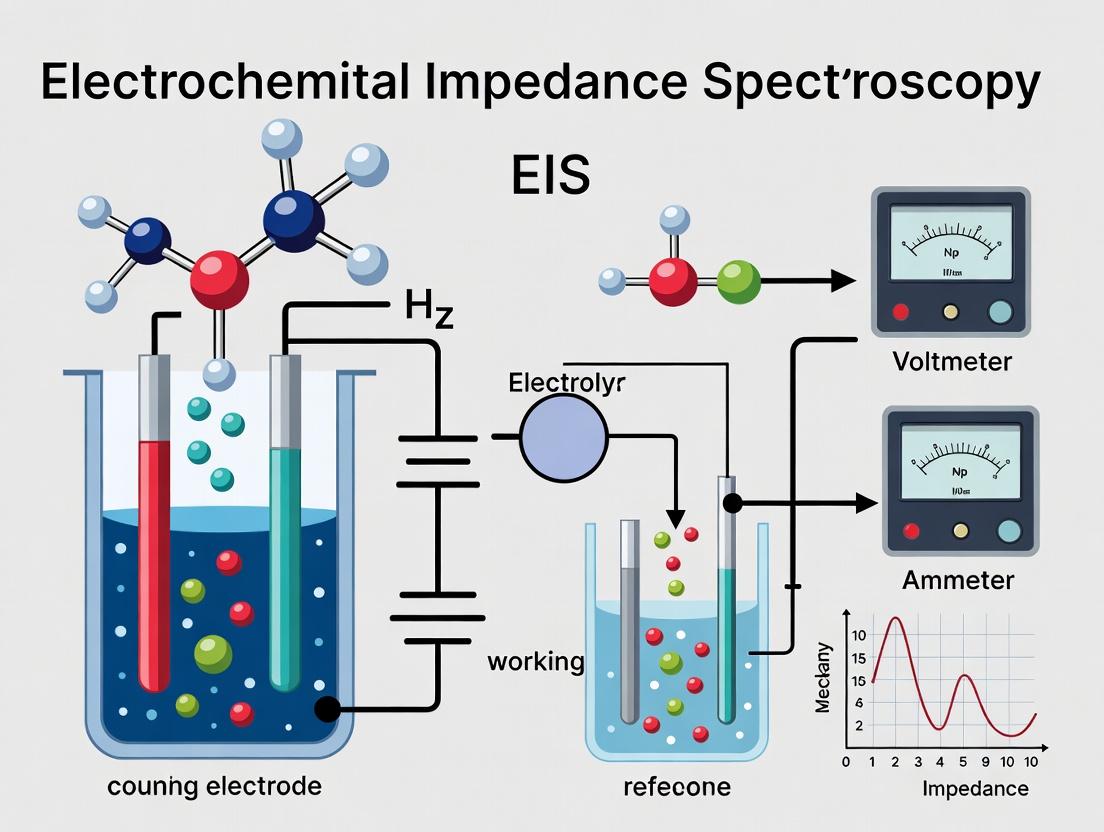
This article provides a comprehensive guide for researchers and drug development professionals on using Electrochemical Impedance Spectroscopy (EIS) to measure ohmic resistance (R_s), a critical but often misunderstood parameter.
Beyond Simple Resistance: A Complete Guide to Ohmic Resistance Measurement with Electrochemical Impedance Spectroscopy for Biomedical Applications
Abstract
This article provides a comprehensive guide for researchers and drug development professionals on using Electrochemical Impedance Spectroscopy (EIS) to measure ohmic resistance (R_s), a critical but often misunderstood parameter. Covering foundational principles to advanced applications, we detail how R_s impacts biosensor performance, drug permeability assays, and cell monolayer integrity studies (e.g., TEER). The guide explores optimal experimental methodologies for accurate extraction from Nyquist and Bode plots, addresses common pitfalls and data validation techniques, and compares EIS-derived R_s with other methods. Our aim is to empower scientists to leverage precise ohmic resistance measurements for more reliable and interpretable data in biomedical research.
Demystifying Ohmic Resistance in EIS: What R_s Really Means for Your Bioelectrochemical System
Within the framework of Electrochemical Impedance Spectroscopy (EIS) research, the accurate determination of the ohmic resistance (Rs), also known as the solution or uncompensated resistance, is paramount. Rs represents the pure, frequency-independent resistance of the electrolyte between the working and reference electrodes. It is an unwavering component in the equivalent circuit, unaffected by electrochemical kinetics or diffusion processes. In drug development, precise Rs measurement is critical for quantifying ionic strength, monitoring cell confluence in real-time, and ensuring the accuracy of derived kinetic parameters like charge transfer resistance (Rct).
Ohmic resistance is governed by Ohm's Law (V = I * R_s) and is a function of electrolyte conductivity, electrode geometry, and distance. The table below summarizes key relationships and typical values in biological/pharmaceutical contexts.
Table 1: Factors Influencing Ohmic Resistance (R_s) in Electrochemical Cells
| Factor | Relationship with R_s | Typical Range/Value in Cell-Based Assays | Impact on EIS Analysis |
|---|---|---|---|
| Electrolyte Conductivity (κ) | R_s ∝ 1/κ | Cell culture medium: ~1.5 S/m | High R_s (> 100 Ω) can mask Faradaic processes. |
| Electrode Distance (d) | R_s ∝ d | Interdigitated electrodes (IDEs): 10-200 µm | Minimizing d is key for in vitro sensor sensitivity. |
| Electrode Area (A) | R_s ∝ 1/A | IDE working area: 10⁻⁴ to 10⁻² cm² | Larger A reduces R_s, improving signal-to-noise. |
| Frequency Response | Constant at high frequency | > 10⁵ Hz (for typical systems) | Enables direct extraction from Nyquist plot high-frequency intercept. |
Experimental Protocols for R_s Measurement
Protocol 3.1: Direct High-Frequency Intercept Method Using EIS
Objective: To determine R_s from the high-frequency real-axis intercept of a Nyquist plot. Materials: Potentiostat/Galvanostat with FRA, 3-electrode cell (WE, CE, RE), electrolyte of interest. Procedure:
- Cell Setup: Assemble the electrochemical cell with the working, counter, and reference electrodes immersed in the electrolyte (e.g., PBS, cell culture medium).
- Initialization: Open the potentiostat software. Set the DC potential to the open circuit potential (OCP). Configure the EIS parameters.
- EIS Acquisition:
- Frequency Range: Set from 100 kHz (or maximum stable frequency) to 0.1 Hz.
- AC Amplitude: Apply a sinusoidal perturbation of 5-10 mV RMS to remain in the linear regime.
- Data Points: Acquire ≥ 5 points per decade of frequency.
- Data Analysis:
- Plot the acquired data as a Nyquist plot (-Im(Z) vs. Re(Z)).
- Identify the high-frequency intercept on the real (Z') axis. This value is Rs.
- For validation, fit the data to a simple equivalent circuit, e.g., Rs(RctCdl).
Protocol 3.2: Current Interrupt (I-interrupt) Method forIn SituValidation
Objective: To validate R_s measured via EIS using a time-domain technique. Materials: Potentiostat capable of current interrupt, identical cell setup as 3.1. Procedure:
- Polarization: Apply a small constant current pulse (Iapp, e.g., 10 µA) to the cell for a short duration (tpulse = 100 ms).
- Interrupt: Abruptly switch the current to zero while recording the cell potential at a high sampling rate (≥ 1 MS/s).
- Measurement: Observe the instantaneous potential drop (ΔV) at the moment of interruption. The ohmic component drops instantly, while capacitive components decay slowly.
- Calculation: Calculate Rs using Ohm's Law: Rs = ΔV / Iapp. Compare this value to the EIS-derived Rs.
Visualizing the Role of R_s in EIS Analysis
The Scientist's Toolkit: Essential Research Reagents & Materials
Table 2: Key Reagents and Materials for R_s Measurement Studies
| Item | Function in R_s Measurement | Example/Specification |
|---|---|---|
| Potentiostat with EIS | Applies precise AC potential and measures current response to calculate impedance. | Gamry Interface 1010E, Biologic SP-300. Frequency range > 1 MHz preferred. |
| Interdigitated Electrodes (IDEs) | Microfabricated electrodes providing small, fixed electrode distance (d) for sensitive measurements in small volumes. | ~50 µm finger width and spacing. Gold or platinum electrodes for biocompatibility. |
| Reference Electrode | Provides stable, known reference potential for accurate cell potential control. | Ag/AgCl (3M KCl) for aqueous systems. |
| Phosphate Buffered Saline (PBS) | Standard, well-characterized electrolyte for calibration and control experiments. | 1x, pH 7.4, ~0.15 M ionic strength. |
| Redox Probe (e.g., [Fe(CN)₆]³⁻/⁴⁻) | A well-behaved, reversible redox couple used to validate the full cell and electrode performance. | 5 mM in 1x PBS, with 0.1 M supporting electrolyte (e.g., KCl). |
| Conductive Cell Culture Media | Electrolyte for in vitro cell-based EIS assays. Conductivity must be monitored. | DMEM + 10% FBS. Pre-warm to 37°C and degas. |
| EC-Lab, ZView, or Equivalent | Software for EIS data acquisition, equivalent circuit modeling, and parameter extraction. | Required for CNLS fitting to obtain precise R_s from complex data. |
Within the broader thesis on Electrochemical Impedance Spectroscopy (EIS) for accurate ohmic resistance (Rs) measurement, this application note details the physical determinants of Rs. Rs, the high-frequency real-axis intercept in a Nyquist plot, is not a mere fitting parameter but a composite value originating from electrolyte conductivity, cell geometry, and interfacial contributions. Precise determination and deconvolution of Rs are critical for normalizing charge transfer resistances in biosensing, evaluating formulations in battery development, and assessing compound interference in drug discovery.
In the equivalent circuit modeling of an electrochemical interface, Rs represents the uncompensated ohmic resistance between the working and reference electrodes. Its value directly impacts the accuracy of derived kinetic parameters (e.g., charge transfer resistance, Rct). This note provides protocols to isolate and quantify the individual contributions to R_s, enabling more insightful electrochemical analysis for research and development.
Quantitative Contributions to R_s
The total measured R_s can be expressed as:
R_s = R_elec + R_geom + R_IF
Where R_elec is the contribution from the bulk electrolyte, R_geom is defined by electrode placement and size, and R_IF includes interfacial films (e.g., adsorption layers, SEI in batteries).
Table 1: Typical R_s Contributions in Common Systems
| System / Condition | Typical R_s Range | Dominant Contribution(s) | Notes |
|---|---|---|---|
| 1M KCl, 3-electrode, planar Au | 10 - 50 Ω | R_geom (cell setup) | Highly conductive electrolyte minimizes R_elec. |
| Phosphate Buffer Saline (PBS) | 50 - 200 Ω | Relec & Rgeom | Conductivity ~1.5 S/m. Depends on concentration. |
| 1M LiPF6 in EC:DMC | 1 - 10 Ω cm²* | Relec & RIF (SEI) | *Area-normalized. Conductivity ~10 mS/cm. |
| Cell Culture Media (e.g., DMEM) | 200 - 500 Ω | R_elec | Lower ionic strength, organic buffers. |
| Low Ionic Strength Buffer (1 mM) | 1 - 5 kΩ | R_elec | R_s highly sensitive to temperature/evaporation. |
| Coated/Modified Electrode (e.g., with SAM) | +5% to +50% vs bare | R_IF | Increase depends on film thickness & ion permeability. |
Experimental Protocols
Protocol 3.1: Baseline Measurement of R_s
Objective: Establish the intrinsic R_s of a system. Materials: Potentiostat/Galvanostat with EIS capability, electrochemical cell, electrodes, electrolyte. Procedure:
- Cell Setup: Configure standard 3-electrode system (Working, Counter, Reference) in chosen electrolyte.
- EIS Parameters: Apply open circuit potential (OCP) or relevant DC bias. Set AC amplitude (typically 5-10 mV rms). Frequency range: 100 kHz to 1 Hz (ensure a clear high-frequency intercept).
- Data Acquisition: Acquire impedance spectrum.
- Analysis: Fit high-frequency data (>10 kHz) to a simple Rs model or extract the real-axis intercept from the Nyquist plot. Deliverable: Baseline Rs value.
Protocol 3.2: Deconvoluting R_elec via Variable Conductivity
Objective: Isolate the electrolyte contribution (R_elec). Materials: As in 3.1, plus salts (e.g., KCl, LiClO4) to prepare electrolyte series. Procedure:
- Prepare a series of electrolytes with varying, known ionic strengths (e.g., 0.1 M, 0.5 M, 1.0 M KCl).
- For each electrolyte, perform Protocol 3.1 under identical geometric conditions (same cell, same electrode placement).
- Plot measured Rs vs. the inverse of conductivity (κ, known from literature or measured separately). The slope is related to the cell constant (K = Rs * κ). Deliverable: Cell constant (K) and pure R_elec for any known conductivity.
Protocol 3.3: Assessing R_IF from Modified Electrodes
Objective: Quantify the interfacial film resistance contribution. Materials: Electrode, film deposition materials (e.g., thiols for SAM, coating solutions). Procedure:
- Measure baseline R_s for bare electrode (Protocol 3.1).
- Deposit/modify the electrode surface with the target film (e.g., incubate in SAM solution for 2 hrs).
- Rinse and measure R_s under identical conditions.
- Calculate ΔRIF = Rs(modified) - Rs(bare). This Δ approximates the film's ionic resistance. Deliverable: Contribution of the interface (RIF) to total R_s.
Visualization of R_s Determination Workflow
Title: Workflow for Deconvoluting R_s Physical Origins
The Scientist's Toolkit: Key Research Reagents & Materials
Table 2: Essential Materials for R_s Analysis
| Item | Function / Relevance |
|---|---|
| Potentiostat with EIS | Core instrument for applying potential and measuring impedance response. |
| Faraday Cage | Critical for low-amplitude EIS measurements to shield from external electromagnetic noise. |
| Low-Impedance Reference Electrode | Minimizes its own resistive contribution to the measured R_s (e.g., Ag/AgCl with high Cl- concentration). |
| Inert Electrolyte Salts (KCl, LiClO4) | For establishing baseline conductivity without faradaic or adsorption interference. |
| Electrode Positioning Jig | Ensures reproducible geometry (R_geom) between experiments. |
| Conductivity Meter | To independently verify bulk electrolyte conductivity (κ) for R_elec calculation. |
| Ultra-Pure Water (18.2 MΩ·cm) | For preparing solutions to avoid conductive impurities that skew R_s. |
| Chemicals for Surface Modification (e.g., Alkanethiols, Polymers) | To create defined interfacial films for studying R_IF. |
| Standard Redox Probes (e.g., [Fe(CN)6]3-/4-) | Used in conjunction with R_s measurement to verify system performance and kinetics. |
Within the broader thesis on Electrochemical Impedance Spectroscopy (EIS) for Ohmic Resistance Measurement Research, accurate deconvolution of the Randles circuit elements is paramount. The uncompensated solution resistance, ( Rs ), is a critical, non-faradaic parameter that represents the ionic resistance of the electrolyte between the working and reference electrodes. It is often conflated with or obscured by the charge transfer resistance (( R{ct} )) and the Warburg diffusion element (( W )). This application note provides protocols to isolate and measure ( R_s ) accurately, a prerequisite for precise determination of kinetic and diffusion parameters in electrochemical systems relevant to biosensing and drug development.
Theoretical Background & Distinctions
The Randles circuit is the fundamental model for a simple electrode-electrolyte interface. Its elements represent distinct physical processes:
- ( R_s ) (Solution Resistance): The ohmic resistance of the ionic solution. It is frequency-independent and appears as a constant offset on the real axis in a Nyquist plot.
- ( R_{ct} ) (Charge Transfer Resistance): The resistance to electron transfer across the electrode interface. It is kinetically controlled, varies with potential, and is in parallel with the double-layer capacitance.
- ( C{dl} ) / ( Q{dl} ) (Double Layer Capacitance/Constant Phase Element): Represents the ionic space-charge capacitance at the electrode interface.
- ( W ) (Warburg Element): Represents semi-infinite linear diffusion of electroactive species to the electrode surface. It manifests as a 45° line on the Nyquist plot at low frequencies.
Key Distinction: ( Rs ) is a purely resistive, series element unaffected by electrode kinetics or mass transport. In contrast, ( R{ct} ) is kinetic and ( W ) is diffusional; both are in parallel with the interfacial capacitance and are thus modulated by it.
Experimental Protocols for Distinguishing ( R_s )
Protocol 3.1: High-Frequency Intercept Method
Objective: To determine ( Rs ) directly from the high-frequency intercept of a Nyquist plot. Principle: At very high frequencies (( \omega \rightarrow \infty )), the capacitance acts as a short circuit, and diffusion is irrelevant. The impedance of the Randles circuit reduces to ( Z(\omega \rightarrow \infty) = Rs ). Procedure:
- Set up a standard 3-electrode cell (Working, Counter, Reference).
- Apply a DC bias at the formal potential of the redox probe (e.g., 0.32 V vs. Ag/AgCl for 1 mM ( K3Fe(CN)6 ) in 1 M KCl).
- Acquire EIS data over a broad frequency range (e.g., 100 kHz to 0.1 Hz) with a 10 mV RMS perturbation.
- Plot the Nyquist representation (( -Z{im} ) vs. ( Z{re} )).
- Identify the high-frequency intercept on the real (( Z{re} )) axis. This value is ( Rs ).
Protocol 3.2: Use of an Inert Redox Probe & Concentration Variation
Objective: To validate ( Rs ) by isolating it from kinetic and diffusional contributions. Principle: Using a reversible, one-electron redox couple (e.g., ( Fe(CN)6^{3-/4-} )) minimizes ( R{ct} ). Varying the concentration of supporting electrolyte (e.g., KCl) changes ( Rs ) predictably without affecting ( R_{ct} ) for a fully supported system. Procedure:
- Prepare a 1 mM ( K3Fe(CN)6 ) solution with varying concentrations of KCl supporting electrolyte (e.g., 0.1 M, 0.5 M, 1.0 M).
- For each solution, perform EIS per Protocol 3.1.
- Extract ( R_s ) from the high-frequency intercept for each measurement.
- Plot extracted ( R_s ) vs. 1/[KCl]. A linear relationship confirms the measured parameter is the ionic solution resistance.
Protocol 3.3: EIS Fitting with Constrained and Unconstrained Models
Objective: To computationally distinguish ( Rs ) by evaluating fitting errors. Principle: Incorrect attribution of impedance to ( Rs ), ( R_{ct} ), or ( W ) leads to poor fitting statistics or unphysical parameter values. Procedure:
- Acquire a full Nyquist plot for a system showing a depressed semicircle (kinetics + ( CPE )) and a Warburg tail.
- Fit the data to the full Randles circuit: ( Rs(Q{dl}[R_{ct}W]) ).
- Note the fitting error (e.g., χ²) and the value/confidence interval for ( R_s ).
- Re-fit the data with a model where ( R_s ) is fixed to a known value (e.g., from high-frequency intercept or solution conductivity measurement).
- Compare the quality of the two fits. A significant degradation in fit quality when ( R_s ) is fixed indicates the initial extraction was likely confounded by other elements.
Data Presentation
Table 1: Extracted EIS Parameters for 1 mM ( K3Fe(CN)6 ) with Varying KCl Concentration
| [KCl] (M) | ( R_s ) (Ω) [HF Intercept] | ( R_{ct} ) (kΩ) [Fit] | ( W ) (Ω⋅s⁻⁰·⁵) [Fit] | Conductivity (mS/cm)* |
|---|---|---|---|---|
| 0.1 | 185 ± 5 | 0.65 ± 0.05 | 450 ± 20 | 12.8 |
| 0.5 | 42 ± 2 | 0.58 ± 0.04 | 430 ± 15 | 56.0 |
| 1.0 | 23 ± 1 | 0.55 ± 0.03 | 425 ± 10 | 111.0 |
*Calculated from cell constant and measured ( R_s ).
Table 2: Model-Fitting Comparison for Distinguishing ( R_s )
| Fitting Model | ( R_s ) (Ω) | ( R_{ct} ) (kΩ) | ( Q_{dl} ) (µS⋅sⁿ) | n (CPE exponent) | χ² (Goodness of Fit) |
|---|---|---|---|---|---|
| Unconstrained ( Rs(Q[R{ct}W]) ) | 24.1 ± 0.8 | 1.21 ± 0.07 | 25.3 ± 1.2 | 0.89 ± 0.01 | 8.7e-4 |
| Constrained ( R_s) fixed at 50 Ω | 50 (Fixed) | 0.95 ± 0.12 | 31.5 ± 2.1 | 0.92 ± 0.02 | 5.2e-3 |
| Constrained ( R_s) fixed at 23 Ω | 23 (Fixed) | 1.23 ± 0.06 | 25.1 ± 1.1 | 0.89 ± 0.01 | 8.9e-4 |
Visualization
Title: Workflow for Isolating Rs in EIS Experiments
Title: Physical Origin and EIS Signature of Randles Elements
The Scientist's Toolkit: Essential Research Reagents & Materials
Table 3: Key Reagents and Materials for Rs Characterization Experiments
| Item | Function & Rationale |
|---|---|
| Potassium Ferricyanide (K₃[Fe(CN)₆]) | Reversible, outer-sphere redox probe. Provides a well-defined, kinetically fast reaction to minimize ( R{ct} ) and highlight ( Rs ). |
| Potassium Chloride (KCl) | Inert supporting electrolyte. Varying its concentration allows systematic alteration of solution conductivity (( 1/R_s )) without affecting redox potential. |
| Phosphate Buffered Saline (PBS), 1X | Biologically relevant electrolyte. Essential for measuring ( R_s ) in drug development contexts (e.g., biosensor characterization in physiological buffer). |
| Ag/AgCl Reference Electrode (with porous frit) | Provides a stable, low-impedance reference potential. A clogged frit can artificially increase measured ( R_s ). |
| Platinum Counter Electrode | Inert, high-surface-area electrode to ensure counter reaction does not limit current or contribute significantly to total impedance. |
| Polished Glassy Carbon Working Electrode | Provides a clean, reproducible, and inert surface for the redox reaction, ensuring consistent ( C{dl} ) and ( R{ct} ). |
| Impedance Analyzer / Potentiostat with FRA | Instrument capable of applying a small sinusoidal perturbation and measuring phase-sensitive response. Requires frequency range up to 100 kHz - 1 MHz for accurate ( R_s ). |
| Conductivity Meter & Standard | For independent validation of solution conductivity, which is inversely proportional to ( R_s ) for a given cell geometry. |
Within the framework of Electrochemical Impedance Spectroscopy (EIS) for ohmic resistance measurement research, the solution resistance (Rs) is a fundamental parameter. Rs, often derived from the high-frequency intercept on the real axis of a Nyquist plot, represents the uncompensated ionic resistance between the working and reference electrodes. This Application Note details how Rs is not merely a systemic factor to be compensated but a critical variable that directly dictates the performance of electrochemical biosensors and the accuracy of kinetic studies, particularly in drug development contexts such as ligand-binding assays and enzyme inhibition studies.
Table 1: Impact of Rs on Key Electrochemical Sensor Performance Metrics
| Rs Range (Ω) | Effect on Sensitivity (nA/µM) | Signal-to-Noise Ratio (SNR) | Apparent Electron Transfer Rate (kapp, s-1) | Recommended Application Context |
|---|---|---|---|---|
| < 50 | High (> 50) | > 100:1 | Accurate measurement (> 0.5) | High-precision kinetic studies, low-concentration analyte detection |
| 50 - 200 | Moderate (20-50) | 30:1 - 100:1 | Slightly underestimated (0.3 - 0.5) | Standard buffer screening, mid-throughput assays |
| 200 - 500 | Low (< 20) | 10:1 - 30:1 | Significantly attenuated (0.1 - 0.3) | Preliminary feasibility studies |
| > 500 | Very Low / Unstable | < 10:1 | Unreliable (< 0.1) | Not recommended for quantitative work; indicates poor electrolyte choice or cell geometry |
Data synthesized from recent studies on Faradaic EIS and voltammetric sensors in physiological and low-ionic-strength buffers.
Table 2: Rs Contribution from Common Experimental Variables
| Variable | Typical ΔRs (Ω) | Primary Mitigation Strategy |
|---|---|---|
| Low Ionic Strength Buffer (e.g., 1 mM PBS) | +300 to +1000 | Use higher ionic strength buffers (e.g., 100 mM PBS) with inert electrolyte (e.g., KCl) |
| Small Electrode Diameter (< 1 mm) | +50 to +200 | Optimize cell design; use larger or interdigitated electrodes |
| Increased Electrode Fouling (e.g., protein adsorption) | +100 to +500 | Use antifouling layers (PEG, zwitterionic polymers) |
| Non-Ideal Reference Electrode Placement | +100 to +∞ | Place reference electrode close to working electrode surface via Luggin capillary |
Detailed Experimental Protocols
Protocol 1: Accurate Determination of RsUsing High-Frequency EIS
Objective: To measure the uncompensated solution resistance (Rs) prior to any faradaic sensor experiment. Materials: Potentiostat with EIS capability, three-electrode cell, test solution.
- Cell Setup: Assemble electrochemical cell with working, counter, and reference electrodes in the solution of interest.
- Open Circuit Potential (OCP): Measure and record the OCP for 60 seconds to establish a stable baseline.
- EIS Parameters:
- Applied DC Potential: Use the measured OCP.
- AC Amplitude: 10 mV (RMS).
- Frequency Range: 100 kHz to 100 Hz.
- Points per Decade: 10.
- Data Acquisition: Run the EIS experiment.
- Analysis: Fit the high-frequency data (typically > 10 kHz) to a simple series resistor model. The real-axis intercept is Rs. Validate with potentiostat's positive feedback or current-interrupt function if available.
Protocol 2: Evaluating RsImpact on Cyclic Voltammetry (CV) Signal-to-Noise
Objective: To correlate measured Rs with the quality of a voltammetric signal for a redox probe. Materials: As in Protocol 1, plus 5 mM Potassium Ferricyanide (K3[Fe(CN)6]) in buffers of varying ionic strength (e.g., 10 mM, 50 mM, 100 mM PBS).
- Rs Measurement: For each buffer, perform Protocol 1 to determine Rs.
- CV Acquisition: For the same system, run a CV.
- Potential Window: -0.1 V to +0.5 V vs. Ag/AgCl.
- Scan Rate: 50 mV/s.
- Number of Cycles: 3.
- SNR Calculation: On the third forward scan, measure the peak anodic current (Ipa, Signal). In a quiet region of the CV (e.g., +0.4 V), measure the standard deviation of the current over a 0.05 V range (Noise). Calculate SNR = Ipa / Noise.
- Correlation: Plot SNR vs. Measured Rs. Expect an inverse exponential relationship.
Protocol 3: Correcting Kinetic Parameters (ket) for RsEffects
Objective: To extract the true heterogeneous electron transfer rate constant (ket) from CV data distorted by high Rs. Materials: Sensor with an immobilized redox species (e.g., surface-tethered ferrocene), electrolyte.
- Measure Rs: Perform Protocol 1 in the experimental electrolyte.
- Acquire CVs at Multiple Scan Rates: Obtain CVs at scan rates (ν) from 10 mV/s to 1000 mV/s.
- Observed Peak Separation (ΔEp): For each scan rate, record ΔEp.
- Apply Rs Correction: Calculate the ohmic drop-corrected peak separation: ΔEp,corr = ΔEp - 2*(Ip * Rs), where Ip is the average peak current.
- Determine ket: Use the Nicholson method: ψ = ket / [πDnFν/(RT)]1/2, where ψ is a function of ΔEp,corr. Plot ψ vs. ν-1/2 to find the scan-rate independent ket. Compare results with and without the Rs correction from Step 4.
Visualizing the Impact of Rs
Title: How High R_s Degrades Sensor Data
Title: Protocol for Managing R_s in Experiments
The Scientist's Toolkit: Essential Research Reagent Solutions
Table 3: Key Materials for Controlling and Measuring Rs
| Item | Function/Benefit | Example Product/Chemical |
|---|---|---|
| Inert Supporting Electrolyte | Increases solution ionic strength to minimize Rs without participating in redox reactions. | Potassium Chloride (KCl), Tetrabutylammonium Hexafluorophosphate (TBAPF6) |
| Redox Probe for Diagnostics | Provides a known, reversible electrochemical reaction to diagnose Rs effects and cell performance. | Potassium Ferricyanide ([Fe(CN)6]3-/4-), Ruthenium Hexamine ([Ru(NH3)6]3+) |
| Antifouling Coating | Forms a monolayer or polymer layer on the electrode to prevent biofouling, which can increase local Rs. | 11-Mercaptoundecyl tri(ethylene glycol) (EG3), Poly(ethylene glycol) (PEG) Thiol |
| Luggin Capillary | Allows precise placement of the reference electrode tip close to the working electrode, minimizing Rs in the potential measurement path. | Glass Luggin Capillary with porous frit |
| Potentiostat with Positive Feedback iR Compensation | Electronic compensation that injects a current to counteract the voltage drop (i*Rs). Use with caution to avoid oscillation. | Built-in feature on modern research-grade potentiostats (e.g., Autolab, BioLogic, Ganny) |
| Standard EIS Validation Kit | A cell with a known, reproducible resistive element to calibrate and verify Rs measurement accuracy. | Commercial dummy cell (e.g., 1kΩ resistor in series with 1µF capacitor) |
Within the broader thesis on Electrochemical Impedance Spectroscopy (EIS) for Ohmic Resistance Measurement Research, accurate determination of the solution resistance ($Rs$) is paramount. $Rs$ represents the high-frequency intercept on the real axis of a Nyquist plot and the high-frequency plateau in a Bode magnitude plot. It is a critical parameter in characterizing electrochemical systems, from battery development to biosensor optimization in drug discovery. Misidentification leads to erroneous modeling of charge-transfer ($R{ct}$) and diffusion processes. This application note details protocols for visualizing and extracting $Rs$ with high fidelity.
Core Principles and Data Presentation
$Rs$ is the inherent resistance of the electrolyte between the working and reference electrodes. At sufficiently high frequency, the impedance of faradaic processes (double-layer charging, charge-transfer) becomes negligible, revealing only $Rs$.
Table 1: Characteristic Signatures of $R_s$ in Different EIS Plots
| Plot Type | Axis | $R_s$ Signature | Visual Cue | ||||
|---|---|---|---|---|---|---|---|
| Nyquist (Complex Plane) | Real (Z') vs. Imaginary (-Z'') | Intercept on the real (Z') axis at high frequency. | Leftmost point of the spectrum on the horizontal axis. | ||||
| Bode Magnitude | Log | Z | vs. Log Frequency | A horizontal plateau at high frequency where | Z | ≈ $R_s$. | Region where the magnitude curve flattens at high frequency. |
| Bode Phase | Phase Angle vs. Log Frequency | Phase angle approaches 0° at high frequency. | Convergence to zero degrees at the highest measured frequencies. |
Table 2: Quantitative Data from a Simulated Randles Cell ($Rs$ = 100 Ω, $R{ct}$ = 500 Ω, $C_{dl}$ = 1e-6 F)
| Frequency (Hz) | Z' (Ω) | -Z'' (Ω) | Z | (Ω) | Phase (deg) | |
|---|---|---|---|---|---|---|
| 100,000 | 100.1 | 0.16 | 100.1 | -0.09 | ||
| 10,000 | 100.3 | 15.9 | 101.6 | -9.0 | ||
| 1,000 | 125.0 | 159.1 | 203.1 | -51.8 | ||
| 100 | 350.0 | 318.3 | 473.9 | -42.3 | ||
| 10 | 480.0 | 127.3 | 496.7 | -14.8 |
Experimental Protocols
Protocol 1: EIS Measurement for $R_s$ Determination
Objective: Acquire impedance data suitable for unambiguous identification of the high-frequency intercept.
- System Setup: Utilize a potentiostat/galvanostat with FRA capabilities. Use a standard 3-electrode configuration: Working Electrode (WE), Counter Electrode (CE), and Reference Electrode (RE). Ensure minimal, reproducible spacing between WE and RE.
- Cell Conditioning: Apply the desired DC potential/bias and allow the current to stabilize (e.g., 300-600 sec).
- Frequency Scan Parameters:
- Frequency Range: Start at a very high frequency (e.g., 1 MHz or the instrument's maximum, typically 100 kHz-1 MHz for biological/pharmaceutical systems). End at a low frequency (e.g., 0.1 Hz). The high-frequency limit is critical for $R_s$ capture.
- AC Amplitude: Apply a small sinusoidal perturbation (typically 5-10 mV RMS) to ensure linear system response.
- Points per Decade: Acquire ≥ 10 points per decade for adequate plot resolution.
- Data Acquisition: Execute the frequency sweep. Record complex impedance ($Z = Z' + jZ''$) at each frequency.
Protocol 2: Data Analysis and $R_s$ Extraction
Objective: Correctly identify $R_s$ from acquired data.
- Plot Generation:
- Nyquist Plot: Plot -Z'' (imaginary) vs. Z' (real). Inspect the leftmost point.
- Bode Plot: Generate a dual y-axis plot: Log |Z| vs. Log(f) and Phase vs. Log(f).
- High-Frequency Intercept Identification:
- Nyquist Method: Perform a linear regression on the first 3-5 high-frequency data points (where -Z'' is minimal). Extrapolate the regression line to the real axis. The x-intercept is $Rs$.
- Bode Magnitude Method: Identify the frequency region where the magnitude plot is flat and the phase plot is near 0°. The average |Z| value in this plateau is $Rs$.
- Validation: The values from the Nyquist and Bode methods should agree within 1-2%. Discrepancy suggests an insufficiently high starting frequency or instrumental artifacts.
Mandatory Visualizations
Title: Workflow for EIS Measurement and Rs Extraction
Title: Visual Identification of Rs in Nyquist and Bode Plots
The Scientist's Toolkit: Research Reagent Solutions & Essential Materials
Table 3: Essential Materials for EIS-based $R_s$ Measurement
| Item | Function in $R_s$ Research | Example/Specification |
|---|---|---|
| Potentiostat/Galvanostat with FRA | Generates the AC perturbation and measures the phase-sensitive impedance response. Core instrument. | Biologic SP-300, Metrohm Autolab PGSTAT, Ganny Reference 600+. Requires frequency range up to 1-10 MHz. |
| Faraday Cage | Shields the electrochemical cell from external electromagnetic noise, critical for accurate high-frequency measurement. | Grounded metal enclosure. |
| 3-Electrode Cell | Standard configuration for controlled potential measurements. Minimizes inclusion of counter electrode impedance. | Glass cell with ports for WE, CE, RE. |
| Low-Impedance Reference Electrode | Provides a stable potential with minimal inherent resistance. Essential for high-frequency work. | Ag/AgCl (sat. KCl) with low-leakage, porous frit. |
| Non-Polarizable Working Electrode | Inert electrode to study $R_s$ of the electrolyte alone. | Platinum disk electrode, Gold electrode. |
| Supporting Electrolyte | Provides conductive medium. High purity is essential to minimize unwanted faradaic processes. | Phosphate Buffered Saline (PBS), KCl solution (0.1 M - 1.0 M). |
| Standard Redox Couple (Optional) | Used for system validation and checking RE stability. | 5 mM Potassium Ferricyanide/K Ferrocyanide in 1M KCl. |
| Data Fitting Software | For extrapolation/regression analysis to precisely determine the high-frequency intercept. | ZView, EC-Lab, Ganny EIS Analyst, custom scripts (Python, MATLAB). |
| Calibrated Resistor Kit | For potentiostat/FRA validation at high frequencies. | Precision resistors (e.g., 100 Ω) with low parasitic inductance. |
Step-by-Step Protocols: Measuring Ohmic Resistance via EIS in Biosensing and Barrier Integrity Models
Application Notes: The Critical Role of R_s in EIS for Bioelectrochemical Systems
Within the broader thesis on Electrochemical Impedance Spectroscopy (EIS) for ohmic resistance (Rs) measurement research, the accurate determination of Rs is paramount. Rs, the uncompensated solution resistance between the working and reference electrodes, is a key parameter in kinetic analysis and model fitting. Errors in its estimation directly distort the derived charge-transfer resistance (Rct) and double-layer capacitance (C_dl), leading to significant inaccuracies in assessing interfacial phenomena critical for biosensing, corrosion studies, and characterizing electrode-electrolyte interfaces in pharmaceutical development (e.g., drug-membrane interactions).
Optimal electrode selection and cell configuration are the primary experimental levers for minimizing and accurately measuring R_s. This involves strategic choices in electrode geometry, material, placement, and the use of electrochemical cells designed to control the current distribution and ohmic drop.
Table 1: Impact of Electrode Material & Geometry on Key Parameters
| Parameter | Gold Wire (0.5 mm dia.) | Platinum Mesh (1 cm²) | Glassy Carbon Disk (3 mm dia.) | Indium Tin Oxide (ITO) Slide (1 cm²) |
|---|---|---|---|---|
| Typical R_s (in 0.1 M PBS) | High (~500-1000 Ω) | Low (~50-150 Ω) | Medium (~200-400 Ω) | Low-Medium (~100-300 Ω) |
| Effective Surface Area | Very Low | Very High | Well-defined (Low) | High (Planar) |
| Current Distribution | Poor, non-uniform | Excellent, uniform | Good, uniform (disk) | Good, uniform |
| Primary Use Case | Reference leads, wiring | Counter electrode, bulk electrolysis | Working electrode (kinetics) | Optically transparent WE |
Table 2: Effect of Cell Configuration & Electrolyte on R_s
| Configuration Variable | Effect on R_s | Recommended Practice for R_s Minimization |
|---|---|---|
| Working-Reference Electrode Distance | R_s ∝ Distance | Minimize distance (typically 1-2 mm from Luggin capillary tip). |
| Electrolyte Conductivity (κ) | R_s ∝ 1/κ | Use sufficiently supporting electrolyte (e.g., ≥0.1 M PBS, KCl). |
| Cell Geometry / Current Path | Complex function | Use symmetric, coaxial placement where possible. |
| Reference Electrode Type | Affects junction potential & stability | Use Luggin capillary; stable ref. (Ag/AgCl, SCE) with low impedance. |
| Temperature | R_s ∝ 1/T (for ionic cond.) | Control temperature (±0.5°C) for stable measurements. |
Detailed Experimental Protocols
Protocol 1: Systematic Measurement of R_s Using High-Frequency Intercept
Objective: To determine the uncompensated solution resistance (R_s) from a Nyquist plot. Materials: Potentiostat/Galvanostat with EIS capability, electrochemical cell, working (WE), counter (CE), and reference (RE) electrodes, electrolyte solution. Procedure:
- Cell Setup: Configure the three-electrode cell. Position the Luggin capillary tip of the reference electrode approximately 1-2 mm from the working electrode surface. Ensure electrodes are firmly placed and immobile.
- Initialization: Fill the cell with the electrolyte of interest (e.g., 0.1 M KCl). Allow the system to thermally equilibrate for 15 minutes.
- Open Circuit Potential (OCP) Measurement: Measure and record the OCP for 300 seconds or until stable (change < 2 mV/min).
- EIS Parameters: Set the AC perturbation amplitude to 10 mV (rms). Set the frequency range from 100 kHz (or the instrument maximum) down to 0.1 Hz. Select a logarithmic frequency sweep with 10 points per decade. Apply the DC potential at the measured OCP.
- Data Acquisition: Run the EIS experiment. Record the complex impedance (Zreal, Zimag) at each frequency.
- Rs Extraction: Plot the Nyquist representation (‑Zimag vs Zreal). Identify the high-frequency intercept on the real axis. This value is Rs. Validate by fitting the high-frequency data (>10 kHz) to a simple series resistor model.
Protocol 2: Optimization of Electrode Placement for Minimal R_s
Objective: To empirically determine the optimal working-to-reference electrode distance for a given cell geometry. Materials: As in Protocol 1, with a micromanipulator for precise RE positioning. Procedure:
- Baseline Setup: Secure the WE and CE. Mount the RE on a micromanipulator aligned perpendicular to the WE surface.
- Distance Calibration: Set an initial large distance (e.g., 10 mm). Record the exact position.
- Iterative Measurement: Perform a brief EIS scan (e.g., 50 kHz to 1 kHz) at the OCP. Record the high-frequency real intercept as R_s.
- Incremental Adjustment: Use the micromanipulator to decrease the WE-RE distance by 1 mm. Repeat step 3.
- Data Collection & Limit: Continue until the Rs value plateaus or the Luggin capillary is risk of touching the WE (typically at 0.5-1 mm). Plot Rs vs. distance.
- Optimal Setting: Select the distance just before the plateau region as the standard configuration for all subsequent experiments, ensuring reproducibility.
Visualization of Experimental Workflows
Title: Experimental Workflow for R_s-Focused EIS Setup
Title: Optimal Three-Electrode Cell Geometry for Low R_s
The Scientist's Toolkit: Research Reagent & Material Solutions
Table 3: Essential Materials for R_s-Optimized EIS Experiments
| Item | Function & Rationale | Example Product/Catalog |
|---|---|---|
| Potentiostat with EIS Module | Applies potential/current and measures impedance response up to high frequencies (≥1 MHz ideal for precise R_s). | Metrohm Autolab PGSTAT204 with FRA32M, Ganny Interface 1010E. |
| Faraday Cage | Encloses the cell to shield from external electromagnetic noise, crucial for stable high-frequency data. | Custom-built or commercial (e.g., Gamry Faraday Cage). |
| Electrochemical Cell (3-electrode) | Provides controlled geometry for reproducible electrode placement and current distribution. | Princeton Applied Research Flat Cell (K0235), Jacketed Glass Cell. |
| Luggin Capillary | Probes reference potential close to the WE to minimize ohmic drop without shielding. | Fused silica or glass capillary, often integrated with reference electrode. |
| Non-polarizable Reference Electrode | Provides a stable, low-impedance reference potential. | Ag/AgCl (3M KCl) electrode, Saturated Calomel Electrode (SCE). |
| High-Surface-Area Counter Electrode | Ensures CE kinetics are not rate-limiting, preventing distortion at high frequencies. | Platinum mesh or foil coil. |
| High-Purity Supporting Electrolyte | Provides known, high ionic conductivity to stabilize R_s and minimize drift. | 0.1 M Potassium Phosphate Buffer Saline (PBS), 0.1 M KCl (≥99.0%). |
| Precision Micromanipulator | Allows fine, reproducible adjustment of the WE-RE distance for R_s optimization. | Thorlabs or Newport 3-axis stage. |
This application note, framed within broader thesis research on Electrochemical Impedance Spectroscopy (EIS) for precise ohmic resistance (Rs) measurement, details the critical potentiostat parameters for acquiring high-frequency (HF) data accurately. Rs, a key parameter in corrosion studies, battery development, and biosensor characterization, is derived from the high-frequency intercept of the Nyquist plot. Errors in HF acquisition directly compromise its measurement.
The Challenge of High-Frequency EIS
At frequencies typically above 100 kHz, instrumental and setup limitations introduce significant phase errors and distortion. These include the potentiostat's limited bandwidth, cell cable inductance, and stray capacitance. Optimizing setup parameters is essential to extend the valid frequency range and ensure data reliability.
Key Parameters & Configuration Table
The following table summarizes the critical parameters for high-frequency EIS data acquisition, based on current manufacturer specifications and research.
Table 1: Key Potentiostat Parameters for High-Frequency EIS
| Parameter | Recommended Setting for HF-EIS | Function & Rationale | Typical Impact if Suboptimal |
|---|---|---|---|
| Bandwidth | > 1 MHz (w/ booster) | Maximum frequency at which the instrument can apply a signal and measure response with minimal phase shift. | Severe phase errors (>10°) above 100 kHz, distorting HF intercept. |
| Current Range | Auto-range disabled; manual, appropriate range | Auto-ranging introduces switching noise and delays. A fixed, suitable range minimizes noise. | Increased noise, transient artifacts during range switches, corrupting HF data points. |
| Integration Time / ADC Rate | Fastest setting (e.g., 1 µs) | Shorter measurement windows capture the fast HF signal more accurately. | Signal aliasing, loss of HF response fidelity. |
| AC Amplitude | 5-20 mV (subject to linearity check) | Smaller amplitudes improve HF performance but must yield a linear response. | Too large: induces nonlinearity; Too small: poor signal-to-noise ratio (SNR). |
| Cable Configuration | Low-inductance, coaxial, minimized length (<1m) | Reduces inductive loop area and associated impedance (ZL = jωL). | Inductive artifacts at HF, causing upward spiral in Nyquist plot. |
| Cell Connection | 4-terminal (Kelvin) sensing | Separates current supply and voltage sense lines to eliminate cable resistance. | Includes lead resistance in measurement, overestimating Rs. |
| Stray Capacitance Mitigation | Driven shield on working electrode cable | Shields the high-impedance WE sense line, reducing capacitance to ground. | Capacitive artifacts causing negative phase angles at very HF. |
Experimental Protocol: Validating High-Frequency Setup
This protocol details the calibration and validation of the potentiostat system for Rs measurement.
Objective: To verify the accuracy of the HF EIS measurement system using a known dummy cell.
Materials & Reagents:
- Potentiostat with claimed HF capability (>500 kHz).
- Low-inductance coaxial cables (WE sense with driven shield, CE, RE).
- Validation Dummy Cell: A precision 4-terminal resistor (e.g., 100 Ω ±0.1%) with minimal parasitic inductance.
- Faraday cage (recommended).
Procedure:
- System Connection: Connect the potentiostat to the dummy cell using the shortest possible 4-terminal configuration. Place setup inside a Faraday cage if available.
- Parameter Configuration: In the EIS software, set parameters as per Table 1. Disable auto-range and set current range to fix on 10 mA. Set AC amplitude to 10 mV rms.
- Frequency Scan: Program a logarithmic frequency sweep from 1 MHz (or instrument max) down to 100 Hz. Use 10 points per decade.
- Data Acquisition: Run the EIS measurement. Perform three replicate scans.
- Data Analysis:
- Plot Nyquist data. A perfect resistor is a single point on the real axis.
- Calculate the mean measured resistance and standard deviation across the high-frequency range (e.g., 100 kHz to 1 MHz).
- Plot phase angle vs. frequency. The phase should be close to 0°.
Acceptance Criteria: The mean measured Rs should be within 1% of the dummy cell's known value, and the phase angle should remain within ±2° up to the target maximum frequency.
The Scientist's Toolkit: Essential Research Reagents & Materials
Table 2: Key Research Reagent Solutions for EIS Cell Validation
| Item | Function in HF-EIS Context |
|---|---|
| Precision Dummy Cell (RLC network) | Calibrates instrument response, separates potentiostat errors from cell artifacts. Essential for validating HF performance. |
| Potassium Ferrocyanide/Ferricyanide (e.g., 5 mM each in 1M KCl) | Standard redox couple for testing full-cell electrochemical performance and checking linearity via amplitude sweep. |
| Electrochemically Inert Electrolyte (e.g., 0.1 M TBAPF6 in Acetonitrile) | Used for testing in a system with known double-layer capacitance and minimal faradaic processes, isolating hardware performance. |
| Structured Electrode (e.g., Microband or Interdigitated Array) | Electrodes with well-defined geometry allow for theoretical calculation of expected impedance, serving as a biological/chemical sensor surrogate for testing. |
Visualizing the HF-EIS Optimization Workflow
Diagram 1: HF-EIS Setup and Validation Workflow
Diagram 2: Error Sources Affecting High-Frequency Rs Measurement
Accurate acquisition of high-frequency EIS data is non-negotiable for reliable ohmic resistance determination. This requires a system-level approach combining optimal potentiostat parameter configuration (Table 1), rigorous validation using dummy cells, and an understanding of error source relationships (Diagram 2). Adherence to the provided protocol ensures data integrity for advanced research in electrochemical analysis and sensor development.
Within the broader thesis on Electrochemical Impedance Spectroscopy (EIS) for ohmic resistance (Rs) research, this protocol addresses the foundational step of quantifying solution resistance. Accurate Rs measurement is critical for iR compensation in Faradaic electroanalysis, for characterizing the ionic environment of biomolecular interactions (e.g., drug-target binding), and for assessing buffer properties relevant to in vitro diagnostics and pharmaceutical development.
Key Principles & Data
Solution resistance (Rs), a key component of the uncompensated ohmic resistance, is inversely related to solution conductivity (κ). It is fundamentally governed by the concentration and mobility of ionic species. For dilute solutions, conductivity follows Kohlrausch's Law.
Table 1: Typical Solution Resistivity of Common Buffers (at ~25°C)
| Buffer Composition | Concentration | Approx. Resistivity (Ω·cm) | Notes |
|---|---|---|---|
| Potassium Chloride (KCl) | 0.1 M | ~70 | High-conductivity standard |
| Phosphate Buffered Saline (PBS) | 1x | ~90 | Physiological ionic strength |
| Tris-EDTA (TE) Buffer | 10 mM Tris, 1 mM EDTA | ~3000 | Low ionic strength, used for nucleic acids |
| 4-(2-hydroxyethyl)-1-piperazineethanesulfonic acid (HEPES) | 0.1 M (no added salt) | ~1500 | Common cell culture buffer, low conductivity alone |
| Sodium Citrate | 0.1 M | ~120 | Moderate conductivity |
Table 2: Impact of Ionic Strength on Measured Rs (Theoretical)
| Ionic Strength (M) | Relative Conductivity | Estimated Rs for Cell Constant 1.0 (cm⁻¹) |
|---|---|---|
| 0.001 | Very Low | ~10,000 Ω |
| 0.01 | Low | ~1,000 Ω |
| 0.1 | Moderate | ~100 Ω |
| 1.0 | High | ~10 Ω |
Detailed Experimental Protocol
A. Materials & Equipment Setup
- Potentiostat/Galvanostat with EIS Capability
- Two- or Three-Electrode Electrochemical Cell: Working (e.g., Pt, Au), Counter (Pt wire), and Reference (Ag/AgCl) electrodes.
- Temperature-Controlled Bath: Maintain at 25.0 ± 0.1°C.
- Calibrated Conductivity Meter (for validation).
- Test Solutions: Buffers of interest (e.g., PBS, HEPES, citrate) and standard KCl solutions (0.01 M, 0.1 M).
B. Protocol Steps
- Electrode Preparation: Clean working and counter electrodes according to standard electrochemical procedures (e.g., polishing, sonication). Confirm stable reference electrode potential.
- Cell Constant Determination: a. Fill cell with standardized 0.1 M KCl solution (known κ = 12.88 mS/cm at 25°C). b. Perform a high-frequency EIS measurement (e.g., 100 kHz to 1 MHz). Fit the data to a simple Rs-C model (e.g., Randles circuit without the Warburg/Faradaic branch). c. Obtain Rs from the high-frequency intercept on the real impedance (Z') axis. Calculate Cell Constant (k) = Rs,measured * κKCl.
- Buffer Solution Measurement: a. Rinse the cell and electrodes thoroughly with deionized water followed by the test buffer. b. Fill the cell with the test buffer, ensuring no air bubbles are trapped. c. Perform EIS measurement under identical instrumental settings. Apply a small sinusoidal perturbation (e.g., 10 mV rms) over a high-frequency range (typically 100 kHz to 10-50 kHz) where the electrode-solution interface appears purely capacitive. d. Extract Rs, buffer from the high-frequency real-axis intercept.
- Data Calculation:
- Calculate Solution Conductivity: κbuffer = k / Rs, buffer.
- Estimate Ionic Strength: For simple 1:1 electrolytes, use κ ≈ F * Σ (ci ui), where F is Faraday's constant, c is concentration, and u is ionic mobility. For complex buffers, compare to standard curves.
The Scientist's Toolkit: Essential Research Reagents & Materials
Table 3: Key Research Reagent Solutions
| Item | Function / Purpose |
|---|---|
| 0.1 M KCl Standard Solution | Primary standard for calibrating cell constant due to its well-defined and high conductivity. |
| Phosphate Buffered Saline (PBS) | Model physiological buffer for assessing ionic strength in biologically relevant conditions. |
| Low-Ionic-Strength Buffer (e.g., 1 mM HEPES) | Used to establish the high-resistance measurement range and study dilute analyte interactions. |
| Supporting Electrolyte (e.g., 1 M NaNO₃) | Inert salt added to fix ionic strength, minimizing migration effects in detailed electroanalysis. |
| Redox Probe Solution (e.g., 5 mM K₃[Fe(CN)₆] in 0.1 M KCl) | Used in parallel validation experiments to check iR compensation accuracy. |
| *Electrode Cleaning Solution (e.g., Piranha solution) | Caution: Highly corrosive. For removing organic contaminants from electrode surfaces. |
| Deionized Water (≥18.2 MΩ·cm) | For rinsing and preparing all solutions to minimize contaminant conductivity. |
Workflow & Data Interpretation Diagrams
Title: EIS Workflow for Buffer Resistance Measurement
Title: EIS Data Interpretation for Extracting R_s
Within the broader thesis on Electrochemical Impedance Spectroscopy (EIS) for Ohmic Resistance Measurement Research, this protocol focuses on the real-time tracking of the solution resistance (Rs) as a primary, label-free transduction signal for affinity biosensors. While classical Faradaic EIS analyzes charge-transfer resistance (Rct) at a functionalized electrode, non-Faradaic or high-frequency EIS targeting Rs offers distinct advantages: minimal interfacial perturbation, reduced assay complexity, and direct sensitivity to bulk solution property changes induced by biomolecular binding events (e.g., antibody-antigen, DNA hybridization). This application note details the methodology for utilizing Rs shifts for real-time, kinetic biomolecular detection.
Key Principles & Signaling Pathways
Biomolecular binding on a sensor surface, or within a functionalized hydrogel matrix, alters the local ionic composition and mobility in the solution adjacent to the electrode. This change in local conductivity is detected as a modulation in the measured ohmic solution resistance, R_s.
Experimental Protocol: Real-Time R_s Tracking
Objective
To monitor the kinetics of biomolecular binding (e.g., IgG on anti-IgG coated surface) in real-time by continuously measuring the high-frequency solution resistance (R_s) of the system.
Materials & Equipment
See "Scientist's Toolkit" Section 6 for detailed reagents.
Detailed Methodology
Part A: Electrode Preparation & Functionalization
- Electrode Choice: Use interdigitated electrodes (IDEs) or a parallel-plate capacitor cell. Clean IDE (e.g., Au on SiO2/Si) with piranha solution (Caution!), rinse with DI water, and dry under N₂.
- Surface Functionalization:
- Immerse IDE in 2 mM 11-mercaptoundecanoic acid (11-MUA) in ethanol for 18h to form a self-assembled monolayer (SAM).
- Rinse with ethanol and PBS (10 mM, pH 7.4).
- Activate carboxyl groups with a 30-min injection of a 1:1 mix of 0.4 M EDC and 0.1 M NHS in PBS.
- Immerse in 50 µg/mL protein A/G or specific capture antibody in PBS for 1h.
- Deactivate remaining esters with 1 M ethanolamine-HCl (pH 8.5) for 10 min.
- Rinse with PBS. The sensor is ready for measurement.
Part B: EIS Setup for High-Frequency R_s Measurement
- Instrumentation: Connect the functionalized IDE to a potentiostat capable of high-frequency EIS (up to 1-10 MHz).
- Fluidic Cell: Integrate IDE into a flow cell or static measurement chamber. Use an Ag/AgCl reference and Pt counter electrode if in a 3-electrode configuration, or use IDE in a 2-terminal mode.
- Initial Measurement:
- Fill cell with running buffer (e.g., low-conductivity PBS, 10 mM).
- Apply a DC bias of 0 V (vs open circuit potential) with a 10 mV RMS AC perturbation.
- Perform a frequency sweep from 1 MHz to 100 Hz to obtain the initial Nyquist plot.
- Fit the high-frequency semicircle/intersection with the Z' axis to an equivalent circuit (e.g., [Rs(Cdl[RctW])]) to extract the initial Rs value. For pure R_s tracking, a single high-frequency measurement (e.g., 100 kHz - 1 MHz) is sufficient.
Part C: Real-Time Kinetic Measurement
- Baseline Acquisition: Initiate a single-frequency (e.g., 100 kHz) impedance measurement in time-course mode. Record R_s (derived from Z') for 5-10 min in running buffer until a stable baseline is achieved.
- Analyte Injection: Introduce the target analyte solution (e.g., IgG at varying concentrations in running buffer) into the measurement chamber without interrupting the measurement.
- Real-Time Tracking: Continuously record the R_s value for 30-60 minutes.
- Regeneration: For reversible systems, inject a regeneration buffer (e.g., glycine-HCl, pH 2.5) to dissociate the bound analyte and monitor R_s return to baseline.
- Data Processing: Plot Rs (Ω) vs. Time (s). The ΔRs is calculated as Rs(t) - Rs(baseline).
Representative Data & Analysis
Table 1: Kinetic Parameters from Real-Time R_s Tracking for IgG/Anti-IgG Binding
| IgG Concentration (nM) | ΔR_s at Saturation (Ω) | Association Rate (k_a, M⁻¹s⁻¹) | Dissociation Rate (k_d, s⁻¹) | Apparent K_D (nM) |
|---|---|---|---|---|
| 5 | 12.5 ± 1.2 | (1.8 ± 0.2) x 10⁵ | (4.5 ± 0.5) x 10⁻⁴ | 25.0 ± 3.5 |
| 10 | 22.1 ± 2.1 | (1.7 ± 0.3) x 10⁵ | (4.8 ± 0.6) x 10⁻⁴ | 28.2 ± 4.1 |
| 20 | 38.7 ± 3.5 | (1.9 ± 0.2) x 10⁵ | (5.1 ± 0.4) x 10⁻⁴ | 26.8 ± 3.0 |
| 40 | 62.4 ± 4.8 | (2.0 ± 0.2) x 10⁵ | (4.9 ± 0.5) x 10⁻⁴ | 24.5 ± 2.8 |
Data derived from fitting to a 1:1 Langmuir binding model. R_s values normalized to baseline resistance of ~1000 Ω.
Critical Experimental Considerations
- Buffer Choice: Use low ionic strength buffers (e.g., 1-10 mM PBS) to maximize the relative ΔRs/Rs signal.
- Temperature Control: Essential for stable R_s readings and reproducible kinetics.
- Fluidic Stability: Laminar, bubble-free flow is critical for noise reduction in continuous measurement.
- Control Experiments: Must include measurements with non-specific proteins to confirm signal specificity.
- Frequency Selection: The optimal single frequency must be validated via a full spectrum to ensure it lies in the R_s-dominated region.
The Scientist's Toolkit: Key Research Reagent Solutions
Table 2: Essential Materials for R_s-Based Affinity Biosensing
| Item | Function & Rationale |
|---|---|
| Interdigitated Electrodes (IDEs) | Provide high surface area and capacitive coupling ideal for sensitive bulk solution property measurement. Gold IDEs are standard for robust SAM chemistry. |
| 11-Mercaptoundecanoic Acid (11-MUA) | Forms a stable, carboxylic acid-terminated SAM on Au for covalent immobilization of capture biomolecules via EDC/NHS chemistry. |
| EDC & NHS | Crosslinking agents that activate carboxyl groups to form amine-reactive esters for covalent protein coupling. |
| Protein A/G | Capture protein for oriented immobilization of IgG antibodies, improving antigen-binding efficiency. |
| Low-Ionic Strength PBS (10 mM, pH 7.4) | Running buffer that provides physiological pH while maximizing conductivity change upon binding. |
| Target Analyte (e.g., IgG) | The molecule of interest; serial dilutions are used for kinetic and dose-response analysis. |
| Ethanolamine-HCl | Quenches unreacted NHS esters after immobilization to prevent non-specific binding. |
| Regeneration Buffer (Glycine-HCl, pH 2.5) | Dissociates bound analyte from the capture layer, allowing sensor surface reuse for multiple cycles. |
Within the broader thesis on Electrochemical Impedance Spectroscopy (EIS) for ohmic resistance measurement research, the accurate determination of the solution resistance (Rs) is paramount. In TEER measurements, Rs represents the ionic resistance of the cell culture medium bathing the cellular monolayer. Its precise measurement and subsequent subtraction from the total measured impedance are critical for isolating the transcellular and paracellular resistive components attributable to the biological barrier itself. Ignoring or inaccurately compensating for R_s leads to significant overestimation of TEER, compromising data integrity, particularly when comparing results across different experimental setups, well formats, or laboratories.
Core Principle and Equivalent Circuit
The standard simplified equivalent circuit for a cellular monolayer in a TEER setup is represented by a resistor (Rs) in series with a parallel combination of the transcellular resistance (Rtrans) and the capacitance of the monolayer (Cmono). However, the paracellular pathway, quantified as TEER, is more accurately modeled by a resistance (Rteer) in series with Rs. In EIS, the measured impedance (Ztotal) at a sufficiently high frequency, where capacitive components become negligible, approximates Rs + Rteer. The real axis intercept of a Nyquist plot at high frequency provides the value for R_s.
Short Title: Equivalent Circuit for TEER with R_s
Detailed Experimental Protocol for R_s-Corrected TEER Measurement
Materials and Equipment
Research Reagent Solutions & Essential Materials:
| Item | Function in Protocol |
|---|---|
| EIS-capable TEER System (e.g., with frequency sweep) | Enables measurement of impedance across a spectrum, not just at a single AC frequency. |
| Cell Culture Insert (e.g., Transwell) | Provides a porous membrane support for growing confluent epithelial/endothelial cell monolayers. |
| Cell Type-Specific Growth Medium | Supports viability and barrier function of the specific epithelial/endothelial cells used. |
| Phosphate-Buffered Saline (PBS) or Serum-Free Medium | Electrolyte solution for blank (cell-free) measurements to determine system R_s. |
| Electrode Stabilization Stand | Ensures consistent, vertical electrode placement and depth across all measurements. |
| Temperature-Controlled Incubator/Stage | Maintains measurements at 37°C to mimic physiological conditions and stabilize ionic conductivity. |
| Data Analysis Software (e.g., EC-Lab, ZView) | Fits EIS data to equivalent circuit models to extract Rs and Rteer values. |
Step-by-Step Procedure
A. System Calibration and Blank Measurement (Critical for R_s Determination)
- Place the cell culture insert (without cells) into the receiver plate.
- Pipette the exact volumes of pre-warmed (37°C) culture medium or PBS into both the apical (insert) and basolateral (well) chambers as will be used in experiments.
- Allow the system to equilibrate on a temperature-controlled stage for 15 minutes.
- Insert and position the electrodes (chamber-style or chopstick) according to the manufacturer's guidelines. Ensure consistent depth and alignment.
- Perform an impedance frequency sweep (typical range: 10 Hz to 100 kHz). Acquire multiple replicates (n≥3) per insert condition.
- Analyze the data. The impedance value at the highest frequency (or the real-axis intercept from Nyquist plot fitting) is recorded as R_s(blank), the solution resistance of the fluid-filled system.
B. TEER Measurement of Cellular Monolayers
- Culture cells on inserts until a confluent, differentiated monolayer is formed (confirm via microscopy).
- Prior to measurement, gently replace the growth medium on both sides with fresh, pre-warmed medium or a standardized buffer like PBS.
- Equilibrate the plate on the temperature-controlled stage for 15 minutes.
- Position the electrodes identically to the blank measurement step.
- Perform the identical impedance frequency sweep.
- The measured impedance spectrum represents Ztotal = Rs' + Zbarrier, where Rs' is the solution resistance (which may differ slightly from Rs(blank) due to metabolic byproducts) and Zbarrier is the impedance of the monolayer.
C. Data Analysis and R_s Subtraction
- Fit both the blank and cell monolayer EIS data to an appropriate equivalent circuit (e.g., [Rs + (Rteer // CPE)]).
- Extract the fitted Rs(cell) value from the monolayer data and the Rs(blank) from the blank data. In practice, for simplified workflows, R_s(blank) is often used for correction.
- Calculate the corrected TEER (Ω): TEER_corrected = R_total (at measuring frequency) - R_s(blank) For more precision: TEER_corrected = R_teer (from circuit fit)
- Multiply by the effective surface area of the insert membrane (cm²) to obtain area-normalized TEER (Ω·cm²).
Data Presentation and Interpretation
Table 1: Example TEER Data with and without R_s Compensation
| Sample Condition | R_total (Ω) | R_s(blank) (Ω) | R_s(cell) from Fit (Ω) | TEER (Rtotal - Rs(blank)) (Ω) | TEER (from R_teer fit) (Ω) | Area-Normalized TEER (Ω·cm²)* |
|---|---|---|---|---|---|---|
| Blank Insert (Control) | 72.5 ± 1.2 | 71.8 ± 1.1 | N/A | 0.7 ± 1.6 | N/A | ~0 |
| Confluent Monolayer A | 245.3 ± 5.6 | 71.8 ± 1.1 | 73.1 ± 2.0 | 173.5 ± 5.7 | 171.9 ± 5.1 | 68.8 |
| Confluent Monolayer B | 189.7 ± 4.1 | 71.8 ± 1.1 | 72.4 ± 1.8 | 117.9 ± 4.3 | 117.3 ± 3.9 | 46.9 |
| Monolayer + Permeabilizer | 85.1 ± 2.3 | 71.8 ± 1.1 | 72.5 ± 1.5 | 13.3 ± 2.5 | 12.6 ± 1.9 | 5.0 |
*Assuming an insert surface area of 0.33 cm². Values are mean ± SD.
Short Title: R_s Utilization and TEER Calculation Workflow
Critical Considerations and Best Practices
- Temperature Control: R_s is highly temperature-dependent. All measurements must be performed at a stable, recorded temperature (ideally 37°C).
- Electrode Geometry and Placement: Reproducible electrode positioning is non-negotiable for consistent R_s measurement.
- Frequency Selection: The high-frequency limit used to estimate R_s must be where the phase angle approaches zero. This should be validated for each specific system.
- Medium Composition: Changes in medium (e.g., serum, drug additives) alter conductivity. Blank measurements should use the exact medium from the experiment.
- Reporting: Always specify whether reported TEER values are raw or R_s-corrected and state the method of correction (subtraction or fitting).
Integrating rigorous R_s determination via EIS protocols ensures that reported TEER values accurately reflect the biological property of the cellular barrier, enhancing the reliability and cross-comparability of data in drug transport and barrier physiology studies.
Solving the High-Frequency Puzzle: Troubleshooting Inaccurate and Unstable Ohmic Resistance Readings
Application Notes
Within the broader research on Electrochemical Impedance Spectroscopy (EIS) for accurate ohmic resistance (Rs) determination, systematic errors are often introduced by physical measurement setup artifacts. Rs, the high-frequency real-axis intercept in a Nyquist plot, is critical for assessing electrolyte conductivity, state-of-charge in batteries, and corrosion rates. Three primary culprits corrupt its measurement:
- Cable Inductance: Especially in 2-, 3-, or 4-wire setups using long cables (>1 m), the inherent inductance of the cables (typically 0.1–1 µH/m) becomes non-negligible at high frequencies (>10 kHz). This inductance introduces a positive imaginary impedance, shifting the high-frequency intercept away from the real axis, leading to an overestimation of R_s.
- Stray and Double-Layer Capacitance: Stray capacitance between working/counter electrode cables and ground (pF to nF range) creates a parasitic high-frequency current path. The double-layer capacitance (C_dl), if not properly accounted for in the frequency range, can cause the high-frequency semicircle to be incomplete, making the intercept ambiguous.
- Improper Electrode Placement: Non-optimal geometry and placement of reference electrodes (RE) relative to the working (WE) and counter (CE) electrodes introduce an uncompensated solution resistance (Ru) in series with the potential measurement. This results in an inflated Rs value that does not represent the true interfacial ohmic drop.
Table 1: Quantitative Impact of Common Culprits on R_s Measurement
| Culprit | Typical Magnitude | Frequency Range Affected | Typical Error in R_s | Mitigation Strategy |
|---|---|---|---|---|
| Cable Inductance | 0.1 - 1 µH/m | >10 kHz | +5% to +50% | Use shortest, coaxial cables; apply inductance compensation. |
| Stray Capacitance | 10 pF - 1 nF | >100 kHz | -2% to -20% | Use shielded cables, proper grounding, Faraday cage. |
| Double-Layer Capacitance | 10 - 100 µF/cm² | Mid to High Freq. | Ambiguity in intercept | Extend measurement to higher freq.; use optimized cell geometry. |
| RE Placement (R_u) | 0.1 - 10 Ω (cell-dependent) | All frequencies | +R_u (additive) | Use Luggin capillary; place RE close to WE surface. |
Experimental Protocols
Protocol 1: Quantifying and Compensating for Cable Inductance
Objective: To measure the inductance of the EIS setup and apply software compensation for accurate high-frequency R_s determination.
Materials:
- Potentiostat/Galvanostat with EIS capability.
- Coaxial or twisted-pair cables of varying lengths (0.5 m, 1 m, 2 m).
- Calibrated dummy cell with known resistive load (e.g., 100 Ω resistor).
Methodology:
- Baseline Measurement: Connect the shortest cables (0.5 m) directly to the dummy cell's 100 Ω resistor.
- Perform an EIS scan from 1 MHz to 100 Hz (10 points per decade). The Nyquist plot should be a single point on the real axis.
- Inductance Introduction: Replace the cables with longer ones (2 m). Repeat the EIS measurement.
- Data Analysis: Fit the high-frequency data (e.g., >50 kHz) to a series LR circuit model. The software (e.g., EC-Lab, ZView) will extract the inductance value (L).
- Compensation: In the potentiostat's firmware or analysis software, input the measured L value to enable inductive compensation for all subsequent experiments on electrochemical cells.
Protocol 2: Optimizing Electrode Placement for R_u Minimization
Objective: To determine the optimal position of a reference electrode (RE) using a Luggin capillary to minimize uncompensated resistance.
Materials:
- Three-electrode electrochemical cell (flat WE, Pt mesh CE, Ag/AgCl RE).
- Luggin capillary attached to the RE.
- 1.0 M KCl solution (known conductivity).
- Micrometer stage for precise capillary positioning.
Methodology:
- Cell Setup: Fill the cell with 1.0 M KCl. Position the WE and CE fixedly. Mount the RE with Luggin capillary on the micrometer stage.
- Initial Measurement: Place the capillary tip approximately 5 mm from the WE surface. Perform EIS from 100 kHz to 1 Hz.
- Determine Rs: Record the high-frequency real intercept as Rs(1).
- Iterative Repositioning: Move the capillary tip 0.5 mm closer to the WE. Repeat steps 2-3. Continue until the capillary tip is ~0.5 mm from the surface (avoid physical contact).
- Analysis: Plot Rs values against distance. The plateau region of minimal Rs represents the optimal, geometry-limited compensation. The difference between Rs at 5 mm and the minimum value is Ru.
Table 2: Research Reagent Solutions & Essential Materials Toolkit
| Item | Function in EIS for R_s Measurement |
|---|---|
| Potentiostat with EIS Module | Provides accurate applied potential/current and measures phase-sensitive impedance response. |
| Faraday Cage | Metallic enclosure that shields the electrochemical cell from external electromagnetic interference, reducing noise and stray capacitance effects. |
| Coaxial/Shielded Cables | Minimizes pickup of external noise and reduces the loop area for inductance and stray capacitance. |
| Luggin Capillary | A fine-tipped tube that allows the RE to be placed close to the WE without shielding, minimizing R_u. |
| Calibrated Dummy Cell | A circuit with known passive components (R, C, L) used to validate the frequency response and accuracy of the potentiostat. |
| Electrolyte of Known Conductivity (e.g., 1.0 M KCl) | Used for cell constant calibration and validation of R_s measurement accuracy. |
| Electrode Positioning Stage | Allows micrometer-precision movement of electrodes, critical for RE placement studies. |
EIS R_s Error Diagnostic and Mitigation Flow
RE Placement Optimization Experimental Workflow
Within the broader research on precise ohmic resistance (Rs) measurement using Electrochemical Impedance Spectroscopy (EIS), the Constant Phase Element (CPE) presents a significant analytical challenge. Rs, representing the high-frequency intercept on the real impedance axis, is a critical parameter for evaluating electrolyte conductivity, membrane integrity in drug delivery studies, and corrosion rates. However, the ubiquitous presence of non-ideal, frequency-dependent capacitive behavior—quantified by the CPE—can distort the high-frequency data, making the accurate graphical or algorithmic determination of R_s ambiguous. These application notes detail the conundrum and provide protocols for robust data analysis.
Core Theory: The CPE vs. Ideal Capacitor
An ideal double-layer capacitor (Cdl) yields a vertical line on a Nyquist plot. The CPE, with impedance ZCPE = 1/[Q(jω)^α], where Q is a pseudo-capacitance parameter and α is the dispersion exponent (0 ≤ α ≤ 1), produces a depressed semicircle. As α deviates from 1, the high-frequency intercept becomes less distinct, obscuring R_s.
Table 1: Ideal Capacitor vs. CPE Parameters
| Parameter | Ideal Capacitor (C_dl) | Constant Phase Element (CPE) |
|---|---|---|
| Impedance (Z) | 1/(jωC) | 1/[Q(jω)^α] |
| Phase Angle | Constant -90° | Constant -(90*α)° |
| α Exponent | 1 (by definition) | 0.8 - 1.0 (typical for real systems) |
| Nyquist Plot | Perfect vertical line | Depressed semicircle / tilted line |
| Effect on R_s Clarity | Clear high-frequency intercept | Obscured, frequency-dispersed intercept |
Experimental Protocol: EIS Measurement for R_s/CPE Deconvolution
This protocol outlines a standard procedure for acquiring EIS data from an electrochemical cell (e.g., a membrane-coated electrode in a drug release medium) with the explicit goal of accurately extracting R_s despite CPE effects.
Materials:
- Potentiostat/Galvanostat with EIS capabilities.
- 3-Electrode Cell: Working Electrode (WE), Counter Electrode (CE), Reference Electrode (RE).
- Electrolyte solution relevant to the system (e.g., PBS for physiological simulations).
- Faraday cage (recommended for low-current measurements).
Procedure:
- Cell Setup & Stabilization: Assemble the electrochemical cell with the test sample (e.g., a coated drug-eluting implant). Allow the open-circuit potential (OCP) to stabilize for a predetermined time (e.g., 30 min) to reach a steady state.
- Perturbation Settings: Configure the EIS experiment with a sinusoidal potential perturbation of 10 mV amplitude (typical for linear response). Set the frequency range from 100 kHz (or max instrument limit) to 0.1 Hz. The high-frequency limit is critical for R_s determination.
- Data Acquisition: Perform the frequency sweep, collecting 10 data points per frequency decade on a logarithmic scale. Perform at least three replicate measurements.
- Validation with Kramers-Kronig: Post-acquisition, apply Kramers-Kronig transform tests to ensure data causality, linearity, and stability.
- Equivalent Circuit Fitting: Fit the validated data to an appropriate equivalent circuit model (e.g., Rs + CPE/Rct) using non-linear least squares (NLLS) fitting software. Do not rely solely on graphical extrapolation.
The Scientist's Toolkit: Key Research Reagent Solutions
Table 2: Essential Materials for EIS Studies in Drug Development
| Item | Function & Rationale |
|---|---|
| Phosphate Buffered Saline (PBS) | Standard physiological electrolyte simulant; provides consistent ionic strength for R_s baseline. |
| Ferri/Ferrocyanide Redox Couple ([Fe(CN)₆]³⁻/⁴⁻) | Well-characterized, reversible redox probe for validating electrode kinetics and circuit models. |
| Nafion Membranes | Model ion-exchange membrane for studying transport resistance and CPE behavior related to surface heterogeneity. |
| Blocking Agents (e.g., BSA) | Used to modify electrode surface, intentionally creating heterogeneity to study its effect on α and Q. |
| Fitted Equivalent Circuit Software (e.g., ZView, EC-Lab) | Essential for deconvoluting overlapping impedance contributions via NLLS regression. |
Data Analysis & Visualization
Table 3: Simulated Data Showcasing the CPE Effect on R_s Estimation
| Circuit Model | Input R_s (Ω) | Fitted R_s (Ω) [Graphical] | Fitted R_s (Ω) [NLLS] | α value | Error in R_s (Graphical) |
|---|---|---|---|---|---|
| Rs + Cdl (Ideal) | 100.0 | 100.1 | 100.0 | 1.00 | +0.1% |
| R_s + CPE (α=0.95) | 100.0 | 105.5 | 100.2 | 0.95 | +5.5% |
| R_s + CPE (α=0.85) | 100.0 | 118.7 | 99.8 | 0.85 | +18.7% |
| R_s + CPE (α=0.80) | 100.0 | 126.4 | 100.1 | 0.80 | +26.4% |
Data demonstrates increasing overestimation of R_s from Nyquist plot graphical interception as CPE behavior (lower α) increases. NLLS fitting recovers the accurate value.
EIS Data Analysis Workflow for R_s and CPE
Graphical Depiction of the CPE Conundrum
Mitigation Protocol: Ensuring Accurate R_s
When CPE behavior is pronounced (α < 0.9), follow this mitigation protocol:
- Prioritize High-Fidelity HF Data: Increase the number of measured data points in the high-frequency region (e.g., 20 points/decade from 1 MHz to 1 kHz).
- Use a Two-Stage Fitting Approach:
- Stage 1: Fit only the high-frequency data (where the semicircle begins) to a simple series R-CPE model to get an initial Rs estimate.
- Stage 2: Fix this Rs value, then fit the full spectrum to the complete model (e.g., Rs + CPE/Rct) to refine CPE and kinetic parameters.
- Validate with Conductivity Experiments: Independently measure solution conductivity with a calibrated conductivity meter. Calculate expected Rs from cell geometry (Rs = d/(κ*A)) and compare to EIS-derived value.
- Report with Confidence Intervals: Always report the fitted R_s value with its 95% confidence interval from the NLLS algorithm, not as a single point value.
Optimizing Electrolyte Composition and Temperature Control for Stable Baseline Resistance
Within the broader thesis on Electrochemical Impedance Spectroscopy (EIS) for Ohmic Resistance Measurement Research, establishing a stable and reproducible baseline resistance (often denoted as Rs or RΩ) is paramount. This resistance, representing the uncompensated solution resistance between the working and reference electrodes, serves as a critical internal control in biosensing applications, including the detection of biomolecular interactions in drug development. Instability in Rs can obscure subtle changes in charge transfer resistance, leading to erroneous data interpretation. This application note details protocols for optimizing the two primary external factors governing baseline stability: electrolyte composition and temperature control.
Core Principles & Rationale
The ohmic resistance in an electrochemical cell is governed by the ionic conductivity of the electrolyte solution, which is in turn a function of:
- Ionic Strength & Composition: Higher concentrations of inert, electrochemically inactive salts (e.g., KCl) increase conductivity and lower Rs. The choice of ions affects mobility, ion pairing, and buffer compatibility.
- Temperature: Ionic conductivity has a strong positive temperature coefficient (~1-2% per °C). Fluctuations in temperature directly cause drift in Rs.
- Electrode Geometry: While fixed for a given cell or sensor, its impact is modulated by the above factors.
Optimization aims to achieve a low, stable Rs that minimizes noise and drift, ensuring that subsequent measurements of interfacial phenomena (e.g., antibody-antigen binding) are accurately resolved.
Table 1: Effect of Common Electrolyte Compositions on Baseline Resistance (Rs) and Stability
| Electrolyte Solution (pH 7.4) | Concentration | Typical Rs (Ω)* | Stability (ΔRs over 1 hr) | Primary Use Case |
|---|---|---|---|---|
| Phosphate Buffered Saline (PBS) | 1x (∼137 mM NaCl) | High (∼500-1000 Ω) | Moderate | General biocompatibility |
| PBS with added KCl | 1x PBS + 100 mM KCl | Medium (∼200-400 Ω) | Good | Enhanced conductivity for sensitive EIS |
| HEPES Buffer with NaCl | 10 mM HEPES, 150 mM NaCl | Medium-High (∼400-700 Ω) | Good | Cell-based assays, better pH stability |
| Potassium Chloride (KCl) | 100 mM | Low (∼100-250 Ω) | Excellent | Gold standard for fundamental EIS stability |
| Sodium Chloride (NaCl) | 150 mM | Medium (∼300-500 Ω) | Good | Physiological mimicry |
| Artificial Interstitial Fluid | Per physiological specs | High (∼600-900 Ω) | Moderate | In vivo sensor calibration |
*Values are illustrative and depend strongly on electrode geometry and cell constant. Measured at 25°C using a 2-electrode setup with 1 mm diameter gold disc electrodes at 3 mm separation.
Table 2: Impact of Temperature Variation on Baseline Resistance (100 mM KCl)
| Temperature (°C) | Mean Rs (Ω) | ΔRs from 25°C | % Change per °C | Recommended Control Tolerance |
|---|---|---|---|---|
| 20 | 115.5 Ω | +9.5 Ω | +1.9% | ±0.1°C for high-precision work |
| 25 | 106.0 Ω | 0 Ω | Baseline | Standard laboratory condition |
| 30 | 97.2 Ω | -8.8 Ω | -1.7% | ±0.5°C for routine assays |
| 37 | 85.0 Ω | -21.0 Ω | -1.75% | Critical for physiological studies |
Experimental Protocols
Protocol 4.1: Systematic Screening of Electrolyte Compositions
Objective: To identify the electrolyte formulation yielding the lowest and most stable baseline Rs for a specific electrode system. Materials: See Scientist's Toolkit. Procedure:
- Cell Setup: Clean working electrode (e.g., gold disk) sequentially with alumina slurry (1.0, 0.3, 0.05 µm), sonicate in deionized water, and dry. Assemble electrochemical cell with fixed geometry.
- Baseline Measurement: Fill cell with 100 mM KCl (reference electrolyte). Perform EIS from 100 kHz to 1 Hz at open circuit potential (OCP) with a 10 mV RMS perturbation.
- Data Fitting: Fit the high-frequency intercept of the Nyquist plot to a simple Rs-(CPE-Rct) equivalent circuit to extract initial Rs.
- Solution Screening: Replace electrolyte with each test solution from Table 1. Equilibrate for 5 minutes. Perform EIS triplicate measurements over 30 minutes.
- Stability Analysis: Calculate the mean Rs and standard deviation for each solution. Plot Rs vs. time. The optimal solution minimizes both mean Rs and its temporal drift.
Protocol 4.2: Establishing Temperature Control and Calibration
Objective: To quantify and mitigate the effect of temperature on Rs. Materials: Temperature-controlled electrochemical cell, calibrated thermometer, water bath or Peltier system. Procedure:
- System Calibration: Place the cell with 100 mM KCl in the temperature controller. Set to 25.0°C and allow ≥15 min for equilibration.
- Temperature Ramp: In increments of 1.0°C (e.g., from 20°C to 37°C), equilibrate for 10 minutes per step.
- Impedance Measurement: At each temperature step, record an EIS spectrum (as in Protocol 4.1, step 2). Simultaneously record the actual solution temperature using a calibrated probe.
- Modeling: Plot extracted Rs vs. Temperature (T). Fit data to a linear or Arrhenius-type relationship (Rs ∝ 1/κ, where κ is conductivity).
- Implementation: For subsequent experiments, maintain temperature within the tolerance required by your sensitivity threshold (see Table 2). Use the derived model to apply software correction for minor fluctuations if necessary.
The Scientist's Toolkit
Table 3: Essential Research Reagent Solutions & Materials
| Item | Function & Rationale |
|---|---|
| High-Purity Potassium Chloride (KCl) | Primary electrolyte for optimization. Provides high ionic mobility (K⁺ and Cl⁻ have similar mobility), minimal ion pairing, and electrochemically inert properties. |
| Phosphate Buffered Saline (PBS), 10x Concentrate | Common physiological buffer. Provides pH control and isotonicity but has moderate conductivity. Used as a baseline for biologically relevant assays. |
| HEPES Buffer Solution (1M stock) | Organic buffer with excellent pH stability across a range of temperatures. Used when phosphate may interfere with surface chemistry or precipitate divalent cations. |
| Redox Probe Solution (e.g., 5 mM K₃[Fe(CN)₆]/K₄[Fe(CN)₆] in electrolyte) | Used to characterize the full electrode-electrolyte interface (Rct, Cdl). Validation of Rs stability is done first in its absence. |
| Alumina Polishing Slurries (1.0, 0.3, 0.05 µm) | For sequential mechanical polishing of solid working electrodes. Ensures a reproducible, contaminant-free electroactive surface. |
| Temperature-Controlled Electrochemical Cell | A cell jacketed for water circulation or integrated with a Peltier element. Essential for active temperature stabilization. |
| Calibrated PT100 Temperature Probe | For accurate, real-time monitoring of electrolyte temperature near the electrode surface. Critical for validation. |
Visualization Diagrams
Diagram Title: Optimization Workflow for Stable EIS Baseline
Diagram Title: Key Factors Determining EIS Ohmic Resistance
Within the broader thesis on Electrochemical Impedance Spectroscopy (EIS) for ohmic resistance measurement research, the reliable extraction of the solution resistance (Rs) is a critical first step. Rs represents the uncompensated ohmic resistance between the working and reference electrodes, a fundamental parameter for accurate kinetic analysis and iR correction in electrochemical systems, including those in drug development (e.g., biosensor characterization, membrane transport studies). Complex spectra, often featuring overlapping time constants, diffusion tails, and parasitic inductances, can obscure Rs. This note details robust fitting strategies using equivalent circuits to isolate Rs reliably.
Core Equivalent Circuit Models and Data Presentation
The choice of equivalent circuit model is paramount. Below are common models used to deconvolute R_s from other impedance elements.
Table 1: Common Equivalent Circuits for R_s Extraction
| Circuit Name & Diagram | Formula (Z(ω)) | Key Elements & Purpose | Typical Use Case |
|---|---|---|---|
| Randles Circuit (Simple) | Z = R_s + 1/(1/R_ct + jωC_dl) |
Rs: Solution resistance. Rct: Charge transfer resistance. C_dl: Double-layer capacitance. | Ideal, reversible redox couple in stagnant solution. Clear semicircle in Nyquist plot. |
| Randles with Warburg (Wo) | Z = R_s + 1/(1/R_ct + jωC_dl) + Z_w |
Adds Z_w (Warburg element) for semi-infinite linear diffusion. | Systems with significant diffusional mass transport control. |
| Randles with Constant Phase Element (CPE) | Z = R_s + 1/(1/R_ct + (jω)^α Q) |
Replaces C_dl with CPE (Q, α) to account for surface heterogeneity/capacitance dispersion. | Real-world electrodes (roughness, porous coatings), biological interfaces. |
| Modified Randles (with Parasitic Inductance) | Z = jωL + R_s + 1/(1/R_ct + (jω)^α Q) |
Adds L (inductance) in series to account for wire/lead effects. | High-frequency artifact from instrument wiring or electrode design. |
Table 2: Quantitative Impact of Circuit Model Selection on Fitted R_s Value (Simulated Data Example)
| Circuit Model Fitted | Input R_s (Ω) | Fitted R_s (Ω) | Error (%) | Notes on Fitting Conditions |
|---|---|---|---|---|
| Ideal Randles | 100.0 | 100.1 | +0.10% | Clean, single time-constant data. |
| Randles w/ CPE | 100.0 | 99.8 | -0.20% | Data with depressed semicircle (α=0.85). |
| Randles w/ CPE & Wo | 100.0 | 101.5 | +1.50% | Incorrect model (adding Wo) for purely kinetic data. |
| Randles w/ CPE (Hi-Freq Cutoff) | 100.0 | 112.3 | +12.3% | Fitting using data starting below 10 kHz, missing high-frequency intercept. |
Experimental Protocols for Reliable R_s Extraction
Protocol 3.1: Pre-Fitting Data Validation and Conditioning
Objective: Ensure raw EIS data is suitable for reliable equivalent circuit fitting.
- High-Frequency Inspection: Visually inspect the Nyquist plot's high-frequency limit. The real-axis intercept should be unambiguous. Acquire data at frequencies sufficiently high to reach this resistive limit (typically >50 kHz, depending on cell geometry).
- Kramers-Kronig (KK) Transform Test: Perform a KK test on the raw data to validate stability, linearity, and causality.
- Procedure: Use software (e.g., EC-Lab, ZView, custom Python/scikit-rf) to compute the KK transform. Compare the transformed imaginary vs. real components to measured data. Residuals should be random and < 1-2% of |Z|.
- Action: If KK test fails, revisit experimental conditions; do not proceed to fitting.
- Ohmic Region Stabilization: For data in conductive media, apply a 3-point moving average filter only to the highest 5-10 frequency points to reduce stochastic noise at the R_s intercept.
Protocol 3.2: Systematic Equivalent Circuit Modeling Workflow
Objective: Apply a stepwise strategy to identify the correct model and extract R_s.
- Initial Model Selection: Start with the simplest model (e.g., R_s + CPE) that physically matches your electrode-electrolyte interface.
- Parameter Initialization:
- Set Rs initial value from the high-frequency real-axis intercept on the Nyquist plot.
- Set CPE (Q) initial value from
Q ≈ 1 / (2πf_max * |Z_imag_max|), where fmax is the frequency at the apex of the semicircle. - Set α initial value to 0.9-1.0.
- Constrain α between 0.7 and 1.0 during early fitting runs.
- Iterative Fitting & Validation:
- Perform a complex nonlinear least squares (CNLS) fit.
- Diagnostic Checks:
- Residuals: Plot weighted residuals (real and imaginary) vs. frequency. They should be randomly scattered around zero (± 2-5 mΩ for precise Rs work).
- Parameter Error: Examine the estimated standard error (%) for each parameter. For Rs, the error should typically be < 1%. If > 5%, the model may be over-parameterized or data is poor.
- Chi-squared (χ²): χ² should be on the order of 1E-4 to 1E-5 for a good fit. Use it for relative comparison between models, not as an absolute metric.
- Model Complexity Escalation: If residuals show a systematic pattern (e.g., a trend in the high-frequency residuals suggests inductance), add one relevant element (e.g., series L). Re-fit and re-validate. Justify each added element with a physical phenomenon.
- Rs Confidence Interval Reporting: Report Rs as the fitted value ± 3 times its standard error from the final, validated fit.
Protocol 3.3: Control Experiment for R_s Benchmarking
Objective: Validate the fitting strategy using a known resistive element.
- Prepare a dummy cell with a precision resistor (e.g., 100.0 Ω ± 0.1%) in place of the electrochemical cell.
- Acquire EIS spectra over the identical frequency range used in the biological/chemical experiment.
- Apply the chosen fitting strategy (e.g., simple R model, or R+L model if leads are long) to this dummy cell data.
- The fitted R value must equal the known resistor value within the fitting error margin (e.g., 100.0 Ω ± 0.2 Ω). If not, recalibrate instrument leads or adjust the fitting frequency range.
Visualizing the Data Fitting Strategy
Title: Systematic Workflow for Reliable R_s Extraction
The Scientist's Toolkit: Essential Research Reagent Solutions & Materials
Table 3: Key Materials for EIS-based R_s Measurement Research
| Item | Function & Importance | Example/Specification |
|---|---|---|
| Potentiostat/Galvanostat with FRA | Core instrument for applying potential/current perturbation and measuring phase-sensitive response. Requires low-noise, high-frequency capability. | Biologic SP-300, Metrohm Autolab PGSTAT204 with FRA32M, Ganny Interface 1010E. |
| Faraday Cage | Shields the electrochemical cell from external electromagnetic interference, crucial for stable high-frequency measurement and accurate R_s. | Custom-built or commercial cage enclosing cell and leads. |
| Low-Impedance Reference Electrode | Minimizes its own impedance contribution to the high-frequency loop. | Ag/AgCl (sat. KCl) with low-leakage, porous frit; or Pt wire pseudo-reference in low-frequency studies. |
| Electrolyte with Well-Known Conductivity | Enables validation of fitted Rs via known solution resistivity (κ) and cell constant (K): Rs = K/κ. | KCl solution at standardized concentration (e.g., 0.1 M, κ ≈ 1.29 S/m at 25°C). |
| Precision Resistor | For control experiments to validate the instrument and fitting pipeline for a purely resistive element. | Metal film resistor, 100 Ω, tolerance 0.1%, low parasitic inductance. |
| Rigid, Shielded Cables | Minimizes parasitic capacitance and inductance in connections. Keeps high-frequency impedance stable. | Coaxial cables with alligator clips or screw terminals, kept short. |
| Fitting/Validation Software | Performs CNLS fitting, Kramers-Kronig testing, and residual analysis. | Commercial: ZView, EC-Lab Fit. Open-source: PyEIS, Impedance.py (Python). |
| CPE Element | Conceptual Reagent: Replaces ideal capacitor in models to account for non-ideal dielectric behavior of the double layer or porous surfaces, preventing erroneous R_s fitting. | Modeled as Z_CPE = 1/(Q (jω)^α). |
Within the broader research thesis on Electrochemical Impedance Spectroscopy (EIS) for Ohmic Resistance Measurement, the accurate determination of solution resistance (Rs) is paramount. This uncompensated resistance directly impacts the interpretation of charge-transfer kinetics and double-layer capacitance. System calibration using standards of known conductivity is a foundational step to validate experimental setup integrity, ensuring that measured Rs values are reliable and not artifacts of electrode fouling, geometry, or instrument drift. This protocol details the use of standard KCl solutions, the primary conductivity standard recommended by the National Institute of Standards and Technology (NIST), for calibrating EIS systems in electrochemical research relevant to biosensing and drug development.
The Scientist's Toolkit: Key Research Reagent Solutions
| Item | Specification / Concentration | Primary Function in Calibration |
|---|---|---|
| Potassium Chloride (KCl), Primary Standard | Analytical grade, anhydrous, ≥99.95% purity. | Provides a reproducible ionic conductivity standard with well-characterized temperature-dependent molar conductivity. |
| Certified Reference KCl Solution | 0.1 mol/dm³ (or 0.01 M, 1.0 M) as per DIN/ISO/IEC 17025. | Offers a ready-to-use, traceable standard for direct system verification without preparation error. |
| Ultra-Pure Water | Type I (18.2 MΩ·cm at 25°C), degassed. | Solvent for preparing standard solutions; minimizes interference from ionic contaminants. |
| Temperature Probe | Certified, calibrated ±0.1°C. | Monitors solution temperature for critical conductivity/temperature correction. |
| Conductivity Cell (Dip Type) | Platinized electrodes with known cell constant (K). | Translates measured conductance (S) into conductivity (S/cm) via σ = G * K. |
Quantitative Data: Standard Aqueous KCl Conductivity Values
The specific conductivity (κ) of standard KCl solutions at defined temperatures serves as the calibration reference. Data sourced from current NIST-based references and IUPAC recommendations.
Table 1: Specific Conductivity (κ) of Standard Aqueous KCl Solutions
| Concentration (mol/L) | Temperature (°C) | Specific Conductivity, κ (mS/cm) |
|---|---|---|
| 0.1 | 20.0 | 12.88 |
| 0.1 | 25.0 | 14.94 |
| 0.01 | 25.0 | 1.413 |
| 0.001 | 25.0 | 0.1469 |
| 1.0 | 25.0 | 111.9 |
Experimental Protocol: EIS System Calibration Using KCl Standards
Protocol 1: Preparation of Primary Standard KCl Solutions
- Drying: Dry high-purity KCl crystals at 110°C for a minimum of 4 hours. Cool in a desiccator.
- Weighing: Accurately weigh the required mass using an analytical balance (±0.1 mg).
- For 0.1 M KCl: Dissolve 7.4555 g of dried KCl in Type I water and dilute to 1.000 L at 20°C.
- Dilution: Perform serial dilutions with Type I water using Class A volumetric glassware to prepare lower concentrations (e.g., 0.01 M, 0.001 M).
- Storage: Store prepared solutions in chemically inert, sealed containers to prevent evaporation or contamination.
Protocol 2: EIS Measurement and System Validation
- Temperature Equilibration: Immerse the conductivity cell/EIS cell with working electrodes in a temperature-controlled bath. Allow the standard solution to equilibrate to target temperature (e.g., 25.0±0.1°C). Record actual temperature.
- Cell Constant Verification (If Required):
- Rinse the conductivity cell with the standard KCl solution (e.g., 0.1 M).
- Measure the conductance (G) using a calibrated conductivity meter.
- Calculate the cell constant: K = κstandard / Gmeasured. Compare to manufacturer's certificate.
- EIS Measurement:
- Setup: Three-electrode configuration (Pt working/counter, Ag/AgCl reference).
- Parameters: Apply a small sinusoidal perturbation (10 mV RMS) around open circuit potential. Frequency range: 100 kHz to 100 Hz. Use sufficient data points per decade.
- Procedure: Immerse the electrode set in the standard KCl solution. Perform EIS measurement.
- Data Analysis:
- Fit the high-frequency region of the Nyquist plot to a simple series resistance model.
- The intercept on the real (Z') axis at high frequency is the measured solution resistance (Rs, meas).
- Calculate Expected Rs: Rs, calc = K / κ, where κ is from Table 1 for your solution's temperature and concentration.
- Validation Criterion: The relative error between Rs, meas and Rs, calc should be ≤ 2%. A larger deviation indicates issues with electrode geometry, placement, surface condition, or instrument settings.
Workflow & Relationship Diagrams
Title: EIS System Calibration & Validation Workflow Using KCl
Title: Logical Role of KCl Calibration in EIS Thesis Research
EIS vs. Alternatives: Validating Ohmic Resistance Data and Choosing the Right Tool for Your Research
Context: This document, part of a broader thesis on Electrochemical Impedance Spectroscopy (EIS) for ohmic resistance measurement research, provides application notes and protocols for validating the high-frequency series resistance (Rs) obtained from EIS. The primary objective is to benchmark EIS-derived Rs against two standard techniques: two-point DC resistance measurement and commercial conductivity meter readings, using a range of standard electrolyte solutions.
In EIS, the series resistance (Rs) is the high-frequency real-axis intercept of the impedance spectrum. It represents the uncompensated ohmic resistance of the electrolyte between the working and reference electrodes. This parameter is critical for iR compensation in potentiostatic experiments and for calculating solution conductivity. This protocol establishes a standardized method to verify the accuracy of EIS-derived Rs by correlation with fundamental DC measurements.
Research Reagent Solutions & Essential Materials
| Item | Function/Description |
|---|---|
| Potentiostat/Galvanostat with FRA | The core instrument for performing EIS and chronoamperometric DC measurements. Must have a frequency range extending to at least 100 kHz. |
| Two-Electrode Cell Setup | Platinum foil or mesh electrodes (1 cm² area), positioned at a fixed, known distance (e.g., 1.0 cm). Ensures a defined geometric cell constant. |
| Commercial Conductivity Meter | Certified device (e.g., from Mettler Toledo, Hanna Instruments) with temperature probe and calibrated conductivity cell. Serves as the industry-standard reference. |
| Standard KCl Solutions | Certified conductivity standards (e.g., 0.01 M, 0.1 M, 1.0 M KCl). Provide traceable reference conductivity values at 25°C. |
| Supporting Electrolyte | High-purity inert electrolyte (e.g., NaCl, KNO₃) to prepare a concentration series (1 mM to 100 mM). |
| Temperature-Controlled Bath | Maintains all measurements at a constant temperature (25.0 ± 0.1°C), as conductivity is highly temperature-sensitive. |
| Calibrated LCR Meter | Optional secondary validation tool for measuring impedance at a single high frequency (e.g., 10 kHz). |
Detailed Experimental Protocols
Protocol 3.1: Cell Constant Determination via Standard KCl
Objective: Determine the geometric cell constant (K) of the two-electrode setup.
- Prepare 0.01 M KCl standard solution.
- Immerse the electrode pair in the solution within the temperature bath.
- Using the conductivity meter, measure the reference conductivity (σ_ref).
- Using the potentiostat in EIS mode, measure impedance from 100 kHz to 1 Hz at 10 mV RMS. Fit the high-frequency data to a simple series R model to obtain R_s.
- Calculate the cell constant: K (cm⁻¹) = σref (S/cm) * Rs (Ω).
- Repeat with 0.1 M KCl standard to validate the consistency of K.
Protocol 3.2: EIS Measurement for R_s Extraction
Objective: Accurately extract R_s from a full impedance spectrum.
- Fill cell with test electrolyte (e.g., 10 mM NaCl).
- Apply a sinusoidal potential perturbation of 10 mV RMS.
- Sweep frequency from 100 kHz (or maximum) down to 100 Hz. A higher density of points is recommended at the high-frequency end.
- Plot data on a Nyquist plot. The real-axis intercept at the high-frequency limit is R_s.
- Data Fitting: Use an equivalent circuit of a series resistor (Rs) in parallel with a constant phase element (CPE) if a depressed semicircle is observed. The fitted value of Rs from the software (e.g., ZView, EC-Lab) is recorded.
Protocol 3.3: Direct Current (DC) Resistance Measurement
Objective: Measure the ohmic resistance via a potential-step chronoamperometry method.
- Using the same cell and solution, apply a small DC potential step (ΔE = 10-50 mV) for a short duration (e.g., 50 ms).
- Measure the instantaneous current response (I) at the end of the step. The resistance is calculated via Ohm's Law: R_DC = ΔE / I.
- Repeat step 5 times, applying the potential step in both anodic and cathodic directions, and calculate the average R_DC.
Protocol 3.4: Conductivity Meter Measurement
Objective: Obtain the benchmark conductivity value.
- Calibrate the commercial conductivity meter using the provided standards per manufacturer instructions.
- Immerse its probe in the test solution.
- Record the stabilized conductivity reading (σ_meter) and temperature.
Data Presentation and Analysis
Table 1: Benchmarking Data for Sodium Chloride Solutions at 25.0°C
| [NaCl] (mM) | EIS-derived R_s (Ω) | DC-measured R (Ω) | % Diff (EIS vs DC) | Calc. Conductivity from EIS (S/cm)* | Conductivity Meter (S/cm) | % Diff (EIS vs Meter) |
|---|---|---|---|---|---|---|
| 1.0 | 1256 ± 15 | 1270 ± 20 | -1.1% | 0.00127 ± 0.00002 | 0.00126 | +0.8% |
| 10.0 | 132.5 ± 1.5 | 133.8 ± 2.0 | -1.0% | 0.0120 ± 0.0001 | 0.0121 | -0.8% |
| 100.0 | 14.2 ± 0.2 | 14.3 ± 0.3 | -0.7% | 0.112 ± 0.002 | 0.113 | -0.9% |
*Calculated using cell constant K determined in Protocol 3.1.
Analysis: The EIS-derived R_s shows excellent correlation (typically <2% difference) with both DC resistance and conductivity meter-derived values across three orders of magnitude in concentration. This validates EIS as a precise method for determining ohmic resistance.
Workflow and Relationship Diagrams
Diagram 1: Experimental workflow for benchmarking EIS-derived Rs.
Diagram 2: Logical relationships between measured and derived quantities.
This application note is framed within a broader thesis research project focused on the precision and applicability of Electrochemical Impedance Spectroscopy (EIS) for the measurement of ohmic resistance in dynamic electrochemical systems. The accurate determination of ohmic resistance is critical for evaluating energy efficiency in batteries, corrosion rates in materials, and charge transfer kinetics in biological systems. This analysis directly compares the well-established EIS technique with traditional Current-Voltage (IV) or linear polarization methods, delineating their respective strengths and limitations for time-varying or non-stationary systems commonly encountered in pharmaceutical development (e.g., drug-membrane interactions, biosensor degradation).
Core Methodologies and Theoretical Frameworks
Electrochemical Impedance Spectroscopy (EIS)
EIS applies a small amplitude sinusoidal potential (or current) perturbation across a range of frequencies to an electrochemical cell. The resulting current (or voltage) response is used to calculate impedance (Z = V(ω)/I(ω)). The complex impedance data, often presented as a Nyquist or Bode plot, is fitted to an equivalent electrical circuit model to deconvolute individual system parameters, including the ohmic resistance (Rs), charge transfer resistance (Rct), and double-layer capacitance (Cdl).
Current-Voltage (IV) Based Methods
This category includes techniques like Linear Polarization Resistance (LPR) and Tafel analysis. A controlled potential sweep (or step) is applied, and the resulting DC current is measured. The slope of the potential-current curve near the open-circuit potential provides the polarization resistance (Rp), which, under specific conditions, can be related to ohmic and charge transfer components but often requires a prior knowledge of the system's Tafel constants.
Table 1: Comparative Analysis of EIS and IV-Based Methods
| Feature/Aspect | Electrochemical Impedance Spectroscopy (EIS) | IV-Based Methods (e.g., LPR, Tafel) |
|---|---|---|
| Primary Output for Ohmic Resistance | Directly extracted as Rs from high-frequency intercept on Nyquist plot. | Not directly separated; ohmic drop may obscure Rp measurement. |
| System Dynamics Resolution | Excellent. Resolves time constants of parallel processes via frequency domain. | Poor. Provides a single, aggregated steady-state or quasi-steady-state measurement. |
| Measurement Timescale | Medium to Long (minutes to hours for full spectrum). | Very Short (seconds to minutes). |
| Perturbation Amplitude | Very small (mV scale), ensuring pseudo-linearity. | Can be large (tens to hundreds of mV), potentially altering system. |
| Information Content | High. Separates ohmic, charge-transfer, and diffusion phenomena. | Low. Provides cumulative kinetic information. |
| Data Interpretation Complexity | High. Requires model fitting and validation. | Low. Direct calculation from slope or extrapolation. |
| Suitability for Dynamic Systems | Strength: Can monitor evolution of parameters if system is stable during measurement. Limitation: Assumes stationarity during the frequency sweep. | Strength: Fast, useful for tracking rapid changes. Limitation: Cannot deconvolute causes of change (ohmic vs. kinetic). |
| Impact on System (Invasiveness) | Low due to small signal. | Potentially high due to larger polarization. |
| Key Limitation | Complex analysis; susceptible to drift during long measurements. | Cannot uniquely identify ohmic resistance in the presence of simultaneous kinetics. |
Experimental Protocols
Protocol 4.1: EIS for Ohmic Resistance in a Corroding Drug-Eluting Implant Coating
Objective: To measure the stable ohmic resistance (electrolyte + coating resistance) of a polymeric coating on a metallic implant in simulated physiological fluid. Materials: See Scientist's Toolkit. Procedure:
- Cell Setup: Employ a standard three-electrode configuration with the coated implant as the working electrode, Pt mesh counter electrode, and Ag/AgCl reference electrode in phosphate-buffered saline (PBS) at 37°C.
- Stabilization: Monitor open circuit potential (OCP) for 1 hour or until drift < 0.1 mV/min.
- EIS Acquisition: Apply a sinusoidal potential perturbation of 10 mV rms amplitude versus OCP. Sweep frequency logarithmically from 100 kHz to 10 mHz, with 10 points per decade.
- Data Validation: Check data for Kramers-Kronig consistency to ensure linearity, stability, and causality.
- Circuit Fitting: Fit the high-frequency region (typically > 1 kHz) to a simple model: [Rs(Q[RctW])], where Rs is the ohmic resistance. The value of Rs is taken from the high-frequency real-axis intercept.
Protocol 4.2: Linear Polarization for Corrosion Rate Estimation
Objective: To rapidly assess the general corrosion rate of the same implant coating. Procedure:
- Cell Setup & Stabilization: Identical to Steps 1 & 2 in Protocol 4.1.
- Polarization Scan: Perform a potentiodynamic sweep from -20 mV to +20 mV versus the stabilized OCP at a slow scan rate (e.g., 0.166 mV/s).
- Resistance Calculation: In the resulting current-potential plot, perform linear regression on the data within ±5-10 mV of OCP. The inverse of the slope is the polarization resistance (Rp). Note: This Rp = (Rct + Rs) under ideal conditions but is critically dependent on system kinetics.
Visualization of Method Selection and Data Interpretation
Diagram 1: Method Selection Logic for Dynamic Systems
Diagram 2: EIS vs IV Data Analysis Workflow
The Scientist's Toolkit: Key Research Reagent Solutions
Table 2: Essential Materials for Comparative Electrochemical Analysis
| Item | Function & Relevance in Research |
|---|---|
| Potentiostat/Galvanostat with EIS Module | Core instrument to apply perturbations and measure responses. EIS capability is mandatory for comparative studies. |
| Faraday Cage | Shields the electrochemical cell from external electromagnetic interference, crucial for low-current and high-frequency EIS measurements. |
| Standard Reference Electrodes (Ag/AgCl, SCE) | Provides a stable, known potential against which the working electrode is measured. Choice depends on electrolyte compatibility. |
| PBS (Phosphate Buffered Saline) or Simulated Body Fluid | Common, physiologically relevant electrolyte for drug development and biomedical implant studies. |
| Corrosion-Resistant Cell (e.g., Glass, PTFE) | Holds the electrolyte and electrodes, must be inert to prevent contamination of results. |
| Equivalent Circuit Modelling Software (e.g., ZView, EC-Lab) | Essential for interpreting EIS data, extracting parameters like ohmic resistance via complex non-linear fitting. |
| Kramers-Kronig Test Tool | Software routine to validate the quality and stability of acquired EIS data before fitting. |
| Ultra-Pure Water (18.2 MΩ·cm) | For preparing electrolytes to minimize interference from ionic contaminants. |
This application note is framed within a broader thesis on Electrochemical Impedance Spectroscopy (EIS) for Ohmic Resistance (Rs) Measurement Research. The central premise is that the extracellular fluid resistance (Rs), a high-frequency parameter derived from EIS, serves as a robust, label-free, and non-invasive metric for monitoring the integrity of cellular barrier models (e.g., intestinal, blood-brain, pulmonary). This document validates changes in EIS R_s against established, endpoint biochemical assays, providing a correlated methodology for researchers and drug development professionals.
Core Assays for Correlation
The integrity of a cellular barrier is traditionally assessed via two primary mechanisms: Trans-Epithelial/Endothelial Electrical Resistance (TEER) and paracellular flux assays. TEER, often measured with chopstick or cell culture insert electrodes, is itself an impedance-derived measure but is typically a low-frequency measurement sensitive to both transcellular and paracellular paths. EIS-deconvoluted R_s offers a more specific measure of paracellular ionic conductance. Validation requires correlation with direct molecular assays of barrier function.
Table 1: Established Barrier Integrity Assays for EIS R_s Correlation
| Assay Name | Measured Analyte | Core Principle | Relationship to Barrier Integrity |
|---|---|---|---|
| Transepithelial Electrical Resistance (TEER) | Electrical Resistance | Measures ionic flux across monolayer. | Inverse correlation: Decreased barrier integrity lowers TEER (Ω·cm²). |
| Paracellular Flux (Lucifer Yellow, FITC-Dextran) | Fluorescent Tracer | Quantifies passage of paracellular markers. | Direct correlation: Increased flux (permeability, Papp) indicates barrier disruption. |
| Tight Junction Protein Localization (Immunofluorescence) | Occludin, ZO-1, Claudins | Microscopic assessment of junctional protein distribution. | Qualitative/Quantitative: Disruption causes fragmentation or internalization of junction signals. |
| Western Blot Analysis of Junction Proteins | Occludin, ZO-1 | Semi-quantification of total protein levels. | Variable: May show degradation or downregulation upon severe disruption. |
Detailed Experimental Protocols
Protocol A: Real-time EIS R_s Measurement on Cellular Barriers
Objective: To continuously monitor the ohmic resistance (R_s) of a cell monolayer grown on a porous insert using a defined EIS protocol.
Key Research Reagent Solutions:
- EIS-Compatible Cell Culture Insert: (e.g., PET, 0.4 μm pore, with coated electrodes). Function: Provides a growth substrate and integrated electrode system for reproducible measurement.
- Bipolar EIS Station: (e.g., ECIS ZΘ, cellZscope, or equivalent). Function: Applies a small AC potential sweep (e.g., 1 mV) across a frequency range (e.g., 10 Hz to 100 kHz) and measures the complex impedance.
- Low-Conductivity Measurement Medium: (e.g., Leibovitz's L-15 medium or specific low-ECM growth medium). Function: Maximizes sensitivity to changes in cell layer resistance by having a stable, moderate baseline conductivity.
- Reference Electrode (if system requires): Ag/AgCl electrode. Function: Provides a stable reference potential for the electrochemical cell.
Methodology:
- Seed cells at confluent density on the EIS-compatible insert and culture until a stable barrier is formed (typically 5-21 days, depending on cell type).
- Prior to measurement, replace culture medium with pre-warmed, low-conductivity measurement medium in both apical and basolateral chambers. Equilibrate for 30 min in the incubator.
- Place the insert into the EIS station module, ensuring proper electrode contact.
- Run the EIS frequency sweep at user-defined intervals (e.g., every 15 minutes). A typical sweep: 41 frequencies logarithmically spaced from 10 Hz to 100 kHz, 10 mV AC amplitude.
- Fit the obtained impedance spectra using an appropriate equivalent electrical circuit model (e.g., (Rs(Q(RC))) in dedicated software.
- Extract the Rs value (Ω) from the fit for each time point. Rs represents the resistance of the bulk electrolyte and the paracellular path.
- For longitudinal studies, apply the experimental treatment (e.g., cytokine, drug, toxin) directly to the medium during measurement.
Protocol B: Endpoint Paracellular Flux Assay (Lucifer Yellow)
Objective: To quantify barrier permeability as a functional endpoint for correlation with EIS R_s data.
Key Research Reagent Solutions:
- Lucifer Yellow CH (LY) Dye: 1 mM solution in HBSS/HEPES. Function: Small (457 Da), fluorescent, paracellular tracer that does not cross intact tight junctions.
- Transport Buffer: HBSS with 10 mM HEPES, pH 7.4. Function: Provides ionic and pH stability during the flux period.
- Black-Walled, Clear-Bottom 96-Well Plate. Function: For fluorescence measurement, minimizing cross-talk.
- Fluorescence Microplate Reader. Function: Quantifies LY concentration (Ex/Em ~430/540 nm).
Methodology:
- At the experimental endpoint (determined from EIS kinetics or fixed time), carefully aspirate medium from both sides of the insert.
- Wash inserts twice with warm transport buffer.
- Add transport buffer to the basolateral chamber (receiver). For a 24-well insert, add 600 μL.
- Add LY solution to the apical chamber (donor). For a 24-well insert, add 200 μL of 1 mM LY in transport buffer.
- Incubate the plate on an orbital shaker (50-100 rpm) at 37°C for 60-120 minutes.
- After incubation, sample 100 μL from the basolateral chamber and transfer to a black-walled 96-well plate.
- Measure fluorescence. Generate a standard curve of LY in transport buffer (0-100 μM).
- Calculate the Apparent Permeability Coefficient: Papp (cm/s) = (dQ/dt) / (A * C0), where dQ/dt is the flux rate (mol/s), A is the membrane area (cm²), and C0 is the initial donor concentration (mol/cm³).
Validation Case Study Data
A representative experiment using Caco-2 intestinal epithelial cells treated with TNF-α (10 ng/mL) + IFN-γ (10 ng/mL) to induce barrier disruption.
Table 2: Correlation Data between EIS R_s, TEER, and LY Papp
| Time Post-Cytokine Treatment (h) | EIS R_s (Ω, normalized to t=0) | Traditional TEER (Ω·cm², normalized to t=0) | LY Papp (x10^-6 cm/s) | Visual TJ Integrity (ZO-1 IF) |
|---|---|---|---|---|
| 0 (Baseline) | 1.00 ± 0.05 | 1.00 ± 0.07 | 0.5 ± 0.1 | Continuous |
| 6 | 0.82 ± 0.06 | 0.75 ± 0.08 | 1.8 ± 0.3 | Minor discontinuities |
| 24 | 0.55 ± 0.04 | 0.45 ± 0.05 | 5.2 ± 0.7 | Severe fragmentation |
| 48 | 0.40 ± 0.05 | 0.30 ± 0.06 | 8.9 ± 1.1 | Complete disruption |
Key Correlation: The decrease in normalized EIS Rs strongly correlates (R² > 0.95) with the decrease in normalized TEER and the increase in LY Papp, validating Rs as a reliable, real-time indicator of barrier breakdown.
Signaling Pathway & Experimental Workflow Visualizations
Diagram Title: Integrated EIS & Endpoint Assay Workflow
Diagram Title: Signaling Linking Stimuli to Barrier Loss & Assay Readouts
Within electrochemical impedance spectroscopy (EIS) analysis, the ohmic solution resistance (Rs) is a fundamental parameter often reported in isolation. This Application Note contextualizes Rs within the framework of a standard Randles equivalent circuit model, integrating it with the charge transfer resistance (Rct) and double-layer capacitance (Cdl) to provide a holistic diagnostic view of an electrochemical system. This integrated analysis is critical for research in corrosion science, battery development, biosensor optimization, and drug development where molecular interactions alter interfacial electrochemistry.
The Integrated Parameter Set: A Diagnostic Triad
The simplified Randles circuit (Rs(RctC_dl)) provides the foundational model. Each parameter informs a distinct aspect of system state:
- R_s (Ohmic Solution Resistance): Represents the ionic conductivity of the bulk electrolyte between the working and reference electrodes. It is a system condition parameter.
- R_ct (Charge Transfer Resistance): Represents the kinetic barrier to the Faradaic reaction at the electrode-electrolyte interface. It is inversely proportional to reaction rate.
- C_dl (Double-Layer Capacitance): Represents the dielectric properties and effective surface area of the electrode-electrolyte interface.
Table 1: Integrated Interpretation of Key EIS Parameters
| Parameter | Symbol | Extracted From | Physical Meaning | Diagnosed System Property |
|---|---|---|---|---|
| Ohmic Resistance | R_s | High-frequency x-intercept | Bulk electrolyte ionic resistance | Solution conductivity, electrode geometry, system setup. |
| Charge Transfer Resistance | R_ct | Diameter of high-frequency semicircle | Kinetic ease of redox reaction | Catalytic activity, inhibitor efficacy, corrosion rate, binding event impact. |
| Double-Layer Capacitance | C_dl | Frequency at semicircle apex | Interface charge storage capacity | Electrode roughness, biofilm formation, adsorbate coverage, surface fouling. |
Experimental Protocols for Integrated Analysis
Protocol 1: Baseline EIS Characterization of an Electrochemical Cell
Objective: To obtain the foundational Rs, Rct, and C_dl for a system under equilibrium or steady-state. Materials: Potentiostat/Galvanostat with EIS capability, 3-electrode cell (WE, CE, RE), electrolyte solution. Procedure:
- Setup & Stabilization: Assemble cell with electrodes. Allow system to reach open circuit potential (OCP) for 300-600 seconds.
- EIS Acquisition: Apply a sinusoidal AC perturbation (typical amplitude: 10 mV RMS) superimposed on the OCP. Sweep frequency from 100 kHz to 0.1 Hz. Log impedance magnitude and phase.
- Data Fitting: Fit the acquired Nyquist plot data to the Randles equivalent circuit model using non-linear least squares (Levenberg-Marquardt) algorithm in the provided software.
- Validation: Ensure chi-squared (χ²) value is < 0.01 and relative error for each parameter is < 5%.
Protocol 2: Monitoring Interfacial Modification (e.g., Protein Binding on a Biosensor)
Objective: To track changes in Rct and Cdl relative to a stable R_s, confirming interfacial specificity. Materials: As in Protocol 1, plus functionalized working electrode, analyte solution (e.g., drug candidate, protein). Procedure:
- Establish Baseline: Perform Protocol 1 in pure buffer to record Rs0, Rct0, C_dl0.
- Introduce Analyte: Gently inject concentrated analyte solution into cell under stirred conditions to achieve target concentration.
- Incubate: Cease stirring, allow binding/incubation for 900 seconds.
- Post-Modification Measurement: Repeat EIS acquisition (Protocol 1, Steps 2-3) without disturbing the electrode.
- Analysis: Compare parameters. A stable Rs confirms no bulk conductivity change. An increased Rct suggests binding-induced hindered electron transfer. A decreased C_dl may indicate replacement of solvent ions by larger molecules.
Visualizing the Integrated Workflow & Relationships
Title: Workflow from System to Holistic EIS Diagnosis
Title: Key Physical Factors Influencing Each EIS Parameter
The Scientist's Toolkit: Key Research Reagent Solutions & Materials
Table 2: Essential Materials for Integrated EIS Studies
| Item | Function in Context of Rs, Rct, C_dl Analysis |
|---|---|
| Potentiostat with EIS Module | Core instrument for applying potential/current perturbation and measuring complex impedance across frequencies. |
| Low-Impedance Reference Electrode (e.g., Ag/AgCl, SCE) | Provides stable potential reference; high impedance can distort high-frequency data, affecting R_s reading. |
| Inert Working Electrode (e.g., Gold, Glassy Carbon Disk) | Well-defined, clean surface for functionalization and reproducible interfacial studies (Cdl, Rct). |
| High-Purity Electrolyte Salt (e.g., KCl, PBS) | Provides consistent, known ionic strength to establish stable and reproducible R_s. |
| Ferri/Ferrocyanide Redox Couple ([Fe(CN)₆]³⁻/⁴⁻) | Standard reversible probe for validating R_ct response and electrode kinetics. |
| Electrochemical Impedance Modeling Software (e.g., ZView, EC-Lab) | Essential for fitting EIS data to equivalent circuit models to extract Rs, Rct, C_dl values. |
| Faradaic Cage | Shields cell from external electromagnetic noise, crucial for accurate measurement of low Rct and high Cdl. |
Application Notes Within the broader thesis on Electrochemical Impedance Spectroscopy (EIS) for ohmic resistance (Rs) research, correlating Rs trends with complementary techniques is crucial for deconvoluting complex interfacial phenomena. Rs, derived from the high-frequency intercept on the real impedance axis, is sensitive to changes in electrolyte conductivity, electrode surface roughness, and large-scale adsorption/desorption. However, it lacks specificity. Quartz Crystal Microbalance (QCM) provides a direct, in-situ measurement of mass change (ng/cm²) at the electrode surface with sub-monolayer sensitivity. Correlating Rs trends from EIS with simultaneous mass changes from QCM (using an EQCM configuration) allows researchers to differentiate between purely mass-driven processes and those involving significant changes in ionic conductivity or interfacial structure. This is particularly valuable in drug development for studying the formation of biomolecular layers (e.g., proteins, lipids) on sensor surfaces, where mass adsorption may correlate with, or be decoupled from, changes in solution resistance near the interface.
Key Correlative Findings Table
| System Studied | Primary R_s Trend | QCM Frequency (Δf) Trend | Interpretation & Correlation | Key Reference/Model |
|---|---|---|---|---|
| Non-adsorbing electrolyte concentration change | Increases with decreasing concentration | No change | R_s change is purely due to bulk electrolyte conductivity. QCM confirms no interfacial mass change. | N/A (Baseline control) |
| Rigid, monolayer protein adsorption (e.g., BSA) in PBS | Minor increase (< 5%) | Decrease (Mass increase) | R_s change is minimal; dominant signal is QCM mass loading. Process is mass-limited with little ionic blockage. | Sauerbrey Model |
| Formation of a viscoelastic hydrogel or soft cell layer | Complex, often increasing | Decrease (Mass increase) | Discrepancy: Large mass load (QCM) with significant Rs increase suggests film hinders ion mobility. Rs probes ionic permeability. | Voigt Viscoelastic Model |
| Adsorption of charged liposomes & subsequent rupture | Sharp increase, then stabilizes | Sharp decrease, then further gradual decrease | Correlation reveals two stages: 1) Adsorption (mass & Rs increase due to blockage). 2) Rupture/fusion (further mass load but Rs stabilizes as bilayer forms). | Reisman et al., Anal. Chem., 2021 |
| Electrochemical polymer deposition (e.g., polypyrrole) | Dynamic, non-linear decrease during growth | Steady decrease (Mass increase) | Combined data indicates deposition of a conductive polymer: mass increases (QCM) while R_s decreases due to enhanced surface conductivity. | Ward et al., J. Electrochem. Soc., 2023 |
Experimental Protocols
Protocol 1: Simultaneous EIS-QCM (EQCM) for Monitoring Biomolecular Adsorption Objective: To correlate interfacial R_s and mass changes during the formation of a protein layer on a gold-coated quartz crystal electrode. Materials: EQCM flow cell, gold-coated AT-cut quartz crystal (5 MHz), potentiostat with EIS and QCM modules, phosphate buffer saline (PBS, pH 7.4), bovine serum albumin (BSA) solution (1 mg/mL in PBS). Procedure:
- Baseline Stabilization: Mount the crystal in the flow cell. Flow PBS at 50 µL/min until stable QCM frequency (F) and resonance resistance (R) baselines are achieved (±1 Hz/min).
- Initial EIS Measurement: Perform an EIS scan from 100 kHz to 1 Hz (10 points per decade, 10 mV RMS amplitude) at open circuit potential (OCP). Record the high-frequency real axis intercept as R_s₀.
- Adsorption Phase: Switch inlet to BSA solution. Flow for 60 minutes.
- Simultaneous Monitoring: Continuously record QCM parameters (ΔF, ΔR). Every 10 minutes, pause flow briefly (30 sec) to perform an identical EIS scan. Extract R_s for each time point.
- Rinsing Phase: Switch back to PBS buffer. Flow for 30 minutes. Perform final EIS scan.
- Data Correlation: Plot ΔRs (Rs - R_s₀) and ΔF (or calculated Δmass via Sauerbrey equation) versus time on dual y-axes.
Protocol 2: Differentiating Rigid vs. Viscoelastic Adsorbates via Rs and QCM Dissipation *Objective:* To use Rs trends and QCM-D (Dissipation) to distinguish between rigid mass adsorption and soft film formation. Materials: QCM-D instrument with electrochemical module, gold sensors, PBS, fibronectin solution (0.1 mg/mL), lipid vesicle suspension. Procedure:
- Sensor Calibration: Calibrate the system in PBS using fundamental and overtone frequencies (n=1, 3, 5, ...).
- Baseline Acquisition: Acquire stable baseline for frequency (F) and dissipation (D) for all overtones. Measure initial EIS-derived R_s.
- Sample Injection: Introduce the adsorbate solution (fibronectin or vesicles).
- Kinetic Monitoring: Continuously record ΔF and ΔD for the 3rd (15 MHz) and 5th (25 MHz) overtones. Periodically perform rapid EIS (100 kHz - 10 Hz) to monitor R_s.
- Analysis: For a rigid layer (low dissipation), ΔF/n should be similar across overtones, and ΔRs is small. Correlate Δmass (from Sauerbrey) with ΔRs. For a viscoelastic layer (high dissipation, ΔF/n varies with overtone), use ΔD and the Voigt model to estimate complex mass. Correlate this with the larger ΔR_s trend, indicating ionic transport hindrance.
Visualizations
The Scientist's Toolkit: Essential Research Reagents & Materials
| Item | Function in R_s-QCM Correlation Studies |
|---|---|
| AT-cut Quartz Crystals (Gold-coated) | Piezoelectric sensor substrate. Gold coating serves as working electrode for EIS and adhesive layer for adsorption. |
| Electrochemical QCM (EQCM) Flow Cell | Allows simultaneous application of potential, EIS measurement, and QCM sensing in a controlled fluidic environment. |
| PBS Buffer (1X, pH 7.4) | Standard physiological electrolyte. Provides consistent ionic strength for baseline R_s measurements. |
| Bovine Serum Albumin (BSA) | Model protein for studying non-specific, rigid adsorption. Provides a baseline correlative response (mass change dominant). |
| Lipid Vesicles (e.g., DOPC) | Model membrane systems. Used to study soft, viscoelastic adsorption and bilayer formation, often showing complex R_s-mass correlation. |
| Potassium Ferricyanide/Ferrocyanide | Redox probe for validating electrode function and monitoring faradaic processes that may coincide with mass changes. |
| Viscoelastic Modeling Software (e.g., QTools) | Used to interpret QCM-D data (frequency & dissipation) to calculate complex mass, enabling accurate correlation with R_s. |
| Potentiostat with EIS & Frequency Counter | Core instrument for applying potential/current, measuring impedance spectra (for R_s), and often integrating QCM frequency tracking. |
Conclusion
Accurate measurement of ohmic resistance (R_s) via Electrochemical Impedance Spectroscopy is far from a trivial detail; it is a foundational metric that underpins data quality and interpretation in diverse biomedical applications. From ensuring the reliability of point-of-care biosensors to providing critical insights into cellular barrier function, a rigorous approach to R_s—encompassing solid foundational understanding, meticulous methodology, proactive troubleshooting, and systematic validation—is essential. As the field advances, the integration of real-time, high-throughput EIS for R_s monitoring, combined with machine learning for automated spectrum analysis, promises to unlock new dimensions in dynamic system characterization. For researchers and drug developers, mastering this component transforms EIS from a black-box technique into a powerful, quantitative tool for advancing diagnostics, drug delivery studies, and fundamental bioelectrochemical research.