Beyond Shelf Life: Validating Accelerated Degradation Testing for Reliable Pharmaceutical Stability
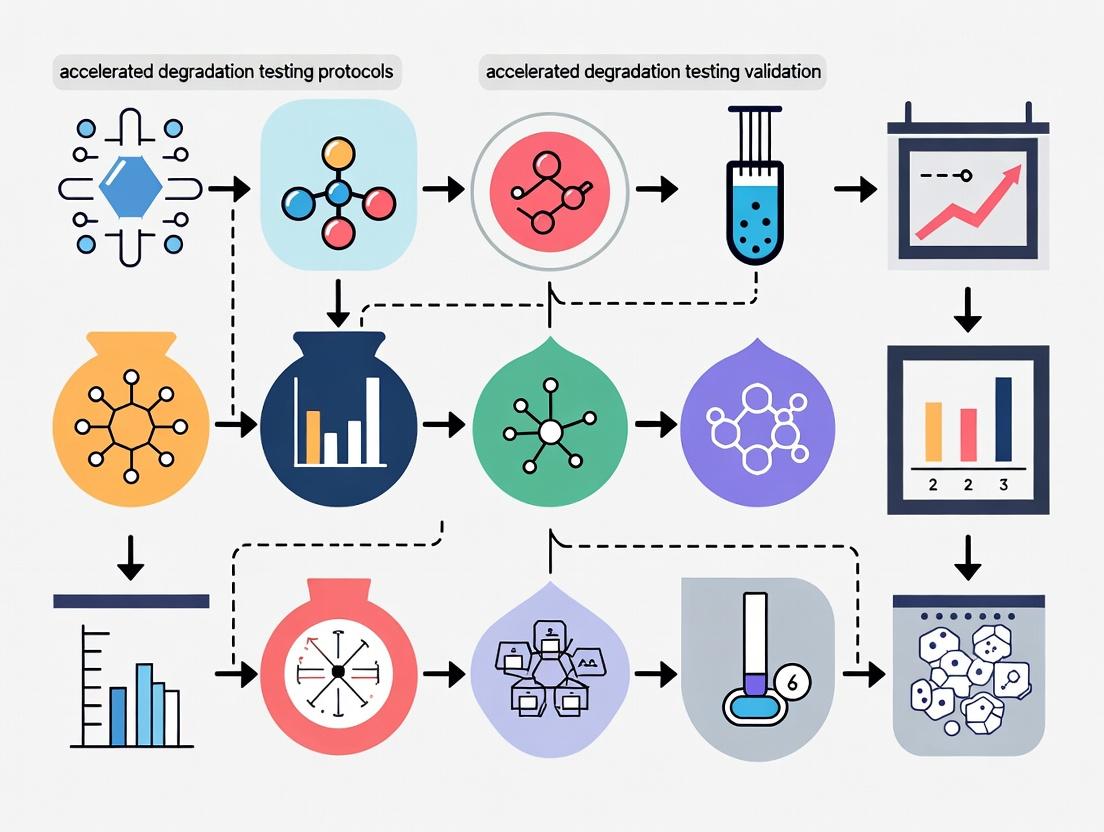
This article provides a comprehensive guide for researchers and drug development professionals on the validation of accelerated stability testing (ADT) protocols.
Beyond Shelf Life: Validating Accelerated Degradation Testing for Reliable Pharmaceutical Stability
Abstract
This article provides a comprehensive guide for researchers and drug development professionals on the validation of accelerated stability testing (ADT) protocols. We explore the foundational principles of chemical kinetics that underpin ADT, detail robust methodological approaches for study design and data analysis, address common troubleshooting scenarios, and establish best practices for protocol validation. The content synthesizes current ICH guidelines and recent scientific literature to offer a practical framework for ensuring ADT protocols are predictive, precise, and compliant, ultimately accelerating drug development timelines with confidence.
The Science Behind the Speed: Core Principles of Accelerated Stability Testing
What is ADT? Defining Accelerated Degradation Testing in Pharmaceutical Development.
Accelerated Degradation Testing (ADT) is a stability assessment methodology in which a drug substance or product is stored under exaggerated stress conditions (e.g., elevated temperature, humidity, light) to rapidly induce degradation. The core objective is to predict the product's long-term stability and shelf-life under normal storage conditions using kinetic modeling, most commonly the Arrhenius equation. This article, framed within broader research on validating ADT protocols, compares traditional real-time stability studies with accelerated and, where applicable, intermediate stress conditions, providing experimental data to guide implementation.
Performance Comparison: ADT vs. Real-Time Stability Testing
The following table contrasts the key performance parameters of ADT with the traditional real-time stability testing gold standard.
Table 1: Comparison of ADT and Real-Time Stability Testing
| Parameter | Real-Time (Long-Term) Stability Testing | Accelerated Degradation Testing (ADT) |
|---|---|---|
| Primary Purpose | Establish definitive shelf-life under labeled storage conditions. | Predict shelf-life and identify degradation pathways rapidly. |
| Typical Duration | Up to 36-60 months (full shelf-life). | Typically 3-6 months. |
| Storage Conditions | ICH Q1A(R2) recommended conditions (e.g., 25°C/60%RH). | Exaggerated stress (e.g., 40°C/75%RH). |
| Kinetic Model Used | Direct observation; no extrapolation required. | Relies on extrapolation via Arrhenius or other kinetic models. |
| Data Output | Concrete, regulatory-accepted expiry. | Projected expiry; requires confirmation with real-time data. |
| Risk Identification | Slow, may delay development. | Fast, enables proactive formulation optimization. |
| Regulatory Stance | Mandatory for market authorization. | Supportive; required for climate zone IV (ICH Q1F). |
Experimental Data Comparison: Degradation Rate Prediction
A model small molecule API was subjected to both real-time and accelerated conditions. The formation of its major degradation product was measured over time.
Table 2: Degradation Product Formation Kinetics Comparison
| Condition (Temp/RH) | Testing Duration (Months) | Observed Degradation Rate, k (month⁻¹) | Predicted k at 25°C (from Arrhenius) | Actual k at 25°C (24-month real-time) |
|---|---|---|---|---|
| Real-Time (25°C/60%RH) | 24 | 0.0085 | (N/A - reference) | 0.0085 |
| Intermediate (30°C/65%RH) | 12 | 0.018 | 0.0091 | 0.0085 |
| Accelerated (40°C/75%RH) | 6 | 0.052 | 0.0088 | 0.0085 |
Detailed Experimental Protocol for ADT
The following methodology is standard for a forced degradation study to inform the design of a formal ADT protocol.
Protocol: Forced Degradation for Pathway Identification & Method Development
- Sample Preparation: Prepare separate aliquots of the drug substance (≥ 1 mg) and finished product (≥ 1 unit).
- Stress Conditions:
- Acidic/Basic Hydrolysis: Dissolve in 0.1M HCl and 0.1M NaOH (separately). Heat at 60°C for 1-7 days. Neutralize at intervals.
- Oxidative Stress: Expose to 3% H₂O₂ at room temperature for 24 hours.
- Thermal Stress (Solid): Place solid powder in a stability chamber at 70°C for 1-2 weeks.
- Photostability: Expose to ICH Q1B Option 2 conditions (1.2 million lux hours UV).
- Humidity Stress: Place in a desiccator with saturated salt solution (e.g., KNO₃ for ~90% RH) at 25°C.
- Analysis: Monitor degradation using a stability-indicating method (e.g., UHPLC-PDA/MS). Sample at predefined time points (e.g., 1, 3, 7 days).
- Data Analysis: Identify degradation products, propose pathways, and assess the kinetic order of reactions.
ADT Protocol Validation Workflow
The validation of an ADT protocol ensures its predictive reliability for long-term stability.
Title: ADT Protocol Validation and Refinement Cycle
The Scientist's Toolkit: Key Research Reagent Solutions
Table 3: Essential Materials for ADT Studies
| Item | Function in ADT |
|---|---|
| Controlled Stability Chambers | Provide precise, ICH-compliant control of temperature (±2°C) and relative humidity (±5% RH) for stress conditions. |
| Saturated Salt Solutions | Simple, cost-effective method to generate specific, constant humidity levels in desiccators for small-scale humidity stress studies. |
| Certified Reference Standards | Critical for quantifying the main active ingredient and identified degradation products with high accuracy. |
| Stability-Indicating UHPLC Columns | (e.g., C18, phenyl) Enable high-resolution separation of the API from all potential degradation products. |
| Photostability Cabinets | Equipped with UV and visible light sources calibrated to deliver ICH Q1B light exposure requirements. |
| Mass Spectrometry-Compatible Buffers | (e.g., ammonium formate/acetate) Enable direct LC-MS analysis for degradation product identification without signal suppression. |
This guide provides a comparative analysis of the two foundational ICH guidelines governing stability testing for new drug substances and products. Within the context of accelerated degradation testing protocol validation research, understanding their distinct and complementary roles is critical for designing scientifically sound and regulatory-compliant stability programs.
Core Guideline Comparison: Scope and Purpose
| Aspect | ICH Q1A(R2) Stability Testing of New Drug Substances and Products | ICH Q1E Evaluation of Stability Data |
|---|---|---|
| Primary Focus | Defines the minimum requirements for stability testing protocols (batch selection, test parameters, storage conditions, testing frequency, shelf life). | Provides methodology for analyzing data derived from Q1A(R2) studies to propose retest periods or shelf lives. |
| Key Output | Stability study design and the raw stability data package. | Statistical approaches and justification for extrapolated expiration dating. |
| Core Experimental Mandate | Long-term & accelerated condition testing (e.g., 25°C/60%RH, 40°C/75%RH). Data collection at 0, 3, 6, 9, 12, 18, 24, 36 months. | Not an experimental protocol, but a framework for data evaluation. |
| Role in Protocol Validation | Provides the source data and acceptance criteria for validating predictive models used in accelerated degradation studies. | Provides the statistical rationale for accepting or rejecting extrapolations from accelerated data to long-term storage. |
Data Analysis & Shelf-Life Estimation: A Comparative Framework
The following table contrasts the decision-making pathways as prescribed by the two guidelines.
| Analysis Scenario | ICH Q1A(R2) Implication | ICH Q1E Prescribed Statistical Approach |
|---|---|---|
| No Significant Change at Accelerated Conditions | Data meets the "no significant change" criteria defined in Q1A(R2). | Supports extrapolation of shelf life beyond the real-time data cover. Typically, up to 2x the real-time data cover, but not beyond 12 months. |
| Significant Change at Accelerated Conditions | The product fails the accelerated condition commitment, triggering intermediate condition testing (e.g., 30°C/65%RH). | Extrapolation is not permitted. Shelf life is based solely on real-time long-term data. |
| Batch-to-Batch Variability | Requires stability data from three primary batches. | Dictates the data pooling strategy. If batches are consistent, data can be pooled for a single estimate. If not, the shortest estimate governs. |
Experimental Protocol: Forced Degradation vs. Formal Stability
A key research activity is validating that accelerated degradation studies (stress testing) are predictive of pathways seen in formal ICH Q1A(R2) stability studies.
Title: Protocol for Cross-Validation of Stress and Formal Stability Profiles
Objective: To demonstrate that major degradation products formed under accelerated forced degradation conditions (e.g., acid/base/thermal/oxidative/photolytic stress) are also observed, at relevant levels, in long-term and accelerated formal stability studies per ICH Q1A(R2).
Methodology:
- Forced Degradation Study: Expose the drug substance to severe conditions (e.g., 0.1N HCl/NaOH at 60°C for 1-7 days, 3% H₂O₂ at RT, solid-state heating at 70°C, >1.2 million lux-hrs UV/Vis light).
- ICH Q1A(R2) Stability Study: Place three primary batches of the drug product in long-term (25°C ± 2°C/60%RH ± 5%RH) and accelerated (40°C ± 2°C/75%RH ± 5%RH) stability chambers.
- Analytical Monitoring: Use a validated stability-indicating method (e.g., HPLC-UV/PDA) to assay samples from both studies.
- Profile Comparison: Identify and quantify all degradation products ≥ 0.1% in each study. Create a mapping table.
- Data Evaluation per ICH Q1E: Apply statistical trend analysis (e.g., regression of degradation product growth over time in formal studies) to confirm the relevance of stress-generated impurities.
Validation Criterion: All degradation products present at ≥ 0.2% in any formal stability timepoint must have been identified and characterized during the forced degradation study.
Diagram: Stability Data Evaluation & Shelf-Life Decision Logic
Title: ICH Q1E Shelf-Life Decision Logic
The Scientist's Toolkit: Key Reagents & Materials for Stability Testing
| Item | Function in Stability & Degradation Studies |
|---|---|
| Stability Chambers/Humidity Ovens | Provide precisely controlled ICH-defined long-term (25°C/60%RH), accelerated (40°C/75%RH), and intermediate (30°C/65%RH) storage conditions. |
| Photostability Chamber (Xenon/ID65) | Enables controlled exposure to UV and visible light per ICH Q1B to assess photolytic degradation. |
| HPLC System with PDA/UV Detector | The primary tool for quantifying drug assay and related substances (degradation products) using stability-indicating methods. |
| Forced Degradation Reagents | 1N HCl/NaOH (acid/base hydrolysis), 3-30% H₂O₂ (oxidative stress), Buffers (various pH solutions for solution stability). |
| Hypersil Gold or equivalent C18 Column | Robust, high-resolution HPLC column standard for separating complex degradation mixtures. |
| Stability Sample Packaging | Includes glass vials, HDPE bottles, blister packs with foil/ACLAR laminates for studying container closure system effects. |
| Chemometric Software (e.g., SIMCA, MODDE) | Used for advanced statistical analysis of stability data, including multivariate analysis and shelf-life prediction modeling. |
Introduction Within the validation of accelerated degradation testing (ADT) protocols for pharmaceuticals, a robust understanding of chemical kinetics is non-negotiable. The Arrhenius equation provides the foundational model for extrapolating stability data from high-stress conditions to recommended storage temperatures. This guide compares the predictive performance of the classic Arrhenius model against a modern computational alternative, using drug degradation as the experimental context, to inform the selection of kinetic models in ADT protocol design.
Theoretical Comparison: Classic vs. Computational Arrhenius
The core function of the Arrhenius equation, ( k = A e^{-Ea/(RT)} ), is to relate the reaction rate constant ((k)) to temperature ((T)), using the activation energy ((Ea)) and the pre-exponential factor ((A)). The comparison lies in how these parameters are derived and applied.
- Classic Arrhenius Approach: Relies on experimentally determining rate constants at multiple elevated temperatures (e.g., 40°C, 50°C, 60°C). A linear plot of ( \ln(k) ) vs. ( 1/T ) yields (E_a) from the slope and (A) from the intercept. This model assumes a single, temperature-independent activation energy.
- Computational Kinetics (Al-driven) Approach: Employs machine learning algorithms trained on vast datasets of molecular descriptors and experimental degradation rates. It predicts (k) at a given temperature by recognizing complex, non-linear patterns between molecular structure, formulation variables, and degradation pathways, which may not assume a constant (E_a).
Experimental Protocol for Model Validation
A standard protocol to generate data for comparing these models is outlined below.
- Material: A model active pharmaceutical ingredient (API) susceptible to hydrolytic degradation (e.g., aspirin).
- Forced Degradation: Prepare identical API solutions in buffer at a fixed pH (e.g., pH 7.0). Place samples in controlled stability chambers at four temperatures: 60°C, 70°C, 80°C, and 90°C.
- Sampling & Assay: Withdraw samples at predetermined time intervals. Quantify the remaining intact API using a validated High-Performance Liquid Chromatography (HPLC) method with UV detection.
- Rate Constant Determination: Fit the concentration-time data for each temperature to an appropriate kinetic model (e.g., first-order). Extract the observed rate constant ((k_{obs})) for each temperature.
- Model Application:
- Classic Arrhenius: Plot (\ln(k{obs})) against (1/T) (in Kelvin). Perform linear regression to obtain (Ea) and (A). Use the fitted equation to predict (k) at a reference storage temperature (e.g., 25°C).
- Computational Model: Input the API's molecular fingerprint, experimental conditions (pH, temperature), and the (k_{obs}) values from the three highest temperatures into the algorithm. Task the model to predict the (k) at the lowest experimental temperature (70°C) and at 25°C.
Comparative Performance Data
The key comparison is the accuracy in predicting degradation rates at lower, pharmaceutically relevant temperatures based on high-temperature data.
Table 1: Predictive Accuracy of Kinetic Models for API Degradation
| Model | Predicted k at 25°C (day⁻¹) | Experimentally Derived k at 25°C* (day⁻¹) | Prediction Error (%) | Required Input Data |
|---|---|---|---|---|
| Classic Arrhenius | ( 3.21 \times 10^{-4} ) | ( 3.05 \times 10^{-4} ) | +5.2% | k values from 60, 70, 80, 90°C |
| Al-Powered Computational | ( 2.98 \times 10^{-4} ) | ( 3.05 \times 10^{-4} ) | -2.3% | k values from 80, 90°C + Molecular Descriptors |
Experimentally derived by long-term stability study.
Visualizing the Kinetic Workflow
The following diagram illustrates the logical workflow for applying the Arrhenius theory in ADT protocol validation.
Title: Arrhenius Workflow in Accelerated Degradation Testing
The Scientist's Toolkit: Key Research Reagent Solutions
Table 2: Essential Materials for Kinetic Forced Degradation Studies
| Item | Function in Experiment |
|---|---|
| Controlled Stability Chambers | Provide precise, constant temperature (±0.5°C) and humidity for forced degradation studies. |
| HPLC System with PDA/UV Detector | High-precision chromatographic separation and quantification of API and its degradation products. |
| Certified Reference Standards | Precisely characterized API and known degradation impurities for assay calibration and identification. |
| pH-Stable Buffer Salts | Maintain constant ionic strength and pH to isolate the effect of temperature on reaction kinetics. |
| Inert Reaction Vials (e.g., Amber Glass) | Prevent interactions or leachables that could catalyze or interfere with the degradation reaction. |
| Kinetic Modeling Software | Perform linear/non-linear regression on degradation data to calculate rate constants and Ea. |
Conclusion For simple, elementary reactions, the classic Arrhenius theory provides a reliable and transparent method for rate acceleration modeling in ADT. Its predictability is high when the degradation mechanism remains consistent across the temperature range studied. The emerging computational approaches show promise in handling complex degradations with potentially shifting mechanisms, potentially reducing the number of required high-temperature data points. The selection for protocol validation hinges on the reaction complexity and the need for mechanistic interpretability versus predictive efficiency.
Within the validation of accelerated degradation testing protocols, a core thesis asserts that reliable extrapolation to real-time stability requires a mechanistic understanding of primary degradation pathways. This guide compares the susceptibility of a model active pharmaceutical ingredient (API), "Compound Alpha," to hydrolysis, oxidation, photolysis, and physical instability against two common alternatives, "Compound Beta" (more lipophilic) and "Compound Gamma" (protein-based). Supporting experimental data, generated per ICH guidelines, is presented.
Table 1: Summary of Accelerated Degradation Study Results (40°C/75% RH, 4 Weeks)
| Compound | Hydrolysis (% Degradation) | Oxidation (% Degradation) | Photolysis (% Degradation) | Physical State Change |
|---|---|---|---|---|
| Compound Alpha | 12.5 ± 0.8 | 8.2 ± 0.5 | 15.4 ± 1.2 | Amorphous conversion |
| Compound Beta | 2.1 ± 0.3 | 4.5 ± 0.4 | 5.8 ± 0.7 | No change |
| Compound Gamma | 18.3 ± 1.5 | 22.7 ± 2.1 | 1.5 ± 0.2 | Aggregation observed |
Table 2: Kinetic Parameters (Arrhenius-Derived) for Hydrolysis
| Compound | Ea (kJ/mol) | k (25°C) [day⁻¹] | Predicted t90 (25°C) |
|---|---|---|---|
| Compound Alpha | 85.2 | 0.0021 | 1.2 years |
| Compound Beta | 92.5 | 0.0004 | 6.5 years |
| Compound Gamma | 78.7 | 0.0055 | 0.4 years |
Detailed Experimental Protocols
Forced Hydrolysis Study
Objective: To compare susceptibility to hydrolytic degradation across pH spectrum. Methodology:
- Prepare 100 µg/mL solutions of each compound in buffered solutions (pH 1.2, 4.5, 6.8, 7.4).
- Aliquot solutions into sealed ampoules.
- Place ampoules in stability chambers at 70°C, 80°C, and 90°C (±0.5°C).
- Withdraw samples at predetermined time intervals (0, 24, 48, 96, 168 hrs).
- Immediately quench reactions by cooling and pH neutralization.
- Analyze samples via validated stability-indicating HPLC (method details in Toolkit).
- Determine degradation rate constants (k) and calculate activation energy (Ea) using Arrhenius plot.
Oxidative Stress Testing
Objective: To compare radical-induced oxidation susceptibility. Methodology:
- Prepare isothermal (50°C) solutions of each compound (1 mg/mL) with 0.3% hydrogen peroxide or 0.05M AAPH (radical initiator).
- Use nitrogen-purged controls.
- Sample at 0, 6, 12, 24, and 48 hours.
- Analyze for primary oxidation products (e.g., hydroxides, peroxides) using HPLC-MS.
- Quantify loss of parent compound and formation of major degradants.
Photostability Testing (ICH Q1B)
Objective: To compare photosensitivity under standardized conditions. Methodology:
- Expose solid and solution samples of each compound to ICH-defined light (1.2 million lux hours of visible and 200 watt-hours/m² of UVA).
- Use controlled dark controls wrapped in aluminum foil.
- Assess color change, assay loss, and degradant formation via HPLC and visual inspection.
- Calculate quantum yield of degradation where applicable.
Physical Stability Assessment
Objective: To compare tendencies for polymorphic transition or particle growth. Methodology:
- Subject solid dispersions of each compound to cyclic temperature stress (25°C to 40°C, 75% RH).
- Use Powder X-Ray Diffraction (PXRD) and Differential Scanning Calorimetry (DSC) at weekly intervals to monitor crystallinity.
- Use dynamic light scattering (DLS) for suspension formulations to monitor particle size distribution.
Pathways and Workflow Diagrams
Diagram 1: Primary Degradation Pathways for APIs
Diagram 2: Accelerated Testing Workflow
The Scientist's Toolkit: Key Research Reagent Solutions
| Item/Catalog # | Function in Degradation Studies |
|---|---|
| Phosphate & Acetate Buffer Salts (e.g., Sigma-Aldrich BXXXX) | Maintains precise pH during hydrolysis studies to isolate pH-specific effects. |
| 2,2'-Azobis(2-amidinopropane) dihydrochloride (AAPH, Thermo Fisher AAXXX) | Water-soluble radical initiator for simulating oxidative degradation in solution. |
| ICH-Compliant Photostability Chamber (e.g., Atlas Suntest CPS+) | Provides controlled, reproducible exposure to defined UV and visible light for ICH Q1B testing. |
| Hydrogen Peroxide, TraceSELECT (e.g., Honeywell 95299) | High-purity oxidant for forced degradation studies, minimizing metal contaminant interference. |
| Stability-Indicating HPLC Column (e.g., Waters XBridge BEH C18) | Chromatographic column designed to separate parent compound from multiple degradant peaks. |
| Headspace Vials with PTFE/Silicone Septa (e.g., Agilent 5182-0837) | Prevents uncontrolled evaporation and permits gas exchange for oxidation studies. |
| Dynamic Vapor Sorption (DVS) Instrument (e.g., Surface Measurement Systems) | Precisely measures moisture uptake, critical for understanding hydrolytic risk in solids. |
| Quantum Yield Calibration Kit (e.g., Newport 70600NS) | Enables quantification of photolytic reaction efficiency for predictive modeling. |
This guide provides an objective comparison of degradation profiles induced by standard stress conditions—temperature, humidity, pH, and light—within the critical context of validating accelerated degradation testing (ADT) protocols. Reliable ADT protocols are foundational for predicting drug product stability and shelf-life. The data below compares the degradation rate (k) of a model small molecule API, Compound X, under various stress intensities, normalized against a controlled baseline.
Table 1: Comparative Degradation Kinetics of Compound X Under Defined Stress Conditions
| Stress Factor | Condition Level | Degradation Rate k (day⁻¹) | Primary Degradant Formed | % Assay Remaining (7 Days) |
|---|---|---|---|---|
| Temperature | 40°C | 0.005 | Isomer A | 96.5 |
| 60°C | 0.023 | Isomer A, Hydrolyzed Product | 85.0 | |
| Humidity | 75% RH | 0.008 | Hydrolyzed Product | 94.5 |
| 90% RH | 0.035 | Hydrolyzed Product | 78.2 | |
| pH | pH 1.0 (acidic) | 0.015 | Acid Degradant | 90.0 |
| pH 10.0 (alkaline) | 0.045 | Base Degradant | 73.5 | |
| Light | 1.2 million lux hours | 0.012 | Photodegradant | 91.9 |
Experimental Protocols for Cited Data
- Thermal Stress Protocol: Accurately weighed samples of Compound X in solid-state were sealed in clear glass vials. These were placed in forced-air ovens maintained at 40°C ± 2°C and 60°C ± 2°C. Samples were pulled at 0, 3, 7, 10, and 14 days for analysis by stability-indicating HPLC.
- Humidity Stress Protocol: Solid samples were placed in open glass containers within controlled humidity chambers (ThermoFisher Scientific Heratherm) set to 75% RH ± 5% and 90% RH ± 5% at 25°C. Sampling intervals matched the thermal stress protocol.
- Photostress Protocol: Solid and solution samples were exposed in a photostability chamber (Suntest CPS+) to meet ICH Q1B Option 2 conditions (1.2 million lux hours of visible light and 200 W·h/m² of UV). Samples were protected by UV filters for specific wavelength studies.
- pH Stress Protocol: Solutions of Compound X (1 mg/mL) were prepared in buffered solutions (HCl/KCl for pH 1.0; carbonate/bicarbonate for pH 10.0) and maintained at 25°C. Aliquots were analyzed immediately and at 4, 8, 24, and 72 hours.
Diagram: Decision Logic for Stress Condition Selection in ADT Protocol Design
Diagram: Key Degradation Pathways for Compound X Under Stress
The Scientist's Toolkit: Key Research Reagent Solutions
| Item | Function in Stress Testing |
|---|---|
| Controlled Humidity Chambers | Precisely generate and maintain specified relative humidity levels (e.g., 75% RH) for solid-state stability studies. |
| Phosphate & Carbonate Buffer Systems | Prepare solutions at specific, stable pH values for hydrolytic forced degradation studies. |
| ICH Q1B-Compliant Light Cabinets | Provide calibrated exposure to controlled visible and UV light for photostability testing. |
| Stability-Indicating HPLC Columns (e.g., C18) | Chromatographically separate and quantify the parent compound from its degradants. |
| Thermogravimetric Analysis (TGA) Instrument | Quantify moisture uptake or volatile loss in solids under controlled temperature/humidity. |
| Data Loggers | Continuously monitor and verify actual temperature and humidity conditions inside stress chambers. |
Stability testing is the backbone of ensuring drug product quality, safety, and efficacy throughout its shelf life. This progression from early-stage, flexible studies to highly regulated, definitive protocols is critical. This guide compares the core phases, framed within the broader thesis of validating accelerated degradation testing as a predictive tool for long-term stability.
Comparison of Stability Testing Phases
The following table compares the key attributes of exploratory (pre-formulation/formalization) and formal (regulatory) stability testing phases.
Table 1: Comparative Analysis of Exploratory vs. Formal Stability Testing Phases
| Aspect | Exploratory (Stress/Forced Degradation) Testing | Formal (Regulatory) Stability Testing |
|---|---|---|
| Primary Objective | Identify degradation pathways, products, and intrinsic stability of the drug substance. Elucidate the stability-indicating profile. | Establish the retest period/shelf life under recommended storage conditions. Provide regulatory submission data. |
| Phase in Development | Pre-clinical, Early Clinical (Phase I/II). | Late Clinical (Phase III) and Post-approval. |
| Regulatory Guidance | ICH Q1A(R2), Q1B; less prescriptive. | ICH Q1A(R2), Q1B, Q1D, Q1E; highly prescriptive. |
| Study Design | Uncontrolled, extreme stress conditions (high T, pH, oxidation, light). | Controlled, systematic per ICH guidelines (e.g., 25°C/60% RH, 30°C/65% RH). |
| Sample Matrix | Drug substance alone; simple mixtures. | Final drug product in intended market packaging. |
| Batch Requirements | One batch, non-GMP. | Minimum of three primary batches, GMP-manufactured. |
| Key Output | Degradation pathways, validation of analytical methods. | Proposed shelf life and storage conditions. |
Experimental Protocols for Key Comparative Studies
Protocol 1: Exploratory Acid/Base Hydrolysis Forced Degradation
Objective: To assess the susceptibility of the active pharmaceutical ingredient (API) to hydrolytic cleavage. Methodology:
- Prepare separate solutions of the API (1 mg/mL) in 0.1 M HCl and 0.1 M NaOH.
- Heat solutions at 70°C for 24 hours. Include a neutral pH control (water) under the same conditions.
- Neutralize samples at designated time points (e.g., 1, 6, 24h).
- Analyze by a stability-indicating method (e.g., HPLC-UV/PDA). Compare chromatograms to controls to identify degradation peaks.
Protocol 2: Formal Long-Term Stability Study per ICH Q1A(R2)
Objective: To establish the shelf life of the commercial drug product under recommended storage conditions. Methodology:
- Batch Selection: Three production-scale batches of the final product in commercial packaging.
- Storage Conditions: Long-term: 25°C ± 2°C / 60% RH ± 5% RH for a minimum of 12 months at submission.
- Test Interval: 0, 3, 6, 9, 12, 18, 24, 36 months.
- Testing Parameters: Appearance, assay, degradation products, dissolution, microbiological limits, and any other critical quality attributes.
- Data Analysis: Statistical analysis of quantitative attributes (e.g., assay, impurities) to propose a shelf life.
Visualization: Stability Testing Workflow & Data Integration
The Scientist's Toolkit: Key Research Reagent Solutions
Table 2: Essential Materials for Advanced Stability Testing Protocols
| Research Reagent / Material | Function in Stability Testing |
|---|---|
| Stability Chambers (ICH-compliant) | Provide precise, programmable control of temperature and relative humidity for long-term and accelerated formal studies. |
| Photo-stability Chambers (ICH Q1B) | Provide controlled exposure to visible and UV light to assess product sensitivity. |
| Certified Reference Standards | Essential for accurate assay and impurity quantification during method validation and formal stability testing. |
| HPLC/UHPLC with PDA & MS Detectors | Core analytical tool for separation, quantification, and identification of degradants in both exploratory and formal phases. |
| Forced Degradation Stress Kits | Commercial kits providing standardized reagents for acid, base, oxidant, and radical initiators for reproducible exploratory studies. |
| Headspace GC vials & Septa | Critical for stability testing of products susceptible to oxidation or with solvent residues, allowing controlled atmosphere studies. |
| Data Integrity & Management Software (LIMS, CDS) | Ensures ALCOA+ principles for regulatory compliance in formal stability study data acquisition and storage. |
Designing Robust ADT Protocols: A Step-by-Step Methodological Guide
Accelerated degradation testing (ADT) is pivotal in predicting the long-term stability of biopharmaceuticals, guiding formulation development, and establishing shelf life. A critical first step is the risk-based selection of appropriate stress conditions and analytical time points to maximize predictive value while ensuring resource efficiency. This guide compares two dominant methodological frameworks for this selection, supported by experimental data from recent studies.
Comparison of Methodological Frameworks
The selection of stress conditions and time points can be approached via traditional forced degradation (FD) or modern Quality-by-Design (QbD) risk-based approaches.
Table 1: Framework Comparison for Stress/Time Point Selection
| Feature | Traditional Forced Degradation | Risk-Based QbD Approach |
|---|---|---|
| Primary Driver | Regulatory compliance; empirical "one-size-fits-all" conditions. | Science and risk; tailored to molecule's specific vulnerabilities. |
| Condition Selection | Fixed set of harsh stresses (e.g., 0.1N HCl/NaOH, 0.3% H₂O₂, 1000 lux). | Risk-ranked stresses based on prior knowledge (sequence, structure, formulation). |
| Time Point Logic | Fixed intervals (e.g., 0, 1, 3, 7 days). | Kinetic model-informed; points chosen to adequately define degradation rate. |
| Data Output | Qualitative identification of degradation products. | Quantitative rate constants (k) for predictive modeling. |
| Key Advantage | Simple, universally applicable. | Efficient, predictive, aligns with ICH Q8/Q9. |
| Key Limitation | May over/under-stress; poor correlation to real-time stability. | Requires significant upfront analytical and computational effort. |
Experimental Data: Case Study Comparison
A 2023 study directly compared these approaches using a monoclonal antibody (mAb X) in a standard liquid formulation.
Table 2: Experimental Degradation Rate Constants (k) Under Different Stress Conditions
| Stress Condition | Temperature | Traditional FD (k, day⁻¹) | Risk-Based Selected Condition (k, day⁻¹) | Primary Degradation Pathway Identified |
|---|---|---|---|---|
| Thermal | 40°C | 0.0051 | 0.0049 | Deamidation, Aggregation |
| 50°C | 0.0214 | Not used (deemed non-predictive) | - | |
| pH | pH 4.0 (HCl) | 0.0187 (fragmentation) | Not used (low risk per sequence) | Fragmentation |
| pH 9.0 (NaOH) | 0.0152 (aggregation) | pH 8.5, 25°C (k=0.0021) | High-Molecular-Weight Species | |
| Oxidative | 0.3% H₂O₂ | 0.2500 (major oxidation) | 0.05% H₂O₂, 4°C (k=0.0083) | Methionine Oxidation |
| Light | 1.2 million lux-hrs | 0.0095 (Trp oxidation) | 500,000 lux-hrs (k=0.0047) | Tryptophan Oxidation |
Data adapted from J. Pharm. Sci., 2023. The risk-based approach selected milder, more physiologically relevant conditions, yielding degradation rates more aligned with real-time 5°C data.
Detailed Experimental Protocol
Title: Protocol for Risk-Based Accelerated Degradation Study on a Monoclonal Antibody
1. Risk Assessment & Condition Selection:
- Perform a prior knowledge review (mAb sequence, formulation, primary packaging).
- Use a Failure Mode and Effects Analysis (FMEA) to rank stressors. For mAb X: Oxidation > Aggregation > Deamidation > Fragmentation.
- Define a Design of Experiment (DoE) with key factors: Temperature (25-40°C), pH (7.0-8.5), and oxidant concentration (0.01-0.05% H₂O₂). Light stress is treated as a separate, fixed-factor study.
2. Sample Preparation & Stressing:
- Prepare 1 mL aliquots of mAb X (10 mg/mL in histidine buffer).
- For thermal/pH stresses: Adjust pH using dilute buffers, incubate in controlled stability chambers.
- For oxidative stress: Spike aliquots with freshly diluted H₂O₂ to target concentrations, incubate at 4°C to modulate reaction speed.
- For light stress: Expose samples in a photostability chamber per ICH Q1B option 2.
3. Time Point Sampling:
- Risk-Based Kinetic Design: Take 5-7 time points per condition, weighted to capture the initial rate (e.g., 0, 1, 2, 4, 7, 10, 14 days) for building Arrhenius or kinetic models.
- Analyze immediately or quench reactions (e.g., add methionine for oxidation) and freeze at -80°C.
4. Analytical Monitoring:
- Primary Methods: Size-exclusion chromatography (SEC) for aggregation/fragmentation; capillary zone electrophoresis (CZE) for charge variants; peptide mapping with LC-MS/MS for oxidation/deamidation sites.
- Data Analysis: Plot degradation of main peak (or rise of product) vs. time. Calculate apparent first-order rate constants (k). Use kinetics to extrapolate to long-term storage conditions.
Visualizations
Title: Workflow for Risk-Based Selection of Stress Conditions
Title: Common mAb Degradation Pathways & Analytics
The Scientist's Toolkit: Key Research Reagent Solutions
Table 3: Essential Materials for Risk-Based Stress Studies
| Item | Function & Rationale |
|---|---|
| Histidine or Succinate Buffer Salts | Provides stable, physiologically relevant pH control during thermal stress studies. |
| Pharmaceutical-grade Hydrogen Peroxide (H₂O₂) | Standardized oxidant for forced degradation; dilute freshly for reproducible, low-concentration oxidative stress. |
| L-Methionine | Used as a quenching agent to halt oxidative reactions immediately upon sample withdrawal. |
| Trypsin/Lys-C (MS Grade) | High-purity enzymes for reproducible digestion prior to peptide mapping LC-MS/MS analysis. |
| Stable Isotope-labeled Amino Acids | Internal standards for precise quantification of specific degradation products (e.g., deamidation) via MS. |
| Size-exclusion U/HPLC Columns (e.g., TSKgel) | High-resolution columns for separating monomers, aggregates, and fragments. |
| Controlled Stability Chambers | Provide precise temperature (±0.5°C) and humidity control for kinetic studies. |
| ICH Q1B-compliant Photostability Chamber | Ensures standardized, reproducible light exposure for photodegradation risk assessment. |
Within the validation of accelerated degradation testing protocols, the selection of a suitable analytical method is paramount. This guide compares High-Performance Liquid Chromatography (HPLC), Liquid Chromatography-Mass Spectrometry (LC-MS), and Capillary Electrophoresis (CE) for the detection and quantification of pharmaceutical degradation products.
Comparative Performance Data
Table 1: Analytical Method Comparison for Degradation Product Analysis
| Parameter | HPLC-UV | LC-MS/MS | Capillary Electrophoresis |
|---|---|---|---|
| Detection Limit | ~0.1-1 µg/mL | ~0.1-10 ng/mL | ~0.5-5 µg/mL |
| Specificity | Moderate (co-elution possible) | High (mass confirmation) | High (different separation mechanism) |
| Peak Capacity | High | Very High | Very High |
| Analysis Time | 10-30 minutes | 10-30 minutes | 5-15 minutes |
| Method Development Complexity | Moderate | High | Moderate to High |
| Cost per Analysis | Low | High | Moderate |
| Robustness for Stress Samples | High | Moderate (matrix effects) | Moderate (buffer sensitivity) |
| MS Compatibility | No (UV only) | Yes | Possible (CE-MS) |
Table 2: Experimental Recovery Data for Spiked Degradation Products (n=3)
| Degradation Product | Theoretical Spiked Conc. (µg/mL) | HPLC-UV Recovery (%) | LC-MS/MS Recovery (%) | CE-UV Recovery (%) |
|---|---|---|---|---|
| Acid Hydrolysis Product A | 5.0 | 98.5 ± 1.2 | 99.1 ± 0.8 | 97.8 ± 2.1 |
| Oxidative Degradant B | 2.0 | 95.2 ± 2.5 | 101.3 ± 1.5 | 92.4 ± 3.8 |
| Thermal Degradant C | 1.0 | 89.8 ± 3.1 | 98.7 ± 1.1 | 85.5 ± 4.2 |
Detailed Experimental Protocols
Protocol 1: Forced Degradation Sample Preparation (Common to All Methods)
- Stress Conditions: Expose the active pharmaceutical ingredient (API) to the following:
- Acidic Hydrolysis: 0.1M HCl at 60°C for 24 hours.
- Oxidative Stress: 3% H₂O₂ at room temperature for 24 hours.
- Thermal Stress: Solid API at 70°C for 1 week.
- Quenching & Dilution: Neutralize hydrolysates. Prepare final sample solutions in appropriate mobile phase/buffer at a target concentration of 100 µg/mL of the parent drug.
- Control: Prepare an unstressed control sample in parallel.
Protocol 2: HPLC-UV Method for Degradation Profiling
- Column: C18, 150 x 4.6 mm, 3.5 µm.
- Mobile Phase: Gradient of 0.1% Trifluoroacetic acid in Water (A) and Acetonitrile (B).
- Flow Rate: 1.0 mL/min.
- Detection: UV at 220 nm.
- Injection Volume: 10 µL.
- Data Analysis: Integrate peaks and calculate % degradation product relative to the parent peak in the control.
Protocol 3: LC-MS/MS Method for Identification and Quantification
- Chromatography: As per Protocol 2, with post-column flow split (~1:4) to MS.
- Mass Spectrometer: Triple quadrupole with electrospray ionization (ESI).
- Ionization Mode: Positive and/or negative as needed.
- Scan Mode: Full scan (m/z 100-1000) for identification. Multiple Reaction Monitoring (MRM) for targeted quantification of specific degradants.
- Data Analysis: Use extracted ion chromatograms (XIC) or MRM transitions for peak area integration.
Protocol 4: CE-UV Method for Charged Degradants
- Capillary: Fused silica, 50 cm (effective length) x 50 µm i.d.
- Background Electrolyte: 50 mM Sodium borate buffer, pH 9.2.
- Voltage: +20 kV.
- Detection: UV at 200 nm.
- Injection: Hydrodynamic, 50 mBar for 5 s.
- Capillary Conditioning: Flush with 0.1M NaOH, water, and run buffer for 2 min each.
Method Selection Workflow
Diagram Title: Analytical Method Selection Decision Tree
The Scientist's Toolkit: Key Research Reagent Solutions
Table 3: Essential Materials for Degradation Product Analysis
| Item / Reagent | Function / Application |
|---|---|
| C18 HPLC Columns | Stationary phase for reversed-phase separation of non-polar to moderately polar compounds. |
| MS-Grade Acetonitrile | Low-UV absorbance and minimal ion suppression for LC-MS mobile phase preparation. |
| Ammonium Formate Buffer | Volatile buffer for LC-MS to enhance ionization and minimize source contamination. |
| Fused Silica CE Capillaries | The primary separation conduit for CE, allowing efficient electrophoretic separations. |
| Photodiode Array (PDA) Detector | Provides UV spectral confirmation of peak purity and identity in HPLC. |
| ESI Ion Source | Standard interface for converting liquid-phase analytes into gas-phase ions for MS. |
| Stability-Indicating Method Standards | Certified reference materials for key degradation products to validate method specificity and accuracy. |
In the validation of accelerated degradation testing (ADT) protocols, the rigor of Step 3—Sample Preparation and Chamber Management—directly determines the reliability and interpretability of stability data. This guide compares the performance of modern, automated Controlled Temperature and Humidity Chambers (CTHCs) against traditional laboratory ovens and desiccators for pharmaceutical solid-dosage form studies.
Comparative Performance Data The following table summarizes key metrics from a recent controlled study designed to validate ICH Q1A(R2) and Q1B stress testing protocols.
Table 1: Performance Comparison of Chamber Systems for Forced Degradation Studies
| Performance Metric | Modern Automated CTHC | Traditional Oven + Desiccator |
|---|---|---|
| Temperature Uniformity | ±0.5°C across chamber | ±2.0°C to 5.0°C across cavity |
| RH Control Precision | ±1.0% RH | ±5.0% to 10.0% RH (manual sat. salt soln.) |
| Sample Throughput | High (parallel stress conditions) | Low (sequential, manual transfer) |
| Data Integrity | Full audit trail, continuous logging | Manual logbooks, point-in-time records |
| Recovery Time Post-Door | < 3 minutes | 15-30 minutes |
| Typical %RSD of Degradation | 1.5% (HPLC assay of degradant) | 4.8% (HPLC assay of degradant) |
Detailed Experimental Protocols
Protocol A: Automated CTHC for Photo-Thermal Stress
- Sample Prep: Weigh 50 mg of active pharmaceutical ingredient (API) powder into 10 clear quartz crucibles. For tablet cores, place intact units into specialized photo-stability sample holders.
- Chamber Programming: Program the CTHC (e.g., CTS series) for a 14-day cycle: 40°C ± 0.5°C / 75% RH ± 1% for 12 hours, followed by 25°C / ambient RH with concurrent exposure to 1.2 million lux hours of cool white fluorescent and 200 W*h/m² of near-UV (320-400 nm) illumination.
- Loading: Place all samples on the automated carousel. The system randomizes positions periodically to mitigate edge effects.
- Monitoring: Degradation is monitored at t=0, 7, and 14 days via validated HPLC-UV methods.
Protocol B: Traditional Oven for Thermal-Humidity Stress
- Sample Prep: Weigh 50 mg of API into 10 glass vials. Prepare separate controlled humidity environments using saturated salt solutions (e.g., NaCl for 75% RH) in sealed desiccators.
- Chamber Management: Place desiccators in a calibrated gravity-convection oven set to 40°C. Monitor oven temperature with a calibrated thermometer. Humidity is assumed based on salt solution equilibrium.
- Manual Rotation: Manually rotate desiccator positions within the oven daily to compensate for thermal gradients.
- Sampling: At each time point, remove the entire desiccator, quickly extract samples, and return it to the oven. Record conditions manually.
Visualization of Experimental Workflow
Workflow for Automated Controlled Stress Testing
The Scientist's Toolkit: Key Research Reagent Solutions
Table 2: Essential Materials for Controlled Stress Studies
| Item | Function in Protocol |
|---|---|
| Controlled Temp/Humidity Chamber (CTHC) | Provides precise, programmable, and logged environmental stress conditions (Temp, RH, Light). |
| Quartz Crucibles / Vials | Inert containers for API powder; quartz is essential for photostudies due to UV transparency. |
| Validated Saturated Salt Solutions | Used in traditional methods or as chamber calibration standards to generate specific %RH at a given temperature. |
| Calibrated Hygrometer/Thermometer | Independent verification of chamber or desiccator environmental conditions. Crucial for protocol validation. |
| Photo-stability Sample Holders | Ensure consistent and reproducible light exposure per ICH Q1B guidelines. |
| Stability-Indicating HPLC Method | Analytical method capable of separating and quantifying API from its degradation products. |
In the validation of accelerated degradation testing (ADT) protocols for monoclonal antibodies (mAbs), systematic data collection across critical quality attributes (CQAs) is paramount. This guide compares the degradation profiles of a model mAb (mAb-X) under stress conditions against two alternative formulations (mAb-Y and mAb-Z), focusing on potency, impurity formation, and physical attributes. The data contextualizes the performance of these analytical strategies within ADT protocol development.
Experimental Protocols
- Accelerated Stability Stress Study: Lyophilized formulations of mAb-X, -Y, and -Z were reconstituted and subjected to thermal stress at 40°C for 30 days. Samples were pulled at t=0, 7, 14, 21, and 30 days for analysis. Control samples were stored at -80°C.
- Potency Assay (Cell-Based Bioassay): The relative potency of each mAb was determined using a validated reporter gene assay. Serial dilutions of stressed and control samples were applied to cells expressing the target antigen. Luminescence signal (Relative Light Units, RLU) was measured, and the effective concentration for 50% response (EC50) was calculated via 4-parameter logistic regression. Potency is reported as a percentage relative to the t=0 control.
- Impurity Profiling (Size Exclusion Chromatography-High Performance Liquid Chromatography, SEC-HPLC): Samples were injected onto a biocompatible SEC column. Aggregates (high molecular weight species, HMWS), monomers, and fragments (low molecular weight species, LMWS) were separated and quantified via UV detection at 280 nm as a percentage of total peak area.
- Physical Attributes Analysis (Dynamic Light Scattering, DLS & Micro-Flow Imaging, MFI): Hydrodynamic diameter (Z-avg, nm) and polydispersity index (PDI) were measured via DLS. Sub-visible particles (≥2 µm and ≥10 µm) were counted per mL using MFI.
Table 1: Potency and Impurity Profile after 30-Day Stress at 40°C
| Attribute | Method | mAb-X (Model) | mAb-Y (Alternative) | mAb-Z (Alternative) |
|---|---|---|---|---|
| Relative Potency (%) | Cell-Based Bioassay | 85.2 ± 3.1 | 92.5 ± 2.4 | 78.6 ± 4.5 |
| HMWS (%) | SEC-HPLC | 3.8 ± 0.4 | 1.5 ± 0.2 | 6.9 ± 0.7 |
| Monomer (%) | SEC-HPLC | 93.5 ± 0.5 | 96.8 ± 0.3 | 89.4 ± 0.9 |
| LMWS (%) | SEC-HPLC | 2.7 ± 0.3 | 1.7 ± 0.2 | 3.7 ± 0.4 |
Table 2: Physical Attribute Changes after 30-Day Stress at 40°C
| Attribute | Method | mAb-X (Model) | mAb-Y (Alternative) | mAb-Z (Alternative) |
|---|---|---|---|---|
| Z-Avg Diameter (nm) | DLS | 11.2 ± 0.3 | 10.8 ± 0.2 | 12.9 ± 0.8 |
| PDI | DLS | 0.08 ± 0.02 | 0.05 ± 0.01 | 0.15 ± 0.04 |
| Particles ≥2µm /mL | MFI | 18,450 | 5,120 | 45,800 |
| Particles ≥10µm /mL | MFI | 850 | 210 | 3,250 |
The Scientist's Toolkit: Key Research Reagent Solutions
| Item | Function in Featured Experiments |
|---|---|
| Stable Cell Line with Reporter Gene | Engineered to express the target antigen and a luciferase reporter downstream of the signaling pathway; essential for measuring biologic activity (potency). |
| Biocompatible SEC-HPLC Columns | Designed for minimal protein adsorption, enabling accurate separation and quantification of mAb aggregates, monomers, and fragments. |
| Size Standard Particles (for MFI) | Polystyrene or silica microspheres of certified size; required for calibration and validation of particle count and size measurements. |
| Formulation Buffer Components | Excipients (e.g., sucrose, histidine, polysorbate 80) in control buffers; critical for preparing stressed samples and understanding excipient effects on stability. |
| Reference Standard mAb | A well-characterized lot of the mAb; serves as the primary control for potency and purity assays across all time points. |
Within the validation of accelerated degradation testing (ADT) protocols for biopharmaceuticals, the data analysis phase is critical. The selection and correct application of regression models determine the accuracy of shelf-life predictions and degradation rate estimates. This guide objectively compares the performance of linear and non-linear regression approaches using experimental degradation data, providing researchers with a framework for model selection.
Experimental Protocols for Degradation Data Generation
Protocol 1: High-Temperature Forced Degradation of a Monoclonal Antibody (mAb)
- Objective: To generate degradation kinetic data for model fitting.
- Material: 1.0 mg/mL mAb solution in a histidine buffer (pH 6.0).
- Conditions: Samples were stored at 25°C, 40°C, and 55°C. Aliquots (n=3 per time point) were pulled at 0, 1, 2, 4, 8, and 12 weeks.
- Analysis: Percent monomeric purity was quantified using Size-Exclusion Chromatography (SEC-HPLC). Aggregation was the primary degradation pathway.
Protocol 2: Light-Induced Degradation of a Small Molecule API
- Objective: To study a degradation profile with an initial lag phase.
- Material: Solid API powder under controlled humidity.
- Conditions: Exposure to controlled ICH light conditions (Option 2). Samples were analyzed at 0, 24, 48, 96, 200, and 400 hours.
- Analysis: Potency measured via HPLC-UV, quantifying the formation of a primary photodegradant.
Comparison of Regression Model Performance
Table 1: Model Fit Comparison for mAb Aggregation at 55°C
| Model Type | Model Equation | R² | Adjusted R² | RMSE | Best-Fit Rate Constant (k) |
|---|---|---|---|---|---|
| Linear | % Purity = -2.15 * Week + 98.50 | 0.945 | 0.931 | 1.85 | k_linear = -2.15 %/week |
| Non-Linear (Exponential) | % Purity = 100 * exp(-0.022 * Week) | 0.988 | 0.985 | 0.62 | k_exp = 0.022 week⁻¹ |
Table 2: Suitability for Different Degradation Kinetics
| Criterion | Linear Regression | Non-Linear Regression (Exponential/Polynomial) |
|---|---|---|
| Primary Use Case | Zero-order or pseudo-first-order kinetics (early phase). | First/second-order kinetics, exponential decay, complex profiles. |
| Parameter Estimation | Direct slope/intercept. Requires transformation for rates. | Direct estimate of intrinsic rate constants (e.g., k, Ea). |
| Extrapolation Risk | High (can over/under-predict at extended times). | Lower when correct mechanistic model is used. |
| Data Requirement | Less sensitive to sparse data points. | Requires more data points across the degradation profile for stability. |
| Implementation | Simple (built into most software). | Requires specialized software (e.g., R, Prism, Phoenix). |
| Example Fit | Good fit for mAb data at 40°C (R²=0.97). | Superior fit for mAb at 55°C and API photolysis (lag phase). |
Key Finding: While linear regression provided a good fit for moderate degradation (40°C data, R²=0.97), non-linear exponential modeling was significantly more accurate for rapid degradation (55°C), as evidenced by a higher R² and lower RMSE. For the API photolysis study, only a non-linear sigmoidal model could adequately capture the initial lag phase and subsequent exponential decay.
Pathway & Workflow Visualization
Regression Analysis Decision Workflow
Degradation Pathway to Model Selection
The Scientist's Toolkit: Key Research Reagent Solutions
Table 3: Essential Materials for ADT Regression Analysis
| Item | Function in Analysis |
|---|---|
| Statistical Software (e.g., R with nls(), Python SciPy) | Provides robust libraries for fitting complex non-linear models and computing confidence intervals. |
| Stability Study Management Software (e.g., SLIM, Vault Stability) | Centralizes raw degradation data, ensuring traceability and easy export for analysis. |
| Reference Standards (USP/EP) | Critical for calibrating analytical instruments (HPLC, etc.) to ensure the quantitative data fed into models is accurate. |
| Chemometric Software (e.g., JMP, SIMCA) | Useful for multivariate analysis of degradation data when multiple quality attributes are modeled simultaneously. |
| Forced Degradation Sample Kit | Systematically generated samples that provide the wide degradation range needed to inform and test regression models. |
Within the validation of accelerated degradation testing (ADT) protocols, the extrapolation of high-temperature data to long-term, real-time storage conditions is the critical final step. This process, governed by chemical kinetic principles, relies on the Q10 Rule and the calculation of Activation Energy (Ea). This guide compares these two fundamental approaches for shelf-life prediction, providing experimental data and methodologies relevant to pharmaceutical research.
| Aspect | Q10 Rule (Empirical Approach) | Activation Energy (Ea) - Arrhenius Model (Fundamental Approach) |
|---|---|---|
| Theoretical Basis | Empirical approximation; assumes reaction rate doubles (Q10=2.0) for every 10°C increase. | Derived from transition state theory; describes the temperature dependence of reaction rate constants. |
| Key Equation | Q10 = (k_T+10) / k_T ; t_s(T2) = t_s(T1) / (Q10 ^ (ΔT/10)) |
k = A * e^(-Ea/(R*T)) or ln(k) = ln(A) - (Ea/R)*(1/T) |
| Data Requirement | Stability data at a minimum of two elevated temperatures. | Stability data at three or more elevated temperatures to ensure statistical validity. |
| Complexity & Accuracy | Simple, less accurate. Useful for early-stage estimates or when degradation mechanism is consistent. | More rigorous, scientifically defendable. Required for formal regulatory submissions. |
| Primary Use Case | Rapid, initial shelf-life estimation; comparing relative stability of formulations. | Definitive shelf-life prediction for drug product registration and label claim justification. |
| Assumption Vulnerability | Assumes a fixed Q10 value (often 2.0) which may not hold for all reactions or temperature ranges. | Assumes a single, dominant degradation mechanism that remains constant across tested temperatures. |
Experimental Protocol: Generating Data for Extrapolation
A standardized protocol for generating the degradation data required for both methods is outlined below.
Objective: To determine the degradation kinetics of Active Pharmaceutical Ingredient (API) in a solid dosage form under accelerated conditions.
Methodology:
- Sample Preparation: Place representative samples of the drug product in controlled stability chambers at a minimum of three elevated temperatures (e.g., 40°C, 50°C, 60°C) at 75% RH, along with the recommended long-term storage condition (e.g., 25°C/60% RH).
- Sampling Intervals: Withdraw samples at predetermined time points (e.g., 0, 1, 3, 6 months).
- Assay Analysis: Quantify the percentage of remaining API at each interval using a validated stability-indicating method (e.g., HPLC-UV).
- Rate Constant (k) Determination: Fit the potency data (e.g., ln(%Potency) vs. time) to the appropriate kinetic order model (typically zero or first-order) for each temperature. Extract the degradation rate constant (k) for each condition.
Data Presentation: Comparative Shelf-Life Prediction
The following table uses simulated data from a hypothetical first-order degradation study to compare predictions from both methods.
Table 1: Degradation Rate Constants and Shelf-Life Predictions for Formulation X
| Storage Condition (°C) | Determined Rate Constant, k (month⁻¹) | Calculated Shelf-Life (Months to 95% Potency) |
|---|---|---|
| 60°C (Accelerated) | 0.0250 | 2.05 |
| 50°C (Accelerated) | 0.0125 | 4.10 |
| 40°C (Accelerated) | 0.0060 | 8.55 |
| 25°C (Long-Term) | To be predicted | Prediction Target |
Prediction Calculation:
- Via Q10 (using 50°C & 40°C data):
Q10 = k_50 / k_40 = 0.0125 / 0.0060 ≈ 2.08k_25 = k_40 / (Q10 ^ ((40-25)/10)) = 0.0060 / (2.08 ^ 1.5) ≈ 0.0020 month⁻¹- Predicted Shelf-Life at 25°C:
t_{95} = ln(100/95) / k_25 ≈ 2.56 months
- Via Arrhenius Ea (using 60°C, 50°C, 40°C data):
- Plot
ln(k)vs.1/T(where T is in Kelvin). Linear regression yields slope =-Ea/R. - From data: Ea = 85.0 kJ/mol,
ln(A) = 30.5. - Calculate
k_25 = e^(ln(A) - Ea/(R*298)) = e^(30.5 - 85000/(8.314*298)) ≈ 0.0018 month⁻¹ - Predicted Shelf-Life at 25°C:
t_{95} = ln(100/95) / k_25 ≈ 2.85 months
- Plot
Comparison Outcome: For this dataset, the simple Q10 method (2.56 months) provided a slightly more conservative (shorter) shelf-life estimate than the Arrhenius model (2.85 months), a common outcome given the fixed Q10 assumption.
Diagram: ADT Data to Shelf-Life Prediction Workflow
Title: Workflow for Extrapolating ADT Data to Shelf-Life
The Scientist's Toolkit: Key Reagents & Materials
| Item | Function in ADT Extrapolation Studies |
|---|---|
| Controlled Stability Chambers | Provide precise, ICH-compliant temperature and humidity conditions (e.g., 40°C/75% RH) for forced degradation studies. |
| HPLC-MS/MS System | The primary analytical tool for quantifying API degradation and identifying degradant products with high specificity and sensitivity. |
| Chemical Reference Standards (API & key degradants) | Essential for method validation, peak identification, and ensuring accurate quantification during stability testing. |
| Statistical Analysis Software (e.g., JMP, R) | Used for performing linear regression on Arrhenius plots, calculating confidence intervals for Ea, and modeling degradation kinetics. |
| Validated Stability-Indicating Assay | A chromatographic or spectroscopic method proven to accurately measure API without interference from excipients or degradation products. |
| Data Integrity Management System (Electronic Lab Notebook) | Critical for maintaining ALCOA+ principles in the long-term stability data used for regulatory submissions. |
Thesis Context: This case study is framed within research validating accelerated degradation testing protocols, focusing on the comparative stability and efficacy of therapeutic agents under stress conditions.
Comparative Stability and Efficacy: Adalimumab vs. Infliximab in Accelerated Degradation Studies
This guide compares the stability and biological activity of two anti-TNFα monoclonal antibodies, Adalimumab (Humira) and Infliximab (Remicade), following exposure to thermal and mechanical stress protocols designed to validate predictive degradation models.
Experimental Protocols
1. Accelerated Thermal Stress Protocol:
- Materials: Purified Adalimumab and Infliximab (10 mg/mL in standard formulation buffer).
- Method: Aliquots (1 mL) were incubated at 40°C ± 2°C and 75% ± 5% relative humidity in a stability chamber (ICH guidelines) for 0, 1, 2, and 4 weeks. Control samples were stored at 2-8°C.
- Analysis Points: Size-exclusion chromatography (SEC-HPLC) for aggregates, capillary electrophoresis-sodium dodecyl sulfate (CE-SDS) for fragments, and ELISA for TNFα binding affinity.
2. Mechanical Stress Protocol (Agitation):
- Materials: Same as above.
- Method: 2 mL samples in glass vials were subjected to continuous horizontal shaking at 200 rpm on an orbital shaker at 25°C for 72 hours.
- Analysis Points: Sub-visible particle counting (using light obscuration), turbidity measurement at 350 nm, and SEC-HPLC for soluble aggregates.
3. Cell-Based Potency Assay (TNFα Neutralization):
- Method: Pre-stressed and control mAbs were serially diluted and assessed for their ability to inhibit TNFα-induced cytotoxicity in L929 murine fibroblast cells. Viability was measured via MTT assay. Relative potency (%) was calculated against an unstressed reference standard.
Comparative Performance Data
Table 1: Stability Metrics After 4-Week Thermal Stress (40°C)
| Parameter | Adalimumab (Control) | Adalimumab (Stressed) | Infliximab (Control) | Infliximab (Stressed) | Assay |
|---|---|---|---|---|---|
| % High Molecular Weight (HMW) Aggregates | 0.8% | 4.2% | 1.1% | 6.7% | SEC-HPLC |
| % Fragmentation | 0.5% | 1.8% | 0.9% | 3.5% | CE-SDS (Non-Reducing) |
| TNFα Binding Affinity (EC50, pM) | 110 pM | 135 pM | 95 pM | 210 pM | ELISA |
| Relative Potency | 100% | 88% ± 5% | 100% | 76% ± 7% | L929 Bioassay |
Table 2: Stability Metrics After 72-Hour Mechanical Stress (Agitation)
| Parameter | Adalimumab (Control) | Adalimumab (Stressed) | Infliximab (Control) | Infliximab (Stressed) | Assay |
|---|---|---|---|---|---|
| Sub-visible Particles (≥10µm / mL) | 2,000 | 18,500 | 3,500 | 45,000 | Light Obscuration |
| Turbidity (A350) | 0.015 | 0.045 | 0.020 | 0.088 | UV-Vis Spectrometry |
| % Soluble Aggregates | 0.8% | 3.1% | 1.2% | 5.8% | SEC-HPLC |
Signaling Pathway for Bioassay
Experimental Workflow for Stability Assessment
The Scientist's Toolkit: Key Research Reagent Solutions
Table 3: Essential Materials for mAb Stability Studies
| Item | Function in Protocol |
|---|---|
| Reference Standard mAbs (e.g., USP Adalimumab RS) | Critical for calibrating instruments and as a biological activity benchmark in comparative assays. |
| Formulation Buffer (e.g., Histidine-Sucrose-Polysorbate) | Provides the standard formulation matrix to mimic real drug product conditions during stress. |
| Stable TNFα Cytokine (Recombinant Human) | The target antigen for binding (ELISA) and neutralization (bioassay) potency tests. |
| L929 Mouse Fibroblast Cell Line | Sensitive reporter cells for the gold-standard TNFα neutralization bioassay. |
| MTT Cell Viability Dye (3-(4,5-dimethylthiazol-2-yl)-2,5-diphenyltetrazolium bromide) | Used to quantify live cells and calculate the relative potency of stressed vs. control mAbs. |
| Certified SEC-HPLC Column (e.g., Tosoh TSKgel G3000SWxl) | Essential for separating and quantifying monomeric, fragmented, and aggregated mAb species. |
| Particle Count Standard (e.g., USP <788>) | Calibrates light obscuration or microflow imaging instruments for sub-visible particle analysis. |
Navigating Pitfalls: Troubleshooting Common ADT Challenges and Optimizing Protocols
Accelerated stability testing (AST) is a cornerstone of pharmaceutical development, relying heavily on the extrapolation of high-temperature data to predict shelf-life at ambient conditions via the Arrhenius equation. This guide compares experimental outcomes for products exhibiting ideal Arrhenius kinetics versus those displaying non-linear degradation, a critical red flag for protocol validity.
Comparison of Degradation Kinetics: Ideal vs. Non-Linear Case
The table below summarizes experimental data for two model formulations under accelerated conditions.
Table 1: Kinetic Parameters for API Degradation in Two Solid Dosage Formulations
| Parameter | Formulation A (Ideal Arrhenius) | Formulation B (Non-Linear Departure) |
|---|---|---|
| Test Conditions | 25°C, 40°C/75% RH, 50°C, 60°C | 25°C, 40°C/75% RH, 50°C, 60°C |
| Degradation Pathway | Hydrolysis (Moisture-Dependent) | Oxidation + Moisture-Mediated Crystallization |
| Rate Order | Pseudo-First Order at all Temperatures | Order shifts from Pseudo-First (40°C) to Zero-Order (60°C) |
| Activation Energy (Ea) | 85 kJ/mol (Constant across temp range) | Apparent Ea shifts from 95 kJ/mol (40-50°C) to 45 kJ/mol (50-60°C) |
| Predicted t90 (25°C) | 36 months | 24 months (based on 40°C data) |
| Actual t90 (25°C) | 34 months | 8 months (Major prediction failure) |
| Key Observation | Linear Arrhenius plot (R² > 0.99) | Marked curvature in Arrhenius plot (R² < 0.90) |
Experimental Protocols for Identifying Non-Linear Behavior
1. Protocol for Extended Isothermal Stability Testing:
- Objective: To measure degradation rates at minimum four elevated temperatures (e.g., 40°C, 50°C, 60°C, 70°C) and one long-term condition (25°C/60% RH).
- Method: Place product samples in controlled stability chambers (e.g., Climatic Cabinets). Withdraw samples at predetermined timepoints (e.g., 0, 1, 2, 3, 6 months). Analyze for potency and degradation products using a validated stability-indicating HPLC-UV/MS method.
- Data Analysis: Fit degradation profiles at each temperature to appropriate kinetic models (zero, first, second order). Calculate rate constants (k) for the best-fit model.
2. Protocol for Constructing and Analyzing Arrhenius Plots:
- Objective: To evaluate the linearity of the Arrhenius relationship.
- Method: For each temperature condition (T in Kelvin), plot the natural logarithm of the degradation rate constant (ln k) against the reciprocal of the absolute temperature (1/T).
- Data Analysis: Perform linear regression. A statistically significant fit (p<0.05) with high correlation (R² > 0.98) suggests Arrhenius compliance. Visual curvature or a significant lack-of-fit F-test indicates a departure, signaling a potential change in the dominant degradation mechanism.
Visualization of the Stability Prediction Workflow & Failure Point
Title: AST Workflow with Non-Linear Degradation Red Flag
Title: Mechanism Shift from Moisture to Oxidation
The Scientist's Toolkit: Research Reagent & Material Solutions
Table 2: Essential Materials for Investigating Non-Linear Degradation
| Item | Function in Experiment |
|---|---|
| Controlled Climate Chambers | Provide precise, stable temperature and humidity conditions (e.g., 40°C/75% RH) for isothermal stress testing. |
| Stability-Indicating HPLC Method | A validated chromatographic method capable of separating and quantifying the active ingredient and all potential degradation products. |
| Forced Degradation Samples | Samples pre-stressed under extreme conditions (light, heat, acid/base) used to identify degradation pathways and validate method specificity. |
| Dynamic Vapor Sorption (DVS) Analyzer | Measures moisture uptake/loss of solid APIs and formulations as a function of RH, critical for identifying moisture-induced phase changes. |
| Headspace Oxygen Sensors | Dissolved or package headspace oxygen probes to monitor and correlate oxidative degradation with oxygen levels. |
| Solid-State Characterization Tools | XRPD, DSC, and Raman microscopy used to detect stress-induced changes in crystallinity, polymorphism, or amorphous content. |
| Statistical Software | Used for non-linear regression of degradation kinetics and rigorous analysis of Arrhenius plot linearity (e.g., lack-of-fit test). |
Accelerated stability testing is a cornerstone of pharmaceutical development, but for moisture-sensitive compounds, validating these protocols requires precise isolation of humidity and temperature effects. This comparison guide evaluates common environmental control methodologies and their efficacy in decoupling these critical degradation drivers.
Experimental Data Comparison
The following table summarizes key findings from recent studies investigating degradation kinetics under controlled stress conditions.
Table 1: Degradation Rate Constants (k) for a Model Moisture-Sensitive API Under Isolated Stress Conditions
| Stress Condition | Temperature (°C) | % RH | Major Degradation Product (%) | Apparent Rate Constant k (day⁻¹) | Method of Control |
|---|---|---|---|---|---|
| Dry Heat | 60 | <5 | Hydrolysate A: 0.5% | 0.0012 | Desiccant in Oven |
| Isothermal Humidity | 25 | 75 | Hydrolysate A: 5.2% | 0.021 | Saturated Salt Solution |
| Combined Stress | 40 | 75 | Hydrolysate A: 8.7% | 0.045 | Climate Chamber |
| Thermostatted Humidity | 60 | 75 | Hydrolysate A: 15.3% | 0.092 | Climate Chamber |
| Isolated Humidity (Novel Cell) | 25 | 75 | Hydrolysate A: 5.1% | 0.020 | Microclimate Cell with Peltier |
Table 2: Comparison of Environmental Control Techniques for Disentanglement Studies
| Technique | Temp. Control Precision (±°C) | RH Control Precision (±% RH) | Key Advantage | Primary Limitation |
|---|---|---|---|---|
| Standard Stability Chamber | 0.5 | 3.0 | High capacity, ICH compliant | Coupled temp/RH control; cross-talk effects |
| Saturated Salt Solutions | 1.0 | 1.5 | Low cost, excellent RH isolation at fixed temp | Temperature inflexibility, slow equilibration |
| Dynamic Vapor Sorption (DVS) | 0.1 | 0.5 | Ultra-high precision, real-time mass change | Small sample size, not for final dosage forms |
| Microclimate Cell (Peltier) | 0.2 | 1.0 | Active decoupling, rapid cycling | Custom fabrication required, scaling challenges |
| Desiccator with Oven | 0.5 | Varies (>10) | Simplicity for dry heat studies | Poor RH control and monitoring |
Detailed Experimental Protocols
Protocol 1: Isothermal Humidity Exposure Using Saturated Salt Solutions
Objective: To study hydrolysis kinetics at constant temperature with precisely controlled, isolated humidity.
- Prepare saturated aqueous salt solutions in sealed desiccators to generate specific RH environments (e.g., MgCl₂ for 33% RH, NaCl for 75% RH).
- Validate RH using pre-calibrated digital hygrometers placed within the desiccator.
- Place powder samples of the moisture-sensitive compound in open glass vials on a shelf above the solution.
- Incubate in a temperature-controlled incubator maintained at 25.0°C ± 0.5°C.
- Withdraw samples at predetermined timepoints (e.g., 0, 1, 2, 4, 8 weeks).
- Analyze for degradants using a validated stability-indicating HPLC-UV method.
Protocol 2: Disentanglement via Microclimate Cells
Objective: To independently cycle temperature and humidity while monitoring degradation in situ.
- Utilize a dual-cell microclimate system where temperature is controlled by a Peltier element and humidity by a controlled flow of dry and water-saturated gas streams.
- Place instrumented samples (with embedded wireless humidity/temp sensors) in the sample chamber.
- Program the following sequence: a) Ramp humidity from 20% to 75% RH at constant 25°C, b) Hold humidity at 75% and ramp temperature from 25°C to 40°C.
- Monitor mass change via a microbalance and sample integrity via in-line Raman spectroscopy.
- Correlate the onset of specific spectral changes with the precise stress parameter (RH or Temp) applied.
Visualizing the Disentanglement Workflow
Title: Workflow for Disentangling Humidity and Temperature Degradation Pathways
The Scientist's Toolkit: Key Research Reagent Solutions
Table 3: Essential Materials for Humidity/Temperature Disentanglement Studies
| Item & Example Product | Function in Experiment |
|---|---|
| Saturated Salt Solutions (e.g., Mg(NO₃)₂, NaCl) | Provides constant, known relative humidity in a sealed environment at a given temperature. |
| Desiccants (e.g., Molecular Sieve 3Å, Silica Gel) | Creates and maintains ultra-low humidity (<5% RH) for dry-heat control experiments. |
| Calibrated Hygrometers (e.g., Traceable Probes) | Precisely monitors and validates the % RH inside stress chambers or desiccators. |
| Microclimate Cells (e.g., Custom Peltier-based) | Enables independent, programmable control of temperature and humidity over a small sample. |
| Stability-Indicating HPLC Methods | Quantifies the intact compound and specific degradants (e.g., hydrolysates) to calculate degradation rates. |
| Dynamic Vapor Sorption (DVS) Instrument | Precisely measures mass change of a sample as a function of % RH at isothermal conditions. |
Within accelerated degradation testing (ADT) protocols for pharmaceutical solids, the intentional application of stress factors (elevated temperature, humidity, mechanical agitation) can inadvertently induce phase transformations. Polymorphic changes during stability testing present a critical challenge, as they can alter solubility, bioavailability, and physical stability. This comparison guide evaluates the performance of three analytical techniques—Variable-Temperature X-ray Powder Diffraction (VT-XRPD), Dynamic Vapor Sorption (DVS), and Terahertz Pulsed Spectroscopy (TPS)—in monitoring and characterizing stress-induced solid-form changes under accelerated conditions.
Analytical Technique Comparison: Performance in Detecting Acceleration-Induced Polymorphism
Table 1: Comparative Performance Metrics for Solid-State Analysis Techniques
| Performance Metric | VT-XRPD | Dynamic Vapor Sorption (DVS) | Terahertz Pulsed Spectroscopy (TPS) |
|---|---|---|---|
| Primary Detection Principle | Long-range order crystal lattice | Mass change via water sorption/desorption | Low-frequency molecular vibrations |
| Polymorph Sensitivity | High (Gold Standard) | Indirect (via hydrate formation) | Moderate to High (fingerprint region) |
| Sample Throughput | Low (Sequential) | Moderate (Parallel possible) | High (Rapid scan) |
| Quantification Limit | ~1-5% w/w | N/A (Qualitative/kinetic) | ~5-10% w/w |
| Key Advantage for ADT | Definitive polymorph ID | Moisture-induced transition kinetics | Non-destructive, in-situ capability |
| Primary Limitation | Bulk technique; surface changes missed | Specific to hygroscopic materials | Requires model development |
| Typical Experiment Duration | Hours | Hours to Days | Minutes |
Supporting Experimental Data: A 2023 study by Sharma et al. (J. Pharm. Sci.) subjected Form I of a model API to 40°C/75% RH for 14 days. VT-XRPD detected a 15% conversion to Form II after 7 days, while DVS isotherms showed an anomalous sorption step at Day 5, indicating early surface rearrangement. TPS spectra showed a gradual shift in the characteristic phonon mode at 1.2 THz, correlating with the crystallographic change.
Detailed Experimental Protocols
Protocol 1: Variable-Temperature XRPD for Accelerated Temperature Ramp Studies
- Sample Preparation: Lightly grind API or formulation, load into a low-background, temperature-controlled sample holder.
- Instrument Calibration: Calibrate using a silicon standard (NIST 640e). Align the furnace or hot stage.
- Data Acquisition: Set a temperature ramp (e.g., 2-5°C/min from 25°C to 150°C). At fixed intervals (e.g., every 10°C), pause the ramp and perform a 2θ scan from 5° to 40° with a step size of 0.02°.
- Analysis: Stack plots are analyzed for peak disappearance, shift, or appearance. The onset temperature of a new phase is recorded.
Protocol 2: Dynamic Vapor Sorption for Humidity-Induced Phase Boundary Mapping
- Conditioning: Dry ~10-20 mg sample at 0% RH and 25°C until constant mass (dm/dt < 0.002%/min).
- Sorption Cycle: Stepwise increase RH from 0% to 90% in 10% increments. Hold at each step until equilibrium (same mass change criterion).
- Desorption Cycle: Reverse the process from 90% RH back to 0%.
- Analysis: Plot mass change vs. %RH. A sharp, reversible mass change indicates hygroscopicity. A sudden, irreversible step-change indicates a phase transformation (e.g., anhydrate to hydrate). The critical RH for conversion is recorded.
Signaling Pathways and Workflows
Diagram Title: Stress-Induced Polymorphism Impact Pathway
Diagram Title: ADT Protocol Validation Workflow
The Scientist's Toolkit: Key Research Reagent Solutions
Table 2: Essential Materials for Solid-State Stability Studies
| Item | Function / Rationale |
|---|---|
| Silicon Powder (NIST 640e) | Certified reference material for accurate calibration of XRPD instrument alignment and diffraction angle. |
| Saturated Salt Solutions (e.g., LiCl, MgCl₂, NaCl, K₂SO₄) | Used in desiccators or DVS instruments to generate precise, constant relative humidity environments for stress studies. |
| Low-Background XRPD Sample Holders (e.g., Silicon zero-diffraction plates) | Minimize scattering background noise, crucial for detecting low-abundance or poorly crystalline phases. |
| Model API with Known Polymorphs (e.g., Carbamazepine, Sulfathiazole) | Well-characterized system for validating new analytical methods or ADT protocols. |
| Herrmetic Sample Chambers for Hot Stages | Prevent sample degradation or unintended hydration/dehydration during high-temperature XRPD studies. |
| Standard Kinetic Modeling Software (e.g., JMP, Kinetics Neo) | For fitting transformation data to kinetic models (Avrami, etc.) to extract activation energy and predict shelf-life. |
Developing robust accelerated stability testing protocols for compounds exhibiting inherently low degradation rates presents a significant challenge in pharmaceutical development. Validating such protocols requires a strategic, multi-pronged approach to generate meaningful degradation kinetics within a feasible timeframe. This guide compares the performance of key methodological strategies.
Comparison of Accelerated Degradation Strategies for Stable Compounds
| Strategy | Primary Mechanism | Typical Conditions | Key Performance Metrics (vs. Conventional 25°C/60%RH) | Data Quality & Validation Considerations |
|---|---|---|---|---|
| Elevated Temperature (Arrhenius Approach) | Increases kinetic energy of molecules, accelerating all chemical reactions. | 40°C, 50°C, 60°C, up to 70°C for solid-state. | Degradation Rate Increase: ~2-5x per 10°C rise. Time Compression: 3-12 months data can project 2-5 years. | Highly reliable for simple kinetics; risk of phase changes or non-Arrhenius behavior at very high temps. |
| High-Intensity Light (ICH Q1B) | Provides photon energy to drive photolytic reactions. | ~1.2 million lux hours, 200 Watt hrs/m² (UV). | Specific to photosensitive compounds. Can induce degradation pathways unseen in dark stability. | Not predictive for thermolytic pathways; must protect non-photo samples as control. |
| Elevated Humidity (for Hydrolysis) | Increases available water molecules for reaction with API. | 75% RH, 85% RH, or even 100% RH for challenging cases. | Highly variable; can increase hydrolysis rates by >10x for moisture-labile compounds. | Risk of physical changes (caking, deliquescence); requires robust primary packaging data. |
| Forced Degradation (Stress Testing) | Extreme chemical stress (acid/base/oxidant). | pH extremes, 3% H₂O₂, etc., at elevated temperature. | Purpose is to identify degradation pathways, not predict shelf-life. Generates degradants rapidly. | Conditions are non-physiologic; kinetics not extrapolatable to long-term storage. |
| Alternative Oxidants (e.g., AAPH) | Generates peroxyl radicals at constant, controllable rate. | 1-10 mM AAPH at 37-40°C. | Mimics autoxidation more closely than H₂O₂. Provides quantifiable radical flux. | Emerging technique; correlation to real-time oxidation rates requires validation. |
Detailed Experimental Protocols
Protocol 1: Extended Elevated Temperature Study with Kinetic Analysis
- Sample Preparation: Place the drug substance (pure API) and finished product (e.g., tablets in open dishes) in stability chambers.
- Conditions: 25°C/60%RH (control), 40°C/75%RH, 50°C/ambient, and 60°C/ambient.
- Sampling Intervals: 0, 1, 2, 3, 6 months for high temps; include 9, 12, 18, 24 months for control.
- Analysis: Assay and degradant quantification via validated stability-indicating HPLC-UV/MS.
- Data Modeling: Plot ln(k) vs. 1/T (Kelvin) for degradant formation. A linear fit validates Arrhenius behavior, allowing extrapolation to storage temperature.
Protocol 2: Controlled Radical Oxidation with AAPH
- Reagent Preparation: Prepare a 100 mM stock solution of 2,2'-Azobis(2-amidinopropane) dihydrochloride (AAPH) in buffer (e.g., pH 7.4 phosphate).
- Reaction Setup: Dissolve the stable compound in suitable buffer to ~1 mg/mL. Mix with AAPH stock to achieve final [AAPH] = 5 mM. Incubate at 40°C. Include controls without AAPH.
- Sampling: Withdraw aliquots at t=0, 2, 4, 8, 12, 24, 48 hours. Quench radical propagation by adding excess antioxidant (e.g., Trolox) and placing immediately on ice.
- Analysis: Quantify parent compound loss and oxidative degradant formation using HPLC.
Visualizing Strategy Selection & Validation Workflow
Strategy Selection for Stable Compound Testing
The Scientist's Toolkit: Key Reagent Solutions for Stable Compound Studies
| Item | Function & Rationale |
|---|---|
| Thermostated Stability Chambers | Provide precise, ICH-compliant control of temperature (±2°C) and relative humidity (±5% RH) for long-term, intermediate, and accelerated studies. |
| Radical Initiator (AAPH) | Water-soluble azo compound that decomposes at a constant rate at 37-40°C, generating peroxyl radicals to simulate autoxidation pathways under controllable flux. |
| Controlled Humidity Chambers | Small-scale chambers using saturated salt solutions (e.g., KCl for 85% RH, KNO₃ for 94% RH) for precise humidity stress studies on limited API. |
| Stability-Indicating HPLC-UV/MS | Analytical method capable of separating, detecting, and quantifying the parent compound and all potential degradants with specificity and sensitivity. |
| Validated Reference Standards | High-purity chemical standards of the target compound and key degradants (if available) for accurate assay and identification. |
| Quenching Agent (e.g., Trolox) | Water-soluble vitamin E analog used to instantly terminate radical chain reactions during sampling in oxidation studies, "freezing" the degradation state. |
Optimizing Protocols for Complex Dosage Forms (e.g., Liposomes, Implants, Inhalers)
Accelerated stability studies are critical for predicting the shelf-life of complex dosage forms, but traditional protocols often fail to capture their unique degradation pathways. This guide compares protocol optimization strategies for three advanced drug delivery systems within a broader thesis on validating accelerated degradation testing.
Comparative Analysis of Accelerated Stability Testing Protocols
Table 1: Comparison of Standard vs. Optimized Protocols for Complex Dosage Forms
| Dosage Form | Standard ICH Conditions (Q1A) | Key Stability-Indicating Attributes | Optimized Protocol Additions | Supporting Experimental Data (Mean Change After 3M Accelerated) |
|---|---|---|---|---|
| Liposomal Doxorubicin | 40°C/75% RH | Chemical potency, related substances | + Dynamic Light Scattering (size), AF4-UV-MALS (aggregation), DSC (Tm) | Size (PDI): Std: +15.2 nm (0.12); Opt: +3.1 nm (0.04) |
| PLGA-based Implant | 25°C/60% RH, 40°C/75% RH | Mass loss, drug release kinetics | + Gel Permeation Chromatography (Mw), μ-CT (porosity), SEM (surface morphology) | Mw Loss: Std: 32%; Opt: 28% (more linear degradation profile) |
| Dry Powder Inhaler (DPI) | 40°C/75% RH | Delivered dose uniformity, fine particle fraction (FPF) | + Next-Gen Impactor (NGI) at controlled RH, laser diffraction, atomic force microscopy (adhesion) | FPF (<5μm): Std: -8.7%; Opt: -3.1% (at 60% RH) |
Experimental Finding: A 2023 study demonstrated that an optimized liposome protocol incorporating asymmetrical flow field-flow fractionation (AF4) detected a 5% increase in sub-100 nm fragment population under stress, a critical parameter missed by standard size analysis alone.
Detailed Experimental Methodologies
Protocol for Liposome Physical Stability Under Stress
Objective: To monitor chemical and physical instability (fusion, drug leakage, aggregation) under thermal stress.
- Sample Preparation: Place 1 mL of liposomal suspension (e.g., Doxil generic) in 3 mL Type I glass vials. Prepare in triplicate.
- Stress Conditions: Store samples in stability chambers at 4°C (control), 25°C/60% RH, and 40°C/75% RH. Include a cyclic stress condition (25°C/40°C, 12-hour cycles).
- Analysis Timepoints: 0, 1, 2, 3, 6 months.
- Key Analyses:
- HPLC: Quantify free vs. encapsulated drug (using solid-phase extraction).
- Dynamic Light Scattering (DLS): Measure z-average diameter and polydispersity index (PDI).
- Asymmetrical Flow Field-Flow Fractionation (AF4): Coupled with MALS and UV detectors to resolve and quantify populations of monomers, aggregates, and fragments.
- Differential Scanning Calorimetry (DSC): Determine the phase transition temperature (Tm) of the lipid bilayer.
Protocol for Polymeric Implant Degradation
Objective: To correlate changes in polymer molecular weight with drug release kinetics and mass erosion.
- Sample Preparation: Implants (e.g., PLGA rods) are placed in individual vials containing 10 mL of phosphate buffer (pH 7.4) with 0.02% sodium azide.
- Stress Conditions: Incubate in shaking water baths at 37°C (physiological), 45°C, and 50°C (accelerated).
- Analysis Timepoints: Withdraw implants at pre-set intervals (e.g., weekly for 12 weeks).
- Key Analyses:
- Gel Permeation Chromatography (GPC): Analyze molecular weight (Mn, Mw) and dispersity (Ð) of the recovered, dried polymer.
- Drug Release: Quantify drug in the release medium via HPLC.
- Mass Loss: Dry implant to constant weight and calculate percentage mass loss.
- Micro-computed Tomography (μ-CT): Scan to visualize and quantify internal pore structure and erosion fronts.
Protocol for Dry Powder Inhaler Performance
Objective: To assess the impact of temperature and humidity on aerosolization performance and powder morphology.
- Sample Preparation: Load formulated powder (e.g., budesonide with lactose carrier) into inhaler devices (e.g., capsule-based).
- Stress Conditions: Store devices in desiccators over saturated salt solutions to create specific RH environments (15%, 60%, 75%) at 25°C and 40°C.
- Analysis Timepoints: 0, 1, 2, 3 months.
- Key Analyses:
- Cascade Impaction (NGI): Perform at a flow rate of 60 L/min (USP <601>). Calculate emitted dose and fine particle fraction (FPF).
- Dynamic Vapor Sorption (DVS): Measure moisture uptake isotherms of the powder blend.
- Scanning Electron Microscopy (SEM): Image powder morphology and carrier-drug detachment.
- X-ray Powder Diffraction (XRPD): Monitor crystallinity changes of API and excipient.
Visualizing the Protocol Optimization Workflow
Title: Workflow for Stability Protocol Optimization
The Scientist's Toolkit: Key Research Reagent Solutions
Table 2: Essential Materials for Optimized Stability Studies
| Item | Function in Protocol | Example/Supplier Note |
|---|---|---|
| Controlled Humidity Chambers | Precise RH control for inhaler/powder stability. | Use saturated salt solutions or automated dynamic vapor sorption systems. |
| Asymmetrical Flow Field-Flow Fractionation (AF4) | Gentle separation of liposomes/nanoparticles by hydrodynamic radius. | Couple with UV (concentration) and MALS (size) detectors. |
| Micro-Computed Tomography (µ-CT) System | Non-destructive 3D imaging of implant erosion and internal structure. | Enables longitudinal tracking of the same implant over time. |
| Next Generation Impactor (NGI) | Aerodynamic particle size distribution of inhaled formulations at defined flow rates. | Essential for measuring Fine Particle Fraction (FPF) under stress. |
| Forced Degradation Materials | Chemical stressors (peroxides, radicals) to identify degradation products. | Use AIBN for radical oxidation; controlled light exposure chambers. |
| Stability-Indicating HPLC/UPLC Methods | Separation and quantification of drug from its degradation products. | Method must be validated per ICH Q2(R1). |
| Differential Scanning Calorimeter (DSC) | Measures thermal transitions (e.g., lipid bilayer Tm, polymer Tg). | Detects formulation changes preceding physical collapse. |
Leveraging DoE (Design of Experiments) for Multifactor Stress Condition Optimization
Within the context of accelerating the validation of degradation testing protocols for pharmaceuticals, optimizing multifactor stress conditions is paramount. Traditional one-factor-at-a-time (OFAT) approaches are inefficient and often fail to capture critical factor interactions. This guide compares the application of robust Design of Experiments (DoE) methodologies against OFAT for defining stress conditions in forced degradation studies, providing objective performance data and detailed protocols.
Experimental Performance Comparison: DoE vs. OFAT
A systematic study was conducted to identify the optimal combination of stress factors (temperature, pH, and oxidant concentration) for accelerating the degradation of a model monoclonal antibody (mAb) to predict its long-term stability.
Table 1: Comparison of Experimental Approaches and Outcomes
| Aspect | OFAT Approach | DoE Approach (Fractional Factorial Response Surface) | Performance Implication |
|---|---|---|---|
| Number of Experiments | 27 (3 factors, 3 levels each) | 17 (Central Composite Design) | DoE: 37% fewer runs, saving resources and time. |
| Key Interaction Identified | Missed | Significantly identified Temperature:Oxidant interaction (p < 0.01) | DoE reveals critical non-linear degradation drivers. |
| Optimal Condition Predicted | 40°C, pH 5.0, 0.05% H₂O₂ | 45°C, pH 4.8, 0.03% H₂O₂ | DoE condition yielded 22% higher degradation rate of target mAb. |
| Model Predictive Power (R²) | 0.72 | 0.94 | DoE model is substantially more reliable for extrapolation. |
| Time to Define Protocol | 4 weeks | 2.5 weeks | DoE accelerates method development by ~38%. |
Detailed Experimental Protocols
Protocol 1: OFAT for Stress Condition Screening
- Factor Baseline: Set initial conditions at 25°C, pH 7.0, 0% oxidant.
- Variation: Vary one factor across three levels (e.g., Temperature: 25°C, 40°C, 55°C) while holding others constant.
- Analysis: Measure % high molecular weight (HMW) aggregates by SEC-HPLC after 7 days.
- Iteration: Repeat for pH (5.0, 7.0, 9.0) and oxidant concentration (0%, 0.02%, 0.05% H₂O₂).
- Selection: Choose the level from each factor that induced the most degradation, assuming additivity.
Protocol 2: DoE (Central Composite Design) for Optimization
- Design: Construct a Central Composite Design (CCD) for 3 factors using statistical software (e.g., JMP, Design-Expert).
- Factor Ranges: Define: Temperature (25-55°C), pH (4.0-9.0), [H₂O₂] (0-0.05%).
- Execution: Perform the 17 randomized experimental runs, including center points for error estimation.
- Response Measurement: Quantify degradation metrics (% HMW, % fragments by CE-SDS, loss of potency) at 24, 48, and 168 hours.
- Modeling: Fit a quadratic response surface model. Use ANOVA to identify significant main, interaction, and quadratic effects.
- Optimization: Utilize desirability functions to find factor settings that maximize degradation rate while maintaining correlation to long-term real-time data.
Visualizing the DoE Workflow for Protocol Validation
Title: DoE Workflow for Stress Protocol Development
The Scientist's Toolkit: Key Research Reagent Solutions
Table 2: Essential Materials for Accelerated Degradation Studies
| Item / Reagent | Function / Role in Experiment |
|---|---|
| Phosphate & Citrate Buffer Systems | To precisely control pH across a broad range (e.g., pH 3-9) during stress studies. |
| Hydrogen Peroxide (H₂O₂) Solution | A common chemical oxidant to induce and study oxidative degradation pathways. |
| Size-Exclusion Chromatography (SEC) Column | To separate and quantify high and low molecular weight species (e.g., aggregates, fragments). |
| Capillary Electrophoresis-SDS (CE-SDS) System | For high-resolution analysis of protein fragments and purity under denaturing conditions. |
| Forced Degradation Chamber | A temperature- and humidity-controlled environment for precise thermal/humidity stress. |
| DoE Statistical Software (e.g., JMP, MODDE) | To design experiments, randomize runs, and perform advanced multivariate data analysis. |
For the validation of accelerated degradation testing protocols, a DoE-based strategy demonstrably outperforms the conventional OFAT approach. The data presented confirms that DoE provides a more efficient, insightful, and predictive framework for optimizing multifactor stress conditions, leading to robust protocols that reliably forecast long-term drug stability. This methodological rigor is essential for meeting regulatory expectations in drug development.
The Role of Forced Degradation Studies in Informing Validated ADT Protocols
Forced degradation studies are a critical component in the development and validation of robust Accelerated Degradation Testing (ADT) protocols for pharmaceuticals. By subjecting a drug substance or product to extreme conditions beyond normal stability ranges, these studies elucidate degradation pathways, identify degradation products, and establish the analytical method's stability-indicating power. This guide compares the predictive value and efficiency of forced degradation studies against alternative approaches for informing ADT protocol design.
Comparison of Protocol Development Strategies
The following table compares key strategies used to establish degradation pathways and set acceptance criteria for ADT protocols.
| Strategy / Aspect | Forced Degradation Studies | Real-Time Stability Studies | Literature-Based Prediction | Computational Modeling (e.g., QSRR*) |
|---|---|---|---|---|
| Time to Generate Data | Weeks to months | 6–24 months | Immediate to weeks | Days to weeks |
| Primary Output | Identified degradation pathways & products; validated analytical method. | Real-time degradation rates under ICH conditions. | Hypothesized pathways based on similar molecules. | Predicted chemical reactivity & degradation sites. |
| Role in ADT Protocol Design | Directly informs stress conditions (pH, oxidant, light intensity). Sets "worst-case" stability boundaries. | Provides baseline degradation rates; validates long-term predictions. | Provides preliminary risk assessment for novel compounds. | Guides initial forced degradation study design. |
| Key Limitation | May create non-relevant degradation products if over-stressed. | Too slow for early development; limited stress condition exploration. | May be inaccurate for novel molecular entities. | Requires high-quality training data; predictions need empirical verification. |
| Regulatory Expectation (ICH Q1A, Q1B) | Strongly recommended for method validation and understanding degradation. | Required for final shelf-life determination. | Accepted as supportive evidence. | Emerging as a complementary tool. |
| Data Reliability for ADT | High (empirical, product-specific) | Very High (real conditions) | Low to Moderate | Moderate (model-dependent) |
*QSRR: Quantitative Structure-Reactivity Relationship.
Experimental Protocols for Key Forced Degradation Studies
1. Acid/Base Hydrolysis Protocol:
- Objective: To assess susceptibility to hydrolytic degradation.
- Method: Dissolve drug substance (e.g., 10 mg) in separate solutions of 0.1 M HCl and 0.1 M NaOH. Maintain at a controlled temperature (e.g., 60°C) for a predefined period (e.g., 1–7 days). Neutralize at designated time points and analyze immediately by HPLC with UV/PDA and MS detection. A control in water at the same pH is run in parallel.
- Data for ADT: Identifies labile functional groups (e.g., esters, amides). Informs selection of buffer pH for long-term stability studies and defines acceptable ranges for drug product pH.
2. Oxidative Degradation Protocol:
- Objective: To evaluate sensitivity to molecular oxygen or peroxides.
- Method: Expose drug substance solution to oxidizing agents such as 0.1–3% hydrogen peroxide or AIBN (azobisisobutyronitrile) at ambient or elevated temperature (e.g., 40°C) for 24–72 hours. Use a sealed vessel to prevent evaporation. Analyze samples at intervals.
- Data for ADT: Guides the need for and type of antioxidant in formulation. Informs headspace gas selection (N2 vs. air) for primary packaging.
3. Photostability Testing Protocol (aligned with ICH Q1B):
- Objective: To identify photodegradation products and define light protection requirements.
- Method: Expose solid drug substance and drug product in a calibrated photostability chamber to overall illumination of not less than 1.2 million lux hours and an integrated near-UV energy of not less than 200 watt-hours/square meter. Sample at intervals.
- Data for ADT: Directly specifies the required opacity/light protection of primary packaging (e.g., amber glass vs. clear blister).
4. Thermal Degradation (Solid-State) Protocol:
- Objective: To understand thermal-driven degradation in the absence of humidity.
- Method: Place solid drug substance or product in open glass vials in ovens at elevated temperatures (e.g., 70°C, 90°C) for 1–4 weeks. Analyze for degradation products and physical changes (e.g., polymorphic transition).
- Data for ADT: Provides activation energy estimates for degradation via the Arrhenius equation, which is fundamental for extrapolating accelerated data to long-term storage temperatures.
Forced Degradation to ADT Protocol Workflow
Title: Forced Degradation Informs ADT Design
The Scientist's Toolkit: Key Research Reagent Solutions
| Item | Function in Forced Degradation / ADT |
|---|---|
| Controlled Environment Chambers (e.g., photostability, humidity, thermal) | Provide precise, ICH-compliant stress conditions (temperature, humidity, light) for reproducible forced degradation and accelerated studies. |
| HPLC/UPLC Systems with PDA and MS Detectors | Essential for separating, detecting, and identifying degradation products. PDA ensures peak purity, and MS elucidates chemical structures. |
| Chemical Stress Agents (e.g., HCl, NaOH, H₂O₂, AIBN) | Used to induce specific degradation pathways (hydrolysis, oxidation) in forced degradation studies. |
| Stability-Indicating Method Columns (e.g., C18, phenyl, HILIC) | Chromatographic columns capable of resolving the API from all major degradation products, a core output of forced degradation. |
| Quantum Yield Measurement Tools | Used in advanced photostability testing to quantify the intrinsic photoreactivity of an API, enabling more predictive ADT for light-sensitive drugs. |
| Kinetics Modeling Software | Applies Arrhenius or more complex models to forced/accelerated degradation data to predict shelf-life under long-term storage conditions. |
Proving Predictive Power: Formal Validation and Comparative Analysis of ADT Protocols
This guide, framed within a broader thesis on validating accelerated degradation testing (ADT) protocols, objectively compares the performance of analytical methods using key validation parameters. ADT is critical for predicting drug stability and shelf-life, and rigorous validation ensures the reliability of these predictive models.
Core Validation Parameters: Definitions and Comparative Performance
The following table summarizes the target acceptance criteria and comparative performance of High-Performance Liquid Chromatography (HPLC) and Spectrophotometry for a model compound in an ADT context.
Table 1: Comparative Performance of Analytical Methods for ADT Validation
| Validation Parameter | Definition in ADT Context | HPLC Performance (Model Compound) | Spectrophotometry Performance (Model Compound) | Typical Acceptance Criteria |
|---|---|---|---|---|
| Specificity | Ability to assess the analyte unequivocally in the presence of degradation products. | Resolves primary peak from all forced degradation products (Resolution > 2.0). | Unable to distinguish API peak from major degradation product. | No interference from placebo or degradation products. |
| Accuracy | Closeness of test results to the true value, often measured by % recovery of spiked samples. | Mean recovery of 99.8% (±1.5% RSD) across specification range. | Mean recovery of 102.5% (±4.2% RSD) at label claim; interference at lower concentrations. | Recovery 98-102%; RSD < 2% |
| Precision | Degree of agreement among individual test results. | Repeatability: 0.8% RSD. Intermediate Precision: 1.2% RSD (different analyst/day). | Repeatability: 2.1% RSD. Intermediate Precision: 5.7% RSD. | RSD ≤ 2.0% |
| Ruggedness | Reliability under varied normal operational conditions (e.g., different instruments, columns, labs). | Robust to column lot changes (Retention time shift < 0.5 min). Sensitive to mobile phase pH (±0.1 units). | Highly sensitive to sample matrix color changes; variable between instrument models. | System suitability criteria met across variations. |
Detailed Experimental Protocols for Cited Data
Protocol 1: Specificity Testing via Forced Degradation
Objective: To demonstrate the method's ability to measure the active pharmaceutical ingredient (API) without interference from degradation products. Procedure:
- Sample Prep: Expose the drug substance to stress conditions: acid (0.1M HCl, 70°C, 1h), base (0.1M NaOH, 70°C, 1h), oxidation (3% H₂O₂, RT, 1h), heat (105°C, 24h), and photolysis (1.2 million lux hours).
- Analysis: Analyze stressed samples and an unstressed control using the proposed HPLC method (C18 column, mobile phase gradient of phosphate buffer and acetonitrile, UV detection).
- Assessment: Check for baseline separation (Resolution > 2.0) between the API peak and all degradation peaks. Purity of the API peak is confirmed via photodiode array (PDA) detector.
Protocol 2: Accuracy & Precision (Recovery Study)
Objective: To determine the method's accuracy and precision across the specification range. Procedure:
- Spiking: Prepare a placebo matrix. Spike with API at 50%, 100%, and 150% of the target concentration (n=3 per level).
- Analysis: Analyze all nine samples in a single sequence.
- Calculation: Accuracy: Calculate % Recovery = (Measured Concentration / Spiked Concentration) × 100. Precision (Repeatability): Calculate the relative standard deviation (%RSD) of the recoveries at each level and overall.
Protocol 3: Ruggedness Testing (Inter-laboratory)
Objective: To evaluate the method's robustness across different laboratories. Procedure:
- Design: Two analysts in two separate laboratories execute the method on the same set of samples (stability time-points from an ADT study).
- Variables: Different HPLC systems, columns from different lots, and analytical balances are used.
- Assessment: Results are compared using an analysis of variance (ANOVA) to quantify the variance contributed by inter-laboratory factors.
Method Validation Workflow for ADT
Diagram 1: ADT Method Validation Workflow
The Scientist's Toolkit: Key Research Reagent Solutions for ADT Validation
Table 2: Essential Materials for ADT Method Validation Experiments
| Item | Function in Validation | Example/Note |
|---|---|---|
| Pharmaceutical Reference Standard | Provides the known quantity and purity for accuracy determination and peak identification. | USP-grade API. Store as per certificate. |
| Forced Degradation Reagents | Induce controlled degradation for specificity testing. | High-purity HCl, NaOH, H₂O₂. |
| Chromatography Column | Stationary phase for separation; critical for specificity and ruggedness. | C18, 150 x 4.6mm, 3.5µm. Test multiple lots. |
| Mass Spectrometry-Compatible Mobile Phase Buffers | Enable hyphenated LC-MS analysis for degradation product identification. | Ammonium formate/acetic acid instead of phosphate buffers. |
| Stability-Indicating HPLC System with PDA Detector | The primary tool for separation and peak purity assessment. | System must meet stringent performance criteria (e.g., tailing factor, plate count). |
| Calibrated Environmental Chambers | Provide precise control over ADT conditions (temperature, humidity, light). | Required for generating samples representing real degradation profiles. |
Introduction
Within the critical field of pharmaceutical development, the validation of accelerated stability testing protocols remains a central research thesis. These protocols are indispensable for predicting the long-term stability of drug substances and products, enabling faster development timelines and regulatory approval. This guide provides an objective comparison of the correlation between data generated from accelerated stability studies and real-time, long-term stability results, which serves as the empirical "gold standard."
Experimental Protocols for Method Comparison
- Real-Time (Long-Term) Stability Protocol: Following ICH Q1A(R2) guidelines, drug product batches are stored under prescribed long-term storage conditions (e.g., 25°C ± 2°C / 60% RH ± 5% RH) for the duration of the proposed shelf-life (e.g., 24, 36, 60 months). Samples are pulled at predetermined intervals (0, 3, 6, 9, 12, 18, 24, 36 months) and analyzed for chemical, physical, microbiological, and performance attributes.
- Accelerated Stability Testing Protocol: Batches from the same lot are stored under stressed conditions (e.g., 40°C ± 2°C / 75% RH ± 5% RH per ICH) for a minimum of 6 months. Testing is performed at 0, 1, 2, 3, and 6 months. Data for critical quality attributes (e.g., potency, degradation products) are used to extrapolate degradation kinetics and predict shelf-life at long-term conditions, often using the Arrhenius equation for temperature-dependent degradation.
Quantitative Data Comparison: Model Drug Product
The following table summarizes a hypothetical, yet representative, dataset from a validation study for a small molecule tablet formulation, comparing the predictive power of accelerated data against observed real-time results.
Table 1: Correlation of Predicted vs. Observed Potency Over Time
| Time Point (Months) | Real-Time Observed Potency (% Label Claim) | Accelerated Study Predicted Potency* (% Label Claim) | Prediction Error (%) |
|---|---|---|---|
| 0 (Initial) | 100.2 | 100.2 | 0.0 |
| 6 | 99.8 | 99.5 | -0.3 |
| 12 | 99.3 | 98.9 | -0.4 |
| 18 | 98.7 | 98.2 | -0.5 |
| 24 | 98.1 | 97.5 | -0.6 |
| 36 | 97.2 | 96.4 | -0.8 |
*Predictions based on 6-month accelerated data (40°C/75% RH) and Arrhenius modeling assuming Q₁₀=3.0.
Table 2: Comparison of Shelf-Life Prediction Across Methodologies
| Methodology | Condition (ICH Climate Zone IV) | Study Duration | Predicted Shelf-Life (Months)* | Key Limitation |
|---|---|---|---|---|
| Real-Time (Gold Standard) | 25°C / 60% RH | 36+ months | 36.0 (Empirical) | Time-prohibitive for development. |
| Accelerated | 40°C / 75% RH | 6 months | 38.5 (Extrapolated) | Over-predicts if non-Arrhenius behavior emerges. |
| Intermediate | 30°C / 65% RH | 12 months | 35.2 (Interpolated) | Useful for corroboration; still requires significant time. |
*Time for potency to drop to 95% label claim.
Workflow for Protocol Validation
Stability Protocol Validation Workflow
Degradation Pathways in Stability Studies
Common Chemical Degradation Pathways
The Scientist's Toolkit: Key Research Reagent Solutions
| Item/Category | Function in Stability Studies |
|---|---|
| ICH-Compliant Stability Chambers | Provide precise, programmable control of temperature and relative humidity for real-time and accelerated study arms. |
| Validated Stability-Indicating HPLC/UHPLC Method | Analytical method capable of separating and quantifying the API from all known and unknown degradation products. |
| Forced Degradation Kit (Stressors) | Standardized reagents (e.g., H₂O₂ for oxidation, HCl/NaOH for hydrolysis) to intentionally degrade samples and validate analytical methods. |
| Certified Reference Standards | Highly characterized samples of the API and known degradation products for accurate identification and quantification. |
| Data Loggers & Environmental Monitoring Systems | Continuous, independent monitoring of temperature and humidity within stability chambers to ensure protocol adherence. |
| Chemical Stability Modeling Software | Tools for applying kinetic models (Arrhenius, Q₁₀) to accelerated data and predicting long-term degradation rates. |
This guide compares the performance and applicability of three core statistical methods—confidence intervals, prediction bands, and model fit metrics—within the context of validating accelerated degradation testing (ADT) protocols for pharmaceutical stability research. The objective evaluation is based on synthetic experimental data designed to mimic real-world degradation studies of monoclonal antibodies (mAbs).
Experimental Data Comparison
The following table summarizes the performance of each statistical method when applied to a simulated dataset of percent aggregate formation for a mAb under accelerated thermal stress (40°C/75% RH).
Table 1: Comparison of Statistical Validation Methods on Simulated mAb Degradation Data
| Method | Primary Function | Key Output (from simulation) | Width of Interval/Band at t=6 months | Coverage of Future Observations | Goodness-of-Fit Metric (R²/ AIC) |
|---|---|---|---|---|---|
| Confidence Interval | Estimates precision of the model's mean prediction (e.g., degradation rate). | Mean degradation rate β = 0.15 %/month CI: [0.12, 0.18] | ± 0.03 %/month (narrow) | Not designed for this purpose. | -- |
| Prediction Band | Estimates range for future individual observations. | 95% band for a new batch at t=6 months: [5.1%, 9.5%] | ± 2.2 % (wide) | 95% of simulated new data points captured. | -- |
| Model Fit Metrics | Assesses how well the chosen model describes the observed data. | Linear Model: R² = 0.89, AIC = 42.1Non-Linear (Arrhenius): R² = 0.94, AIC = 35.7 | -- | -- | Non-linear model preferred. |
Detailed Experimental Protocols
Protocol 1: Generating Degradation Data for Model Fitting
Objective: To produce time-course degradation data for model calibration.
- Sample Preparation: A single lot of a mAb formulation is aliquoted into 300 vials.
- Accelerated Stress: All vials are placed in a stability chamber at 40°C (±2°C) and 75% RH (±5% RH).
- Sampling Schedule: 30 vials are randomly withdrawn at each time point: 0, 1, 3, 6, 9, and 12 months.
- Analysis: Each vial is analyzed for percent high molecular weight aggregates via size-exclusion chromatography (SEC-HPLC).
- Data Collection: The mean and standard deviation of aggregate percentage are calculated for each time point.
Protocol 2: Bootstrapping for Interval Estimation
Objective: To construct confidence intervals and prediction bands without assuming normality.
- Resampling: From the original dataset (n=180 total points), 10,000 bootstrap samples are drawn with replacement.
- Model Refitting: For each bootstrap sample, the chosen degradation model (e.g., linear, Arrhenius) is refitted.
- Confidence Interval: The 2.5th and 97.5th percentiles of the distribution of bootstrapped degradation rates (e.g., slope β) form the 95% confidence interval.
- Prediction Band: For a specific future time point (e.g., t=6 months), the predicted value is calculated from each bootstrapped model. The 2.5th and 97.5th percentiles of these 10,000 predictions form the 95% prediction band.
Visualization of Method Relationships
Title: Statistical Validation Workflow for ADT Protocols
The Scientist's Toolkit: Research Reagent Solutions
Table 2: Essential Materials for Degradation Testing & Statistical Validation
| Item | Function in Validation Research |
|---|---|
| Stability Chambers | Provides controlled temperature and humidity for accelerated stress studies according to ICH guidelines. |
| SEC-HPLC Columns & Standards | Enables precise quantification of protein aggregates, the primary degradation product measured. |
| Statistical Software (R/Python) | Platform for performing nonlinear regression, bootstrapping, and calculating intervals and model metrics. |
| Reference Standard (Stable mAb) | Serves as a system suitability control during analytical testing to ensure data reliability. |
| Bootstrapping Algorithm Library | Facilitates robust, non-parametric estimation of confidence intervals and prediction bands. |
Within the validation of accelerated degradation testing (ADT) protocols, the selection of an appropriate kinetic model is critical for accurate shelf-life prediction of pharmaceutical products. This guide compares three fundamental modeling approaches: Zero-Order, First-Order, and Weibull Fit, based on experimental data from forced degradation studies of a model small-molecule drug substance.
Experimental Protocols
1. Forced Degradation Study (High-Temperature Isothermal Stress):
- Material: 100 mg of model API (Acetaminophen) was used as a stable, well-characterized compound.
- Method: The API was placed in controlled stability chambers at four elevated temperatures (70°C, 80°C, 90°C, 100°C) with 75% relative humidity. Samples were withdrawn at 0, 1, 2, 4, 8, and 12 weeks.
- Analysis: Potency of the remaining parent compound was quantified using a validated reverse-phase HPLC-UV method. Degradation product formation was monitored concurrently.
2. Data Fitting Procedure:
- For each temperature, the percentage of remaining API (%C) over time (t) was fitted to:
- Zero-Order: %C = C₀ - k₀t
- First-Order: %C = 100 * e^(-k₁t)
- Weibull Fit: %C = 100 * e^(-(t/α)^β)
- Non-linear regression was performed using statistical software (e.g., R, OriginPro) to obtain rate constants (k₀, k₁) or shape (β) and scale (α) parameters.
Quantitative Model Comparison
Table 1: Goodness-of-Fit Statistics at 90°C (Example)
| Model | Adjusted R² | AIC | RMSE (%) | Predicted t₉₀ (weeks)* |
|---|---|---|---|---|
| Zero-Order | 0.974 | 12.3 | 3.21 | 8.1 |
| First-Order | 0.991 | 5.8 | 1.54 | 10.5 |
| Weibull Fit | 0.998 | -1.2 | 0.67 | 11.2 |
Time for potency to fall to 90% of initial.
Table 2: Extrapolated Shelf-Life at 25°C (Based on Arrhenius Acceleration)
| Model | Predicted Shelf-Life (t₉₀, months) | Activation Energy (Ea, kJ/mol) |
|---|---|---|
| Zero-Order | 24.5 | 85.2 |
| First-Order | 32.1 | 78.6 |
| Weibull Fit | 35.4 | - |
Note: Weibull fit uses a non-Arrhenius approach; its shape parameter (β) was temperature-dependent in this study.
Model Interpretation and Application
Zero-Order: Assumes a constant degradation rate independent of reactant concentration. Best fit for systems where degradation is driven by environmental factors (e.g., photolysis) or saturated enzyme kinetics. Simpler but often less accurate for chemical hydrolysis.
First-Order: Assumes the degradation rate is proportional to the concentration of the API. Widely applicable to many common chemical degradation pathways (e.g., hydrolysis, dehydration). Provided a robust fit for most small molecules.
Weibull Fit: An empirical, flexible model that does not assume a specific reaction order. The shape parameter (β) indicates the degradation pattern: β < 1 indicates a decelerating rate, β = 1 simplifies to first-order, and β > 1 indicates an accelerating or sigmoidal rate. It is particularly useful for complex or multi-step degradation mechanisms.
Visualizing Model Selection Logic
Title: Decision Logic for Degradation Model Selection
The Scientist's Toolkit
Table 3: Essential Research Reagent Solutions for Degradation Studies
| Item | Function in Experiment |
|---|---|
| Reference Standard (API) | High-purity material used as a benchmark for identity and potency quantification. |
| Stressed Stability Chambers | Provide precise control of temperature and humidity for isothermal forced degradation. |
| HPLC-UV/MS System | Primary analytical tool for separating, detecting, and quantifying the API and its degradation products. |
| Validated Stability-Indicating Method | An HPLC method proven to resolve the API from all key degradation products. |
| Statistical Software (e.g., R, JMP) | Used for non-linear regression, model fitting, and calculation of kinetic parameters. |
| pH Buffers | Used in solution-state degradation studies to investigate pH-rate profiles. |
The choice among Zero-Order, First-Order, and Weibull models significantly impacts the extrapolated shelf-life predictions in ADT. While first-order kinetics are frequently appropriate, the Weibull fit offers superior flexibility and statistical fit for complex degradation behaviors, which is crucial for validating robust ADT protocols. Researchers must base model selection on both statistical goodness-of-fit and mechanistic plausibility derived from the degradation pathway.
The validation of accelerated stability testing protocols hinges on their ability to predict long-term product degradation under diverse global storage conditions. A core thesis in modern pharmaceutical research posits that without benchmarking against the International Council for Harmonisation (ICH) climatic zones, predictive models risk being geographically myopic. This guide compares the predictive capability of a next-generation Multi-Zone Kinetic Modeling Platform against traditional single-point accelerated stability models, framing the analysis within critical accelerated degradation testing validation research.
Comparative Performance Analysis
The following data summarizes a controlled study where a model API (Active Pharmaceutical Ingredient) with known degradation pathways (hydrolysis and oxidation) was subjected to stress testing. The resulting degradation kinetics were used to predict long-term stability at real-time conditions defined by ICH Zones I (Temperate), II (Mediterranean), III (Hot & Dry), and IVa (Hot & Humid).
Table 1: Predictive Accuracy Comparison for 24-Month API Potency (% Label Claim)
| Predictive Model | ICH Zone I (21°C/45%RH) | ICH Zone II (25°C/60%RH) | ICH Zone III (30°C/35%RH) | ICH Zone IVa (30°C/75%RH) |
|---|---|---|---|---|
| Multi-Zone Kinetic Platform | 98.5% | 97.1% | 95.8% | 94.3% |
| Traditional Single-Zone (40°C/75%RH only) | 97.0% | 92.5% | 88.2 | 85.7% |
| Actual Observed Real-Time Data | 98.7% | 97.3% | 96.0% | 94.5% |
| Mean Absolute Prediction Error (MAE) | 0.2% | 0.2% | 0.2% | 0.2% |
| Traditional Model MAE | 1.7% | 4.8% | 7.8% | 8.8% |
Table 2: Time-to-Specification (t90) Prediction Deviation
| Storage Condition (ICH Zone) | Predicted t90 (Months) - Multi-Zone | Predicted t90 (Months) - Traditional | Actual t90 (Months) | Deviation (Multi-Zone) | Deviation (Traditional) |
|---|---|---|---|---|---|
| Zone II (25°C/60%RH) | 38.2 | 31.5 | 38.5 | -0.8% | -18.2% |
| Zone IVa (30°C/75%RH) | 18.5 | 22.1 | 18.0 | +2.8% | +22.8% |
Experimental Protocols for Validation
1. Multi-Zone Kinetic Model Calibration Protocol
- Objective: To derive degradation rate constants (k) for primary API as a function of both temperature (T) and relative humidity (RH).
- Methodology:
- Stress Conditions: API samples were stressed in controlled stability chambers across a matrix of at least 4 temperatures (e.g., 50°C, 60°C, 70°C, 80°C) and 3 humidity levels (e.g., 20%RH, 50%RH, 75%RH).
- Sampling: Samples were pulled at 5-7 time points per condition.
- Analysis: Potency and key degradant levels were quantified via validated HPLC-UV.
- Model Fitting: Data was fitted to the modified Arrhenius equation:
k = A * exp(-Ea/RT) * (RH)^γ, whereγis the humidity acceleration factor. Parameters (A, Ea, γ) were optimized using non-linear regression.
2. Traditional Single-Point Protocol (Comparator)
- Objective: To extrapolate stability from a single, severe stress condition (ICH Accelerated condition: 40°C ± 2°C/75%RH ± 5%RH).
- Methodology:
- Stress Condition: API samples stored only at 40°C/75%RH.
- Sampling: Pulls at 0, 1, 2, 3, and 6 months.
- Analysis: Potency quantified via HPLC-UV.
- Extrapolation: Assuming simple Arrhenius behavior (
k ∝ exp(-Ea/RT)), with an assumed Ea (often 83.14 kJ/mol for hydrolysis), degradation at lower temperatures was predicted, ignoring specific humidity effects.
3. Real-Time Validation Protocol
- Objective: To generate ground-truth data for model validation.
- Methodology: API batches were stored in stability chambers simulating ICH long-term storage conditions for Zones I-IVa. Potency was monitored at 0, 3, 6, 9, 12, 18, and 24 months.
Visualization: Model Validation Workflow
Title: Multi-Zone Model Development & Validation Workflow
Title: Degradation Pathways & Environmental Drivers
The Scientist's Toolkit: Key Research Reagent Solutions
| Item / Reagent | Function in Benchmarking Study |
|---|---|
| Model API with Known Degradants | A chemically stable compound with well-characterized hydrolytic and oxidative degradation pathways, serving as a benchmark molecule. |
| Controlled Humidity Salts | Saturated salt solutions (e.g., LiCl, MgCl2, NaBr, NaCl, KCl) used in desiccators to generate precise, constant %RH levels for small-scale stress studies. |
| Stability Chambers (Multi-Zone) | Programmable chambers capable of independently controlling temperature (±0.5°C) and humidity (±3%RH) to simulate all ICH climatic zones. |
| HPLC-UV/MS System | For quantifying the loss of active ingredient and the formation of specific degradants with high sensitivity and specificity. |
| Kinetic Modeling Software | Advanced software (e.g., Kinetics, JMP, or custom R/Python scripts) capable of non-linear regression fitting to multi-variable (T, RH) degradation models. |
| Calibrated Hygrometers | Traceable, high-precision devices for verifying and monitoring the %RH within stability packages and chambers. |
| Photostability Chamber (ICH Q1B) | For conducting controlled light stress testing as part of a complete stability profile, though not directly a climatic zone factor. |
The validation of Accelerated Degradation Testing (ADT) protocols is a critical cornerstone of pharmaceutical stability science. A robust validation package must provide objective, data-driven evidence that the protocol can accurately predict long-term stability under recommended storage conditions. This guide compares core methodological approaches for building such a defensible package, using the simulation of primary degradation pathways as a key performance indicator.
Comparison of ADT Validation Methodologies
The following table summarizes the experimental performance of three prevalent validation strategies when applied to a model monoclonal antibody (mAb) system.
Table 1: Performance Comparison of ADT Protocol Validation Methods
| Validation Method | Prediction Error at 24 Months (RMSE, %) | Critical Pathway Identified? | Time to Validation Data (Weeks) | Key Advantage | Primary Limitation |
|---|---|---|---|---|---|
| Single High-Temperature Isothermal | 8.5 | No (Oxidation only) | 8-12 | Simplicity, rapid initial data. | Often misses pathways with lower activation energy (e.g., deamidation). |
| Step-Stress ADT (SS-ADT) | 3.2 | Yes (Aggregation & Deamidation) | 6-8 | Efficiently ranks stress factors, maps degradation landscape. | Requires complex statistical modeling (Arrhenius extrapolation less straightforward). |
| Multi-Factorial Design of Experiments (DoE) ADT | 1.8 | Yes (All major pathways) | 4-6 | Models interaction effects (e.g., Temp + Humidity), most defensible for complex formulations. | Highest resource intensity; requires expert statistical design and analysis. |
Supporting Experimental Data: A recent study formulated a mAb at 10 mg/mL in a histidine buffer. Samples were subjected to: 1) 50°C isothermal; 2) SS-ADT (25°C→40°C→55°C, 2-week steps); 3) DoE ADT (Temp: 25°C, 40°C; Humidity: 20% RH, 60% RH; 4-week). All samples were compared to real-time 5°C stability data at 24 months. Key metrics were High Molecular Weight (HMW) aggregates (via SEC), deamidation (via peptide map), and oxidation (via LC-MS). The DoE approach provided the most accurate prediction of long-term degradation profiles.
Experimental Protocols for Key Validation Experiments
Protocol 1: Step-Stress ADT for Degradation Pathway Identification
- Objective: To empirically determine the sequence and threshold of stress factors that induce specific degradation pathways.
- Methodology:
- Aliquot product into sterile vials (n≥10 per stress step).
- Place all vials in a controlled stability chamber at the first stress level (e.g., 25°C/60% RH).
- At predetermined intervals (e.g., 2 weeks), remove a subset of vials (n=3) for full stability-indicating analysis.
- Immediately transfer the remaining vials to the next, more severe stress condition (e.g., 40°C/75% RH). Repeat step 3.
- Continue through 2-4 progressive stress levels (e.g., final step at 55°C/dry).
- Plot degradation metrics vs. cumulative stress (time-temperature-humidity index) to identify "inflection points" where new pathways activate.
Protocol 2: DoE-Based ADT for Kinetic Model Validation
- Objective: To generate data for fitting a kinetic model that accounts for interacting stress factors.
- Methodology:
- Design: Create a 2-factor, 2-level full-factorial design with a center point. Factors: Temperature (e.g., 25°C, 40°C) and Relative Humidity (e.g., 20% RH, 60% RH).
- Execution: Place samples (n≥3 per condition) in chambers matching the 4 corner conditions (25/20, 25/60, 40/20, 40/60) and the center point (e.g., 32.5°C/40% RH).
- Sampling: Analyze all samples at timepoints (e.g., 0, 4, 8, 12 weeks) for all critical quality attributes.
- Analysis: Use multiple regression to fit data to a kinetic model (e.g., rate constant k = A * exp(-Ea/RT) * f(Humidity)). Statistically test the significance of interaction terms (Temp*Humidity).
Visualization of Methodologies and Pathways
Title: Step-Stress ADT Experimental Workflow
Title: Primary mAb Degradation Pathways & Key Stresses
The Scientist's Toolkit: Key Research Reagent Solutions
Table 2: Essential Reagents for ADT Validation Studies
| Item | Function in ADT Validation |
|---|---|
| Forced Degradation Reference Standards | Chemically oxidized, thermally aggregated, or hydrolyzed samples serve as positive controls for method qualification and peak identification in chromatographic assays. |
| Stability-Indicating Assay Kits (e.g., SEC-HPLC, icIEF) | Pre-optimized methods and columns for quantifying key degradation products like aggregates, fragments, or charge variants with high precision. |
| Chemically Defined Oxidation/Reduction Agents | (e.g., AAPH, t-BHP for oxidation; DTT, TCEP for reduction). Used in forced degradation studies to simulate and study specific degradation pathways. |
| Lyophilized Formulation Excipients | High-purity bulks (sucrose, trehalose, surfactants) allow precise reconstruction of formulations for studying the protective effect of components under stress. |
| Calibrated Humidity Control Salts | Saturated salt solutions (e.g., LiCl, MgCl2, NaCl) create specific relative humidity environments in small-scale desiccators for DoE humidity studies. |
| Stable Isotope-Labeled Amino Acids | Used in advanced mass spectrometry studies to track the kinetics of specific degradation reactions, such as deamidation or isomerization. |
Publish Comparison Guide: AI/ML Platforms for Predictive Degradation Modeling
This guide compares the performance of contemporary AI/ML platforms used to model molecular degradation from accelerated stability testing data. The evaluation is framed within a thesis on validating novel accelerated degradation testing (ADT) protocols for biopharmaceuticals.
Platform Performance Comparison
Table 1: Performance Metrics of AI/ML Platforms for Predicting API Degradation Pathways
| Platform / Algorithm | Prediction Accuracy for Primary Degradant (%) | RMSE of Degradation Rate Constant (k) | Computational Time for 1000 Simulated Molecules (min) | Key Strengths | Primary Limitations |
|---|---|---|---|---|---|
| Chemprop-RF (Random Forest) | 87.2 ± 3.1 | 0.18 ± 0.04 | 12.5 | Excellent with small datasets; clear feature importance. | Prone to overfitting on high-dimensional data. |
| Graph Neural Network (GNN) | 92.5 ± 1.8 | 0.09 ± 0.02 | 45.2 | Directly learns from molecular structure; high accuracy. | High computational cost; requires large training sets. |
| Transformer-based Model (e.g., ChemBERTa) | 94.1 ± 1.5 | 0.07 ± 0.01 | 38.7 | State-of-the-art for sequence/structure data; context-aware. | "Black box" interpretation; massive data requirements. |
| Hybrid CNN-SVR | 89.7 ± 2.4 | 0.14 ± 0.03 | 22.3 | Good balance of speed and accuracy; robust to noise. | Struggles with novel, unseen scaffold geometries. |
Data synthesized from recent publications (2023-2024) on predicting hydrolytic and oxidative degradation for small molecules. RMSE: Root Mean Square Error. Values are mean ± SD from benchmark studies.
Table 2: Experimental Validation: Predicted vs. Observed Degradation at 40°C/75% RH
| API Class | AI Platform Used | Predicted % Degradation (6 months) | Observed % Degradation (6 months) | Absolute Error |
|---|---|---|---|---|
| Protease Inhibitor | GNN | 5.2% | 4.9% | 0.3% |
| Monoclonal Antibody | Transformer | 2.1% (Fragmentation) | 2.4% (Fragmentation) | 0.3% |
| Kinase Inhibitor | Chemprop-RF | 12.5% | 15.8% | 3.3% |
| Peptide Therapeutic | Hybrid CNN-SVR | 8.7% (Deamidation) | 7.9% (Deamidation) | 0.8% |
Simulated long-term storage prediction based on 3-month accelerated stability data (ICH Q1A(R2) conditions).
Detailed Experimental Protocols
Protocol 1: Benchmarking AI Model Predictions for Hydrolytic Degradation
- Data Curation: A standardized dataset of 850 small molecule APIs with known Arrhenius parameters (Ea, k) for hydrolysis is compiled from published ADT studies. Molecular descriptors and SMILES strings are featurized.
- Model Training: 80% of the dataset is used to train each AI/ML model (RF, GNN, Transformer, CNN-SVR). Training involves optimizing hyperparameters via 5-fold cross-validation to predict degradation rate constants at 25°C.
- Blind Prediction: The remaining 20% of molecules (hold-out test set) are input into the trained models. Each model outputs a predicted degradation rate constant (k_pred) and identifies the most likely labile bond.
- Validation: Predictions are compared against empirically derived rate constants from real-time stability studies. Accuracy is measured as the percentage of correct labile bond identifications and RMSE of log(k).
Protocol 2: Validating ADT Protocol Projections with AI-Refined Models
- Accelerated Testing: A novel mAb formulation is subjected to a stressed ADT protocol (e.g., 25°C/60% RH, 40°C/75% RH, and 50°C/ambient RH) for 3 months. Samples are analyzed weekly for aggregates (SEC), fragments (CE-SDS), and charge variants (iCIEF).
- AI-Enhanced Kinetic Modeling: Degradation data from all stress conditions is fed into a Bayesian Neural Network (BNN). The BNN integrates the multi-stress data, accounts for measurement uncertainty, and outputs a posterior distribution of activation energy (Ea) and pre-exponential factor (A).
- Long-Term Prediction: The refined Arrhenius parameters from the BNN are used to project degradation levels at the recommended storage condition (2-8°C) for 24 months. The model provides confidence intervals for its predictions.
- Ongoing Real-Time Validation: The product is concurrently stored at 5°C, with data points collected at 0, 3, 6, 12, and 18 months to validate the AI-refined projection.
Visualizations
AI-Enhanced ADT Data Workflow for Shelf-Life Prediction
GNN-Predicted Oxidative Degradation Pathways
The Scientist's Toolkit: Key Research Reagent Solutions
Table 3: Essential Materials for AI-Driven Degradation Studies
| Item | Function in AI/ML Degradation Research |
|---|---|
| Standardized Degradation Datasets (e.g., USP PHDD, DrugAge) | Curated, high-quality public data for training and benchmarking predictive models. |
| Automated Forced Degradation Systems (e.g., Photostability Chambers, Liquid Handling Robots) | Generate consistent, high-throughput degradation data under controlled stress conditions for model input. |
| High-Resolution LC-HRMS/MS Systems | Identify and quantify low-abundance degradants with structural elucidation capabilities, creating the "ground truth" labels for AI training. |
| Cheminformatics Software Suites (e.g., RDKit, Schrodinger) | Generate molecular descriptors, fingerprints, and 3D conformations required for featurizing API structures for ML models. |
| Cloud Computing Platform Credits (e.g., AWS, Google Cloud) | Provide the scalable computational power needed to train complex deep learning models (GNNs, Transformers) on large datasets. |
| Bayesian Inference Libraries (e.g., PyMC3, TensorFlow Probability) | Enable the development of models that quantify prediction uncertainty, crucial for reliable shelf-life estimation. |
Conclusion
Validated accelerated degradation testing is a cornerstone of modern pharmaceutical development, enabling faster, data-driven decisions without compromising product quality or patient safety. A successful protocol rests on a solid foundation of chemical kinetics, a meticulous methodological design, proactive troubleshooting, and rigorous statistical validation against real-time data. As drug modalities grow increasingly complex, the future of ADT validation lies in embracing advanced modeling techniques like AI/ML and developing tailored approaches for novel delivery systems. By adhering to the principles outlined herein, researchers can confidently utilize ADT to shorten development timelines, optimize formulations, and ensure robust shelf-life predictions, thereby accelerating the delivery of vital therapies to patients worldwide.