Advanced Strategies for Electrochemical System Parameter Optimization: From Fundamentals to AI-Driven Applications
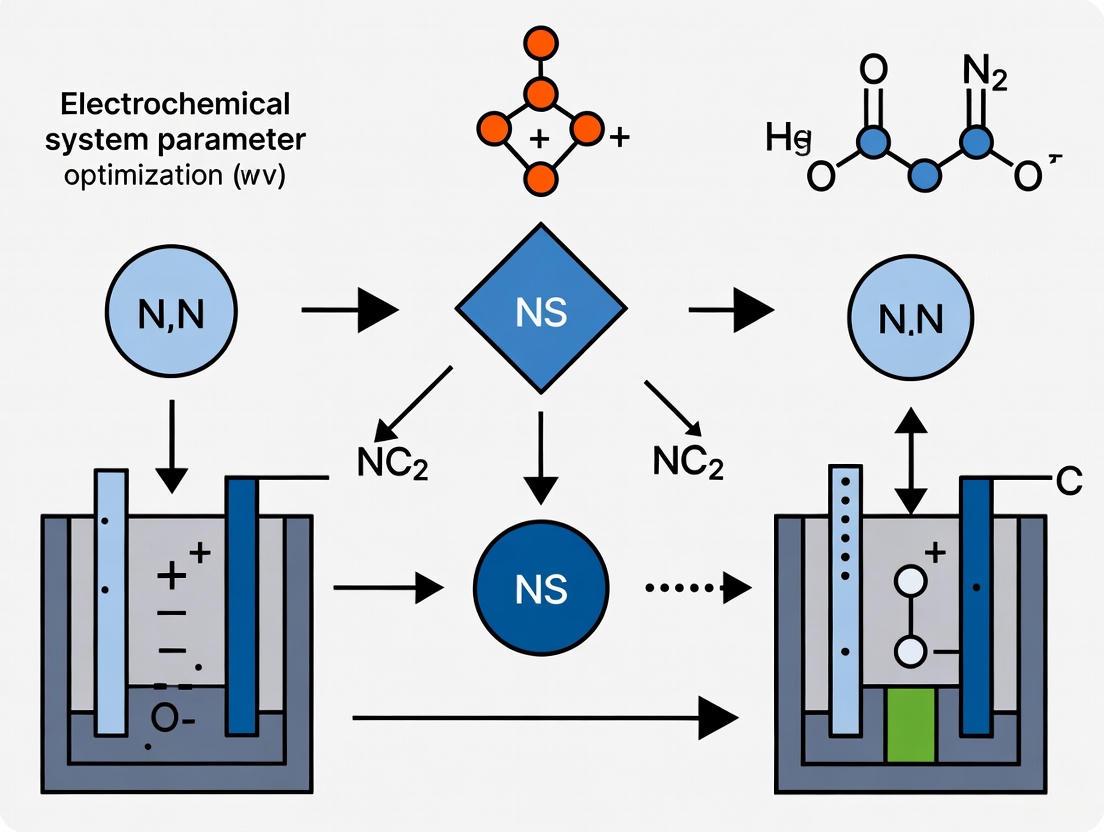
This article provides a comprehensive guide to parameter optimization in electrochemical systems, tailored for researchers and scientists in drug development and related fields.
Advanced Strategies for Electrochemical System Parameter Optimization: From Fundamentals to AI-Driven Applications
Abstract
This article provides a comprehensive guide to parameter optimization in electrochemical systems, tailored for researchers and scientists in drug development and related fields. It explores the fundamental principles governing electrochemical parameters, details cutting-edge optimization methodologies including metaheuristic algorithms and high-throughput screening, addresses common troubleshooting challenges, and presents rigorous model validation techniques. By synthesizing foundational knowledge with advanced applications, this resource aims to equip professionals with the strategies needed to enhance the efficiency, accuracy, and reliability of electrochemical processes and analyses.
Core Principles and Key Parameters in Electrochemical Systems
FAQs and Troubleshooting Guides
This section addresses common challenges researchers face when working with key electrochemical parameters, providing targeted solutions to ensure data accuracy and system optimization.
Potential and Reference Electrodes
#Q1: My measured electrode potential is unstable and drifting over time. What could be the cause?
- Problem: Unstable potential measurements.
- Solution: This is frequently caused by an issue with the reference electrode. Check for the following:
- Contamination: Ensure the reference electrode's frit is not clogged and it has not been contaminated by the test solution [1].
- Filling Solution: Verify that the level of the internal filling solution (e.g., KCl for Ag/AgCl or SCE) is adequate and that it is not depleted [1].
- Temperature Fluctuations: Maintain a constant temperature, as shifts can alter the reference electrode's potential (approximately 1 mV per °C) [1].
- Proper Connection: Ensure all electrical connections to the potentiostat are secure.
#Q2: When should I measure versus the Open Circuit Potential (OCP) instead of applying a fixed potential versus a reference electrode?
- Problem: Uncertainty in choosing the correct potential baseline for experiments.
- Solution: Measuring versus OCP is advantageous when:
- Studying Corrosion: The corrosion potential (Ecorr) is a stable starting point for monitoring material degradation [2].
- Investigating Redox Species: When studying a reversible redox couple (e.g., Fe(CN)₆³⁻/⁴⁻), the OCP of an inert electrode in a solution with a 1:1 ratio of the species will be near the formal potential, providing high sensitivity for techniques like Electrochemical Impedance Spectroscopy (EIS) [2].
- Maintaining System Stability: Applying a potential away from OCP disturbs the system (e.g., causing diffusion layers to grow). Starting at OCP means the system is already at equilibrium, and only the small AC perturbation "wiggles" this stable state [2].
Current Density and Overpotential
#Q3: The current in my system is much lower than theoretically expected for the applied potential. Why?
- Problem: Low current output or efficiency.
- Solution: This indicates significant overpotential, the extra energy required to drive a reaction beyond its thermodynamic prediction [3]. The issue likely stems from one or more of these three main overpotential types:
- Activation Overpotential: The reaction kinetics are slow. This is an energy barrier related to the electron transfer step itself or a preceding chemical reaction. Solution: Use an appropriate electrocatalyst (e.g., platinized platinum for hydrogen evolution) to lower the activation energy barrier [3].
- Concentration Overpotential: Reactants are depleted at the electrode surface because they cannot diffuse to it fast enough. Solution: Increase agitation or stirring rate to improve mass transport [3].
- Resistance Overpotential: This is due to the ohmic resistance of the solution, cell components, or interfaces. Solution: Ensure your electrolyte has sufficient conductivity and check for poor electrical connections in your cell setup [3].
#Q4: How does current density relate to the observed overpotential?
- Problem: Understanding the relationship between operational rate and energy loss.
- Solution: Overpotential increases with the growing current density [3]. The relationship is often described by the Tafel equation. A higher current density means you are driving the reaction faster, which requires a larger deviation from the equilibrium potential, resulting in higher overpotential and lost energy as heat [3].
#Q5: I need to calculate the mass of a substance deposited during electrolysis. How do I do this accurately?
- Problem: Quantitative calculation of electrolysis products.
- Solution: Use Faraday's Laws of Electrolysis.
- Faraday's First Law: The mass (m) of a substance deposited is directly proportional to the charge (Q) passed: ( m = Z \times Q ), where Z is the substance's electrochemical equivalent (g/C) [4].
- Faraday's Second Law: For the same charge passed, the masses of different substances deposited are proportional to their equivalent weights (Atomic Weight / Valency) [4].
- Protocol:
- Calculate the total charge: ( Q = I \times t ) (Current in Amperes × Time in seconds).
- Use the formula involving Faraday's constant (F ≈ 96,500 C/mol): Mass = ( (Q \times Molar Mass) / (n \times F) ), where 'n' is the number of electrons transferred per ion.
- Troubleshooting Tip: If the measured mass deviates from the calculated mass, check for less than 100% current efficiency, often caused by competing side reactions [4].
Data Tables for Key Electrochemical Parameters
Table 1: Comparison of Common Reference Electrodes
| Electrode Type | Electrode Reaction | Potential vs. SHE (at 25°C) | Common Applications |
|---|---|---|---|
| Standard Hydrogen Electrode (SHE) | ( 2H^+ + 2e^- \rightleftharpoons H_2 ) | 0.000 V (Primary Standard) | Fundamental thermodynamic studies [1] |
| Saturated Calomel Electrode (SCE) | ( Hg2Cl2 + 2e^- \rightleftharpoons 2Hg + 2Cl^- ) | +0.244 V | General purpose in aqueous solutions [1] |
| Silver/Silver Chloride (Ag/AgCl, saturated KCl) | ( AgCl + e^- \rightleftharpoons Ag + Cl^- ) | +0.197 V | Common in biomedical and general electrochemistry [1] |
Table 2: Measured Overpotentials for Gas Evolution Reactions on Various Electrodes
Selected data for the Hydrogen Evolution Reaction (HER) and Oxygen Evolution Reaction (OER) from aqueous electrolytes at low current density [3].
| Electrode Material | Overpotential for HER (V) | Overpotential for OER (V) |
|---|---|---|
| Platinum (platinized) | -0.01 | +0.46 |
| Platinum (smooth) | -0.09 | +1.11 |
| Gold | -0.12 | +0.96 |
| Nickel | -0.32 | +0.61 |
| Iron | -0.40 | +0.41 |
| Copper | -0.50 | +0.58 |
| Graphite | -0.47 | +0.50 |
| Mercury | -1.04 | - |
Experimental Protocols
Protocol 1: Determining the Open Circuit Potential (OCP)
Objective: To measure the stable, corrosion potential of a working electrode in an electrolyte without applying an external current [2].
- Setup: Place the working electrode (e.g., a metal sample) and a stable reference electrode (e.g., Ag/AgCl) in the electrolyte. Connect both to a potentiostat, but no current is applied.
- Measurement: The potentiostat measures the voltage difference between the working and reference electrodes over time.
- Stability Criterion: Record the OCP until the potential change per second falls below a pre-set stability criterion (e.g., 0.1 mV/s) or until a maximum measurement time is reached [2].
- Application: The stable OCP value is used as a reference point (Ecorr) for subsequent experiments, such as EIS or polarization curves, ensuring measurements start from a stable state [2].
Protocol 2: Calculating Mass Deposit via Faraday's Laws
Objective: To theoretically predict the mass of a substance deposited at an electrode during electrolysis [4].
- Identify the Reaction: Determine the half-reaction at the electrode and the number of electrons (n) transferred per ion. For example, ( Cu^{2+} + 2e^- \rightarrow Cu_{(s)} ) (n=2).
- Calculate Total Charge (Q): Pass a constant current (I) for a known time (t). Convert time to seconds. Calculate charge: ( Q = I \times t ) (in Coulombs).
- Calculate Moles of Electrons: Moles of electrons = ( Q / F ), where F is Faraday's constant (96,500 C/mol).
- Calculate Mass of Product: Moles of substance = Moles of electrons / n. Mass = Moles of substance × Molar mass.
Example Calculation: For a current of 0.5 A passed through CuSO₄ for 30 minutes (1800 s):
- Charge, ( Q = 0.5 A \times 1800 s = 900 C )
- Moles of electrons = ( 900 C / 96500 C/mol ≈ 0.00933 mol )
- Moles of Cu = ( 0.00933 / 2 = 0.004665 mol )
- Mass of Cu = ( 0.004665 mol \times 63.55 g/mol ≈ 0.296 g )
The Scientist's Toolkit: Essential Research Reagents & Materials
| Item | Function / Explanation |
|---|---|
| Reference Electrode (e.g., Ag/AgCl) | Provides a stable, known reference potential for all measurements against which the working electrode's potential is controlled or measured [1]. |
| Electrocatalyst (e.g., Pt, Au, Ni) | A material that lowers the activation overpotential for a specific reaction, increasing current density at a given potential and improving energy efficiency [3]. |
| Potentiostat/Galvanostat | The core instrument that precisely controls the potential (potentiostat) or current (galvanostat) between the working and reference electrodes and measures the resulting current or potential. |
| Supporting Electrolyte (e.g., KCl, K₂SO₄) | Carries the majority of the current in solution to minimize resistance overpotential; it is electrochemically inert in the potential range of interest. |
| Electrochemical Cell | A multi-port container that holds the electrolyte and provides separate compartments for the working, counter, and reference electrodes to maintain a stable 3-electrode setup. |
Experimental Workflow and Parameter Relationships
The diagram below illustrates the logical workflow for diagnosing and optimizing an electrochemical system based on the key parameters discussed.
Electrochemical System Diagnosis and Optimization Workflow
Frequently Asked Questions (FAQs)
Q1: What is the fundamental difference between the Nernst and Butler-Volmer equations?
The Nernst equation describes the equilibrium potential of an electrochemical reaction, indicating the voltage at which no net current flows. In contrast, the Butler-Volmer equation describes the kinetics of the reaction, quantifying how the current depends on the applied overpotential (the deviation from the equilibrium potential) [5] [6]. The Nernst equation tells you if a reaction can happen; the Butler-Volmer equation tells you how fast it happens at a given potential.
Q2: My experimental current is lower than what the Butler-Volmer model predicts. What could be the cause?
This is a common issue often attributed to mass transport limitations. The standard Butler-Volmer equation assumes reactant concentrations at the electrode surface are the same as in the bulk solution [7]. In real experiments, consumption of reactants can deplete their concentration at the surface, limiting the current. This is described by the Extended Butler-Volmer equation, which includes surface concentration terms [7]. Other causes include solution resistance (ohmic drop) or a poorly calibrated electrode surface area.
Q3: How do I determine the exchange current density (i₀) for my system?
The exchange current density ((i_0)) is a measure of the intrinsic rate of the redox reaction at equilibrium. It can be determined experimentally:
- Low Overpotential Method: At very low overpotentials (η < about 10 mV), the Butler-Volmer equation simplifies to a linear relationship: (j = j0 \frac{zF}{RT} \eta) [7]. The slope of a current-density vs. overpotential plot in this region can be used to calculate (j0).
- Tafel Plot Method: At high overpotentials, the equation simplifies to the Tafel equation (e.g., (\eta = a + b \log j)) [7]. Extrapolating the linear region of a Tafel plot back to the equilibrium potential (where η=0) gives the value of (\log j_0).
Q4: What are the limitations of the Butler-Volmer equation?
The Butler-Volmer equation relies on several key assumptions [5] [6]:
- It models a single-step, unimolecular electron transfer reaction.
- It assumes an symmetrical energy barrier (often with a symmetry factor α ≈ 0.5).
- The standard form neglects mass transport effects, which is addressed by the extended version.
- It may not be accurate for complex, multi-step reactions, which require more detailed mechanistic models.
Troubleshooting Guides
Problem: Poor Reproducibility in Current-Potential Measurements
| Possible Cause | Diagnostic Steps | Solution |
|---|---|---|
| Unstable Electrode Surface | Inspect electrode surface for fouling or damage under a microscope. | Re-polish the electrode before each experiment using standard alumina slurry or diamond paste, followed by thorough rinsing. |
| Fluctuating Temperature | Log temperature of the electrolyte bath during measurement. | Use a thermostated cell to maintain a constant temperature, as 'T' is a critical variable in the exponential terms of the Butler-Volmer equation [8] [5]. |
| Inconsistent Reference Electrode Potential | Check the reference electrode filling solution and junction clogging. | Use a fresh, properly stored reference electrode and confirm its potential against a known standard. |
Problem: Significant Discrepancy Between Experimental and Modeled Polarization Curves
| Possible Cause | Diagnostic Steps | Solution |
|---|---|---|
| Uncompensated Resistance (Ohmic Drop) | Measure the solution resistance using electrochemical impedance spectroscopy (EIS). | Use a potentiostat with positive feedback iR compensation or perform post-experiment data correction to subtract the iR drop. |
| Incorrect Model Parameters | Perform a sensitivity analysis on key parameters (e.g., i₀, α) in your model. | Use parameter estimation algorithms, such as a Two-stage Differential Evolution (TDE) algorithm, to find the optimal values that fit your experimental data [9]. |
| Mass Transport Limitations | Check if the current reaches a plateau at high overpotentials. Rotate the working electrode. | Use the Extended Butler-Volmer equation [7]. Incorporate a mass transport model (e.g., the Nernst-Planck equation) or use a rotating disk electrode to control diffusion. |
Experimental Protocol: Parameter Estimation for a Butler-Volmer Model
This protocol outlines the methodology for estimating the kinetic parameters (Exchange Current Density, (i_0), and Charge Transfer Coefficient, (\alpha)) for an electrochemical reaction, fitting them within the context of electrochemical system optimization research [10] [9].
Objective
To experimentally obtain a current-overpotential curve and use optimization techniques to determine the parameters (i_0) and (\alpha) for the Butler-Volmer equation.
Materials and Equipment
| Item | Function / Specification |
|---|---|
| Potentiostat/Galvanostat | To apply controlled potentials/currents and measure the electrochemical response. |
| Standard 3-Electrode Cell | Includes Working Electrode (material of interest), Counter Electrode (e.g., Pt wire), and Reference Electrode (e.g., Ag/AgCl). |
| Electrolyte Solution | A solution containing a known concentration of both the oxidized (O) and reduced (R) species of the redox couple in a supporting electrolyte. |
| Temperature Controller | To maintain a constant temperature (e.g., 25°C) as per the requirements of the Butler-Volmer equation [8]. |
| Data Analysis Software | Equipped with non-linear curve-fitting capabilities or connection to optimization algorithms. |
Step-by-Step Procedure
- Cell Setup: Prepare the electrolyte solution with known concentrations of redox species and a high concentration of supporting electrolyte. Insert the three-electrode setup into the solution.
- Electrode Preparation: Polish the working electrode to a mirror finish, rinse with purified water, and place it in the cell.
- Open Circuit Potential (OCP) Measurement: Measure the OCP to determine the experimental equilibrium potential ((E_{eq})).
- Polarization Curve Measurement: Using the potentiostat, perform a slow scan (e.g., 1 mV/s) from a potential slightly cathodic of (E{eq}) to a potential anodic of (E{eq}). Record the current density (j) at each potential (E).
- Data Pre-processing: Correct the measured potential for the solution resistance (iR drop) using the resistance value obtained from EIS.
- Parameter Optimization:
- Define the objective function as the Sum of Squared Errors (SSE) between the experimental current densities and the current densities predicted by the Butler-Volmer equation.
- Use an optimization algorithm (e.g., the Two-stage Differential Evolution (TDE) algorithm cited in [9] or a non-linear least squares fitter) to find the values of (i_0) and (\alpha) that minimize the SSE.
Data Analysis and Expected Outcomes
The final output is a set of optimized parameters. The quality of the fit can be visualized by plotting the experimental data points against the fitted Butler-Volmer curve. A successful experiment will show a strong correlation between the two across the entire potential range, confirming the model's validity for the system under study.
Research Reagent Solutions
| Reagent / Material | Function in Electrochemical Experiments |
|---|---|
| Supporting Electrolyte (e.g., KCl, NaClO₄) | To carry current and minimize migratory mass transport, allowing the study of a diffusive and kinetic-controlled system. |
| Redox Probe (e.g., Ferrocene, K₃Fe(CN)₆/K₄Fe(CN)₆) | A well-behaved, reversible redox couple used to characterize electrode kinetics and test experimental setups. |
| Electrode Polishing Suspension (Alumina, Diamond Paste) | To create a fresh, reproducible, and clean electrode surface, which is critical for obtaining consistent kinetic data. |
| Solvent (e.g., Water, Acetonitrile) | The medium in which the electrochemical reaction takes place; must be pure and degassed to remove interfering oxygen. |
Workflow and Relationship Diagrams
Butler-Volmer Equation Fundamentals
Parameter Optimization Strategy
Identifying Critical Optimization Variables in Different System Types
Troubleshooting Guide: Electrochemical System Optimization
General Optimization Workflow
The following diagram outlines a systematic approach to optimizing and troubleshooting electrochemical systems, integrating both performance optimization and equipment diagnostics.
Common Optimization Challenges & Solutions
Q1: My electrochemical system shows significant energy losses, particularly at high current densities. Which variables should I prioritize for optimization?
A: Energy losses typically stem from three main sources, each with distinct optimization approaches [11]:
| Loss Type | Dominant Current Range | Critical Optimization Variables | Optimization Strategies |
|---|---|---|---|
| Kinetic Losses | Low currents | Electrode material, Catalyst type & loading, Surface area | Increase active surface area through porous structures [11]; Utilize high-activity catalysts [11] |
| Ohmic Losses | Intermediate currents | Electrolyte ionic conductivity, Electrode resistance, Interfacial contacts | Enhance ionic conductivity through electrolyte composition optimization [11]; Reduce electrode resistance [11] |
| Mass Transport Losses | High currents | Electrode porosity & structure, Flow rates (flow systems), Reactant concentration | Optimize porous electrode structure for better reactant access [11]; Adjust flow rates in flow batteries/reactors [11] |
Q2: When setting up cyclic voltammetry experiments, I'm obtaining unusual voltammograms with distorted shapes. What systematic approach should I follow to diagnose the issue?
A: Follow this proven troubleshooting procedure to isolate the problem [12] [13]:
Dummy Cell Test: Disconnect the electrochemical cell and replace it with a 10 kΩ resistor. Connect reference and counter electrode leads to one side, working electrode to the other. Run a CV scan from +0.5 to -0.5 V at 100 mV/s. The result should be a straight line intersecting the origin with currents of ±50 μA [12].
- Correct response: Issue lies with the electrochemical cell (proceed to step 2)
- Incorrect response: Problem with instrument or leads (check connections, replace leads, or service instrument) [12]
Two-Electrode Configuration Test: Reconnect the cell, but connect both reference and counter electrode leads to the counter electrode. Run the CV scan [12].
Working Electrode Inspection: The problem may be surface contamination, film detachment, or poor conductivity. Recondition by polishing, chemical, electrochemical, or thermal treatment based on manufacturer recommendations [12].
Q3: What operational parameters significantly impact the performance of bioelectrochemical systems like sulfate-reducing bacteria biocathodes?
A: For biological electrochemical systems, both operational and chemical parameters require careful optimization [14]:
| Parameter Category | Specific Variables | Optimal Range/Conditions | Performance Impact |
|---|---|---|---|
| Organic Components | Acetate concentration | 0.1 M | Crucial for performance & mechanism [14] |
| Butyrate concentration | Synergistic with acetate | Minimal standalone effect, but synergistic with acetate [14] | |
| Inorganic Components | Sodium chloride concentration | 0.34 M | Significant impact on electrochemical response [14] |
| Buffering Agents | Potassium dihydrogen phosphate, Ammonium chloride | System-dependent | Maintain optimal pH for biological activity [14] |
| Effluent Treatment | Dark fermentation effluent | ≤10% concentration | Higher concentrations detrimental to performance [14] |
Q4: How do I select appropriate current profiles for accurate parameter estimation in battery models without excessive computational cost?
A: Based on comprehensive testing of 31 profile combinations, the optimal selection depends on your specific priorities [15]:
| Optimization Priority | Recommended Current Profiles | Performance Characteristics |
|---|---|---|
| Minimum Voltage Output Error | C/5, C/2, 1C, Pulse, DST | Most accurate voltage prediction [15] |
| Minimum Parameter Estimation Error | C/5, C/2, Pulse, DST | Best parameter identification accuracy [15] |
| Minimum Time Cost | 1C | Fastest computation [15] |
| Balanced Accuracy & Efficiency | C/5, C/2, 1C, DST | Optimal trade-off between voltage error and parameter error [15] |
| Voltage Error & Time Cost Focus | C/2, 1C | Good voltage accuracy with reduced computation [15] |
| Parameter Error & Time Cost Focus | 1C | Reasonable parameter accuracy with minimal computation [15] |
Q5: What advanced optimization techniques are available for complex electrochemical systems where traditional methods prove insufficient?
A: Modern optimization approaches can be categorized as follows [10] [9]:
| Technique Category | Specific Methods | Application Examples | Advantages |
|---|---|---|---|
| Model-Based Optimization | Physical/mechanistic models, First-principles modeling | Detailed system simulation, Parameter estimation [15] | Physical insights, extrapolation capability [10] |
| Data-Driven Optimization | Artificial Neural Networks (ANN), Linear Regression, Machine Learning | PEMFC behavior prediction, Battery parameter estimation [10] [9] | Handles complex nonlinearities, No need for fundamental understanding [10] |
| Hybrid Methods | ANN combined with optimization algorithms, Adaptive filters | Parameter identification with neural networks [10] [9] | Combines advantages of both approaches [10] |
| Advanced Metaheuristics | Two-Stage Differential Evolution (TDE), Particle Swarm Optimization (PSO) | PEMFC parameter estimation, Battery model optimization [15] [9] | High accuracy, Robustness for complex problems [9] |
The Scientist's Toolkit: Essential Research Reagents & Materials
| Material/Reagent | Function in Optimization | Application Examples |
|---|---|---|
| NiAl Layered Double Hydroxides (LDH) | High-surface-area electrode material with tunable properties | Supercapacitor electrodes, Pseudocapacitive energy storage [16] |
| VITO CORE & Paxitech Electrodes | Carbon-based electrode materials for bioelectrochemical systems | Sulfate-reducing bacteria biocathodes [14] |
| Platinum Group Catalysts | High-activity electrocatalysts for sluggish reactions | Fuel cell electrodes, High-performance electrolyzers [11] |
| Non-Aqueous Electrolytes | Wider voltage window for higher energy density | High-voltage batteries, Advanced energy storage [11] |
| Alumina Polishing Compounds (0.05 μm) | Electrode surface preparation and regeneration | Working electrode reconditioning [12] [13] |
| Quasi-Reference Electrodes (silver wire) | Reference electrode troubleshooting | Diagnostic measurements when conventional references fail [12] [13] |
Experimental Protocol: Distribution of Relaxation Times (DRT) Analysis
For detailed investigation of electrochemical impedance spectra, DRT analysis provides a model-free approach for identifying polarization contributions. Follow this optimized protocol [17]:
Sample Preparation & Measurement:
- Obtain impedance spectrum using standard EIS procedures (galvanostatic or potentiostatic)
- Ensure spectrum meets DRT requirements: lim(ω→0) Im(Z(jω)) = 0, lim(ω→∞) Im(Z(jω)) = 0, and Im(Z(jω)) ≤ 0 for all ω [17]
DRT Calculation Parameters:
- Regularization Parameter: Determine optimal value through parameter study to balance data fitting and solution smoothness [17]
- Number of Time Constants: Choose large compared to expected processes in system; typically extend beyond measured frequency range to avoid boundary artefacts [17]
- Data Utilization: Use both real and imaginary parts of complex impedance for calculation [17]
- Algorithm Selection: Specify optimization algorithm and error function used (critical for reproducibility) [17]
Post-Processing & Analysis:
- Peak Identification: Apply Gaussian distribution curve fitting to quantify single polarization contributions [17]
- Process Assignment: Correlate DRT peaks with physical processes (charge transfer, SEI formation, diffusion) based on their time constants [17]
This methodology enables separation of overlapping processes in complex systems like NMC lithium-ion batteries, where multiple polarization contributions typically obscure individual mechanisms in standard impedance analysis [17].
The Role of Electrode Materials and Electrolyte Composition
Troubleshooting Guide: Common Issues in Electrochemical Systems
Issue 1: Rapid Capacity Fade and Poor Cycle Life
- Q: Why does my battery show a significant drop in capacity within the first few cycles?
- A: Rapid capacity fade often stems from irreversible reactions at the electrode-electrolyte interface. Common causes include an unstable Solid Electrolyte Interphase (SEI), continuous electrolyte decomposition, or structural degradation of electrode materials due to large volume changes during cycling [18] [19].
- Q: How can I diagnose the root cause?
- A: Post-mortem analysis is key. Disassemble the cycled cell in an inert atmosphere and examine the electrodes. A thick, brittle SEI on the anode suggests electrolyte instability [20]. For anodes like silicon or lithium metal, check for cracks or pulverization indicating mechanical failure from volume expansion [18].
- Q: What are the potential solutions?
- A:
- Electrolyte Engineering: Incorporate functional additives like Fluoroethylene Carbonate (FEC) to form a more stable, flexible SEI [18].
- Concentrated Electrolytes: Use "Water-in-Salt" or other high-concentration electrolytes to suppress solvent decomposition and widen the electrochemical stability window [18].
- Electrode Stabilization: For alloying anodes (e.g., Si, Sn), use nanostructured composites or carbon coatings to accommodate volume strain and prevent pulverization [19].
- A:
Issue 2: Poor Low-Temperature Performance
- Q: Why does my battery fail to charge or discharge efficiently at sub-zero temperatures?
- A: At low temperatures, several factors contribute to performance loss: a sharp increase in electrolyte viscosity, sluggish ion diffusion within electrode materials, and high charge-transfer resistance at the interfaces [20].
- Q: How can I improve operation in cold environments?
- A: Focus on optimizing the electrolyte composition and electrode kinetics.
- Electrolyte Formulation: Use low-freezing-point solvent mixtures (e.g., ethers like THF) and salts with low dissociation energy. Sodium-ion batteries (SIBs) can be particularly resilient here due to sodium's lower Lewis acidity, which weakens ion-solvent interactions [20].
- Electrode Design: Employ electrodes with high surface area and short ion-diffusion paths, such as those with defect engineering or nanostructuring, to mitigate kinetic barriers [20].
- A: Focus on optimizing the electrolyte composition and electrode kinetics.
Issue 3: Sodium Metal Dendrite Formation and Coulombic Efficiency
- Q: My anode-free sodium metal cell has low Coulombic Efficiency and short cycle life. What is happening?
- A: This is typically caused by non-uniform sodium plating, leading to dendrite growth. Dendrites can pierce the separator, cause short circuits, and create "dead" sodium, which electrically disconnects and consumes electrolyte through repeated SEI repair, lowering efficiency [21].
- Q: Are there advanced electrolyte strategies to address this?
- A: Yes, recent research highlights the strategy of selective solvent presentation. This involves designing electrolytes where specific solvents are directed to the anode or cathode interface to optimize stability at each electrode. For instance, a study used a mixture of 2-MeTHF (enriched in the sodium ion's solvation shell for anode stability) and THF (available as free solvent for cathode stability), achieving an average Coulombic Efficiency of 99.91% over 400 cycles [21].
Issue 4: Electrode Material Degradation and Passivation
- Q: During electrochemical machining of Ti6Al4V alloy, I encounter uneven surface finishes. How can the electrolyte influence this?
- A: The choice of electrolyte directly affects the dissolution efficiency and passivation behavior of different alloy phases. For the dual-phase Ti6Al4V, the α and β phases dissolve at different rates, leading to roughness.
- Solution: Using a complexing agent like EDTA-2Na in a NaCl-based electrolyte can suppress the dissolution difference between phases. One study showed this approach achieved a superior surface roughness of 0.31 μm, a 76.3% reduction compared to a NaBr-containing electrolyte, despite a slight drop in machining efficiency [22].
Performance Data of Electrolyte Systems
The table below summarizes key performance metrics for various advanced electrolyte systems, providing a benchmark for experimental optimization.
Table 1: Performance Comparison of Advanced Electrolyte Systems
| Electrolyte System | Application | Key Performance Metrics | Reference |
|---|---|---|---|
| Water-in-Salt (High Concentration) | Supercapacitors | Extends voltage window to 3.0 V | [18] |
| Selective Solvent (2-MeTHF/THF) | Anode-free Na Metal Batteries | Average Coulombic Efficiency: 99.91% (400 cycles); Stable Na plating/stripping for 5000 h | [21] |
| Fluorinated Solvents & Additives | Metal-ion Batteries | Energy density > 500 Wh/kg; Capacity retention > 90% after 200 cycles | [18] |
| NaCl + EDTA-2Na | Electrochemical Machining of Ti6Al4V | Achieved surface roughness of 0.31 μm | [22] |
Experimental Protocols for Key Investigations
Protocol 1: Formulating and Testing a Selective Solvent Electrolyte
- Objective: To create an electrolyte that directs specific solvents to the anode and cathode interfaces for enhanced stability in sodium metal batteries [21].
- Materials:
- Anhydrous Tetrahydrofuran (THF)
- Anhydrous 2-Methyltetrahydrofuran (2-MeTHF)
- Sodium hexafluorophosphate (NaPF₆) salt
- Argon-glovebox, magnetic stirrer, volumetric flasks
- Procedure:
- Drying: Ensure all solvents and salt are thoroughly dried and stored in an inert atmosphere. Transfer materials to an argon-glovebox (H₂O, O₂ < 1 ppm).
- Solution Preparation: Prepare a 1:1 (v/v) mixture of THF and 2-MeTHF in a volumetric flask.
- Salt Addition: Slowly add NaPF₆ to the solvent mixture to achieve a target concentration (e.g., 1.8 M). Stir continuously until the salt is completely dissolved.
- Cell Assembly: Use the prepared electrolyte to assemble Na||Cu half-cells or initially anode-free full cells with a high-mass-loading cathode (e.g., ~14 mg/cm²).
- Electrochemical Testing:
- Perform galvanostatic cycling at relevant current densities (e.g., 1 mA/cm²) to measure Coulombic Efficiency.
- Run Na||Na symmetric cells to assess long-term plating/stripping stability.
Protocol 2: Evaluating Electrolyte Additives for SEI Stabilization
- Objective: To test the effectiveness of additives like FEC in improving the cycle life of silicon-based lithium-ion batteries [18].
- Materials:
- Base electrolyte (e.g., 1 M LiPF₆ in EC/EMC)
- Fluoroethylene Carbonate (FEC) additive
- Silicon-based anode, Li-metal or graphite counter electrode
- Procedure:
- Control Electrolyte: Prepare a baseline electrolyte without additives.
- Modified Electrolyte: Add FEC to the baseline electrolyte at a typical concentration of 5-10% by weight.
- Cell Assembly: Assemble coin cells using the silicon-based anode and the different electrolytes.
- Testing & Analysis:
- Cycle the cells at a constant current and monitor capacity retention over time.
- Use Electrochemical Impedance Spectroscopy (EIS) at different cycle intervals to track the growth of interfacial resistance.
- Post-cycle, perform surface analysis (e.g., XPS, SEM) on the anodes to characterize the morphology and composition of the SEI layer.
The Scientist's Toolkit: Research Reagent Solutions
Table 2: Essential Materials for Electrochemical System Optimization
| Reagent/Material | Function & Application |
|---|---|
| Fluoroethylene Carbonate (FEC) | A ubiquitous electrolyte additive that promotes the formation of a stable, LiF-rich SEI on silicon and lithium metal anodes, improving cycle life [18]. |
| Sodium Trifluoromethanesulfonimide (NaTFSI) | A common sodium salt used in SIB research, known for its high solubility and stability, contributing to ionic conductivity [18]. |
| Carbon Felt/Cloth | A versatile, high-surface-area electrode substrate used in batteries, supercapacitors, and bio-electrochemical systems for its conductivity and porosity [23]. |
| Ethylenediaminetetraacetic acid disodium salt (EDTA-2Na) | A complexing agent used in electrolytes for electrochemical machining. It helps achieve smooth surfaces on dual-phase alloys by suppressing selective phase dissolution [22]. |
| Lithium Lanthanum Zirconium Oxide (LLZO) | A garnet-type ceramic solid-state electrolyte. It inhibits lithium dendrite growth and is suitable for high-voltage cathodes due to its high ionic conductivity and wide electrochemical window [18]. |
Methodology Workflow and System Optimization Diagrams
Diagram Title: Electrochemical System Optimization Workflow
Diagram Title: Selective Solvent Presentation Strategy
Modern Optimization Algorithms and High-Throughput Strategies
Troubleshooting Guides and FAQs
This technical support center is designed to assist researchers and scientists, particularly those in drug development and related fields, who are employing metaheuristic algorithms for the parameter optimization of complex electrochemical systems. The following guides address common challenges encountered during experimental implementation.
Frequently Asked Questions (FAQs)
1. My optimization algorithm converges to a solution very quickly, but the results are consistently poor. What could be the issue? This is a classic sign of premature convergence, where the algorithm gets trapped in a local optimum rather than finding the global best solution [24]. This often occurs when the balance between exploration (searching new areas) and exploitation (refining known good areas) is skewed [25] [24].
- Solution Steps:
- Adjust Algorithm Parameters: For Genetic Algorithms (GA), try increasing the mutation rate. For Particle Swarm Optimization (PSO), increase the inertia weight to encourage broader exploration [25].
- Hybridize Algorithms: Combine a global search algorithm (like GA or PSO) with a local search method (like Simulated Annealing) to refine solutions after the global search identifies promising regions [26].
- Check Solution Diversity: Monitor your population's diversity in early iterations. If it drops too fast, reinforce exploration mechanisms [25].
2. How do I choose the right metaheuristic algorithm for my specific electrochemical parameter identification problem? According to the No Free Lunch (NFL) theorem, no single algorithm is best for all optimization problems [27]. The choice depends on your problem's characteristics.
- Solution Steps:
- Define Problem Nature: Is it discrete (e.g., feature selection) or continuous (e.g., parameter estimation)? Ant Colony Optimization (ACO) is suited for discrete problems like pathfinding, while PSO and GA are effective for continuous problems [24] [28].
- Analyze Landscape: For highly non-linear, multi-peak problems like fuel cell parameter extraction, population-based algorithms like the Grasshopper Optimization Algorithm (GOA) or modified Fire Hawk Algorithm (MFHA) have shown strong performance in escaping local optima [27] [29].
- Benchmark: Test several algorithms on a small-scale version of your problem and compare performance using metrics like convergence speed and solution quality [25].
3. The computational cost of my optimization experiment is becoming prohibitively high. How can I improve efficiency? High computational complexity is a common challenge, especially with large-scale problems or complex models like those for Solid Oxide Fuel Cells (SOFCs) [27] [24].
- Solution Steps:
- Tune Parameters: Properly set population size and the number of iterations. An overly large population unnecessarily increases computational load [25].
- Use a Surrogate Model: Replace the computationally expensive simulation (e.g., a detailed electrochemical model) with a faster, approximate surrogate model (like an Artificial Neural Network) for the fitness evaluations during the search process [30].
- Implement Efficient Termination: Use convergence-based stopping criteria instead of a fixed, high number of iterations. Stop the run if the solution doesn't improve significantly over a set number of generations [24].
4. What is the most effective way to handle the numerous parameters required by algorithms like PSO and GA? Parameter tuning is critical for algorithm performance [25]. A systematic approach is required.
- Solution Steps:
- Leverage Established Settings: Start with parameter values commonly reported in the literature for similar problems. For example, PSO often uses an inertia weight between 0.4 and 0.9, and social/cognitive coefficients around 2.0 [24].
- Design of Experiments (DoE): Use techniques like factorial design to understand the impact and interactions of different parameters.
- Meta-Optimization: Use a simpler or different optimization algorithm to tune the parameters of your primary algorithm [25].
Performance Comparison and Methodologies
The following tables summarize quantitative data and detailed protocols from key studies on electrochemical system optimization, providing a reference for your experimental design.
Table 1: Performance Comparison of Metaheuristic Algorithms in Fuel Cell Parameter Extraction
| Algorithm Name | Application Context | Key Performance Metric (Sum of Squared Error - SSE) | Reference Case |
|---|---|---|---|
| Modified Fire Hawk Algorithm (MFHA) [27] | Solid Oxide Fuel Cell (SOFC) | 1.04E-05 (at 1073 K) [27] | Siemens cylindrical cell |
| HGS-MPA (Hybrid) [30] | Proton Exchange Membrane Fuel Cell (PEMFC) | 0.33770 [30] | 250-W stack |
| Grasshopper Optimization (GOA) [29] | Solid Oxide Fuel Cell (SOFC) | Improved accuracy & speed over PSO [29] | 5 kW SOFC stack |
| PSO-GA-SA (Hybrid) [26] | Energy Demand Forecasting | Mean Absolute Percentage Error (MAPE) of 0.004% [26] | National energy demand |
Table 2: Essential Parameter Settings for Reproducing a Fuel Cell Optimization Experiment
| Component | Setting / Value | Function and Rationale |
|---|---|---|
| Objective Function | Sum of Squared Error (SSE) or Root Mean Square Error (RMSE) [27] [29] | Quantifies the difference between experimental and model-predicted voltage. Minimizing this function drives parameter accuracy. |
| Decision Variables | Eo, A, Rohm, B, I0,a, I0,c, IL [29] |
The seven key unknown parameters of the electrochemical model that define the fuel cell's voltage-current (V-I) characteristics. |
| Algorithm Parameters | Population Size: 30-50; Max Iterations: 500 [27] | Balances computational effort with sufficient search space exploration and convergence time. |
| Data Input | Experimental V-I data points [27] [29] | Serves as the ground truth data that the model parameters must replicate. |
Detailed Experimental Protocol: Parameter Identification for a Fuel Cell Stack
This protocol outlines the methodology for extracting the unknown parameters of a fuel cell model, as used in recent studies [27] [29] [30].
Problem Formulation:
- Define the Model: Use the standard electrochemical model for a fuel cell, which calculates voltage as:
Vc = Ncell * (Eo - Vact - Vohm - Vcon), where losses are due to activation, ohmic resistance, and concentration [29]. - Set the Objective Function: Formulate the goal as a minimization problem. The common fitness function is Root Mean Square Error (RMSE):
Fitness = sqrt( (1/N) * Σ (Vm - Vc)^2 ), whereVmis the measured voltage andVcis the voltage calculated by the model [29].
- Define the Model: Use the standard electrochemical model for a fuel cell, which calculates voltage as:
Algorithm Initialization:
- Select a metaheuristic algorithm (e.g., GOA, MFHA, HGS-MPA).
- Define the search boundaries (upper and lower limits) for each of the seven unknown parameters based on physical constraints.
- Initialize the algorithm population randomly within these boundaries.
Iterative Optimization Loop:
- Evaluation: For each candidate solution (particle, chromosome, or agent) in the population, calculate its fitness by running the fuel cell model and computing the RMSE.
- Solution Update: Apply the algorithm-specific operators to generate a new population.
- Termination Check: Repeat the loop until a stopping criterion is met (e.g., maximum iterations, or fitness falls below a threshold).
Validation and Analysis:
- The solution vector with the smallest fitness value represents the optimally identified parameters.
- Validate the result by comparing the V-I and V-P curves generated with the optimized parameters against the experimental data to ensure a visual and statistical match.
Workflow Visualization
The following diagram illustrates the logical workflow for the parameter optimization experiment described above.
The Scientist's Toolkit: Research Reagent Solutions
This table details the essential computational "reagents" and tools required for conducting metaheuristic-based optimization experiments in electrochemical research.
Table 3: Essential Tools and Resources for Optimization Experiments
| Tool / Resource | Category | Function in the Experiment |
|---|---|---|
| MATLAB / Python (with SciPy) | Software Environment | Provides the platform for implementing the optimization algorithm, mathematical models, and data analysis. Often used for simulation in studies [29]. |
| Experimental V-I Datasets | Data | The empirical data from the electrochemical system (e.g., fuel cell) serves as the ground truth for calibrating and validating the model [27] [29]. |
| Electrochemical Model | Mathematical Model | A set of equations (e.g., the ECM with activation, ohmic, and concentration losses) that simulates the system's behavior. The accuracy of its parameters is the optimization target [29]. |
| Fitness Function (e.g., RMSE) | Evaluation Metric | A scalar function that quantifies solution quality by measuring the discrepancy between model output and experimental data. It guides the search direction [29] [30]. |
| Metaheuristic Algorithm Code | Algorithm | The core search engine (e.g., code for PSO, GA, or a hybrid) that explores the parameter space to minimize the fitness function [27] [30]. |
Design of Experiments and Response Surface Methodology (RSM) for Parameter Optimization
Frequently Asked Questions (FAQs)
Q1: What is the core advantage of using RSM over traditional one-factor-at-a-time (OFAT) experimentation? RSM uses structured experimental designs and mathematical modeling to efficiently capture complex interactions between multiple factors simultaneously. Unlike OFAT, which can miss interactions and is inefficient, RSM establishes a functional relationship between multiple input variables and one or more responses, enabling the identification of optimal factor settings and a deeper understanding of the process landscape [31].
Q2: When should I use a Central Composite Design (CCD) versus a Box-Behnken Design (BBD)? Both are common designs for fitting second-order models in RSM. The key difference lies in their structure and experimental region:
- Central Composite Design (CCD): A CCD builds upon a two-level factorial design by adding axial points and center points. It can explore a wider region of the factor space, including points outside the original factorial range, and is often considered the standard for RSM [31].
- Box-Behnken Design (BBD): A BBD is a spherical design with all points lying on a sphere of radius √2. It does not have corner points, making it useful when testing at the extreme corners of the experimental space is impractical or hazardous. It typically requires fewer runs than a CCD for the same number of factors [32].
Q3: How do I validate the adequacy of my developed Response Surface Model? A valid model must be both statistically significant and a good predictor. Key validation steps include [31]:
- Analysis of Variance (ANOVA): To check the overall statistical significance of the model.
- Lack-of-Fit Test: A non-significant lack-of-fit is desirable, indicating the model adequately fits the data.
- Coefficient of Determination (R²): A high R² value suggests the model explains most of the variability in the response.
- Residual Analysis: Examining residuals (differences between observed and predicted values) for random patterns to verify model assumptions.
- Confirmation Runs: Conducting additional experiments at the predicted optimal conditions to validate the model's predictive accuracy.
Q4: Can RSM be applied in electrochemical system optimization? Yes, RSM is highly effective for optimizing electrochemical processes. For instance, it has been successfully used to optimize parameters like initial pH, current, and electrolysis time in the electrochemical treatment of tannery wastewater for maximum COD and chromium removal [33], and to maximize the harvesting efficiency of microalgae using electrochemical methods by tuning electrolysis time, electrical current, and pH [32].
Troubleshooting Guide
This guide addresses common issues encountered during DOE and RSM studies.
Table 1: Common Experimental Issues and Solutions
| Problem | Symptom | Root Cause | Solution |
|---|---|---|---|
| Undetected Curvature | A straight-line model provides a poor fit; optimal point lies outside the experimental region. | Two-level factorial designs alone cannot model curvature [34]. | Add center points to your two-level design. If significant curvature is found, augment to an RSM design like CCD or BBD [34] [31]. |
| Model Overfitting | The model fits your experimental data perfectly but fails to predict new data accurately; high R² but low predictive power (Q²). | Too many model terms (e.g., high-order interactions) are used to explain noise [34]. | Use hierarchical models (prioritizing lower-order terms), apply the Pareto principle to keep only significant effects, and use lack-of-fit tests. Plan for confirmation runs [34]. |
| Poor Measurement System | High variability in results; real factor effects are buried in noise. | The measurement system has high variability relative to the effect size you wish to detect [34]. | Run a Measurement System Analysis (MSA/Gauge R&R) before the DOE. If %GRR is high, improve the measurement process or increase replication [34]. |
| Improper Factor Range | The experimental results show little change in the response; the model is insensitive. | The chosen factor levels are too close together, or the range does not encompass the optimum [34]. | Use prior knowledge and consult subject matter experts to bound factor ranges that are both safe and wide enough to provoke a measurable response [34] [31]. |
| Ignoring Hard-to-Change Factors | The experiment is logistically difficult or expensive to run in a fully randomized order. | Factors like temperature or raw material batch are difficult or costly to change frequently [34]. | Use a split-plot design. Randomize the easy-to-change factors within whole plots set for the hard-to-change factors. Analyze data with mixed-effects models [34]. |
Detailed Experimental Protocols
This section provides a step-by-step guide for a typical RSM study and a specific application protocol.
Protocol 1: General Step-by-Step RSM Workflow
This protocol outlines the systematic approach for implementing RSM [31].
- Problem Definition: Clearly define the goal of the optimization and identify the Critical-To-Quality (CTQ) response variables (e.g., yield, purity, efficiency).
- Factor Screening: Use prior knowledge or screening designs (e.g., Plackett-Burman) to identify the key input factors that significantly influence the response(s).
- Design Selection: Choose an appropriate RSM design (e.g., CCD, BBD) based on the number of factors, the need for estimating curvature, and resource constraints.
- Factor Coding and Scaling: Code the factor levels (e.g., -1, 0, +1) to avoid multicollinearity and place all factors on a common scale for easier coefficient interpretation.
- Experiment Execution: Randomize the run order and conduct the experiments as per the design matrix, carefully controlling the factor levels and measuring the responses.
- Model Development: Use regression analysis to fit a second-order polynomial model to the experimental data.
- Model Adequacy Checking: Validate the model using ANOVA, residual analysis, and lack-of-fit tests as described in the FAQs.
- Optimization and Validation: Use numerical or graphical optimization techniques to find the factor settings that optimize the response. Perform confirmation experiments at these settings to validate the model's predictions.
Protocol 2: Optimization of an Electrochemical Process
This protocol is adapted from a study on electrochemical microalgae harvesting [32].
- Objective: To maximize the harvesting efficiency of Chlorella vulgaris microalgae using an electrochemical method.
- Response Variable: Harvesting Efficiency (%).
- Independent Variables & Levels: A Box-Behnken Design (BBD) was used with three factors at three levels each:
- A: Electrolysis Time (e.g., 10, 20, 30 min)
- B: Electrical Current (e.g., 50, 100, 150 mA)
- C: pH (e.g., 7, 9, 11)
- Materials:
- Electrode pairs (e.g., Boron-Doped Diamond (BDD)–Aluminum (Al))
- Microalgae culture (Chlorella vulgaris)
- Power supply
- Electrolytic cell
- Analytical equipment for measuring efficiency and physicochemical properties.
- Procedure:
- Set up the electrochemical cell with the chosen electrode pair and the microalgae suspension.
- For each experimental run in the BBD matrix, adjust the pH, current, and electrolysis time to the specified levels.
- Run the electrolysis process.
- After the set time, measure the final harvesting efficiency.
- Analyze the data using RSM to build a model and find the optimal conditions (e.g., 20 min, 100 mA, pH 9), which achieved 99.3% efficiency [32].
Table 2: Key Research Reagent Solutions for Electrochemical Optimization
| Reagent/Material | Function/Explanation | Example Application |
|---|---|---|
| Boron-Doped Diamond (BDD) Electrodes | An electrode material known for its high stability, wide potential window, and efficient generation of hydroxyl radicals during electrolysis, which aids in breaking down pollutants or facilitating separations. | Used as an anode in electrochemical treatment and harvesting processes [32]. |
| Sodium Sulfate (Na₂SO₄) | A common supporting electrolyte used to increase the conductivity of the solution, thereby reducing energy consumption during electrochemical processes. | Used as an electrolyte in the electrochemical oxidation of tannery wastewater [33]. |
| Graphite Electrodes | A cost-effective electrode material with good electrical conductivity and stability under certain conditions, used for anodic oxidation processes. | Employed for the decomposition of persistent pollutants in tannery wastewater [33]. |
| Metal Electrodes (Al, Fe) | Soluble metal electrodes that, when used as anodes, release metal cations (Al³⁺, Fe²⁺/Fe³⁺) into solution. These ions hydrolyze to form coagulants that help in destabilizing and aggregating suspended particles or pollutants. | Aluminum and Iron electrodes were tested for microalgae harvesting and wastewater treatment [33] [32]. |
Workflow and Relationship Diagrams
RSM Implementation Workflow
Factor Interactions in Electrochemical Optimization
High-Throughput Screening of Material Libraries for Electrocatalyst Discovery
Experimental Protocols & Methodologies
Protocol 1: Automated Scanning Flow Cell with ICP-MS Analysis
This methodology enables simultaneous high-throughput determination of both catalyst activity and stability, addressing a common limitation in traditional screening approaches [35].
Detailed Methodology:
- Platform Setup: An automated scanning flow cell is directly coupled to an inductively coupled plasma mass spectrometer (ICP-MS) [35].
- Catalyst Synthesis: Material libraries (e.g., Fe-Ni and Fe-Ni-Co oxides) are automatically synthesized using a custom-programmed liquid-handling robot [35].
- Screening Process: The platform performs rapid electrochemical measurements while simultaneously quantifying catalyst dissolution (stability) via the ICP-MS interface [35].
- Data Collection: Activity metrics (current density, overpotential) and stability metrics (elemental dissolution rates) are collected in parallel for each catalyst composition [35].
- Application Demonstrated: Oxygen evolution reaction (OER) screening in neutral media, identifying Ni-rich compositions in Fe-Ni oxides with higher activity but significant dissolution, and Co-rich compositions in Fe-Ni-Co oxides with optimal activity-stability balance [35].
Protocol 2: High-Throughput Bubble Screening Method
This approach provides a parallel screening technique for rapid initial assessment of electrocatalyst activity for water splitting reactions [36].
Detailed Methodology:
- Setup: A custom electrochemical cell is employed to record bubble evolution from oxygen evolution reaction (OER) and hydrogen evolution reaction (HER) across material libraries [36].
- Imaging and Analysis: Bubble evolution during electrolysis is recorded and analyzed to calculate a "bubble figure of merit" that quantitatively represents reaction rate [36].
- Throughput: Can screen 231 unique compositions in less than one minute [36].
- pH Compatibility: Functions effectively across both strong acidic and basic environments [36].
- Validation: Excellent agreement has been demonstrated with independent serial screening methods [36].
Protocol 3: Computational-Experimental Screening Protocol
This integrated approach combines computational prediction with experimental validation to accelerate catalyst discovery [37].
Detailed Methodology:
- Computational Screening: Uses density functional theory calculations to screen bimetallic alloy structures based on thermodynamic stability and electronic structure similarity to known catalysts [37].
- Descriptor Utilization: Electronic density of states patterns serve as the primary descriptor for identifying promising catalyst candidates [37].
- Similarity Quantification: DOS similarity is calculated using a defined metric that compares alloy DOS patterns with reference catalysts like Pd [37].
- Experimental Validation: Promising computational candidates are synthesized and tested experimentally to verify predicted catalytic performance [37].
- Success Rate: Demonstration on 4350 bimetallic structures identified 8 candidates, with 4 experimentally confirming comparable performance to Pd catalysts [37].
Frequently Asked Questions & Troubleshooting
Q1: Our high-throughput screening shows promising catalyst activity initially, but we observe significant performance degradation in stability testing. How can we better assess stability during early-stage screening?
A1: Implement simultaneous activity-stability screening using the automated flow cell-ICP-MS approach [35]. This methodology addresses the false perception of catalyst durability that can occur when only short-timeframe activity measurements are performed. Key considerations:
- Direct Dissolution Monitoring: The ICP-MS interface provides real-time, in situ quantification of catalyst element dissolution during electrochemical testing [35].
- Stability-Activity Correlation: This allows direct correlation between activity metrics and stability issues, such as the identified Ni dissolution triggering Fe dissolution in Fe-Ni oxides [35].
- Material-Specific Insights: The method identified Co-rich compositions in Fe-Ni-Co oxides as achieving the best synergy between activity and stability [35].
Q2: We need to rapidly screen large compositional spaces (1000+ compositions) for hydrogen evolution catalysts. What methods are suitable for this scale?
A2: For this scale, consider these established approaches:
- Scanning Droplet Cell (SDC) Method: Successfully screened over 1000 compositions in the Co-Cr-Fe-Mo-Ni system, identifying 349 compositions with similar or higher activity than benchmark catalysts [38].
- Bubble Screening Method: Capable of screening 231 compositions in under one minute through parallel bubble imaging and analysis [36].
- Computational Pre-Screening: DFT-based screening of 700+ binary surface alloys can prioritize the most promising compositions before experimental testing, as demonstrated with BiPt discovery for HER [39].
Q3: How can we effectively bridge computational predictions with experimental validation in electrocatalyst discovery?
A3: Implement the integrated protocol using electronic structure similarity as a descriptor [37]:
- Descriptor Selection: Use full density of states patterns rather than single parameters (like d-band center) for more comprehensive electronic structure comparison [37].
- Similarity Quantification: Apply the defined ΔDOS metric to identify alloys with electronic structures similar to high-performing reference catalysts [37].
- Experimental Validation: Synthesize and test top computational candidates, as demonstrated with the discovery of Ni61Pt39 which showed 9.5-fold enhancement in cost-normalized productivity compared to Pd [37].
Q4: What are the key considerations when selecting between different high-throughput screening methods?
A4: Consider these factors based on your research objectives:
| Method | Best For | Throughput | Key Metrics | Limitations |
|---|---|---|---|---|
| Flow Cell-ICP-MS [35] | Simultaneous activity & stability | Medium | Dissolution rates, activity | Complex setup |
| Bubble Screening [36] | Initial activity screening | Very High | Bubble figure of merit | Indirect activity measure |
| Scanning Droplet Cell [38] | Compositional mapping | High | Current density, overpotential | Serial measurement |
| Computational Screening [37] | Pre-synthesis prediction | Highest | DOS similarity, stability | Requires experimental validation |
The Scientist's Toolkit: Essential Research Reagents & Materials
Key Materials for Electrocatalyst Screening
| Material/Reagent | Function/Application | Examples from Literature |
|---|---|---|
| Transition Metal Oxides | Oxygen evolution catalysis | Fe-Ni, Fe-Ni-Co oxide libraries for OER in neutral media [35] |
| Bimetallic Alloys | Replacement of precious metal catalysts | Ni-Pt, Au-Pd, Pt-Pd, Pd-Ni for H2O2 synthesis [37] |
| Complex Solid Solutions | Multi-element catalyst discovery | Co-Cr-Fe-Mo-Ni system with 1000+ compositions for HER [38] |
| Binary Surface Alloys | Hydrogen evolution reaction | BiPt identified through computational screening of 700+ alloys [39] |
| Pseudoternary Oxide Libraries | Rapid water splitting catalyst discovery | (Ni-Fe-Co)Ox with 231 compositions screened via bubble method [36] |
Instrumentation and Platform Components
- Liquid-Handling Robot: Automated synthesis of catalyst libraries with precise compositional control [35]
- Scanning Flow Cell: Automated electrochemical measurement across multiple samples [35]
- ICP-MS Interface: Real-time detection of catalyst dissolution during electrochemical testing [35]
- Magnetron Co-Sputtering System: Preparation of thin-film material libraries for compositional screening [38]
Workflow Visualization: Integrated Screening Pipeline
The following diagram illustrates the comprehensive high-throughput screening workflow integrating both computational and experimental approaches:
Integrated Screening Workflow - This diagram outlines the comprehensive high-throughput electrocatalyst discovery pipeline, showing the integration of computational pre-screening with multiple experimental validation pathways.
Performance Metrics for Screening Methods
| Screening Method | Throughput Capacity | Key Performance Metrics | Validation Results |
|---|---|---|---|
| Bubble Screening [36] | 231 compositions in <1 minute | Bubble figure of merit (reaction rate) | Excellent agreement with serial screening methods |
| Flow Cell-ICP-MS [35] | Simultaneous activity & stability | Dissolution rates, current density | Identified Co-rich Fe-Ni-Co oxides with optimal activity-stability balance |
| Computational Screening [37] | 4350 structures screened | DOS similarity (ΔDOS), formation energy | 4 of 8 predicted catalysts showed comparable performance to Pd |
| Scanning Droplet Cell [38] | 1000+ compositions in Co-Cr-Fe-Mo-Ni | Overpotential, current density | 349 compositions outperformed benchmark Co35Cr15Fe20Mo10Ni20 |
Catalyst Performance Data
| Catalyst System | Reaction | Optimal Composition | Key Findings |
|---|---|---|---|
| Fe-Ni-Oxides [35] | OER (neutral) | Ni-rich | Higher activity but significant Ni/Fe dissolution |
| Fe-Ni-Co-Oxides [35] | OER (neutral) | Co-rich | Best activity-stability synergy |
| Bimetallic Alloys [37] | H2O2 synthesis | Ni61Pt39 | 9.5x cost-normalized productivity vs. Pd |
| Co-Cr-Fe-Mo-Ni [38] | HER (alkaline) | Co56Cr8Fe19Mo7Ni10 | Highest activity in quinary system |
Troubleshooting Guides
Common Experimental Problems and Solutions
Problem 1: Low Hydrogen Production Efficiency
- Symptoms: Lower than expected hydrogen gas output; system efficiency below theoretical calculations.
- Potential Causes:
- Current Density Imbalance: Operating at a current density that causes an imbalance between water consumption and migration rates across the membrane [40].
- Electrolyte Concentration Issues: Electrolyte concentration outside the optimal 25-30 wt% range, leading to decreased kinetics of the hydrogen evolution reaction (HER) or increased ohmic overpotential [40].
- Chlorine Evolution Reaction (CER) Dominance: Competing chloride ion oxidation at the anode reduces the efficiency of the desired oxygen evolution reaction (OER) [41].
- Solutions:
- Implement an adaptive current density optimization strategy that adjusts to temperature and concentration variations [40].
- Monitor and maintain electrolyte concentration within the 25-30 wt% optimal range to ensure sufficient conductivity and HER kinetics [40].
- For seawater systems, consider using conical electrode geometries, which have been shown to suppress CER by 66% compared to cylindrical electrodes [41].
Problem 2: Rapid Electrode Degradation and Corrosion
- Symptoms: Visible pitting or erosion of electrode surfaces; decreased performance over time; increased energy consumption for the same output.
- Potential Causes:
- Chloride-Induced Corrosion: Chloride ions in seawater cause corrosive damage to electrode surfaces [40].
- High Current Density Operation: Sustained operation at ultra-high current densities can accelerate material breakdown [42].
- Bubble Formation: Excessive gas bubble accumulation on electrode surfaces can create localized hot spots and physical stress [40].
- Solutions:
- Utilize corrosion-resistant electrodes or apply protective coatings to mitigate chloride attack [40].
- Employ self-supported, binder-free electrocatalysts on 3D substrates, which demonstrate higher mechanical stability and longer life cycles under harsh conditions [42].
- Optimize electrode anatomy and surface properties to facilitate efficient bubble detachment and prevent accumulation [42].
Problem 3: Fluctuating System Performance Under Variable Loads
- Symptoms: Inconsistent hydrogen production rates; variable voltage requirements; system instability.
- Potential Causes:
- Temperature-Concentration Dependency: Changes in operational temperature alter electrolyte concentration and water migration kinetics [40].
- Insufficient Thermal Management: Inadequate heat dissipation under high current density operation leads to temperature-induced inefficiencies [42].
- Unstable Power Supply: Fluctuations in the applied current/voltage disrupt the delicate balance of electrochemical reactions [43].
- Solutions:
- Develop multiphysics models that integrate thermal, concentration, and electrochemical dynamics to predict and control system behavior [40].
- Implement sophisticated thermal management systems to maintain optimal operating temperatures (typically 20-30°C for seawater electrolysis) [43].
- Use stable power supplies with built-in protection against over-voltage, under-voltage, and short-circuits [43].
Frequently Asked Questions (FAQs)
Q1: What is the fundamental challenge in optimizing current density for seawater electrolysis? The primary challenge lies in balancing the competing reactions and physical processes. Higher current densities generally increase hydrogen production rates but also exacerbate issues such as the competing chlorine evolution reaction, electrode degradation, heat generation, and imbalances between water consumption and migration rates across membranes [40] [41]. Optimization requires finding the "sweet spot" that maximizes hydrogen production while minimizing these adverse effects.
Q2: Why is direct seawater electrolysis without desalination particularly challenging? Direct seawater electrolysis faces unique challenges due to the complex chemistry of seawater, particularly the presence of chloride ions. These ions compete with the desired oxygen evolution reaction at the anode, leading to chlorine gas production instead of oxygen. This not only reduces efficiency but also creates corrosive conditions that degrade system components [40]. Emerging membrane technologies and specialized catalysts are being developed to address these challenges [40].
Q3: How does electrode geometry affect seawater electrolysis efficiency? Recent research demonstrates that electrode geometry significantly impacts reaction selectivity. Studies comparing cylindrical versus conical electrodes found that conical electrodes can suppress the competing chlorine evolution reaction by 66% compared to cylindrical electrodes. However, this CER reduction came with a trade-off, as cylindrical electrodes produced 25% more hydrogen at the point of lowest CER [41]. This highlights the importance of electrode design in optimizing system performance.
Q4: What role do advanced optimization algorithms play in electrochemical system parameter estimation? Optimization algorithms such as Particle Swarm Optimization (PSO), Differential Evolution (DE), and Two-stage Differential Evolution (TDE) are crucial for identifying optimal parameters in complex electrochemical systems. These algorithms can minimize the difference between experimental and predicted performance, with methods like TDE demonstrating 41% reduction in sum of squared errors and 98% improvement in computational efficiency compared to earlier approaches [44] [9]. This enables more accurate modeling and control of electrolysis systems.
Data Presentation
Comparative Analysis of Electrolyzer Technologies
Table 1: Key Performance Parameters of Different Water Electrolyzer Technologies
| Parameter | Alkaline Water Electrolysis (AWE) | Proton Exchange Membrane Water Electrolysis (PEMWE) | Alkaline Exchange Membrane Water Electrolysis (AEMWE) |
|---|---|---|---|
| Electrolyte | KOH (20-30%) | Pure water | Alkaline solution (dilute)/pure water |
| Working Temperature | 60-90 °C | 50-80 °C | 40-70 °C |
| Current Density | <0.5 A cm⁻² | 1-2 A cm⁻² | 1-2 A cm⁻² |
| Membranes | Diaphragm | Proton exchange membrane | Anion exchange membrane |
| Electrocatalysts | Ni, NiFeOx | Platinum-based/IrOx, RuOx | PGM-free |
| Local pH | Alkaline | Acidic | Alkaline |
| Expected Cost | Low | High | Targeting low |
Data sourced from [42]
Performance Comparison of Electrode Geometries
Table 2: Cylindrical vs. Conical Electrode Performance in Seawater Electrolysis
| Performance Metric | Cylindrical Electrodes | Conical Electrodes |
|---|---|---|
| Chloride Production (CER) | 1485 ppb | 502 ppb (66% reduction) |
| Current Density | ~6 A cm⁻² | ~12 A cm⁻² |
| Hydrogen Production at CER minima | Baseline (100%) | 25% decrease |
| Temperature Increase | ~6-7°C over 2 minutes | ~6-7°C over 2 minutes |
Data sourced from [41]
Impact of Electrolyte Concentration on System Parameters
Table 3: Effects of Electrolyte Concentration Variation in Alkaline Systems
| Concentration Scenario | Electrolyte Conductivity | Ohmic Overpotential (ηohm) | Exchange Current Density (j0) | Efficiency Impact |
|---|---|---|---|---|
| Optimal (25-30 wt%) | ~465 S/m | Baseline | Baseline | Minimal |
| High (>30 wt%) | <300 S/m | Increases by 0.2-0.3 V | - | Decreases by 8-12% |
| Low (<25 wt%) | - | - | Drops by 30-40% | Decreases by 8-12% |
Data synthesized from [40]
Experimental Protocols
Protocol for Current Density Optimization in Non-Desalinated Seawater Electrolysis
Objective: To establish an optimal current density control strategy that maintains high hydrogen efficiency while mitigating the effects of temperature and concentration-dependent water migration imbalances.
Materials and Equipment:
- Solar-powered electrolysis platform
- Multiphysics modeling software (COMSOL or equivalent)
- Ion exchange membranes (e.g., PTFE-based hydrophobic membranes)
- Seawater sampling and pretreatment system
- Data acquisition system for temperature, concentration, and current density monitoring
- Gas chromatography system for hydrogen quantification
Methodology:
- System Modeling Phase:
- Develop a multiphysics model integrating alkaline electrolysis, molecular dynamics, and porous media transport [40].
- Establish functional relationships between operational parameters (temperature, concentration, current density) and water migration kinetics [40].
- Simulate expected patterns of water migration/consumption and concentration dynamics under varying temperatures and current densities [40].
Experimental Validation Phase:
- Set up the solar-powered electrolysis platform with automated control systems [40].
- Conduct experiments across a range of current densities (from 100-2000 mA cm⁻²) while monitoring temperature and concentration dynamics [40].
- Measure hydrogen production efficiency and chloride byproduct formation at each current density level [41].
Control Strategy Implementation:
- Derive a control function that adapts current density based on real-time temperature and concentration measurements [40].
- Validate the control strategy by comparing automated vs. non-automated system performance over extended operation periods [40].
- Quantify improvements in hydrogen efficiency and resource savings (freshwater, energy) [40].
Expected Outcomes:
- Achievement of 68% hydrogen efficiency in automated systems (compared to 63% without automatic control) [40].
- Significant annual savings of freshwater (3600.4 tons) and energy (14,090 MWh) compared to uncontrolled setups [40].
- Demonstration of sustainable seawater-to-hydrogen conversion potential [40].
Protocol for Electrode Geometry Optimization in High-Current-Density Seawater Electrolysis
Objective: To evaluate the effect of cylindrical versus conical electrode geometries on chlorine evolution reaction and hydrogen production at ultra-high current densities (>1 A cm⁻²).
Materials and Equipment:
- Graphite electrodes (cylindrical and conical geometries)
- High-current power supply (capable of 40-90 V operation)
- Seawater reservoir with temperature control
- Chloride ion measurement system
- Hydrogen gas collection and measurement apparatus
- Finite-element modeling software
Methodology:
- Electrode Preparation:
High-Current-Density Testing:
Finite-Element Analysis:
Expected Outcomes:
- Identification of optimal electrode geometry for minimizing CER while maintaining acceptable hydrogen production [41].
- Quantitative comparison of cylindrical vs. conical performance at ultra-high current densities [41].
- Understanding of relationship between electrode shape, current distribution, and reaction selectivity [41].
System Workflow and Optimization Pathways
Seawater Electrolysis Optimization Workflow
The Scientist's Toolkit: Research Reagent Solutions
Table 4: Essential Materials for Seawater Electrolysis Research
| Material/Component | Function | Application Notes |
|---|---|---|
| Non-Noble Electrocatalysts | Facilitate hydrogen and oxygen evolution reactions while resisting chloride corrosion | Transition metal-based electrodes (Ni, NiFeOx) can deliver larger current densities with longer durability in harsh conditions [42]. |
| 3D Substrate Materials | Provide high surface area support for catalysts; enhance electron transfer | Carbon cloth, metal foams, and cellulose paper offer enhanced strength, flexibility, and conductivity [42]. |
| Ion Exchange Membranes | Separate anode and cathode chambers; selectively transport ions while blocking chloride | Hydrophobic PTFE membranes effectively eliminate ions from seawater, enabling direct non-desalinated seawater electrolysis [40]. |
| Self-Supported Binder-Free Electrocatalysts | Eliminate binder requirements; enhance catalyst-substrate contact and durability | Direct growth of catalysts on supporting substrates prolongs life cycle and reduces charge transfer resistance [42]. |
| Sacrificial Anodes | Protect system components from corrosive degradation | Zinc or aluminum anodes attract corrosion-causing elements away from critical components [45]. |
| Advanced Optimization Algorithms | Parameter estimation and system control | Particle Swarm Optimization (PSO), Two-stage Differential Evolution (TDE) algorithms improve accuracy and computational efficiency [44] [9]. |
Overcoming Common Challenges and Fine-Tuning System Performance
Addressing Competing Reactions and Side Products
Troubleshooting Guide: Resolving Common Electrochemical Cell Issues
This guide provides a systematic approach to diagnosing and fixing common problems in electrochemical experiments, focusing on issues related to unwanted side reactions and inefficient production of target products.
Initial Diagnostic Steps
Perform a Dummy Cell Test
- Objective: Isolate whether the problem originates from your instrument/leads or the electrochemical cell itself.
- Protocol:
- Turn off and disconnect your potentiostat from the electrochemical cell.
- Connect a 10 kOhm resistor (the "dummy cell") between your leads: attach the Reference and Counter electrode leads to one side, and the Working electrode lead to the other.
- Run a Cyclic Voltammetry (CV) scan from +0.5 V to -0.5 V at a scan rate of 100 mV/s.
- Expected Result: A straight, diagonal line intersecting the origin with maximum currents of ±50 μA.
- Interpretation:
- Correct response obtained: The instrument and leads are functioning correctly. The problem lies within the electrochemical cell. Proceed to the next step.
- Incorrect response obtained: There is a fault with the potentiostat or the leads. Check lead continuity or service the instrument. [12]
Test the Cell in a 2-Electrode Configuration
- Objective: Verify the functionality of the Counter and Working electrodes, isolating the Reference electrode as a potential source of error.
- Protocol:
- Reconnect the cell.
- Connect both the Reference and Counter electrode leads to the Counter electrode.
- Connect the Working electrode lead to the Working electrode.
- Run the same CV scan as before.
- Interpretation:
- A typical voltammogram is obtained: The issue likely lies with the Reference electrode. Check for a clogged frit, ensure proper immersion in the solution, and verify that no air bubbles are blocking the frit. If the problem persists, replace the Reference electrode.
- The response is still incorrect: The problem is likely with the Working or Counter electrodes. Proceed to a detailed inspection of the Working electrode. [12]
Advanced Troubleshooting for Specific Symptoms
The following table outlines common symptoms, their potential causes, and targeted solutions, with a focus on optimizing parameters to suppress competing reactions.
| Symptom | Potential Cause | Diagnostic & Resolution Steps |
|---|---|---|
| Low Faradaic Efficiency for Target Product (e.g., in CO₂ reduction) | Competing Hydrogen Evolution Reaction (HER) is dominant, especially in acidic electrolytes. [46] | 1. Modify H⁺ Mass Transport: Use catalysts or structures that create a local alkaline microenvironment to suppress HER. [46] 2. Enhance CO₂RR Kinetics: Design catalysts with high CO₂ reduction intermediate adsorption strength to outcompete H* for active sites. [46] 3. Adjust Electrolyte: Increase CO₂ partial pressure or introduce alkali metal cations to modulate the interface electric field. [46] |
| Unexpectedly Low Current or Voltage Drop Under Load | High Internal Resistance or Electrode Passivation. [47] | 1. Check Electrode Placement: Minimize the distance between electrodes to reduce solution resistance. 2. Increase Electrolyte Conductivity: Use a higher concentration of supporting electrolyte. 3. Clean/Recondition Electrodes: Polish solid electrodes to remove passivating films. For COF/MOF electrodes, check for pore blockage by products. [48] |
| Excessive Noise in Data | Poor Electrical Contacts or External Interference. [12] | 1. Inspect Connections: Check for rust or tarnish at all connectors and leads; polish or replace them. 2. Use a Faraday Cage: Place the electrochemical cell inside a grounded Faraday cage to shield from external electromagnetic noise. [12] |
The following workflow diagram summarizes the logical path for diagnosing these issues:
Diagram 1: Logical workflow for troubleshooting an electrochemical cell.
Frequently Asked Questions (FAQs)
Q1: What is the fundamental difference between a potentiostat and a galvanostat? A potentiostat controls the potential (voltage) between the Working and Reference electrodes and measures the resulting current. A galvanostat controls the current between the Working and Counter electrodes and measures the resulting potential. Modern instruments often integrate both functionalities and are called electrochemical workstations. [49]
Q2: Why is a three-electrode system preferred over a two-electrode system for precise experiments? A three-electrode system (Working, Reference, Counter) separates the function of potential control from current flow. This provides precise control of the Working electrode's potential, independent of the system's resistance or reaction kinetics, which is crucial for mechanistic studies. In a two-electrode system, the Counter electrode also acts as the reference, which can lead to potential drift and inaccuracies. [49]
Q3: How can I experimentally distinguish between different pathways of the competing Hydrogen Evolution Reaction (HER) in acidic media?
In acidic electrolytes, HER can proceed via proton reduction (2H⁺ + 2e⁻ → H₂) or water reduction (2H₂O + 2e⁻ → H₂ + 2OH⁻). Research indicates that water reduction can be significantly inhibited by surface-adsorbed CO. Therefore, using catalysts with strong CO binding energy to maintain high CO surface coverage can suppress this HER pathway. Furthermore, enhancing CO₂ mass transport (e.g., by increasing CO₂ pressure) can preferentially enhance CO₂RR and suppress HER. [46]
Q4: What are the key advantages of using acidic electrolytes for CO₂ reduction despite the strong competition from HER? While neutral/alkaline electrolytes suffer from carbonate formation, which drastically reduces carbon efficiency and energy efficiency, acidic electrolytes can effectively mitigate carbonate formation. This prevents carbon loss and avoids related energy penalties. The challenge of HER can be overcome by strategies that regulate H⁺ mass transport or enhance the intrinsic kinetics of CO₂ reduction. [46]
Q5: What is compliance voltage and why is it important? The compliance voltage is the maximum voltage the potentiostat can apply between the Counter and Working electrodes to maintain the desired current or potential. If the cell resistance is too high, requiring a voltage beyond this limit, the instrument will fail to control the conditions properly, leading to distorted data. For high-resistance systems, an instrument with a high compliance voltage (±20 V or more) is necessary. [49]
Optimized Experimental Protocol: Acidic CO₂ Electroreduction
This protocol outlines a methodology to minimize the carbonate formation issue and suppress the Hydrogen Evolution Reaction (HER) during CO₂ electroreduction, based on recent technoeconomic analysis. [46]
Objective
To efficiently reduce CO₂ to value-added chemicals like carbon monoxide (CO) in an acidic electrolyte, achieving high Faradaic efficiency by managing competing reaction pathways.
Background
In near-neutral or alkaline CO₂RR, CO₂ reacts with hydroxide ions to form carbonates, leading to significant carbon loss and low energy efficiency. Acidic media mitigate carbonate formation but make the Hydrogen Evolution Reaction (HER) more kinetically favorable. This protocol employs strategies to regulate H⁺ mass transport and enhance intrinsic CO₂RR kinetics. [46]
Methodology
A. Research Reagent Solutions
| Reagent/Material | Function / Explanation |
|---|---|
| Acidic Electrolyte (e.g., diluted H₂SO₄, pH ~2-4) | Provides proton source while minimizing carbonate formation compared to alkaline electrolytes. [46] |
| Gold or Modified Copper Catalyst | Au is a selective catalyst for CO production. Cu can be modified to enhance CO binding energy, which can poison HER sites and improve CO selectivity. [46] |
| Proton Exchange Membrane (PEM) | Used in MEA reactors; prevents cross-over of carbonates to the anode, avoiding carbon loss. [46] |
| Alkali Metal Cations (e.g., K⁺) | When added to the electrolyte, they modulate the interfacial electric field, which can help suppress HER and promote CO₂ reduction. [46] |
| Covalent Organic Framework (COF) Electrodes | Exemplary advanced material with high surface area and tunable functional groups for selective target ion binding and reaction mediation. [48] |
B. Step-by-Step Procedure
- Electrode Preparation: Prepare a catalyst-coated gas diffusion layer (GDL) as the working electrode. Alternatively, a self-standing electrode like a COF grown on carbon cloth can be used for enhanced integration and electron transfer. [46] [48]
- Cell Assembly: Assemble a membrane electrode assembly (MEA) reactor with the prepared cathode, a PEM, and a suitable anode (e.g., IrO₂ for oxygen evolution).
- Electrolyte and Gas Feed: Use an acidic aqueous electrolyte (e.g., 0.1 M H₂SO₄) on the anode side. Feed humidified CO₂ gas to the cathode compartment.
- System Operation:
- Connect the cell to the potentiostat in a standard three-electrode configuration.
- Apply a constant potential or current density, prioritizing the potential range known for CO production on your specific catalyst.
- Monitor the cell voltage and current continuously.
- Product Analysis:
- Use gas chromatography (GC) to quantify gaseous products (H₂, CO) at regular intervals to calculate Faradaic efficiency.
- Analyze the liquid effluent for any other dissolved products via techniques like NMR or HPLC.
The following diagram illustrates the experimental workflow and the key strategies for tackling competing reactions:
Diagram 2: Workflow for acidic CO₂ electroreduction experiment with optimization strategies.
Key Optimization Parameters
- pH Management: The local pH at the catalyst interface is critical. A higher operating current density can accelerate H⁺ consumption, creating a more alkaline local environment that suppresses HER. [46]
- CO₂ Pressure: Increasing the CO₂ partial pressure (e.g., to 0.5 bar) enhances CO₂ mass transport, which can preferentially boost CO₂RR selectivity over HER. [46]
- Catalyst Design: The selection and structure of the catalyst are paramount. The goal is to maximize the catalyst's ability to adsorb and stabilize CO₂ reduction intermediates (like CO) over protons (H). [46]
Managing Bubble Formation and Mass Transport Limitations
Troubleshooting Guides
Bubble Formation Troubleshooting
Q1: Why do bubbles form on my electrode and how can I prevent them from blocking active sites?
Bubble formation is a common challenge that can severely limit performance by blocking active catalyst sites and increasing system resistance. The behavior of bubbles on porous electrodes is primarily governed by the surface's wettability.
- Problem Identification: A sudden voltage increase accompanied by a current drop, or visual observation of gas accumulation on the electrode.
- Root Cause: Gas bubbles evolving from the electrochemical reaction (e.g., oxygen, hydrogen) become trapped on or within the porous structure of the electrode. The three primary formation and departure regimes are:
- Internal Growth and Departure: Bubbles are smaller than the pore size and depart freely.
- Wicking: Bubbles are of medium size and seep out slowly via capillary action.
- Clogging: Bubbles are larger than the pores, leading to blocked surfaces and performance decline [50].
- Solutions:
- Modify Electrode Wettability: Apply a hydrophobic coating, such as Polytetrafluoroethylene (PTFE), to the electrode surface. A more hydrophobic surface encourages bubble departure and prevents pore flooding [50].
- Optimize Pore Structure: Design the electrode's porous structure so that the pore size is larger than the bubble departure diameter to prevent clogging [50].
- Operate at Lower Current Densities: Reduce the reaction rate, thereby decreasing the rate of gas evolution and bubble nucleation.
Q2: My electrochemical reaction is slow, and I suspect mass transport is the issue. How can I confirm and resolve this?
Mass transport limitations occur when the rate of reactant delivery to the electrode surface is slower than the rate of the electrochemical reaction itself. This is common in systems with low solubility reactants or high reaction rates.
- Problem Identification: The reaction rate (current density) plateaus or even decreases despite increasing the applied overpotential. The system performance is highly sensitive to fluid flow rates [51].
- Root Cause: The consumption of reactants at the catalyst surface is faster than their replenishment from the bulk solution, creating a concentration gradient and a corresponding concentration overpotential [11].
- Solutions:
- Increase Flow Rate: Enhancing the flow rate of the electrolyte or gaseous reactant will increase the rate of diffusion to the immobilized catalyst surface [52]. A simple test is to run the experiment at different flow rates; if the observed rate increases, the interaction is likely mass-transport limited [52].
- Optimize Electrode Architecture: Use porous electrodes like Gas Diffusion Electrodes (GDEs) to deliver gaseous reactants directly to the catalyst sites, bypassing the slow dissolution and diffusion in the liquid phase [51].
- Reduce Catalyst Loading: Lowering the surface density of the active catalyst reduces the number of interaction sites, which can help mitigate diffusion-limited effects by reducing the local demand for reactants [52].
Performance Optimization FAQ
Q3: How do I choose the best operating profile for my electrochemical system?
The selection of an operating profile (e.g., current density, voltage waveform) is a critical optimization parameter that balances accuracy, computational cost, and system longevity.
- Answer: The optimal profile depends on your primary goal. A comparative analysis of different current profiles (C/5, C/2, 1C, Pulse, DST) for battery parameter estimation revealed the following trade-offs [15]:
- For minimum voltage output error, use a combination of all five profiles.
- For minimum parameter estimation error, use C/5, C/2, Pulse, and DST profiles.
- For the shortest computational time, use a 1C profile.
- The comprehensive optimal condition balancing error and time is C/5, C/2, 1C, DST [15].
Q4: What is the trade-off between high conversion rate and high single-pass conversion efficiency?
In flow systems, especially those involving gaseous reactants like CO₂, a key trade-off exists between the raw output and the efficiency of reactant use.
- Answer: You cannot maximize both simultaneously with a simple design.
- High Flow Rates: Lead to higher reactant availability at the catalyst, supporting higher current densities and production rates. However, the reactant spends less time in the reaction zone, resulting in a lower single-pass conversion efficiency [51].
- Low Flow Rates: Increase the residence time of the reactant in the cell, leading to a higher single-pass conversion efficiency. The downside is that reactant depletion along the flow path can limit the maximum achievable current density [51].
- Solution: System design must target an operating point that balances these factors based on the priority of yield versus efficiency.
Experimental Protocols & Data
Quantifying Mass Transport in a CO2 Electrolyzer
This protocol is adapted from a study modeling a microfluidic CO₂ electrolyzer with a gas diffusion electrode (GDE) [51].
Objective: To identify mass transport limitations and quantify their impact on CO₂ to CO conversion performance.
Methodology:
- Setup: A two-compartment electrochemical cell is used, separated by an ion-exchange membrane. The cathode is a GDE (e.g., Ag nanoparticles on carbon) pressed against a microfluidic channel. CO₂ gas is supplied to the back of the GDE, while an aqueous electrolyte (e.g., KHCO₃) flows through the cathode channel.
- Data Collection:
- Record Linear Sweep Voltammetry (LSV) curves from open circuit potential to a sufficiently negative potential (e.g., -1.6 V vs. RHE).
- At fixed applied potentials, use gas chromatography (GC) to quantify the CO and H₂ in the outlet gas stream to calculate Faradaic Efficiency (FE).
- Systematically vary operational parameters: applied cathode potential, electrolyte flow rate, and CO₂ gas mass flow rate.
- Analysis:
- Plot CO partial current density (PCD) against applied potential. A peak and subsequent decline in PCD indicate severe mass transport limitations [51].
- Calculate CO₂ conversion efficiency for different CO₂ flow rates to visualize the trade-off with CO PCD.
Key Quantitative Findings:
Table 1: Impact of Operating Conditions on CO2 Electrolyzer Performance (Baseline: Fully Flooded Catalyst Layer) [51]
| Parameter | Change | Impact on CO Partial Current Density | Impact on CO2 Conversion Efficiency |
|---|---|---|---|
| Applied Cathode Potential | Increase (to -1.3 V vs RHE) | Increases to a peak (~75 mA cm⁻²), then decreases | Decreases due to higher consumption and lower availability |
| CO₂ Gas Flow Rate | Increase | Increases | Decreases |
| Electrolyte Flow Rate | Increase | Moderate Increase | Negligible direct impact |
Table 2: Impact of Electrode Architecture and Wetting [51]
| Electrode Scenario | CO₂ Transport Phase in Catalyst Layer | Relative CO PCD | Cause |
|---|---|---|---|
| Ideally Wetted | Gaseous | Higher | Faster diffusion of gaseous CO₂ through the CL. |
| Fully Flooded | Aqueous | Lower | Slower diffusion and lower concentration of dissolved CO₂ in the aqueous phase. |
Protocol for Diagnosing Mass Transfer Limitations in Kinetic Studies
This general protocol can be applied to various electrochemical surface reactions to diagnose if the reaction is under kinetic or mass transport control [52].
Objective: To determine if a measured reaction rate is limited by the intrinsic reaction kinetics or by the diffusion of reactants to the surface.
Methodology:
- Flow Rate Test:
- Measure the apparent association rate constant (kₐ) of your reaction at multiple flow rates (e.g., 25, 50, and 100 µL/min).
- Interpretation: If the measured kₐ increases with higher flow rates, the reaction is mass transport limited. A kinetically controlled reaction will show a constant kₐ regardless of flow rate [52].
- Surface Density Test:
- Immobilize your catalyst or ligand at several different surface densities (e.g., low, medium, high).
- Measure the reaction rate at each density.
- Interpretation: If the apparent reaction rate increases significantly with higher surface density, it suggests mass transport limitation, as more sites are competing for the same diffusing analyte [52].
- Data Fitting:
- Fit your kinetic data using two models: a standard 1:1 Langmuir model and a 1:1 Langmuir model with mass transport correction.
- Interpretation: If the kₐ from the standard model is significantly lower than the kₐ from the mass-transport-corrected model, your system is mass transport limited [52].
Visualizations
Bubble Formation Regimes on Porous Electrodes
Bubble Formation Mechanism
Workflow for Diagnosing Mass Transport Limits
Diagnosing Mass Transport Limits
The Scientist's Toolkit: Research Reagent Solutions
Table 3: Essential Materials for Managing Bubbles and Mass Transport
| Item | Function / Rationale | Application Example |
|---|---|---|
| Hydrophobic Agents (e.g., PTFE) | Coating electrode surfaces to modify wettability, promoting bubble departure and preventing pore flooding [50]. | Creating gas diffusion electrodes (GDEs) for CO₂ reduction or water splitting. |
| Porous Electrode Substrates (GDLs) | Providing high surface area and pathways for direct gas delivery to catalyst sites, overcoming slow dissolution in liquid [51]. | Building flow cells for high-current-density reactions like CO₂ electrolysis. |
| Flow Cell Reactor | Enabling precise control over electrolyte/gas flow rates, which is critical for diagnosing and managing mass transport [52]. | Kinetic studies and scalable electrosynthesis. |
| Additives for Electrode Stability | Preventing electrode degradation during long-term or high-potential operation, enabling reaction scale-up [53]. | Electrosynthesis of pharmaceutical compounds where extended runtime is needed. |
| Mass Transport Corrected Model | A software fitting model that accounts for diffusion in kinetic analysis, ensuring accurate measurement of intrinsic rate constants [52]. | Data processing in surface plasmon resonance (SPR) or electrochemical kinetics analysis. |
Strategies for Maintaining Electrolyte Balance and Stability
Troubleshooting Guide: Common Electrolyte Instabilities
This guide addresses frequent challenges researchers encounter when working with electrochemical systems, helping to identify and rectify issues related to electrolyte balance and stability.
Table 1: Troubleshooting Electrolyte and Electrode Issues
| Problem Symptom | Potential Cause | Diagnostic Steps | Corrective Action |
|---|---|---|---|
| Erratic or noisy LPR/Spectroscopy Data [54] | Hydrocarbon contamination on working electrode surface. | Inspect electrode for residual film; check for inconsistent baseline readings. | Clean working electrode with solvent like acetone prior to experiment to remove factory-applied protective layer [54]. |
| High background current, unstable voltage | Unstable reference electrode potential. | Check reference electrode for blocked frit or contaminated inner fill solution [54]. | Replace reference electrode; ensure proper storage; avoid using pseudo-reference electrodes in two-electrode setups [54]. |
| Unexpectedly low conductivity or poor system performance | Electrolyte decomposition or unsuitable salt concentration [55]. | Perform thermogravimetric analysis (TGA) for thermal stability; check conductivity against concentration [55]. | Optimize salt concentration to avoid ion association at high concentrations; select electrolyte with higher thermal/electrochemical stability [55]. |
| Reduced power density and increased equivalent series resistance (ESR) [55] | High internal resistance from electrolyte and electrode interfaces. | Measure ESR using electrochemical impedance spectroscopy (EIS). | Use electrolytes with higher conductivity (e.g., aqueous over organic, but balance with voltage window needs); ensure good electrode-electrolyte contact [55]. |
| Gas bubble formation blocking electrode surfaces [54] | Electrolysis of water at high temperatures or currents; use of Luggin capillary. | Visual inspection of electrodes and capillary tip for small bubbles. | Avoid using Luggin capillaries when possible; if necessary, ensure proper alignment away from gas evolution paths [54]. |
| Poor harvesting/degradation efficiency | Sub-optimal operational parameters (pH, current, time). | Systematically test parameter influence using design of experiments (DoE) like Response Surface Methodology [32] [56]. | Perform parameter sensitivity analysis to find optimal conditions (e.g., pH 9, 100 mA, 20 min for algae harvesting) [32]. |
Frequently Asked Questions (FAQs)
Q1: Why is my reference electrode reading unstable, and how can I fix it? A1: Reference electrode instability is a common source of error. Causes include a blocked frit (in standard electrodes like Ag/AgCl), contaminated inner fill solution, or drifting potential of a pseudo-reference electrode. For troubleshooting, inspect and clean the frit, replace the inner solution, or use a fresh, stable pseudo-reference electrode. Crucially, in LPR experiments, avoid combining the reference and counter electrodes in a two-electrode setup, as the current passage can polarize the reference and destabilize its potential [54].
Q2: What are the key parameters to optimize for a chloride-mediated electrochemical process? A2: For processes like the chloride-mediated electrochemical advanced oxidation process (Cl-EAOP), critical parameters to optimize include: electrode material combination (e.g., Graphite-Stainless Steel), pH (optimum often near neutral, e.g., 7.0), current density, concentration of supporting electrolyte (e.g., NaCl), inter-electrode distance, and agitation rate [56]. A systematic approach involving a parameter sensitivity analysis is recommended to rank these by influence and focus optimization efforts [56].
Q3: How can I reduce noise in my Linear Polarization Resistance (LPR) experiment? A3: Start with hardware checks [54]:
- Electrodes: Ensure the working electrode is perfectly clean and used only once, as reused corroded coupons have undefined surface areas. Check for poor electrical contact between the corrosion shaft and the cylinder insert.
- Reference Electrode: Verify its stability and avoid using a Luggin capillary, which is prone to blockage by gas bubbles, especially at high temperatures.
- Counter Electrode: If using a fritted isolation tube, ensure it is pre-filled with electrolyte and not blocked, which would break the circuit.
Q4: How does electrolyte concentration affect system performance? A4: Electrolyte concentration has a non-linear effect due to the salt effect [55]. At low concentrations, salt dissociates easily, providing free ions for conduction. At very high concentrations, ions can re-associate, reducing the availability of free ions and thus decreasing conductivity. Therefore, identifying the optimal concentration is vital for maximizing conductivity and overall system performance [55].
Q5: What is the difference between thermal and electrochemical stability? A5:
- Thermal Stability: Refers to the electrolyte's resistance to decomposition at high temperatures. It can be assessed via TGA or DSC [55].
- Electrochemical Stability: Refers to the electrolyte's ability to withstand applied voltage without decomposing. It defines the operational voltage window and is measured by techniques like cyclic voltammetry (CV). Organic electrolytes typically offer a wider voltage window than aqueous ones [55].
Experimental Protocol: Parameter Sensitivity Analysis and Optimization
This protocol provides a systematic method for identifying and optimizing the most critical parameters in an electrochemical system, minimizing computational cost and experimental time [57].
Model Establishment and Parameter Identification
- Define the Model: Establish a simplified electrochemical model (SEM) for your system (e.g., a single-particle model for batteries) [57].
- List Parameters: Identify all parameters (e.g.,
R1,C1,θ1,θ2...) involved in the model.
Parameter Sensitivity Analysis and Ranking
- Objective: Determine the "identifiability" of each parameter—how significantly its variation influences model accuracy versus experimental data [57].
- Method: Use theoretical and experimental methods to classify and rank parameters by their sensitivity. This can be done by varying each parameter individually and observing the change in the model's output error [57].
- Outcome: A ranked list where parameters are categorized as having high sensitivity (require precise optimization) or low sensitivity (can be assigned a fixed value).
Decoupling and Optimization of High-Sensitivity Parameters
- Focus Optimization: Apply optimization algorithms only to the decoupled high-sensitivity parameters [57].
- Algorithm: Use a Particle Swarm Optimization (PSO) algorithm or similar to find the optimal values for these parameters that minimize the difference between model prediction and experimental data [57].
- Fine-Tuning: Implement a sliding-window optimization or use real-time data for fine-tuning the high-sensitivity parameters to further enhance model fidelity for online applications [57].
The Scientist's Toolkit: Research Reagent Solutions
Table 2: Key Materials for Electrochemical Experiments
| Item | Function / Relevance | Application Notes |
|---|---|---|
| Working Electrode (1018 Carbon Steel Cylinder) [54] | The material under investigation for corrosion studies. Models industrial pipelines and vessels. | Must be cleaned with solvent (e.g., acetone) before use to remove factory-applied hydrocarbon film. Should be used only once to ensure defined surface area [54]. |
| Counter Electrode (Graphite or Stainless Steel Rod) [54] | Completes the electrical circuit, allowing current to flow. | If placed in a fritted isolation tube, the tube must be pre-filled with electrolyte to prevent a blocked circuit [54]. |
| Reference Electrode (Ag/AgCl or Pseudo-Reference) [54] | Provides a stable, known potential against which the working electrode is measured. | A stable reference is critical. Avoid pseudo-references if they drift. Do not use a two-electrode setup with combined reference/counter for LPR [54]. |
| Sodium Chloride (NaCl) Electrolyte [56] | A common supporting electrolyte that provides ionic conductivity and can act as a chloride mediator in advanced oxidation processes. | Concentration must be optimized; typical concentrations range from 1 g/L and upwards, depending on the application [56]. |
| Boron-Doped Diamond (BDD) Electrode [32] | An electrode material with high stability, corrosion resistance, and efficiency for oxidation processes. | Used in pairs (BDD-Al) can achieve high efficiencies (e.g., >99% microalgae harvesting) with low energy consumption [32]. |
| Particle Swarm Optimization (PSO) Algorithm [57] | A computational method for optimizing complex models by iteratively trying to improve candidate solutions. | Used to efficiently find optimal values for high-sensitivity parameters in electrochemical models, reducing computational cost [57]. |
Adaptive Control Systems for Dynamic Operating Conditions
Adaptive control systems are essential for managing the dynamic and often nonlinear behaviors inherent in electrochemical systems, from large-scale energy storage to specialized drug development processes. These systems automatically adjust their control parameters in real-time to maintain optimal performance despite changing operating conditions, component aging, or unexpected disturbances [58] [59]. For researchers and scientists working with electrochemical systems, implementing effective adaptive control strategies ensures experimental consistency, improves system reliability, and maintains precise control over critical parameters.
The complex nature of electrochemical systems—characterized by time-varying dynamics, thermal dependencies, and aging effects—makes traditional fixed-parameter controllers insufficient for long-term optimal operation. Adaptive controllers address these challenges through continuous online parameter identification and control law adjustments, enabling robust performance across varying temperatures, state-of-charge conditions, and system degradation levels [59]. This technical support center provides practical guidance for implementing these advanced control strategies within your electrochemical research and development workflows.
Troubleshooting Guide: Common Adaptive Control Issues
Frequently Asked Questions
Q: My electrochemical system exhibits oscillatory behavior after implementing an adaptive controller. What could be causing this? A: Oscillations often stem from excessive adaptive gains or insufficient excitation for parameter identification. Reduce adaptive learning rates and verify your system receives sufficient persistent excitation for reliable parameter convergence. Also, check for sensor noise amplification, which can be mitigated by implementing appropriate filtering in the feedback path [60].
Q: The adaptive controller performs well during calibration but degrades during long-term operation of my experimental battery system. A: This indicates a potential issue with the parameter identification robustness against aging. Implement a recursive parameter identification routine with a forgetting factor to track slow parameter drifts. For lithium-ion batteries, this is crucial as electrochemical, thermal, and aging parameters evolve over time [61] [59].
Q: How can I handle multiple operating modes in my electrochemical process? A: Adaptive tuning is recommended for processes with distinct operating modes. For instance, a controller might require different gain settings during normal operation versus calibration or cleaning cycles. Implement a scheduling mechanism that switches controller parameters based on the identified operating mode [60].
Q: My system becomes unstable when switching between manual and automatic control modes. A: This is commonly caused by bumpless transfer issues. Ensure your controller implements proper initialization procedures when switching to automatic mode, including setting the initial controller output to match the current final control element position and resetting integral terms appropriately [60].
Systematic Troubleshooting Methodology
Follow this structured approach to diagnose adaptive control problems in electrochemical systems:
- Verify Basic Functionality: Confirm the controller is properly tuned for at least one operating point. Controller tuning is frequently blamed but often not the root cause of problems [60].
- Check Instrumentation: Trend the measured process variable with the controller in manual mode and a constant valve opening. Look for frozen values, excessive noise, or sudden jumps that indicate sensor issues [60].
- Inspect Final Control Elements: Place the controller in manual mode and make small, incremental changes to the output. A sticky control valve or actuator with excessive deadband can cause oscillatory behavior and instability [60].
- Confirm Control Configuration: Verify the control action (direct/reverse) is correctly configured. An incorrect setting causes immediate instability when switching to automatic mode [60].
- Validate Adaptive Logic: Check the parameter adaptation limits and rates. Excessively aggressive adaptation can interact with process dynamics and cause instability.
Experimental Protocols for Controller Validation
Protocol: System Identification for Electrochemical Models
Purpose: To obtain a precise model of the electrochemical system for controller design and simulation.
Materials:
- Electrochemical cell or battery system
- Programmable load/source with data logging
- Temperature chamber (for temperature-dependent parameters)
- Data acquisition system
Procedure:
- Design Excitation Signals: Apply suitable test signals such as Hybrid Pulse Power Characterization (HPPC) tests for battery systems or step changes in input variables.
- Collect Data: Record system inputs (current, voltage) and outputs (voltage, temperature, concentration) under various operating conditions (different states of charge, temperatures, etc.) [61].
- Parameter Identification: Use optimization algorithms (Particle Swarm Optimization or Genetic Algorithms) to find model parameters that minimize the error between model output and experimental data [61] [59].
- Model Validation: Test the identified model with a separate dataset not used for parameter identification to verify predictive capability.
Protocol: Implementing and Tuning an Adaptive Controller
Purpose: To deploy and validate an adaptive control strategy for an electrochemical process.
Materials:
- Identified system model from Protocol 3.1
- Real-time control hardware (e.g., Typhoon HIL, dSPACE)
- Adaptive control software environment
Procedure:
- Controller Selection: Choose an appropriate adaptive control structure (e.g., Model Reference Adaptive Control, Model Predictive Control) based on your system requirements [58] [62].
- Initial Tuning: Set initial controller parameters based on the nominal system model. For MRAC, this includes reference model dynamics and adaptive gains [58].
- Define Adaptation Law: Implement parameter update mechanisms (e.g., gradient-based, retrospective cost adaptive control) with appropriate adaptation rates [62].
- Closed-Loop Testing: Conduct real-time Hardware-in-the-Loop (HIL) simulations to validate controller performance across the operating range before implementation on physical systems [63].
- Performance Metrics: Quantitatively evaluate controller performance using the criteria in Table 1.
Table 1: Performance Metrics for Adaptive Controller Evaluation
| Metric | Formula/Description | Target Value |
|---|---|---|
| Maximum Overshoot (%Mₚ) | Peak deviation exceeding final value | <5% [58] |
| Settling Time (Tₛ) | Time to reach and stay within ±2% of setpoint | Minimize, ~30% faster than non-adaptive [58] |
| Integral of Time-weighted Absolute Error (ITAE) | ∫ t⎮e(t)⎮dt | ~35-90% reduction vs. non-adaptive [58] |
| RMS Voltage Error | Battery voltage tracking error | <30 mV [61] |
| RMS Temperature Error | Battery temperature tracking error | <0.5°C [61] |
Performance Data for Control Strategy Selection
Table 2: Comparative Performance of Optimization Algorithms for Parameter Identification
| Algorithm | Convergence Speed | Parameter Accuracy | Best For |
|---|---|---|---|
| Whale Optimization (WOA) | Fast (20 iterations) [64] | High (Fitness: 0.08) [64] | Fuzzy-PI controller tuning [58] |
| Genetic Algorithm (GA) | Medium (30-50 iterations) | High (RMSE <30mV) [61] | Electrochemical parameter identification [61] |
| Particle Swarm (PSO) | Medium | Medium | Reduced-order model identification [59] |
| Neural Network Surrogate | Very fast (420-24,000× speedup) [61] | High (MAE: 0.425mV voltage) [61] | Complex multi-parameter optimization [61] |
Implementation Workflows
Adaptive Control Implementation Workflow
(Adaptive Control Implementation Workflow)
Parameter Identification Process
(Parameter Identification Process)
Research Reagent Solutions & Essential Materials
Table 3: Key Research Materials for Electrochemical Control Systems
| Material/Component | Function | Application Example |
|---|---|---|
| Boron-Doped Diamond (BDD) Electrodes | High-efficiency electrochemical harvesting | Electrode pairs (BDD-Al) achieve >99% harvesting efficiency [32] |
| Lithium-Ion Battery Test Cells | Validation of battery control algorithms | Physics-based model parameterization [61] |
| Hardware-in-the-Loop (HIL) Systems | Real-time controller validation | Typhoon HIL 402 for converter control validation [63] |
| Programmable DC Loads/Sources | System excitation and testing | HPPC tests for battery parameter identification [61] |
| Smart Valve Positioners | Precise final control element actuation | Mitigate valve stiction in flow control loops [60] |
| Data Acquisition Systems | High-speed process data collection | Building datasets for parameter identification [61] |
| Thermal Chambers | Temperature-dependent parameter studies | Evaluating controller performance across temperature ranges [61] |
Advanced Implementation Strategies
For complex electrochemical systems, consider these advanced adaptive control approaches:
Cascade Adaptive Control: Implement adaptive tuning in both primary and secondary loops for processes with multiple time constants. This is particularly effective for temperature control in electrochemical reactors where inner current loops and outer temperature loops require different adaptation rates [60].
Multi-Model Adaptive Control: Develop separate system models for different operating regions (e.g., charging vs. discharging, different temperature ranges) and switch between corresponding controllers based on operating conditions [60].
Surrogate Model Assistance: For computationally intensive electrochemical models, develop artificial neural network (ANN) surrogates to accelerate parameter identification by 400-24,000 times while maintaining high accuracy [61].
Residual-Based Fault Diagnosis: Monitor the difference between adaptive model predictions and actual measurements to detect and isolate developing faults such as sensor degradation or micro-overcharge conditions in battery systems [59].
Robust Model Validation and Comparative Analysis of Optimization Techniques
Troubleshooting Guide: Statistical Metrics
FAQ 1: When should I use RMSE over R-Squared, and why? RMSE and R-Squared provide different insights. Use RMSE when you need an absolute measure of error in the same units as your target variable, which is crucial for understanding the typical prediction error magnitude in practical terms [65] [66]. Use R-Squared when you want a relative, scale-free measure to understand what proportion of the variance in the dependent variable is explained by your model [65] [67]. For electrochemical parameter optimization, RMSE is often better for comparing model accuracy against a specific tolerance threshold (e.g., a voltage error of 9 mV [68]), while R-Squared is better for assessing the overall explanatory power of your model structure.
FAQ 2: Why does my model have a low RMSE but also a low R-Squared value? This indicates that your model's predictions are, on average, close to the actual values (low RMSE), but the model fails to capture the underlying trend in the data [66]. The model might be consistently slightly off, rather than being wildly wrong. In electrochemical contexts, this could happen if a model accurately predicts voltage under stable conditions but fails to capture dynamics during high-current pulses. Focus on improving model structure or including additional relevant features.
FAQ 3: My R-Squared increased after adding more predictor variables, but the model seems worse. What happened? R-Squared always increases or remains the same when adding new variables, even if they are irrelevant [65] [66]. This can lead to overfitting, where the model fits the noise in your training data rather than the true relationship. Use Adjusted R-Squared, which penalizes for the number of predictors, to evaluate whether new variables genuinely improve the model [65] [69] [70]. If Adjusted R-Squared decreases, the additional variable is likely not helpful.
FAQ 4: How do I handle a negative R-Squared value? A negative R-Squared means your model fits the data worse than a simple horizontal line representing the mean of the dependent variable [66] [67]. This is a major red flag. In electrochemical system optimization, this typically indicates a fundamental flaw in your model structure, inappropriate parameter constraints, or an error in the objective function for parameter identification [71]. Revisit your model's fundamental assumptions.
Metric Comparison and Selection Table
The table below summarizes the key characteristics of the primary validation metrics to guide your selection.
| Metric | Primary Use Case | Interpretation | Advantages | Disadvantages |
|---|---|---|---|---|
| Mean Squared Error (MSE) | Penalizing large errors; used as a differentiable loss function [69] [66]. | Average of squared errors. Lower values indicate better fit. | Emphasizes large errors; mathematically convenient for optimization [69] [66]. | Sensitive to outliers; not in the same units as the target variable [69] [66]. |
| Root Mean Squared Error (RMSE) | Assessing average prediction error magnitude in the target variable's units [65] [69]. | Square root of MSE. Lower values indicate better fit. | Interpretable in the original units; widely used for model comparison [65] [70]. | Still sensitive to outliers [69]. |
| R-Squared (R²) | Quantifying the proportion of variance explained by the model [65] [67]. | Proportion of variance explained; 0 to 1 (higher is better). | Scale-free; intuitive interpretation [65] [67]. | Increases with irrelevant variables; doesn't show bias [65] [66]. |
| Adjusted R-Squared | Evaluating model fit with multiple predictors to prevent overfitting [65] [69]. | R² adjusted for the number of predictors. | Penalizes adding irrelevant variables; more reliable for multiple regression [65] [70]. | More complex to calculate [69]. |
| Mean Absolute Error (MAE) | Robust assessment of average error when outliers are a concern [69] [66]. | Average of absolute errors. Lower values indicate better fit. | Robust to outliers; easy to interpret [69] [70]. | Does not penalize large errors severely [69]. |
Experimental Protocol for Metric Validation
This protocol outlines a methodology for validating an electrochemical model, such as a lithium-ion battery equivalent circuit, using statistical metrics.
1. Objective: To systematically identify and validate model parameters by minimizing the difference between experimental and simulated voltage outputs.
2. Materials and Data Preparation:
- Experimental Setup: Obtain current and voltage time-series data from the electrochemical system under test (e.g., using a battery cycler) [68].
- Data Segmentation: Split the data into training and test sets. A typical split is 80%/20% [72]. The training set is for parameter identification, and the test set is for final model validation.
3. Parameter Identification Workflow:
- Step 1 - Define Objective Function: The core of the optimization is to minimize an error metric between measured (Vmeas) and simulated (Vsim) voltage. RMSE is often chosen for this purpose [68]. The objective function is: ( \text{Minimize RMSE} = \sqrt{\frac{1}{n}\sum{i=1}^{n}(V{\text{meas},i} - V_{\text{sim},i})^2} )
- Step 2 - Select Optimization Algorithm: Employ a global optimization algorithm to navigate the parameter space efficiently. Studies in electrochemical parameter identification successfully use algorithms like Cuckoo Search [68] and other evolutionary or swarm intelligence-based methods [71].
- Step 3 - Execute Multi-Step Optimization: To enhance accuracy, especially for parameters with low sensitivity, implement a multi-step identification process based on sensitivity analysis [68].
4. Model Validation:
- Step 4 - Calculate Performance Metrics: Using the optimized parameters, run the model on the held-out test set. Calculate a suite of metrics to evaluate performance holistically [73] [72]:
- RMSE: To quantify the absolute voltage error.
- R-Squared: To assess how well the model explains the variance in the voltage data.
- MAE: To understand the average error without the influence of outliers.
- Step 5 - Benchmarking: Compare the calculated metrics against pre-defined acceptance criteria or against the performance of a benchmark model.
Model Validation Workflow
The Scientist's Toolkit: Research Reagent Solutions
| Item | Function in Context |
|---|---|
| Global Optimization Algorithm (e.g., Cuckoo Search, Evolutionary Algorithms) | Identifies the global optimum of model parameters by minimizing the error metric (e.g., RMSE) between experimental and simulated data, avoiding convergence to local minima [71] [68]. |
| Current-Voltage Data | The primary experimental dataset used as the ground truth for training and validating the electrochemical model [68]. |
| Sensitivity Analysis | A methodology to determine how sensitive the model output is to changes in each parameter, guiding the multi-step identification process for parameters with low identifiability [68]. |
| Statistical Software/Libraries (e.g., Python Scikit-learn) | Provides built-in functions for calculating MSE, RMSE, MAE, and R-squared, ensuring accuracy and efficiency in the validation phase [69] [72]. |
Parameter estimation is a fundamental challenge in developing accurate models for electrochemical systems, including batteries, fuel cells, and supercapacitors. Selecting the appropriate optimization algorithm is crucial for achieving a precise, computationally efficient, and reliable model. This guide compares three prominent algorithms—Particle Swarm Optimization (PSO), Genetic Algorithm (GA), and Least Squares—within the context of electrochemical parameter optimization, providing troubleshooting and experimental guidance for researchers.
Algorithm Performance Comparison
The table below summarizes the key characteristics, strengths, and weaknesses of each algorithm to help you select the most suitable one for your application.
Table 1: Algorithm Comparison for Electrochemical Parameter Optimization
| Feature | Particle Swarm Optimization (PSO) | Genetic Algorithm (GA) | Least Squares |
|---|---|---|---|
| Core Principle | Social behavior of bird flocking or fish schooling [74]. Inspired by biological evolution (selection, crossover, mutation) [75] [76]. | Mathematical minimization of the sum of squared differences between model output and experimental data [44]. | |
| Typical Applications | Parameter estimation in battery electrochemical models (e.g., SPM) [44] and fuel cells [77]. | Parameter estimation for supercapacitor equivalent circuit models [75] and Electrochemical Impedance Spectroscopy (EIS) [76]. | Often used as a baseline method in non-linear regression for model calibration [44]. |
| Key Strengths | High accuracy and robustness; effective for complex, non-linear models [44] [74]. | Effective at exploring complex, nonlinear solution spaces; avoids local optima via mutation [75]. | Computationally efficient and fast for well-behaved, linear or mildly non-linear problems [44]. |
| Key Weaknesses | Can require long computation times; risk of getting stuck in local optima in high-dimensional spaces [44] [74]. | Can be computationally expensive; performance depends on choice of genetic operators [76]. | Prone to finding local minima; struggles with highly non-linear models and requires good initial guesses [76]. |
| Reported Accuracy | High voltage output accuracy in battery SPM parameter estimation [44]. | ~2.2% error in supercapacitor charge/discharge curve fitting [75]. | Accuracy can be insufficient for complex electrochemical models compared to metaheuristics [44]. |
| Computational Speed | Slowest among the three in some comparative studies [44]. | Faster than PSO in some EIS parameter estimation cases [76]. | Fastest computational time [44]. |
Experimental Protocols & Methodologies
Protocol for PSO-based Battery Model Parameter Estimation
This protocol is adapted from a study optimizing parameters for a Lithium-ion Nickel Manganese Cobalt Oxide (NMC) battery Single Particle Model (SPM) [44].
Experimental Data Generation:
- Conduct laboratory tests using a combination of operating profiles to ensure parameter identifiability. The comprehensive optimal combination is C/5, C/2, 1C, and DST (Dynamic Stress Test) profiles [44].
- Record current and voltage data during charging and discharging cycles.
Model Implementation:
- Implement the Single Particle Model (SPM) in your preferred computational environment (e.g., MATLAB, Python). The model describes lithium-ion concentration dynamics using partial differential equations [44].
PSO Setup and Execution:
- Parameter Bounds: Define the upper and lower search bounds for each parameter to be estimated.
- Fitness Function: Define the objective function as the Sum of Squared Errors (SSE) or Root Mean Squared Error (RMSE) between the experimental voltage data and the SPM-simulated voltage output.
- Swarm Initialization: Randomly initialize the particle positions (parameter sets) and velocities within the defined bounds.
- Iteration: Run the PSO algorithm to iteratively update particle velocities and positions, guiding the swarm toward the parameter set that minimizes the fitness function [74].
Validation:
- Validate the optimized parameters by running the model with a separate, unseen dataset (e.g., a pulse test profile) and calculate the voltage output error.
Protocol for GA-based Supercapacitor Model Parameter Estimation
This protocol outlines the use of a Genetic Algorithm for estimating parameters of a supercapacitor's equivalent circuit model, a key step for developing Digital Twins [75].
Circuit Simulation and Data Collection:
- Model the supercapacitor's equivalent circuit (e.g., a model containing Rfit and Cfit) in a simulation software like PSIM to generate reference charge and discharge curves [75].
- Alternatively, use a potentiostat to perform experimental charge-discharge cycles on a physical supercapacitor cell.
GA Setup and Execution:
- Gene Encoding: Encode the unknown parameters (e.g., Rfit, Cfit) into a chromosome.
- Initial Population: Generate an initial population of chromosomes with random values within realistic bounds.
- Fitness Evaluation: Calculate the fitness of each chromosome (parameter set) by comparing the circuit model's output with the reference (simulated or experimental) data. A common metric is the percentage error between curves [75].
- Evolution Cycle:
- Termination: Repeat the evolution cycle until a termination criterion is met (e.g., a maximum number of generations or a target error is achieved).
Model Fine-Tuning:
- Perform a final fine-tuning of secondary parameters, such as the self-discharge resistance (Rsd), by making small adjustments and comparing the self-discharge curve with the reference [75].
Troubleshooting Guides & FAQs
Frequently Asked Questions
Q1: My optimization algorithm consistently converges to a poor solution with high error. What could be wrong? A: This is a common problem. The likely causes and solutions are:
- Poor Initial Guess (Least Squares): The Least Squares method is highly sensitive to initial parameter values. Solution: Use a global optimization algorithm like GA or PSO to find a good initial guess, then refine it with Least Squares [76].
- Trapped in Local Optima (PSO/GA): The algorithm is stuck in a local minimum. Solution: For PSO, try increasing the swarm size or integrating a Local Escaping Operator. For GA, increase the mutation rate or use a hybrid approach [77] [74].
- Insufficient/Inadequate Data: The operating profiles used for parameter estimation do not provide enough excitation. Solution: For battery models, use a combination of low C-rate (C/5), medium C-rate (C/2, 1C), and dynamic (Pulse, DST) profiles to ensure all parameters are identifiable [44].
Q2: The parameter estimation process is taking too long. How can I improve computational speed? A: Computational expense is a known challenge with metaheuristic algorithms.
- Profile Selection: Research shows that using only the 1C discharge profile can achieve the shortest time cost, though with a potential trade-off in accuracy [44].
- Algorithm Tuning: For PSO, carefully tune the inertia weight and acceleration constants to balance exploration and exploitation, which can improve convergence speed [74].
- Hybrid Approach: Use a multi-stage strategy. First, run a few generations of GA or iterations of PSO for a rough global search, then switch to a faster local search method (e.g., Nelder-Mead) for fine-tuning [78].
Q3: How do I handle the trade-off between accuracy and computational time when choosing an algorithm? A: The choice depends on your project's specific requirements.
- For Maximum Accuracy: PSO has been shown to provide high accuracy and robustness for electrochemical models [44]. Be prepared for longer computation times.
- For Balancing Accuracy and Speed: GA offers a strong balance, effectively exploring complex spaces with reasonable computational effort, as seen in supercapacitor model fitting [75] [76].
- For Pure Speed with Simple Models: If your model is not highly non-linear and you have a good initial parameter guess, Least Squares is the fastest option [44].
Troubleshooting Flowchart
This diagram provides a logical pathway for diagnosing and resolving common optimization issues in electrochemical modeling.
The Scientist's Toolkit: Essential Research Reagents & Materials
Table 2: Key Materials for Electrochemical Optimization Experiments
| Item | Function in Optimization | Example Applications |
|---|---|---|
| NMC Lithium-ion Battery | The primary device under test (DUT); its experimental data is used to fit the electrochemical model parameters [44]. | Parameter estimation for Single Particle Models (SPM) [44]. |
| Supercapacitor (EDLC) | The DUT for validating equivalent circuit models optimized using algorithms like GA [75]. | Digital Twin development for health monitoring [75]. |
| Potentiostat/Galvanostat | A critical instrument for applying controlled current/voltage profiles to the DUT and measuring its electrochemical response [76]. | Conducting charge/discharge cycles and Electrochemical Impedance Spectroscopy (EIS) [76]. |
| Ti/RuO2-IrO2 Electrode | A dimensionally stable anode (DSA) used in electrochemical wastewater treatment systems to optimize process parameters [79]. | Optimization of ammonia nitrogen removal efficiency and energy consumption [79]. |
| NaCl Electrolyte | A supporting electrolyte that provides chloride ions for mediator-based electrochemical advanced oxidation processes (EAOP) [56]. | Parameter optimization for dye degradation in wastewater treatment [56]. |
Workflow Diagram: Integrated Optimization Framework for Electrochemical Systems
The following diagram illustrates a comprehensive workflow that integrates the discussed algorithms and methodologies for optimizing parameters in electrochemical systems.
Benchmarking Against Experimental Data and Industrial Standards
This technical support center provides troubleshooting guides and frequently asked questions (FAQs) for researchers working on the parameter optimization of electrochemical systems. The content is framed within a broader thesis on optimization strategies, assisting scientists in benchmarking their experimental data against established models and industrial performance standards.
Frequently Asked Questions (FAQs)
1. What are the most effective computational techniques for optimizing electrochemical system parameters? Research indicates that a combination of model-based and data-driven techniques is often most effective. Linear regression and artificial neural networks (ANNs) are among the most common and highly studied methods. Hybrid models that combine techniques are frequently employed to enhance system accuracy and minimize errors. For instance, studies comparing ANN and Multiple Linear Regression (MLR) for predicting fuel cell behavior found that ANN provided superior predictive accuracy (R² = 0.9965 vs. 0.9545 for MLR) [10]. More advanced methods like deep reinforcement learning (DRL) are also being applied for optimal experimental design, showing superior results in parameter identifiability for complex systems like Li-ion batteries compared to traditional approaches [80].
2. My electrochemical cell is not producing a proper response. What is the first step in troubleshooting? The first and most critical step is to perform a "dummy cell" test to isolate the problem. Disconnect the electrochemical cell and replace it with a 10 kOhm resistor. Connect the reference and counter electrode leads to one side and the working electrode lead to the other. Run a CV scan from +0.5 V to -0.5 V at 100 mV/s. The result should be a straight line intersecting the origin with maximum currents of ±50 µA.
- If the response is correct: The instrument and leads are functioning properly, and the problem lies within the electrochemical cell itself [12].
- If the response is incorrect: The problem is with the instrument or the leads. Check the lead continuity or replace them. If the problem persists, the instrument may require servicing [12].
3. During optimization, which factors typically have the greatest influence on electrochemical oxidation efficiency? Machine learning studies on electrochemical oxidation for water treatment have identified that operational parameters are often more decisive than material selection for unmodified carbon-based anodes. Reaction time, pollutant type, and current density are consistently identified as the most influential features. Interestingly, the specific type of unmodified carbon-based anode (e.g., graphite plate, carbon felt) has been shown to have minimal impact under many conditions, likely due to their similar electrochemical behavior. This highlights the importance of prioritizing operational condition optimization [81].
4. How can I reduce excessive noise in my electrochemical measurements? Excessive noise is often caused by poor electrical contacts at the electrode connections or instrument connectors, which can be caused by rust or tarnish. This can usually be corrected by polishing the lead contacts or replacing the leads altogether. Placing the entire electrochemical cell inside a Faraday cage is also an effective strategy to shield the system from external electromagnetic interference [12].
Troubleshooting Guides
Guide 1: Resolving Incorrect Voltammogram Shapes
A distorted or unexpected voltammogram shape is a common issue.
Step 1: Test in Two-Electrode Configuration Reconnect your cell, but this time, connect both the reference and counter electrode leads to the counter electrode of your cell. The working electrode lead goes to the working electrode. Run the same CV scan. If the response now resembles a typical voltammogram, the problem almost certainly lies with your reference electrode [12].
Step 2: Reference Electrode Inspection The reference electrode is a frequent source of error. Check the following:
- Ensure the electrode frit is not clogged.
- Verify it is fully immersed in the solution.
- Check that no air bubble is blocking the solution access to the frit.
- Use an ohmmeter to ensure the internal pin is making proper contact. If no issue is found, try replacing the reference electrode with a known-good pseudo-reference electrode. If the voltammogram improves, replace the reference electrode [12].
Step 3: Working Electrode Check If the two-electrode test still produces a poor response, the problem may be with the working electrode surface. It may be fouled with an adsorbed material or polymer layer. For solid electrodes, reconditioning via polishing, chemical, or electrochemical treatment is recommended. For thin-film electrodes, check for film detachment from the current collector, dissolution, or insulating properties [12].
Guide 2: Benchmarking Model Predictions Against Experimental Data
A core part of parameter optimization is ensuring your computational models accurately predict real-world system behavior.
Step 1: Select Appropriate Benchmarking Metrics When comparing model performance to experimental data, use robust statistical metrics. The Coefficient of Determination (R²) and Root Mean Square Error (RMSE) are standard. For example, in a study optimizing electrochemical oxidation, the LightGBM model was benchmarked with an R² of 0.926 and an RMSE of 8.846, indicating high predictive accuracy [81]. For parameter identification in physics-based models, Fisher Information (FI) is a key metric, as it quantifies the information content of an experiment for estimating a specific parameter; higher FI values lead to lower estimation errors [80].
Step 2: Validate with a Hold-Out Dataset After training your model (e.g., an ANN or regression model), validate it against a set of experimental data that was not used during the training process. This prevents overfitting and provides a true measure of its predictive capability. The model's predictions should be plotted against the experimental measurements, and the R² and RMSE should be calculated [10] [82].
Step 3: Compare Against Established Industrial Benchmarks Benchmark your system's key performance indicators (KPIs), such as energy efficiency, power density, or material removal rate, against known industrial standards or published data from high-performing systems. For example, the theoretical maximum efficiency of a fuel cell is given by the ratio of the Gibbs free energy of reaction to the enthalpy of reaction (ΔG/ΔH). Your optimized system's actual efficiency can be benchmarked against this theoretical maximum and reported values for similar commercial systems [83].
Experimental Protocols for Parameter Optimization
Protocol 1: Machine Learning-Guided Optimization for Electrochemical Reactions
This protocol outlines a data-driven approach for optimizing reaction conditions, as demonstrated in the synthesis of functionalized molecules and water treatment processes [81] [84].
- Define Optimization Objective: Clearly define the target output (e.g., percent removal of a pollutant, yield of a product, material removal rate).
- Identify Input Variables: Select both continuous (e.g., current density, pH, reaction time, electrolyte concentration) and categorical variables (e.g., electrode type, catalyst).
- Automated Platform Setup: Implement a flow electrochemical system integrated with on-line analysis (e.g., UV-Vis, HPLC) for real-time feedback. A slug-flow approach can minimize material consumption during optimization [84].
- Algorithm Selection and Execution: Employ a Bayesian optimization algorithm to efficiently navigate the complex parameter space. The algorithm will automatically propose new experimental conditions based on previous results to find the global optimum with minimal experiments.
- Validation: Run validation experiments at the predicted optimal conditions to confirm the model's accuracy.
The workflow for this closed-loop optimization is outlined in the diagram below.
Protocol 2: Orthogonal Experiment and Grey Relational Analysis for Machining Parameters
This protocol is ideal for optimizing multiple interdependent parameters in processes like electrochemical machining (ECM), where first-principles modeling is complex [85].
- Parameter Selection: Choose key influencing parameters (e.g., peak voltage, feed rate, duty cycle, vibration frequency).
- Design of Experiment (DoE): Set up an orthogonal experimental array (e.g., L9 array) to efficiently sample the parameter space with a minimal number of experimental runs.
- Experiment Execution: Conduct experiments according to the orthogonal array.
- Multi-Response Optimization: Use Grey Relational Analysis (GRA) to convert multiple performance outcomes (e.g., surface roughness, replication accuracy, current density) into a single grey relational grade. This allows for the optimization of multiple, potentially conflicting, objectives simultaneously.
- Result Validation: Perform confirmation experiments using the optimized parameter combination to verify the improvement.
The following diagram illustrates the logical relationship of this methodology.
Quantitative Data and Performance Benchmarks
The tables below summarize key quantitative data from research on electrochemical system optimization, providing benchmarks for model accuracy and process performance.
Table 1: Benchmarking Predictive Accuracy of Optimization Models
| Model/Technique | Application Context | Performance Metric | Reported Value | Source |
|---|---|---|---|---|
| Artificial Neural Networks (ANN) | PEMFC Behavior Prediction | R² (Coefficient of Determination) | 0.9965 | [10] |
| Multiple Linear Regression (MLR) | PEMFC Behavior Prediction | R² (Coefficient of Determination) | 0.9545 | [10] |
| Light Gradient Boosting Machine (LightGBM) | Electrochemical Oxidation Efficiency | R² / RMSE | 0.926 / 8.846 | [81] |
| Deep Reinforcement Learning (DRL) | LiB Parameter Identification | Fisher Information (FI) | Higher FI vs. conventional methods | [80] |
Table 2: Optimized Parameter Combination for VPECM of γ-TiAl Alloy This table shows the effect of parameters on product accumulation, which impacts machining accuracy and stability [85].
| Parameter Combination | Peak Voltage | Feed Rate | Duty Cycle | Vibration Frequency | Max. Local Bubble Rate | Max. Temp. Rise |
|---|---|---|---|---|---|---|
| 1 | 20 V | 0.25 mm/min | 1/6 | 20 Hz | 12.6% | 8.6 K |
| 2 | 30 V | 0.25 mm/min | 1/6 | 20 Hz | 15.1% | 14.0 K |
| 3 | 20 V | 0.35 mm/min | 1/6 | 20 Hz | 17.0% | 11.9 K |
| 4 | 20 V | 0.25 mm/min | 1/3 | 40 Hz | 7.6% | 4.9 K |
The Scientist's Toolkit: Key Research Reagent Solutions
Table 3: Essential Materials and Components for Electrochemical Optimization Research
| Item | Function/Description | Example Application |
|---|---|---|
| Carbon-Based Anodes (Graphite plate, carbon felt) | Cost-effective, electrochemically stable electrodes for oxidation reactions. Their tunable surface chemistry is ideal for studying operational parameters. | Electrochemical oxidation of water pollutants [81]. |
| Bayesian Optimization Algorithm | An efficient machine learning algorithm for globally optimizing complex, expensive-to-evaluate functions with minimal experiments. | Autonomous optimization of electrochemical synthesis reactions [84]. |
| Dummy Cell (10 kΩ Resistor) | A simple component for validating the proper function of a potentiostat and its leads, critical for initial troubleshooting. | Diagnosing the source of error in a 3-electrode cell setup [12]. |
| Sodium Chloride (NaCl) Electrolyte | A common, effective electrolyte for the electrochemical machining (anodic dissolution) of certain alloys. | Electrochemical machining of γ-TiAl alloys [85]. |
| Solid Oxide Fuel Cell (SOFC) | A high-temperature device for efficient energy conversion. Benchmarking its voltage against theoretical Nernst potential is a key optimization step. | Grid-scale clean power generation [83]. |
Frequently Asked Questions (FAQs)
Q1: What is the primary goal of cross-platform validation in electrochemical system optimization? Cross-platform validation ensures that parameters and models developed at the laboratory scale remain accurate, reliable, and predictive when applied to larger, commercial-scale systems. It bridges the gap between theoretical models, small-scale experimental results, and real-world operational performance, accounting for scaling effects and increased system complexity [44] [10].
Q2: Why do my model parameters, accurately fitted with lab-scale data, fail to predict commercial system performance? This common issue often stems from several factors:
- Insufficient Operating Profiles: Lab-scale parameter estimation might use limited current profiles (e.g., only C/5 discharge). Commercial systems operate under dynamic conditions. Using a combination of profiles (e.g., C/5, C/2, 1C, and dynamic stress tests) during parameter estimation has been shown to minimize voltage output and parameter errors significantly [44].
- Unaccounted-for System-Level Effects: Phenomena like hydrogen crossover in PEM electrolyzers become more critical at scale, impacting safety and efficiency. Models must incorporate these physical constraints to remain valid [86].
- Over-reliance on Purely Data-Driven Models: Machine learning models trained only on lab data may lack physical consistency. Integrating physical laws into models, as with Physics-Informed Neural Networks (PINNs), dramatically improves extrapolation accuracy and reliability when scaling up [86].
Q3: What optimization algorithms are best suited for scalable parameter estimation? The choice depends on the trade-off between accuracy and computational efficiency, which is crucial for scaling.
- Particle Swarm Optimization (PSO): Highly effective for complex optimization, such as predicting maximum conversion rates in electrocatalytic reduction, achieving high accuracy with experimental validation errors around 10% [87].
- Two-Stage Differential Evolution (TDE): Excels in computational efficiency and robustness. One study reported a 41% reduction in sum-of-squared-errors and a 98% improvement in runtime compared to other algorithms, making it a strong candidate for real-time applications [9].
- Hybrid Approaches (e.g., XGBoost-PSO): Combining machine learning for prediction with optimization algorithms is a powerful strategy. This approach has successfully bridged knowledge gaps and provided practical guidance for scaling processes like glycerol electrocatalytic reduction [87].
Q4: How can I ensure my experimental data is reproducible and suitable for validation across platforms? Automation is key. Robotic platforms like the AMPERE-2 system demonstrate that automated electrodeposition and electrochemical testing can achieve high reproducibility, with uncertainty in overpotential measurements as low as 16 mV. This eliminates human error and creates standardized, reliable datasets for validation [88].
Troubleshooting Guides
Table 1: Common Validation Issues and Solutions
| Problem Symptom | Potential Root Cause | Diagnostic Steps | Recommended Solution |
|---|---|---|---|
| High voltage prediction error in scaled-up battery model | Parameter estimation based on a single, low-current operating profile [44]. | 1. Validate model against a Dynamic Stress Test (DST) profile.2. Check parameter sensitivity at high C-rates. | Re-estimate parameters using a combination of C/5, C/2, 1C, and DST operating profiles [44]. |
| Fuel cell model performs poorly under dynamic load | Standard optimization algorithm is slow or gets trapped in local optima [9]. | Calculate the Sum of Squared Errors (SSE) between model and experimental V-I data. | Implement a robust algorithm like the Two-Stage Differential Evolution (TDE) for parameter identification to improve accuracy and speed [9]. |
| Purely data-driven AI model fails outside training range | Model lacks integration of physical constraints [86]. | Test model prediction at operating conditions 2.5x beyond the training range. | Develop a Physics-Informed Neural Network (PINN) that incorporates governing equations (e.g., Fick's law, mass conservation) into the loss function [86]. |
| Low reproducibility of catalyst synthesis and testing | Manual experimental procedures introduce human error [88]. | Statistically analyze overpotential values from multiple, manually prepared samples. | Transition to an automated robotic platform (e.g., Opentrons OT-2) for synthesis and evaluation to ensure reproducibility [88]. |
| High hydrogen crossover prediction error in PEM electrolyzer | Reliance on a purely physics-based model that requires extensive calibration [86]. | Compare model predictions to experimental gas chromatography data at high pressures. | Replace or augment with a PINN model, which has demonstrated R² > 99.8% and superior extrapolation capabilities [86]. |
Table 2: Optimization Algorithm Performance Comparison
| Algorithm | Application Example | Key Performance Metric | Advantage | Disadvantage |
|---|---|---|---|---|
| XGBoost-PSO [87] | Glycerol electrocatalytic reduction | R² (test) of 0.98 for conversion rate; ~10% experimental validation error. | High prediction accuracy; handles complex parameter interactions. | Can be computationally intensive. |
| Two-Stage Differential Evolution (TDE) [9] | PEM fuel cell parameter estimation | 41% reduction in SSE; 98% faster runtime (0.23s vs 11.95s). | Excellent computational efficiency and robustness. | May require specialized implementation. |
| Particle Swarm Optimization (PSO) [89] | Hybrid energy storage system energy management | Achieved 3.19%-7.9% reduction in energy consumption. | Effective for multi-objective optimization; relatively simple. | Performance can be sensitive to hyperparameters. |
| Physics-Informed Neural Network (PINN) [86] | PEM electrolyzer hydrogen crossover | R² = 99.84%; RMSE = 0.0932%; sub-millisecond inference time. | High accuracy with physical consistency; excellent extrapolation. | Requires knowledge of underlying physical laws. |
Detailed Experimental Protocols
Protocol 1: Robust Parameter Estimation for Battery Models
Objective: To identify model parameters that remain accurate across multiple operating conditions, ensuring better cross-platform validity [44].
Methodology:
- Data Generation: Collect voltage and current data from a lab-scale cell using a suite of operating profiles. The essential profiles include:
- Constant Current (CC) discharges at C/5, C/2, and 1C rates.
- Dynamic Stress Test (DST).
- Pulse charge/discharge profiles.
- Parameter Identification: Use an optimization algorithm (e.g., PSO, TDE) to estimate the unknown parameters of your model (e.g., Single Particle Model). The objective function should be the Sum of Squared Errors (SSE) between the model's voltage prediction and the experimental data across all profiles simultaneously [44] [9].
- Validation: Validate the identified parameters on a separate dataset from a larger-scale cell or module, using a dynamic driving cycle not used during estimation.
Key Consideration: Research indicates that using the combination of C/5, C/2, 1C, and DST profiles provides an optimal balance between model voltage output error and parameter estimation error [44].
Protocol 2: Physics-Informed Model Development for Gas Crossover Prediction
Objective: To create a predictive model for critical safety parameters (e.g., H₂ crossover) that is both accurate and physically consistent when scaled [86].
Methodology:
- Data Collection: Gather experimental data on hydrogen crossover across different membranes (e.g., Nafion 117, 212), temperatures (25–85°C), pressures (1–200 bar), and current densities (0.05–5.0 A cm⁻²).
- Model Architecture: Design a neural network with inputs for key operating parameters (temperature, pressure, membrane thickness, etc.).
- Physics Integration: Incorporate the physical laws governing the phenomenon (e.g., Fick's diffusion law, Henry's solubility law, mass conservation) directly into the network's loss function. This penalizes the model for producing predictions that violate physical principles.
- Training and Testing: Train the PINN on the collected dataset. Its key advantage is the ability to maintain high accuracy (R² > 86%) even when predicting pressures 2.5x beyond the training range, a common scenario in scale-up [86].
Workflow Visualization
Cross-Platform Validation Workflow
Optimization Algorithm Selection Logic
The Scientist's Toolkit: Research Reagent Solutions
Table 3: Essential Materials for Electrocatalyst Development and Validation
| Item | Function | Example in Research |
|---|---|---|
| Metal Chloride Salts | Serve as precursor solutions for the electrodeposition of catalyst materials. | Ni, Fe, Co, Mn chlorides used in automated discovery of multi-element OER catalysts [88]. |
| Complexing Agents | Stabilize the electrodeposition process and tune the surface morphology of the catalyst. | Ammonium hydroxide and sodium citrate were shown to significantly influence deposition rates and structures [88]. |
| Nafion Membranes | Polymer electrolyte membranes that conduct protons while separating reactants. | Nafion 117, 212, and D2021 used for validating hydrogen crossover models in PEM electrolyzers [86]. |
| Carbon-Based Cathodes | Electrode materials that can enhance product yields in certain electrocatalytic reactions. | Identified as favorable for facilitating C-O bond cleavage in glycerol electroreduction to propanediols [87]. |
| Reference Electrodes | Provide a stable, known potential reference point for accurate electrochemical measurements. | Ag/AgCl and Reversible Hydrogen Electrodes (RHE) are critical for standardizing testing across platforms [88]. |
Conclusion
Effective parameter optimization is paramount for advancing electrochemical system performance, requiring a multifaceted approach that integrates foundational principles, advanced algorithms, practical troubleshooting, and rigorous validation. The emergence of metaheuristic optimizers like WMVA and PSO demonstrates significant promise for handling complex, non-linear electrochemical models, while high-throughput exploration techniques accelerate catalyst and parameter discovery. Future directions will likely see increased integration of AI-driven optimization with experimental automation, enabling rapid iteration and discovery. For biomedical and clinical research, these advanced optimization strategies promise enhanced sensitivity in electrochemical biosensors, more efficient drug synthesis processes, and improved analytical precision for diagnostic applications, ultimately contributing to more effective and personalized therapeutic developments.
References
- 1. 4.4 Reference Electrodes and Potential Measurements [https://fiveable.me/electrochemistry/unit-4/reference-electrodes-potential-measurements/study-guide/9ZMdNNVWDgcjUplr]
- 2. Constant Potential vs OCP or vs Reference Electrode [https://www.palmsens.com/knowledgebase-article/constant-potential-vs-ocp-or-vs-reference-electrode/]
- 3. Overpotential [https://en.wikipedia.org/wiki/Overpotential]
- 4. Faraday's Laws of Electrolysis: Definition, Formulas & ... [https://www.vedantu.com/chemistry/faradays-laws-of-electrolysis]
- 5. Mastering the Butler-Volmer Equation [https://www.numberanalytics.com/blog/butler-volmer-equation-electrochemical-engineering]
- 6. Mastering Butler-Volmer Equation [https://www.numberanalytics.com/blog/butler-volmer-equation-guide]
- 7. Butler–Volmer equation - Wikipedia [https://en.wikipedia.org/wiki/Butler%E2%80%93Volmer_equation]
- 8. Understanding the Butler-Volmer Equation - Macias Sensors [https://maciassensors.com/understanding-the-butler-volmer-equation/]
- 9. A two stage differential evolution algorithm for parameter ... [https://www.nature.com/articles/s41598-025-89304-6]
- 10. Optimization techniques for electrochemical devices ... [https://www.sciencedirect.com/science/article/abs/pii/S0360319923032433]
- 11. Electrochemical Systems Optimization → Term [https://energy.sustainability-directory.com/term/electrochemical-systems-optimization/]
- 12. Troubleshooting Electrochemical Cell [https://redox.me/blogs/good-measurement-practices/troubleshooting-electrochemical-cell]
- 13. Troubleshooting Cyclic Voltammetry and Voltammograms [https://www.ossila.com/pages/cyclic-voltammetry-troubleshooting]
- 14. Optimization of electrochemical parameters for sulfate- ... [https://pubs.rsc.org/en/content/articlelanding/2015/ra/c5ra04120a]
- 15. Optimizing Parameter Estimation for Electrochemical ... [https://arxiv.org/html/2503.00604v2]
- 16. Advanced strategies for enhancing electrochemical ... [https://www.sciencedirect.com/science/article/abs/pii/S0010854525000670]
- 17. Optimized Process Parameters for a Reproducible ... [https://www.mdpi.com/2313-0105/5/2/43]
- 18. Electrolyte design strategies for next-generation ... [https://link.springer.com/article/10.1007/s42247-025-01284-5]
- 19. Design and synthesis of advanced electrode materials [https://pubs.rsc.org/en/content/articlelanding/2025/cc/d5cc03908h]
- 20. Low-temperature sodium-ion batteries - RSC Publishing [https://pubs.rsc.org/en/content/articlehtml/2025/eb/d5eb00121h]
- 21. Directing selective solvent presentations at electrochemical ... [https://www.nature.com/articles/s41467-025-63902-4]
- 22. Effects of electrolytes on electrochemical behaviour and ... [https://www.sciencedirect.com/science/article/pii/S223878542500122X]
- 23. Advances in Electrode Materials for Bio-electrochemical ... [https://hsetdata.com/index.php/ojs/article/view/637]
- 24. Guide to Metaheuristic for Problem-Solving Algorithms [https://blog.emb.global/metaheuristic-algorithms/]
- 25. sciencedirect.com/topics/computer-science/ metaheuristic - algorithm [https://www.sciencedirect.com/topics/computer-science/metaheuristic-algorithm]
- 26. CN105117807A - 一种基于 pso - ga -sa... - Google Patents [https://patents.google.com/patent/CN105117807A/zh]
- 27. Optimal parameter identification of solid oxide fuel cell ... [https://www.nature.com/articles/s41598-024-72541-6]
- 28. Overview of Nature-Inspired Metaheuristic Algorithms [https://www.baeldung.com/cs/nature-inspired-algorithms]
- 29. Grasshopper Optimization Algorithms for Parameter ... [https://www.frontiersin.org/journals/energy-research/articles/10.3389/fenrg.2022.853991/full]
- 30. Enhanced hunger games search algorithm that ... [https://pmc.ncbi.nlm.nih.gov/articles/PMC11802733/]
- 31. Response Surface Methodology (RSM) in Design of ... [https://www.6sigma.us/six-sigma-in-focus/response-surface-methodology-rsm/]
- 32. Improving microalgae harvesting efficiency [https://pubs.rsc.org/en/content/articlelanding/2025/ew/d5ew00518c]
- 33. Challenges and contribution of electrochemical driven by- ... [https://www.sciencedirect.com/science/article/pii/S0301479725003573]
- 34. Top 7 Common Mistakes Engineers Make with DOE (and ... [https://www.excedify.com/pages/top-7-common-mistakes-engineers-make-with-doe-and-how-to-avoid-them]
- 35. Automated high-throughput activity and stability screening ... [https://www.sciencedirect.com/science/article/pii/S2667109322005115]
- 36. High-throughput bubble screening method for ... [https://pubmed.ncbi.nlm.nih.gov/24372547/]
- 37. High-throughput computational-experimental screening ... [https://www.nature.com/articles/s41524-021-00605-6]
- 38. High-throughput discovery of hydrogen evolution ... [https://pubs.rsc.org/en/content/articlelanding/2022/ta/d2ta01652d]
- 39. Computational high-throughput screening of ... [https://pubmed.ncbi.nlm.nih.gov/17041585/]
- 40. Study on optimal control strategy of current density in ... [https://www.sciencedirect.com/science/article/abs/pii/S0957582025013084]
- 41. Seawater electrolysis at ultra-high current density [https://www.sciencedirect.com/science/article/pii/S0360319925010845]
- 42. Advancing industrial rate current density in water electrolysis ... [https://pubs.rsc.org/en/content/articlehtml/2025/se/d5se00262a]
- 43. How to control the operation of a seawater electrolyser? - Blog [https://www.cncqrtech.com/blog/how-to-control-the-operation-of-a-seawater-electrolyser-1703144.html]
- 44. Optimizing Parameter Estimation for Electrochemical ... [https://arxiv.org/html/2503.00604v1]
- 45. Electrolysis – How to combat this threat to your boat [https://prop-one.com/electrolysis-how-to-combat-this-threat-to-your-boat/]
- 46. Regulating competing reaction pathways for efficient CO2 ... [https://www.sciencedirect.com/science/article/abs/pii/S209549562500052X]
- 47. Troubleshooting electrochemical batteries [https://chemistry.stackexchange.com/questions/104548/troubleshooting-electrochemical-batteries]
- 48. mechanisms and perspectives of self-standing COF ... [https://www.maxapress.com/article/doi/10.48130/scm-0025-0009]
- 49. FAQs | ScienceGears Electrochemistry & Spectroscopy ... [https://www.sciencegears.com.au/faq]
- 50. Controlling bubble formation on electrodes [https://meche.mit.edu/news-media/controlling-bubble-formation-electrodes]
- 51. Quantifying mass transport limitations in a microfluidic CO2 ... [https://www.nature.com/articles/s42004-024-01122-5]
- 52. 3 Ways to Limit Mass Transfer Effects in SPR [https://nicoyalife.com/blog/3-ways-to-limit-mass-transfer-effects/]
- 53. Electrosynthesis energizes sustainable drug development [https://chemistry.cornell.edu/news/electrosynthesis-energizes-sustainable-drug-development]
- 54. Troubleshooting LPR Experiments [https://pineresearch.com/support-article/troubleshooting-lpr-experiments/]
- 55. Electrolyte Stability - an overview | ScienceDirect Topics [https://www.sciencedirect.com/topics/engineering/electrolyte-stability]
- 56. Parameter optimization of the chloride mediator-based ... [https://link.springer.com/article/10.1007/s42452-025-06479-3]
- 57. A systematic method for Li-ion battery simplified ... [https://www.sciencedirect.com/science/article/abs/pii/S2352152X24047042]
- 58. Adaptive Control-based frequency control strategy for PV [https://www.nature.com/articles/s41598-025-19341-8]
- 59. Engineering-adaptive electrochemical modeling for fault ... [https://link.springer.com/article/10.1007/s11431-025-2998-7]
- 60. Troubleshooting Process Control Problems [https://www.aiche.org/resources/publications/cep/2020/may/troubleshooting-process-control-problems]
- 61. Calibration of electrochemical, thermal, and aging ... [https://www.sciencedirect.com/science/article/abs/pii/S0360544225043592]
- 62. CCTA 2025 Program | Tuesday August 26, 2025 - PaperPlaza [https://css.paperplaza.net/conferences/conferences/CCTA25/program/CCTA25_ContentListWeb_2.html]
- 63. Current-Adaptive Control for Efficiency Enhancement in ... [https://www.mdpi.com/2079-9292/14/9/1862]
- 64. Parameter adaptive optimization algorithm of intelligent ... [https://www.sciencedirect.com/science/article/pii/S2666202724000363]
- 65. MAE, MSE, RMSE, Coefficient of Determination, Adjusted ... [https://medium.com/analytics-vidhya/mae-mse-rmse-coefficient-of-determination-adjusted-r-squared-which-metric-is-better-cd0326a5697e]
- 66. A Comprehensive Overview of Regression Evaluation ... [https://developer.nvidia.com/blog/a-comprehensive-overview-of-regression-evaluation-metrics/]
- 67. The coefficient of determination R-squared is more ... [https://pmc.ncbi.nlm.nih.gov/articles/PMC8279135/]
- 68. Data-driven systematic parameter identification of an ... [https://www.sciencedirect.com/science/article/pii/S2405829721004864]
- 69. MSE, RMSE, MAE, R², and Adjusted R² | by FARSHAD K [https://farshadabdulazeez.medium.com/essential-regression-evaluation-metrics-mse-rmse-mae-r%C2%B2-and-adjusted-r%C2%B2-0600daa1c03a]
- 70. RMSE|MAE|R2|Adj R2- Advantages/Disadvantages - Induraj [https://induraj2020.medium.com/which-metrics-in-regression-matter-the-most-mse-rmse-mae-r2-adj-r2-advantages-disadvantages-55740cb873ec]
- 71. On the root mean square error (RMSE) calculation for ... [https://www.sciencedirect.com/science/article/abs/pii/S0196890420302545]
- 72. Regression Metrics [https://www.geeksforgeeks.org/machine-learning/regression-metrics/]
- 73. Performance Evaluation of Regression Models for the ... [https://pmc.ncbi.nlm.nih.gov/articles/PMC8476853/]
- 74. Algorithm and Its Particle ... Swarm Optimization Applications [https://link.springer.com/article/10.1007/s11831-021-09694-4]
- 75. Genetic algorithm for parameter optimization of ... [https://pmc.ncbi.nlm.nih.gov/articles/PMC12270144/]
- 76. Performance Assessment of Heuristic Genetic Algorithm ... [https://www.mdpi.com/2075-1680/12/1/84]
- 77. Parrot optimizer with multiple search strategies for ... [https://www.nature.com/articles/s41598-025-93162-7]
- 78. (PDF) A particle approach for swarm ... optimization estimating [https://www.academia.edu/144663377/A_particle_swarm_optimization_approach_for_estimating_parameter_confidence_regions]
- 79. Intelligent optimization strategy for electrochemical removal ... [https://www.sciencedirect.com/science/article/abs/pii/S221471442301022X]
- 80. Optimal Design of Experiment for Electrochemical ... [https://arxiv.org/html/2506.19146]
- 81. Prediction and optimization of electrochemical oxidation ... [https://www.sciencedirect.com/science/article/abs/pii/S030147972503186X]
- 82. Optimization of electrochemical machining process ... [https://ui.adsabs.harvard.edu/abs/2025AIPC.3306e0012L/abstract]
- 83. Review of Electrochemical Systems for Grid Scale Power ... [https://www.mdpi.com/1996-1073/18/10/2493]
- 84. Electrochemical Self-Optimization for the Synthesis of ... [https://chemrxiv.org/engage/chemrxiv/article-details/6810f137e561f77ed45390dc]
- 85. Parameter Optimization and Experimental Study on Tool ... [https://www.mdpi.com/2076-3417/12/16/8042]
- 86. Physics-Informed Neural Networks for Real-Time Gas ... [https://arxiv.org/html/2511.05879v2]
- 87. Machine learning-driven prediction and optimization of ... [https://www.sciencedirect.com/science/article/pii/S1572665725002243]
- 88. AMPERE-2: an open-hardware, robotic platform for automated ... [https://pubs.rsc.org/en/content/articlehtml/2025/dd/d5dd00180c]
- 89. Research on Multi-Objective Parameter Matching and ... [https://www.mdpi.com/1996-1073/18/6/1354]